Skip to content
  • Home
  • Subscribe / donate
  • Events calendar
  • News
    • Local
    • National
    • Israel
    • World
    • עניין בחדשות
      A roundup of news in Canada and further afield, in Hebrew.
  • Opinion
    • From the JI
    • Op-Ed
  • Arts & Culture
    • Performing Arts
    • Music
    • Books
    • Visual Arts
    • TV & Film
  • Life
    • Celebrating the Holidays
    • Travel
    • The Daily Snooze
      Cartoons by Jacob Samuel
    • Mystery Photo
      Help the JI and JMABC fill in the gaps in our archives.
  • Community Links
    • Organizations, Etc.
    • Other News Sources & Blogs
    • Business Directory
  • FAQ
  • JI Chai Celebration
  • JI@88! video

Recent Posts

  • Sharing her testimony
  • Fall fight takes leap forward
  • The balancing of rights
  • Multiple Tony n’ Tina roles
  • Stories of trauma, resilience
  • Celebrate our culture
  • A responsibility to help
  • What wellness means at JCC
  • Together in mourning
  • Downhill after Trump?
  • Birth control even easier now
  • Eco-Sisters mentorship
  • Unexpected discoveries
  • Study’s results hopeful
  • Bad behaviour affects us all
  • Thankful for the police
  • UBC needs a wake-up call
  • Recalling a shining star
  • Sleep well …
  • BGU fosters startup culture
  • Photography and glass
  • Is it the end of an era?
  • Taking life a step at a time
  • Nakba exhibit biased
  • Film festival starts next week
  • Musical with heart and soul
  • Rabbi marks 13 years
  • Keeper of VTT’s history
  • Gala fêtes Infeld’s 20th
  • Building JWest together
  • Challah Mom comes to Vancouver
  • What to do about media bias
  • Education offers hope
  • Remembrance – a moral act
  • What makes us human
  • המלחמות של נתניהו וטראמפ

Archives

Follow @JewishIndie
image - The CJN - Visit Us Banner - 300x600 - 101625

Month: April 2020

Working to save our oceans

Working to save our oceans

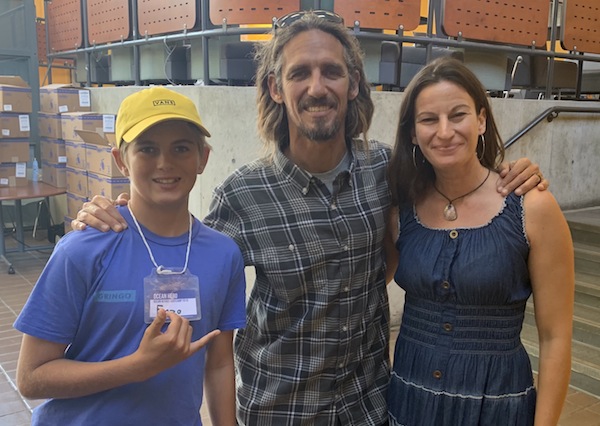
Chatting surf, water refill stations and plastic pollution at Ocean Heroes Bootcamp, left to right: Enzo Ackermann (Ocean Hero), Rob Machado (professional surfer/environmentalist) and Sondra Weiss (art educator). (photo from Sondra Weiss, Founder, Lost Art of Love Letters)

Organized and led by Captain Planet Foundation and Lonely Whale, Vancouver’s Ocean Heroes Bootcamp has a singular purpose – finding ways to save our oceans from plastic pollution.

One of the bootcamp presenters is Sondra Weiss. She offers participants a unique way to inspire action.

Having grown up in Connecticut, close enough to the ocean to fall in love with it, Weiss then went to the University of California. After graduating, she took an art museum educator position, a role she maintained for about two decades. Eventually, however, her love for the ocean drew her to start up the Lost Art of Love Letters.

“I launched this project about four years ago, thinking the world needs more love,” Weiss told the Independent. “As I listen to the news, or my students, or people in the world committing suicide, I just thought that love is a great antidote for everything happening in the world.”

Weiss lives in Santa Barbara, Calif., and was asked to come to Vancouver last year to help with the Ocean Heroes Bootcamp.

“Last year was the second year that they did Ocean Heroes, when I was in Vancouver,” said Weiss. “It brings together 250 local and international youth activists between the ages of 11 and 18, from 20 countries and 24 U.S. states, and the idea is to collaborate worldwide to fight plastic pollution.”

Based out of the University of British Columbia dorms and hosted by Ocean Wise and the Vancouver Aquarium, the next bootcamp is scheduled for June 26-29, though that may change depending on the progress made dealing with the COVID-19 pandemic. Weiss is to lead a part of it called Love Letters to the Sea.

“It is an art-integrative letter-writing project that promotes positive changes for the ocean,” said Weiss. “So, rather than feeling overwhelmed by environmental issues, community members can take action and promote innovation by using their voices to drive policy solutions.
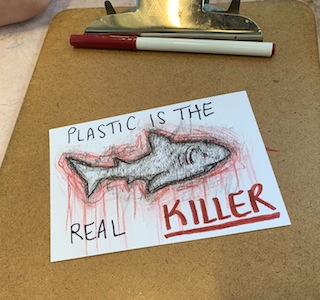
photo - A lot of the letters are sent out to local businesses, council members and political figures to say either thank you for the work they do for the ocean environment, or to ask them to make changes
A lot of the letters are sent out to local businesses, council members and political figures to say either thank you for the work they do for the ocean environment, or to ask them to make changes. (photo from Sondra Weiss, Founder, Lost Art of Love Letters)

“Participants take pen to paper and brush to paint to express their sentiments, their solutions, for ocean love. And, a lot of the letters are sent out to local businesses, council members and political figures to say either thank you for the work they do for the ocean environment, or to ask them to make changes.”

Last year’s focus was on eliminating single-use plastic bottles. Participants were tasked with developing ideas to help the community achieve this goal.

“As mentors in bootcamp, in general, we come up with ideas and have the youth collaborate, come up with campaigns and talk to experts in different fields, figuring out how to create the most change, being creative and positive the whole time,” said Weiss.

Each Ocean Heroes Bootcamp draws many different people from all around the world, she said, including youth who have created changes in their community or on a wider scale.

“There are experts leading panels, workshops and group activities … and Love Letters to the Sea, my personal activity, is more artistic-based,” she said. “So, there are writing prompts for writing, but there are also images to inspire art. There are watercolours, crayons and coloured pencils for campers to express themselves in various ways.”

While there are age gaps, some of the younger kids have inspired more change than some of the older ones. Regardless of age, all are passionate about the issues and put any age-related ego aside to learn from and with one another, said Weiss.

“One of the beautiful things is that youth from all around the world are working together toward the one topic – and the topic is plastic pollution, what plastic pollution and consumerism is doing to affect the planet as a whole,” she said.

Weiss hopes that the letters “help motivate the people doing good work and also helps the community to remain civically engaged … and be part of society, knowing we can make change and, as an educator, working with youth shows them to use their voice for change.

“We can use that same thing – the letter writing, it has been tried and true throughout the years. When someone wants to try and make a decree, the people will use a letter. Or, to really express something to a friend going through a hard time, or a family member, a lot of times, we’ll take pen to paper and write it down. It’s a great way to slow down. We live in such a fast-paced society. We need to slow down and really think about what’s in our hearts.”

Still, Weiss is well aware of the power of technology when well-used. She has worked with Jack Johnson’s band to create a song written by middle school kids who wrote love letters to the sea.

“They took lines from the letters, which became lyrics for a song,” said Weiss. “Letters are personal, but the way to reach the masses is through music and video. And, we created it into love letters, which are strong and powerful.”

Some of the lyrics produced include: “Water can’t be broken, but we can make her cry / Going to write a love letter to the ocean, let her know we are always going to try.”

“It was phenomenal that the students got to express themselves and sing it out,” said Weiss. “They wrote the notes and the music, and then we went into a recording studio and recorded a different version.
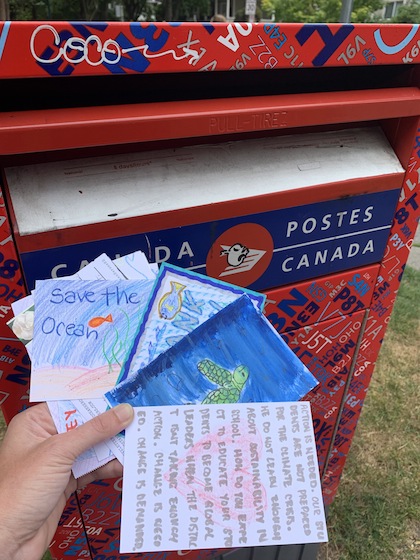
photo - Love Letters to the Sea works to create positive changes for the ocean and environment
Love Letters to the Sea works to create positive changes for the ocean and environment. (photo from Sondra Weiss, Founder, Lost Art of Love Letters)

“Letter writing is such a great way to get ideas onto paper and out of your mind and heart. The next stage is to bring music and video to a larger global audience.”

Weiss sees artistic letters as a gateway to reaching people on a different level, touching people’s minds in a different way to promote change.

“Images or music definitely help ignite that,” said Weiss. “For me, when you are talking to them and you see the light in their eyes go up, you see them drawn into the conversation.

“So, what does it takes to ignite someone to care? That’s what I ask at the bootcamp. I ask the youth if they are going to write an organization and ask them to limit their plastic packaging. And I ask them what they think would get them to consider the financial cost … and think more about the overall cost, the environmental cost. We learn so much from the kids and they inspire us as much as we inspire them – and the relationships maintain year-round.”

While Ocean Heroes Bootcamp is free to attend for accepted youth and their chaperones, including room and board, there is a $100 reservation fee and travel costs that may be waived via scholarship. All applications to attend the bootcamp are reviewed by Captain Planet Foundation and Lonely Whale. Qualified candidates are contacted by the Ocean Heroes headquarters team to complete registration.

The Ocean Heroes HQ team accepts a maximum of 300 youth leaders each bootcamp. Each attendee is paired up with a team of squad leaders, peers who guide them through the program and ensure they have the tools, support and information they need to graduate from the camp with a successful campaign plan to eliminate plastic pollution. For more information, visit oceanheroes.blue.

Rebeca Kuropatwa is a Winnipeg freelance writer.
Format ImagePosted on April 3, 2020April 2, 2020Author Rebeca KuropatwaCategories NationalTags activism, environment, Love Letters to the Sea, Ocean Heroes, Sondra Weiss

We are shaped by history

A few weeks ago, my husband got an email out of the blue from a distant relative in Israel. This Israeli was working on some family genealogy. He was stunned to discover that he had many U.S. relatives he never knew about. Together, my husband and this distant relative took on a big extended family project, even as COVID-19 shut down borders and isolated us in our homes.

Suddenly, my husband in Winnipeg and his dad, aunts, uncles and cousins in New Jersey were emailing, sending photos and stories to one another. They tried to iron out all the stories they’d heard and fit the puzzle pieces together. My husband’s paternal grandparents (z”l) were from Mezritch, Poland. They spent the Second World War on the run. They were in a Siberian Gulag work camp. Then, they lived in a shantytown near Tashkent, Uzbekistan. After the war, they stayed in a series of displaced persons camps in Germany before U.S. relatives found them. They arrived in the United States, with their three children, in 1950.

Discovering what may have happened to each relative 75 years ago, and documenting it, has taken on an urgency for both my husband and this “new” Israeli relative. In part, it’s because his oldest aunt, who was 9 when she came to the United States, remembered it all and discussed it with her mother in detail, over and over, as those who’ve gone through huge upheaval sometimes do. For my husband’s aunt, this childhood experience defines much of her worldview. Now, though, her mother, my husband’s grandmother, has died. His aunt is still alive, but unwell. She’s unable to recount the stories or identify the people in photos anymore. The family is racing to record as much of their family history as they can before even more of the pieces are lost forever.

In the midst of this nightly family email exchange, I read a book called Gateway to the Moon by Mary Morris. This novel makes connections between the Sephardi Jews who fled Spain after the Inquisition, the crypto-Jews of New Mexico and the history behind the family connections and modern-day Jewish practice. The author explained that the idea for the book came to her when she met someone long ago. This New Mexican seemed convinced that his family had been Jewish. Indeed, now we know through DNA analysis that many Spanish-speaking people throughout the world have Sephardi Jewish roots.

Gateway to the Moon was graphic, full of historically correct violence, and direct. It took me a long time to get through. It was powerful, but also hard to grasp the scope of the suffering faced during the Inquisition. This religious violence chased Jewish families for hundreds of years through Spain, Portugal, Mexico and beyond.

Morris does a good job of connecting people throughout history in her narrative. This was particularly powerful when a character tastes a lamb dish in Morocco, on vacation, and is instantly transported to her grandmother’s table in New Mexico. Even as their identity was hidden or forgotten, familiar recipes remained. Just the taste of that lamb stew connected the character to the family’s lost past and their Sephardi Jewish identity.

The ramifications of these huge experiences – violence, trauma, colonization, wars, genocides, terrorist attacks and pandemics – will shape us and future generations. We, as Jews, and as people, are forever shaped by these things. We’re about to celebrate Passover. It recounts a huge event in our people’s story – slavery, freedom and migration. This experience shapes us, though it happened (if it happened) long ago. As we say at the seder, Avadim hayinu: Once we were slaves in Egypt, and now we are free. We’re commanded to remember this as though we personally left Egypt.

As I write this, we’re suffering a pandemic, another huge, worldwide and scary experience. My husband and I are Gen Xers. We’ve been shaped by the Holocaust experiences of our families and friends. We were raised hearing their stories and traumas, and it was part of who they, and we, are.

Now, I pray that we, and all our families, and everyone in our community, live to think about what the ramifications of this next event will be. It will impact us all.

My family and I wish you everything good – a chag sameach, zissen Pesach – a happy holiday. Most importantly, may you enjoy it in good health.

Joanne Seiff has written regularly for CBC Manitoba and various Jewish publications. She is the author of three books, including From the Outside In: Jewish Post Columns 2015-2016, a collection of essays available for digital download or as a paperback from Amazon. Check her out on Instagram @yrnspinner or at joanneseiff.blogspot.com.

Posted on April 3, 2020April 2, 2020Author Joanne SeiffCategories Op-EdTags Diaspora, genealogy, history, Holocaust, lifestyle, pandemic, Passover
About the Passover cover art

About the Passover cover art

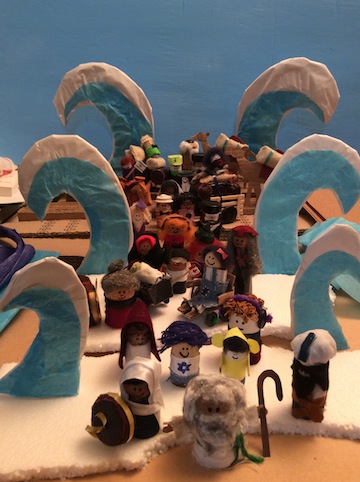
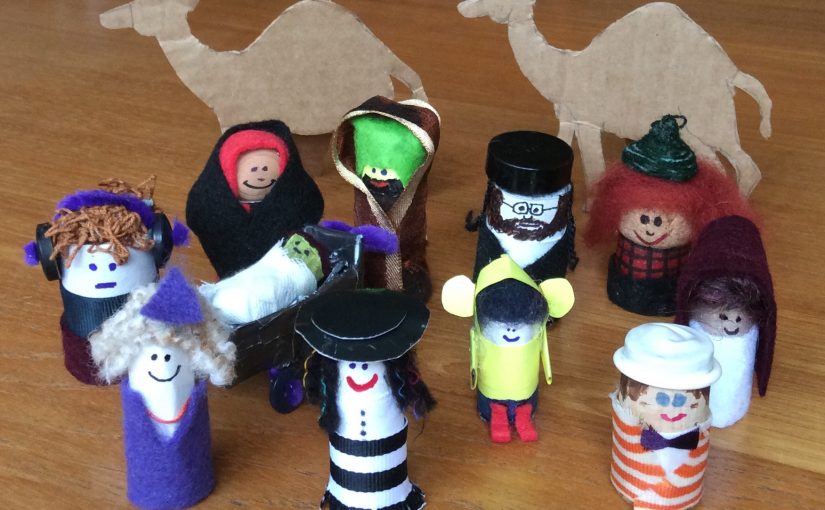
As I always do in anticipation of needing an image for the Jewish Independent’s Passover issue, I started with an internet search. This Passover, I was led to creativejewishmom.com, which features creative projects parents can do with their kids. The Crossing the Red Sea Kid’s Craft captured my imagination. Not one to let the lack of children in my immediate vicinity stop me, I collected the materials necessary and learned to use a glue gun. Through the generosity of a few friends, I didn’t have to buy anything to make the diorama on this issue’s cover.

To capture the notion that, in every generation, we are to regard ourselves as if we personally left Egypt, I created a variety of Israelites, from Moses, Miriam and Aaron leading the group, to a Middle Eastern family from an indeterminate era to a 1920s dandy, a Mary Poppins-inspired woman in a fancy black hat and a Chassid. A teen wears headphones, a toddler wears a mouse-ear raincoat and a girl in a wheelchair negotiates the streambed with the help of a Beatnik.

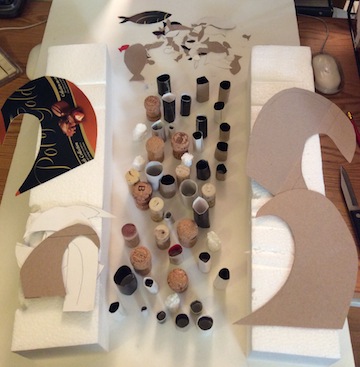
Early stages: Cut cardboard waves and fish. Prepare the toilet paper rolls (before the COVID-19-induced shortage) and corks that will become the Israelites.
photo - Intermediary stages: Make the Israelites and tissue paper the waves. Make a “staircase” so that all the Israelites can be seen in the photo
Intermediary stages: Make the Israelites and tissue paper the waves. Make a “staircase” so that all the Israelites can be seen in the photo.
photo - Final stages: Have JI logo join the exodus to freedom, but scrap the idea because many in the “focus group” interpret the falling letters to symbolize the world falling apart, given COVID-19
Final stages: Have JI logo join the exodus to freedom, but scrap the idea because many in the “focus group” interpret the falling letters to symbolize the world falling apart, given COVID-19.


The project took hours. The logistics of taking a photo that would fit within the parameters of the newspaper’s cover took almost as long to figure out as did the creation of the 29 Israelites, two load-carrying camels, two carts full of supplies, six waves and one streambed “staircase.” The wooden donkey near the back of the image is the only figure I did not make – JI production manager Josie Tonio McCarthy donated it to the effort; she bought the carving on a trip to Israel and we both thought it was appropriate to include, as the travelers’ destination is, of course, the Promised Land.

Wishes for a healthy and meaningful Passover, and a chag sameach.

Just a reminder: The Jewish Independent is now on a publishing hiatus. Our next issue will be April 24 or May 1, depending on the COVID-19 situation. Email [email protected] with story ideas and [email protected] for ad bookings.

Format ImagePosted on April 3, 2020April 2, 2020Author Cynthia RamsayCategories Celebrating the HolidaysTags creativejewishmom.com, kids arts and craft, Passover
Nieces enjoy new kids books

Nieces enjoy new kids books

I review a lot of books for the Jewish Independent. Over the years, that has included many children’s books. I do my best in these instances but, as much as I like to let my inner child run free occasionally and as much as I’d one day like to create a children’s book or two, I’m a grown-up. What do I really know about how enjoyable the single-digit-age set will find a publication? Well, for my latest two reviews, I turned to a couple of experts for advice.

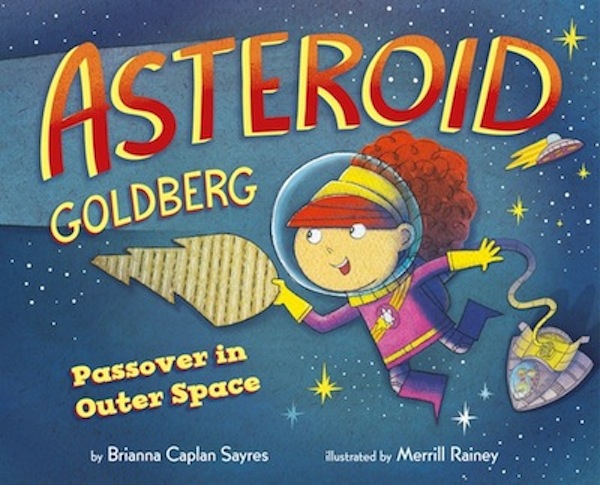
With COVID-19 causing the shutdown of schools, my youngest nieces – Fae, 8, and Charlotte, 6 – were suddenly available to be put to work. With their parents’ blessing, nay, encouragement, I scanned and emailed them two recent books published by Intergalactic Afikoman (see jewishindependent.ca/new-publisher-set-to-launch). The assignment was to read Asteroid Goldberg: Passover in Outer Space by Brianna Caplan Sayres and illustrator Merrill Rainey and Such a Library! A Yiddish Folktale Re-imagined by Jill Ross Nadler and illustrator Esther van den Berg. As my nieces were new to the reviewing world, I gave them a handful of questions to answer: What did you like about the books? What did you not like? What did you learn? Would you recommend the books to your friends?

Their mother, Deborah Weiss, sent me summaries of their answers, as well as Fae’s handwritten responses – I’d asked her to be the family’s scribe for the job.

They started with Asteroid Goldberg, which features Asteroid and her parents on their way home from Pluto for the Passover seder. When the family gets to earth’s orbit, they are not allowed to land (for an unstated reason), so they must make alternate seder plans on the fly (pun intended). A few of Jupiter’s moons for kneidl, a piece of Saturn’s rings for matzah, the Milky Way as their pantry. Who to invite? Family members close by, including Grandma Luna, who was biking on Venus, and Uncle Cosmos, who was hiking on Mars. When they come to the Mah Nishtanah, Asteroid asks, “What makes this night so different?” to which the answer is “Everything!” Caplan Sayres couldn’t have known how relevant her Passover story would be this year.

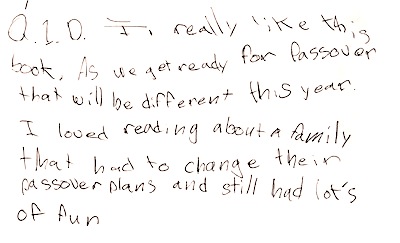
photo - Fae’s note on what her mother, Deborah (D.), thought of the book Asteroid Goldberg: Passover in Outer Space
Fae’s note on what her mother, Deborah (D.), thought of the book Asteroid Goldberg: Passover in Outer Space.

Both Fae and Charlotte loved the story and the artwork. Even though Charlotte found it a bit too long, Fae recommended it for kids 7 and under.

“I like this book because it was a rhyming book and because it had lots of play-along words,” wrote Fae, who explained to her mom that “play-along words are words with multiple meanings.”

As for lessons learned, Fae “did not learn anything.” However, her sister, who can be a pistol, said she learned that one should “never go on a rocket before Passover.”

As for their mom’s thoughts, Deb said, “I really liked this book. As we get ready for a Passover that will be very different this year, I loved reading about a family that had to change their Passover plans and still had lots of fun and found new ways to celebrate. This really resonated with me!”

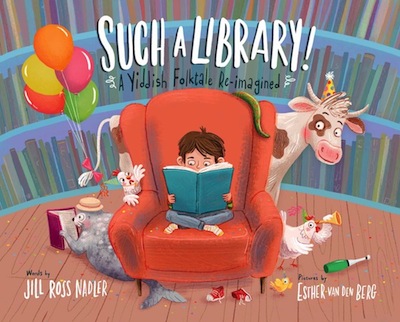
Deb and the girls also enjoyed Such a Library! “I thought this was a really clever and imaginative take on a well-known folktale,” said Deb, who noted, “Both girls liked the funny text, the story and the artwork. We also liked the clever name of the librarian.”

In Such a Library!, Stevie heads to the public library to read his book – “With three brothers, two sisters and a baby at home, Stevie’s house was never quiet.” As he starts to read, though, he hears pages turning, computer keys tapping. He tiptoes to the librarian, Miss Understood, and says, “This library is too noisy.” He tells her, “It’s like a party in here.” Thinking that a party sounds like a wonderful idea, she opens a book: “Hundreds of colourful balloons flew from the pages, followed by party hats and horns.”

image - Such a Library! book coverEach time Stevie goes to Miss Understood to complain, she opens another book and the library becomes a zoo, then a circus, as the characters jump out of the pages of the books she opens and take over the library. Only once the characters are all returned to their books can Stevie enjoy reading his, to the relatively quiet sounds of the pages turning, computer keys tapping.

Such a Library! is an interpretation of the Yiddish folktale about a man who thinks that his small house is too crowded with his wife and many children. The rabbi recommends that the man also bring into the house the family’s cow, chickens, goats, geese and ducks. When the man can’t take it anymore, the rabbi tells him to kick out all the animals, after which, the small house seems quite big and spacious.

Fae would recommend Such a Library!, once again, to kids age 7 and under, while Charlotte really liked it and would recommend it to anyone.

As for what the girls learned, Deb said, quoting Charlotte, “We learned that, if you’re looking for a quiet place to read, to not to go to the library when it’s full of acrobats!”

To order either book, visit intergalacticafikoman.com/books.

Format ImagePosted on April 3, 2020April 2, 2020Author Cynthia Ramsay with Fae and Charlotte Ramsay and Deborah WeissCategories BooksTags children's books, Intergalactic Afikoman, libraries, Passover, Yiddish
Among Canada’s best books

Among Canada’s best books

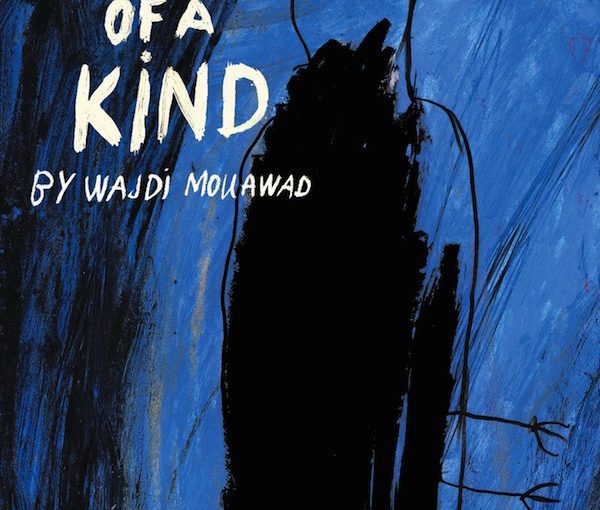
In the play Birds of a Kind by Wajdi Mouawad, the character of Eitan, injured in a terrorist attack in Jerusalem, lies in a coma. As his estranged parents and his grandmother hope for his recovery, they bitterly dig ever deeper into their familial dysfunction. At one point, the doctor tells them about Eitan, “What matters is the voices of those dear to him. His parents, his friends.”

His father responds, “His friends are in Berlin.” His mother, “Or New York.” His grandmother, “But his fiancée is here.” (The Palestinian fiancée that his parents cannot fathom and regarding whom they are nasty, based on a mix of racism, fear, guilt, concern over their own identity, secrets they have kept and more.) The doctor tells the trio, “The stronger the emotional attachment, the quicker the brain responds. We reconstruct ourselves through affection.” Godspeed to Eitan, then.

Birds of a Kind is a fascinating, if somewhat predictable, story and Mouawad’s exposition of complex and hyper-relevant topics, such as group identity versus individual choice, is nuanced and poetic; he uses language beautifully. It is no wonder that Montreal-based translator Linda Gaboriau earned the play its 2019 Governor General’s Literary Award for translation (from French to English).

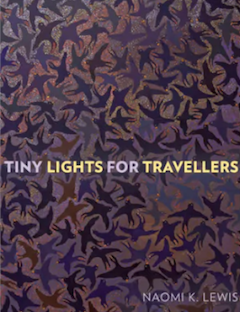
Also faring well in last year’s awards was Calgary writer Naomi K. Lewis, whose Tiny Lights for Travellers was a finalist in the non-fiction category of the prize, which is funded and administered by the Canada Council for the Arts.

image - Tiny Lights for Travellers book coverLewis is extremely candid and self-critical in this travel memoir. Readers learn about her family, her struggle with developmental topographical disorientation (which means she can’t envision a map in her head and, therefore, often gets lost), the complicated messages about Judaism she received growing up, her insecurities about being Jewish (including a botched nose job when she was a teen) and her failed marriage, among other things. We follow her on her literal and metaphorical journeys to self-discovery, -understanding and -acceptance, as her personal story is interwoven with her retracing of the route her grandfather took in 1942 to escape from Nazi-occupied Netherlands to southern France, from where he then traveled through Spain and Portugal to get to London, England.

While Tiny Lights for Travellers includes excerpts from Lewis’s grandfather’s journal of his escape, it is mostly about Lewis and her exploration of identity, family history and the Holocaust. As Lewis notes well into her book, “the journal seemed a tease, so withholding, the anomalous 30-page confession of someone who otherwise lived inside his own experience with no desire to make himself known to anyone.”

Lewis may have set out with a goal of learning more about her grandfather, of connecting to her past, “trying to find what made me,” but there are not clear links from the past to the present. The journey is revealing in the end, just not about her grandfather or exactly how she came to be who she now is, but rather in coming to terms with who that person is.

Format ImagePosted on April 3, 2020April 2, 2020Author Cynthia RamsayCategories BooksTags #ShowUpForShabbat, Birds of a Kind, Governor General’s Literary Award, Israeli-Palestinian conflict, Judaism, literature, memoir, Naomi K. Lewis, politics, Tiny Lights for Travellers, Wajdi Mouawad
A Jewish guide to streaming

A Jewish guide to streaming

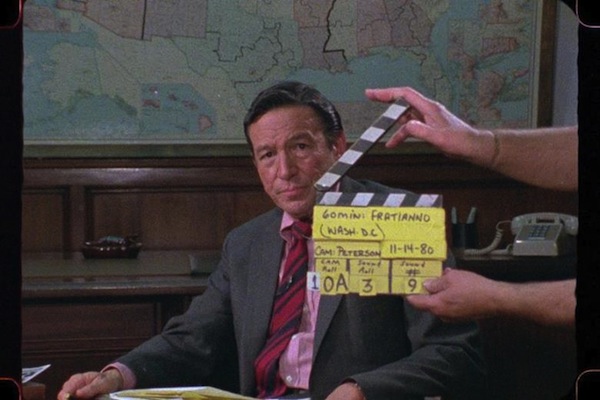
Mike Wallace is Here is one of the smartest and best documentaries of 2019. (photo from Cinando)

In the streaming universe, as with all entertainment, there’s the stuff that everyone watches and talks about. But that’s just the tip of a vast catalogue, a lot of it quite good, that doesn’t get the hype and the buzz. Here’s an eclectic list of accessible Jewish-themed movies that received some hosannas on their initial release. The more obscure (and great) Jewish films of recent years will be on a future list, since, alas, it appears we’ll have ample time to watch more after catching up with these.

The Zigzag Kid (j-flix): The Toronto Jewish Film Foundation has launched a free streaming platform, j-flix, with dozens of terrific recent fiction and documentary features and shorts. You could get lost there for weeks. I suggest you start with this irresistible, action-packed, family-friendly adventure about a precocious Dutch boy, adapted in 2011 by a Belgian director from Israeli author David Grossman’s novel.

The Women’s Balcony (Chai Flicks): Menemsha Films, the venerable U.S. distributor of Jewish-themed films from around the world, offers a free 30-day trial of their streaming platform. (A subscription will then run you $5.99 US a month.) Israeli director Emil Ben-Shimon and screenwriter Shlomit Nehama set their warm and wonderful romp in a small Orthodox congregation dislocated by structural damage to the shul.

Tel Aviv on Fire (Amazon Prime): Sameh Zoabi’s clever comedy about a Palestinian soap-opera writer trying to navigate the demands of both his bosses and an Israeli checkpoint commander will lift your spirits without insulting your IQ. Make a batch of hummus first.

1945 (Amazon Prime): This extraordinary black-and-white Hungarian film parlays the postwar arrival of two exhausted Jews at a small village into an exposé of guilt, betrayal, corruption and murder. One of the most acclaimed European films of 2017, 1945 is a gripping and haunting reckoning with dark history.

Mike Wallace is Here (Hulu): One of the smartest and best documentaries of 2019 examines, entirely through archival television footage, the ambitious journalist who made 60 Minutes essential viewing. Not a Jewish film, oddly enough, but a riveting one.

Disobedience (Amazon Prime): Sebastian Lelio’s taut, understated 2017 drama, adapted from Rebecca Lenkiewicz’s novel, is a remarkably nonjudgmental story that follows a volatile, adrift woman’s (Rachel Weisz) return to London after the death of her estranged father, an Orthodox rabbi. Community, identity, responsibility, sexuality – everything is on the table.

Prosecuting Evil: The Extraordinary World of Ben Ferencz (Netflix): The last surviving U.S. attorney from the Nuremberg trials has an impeccable memory, a spotless moral compass and enormous gravitas. If your fortitude is at a low ebb, Ben Ferencz will give you the strength to persevere.

A Serious Man (Netflix): The Coen Brothers’ most personal and most Jewish film, filmed in and around their childhood stomping grounds of Minneapolis-St. Paul, is a painfully hilarious moral fable guaranteed to provoke a cross-generational dinner table conversation. One politically incorrect question that this devious 2009 movie poses: Are Jews our own worst enemies?

Michael Fox is a writer and film critic living in San Francisco.

Format ImagePosted on April 3, 2020April 2, 2020Author Michael FoxCategories TV & FilmTags COVID-19, documentaries, Judaism, movies, streaming services

NFB offers 4,000 titles

The National Film Board of Canada (nfb.ca) offers a selection of some 4,000 short and feature-length films, whether you’re looking for animation, documentary or fiction. Explore the Cartoons for Kids section for the latest releases.

The Jewish Independent has reviewed several NFB films over the years, which have been made by Jewish community members, such as Ryan Sidhoo’s docuseries (now feature film) True North, which looks at the youth basketball scene in Toronto, and David Fine and Alison Snowden’s animated short Animal Therapy, which explores some of the pros and cons of following our natural instincts versus doing what is socially acceptable. There are also films on Jewish people or subjects, such as the documentary Ladies and Gentlemen … Mr. Leonard Cohen and the animated short My Yiddish Papi by Éléonore Goldberg.

Enjoy searching the many choices available from the NFB, Jewish-related or not. Recently added titles include Where the Land Ends, a documentary feature by Loïc Darses, about the places that created Quebec, exploring the historical narrative, as a group of young people who were not old enough to vote in the 1995 referendum express their views; Ice Breakers, a documentary short by Sandi Rankaduwa on the Black athletes who helped pioneer modern hockey, through the story of Josh Crooks, an African-Canadian player; and The Great List of Everything, an animated webseries by comic book artists Cathon and Iris Boudreau, as well as Francis Papillon.

New films are being added to nfb.ca all the time, and they’re always free to view.

Format ImagePosted on April 3, 2020April 2, 2020Author JI and NFBCategories TV & FilmTags COVD-19, documentaries, Judaism, movies, National Film Board of Canada, Yiddish
Dealing with anxieties

Dealing with anxieties

Deborah Grayson Riegel, left, and Sophie Riegel co-wrote the book Overcoming Overthinking. Sophie also authored Don’t Tell Me to Relax! (photo from Riegels)

Many people experience one or more kinds of anxiety disorder, yet fewer than half seek professional help, often because of the perceived stigma of having such a condition, according to Deborah Grayson Riegel and Sophie Riegel.

Both Deborah and her daughter Sophie, 19, have more than one diagnosed anxiety disorder – Deborah has three and Sophie, four. Initially, as Deborah and husband Michael were helping Sophie with her anxiety, they didn’t tell her about Deborah’s. But that silence has ended.

Today, Deborah is a speaker, executive coach, instructor and writer who works part-time in the Jewish community in Manhattan. The bulk of her work is within the corporate community, helping people navigate difficult conversations.

“As Sophie and I were putting our book together, I realized how much of my work is about helping people manage the anxiety associated with getting up and speaking in front of other people, or giving feedback or having hard conversations,” Deborah told the Independent.

Most recently, Deborah was invited to work with Duke Corporate Education, which she was excited about, with Sophie having just started as a freshman at Duke.

“I think Sophie feels really strongly about letting parents know that, if you’re withholding or not exploring medication because of a stigma, because of a fear of dependency, because of anything, you may be costing your kid time,” said Deborah. “Sophie had said in a different interview, where questions came up about what we as parents wish we’d done differently … Sophie’s answer was that she wished we’d explored medication sooner.”

According to Sophie, seeking professional help is important, as the combination of both counseling and medication worked best for both her and her mother, as it does for many others.

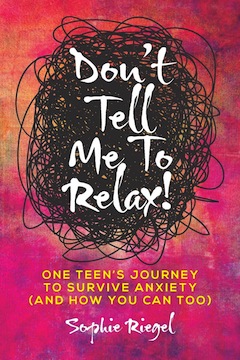
image - Don’t Tell Me to Relax! book coverShortly after a traumatic experience at the age of 13, Sophie began working on her first book, Don’t Tell Me to Relax!: One Teen’s Journey to Survive Anxiety and How You Can Too, which she completed in five years. “I started writing it because I was being severely bullied due to some of my obsessive compulsive tendencies,” said Sophie. “I talked to my therapist and we realized the only way to have people stop bullying me was to educate them. So, I ended up giving a 20-minute presentation in seventh grade about my experience living with OCD [obsessive compulsive disorder] and anxiety, and the girls who had bullied me ended up coming up and apologizing to me. I realized that, if I could have that kind of impact in 20 minutes, imagine what kind of impact I could have if I wrote an entire book that I could share with everyone.”

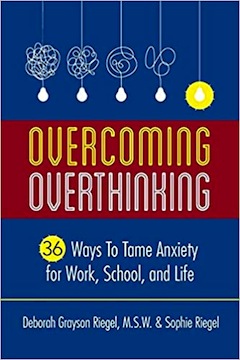
Once Sophie’s book came out, she and her mom decided to co-author one together. Called Overcoming Overthinking: 36 Ways to Tame Anxiety for Work, School and Life, it came out last year.

“When Sophie would be out speaking about the strategies that she uses to navigate anxiety, she heard herself saying, ‘one thing I learned from my mom is … and another thing I learned from my mom is’ … and, I hadn’t realized I was saying or doing these things,” said Deborah. “But Sophie was picking up some strategies I’ve used for myself. So, I said that there are clearly a lot of strategies we’re both using, and maybe we could put them in a book.

“Secondly, I had gotten a call from an organization that had thought that Sophie’s book was something we wrote together. They said, ‘Oh, you wrote this book together … we’d love for you to come and speak.’ And I said, ‘Well, we haven’t written a book together, but we will by October!’ So, we just said, ‘All right, now we’ve told somebody we’re going to write a book … now we have to go write it.’ So, we had a little bit of artificial, external pressure, but it worked well for us.”

In her first book, Sophie shares her journey with anxiety disorder and offers advice to parents, teens and educators; she also debunks anxiety myths and provides a list of resources.

In Overcoming Overthinking the mother-daughter duo offers self-help tips and tools, and focuses on strategies and advice, with about a quarter of the book being from a personal perspective.

One of the stories Sophie shares in the second book is about bribing her therapist to convince her parents that getting a dog would be worthwhile and helpful for her. “We ended up getting a dog, but the interesting part of the story is that my mom is absolutely terrified of dogs … or was … we went from having no dog to having this 80-pound pitbull,” said Sophie.

“And it’s a sign of how much a parent will do to make sure their child is OK … that they will go above and beyond and do anything they need to do. Because, at that point, right before getting a dog and before things started getting a little better for me, my parents thought I’d never be able to graduate high school … that I’d have to be institutionalized, those kinds of things. With this dog, Nash, who’s my best friend, I was able to learn new strategies to handle the anxiety … and learned how much my parents really loved me, and what they were willing to do so I was able to live a healthier lifestyle.”

Both books have been well-received, with parent readers sharing messages such as, “My teen is going through this exact same thing and, because they read your book, they’re starting to know how to talk about it … and I know how to talk to them about it, so you’ve really opened up the lines of communication between us.”

Deborah said, “I got one message from a parent who originally thought their kid was having a heart attack, but then realized from what they had read in Sophie’s book that it was actually a panic attack. It kept them from having to bring him to the ER, because they realized it wasn’t a heart attack. So, they were able to help at home thanks to Sophie’s book.”

Both Deborah and Sophie strongly encourage people to seek professional help when in need. Their book is not a substitute for psychological intervention, they stressed. Deborah added, “We strongly recommend getting that kind of support, whether it’s cognitive behavioural therapy, which has worked for both of us, [or other approaches.]”

image - Overcoming Overthinking book coverOvercoming Overthinking has 36 chapters, which is intentionally double chai (18), symbolizing the saving of the two authors’ lives. The book is divided into three sections.

“The first one is about strategies to change your thinking, to help you change your perspective and mindset, and as a tool for coping with anxiety,” said Deborah. “The second one is about creating new strategies, some concrete things you can do to help you work with anxiety that we think are a little bit out of the box … not what one might call a typical strategy. And the third part is to connect with others about the idea of not isolating yourself and the importance of reaching out, even if that means outing yourself that you’re struggling with something. Most people are uncomfortable being vulnerable. So, we give 12 strategies in that section about how to not do this alone.”

Sophie added, “Also, we go into how it’s good to change your perspective about what connecting with others means. It can mean connecting with a rescue dog, connecting with professionals, connecting with friends and connecting with your parents.”

“I have catastrophic thinking,” said Deborah. “That’s one of the ways my OCD and anxiety show up. Catastrophic thinking has two key elements…. It’s overestimating unlikely probabilities and overestimating devastating consequences. And so, in the morning, we’d put our kids on the school bus and I’d articulate that this is probably the last time we’d ever see them again. Or somebody would get sick and I’d say they’re probably going to die. Or Michael would not answer his phone when I called, and I’d assume he’s dead on the highway. At a certain point, I came to realize that not everybody thinks like this … and that it’s not healthy to think like this … or healthy in a relationship to articulate things that the person cannot help in any way.”

Deborah said she ended up going to speak with a psychologist and getting medication. “That medication has taken my catastrophic thinking from 98% down to two percent,” she said. “Sophie was valedictorian of her class and she got into Duke … her first choice. Sophie is an all-American athlete and has won anti-bullying awards. She has written two books and struggles with four significant anxiety disorders.

“I’m somebody who has a successful career, a healthy marriage and two great children. I travel all over the world for my work. And I struggle with three diagnosed anxiety disorders.

“So, one of the important points is that you can have AD, you can have mental illness, while you can also be happy, healthy and successful. And that feels like a very important message to share,” said Deborah.

For more information about the Riegels’ books, visit donttellmetorelaxbook.com and overcomingoverthinking.com.

Rebeca Kuropatwa is a Winnipeg freelance writer.
Format ImagePosted on April 3, 2020April 2, 2020Author Rebeca KuropatwaCategories BooksTags anxiety, Deborah Grayson Riegel, health, Sophie Riegel
Why not take olive me?

Why not take olive me?

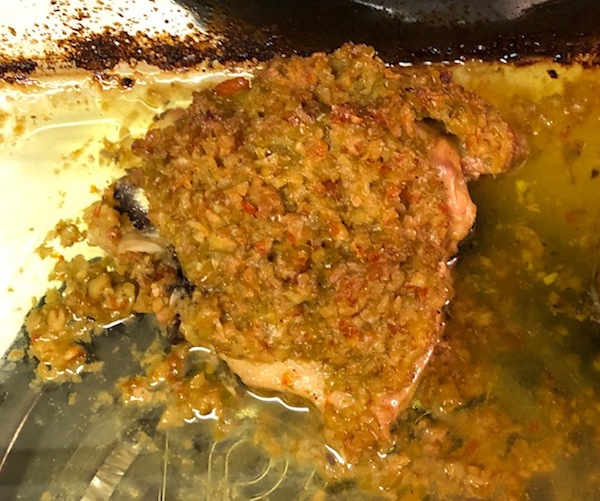
Tori Avey’s Mediterranean Olive Chicken is one of those guest-worthy dishes – impressive, yet easy to prepare and sure to please. (photo by Shelley Civkin)

It’s Thursday afternoon and I’m wondering what the maid is going to make for dinner. Or how I’m going to spend that $70 million Lotto Max I just won. Or when I’ll fly to Mars. See my quandary? I guess you could say I’m in a rut: fish, chicken, steak. Not being a big pasta fan, I seem to fall back on my old regulars every week. If I let him, my husband Harvey would eat pizza and pasta every night.

I remember the ’60s, when my mom had an unwritten weekly dinner schedule. Sundays were prime rib roast with Yorkshire pudding, roast potatoes and salad. The salad was only ever iceberg lettuce (hadn’t farmers discovered romaine, butter lettuce or kale yet??), mixed with cucumbers, tomatoes and green onions. Bottled dressing. The rest of the week’s dinners consisted of chicken livers with onions, salmon, meatloaf or hamburgers, or chicken. Each main was accompanied by the same weekly side dishes. And I mean the same. There was little, if any, variation from week to week. There’s something to say for consistency. With the exception of salad, every other vegetable mom served was frozen and came pre-chopped in a plastic bag. It was the ’60s after all. Occasionally, we’d go to the White Spot on Granville and 67th for a treat, and eat in the car, with the long tray spread across the front seat, attached to the window edges. Exciting times!

It’s funny that the ’60s and ’70s were a time of instant everything – Carnation Instant Breakfast, Pop-Tarts, Shake ’n Bake, Swanson TV Dinners, Nestle’s instant chocolate milk. Even though lots of women were stay-at-home moms and had time on their hands. Not to diminish the hard work they did raising their kids and keeping the house spotless. But let’s face it, lots of women today work outside the home and still do the majority of the childrearing and house chores. There were those privileged few who also had live-in housekeepers (yes, my family was one of them), and still my mother used lots of instant, pre-made foods. She was a good cook, for sure, but had to have a recipe in front of her. I’m like her in that regard. But I digress.

When we got married 10-and-a-half years ago, Harvey and I used to eat out at restaurants three to four times a week. So cooking was easy. Now, not so much. Sure, retirement provides me with more time to explore recipes. But my heart’s just not in it. Actually, that’s not true. I’m usually so busy volunteering that I simply don’t have the time (or inclination) to sit in front of a computer looking for culinary inspiration. Harvey thinks of cooking like a chemistry experiment, so he enjoys it. But as we get older (and sleep way less), we’ve kind of lost the fire in our bellies for cooking.

My father, alav hashalom, used to describe me as a human garbage disposal, because I would pretty much eat anything. He used to say that I’d “eat out of a puddle.” I was the “Give-it-to-Mikey-he’ll-eat-it” daughter. Admittedly, as long as someone else cooks it, I’ll eat it. That was then.

I am still a very easy-to-please eater – as long as the food isn’t too spicy, doesn’t contain too much roughage and doesn’t have nuts, corn, celery or raw vegetables in it. Well-seasoned food is nice, but, at heart, I’m a purist. With a bad gut. Bland food doesn’t bother me; in fact, I’ve been known to enjoy hospital food. After my recent three-month stomach illness, during which I ate only bland food, and very little, I’ve been a bit apprehensive about trying anything different. But, lately, as I’ve been feeling better, I figure it’s time to branch out. Caution to the wind!

As I strolled the culinary landscape that is the internet, I came across a particular chicken recipe by Tori Avey, whose recipes I’ve enjoyed before. Best thing about this recipe is that it’s easy. And, turns out, it’s stunningly delicious. Feast your taste buds. Find it online at toriavey.com/toris-kitchen/mediterranean-olive-chicken.

TORI AVEY’S MEDITERRANEAN OLIVE CHICKEN
(tweaked by me slightly)

3/4 cup chopped green olives (I used queen Manzanilla)
1/3 cup extra virgin olive oil
2 tbsp fresh lime juice
1 tbsp crushed garlic
2 tsp honey
1/2 tsp lime zest
salt and pepper
4-5 lbs chicken pieces, bone in, skin on (I use 6 chicken thighs, as we’re dark meat fans, but white meat would be fine, too)

The recipe also called for red pepper flakes and dried oregano, which I omitted, plus wine to make a sauce afterwards, which I also omitted.

  1. In a mixing bowl, whisk together the chopped olives, olive oil, lime juice, garlic, honey and lime zest. Season the marinade with salt and pepper to taste.
  2. Sprinkle the chicken pieces lightly with salt and pepper. Place chicken pieces in a nine-by-13-inch baking dish. Brush the pieces evenly with olive marinade, using all of the marinade to coat.
  3. Cover the baking dish with plastic wrap and place in the refrigerator for at least two hours (or up to overnight).
  4. Preheat oven to 375˚F. Remove the plastic wrap and cover the baking dish with foil. Pierce a few vents with a sharp knife around the outer edges.
  5. Place the covered dish in the oven. Let the chicken bake for 60 minutes, then remove the foil and bake for an additional 15 to 30 minutes, basting periodically, until well cooked and tender. At the end of cooking, you can broil it for a minute or two to brown the skin (I didn’t bother with this step).

After two bites, my husband pronounced this the best chicken I had ever made. Bar none. And we eat a lot of chicken. Since I usually bake chicken uncovered and it turns out dry, this was a surprising treat – extremely moist, über-flavourful and just as yummy the next day. I’ll probably double the recipe next time around, since it’s worth having enough left for a second dinner. This is one of those guest-worthy dishes – impressive, yet easy to prepare and sure to please. And it makes a nice Shabbat meal, too. I also realized the versatility of the marinade when I tried it on pasta. I’d place bets that it goes well with steak, too. One marinade, three uses. Now that’s a masterful marinade!

You’re welcome. Beteavon!

Shelley Civkin aka the Accidental Balabusta, is a happily retired librarian and communications officer. For 17 years, she wrote a weekly book review column for the Richmond Review. She’s currently a freelance writer and volunteer.

Format ImagePosted on April 3, 2020April 2, 2020Author Shelley CivkinCategories LifeTags Accidental Balabusta, chicken, cooking, Tori Avey

Post-seder meat dishes

After eating all our wonderful family tradition seder dishes, I find it fun to try out meals that I haven’t before and that are not from my cultural background. Here are some you might want to try.

MATZAH MEAT PIE

(Egyptian-born Claudia Roden is the master of Middle Eastern food and author of 20 cookbooks. Now 84 years old, she lives in London. I met her in the 1970s, when she came to Israel and we had a wonderful visit. This is her recipe from the New York Times Passover Cookbook, adapted from The Book of Jewish Foods, which she wrote. It makes four to six servings.)

1 large chopped onion
3 tbsp vegetable oil
1 1/2 pounds ground lamb or beef
salt and pepper to taste
1 tsp cinnamon
1/2 tsp allspice
2 tbsp raisins
2 tbsp pine nuts or walnuts
1 cup warm beef stock
5-6 matzot
1 small egg, beaten

  1. Preheat oven to 375˚F. Spray a pie plate with vegetable spray.
  2. Heat two tablespoons oil in a frying pan and fry onion over medium heat for 10 minutes, until golden. Add ground meat, salt, pepper, cinnamon and allspice. Cook, stirring until meat has browned but is still moist, about 10 minutes. Add raisins.
  3. In another pan, fry the nuts in one tablespoon oil for one minute, stirring until nuts are lightly coloured. Add to meat mixture and stir.
  4. Place beef stock in a large, shallow rectangular pan. Soak matzot one at a time, pressing them gently to absorb the liquid.
  5. Press two or three softened matzot into a pie plate. Place meat mixture on top of matzot. Cover pie with remaining matzot. Brush top with beaten egg. Bake for 30 minutes or until top is golden.

KABSAH
(This recipe comes from It Tastes Too Good to be Kosher by Peter A. Weissenstein and is a Lebanese dish, good for using up leftover lamb or chicken.)

1 pound ground lamb
1 pound ground chicken
4 minced garlic cloves
salt to taste
2 medium, diced onions
1 finely diced large tomato
2 tsp cumin
4 tbsp minced parsley
oil

  1. In a bowl, combine lamb, chicken, garlic, salt, onions, tomato, cumin and parsley and blend.
  2. Heat oil in a frying pan. Spoon mixture into frying pan and fry until well heated. Serve with Israeli salad.

BRISKET MEATBALLS IN TOMATO PASSATA
(Passata is Italian for “go through,” i.e. the cooked tomato puree goes through a special machine. This Italian-influenced dish was created by Hillary Sterling for Vic’s, her New York City restaurant. It makes four servings.)

Meatballs:
1 1/2 cups crumbled, unsalted matzah
2 1/2 tbsp water
1 1/4 pounds ground brisket
1 large egg
1 tbsp olive oil
salt to taste
1 1/2 tsp ground fennel seeds (optional)
1/2 tsp crushed red pepper
pepper to taste

Passata:
1/4 cup sliced garlic
1 1/2 tbsp olive oil
1 28-ounce can crushed, drained plum tomatoes
1/8 cup fresh marjoram leaves
2 1/2 four-by-one-inch orange peel strips
salt and pepper to taste

  1. Preheat oven to 425˚F. Set a wire rack inside a large baking sheet and spray with vegetable oil.
  2. Combine crumbled matzah and water in a bowl. Add brisket, egg, oil, salt, fennel (if using), red pepper and black pepper. Mix with hands until combined. Shape into eight meatballs. Arrange meatballs on sprayed wire rack. Bake until browned, about 22 minutes.
  3. Meanwhile, in a frying pan, cook garlic and oil for passata, stirring often, a minute and a half. Add crushed tomatoes, marjoram leaves, orange peel strips, salt and red pepper. Bring to a boil then remove from heat.
  4. Transfer meatballs to tomato passata in frying pan. Garnish with crumbled matzot, fresh marjoram leaves and chile oil. Serve warm.

Sybil Kaplan is a journalist, lecturer, book reviewer and food writer in Jerusalem. She created and leads the weekly English-language Shuk Walks in Machane Yehuda, she has compiled and edited nine kosher cookbooks, and is the author of Witness to History: Ten Years as a Woman Journalist in Israel.

Posted on April 3, 2020April 2, 2020Author Sybil KaplanCategories Celebrating the HolidaysTags cooking, Passover

Posts pagination

Previous page Page 1 … Page 3 Page 4 Page 5 Next page
Proudly powered by WordPress