Skip to content
  • Home
  • Subscribe / donate
  • Events calendar
  • News
    • Local
    • National
    • Israel
    • World
    • עניין בחדשות
      A roundup of news in Canada and further afield, in Hebrew.
  • Opinion
    • From the JI
    • Op-Ed
  • Arts & Culture
    • Performing Arts
    • Music
    • Books
    • Visual Arts
    • TV & Film
  • Life
    • Celebrating the Holidays
    • Travel
    • The Daily Snooze
      Cartoons by Jacob Samuel
    • Mystery Photo
      Help the JI and JMABC fill in the gaps in our archives.
  • Community Links
    • Organizations, Etc.
    • Other News Sources & Blogs
    • Business Directory
  • FAQ
  • JI Chai Celebration
  • JI@88! video

Recent Posts

  • Sharing her testimony
  • Fall fight takes leap forward
  • The balancing of rights
  • Multiple Tony n’ Tina roles
  • Stories of trauma, resilience
  • Celebrate our culture
  • A responsibility to help
  • What wellness means at JCC
  • Together in mourning
  • Downhill after Trump?
  • Birth control even easier now
  • Eco-Sisters mentorship
  • Unexpected discoveries
  • Study’s results hopeful
  • Bad behaviour affects us all
  • Thankful for the police
  • UBC needs a wake-up call
  • Recalling a shining star
  • Sleep well …
  • BGU fosters startup culture
  • Photography and glass
  • Is it the end of an era?
  • Taking life a step at a time
  • Nakba exhibit biased
  • Film festival starts next week
  • Musical with heart and soul
  • Rabbi marks 13 years
  • Keeper of VTT’s history
  • Gala fêtes Infeld’s 20th
  • Building JWest together
  • Challah Mom comes to Vancouver
  • What to do about media bias
  • Education offers hope
  • Remembrance – a moral act
  • What makes us human
  • המלחמות של נתניהו וטראמפ

Archives

Follow @JewishIndie
image - The CJN - Visit Us Banner - 300x600 - 101625

Month: April 2020

Holiday candy, cookies

Holiday candy, cookies

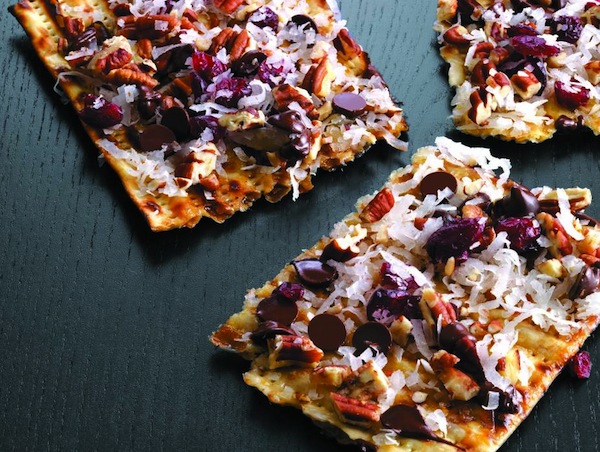
Susie Fishbein’s Butterscotch Matzah Crunch Bars. (photo from kosher.com)

While it is no problem to find candy and cookies that are kosher for Passover, it is also easy to make them yourself. In addition to whatever you may buy at the store, here are some recipes for homemade treats that I enjoy.

MARILYN’S COCONUT MATZAH BALLS
(Marilyn, a former college teacher, now in her 90s, and I were neighbours 40 years ago and are still talk-on-the-phone-daily friends. She came to Israel from Boston in 1949. This recipe makes 20 large balls.)

1/3 cup vegetable oil
1 egg
1/4 cup water or coffee or orange juice
1/2 cup sugar
1/2 cup matzah meal
1/4 cup ground nuts (of your choice)
1/4 cup cocoa
2 tbsp cognac, wine or cherry brandy
1 tbsp coconut

  1. Mix oil, egg, water, coffee or orange juice, sugar, matzah meal, nuts, cocoa and liquor in a bowl. Add more matzah meal if needed to make the dough stick together.
  2. Shape into balls. Place coconut in a bowl and roll each ball in coconut. Refrigerate.

MY FAVOURITE FABULOUS FAUX TOFFEE
(makes three to four dozen two-inch pieces)

6-inch square matzot (enough to cover an 11-by-17-inch cookie sheet)
1 cup butter (I use unsalted pareve margarine)
1 cup brown sugar (I use 2/3 diabetic sugar and 1/3 cup regular)
12 ounces chocolate chips
1 cup chopped nuts

  1. Preheat oven to 350˚F. Generously grease the cookie sheet.
  2. Arrange matzot to cover entire surface.
  3. In a saucepan, combine butter or margarine and brown sugar. Bring to a boil, reduce heat and simmer, stirring continually, for three minutes. Pour over matzot and bake for five minutes.
  4. Remove from oven and cover with chocolate chips, swirling until melted and evenly spread. Sprinkle with nuts. Cool and refrigerate.
  5. Break into pieces when completely cool.

BUTTERSCOTCH CRUNCH BARS
(This is my adaptation from Passover by Design by Susie Fishbein, kosher.com.)

12 tbsp butter or unsalted pareve margarine
1/2 cup brown sugar
4 pieces matzot
1 cup chopped nuts
1 cup shredded coconut
1/2 cup chocolate chips

  1. Preheat oven to 350˚F. Cover a cookie sheet with foil.
  2. Line cookie sheet with matzot, breaking as necessary to fit.
  3. In a saucepan, melt butter or margarine and brown sugar, whisking until the mixture is melted and smooth.
  4. Pour brown sugar mixture over matzot, making sure every surface is covered. Bake for 10 minutes.
  5. In a bowl, toss nuts, coconut and chocolate chips. When matzot are baked enough, remove pan from oven and sprinkle an even layer of coconut mixture on top. Cut into bars while warm.

LIL’S PASSOVER APRICOT SQUARES
(Lil was a friend from our Overland Park, Kan., synagogue. This recipe makes two dozen.)

1 2/3 cups matzah cake meal
1/3 cup sugar
1/3 cup finely ground toasted almonds
1/3 cup oil
2 tbsp lemon juice
1 tbsp grated lemon zest
1 tsp vanilla
2 1/2 to 3 cups apricot preserves

  1. Preheat oven to 350˚F. Grease a rectangular glass baking pan with vegetable cooking spray.
  2. In a mixing bowl, combine matzah cake meal, sugar and almonds and blend.
  3. In another bowl, mix oil, lemon juice, lemon zest and vanilla. Add to dry ingredients and stir with a fork.
  4. Press 2/3 of the mixture on the bottom of the baking pan. Bake for 25 minutes. Remove from oven and cool slightly.
  5. Spread apricot preserves on crust. Sprinkle remaining half of cake meal mixture on top. Return to oven and bake 25 minutes. Cool then cut into squares.

Sybil Kaplan is a journalist, lecturer, book reviewer and food writer in Jerusalem. She created and leads the weekly English-language Shuk Walks in Machane Yehuda, she has compiled and edited nine kosher cookbooks, and is the author of Witness to History: Ten Years as a Woman Journalist in Israel.

Format ImagePosted on April 3, 2020April 2, 2020Author Sybil KaplanCategories Celebrating the HolidaysTags baking, desserts
Importance of this tradition thing

Importance of this tradition thing

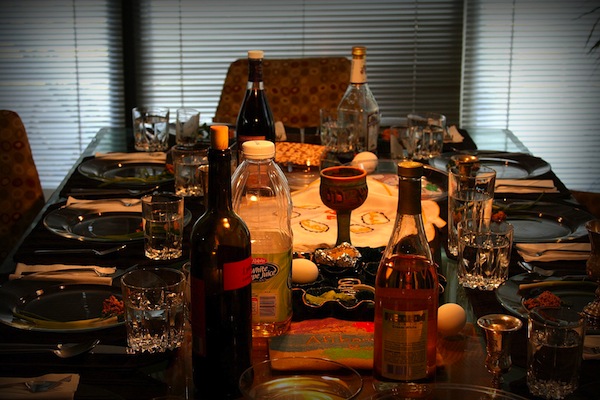
Passover traditions like the seder connect family and friends, and remind us who we are. (photo from flickr.com)

“I know I read an article somewhere that the greatest number of suicides happen on holidays,” Naomi said to her mother.

Rebecca ignored her. “Just keep lining the shelves.”

“But it makes sense, truly it does. Why are we taking this perfectly clean kitchen apart and practically rebuilding it? Does it say anywhere in the Bible that you go straight to hell if you don’t drop with exhaustion the week before Pesach?”

“This is the way my mother did it, and her mother did it, and one day you’ll do it for your kids, too.”

“You’re kidding yourself. If you think I’d ever inflict all this work on my daughter, you’re crazy. And why doesn’t Joe have to help?”

“He will. He’ll kosher the stove and the sinks.”

“And that’s another thing. Two minutes with a blowtorch and then he’ll pour a kettle of water. Big deal. And Dad doesn’t even do that.”

“He conducts the seder.”

“Another big deal. We take the place apart, vacuum chairs and wash curtains and change over dishes, not to mention 40 kilos of kneidl and all that stuff that gives you indigestion. What am I saying, indigestion? All those eggs – you’re probably giving us a gift of coronary heart disease. Jesus!”

“Naomi, stop it.”

“I’m sick of it. I want to escape like Faye.”

Rebecca’s lips tightened. “Fagie’s coming to the seder, too.”

But Naomi was not to be sidetracked. “Fagie, what a name! No wonder she rebelled. Naomi and Joseph, they’re bad enough. But Fagie, what were you thinking of?”

“It’s a good Jewish name. I was thinking of my grandmother. If you and your sister could have known her, you’d understand. The least I could do was keep her name alive.”

The spotless refrigerator was being polished within an inch of its life. Naomi sat down and watched her mother.

“I thought Passover celebrated freedom from slavery. But every year, you become a slave and you make me one, too. If you think you’re giving me wonderful memories, forget it. As soon as I can leave home, I will. Faye told me the best thing about marriage was being able to run her house like the 20th century. Now we’re in the 21st, for chrissake.”

“I hate it when you talk like that.”

“Like what?”

“So tough. All those profanities. What happened to femininity?” she asked her daughter sadly.

“Feminism came along, only you’ve never heard of it. Dad and Joe get out of everything ’cos they’re men. You’re the biggest chauvinist ever, because you not only condone this status quo, you actually perpetuate it.”

Rebecca sighed. “You don’t understand. Neither does Fagie.”

“You bet we don’t. Here, I’ve lined the last bloody shelf. I’m going out.”

“Where?”

“Out, as in O-U-T.”

“When will you be back?”

“If I had my way, it’d be around May or June – after Pesach.” She slammed the door. Rebecca heard the car start up. Her eyes filled with tears. She was exhausted. “This is gratitude,” she thought bitterly. “Here’s Naomi, barely 18, with her own car. We were married six years before we had one.”

Fagie started her marriage with all the things that she and Sam still don’t have after 27 years. And look how she is bringing up Brendan. Brendan! What sort of name is that? No wonder Fagie and Joel hadn’t wanted to give him a brit. If she and Sam hadn’t insisted, their grandson wouldn’t even have had that. They’d treated his Hebrew name, Baruch, as some sort of joke. Well, maybe in their circles it sounded strange. But at least among the family…. Everything with Fagie was a war. If she bought the child a kippah, Fagie would get upset. If she wouldn’t eat in her daughter’s treif house, it meant another argument. What did you have children for?

She heard loud music from upstairs. The Grateful Dead. No wonder they were grateful – they can’t hear the cacophony, she surmised.

When the key turned in the lock, she didn’t have the strength even to go and say hello to Sam. He wandered into the kitchen. “It looks beautiful,” he said, patting her shoulder and taking in the sparkling clean room.

“To us, maybe.”

“What’s wrong? Fagie been getting to you?”

“Not just her. Naomi’s just as bad now.”

Sam sat down heavily. “I don’t understand it. We sent them to day school – forked out in a year more than our education cost in a lifetime. And what do they give back? Where’s Joe?”

“Can’t you hear? He’s studying. That’s his usual accompaniment.”

“Even so, he’s a good student. He’ll make us proud one day. He’s talking about medicine or law, maybe architecture….”

“We’re kidding ourselves, Sam. Even if we’re proud of him, he’ll be ashamed of us.”

“No, not Joe. Why do you say that?”

“Because we’re fighting a losing battle. The things that are important to us are hateful to them.”

Sam’s shoulders sagged. “Joe’s turning his back on our traditions, too?”

“Not yet. He’s only 14. But he will – give him a few years.”

Wearily, Rebecca made dinner. The three of them ate in near silence. Joe had a book next to his plate and didn’t seem to notice. He had already left for school next morning when Rebecca, Sam and Naomi sat down for breakfast. Naomi avoided her mother’s eyes. “I’m sorry about yesterday.”

“No, you’re not,” Rebecca answered, “you meant it.”

“I just wanted you to understand….”

“Oh, I understand. Your father and I made a decision last night. You tell her Sam.”

He cleared his throat. “Naomi, since Pesach is so distasteful to you, you can go and stay with your sister. Your mother and I are taking Joe and going away for the week. That kosher guest house in the mountains –”

“You mean no seder?”

“What for? For Fagie’s family, who barely tolerate it. For you, who finds it such a chore? You know what it says in the Zohar? It says a little hurt from kin is worse than a big hurt from a stranger. Who needs it?” He pushed his chair back abruptly and, a minute later, they heard the front door close.

Naomi pushed the food around on her plate. “I think you’re overreacting. We always have a seder.”

“We always used to have a seder. We’re not going to do it any more. I didn’t care about the work, the exhaustion, because I thought it meant something. If it doesn’t, there’s no point.”

“It meant something to you and Dad.”

“So, we’ll sit at someone else’s seder. Naomi, go to university. You’ll be late for class.”

An hour later, the telephone rang. “Mum, it’s Fagie.”

“Oh, it’s Fagie today. What happened to Faye?”

“Don’t be sarcastic Mum – it doesn’t suit you. Listen, are you home? Can I come round?”

“What for?”

“I need to talk to you.”

“I’m not babysitting if that’s what you want.”

“Brendan’s at play group. I just want to talk to you.”

“I don’t think there’s anything to talk about. But come if you want.”

Thirty minutes later, Fagie’s car drew up. Rebecca poured her a coffee and pushed it towards her.

“So?”

“It’s about the seder.”

“Naomi didn’t waste much time. What’s wrong? You don’t want your sister’s company for a week?”

“Please listen. It’s not right what you’re doing.”

“Not right? For whom?”

“For anyone. Dad will hate not conducting the seder.”

“He’ll survive.”

Fagie’s voice trembled. “Maybe we won’t.”

“What does that mean?”

“I don’t know how to say this. It’s just….”

Rebecca remained silent, not attempting to help.

“It did mean something to us – me and Naomi – even Joel.”

“What did it mean?”

“It meant we were a family. It kind of bound us together. We need it. Brendan needs it. That once a year at least – to remind us who we are.”

“Who are you exactly? You can go and celebrate Easter. It’s all the same to you.”

Fagie’s voice trembled. “You’re making it hard for me. Mum, it’s true we don’t keep all the things you and Dad do. Most people don’t anymore.”

“And that makes it right?”

“Yes – no – I don’t know. It’s hard for us, to be different from our friends. But we need something. We need to know it’s there for us.”

“Not good enough. What happens when we go?”

“Maybe we’ll take it on then. When there’s no one else.”

“Why would you want to do that, if it’s not meaningful now?”

“For our children. I can’t explain. We can only give up these – traditions – because we know you still keep them. That they’re there for us to come back to. Sure, we ridicule them, but it’s like a family. We insult one another all the time because it’s easier than saying, ‘I love you and I need you.’ Do you understand me?”

Fagie was crying openly now. Rebecca didn’t trust herself to speak.

Three nights later, the candles were lit in the candelabra in Rebecca’s dining room, the flames casting shadows on the snowy white tablecloth. Sam sat at the head of the table and inspected the seder plate with its three matzot, the parsley, saltwater, horseradish, charoset, shank bone and roasted egg. He planned where to hide the afikoman, so that it would not be too hard for Brendan to find. Joe was filling the wine glasses, with the extra big one for the prophet Elijah, while Naomi handed out Haggadot. His grandson sat between Fagie and Joel, his face flushed with excitement. Sam’s eyes met his wife’s, which were moist with unshed tears, as were his.

“Baruch atah,” he began. “Blessed art Thou, O Lord our God, King of the Universe, who created the fruit of the vine.”

Dvora Waysman is a Jerusalem-based author. She has written 14 books, including The Pomegranate Pendant, which was made into a movie, and her latest novella, Searching for Sarah. She can be contacted at [email protected] or through her blog dvorawaysman.com.
Format ImagePosted on April 3, 2020April 2, 2020Author Dvora WaysmanCategories Celebrating the HolidaysTags family life, Judaism, Passover, tradition
Pesach: a tale of two stories

Pesach: a tale of two stories

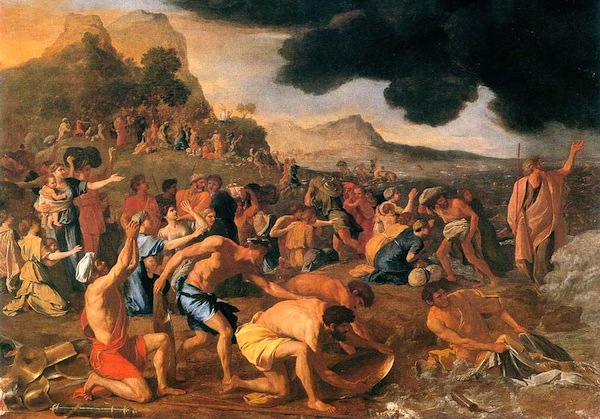
“The Crossing of the Red Sea” by Nicolas Poussin, 1634. (photo from wikimedia)

We are a people with many memories, many stories, and who we are has been shaped by the stories we remember and tell.

More than any other holiday, Pesach is about remembering and passing that memory down to the next generation. Every Jew is commanded to see themselves as if they came out of Egypt, and to tell their Egypt story to their children. The telling of this story is not mediated by teachers or rabbis, nor is it told in a communal framework. The setting of the seder is one of family and immediate friends, and the responsibility is upon every one of us to decide how we convey the story.

What makes this particularly challenging is that, beyond the complicated family dynamics, a Haggadah that is deeply problematic and different sensibilities with regard to what needs to be done, we have inherited two different stories. The challenge is not merely how to tell the story, but which story to tell.

One story, which dominates much of the Haggadah, not to speak of the story as told in the Torah, focuses on Pesach as a story of exodus, of the Jewish people being freed by God from the slavery of Egypt. “I am the Lord. I will free you from the labours of the Egyptians and deliver you from their bondage. I will redeem you with an outstretched arm and through extraordinary chastisements. And I will take you to be my people, and I will be your God.” (Exodus 6:6-7)

More than freedom and salvation, Pesach is a story of the election of the Jewish people, as God pours down God’s wrath on those who enslave the chosen ones and redeems us out of the hands of Egypt to be God’s chosen people. Each plague, told and magnified, is an expression of love, a gift of betrothal of God to us, an offering that bonds us to one another. “I the Lord am your God who brought you out of the land of Egypt, the house of bondage: you shall have no other gods besides me.” (Exodus 20:2-3)

One of the core consequences of this election narrative under Jewish law is the sanctioned discrimination between Jew and non-Jew, between the Children of Israel and the nations of the world. Because God saved us, all of us, from the slavery of Egypt, Jews are all equal, and no Jew can take another Jew as a slave. However, those who are not the recipients of the gift of exodus, the non-Jews, can become our slaves (Leviticus 25). When we go to war, even wars of aggression, the God who took us out of Egypt will always fight on our side, because the moment of election creates an us-them dichotomy in which God is always with us (Deuteronomy 20). Idolatry is neither false nor futile. It is the worship allotted by God to the non-elected. We, the chosen people, are alone commanded to worship God. The God who saved us in Egypt is our God alone (Deuteronomy 4).

This tale of the story of Egypt finds its culmination in our traditional Haggadah, in which one of its concluding prayers is a petition to God to “Pour out your wrath on the nations that do not know you…. Pursue them with anger and destroy them from beneath the heavens of the Lord.”

There is a second story of Pesach, a story in which neither the exodus nor its accompanying plagues takes central stage, but rather the hundreds of years of our subjugation in Egypt. It is to this memory that the core symbols of the holiday – matzah, the poor person’s bread, charoset, the paste that resembles mortar, and maror, the bitter herb, which cause us to relive the experience of pain – all direct us.

It is this memory that shapes the most-repeated commandment in the Torah: “The stranger who resides with you shall be to you as one of your citizens: you shall love him as yourself, for you were strangers in the Land of Egypt.” (Leviticus 19) The story of Egypt is not one of us-them, but of us being them, of us being members of the community of the downtrodden, and the subsequent obligation to treat all who are in need, Jew and non-Jew alike, as equal members of our society.

In an interesting twist on this story, the Ten Commandments obligate us to rest on the Sabbath, “so that your male and female slave may rest as you do. Remember that you were a slave in the Land of Egypt, and the Lord your God freed you from there with a mighty hand and an outstretched arm: therefore, the Lord your God has commanded you to observe the Sabbath day.” (Deuteronomy 5)

It is not merely that because we once were slaves we are bonded to all those in need. The redemption from Egypt is no longer exclusively the moment of election of us, but rather an expression of God’s care and compassion for all who are enslaved. Both our slavery and our salvation unite us with God, in a common mission to bring freedom and equality to our world.

It is with this idea that we begin to tell the story of Egypt in the traditional Haggadah. “This is the bread of affliction that our forefathers ate in the Land of Egypt. All who are hungry let them come and eat.” All, and not merely fellow Jews.

Pesach is a tale of two stories. Each has shaped who we are. As we tell our stories and pass them down to the next generation, it is our obligation to take responsibility for what will define us in the future and what will determine our religious and national identity. The choice is ours. As you tell the stories this year, choose wisely. Our future and the future of Israel depend on it.

Rabbi Dr. Donniel Hartman is president of the Shalom Hartman Institute and author of the 2016 book Putting God Second: How to Save Religion from Itself. Articles by Hartman and other institute scholars can be found at shalomhartman.org.

Format ImagePosted on April 3, 2020April 2, 2020Author Rabbi Dr. Donniel Hartman SHICategories Celebrating the HolidaysTags immigrants, Judaism, migration, Passover, Shalom Hartman Institute
Take time to see Maskit

Take time to see Maskit

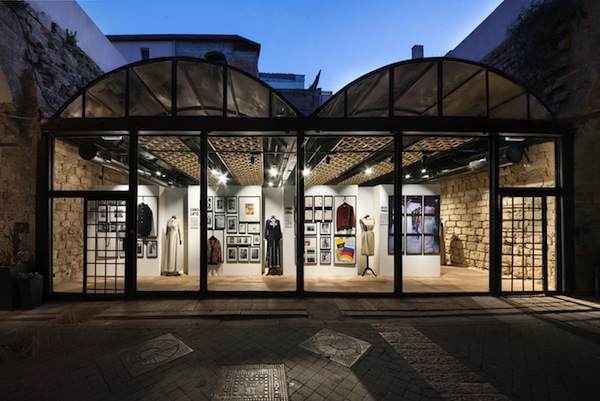
Maskit is located at 4 Auerbach St., in Jaffa. (photo from Maskit)

When next in Israel, in addition to walking the beaches of Tel Aviv, being spiritually uplifted at the Wailing Wall in Jerusalem and enjoying the food across the country, carve out some time to see the fashion houses that have put Israel on the map.

Over the last few years, Israel has been leading in the fashion industry, with numerous graduates from Shenkar College of Engineering, Design and Art landing jobs with renowned fashion ateliers in Europe. But let’s take a step back in time.

In the 1950s, post-independence, immigrants from Yemen and Morocco arrived in Israel. The government sought to train the women in textiles in order to provide for their families. At the time, Ruth Dayan (Moshe Dayan’s wife) was approached to lead the women and, seeing their talent in embroidery and weaving, she suggested that the government and a Hungarian designer, Fini Leitersdorf, initiate a designing business.

The House of Maskit became the headquarters of fashion, with Ruth Dayan as the principal designer. Maskit became famous for their signature caftan, with embellishments of embroidery, textures and the colours of Israel. At their peak, Maskit was featured in Vogue. Their tunic-style creations were considered art, gaining world recognition, enabling them to sell in Bergdorf Goodman, Neiman Marcus and Saks. As Maskit’s success grew, a higher-end line was introduced, which had buttons made from river stones, olive trees and pure silver. The fabrics were from the finest sheep’s wool, as well as silk, linen and cotton.

In the 1970s, however, the Israeli government stopped funding Maskit, shifting its spending to other priorities, notably the military. Ruth Dayan stepped down and, ultimately, Maskit closed.

Full speed ahead some 30 years, designer Sharon Tal, who graduated from Shenkar, returned to her native Israel after designing for the House of Lanvin in Paris and Alexander McQueen in London.

Although a new mother, she was still working, involved with a British lifestyle website that focused on the trends in Israel. Tal’s aha moment came when she saw Duchess of Cambridge Kate Middleton’s wedding dress, which was designed by the House of Alexander McQueen. Upon viewing the outfit, with its elaborate embroidery, she knew it was time for her to get back to design.

Together with her husband, Nil, they discovered that the House of Maskit was ready to reopen. Tal picked up the phone and called Ruth Dayan, then 94 years old. The two became friends and Maskit eventually was reborn, in 2013, melding together its history and Tal’s designs, known for their soft lines and feminine feel.

Maskit’s clients include actresses like Sarah Jessica Parker and Jamie Lee Sigler. However, one of the greatest honours was when the late first lady of Israel, Nechama Rivlin, bestowed then-U.S. first lady Michelle Obama with a coat designed by Tal on a visit to Israel.

The couturier’s home is in Jaffa, where Tal has her atelier. The décor is wondrous, with stone walls, warm natural hues and rows of heavenly designs displayed. On your next visit, do some shopping for what are sure to be lifetime classics.

For more information, visit maskit.com.

Ariella Stein is a mother, wife and fashion maven. A Vancouverite, she has lived in both Turkey and Israel for the past 25 years.

Format ImagePosted on April 3, 2020April 2, 2020Author Ariella SteinCategories IsraelTags fashion, Israel, Maskit, Ruth Dayan, Sharon Tal, travel
Hadrian’s Arch – built to last

Hadrian’s Arch – built to last

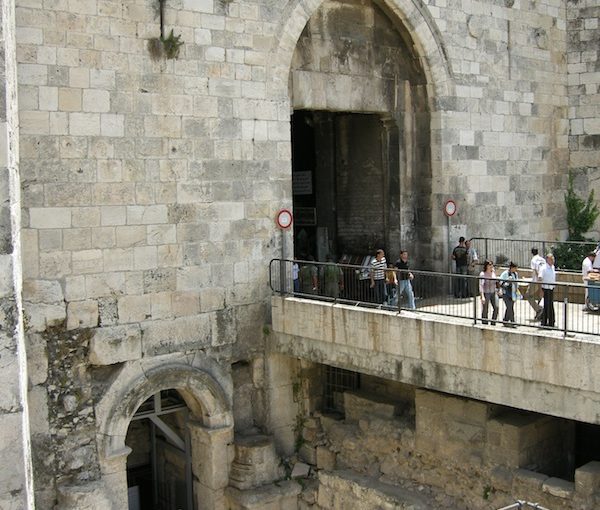
Damascus Gate today and, below it, the Aelia Capitolina arch leading to the Roman Plaza. (photo by Deborah Rubin Fields)

Revenge is sweet. Apparently, while the Roman Emperor Hadrian did not spike enemy heads on palisades, after three years of battle, he did construct an arch celebrating the suppression of the Bar Kochba revolt. This archway was quite detailed, as it marked the northern border of his Jew-less Roman colony (Jews were only allowed in on Tisha b’Av to mourn the temples they had lost) and the Aelia Capitolina, a colony built on the Jerusalem the Romans had destroyed.

Below and to the left of Damascus Gate (built by Suleiman the Magnificent in 16th century CE) are the remains of Hadrian’s Arch of Triumph and his Roman Plaza. Although the site has been explored since 1864 by numerous archeologists, only recently have the Israel Antiquities Authority, the Jerusalem Municipality and the East Jerusalem Development Company (PAMI) cooperated to open to the public the arch that Hadrian ordered built in 135 CE.

The arch seen today was actually part of a three-arched entrance way. Two shorter arches bordered a taller and wider centre one. Only the eastern entrance remains fully intact, along with the bases of what were once elaborate stone pillars. Inside this archway, one still sees the vaulted ceiling and the floor made of large stone slabs.

The thick blocks making up this flooring measure some two metres (6.6 feet) long and 1.2 metres (3.9 feet) wide. To prevent people from slipping on the stones, the Romans striated some of the pavement, which is still in place, albeit worn smooth from use.

None of Hadrian’s building machinery was motorized, of course. Even the Roman tread wheel crane was run on human or animal power. Not one to waste and not one to overlook architectural beauty, Hadrian scavenged the enormous stones of the razed Second Temple and public structures – Herodian stones from the Temple area are distinct in having narrow margins and low, flat, smooth centre bosses. Hadrian used these stones to build two massive guard towers flanking the archway on the right and left.

As the Herodian stones were not attached by mortar, it was probably relatively easy – the average weight of each is said to have been two to five tons – for Hadrian’s gate builders to dismantle the Temple-area stones. These huge limestone pieces still stand, as the remains of the guard towers, neatly stacked at an incredible height of some 11 or 12 metres.

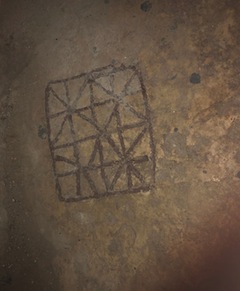
photo - In the Roman Plaza, a Roman soldiers’ game can be found on the ground
In the Roman Plaza, a Roman soldiers’ game can be found on the ground. (photo by Deborah Rubin Fields)

Soldiers throughout history have faced boredom. To counter this, the Roman soldiers in these guard towers played games. One such “board game,” is still scratched into the flooring near the towers.

The gate with its three arches was typical of its period. Just above the remaining arch, one can still decipher the “C” in the Latin inscription bearing the city’s Roman name, Aelia Capitolina. In Jerusalem, a similar example of this kind of gate is the Ecce Homo Arch. It served as an entrance to the eastern forum of Aelia Capitolina. Part of it may be seen today, along the Via Dolorosa.

As further evidence of how well-planned Hadrian’s city was, the gate opened into a plaza, a circular space that was the junction or crossing point of the eastern and western cardines (plural of cardo; literally, heart) or main roads. According to Simon Sebag Montefiore’s book Jerusalem: The Biography, this plaza led to two forums, one close to the destroyed Antonia Fortress and one close to today’s Church of the Holy Sepulchre. There, Hadrian reportedly built a temple to Jupiter.

This gate appears on Jordan’s mosaic Madaba Map. On the sixth-century map – a model of which appears inside the discovered Roman Plaza – one sees an open square with a column just beyond the gate. To prevent anyone from forgetting who was victorious over the Jewish rebels, the column was topped with Hadrian’s figure. On site, there is a model of the column to give current-day visitors an idea of how the column looked. From this column, distances to different parts of the country were measured. Moreover, the column is the source of Damascus Gate’s Arabic name, Bab al-Amud.

To the left of the arch entrance are the large millstone remains from the later Byzantine period. Most likely, an olive oil factory existed there in ancient times.

To the east of the Roman Plaza, there are three other sites worth visiting when such things become possible again, once the COVID-19 pandemic is contained:

Zedekiah’s Cave (also known as Solomon’s Quarry) has visiting hours like those of the Roman Plaza. As the cave has very good acoustics, over the past few years, it has been used to host concerts. The entrance fee is currently 18 shekels. The local telephone is the same as that of the Roman Plaza, 02-6277550. There is partial wheelchair accessibility.

Rockefeller Archeology Museum, on the northern side of the street, recently had a small, but fascinating, exhibit dealing with the 100-year history of Jerusalem Armenian Ceramics. (imj.org.il/en/exhibitions/glimpse-paradise). The museum is free of charge, with hours Sunday, Monday, Wednesday and Thursday, and even on Saturdays. There is a short flight of stairs at the entrance, so contact the curator, Fawzi Ibrahim, about visiting in a wheelchair. The local number is 02-628-2251.

The Northern Promenade route of the Old City’s ramparts allows you to visit these areas from “above,” but is not designed for wheelchairs or strollers. Buy tickets at the tourist office just inside Jaffa Gate.

From the Romans onward, rulers have built special arches marking the defeat of their enemies. Hadrian’s Arch might also have served as a reminder to potential rebels not to try again. What does seem clear is Hadrian has left us with a 1,885-year-old reminder of the many changes of hands Jerusalem has undergone.

Deborah Rubin Fields is an Israel-based features writer. She is also the author of Take a Peek Inside: A Child’s Guide to Radiology Exams, published in English, Hebrew and Arabic.

Format ImagePosted on April 3, 2020April 2, 2020Author Deborah Rubin FieldsCategories TravelTags archeology, Damascus Gate, Hadrian, history, Israel
Jewish Stockholm visit

Jewish Stockholm visit

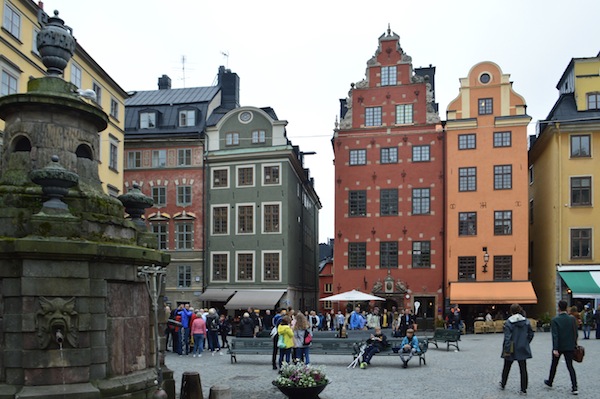
Stockholm’s neighbourhoods are pristinely preserved. This photo was taken last summer. (photo by Ella Kaplun)

Summer days in Stockholm seem never ending. The sun refuses to set until around 10 p.m., leaving a romantic glow upon the city for the evening hours. It is a city made up of a string of 14 islands, most interconnected by bridges; the blue of the water and the green of the land fit together like irregular shaped pieces of a giant jigsaw puzzle.

Stockholm has a unique landscape, with barely any high-rise buildings, except for church spires that pierce the otherwise almost-unobstructed skyline. Since Sweden was neutral during the Second World War, Stockholm was not touched by the war and its old neighbourhoods are pristinely preserved, and feature low buildings in different shades of pastel, inspired by many varied styles of architecture, especially in the Old Town, Gamla Stan.

To get around the city conveniently, a Stockholm Pass, which can be purchased in advance (stockhompass.com), enabled us to hop on and off buses, visit museums and take the always enjoyable ferry rides. But, besides touring, my granddaughter and I also explored Stockholm’s Jewish life here, with its deep-rooted history. Although Sweden has the largest population of Jews in the Scandinavian countries – an estimated 20,000 thousand, 4,500 of whom live in Stockholm – they have a minuscule number compared to other European countries.

To learn more about Stockholm’s Jewish past, we took a three-hour walking tour with knowledgeable guide David Kay from Milk and Honey Tours. We started at our hotel, the Diplomat, a turn-of-the-20th-century Art Nouveau building overlooking Nybroviken Bay. We walked along the waterfront toward the Gamla Stan, where Jews were first officially allowed to settle in Sweden. Ferryboats lined the docks and, last summer, in the many bars and restaurants, including many vegetarian ones, people were relaxing after work, meeting friends and taking in the summer sun.

We crossed a bridge to Gamla Stan, a harbour town built on a hill, with the Royal Palace on top. As we were winding our way up narrow, cobbled streets, passing eye-catching storefronts, our guide told us the story of David Isaac. In 1774, the wealthy gem merchant and seal engraver was invited to settle in Stockholm by Gustav III, to help finance his military expeditions. Unlike Jews who came to Sweden before him and accepted conversion for the privilege of staying, Isaac made it a condition for coming that he be allowed to practise as a Jew. He also insisted that he bring with him other Jewish families so a congregation could be formed.

Our guide then pointed out the middle storey of a three-storey apartment house where the first synagogue in Sweden had been housed. This building, just off the island’s main square, where the Nobel Museum is located, was recently purchased by the Jewish community to be converted into a Jewish museum.

Our tour ended by crossing to another island to see the Great Synagogue. Built in 1870 in a Moorish style, it is a testimony to the wealth and privilege Jews attained by that time and the tolerant attitude of their adopted country. It is now a Conservative synagogue with a female rabbi.

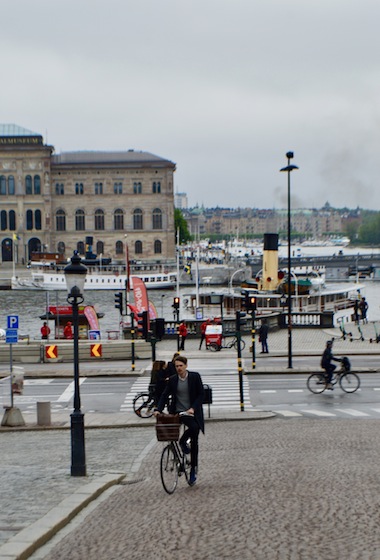
photo - There are many ways of getting around Stockholm
There are many ways of getting around Stockholm. (photo by Ella Kaplun)

Jews have contributed, of course, to the cultural and economic life of Sweden. An elegant department store in the centre of Stockholm was established by the Saks family, who also owned Saks Fifth Avenue in New York. The renowned publishing house Bonnier, founded in 1804, is still important in the literary life of Sweden. The Stockholm Concert Hall was built by the textile merchant Isaac Hirsch and the City Hall was largely financed by Jewish donors. Even though many of these older families are no longer Jewish, because of intermarriage and assimilation, they continue to support Jewish causes.

However, the climate for Jews has changed and Sweden is no exception to the rise of antisemitic incidents in Europe and in North America. There have been news reports of harassment, intimidation and attacks on Jews in Malmo, Gothenburg and other towns. In Sweden, antisemitism has found oxygen both among white supremacists on the far right and Israel-bashers on the far left.

Nevertheless, Jewish life goes on, albeit on a reduced scale. We spoke with a local high school senior, Eliot, who was involved in the Jewish youth organization in Sweden. He told us that, for him, as for many of his peers, Glamsta, the only overnight Jewish summer camp, was his most important experience in maintaining his Jewish identity. Located in Stockholm’s picturesque archipelago, this small camp attracts children from all over the country. “This was the first time I was involved with Shabbat rituals,” Eliot said, “and it made me proud to be Jewish. In this camp you also become part of a close-knit community of young Jews.”

Another important institution that helps to keep the community together is the Bajit (House), a Jewish cultural community centre, built in 2016. It houses the Hillel school, the only Jewish day school in Sweden, with 360 students in classes from kindergarten to sixth grade, and it also sponsors many cultural events. Like all schools in Sweden, including universities, this one is also tuition free.

Although most Swedish Jews hesitate to show any identifiable sign of their religion, the Chabad rabbi of Stockholm walks around with a kippah. Chabad is located on the island of Sodermalm, formerly a working-class neighbourhood that has been gentrified into a kind of Soho, with vintage and antique shops, art galleries and ethnic restaurants. Chabad holds an Orthodox minyan, hosts Shabbat and holiday meals, houses a kindergarten and is a gathering place for youngsters. Chabad also offers bar/bat mitzvah lessons and Jewish studies, and caters to tourists by delivering kosher meals to their hotels.

Stockholm’s Great Synagogue is not only an historical landmark, like in many other places in Europe, but also a functioning one. One Shabbat morning during our stay we witnessed a double bat mitzvah. One of the celebrants was a local girl, the other from New York, who chose to celebrate this important occasion in Stockholm because she and her family are active in Paideia, a Sweden-based organization dedicated to the revival of Jewish culture in Europe. Both girls read from the Torah, their young voices ringing out in this soaring historical interior, which can easily seat 900 people. On that Shabbat, fewer than 100 attended, but these young voices were the hope for the continuation of Swedish Jewish life.

Erika Leviant has written travel pieces for newspapers and magazines in the United States and Canada. Her granddaughter, Ella Kaplun, is an English major at New York University.

Format ImagePosted on April 3, 2020April 2, 2020Author Erika Leviant and Ella KaplunCategories TravelTags history, Judaism, Stockholm
Heart-felt and pain-filled memoir

Heart-felt and pain-filled memoir

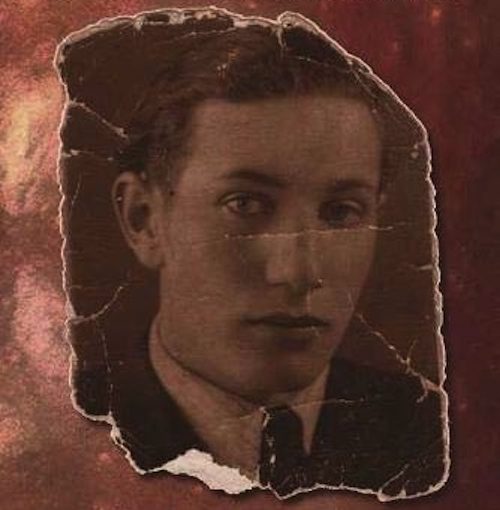
From the page before the opening of Moishe Rozenbaumas’s incisive, heart-felt memoir, we already feel the pain that will inhere in much of his story. Even before we begin reading this autobiography, we see a photocopy of the author’s dedication, handwritten in Yiddish, to the memory of his mother and three brothers, with the dates they were murdered by the Germans’ Lithuanian collaborators in August 1941, in Telz, where Rozenbaumas (1922-2016) was born.

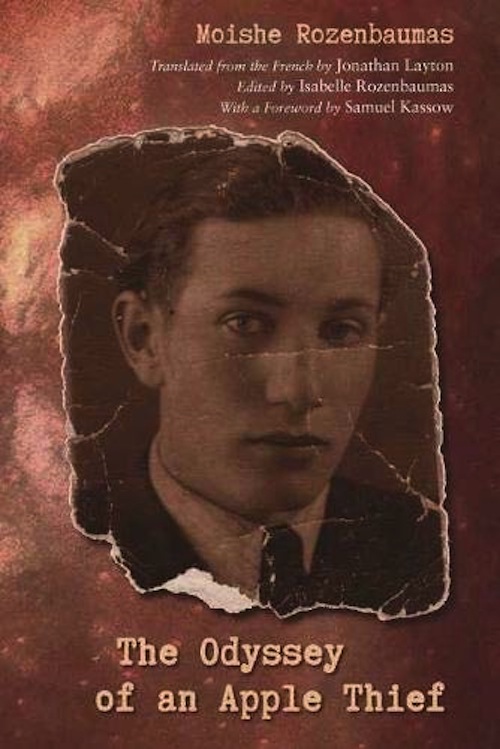
Many people know Telz as the name of the famous yeshivah that was located there, but The Odyssey of an Apple Thief (Syracuse University Press, 2019) by Rozenbaumas – translated from the French by Jonathan Layton and edited by Isabelle Rozenbaumas – takes us into the city, depicting a vibrant Jewish culture, zeroing in on housing, way of life, learning and sports. The title comes from little Moishe’s sneaking into the bishop’s orchard next door and nabbing apples, and the author gives us an historian’s sweep of an area, with a memoirist’s penchant for detail.

For instance, his description of a middle-class household’s Sabbath meal. Although Jews lived “in poverty, hand to mouth,” middle-class Jews had munificent Sabbath meals. Typical to Eastern European towns, the housewife prepared the cholent pot at home, then brought it to the baker, whose oven was heated all Friday night long throughout the Sabbath. Then, around noon on Shabbat, the woman would go and pick up her cholent. Most Jews didn’t have the sort of meals that Rozenbaumas describes, which are at odds with the reigning poverty in Telz.

When the Germans occupy Lithuania, Rosenbaumas accents the avid cooperation between the Lithuanians and the Germans, who murdered 90% of Lithuania’s Jews. He writes that the situation of the Jews in Lithuania was no worse than in other countries; they weren’t loved but they were tolerated. However, in the very next sentence, we read that once, when the president of Lithuania addressed an antisemitic rally, he said that nobody should be stupid enough to slaughter a productive cow while it’s still giving milk.

image - The Odyssey of an Apple Thief book coverRozenbaumas provides what he considers a needed reassessment of the yizkor bikher, the memorial books that survivors of various towns assembled after the Holocaust, which always accented the people’s “piety, purity and morality,” even though there were all kinds of individuals. What is often omitted from these yizkor bikher, Rosenbaumas states, is the miserable poverty of Jews who lived in lightless cellars, had only black bread dipped in powdered sugar for food, froze in winter, and dressed in rags.

During the financial crisis in the late 1920s, his father’s successful fabric shop began slipping. Rather than declaring bankruptcy, the father ran away to Paris, where he had sisters. Despite continuing promises, the father never sent any support to his wife and children, and was unaware of what happened to his family until after the war.

Without a father, the author’s mother and her four boys slowly sank into poverty and hunger. Rozenbaumas becomes an apprentice to a poor tailor with 10 children who live in squalid quarters. Soon, he is the sole breadwinner for his family. But, when the Germans invade, he flees eastward to the Soviet Union, just like his father had fled westward. But the author doesn’t notice the irony of the breadwinner again fleeing alone. True, Rozenbaumas asks his mother to come, but she refuses; he doesn’t ask any of his brothers to join him in his flight.

In the Soviet Union, life wasn’t easy. First, Rozenbaumas served four years on the front, undertaking dangerous reconnaissance missions; he was wounded and decorated several times. He regrets that Jewish former soldiers from other lands never mention the half million Jews who fought with the Red Army, including hundreds of Jewish generals and other high-ranking officers.

When Rozenbaumas’s unit liberates Lithuania, first thing he does is go to his house in Telz, where he finds Lithuanians occupying his now-emptied home. He learns where his family was massacred and longs for revenge, which soon comes. After volunteering as a translator for the Russians, he gets the satisfaction of hunting for the Lithuanian murderers, finding them, watching their trials and immediate executions. He even found the murderer of his youngest brother, Leybe, “who may have been,” Rozenbaumas adds, “his playmate.”

When Rozenbaumas finally decides to leave communist-controlled Lithuania, he describes the nightmare of leaving, taking the great risk of paying an exorbitant fee for forged papers that would guarantee his exit. He makes it, finally, across the border into Poland, with suspense and fright accompanying him like a second skin. It was not until he got to Vienna that he could breathe freely.

One day, Rozenbaumas met a man who knew about his father in Paris and thus was able to find him. But the father-son relationship was uneasy. The father never expressed a word of emotion regarding the murder of his wife and his three sons.

Coincidence also plays another crucial role. Rozenbaumas, by chance, bumps into his old girlfriend, Roza, and later marries her.

Rosenbaumas concludes his touching narrative with the hope that the stories of the European Jewish civilization that was brutally erased from the face of the earth will not be forgotten.

 Curt Leviant’s most recent novel is Katz or Cats; Or, How Jesus Became My Rival in Love.

Format ImagePosted on April 3, 2020April 2, 2020Author Curt LeviantCategories BooksTags history, Holocaust, memoir, Moishe Rozenbaumas, Yiddish
Shalev’s latest not her best

Shalev’s latest not her best

In an interview with the Jewish Independent in 2014, after her book The Remains of Love came out in English, Israeli writer Zeruya Shalev said that, until that novel, she had been avoiding writing directly about what she called “the Israeli reality.” She said at the time: “And yet, still I am wrestling with the dominance of this reality, and try not to let it take over my books – it’s enough that it controls my life.”

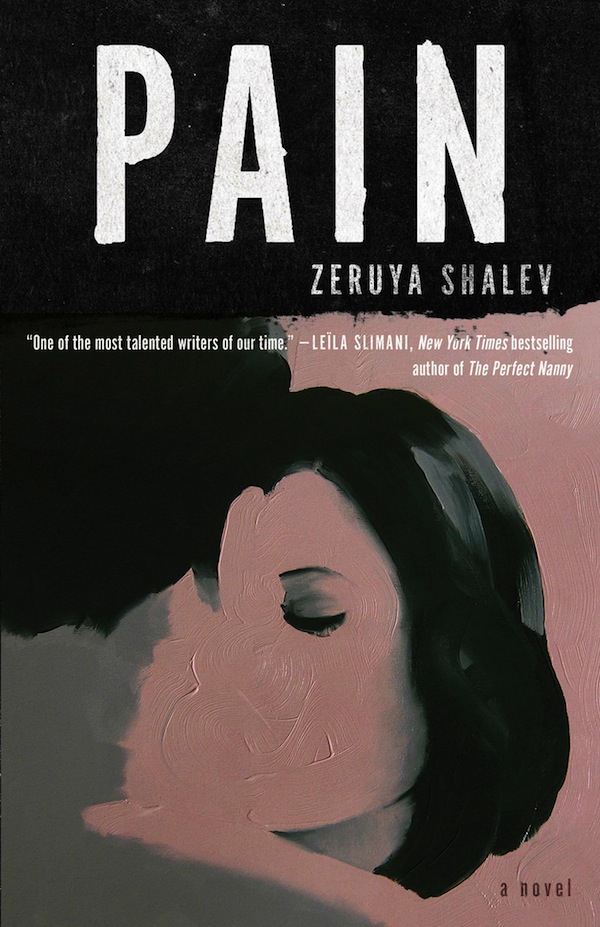
Shalev’s latest novel to be translated into English is all about the Israel reality, but not in the engaging and provocative way that The Remains of Love was (see jewishindependent.ca/zeruya-shalev-opens-jewish-book-fest). Concisely called Pain, Shalev’s story about a Jerusalem woman suffering post-traumatic stress syndrome, which flares up on the 10-year anniversary of when she was seriously injured in a terrorist attack, is anything but concise. Translated ably by Sondra Silverston, the book needed a better editor, as Shalev gets lost in the physical and emotional suffering of her protagonist Iris, who is not portrayed likeably.

image - Pain book coverDespite being the respected principal of a successful school, despite being married to a perhaps dull but well-meaning husband (who could well be distant because of his wife’s indifference to him) and despite raising two competent and kind but vulnerable children, one of whom desperately needs her help, Iris cannot let go of a lost love from her teenage years. When, by chance, at a clinic, she meets Eitan, the man who left her so abruptly so long ago – he is now a doctor who specializes in the treatment of pain – Iris goes headlong into the fantasy of what her life could have been with him, despite all indications that he’s a selfish and emotionally stunted ass. She considers leaving everything tangible and good that she has built for herself for a life that never was.

There are some astute observations in this novel – about trauma and how it affects not only the person injured but those who love them, about the harmful effects of living in the past, about forgiveness, about the fickle nature of life, and more – but it gets lost in Iris’s nearly interminable self-pity and self-delusion. Pain is not Shalev’s best work.

Format ImagePosted on April 3, 2020April 2, 2020Author Cynthia RamsayCategories BooksTags fiction, health, terrorism, Zeruya Shalev
‘הקהילה היהודית בוונקובר – חלק ד

‘הקהילה היהודית בוונקובר – חלק ד

(מוזיאון העם היהודי L.11730)

כמחצית מהיהודים שחיים בוונקובר ובאזור אינם שייכים לשום קהילה דתית. הקהילה של ונקובר גדלה במהירות רבה, החיים היהודיים התוססים מנוהלים על ידי הפדרציה היהודית של ונקובר רבתי. יש מערכת חינוך יהודית ענפה הכוללת עשרה גנים, שלושה בתי ספר ונקובר היברו אקדמי, תלמוד תורה יסודי ותלמוד תורה תיכון, וכמה בתי ספר ערב ובתי ספר של יום ראשון: בית ישראל, אור שלום, בית הספר של בית הכנסת שלום, בית מדרש תורת חיים במערב ונקובר, בית תקווה, ביתה ספר היהודי ריצ’מונד ועץ חיים. שלושת האחרונים בעיר ריצ’מונד הסמוכה לוונקובר. הכולל הקהילתי של ונקובר רבתי, שנמצא בבית הכנסת עץ חיים, מקיים הרצאות וסמינרים ביהדות בכל אזורי ונקובר. קורסים בעברית לומדים במיני אולפן קיץ. ארגוני נוער וסטודנטים כוללים בני ברית והילל, קרן עבור סטודנטים יהודיים באוניברסיטת קולומביה הבריטית ואוניברסיטת סיימון פרייזר, שתיהן בוונקובר, וכן מכללות אחרות באזור. יש עוד ארגוני נוער: הבונים דרור, תנועה ציונית, קדימה, מועצת הנוער היהודי, הועידה הלאומית לנוער תנועת הנוער של בית הכנסת שלום ותנועת הנוער של בני ברית.

בתי הכנסת בוונקובר משקפים מגוון רחב של תנועות וזרמים יהודיים: בית המדרש בני יעקב (אורתודוכסי), בית הכנסת הספרדי היחידי במערב קנדה, חנך מבנה חדש בחודש יוני אלפיים וארבע. בית ישראל (קונסרבטיבי), הראל (שוויוני-קונסרבטיבי) במערב ונקובר, ברוח התנועה הקונסרבטיבית. לובביץ’ של מחוז קולומביה הבריטית (חסידי). אור שלום (רקונסטרוציוניסטי), שייך לתנועה לתחייה יהודית; שוחרי צדק (אורתודוכסי), שייך לקהילה האורתודוכסית הגדולה בוונקובר, מקיים תפילות יומיות, ונוכחות רבה מאד בתפילות יום השבת; בית לואיס ברייר (אורתודוכסי); שלום (רפורמי), נחנך בשנת אלף תשמע מאות שבעים ושש, בית הכנסת הרפורמי הראשון במערב קנדה. וכן שערי תפילה (מסורתי).

בוונקובר פועלים ארגונים יהודיים רבים. נזכיר אחדים: הקונגרס היהודי הקנדי אזור האוקיינוס השקט, ועדה לענייני ישראל קולומביה הבריטית, המרכז לענייני ישראל והיהודים בקנדה. הקשרים בין הקהילה היהודית בוונקובר לבין ישראל נשמרים בין היתר הודות לסניפים מקומיים של אגודות הידידים הקנדים של אוניברסיטאות ישראליות ומוסדות מחקר והשכלה גבוהה וגם מוסדות רפואה, תרבות והומניטריים.

שירותי הקהילה כוללים סוכנות לשירותי משפחה, אגודת עזרה, ומרכז שלום של מחוז קולומביה הבריטית למידע, הפנייה ומתנדבים. הקהילה פיתחה תכנית סיוע לנזקקים, יד ביד מועצה לטיפול בעוני, אגודת דיור ללא מטרת רווח, ומפעילה תכניות לאזרחים קשישים: מועצה לקשישים ואנשים עם מוגבלויות, וגם ארגונים, מועדונים, ואגודות לחברי הקהילה הקשישים: מרכז יום לקשיש לחיים, קשישי בית הכנסת שלום, קשישי הר-אל מערב ונקובר, קשישי שלום עליכם של מוסד פרץ ונקובר ועוד. מועדון טיולי טבע, מועדון פנויים ופנויות וקהילה עבור הפנויים והפנויות. שירותי סיוע למהגרים יהודים ולימודי אנגלית למהגרים למען שילובם של מהגרים יהודים בקנדה. יש גם כמה ארגוני נשים: נעמ”ת קנדה, מועצת הדסה-ויצ”ו ונקובר, נשות אמונה קנדה, מועצה לאומית לנשים יהודיות, ארגון נשים לסיוע של בית לואיס ברייר, וג’ואיש וומן אינטרנשיונל.

על הפעילות התרבותית מופקדים כמה ארגונים, ביניהם מרכז פרץ לתרבות יהודית חילונית, החברה ההיסטורית היהודית של קולומביה הבריטית וארכיבי הקהילה, שמוציאים את כתב העת של החברה ההיסטורית היהודית של קולומביה הבריטית, המוסד הגניאלוגי היהודית ופסטיבל הסרטים היהודי ונקובר, שנוסד בשנת אלף תשע מאות שמונים ותשע. יש שני ארגונים המוקדשים לזכר קורבנות השואה: מרכז השואה לחינוך וזיכרון ובו ארכיון אור קולי של עדויות , מקיים פעילות חינוכית , והארגון המערבי של ניצולי השואה משפחות וידידים. קמפוס הקהילה היהודי ע”ש הארי וג’נט וייברג בו שוכן המרכז הקהילתי של ונקובר רבתי וגם הספרייה הציבורית ע”ש יצחק וולדמן. תקשורת יהודית: יחד, פדרציה יהודית למגזין של ונקובר רבתי, ג’ואיש ווסטרן בולטין הנקרא כיום הגו’איש אידיפנדט, ומדריך לחיים היהודיים בקולומביה הבריטית.

Format ImagePosted on April 1, 2020June 30, 2020Author Roni RachmaniCategories UncategorizedTags British Columbia, history, Jewish community, Jewish museum, JMABC, Vancouver, Victoria, וויקטוריה, וונקובר, מוזיאון העם היהודי, קהילה יהודית, קולומביה בריטית, תולדות

Posts pagination

Previous page Page 1 … Page 4 Page 5
Proudly powered by WordPress