Skip to content
  • Home
  • Subscribe / donate
  • Events calendar
  • News
    • Local
    • National
    • Israel
    • World
    • עניין בחדשות
      A roundup of news in Canada and further afield, in Hebrew.
  • Opinion
    • From the JI
    • Op-Ed
  • Arts & Culture
    • Performing Arts
    • Music
    • Books
    • Visual Arts
    • TV & Film
  • Life
    • Celebrating the Holidays
    • Travel
    • The Daily Snooze
      Cartoons by Jacob Samuel
    • Mystery Photo
      Help the JI and JMABC fill in the gaps in our archives.
  • Community Links
    • Organizations, Etc.
    • Other News Sources & Blogs
    • Business Directory
  • FAQ
  • JI Chai Celebration
  • JI@88! video

Recent Posts

  • Sharing her testimony
  • Fall fight takes leap forward
  • The balancing of rights
  • Multiple Tony n’ Tina roles
  • Stories of trauma, resilience
  • Celebrate our culture
  • A responsibility to help
  • What wellness means at JCC
  • Together in mourning
  • Downhill after Trump?
  • Birth control even easier now
  • Eco-Sisters mentorship
  • Unexpected discoveries
  • Study’s results hopeful
  • Bad behaviour affects us all
  • Thankful for the police
  • UBC needs a wake-up call
  • Recalling a shining star
  • Sleep well …
  • BGU fosters startup culture
  • Photography and glass
  • Is it the end of an era?
  • Taking life a step at a time
  • Nakba exhibit biased
  • Film festival starts next week
  • Musical with heart and soul
  • Rabbi marks 13 years
  • Keeper of VTT’s history
  • Gala fêtes Infeld’s 20th
  • Building JWest together
  • Challah Mom comes to Vancouver
  • What to do about media bias
  • Education offers hope
  • Remembrance – a moral act
  • What makes us human
  • המלחמות של נתניהו וטראמפ

Archives

Follow @JewishIndie
image - The CJN - Visit Us Banner - 300x600 - 101625

Month: January 2015

Century of interest-free loans

Century of interest-free loans

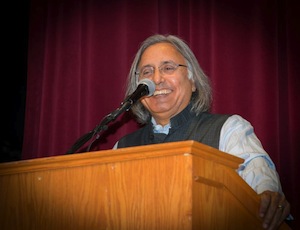
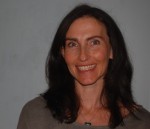
Michelle Dodek is the new president of the Hebrew Free Loan Association. (photo by Naomi Dodek)

The first free loan society in the Vancouver Jewish community was established 100 years ago, in March 1915. It is in this organization that the Hebrew Free Loan Association (HFLA) of Vancouver has its roots. And so, the association will celebrate its centenary this May with a dinner honoring current and past supporters and borrowers.

“The centennial celebration is one of the key projects we’re working on right now,” Michelle Dodek told the Independent. “HFLA has so many success stories, and this event – planned for the evening of Lag b’Omer, May 7, at Beth Israel Synagogue – will give us the chance to share some of them with the community.” Dodek took over as president from Diane Friedman in December. Friedman led the HFLA board for nine years.

“We would like to raise our profile. We joke among ourselves that the HFLA is one of the community’s best-kept secrets. It is challenging for us to publicize what we do because we are serve a niche market,” she explained. “We lend to people who don’t qualify for a bank loan and who also have the means with which to repay a loan. Examples of our borrowers are people who are employed and have encountered difficulties, such as a furnace in need of repair or physiotherapy bills for rehab from an accident. We help old-age pensioners who face the cost of expensive dental work; families with no financial reserves who would like their child to have a nice bar or bat mitzvah; or a new immigrant who needs to buy or lease a car or equipment for a job.”

The concept of interest-free loans, she said, “stems from the Torah itself. In Exodus, parashat Mishpatim, which will be read this year on Feb. 14, it states that a Jew should not charge interest when lending money to other Jews.” This parashah has been used by many founding members of Jewish communities throughout North America to establish organizations similar to Vancouver’s HFLA. “We are affiliated with the International Association of Jewish Free Loans,” Dodek said. “Many of the member organizations were also founded by ‘landsmen’ wanting to help each other when large numbers of Jews began to arrive in communities around North American, about 100 years ago, just like Vancouver’s organization. We all disperse interest-free loans to Jewish people and some member organizations in the States provide interest-free loans to non-Jews, as well.”

The first free-loan society in Vancouver existed until the 1930s, according to HFLA’s website. Another organization, the Achdut Society, was established in 1927 and lasted into the 1960s. In 1979, Shirley Barnett reestablished the Hebrew Assistance Association and, in 2004 – HAA’s 25th anniversary year – HAA was renamed the Hebrew Free Loan Association of Vancouver. From 1979 to 2004, notes the website, HFLA granted more than 1,300 loans, “totaling more than $3.8 million, with virtually all loans having been repaid in full.”

Last year, they dispersed about 40 loans, and they have about 150 loans out in total, said Dodek. “Our numbers are down right now. One of my goals is to build connections in the community to get our mission out to those who would benefit from our service. We have already begun to reach out to different groups and organizations.”

The application process is clearly laid out on the website, as are the terms of repayment. “It’s a relatively easy process with little red tape,” said Dodek. “Once an application is submitted, a board member contacts the borrower within 24 hours. They meet, discuss the application and, at the next board meeting, the loan is dealt with. The board meets twice a month so applications are processed quickly.”

There are various types of loans available: personal (maximum $7,000), emergency (maximum $750) and education, business or other special purpose loans (maximum $10,000), all of which require guarantors.

“We are looking for borrowers,” said Dodek. “We have a strong board with so many fascinating people from all facets of the Jewish community. Our board members include business people and social workers, people who can help applicants, as well.”

The last time HFLA put on a community-wide event was in 2007. The association hopes that the upcoming centennial will increase awareness. Celebrating 100 years in a fairly young community like Vancouver’s is an unusual event.

“On May 7, people will have the rare opportunity to hear from our borrowers in person. We hope to attract a wide cross-section from the Jewish community who will celebrate our amazing history and help us build for the next 100 years. Having an event on Lag b’Omer is significant to our mission because, although people think of it as a holiday of bonfires, the holiday is really about the importance of treating others with respect and dignity. That’s what HFLA is all about. As we look at our amazing past and to our future, we want to help build capacity in our community. We need to reach out, reconnect with our past borrowers and our supporters to act as a referral network, as well as guarantors for future loans so we can lend more money,” Dodek said.

“The Hebrew Free Loan Association changes people’s lives. It enables people to get through a tough situation, to add to their education, to better their situation, to celebrate a milestone – so many things.”

For more information or to become involved, visit hfla.ca, email [email protected] or call 604-428-2832.

Gil Lavie is a freelance correspondent, with articles published in the Jerusalem Post, Shalom Toronto and Tazpit News Agency. He has a master’s of global affairs from the Munk School of Global Affairs at the University of Toronto.

Format ImagePosted on January 30, 2015January 29, 2015Author Gil Lavie and Cynthia RamsayCategories LocalTags Achdut Society, Hebrew Free Loan Association, HFLA, Michelle Dodek, Mishpatim
A new Moishe House

A new Moishe House

Moishe House Toronto’s first residents at the opening housewarming party on Jan. 17. Left to right are Aaron Savatti, Abigail Engelsman, Jillian Windman and Amanda Snow. (photo by Aliza Markovitch)

Earlier this month, Moishe House opened its doors for the first time in Toronto, providing Jewish 20-somethings there a home from which to connect to each other locally, as well as to one of the largest Jewish networks in North America.

Located in the Annex neighborhood, a cultural centre near the University of Toronto, Moishe House Toronto becomes the second Moishe House in Canada after Vancouver, which opened in 2011. Moishe House Toronto, which officially opened the night of Jan. 17 with more than 150 guests attending its first program, will be home to four residents. The young professionals will dedicate a portion of their free time to hosting seven-plus programs a month, ultimately reaching more than 1,000 young adults in total attendance over the course of the first year.

“Toronto is an amazing city and a real hub for young adults. We are thrilled to partner with the local community to bring Moishe House to the Toronto area,” said David Cygielman, founder and chief executive officer of Moishe House. “We are looking forward to our four new residents turning their home into a vibrant Jewish gathering place for their peers in Canada’s largest city!”

The four Moishe House Toronto residents are between the ages of 24-26 and bring their own unique story to the Toronto Jewish community. For example, Aaron Savatti’s grandfather started the Moroccan Jewish community in Toronto and his mother followed in his footsteps. Amanda Snow was born and raised in Thornhill, Ont., and currently works as a fund development coordinator at the Multiple Sclerosis Society of Canada. Abigail Engelman was born in London, England, and moved to Toronto in 2012 to work as a digital advertising executive. And Jillian Windman, whose grandparents emigrated from Poland after the Second World War, was born and raised in Toronto; she has led four organized trips to Israel as a mentor for the 2014-2015 Birthright training program.

In addition to the ongoing programs held one to two times per week, residents and participants will also be able to participate in Moishe House-sponsored Learning and Leadership Retreats and network with all North American Moishe House residents at the annual Resident Leadership Conference this summer. Beyond the organization’s own offerings, Moishe Houses serve as an entry point into Jewish life in general, opening the eyes of participants to other opportunities to engage in the Jewish community by partnering with various local organizations.

The opening of Moishe House Toronto is part of a major Moishe House International growth strategy aiming to double the number of Jewish, young-adult, peer-led communities worldwide by 2017. Currently, there are 74 Moishe Houses in 17 countries that engage more than 5,200 young Jews in programs year-round, and reach more than 88,000 in total attendance annually. The latest Moishe House is being launched through a group of Jewish communal leaders and annual philanthropists.

Founded in 2006, Moishe House uses a peer-to-peer and home-based model to engage Jewish young adults in their twenties in a non-denominational setting that builds community. The Moishe House model empowers young adults to become facilitators and leaders of their own Jewish community. Typical Moishe House programs include Shabbat dinners, Jewish holiday celebrations, sporting events, book clubs, social events and community service opportunities. To find out more, visit moishehouse.org.

Format ImagePosted on January 30, 2015January 29, 2015Author Moishe House TorontoCategories NationalTags Aaron Savatti, Abigail Engelsman, Amanda Snow, David Cygielman, Jillian Windman, Moishe House
A day to honor civil courage

A day to honor civil courage

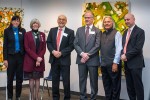
Left to right: Andrea Reimer, Judith Guichon, Henry Grayman, Thomas Gradin, Ujjal Dosanjh and Ezra Shanken, chief executive officer of Jewish Federation of Greater Vancouver. (photo by Wendy Fouks)

Ujjal Dosanjh, former premier of British Columbia and one-time federal cabinet minister, was recognized for civil courage at a ceremony at the Jewish Community Centre of Greater Vancouver on Jan. 18. The event marked the annual Wallenberg Day commemoration in the city, and the award was bestowed in the name of two extraordinary individuals whose actions during the Second World War resulted in the survival of tens of thousands of European Jews.

Dosanjh is the first recipient of the Wallenberg-Sugihara Civil Courage Award. In particular, Dosanjh was recognized for speaking out about political and religious violence in Canada’s Sikh community – notably, a warning in 1985 that Sikh extremism in India could target Canadians. A few months later, 280 Canadians were among 329 people killed when Air India Flight 182 was bombed. More generally, Dosanjh was recognized for a lifetime of contributions to British Columbia and Canada. (See story in the Jan. 9, 2015, issue of the Independent.)

The first annual award was presented at the 10th anniversary commemoration of Wallenberg Day, which honors Raoul Wallenberg who, as a Swedish diplomat in Budapest, issued visas that saved thousands of Jews. The Soviet military entered Hungary in January 1945, and Wallenberg was detained on suspicion of subversive activities. He was never seen again. The commemoration, which was initiated by Anders Neumuller, a former honorary Swedish consul to Vancouver, is now presented by the Wallenberg-Sugihara Civil Courage Society, which, along with Wallenberg, commemorates Chiune Sugihara, a consular representative of Imperial Japan in Lithuania who, similar to Wallenberg, issued visas that allowed thousands of Jews to escape Nazi-occupied Europe.

Henry Grayman, president of the society, explained that it was founded in 2013 by Swedes and Jews to honor and encourage acts of civil courage like those exemplified by Sugihara and Wallenberg.

The impact of acts of civil courage was made evident by Grayman’s wife, Deborah Ross-Grayman, who emceed the afternoon event. She credits her life to the war-era acts of Sugihara.

“I am the breath and the face of civil courage,” she said. “My own mother, Niuta Ramm, was the recipient of such a visa…. I live each day in gratitude for what has been given to me.”

She invited others in the audience whose survival could be credited to the acts of individuals like Sugihara or Wallenberg to stand, and close to a dozen people rose from their seats.

“As you see, one person can make a difference,” she said.

photo - Ujjal Dosanjh
Ujjal Dosanjh (photo by Wendy Fouks)

On stage with British Columbia’s Lt.-Gov. Judith Guichon and Sweden’s honorary consul to Vancouver, Thomas Gradin, Dosanjh received the award but deflected the accolades.

“I am absolutely humbled,” Dosanjh said. “It’s a great honor to be recognized in the names of Raoul Wallenberg and Chiune Sugihara.”

In turn, he said, he accepted the recognition in the name of victims of violence in recent days at Charlie Hebdo and the Jewish supermarket in Paris. He also gave thanks to his heroes – including his grandfather, and Mahatma Gandhi, “the father of the nation I deserted to become Canadian” – and also those who have stood by him during difficult times.

“Terrorism in the name of religion is at war with us,” Dosanjh said. “The venom that moves them leads them to not understand our common humanity. These infidels are not true to our common humanity.”

The lieutenant-governor said Dosanjh has “devoted his life to standing firm against injustice and against violence … he’s served and served.”

The viceroy added that it is more important than ever to celebrate and sing the praises of heroes with at least the vigor “as that with which the deeds of villains are reported.”

Deputy Mayor and Vancouver City Councilor Andrea Reimer brought greetings from the city and read a proclamation from the mayor. She urged people to take the opportunity in 2015 to prove that actions make a difference.

“We have a choice to act, or we have a choice to regret that we didn’t act,” she said.

In addition to Sweden’s Gradin, consular representatives were also in attendance representing Japan, Switzerland and Mongolia.

After the presentation, a feature-length film was screened. The Rescuers features diplomats and government officials from diverse places whose actions saved the lives of thousands of Europe’s imperiled Jews.

Pat Johnson is a Vancouver writer and principal in PRsuasiveMedia.com.


Format ImagePosted on January 30, 2015January 29, 2015Author Pat JohnsonCategories LocalTags Andrea Reimer, Chiune Sugihara, Deborah Ross-Grayman, Henry Grayman, Judith Guichon, Raoul Wallenberg, Ujjal Dosanjh, Wallenberg Day, Wallenberg-Sugihara Civil Courage Award
Blaney addresses UN

Blaney addresses UN

Minister Steven Blaney addresses an informal meeting of the United Nations General Assembly on Jan. 22. (photo from Public Safety Canada)

The Hon. Steven Blaney, Canada’s minister of public safety and emergency preparedness, on Jan. 22 delivered a statement addressing concerns of a worldwide rise in antisemitism. The speech was delivered at an informal meeting organized in New York by the United Nations General Assembly. Blaney addressed the assembly and delivered the statement to more than 50 UN member states, as well as special guests. His remarks were as follows:

“Mr. President, Mr. Secretary General, members of the General Assembly, distinguished guests, dignitaries and senior representatives, Mr. [Bernard-Henri] Levy, Mr. [Elie] Wiesel, ladies and gentlemen:

“Elie Wiesel is a man who lived through the horror of the Holocaust. He has called it ‘Night.’ He has spent his life fighting antisemitism, repression and racism. He is a source of inspiration in assuming mankind’s duty to remember.

“For Canada, Israel has an absolute and non-negotiable right to exist as a Jewish state. Indeed, almost exactly one year ago, our Prime Minister [Stephen] Harper stood in the Knesset in Jerusalem to declare that, through fire and water, Canada would stand with the people of Israel in the face of antisemitism.

“Our Canadian government has adopted an unequivocal approach against groups that spread hatred of Jews, rewrite history, publicly deny historical facts and the scope of the extermination of Jews during the Holocaust [or] are in favor of terrorist acts committed against the state of Israel.

“Sadly, recent events demonstrate that hatred of Jews is in resurgence around the world. The antisemitic attack on a kosher supermarket in Paris occurred on the heels of the horrific jihadist terror attack on Charlie Hebdo journalists.

“On Jan. 10 of this year, I had the privilege of laying a floral tribute in Paris – in front of the Hyper Cacher market – in honor of the victims of those cowardly terrorist attacks.

“Those voices that are being assassinated today and those pens that are being broken through violence are attacks on our own freedom of expression, our own liberty, our democracy, our way of life and our reason for being.

“The world will not be destroyed by those who do evil, but by those who watch them without doing anything. That is why Canada is a leader in the fight against ISIL and is working with a broad coalition of allies to reduce the very real threat posed by that group and terrorists who attack us. As Canada’s Foreign Minister John Baird said during a recent trip to Israel, ‘the great struggle of our generation is terrorism.’

“This very week, we witnessed threats and acts of vandalism against Jewish religious institutions, particularly the Beth Israel synagogue in Alberta.

“In 2010, the prime minister spoke at the Ottawa Conference on Combating Antisemitism, clearly outlining the real threat of antisemitism and Canada’s duty to respond. He said: ‘We must speak clearly. Remembering the Holocaust is not merely an act of historical recognition. It must also be an understanding and an undertaking. An understanding that the same threats exist today, and an undertaking of a solemn responsibility to fight those threats.’

“It was then in Canada, along with 50 other nations, that the Ottawa Protocol on Combating Antisemitism was signed; a robust action plan to share ideas and exchange practices about the best ways to combat and eliminate antisemitism around the world.

“Canada has taken a zero-tolerance approach to antisemitism and all forms of discrimination, including in rhetoric towards Israel and attempts to delegitimize Israel, such as the boycott, divestment and sanctions movement. This is because we have seen time and again that those who threaten the existence of the Jewish people are a grave threat to us all.

“More work needs to be done to combat the scourge of discrimination inherent to antisemitism and, under Prime Minister Harper’s leadership, Canada will continue to be a leader in those efforts.

“As I clearly stated to Jews with whom I met this year in Montreal, Paris or Jerusalem, Canada is your friend and your ally. You can count on our friendship and our untiring support.”


Format ImagePosted on January 30, 2015January 29, 2015Author Public Safety CanadaCategories WorldTags antisemitism, Charlie Hebdo, Holocaust, Hyper Cacher, Steven Blaney, United Nations
Friendships via music

Friendships via music

The YMCA Jerusalem Youth Chorus prior to their 10-day tour of Japan in August 2014. (photo from Micah Hendler)

There are many creative ways to bring about a peaceful dialogue between Israelis and Palestinians. In one particular case, an American Jew by the name of Micah Hendler combined choral singing and dialogue to help bring Palestinian and Israeli teens to a place of trust in Jerusalem.

Hendler, originally from Bethesda, Md., has been singing for as long as he can remember.

“For me, singing is a very powerful way of connecting to other people and creating communities, a sense of common identities, all the things that make people feel close to one another,” he said.

photo - YMCA Jerusalem Youth Chorus founder and conductor Micah Hendler
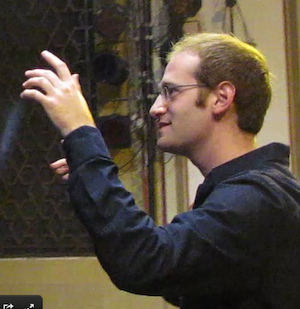
YMCA Jerusalem Youth Chorus founder and conductor Micah Hendler. (photo from Micah Hendler)

In his high school years, Hendler participated in Seeds of Peace, a program for teens from conflict regions around the world. For the first time, he had the opportunity to hear the stories of both Palestinians and Israelis.

“It made me realize the power of talking to others who are different, the power of showing people there are other ways to see things, more complete ways to see things,” he said of Seeds of Peace. “That’s what really got me interested in the Israeli-Palestinian conflict. In many ways, this was in contrast to the education I’d received.”

Over the years that followed, as Hendler continued his involvement with Seeds of Peace, he thought about ways in which he could create a new community, and decided on a singing group.

“I thought that would be really cool,” said Hendler, now in his 30s. “I could empower people and show them that they could sing and be part of something like this. For me, I thought … this is a way I can do things I really love to do in the context of needing ways for people to come together.”

When Hendler was ready to kick things off, he had just graduated from Yale. “I thought, if I’m ever going to do this, now’s the time.”

With degrees in music and international studies, and a host of other experience, both in music and in conflict transformation, Hendler moved to Jerusalem. He spent the first couple of months having coffee with anyone and everyone. He also spent a lot of time at high schools, sharing information about the choir, the YMCA Jerusalem Youth Chorus. Eighty youth auditioned, with the majority coming from East Jerusalem.

“There were so few extracurricular options in East Jerusalem at all, let alone singing options,” said Hendler. “For kids that liked to sing, I was one of the very few possibilities around.”

Hendler accepted 30 kids (ages 14-18), an even split of Israelis and Palestinians.

A friend connected Hendler with Israeli singer/songwriter David Broza, who was working on the album East Jerusalem/West Jerusalem at the time. Broza invited the chorus to be part of it. “It’s pretty amazing – that was three months into the choir, and we were recording with David Broza in the studio,” said Hendler.

The YMCA Jerusalem Youth Chorus program begins and ends with singing, with dialogue embedded in the middle. It does not take long for the kids to mingle. “They were in a completely unstructured context, already hanging out across linguistic and national lines,” said Hendler. “A lot of girls were singing pop songs on the piano and the guys were doing their thing, and different people were talking.”

The cost for the program is covered by the Jerusalem Foundation and private donors in and outside of Israel; the kids pay a symbolic fee to attend, as long as they are able.

Hendler’s main focus now is on ensuring that the kids feel part of a group, which is a moving target as the chorus grows. Currently, there are 44 kids divided into three dialogue groups, but Hendler is looking at other options. “There’s a limit of how big the choir could be in terms of what is manageable,” he said. “But, it would be possible to have multiple ensembles at different levels.”

When selecting kids for the chorus, Hendler looked for kids who wanted to meet new people and experience new things. As well, potential members needed both to be able to express any opinions they may have, as well as listen to those of others. “We also, of course, wanted people suited for singing,” he added.

Rehearsals are 3.5 hours and take place once a week. From as early as the second rehearsal, he said, “it was amazing that the kids were so open to one another. Obviously, with the linguistic and social challenges, the group had gone through a lot, but fundamentally there’s this openness and a joy that’s pretty inspiring.”

The dialogue is run by professional facilitators, “but I still have a good sense of what goes on,” said Hendler. “And, it’s actually really beyond inspiring, the way they listen to each other and create a space. The kids are real with each other, sharing their fears and hopes … but what’s really been amazing is that even outside the choir, the kids have started to speak up in their communities.”

Israeli high schooler Avital said of the program, “You get to know the other side, you get to be together, to see what it’s like being with kids different than you.” Shifra, another Israeli participant, said, “[Before] I only knew Israelis, I had never met any Arabs before I came here. I didn’t know what I was going to see … I wasn’t sure what I expected, but what I realized was that we’re all the same.”

Palestinian high schooler Alaa commented, “I learned from the sessions how not to stay silent, to express myself.” And Ameer, another Palestinian participant, said, “The choir is beautiful and we enjoy it, because we are Arabs and Jews, together at the same time.”

Rebeca Kuropatwa is a Winnipeg freelance writer.


Format ImagePosted on January 30, 2015January 29, 2015Author Rebeca KuropatwaCategories IsraelTags David Broza, dialogue, Israeli-Palestinian conflict, Micah Hendler, music, YMCA Jerusalem Youth Chorus
Safe options for pet lovers

Safe options for pet lovers

When it comes to cases of domestic violence, wanting to keep our pets has particularly dangerous implications; it can potentially put both children and adults at risk. (photo from commons.wikimedia.org)

Times are tough. Difficult financial circumstances and/or acts of violence force all kinds of people to seek shelter outside their homes. As if leaving one’s home in the wake of such challenges isn’t bad enough, sometimes this leave-taking involves the very painful question of what to do with the individual or family’s pet.

Many of us can well appreciate the desire to hold on to our animals. When it comes to cases of domestic violence, however, wanting to keep our pets has particularly dangerous implications; it can potentially put both children and adults at risk.

Dr. Frank Ascione provides this eye-opening statistic: “In 12 independent surveys, between 18 percent and 48 percent of battered women have delayed their decision to leave their batterer, or have returned to their batterer, out of fear for the welfare of their pets or livestock.” (Violence Against Women, 13(4), 2007)

Why are these pet owners willing to go to extremes to hold on to their animals? Genevieve Frederick of the U.S. organization Pets of the Homeless elaborates on her nonprofit’s website, “Their pets are nonjudgmental; provide comfort and an emotional bond of loyalty. In some cases, they provide the homeless with protection and keep them warm.”

In addition, Dr. Andrew Gardiner, who helps run free veterinary clinics at two homeless hostels in Edinburgh, Scotland, offers this interesting observation: “… many homeless people say that having a pet is what gives them hope….”

Critically, keeping the family dog or cat is vital to children’s continued emotional stability. In her groundbreaking paper for the National District Attorneys Association (NDAA), Allie Phillips states, “When a child has been abused or traumatized, it can be the nonjudgmental comfort from an animal that helps the child heal…. Children often love their pets like family members and, if a pet is threatened, harmed or killed, this can cause psychological trauma to the children.”

Moreover, Jewish law requires us to be pro-active in cases of domestic abuse as well in situations of cruelty to animals. In a 2007 article entitled “Few are guilty, but all are responsible: The obligations to help survivors of abuse,” Rabbi Mark Dratch (executive vice-president of the Rabbinical Council of America and founder of Jsafe) writes: “… the physical, emotional and spiritual dangers that result from perpetrators of abuse and violence … obligate each of us to protect potential victims from them.” Among the texts he uses to base his conclusions about Jewish responsibilities toward people in domestic violence situations are Leviticus 19:16 and Deuteronomy 22:2 and, in the case of cruelty to animals, Exodus 23:5 and Deuteronomy 22:4.

According to the Jewish Coalition Against Domestic Abuse: “Domestic abuse occurs in Jewish families at about the same rate as in the general community – about 15 percent – and the abuse takes place among all branches of Judaism and at all socioeconomic levels. Studies show that abuse occurs in every denomination of Judaism in equal percentages, and we see abuse in all communities including the unaffiliated.”

But the Jewish community in particular, and the community at large, have thus far established few shelters for pet-owning domestic violence victims. In 2014 (during two days of census taking), Vancouver had 1,820 individuals living in emergency or transitional facilities, 957 people living on the streets (homelesshub.ca/community-profiles/british-columbia/vancouver) and 88 children (under the age of 19) in the company of a parent. Of those people living in transition homes, 116 were women and children fleeing violence (vancouver.ca/files/cov/results-of-the-2014-metro-vancouver-homeless-count-july-31-2014.pdf).

Another complication once someone is able to transition back to a more stable living situation is access to affordable, pet-friendly rental accommodations. Vancouver has one of the lowest vacancy rates in Canada. Moreover, in British Columbia, there is no law permitting tenants to have a pet. In fact, the existing Residential Tenancy Act explicitly gives landlords the right to refuse pets, or to charge an extra deposit for accepting pets. Many renters have a hard time finding rental apartments and pet-owning residents have an even harder time locating suitable housing. People are often forced to choose between their pet and a roof over their head.

What then is available to these needy residents and their animals? The Salvation Army’s Centre for Hope in Abbottsford is currently working on becoming pet friendly. Shilo St. Cyr, program supervisor of Sheena’s Place, an Elizabeth Fry Society facility in Vancouver, reports: “We don’t accommodate women and children who have pets. We usually try to arrange for a dog sitter/shelter.”

Jodi Dunlop, Vancouver branch manager of British Columbia’s Society for the Prevention of Cruelty to Animals, reports: “Currently, our branches offer a two-week compassionate board for the animals. This gives the person leaving the violent situation a chance to find accommodation and not have to worry about the care and safety of their pet. In some cases, we have extended the care for the animal. It is dependent on each situation and also the animal’s welfare while in our care. There is no charge for this service. Our goal is to always reunite the animal with their owner.”

No doubt the animals are kept safe in foster care. But individuals and family members must temporarily deal with separation, both from their physical home and from the most cherished parts of that former home life.

Indeed, the flipside of this human attachment is such that dogs and cats of homeless people are also very attached to their owners. Gardiner points out: “The pet and the person spend so much time interacting with each other that the human/animal bond is incredibly strong. If these pets are taken from their owners, it is not uncommon for them to suffer separation anxiety or demonstrate other behavioral problems. In the worst case, a dog that is unable to adjust could end up being put down. That would be a terrible outcome.”

Nationwide, the number of Canadian domestic violence shelters offering pet facilities is still very small. While individual Vancouver cat and dog owners might find shelter for themselves and their pets at either 412 Women’s Emergency Shelter or St. Elizabeth’s-St. James Community Service Society, it appears the family member seeking temporary shelter in Vancouver would do best to contact either the BCSPCA branches in the Vancouver area or, as St. Cyr advises, contacting 211. Additionally, for more non-pet-related inquiries, the Women’s Safety and Outreach Program recently opened a weekday hotline between 5 p.m. and 1 a.m. – it can arrange transportation for women fleeing violence to housing (transition, shelter). As of this writing, the telephone number is 604-652-1010.

Deborah Rubin Fields is an Israel-based features writer. She is also the author of Take a Peek Inside: A Child’s Guide to Radiology Exams, published in English, Hebrew and Arabic.

Format ImagePosted on January 30, 2015January 29, 2015Author Deborah Rubin FieldsCategories LifeTags Andrew Gardiner, domestic violence, Frank Ascione, homeless, Jodi Dunlop, Mark Dratch, pets, Shilo St. Cyr, women

Bibi, Obama: Grow up

Iran’s propaganda machine Press TV on Monday reported that U.S. President Barack Obama had “unfriended” Israeli Prime Minister Binyamin Netanyahu on Facebook.

Predictably, it turned out the report was a hoax. Iran’s humorless propagandists reported as fact a joke from an Israeli satire site. And yet, despite the big journalistic oops (as if they care), the Iranian voice box made a legitimate point. The two men, ostensibly leading figures in world diplomacy, have in recent weeks been behaving like sulky teenagers.

Netanyahu unwisely accepted an invitation from the speaker of the U.S. House of Representatives, John Boehner, to address Congress, specifically to pressure the Americans to increase sanctions on Iran. The fact that this visit would take place at the height of the Israeli election campaign has been criticized by some, with others noting that former president Bill Clinton hosted Shimon Peres during an election cycle. The fact that the invitation came from the speaker of the house, rather than from the president, whose responsibilities include being the country’s foremost voice on foreign affairs – and its head of state and commander in chief – is a significant protocol breech, but a deliberate one.

We are becoming almost inured to successive hyperbolic assertions that bilateral relations between the United States and Israel are at their lowest ebb. But this time, it seems true, although a result of such foolishness that it seems almost comical, as well as tragic. These two men, whose seeming dislike for each other they are not even mature enough to hide or deny, are submerging the best interests of the relationship, shootings spitballs at each another across the divide.

Critics of Obama’s motivations allege that he does not pass the “kishkes” question; that his commitment to Israel’s security, such as it may be, is based a political imperatives or strategic demands, rather than a personal commitment to the idea of the Jewish state. To many others, these criticisms don’t hold water.

But what of Netanyahu? What on earth is he thinking, deliberately provoking his country’s most important international ally by inserting himself squarely into a constitutional tight spot, pitting the executive and legislative branches of the U.S. government against each other? Especially when Israel’s own intelligence service, the Mossad, has made clear that it is in Israel’s interest to allow negotiations with Iran to proceed, rather than to undermine them with additional immediate sanctions.

We are driven to ask, does Netanyahu know something we don’t? Does he know something the Mossad does not? Or is he driven merely by the hawkish demands of his domestic political constituency?

And why does he think that picking a fight – a very public, nasty and juvenile fight – with the president who was reelected with the support of 70 percent of American Jewish voters, would be a wise strategic or ideological move?

Greater minds can dissect the realpolitik motivations of these two strong figures. Wise figures in the think tanks of Washington and Tel Aviv are dissecting the nuance and nonsense the two leaders have displayed recently.

From where we sit, however, their behavior simply looks like they are putting their immature dislike for each other as individuals ahead of the interests of their countries. And, there is Speaker Boehner, ready to take political advantage.

Barrels of ink are being spilled this week on this topic, with the best minds of our generation advising both these men how to proceed. Our advice is simple, but it should be said: Just grow up.

Posted on January 30, 2015January 29, 2015Author The Editorial BoardCategories From the JITags Barack Obama, Binyamin Netanyahu, Iran, Israel, John Boehner, United States

Why is media Israel obsessed?

More senseless violence has hit Jerusalem in recent months, with the brutal murder of four worshippers at a synagogue in the Har Nof neighborhood late last year and multiple stabbings and car attacks. Some folks, while on the one hand wanting to ensure the world learns of these heinous acts, will, on the other hand, continue to ask why the media is so obsessed with Israel.

I was reminded of this question not too long ago via a short CNN video clip with journalist Matti Friedman in which he discusses an article he wrote for Tablet last summer that’s taken on a new life online. To make his case that the media is unfairly biased against Israel, Friedman cites the 2013 death toll in Jerusalem compared to Portland (more deaths in Portland), and the century-long Arab-Israeli conflict toll compared to the ongoing carnage in Syria (more lives lost in Syria). He adds that, in the overall reporting on the Israeli-Palestinian saga, Israel is unfairly portrayed as the aggressor while the Palestinians are cast as victims rather than as agents of their own fate.

The question of presumed agency is a key one in the conflict: how the conflict actors themselves see it, and how others can serve to reinforce these roles. It’s a fair point.

However, to truly understand why individuals, media markets, foreign policy actors and international organizations devote so much time and energy to the Israeli-Palestinian nexus, we’d need some in-depth research to really understand their motivations. For now, here are several plausible reasons that seek to raise the discussion beyond the reductionist assumption that there is a “media bias against Israel” and the related, if unspoken, accusation that the world simply hates the Jewish state.

Perhaps most importantly, American taxpayers provide a significant annual sum of money to Israel, via the $3 billion in annual U.S. aid granted to Israel. It’s natural that the government and the voters in that country at least would disproportionately concern themselves with the region.

Second, the Israel-Palestine core is the heartland of the three main monotheistic religions. The role of religious symbolism in Western art, literature, film and culture in general is significant. The region, in short, has long captured the imagination of many.

Third, Israel – unlike Syria – is a democracy. Citizens of democracies tend to hold other democracies to democratic standards. That means that violence committed in the name of democratic values – for better or worse – sometimes gets more airtime.

Fourth, as others have written before, Israel is seen by many as a colonial transplant. There are very good arguments against a simplistic understanding of Israel as a colonial project. (There is no core state to which settlers send extracted resources, for example.) But there is no getting around the fact that Israel’s birth was precipitated in part by Europe’s carving up of the region into mandate territories after the First World War. The shred of the colonial shadow succeeds in galvanizing a certain political consciousness that other conflicts, especially civil ones within non-democracies, simply don’t, unfortunately perhaps.

Fifth, once Israel came into existence, it was seen by many as a plucky state surviving against all odds. It’s a narrative that Israel and the engines of Diaspora Jewry have themselves succeeded in promoting. That the world continues its fascination with Arab-Israeli geopolitics, played out now partly through the Palestinians, is, therefore, not surprising.

Sixth, Jews tend to punch above their collective weight in many aspects of popular culture: entertainment, the arts, literature and so on. That the Jewish state and its goings-on figure so prominently in the media can be seen as a benign extension of this. Add to this the fact that some of the players in the contemporary Israeli-Palestinian saga also hold American citizenship (three of the victims of the Har Nof synagogue attack held dual Israeli-U.S. citizenship, while the fourth was British Israeli) and the effect is magnified.

Finally, as for Friedman’s comparison between the disproportionate attention given to death and destruction in Israel compared to, say, in Portland, one could say that political violence naturally garners more international concern – again, sadly for those who are ignored – than death caused by typical urban ills such as poverty, petty crime, drugs or traffic accidents.

In sum, I’ve suggested seven plausible reasons why the world might be “obsessed” with Israel, none of them having to do with base hatred of the country or of Jews. Of course, there’s nothing saying that any of these possible reasons obviate the need to look antisemitism in the eye wherever it genuinely appears, or to spend more time analyzing the Palestinian part of the equation. But let’s at least consider the array of possibilities out there before we assume that the world is against us.

Mira Sucharov is an associate professor of political science at Carleton University. She blogs at Haaretz and the Jewish Daily Forward. A version of this article was originally published on haartez.com.


Posted on January 30, 2015January 29, 2015Author Mira SucharovCategories Op-EdTags antisemitism, Israel, Israeli-Palestinian conflict, Palestine
Mystery photo … Jan. 30/15

Mystery photo … Jan. 30/15

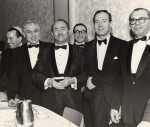
Group of men in evening dress, Congregation Schara Tzedeck, 1965. (JWB fonds; JMABC L.14380)

If you know someone in this photo, please help the JI fill the gaps of its predecessor’s (the Jewish Western Bulletin’s) collection at the Jewish Museum and Archives of B.C. by contacting [email protected].

Format ImagePosted on January 30, 2015January 29, 2015Author JI and JMABCCategories Mystery PhotoTags JMABC, Schara Tzedeck

Azrieli music prizes

The Azrieli Music Project (AMP), established to celebrate, foster and create opportunities for the performance of high-quality new orchestral music on a Jewish theme or subject, is launching two new prizes: the Azrieli Prize in Jewish Music, an international prize for a recently composed or performed work by a living composer, and the Azrieli Commissioning Competition, for a Canadian composer of any age. Each prize is for a new work of Jewish orchestral music and carries a value of $50,000.

The Azrieli Prize in Jewish Music is an international prize, awarded to the living composer of a recently composed and/or performed work of orchestral Jewish music of between 15 and 25 minutes duration. The work must have been written in the last 10 years (after Jan. 1, 2005) and have never been commercially recorded. Composers may be of any age, experience level, nationality, faith, background or affiliation. This prize is limited to Canadian citizens or permanent residents. The deadline for submissions by open nomination is Jan. 1, 2016. A written proposal of the work to be composed, plus two excerpts of three-minutes each from previously completed works (score and recording) must be submitted by March 15, 2015. The deadline for the completed composition will be July 1, 2016.

The AMP is delighted to confirm its partnership with the Orchestre symphonique de Montréal and maestro Kent Nagano, who will perform the winning works at the Azrieli Music Project Gala Concert at Maison symphonique on Oct. 19, 2016, in Montreal.

Dr. Sharon Azrieli Perez, noted operatic soprano and scholar in Jewish and cantorial music, spearheaded the creation of the new prize. “Music has always played an important role in the development of cultural identities,” she said. “Whether through folk traditions, in liturgical settings or in the concert hall, music reflects history and soul. In creating this extraordinary opportunity for composers of Jewish orchestral music, we hope to sustain music’s vital continuity through the long and rich history of Jewish people and culture. The Azrieli Music Project will become the medium for innovation, creation and risk-taking by today’s most inspired orchestral composers.”

The question “What is Jewish Music?” is at the heart of a constantly evolving cultural dialogue. Taking into account the rich and diverse history of Jewish musical traditions, the AMP defines “Jewish music” as music that incorporates a Jewish thematic or Jewish musical influence. Jewish themes may include biblical, historical, liturgical, secular or folk elements. Defining Jewish music as both deeply rooted in history and tradition and forward-moving and dynamic, the AMP encourages themes and content drawn from contemporary Jewish life and experience. The AMP challenges orchestral composers of all faiths, backgrounds and affiliations to engage creatively and critically with this question in submitting their work.

Joseph Rouleau, one of the world’s foremost operatic basses and honorary president of Jeunesses Musicales Canada, will serve as chair of the AMP advisory council. He said, “It is a tremendous pleasure to help launch this significant new prize, which offers such extraordinary opportunities – for the two composers who will have their work performed by Maestro Nagano and the OSM, and for the public, who will benefit from the creation of two new works of art on the fascinating theme of Jewish music.”

Rouleau is joined on the advisory council by Azrieli Perez, Canadian composer Ana Sokolović, Judge Barbara Seal, CM, and classical music philanthropist David Sela. The AMP jury will be announced at a later date.

For details, score guidelines, deadlines and the online application form, visit azrielifoundation.org/music.

Posted on January 30, 2015January 29, 2015Author Azrieli FoundationCategories MusicTags AMP, Azrieli Commissioning Competition, Azrieli Music Project, Jewish music, Joseph Rouleau, Sharon Azrieli Perez

Posts pagination

Page 1 Page 2 … Page 6 Next page
Proudly powered by WordPress