Skip to content
  • Home
  • Subscribe / donate
  • Events calendar
  • News
    • Local
    • National
    • Israel
    • World
    • עניין בחדשות
      A roundup of news in Canada and further afield, in Hebrew.
  • Opinion
    • From the JI
    • Op-Ed
  • Arts & Culture
    • Performing Arts
    • Music
    • Books
    • Visual Arts
    • TV & Film
  • Life
    • Celebrating the Holidays
    • Travel
    • The Daily Snooze
      Cartoons by Jacob Samuel
    • Mystery Photo
      Help the JI and JMABC fill in the gaps in our archives.
  • Community Links
    • Organizations, Etc.
    • Other News Sources & Blogs
    • Business Directory
  • FAQ
  • JI Chai Celebration
  • JI@88! video

Recent Posts

  • Sharing her testimony
  • Fall fight takes leap forward
  • The balancing of rights
  • Multiple Tony n’ Tina roles
  • Stories of trauma, resilience
  • Celebrate our culture
  • A responsibility to help
  • What wellness means at JCC
  • Together in mourning
  • Downhill after Trump?
  • Birth control even easier now
  • Eco-Sisters mentorship
  • Unexpected discoveries
  • Study’s results hopeful
  • Bad behaviour affects us all
  • Thankful for the police
  • UBC needs a wake-up call
  • Recalling a shining star
  • Sleep well …
  • BGU fosters startup culture
  • Photography and glass
  • Is it the end of an era?
  • Taking life a step at a time
  • Nakba exhibit biased
  • Film festival starts next week
  • Musical with heart and soul
  • Rabbi marks 13 years
  • Keeper of VTT’s history
  • Gala fêtes Infeld’s 20th
  • Building JWest together
  • Challah Mom comes to Vancouver
  • What to do about media bias
  • Education offers hope
  • Remembrance – a moral act
  • What makes us human
  • המלחמות של נתניהו וטראמפ

Archives

Follow @JewishIndie
image - The CJN - Visit Us Banner - 300x600 - 101625

Month: January 2015

Chefs compete, party

Chefs compete, party

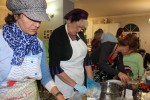
Chefs compete at the Centre for Judaism in the Lower Fraser Valley of British Columbia’s Iron Chef Chanukah Competition II. (photo from Centre for Judaism)

Last month, after the lighting of the menorah, dancing and refreshments, the Centre for Judaism in the Lower Fraser Valley of British Columbia turned into the Iron Chef Chanukah Stadium for Iron Chef Chanukah Competition II.
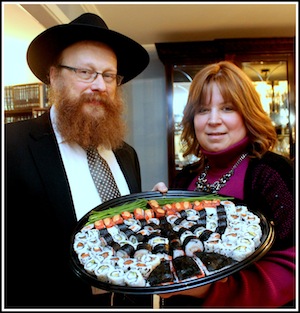
photo - Rabbi Falik and Rebbetzin Simie Schtroks hosted Iron Chef Chanukah Competition II at the Centre for Judaism in the Lower Fraser Valley of British Columbia. (photos from Centre for Judaism)
Rabbi Falik and Rebbetzin Simie Schtroks hosted Iron Chef Chanukah Competition II. (photo from Centre for Judaism)

Simie Schtroks, shlucha and co-director of the Centre for Judaism, presented the teams and spectators with three secret ingredients and a variety of foods and spices that were to be used in creating the competing three dishes. During the busy hour, Chanukah songs were led by Avi Amrani, Ben Roling and Yaakov Dar together with Rabbi Falik Schtroks. Interviews of the chefs and their teams were conducted, and Ethan Dreyshner helped keep time. Spectators were able to participate in the judging based on the prominence of the secret ingredient, appearance and creativity, and judges Abraham Amrani, chef Aaron Gehrman, Ben Roling and Naomi Nelson took into account taste and originality, as well.

Chef Marat Dreyshner and Ella Dreyshner of ikosherbake.com emerged as the Iron Chefs once again. Winners won a gourmet dinner for four catered by Simie Schtroks. All participants were given a book called Seeds of Wisdom. There was great teamwork on both teams.

The Centre for Judaism thanks captain Rae Sank, Esther Roubini, Rita Roling, Joanne Yaakov, Penina Amrani, Debbie Cossever, Lev Titiafsky and Anna Kushelman, as well as Nava’s Creative Kosher for the sushi.

To be a contender, sponsor or team participant next Chanukah, contact Simie Schtroks at 604-440-7411.

Format ImagePosted on January 9, 2015January 8, 2015Author Centre for JudaismCategories Celebrating the HolidaysTags Centre for Judaism, Chanukah, Iron Chef, Schtroks

Research into access issues at Jewish overnight camps

The field of Jewish camp has become increasingly aware of and responsive to the numbers of children with special needs and physical disabilities in recent years. As a first step towards initiating field-wide changes in this arena, Foundation for Jewish Camp (FJC) is engaged in a research project mapping current, potential and desired services available to children with emotional, intellectual and physical disabilities at nonprofit Jewish overnight camps across North America.

Laszlo Strategies recently delivered the results of the research (conducted in early 2013), the first of its kind in the Jewish community. The survey garnered results from 170 camp staff members (from 124 camps), 262 parents and 141 campers.

FJC is pleased to share that the majority of those involved in camp – including staff, campers and parents – care about this issue and agree that every Jewish child, regardless of a disability or special need, should be able to attend a Jewish camp. Most involved prefer an inclusion model, with clear recognition that not every camp is able to serve every need and that, in some cases, a separate program might be preferable.

While the field is making progress in the types and amounts of services offered, there is still more to be done. Below are the highlights from the survey. The full findings are available at jewishcamp.org/research.

About the campers served

  • The field of Jewish camp is serving 2,340-2,590 children with special needs – more than originally estimated.
  • The majority of the special needs population in Jewish camp have neurological disabilities. Few camps are equipped at this time to properly serve children with more significant/complicated disabilities.
  • 43 percent attend public school, four percent of these children attend Jewish day school, and 24 percent attend a specialty school for children with disabilities. Forty-three percent attend a synagogue-based religious school and 47 percent had attended a Jewish day camp.
  • 93 percent of parents were satisfied/extremely satisfied with their child’s experience at Jewish overnight camp.

About camp staff and programming

  • 36 percent of camps offer special programs for this population.
  • 55 percent of camps have a designated staff member (part-time or full-time) to oversee campers with special needs. This staffer engages with the family during the intake process, selects and trains camp staff, acts as a support during crisis situations, communicates with parents and other outside supports, creates and evaluates individual camper plans.
  • Inclusion camp staffs appear to want the non-inclusion staff and campers to have a better understanding of their population.
  • Parents of special needs campers are extremely satisfied with the way camps are infusing Jewish values/learning for this population of campers.

Barriers and perceptions

  • The biggest barriers to serving more children with specials needs are not attitudes or wheelchair ramps – rather lack of training and knowledge followed by funding.
  • 47 percent of parents report the cost of overnight camp as a barrier.
  • It is not as important as previously thought that siblings attend the same camp. Forty-three percent of parents report, “it would be nice, but it is more important that they go to the camp that best serves their individual needs.”
  • Parents report that the biggest factors in choosing a camp for a child with special needs are that the camp offers good supports and accommodations for children with a disability like my child (43 percent), and it is a Jewish camp, where my child can connect to our heritage and community (34 percent).
  • More camps are serving children with disabilities/special needs than are advertising it to the public through their websites and marketing materials.

Next steps

FJC is currently creating a plan of action to advance the field of Jewish camp in this arena. Sound research and solid data are required in order to make the informed decisions that will move FJC closer to achieving its goal: increasing the number of children attending nonprofit Jewish overnight camp.

FJC commissions its own research, and also draws on the wealth of knowledge that Jewish sociologists and researchers have contributed toward the understanding of camp and its long-term effects. All FJC-commissioned research and a selection of external studies are available for download at FJC’s website.


Posted on January 9, 2015January 8, 2015Author Foundation for Jewish CampCategories LifeTags camp, disabilities, FJC, inclusion

Aliyah: a 10-year high

According to initial end-of-year figures released by the Jewish Agency for Israel and the Ministry of Aliyah and Immigrant Absorption, aliyah hit a 10-year high in 2014, with the arrival of some 26,500 new immigrants. This marks a 32 percent increase over 2013.

For the first time, France tops the list of countries of origin for immigrants to Israel, with nearly 7,000 new immigrants in 2014, double the 3,400 who came the year before.

Some 5,840 new immigrants came from Ukraine, compared to some 2,020 in 2013. This dramatic 190 percent increase is due primarily to the ongoing instability in the eastern part of the country.

Aliyah from western Europe is up 88 percent, with the arrival of some 8,640 immigrants. Some 620 came to Israel from the United Kingdom, a 20 percent increase over 2013. The number from Italy doubled to some 340. Aliyah from Belgium saw a modest decrease, to 240. German aliyah remained stable, at approximately 120.

Aliyah from the former Soviet Union was up 50 percent, with the arrival of some 11,430 immigrants, with 4,830 from Russia, Belarus and the Baltic states, 300 from the Caucasus and 390 from Central Asia.

Aliyah from Latin America remained stable, with the arrival of some 1,070 immigrants. Aliyah from Brazil saw a 45 percent increase, with 300 immigrants, and approximately 297 came from Argentina, 76 from Mexico, 70 from Venezuela, 62 from Colombia, 58 from Uruguay and 52 from Chile.

Aliyah from North America increased modestly, with the arrival of some 3,870 immigrants compared to 3,600 in 2013. Approximately 3,470 immigrants came from the United States and 400 immigrants came from Canada, compared to 384 the year before.

Eastern Europe saw 232 people make aliyah, compared to approximately 270 in 2013. Approximately 126 came from Hungary, 32 from Poland, 24 from Romania and 24 from Bulgaria.

Some 190 immigrants came to Israel from South Africa, roughly the same as 2013, while 200 came from Australia and New Zealand, a slight decrease from the year before.

More than half of the immigrants who came to Israel in 2014 were under the age of 35. The eldest immigrant was born in 1910 and made aliyah from France at the age of 104. The youngest came from the United States and was only several weeks old. Tel Aviv led the chart of cities receiving new immigrants, with approximately 3,000 new Tel Avivians. The coastal city of Netanya came second and Jerusalem came in third.

Posted on January 9, 2015January 8, 2015Author Jewish Agency for Israel and the Ministry of Aliyah and Immigrant AbsorptionCategories IsraelTags aliyah, immigration, Israel
Oil spill heightens urgency

Oil spill heightens urgency

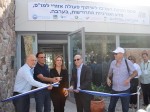
A ribbon-cutting ceremony to inaugurate the new Regional Collaboration Centre for Research and Development and Renewable Energy near Eilat. (photo from Jewish National Fund via jns.org)

The worst oil spill in Israel’s history was the unplanned backdrop for a recent international conference on green energy held in Eilat, the country’s southernmost city. A busy port and popular resort city located at the northern tip of the Red Sea, Eilat is at the epicentre of the Jewish state’s renewable energy industry.

The Eilat-Eilot Green Energy Sixth International Conference and Exhibition, held Dec. 7-9, was the culmination of six events that comprised Israel Energy Week and offered participants from around the globe a concentrated encounter with the emerging world of alternative energy in Israel. The conference focused on challenges facing the renewable energy industry, including storage and supply of electricity, development of methods to manage electricity flow and financing to advance projects.

It also focused on the key role renewable energy plays in the southern Arava, a stretch of Negev Desert from the Dead Sea to the Gulf of Aqaba in which Eilat and the Hevel Eilot Regional Council are located. This arid, sun-drenched area is Israel’s main locale for sustainable development and functions as an international showcase for Israeli innovation in the field of green energy.

“Renewable energy, with an emphasis on solar, is a major focus of our municipal activity and plays a key role in the region as a whole,” Meir Yitzhak Halevi, the mayor of Eilat, told conference attendees. “The city of Eilat and the Hevel Eilot Regional Council, which together account for 13 percent of Israel’s land area but less than one percent of the country’s population, have recognized the potential offered by the sunlight and open space that exist here in such abundance, and are concentrating on renewable energy as a catalyst for regional growth.”

According to Udi Gat, head of the Hevel Eilot Regional Council, the area has already reached nearly 60 percent daytime energy independence and in eight months will generate nearly 100 percent of the energy consumed each day in the southern Arava. By 2020, the municipality and regional council anticipate that the area will be completely energy-independent and free of fossil fuel and carbon emissions.

“We want to generate more electricity, even beyond the needs of Eilat and the regional council. We want to help the country produce electricity from an inexpensive source – the sun – and to be Israel’s electricity storehouse or ‘bank,’” Gat said.

The importance of achieving energy independence was conveyed to the conference in a dramatic way when, four days prior to the start of the gathering, an oil pipeline ruptured during maintenance work at a construction site about 12 miles north of Eilat. Five million litres of crude oil spilled out and fouled an estimated 250 acres of scenic desert, including a nature reserve. Delicate coral reefs beyond the nearby shoreline were also threatened.

Read more at jns.org.

Format ImagePosted on January 9, 2015January 8, 2015Author June Glazer JNS.ORGCategories IsraelTags Eilat, Eilot, environment, green energy, Israel, oil spill
Time to make 2015 EPIC!

Time to make 2015 EPIC!

It’s now early January 2015.

That means right about now millions of New Year resolutions are kicking into high gear! (Isn’t it exciting!?) This will most likely peak around the 12th of the month due to those who don’t think a resolution kicks in until their hangover recovers, fading like a cheap pair of Old Navy jeans by around the 18th.

By Feb 1 everyone will be talking about how they don’t believe in New Year resolutions again.

I have never been a strong believer of waiting for set dates to take action toward any positive change. I believe that if someone wants to see a change enough to make it happen they have no need to wait for January 1st to get started.

That said, a new year does allow us sort of a mental re-set. Even if less than 10% actually stick to that new-year resolve, that’s more change than we’d likely see on the first day of any other month, right?

new-year-resolutions

My resolve to make meaningful change in my life has been more of a progressive development than a sudden change that kicked off a few years ago.

Led by a successful diet adjustment that helped rid my body of extra weight I carried for years; I found success in an area I had previously written off as “not likely to ever happen” for my adult life. I parlayed the momentum of that accomplishment, considering what other aspects of my life could also be re-approached. I found many other successes and adventures I certainly wouldn’t have predicted three years ago, leaving a world of closed doors well behind me.

Now it is 2015. And in 2015 this guy turns 40!

While many fear the “big 4-0” and all that beginning-of-the-end anxiety that typically comes with it, I can’t wait to hit 40 in stride! I can’t think of a better time to take it all to a whole new level!

In 2015 I will continue to learn new skills, discover new talents, and experience new adventures.

I will make the world around me a better place and I will share it all with as many people as I can (starting with the pages of this blog!).

The question is, what will it all look like? What does this exciting, inspiring future hold? And who wants to join me for any of it?

I have some ideas of my own that we will explore here. But I’d like to hear your ideas as well. Give me your suggestions. Maybe you have an opportunity to share with others. Perhaps you are looking for help with your own unique journey.

Let’s make 2015 – and every year after that – EPIC!

You can connect with me at: [email protected], www.twitter.com/kberger16

In the meantime, here are a couple things coming up to get your year started right:

  1. The Recharge Conference, Jan 11.www.sparkenergizeempower.com
  2. ManTalks – Jan 12. www.mantalks.ca
  3. Read “The 4-Hour Work Week” by Tim Ferriss.

New-Years-Resolution-2012

Format ImagePosted on January 6, 2015January 5, 2015Author Kyle BergerCategories It's Berger Time!Tags 2015, 40, New Years, resolutions
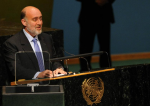
סניף ונקובר של קק”ל מברך את פרושאור

סניף ונקובר של קק”ל מברך את פרושאור

image - interesting in the news Jan 1 - Ron Prosor to Vancouver, bitcoin, Tim Hortons snake incident

Format ImagePosted on January 1, 2015January 5, 2015Author Roni RachmaniCategories עניין בחדשותTags Bitcoin, Ilan Pilo, Jewish National Fund, JNF, Ron Prosor, Saskatoon, SFU, Simon Fraser University, snake, Tim Hortons, UN, United Nations, או"ם, אוניברסיטת סיימון פרייזר, אילן פילו, ביטקוין, טים הורטונס, נחש, ססקטון, קק"ל, קרן הקיימת לישראל, רון פרושאור

Posts pagination

Previous page Page 1 … Page 5 Page 6
Proudly powered by WordPress