Skip to content
  • Home
  • Subscribe / donate
  • Events calendar
  • News
    • Local
    • National
    • Israel
    • World
    • עניין בחדשות
      A roundup of news in Canada and further afield, in Hebrew.
  • Opinion
    • From the JI
    • Op-Ed
  • Arts & Culture
    • Performing Arts
    • Music
    • Books
    • Visual Arts
    • TV & Film
  • Life
    • Celebrating the Holidays
    • Travel
    • The Daily Snooze
      Cartoons by Jacob Samuel
    • Mystery Photo
      Help the JI and JMABC fill in the gaps in our archives.
  • Community Links
    • Organizations, Etc.
    • Other News Sources & Blogs
    • Business Directory
  • FAQ
  • JI Chai Celebration
  • JI@88! video

Recent Posts

  • Sharing her testimony
  • Fall fight takes leap forward
  • The balancing of rights
  • Multiple Tony n’ Tina roles
  • Stories of trauma, resilience
  • Celebrate our culture
  • A responsibility to help
  • What wellness means at JCC
  • Together in mourning
  • Downhill after Trump?
  • Birth control even easier now
  • Eco-Sisters mentorship
  • Unexpected discoveries
  • Study’s results hopeful
  • Bad behaviour affects us all
  • Thankful for the police
  • UBC needs a wake-up call
  • Recalling a shining star
  • Sleep well …
  • BGU fosters startup culture
  • Photography and glass
  • Is it the end of an era?
  • Taking life a step at a time
  • Nakba exhibit biased
  • Film festival starts next week
  • Musical with heart and soul
  • Rabbi marks 13 years
  • Keeper of VTT’s history
  • Gala fêtes Infeld’s 20th
  • Building JWest together
  • Challah Mom comes to Vancouver
  • What to do about media bias
  • Education offers hope
  • Remembrance – a moral act
  • What makes us human
  • המלחמות של נתניהו וטראמפ

Archives

Follow @JewishIndie
image - The CJN - Visit Us Banner - 300x600 - 101625

Month: January 2015

Dosanjh courage recognized

Dosanjh courage recognized

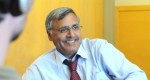
Ujjal Dosanjh will receive the inaugural Civil Courage Award at the 10th annual Raoul Wallenberg Day on Jan. 18. (photo by Patrick Tam)

In honor of the 10th annual Vancouver Raoul Wallenberg Day, the Wallenberg-Sugihara Civil Courage Society will present its inaugural Civil Courage Award to the Hon. Ujjal Dosanjh on Jan. 18.

WSCCS was formed by members of the Swedish and Jewish communities in 2013, with the goal of continuing the legacy of the Wallenberg Day in Vancouver and commemorating Raoul Wallenberg, Chiune Sugihara and others like them through the establishment of an award for civil courage. The award is given to an individual associated with British Columbia who has helped improve the lives of others and society while defying unjust laws, norms, conventions or unethical behaviors of the time and place. The choice of Dosanjh as a recipient was unanimous in the panel of three, which includes Thomas Berger, a Canadian politician of Swedish descent and retired Supreme Court justice, Georgia Straight publisher Dan McLeod, and Thomas Gradin, honorary Swedish consul, former hockey player and a scout for the Canucks. Dosanjh was selected as the award recipient “for his actions as a critic of sectarian violence and his advocacy for social justice, often at great risk to his personal safety. As a critic of extremism and champion of liberal democracy he has been a great benefit to Canada and an inspiration to us all.”

Dosanjh is well known as Canada’s first Indo-Canadian provincial premier and for his roles as attorney general, federal health minister and a member of Parliament until 2011. Back in 1985, after the Indian army attacked the Golden Temple in the Punjab to flush out Sikh extremists, Dosanjh warned the Canadian government that sectarian violence could spill over into Canada. His warning fell on deaf ears. Four months later, on June 23, 1985, Air India Flight 182 was bombed, killing 329 people, 280 of whom were Canadian. In the wake of this tragedy, Dosanjh consistently and publicly denounced violence as a means of establishing an independent Sikh homeland in India.

As a result these calls, Dosanjh has been subjected to death threats since the 1980s, he was attacked and severely beaten with a metal bar outside his law office and he had a Molotov cocktail thrown into his constituency office in 1999. He recalls a Facebook page set up in 2010 to discuss openly how to execute his murder. Despite these harrowing encounters, Dosanjh said he has always felt “safe enough” living in Canada. “Canadians are a peace-loving people who respect each other’s right to speak, no matter how distasteful one’s remarks might be,” he said. The threats subsided after 2010 but by then he had learned to live with them. “You can’t let these threats beat you into fear,” he added.

In an interview with the Independent, Dosanjh said he was “totally humbled” when he learned he would be receiving the award a few weeks ago. Though he’d not heard of the WSCCS, he was familiar with the story of Raoul Wallenberg. “To be honored in his name is something I could never have imagined in my wildest dreams,” he confessed. “I’m extremely honored to be associated with Wallenberg’s name, though what he did was under much more difficult circumstances and, therefore, all the more important. Still, to be acknowledged in your own lifetime for things you stood for, that some may find disagreeable, is great because it’s good to have friends.”

Dosanjh is presently writing a memoir and said though he misses the “gut and thrust” of politics, he has no longing for the weekly commutes to Ottawa and, prior to that, to Victoria.

WSCCS will present the award at the Wosk Auditorium at the Jewish Community Centre of Greater Vancouver on Sunday, Jan. 18, 1:30 p.m. B.C. lieutenant governor, the Hon. Judith Guichon, will attend the ceremony, which will include a screening of the film The Rescuers by Michael King, which tells the story of 13 heroic diplomats who saved tens of thousands of lives during the Second World War. Admission is by donation.

Lauren Kramer, an award-winning writer and editor, lives in Richmond, B.C. To read her work online, visit laurenkramer.net.
Format ImagePosted on January 9, 2015January 8, 2015Author Lauren KramerCategories LocalTags Ujjal Dosanjh, Wallenberg-Sugihara Civil Courage Society, WSCCS
Join Kosher Lust revolution

Join Kosher Lust revolution

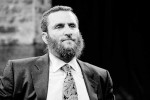
Rabbi Shmuley Boteach will speak at the Rothstein Theatre on Jan. 17. (photo from Shmuley Boteach)

Rabbi Shmuley Boteach will be in Vancouver later next week to talk about his most recent book, Kosher Lust: Why Love is Not the Answer. Boteach, a rabbi, author, television host, pundit and in-demand speaker who has been called “America’s Rabbi,” is being presented by the North Shore Jewish Community Centre/Congregation Har El with support from the Jewish Federation of Greater Vancouver. His talk will be followed by a Q&A and a meet and mingle over refreshments.

Boteach described Kosher Lust as “a revolutionary book,” in an interview with the Jewish Independent. “Most books about marriage, about sex or about romance, are about how you can create love in a relationship, how you can increase love. This book argues that love has been the problem all along. Why do we have such a high divorce rate? Why, if [marriages] do work, they work on a practical level but not on a level of deep desire? And my book argues the reason is that love has always been the problem.” He stressed, “The foundation of a marriage is supposed to be lust and desire, rather than love and friendship.”

In recognizing that “we live in a modern world where marriage as an institution is in common decline,” Boteach said he is “trying to make arguments for sustaining, enhancing and promoting marriage.” The bestselling author said his newest book “gives us three rules of lust. Number one, unavailability; number two, mystery; number three, sinfulness.” The book “teaches couples how to bring the three rules of erotic lust into their marriages and relationships.” These three rules of lust are from the Song of Solomon on which, he explained, the book itself is based.

Untangling the first rule, Boteach said that unavailability is “what we call erotic obstacles, erotic impediments [or] things which frustrate desire.” These include “things that get in the way of desire … that actually increase desire,” he said.

A problem with modern marriage “is that there is no mystery,” he said. “Marriages today are based on openness and a lack of mystery, and constant availability…. I actually argue a different kind of marriage.”

When asked how an ideal marriage would look, Boteach said, the “whole belief that marriage is about this constant openness and constant availability is incorrect.” Jewish law, he suggested, argues instead “for ‘sinful’ marriages. Notice that husband and wife become forbidden to each other for a period [of time] every month [during niddah]. Then, you have the element of sinfulness under the laws of modesty that are all about things being concealed, mysterious, covered, not just always available.”

Are there dangers or limitations to lust? “From a Jewish perspective, all things in life are neutral, and it really depends on their application as to whether they are positive or negative,” he said.

“There is unkosher lust,” Boteach added, “like what a husband will feel towards a woman who is not his wife. Unkosher lust is the kind of lust that is generated by pornography and the objectification of women and demeaning women.” Kosher lust, however, “like the desire that a husband has for his wife and that a wife has for her husband, is a beautiful thing and a ‘kosher’ thing.”

His book contends that “women are as lustful as men are,” Boteach explained. “One of the central arguments in my book is that women are much more sexual than men, and female sexuality has been belittled in our time and prior to our time.” Women “lust in a uniquely feminine way … in a much deeper more emotional way,” Boteach suggested, while men “lust in a uniquely physical way, that is often very two-dimensional, very predictable, very monotonous and very boring.”

The book has received several positive reviews in mainstream media, but also a critical review in Haaretz, Boteach said. In his opinion, this is “no coincidence … because Jews are the ones who always have an issue with a rabbi giving them advice about sex, because so often we belittle our own religion.”

Boteach continued, “I am not looking to write specifically to a Jewish audience. I am writing to a mainstream audience…. Jews have to learn how to assert their Jewishness in the midst of a multicultural society. And that’s what I do … I’m promoting Jewish identity, which can be affirmed and asserted anywhere and everywhere. We can’t create ghettoized Judaism that is only affirmed in the presence of other Jews. But I also believe that the universal teachings of Judaism are universally applicable and, therefore, it’s not just for Jews.”

The prolific author – he has published 30 books to date – will continue to focus his writing on relationships, but he is also continuing his foray into television with a new pilot for a show to be broadcast in Canada on Vision TV.

Boteach will speak Jan. 17, 7 p.m., at the Norman and Annette Rothstein Theatre. Tickets are available online at harel.brownpapertickets.com.

Zach Sagorin is a Vancouver freelance writer.

Format ImagePosted on January 9, 2015January 8, 2015Author Zach SagorinCategories LocalTags Har El, Kosher Lust, Rothstein Theatre, Shmuley Boteach

Music is the poetry of life

Local jazz musician Ayelet Rose Gottlieb happily juggles music and babies. “You have to have music, right? Music is life. It’s a necessity. And you have to have kids.” Gottlieb just released her fourth album, Roadsides, and her adorable six-month-old twins, a boy and a girl, don’t slow her down one bit.

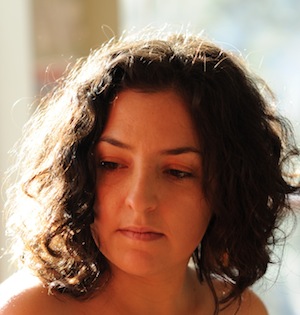
photo - Ayelet Rose Gottlieb plays songs from her new album Jan. 16
Ayelet Rose Gottlieb plays songs from her new album Jan. 16. (photo from Ayelet Rose Gottlieb)

The music for all the songs on Roadsides was written by Gottlieb, with lyrics from work by various Israeli and Palestinian poets. “This project accumulated for a long time,” she told the Independent. “There’s lots of pain in Israel now, and nationalism is growing. It’s hard for me. Israel is my country. My mother’s family has lived there for 20 generations. All that time, there was a cultural interchange between Palestinians and Jews. It’s almost gone now.”

She feels that Israel today is missing a bridge between cultures, the connection that was flourishing even in her grandfather’s days. “People of all backgrounds love this land. I believe that it is possible to elevate beyond the hurts of the past decades. We should try to restart the intercultural conversation. The poets I chose for the songs on this album represent such diversity: Israeli and Palestinian, young and old, male and female, Ashkenazi and Mizrahi. In a way, my album is a political statement, that of humanity. We can all coexist in Israel and the more we learn about each other, the more we talk, the better people we are.”

She recalled being a student in Jerusalem at a high school for the arts. “I started writing songs and performing when I was 17. For 10 years, I performed with Arnie Lawrence, the famous American jazz saxophone player. He lived in Israel in the last years of his life, and he became my teacher of jazz. He shaped my thinking. We often performed with Palestinian musicians, both in Israel and Palestine. Music is an international language. With music, you can communicate with anyone. But it was easier then – there was no wall.”

Some of the songs on Roadsides are light and quirky, while others are poignant, driven by emotions. All of them are in Hebrew, either originals or translations from Arabic. “When I compose songs, the text should trigger something inside me,” she explained of her approach. “It doesn’t have to be poetry. It could be a piece of prose, as long as it says something important. The quality of the text is paramount.”

Occasionally, she uses her own lyrics, though not often. She has songs set to passages of artist Wassily Kandinsky’s book on art and Martin Luther King Jr.’s famous speech. Kandinsky, in particular, fascinated her as a subject, as she used to paint as well as compose. “I don’t do it anymore,” she confessed. “But I hear colors. Certain colors resonate with certain notes. It’s a personal interpretation, of course, when you set music to painting or paint to the music.”

Gottlieb’s songs are multifaceted, flowing around their listeners in audio waves, implying pictures and palettes, even if one doesn’t understand the Hebrew. No surprise then that she has fans all over North America. But her heart belongs to Israel, she said. “I fly to Israel a couple times each year, to perform and to connect with my family.” She also records in a New York studio, as a solo performer and as part of the quartet Mycale.

Musical collaborations increase her audience but also broaden her expressive facilities and add to her musical toolbox. She recorded one of the songs on Roadsides as a duet with Israeli pop star Alon Olearchik. Others, she wrote with particular musicians in mind.

Gottlieb also teaches composition, vocals and improvisation. In Israel, she taught at colleges. Here, she gives private lessons and workshops. “I enjoy working with children and adults, but I prefer adults, mature people who know what they want…. I learn a lot when I teach. Sometimes, I would explain a point to my students, and it would clarify the concept for me too. Students often surprise me. They do something unexpected, and I’d see a new perspective, realize a new way of doing things.”

Moving every few years has also helped to keep her creativity fresh. “We lived in New Zealand for a while, in New York and in the U.K.,” she explained. “Compared with New York, where there are many different cultures, Vancouver has a smaller music scene, fewer people to play for, fewer opportunities and venues. I’m still looking for my language here. Resonating with the place and the community is important, but it’s an interesting exploration and a wonderful place to raise babies.”

As for any parent, her children are an integral part of her life, and she plans to incorporate her music into their upbringing. “I dream of having house concerts at our place when the kids are a bit older. They should be exposed to music and art early. Art is playful. To be an artist, you have to keep some of the child in you alive.”

Gottlieb’s Roadsides CD release is Jan. 16 at the China Cloud on Main Street. To learn more, visit ayeletrose.com.

Olga Livshin is a Vancouver freelance writer. She can be reached at [email protected].

Posted on January 9, 2015January 8, 2015Author Olga LivshinCategories MusicTags Ayelet Rose Gottlieb, China Cloud, Roadsides

Tribute from the paper

The Jewish Independent family is mourning the loss of one of our own. Ron Freedman, who was an account executive at the Jewish Western Bulletin and the Jewish Independent from 1968, passed away at Irene Thomas Hospice in Ladner on Dec. 17.

Ron was an institution at the paper, and in the Vancouver business community. As much as the paper’s editorial staff tends to be the most visible face of the paper, the advertising department is what allows the operation to continue. As such, it is much to the credit of Ron Freedman that this newspaper has survived and thrived for decades while dramatic changes have taken place in the publishing industry.

Ron’s primary responsibility was ensuring the success of the paper’s special holiday editions – the Rosh Hashanah, Chanukah, Pesach, Yom Ha’atzmaut and JI / JWB anniversary issues – by nurturing relationships with individuals, organizations and businesses that sought to reach the Jewish community throughout the year. For decades, the special editions, filled with ads from leading local businesses, elected officials and organizations, have been the largest revenue generators, subsidizing the paper’s operations throughout the year.

Over a great many years, Ron built relationships with countless British Columbia businesses. His strategy, he once said, was simple. Remember something about the person, find an area of common interest, ask about family, health issues and, as anyone who worked adjacent to him or who was in his rolodex can affirm, punctuate the conversation with a forthright query, “Wanna buy an ad?”

That the answer to that question, on a great number of occasions, was “yes,” is a significant part of the reason this media exists today. But “the sale” was secondary to him. Ron was genuinely interested in people, and his warmth and compassion shone through his every interaction.

For we who worked with him – and there is no one now associated with the paper who worked with Ron longer than his son, Steve, who has followed in his dad’s professional footsteps – Ron was a friend, a source of laughs, wisdom and someone whose institutional memory helped the organization transition across times of immense change in the economy and in the company. Even exceeding by many years the long-serving publishers of this paper, Samuel and Mona Kaplan, Ron’s tenure spanned epochs in the history of this paper and of the Jewish community.

We share with his family their suffering at his passing, and include below the obituary that ran in the newspaper’s Jan. 9 issue. We thank him again for all he did for the paper, for the Jewish community and for all of those with whom he worked. We miss him. May his memory be for a blessing.

 ***

RONALD (RON) FREEDMAN

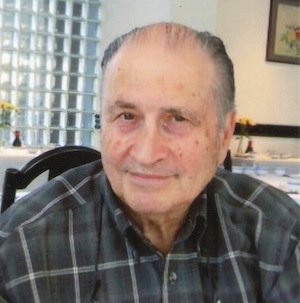
photo - Ron Freedman
Ron Freedman z”l

With much sadness we announce that our beloved father Ron, age 79, passed away peacefully at the Irene Thomas Hospice in Ladner with family at his side on Dec. 17, 2014, after a short, courageous battle with cancer. He was predeceased by his wife Cathy in 2011 and his sister Linda, and is survived by daughters Susan, Debbie (Peter), Sandy (Brad) and grandchildren Derek and Grant, and sons Steve and Dave (Betty Mae).

Dad worked for more than 50 years in newspaper advertising sales, at which he excelled. Forty-six of those years were at the Jewish Western Bulletin / Jewish Independent.

Ladner was Dad’s home for 18 years. He was a very active member at the McKee Seniors Recreation Centre, an avid fundraiser and participated in many activities and excursions. Dad loved crib and he would play anywhere with anybody. He also traveled and enjoyed many cruise vacations. Known for his outgoing nature, wit and sense of humor, he touched the lives of many around him. He enjoyed music, TV sporting events and dining out.

Dad lived a full life and will be greatly missed by his children, extended family and many friends. A heartfelt thank you and appreciation for their compassionate care goes to the Irene Thomas Hospice staff and Dr. O’Brien. Also, special thanks to Dr. Pearce and Ray MacDonald, spiritual care practitioner, who provided Dad special comfort with his music and words along with the caring staff at the Laurel Place Hospice in Surrey and Dr. Lund from Surrey Memorial Hospital.

A service of remembrance will be held on Sunday, Jan. 25, at 2 p.m., at the McKee Seniors Recreation Centre, 5155 47 Ave., Ladner. In lieu of flowers, a donation in Ron’s memory to the Irene Thomas Hospice, McKee Seniors Recreation Centre or Laurel Place Hospice would be greatly appreciated.

Posted on January 9, 2015January 8, 2015Author The Editorial BoardCategories From the JITags Ron Freedman1 Comment on Tribute from the paper

Open Hillel raises questions

On the issue of Jewish belonging, I have always pushed for as wide a tent as is necessary to accommodate the range of Jewish experience. Inclusion, rather than ideational boundaries, has been my watchword.

But now, since the Open Hillel conference held at Harvard in October – which billed itself as helping create a “Jewish community that all Jews can feel included in, not just those who pass a political litmus test” – I’ve been feeling a little bit more prescriptive around what values should matter, especially around the centrality of Israel to Jewish life.

On one hand, I’m instinctively positively predisposed to a movement like Open Hillel. Previous reports of a Hillel student board member stating he was forced to step down because he sought to host a Palestinian solidarity activist speaker following the screening of a Palestinian documentary give me chills. And I find Hillel’s guidelines about rejecting speakers who hold Israel to a “double standard” frustratingly enigmatic. There is good conceptual reason to hold Israel, a democracy, to a different standard than Syria, for example. And there is an understandable reason to “single out” Israel when we, as Diaspora Jews, devote more emotional, financial and political resources to the Jewish state than to almost any other.

But, now, my doubts. First was LGBTQ and Palestine solidarity activist Sarah Schulman’s Facebook remarks about the conference. In her post, she railed against the “bullshit of LGBT Birthright,” accusing it of being a forum for “pinkwashing.” I’m partly sympathetic to the pinkwashing charge, awareness of which Schulman herself helped propel in a 2011 New York Times op-ed. There is much to be criticized in Israel’s hasbarah efforts, especially in light of the government’s apathy towards the morally corrosive occupation. But there is a gap: Where is the desired opportunity among Open Hillel activists and participants like Schulman to encourage a deep and textured cultural and political engagement with Israel? Birthright may not be the answer. But what is?

Echoing my thoughts were Steven M. Cohen’s reflections, also posted publicly on Facebook. There, Cohen praised the Open Hillel conference for opening up a much-needed debate on Israeli policies, including criticism of the occupation, but he lamented the apparent “abjuring of the primacy of Jewish or Israel attachment” among participants.

And then came an essay by Holly Bicerano in the Times of Israel, where she criticizes Hillel International’s “Vision for Israel,” which states that “Hillel desires that students are able to articulate why Israel plays an important role in their personal Jewish identities and how Israel continues to influence Jewish conversations, global Jewish peoplehood and the world.”

Bicerano is concerned that, “This particular vision is predicated on the supposition that having a Jewish state must be an integral part of every deserving Jew’s identity.”

My personal, liberal variant of Zionism abhors the occupation, desires to redress political inequalities among the state’s ethnic groups, and opposes the general trend towards illiberal legislation in the Knesset. But, at the very least, I see an important role for Israel’s existence in the life of the Jewish people. While theological commitments are subject to the debates of rationalists, Israel helps secure a sense of peoplehood. Where Jews now speak the languages of their host societies, Israel’s Hebrew revival reminds us of our shared heritage. Where Diaspora Jews must negotiate a minority identity within a majority culture, Israel enables a sense of collective Jewish autonomy.

It follows that were I to find myself in the position of coordinating a campus-based, non-denominational Jewish organization such as Hillel, I would surely encourage students’ right to wrestle with, criticize and protest the policies of Israel. But I would rue the day that the notion of Israel as a component of collective Jewish identity was simply left at the curb.

So, I support the diversity of political views around Israel that were given an airing at the Open Zion conference and I welcome a much-needed, on-the-record conversation about the indignities of the occupation. But if, like Cohen, I am troubled that some of the Open Hillel proponents reject the relevance of sensitive and textured Jewish cultural and political engagement with Israel writ large, what am I to conclude about the fledgling movement?

What I conclude is that we must encourage more Open Hillel gatherings to be held. We must convene discussion not only among the converted. In the marketplace of ideas and attachments, we must realize that the most compelling identity markers will win. Therefore, we must seek to understand how, if Israel is so central to the Jewish identity of so many, it is precisely not this way to so many others. And, if it happens to be decades of Israeli settlements and occupation that have helped push younger Jews away, we must double down – as if we needed a further reason – to do something about those policies too.

Mira Sucharov is an associate professor of political science at Carleton University. She blogs at Haaretz and the Jewish Daily Forward. A version of this article was originally published on haartez.com.

Posted on January 9, 2015January 8, 2015Author Mira SucharovCategories Op-EdTags free speech, Israel, Open Hillel, Zionism1 Comment on Open Hillel raises questions
Menorah’s ultimate fate?

Menorah’s ultimate fate?

The Arch of Titus remains standing in Rome today. Built in 81 CE, it depicts the triumphal procession of enslaved Jews and Temple spoils, including the Menorah, whose ultimate fate is unknown. (photo by Basya Laye)

Sixty-thousand heavily armed, well-trained and experienced soldiers of the most militarily mighty imperial power in the world are marching on Israel. The soldiers are being led by the Roman general Vespasian and his son Titus. The first Jewish revolt against Rome, that began in 66 CE, is doomed. One of the high priests of the Holy Temple, Josephus, has been assigned as general, tasked with defending the Galilee. But after the city of Jotapata is besieged, Josephus defects to the Roman camp. He prophesizes that Vespasian will one day become emperor and, for that, his life is spared.

While the Jewish-Roman war rages on for several years, the Roman emperor Nero dies, causing a struggle for succession. As Vespasian departs for Rome to become emperor and quell the political instability of the empire, he leaves his son Titus in charge of the war with the Jews. Though vilified as a coward and a traitor to his people, Josephus chronicles the war and the history of these Jews, preserving the tragic story of the fall of Jerusalem in the only reliable contemporary historical account. This is the story of the Temple Menorah; it is the story of symbols and tragedy. This is the story of the Jews.

In the year 70 CE, general Titus succeeded in sacking the city of Jerusalem, and looted the sacred treasures of the Holy Temple, burning it to the ground. The looted treasures were sent to Rome, paraded through the streets during the triumphal victory parade of Titus. Among those treasures was the giant solid gold Menorah. The triumphal procession was described in the writings of Josephus, and immortalized in bas relief on the inner walls of the enormous triumphal Arch of Titus, which still stands today in Rome.

The fall of Jerusalem was a devastating blow to the Jewish people, and was one of the most monumental and defining moments in Jewish history. It is perhaps somewhat fitting that this event is commemorated in such a monumental form. The menorah depicted on the Arch of Titus is one of the first such artistic depictions of the Menorah, and certainly the most famous. It would have had a great influence on later depictions of menorot, and was the inspiration for the menorah now on the coat of arms of the modern state of Israel.

The Jewish-Roman war of the first century, and the Bar Kokhva revolt of the second century, resulted in large populations of Jewish refugees that were forced to flee their homeland. Many Jews settled in Diaspora communities throughout the Roman Empire. Though they were unable to return to their homeland and rebuild their Holy Temple in Jerusalem, the Jews vehemently clung to their cultural identity with a stubbornness that can only be described as chutzpah. They continued to practise their faith personally, and constructed smaller community temples, synagogues. Throughout the Roman Empire, archeologists have found depictions of menorot, often engraved on stone plaques in early synagogues, or at Jewish burial sites. There are even Jewish catacombs in Rome, where Roman-style sarcophagi bear an image of a menorah where one would expect to find the image of a Roman deity. Between the second and seventh centuries, synagogues have been uncovered at many places such as Stobi in Macedonia and Sardis in Turkey, and catacombs in such places as Aphrodisias and Tripoli in Turkey, in Sicily, and even at Melite, a now ruined Roman city on the island of Malta, all with depictions of menorot. The menorah had originally been a holy object and religious symbol, but it underwent a metamorphosis, and became something more. The Temple Menorah was stolen and, in a way, it, too, was forced into Diaspora. It thus became a symbol of the tragedy that befell the Jewish people, and the dream of a free and independent Jewish state.

Four years after the conquest of Jerusalem, construction in Rome of Vespasian’s Temple of Peace was completed. This “temple” displayed all the treasures and holy relics of the various peoples and nations conquered by Rome, and might more aptly be named a museum of appropriation. 

Four years after the conquest of Jerusalem, construction in Rome of Vespasian’s Temple of Peace was completed. This “temple” displayed all the treasures and holy relics of the various peoples and nations conquered by Rome, and might more aptly be named a museum of appropriation. The Menorah and other Jerusalem Temple treasures were housed in the Temple of Peace. In fact, there was also a second Jewish temple in the Egyptian city of Leontopolis, with its own distinct menorah, which Josephus describes as having been hung on golden chains. The temple in Leontopolis was shut down by Vespasian, and its relics were also displayed at the Temple of Peace. Written records indicate that when the Vandals sacked Rome in 455 CE, King Geiseric shipped the treasures of the Temple of Peace to Carthage. The Vandals were later defeated by the Byzantine emperor Justinian in early sixth century CE. The historian Prokopios of Caesarea records that the Temple treasures were then moved to the Hippodrome in Constantinople for the triumphal celebration, before being sent to churches in Jerusalem. Though there are no written records of the location of the Menorah after this time, the region enjoyed relative stability until the seventh century, and it is safe to assume nothing happened to the Menorah until then.

Though the Jewish population of Israel had been significantly reduced after the Bar Kokhva revolt, it was not completely eliminated. Many Jews still resided in the Galilee and Jerusalem, during which time the Talmud and Mishnah were written. But it was life under Roman/Byzantine hegemony, and Jews longed to regain their independence and rebuild the Holy Temple. Around this time, the Byzantine and Persian empires were more or less continuously at war, a century-spanning rivalry that ultimately led to their bankruptcy and mutual destruction during the Muslim conquests.

The Menorah may have been melted down for its gold, or secreted away to some safe cavern, or taken off as loot, but nobody really knows what happened to it.

During the seventh century, the Persian emperor Khosrau II began a successful campaign against the Byzantines, conquering much of their territory in the Middle East. The Jews allied themselves with Khosrau II and, together, they won back the land of Israel from the Romans and established an autonomous Jewish province in the Persian Empire. However, this new Zion was short-lived. In that same century, the Byzantine emperor Heraclius re-conquered the region and, because of what was considered the Jewish betrayal, began to ethnically cleanse the area of Jews. During this tumultuous period in history, Jerusalem was besieged several times, churches and temples were burnt to the ground, Jews massacred Christians, Christians massacred Jews; the Temple Mount was a pile of rubble, stained with the blood of tens of thousands. It is during this period that the Menorah likely vanished completely from history. The Menorah may have been melted down for its gold, or secreted away to some safe cavern, or taken off as loot, but nobody really knows what happened to it.

Pope Felix IV converted the former Temple of Peace in Rome into a Catholic basilica in the sixth century CE, about 70 years after the sacking by the Vandals. Felix IV may have been motivated by the sacred association it may have held for having housed the Temple treasures, and which had been visited by Jewish pilgrims for this very reason. Some believe that the Catholic Church inherited the treasures of Rome, and that the Menorah is currently housed in storerooms of the Vatican. In the late 11th century CE, the clergy of San Giovanni Laterano (in Rome) claimed possession of the Temple treasures, though that claim is unsubstantiated. Allegedly, Shimon Shetreet, Israel’s minister of religious affairs in the mid-1990s, asked Pope John Paul II for assistance in researching the location of the Menorah, a question that was followed by “a tense silence that hovered over the room.” There are many other rumors related to the possible possession of the Menorah by the Vatican, however such musings are pure speculation, and it’s most likely that it was destroyed during the seventh century. In short, its ultimate fate remains a mystery.

Ben Leyland is an Israeli-Canadian writer and resident of Vancouver. This article is the third of a short series examining the menorah.

Format ImagePosted on January 9, 2015January 8, 2015Author Ben LeylandCategories Celebrating the HolidaysTags menorah, Rome, Temple Mount, Temple of Peace, Titus
This week’s cartoon … Jan. 9/15

This week’s cartoon … Jan. 9/15

For more cartoons, visit thedailysnooze.com.

Format ImagePosted on January 9, 2015January 8, 2015Author Jacob SamuelCategories The Daily SnoozeTags Sisyphus, thedailysnooze.com
How to identify skin cancer

How to identify skin cancer

Dr. Victoria Taraska (photo by Rebeca Kuropatwa)

On Dec. 11, the National Council of Jewish Women of Canada, Winnipeg section, held an information session at the Rady Jewish Community Centre about recognizing skin cancer. The talk, part of the section’s Women’s Health Series, was given by Dr. Victoria Taraska, a dermatologist at the Derm Centre.

Taraska received her doctorate in medicine at the University of Manitoba before doing a fellowship in dermatology at the University of Ottawa. She has been practising in Winnipeg since 1998.

In her presentation, Taraska gave many examples, including an array of images, to give the approximately 60 lecture-goers a better idea of how to recognize the three main forms of skin cancer.

“Luckily, women do find most cancers for themselves or someone in their family, because they listen to what we tell them, are concerned about their health, and do get checked,” said the doctor. “Men don’t fare that well. They don’t do as well. We [women] are the nags in the family, right? We definitely save their lives and our lives, too.”

The three main forms of skin cancer Taraska discussed were basal cell carcinoma, squamous cell cancer and melanoma. Although other skin cancers exist, they are rare, she said.

Every year in Canada, 80,000 skin cancers cases are diagnosed. In the United States each year, there are two to three million. “It’s a big burden and a lot of health-care dollars, as well,” said Taraska. “A lot of it could be prevented early by screenings and watching your skin.”

Taraska went on to say that there are about 6,500 cases of reported melanoma a year, which is a cancerous form doctors “most like to avoid,” she said. “Basal cell carcinoma isn’t that aggressive and it’s highly curable if diagnosed early.”

Sun protection is critical in preventing skin cancer, with ultraviolet rays being the most important element to block.

“Even though there are people who are more at risk, anyone can get it,” said Taraska. “Black people can get it, white people who are fair, blond, blue eyed … anyone can get skin cancer. Everyone needs to protect themselves from the sun, or even from tanning beds…. If you have a lot of moles, you might be at higher risk. Anyone who’s on immune suppressant medication has a higher risk for skin cancer. Squamous cell cancer is actually the second highest cause of death in transplant patients, with infection being number one.”

UVA vs. UVB protection

A UVA warning relates to aging, while a UVB warning relates to burning, explained Taraska. “While both are bad and are related to skin cancer, most sun protection products focus on blocking UVB,” she said. “When you’re in your car and you think you’re safe, you’re not. UVA can go through the windows, though the physicality of the window blocks UVB.”

Even when using sunscreen, we are not always protected, as the level of protection noted on sunscreen products refers to UVB. “There’s no number for UVA,” she noted.

Regardless, Taraska is an avid proponent of sunscreen use, applying more of it and more often then you might think is needed. “The way we apply a SPF 15 probably ends up being only an eight or a four, because it’s only a 15 if you can see the sunscreen on your body. But, if you’re putting it on properly, a 15 does block 94-96 percent. We never get up to 100 percent.

“With a 30 or a 50, you have a little play, but if you only buy a 15, you don’t have that. For people who break out from sunscreen, there are sunscreen powders. For those not wanting to use chemical-based sunscreen, they need to understand that the chemical-free products use physical sun blockers – like zinc and titanium – and, as such, these creams are meant to stay on the surface of the skin and will be more visible when applied properly (stay white).

“Regardless, applications need to happen every couple of hours when in the sun for an extended period of time. A bottle of sunscreen shouldn’t last more than a week if you’re on a beach.”

About UV

UV changes some of the nucleic acids in the cell’s DNA. It can change the nucleic acids of tumor suppressors or tumor stimulators.

“If your tumor suppressors are insufficient, you’re not going to be able to clean up the damage,” said Taraska. “If you knock out a couple of the workers, you’ll have a problem healing the skin cancer. We’re always producing skin cancer cells – actually daily – but our body usually has checks and balances to get rid of the cancers, to get rid of the duds.”

There should always be a balance. Some people genetically have deficiency in their suppressors. “When you see families that have many cases of skin cancer, they likely have a deficiency of the P53 enzyme,” said Taraska.

While we can now test for the P53 enzyme, it would be too costly to test everyone. “We should all be checking ourselves regularly, whether we have the family history or not,” she said.

While the UV index is a lot lower in the winter, if you’re a dog walker, skier or jogger, you can still get sunburned, so sunscreen is still important. As for getting your fill of Vitamin D during the winter, Taraska believes that it should be taken in via a supplement, noting, “It’s easy to take 1,000 units of Vitamin D.”

Detection and treatment

While basal cell carcinoma is the most common form of cancer, it is also often easily curable. “It shouldn’t really kill or harm anyone who is reasonable,” said Taraska. “They are slow growing. No one … should die from it.”

Signs to watch for include a pink scaly patch, an open sore that will not heal, or a shiny lump or a scar that is new or changing. Although the nose, for example, is a common place to see such signs, they can appear anywhere.

“For those that have gone aggressive or deeper, there is an oral medication that we can use that does very well for patients with more aggressive basal cell carcinoma,” said Taraska.

Squamous is more common in connection to being sun exposed, but again, it can happen anywhere. “Transplant patients are the highest risk,” noted Taraska, “but, if it’s caught early, it can be treated with cream, scraped off by a doctor or cut out in surgery.”

Melanoma is more serious. “We’re not cavalier with these melanomas,” said Taraska. “We like things to be done quickly. A normal mole is nice, round and even. If you divide a mole into quarters, each quarter should look roughly the same. If it doesn’t, then we worry.

“If it’s shaped like a country with irregular borders, that’s when you want to see a doctor, or if the mole has more than one color…. They are usually really flat. They will grow within the skin first, spread along the surface first. Bigger than the head of a pencil eraser is a sign.

“The risk of getting melanoma is about 0.08 percent, so it’s fairly low in the population and 90 percent are curable (mostly from early detection).”

Rebeca Kuropatwa is a Winnipeg freelance writer.

Format ImagePosted on January 9, 2015January 8, 2015Author Rebeca KuropatwaCategories NationalTags health, National Council of Jewish Women of Canada, NCJW Winnipeg, skin cancer, Victoria Taraska

Federation sustains success

As the 2014 Jewish Federation of Greater Vancouver annual campaign draws closer to a record $8 million mark, preparations are well underway to build on that success in 2015.

Cindy Behrmann, campaign director since 2012 and one of the primary drivers behind this year’s campaign will be heading off to a well-deserved retirement. Over the past few months, Federation was hard at work reviewing the financial resource development (FRD) department in advance of Behrmann’s departure at the end of December and has announced the following changes.

photo - Michelle Pullan
Michelle Pullan (photo from Jewish Federation of Greater Vancouver)

Michelle Pullan, Federation’s women’s philanthropy director since 2011, will assume the role of campaign director. Pullan has considerable experience in philanthropy and fund development, having enjoyed success as a fundraising manager at Ballet BC and director of development at Vancouver Heritage Foundation before joining Federation’s FRD team. She has taken on leadership and volunteer roles on behalf of Jewish schools in the community and has served on the boards of Camp Solomon Schechter and Camp Hatikvah.

Campaign coordinators Eva Bach and Anna Vander Munnik have been promoted to the role of campaign managers. Vander Munnik, with Federation since 2011, will focus her effort on managing the men’s philanthropy division, while Bach, who joined Federation in 2013, will manage the women’s philanthropy portfolio. Also returning in January from maternity leave will be director, marketing and communications, Becky Saegert.

Led by associate executive director Marcie Flom, the FRD team is well positioned to capitalize on and sustain the success enjoyed in 2014.


Posted on January 9, 2015January 8, 2015Author Jewish Federation of Greater VancouverCategories LocalTags Anna Vander Munnik, Becky Saegert, campaign, Cindy Behrmann, Eva Bach, Jewish Federation of Greater Vancouver, JFGV, Marcie Flom, Michelle Pullan
First Lamplighter Award

First Lamplighter Award

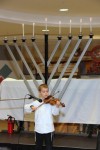
Young philanthropist Yosef Nider receives recognition. (photo from Naomi Nelson Photography)

On Sunday, Dec. 21, the Centre for Judaism in Surrey/White Rock held its annual menorah lighting at Semiahmoo Centre, and awarded its inaugural Young Lamplighter Award to Yosef Nider, pictured here. The young violinist, a student at Vancouver Hebrew Academy, received the award for raising more than $10,000 for cancer research. Mayors Wayne Baldwin and Linda Hepner presented the award.

The lighting was attended by local city councilors and Jewish community members, all welcomed by the centre’s Rabbi Falik and Simie Schtroks.

To nominate for next year’s award a youth between ages 5-18 who is illuminating his or her part of the world by promoting goodness and kindness, email c4j@shaw with Lamplighter Award in the subject line. Nominations will be accepted through September 2015.

Format ImagePosted on January 9, 2015January 8, 2015Author Centre for JudaismCategories LocalTags Centre for Judaism, Lamplighter Award, Schtroks, Yosef Nider

Posts pagination

Previous page Page 1 … Page 4 Page 5 Page 6 Next page
Proudly powered by WordPress