אפקט טראמפ

אמריקנים מחפשים אופציות הגירה ועבודה בקנדה. (צילום: Makaristos via Wikimedia Commons)

זכייתו של דונלד טראמפ בבחירות לנשיאות בארצות הברית ממשיכה להכות גלים במדינה. אמריקנים רבים המתוסכלים מבחירת טראמפ הנחשב במחינתם למאוד מסוכן, בודקים את האפשרות לעבור לקנדה ולמצוא כאן בית חם.

כפי שכבר פורסם אתר מחלקת ההגירה הקנדית קרס עם פרסום תוצאות בחירות של טראמפ בשמונה בנובמבר. זאת, לאור גידול משמעותי במספר הגולשים האמריקניים שהחלו לחשוב ברצינות על מציאת מקלט בקנדה מהחשש מטראמפ.

אפקט טראמפ משפיע גם בתחום העבודה. לאחרונה נרשם גידול משמעותי ביותר בחיפוש עבודה בקנדה מצד אמריקנים שרוצים לגור כאן לאור זכייתו בבחירות. במקביל נרשם גידול גם כן מצד אמריקנים שמחפשים שידוך עם קנדים, כך שתיפתח בפניהם הדלת להשיג ניירת לעבור ולגור כאן. אפילו בתחום התעופה והתיירות מתברר שיש גידול משמעותי מצד אמריקנים שמחפשים טיסות לקנדה.

יצויין כי קנדיים רבים לא “מאושרים” מבחירתו של טראמפ ומדי כשבוע מתקיימות הפגנות נגדו בסמוך למלונות דירות טראמפ טאור, בערים טורונטו וונקובר. גם הממשלה הקנדית חוששת מטראמפ שחוזר ומצהיר כי הוא רוצה לשנות את הסכם הסחר נפט”א המשותף לארה”ב, קנדה ומקסיקו.

“גדרות מצילות חיים” יותקנו על גשר בורארד למנוע מאזרחים להתאבד

עיריית ונקובר בונה בימים אלה גדרות בצידי גשר בורארד למנוע מאזרחים לקפוץ אל מותם, תוך כדי קפיצה חופשית אל המים העמוקים. עלות הפרוייקט שיימשך מספר חודשים נאמדת בכשלושה וחצי מיליון דולר. זאת, במסגרת עבודות שיקום, שיפוץ הגשר ובניית מסלולי אופניים חדשים. מהנדסי העירייה חשבו תחילה להתקין רשתות בתחתית הגשר שיעצרו את המנסים לקפוץ, או להציב קירות זכוכית בצידי הגשר. אך לבסוף הוחלט שהגדרות ממתכת (משגיעות לגובה 3.6 מטר) הן הפתרון הטוב והיעיל ביותר.

במערכת בריאות הנפש של מחוז בריטיש קולומביה ברכו על החלטה והוסיפו: “הגדרות יצילו חיים. זה ידוע שיש לא מעט נסיונות להתאבד מגשר בורארד”. ואילו המתנגדים לפרוייקט שטוענים כי במקום לבזבז כספים על הקמת הגדרות, עדיף היה להגדיל את תקציב מערכת בריאות הנפש ולעניק שירות טוב יותר לנזקקים, כך שהם לא ינסו להתאבד.

כוכב נוסף לסטארבקס: הרשת תממן טיפול נפשי לעובדיה בקנדה

רשת בתי הקפה סטארבקס בקנדה הולכת משמעותית לקראת העובדים. הנהלת הרשת המקומית תממן לעובדים טיפולים נפשיים בהיקף של עד חמשת אלפים דולר בשנה. מדובר בצעד חסר תקדים בענף רשתות הקפה והמזון ובכלל בקנדה, בארה”ב ובקומות אחרים.

בסטארבקס קנדה מועסקים כתשעה עשר אלף איש וכשבעים וחמישה אחוז מהם שעובדים עשרים שעות לפחות מדי שבוע, זכאים עם בני משפחותיהם לקבל את טיפול הנפשי (ללא צורך שום באישור רופא משפחה), שכולל ביקורים אצל פסיכולוג מורשה. ההחלטה לממן את הטיפולים התקבלה לאור התייעצות עם העובדים. בהנהלת הרשת מודעים לעובדה כי תחום בריאות הנפש משפיע מאוד על רבים בקנדה, כאשר ברובם הם הצעירים. יצויין כי מרבית עובדי סטארבקס צעירים (הגיל הממוצע ברשת עומד על עשרים וארבע) וביקורים אצל פסיכולוג נחשבים ליקרים מאוד במדינה.

מומחה בתחום אומר שלטיפולים נפשיים יש ערך רב. הם מקטינים תביעות רפואיות מצד העובדים, מגדילים משמעותית את שביעות רצונם וכן גם את נאמנותם למקום העבודה. לדבריו מדובר בתרומה חשובה מאוד לעובדים בעיקר בענפי המזון והמסחר הכל כך תחרותיים, ויש לקוות שחברות נוספות ילכו בדרכה של סטארבקס.

גם הנהלת סטארבקס בארה”ב החליטה אחרונה ללכת לקראת העובדים שם. הרשת העלתה את שכר עובדיה (כמאה וחמישים אלף במספר) בלפחות חמישה אחוזים.

Scholar talks at Peretz

Prof. Ester Reiter, author of A Future Without Hate or Need, points to the U.S. election as a warning that the issues the Canadian Jewish left dealt with are as timely as ever. (photo from Ester Reiter)

On Dec. 1, Prof. Ester Reiter will speak at the Peretz Centre for Secular Jewish Culture to launch her new book A Future Without Hate or Need: The Promise of the Jewish Left in Canada (Between the Lines, 2016).

Reiter’s book documents “the varied political and cultural activities of those who were part of the secular Jewish left” – the movements in which many Yiddish-speaking immigrants and their children took part during the first half of the last century, made up of Yiddish schools, theatres, choirs, dance troupes, drama groups, sports leagues, union activism, newspapers, women’s groups and summer camps. Their members were animated by a vision of what many of them would have called a shenere, besere velt (a more beautiful, better world). There were groups throughout the country, with the strongest ones in Montreal, Toronto and Winnipeg.

Many of these groups came together nationally in the United Jewish People’s Order (UJPO), founded in 1945. The book launch is being undertaken to commemorate the 90th anniversary of the founding of the Labor League – which later became part of UJPO – in Toronto in 1926. The launch is sponsored by UJPO, and co-sponsored by the Peretz Centre and the Shaya Kirman Memorial Foundation for Yiddish Culture. It will start at the Peretz Centre at 4 p.m.

Reiter, a sociologist by training and a senior scholar at York University in Toronto, grew up in New York in a milieu similar to the one she describes. “I grew up in the New York left, the sister version of the Canadian Jewish left. I was a child in the Yiddish shule [school] in Brooklyn and later the mittlshul [middle school] in Manhattan during the Cold War. Many of my teachers were well known in Canada – they were in the summer camps in Montreal and Toronto, and taught in Canada. The politics were virtually the same and shule materials used in Canada were produced in New York, particularly in the early years, the 1930s.”

This community was at its strongest from the 1920s to the 1950s. Yiddish-speaking immigrants were immersed in the secular Yiddish culture and literature that emerged in the late 19th century. “The Jewish left was the equivalent of a university for working-class women and men. The cultural activities – dance, choirs, orchestras – were accessible to both women and men. People working in the needle trades with no time to learn to read music would sing classical works in the choirs, learning them by heart.”

Reiter says of the Yiddish Arbeter Froyen Fareyn (Jewish Women’s Labor League) that, “the very act of getting together changed many of the women,” particularly in women-only groups, “where women felt more comfortable, they described how they learned to speak in meetings. Their political commitments, which involved activities such as walking picket lines, raising money for various causes, necessitated engaging in public life in a way that required and reinforced self-confidence. This participation in the wider world was empowering. They supported each other, made close friendships and had a lot of fun.”

Jews on the left in Canada, as elsewhere, were diverse – they included social democrats, Bundists, anarchists, Labor Zionists and Marxists. Reiter focuses on those whose outlook was Marxist and supported the Soviet Union after the 1917 October Revolution.
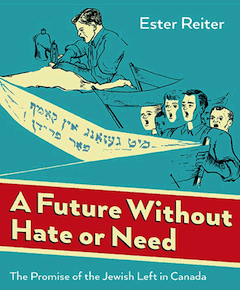
book cover - A Future Without Hate or NeedReiter emphasizes that this sector of the Jewish left had a life of its own distinct from the Communist party. “The leadership were Communist party members, but approximately 95% of the membership of the UJPO and its predecessors were not. One could think and say what one felt in the Jewish left without concern over whether it was the ‘correct’ position. Many people came [to the Jewish left] because of the liveliness of the community, as well as the politics.”

Initially, Yiddish schools saw their purpose as conveying ideological values, but this later shifted to transmitting the Yiddish language and Jewish cultural identity for their own sake, including secularized versions of Jewish holidays and rituals. “In the early period, a Yiddish education in the shule was to ensure that the children learned they were the children of workers, and needed to care about racism and class exploitation. After Hitler came to power and antisemitism was growing, Yiddish was valued as an end in itself, and there was more acceptance of the different ways of identifying as a Jew. The community developed secular ceremonies around the bar/bat mitzvah, the High Holidays, Rosh Hashanah and Yom Kippur.”

The Jewish left experienced government harassment during the Cold War, especially in Quebec under premier Maurice Duplessis. Reiter notes that Canadian Jewish Congress defended civil liberties in the face of repression, but “dealing with pro-communist groups in their midst was a different matter.” UJPO was expelled from CJC in 1952 for dissenting from the Cold War consensus by opposing the postwar rearmament of West Germany and supporting the Stockholm peace petition.

The Jewish left for a long time saw the Soviet Union as a hope for a better society, in its outlawing of antisemitism and support for Yiddish culture in the 1920s, but their hope was shattered by the Stalin regime’s murder of Yiddish artists in the late 1940s and early 1950s. “For many years, people projected their idealism on[to] the USSR. When they found out about Stalin’s suppression of Jewish life, it was shocking. Most of the Jewish [Communist party] leadership from UJPO left the party. However, the rank and file in UJPO were never actually party people, so many felt that, although the USSR under Stalin was terrible, their activities in Canada – helping the unemployed, union support – were important and valuable.”

Reiter describes various factors in the shrinking of the Canadian Jewish left – Cold War persecution, disillusionment with Stalinism, the erosion of Yiddish by assimilation. However, UJPO itself has survived the disappearance of the milieu that gave birth to it, and has even attracted new members. Reiter reflects, “There certainly is a need. Our politics mean that we are inclusive of different kinds of families – gay, straight, trans, mixed racial and religious origin. Yiddish has pretty well disappeared, but the progressive politics remain. With respect to Middle East politics, there are a variety of views in the UJPO, but we all agree that criticizing the actions of the Israeli government does not mean that one is a self-hating Jew. We also continue with trade union support, First Nations solidarity, environmental activism. We exist because we have a community that has a good time together. As the organized Jewish community has moved to the right, we provide a place where one can have a Jewish identity and be progressive. Secular left Jews now have to think about what we have in common, not what separates us.”

Reiter points to the Nov. 8 U.S. election as a warning that the issues the Canadian Jewish left dealt with are as timely as ever. “The struggle against racism, sexism, homophobia and all this meanness and narrowness is an ongoing one – a call to remember and honor and value our own history and where we came from.”

Carl Rosenberg is a member of the United Jewish People’s Order and Independent Jewish Voices Canada. For many years, he edited Outlook: Canada’s Progressive Jewish Magazine.


Acoca launches book here

Rabbi Ilan Acoca has published his first book, The Sephardic Book of Why (Hadassa Word Press, 2016).

Why is a set of Sephardi tefillin different from an Ashkenazi pair? Why do Sephardim laugh during Havdalah, after reciting the blessing over the wine? Why do Sephardim not use the shamash to light the Chanukah candles? Why do Sephardim celebrate with henna before a wedding? These and so many other questions are answered by Rabbi Ilan Acoca in his book The Sephardic Book of Why: A Guide to Sephardic Jewish Traditions and Customs, just published by Hadassa Word Press.

The spiritual leader of Congregation Beth Hamidrash for 17 years, Acoca will return to the synagogue for the book’s local launch on Dec. 10, as part of a larger tour. Acoca and his wife Dina have been rabbi and rebbetzin of the Sephardic Congregation of Fort Lee, N.J., since they left Vancouver in August, and Rabbi Acoca is also rabbi-in-residence of Yeshivat Ben Porat Yosef, in Paramus, N.J.

photo - Rabbi Ilan Acoca will be back in Vancouver for the Dec. 10 book launch
Rabbi Ilan Acoca will be back in Vancouver for the Dec. 10 book launch. (photo from Hadassa Word Press)

“I would like to invite the entire community to the book launch,” Acoca told the Independent, “where I will explain what triggered me to write the book, as well as some singing and shmoozing.”

The rabbi shared a little of his motivation for writing The Sephardic Book of Why, which, he said, took three years to put together.

“Through the years, many people (Sephardim and Ashkenazim alike) asked me questions about Sephardic customs, trying to understand where each originated and what is the significance. At times, I had an answer and, at times, it intrigued me to research and find out more. One day, I was invited to a wedding as a guest and saw that the officiating rabbi had a Chabad rabbi’s guide. I knew that the RCA [Rabbinical Council of America] had an Ashkenazi rabbi’s guide so I thought to write one for Sephardic rabbis. A few days later, I sat down with my friend David Litvak and shared my idea with him. He thought about it for a moment and suggested a book that would include the entire Jewish and non-Jewish world. Immediately after the meeting, I opened my email and saw one from Hadassa press telling me they saw some of my classes on YouTube and were interested for me to publish a book with them. For me, that was a sign from heaven that I could not ignore.”

Adorned by a cover featuring the interior of Lazama Synagogue in Marrakesh, Morocco, The Sephardic Book of Why – Acoca’s first book – is divided into five chapters: Daily Rituals, Shabbat and Holidays, Lifecycle Events, Sephardic Culture, and Rabbi’s Musing. The last chapter comprises a selection of articles by Acoca that were originally published in the Canadian Jewish News. They cover a range of topics, including essays on “the middle path,” unity and the importance of diversity. So, having arrived in the United States from Vancouver only months before the presidential election, the Independent asked him if he had any advice to offer to Jews living in the United States (or Canada) about the polarity and divisions that were highlighted in the campaigns.

“It is pretty simple,” he said. “In order to move forward, we have to find things in common. There are so many things that unite but we often concentrate on what divides us. By finding things in common, we could understand each other, communicate and move forward.”

While there are a couple of other books on Sephardi customs, Acoca said, “My book is the only book that is in a question-answer format. It is more condensed, short, to the point, with sources.”

“The book is very thorough, yet easy to read,” writes Rabbi Elie Abadie, MD, of New York City’s Edmond J. Safra Synagogue and director of the Jacob E. Safra Institute of Sephardic Studies, Yeshiva University, in the book’s foreword. “It will please scholars and students equally, with good source material and footnotes. It covers the entire year-cycle of holidays and the lifetime milestones. It is a perfect book for Sephardim who, unfortunately, are just beginning to learn about their own traditions and for Ashkenazim who have just begun to interact with and learn about the Sephardim and their ‘different’ customs.”

Abadie puts quotes around the word different because, he notes, “In the overwhelming majority of minhagim [customs], the ‘Sephardi way’ was the ‘original and standard way’ of fulfilling a commandment, and the Ashkenazi community throughout the ages veered from the original minhagim and traditions, given the geographic region that they lived in and the circumstances that surrounded them.”

For those wanting to learn more about the “original” ways of Jewish practice, or to see a good friend while he’s in town, the Dec. 10 book launch, talk and signing starts at 8 p.m. People can also order a copy of the book from Hadassa Word Press.

Meditating mindfully

Or Shalom is hosting one of the leading innovators in the field of Jewish meditation next weekend – Rabbi Jeff Roth of the Awakened Heart Project will lead a half-day retreat at the synagogue on Dec. 4.

Roth, who has been practising and teaching meditation for decades, teaches his own synthesis of Eastern techniques with a Jewish heart, which he calls Jewish mindfulness meditation.

photo - Rabbi Jeff Roth of the Awakened Heart Project will lead a half-day retreat at Or Shalom on Dec. 4
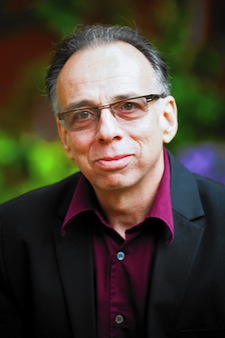
Rabbi Jeff Roth of the Awakened Heart Project will lead a half-day retreat at Or Shalom on Dec. 4. (photo from Jeff Roth)

“I was already a rabbi when I started studying Asian meditation,” he explained. “Everything I learned, I learned through a Jewish lens. I never took on a practice without altering it slightly.”

When asked if anyone has objected to his synthesis of Jewish spirituality with Asian contemplative techniques, the rabbi said, “What I integrate is the truth of the nature of mind and no one has any objection to that. I ask questions like, What is the influence of conceptual thinking on the mind? What are the effects of different thoughts?”

Roth teaches a type of meditation that involves experiencing the mind and body with a healing, nonjudgmental awareness. It is rooted in the mindfulness movement first brought to North America in the 1970s, which has steadily grown in popularity, even finding a significant place in new medical treatments and corporate environments. And Jews have played a large role in the movement, demonstrated by leading teachers like Jack Kornfield, Joseph Goldstein, Sharon Salzberg, Jon Kabat-Zinn and others.

Drawn to the mystical teachings of Judaism as a young rabbi, Roth said they remained “intellectual” for him until he began practising meditation. “In the quiet, in the silence, I became a mystic,” he said. “It became a direct experiential realization.”

Among his students now are many rabbis. “I teach rabbis they need to come to the silence, the witnessing, to have a deeper spiritual experience,” said Roth, referring to the practice of “just witnessing” that characterizes mindfulness meditation. By just witnessing thoughts, feelings and sensations, say its exponents, mindfulness meditation calms the body and mind and allows deeper, non-conceptual awareness of experience. “From a Jewish perspective, ‘just witnessing’ is not enough, however,” he said. “You need to be the compassionate witness.”

Roth said he draws his central inspirations from the teachings of the Chassidic masters, especially the Baal Shem Tov – Rabbi Israel ben Eliezer, 1698-1760, founder of the Chassidic movement.

“The Baal Shem Tov said ‘everything is God and nothing but God,’” Roth explained. “The whole thing to do is to align ourselves with the truth of being, which in the Torah is expressed as ‘ein od milvado’ (‘there is nothing else besides God’).”

A turning point in Roth’s development came in 1981 when he received teachings from Reb Zalman Schachter-Shalomi, the founder of the Jewish Renewal movement, which became the scaffolding of his theology of contemplation.

“Reb Zalman taught me about the four worlds, or levels of manifestation, that occur within the Holy One of Being,” said Roth. The contemplation of how the four levels of manifestation happen in our minds and bodies can guide our mindful exploration of experience, he said. “The four worlds have become a central metaphor in my teaching. I have been working out that teaching for the last 35 years.”

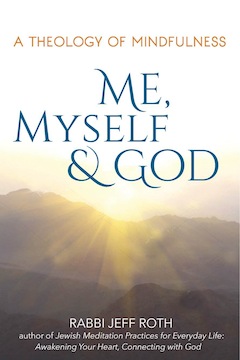
book cover - Me, Myself and GodRoth’s latest iteration of that “working out” can be seen in his recent book, Me, Myself and God: A Jewish Theology of Mindfulness (Jewish Lights, 2016), from which he will be presenting practices and Torah teachings at the Dec. 4 session.


“We’re trying to understand the fundamental forces that alienate us in our experience of life, in order that we might live more from a place of awakened heart, which is connected to all experience and allows us to manifest with more love and compassion in our daily lives,” said Roth. “I want to emphasize that acting with love and compassion – that’s where we’re going with the whole thing.”

For more information on the retreat, which will take place from 2:30-5:45 p.m., and be followed by a potluck meal, visit orshalom.ca.

Matthew Gindin is a freelance journalist, writer and lecturer. He writes regularly for the Forward and All That Is Interesting, and has been published in Religion Dispatches, Situate Magazine, Tikkun and elsewhere. He can be found on Medium and Twitter.

Yiddish food’s long history

Michael Wex, author of Rhapsody in Schmaltz (St. Martin’s Press, 2016), will close the Cherie Smith JCC Jewish Book Festival on Dec. 1.

“Heavy, unsubtle and, once it emerged from Eastern Europe, redolent of an elsewhere that nobody missed, the food of Yiddish speakers and their descendants is a cuisine that none dares call haute, the gastronomic complement to the language in which so many generations grumbled about it and its effects,” writes Michael Wex in the introduction of his latest book, Rhapsody in Schmaltz: Yiddish Food and Why We Can’t Stop Eating It.

“This vernacular food continues to turn up in vernacular form in the mouths of people who have never eaten it, or who don’t always realize the Jewish origin of the strawberry swirl bagel onto which they’re spreading their Marmite,” he writes. “We’ll be looking at the aftertaste of Ashkenazi food as much as at the cuisine itself. But before we can do so, we have to go back to the Bible to see why Jewish food exists and what it really is.”

Toronto-based Wex – who is the author of many books, including Born to Kvetch: Yiddish Language and Culture in All of Its Moods and How to Be a Mentsh (& Not a Shmuck) – will close the Cherie Smith JCC Jewish Book Festival on Dec. 1. His topic, appropriately enough, is Jews and Food.

In Rhapsody in Schmaltz, Wex takes readers from the Exodus from Egypt – “Most national cuisines owe their character to flora and fauna, crops and quarry, domesticated animals and international trade. Jewish food starts off with a plague” – to the modern delicatessen, which “might no longer be the social hub it was for earlier generations, but the food that it serves is still recognized as Jewish, even when the ingredients are combined in ways that can’t help but pain an observant Jew.”

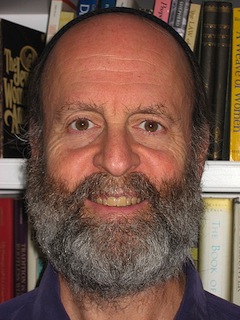
photo - Michael Wex
Michael Wex (photo by Zoe Gemelli / St. Martin’s Press)

While written in a tongue-in-cheek manner, Wex’s love of Yiddish culture, if not of Yiddish (aka Ashkenazi) food, is apparent in every page. And each page is packed with information – that he somehow compiled on his own, without research assistants.

“Although all of my non-fiction is rooted in subjects with which I was already quite familiar, I’ve found that it’s the research itself, the jump from one source to the next, that tends to produce the sparks that lead to the better ideas,” he explained to the Independent of his creative process. “I don’t think summarized works or lists of facts provided by an assistant would allow for the immersion that I, at least, need in order to write a book.

“It generally takes me about a year to research and write a book – maybe 18 months, if you count the preliminary research that usually goes into preparing a proposal for a publisher. I generally start with a specific, if somewhat vague, question and then try to answer it: What makes Yiddish different from other languages? Why do Jewish people go on eating traditional Jewish food even when they spend most of their time finding fault with it and have abandoned the rituals and ceremonies with which such dishes were associated?”

With nine pages of endnotes and a 13-page bibliography, one might assume that Rhapsody in Schmaltz is a dry read. It is anything but – Wex’s style is completely irreverent. For example, in writing about the formation of the dietary laws, he comments, “the Israelites aren’t supposed to feel any more deprived of the right to eat certain creatures than most of us usually do about the right to get high on crystal meth or pee in the street.” He openly discusses over-the-top kosher practices, bodily functions, etc. Perhaps surprisingly, his writing hasn’t ever gotten him into trouble with his religious compatriots.

“The only ‘trouble’ I’ve encountered has arisen from misunderstanding,” he said. “For instance, I received a vehemently condemnatory email from a woman who objected to my having used the phrase ‘goat or kid’ in describing the Passover sacrifice; she was afraid that non-Jews might take the word ‘kid’ as proof that we really murder gentile children and use their blood to bake matzah. Otherwise, though, the response has been quite positive. A number of rabbis – Orthodox, Conservative and Reform – have written to tell me that they’ve used material from my books in their sermons; Born to Kvetch is frequently cited in the language column of Hamodia, an English-language ultra-Orthodox paper published in Brooklyn.

“Most feedback about Rhapsody in Schmaltz has focused either on readers’ memories of the foods mentioned or on the ritual or halachic reasons behind the forms they’ve assumed or the occasions on which they are eaten, including questions relating to their viability in a world in which most Jews are not religiously observant.”

For many readers, some of Rhapsody in Schmaltz will serve as a memory refresher of the origins of certain rules of kashrut or the types of meals that are traditionally prepared for various holidays. But there is much readers will learn and, while Yiddish food may have been a topic with which Wex was familiar before he began his research, there were a few findings that surprised him.

“The whole Crisco-Manischewitz nexus and the things that grew out of it was probably the main thing I learned; I’d known how important Crisco was for kosher marketing, but until I looked into it, had no idea of why,” said Wex. “The other thing that really shocked me when reading through cookbook after cookbook was the surprising popularity of brain latkes at one time – I knew that brains were once popular, but had never heard of consuming them in latke form.”

Tickets to the closing of the book festival, which takes place at the Jewish Community Centre of Greater Vancouver, are $24 and the event features a food reception – brain latkes not included. To order, call 604-257-5111, drop by the JCCGV or visit jewishbookfestival.ca.

The Entebbe rescue

Sasson (Sassy) Reuven serving in the Golan Heights. (photo from Sassy Reuven via Chabad of Richmond)

On Nov. 9, more than 200 members of the community packed into the Executive Inn in Richmond to attend a lecture by retired Israel Defence Forces commander Sasson (Sassy) Reuven, who held the audience spellbound for 90 minutes as he recounted his participation in the 1976 Operation Entebbe.

Reuven, an Israeli from Be’er Sheva, relocated to California after completing his military service, heading up security for El Al before opening a construction development company in Calabasas. As the recession hit, he found work scarce and confided his financial woes to a new friend, the Chabad rabbi in Calabasas. Somehow, it came up in conversation that Reuven had been an elite commander in the IDF and was one of the soldiers sent to rescue hostages taken in the Entebbe hijacking. Before he knew it, Reuven had agreed to give a talk to his community, and that talk jumpstarted his public speaking career, taking him all over the world to recount his memories of Entebbe.

photo - Retired Israel Defence Forces commander Sassy Reuven spoke in Richmond on Nov. 9 about Operation Entebbe
Retired Israel Defence Forces commander Sassy Reuven spoke in Richmond on Nov. 9 about Operation Entebbe. (photo from Sassy Reuven via Chabad of Richmond)

Earlier this month, he stopped in Richmond to deliver a talk sponsored by the Jewish Federation of Greater Vancouver, Chabad of Richmond and Richmond Jewish Day School. Then he was headed to Vancouver Island, Spokane, Wash., and South Africa for more speaking engagements.

The hijacking began on Air France Flight 139, which, on June 27, 1976, was en route from Tel Aviv to Paris via Athens. In Athens, four terrorists boarded the plane and forced the pilot, Michael Bacos, to divert the plane to Benghazi to refuel. Seven hours later, the plane left for Entebbe, arriving at 4 a.m.

“Israel had a good diplomatic relationship with Uganda from 1965,” Reuven explained. That changed in 1972, when President Idi Amin came to Israel, saw the IDF’s jet fighter planes and declared he wanted them for his own air force, “so he could destroy Tanzania.” The diplomatic visit did not go well and, over the course of it, Amin had a psychotic episode and spent time in hospital, Reuven said. When he returned to Uganda, Amin persisted in his demand for the fighter jets, but Israel, a friend of Tanzania, denied his request. When the hijackers requested the cooperation of Amin’s army so they could negotiate for the release of the hostages from Entebbe, the president complied.

Over the two days that followed, the hijackers separated Jews and Israelis from the other passengers. They set their ransom price and threatened to start killing Jewish hostages by July 1 if their demands weren’t met. Later, they extended the deadline to July 4, giving the IDF much-needed time to plan its heroic rescue.

The mood in Israel was very sombre at the time, Reuven recalled. “The entire country was still in mourning after the Yom Kippur War. When we learned we’d be flying to Entebbe to bring the hostages back, our commander told us we needed to bring them back alive – no fatalities and no injuries. We were going to bring the country’s morale back up.”

Asked if he felt ready to embark on such a mission, Reuven said he’d been in training for two years solid prior to the rescue. “The only time we stopped training was for Shabbat,” he reflected. “When I was selected to be part of this mission, I felt like the luckiest person alive, that this was my core existence as a Jewish soldier.”

The hours before he and the other soldiers boarded a Hercules C-130 aircraft and took off for Entebbe were long. Reuven recalled waiting beneath the eucalyptus trees at an army camp where the soldiers were fed hardboiled eggs, pita and mud-like coffee, and given very little information about their upcoming mission. When they finally took to the air, there were four Hercules C-130s and two Boeing 707s, containing a flying hospital and a flying command centre. The soldiers numbered 212 and included pilots, flight engineers, doctors, paramedics, refueling technicians, psychologists and intelligence personnel. Space was so tight on the flight that Reuven was wedged between the wall of the plane and an old black Mercedes-Benz that the IDF had brought along so that its soldiers could masquerade as officials in the Ugandan government if necessary.

At one point in his lecture, Reuven donned a white cap fitted with an elastic beneath his chin. “When we disembarked from the planes, we were wearing hats just like these,” he said. The IDF knew the airport would be in pitch darkness when its rescue mission arrived at 11 p.m. and the white hats were a way for the soldiers to recognize and see one another easily.

The rescue mission soldiers had various tasks. Some, like Yonatan Netanyahu, were sent to Entebbe’s old terminal building, where the hostages were being held. Reuven was instructed to go to the new terminal building. He recalled how the Ugandan soldiers knew something was going on and started raining bullets on the IDF rescuers as they ran towards the terminal buildings. Netanyahu was shot by one of those bullets and died minutes later at the scene.

In total, the rescue mission took 90 minutes and, by 12:30 a.m., the seven hijackers were dead and the hostages were loaded into an aircraft and en route to safety. The mission returned with fewer casualties than had been expected. Among the IDF soldiers, one had died and four were injured. Six hostages had been injured and four had been killed, including 19-year-old French-Israeli Jean Jacques Mimouni. When the IDF had arrived in the terminal building, they’d shouted to the hostages to lie down. Mimouni was so excited to see them, he jumped up and tried to embrace them. Mistaking him for a hijacker, the IDF shot him dead.

While he didn’t spend much time detailing the rescue scene, Reuven said he felt elated as he flew back to Tel Nof in Israel. “I felt like the long arm of the Israeli army was such a great arm that we’d go take care of any Jew, anywhere, in dire straits.”

Lauren Kramer, an award-winning writer and editor, lives in Richmond. To read her work online, visit laurenkramer.net.

Seminar on law and justice

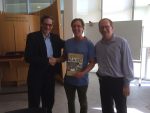
Congregation Beth Israel Rabbi Jonathan Infeld, right, and Howard Mickelson, QC, receive the Schechter Haggadah from the president of the Schechter Institute, Prof. David Golinkin, at the Schechter Institute of Jewish Studies in Jerusalem. (photo by Linda Price)

A group of 20 lawyers and judges from Canada visited Israel for a five-day Law and Justice seminar at the Schechter Institute of Jewish Studies in Jerusalem. Meeting with some of their Israeli counterparts, participants immersed themselves in the topics of Maintaining Security, Rule of Law, Democracy and the Jewish Way of Life.

Mission delegates participated in a reception at the Rooftop Restaurant, Mamilla Hotel, followed by a talk by the Hon. Justice Dalia Dorner, former Israeli Supreme Court justice. Mission delegates, several of whom are not Jewish, heard Dorner’s explanation of the special character of Israel, which is both a Jewish and democratic state. She said, “Israel must unite both of these values. Indeed, certain Jewish values are very compatible with democracy. Furthermore, the founding fathers of Israel chose freedom, justice and peace as the basic values upon which the state is founded, and no one can change this.”

The next day, the jurists met with Justice Elyakim Rubinstein, vice-president of Israel’s Supreme Court and former attorney general. They also toured the award-winning building. Rubinstein explained the uniqueness of Israel’s Supreme Court and how it differs from those of other Western countries. He also discussed topical issues such as the appointment of Supreme Court justices and the proposed Regulation Law.

Afterwards, delegates traveled to the Ministry of Justice in East Jerusalem and met with Israel State Attorney Shai Nitzan, who spoke about the difficulties of safeguarding human rights during times of war and insecurity.

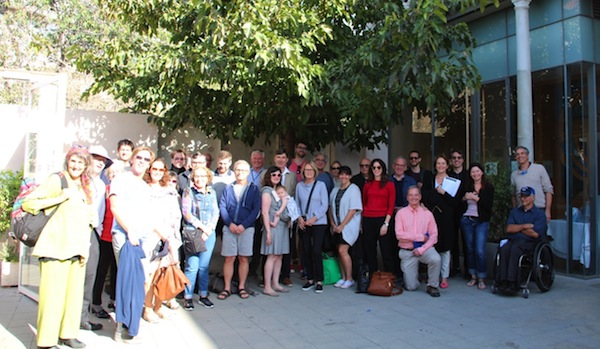
photo - Members of the group at the Neve Schechter in Tel Aviv
Members of the group at the Neve Schechter in Tel Aviv. (photo by Linda Price)

On the Thursday, Ambassador Efraim Halevy, the ninth director of Mossad, who was born in England, gave a talk on the interrelationship between Israel, the United States and Russia, and each country’s interest in the Middle East. Halevy said, “Israel cannot be destroyed” and that “Iran never was and cannot be an existential threat to the state of Israel. There is no state or entity that represents an existential threat to the state of Israel.”

On Friday afternoon, delegates visited the Neve Schechter Centre for Jewish Culture in Neve Zedek, Tel Aviv, and heard several lectures. Prof. Gideon Sapir from the faculty of law, Bar-Ilan University, and a candidate for the position of Supreme Court justice, gave a lecture explaining the issues of Israel’s “blue laws.” He noted the quandary of employing workers on the Sabbath in Israel and creative legal solutions to this dilemma, which counterbalances two values: one Jewish – the right to a day of rest; and the other democratic – the basic right to freedom of employment.

The mission was the initiative of Rabbi Jonathan Infeld of Vancouver’s Congregation Beth Israel and one of his congregants, attorney Howard A. Mickelson, QC. A group of Jewish and non-Jewish lawyers meets regularly in Vancouver, in a Law and Learn program for lawyers that deals with contemporary issues in civil law, bringing in guest lecturers. A Jewish law component is added to each session by Infeld.

Because of Infeld’s long-term connection to the Schechter Institute of Jewish Studies, Schechter was chosen to lead the mission and to implement the study program. The mission’s goal was to enable a group of Canadian leaders to study, up close, the social, military and political issues facing Israel as a democratic and Jewish state, both from a general legal and a specific Jewish legal/religious standpoint.

Strength in numbers

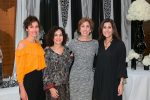
Left to right, Yael Rubanenko Horwitz, Wendi Klein, Debbie Jeroff and Lisa Pullan at Choices on Oct. 30. (photo from Jewish Federation of Greater Vancouver)

For the 12th year in a row, hundreds of women of all ages gathered to celebrate the choice they made to strengthen our community through tzedakah at this year’s Choices event. Co-chairs Debbie Jeroff, Wendi Klein and Yael Rubanenko Horwitz and their committee worked for months to make the event a success, and brought the room to life with their chic black-and-white theme.

“Each of us [came] with our own story, history, talents and tragedies,” said Lisa Pullan, chair of women’s philanthropy for the Jewish Federation of Greater Vancouver annual campaign, as she addressed the packed ballroom at Congregation Beth Israel on Oct. 30. “But what unites us is the choice that we have made to stand together in support of our Jewish community.”

With more than 400 women in the room, including 36 first-time attendees, Pullan declared that “there is definitely strength in numbers.” Case in point is the more than $2,064,000 that was raised through women’s philanthropy last year, accounting for 25% of the 2015 Federation annual campaign’s record $8.3 million total. “Together,” Pullan remarked, “we are making a lasting impact on the community that we love.”

A highlight of the event every year is the inspirational speaker, and this year’s keynote speaker, Talia Levanon, was no exception. As director of the Israel Trauma Coalition (ITC), she and her team provide trauma care and emergency preparedness and response to affected communities in Israel and around the world. ITC is a global leader in providing aid and support to local professionals working in the field in crisis zones.

“Seeing how the ITC social workers in crisis zones have to work through their own traumas to help others was particularly powerful,“ said Pullan. “Talia showed a video in which one of the ITC workers was talking to a client on the phone and had to talk her through a rocket firing, while simultaneously getting out of her own car, lying on the ground and dealing with it herself. It helped us understand in a visceral way the trauma that Israelis experience.”

Community member Stephanie Mrakovich also spoke at the event, sharing the moving story of how her family discovered their Jewish roots and how she came to find her place as a leader in our community. She shared her personal and touching account of her dying grandmother’s revelation of the family’s Jewish heritage. Her remarks can be found at jewishvancouver.com/stephanie-mrackovich-choices-speech.

Choices is the signature campaign event for women’s philanthropy. While the speakers and the theme change each year, what stays the same is the focus on the great work in the community that is made possible by women’s commitment to the mitzvah of tzedakah. To donate or for more information on the annual campaign and the services and organizations it helps fund, visit jewishvancouver.com.

– From e-Yachad, published by Jewish Federation of Greater Vancouver

Rower turns to apps

Matthew Segal (front, facing the camera) and his teammates at the Royal Henley Regatta in England. (photo from Matthew Segal)

Matthew Segal was an all-round athlete until the age of 15, when he found his one true love: rowing. He fell in love with the sport while he was a student at St. George’s School in Vancouver and followed it to Yale, where he rowed for the university’s lightweight varsity rowing team. In recent months, Segal, 22, the grandson of Vancouver icon Joe Segal, returned to Vancouver after graduating with a bachelor’s degree in economics from Yale. His most memorable times at school were spent rowing, specifically in the boat’s coveted position of stroke seat.

“Coaches look for a rower’s rhythm, length and the reliability of their endurance when they select the stroke seat,” Matthew explained to the Independent. “It was an honor to fill that role but I think the stroke takes too much of the credit. The success we had is attributable to every single guy on the boat.”

Segal’s father, real estate developer Lorne Segal, said he believes his son has been the only Jewish stroke of the Yale Varsity boat since intercollegiate sport began in the United States. While rowing began at Yale before 1852 and was the first collegiate sport, Lorne Segal said, “The first U.S. intercollegiate sport was a rowing race between Harvard and Yale in 1852; prior to that, Yale would simply race internally. So, the entire intercollegiate sport system started in the U.S. with the Harvard-Yale race, which has become one of the most famous annual races.”

photo - Matthew Segal at graduation
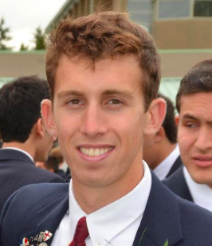
Matthew Segal at graduation. (photo from Matthew Segal)

Segal’s team had an undefeated regular season in 2016 before it went on to compete in the Eastern Sprints, a race against rowing teams of the top 18 schools in the United States. When they won the Eastern Sprints, they were invited to race in the prestigious Royal Henley Regatta in England, where they competed against 72 boats and were the only lightweight team to make it to the semifinal.

Lorne and Mélita Segal traveled to England to see their son compete. “They were racing the Cornell heavyweights who were, on average, 35 pounds heavier. It was a real David and Goliath battle!” said the proud father.

As he reflected on his final season on the rowing team, Segal said it was “one of the best seasons Yale ever had.” No stranger to winning, Segal also set two world records during the winter season, when he and his team were training indoors on ergometers: in the lightweight category for the 500-metre distance and for a one-minute test.

Now back at home and focusing on his career, Segal’s body is adjusting after being used to a rigorous schedule that saw him training 11 times a week. “I have different priorities right now but I’ll always hold rowing close to my heart,” he said.

These days, his attention is keenly focused on a series of mobile apps he’s developing with his company, Lipsi Software Development Inc.

Lipsi is an anonymous messaging app geared at high school and college-age kids that facilitates interactions that might not otherwise occur. “It’s supposed to be a fun platform for approaching people under the veneer of anonymity,” he explained. Another project is a gift-giving app that facilitates random acts of kindness by allowing givers to send recipients a small gift via text message.

In both of these endeavors, Segal is the mastermind behind the ideas, concepts, app layouts and legalities, but he has outsourced the technical component to programmers he describes as “some of the most brilliant people I know.”

Coming from a family such as his, you might think Segal is under extraordinary pressure to succeed.

“It’s always lurking in the back of my head that I need to try and live up to my dad and grandfather’s achievements,” he admitted. “In my life, I’ve tried to focus on the things that have meant the most to me, pursuing them to the highest level possible. And my parents have always been very supportive with regard to anything I’ve pursued. They’ve never told me I need to follow a certain career path, they’ve just told me to do what I do, and do it well. I think that’s the best approach in life.”

Lauren Kramer, an award-winning writer and editor, lives in Richmond. To read her work online, visit laurenkramer.net.

Where will the money go?

The Canadian government has announced that it will resume funding the United Nations Relief and Works Agency for Palestine Refugees in the Near East (UNRWA). The government made the announcement last week, allocating $20 million to UNRWA’s budget and an additional $5 million to support the emergency appeal issued by the organization in order to aid Palestinian refugees affected by the catastrophic war in Syria.

In a statement, the government said, “with this funding, Canada joins all other G7 countries in supporting UNRWA’s efforts to meet the ever-increasing needs of Palestinian refugees, assists in providing basic services for vulnerable people, and contributes to some stability in the region.”

Canada’s previous Conservative government backed away from supporting UNRWA, reducing funding from $32 million in 2007 to $19 million in 2009 and, in 2010, cutting funding entirely. The justification at that time was that UNRWA has ties to the terrorist group Hamas, which controls the Gaza Strip.

The $20 million just announced is expected to support health, social services and education “for millions of vulnerable Palestinian refugees,” according to Ottawa. But the announcement comes just days after renewed reports that raise concerns about the more than 200 Palestinian schools sponsored by UNRWA, which teach students between first and ninth grade.

One expert on the subject told a conference organized by the Centre for Near East Policy Research (CNEPR) this month that the textbooks reflect the educational principles introduced by Yasser Arafat when the Palestinian authority gained control over the education system in the West Bank and Gaza, and have not been cleansed of hate, antisemitism and incitement. Participants in the conference obtained textbooks from the warehouse that supplies Palestinian schools and they claim the books still encourage a violent struggle for the liberation of “Palestine,” which is defined to include all of present-day Israel, the rejection of historical facts about Jewish holy places and the demonization of both Israel and of Jews.

A spokesperson for UNRWA outright rejects the accusations, saying that two significant analyses of textbooks, including one by the U.S. Department of State, debunked the assertions of incitement in the curriculum. However, David Bedein, director of CNEPR, said he was prepared to present the U.S. government with evidence that contradicts the state department’s findings but told the Jerusalem Post he was rebuffed by the White House.

These conflicting reports are disconcerting. It should be possible for funders who send hundreds of millions of aid dollars to find out for sure whether their money is funding genocidal incitement. The Centre for Israel and Jewish Affairs is certainly correct in declaring that donor countries “have a responsibility to ensure that aid is used for the purpose for which it is given, and we are pleased Canada has taken the lead in establishing a robust accountability protocol.”

In announcing the renewed funding, the federal government promised “there will be enhanced due diligence applied to UNRWA funding … accompanied by a very robust oversight and reporting framework, which includes regular site visits and strong antiterrorism provisions.”

This would be a positive step, to say the least. It would also be a positive step if these Canadian funds do actually provide health, education and social services to people who need them. But this, too, will be difficult to discern. The Wall Street Journal reported earlier this year that an analysis by Israel’s Ministry of Foreign Affairs indicates that the Palestinian Authority budgets about $75 million a year to support Palestinian terrorists – about 16% of foreign donations the PA receives. A lack of transparency about where the rest of the money goes means the world has been unable to determine how much money is lining the pockets of cronies of the dictatorship and what proportion is making positive social and economic contributions in the lives of Palestinians. Notably, the Palestinians receive more international aid per capita than any other people in the world – by far. Even as the catastrophe in neighboring Syria has seen 250,000 killed and 6.5 million refugees displaced, Syrians receive $106 per capita in international aid, while Palestinians receive $176.

One could argue whether Canadian funds are needed by the Palestinian Authority at all. And, clearly, we cannot be entirely confident that funds are going to the places they are intended. But, if the Canadian government does indeed follow the money, as promised, and determines whether it is making life better for Palestinians or is instead inciting terrorism, this might finally answer some questions that today seem subject to accusations and denials. That would be money well spent.