Illiberal world of Bannon

In considering the furor around President-elect Donald Trump’s decision to appoint Stephen Bannon, the chief executive officer of the hard-right news website Breitbart, as his chief strategist, let’s start with the perspective of those who have defended him.

On one important level, their anger over the Bannon spat is justified. It is galling to see the behemoths of the liberal left, from MoveOn.org to the New York Times, suddenly discover the threat of antisemitism after showing general indifference to its resurgence in public life during the last 16 years.

Simply put, their negative feelings towards Israel got in the way of acknowledging that larger reality. But, as Israel isn’t a factor in the case of Bannon, they can level the accusation of antisemitism safely, untainted by any association with the Jewish state or its “occupation” of Palestinian territories.

But, there is no meaningful record of statements or actions on Bannon’s part to convict him of the charge of being, on a personal level, antisemitic. And, since Americans tend to understand antisemitism as suggestive of a character defect, it is not surprising that many people also interpreted the attacks upon Bannon as a low blow against his boss, the incoming president.

It’s at precisely this juncture, however, that the Bannon quarrel has gone awry. The issue was never really about Bannon’s own sensibilities and, in fairness, that was never the focus of the much-discussed Anti-Defamation League (ADL) statement on Bannon released Nov. 13. What the ADL said is that Bannon “presides” over the “premier website” of the “alt-right,” which it then defined as “a loose-knit group of white nationalists and unabashed antisemites and racists.”

This raised the legitimate question of whether a man with such associations is suited to one of the country’s top political appointments – whether he can be one of the unifying figures the country needs. But that is not the discussion we have had these past days; it’s all been about the personalities, and not the politics.

David Hirsh, the British academic who has played a key intellectual role in confronting the academic boycott of Israel, put forward a better standard with which to make a judgment at the ADL’s Never is Now Summit on Antisemitism, held in New York Nov. 17. Bannon’s case reminds us, he said, that “antisemitism is about politics, not personal moral failure.”

Our bitterly sectarian politics compromise the discussion of antisemitism and, more broadly, racism and prejudice, in America today. In the debate about Bannon, there seems to be an assumption among his supporters that nobody as implacably opposed as he is to the progressive left – powerful elements of which have allied with Islamists, and enabled the spread of antisemitic discourse in the guise of anti-Zionism – could possibly share any of their flaws.

As a result, Bannon’s defenders adopt many of the same rhetorical tactics that left-wing anti-Zionists deploy when confronted with the charge of antisemitism; listing their Jewish political comrades or friends or relatives, decrying reputational smears without foundation, asserting their fondness for Jewish culture, and so on.

In rushing to Bannon’s aid, they overlook the deeper historical truth that antisemitism has always been promiscuous, finding favor on right and left. Yet, in their alternative imagining, antisemitism is solely a problem of the political left.

Let me offer a brief explanation of why some aspects of Bannon’s intellectual universe should be of concern to anyone who cares about the basic social empathies that are needed to sustain democracy – the same empathies, I would add, that have been badly damaged by the growth of identity politics on the left and right.

Read more at jns.org.

Ben Cohen, senior editor of thetower.org and The Tower Magazine, writes a weekly column for JNS.org on Jewish affairs and Middle Eastern politics. His writings have been published in Commentary, the New York Post, Haaretz, the Wall Street Journal and many other publications. He is the author of Some of My Best Friends: A Journey Through Twenty-First Century Antisemitism” (Edition Critic, 2014).

Mourning Mom and inherited scars

Marta Fuchs, right, with Ilona Fuchs, 1968, Pasadena, Calif. (photo from Marta Fuchs)

My 98-year-old mother died recently and I’m waiting to feel something. I watched family and friends cry at her funeral and I listened to their outpouring of love and accolades for the remarkable woman my mother was. To a person, they spoke of how loving and generous and talented she was – and yes, that she was also forceful and insistent – how much of an impact she made on them, how they remain in awe of how she survived Auschwitz at great odds, and how she rebuilt her life multiple times with flair, energy and optimism.

I sat there quietly, gripped by cognitive dissonance. The woman everyone knew was all those things they described. She was a resilient survivor, a gifted dressmaker and teacher, a devoted friend, but, with me, her other side overshadowed it all. Early on, as a Jewish child in postwar Hungary, I knew my job was to take care of her emotionally, to mitigate the suffering that happened to her before I was born. I spent a lifetime doing that while also being the brunt of her relentless criticism and control. It often felt as if nothing I did was ever enough, or good enough, though I do recall seeing her happy at times with my outfits and she took pride in my accomplishments. But, regrettably, I am now hard-pressed to recall more than a few positive moments together over the more than six decades of my life with her.

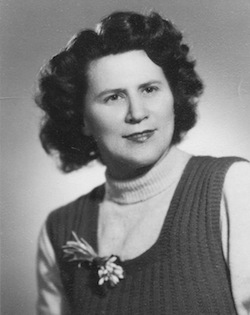
photo - Ilona Engel Fuchs, circa 1950-51, Tokaj, Hungary
Ilona Engel Fuchs, circa 1950-51, Tokaj, Hungary. (photo from Marta Fuchs)

I rarely cried when she would mercilessly pick on me. Depression was more my style. I knew she had to win and I had to surrender in what always felt like a life-and-death struggle for her no matter the issue. From my room, I heard my father echo what I had been pleading with her, “Ilona! She’s almost 50 years old! When are you going to stop dictating what she should do?!” “I am so sorry she treats you like this” he came in to comfort me, adding his perpetual advice, “Don’t pay attention to her and do what you think is best.”

Shortly after Dad passed away, Mom and I came to blows again, and she retorted accusingly, “Your father said I should be nice to you since you are so sensitive.”

Being sensitive was not a value for her, and I understand why. Being sensitive was a luxury she could not afford if she was to survive as a young woman in Auschwitz. In fact, once when we were talking about Auschwitz, she looked at me and stated matter-of-factly, “You would never survive.” Perhaps she’s right, yet we don’t really know until we’re tested. And, at least I can say that, thus far, I have survived her, albeit with scars.

There was a period of two blessed weeks, six years ago, the summer I turned 60, when I had the mother I wished for: kind, calm, appreciative, going with the flow. She had fallen in her doctor’s office after getting a clean bill of health and broke her hip, then suffered a cascade of near-fatal medical complications. My brother and I took turns staying around the clock with her in the hospital and then in rehab, to be her advocate and translator, as she often reverted to her native Hungarian. It was painful to watch her suffer and I did everything I could to alleviate it. But it was also a period of relief, for she was too sick to do battle with me. Once she started recovering, she was back to her true self with me, which for all of us was ironically a good sign.

I did learn a lot from my mother and inherited her creativity and resourcefulness, for which I’m grateful. I do feel good about having been the consummate dutiful daughter despite her wrath, and perhaps I did a public service being her emotional caretaker, which may have enabled her to be shining in the world, making such a positive impact on others. Whatever I inherit from her will, though, mostly feels like reparation payments, for I, like many children of Holocaust survivors, remain collateral damage.

Remarkably, despite our battles, my mother and I never stopped loving each other and, fortunately, I could always summon enough amnesia to begin each visit anew. As I stare at the dwindling light in the tall, blue shiva candle graced with a simple Star of David, I am coming to accept that it’s OK that I am not filled with the same sorrow and boundless reservoir of love I felt when my father passed. I felt sorry for Mom, I loved her, I admired her, I wrote books and articles about her, and I did as much as I could for her. And, what I am most grateful for is that with my own kids I have the kind of warm and supportive relationship I wish I could have had with her. May she rest in peace and may her memory be for a blessing.

Marta Fuchs, MLS, MFT, is a professional speaker, psychotherapist and author of Legacy of Rescue: A Daughter’s Tribute. She was born in Hungary to Holocaust survivor parents and escaped with her family in the wake of the 1956 Hungarian Revolution. Her website is martafuchs.com.

Dance in support of refugees

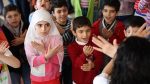
Children learn the #iamchild dance routine created by Israeli-Turkish therapist and journalist Michal Bardavid. (photo from iamchildproject.com)

There’s a new dance routine on social-media sites that has five catchy poses and one enormously powerful message.

The #iamchild dance-therapy routine is part of a project in support of Syrian children affected by ongoing civil war. It was created by Israeli-Turkish journalist Michal Bardavid to give emotional and moral support to millions of the world’s refugee children.

In addition to being an international correspondent for China Central Television, Bardavid is a psychological counselor and a certified dance therapist. After meeting hundreds of Syrian children in refugee camps on the Turkish-Syrian border, she created a motivational dance exercise made up of five positively worded sentences accompanied by five movements to show the kids that someone cares.

The five phrases – “I am loved,” “I am a child,” “I am safe,” “I am a whole person,” “I am beautiful” – are spoken in Arabic.

“The accompanying movements make the emotion more concrete as children say the sentences out loud,” Bardavid writes about the project.

In honor of United Nations Universal Children’s Day on Nov. 20, a day that promotes “international togetherness, awareness among children worldwide, and improving children’s welfare,” Bardavid uploaded a call-to-action video – in English and Turkish – asking people to join the movement and show support for the Syrian kids.

So far, she has documented 600 Syrian refugee children and 350 Turkish schoolchildren doing the #iamchild dance routine. Children in Israel, Iraq, Spain, the United Kingdom and Turkey have sent in heartwarming homemade videos of how they perform the dance routine.

“#iamchild is about empowering Syrian refugee children, creating solidarity among Syrian and international children, and increasing global awareness on the issue,” writes Bardavid.

Bardavid wants to reach as many Syrian refugee children as possible via social media and word of mouth. “It’s important to remember Syrian kids are actually the ones most affected by the conflict,” writes Bardavid, noting that she hopes her #iamchild project will “induce a positive emotion even if for a brief moment.”

Israel21C is a nonprofit educational foundation with a mission to focus media and public attention on the 21st-century Israel that exists beyond the conflict. For more, or to donate, visit israel21c.org.

Mystery photo … Nov. 25/16

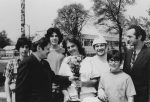
United Synagogue Youth Cycle-athon, 1971. (photo from JWB Fonds, JMABC L.09838)

If you know someone in this photo, please help the JI fill the gaps of its predecessor’s (the Jewish Western Bulletin’s) collection at the Jewish Museum and Archives of B.C. by contacting archives@jewishmuseum.ca or 604-257-5199. To find out who has been identified in the photos, visit jewishmuseum.ca/blog.

Memorial to Mumbai terror victims

Israeli President Reuven Rivlin lays a wreath in memory of the victims of the 2008 Mumbai terror attack at the Chabad House. To Rivlin’s left is First Lady Nechama Rivlin. (photo from Israel Government Press Office via Ashernet)

Israeli President Reuven Rivlin and First Nechama Rivlin participated in a Nov. 21 memorial ceremony for victims of the 2008 Mumbai terror attack at the Chabad House – Rabbi Gavriel and Rivka Holtzberg, Bentzion Kruman, Rabbi Leibish Teitelbaum, Yoheved Orpaz and Norma Rabinovich.

Also at the ceremony at Taj Palace Hotel were Chennamaneni Vidyasagar Rao, governor of Maharashtra state of India, other senior state officials, leaders and members of the Jewish community, and members of the business and academic delegation who accompanied the president on his state visit to India.

“As we stand here, we say clearly that terror will never win…. Our values of democracy and freedom are strong and we will defend them with all our might,” said Rivlin. He added, “We must act and work together: to share intelligence and best practices, to keep our peoples safe, to protect our borders, our towns and cities. India and Israel stand shoulder to shoulder in this fight. This is our duty to the memory of the victims, and will be the legacy we leave for future generations.”

Best books for children

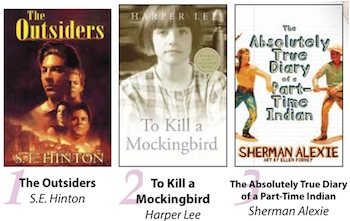
The top three picks of B.C. teachers for elementary school students.

As part of the B.C. Teachers’ Federation’s 100th anniversary, the BCTF encouraged members to recommend their favorite kids books to celebrate literacy and lifelong learning. It asked teachers: “What are the books you believe every student should read before graduating?” The result is a list of 100 books each for elementary and secondary students with an accompanying online resource and poster set to promote the books and the love of reading.

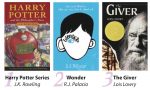
image - The top three picks of B.C. teachers for secondary school students
The top three picks of B.C. teachers for secondary school students.

“The BCTF received thousands of submissions from teachers throughout the province to make these best books lists,” said BCTF president Glen Hansman. “Some teachers told us they chose books that inspire, books that resonate with their students, and books that stand the test of time. Other submissions were made based on the outstanding quality of writing or the compelling stories told. The list is by no means exhaustive or scientific, but it reflects the enthusiasm and passion teachers have for literacy and reading.”

BCTF has created a new web page called bctf.ca/100bestbooks, which has links to every book to help visitors access descriptions and the publishers’ information. The release of the two lists in September coincided with International Literacy Day, which was Sept. 8.

“I encourage all teachers and others who love a great read to explore these best book lists,” said Hansman. “There is some excellent diversity represented and it shows how rich the genres of children’s and young adult literature are. Thank you to all the authors out there creating such wonderful stories!”


מגדל טראמפ בטורונטו

מגדל טראמפ בניו יורק. (צילום: Roni Rachmani)

מלון הדירות טראמפ אינטרנשיונל בטורונטו כן יוצע בסופו של דבר למכירה בשל חוב המגיע ל-301 מיליון דולר. למלון הדירות בניהול חברתו של דונלד טראמפ, הנשיא הנבחר של ארצות הברית מטעם המפלגה הרפובליקנית, יצא מונטין רע מאוד, זאת בשל שירות וניהול גרועים מאוד מרגע פתיחתו. החוב שייך לבעלי הבניין – חברת טאלון אינטרנשיונל בשליטת המיליארדר היהודי-רוסי, אלכס שניידר. המיליאדר החזיק בעבר בשליטה (80 אחוז) על קבוצת הכדורגל של מכבי ת”א. כיום הוא ומחזיק בכרבע (21.4 אחוז) בחברת הנדל”ן הישראלית מישורים. כדי לשמור על תקינות של הליך מכירת הנכס הוא יבוצע בפיקוח וניהול בית המשפט.

טאלון אינטרנשיונל וחברת הניהול של טראמפ נמצאים בהליכים משפטיים ארוכים, עקב תביעות הדדיות על הפרת הסכמים מצד שני הצדדים. במקביל עשרים ושלוש תביעות הוגשו לבית המשפט על ידי בעלי יחידות בבניין, נגד החברות של שניידר ושל טראמפ בטענות לניהול כושל ואי עמידה בהבטחות (בהתאם לחוזים שנחתמו עימם), להשכרת נכסיהם והחזרים על השקעותיהם. המלון דירות בגובה שישים וחמש קומות (עם 216 חדרי מלון ו-118 דירות) נפתח בשנת 2012 בדאון טאון טורונטו. עד היום מרבית הסוויטות לא נמכרו ותפוסת המלון עומדת על שיעור נמוך של בין 55 אחוז עד 75 אחוז בלבד.

מלון הדירות טראמפ אינטרנשיונל הוטל ומגדל בוונקובר (בבעלות מיליארדר ממלזיה) היה אמור להיפתח במהלך הקיץ, אך זה לא קרה. הפתיחה נדחתה לסתיו ולבסוף שוב הפעם לראשית שנת 2017. לפי הערכה הבעלים היה מעוניין להתרחק עד כמה שאפשר ממערכת הבחירות הסוערת בארה”ב, והתבטאויותיו החמורות של טראמפ בנושאים שונים.

יצויין כי רבים מתושבי טורונטו וונקובר ישמחו עם השם טראמפ יוסר מחזית משני הפרוייקטים.

לראשונה בתולדות קנדה: מס יוטל על דירות ובתים ריקים

לאור משבר הנדל”ן המתמשך בוונקובר יוטל מס על דירות ובתים ריקים בעיר. כך החליטה מועצת עיריית ונקובר ביום רביעי שעבר. יצויין זו הפעם הראשונה שמוטל מס כזה בקנדה. ונקובר תשמש כנראה מודל חיכוי לערים אחרות ברחבי המדינה בהם מחירי הנדל”ן לא מפסיקים לעלות ובעיקר טורונטו.

המס בשיעור אחוז אחד מערך הנכס יוטל על דירות ובתים שעומדים ריקים לפחות חצי שנה בשנה. תקנות המס החדש ייכנסו לתוקף בחודש ינואר 2017. על בעלי נכסים יהיה מוטל לדווח לעייריה אם נכסיהם ריקים או מאויישים. מי שילח דוחות כוזבים לעירייה יקנס בלא פחות מעשרת אלפים דולר.

לפי הערכה בונקובר יש כיום לפחות שניים עשר אלף נכסים ריקים וברובם מדובר בדירות. בעלי הנכסים שיכולים להרשות זאת לעצמם זאת הם אמידים ובעיקרם סינים. לאור מצוקת הדיור כאשר מחירי הנדל”ן ודמי השכירות עולים כל הזמן, רבים מהתושבים של ונקובר לא יכולים להתמודד עם מציאות קשה זו ונאלצים לנדוד לערים אחרות רחוקות.

מחירי הנדל”ן בוונקובר עלו בשנה האחרונה בשיעור הגבוה ביותר עולם שעומד על למעלה משלושים ושישה אחוז (בין החודשים יוני 2015 ליוני 2016). כדי להילחם בתופעה של האמרת מחירי הנדל”ן, החליטה ממשלת בריטיש קולומביה בחודש אוגוסט האחרון להטיל מס בשיעור חמישה עשר אחוז על זרים שרוכשים נדל”ן במחוז. בשלב זה השפעת המס עדיין לא ידועה אם כי מתפרסמים דיווחים שונים בתקשורת, כי יש האטה מסויימת ברכישת נכסים למגורים. ממשלת מחוז אונטריו עוקבת מקרוב אחר השפעות המס על הזרים בבריטיש קולומביה, וגם היא שוקלת לנקוט במהלך דומה.

Fairy tale reimagined

Taylor Pardell as Gretel and Pascale Spinney as Hansel in Vancouver Opera’s adaptation of the classic fairy tale. (photo by Emily Cooper)

While Vancouver Opera is presenting the fairy tale Hansel and Gretel Nov. 24-Dec. 11, cast member Leah Giselle Field is living one of her dreams.

Field first moved to Vancouver from Calgary – where her parents had moved from Montreal the year before she was born – for an undergraduate degree in opera at the University of British Columbia. “I left for a two-year master’s program in Ontario and then came back for my doctorate,” she told the Independent. “I came back to Vancouver several times during those years away, so I feel like I’ve been a Vancouver resident for the last 14 years.”

In fact, her connection to Vancouver goes back even further.

“Vancouver has always felt a little bit like home,” she said. “After the war, surviving members of my maternal grandfather’s family moved to Canada. My grandparents settled in Montreal, and my grandfather’s sisters settled in Toronto and Vancouver…. Growing up in Calgary, my family would take road trips to Vancouver over spring break and in the summers, and the time we spent with my great-aunt and my mother’s cousins’ families was formative. Friends of theirs have been part of family events and celebrations for decades, and it’s always fun to catch up during holidays. I’ve been part of the Congregation Beth Israel High Holiday Choir for the past few years and enjoy catching up with my BI family each fall.”

Her professional experience includes appearing “in the title roles of Carmen and Julius Caesar, and as Marcellina in The Marriage of Figaro, Suzuki in Madama Butterfly, the Principessa in Suor Angelica, and Jennie in Maurice Sendak and Oliver Knussen’s Higglety Pigglety Pop!” notes her bio. “She is a past winner in the Western Canada District of the Metropolitan Opera National Council Auditions and a 2015 semi-finalist in the Marcello Giordani Foundation International Vocal Competition.”

photo - Jewish community member Leah Giselle Field plays Gertrude, the siblings’ mother
Jewish community member Leah Giselle Field plays Gertrude, the siblings’ mother. (photo from Leah Giselle Field)

In Hansel and Gretel, Field, who is a mezzo-soprano, plays Gertrude, the mother. All of the principal singers in the show, including Field, are 2016-2017 participants in Vancouver Opera’s Yulanda M. Faris Young Artists Program.

“My experience with Vancouver Opera so far has really been a dream come true,” Field said. “I still have moments of disbelief that I get to do this every day, that I have the opportunity to work and learn with such wonderful colleagues within an organization that treats its singers with so much respect. The eight of us in the Yulanda M. Faris Young Artists Program [YAP] have become really dear friends – we had ‘YAPsgiving’ together last month (because Thanksgiving fell between Rosh Hashanah and Yom Kippur, I brought matzah ball soup, round challah with raisins, apples and honey, and honey cake) – and our bass-baritone always says, ‘Goodnight, family,’ on his way out the door.

“Being part of this production of Hansel and Gretel has been amazing…. We have exciting, fresh perspectives from the director, conductor and designers to work with, the stage management team has been incredible, and the performers are so caring and supportive. It has been exciting every day – seeing the show come together is such a thrilling experience.”

Vancouver Opera is billing their Hansel and Gretel as a “family-friendly production” for ages 6-plus.

“There are all sorts of factors that make this production more family-friendly than our standard conception of ‘opera,’” explained Field. “First, the subject matter is familiar: anyone who has heard the Grimm story – about the brother and sister lost in the forest who find a house made of sweets and outsmart the witch who lives there – already knows the foundation of our story.

“We’re also performing an updated translation of the original libretto, so audiences will be hearing our story in English. [And] Hansel and Gretel is … an opera that involves child performers – we have a chorus of 14 children,” she said.

“Beyond the traditionally family-friendly elements of the opera, we have the most incredible design concept enhancing our production. This is a larger-than-life, technicolor world that brings to mind the dream world Maurice Sendak’s protagonist Max imagines in Where the Wild Things Are. This show is a co-production with the Old Trout Puppet Workshop, so costume pieces, the set, hand-held puppets and multi-operator puppet costumes help create this realm of ‘everyday spectacular.’ It’s such a visually rich presentation that audiences of any age will be engaged by the complete realm of story they see and hear.”

In addition, the new production has been shortened – it will run approximately two hours and 20 minutes, with one intermission – and the “youthful cast of emerging opera stars” will be conducted by 24-year-old Scottish-born conductor Alexander Prior. The original score by German composer Engelbert Humperdinck (1854-1921) has been adapted to suit the relatively small size of the venue – Vancouver Playhouse – and will be performed by “a 14-member ensemble of the Vancouver Opera Orchestra, which includes strings, woodwinds, brass, percussion, a saxophone and an electric guitar.”

While Field’s focus is classical music, she said she also has some musical theatre, folk, jazz and pop music in her repertoire.

“Some of the music I’ve performed most includes Yiddish songs I learned in elementary school,” she said. “Whenever I can fit it into a program, I try to include ‘Oyfn Pripetchik.’ That’s always been a special song to me. When we learned new songs in Yiddish class, I would sing them over the phone to my grandfather in Montreal. He’d always say, ‘That’s very nice, Ketzeleh,’ but when I sang ‘Oyfn Pripetchik’ to him, he sang along. We had a party for his 90th birthday in 2010, and he got up to sing ‘Oyfn Pripetchik’ again with me then. I’m sorry to say he’s declined significantly in the past few years, but we still manage a sing-along every now and then.”

“Oyfn Pripetchik” is a song about a rabbi teaching his students the alef-bet, and it was written by Mark Warshawsky (1848-1907). In addition to folk songs, Field said that, since elementary school, she has “been interested in music and art suppressed under Nazism.”

“My maternal grandparents are Holocaust survivors and interwar European culture provides a fascinating snapshot of life and art amidst tragedy,” she explained. “Mary Castello, our pianist in the Yulanda M. Faris Young Artists Program, and I are beginning to plan a recital of suppressed music for the new year and hope to present it across the country.

“Jewish-Canadian composer Srul Irving Glick was commissioned by the CBC to write a song cycle for the great Canadian singer, Maureen Forrester,” she continued. “He used the translated text of children’s poems salvaged from Terezin for his cycle ‘I Never Saw Another Butterfly,’ and I had the honor of performing ‘Narrative’ from this cycle with pianist Richard Epp for UBC’s honorary degree conferral ceremony for Elie Wiesel.”

In addition to the recital planned for next year, Field said, “I’m looking forward to Vancouver Opera’s festival in the spring, and getting to play the bad guy in a production of Puccini’s Suor Angelica in Ottawa in February.”

For tickets to Hansel and Gretel, call 604-683-0222 or visit vancouveropera.ca.

Jewish view of afterlife

Rabbinic Pastor Simcha Raphael will be a scholar-in-residence at Congregation Or Shalom for a Shabbaton Nov. 25-26. (photo from Simcha Raphael)

Later this month, Congregation Or Shalom is hosting a Shabbaton featuring Rabbinic Pastor Simcha Raphael, a bereavement counselor and expert in Jewish beliefs and sacred practices around death and the afterlife.

Founding director of Da’at Institute for Death Awareness, Advocacy and Training, Raphael also has a psychology practice specializing in grief counseling and bereavement support, and is an adjunct assistant professor in the Jewish studies department of Temple University in Philadelphia. While in Vancouver, he will participate in various educational activities at Or Shalom, sharing observations from his decades-long study of related Jewish wisdom and customs.

Raphael’s interest in the afterlife began in personal experience. When he was 4 years old, his Bubby Mina died. As was common for children at the time, he did not attend the funeral or shivah, but he was told that she had “gone to heaven.” In his young mind, this meant she was still alive and accessible and, for years afterward, he found comfort in talking to her.

Years later, when the rabbi was 22, a good friend died in a car accident. Heartbroken, Raphael found that he had a continued sense of his friend’s presence. This experience, together with his childhood memories of talking to his grandmother, came together as both a question and an inspiration. Raphael was already studying psychology and world religions – he turned his focus on what Judaism says about the afterlife.

Then, as now, many Jews and non-Jews wrongly believed that Judaism does not have anything to say about the afterlife. But, as Raphael investigated the textual tradition, he found that the Torah, Talmud, kabbalistic writings and Jewish folklore all painted a very different picture.

“In the world of the Chassidim, the world of the Ashkenazi shtetl, there was no question about the reality of the spiritual realms and their interaction with this world,” Raphael told the Independent.

As many Jews eagerly embraced modernity, these traditions were suppressed or forgotten. With the encouragement of his mentor, Reb Zalman Shachter-Shalomi, Raphael undertook to unveil these traditions for modern Jewry. In his now-classic Jewish Views of the Afterlife, published in 1994, Raphael provided a comprehensive discussion on these issues for a popular audience. A 25th anniversary edition of the work with a foreword by Arthur Green is expected in 2019.

Raphael has found that traditional rituals and beliefs around death can have therapeutic value, whether those dealing with these transitions believe in a tangible afterlife or not. “For example,” he said, “traditionally it is believed that the soul stays behind for seven days after death, preparing to leave. Mourners can be encouraged to take this time to say things they wished to say to their loved one, whether they literally believe their words are heard or not. I have found that this practice has great value for people.”

At the upcoming Shabbaton, Raphael will share rituals like this one, as well as explore the rich traditional lore Judaism possesses around death and the afterlife.

Raphael’s teaching program at Or Shalom runs Nov. 25-26 and is called Judaism and the Mysteries of Life, Death and the World Beyond. He will address what the Hebrew Bible, Jewish custom and the kabbalah can tell us about death and dying. On the Saturday, at 7 p.m., he will offer a community talk called Twilight Between the Worlds: Jewish Ghost Stories, which will take place at Celebration Hall at Mountain View Cemetery.

For more information about and registration for the Shabbaton weekend, visit orshalom.ca/shabbaton2016. Admission to the Saturday night cemetery event is free but seating is limited, so an RSVP is requested to orshalom.ca/jewishghoststories.

Matthew Gindin is a freelance journalist, writer and lecturer. He writes regularly for the Forward and All That Is Interesting, and has been published in Religion Dispatches, Situate Magazine, Tikkun and elsewhere. He can be found on Medium and Twitter.

Israel’s complexities

Noa Baum, one of the presenters at this year’s Cherie Smith JCC Jewish Book Festival, is a professional storyteller who, in recent years, has dedicated herself to promoting peace between Israelis and Palestinians. She has taken a long road to get to where she is today.

Baum was born in the late 1950s in Israel and grew up in the “golden age” of Zionism, where, despite the many challenges and flaws of the young state, the shadow of controversial wars and of the occupation had not yet darkened the Israeli self-image.

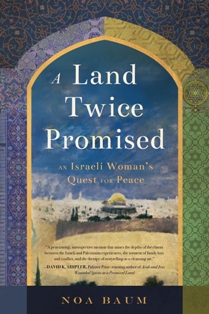
book cover - A Land Twice PromisedAs recounted in her 2016 debut work A Land Twice Promised: An Israeli Woman’s Quest for Peace, Baum grew up with both a deep love of Israel and a keen sense of Jewish vulnerability and the wounds of the Holocaust. The narrative she grew up with about Israel centred on the heroism of its citizen army (“our boys,” she repeatedly calls them) standing up to the bewildering, relentless hatred of the Arab countries. She was deeply shaped by the experience of living through the 1967 Six Day War and the 1973 Yom Kippur War as a child.

Over the years, she developed a more nuanced view. She came to face the existence of a hateful, right-wing extreme in Israel and was bitterly disappointed by the actions of the Israeli government in the 1982 Lebanon War, particularly Israeli complicity in the Sabra and Shatila massacre. Her brother, himself named after an uncle who died defending Israel, also suffered post-traumatic stress syndrome from the Lebanon War, leading to a lifelong struggle with mental illness.

When Baum left Israel to move with her husband to the United States to support his career, she left with her simplistic narratives shattered, but an enduring deep love of Israel and the Jewish people.

In her youth, Baum had passionately loved acting and storytelling and, in the United States, she became a professional storyteller. As a tale-spinner, she played it safe, however, presenting upbeat material and folktales and not touching on the conflicts and contradictions of modern Israel. All of that began to change when she nurtured a relationship with another mother, a Palestinian she calls “Jamuna” in the book. As a result of their friendship and the advice of storytelling mentors that she needed to stop shying away from difficult material, Baum began listening to Jamuna’s heart-wrenching stories of growing up Palestinian in the land of Baum’s dreams, with an eye to telling Jamuna’s stories.

“Hearing how the soldiers of the IDF, ‘our boys,’ were to a young Jamuna the source of terror and hatred, was heartwrenching,” Baum told the Independent.

Baum began touring with a one-woman play called A Land Twice Promised, wherein she delivered monologues from the perspectives of herself, her mother, Jamuna and Jamuna’s mother. The show aimed to bring healing and be a contribution toward peace. As one would expect, it was received in many different ways. Baum was called a “traitor” and told she “should be ashamed” of herself; others said she had described their own Israeli or Palestinian experience perfectly. Both Israelis and Palestinians said the show was not balanced enough. One woman from Nigeria said the show made her realize Jews were human beings; others said they’d never felt compassion for Israelis before seeing the show. Some said it was the first time they empathized with Palestinians.

“In the beginning, it was terrifying,” said Baum. “Audience reactions would throw me into bouts of anxiety.”

Gradually, she developed the ability to process the diverse reactions and became confident in what she was doing, and she continued to actively evolve the show based on audience feedback that she solicited.

In 2015, after doing the show for 14 years, Baum was approached by someone interested in making it into a book. It was an offer she couldn’t refuse, though she had never written before. “I’m not really a writer,” she said. “I come from the world of performance, I’m a speaking artist.”

Despite Baum’s lack of writing experience, A Land Twice Promised is a moving, lucid memoir that powerfully evokes the Israeli experience in the last decades, and Baum’s personal and familial struggles to come to terms with it.

The book provokes empathy and insight, and will lead most readers to embrace a view of Israel and the Palestinian conflict that is both complex and compassionate. The book has received favorable reviews and even won many commendations, including one from Pulitzer Prize-winning author David Shipler, writer of Arab and Jew: Wounded Spirits in the Promised Land.

Baum will speak at the book festival on Nov 29 at 6:30 p.m. For tickets and the full festival schedule, visit jccgv.com/content/jewish-book-fest.

Matthew Gindin is a freelance journalist, writer and lecturer. He writes regularly for the Forward and All That Is Interesting, and has been published in Religion Dispatches, Situate Magazine, Tikkun and elsewhere. He can be found on Medium and Twitter.