Stories from Europe

Teaching Racism, which looks at discrimination against Roma in the Czech Republic, is one of nine videos currently comprising the Global Reporting Centre’s Strangers at Home project. (photo from strangers.globalreportingcentre.org)

Shayna Plaut has long been concerned with the plight of minorities in Europe. Her doctoral thesis focused on the Roma, and she has gone back and forth to Central and Eastern Europe to advocate for migrants, refugees and minorities since 2001. She speaks Romani fluently and, during her phone interview with the Independent, words from the Romani and other languages came out of her mouth with ease, pronounced perfectly. Plaut is clearly someone who deeply respects the details and uniqueness of different cultures.

In January 2014, Plaut began work as research and project manager on Strangers at Home, a Global Reporting Centre initiative featuring short films by a range of talented people in Europe – filmmakers, writers, cartoonists, musicians, scholars, as well as average citizens. The film project was aired at the United Nations High Commission for Human Rights in April 2016, and had its Canadian debut at Simon Fraser University Harbor Centre in September. It will screen at the main branch of the Vancouver Public Library on Nov. 19 during Media Democracy Days.

Most of the films are from the perspective of minorities – Jews, Roma, Muslims – but some are from the perspective of nativists who are acting out of fear of the increased presence of migrants and refugees. As the project website says, “Extremist voices are gaining political power, inspiring white Europeans to take to the streets to ‘claim back’ their place in Europe. As a result, millions of people in Europe are feeling like strangers at home.”

The nine videos, which can be viewed online, are rich and varied. Hate Poetry features Germans with “foreign sounding last names” reading hate mail, Queen of the Gypsies discusses how life has improved for Roma in Macedonia, Fascist Logic details the fear of immigrants felt by an Italian national, Teaching Racism looks at the discrimination against Roma in the schools of Czech Republic, Exceptionally Greek looks at the struggles of migrants in Greece, Hatschi Bratschi features a racist children’s book that continues to be a bestseller in Austria and Defending Russia presents the perspective of a paramilitary warrior in training to protect what he considers traditional Russian values.

Two videos deal specifically with Jews in Europe: Chasing Ghosts, by a non-Jewish cartoonist, examines the antisemitism present in Serbia despite the virtual absence of Jews, and Breaking the Silence looks at what the filmmaker sees as a conspiracy of silence about rampant antisemitism in Malmo, Sweden.

“We asked them, ‘What do you want people in North America to know about what’s happening in your country?” explained Plaut. “News coverage here can be sensationalistic, or overly simplistic. We wanted to hear from the people themselves, their stories. The way to do this is not to send another American journalist but rather to solicit the stories from the storytellers themselves.”

In Plaut’s view, the media jumps too quickly to simplistic narratives like “it’s 1938 again,” or lumps different countries with different problems together too quickly.

“Take Greece, for example,” she said. “The media is often quick to associate the rise of the right-wing with austerity, but we found Greek xenophobia to have more to do with deep cultural ideas about fears of impurity. When countries are portrayed in caricatures, that’s how they are engaged with. If diagnosis is incorrect, then the solution will be incorrect.”

Of the pieces that present the perspectives of nationalists themselves, Plaut said she was torn over whether to pay nationalists to present their views, but decided that, ultimately, it is important to hear their stories and understand where they are coming from as human beings as well.

“We can’t just write people off and say they are crazy,” she said. “People need to hear and understand that story, too. We can’t just shut off stories we don’t like.”

While the Strangers at Home project currently consists of nine pieces 60 to 90 seconds long, Plaut would like to see it expanded into 10-to-15-minute films comprising a feature-length documentary to go on the festival circuit, as well as being used online as an educational tool. Fundraising efforts are underway. For more information and to watch the videos, visit strangers.globalreportingcentre.org.

Matthew Gindin is a freelance journalist, writer and lecturer. He writes regularly for the Forward and All That Is Interesting, and has been published in Religion Dispatches, Situate Magazine, Tikkun and elsewhere. He can be found on Medium and Twitter.

Becoming who we are

One of the best parts of Moos, which screens Nov. 10 as part of the Vancouver Jewish Film Festival, is the friendship between Moos (Jip Smit) and Roel (Jim Deddes). (photo by Greetje Mulder)

Moos is a delightful and unpretentious film. The title character is a truly nice person, so busy taking care of others that, not only do her dreams fade into the background, but she does. When a close family friend toasts everyone at the Chanukah dinner table but forgets Moos, she drops her news – she’s going to audition for theatre school.

In this light and uplifting Dutch contribution to the Vancouver Jewish Film Festival, which runs to Nov. 13, no one believes that Moos has the talent or confidence to pass the auditions and, well, she doesn’t, but her attempt starts her on a path of self-discovery and self-assertion. On their own personal journeys are Moos’ father, who must also become more independent and move through the loss of his wife, and Sam, a childhood friend of Moos who returns from 15 years in Israel for a visit and discovers that maybe he belongs in Amsterdam.

“I wanted to make a film about ordinary people in a world where beauty and appearance are everything,” writes director Job Gosschalk. “Not a glamorous romantic comedy but a film about two people who were not first in line when they were handing out good looks. There are enough stories about heroes. This would be a small story about daily troubles. I wanted to give the audience characters they could easily identify with.”

Sam, Moos and the other characters do seem like people viewers might actually know. And, while as predictable as most rom-coms, Moos has its own sense of humor and style. In addition to telling a good story, the film reinforces the importance of trying something (more than once) and of supporting (and being supported by) your family and friends – one of the best parts of the film is the friendship between Moos and Roel, who does get into theatre school. The value of tradition and ritual also play a large part in the film, which starts on Chanukah and features a bris and a bar mitzvah – for different boys. Moos is a really enjoyable hour and a half.

In the documentary realm, Mr. Gaga is a joy to watch if you’re a fan of contemporary dance. Full of excerpts from his masterful choreographic creations, the film also features many video clips of Ohad Naharin – as a boy dancing, as a young man trying out moves in his apartment, as a student, as a performer and as a teacher.

Naharin has been artistic director of Israel’s Batsheva Dance Company since 1990 and is the founder of his own language of movement, Gaga. His brilliance is evident from his work and, while Mr. Gaga, oddly enough, doesn’t tell viewers much about Gaga, it does offer a meaningful introduction to Naharin, his career path, relationships, method of work, love of dance.

“Dance started in my life as long as I remember myself,” he says. But, when asked by a reporter why he dances, instead of simply saying, there is “no one clear answer,” as he does in the documentary, he makes up a fantastical story about a tragedy involving a fictional twin brother and a grandmother dying in a car accident. It would be an understatement to say that Naharin has an active imagination and the courage to use it.

Naharin only started formal dance training at 22, and he credits his late start as a reason for his success: “… I was a lot more connected to the animal that I am.” A dance teacher notes, “what he did was different.” It certainly was – and is. Mr. Gaga shows just how creative and exacting a person Naharin is, some of the challenges he has faced, the losses he has mourned, the temper he has tried to quell, and his efforts to become a better communicator and teacher. As we all are, Naharin is a work in progress.

Another documentary in the festival is a local community project: A Life Sung Yiddishly about singer Claire Klein Osipov, made by Haya Newman. For viewers unfamiliar with Osipov and her accomplished lifetime career performing Yiddish folksongs – for the most part with pianist and composer/arranger Wendy Bross Stuart – the film touches on some highlights and serves as an important video record.

For the full festival lineup, visit vjff.org.

Temple Sholom’s roots

Left to right: Michael Schwartz of the Jewish Museum and Archives of British Columbia, Rabbi Philip Bregman, Rabbi Dan Moskovitz, Mike Harcourt and Chris Gorczynski. (photo by Cynthia Ramsay)

Lisa Wilson, special projects coordinator at Vancouver Heritage Foundation, welcomed the approximately 60 people who gathered at Trimble Park on the afternoon of Oct. 23 for the presentation of a plaque commemorating Temple Sholom’s first building, which was firebombed in January 1985.

A joint effort between VHF, Temple Sholom and the Jewish Museum and Archives of British Columbia, the plaque was the 86th presentation of a planned 125 in VHF’s Places That Matter project, which started in 2011, said Wilson. “Our goal is to raise awareness about the people, places and events that tell Vancouver’s history,” she said, “and we invited the public to nominate and vote online, and an independent site-selection committee selected 125 sites to receive a plaque.”

In anticipation of a website for the project, Wilson invited people to submit their memories of the original Temple Sholom building.

“I moved here in 1984 and I lived just down the street,” said Vancouver Deputy Mayor Heather Deal. “I had been here for less than a year when the fire happened, and I was shocked…. I moved here from Cleveland, Ohio, a city deeply, deeply divided along racial lines … and I was shaken to my core when this happened just down the block from me.”

Deal said Vancouver is a “great city in striving to overcome” intolerance. “I think we’ve come a long way and have a long way to go, and this is a great reminder of not forgetting that it is much closer to the surface than we think it is sometimes.”

She noted the importance of the Jewish community to the city of Vancouver, and acknowledged specifically the growth of the Temple Sholom community. “I welcome you all here to acknowledge something that’s happened and, out of that, the good that has come and the better city that we are today because we learn from our mistakes and we learn from other people’s lack of tolerance, so that we continue to move forward as a peaceful and tolerant city.”

Temple Sholom spiritual leader Rabbi Dan Moskovitz spoke of the Holocaust-related memorials he and his wife Sharon witnessed on a mission to Central and Eastern Europe this summer, stumbling blocks that indicate where a Jewish family lived or a Jewish business stood. This local memorial plaque is different, however. “This notes where we were, but it also acknowledges that we are still here,” said Moskovitz. “And though not in that physical space on West 10th, we are very much a part of the city in our ‘new’ home on Oak and 54th…. This is not a memorial plaque, but a testament rather to the roots – the seeds that were planted, the roots that grew – and to what has blossomed into a wonderful Reform Jewish community in Vancouver and, I think, an incredible member and partner in the larger faith community of our city.”

Cantor Arthur Guttman then led the group in Psalm 100, after which Philip Bregman, rabbi emeritus of Temple Sholom, briefly shared some of the congregation’s history, including the story of the firebombing and his role in helping save the synagogue’s Torahs, as the building was burning. There had been a previous arson attempt and vandalism to his car, which led the congregation to start putting iron bars on all the windows, as the police were not motivated to act. The job was almost complete when the arsonist struck again, throwing a Molotov cocktail into the one window without a grate.

Bregman spoke of his disbelief that such antisemitism could exist in Canada. He spoke of his phone call to then-mayor Mike Harcourt, who was at the plaque ceremony, and Harcourt and his wife Becky’s support of the congregation in its work to rebuild. The Harcourts attended services, said Bregman. “Mike and Becky showing up made a statement that was so very important: it was not the Jewish community that was attacked, it was Vancouver, it was Canada, it was our society that had been attacked.”

After the Temple Sholom bombing, said Bregman, there was also an attempt to torch the Chevra Kadisha, which was on Broadway and Alma at the time. “These were targeted events that were taking place,” he said. “The police were tremendously responsive then and thereafter.”

Bregman expressed his pleasure at the work that had been done to mark the place where Temple Sholom once stood, and how the congregation has grown since.

The plaque – which will be placed at 4426 West 10th Ave. – was presented by VHF board member Chris Gorczynski, who read it aloud. The event ended with Guttman leading those gathered in Oseh Shalom.

Part of Operation Overlord

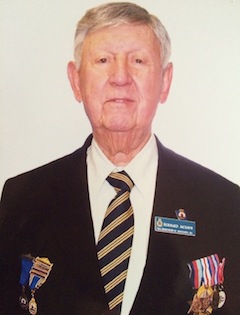
Bernard Jackson joined the British Royal Air Force Volunteer Reserve in 1941, and landed on a Normandy beach on “D-Day plus one”: June 7, 1944. (photo by Shula Klinger)

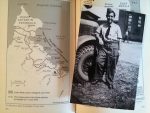
Bernard Jackson joined the British Royal Air Force Volunteer Reserve in 1941. The Second World War was in its second year and the Luftwaffe was bombing the centre of London. With Erwin Rommel’s army on the march toward Alexandria, Jackson was equipped and trained for desert warfare in North Africa. The RAF’s plans changed, however, and Jackson was sent to Portsmouth to board a ship bound for France, as part of Operation Overlord. He landed on a Normandy beach on “D-Day plus one,” he said: June 7, 1944. Seventy years after the end of the war, in 2015, Jackson was awarded France’s Légion d’Honneur.

Jackson took an active role in the war, right from the first bombings during the Blitz. “Young as I was,” he said, he was a firewatcher on the rooftops near his workplace in Charing Cross, in central London. Gazing at the sky, a teenage Jackson observed “the RAF and the Germans fighting overhead. It was very interesting.”

With battle raging in the skies, below ground was a different story. “Most people went down into the subway. Everyone was friendly, they found things to do,” he said.

Jackson’s youthful fascination with the tools of the trade is still apparent. “We used stirrup pumps to put fires out, with water from a bucket. They were so ingenious. I often wondered what happened to those stirrup pumps.” He offered a useful tip: sand is actually more effective than water at putting out fires.

Jackson described civilian office workers picking their way through the flames, broken glass and shattered buildings after another nighttime bombing raid. Londoners must have been shocked, going to bed with an intact city and getting up amidst smoking ruins. “People get used to anything,” he said, speaking with the wisdom of experience.

Jackson’s vignettes of wartime military life are varied. Prior to D-Day, he was attached to the Navy for combined operations training, on a destroyer. He spoke enthusiastically about this 10-day period off the coast of England. He also served in the RAF Regiment, guarding airfields and anti-aircraft guns, in the event of enemy fire.

Recalling his June 7 arrival at Arromanches, Jackson described a “choppy” crossing. He saw “German soldiers, British wounded…. As far as the eye could see, there were tanks, landing craft, ships and battleships, and they’re firing over our heads. An incredible scene.”

Obstacles had been cleared from the beach by that point – the enemy had littered the beach with mines and “hedgehogs” (large constructions of iron and concrete) to slow down Allied progress, but the psychological impact of the battle was all too obvious in the men. They were “all grey and bent over, all weary – they were knocked out,” said Jackson. He describes reaching a pillbox (bunker) above the beach, “surrounded by dead German soldiers.” By the end of the landings, 156,000 men had been brought across the Channel. After one day of fighting, there were 10,000 casualties and 2,500 dead.

Raised in an observant Jewish home, Jackson became a bar mitzvah at a synagogue on Menetti Street, near Charing Cross. He was glad to find two other Jewish boys in his unit of more than 100 men. His stories, which are peppered with local details, often refer to their “mischief.”

Bernard Jackson (photo from Bernard Jackson)

Jackson recalled with a laugh, “never mind [Bernard] Montgomery [who forbade fraternization with locals], we’re living eight to a tent! I said to two or three of the boys, ‘France is known for its cheese, let’s see if we can get a decent meal.’” Off they went to the village of Arromanches, where they found a café managed by “Madame, on a high chair like a throne.” Having explained in “doggerel French” that they were hungry, the boys were served an omelette with crunchy bread, a delicious treat that was paid for with scrip, the money printed for servicemen to use overseas.

Having managed to wangle the use of a truck once a week, the lads went on excursions together, said Jackson. “Being the boys that we were, we wanted to go and look at a château, and we found one! So, we were walking up the path to the château and saw a big horse in a field. It was the summer, and it was an apple orchard. There’d been fighting through the orchard, so the apples were on the ground; it was awful, there was a plague of flies. We saw the horse go into the forest. It trod on a land mine. Blew itself up. We turned around and went back.”

Jackson also described the accommodations made by troops, who slept in muddy ditches, with no bathing facilities. They used dissected gasoline cans as washbasins; the water was contaminated with arsenic, which gave the men impetigo. Even with proper medical care, this condition is extremely painful – and these boys had no antibiotics.

In spite of the immense hunger and hardship, Jackson spoke of the warm hospitality of locals in the months after the war. While his unit was stationed in Louvain, just outside Brussels, they were “parked in a field for a good while.” He recalled an impromptu but hectic social scene, which led to numerous interesting conversations.

“Us three Jewish boys managed to pal up with a husband and wife who owned an apartment block. They rented out rooms. This Belgian couple had hidden in their rooftop attic a Jewish couple, husband and wife, for two years. Quite a few air force fellas used to go there.”

The end of the story is bittersweet. “There was also a Jewish doctor and his wife, they had a beautiful girl, 18 or 20, who’d been in a concentration camp,” he said. “One of the boys proposed to this girl and they were going to marry, but she died very suddenly. She had picked up something in the camp.”

Jackson spoke animatedly of the war machinery that made the landing possible. In particular, he recounted how temporary “Mulberry Harbors” allowed Allied troops and vehicles to land in occupied France when all of the ports were held by enemy forces. When he drove back to the scene in his brand new Austin 10, one year later, he was dismayed to find the pride of British engineering “in bits, laying all over the beach. It’s buried in the sand, all rusty. It’s a disgrace.”

The trip was worth it nonetheless, he qualified. He and his pals attended a French celebration to mark the end of the war, which he described as “marvelous, marvelous.”

It’s clear from Jackson’s stories that – in his words – he “left home a boy and came back a man.” In any conversation with a storyteller of his calibre, there are many golden moments. It’s as if the air almost crackles with the immediacy of his memories, the descriptions of the grey-faced survivors of the D-Day landing, or his helpful instructions on how to boil water in a discarded German helmet. Quite apart from his resilient spirit and natural leadership, his candor is impressive. Speaking about such events – even 70 years later – can be difficult for many war veterans, not to mention that he actually went back only a year later.

“It’s a traumatic experience in many cases,” he said of why many people do not like to talk about their experiences in the war, or go back to where it took place. “I never talked about it to my children because, you see, my generation came out of the war saying there’ll never be another war after this one.” In other words, the information may have seemed redundant. But, Jackson added, “Look where we are today. It’s something in the human psyche. It’s greed. It’s power politics.”

Speaking to Jackson is a tremendous privilege; his vignettes of wartime – and postwar – Europe reveal a society in turmoil, where looting was common. He offered accounts of Russian dancing and vodka, gunfire and generosity, stolen yachts and black market cigarettes, hardship and hospitality.

Jackson is an astute observer of humankind and its many failings. But, as well as the stark and troubling stories, he has tales of compassion, generosity and the universal nature of the human experience. “People forget,” he said, “how the French suffered, on top of being occupied. They were short of food, coffee was unheard of, they hadn’t seen it in a long time – they used grass with acorns to give it body. They had no clothes; they stripped the dead for their clothes, even German soldiers, they just stripped off the epaulettes.”

Speaking of the Russian prisoners of war who insisted on sharing their meagre, greasy meals with Jackson and his comrades, he said, “They put dances on for us, someone played the accordion and they did these Russian dances.”

From peasants who could neither read nor write to highly educated ballet dancers or leading aircraft men like himself, Jackson said he realized, “they’re just like you, just like everyone else.”

Shula Klinger is an author, illustrator and journalist living in North Vancouver. Find out more at niftyscissors.com.

The future of democracy

Israel’s President Reuven Rivlin spoke strong words at the opening of the Knesset’s winter session this week. The very survival of democracy, he suggested, is on the line.

“Against a background of political upheavals occurring in the West, the free world, it is no secret that democracy – or Western liberal democracy – is in a state of confusion,” said Rivlin. “Many citizens across the world feel that the existing democratic system is struggling to function and, moreover, is struggling to offer an answer to their needs in light of the current threat of terrorism, the current wave of migration and refugees, or the ongoing economic and employment crises.”

Rivlin was speaking broadly, apparently referencing the various movements springing up in recent years at the fringes of what was once the political mainstream. These include new nativist and often xenophobic movements in Europe. The vote by Britain to leave the European Union is a symptom of a strain of political ideology that rejects open borders – both for trade and for people. While the Brexit vote was supported by people across the political spectrum, its campaign was led by the United Kingdom Independence Party, a movement pushing its way into the mainstream from the far right.

While Europe struggles with the challenges of and reactions to economic meltdowns and waves of refugees and migrants, the presidential election in the United States has been rocked by events that also threaten foundational understandings of democracy.

Donald Trump, the Republican candidate for president, has suggested he may not abide by the results of the election, an outcome he is alleging to be “rigged.” There is no evidence, according to almost all commentators, of any rigging of the electoral system. Indeed, say most, the patchwork nature of the American electoral system makes comprehensive manipulation of a federal election essentially impossible. However, Trump’s assertions seem based less on the idea that the electoral infrastructure is rigged than on his perception that the media and the political establishment are nearly uniformly against him. As paranoid as this may seem, it is not altogether false. The political establishment, even in his own Republican party, is lukewarm at best toward their outsider nominee. And the media is merely reporting the attitudes of some of the public, many of whom are aghast and appalled at the successive emanations from Trump’s mouth.

However, if the establishment and commentators in the media are lined up against him, this should arguably be viewed as a statement about him, not them – which brings us back to the issue of Trump’s threatened refusal to admit defeat. Absolutely crucial to democracy is the legitimacy – and perception of legitimacy – of the electoral process. In the most contested election in modern history, in 2000, Al Gore accepted defeat even though he received more votes in the state of Florida than the declared victor George W. Bush and, therefore, should have been the winner. In the interest of national unity and the preservation of confidence in the system, Gore acceded to the determination of a Florida court.

Now, Trump suggests he may not accept the results even if he is conclusively defeated. Of course, anything is possible with this candidate, so it may be bluster. But the bigger picture in this scenario is the impact Trump’s words have on his followers. Some are already promising “revolution” if Trump is defeated.

Then, of course, there is the other possibility: Trump wins.

Where American democracy – and the country’s role as a model of responsible government – would go from there is an ominous mystery.

A fine collection of poems

When I saw the table of contents of The Poems of H. Leivick and Others: Yiddish Poetry in Translation by Leon H. Gildin (Finishing Line Press), a lovely little book of translated Yiddish poems by Leivick and other noted poets, two images came immediately to mind. One was a scene with Leivick, a slight figure with a beautiful etched face and a halo of white hair, sitting alone on a circular stone ledge in front of the Hebrew University library, in Jerusalem, seemingly lost in thought. The other, and this goes back decades, is a gathering of Yiddish poets, including almost all the ones collected in this book, in a meeting hall in New York. What a thrill it was for a college boy to be at such a meeting and seeing face-to-face the famous poets he had known before only by name.

book cover - The Poems of H. Leivick and OthersThe poems of Leivick (1886-1962) range in subject matter: a poem about a very small poem “no longer than an epitaph”; the recollection of a birch rod beating given by his father; a prisoner in a cell at night “swallowing as if it were wine the moon’s bright light”; a man looking for work without success. Leivick was a paperhanger when he came to the United States. He was also a noted playwright; his most famous is The Golem, originally produced by Habima Theatre when it was still in Moscow, and later translated into other languages.



Here, too, admirably rendered into English by Gildin, are the voices of other famous American Yiddish poets – all born in Eastern Europe – singing songs of longing, love and the Sabbath. About half the poems are by Leivick: the rest are by luminaries like Chaim Grade, Yakov Glatstein, Avraham Reisen, Itzik Manger, A. Leyeles, Mani Leib and Avraham Sutzkever. Most of the poems here have a modernist lilt regarding imagery and tone, yet all have traditional rhymes.

My only caveat with this fine ingathering of poems is that too much space is devoted to a relatively minor but good poet, Anna Margolin. Where Grade has only one, why six for Margolin? Additional poems by the other poets would have been welcome.

My favorite poems here are those that have a Jewish core. Hence, Grade’s loving poem “The Sabbath,” recalling his war- and postwar-years wanderings in Russia and Europe, resonates, as does Ephraim Auerbach’s prayer-poem “God of Abraham,” which begins with the opening lines of Havdalah – the prayer for the departing of the Sabbath – and takes wing from there.

In his short introduction, Gildin accents the secular aspects of Yiddish poetry but, by so doing, he puts an artificial divide between religiosity and secularism. He says that, while Yiddish was the street language of the Orthodox, the secular Yiddish created a culture. But Gildin neglects to note that Yiddish was used far beyond the street for Orthodox Jews. Religious Jews also used Yiddish in shul, in studying and in translating Chumash and Talmud, and in creating commentaries and translations of the siddur and the machzor, the daily and the holiday prayer books, respectively. Women created their own prayers in Yiddish, which were collected into separate volumes. This same “street language” was used by the secular poet Yehoash in creating his masterpiece: his magnificent translation of the entire Bible into Yiddish.

In Grade’s “The Sabbath” and Auerbach’s “God of Abraham,” the boundaries between piety and secularity are blurred. The distinctions are not as separate as they appear to be. In a classic photo of Yiddish poets sitting at a long dinner table at a wedding, one can see secular poets like Leivick, Grade, Glatstein, Reisen and noted critic Shmuel Niger, all wearing either fedoras or yarmulkes.

Sholom Aleichem was thoroughly secular. He was not observant and did not keep a kosher home. In fact, he spoke Russian, not Yiddish, to his family. Yet, when his son died in Denmark, he went to shul to say Kaddish every day in New York. And, in his will, he asked those who are willing, to say Kaddish for him, too.

Most significantly, the obviously secular translator of this volume, Gildin, along with his brother, founded a university Yiddish department, not in the secular Hebrew University, Haifa University or Tel Aviv University, but at Bar-Ilan University, the only religious-sponsored university in Israel.

For those who know Yiddish poetry, The Poems of H. Leivick and Others revisits old friends; for newcomers, it is a cogent introduction.

Curt Leviant’s most recent books are the novels King of Yiddish and Kafka’s Son.

Gasoi is one class act

Singer/songwriter Jennifer Gasoi, seen here in a promotional shot for her new book, was back in her hometown last month. (photo by Philove)

Jennifer Gasoi’s new book, Blue and Red Make Purple, is both a hardcover children’s book and a CD collection. It was released to immediate acclaim, winning the 2016 Parents’ Choice Gold Award and a National Parenting Product Award.

CD cover - Jennifer Gasoi’s new book, Blue and Red Make Purple, has already won awards.
Jennifer Gasoi’s new book, Blue and Red Make Purple, has already won awards.

Illustrated by Steve Adams, Gasoi’s songbook has a vintage feel with a touch of Chagall. It is vibrant and surreal, full of movement, as a group of animals get up to all sorts of musical capers. “I love the illustrations for this book,” Gasoi told the Independent. “I feel that Steve accurately depicted the joy, love and depth of my songs. He offers a brilliant visual representation of the music.”

Gasoi has local roots and, 15 years ago, she was performing at Rossini’s jazz bar in Kitsilano. She studied music at Capilano University’s jazz program and took part in community choir events around town before she decided it was time for a change and moved to Montreal. There, she taught music to young children and parents. Her debut album, Songs for You (2004), garnered awards and nominations, as did her second CD, Throw a Penny in the Wishing Well (2012).

Among the honors for her second recording was a 2014 Grammy Award for best children’s recording. An unusual compilation, the CD introduces children to a wide range of genres, including bluegrass, calypso and klezmer.

“Winning a Grammy was a life highlight,” said Gasoi. “It was something I had been dreaming of since I started my music career – and having Cyndi Lauper present the award was pure gold.”

Gasoi’s lyrics are deceptively simple. The song “Happy” from Wishing Well, for example, starts gently in a voice that sounds as natural as exhaling, were it not for the jaunty, syncopated piano accompaniment. This brief “ditty,” as she calls it, is written for children but models a spirit of resilience and self-acceptance that could be a mantra for any age. A chorus of “I feel happy” follows lines such as, “When I jump, when I fly, when I feel, when I cry.” Likewise, this song teaches generosity and compassion: “When I laugh, when I live the life I want to live, when I take a little less than I give. I feel happy….” And, “When I dance the way I want to dance. When I step out of the box and take a chance, I feel happy….”

Gasoi’s voice brims with a mix of confidence, mischief and kindness. Asked if she’s aware of this last quality, she laughed, “I do hear that. I hear that I’m soothing. Even when I was in jazz clubs and I’d be thinking, ‘I’m rocking this, I’m digging it!’ people would come up and say, ‘I’m so relaxed right now!’”

As an artist, Gasoi is working to a plan. Her goal is to reach children deeply, authentically, as both an educator and a musician. This drive has long been apparent, said singer Christie Grace, Gasoi’s contemporary at Capilano. “She was always extremely self-disciplined.”

“I have a soul connection with children,” said Gasoi. “I see their light and their beauty. I pray that, through my music, I can inspire them to tune into what they feel, what they love, what they are good at.”

With an eye to the greater good, the singer wants her music to motivate children to be active and empowered citizens working for “a world that is based on peace, compassion and love.”

Gasoi also recognizes that dialogue is part of any educational experience. The adults may be the ones who have laid out the agenda, but the lesson goes both ways. She speaks of the rich education she gained during the 15 years she honed her voice and performance style “teaching music in daycares and community centres, a lot of mom and baby groups.”

Asked about what keeps her motivated, Gasoi describes a visit to an inner city school in Montreal. “I performed my songs to the most enthusiastic audience I’d ever seen,” she said. “The kids were beaming with excitement. They knew all the songs.”

In a population that doesn’t usually have a chance to attend concerts, the experience was all the more poignant. The singer described the group as “jubilant and receptive.”

“One of the teachers told me that one of her students, a boy with autism, had never sat still for more than five minutes during any other concert,” said Gasoi. “During this show, he was engaged for the full hour. It’s moments like these that keep me going.”

photo - Singer/songwriter Jennifer Gasoi with one of her fans, Joel Harrington, the writer’s youngest son
Singer/songwriter Jennifer Gasoi with one of her fans, Joel Harrington, the writer’s youngest son. (photo by Shula Klinger)

On stage at the Vancouver Writers Fest last month, Gasoi was utterly in her element. She addressed the audience of hundreds as if it were an intimate group of a few children, gathered around her knees. Her experience as an educator was apparent, as she asked questions and engaged the crowd in conversations, responding to the children as they called out answers and praising them for their unexpected gems. In the middle of “Little Blue Car Trip,” she asked the audience for another form of transportation. The first answer fired back, “Camel!” got a laugh from audience and band alike.

Gasoi’s band members – Jody Proznick (double bass), Joel Fountain (percussion/vocals), Chris Gestrin (piano/melodica) and Ralph Shaw (banjo) – are no less engaging. Shaw doubles as the Purple Man from the song of the same name, leaping across the stage to the strains of this energetic, multi-genred song, which culminates in a fiery rendition of “Hava Nagila.”

There’s nothing like a hometown reception for a returning artist and this show was no exception. “This week was absolute magic. Vancouver welcomed me with open arms!” said Gasoi, who continues to deliver songs packed with rhymes, wordplay and colorful imagery.

“I am constantly amazed by kids,” she said. “They are so pure, honest, innocent and in touch with their instincts. I see their potential and I am doing everything in my power to support them.”

Shula Klinger is an author, illustrator and journalist living in North Vancouver. Find out more at niftyscissors.com.

Upcoming geniza exhibit

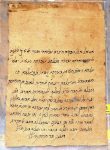
A letter of introduction, written and signed by the Rambam (Maimonides) in the 12th century, which is part of the Discarded History exhibition that will be opening in April 2017 at Cambridge University. Visitors will be able to see a small fraction of the more than 300,000 manuscripts and fragments that were originally found in the geniza, or storeroom, of Ben Ezra Synagogue in Fustat, or Old Cairo, in Egypt. Some of the items are more than 1,000 years old and, among them, are accounting records and parts of responsa and observations by some of the greatest Jewish theological minds, such as the Rambam, Isaac Luria and Joseph Caro. (photo by Edgar Asher with permission of the Syndics of Cambridge University Library)


אמנת מס חדשה

שר החוץ של קנדה, סטפן דיון, עם שר האוצר של ישראל, משה כחלון. (צילום: Global Affairs Canada)

שר החוץ של קנדה, סטפן דיון, חתם לאחרונה בישראל על אמנת מס חדשה עם שר האוצר של ישראל, משה כחלון. ההסכם נועד למנוע את כפל המס בין שתי המדינות, וכן להסדיר את נושא המיסוי בין קנדה לישראל לגבי יחידים וכן לגבי חברות. מטבע הדברים הסכם זה צפוי לחזק את הקשרים המסחריים בין שתי המדינות. בפגישה בין השניים אמר דיון: “ההסכם הזה יחזק את הקשרים הכלכליים והמסחר בין קנדה לישראל. וכן יעודד חברות קנדיות נוספות להשקיע בישראל”. כחלון הוסיף: “שיתוף הפעולה בין שתי המדינות הוא הכרחי. יש לזכור שקנדה היא מהידידות הגדולות של ישראל בעולם”.

המיזוג אנברידג’-ספקטרה יוצר את גוף האנרגיה הגדול בצפון אמריקה

רכישת חברת האנרגיה האמריקנית ספקטרה אנרג’י קורפ (מיוסטון) על ידי החברה הקנדית אנברידג’ אינק (קלגרי), יוצר את מוביל האנרגיה הגדול ביותר בצפון אמריקה. שווי הרכישה שלושים ושבעה מיליארד דולר ובפועל הוחלפו מניות בין שתי החברות, כאשר אנברידג’ תחזיק בחמישים ושבעה אחוז מהבעלות על החברה המשותפת. המשקיעים כך מסתבר אוהבים את הרכישה ומניות אנברידג’ עלו מאז בבורסת טורונטו, ואילו מניות ספקטרה עלו בבורסת ניו יורק. העיסקה שתיחתם בראשית 2017 כפופה לקבלת לאישורים מהרגולטוריים השונים. המיזוג צפוי ליצור פרוייקטים חדשים בשווי ארבעים ושמונה מיליארד דולר. כך שהדיבידנדים לבעלי המניות יוכפלו בתוך שש עד שבע השנים הבאות.

היתרונות לאנברידג’ מהעיסקה ברורים: החברה הקנדית שמתמקדת בהפצת נפט גולמי חיפשה לגוון את עסקיה ואילו ספקטרה האמריקנית מתמקדת בהפצת גז טבעי. כיום קל יותר לרכוש גוף עם קווי אספקה קיימים, מאשר להשיג רשיונות לבניית קווים חדשים בעיקר לאור החשש לפגיעה באיכות הסביבה, והאישורים הרגולטורים המסובכים. כן קל יותר לפעול בארה”ב מאשר בקנדה והשוק בארה”ב גדול יותר.

הפעם יש ביסוס להערכה: מחקר חדש קובע שהכלב הוא אכן חברו הטוב של האדם

מחקר חדש שפורסם לאחרונה בבריטיש קולומביה מאשר את מה שידענו וחשבנו, כי הכלב הוא אכן החברו הטוב של האדם. חמישים וארבעה אחוז מהמשתתפים במחקר ציינו במפורש, כי הם מעדיפים לטייל בחוף הים או בכל מקום אחר בחוץ, ביחד עם חברם שהולך על ארבע, מאשר עם בן או בת הזוג שכנראה נובח יותר מדי. מומחים הופתעו מהתוצאות ולא תיארו לעצמם, כי כיום מערכות היחסים בין בני זוג הן כל כך מורכבות ומסובכות, כך שרבים מעדיף להירגע בחוץ דווקא עם הכלב.

ועוד נתונים מעניינים לפי תוצאות המחקר: שמונים אחוז מבעלי הכלבים לא מוכנים להכיר, לצאת או אפילו להתחתן עם בן או בת זוג, שלא מסתדר עם כלבם. חמישים ושמונה אחוז מבעלי הכלבים יעמידו אותם במקום הראשון, בסדר העדיפויות היום יומי שלהם, אפילו אם זה יבוא על חשבונם. למשל הם יסכימו לוותר על אירוע בחוץ וישארו בבית ביחד עם כלבם, כדי שלא ישאר לבד. רוב מוחלט של בעלי הכלבים (תשעים ותשעה אחוז) רואים בכלב כבן משפחה לכל דבר ועניין. ומה קורה עם התנהגות בעלי הכלבים בעת הטיול עם הכלבים בחוץ: תשעים וחמישה אחוז מהבעלים טוענים כי הם אכן מנקים אחרי כלבם ואוספים את הצואה שלו, ואילו שבעים וחמישה אחוז מציינים כי יקשרו את חברם הטוב לרצועה בעת הטיול.

בבריטיש קולומביה גרים כיום למעלה מ-4.6 מיליון איש והכלבים ברחבי מחוז נפוצים מאוד. לכשליש מתושבים במחוז יש לפחות כלב אחד, שכאמור הוא חלק משמעותי מחיי מהמשפחה שלהם.