Skip to content
  • Home
  • Subscribe / donate
  • Events calendar
  • News
    • Local
    • National
    • Israel
    • World
    • עניין בחדשות
      A roundup of news in Canada and further afield, in Hebrew.
  • Opinion
    • From the JI
    • Op-Ed
  • Arts & Culture
    • Performing Arts
    • Music
    • Books
    • Visual Arts
    • TV & Film
  • Life
    • Celebrating the Holidays
    • Travel
    • The Daily Snooze
      Cartoons by Jacob Samuel
    • Mystery Photo
      Help the JI and JMABC fill in the gaps in our archives.
  • Community Links
    • Organizations, Etc.
    • Other News Sources & Blogs
    • Business Directory
  • FAQ
  • JI Chai Celebration
  • JI@88! video

Recent Posts

  • Sharing her testimony
  • Fall fight takes leap forward
  • The balancing of rights
  • Multiple Tony n’ Tina roles
  • Stories of trauma, resilience
  • Celebrate our culture
  • A responsibility to help
  • What wellness means at JCC
  • Together in mourning
  • Downhill after Trump?
  • Birth control even easier now
  • Eco-Sisters mentorship
  • Unexpected discoveries
  • Study’s results hopeful
  • Bad behaviour affects us all
  • Thankful for the police
  • UBC needs a wake-up call
  • Recalling a shining star
  • Sleep well …
  • BGU fosters startup culture
  • Photography and glass
  • Is it the end of an era?
  • Taking life a step at a time
  • Nakba exhibit biased
  • Film festival starts next week
  • Musical with heart and soul
  • Rabbi marks 13 years
  • Keeper of VTT’s history
  • Gala fêtes Infeld’s 20th
  • Building JWest together
  • Challah Mom comes to Vancouver
  • What to do about media bias
  • Education offers hope
  • Remembrance – a moral act
  • What makes us human
  • המלחמות של נתניהו וטראמפ

Archives

Follow @JewishIndie
image - The CJN - Visit Us Banner - 300x600 - 101625

Month: May 2019

VICO festival explores Japan

VICO festival explores Japan

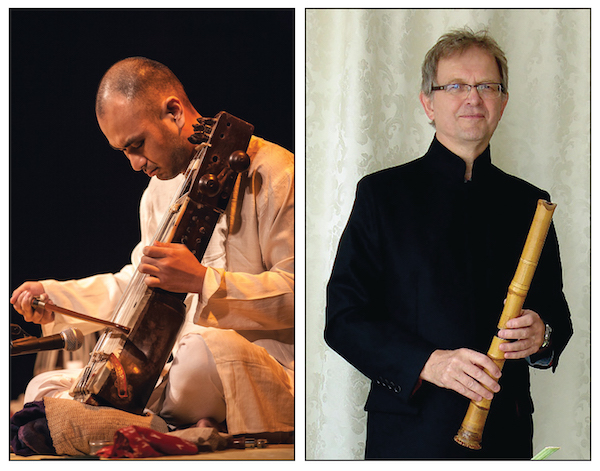
The June 12 performance of Moshe Denburg’s The Longing Sky features Yuji Nakagawa on sarangi, left, and Harrie Starreveld on shakuhachi. (photos from VICO) 

This year’s Vancouver Inter-Cultural Orchestra (VICO) Global Soundscapes Festival highlights the instruments and traditions of Japan. It features a concerto by Moshe Denburg, and percussionists Jonathan Bernard and Niel Golden, both members of the Jewish community, are among the performers.

“As an organization committed to bringing forward and collaborating with all cultures of the world, we have had a connection with Japanese musical culture since our inception in 2001,” explained Denburg, VICO founding artistic director, of the festival’s focus. “Our present artistic director, Mark Armanini, studied composition with the late Elliot Weisgarber, who was my mentor and friend as well, and was, in a real sense, a progenitor of interculturalism in Vancouver. His own studies and musical explorations took him to Japan and into Japanese music. This is one longstanding Japanese influence in our midst.

“The VICO has collaborated with Japanese musicians on many occasions in the past,” he continued. “The first major encounter was in 2010, at a concert production called Imagined Worlds: Japanese Interventions, at which concert we had two visiting Japanese musical virtuosos. In 2013, we produced a mini-festival, together with the Japanese consulate and the Japanese community here, called Chrysanthemums and Maple Leaves. One of the main soloists of this festival, Naomi Sato, has been with us for further iterations of this festival concept, in 2014 and again this year. She plays a traditional Japanese mouth organ called the sho. This year, in addition to Ms. Sato, we have Miyama McQueen-Tokita on koto and Harrie Starreveld on shakuhachi.”

The festival’s opening concert on June 5 at the Waterfront Theatre features Debris, a new mini-opera by Rita Ueda, “inspired by the 2011 tsunami and the debris that washed up along the West Coast of North America,” works by Weisgarber, as well as traditional Japanese music. Denburg’s The Longing Sky is part of Raga-tala-Malika! A Garland of Ragas and Talas with VICO and Friends, at the Rothstein Theatre on June 12.

About The Longing Sky, Denburg said, “After my tours of musical study in India and Japan, which took place in the mid-’80s, I returned to Canada to begin realizing some of my global fusion ideas. Around 1994, I sketched a work which brought together the two traditions I had previously been exposed to, and conceived of a double concerto for shakuhachi (Japanese bamboo flute) and sarangi (Indian bowed string), instruments that, in their own unique ways, spoke to me of longing.

“The Longing Sky originally came to me as part of a two-movement work that I conceived of then, called Between the Source and the Longing Sky. The source represents our life here on earth, while the longing sky represents the possibility of reaching out to a new life in space. This was and still is our global situation today: we have the means to explore other worlds, but the early promise of moving into space has hardly been realized. The sky is within each of us, and represents our longing for a better world, a larger creative palette, a future vast and free.”

The work premièred in November 2013, with featured soloists Dhruba Ghosh on sarangi and Starreveld on shakuhachi. “In 2017, at the young age of 59, Dhruba-ji passed away suddenly of a heart attack,” said Denburg. “This remount of The Longing Sky is a tribute to him, our dear colleague, mentor and friend. Appropriately enough, his student and disciple, Yuji Nakagawa, will be the featured sarangi player, and Harrie will reprise his role on shakuhachi. May Dhruba’s memory always be a blessing.”

Learning the techniques involved with playing an unfamiliar instrument, in order to compose for it, begins with one-on-one sessions with the performer, said Denburg.

“I did this with several shakuhachi performers over the years, studied many materials and listened to many recordings,” he said. “Regarding sarangi, I found, in the early ’90s, a very well-known Canadian ethnomusicologist, cellist and sarangi player, Regula Qureshi, who taught, until her recent retirement, at the University of Alberta. My first learning sessions were with her, and I supplemented these with certain materials that I found in ethnomusicological treatises. Of course, one can never really ‘know’ how to write for an instrument until one has tried to transmit the composition to a performer and listened to the result. In my case, I am still learning how to write for sarangi – actually, the process never ends.

“Another aspect of composing for such an instrument, and indeed for many instruments of the world, is that as they are part of the great ‘aural traditions’ of the world,” he added. “One prime example of this is the music of India – the composer needs to supplement written materials with aural aids; audio materials that are sung, or played on synthesizer or another instrument. But, most importantly, the composer has to sit down with the performer and work on the musical lines he has composed, and sincerely take advice from the performer as to what works and what does not work. This is one aspect of intercultural work that cannot be emphasized enough – the written composition is not the only way, nor even the best way to create great music. This is humble pie for most Western composers, and one might say an added benefit of intercultural exploration.”

On the topic of cultural appropriation, Denburg said, “We have been aware of these issues and, in fact, we may be convening, in 2020 or 2021, a cross-Canada series of discussions exploring best intercultural practices.

“One thing that we have done over the years,” he said of VICO, “which we believe has been acceptable practice, is that we have always emphasized the collaborative aspect of the work. We are not expressing someone else’s narrative, but rather our own, new intercultural narrative. And, when we present other cultures, this is precisely what we do – we present those cultures in performances by accepted exponents of them. So, in a VICO concert, you will often find some demonstration pieces of the collaborating cultures themselves. For example, in Raga-Tala-Malika, we will have a traditional raga presentation, probably featuring our guest sarangi player together with our guest tabla player; and a shakuhachi solo may also be presented. These are the undiluted presentations of ‘other’ cultures. Then, in pieces like The Longing Sky, and others on the program, a truly intercultural piece will be performed.”

Golden will be playing tabla on Denburg’s piece on June 12, and likely accompanying the sarangi player on tabla for a traditional Indian piece in that show. He is also scheduled to play with Starreveld and Nakagawa at the closing concert of the festival, June 13, at the Annex.

According to his bio, when Golden moved to Victoria from Toronto in 1986, “he helped form the world, folk fusion trio, New Earth. Their self-titled CD took them to Seville, Spain, where they represented Canada for six weeks at Expo ’92.… Blending African, Indian, Western and other world music, their first CD, Indiscretion, earned them a Juno nomination as best global recording of 1995.”

Throughout the years, Golden has continued to study tabla and has collaborated with many artists, including Denburg for the past 18 years – Golden is a member of the VICO. He is also a member of the new world music quartet Saffron, performs in the trio DNA, as well as the trio Three Worlds, which recently released a self-titled CD.

Bernard – principal percussionist with the Vancouver Island Symphony – will be playing in the Global Soundscapes Festival on June 8, in Zen and Now, and in Raga-Tala-Malika. His bio notes: “His interest in world music has led him to perform Chinese, Javanese, Balinese and Korean music and study traditional and contemporary Chinese percussion in Beijing, Arabic percussion in Cairo and Carnatic rhythm in South India.” He has premièred more than 70 chamber works with various ensembles, and has toured throughout Canada, the United States, Europe and Japan.

For Global Soundscapes concert tickets ($20-$35), more information on the artists and the full performance schedule, visit vi-co.org.

Format ImagePosted on May 31, 2019May 30, 2019Author Cynthia RamsayCategories MusicTags intercultural, Japan, Moshe Denburg, VICO
Rootman’s night scenes

Rootman’s night scenes

Jack Rootman, in front of his painting “Homage to Degas.” (photo by Olga Livshin)

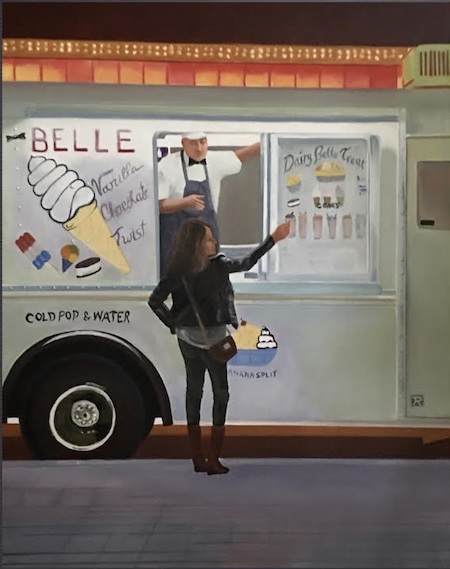
Jack Rootman’s new solo show, Scene at Night, opens tomorrow, June 1, at the Visual Space Gallery on Dunbar Street. As the name implies, the exhibition is dedicated to Rootman’s paintings of urban night scenes.

“There are several reasons I’m interested in painting the night,” he said in an interview with the Independent. “First, I wanted to show human activity as it is spotlighted at night. People move from one light source to another, from the indoor balcony to the moving lights of cars. You don’t see it so focused during the day. When you look in the daytime, there is a panorama in front of you, your attention wanders; there is too much to see. But, at night, you see activity encapsulated. Someone drinks coffee. Someone crosses a street. Someone is sad or crying or laughing. Your attention is drawn to a spot of light.”

The second reason for his fascination with the nocturnal setting has to do with the constantly changing colours and contrasts. “There are many light sources wherever you are at night – streetlights, lights from the windows, moonlight – and each combination gives off different colour nuances and shadows, depending on where you stand, on the angle of your view,” he explained.

Rootman thinks an element of colour always exists, even at night, when there is a “dynamic blackness. If you look at my paintings,” he said, “there is red black and purple black, blue black and green black.”

Night’s more limited spectrum of colours intrigues and challenges the artist. “Of course, it is more difficult to paint night, to see colours in the darkness,” he said. “Sometimes, I have to use Photoshop to analyze what colours appear in a photograph, before I transfer the image to an oil painting.”

Rootman started painting night scenes years ago, although the bulk of the 22 paintings in the current exhibit have been created in the past five years. During his travels, he took many photographs at night in Paris, Venice, New York and Montreal. He also made sketches and recorded the colours as he saw them. But his paintings never follow the photos to the letter. One painting, a ribbon of light, might be an abstract representation of the night traffic along a boulevard, based on a photo taken from the balcony of his hotel room. Another might be a composition of images from different years and cities.

“My painting ‘Homage to Degas’ is one such a composition,” he said. “I saw this marijuana shop in Vancouver and it reminded me of a Degas painting. I included two of his paintings in this piece.”

In addition to the technical challenges of depicting a city scene at night, Rootman is interested in the loneliness that is most profound at night. “During the day,” he said, “we are at work, but the night brings isolation. It also brings possibilities – many people are lonely, and they go out during the night to meet others.”

photo - “Ice Cream,” by Jack Rootman, is among the works featured in his solo show, Scene at Night, which opens June 1 at the Visual Space Gallery
“Ice Cream,” by Jack Rootman, is among the works featured in his solo show, Scene at Night, which opens June 1 at the Visual Space Gallery.

Some of the paintings show this disconnection. Everyone is absorbed in what they are doing, alone in their own spots of light, talking on their cellphone or lost in thought, and darkness separates them from one another.

“The night is also traditionally associated with a sense of danger,” the artist mused. “Several paintings in this series are lanes, particularly lanes in downtown Vancouver. Anything could hide in such a lane, with insufficient light: from rats to human predators.”

While his lanes are bleak, despite the illumination of neon signs and streetlights, there is always hope in Rootman’s paintings. Perhaps his medical background brings that sense to the fore of everything he does, both in his professional field of eye surgery and in his art.

“My most comfortable mental state is when I’m doing something creative and visual,” he said. “It works for my art. It also worked for my job as a surgeon, before I retired. Surgery is very creative. Like art, surgery is a discovery. Nothing is ever as you expected.”

And, like in his medical practice, where every patient had a story, all of his paintings are stories, too, stories of danger and loneliness, separation and connection, all linked together by darkness and light.

“My work has a certain affiliation with music and poetry,” said Rootman. “That’s why I decided to have a music night and a poetry night as parts of this show.”

The music night with Amicus Ensemble will be held at the gallery on June 5, 6-8 p.m., and the poetry night the next evening, June 6, 6-8 p.m. Scene at Night is at the Visual Space Gallery until June 9.

Olga Livshin is a Vancouver freelance writer. She can be reached at [email protected].

Format ImagePosted on May 31, 2019May 30, 2019Author Olga LivshinCategories Visual ArtsTags Jack Rootman, music, painting, poetry

Hiding is not an answer

“Doctor, it hurts when I do this,” says the patient in an old joke. “Don’t do that,” advises the doctor.

In a decidedly unfunny twist on that old joke, the German government’s Commissioner on Antisemitism Felix Klein responded to the fact that Jews are being beaten up on German streets by advising German Jews not to wear kippot in public.

Discretion may be the better part of valour. In the short term, donning a baseball cap may be a personal choice for someone who merely wants to dash out to the market to pick up some vegetables. As part of a bigger picture, the idea that Jews in Germany should hide their identities – and the bleak historical resonance that act of Jewish hiding evokes in that particular nation – is a testament to something far beyond individual security. If a country – but, more importantly, that country – is not a safe place for identifiably Jewish people to go about their everyday lives, that is a society with a problem.

After the Holocaust, many Jews, including the leaders of Canadian Jewish Congress, determined that the surest path to safety, security and acceptance for Jewish people was to promote a universalist approach and advocate for a society in which all people are safe, secure and accepted. This is one reason why, throughout recent Canadian history, we have seen Jews in leadership roles in multicultural organizations and supporting policies that advance inclusive, universalist goals.

But there may be, in this approach, an unfortunate acknowledgement that asking people to take a stand in support of Jewish people in particular may be a losing bet. Consider the disparate responses in theory and practice of public opinion in recent months. After the murders in synagogues in Pittsburgh and San Diego, a great many voices (on social media, predominantly) declared solidarity with Jewish people. Yet almost concurrently, when Israelis were under attack by missiles and incendiary devices from Gaza, the overwhelming reaction was to condemn Israel’s responses. It is incongruous and incoherent to support Jews under threat in one place and, at the same time, side with those who would attack Jews in another location.

The bigger point is that, if a society like Germany seems prepared to accept a level of social illness that means a kippa becomes a hate target, how do Jews respond?

Israel’s President Reuven Rivlin reacted passionately to events in Germany last weekend.

“We will never submit, will never lower our gaze, and will never react to antisemitism with defeatism – and we expect and demand our allies act in the same way,” he said. But Rivlin’s is the voice of a self-determined Jewish people sovereign in their own land. The reality for Jews in Germany, and in many other places, is that they face antisemitism of a sort and magnitude unseen since 1945. Whether Diaspora Jews will indeed submit, lower our gaze or react with defeatism actually remains to be seen, Rivlin’s encouraging words notwithstanding.

Rivlin is unequivocally correct, though, when he says he expects more of Israel’s allies in protecting Jewish people, rather than suggesting that we hide our identities. Ideally, as a result of this discussion, the German government will recognize the inappropriateness of the commissioner’s words. Through preventive actions, like increased security, and educational efforts, including genuinely tackling antisemitism in schools and public discourse, the government of Germany, as well as other European countries, can move in the right direction.

Equally important, especially when leaders won’t lead, citizens must. It falls to each of us – Jews and non-Jews – to build bridges of understanding across ethnic, religious, linguistic and cultural lines. We need to advocate for those same inclusive values. Yes, times have changed and ideals of multiculturalism and the celebration of difference have taken a beating, but the inherent goodness of those values has not changed.

We also should strive to make intolerance and bigotry socially unacceptable again. The culture in Europe and North America has become coarsened and we are becoming inured to statements and imagery that would have been unacceptable before. Social media is partly to blame for this, but, as it seeps into broader society, we need to keep calling out words and ideas that divide, harm, vilify or seek to diminish others.

We know these “solutions” sound idealistic and perhaps a bit like bailing out the Titanic with a thimble. But we got to this stage in history through a million small incremental steps in the wrong direction. It is a constellation of small, positive steps that may be our best way back – in conjunction with people of all backgrounds who share our views.

Two things are certain. There is no magic wand that is going to right the wrongs we see in the world – and hiding our identities is no solution.

Posted on May 31, 2019May 30, 2019Author The Editorial BoardCategories From the JITags antisemitism, Felix Klein, Germany, Reuven Rivlin
Plants’ hidden beauty

Plants’ hidden beauty

Yellow gazanias, by Pamela Fayerman. Eighteen of Fayerman’s macro photos form the exhibit Intimate Encounters, which is at VanDusen until June 27.

Well-known for her writing about medicine, science and health policy in the Vancouver Sun, award-winning journalist Pamela Fayerman has another area of expertise, perhaps somewhat lesser known: macro photography. Her first exhibit – Intimate Encounters: Botanical Closeups – opened at VanDusen Botanical Garden with a reception on April 6.

Born in Prince Albert, Sask., Fayerman grew up in Saskatoon. She moved to Toronto to attend Ryerson University School of Journalism, with the intention of becoming a photojournalist. While she changed her mind about that, she said the “photography courses at Ryerson taught me about important things like using light, subject composure and print developing. Even though everyone does digital photography these days, the foundations for those of us who learned on old SLR cameras are still pertinent.

“While I was at Ryerson, I got an incredible break with a story scoop that would be a defining career opportunity,” she said. “I sold the front-page story to the Globe and Mail and then I was invited to continue working there on a freelance basis. When I graduated from Ryerson, the company – then called FP Publications – offered me a job at their other newspaper: the Winnipeg Free Press.”

Fayerman worked at the Free Press for five years, mostly covering the law courts. During that time, she took a year break to study at Queen’s law school, focusing on the Charter of Rights and Freedoms.

“When I moved to Vancouver in the mid-1980s, the law beat was already taken,” she said, “so I had a variety of beats, including City Hall, before landing the medical beat in 1995. I think I’m probably the most experienced medical journalist in Western Canada and I’ve certainly had plenty of incredible professional development opportunities through American fellowships at places like Columbia University, MIT and the National Institutes of Health. It’s a highly challenging, satisfying beat for someone like me with insatiable curiosity. I cover health policy, which involves stories about the politics, economics and mechanics of the healthcare system; medical research; and clinical medicine. The latter often involves the mind-blowing ‘wow’ stories about lifesaving innovations.”

Fayerman became interested in botanical photography about a decade ago, she said, “because I’m obsessed with plants and gardening. It’s the only thing I do that could be described as mindfulness, and that’s important because journalists always take our work home with us. We never stop thinking about the stories we’ve just finished or the ones we’re working on.”

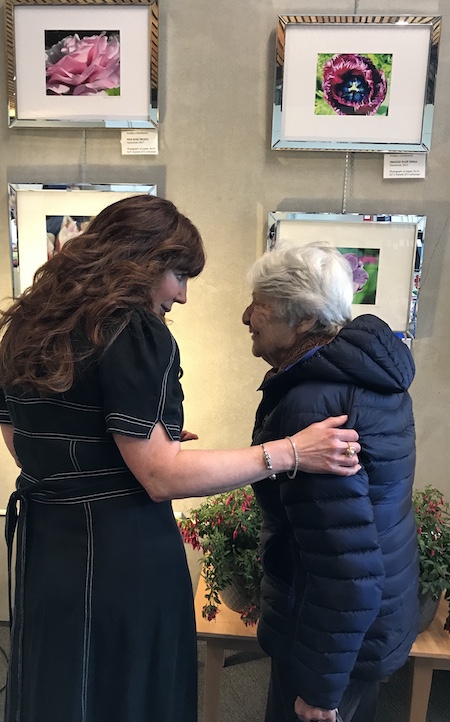
photo - Pamela Fayerman with landscape architect Cornelia Oberlander at the opening reception of Intimate Encounters: Botanical Closeups, featuring Fayerman’s photography
Pamela Fayerman with landscape architect Cornelia Oberlander at the opening reception of Intimate Encounters: Botanical Closeups, featuring Fayerman’s photography. (photo from Pamela Fayerman)

Fayerman said the best way to capture the biology and anatomy of plants in detail is with a macro lens.

“Flowers are so often extravagant and exotic and they are a naturally ideal subject for macro photography because of their sensual shapes, sublime colours and luscious textures,” she explained. “Plants always have hidden, intriguing beauty, often only revealed through macro photography. I use available light and get really close to the mysterious microstructures of plants.”

Her talent for photography has been recognized in various ways, including her being chosen as one of about 100 photographers across the country to participate in the Canada’s Golden Hour Photo project.

“The period right after sunrise and just before sunset is when you can achieve some magic in colour photos, especially blues and mauves,” she said. “In my exhibition, there’s a photograph of an echeveria succulent I shot in California that is a nice demonstration of how to exploit the golden hour before sunset.”

In addition to journalism and photography, Fayerman said, “For about 15 years, I’ve volunteered at the Louis Brier nursing home. In May, I put plants in the pots in the Shalom courtyard and then I tend to the plants weekly until November. My mother was a resident for a short time before her death and this was a project my family initiated in her memory. The residents and family members often express their appreciation because it beautifies the area, which is quite a serene oasis. Last year, one of the residents asked me weekly if I would plant some medical marijuana as well!”

Fayerman also volunteers as a board member for the Vancouver Botanical Garden Association.

“When I learned about the Yosef Wosk Library at VanDusen, that has a gallery inside it named for Roberta Mickelson, I was keen to get my first exhibition there,” said Fayerman, who has been selling her photos for several years via her website, pamelafayerman.com. “I’ve got 18 photographs on display – all of them for sale – including works on paper and on canvas. The retail store at VanDusen is also now carrying my matted prints.”

Intimate Encounters runs until June 27. For more information, visit vandusengarden.org/learn/library.

Format ImagePosted on May 31, 2019May 30, 2019Author Cynthia RamsayCategories Visual ArtsTags art, Pamela Fayerman, photography, VanDusen
PTI yeshivah to close

PTI yeshivah to close

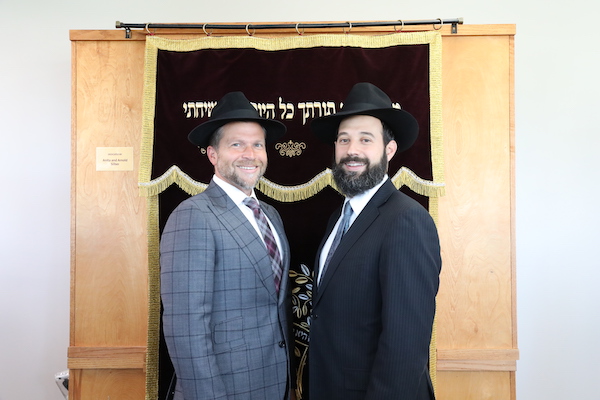
Rabbis Noam Abramchik, left, and Aaron Kamin. (photo from Pacific Torah Institute)

After 16 years in Vancouver, the Pacific Torah Institute yeshivah is closing. The school, which operates out of the Lubavitch Centre at Oak and 41st Avenue, was established by Rabbi Noam Abramchik and Rabbi Dovid Davidowitz in 2003.

Over the years, the program – which offers an education based on the Chofetz Chaim Yeshivah in Queens, N.Y. – has graduated more than 100 students from the high school and more than 200 in the beis midrash program. It is currently led by Abramchik, who is originally from Chicago, and Rabbi Aaron Kamin, who joined the yeshivah from New York in 2005.

Abramchik spoke of the dwindling number of students. “The high cost of living has driven most of the shomer Shabbos community out of Vancouver to other cities,” he said, estimating that 45 Orthodox families have left Vancouver in the last three years. Schara Tzedeck’s Rabbi Andrew Rosenblatt calls it, “the frum flight,” he said.

Families from all over North America have sought out PTI for their sons, he said, “But now, the community essentially felt that we were a luxury that could no longer be afforded, since the actual number of local ‘customers’ was slim to none.”

Abramchik spoke of the yeshivah students as “the most visible sign of Orthodox life in Vancouver.” PTI’s biggest contribution to Jewish life in Vancouver, he said, was “its adherence to Torah, studied at the highest level.”

The impact on religious Jewish life will be “immeasurable,” he said. “We offer university-level Judaic studies.” Few communities offer a post-high school program, he said, so the closure of PTI will mark a dramatic change for Jewish life in Vancouver.

Michael Sachs joined the board of PTI a year ago, when a secondary board was established by local professionals, with the purpose of keeping the yeshivah in Vancouver. Sachs, who is president of the board of the Bayit shul in Richmond, began his connection to PTI in its early years, with a stint as the coach of the school’s basketball team.

Sachs said there was a need for a yeshivah in Vancouver, even if most of the students came from elsewhere. “There’s a lack of understanding in the community about the extent of the yeshivah’s contribution to local Orthodox families,” he said, adding, “PTI is not the only institution affected by the yeshivah’s closure.” Other schools – Shalhevet Girls High School and Vancouver Hebrew Academy – shared resources with PTI, he said, “which allowed them to benefit from more staff and lower expenses.”

Sachs said he is heartbroken about the closure. “This is a loss that ripples across the whole Jewish community,” he said. “Any loss to a Jewish community is a big loss. The impact will be economic, social, educational and personal. People are losing their friends to other cities.”

He said, “The students ate at Café FortyOne, at Omnitsky; the yeshivah rented space at Lubavitch Centre; these students volunteered in our community.” He described the “impossible task” of saving the yeshivah, despite the rabbis and staff having made personal sacrifices to try and keep it afloat.

July 18 will be the last day of classes for PTI students. After that, the school will be packed up and moved to Las Vegas, where it will merge with another yeshivah there. The boys will continue with their program while living in dormitories. While yeshivot have moved in the past – especially after the Second World War – the merger is a new concept.

The future is still uncertain for some PTI students, who have been interviewed for yeshivot in Toronto, Milwaukee and Denver, among other places. Some families are considering yeshivot in Israel. The PTI program is highly regarded, Abramchik explained, “cities have been vying for the boys. Fifteen cities have asked PTI students to move to them, and 10 boys are coming this week to be interviewed for the new [merged] program in Las Vegas.”

Abramchik and Kamin spoke with regret of the move.

“We feel very rooted in this community,” said Kamin. “Three of our kids were born here, we’ve made brises, bar mitzvahs here. My married kids are very emotional, they feel as though their home is being uprooted.”

Abramchik agreed. “Kids are part of the mission,” he said. “They’re invested in the yeshivah and it’s been an anchor in their childhood. It’s very painful.” However, he said, “You have to be adaptable as educators, trends are changing all the time.”

Shula Klinger is an author and journalist living in North Vancouver. Find out more at shulaklinger.com.

Format ImagePosted on May 31, 2019May 30, 2019Author Shula KlingerCategories LocalTags Aaron Kamin, education, Michael Sachs, Noam Abramchik, Pacific Torah Institute, PTI, yeshivah
Artistic telling of strike

Artistic telling of strike

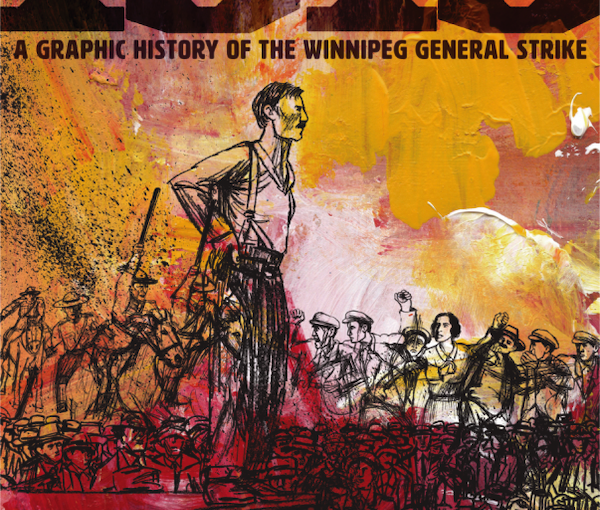
The book 1919: A Graphic History of the Winnipeg General Strike by the Graphic History Collective and artist David Lester is not education for education’s sake, but rather a “useful organizing tool,” according to the preface. “This comic book revisits ‘the workers’ revolt’ in Winnipeg to highlight a number of important lessons that activists can lean on and learn from today as they fight for radical social change,” notes the collective.

Lester, a Vancouver-based illustrator, musician, and graphic designer and novelist, will give the talk Getting Graphic with Labour History on June 7, 7 p.m., at the B.C. Government and Service Employees’ Union Lower Mainland Area office. He will also give a presentation as part of the World Peace Forum Society event 100 Years After the Winnipeg General Strike, in which Jewish community member Gary Cristall (activist and grandson of a 1919 solidarity strike activist) and others will participate on June 8, 2:30 p.m., at SFU Harbour Centre, Room 7000. In addition, he and members of the collective are participating in a few panels at the Congress of the Humanities and Social Sciences (congress2019.ca), taking place at the University of British Columbia June 1-7, and are then heading to Cumberland, B.C., for a June 23 event during the Miners Memorial Weekend.

In the Acknowledgements section of 1919, the Graphic History Collective describes itself as “a not-for-profit arts collective. For us, solidarity is not just a winning strategy in class struggle. It is our artistic methodology. In taking seriously the idea that we can accomplish more by working together, we prioritize collaboration…. As GHC members, we volunteer and share our artistic vision and share our artistic, writing and administrative skills.” The collective recognizes the many people who “contributed knowledge, labour and funding to this project. Most importantly, we recognize that this comic book would not have been completed without David Lester’s incredible talent and artistic labour.” Other GHC members who contributed are Sean Carleton, Robin Folvik, Kara Sievewright and Julia Smith; Prof. James Naylor of Brandon University’s history department wrote the book’s introduction.

“In 1919, 35,000 workers in Winnipeg, Manitoba, staged a six-week general strike between 15 May and 26 June,” the narrative begins. Lester’s two-page depiction of the strikers gathering at Portage and Main gives an idea of the vastness of the protest and the small area within which it took place. It is easy to see how people would have had nowhere to run and the panic that would have ensued when the Royal Northwest Mounted Police and the “special constables,” violently broke up the strike on “Bloody Saturday,” June 21, 1919. The police were among those who had voted to strike but were given dispensation to work by the strike committee; however, the city dismissed the whole force on June 9. The mayor, the Citizens’ Committee of One Thousand (formed of business leaders and others) and the federal government opposed the strike and worked together to end it by various means, using fear of immigrants (aka racism) and eventually violence to do so.

1919 gives a history of the pivotal event from the perspective of the strike leaders, workers and their supporters. The textual narrative drops away, for the most part, in the telling of what happened on Bloody Saturday and the impact of Lester’s images builds as the day progresses, from 9:30 a.m. to 11, to 2:20 and so on. Just before 3:35 p.m., two strikers are shot, one dies on the spot, the other from gangrene. The violence continues. At 4 p.m., the special constables take control. By 6 p.m., Canadian Army Service Corps trucks – equipped with machine guns – are patroling Main Street. By the end of the day, in addition to the two strikers killed, many are wounded and 94 people are arrested. The book then describes some of what happened in the trials that followed, and the strike’s legacy.

Lester shares some of his artistic process and inspiration in the essay “The Art of Labour History,” especially the Bloody Saturday pages, and this is followed by a photo essay called “The Character of Class Struggle in Winnipeg.” The notes are useful in providing context for some of the images, and the bibliography shows the depth of research. Short bios of the contributors and a list of the Manitoba unions that supported the publication conclude the book.

“Art bears witness to the injustices of the world and, in reflecting on the pain and struggles of the past, offers hope in working together for a better present and future,” writes Lester. “Art can aid the momentum of progressive social change, and that is what keeps me going…. I am trying to capture and convey the inspiration and spirit of solidarity in class conflict. That is the art of labour history.”

Format ImagePosted on May 31, 2019May 30, 2019Author Cynthia RamsayCategories BooksTags David Lester, general strike, graphic novel, history, social justice, Winnipeg

Put down “the ducky” in shul

I chatted with a friend recently about what it was like in “the old days” when someone had to take a cellphone call during synagogue. This is when there were only big, clunky cellphones. I remember seeing a doctor on call pacing in the lobby. He – and it was usually a man – looked apologetic as he listened carefully. It was an emergency. It was a doctor who needed to attend to a patient, even though it was Shabbat and he was at services.

Given the circumstances, we recognized it was OK, because it was pikuach nefesh. He was helping save a life and that level of emergency is allowed, no matter how observant you are, on Shabbat. You put a person’s life above everything else.

The media has done many features where they reflect on research that shows how social media and being attached to a cellphone or other device has affected our health. It can keep us from interacting in the real world with other people, from sleeping or focusing properly. Social media increases our anxiety levels and, sometimes, it’s an addiction. Waiting to get that next update, from a friend or a news source, can sometimes seem more important than any actual person or event taking place in the same room.

My kids know the lesson from Sesame Street and the classic song, “Put down the ducky!” Ernie wants to play the saxophone, but Hoots the Owl tells him, “Put down the ducky if you want to play the saxophone!” It’s a lesson that we must break habits – like carrying a cellphone or the rubber ducky – to learn something new, make music and interact with others.

In the Jewish context, I see it everywhere. It’s at services, lectures, at the Passover seder or Shabbat table, at the kids’ events and play dates. It’s so pervasive that those doing it don’t even realize they are blocking out the world to engage with their electronics. It’s like a body part for those folks, while its noise means others can’t concentrate.

I was at a family service on Shabbat when we were interrupted with what sounded like a radio playing. It seemed to drift on and off and it was terribly distracting. Are we hyper-aware of such things? Absolutely. I am always tired and it makes me extra sensitive to noise and stimulation. There are some folks in my family who are also noise-sensitive. Too much noise and chaos often means we just have to leave. It’s too much.

Meanwhile, while the radio-like sound continued to compete with the prayers, adults in the back kept talking over it all. My husband, usually immune, looked bothered. I encouraged him to get up and ask someone to shut it off, since I sat with a kid on my lap. I thought it might be somewhere outside, but I was wrong. It was one of the talking adults, who failed to even notice that her phone was making the noise. Even when it was finally shut off, the adults continued to talk.

The interference was so pervasive and distracting that I couldn’t wait to leave. At Kiddush, at the end of the service, I heard someone say to a kid, “You can go ask the rabbi, he’s not praying now.”

That was it in a nutshell. I found myself wondering what the heck we were doing there. Are you coming to synagogue to play live-streaming radio and talk loudly? If you aren’t praying, or even sitting quietly, as a role model for kids, why bother coming to disrupt everyone else?

Some might say this is just an isolated incident, but it’s pervasive. On Yom Kippur, there was a grandfather who thought it was OK to hop up and snap photos with his phone during the service.

As I looked at the Torah portion, Behukotai, Leviticus 26:3-27:34, for the first week of June this year, I remembered this experience. It’s a portion that emphasizes all the amazing things offered by the Divine Presence “if you follow my laws and observe my commandments.” It’s a carrot-and-stick story, it clearly states the bad things that will happen to those who don’t follow the rules.

Our understanding of the laws and commandments may have changed, but social norms still exist. We live in a society with clear tension between individuality and the common good. If you judge someone else’s behaviour, you can be told that judgment is inappropriate – even when the individual isn’t behaving in a considerate or safe way for the community. If you feel uncomfortable with someone’s behaviour, we’re taught “we can only control ourselves and our response to it.”

You may not want to stop social media use on Shabbat or want to pray at services, and that’s your choice. However, it’s probably not your place to keep others distracted with your phone so they cannot concentrate on prayer. If you’re set on having it your way, and don’t want to think about others, why join a community Jewish event to do it?  Stay home to use your cellphone instead.

Winnipeg prides itself on being a friendly place, and inspired other places to adopt a United Way campaign day of “conscious kindness.” It might be time to live the slogan and think of others – if you can’t put down the phone for your own sake, please do it for ours.

Joanne Seiff has written regularly for CBC Manitoba and various Jewish publications. She is the author of three books, including From the Outside In: Jewish Post Columns 2015-2016, a collection of essays available for digital download or as a paperback from Amazon. See more about her at joanneseiff.blogspot.com.

Posted on May 31, 2019May 30, 2019Author Joanne SeiffCategories Op-EdTags cellphones, etiquette, Judaism, lifestyle, Sesame Street, synagogue, Torah
Awards all round

Awards all round

Each year, the Eric Hoffer Award presents the da Vinci Eye (named after Leonardo da Vinci) to books with superior cover artwork. Cover art is judged on both content and style and, among this year’s winners is Olga Campbell’s Whisper Across Time: My Family’s Story of the Holocaust Told Through Art and Poetry (Jujabi Press). The book is still being considered for category, press and grand prizes.

Whisper Across Time also won the Ippy Award for independent self-published authors. Campbell’s book was selected as one of the 2019 Independent Publisher Book Awards’ Outstanding Books of the Year under the freedom fighter category. Campbell planned on attending the May 28 gala event in New York.

(For a review of the book, see jewishindependent.ca/a-story-told-in-art-and-poetry.)

* * *

Julia Ivanova’s National Film Board documentary Limit is the Sky saw its Toronto première on May 2 in the retrospective of the largest documentary film festival in North America, Hot Docs. Ivanova is one of only three directors from British Columbia who have received a Focus On retrospective at Hot Docs since 2002 – the others are John Zaritsky and Nettie Wild.

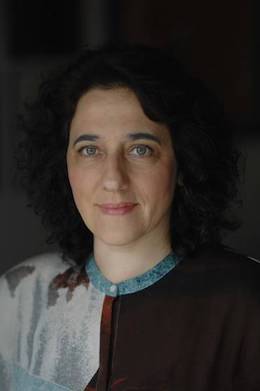
photo - Julia Ivanova
Julia Ivanova (photo from NFB)

Ivanova, the director, cinematographer and editor of Limit is the Sky is a Russian-Canadian filmmaker. She came to Canada at the age of 30, became a filmmaker in Vancouver and captured Canada from within but with the ability to look at the country from a distance. She has made documentaries for the NFB, CBC, Knowledge Network, played Sundance and won many awards for her films.

The screening of Limit is the Sky, the NFB film about the Fort McMurray boom-bust-fire circle and the winner of the Colin Low Best Canadian Feature Award at DOXA 2017, commemorates the third anniversary since the worst wildfire and the worst natural disaster in Canada’s history devastated the capital of the oil sands. (See jewishindependent.ca/diverse-doxa-festival-offerings.)

The Hot Docs Focus On retrospective of her work includes the world première of her new film, My Dads, My Moms and Me, a film about the joy and turmoil of parenting in the modern family, including same-sex partners, surrogates, adoption and combinations that break the old conventions. The film follows three families, filmed twice, 12 years apart – in 2007 and in 2019.

* * *

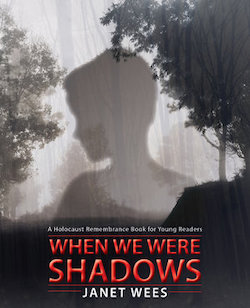
image - When We Were Shadows book coverMore than 250,000 children participated in the Ontario Library Association’s annual Forest of Reading program and have helped choose the best Canadian authors and illustrators. On May 14 and 15, thousands gathered at the annual Festival of Trees, an annual rock concert of reading, hosted at the Harbourfront Centre, where winners of the 2019 Forest of Reading program were announced. Among the books awarded honours was When We Were Shadows by Janet Wees, published by Second Story Press. (For more on Wees and the book, visit jewishindependent.ca/saved-by-dutch-resistance.)

* * *

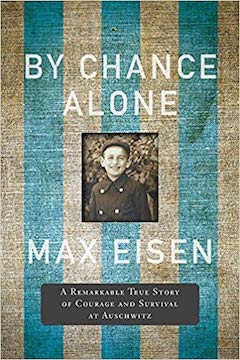
By Chance Alone: A Remarkable True Story of Courage and Survival at Auschwitz by Max Eisen (HarperCollins) won Canada Reads 2019. The book was championed by TV host and science broadcaster and author Ziya Tong, and was chosen by the five panelists as the book for Canadians to read in 2019. This year’s title fight asked the question: What is the one book to move you?

image - By Chance Alone: A Remarkable True Story of Courage and Survival at Auschwitz book coverAfter four days of debate in front of live audiences, Tong and By Chance Alone survived the final vote to be crowned this year’s winner. The runner-up was Homes by Abu Bakr al Rabeeah and Winnie Yeung (Freehand Books), which was defended by Simple Plan drummer Chuck Comeau. Audiences can catch up on all of the debates on demand on CBC Gem or by downloading the Canada Reads podcast from CBC or iTunes.

“Before 2016, I don’t remember seeing swastikas, but these days I see them often – in the news and on social media. But here’s something even more shocking: one in five Canadian young people have not even heard of the Holocaust. They don’t know what it is, ” said Tong.

This year’s debates took place March 25-28 and were hosted by actor, stand-up comedian and host of CBC Radio’s Laugh Out Loud, Ali Hassan.

Format ImagePosted on May 31, 2019May 30, 2019Author Community members/organizationsCategories NationalTags art, books, Canada Reads, CBC, documentaries, Holocaust, Janet Wees, Julia Ivanova, Max Eisen, memoir, National Film Board, NFB, Olga Campbell, Ontario Library Association
Mystery photo … May 31/19

Mystery photo … May 31/19

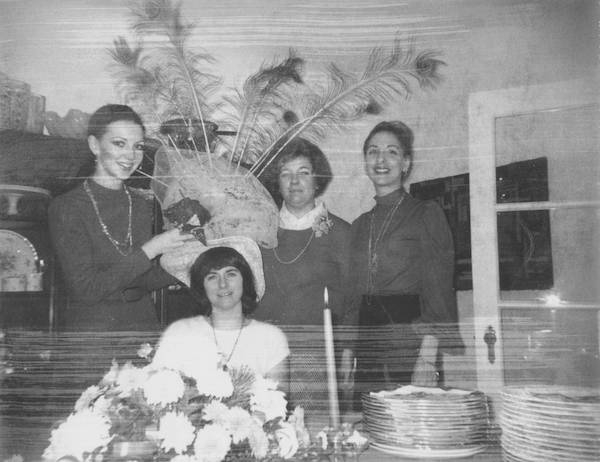
Rochelle Levinson is second from the right. (photo from JWB fonds, JMABC L.10738)

If you know someone in this photo, please help the JI fill the gaps of its predecessor’s (the Jewish Western Bulletin’s) collection at the Jewish Museum and Archives of B.C. by contacting [email protected] or 604-257-5199. To find out who has been identified in the photos, visit jewishmuseum.ca/blog.

Format ImagePosted on May 31, 2019May 30, 2019Author JI and JMABCCategories Mystery PhotoTags archives, history, Jewish museum

Why dairy on Shavuot? Oh, and cheescake recipes

On the second day of Passover, we begin to count the omer (sheaves of a harvested crop). The counting concludes seven weeks later, with Shavuot (the Feast of Weeks), which has different names, but is associated with one type of food: dairy products. Hence, my sharing a few cheesecake recipes.

Song of Songs Chapter 4 reads, “honey and milk are under thy tongue,” a reference to the Torah being as nourishing as milk and as sweet as honey. Thus, on the holiday celebrating the giving of the Torah, it became traditional to eat foods with milk and honey.

Interpreters of the Tanach liked to use gematria (Jewish system of assigning numerical values to words and phrases, based on their letters). For example, Psalm 68 is read on Shavuot and, in verse 16, it reads: “A mount of G-d is the mountain of Bashan.” The Hebrew for peaks is gavnuneem, which sounds like gveeneh (cheese). One could interpret this to mean that, on Shavuot, we should eat mountains of cheese.

Another example: the values of the Hebrew letters in chalav (milk) sum to 40. Moses spent 40 days on Mount Sinai, so we eat foods with milk.

As well, there is a legend that says, until Moses descended with the Torah, kashrut was unknown so, rather than prepare the meat as per the new rules, the people ate dairy. Pragmatically, since Shavuot is a summer festival and Israel is hot, it was logical to eat light, dairy foods. Also, sheep give birth around this time, so milk and cheese are plentiful.

In the Shulchan Aruch (code of Jewish law), Rabbi Moses Isserles wrote: “It is a universal custom to eat dairy food on the first day of Shavuot.”

CRUSTLESS CHEESECAKE

1 cup cream cheese
1 1/2 cups creamed cottage cheese
1/2 cup sugar
2 eggs
1 tsp vanilla
1 cup sour cream

  1. Preheat oven to 350°F. Spray vegetable shortening in a nine-inch round cake pan.
  2. Mix together cream cheese, creamed cottage cheese, sugar, eggs and vanilla. Pour into pan.
  3. Bake 35-40 minutes or until centre firm.
  4. Remove from oven and spread with sour cream while cake is hot. Cool then refrigerate.

BLENDER CHEESECAKE

crust:
15 graham crackers
1 tbsp sugar
1/2 tsp cinnamon
1/4 cup melted margarine or 3 tbsp vegetable oil

filling:
1 envelope unflavoured gelatin
1 tbsp lemon juice
grated peel of 1 lemon
1/2 cup hot water or milk
1/3 cup sugar
2 egg yolks
1 package cream cheese
1 heaping cup crushed ice
1 cup sour cream

  1. Break five crackers into quarters, blend to crumbs. Empty into bowl. Repeat twice more.
  2. Stir in sugar and cinnamon. Add melted margarine or oil and mix until crumbs are moist. Grease a spring form pan. Press crust against sides and chill.
  3. Mix in blender gelatin, lemon juice, lemon peel, hot water or milk 40 seconds.
  4. Add sugar, egg yolks and cream cheese and blend 10 seconds. Add ice and sour cream and blend 15 seconds.
  5. Pour onto crumb crust and chill.

MY MOM’S (Z”L) SCRUMPTIOUS CHEESE CAKE

crust:
2 cups graham cracker crumbs
1/2 cup butter or margarine or 1/4 cup plus 2 tbsp oil
1/4 cup sugar
dash cinnamon

filling:
1 1/2 cups cream cheese
2 eggs
1/2 cup sugar
1/4 tsp vanilla

topping:
2 cups sour cream
2 tbsp sugar
1/2 tsp vanilla

  1. Preheat oven to 350°F.
  2. Combine crushed crackers, butter, margarine or oil, sugar and cinnamon and press into spring form pan.
  3. Bake 10 minutes.
  4. Combine the filling’s cream cheese, eggs, sugar and vanilla with a mixer until fluffy. Pour into crust and bake 30 minutes.
  5. Beat topping’s sour cream, sugar and vanilla. When cake is done, remove from oven and spread topping on it. Return to oven and bake 10 minutes.
  6. Serve with cherries, crushed pineapple or strawberries on top.

 Sybil Kaplan is a journalist, lecturer, book reviewer and food writer in Jerusalem. She created and leads the weekly English-language Shuk Walks in Machane Yehuda, she has compiled and edited nine kosher cookbooks, and is the author of Witness to History: Ten Years as a Woman Journalist in Israel.

Posted on May 31, 2019May 30, 2019Author Sybil KaplanCategories Celebrating the HolidaysTags cheesecake, cooking, Judaism, recipes, Shavuot

Posts pagination

Page 1 Page 2 … Page 7 Next page
Proudly powered by WordPress