Help find son, brother

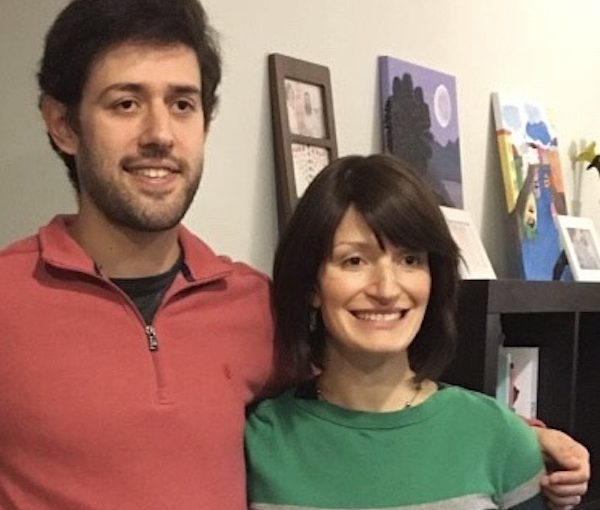
Bernard Grempel with his sister, Ettie Shurack. (photo from Grempel family)

Ettie Shurack’s life has been upside down since May 14, her emotions a chaos of desperation, pain, anxiety, frustration and grief, peppered with pinpricks of immense gratitude, appreciation and, always, a glimmer of hope.

May 14 is the date her brother, Bernard Grempel, age 28, went missing. He was last seen at 11 p.m. on the SkyTrain and on bus 340, heading towards the North Delta/Surrey area. Since that time, Shurack, her husband, her parents, friends and volunteers in the Jewish community and beyond have been searching relentlessly for any traces of the young man who mysteriously disappeared. They have scoured the bus routes, knocked on the doors of strangers in those neighbourhoods, interviewed commuters on the transit system and sought out footage from video cameras in relevant areas.

Shurack has created a Tehillim (Psalms) signup sheet with the goal of having the entire book of Tehillim recited until Grempel has been found. She has launched weekend searches, posted flyers, liaised with RCMP in multiple cities of the Lower Mainland and her family is offering a $20,000 reward for anyone with information leading to his safe return home.

She’s emerged, five weeks into the search, feeling very disillusioned with the efforts of the RCMP to help locate and bring her brother home. She noted that the photograph of Grempel initially used was more than a year old. She was also concerned that a police release requested the public’s assistance in locating a missing person who, the release stated, “is apprehendable under the Mental Health Act.”

“Yes, he has mental health problems, but he was living on his own prior to disappearing. I’m confused why they would state he should be returned to the hospital,” she said.

“A mental health diagnosis does not equate to suicide,” she said, responding to one of the theories of what might have happened to Grempel. “My brother was taking his medication daily, seeing his counselor regularly and attending appointments with his psychiatrist. His mental health team had seen him the week he went missing.”

If determination had a face and name, it would be Ettie Shurack. She, her husband and parents are deeply committed to continuing the search for their missing son and brother and thank those who share their quest.

“I ask the public to continue helping with our search parties and to share our search on social media. In Surrey, 64th and Scott Road, and 72nd and Scott Road, are our focal points but we ask that anyone and everyone in the Lower Mainland continue to keep their eyes out for him.”

She asks that anyone with information or the ability to help email her at bringbernardhome@ gmail.com or call 778-838-5095. She has a WhatsApp group at 631-320-8225 and a Facebook page called Let’s Find Bernard Grempel.

Lauren Kramer, an award-winning writer and editor, lives in Richmond. To read her work online, visit laurenkramer.net.

Honouring women’s courage

Anne Petrie (photo from Maurice Yacowar)

The University of Calgary has organized a virtual exhibition to honour the efforts of Jewish women in the Canadian Armed Forces during the Second World War. Called She Also Served, it comprises a series of nine banners by various artists.

Originally scheduled to be displayed at the Military Museums in Calgary during Jewish Heritage Month in May, it has been made available online throughout 2021 and will be physically hung in May 2022. Of the 17,000 Jews who served in the Canadian armed services, more than 275 were women.

Among those selected to display their work is Anne Petrie of Victoria. For her banner, a digital print called “In the Tradition of Service,” Petrie chose to list all the known names of the Jewish Canadian servicewomen. She used a font that is reminiscent of the typewriters of the 1940s. Another layer of the banner has the names of 12 biblical heroines, confirming the tradition of Jewish women’s courage and dedication to serving their communities.

“I was immediately struck by knowing that, although they would not have had to hide their Jewish identity, it was still in those days not something that you would be comfortable being completely open about,” Petrie told the Independent. “Even if it was, at best, very casual antisemitism, it was a reality when they would have signed up. So, there you are fighting (even if it’s only at a desk) for something – a religion, a people, a culture – that you can’t really be openly passionate about.”

image - Anne Petrie’s “In the Tradition of Service,” 2021. Part of the She Also Served exhibit, now online
Anne Petrie’s “In the Tradition of Service,” 2021. Part of the She Also Served exhibit, now online.

For Petrie, She Also Served is an opportunity to reveal and contextualize the “Jewishness” of that other “them, the unsung and – worse – unidentified Jewish-Canadian women soldiers.” She said she is honouring them by naming them in “their doubly suppressed identities, as women and Jews.”

Petrie’s intention was to present the full names and rank (where available) of all the Jewish women known to have served. The collection of names fills the background layer of the 75-by-165-centimetre banner. Each name is in the colour of their respective services: olive green for army, dark navy for the navy and a lighter “air force blue” for the Women’s Army Corps. Emerging from the background in a larger, translucent Hebrew script, and in a camouflage pattern, are the names of Judaism’s biblical heroines, “themselves often subordinated by patriarchal tradition to the male heroes,” said Petrie.

“In making the banner itself, I was struck by how powerful it was to actually write out all the 279 names of the Jewish servicewomen that have so far been identified. I knew none of them personally, of course, but I felt that typing each name was a kind of acknowledgement and, strange as it sounds, I did feel a kind spirit or presence as I typed each of the names. I only wish we did know more about them, but I understand that research is continuing and, hopefully, there will eventually be stories attached to each of these women’s names,” she said.

Petrie thanked Janice Shulman and Rabbi Lynn Greenhough for their assistance with the project.

Prior to beginning her work as an artist, Petrie’s career spanned more than 30 years in radio and television, where she worked as a researcher, producer, documentary-maker, columnist and commentator in news and current affairs. She is also the author of several non-fiction books: Ethnic Vancouver, Vancouver Secrets and Gone to an Aunt’s: Remembering Canada’s Homes for Unwed Mothers.

After retiring from the CBC, she returned to school and obtained a bachelor of fine arts from the Alberta College of Art and Design in 2008. Since then, she has had a number of exhibitions. Her next exhibit, said/unsaid, is a two-person show with Jane Coomb – it opens at the errant artSpace gallery in Victoria (975 Alston St.) on July 9.

The other artists whose work is featured in She Also Served are Razieh Alba, Sophia Borowska, Alysa-Beth Engel, Lily Rosenberg, Talie Shalmon, Jules Schacter, Bev Tosh and Susan Turner. The representations exploring the servicewomen’s experiences range from naturalistic to abstract. Some works use archival photographs, while others use media include oil painting and paper-cutting.

The stories of 41 Jewish servicewomen are also featured on the website. These accounts were an impetus for the call for submissions for the exhibition, which was curated by the University of Calgary’s Prof. Jennifer Eiserman and librarian emerita Saundra Lipton. They ask for help in “completing the story” from anyone who has more information about the featured servicewomen and any of those identified in the list of names collected.

To view the exhibition, visit live-ucalgary.ucalgary.ca/she-also-serves/exhibition.

Sam Margolis has written for the Globe and Mail, the National Post, UPI and MSNBC.

Extremism will not win

The latest explosion of terrorism from Gaza, the reaction from Israel, the violence in and around Jerusalem and the international response to these events continues to reverberate. Things have calmed somewhat in Israel, although violence continues, but a second, related front continues to rage in the public dialogue.

Anti-Israel rallies worldwide have seen explicit antisemitic imagery and threats openly and prominently exhibited. Such expressions are now commonplace at protests, in online spaces and in public squares. Anyone who insists there is some sort of hermetically sealed wall between anti-Zionism and antisemitism needs to explain why bands of thugs in London drove through Jewish neighbourhoods screaming “F**k the Jews, rape their daughters.” Social media has logged millions of overtly Jew-hating statements and images, including thousands of instances of the phrase #Hitlerwasright.

These examples are obviously extreme. Far more common, even from ostensibly mainstream voices, including elected officials in Canada, the United States and Europe, is language employing the apartheid libel or that Israel is a “settler-colonial” regime.

The settler-colonial motif is particularly effective in the Americas because we, unlike Israel, are actual settler-colonial societies. The assertion that Jews are, basically, an invasive species in the Land of Israel meets fertile soil just as global attention again focuses on the situation of Palestinians.

While the antisemitic language and violence is deeply worrisome, it raises a secondary issue about the motivations of anti-Israel voices. Villainizing, isolating and denouncing Israel seems to fulfil some primal urge in a great number of people. What it does not do is hasten Palestinian self-determination.

Any resolution to the conflict and, therefore, Palestinian statelessness, will come from the rejection of this approach. Put plainly: one cannot be pro-Palestinian and anti-Israel at the same time. If you seek the destruction of Israel, you reject compromise, coexistence and peace – the only things that will ever bring about an independent Palestine.

The binary that defines the Israeli-Palestinian situation is a false one. Being pro-Israel demands being pro-Palestinian – seeking a compromise in which both peoples live in peaceful coexistence. Being pro-Palestinian requires being pro-Israeli because only when the Palestinians, the region and the world accept Israel’s right to exist will we have a scenario where coexistence and a Palestinian state will emerge.

People overseas, many with no personal stakes in the conflict, prolong the problem. Among self-defined “pro-Palestinians” are many who seem content to fight for Palestine to the last Palestinian. Evidence of this macabre attitude can be seen every time overseas “allies” revel in the supposed moral victory of Palestinian victims exceeding Jewish victims when conflict erupts.

Similarly, too common among our own folks are rantings on social media along the lines that “there is no such thing as a Palestinian people.” Call them what you will (decent people refer to others by the terms they prefer), there are people who call themselves Palestinians and semantic arguments will not change that. We win no awards or disagreements by proving that the people who call themselves Palestinian are something other than what they say – just as those who subscribe to the kooky Khazar conspiracy of Jewish origin to refute Jewish indigeneity to the Holy Land deflect from the issue at hand. In both cases, it does not negate the core issue: both peoples – and many more whose identity gets short shrift in the binary – exist and live there now. That will not change.

Israel is not going anywhere and Israelis are not going, as the late American political reporter Helen Thomas suggested, “back to Poland.” Neither are Palestinians. The first step – it seems ludicrous that it needs to be said – is acknowledging that both peoples (and others!) are there now and deserve to be.

There are countless complexities in the Israeli-Palestinian mess. But there is one certainty that is not the least bit complicated: Palestinian self-determination will come and Israel’s right to exist will be secured because of coexistence and compromise. Neither side’s extremists will ever win.

Form forces Jews to be white

A friend of mine was recently angry and anxious about a university human resources form. The form reflected how people self-identified. In other words, how diverse was this Canadian university’s workforce?

The form’s questions asked about race. On that form, it said that Jewish people should mark on their forms “white.”

The person who told me about this wrote on the form that this was racist and wrong. In fact, Jews come in every single colour and are from all over the world. Jews aren’t defined by only the (Ashkenazim) European “white” category. If we’re identified as an ethnicity, that doesn’t define our race.

Also, Judaism isn’t solely a religion. We’re still considered Jewish even if one converts to another religion, or isn’t practising or is a descendant of a Jewish person. In Canada, First Nations, Inuit and Métis are Indigenous. Historically, Jews are also considered indigenous – to Israel.

Non-Jews have racialized us as “other” for thousands of years. This othering isn’t a new thing. It’s a core component of antisemitism. In Hitler’s Germany, categorizing Jews as a different race and subhuman made it easier for genocide to take place.

This historic narrative around antisemitism parallels that of many other oppressed people. Yet, the antisemitic misinformation campaign is powerful. Even though there are only about 14 million Jews in the world, antisemites consider us to have an outsized influence and power that somehow overpowers and dominates others. As an example: even as hate crimes against Jews have increased, they are poorly covered by mainstream news. Yet, we are also allegedly controlling the media at the same time. Huh?

These tropes aren’t logical or rational. Prejudice, discrimination and hate are often fueled by emotion. Leaders then use these strong feelings to gain power, control and wealth and to scapegoat minorities like Jews.

What are ways to counter this in a 21st-century context? There are social media activists who speak out daily, raising awareness and fighting against this misinformation. Many Jewish families open their home and Shabbat tables up to enable non-Jews, one at a time, to learn about who we are. Others write books and conduct interviews on radio and TV. Yet not all of us are public figures, or want to be.

Even as “regular” people, we can be proud owners of our Jewish identities. We can continue to learn, think and reflect on who we are, what we believe and our place in the world. We can stand together, recognizing that, as Jews, we are all responsible for one another – kol Yisrael arevim zeh le zeh. We can attempt, through pride and knowledge, to control our own narrative.

I, too, was frustrated by that human resources form. Now, I’m puzzled whenever I see a form that asks me what my identity is. Since a bit after the Second World War, light-skinned Jews in North America have been encouraged to tick off the “white” box on these “self-identity” forms. The horrors of the Holocaust were put aside by governments and non-Jews, in an effort to help European, “white” Jews integrate into society, but simply checking “white” erases us. It erases Jewish ethnicity and it erases Jews of colour. Jews from the Middle East, India, Asia, Africa and South America – Jews from anywhere we’ve lived where skin colour might not have been deemed Caucasian, white or European.

This North American erasure is so deep that Jews of colour often describe the discrimination they face when attending synagogue – there are many instances in which a member of the Ashkenazi “white” majority questions if they are full-fledged congregants. They’re asked if they are converts, or guests. Imagine the alienation Jewish people with darker skin face when asked, “Are you really Jewish?” or “Where are you really from?” every time they walk into a service.

Israel’s Jewish population is much more diverse in terms of skin tone than what one finds in the United States or Canada but, historically, it’s been hard for Mizrahi Jews to gain leadership roles in Israel, too. So many Israeli Ashkenazi Jews have bought into this whiteness identity, too.

In the United States, when Jews “became” white, they no longer were excluded from country clubs, university quotas, etc. There was an advantage to accepting this new categorization, even as it still created terrible, completely unethical inequities among people, including Jews, based on skin colour.

As a result of this “becoming white” transition, some oppressed minorities and the political left now may see Jewish people as part of an oppressive white majority. In this view, white Jews have no legitimate complaints about how we are treated, because, suddenly, we’re just part of the privileged majority. So, in addition to hate from the political right, there’s also abuse from the left if Jewish people speak out about antisemitism.

Navigating this landscape is difficult. We all have bias. No one is completely free of it. We’re raised with it and must each work to do better. Yet, in a time when Canadians are watching hate crimes rise against Jewish and Muslim communities, it’s our obligation to do more. Confronting Canada’s residential school history, the deaths of Indigenous children, and Canada’s treatment of Indigenous people overall forces us to think further about what it means to uphold certain “historic” narratives – narratives that don’t reflect what really happened.

Manitoba now wants to collect data about race, ethnicity and indigeneity on its COVID vaccine consent forms. This would allow the province to learn more about vaccination rates and virus rates in various populations.

I’ve printed out the paperwork for my second jab and I’m looking forward to celebrating this chance to be fully vaccinated. Even so, I’m wondering what box to tick off. Choosing “Other” reinforces that antisemitic tradition of negative identity politics. I’d like to avoid that. I’m proud to be Jewish – but it’s not one of the options on the form.

Joanne Seiff has written regularly for CBC Manitoba and various Jewish publications. She is the author of three books, including From the Outside In: Jewish Post Columns 2015-2016, a collection of essays available for digital download or as a paperback from Amazon. Check her out on Instagram @yrnspinner or at joanneseiff.blogspot.com.

Having the hard discussions

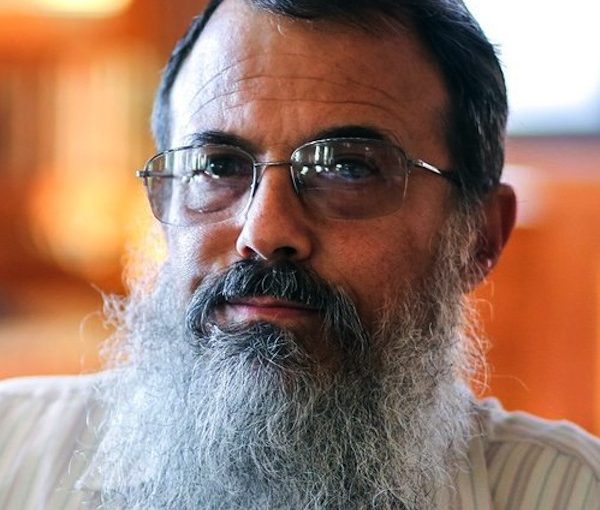
Rabbi Hanan Schlesinger, above, and Noor A’wad of Roots Palestinian-Israeli Network were the featured speakers at Vancouver School of Theology’s Two Truths in One Heart; Two Peoples in One Land event May 27. (photo from friendsofroots.net)

Two Truths in One Heart; Two Peoples in One Land, a discussion on the Roots Palestinian-Israeli Network, with speakers Rabbi Hanan Schlesinger and Noor A’wad, took place on May 27 as part of the Religion and Thoughtful Activism conference organized by the Vancouver School of Theology (VST).

Formed in 2014 by peace activist Ali Abu Awwad and Schlesinger, Roots is a group based in the Gush Etzion settlements of the West Bank that believes the path towards peace between Palestinians and Israelis is through dialogue.

“In the West Bank, Jews and Arabs live completely separately with no connections at all,” said Schlesinger, an Orthodox rabbi, passionate Zionist settler and director of international relations for Roots. Everything, he explained – from legal systems to health systems, transportation to universities – is separate. The separation is so complete that Palestinians are forbidden from entering Israeli areas and vice versa.

“If I were to say that there is no common ground between Jews and Palestinians, I would not be exaggerating, and I would not be speaking metaphorically. There is literally no common ground as far as geography goes. If there had been a place for a crazy Israeli Jew and a Palestinian who wanted to meet for coffee, there would have been no place to do it,” he suggested.

At least, this was the case, he said, until seven years ago, when Roots was formed and when the Dignity Centre, a community centre where the two sides can meet with equality and mutual recognition, was created.

Schlesinger spoke of the great apprehension and trepidation each side has in coming together at such a place. Yet, often, at the end of an event at the centre, people come to Schlesinger, saying how wonderful the simple experience of conversing with a member of the other side is.

“People are amazed to discover that ‘the other’ is a lot like us. It’s hard to fathom after all the stereotypes and all we on both sides have been taught,” he said.

He likened the animosity each side has to a disease he called “the hubris of exclusivity,” which infects people with a “virus” that makes them believe that their people are the only legitimate people in the region.

Charting his own journey, Schlesinger recounted that, during his first encounters with Palestinians, he began learning that there were not one but two stories in the land where he lives. “For 33 years, I lived in my story and the Palestinians didn’t exist. They were part of the grey drab scenery that passes in the background of a movie but not part of the plot,” he recalled.

He spoke of his initial distrust of Palestinians and his profound reluctance to meet them – a distrust and reluctance shared by his Palestinian interlocutors during their first meetings. Implicit, too, in the unwillingness to meet was the fear that each side had of the other, Schlesinger said.

Noor A’wad, a licensed Palestinian tour guide based in Bethlehem, where he takes English speakers on geopolitical tours, spoke of his family’s long history in the land.

photo - Noor A’wad of Roots Palestinian-Israeli Network
Noor A’wad of Roots Palestinian-Israeli Network (photo from friendsofroots.net)

“I remember growing up during the Second Intifada – some of my family members were killed, others arrested – realizing that this is not a normal life and asking myself why am I living this abnormal life under occupation? The simple answer to the question is, because I am a Palestinian,” A’wad said.

He considered leaving the area, but that urge was outweighed by a sense of responsibility and a sense that there was no other option but to stay in order to best serve his people. Ultimately, he came to learn about nonviolent solutions to conflict.

A’wad described his change of heart upon getting involved with Roots: “When Rabbi Hanan spoke about his identity as a Jew and a settler, these are very loaded words and terminology that is connected to the conflict. For him, I was able to see how beautiful this terminology is because it is part of his identity.

For me, the same terminology is connected to the suffering my people have.”

For A’wad, as with Schlesinger, the acts of sitting and listening to the other were enormously challenging. Nonetheless, each persevered and, in the process, they discovered a partner in dialogue and perhaps the most effective way of understanding the humanity of the other – finding mutual empathy and thereby creating a means to achieve peace.

“What I discovered in Roots is the foundation for any peace process,” said A’wad.

The event was organized by Rabbi Laura Duhan-Kaplan, VST’s director of inter-religious studies. “Our students – most but not all are Christian – are very interested in news about Israel and Palestine. They see Israel as their beloved Holy Land. So, we wanted to introduce them to one of the many NGOs there doing collaborative peace-building work,” she told the Independent.

“I’ve been a supporter of Roots for some years now. Rabbi Schlesinger is a colleague and friend from Clal’s Rabbis Without Borders fellowship program. Still, this event would not have happened without the help of Quebec psychotherapist Colleen MacDougall, another Roots supporter,” she added.

For more information on Roots, visit friendsofroots.net.

Sam Margolis has written for the Globe and Mail, the National Post, UPI and MSNBC.

Stepping up to confront hate

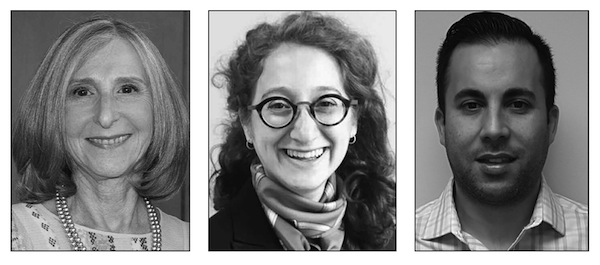
Left to right: Jewish Federation’s Shelley Rivkin, CJPAC’s Kara Mintzberg and CIJA’s Nico Slobinsky spoke at an online event June 17 on topics including how individuals can help fight antisemitism in Canada. (PR photos)

Representatives from three Jewish communal agencies spoke at an online event June 17 on topics including online hate, adoption of the Working Definition of Antisemitism, strengthening supports for the investigation and prosecution of hate crimes, and how individuals can help fight antisemitism in Canada.

Shelley Rivkin, vice-president of local and global engagement at the Jewish Federation of Greater Vancouver, Kara Mintzberg, B.C. regional director for the Canadian Jewish Political Affairs Committee (CJPAC), and Nico Slobinsky, director of the Pacific region of the Centre for Israel and Jewish Affairs (CIJA), spoke about how their agencies are confronting the surge in antisemitism, as well as a range of other topics.

Dafna Silberstein, associate director of the Jewish Federation’s Israel and global engagement department, opened the evening.

“We are here tonight to understand the Canadian political process and learn how you can become more involved, how we can become engaged with a range of issues that matters to you and to our community, and to learn what our community organizations are doing to combat antisemitism,” she said.

Rivkin described Federation’s role as “our community’s primary convener.”

“We are an umbrella organization that represents over 25 organizations locally and an additional number of organizations, approximately 10, in our partnership region [in Israel’s Galil Panhandle] and globally,” said Rivkin.

Federation is the central fundraising arm of the community and runs programs and partners with other agencies to care for the most vulnerable. About one in six Jewish British Columbians lives in poverty, she said, including 13.4% of Jewish children. Federation is also critically involved in supporting Jewish day schools and ensuring continued provincial support for those institutions, she added.

Antisemitic incidents and threats have spiked in recent weeks, coincident with the conflict between Hamas and Israel. Rivkin said the relationships Federation has built with other ethnocultural agencies and communities have proven valuable.

“We have a long history of working side-by-side with other ethnocultural communities,” she said. “These relationships and the supports that we provide are very important so that, when we stand up and speak out on behalf of other ethnocultural organizations, we’re building the bridges and relationships so that they will stand up and speak out on our behalf. Especially this past month, we’ve been very proactive in reaching out to the Indigenous community and the Muslim communities, both of whom faced significant losses over this past month.”

Rivkin also noted Federation’s substantial investment – about $1 million annually – in community security.

“Hate crimes against our community remain one of the highest reported crimes in Canada,” she said. “That was why, in 2016, we made the decision to invest in a director of security that is available and responsive to all of our community organizations, in particular those organizations that have stand-alone facilities.”

Slobinsky explained that CIJA represents hundreds of thousands of voices affiliated with Jewish federations across the country.

“Combating antisemitism, educating Canadians about the central role that Israel plays in Jewish life, strengthening the ties between Canada and Israel and ensuring that Jewish voices are represented in the discussion on a range of issues is some of the long-term work that CIJA does,” he said.

Because of CIJA’s lobbying, he said, the federal government has announced an emergency summit on combating antisemitism, to be led by former justice minister Irwin Cotler.

CIJA also promotes the adoption by governments of the International Holocaust Remembrance Alliance Working Definition on Antisemitism, which Slobinsky calls “the gold standard definition for antisemitism” and a vital tool in fighting antisemitism in Canada and around the world.

“For the first time in our history, we have a definition [of antisemitism] that we as a community champion, that the Canadian government has adopted and now Ontario, New Brunswick and Quebec have adopted,” Slobinsky said. “It’s a very useful tool to work with our elected officials, law enforcement, our partners in other communities, when they ask us what is antisemitism, how do you experience antisemitism, how it manifests.… We are defining what our own discrimination, our own oppression, looks like.”

CIJA is also calling on federal and provincial governments to increase supports for existing hate crime teams in British Columbia and to initiate teams to investigate and prosecute hate crimes in jurisdictions where investigation teams do not yet exist.

Of CJPAC, Mintzberg said: “We are all about political engagement.”

“Our focus is on getting our community interested and involved in politics through volunteering and building relationships with elected officials,” she said. CJPAC, she emphasized, is not involved in lobbying or advocacy; that’s CIJA’s job. “We create programs that reflect the mandate of engagement and highlight the importance of getting involved in Canada’s political process.”

Jewish voters have a significant presence in only about 10 of the country’s 338 ridings. Especially during elections, Mintzberg said, CJPAC acts as a “political concierge,” connecting volunteers with candidates. As Canada is currently governed by a minority government, an election could come at any time. She calls on community members to step up now and be prepared when that call comes.

Mintzberg asked that people pledge to volunteer in the next election and participate in a free, one-hour online training course, which can be accessed via cjpac.ca. Slobinsky invited participants to visit cija.ca/takeaction to find ways to mobilize against antisemitism and support other topics on CIJA’s agenda.

JA’s newest laureates

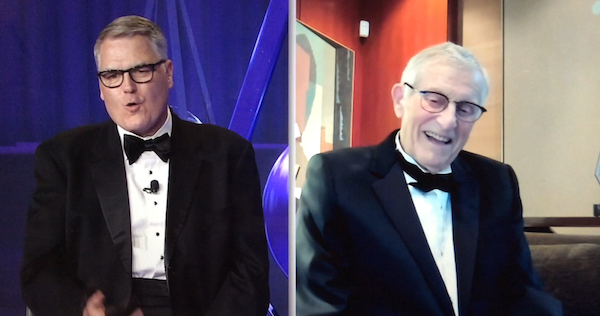
Moderator Greg D’Avignon, left, and newly inducted laureate Gordon Diamond share a laugh at the Business Laureates of British Columbia Hall of Fame celebration May 20. (screenshot)

On May 20, Gordon Diamond – chair of West Coast Reduction Ltd. and Austeville Properties Ltd. – was among those inducted into the Business Laureates of British Columbia Hall of Fame. The ceremony, which was to have been held last year, took place virtually.

The Hall of Fame was created in 2005 by Junior Achievement British Columbia (JABC) to honour local “business leaders whose efforts have shaped our province and country.” It is housed in Vancouver Convention Centre West.

The evening’s other Hall of Fame inductees were Chief Clarence Joseph Louie, chief executive officer of Osoyoos Indian Band Development Corp., and Arran and Ratana Stephens, co-founders and co-CEOs of Nature’s Path Foods Inc.

photo - Morris Wosk, z”l, was honoured as a Pioneer Laureate
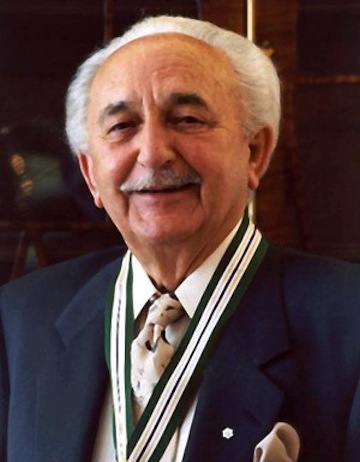
Morris Wosk, z”l, was honoured as a Pioneer Laureate. (photo from orderofbc.gov.bc.ca)

Also part of the festivities, in a belated celebration of the hall’s 15th anniversary, was the posthumous induction of 10 Pioneer Laureates. Morris Wosk, z”l, who was president of Liberty Investments Ltd. and M.J. Investment Co., as well as co-founder of Wosk’s Ltd., was so honoured for both his business and philanthropic endeavours. Wosk, who passed away in 2002, “played a significant role in the growth and development of Vancouver” and was a “revered mentor to the next generation of businesspeople.”

The gala included speeches by supporters and representatives of JABC and presentations by some young achievers. There were brief video biographies for each laureate being inducted, and the Hall of Famers spoke with moderator Greg D’Avignon, president and CEO of the Business Council of British Columbia. In that conversation, Diamond pointed to the importance in leadership of building “relationships, trust,” and of being “honourable with the people who work with you, not for you.”

One of the most satisfying aspects of his business at this point, he said, is the people who are running it. “We have family members, we have a team…. I’ll be listening to various meetings and I’m in the background but, if I wasn’t there, what the family and the team has built is that my company will continue without me.”

He said of this legacy, which includes the Diamond Foundation, in addition to the businesses, “You can’t buy that feeling that I have when I look at my plants, when I look at the buildings, and that we’re capable of doing things like this,” he said, referring to supporting JABC and “giving back” to community in general.

The JABC write-up highlights the foundation, which Diamond “set up with his late father, Jack Diamond, in 1984 as a vehicle for his philanthropic aspirations. Since inception, the Diamond Foundation, funded solely by Gordon and his companies, has made donations to hospitals, schools, the arts and other public and charitable causes.”

For more on JABC’s laureates, visit businesslaureatesbc.org.

Local kids join in the Chidon

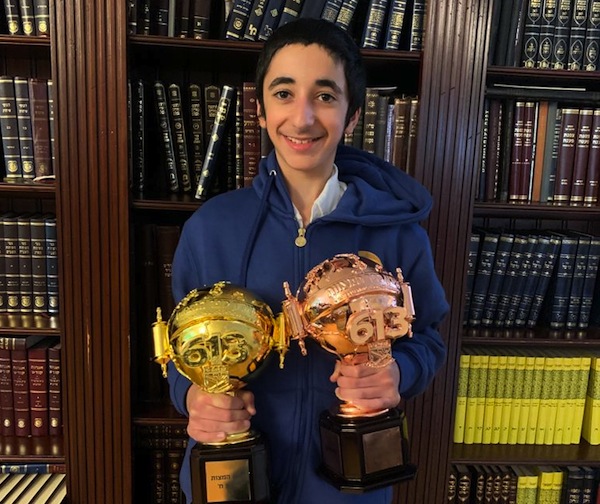
Levi Bitton (photo from Vancouver Tzivos Hashem)

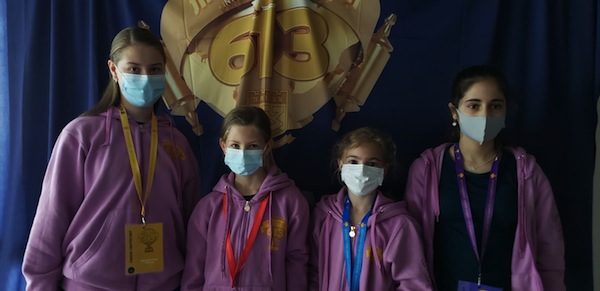
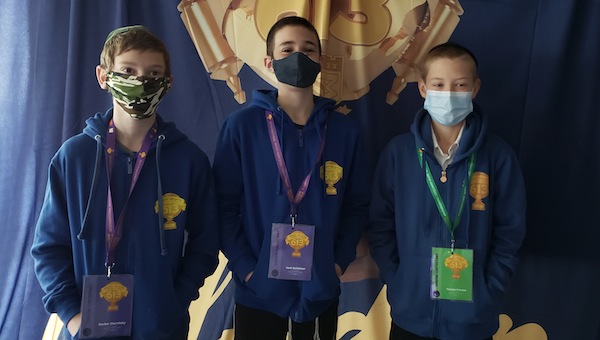
The International Chidon boasts 5,000 participants from around the world and, this year, there were eight participants from Vancouver: Levi Bitton (Grade 8); Liba Baitelman (Grade 4); Yanki Baitelman (Grade 6); Menucha Prinsloo (Grade 8); Shoshana Prinsloo (Grade 5); Yonatan Prinsloo (Grade 7); Miriam Ora Yeshayahu (Grade 6); and Dovber Zhornitsky (Grade 6).

Tzivos Hashem is an international educational program for Jewish children ages 3-13, founded in 1980 by the Lubavitcher Rebbe, Menachem Mendel Schneerson. It focuses on teaching kids about kindness, good deeds and refining their character to become better people and more effective influencers in our community. The program’s goal is to increase Jewish identity and provide children with inspiring and immersive Chassidic Jewish learning through fun, informal activities.

The Vancouver chapter of Tzivos Hashem was established in 2017 as part of Lubavitch BC’s outreach activities and now has approximately 45 children registered in the Sunday morning program. The biggest event of the year and the most highly anticipated part of the program is the Chidon, usually held during a Shabbaton in New York, but virtual this year because of COVID. This event highlights the advanced knowledge and understanding of all 613 mitzvot (commandments) of the Torah, as codified by Maimonides. Kids from around the world compete, and this year’s Chidon took place on May 23. Each of the Metro Vancouver students won a plaque (indicating a grade of more than 80% on the final test) and Levi had the distinction of winning a gold trophy for his grade. He was tested on the fifth book of the Torah, and had the highest mark internationally.

photo - Left to right: Menucha Prinsloo, Shoshana Prinsloo, Liba Baitelman and Miriam Ora Yeshayahu
Left to right: Menucha Prinsloo, Shoshana Prinsloo, Liba Baitelman and Miriam Ora Yeshayahu. (photo from Vancouver Tzivos Hashem)

Riki Oirechman, principal of Tzivos Hashem Vancouver and the local Chidon coordinator, said: “The most important thing is that the kids gain a lot of knowledge. By learning the 613 mitzvot in depth, they gain a deep appreciation and understanding of all the mitzvot, resulting in an increased excitement for, and commitment to, fulfilling them. They work super hard and really commit themselves to fulfilling the Rebbe’s direction and vision.”

Oirechman explained that all the kids in the program study and complete the five books of Torah and master the 613 mitzvot over five years. The Tzivos Hashem program uses the Yahadus curriculum created by the Living Lessons Foundation in memory of Sarah Rohr. It’s a series of textbooks explaining each mitzvah, its source in the Torah and its details.

To participate in the Chidon, students must pass multiple tests. If a child gets a 70% average, they are eligible to join the Chidon Shabbaton. The child with the highest mark in their class gets to represent their class and school at the Chidon competition. On the weekend of the Chidon, the international participants take the final test, which includes everything they learned during the year. Winners receive certificates, plaques, medals and trophies.

photo - Left to right: Dovber Zhornitsky, Yanki Baitelman and Yonatan Prinsloo
Left to right: Dovber Zhornitsky, Yanki Baitelman and Yonatan Prinsloo. (photo from Vancouver Tzivos Hashem)

“The Chidon includes not only the incredible game show competition, but also an exciting award ceremony. This year, over 100,000 people watched from around the world,” said Oirechman. The Chidon started in 2014 with 54 finalists and eight staff and has grown to 2,414 finalists and 375 staff this year.

Local supporters of the program include founders of the Vancouver Tzivos Hashem chapter, Rabbi Shmulik Yeshayahu of the Kollel and Rabbi Dovid Rosenfeld of Chabad Lubavitch of BC, as well as a grant from the Jewish Federation of Greater Vancouver and local community donors.

For more information about the Vancouver Tzivos Hashem program, email tzivoshashemvancouver@gmail.com or visit lubavitchbc.com/tzivoshashem.

Shelley Civkin is a happily retired librarian and communications officer. For 17 years, she wrote a weekly book review column for the Richmond Review. She’s currently a freelance writer and volunteer, including with Chabad Richmond.

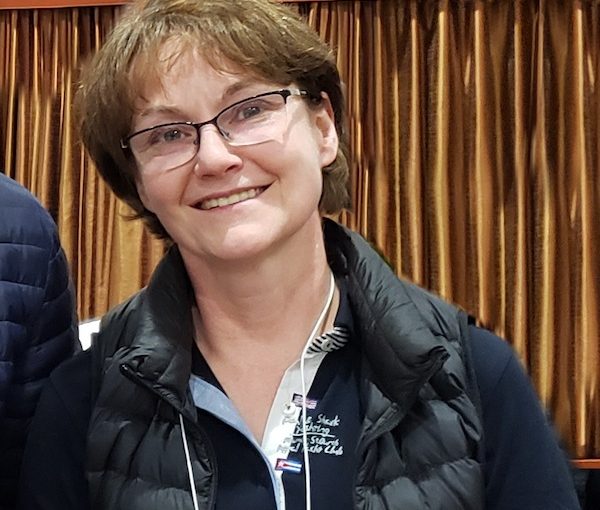
Russian logic game popular

Irina Zilberstein (photo from Irina Zilberstein)

Many people love the TV show Jeopardy!, which can also be played as a board game and online. There is a variation of it in Russia, which developed independently from the American version. It, too, is hugely popular, not only on television, but there are Chto, Gde, Kogda (What, Where, When) clubs all over the country, and around the world – including here in Vancouver.

Chto, Gde, Kogda is a game played by teams of five players and a captain,” explained Irina Zilberstein, president of the Vancouver club. “It was invented in the former USSR in the 1970s. Unlike other brain games, which often require lots of factual knowledge, this is a logic game, where a Grade 12 general knowledge of the world plus logic skills are sufficient to play.”

According to Zilberstein, during a game, several teams of six players compete with one another and with the audience. When a question is presented to a team, they have 60 seconds to discuss the possible answers among themselves before they voice the one response they all agreed upon.

“The televised show was very popular in Russia,” said Zilberstein. “In order to get on a team for the televised show, students started university clubs to practise for auditions.… When the USSR fell apart, many people missed the game. It continues on TV in Russia in its original format, but, here, people began creating their own Chto, Gde, Kogda clubs, where they played in tournaments against each other rather than against the audience.”

The Vancouver club was born 15 years ago. Populated by immigrants from the former Soviet Union and played exclusively in Russian, it grew slowly. “At first, we played in community centres, then at UBC, and then we moved to the Perez Centre, as they had a large and readily available space,” said Zilberstein. “For a long time, we had a maximum of five teams, each with six or more players. One of the many challenges, as the club grew, was that crew members brought in their friends, who all wanted to play together. The teams became too large.”

Eventually, the club split into two clubs. “Certain antisemitic attitudes emerged,” Zilberstein recalled. “Some players were mad that Jewish members didn’t want to play on Jewish holidays. The use of a Jewish centre as a meeting location also caused some hostility.”

Zilberstein became the president of the Russian Jewish club. “Our clubs are multi-age, anyone can join. We have teenagers, we have seniors. The game is played in Russian, but several enthusiasts are currently trying to convert it into English. This really helps to attract kids. The English translation and English version of the game are still in pilot stages, with notable leaders in Chicago, New York and San Francisco.”

She also mentioned that the most fascinating games occur when Russian-speaking teenagers, born in North America, participate.

“They consider English their first language and, because of that, they have a unique perspective, which contributes a lot to the teams’ logic and synergy,” she explained. “When they translate the questions in their minds into English, it gives an additional slant to the teams’ problem-solving discussion. The teens’ involvement means that, eventually, they’ll find a way to play in English.”

Zilberstein was proud to say that, right now, there is at least one Chto, Gde, Kogda club in all major Western cities where Russian speakers live, with a heavy concentration in North America, the United Kingdom, Israel and Germany and, of course, in Russia and the former Soviet republics, like Ukraine, Latvia, Uzbekistan and others.

“The biggest Canadian club is in Toronto,” said Zilberstein. “The next one is in Montreal, and the third one is in Vancouver. Most major U.S. cities have a club. The states with larger populations, like California, have 10 to 15 clubs.”

All the teams of all the clubs register with a centralized worldwide governing body, which ranks them internationally. Currently, there are about 51,000 registered teams in the ranking system; this count does not include the teams that play just for fun.

To get a ranking, teams compete. “We have many tournaments of varying sizes,” said Zilberstein. “There are country championships. If your team wins, you get to go to the world championship. There are also big tournaments that are played synchronously internationally, so that teams can compare with each other and get stronger.”

The pandemic has affected the tournament schedules and gatherings, as it has affected most every other aspect of life. “Pre-COVID, we would meet once a week on Sundays and play a tournament,” she said. “Those tournaments were of the online variety. You could register online and then get two or three days to complete the tournament. You had to sign an NDA not to discuss questions online for those days, to accommodate various people’s schedules and time.”

During COVID, they moved the games exclusively online, for safety. “It has actually been a lot of fun,” said Zilberstein. “People from all over the world have joined us for our games via Zoom. After COVID, we will resume playing in person, as that is essential to the cohesive team problem-solving.”

Zilberstein described some of the procedures and how the games work. “Certified question-makers help write the tournaments. There are amazing tournament-makers out there,” she said. “Each tournament usually has 36 to 45 questions, divided into three tours.”

People pay a small fee to participate in the clubs and in tournaments, and part of that money goes towards paying the people who put in the time and effort to create and fact-check the tournament questions.

Zilberstein has enjoyed playing Chto, Gde, Kogda since she was a university student in Russia. In Vancouver, where she has lived since 1999, she works in IT and, in her free time, plays Chto, Gde, Kogda. She also volunteers with JAM, an organization that tries to unite Jewish immigrants for whom English is a second language.

“What is great about this game is that it’s logic-based. No fact memorization is required,” she said. “It’s like gymnastics for your brain, and anyone can play. Often, you only need to know where to start the logical deduction of the question.”

Zilberstein offered an example of a question and its answer. “The question: in many folk stories, tears are compared to gems or semi-precious stones. Russians compare them to pearls; Aztecs to turquoise. What do Lithuanians compare them to? The answer is derived from a following logical progression. Lithuania is on the Baltic Sea. The Baltic Sea is famous for its amber, so the Lithuanian folk tales compare people’s tears to amber.”

She is sure that, as a team game, Chto, Gde, Kogda helps people develop essential life skills. “This involves synergy between team members. I’ve seen teams with superstar individual players, but they don’t have synergy, don’t know how to listen to each other, and end up losing. A big part of creating the synergy is up to the captain. The captain participates in answering the questions, but his or her main job is to make sure the team players listen and build on each other’s ideas rather than contradict each other. A team has to work together to win, and the captain is the key to that victory.”

Zilberstein has been the captain of her team for the past five years.

Anyone who wants to learn more or to participate in the game can contact Zilberstein via email at numbervan2021@gmail.com or visit bc-vancouver.chgk.info. The club also has a Facebook and Instagram presence.

Olga Livshin is a Vancouver freelance writer. She can be reached at olgagodim@gmail.com.

Next step in JCC project

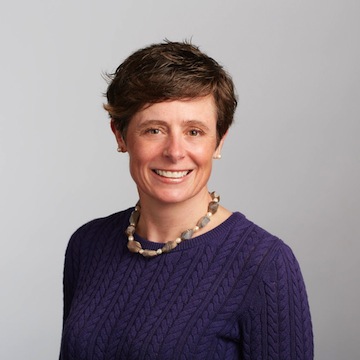
Emily Pritchard has been appointed as director of the upcoming capital campaign for the Jewish Community Centre of Greater Vancouver redevelopment project. She brings close to a decade of experience to the role and has led successful capital fundraising campaigns throughout her career.

“We are delighted to welcome Emily on board,” said Alvin Wasserman, president of the JCC. “Her appointment is an indication of the growing strength and immense potential of this enormous undertaking.”

The redevelopment will be the single biggest project in the history of the local Jewish community and will bring diverse groups of people from across the region together around a central community hub.

photo - Emily Pritchard
Emily Pritchard (photo from Jewish Federation)

“I am thrilled to be working on this project. Not only is this one of the most ambitious capital campaigns in the city, it is an excellent example of how a capital project can pull a community together,” said Pritchard. In previous roles, Pritchard has led successful campaigns for Christ Church Cathedral and Covenant House Vancouver.

Over the past few years, the JCC, Jewish Federation of Greater Vancouver and King David High School have engaged in a strategic process with stakeholders regarding the proposed redevelopment of the JCC site. As part of that process, the organizations agreed to collaborate on fundraising.

“The creation of the capital campaign director role is part of our commitment to building an experienced team of professionals,” explained Alex Cristall, Jewish Federation’s board chair. “The proposed redevelopment of the JCC site is a complex, long-term project that will take commitments from across the community, government and beyond to realize. Ensuring we have Emily in place at this early stage will enable us to be fully prepared when the time comes to launch the capital campaign.”

KDHS co-president Neville Israel said Pritchard is “a critical part of our cross-organizational team.”

“As the redevelopment starts to gather steam,” added school co-president Jackie Cristall Morris, “I am confident that she will help bring to life the exciting opportunities ahead of us.”

Proposed redevelopment

The current 60-year-old JCC facility serves 40,000 people a year, comprising more than 300,000 visits annually. In April 2021, the B.C. government announced $25 million to support the first phase of the redevelopment. This followed Vancouver City Council’s unanimous approval of the rezoning and redevelopment plan for the site. Previously, the provincial government and private donors provided support for the planning stages of the project, which is expected to be completed in two phases.

The first phase will result in a renewed 200,000-square-foot multigenerational community centre on what is currently the JCC parking lot. It will include expanded childcare, seniors’ services, arts and cultural spaces, and amenities for all Vancouver residents. More than 15 not-for-profit organizations are expected to call the centre home, and plans include expanded space for the Vancouver Holocaust Education Centre, a new theatre, and more.

Once that is completed, the redevelopment’s second phase will begin on what is currently the site of the existing JCC building. Central to this is a mixed-use rental housing project, with units expected to be offered at or below market value and be open to everyone. In this phase, with support from private donors and supporters of the school, KDHS will move to a new facility that will give the school ample space to provide academic, athletic and extra-curricular programming.

– Courtesy Jewish Federation of Greater Vancouver