Dancing online and onstage

For this year’s Dancing on the Edge, Alexis Fletcher and Ted Littlemore perform together in a work created and directed by Vanessa Goodman. (photo by Sylvain Senez)

This year’s Dancing on the Edge contemporary dance festival features a lineup of online and onstage live performances, including Tuning, a new duet created and directed by Jewish community member Vanessa Goodman. And Tara Cheyenne Performance is among the artists who will be presenting films (details TBA).

During its July 8-17 run, the festival will present more than 30 shows, with artists from across Canada. On offer will be some specially curated digital programming with recorded performances, premières of dance films, dance discussions, outdoor live performances in the Firehall Arts Centre’s courtyard, for very limited audiences with safety precautions in place, and theatre performances with limited capacity, if permitted, in the centre.

photo - Ted Littlemore
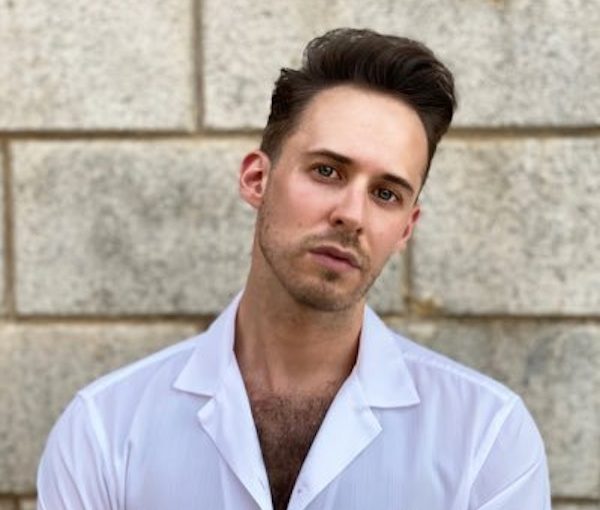
Ted Littlemore (photo by Wendy D Photography)

Commissioned by dance artist Alexis Fletcher, Tuning will be performed by Fletcher, artist in residence at Ballet BC, and Ted Littlemore, aka Mila Dramatic in the drag community. The new work focuses on how people tune to one another. In Tuning, the performers create a live sonic and physical atmosphere using their voices to amplify the conversations of the body.

Festival producer Donna Spencer also announced seven DOTE-commissioned projects, which will première at this year’s festival. Companies/choreographers presenting commissioned works include Ouro Collective, Raven Spirit Dance, Billy Marchenski, Immigrant Lessons, Generous Mess, Rob Kitsos and Meredith Kalaman. “We were thrilled to have offered this incentive, knowing that these commissions have enabled artists to keep creating new work during this challenging time for all,” said Spencer.

Keep an eye on dancingontheedge.org for performance and ticket updates.

– Courtesy Dancing on the Edge

Herzog joined Mosaic

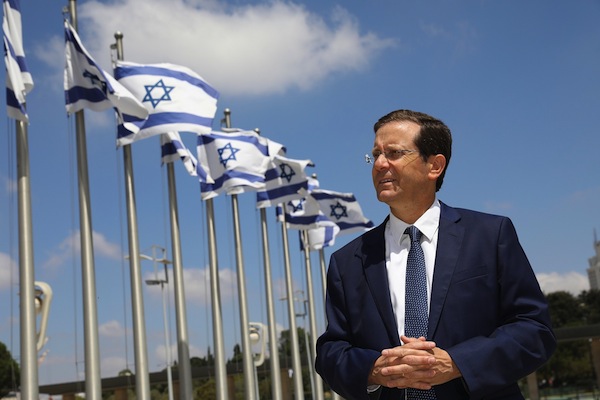
Israeli President-elect Isaac “Bougie” Herzog outside the Knesset. (PR photo)

There was a palpable sense of community, both on a local and an international level, at Schara Tzedeck’s Mosaic 2021: Building a Stronger Jewish Future virtual event May 27.

Rabbi Andrew Rosenblatt and synagogue president Jonathon Leipsic led the festivities through a pre-recorded video in which they drove around town, spoke about the current state of affairs and introduced such guests as the singer Shulem, Rabbi Naftali Schiff and Prof. Lara Aknin of Simon Fraser University.

Israeli President-elect Isaac “Bougie” Herzog was the featured guest. He was voted the 11th president of Israel on June 2, less than a week after addressing the Schara Tzedeck audience. He is the son of former Israeli president Chaim Herzog and the grandson of Rabbi Yitzhak HaLevi Herzog, the first chief rabbi of Ireland and Ashkenazi chief rabbi of Israel from 1936 to 1959.

“I have a huge respect for the Jewish community in Vancouver and for your congregation. It is a thriving, successful and beautiful community. Community is at the heart of Jewish life,” said Herzog, who is also chair of the Jewish Agency for Israel (JAFI). During the pandemic, JAFI has come to the aid, through interest-free loans, of more than 75 Jewish communities around the world that were on the verge of collapsing.

Herzog highlighted the role of religious organizations and spiritual leaders as crucial to post-pandemic life. Also central to community life, he said, is the financial ability to sustain institutions, such as community centres, as well as to involve younger people in leadership positions.

The most important role of JIFA is to create a sense of “connecting” within the Jewish world, said Herzog. Since the creation of Israel, it has welcomed more than four million olim, immigrants. Even during COVID-19, 21,000 olim from 45 countries arrived in Israel.

“Connecting” also involves bringing around 100,000 young people to Israel every year on various programs, sending emissaries to Jewish communities abroad and partnering with Diaspora communities.

“The whole idea is to get to know each other, to respect each other, to understand the pluralistic nature of Jewish life abroad, to understand what it is to be a Jew abroad and the questions of identity that are faced by young people outside Israel,” said Herzog.

He stressed the importance of having young people visit Israel. It is also imperative, he said, to “bring the truth”; that is, to counter false information about Israel.

Herzog, who has ties to Canada, once visited the University of British Columbia to meet with its leadership. In such meetings, his objective is to make sure “the true picture of Israel is told. You can criticize Israeli policy just like you criticize Canadian policy – that has nothing to do with the inherent right to the Jewish people for their own self-determination.” In general, he noted, “Once people know the facts, they have a stronger affinity with one another.”

He concluded, “I believe there is something metaphysical in being Jewish. That is, we feel an affinity – a Jew from Vancouver and myself could land together anywhere and bond immediately, because we feel like brothers and sisters.”

Herzog has family in Toronto. His uncle, Yaacov Herzog, was the Israeli ambassador to Canada from 1960 to 1963 and, while here, participated in a well-known debate with British historian Arnold J. Toynbee.

Shulem Lemmer, better known as Shulem, was the first guest to appear during the Mosaic evening, and he led the audience from his home in New Jersey through a couple of Jewish standards. Shulem was the first Charedi Jew to sign a contract with a leading music label, Universal Music Group, under its Decca Gold imprint, in 2018.

London-based Schiff, the founder and chief executive officer of Jewish Futures, spoke about the GIFT (Give It Forward Today) initiative, which he started in 2004. It was designed to spark a culture of giving between individuals and communal organizations, and it provides volunteering opportunities for young people.

Aknin, whose research interests include prosocial behaviour, happiness, social relationships, altruism, money, social mobility and inequality, rounded out the event.

Sam Margolis has written for the Globe and Mail, the National Post, UPI and MSNBC.

CHW’s Brunch with Bakan

Joel Bakan spoke at a CHW Vancouver Book Club event May 30. (photo from thecorporation.com)

The Canadian Hadassah-WIZO (CHW) Vancouver Book Club hosted a far-reaching 90-minute discussion with author, filmmaker, musician and University of British Columbia law professor Joel Bakan on May 30. Moderating the event, entitled Brunch with Bakan, was Toronto-based writer (and former Vancouverite) Adam Elliot Segal.

Bakan’s widely acclaimed 2004 book The Corporation: The Pathological Pursuit of Profit and Power explored the formation and behaviours of modern-day industrial behemoths. It was later turned into an award-winning film. His new book, The New Corporation: How “Good” Corporations are Bad for Democracy, released in 2020, also has a film attached to it – The New Corporation: The Unfortunately Necessary Sequel, which Bakan co-directed with Jennifer Abbott.

In the CHW event, Bakan shared tidbits about his upbringing, first in East Lansing, Mich., then moving to Vancouver at age 11. “I was a very young draft dodger,” he recalled, as his parents decided to move north at the height of the Vietnam War.

“Family and Judaism have been two of the pillars of my life,” he said, recounting how much of his current activism could be traced to his immigrant grandparents.

“Jewish people, by virtue of their history, understand persecution, they understand injustice. They haven’t had a choice but to understand injustice. Injustice has always been in their face. It’s no coincidence that Jewish people were leaders in the civil rights, labour and other movements,” said Bakan.

“Jewish people have always had an activist sensibility and I think it’s rooted, not only in that history, but in the ethics of the religion – chief among them is tikkun olam, that we have a duty to repair the world, which is very much a duty I take seriously,” he added.

In his recent book, which moderator Segal called a “tour de force” and “meticulously researched,” Bakan tackles such subjects as deregulation, the aviation industry and what he describes as the destructive dependence on technology. In it, he interviews not only influential legal and economic scholars but also references pop culture to explain more difficult concepts.

“I wanted the book to be readable,” he said. “I am an academic by trade, but I am a writer. I want the reader to feel pulled into a story. In all my writing for a popular audience, I try to get away from the academic notion of laying out the facts and instead lull the reader in by telling some good stories. And, once I have the reader, I try to engage them with some more analytical or informational kinds of things.”

Segal asked about Bakan’s Trump-era trip to the World Economic Forum in Davos, Switzerland, for the recent Corporation documentary project. It turned out to be a coup of sorts for a film crew to be allowed access to the normally secretive meetings of the world’s political and corporate elites in the Swiss Alps.

In this work, Bakan discusses the concept of corporate social responsibility, which, he contends, cannot do nearly enough to combat rising global social and environmental threats. He distinguishes between individuals at the top of corporations and the corporations themselves.

An example of this approach is Lord John Browne, the former chief executive officer of British Petroleum, whom Bakan portrays as a very cultured man and one of the “good guys,” who tried to get his firm to be at the forefront of corporate responsibility. However, the problem is that even the most benign, well-intentioned CEOs are hamstrung by their fiduciary and legal responsibilities to their shareholders, according to Bakan.

“A CEO can go a certain distance in trying to do a better job in terms of social or environmental responsibility, but you can’t go further in that direction in terms of what will be profitable,” said Bakan. “It’s great if corporations try to be a little better, but let us not be deluded into believing that they can go far enough to get us out of the mess we are in, be it the social mess or the environmental mess.”

The conversation turned to sports and the recent failed attempt by Europe’s top soccer clubs to form the Super League. The common thread with other societal issue is the goal of corporations or capitalism to commoditize everything, whether it be water, utilities, education or entertainment. In the case of the Super League, the vested corporate interests behind the initiative were trying to increase profits by “taking the local out of sports.”

“If you put the Toronto Maple Leafs in Dubai, they would make more money,” said Bakan. “The Super League stopped because the people and governments rose up.”

The discussion ended on an uplifting note for the future. Bakan advocated extolling the virtues that our societies value, such as democracy, freedom and equality, to create a world “in which people can flourish, where they can thrive, where they can be free, not just of government restrictions but ill health, hunger and poverty, where they can live lives of meaning and purpose in which their material needs are met.”

The past 40 years have seen corporations as drivers of policy rather than as tools, argues Bakan. “We need to understand that our democracy is what matters and its capacity to serve human flourishing and planetary survival. When we think about our policies, they need to be aimed at how we can use markets and corporations towards those ends – not how they can use us to serve markets and corporations.”

The film version of The New Corporation is available on several streaming services in Canada. As well, the CHW talk is available for anyone who donates $18 to CHW, for which a full tax receipt also will be provided. Visit chw.ca/thenewcorporation to register, or call the CHW Vancouver office at 604-257-5160. CHW supports programs and services for children and women, in healthcare and education, in Israel and Canada.

Sam Margolis has written for the Globe and Mail, the National Post, UPI and MSNBC.

Pride trumps bigotry

Writer Ben M. Freeman (PR photo)

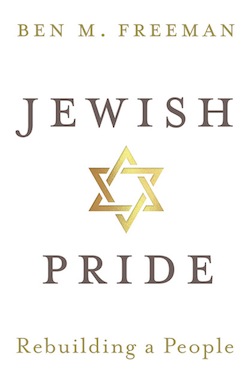
Antisemitism is not a Jewish problem, writes Ben M. Freeman in his new book Jewish Pride. “It is a non-Jewish problem that has an impact upon Jews.”

Freeman is a young Scottish Jew whose book projects some of the lessons of his coming out as a gay man onto the experiences of Jews dealing with the internalizing of others’ expectations and prejudices. He speaks of “passing,” of how a member of some minority groups can identify as a member of the majority.

“There are those who describe the ability of some LGBTQ+ people and some Jews to pass as a ‘privilege,’” he writes. “However, from my experience, this is a specific form of oppression itself.”

Freeman insists that the book is not about antisemitism, but rather its opposite: Jewish pride. But, perhaps by necessity, antisemitism plays a big role.

“Our journey is not about fighting antisemitism. That is the non-Jewish world’s journey,” he writes. “The Jewish journey is one of self-discovery, self-acceptance and self-love – in the name of collective pride.”

In the same way that antisemites have gone some distance to characterize who and what Jews are, anti-Zionists have stolen the word Zionism and redefined it to their perverse definitions, he suggests.

Above all, the fact that so many of the perpetrators of antisemitism are unfamiliar with its history is precisely the reason people can exhibit antisemitism while claiming – often haughtily – to be free of it.

“Due to a lack of education about both the conflict and Jewish history, most people are not armed with the knowledge to understand the connection between anti-Zionist rhetoric and historical antisemitism,” he argues. For example, the recurring libel that Israelis harvest organs from unsuspecting victims is a modern variation on the ancient blood libel – but people ignorant of that catastrophic history do not see their complicity as they perpetuate outlandish allegations. Likewise, the depiction of Israel as a unique embodiment of evil in the world mirrors the ancient projection on Jewish people of society’s fears and false narratives of evildoing.

He discusses how the International Holocaust Remembrance Alliance’s Working Definition of Antisemitism has led to a whole new wave of arguments around what is and is not anti-Jewish bigotry.

The British sociologist David Hirsh created the “Livingstone Formulation,” named after the former mayor of London, Ken Livingstone. It encapsulates the pretzel logic in which expressions of concern about antisemitism are met with a refusal to engage and a counter-accusation that the charge of antisemitism is made up as a conspiracy to silence legitimate criticism of Israel, as a “weaponization of antisemitism for political ends.”

This was in clear view during the spate of overt antisemitism that engulfed the Labour Party in the U.K. under the leadership of Jeremy Corbyn. Concerns about rampant Jew-baiting and unconcealed antisemitism were, Freeman writes, routinely dismissed as a “smear campaign against Jeremy.” It was, in short, bullies crying that they are being bullied.

image - Jewish Pride book coverFreeman points out the core problem for Jews in the evolving interpretations of hierarchical discrimination.

“There is a view of racism that suggests it is prejudice plus power, which implies that only those in positions of power over others can be racist,” he writes. “This definition leads to the notion that most forms of racism and prejudice are ‘punching down’ and that only marginalized groups with less or no power are being oppressed. While this experience is true for certain communities, this specific definition of racism, combined with exaggerated antisemitic perceptions of Jewish power and privilege, can be particularly dangerous for Jews. It thus lends to the erasure of the Jewish experience and of antisemitism as a legitimate form of prejudice. It can also allow those on the left – and some marginalized groups – to actively target us as representatives of elite power structures.”

Freeman’s core message is that Jews, like LGBTQ+ people, need to overcome the negative programming with which they are bombarded by the larger world.

“Jewish people have been in a dysfunctional relationship with the non-Jewish world for over 2,000 years,” he writes. “To be accepted, we have tried, over and over again, to change who we are.… In our thousands of years of history, has this sacrifice ever worked? No…. This cycle has to stop. The way to stop this abusive, destructive and exhausting cycle is to turn to ourselves for that acceptance and love.”

One might have hoped that a book on this subject would glance at the remarkable reversal of homophobia in most parts of the Western world in recent years, how that progress was achieved and how the lessons from that experience might be repurposed to fight antisemitism. But that, perhaps, is a future tome for Freeman or someone else to undertake.

Push back against antisemitism

The last three weeks or so have been a trying time for the Jewish community both in and out of Israel.

An 11-day onslaught of terrorist missiles sent thousands to bomb shelters or to their building stairways while the Iron Dome took down 90% of the missiles from the sky. Some got past, however, and 11 Israelis, Jewish and not, died. The loss of innocent life – both Palestinian and Israeli – is heartbreaking.

In the Diaspora, we hoped that a tense political situation would not turn into something worse. When it did, we watched the videos of missiles launched, of buildings hit, of funerals held – and of a country protecting itself and its people.

We then braced for the public opinion backlash. While Israel defended itself from more than 4,000 missiles fired from civilian neighbourhoods into civilian neighbourhoods, we were told by news outlets and celebrities on talk shows and social media that Israel’s actions – in which it went to extreme lengths to target only terrorist assets – were unjust.

I believe that Israel has a right to defend itself. I believe that Israel has a place in the Middle East, and I see it increasingly accepted by its neighbours. I believe Israel has much to offer the world.

Zionist is not a dirty word. I am an unapologetic Zionist. I stand with Israel. I believe in our people’s history, collectivity, peoplehood and right to self-determination.

Grievances with government policy do not give licence to question Israel’s right to exist. I do not believe that anti-Israel equals pro-Palestinian; if it did, then those burning Israeli flags in the streets would be calling for peace, or for a two-state solution, not to “globalize the intifada.”

In Gaza, Hamas – a listed terrorist entity in Canada, the United Kingdom, the United States and the European Union – remains a barrier to peace. I believe Palestinians deserve better. I believe that Palestinians are entitled to equal rights and to self-determination. This is not at odds with my Zionism.

I believe that anti-Zionism, as defined by the International Legal Forum as “the prejudice against the Jewish movement for self-determination and the right of the Jewish people to a homeland in the state of Israel,” can itself be antisemitic and create a climate that allows antisemitism to fester.

Across the world, we are witnessing a horrific surge in antisemitism in connection with the conflict. In the United States, Jews have been chased down and beaten. In the United Kingdom, there were chants to “rape their [Jewish] daughters” and antisemitic incidents have risen almost 500%.

Canada is not immune. Recently, in Montreal, peaceful pro-Israel demonstrators were pelted with rocks. In May, Toronto experienced a 500% spike in antisemitic incidents compared to last year. Nazi symbols were spotted at anti-Israel demonstrations across the country, including in

aOttawa and London. In Vancouver, we saw a Jewish business owner being harassed and threatened, and an increase in hateful posters and graffiti. The recent spate of antisemitism has also spread online. There are numerous incidents of Jewish students bullied, businesses targeted, and many others harassed.

While my phone explodes with messages from family and friends asking how to respond to hateful social media posts and vicious videos and memes, it is easy to feel cornered. It is easy to assume that public opinion equals the right opinion, but a simple understanding of history reminds us that it does not.

We must speak out and push back against this rising tide of antisemitism.

We know that what starts with the Jews never ends with Jews. Combating antisemitism is not only about protecting Jews but also about protecting the very fabric of Canadian society. Thousands across Canada are joining the Centre for Israel and Jewish Affairs (CIJA) in calling for the federal government to convene an emergency summit on antisemitism – a forum to discuss enhancements to community security, education for youth about Jewish history, suffering and triumphs, and a Canada-wide campaign for social media literacy. Join our call to action at fightit.ca.

Neither Israel nor its supporters are perfect. Nobody is. The disproportionate criticism toward the Jewish state is unwarranted. Israel must, and will, stand by its principles, which are – not coincidentally – those same principles that gave rise to Western societies. As long as it does, I will stand with Israel, and you should, too.

Judy Zelikovitz is vice-president, university and local partner services, Centre for Israel and Jewish Affairs (CIJA).

Balancing our wants and needs

It’s warm out! My kids and I are longing to be outside all the time – but we can’t. Not only is there still remote school, work and other obligations, but our neighbourhood is loud with construction noise. It’s hard to play in the yard when a table saw is screaming through stonework next door. It’s also a constant social-distancing game. Our corner lot is busy. People walk on the sidewalks on two sides, and construction workers on a third.

Some might respond with, “Well, move to the country, why don’t you?!” When we bought our house, it wasn’t so crowded, nor near to so much construction. We’ve made a life here. Moving requires a lot of upheaval. We want to keep our kids in the same school, too.

Like most things, we all must balance our desires and wants (for quiet, for more space, etc.) with our needs (relative safety, proximity to the basics like healthcare, school, work, groceries and a Jewish community). This balancing act is deeply personal. It’s not obvious from the outside what will work best to resolve this, and it’s not always clear “from the inside” either.

In my Talmud study recently in Tractate Yoma, I’ve been learning about how the high priest was to do the rituals of atonement on Yom Kippur on behalf of the Jewish people. It’s a series of very precise, concrete rituals. While deep meaning is assigned to some of these steps, the rabbis mostly want to parse what should be done to make the ritual work effective, as compared to making it invalid. They indicate that, if the high priest does it wrong, a year’s worth of sin remains for the entire Jewish people.

This kind of detailed ritual and accounting sounds like an enormous burden. The Temple high priest must have been under a lot of pressure! After all, when you consider the fate of Nadav and Avihu in Leviticus 10:1, who present “strange fire” as an offering to G-d and die. Or, if you consider Korach, who rises up against Moses – he and his buddies Dathan and Abiram and their families are destroyed when they rebel. In Numbers 16, the ground bursts open and swallows them up. Doing things wrong or inappropriately has consequences.

Some see that our tradition offers us a lot of fearmongering. There are those who worry that if they do things wrong – Jewishly, professionally, or other life choices – they will be literally “struck down.” Others don’t take any of it seriously and, as a result, their inability to abide by norms – public health orders, religious rules, societal ones, professional ones, etc. – results in a lot of problems for the rest of society.

What does this mean? If we turn it around and look for the gifts around us, instead of the potential hazards, perhaps things clear up and seem better. At least, searching for the gifts helps me cope.

We caught that upside recently – the gift, at 11:30 a.m. on a weekday, when, for whatever reason, the saws next door were quiet. The weather was sunny and cool. My twins stopped fighting. I looked up from the porch to find them in the yard, playing an ad hoc game of badminton, while keeping the dog occupied with her ball instead of fetching (and dismantling) the shuttlecock.

As warmer weather and, hopefully, healthier times are ahead, we have so many positive opportunities. It’s a rare moment where we can actually make personal, religious, social or political changes that might have seemed impossible before. Don’t get me wrong. There are definitely many pandemic moments when I’ve been caught in the detailed burdens or negativity – anxiety and fearmongering – struggling to see the good.

However, watching my kids laugh and chatter as they swung around their rackets, I was reminded of how lucky most of us actually are. Having a home, food and educational access, never mind green space, are great luxuries right now. Further, having a path forward, due to the COVID vaccines, also is a gift. Nobody has done everything right and, in the days of the Temple in Jerusalem, the high priest’s rituals served to help everyone process those mistakes, while we have different paths towards course correction and self-improvement today.

It’s important to recognize the flipside, which is that we haven’t done everything wrong, either. The warm and sunny days ahead can give us a bit of a break. It’s a window into whatever post-pandemic future lies ahead. Just as the warm weather provides us a bit of respite, so, too, do Jewish texts, which help us process our mistakes and concerns, balancing them with the joys, too.

Leonard Cohen’s “Hallelujah,” based on Psalm 150, reminds us that the Temple was not just a place for sin offerings. Psalm 150 is filled with music, instruments and happy expression, often in relief after making those Temple offerings. According to the Talmud, huge groups sang Hallel as part of their Passover lamb sacrifice. Their observance made the Temple Mount ring with communal song.

Sometimes, finishing the difficult rituals and processing our experiences and the anxiety can put the noise and the stress behind us. The exercise can offer us a chance to bask in the sunshine and the music. Let’s all hope for that gift of laughter, music and thanks, as we celebrate Canada’s short summer season and lean towards the light.

Joanne Seiff has written regularly for CBC Manitoba and various Jewish publications. She is the author of three books, including From the Outside In: Jewish Post Columns 2015-2016, a collection of essays available for digital download or as a paperback from Amazon. Check her out on Instagram @yrnspinner or at joanneseiff.blogspot.com.

Israel during terror attacks

Between May 13 and May 21, Adina Horwich, who made aliyah from Montreal in 1975, kept a blog of what was happening recently in Israel during Operation Guardian of the Walls, or Shomer HaChomot. Below are excerpts from her blog, which can be read in its entirety, along with more recent entries about everyday life in Israel, at jewishpostandnews.ca.

May 13

I write from my humble apartment in Jerusalem’s East Talpiot (Armon Hanatziv) neighbourhood. We sure have had our share of troubles, some stabbings and terror attacks in recent years, which have resulted in a number of fatalities. Surrounding us are three not-exactly-friendly Arab villages: Jabel el Mukaber, Tzur Baher and Um Lissun. My place is a mere five minutes’ walk from them.

Late Monday afternoon, I heard a siren wailing. As that’s a regular occurrence around here, I didn’t pay it any mind. Police frequently patrol the area, so I wasn’t alarmed. After it persisted … I decided to sneak a quick peek at the TV. On the upper right corner of the screen, Home Front Command ran a list of cities, warning residents that they were at that very moment being fired upon. Jerusalem appeared.

My building, built in the ’70s, has no proper communal bomb shelter. From my experiences in 2014 with Tzuk Eitan (Operation Protective Edge), while my son was doing reserve duty in Gaza, I knew to calmly open my door and join other neighbours in the stairwell.

I spent the rest of the evening glued to the news of much of the rest of Israel being relentlessly bombarded, including Jaffa, where my daughter resides, and Acco (Acre), where my son-in-law works.

Next morning (Tuesday), I woke to more bad news of overnight shooting and the firing of hundreds of rockets, inflicting great panic, shock, fear, injuries, extensive emotional and material damage on hundreds of innocent civilians, old and young, Arabs and Jews alike.

This whole week I sit comfortably, in surreal, fantasyland silence, yet less than two hours away, my fellow Israelis are running in and out of bomb shelters. Some of the casualties didn’t make it in time, including a female elderly caregiver from India. The TV flashes, blares eyewitness accounts, some with bloodied bodies, of sleepless nights, ambulances unloading the injured, hospital staff describing the nature and seriousness of the victims’ conditions. Sombre announcements of victims’ names.

I want to hear and see everything. The endless analysis offered by a slew of commentators and reporters (including a married couple, parents of an infant), all of whom themselves are in the line of fire and haven’t slept in their own beds for days.

Minute-by-minute dramatic reports, progressively worse and horrific by the hour and day, are too much to process. Graphic images of the riots and vandalism that erupted in the so-called mixed cities, pogrom scenes of burned shuls and their desecrated contents, of the unraveling of the hard-won, good working relations (some even social) woven between the Arab and Jewish sectors are devastating. Invasive footage of shattered and scarred dwellings, peoples’ entire homes in disarray with their owners milling about, lost and disoriented.

The very least I can do is stay tuned and attuned to the plight of thousands around Israel, try to feel their fear, anxiety, pain. The rehabilitation they’ll need to undergo, the post-trauma symptoms that will surely ensue. The stamina and perseverance they’ll need to muster, to brace themselves for chasing the authorities to grant compensation, be it to assess their homes or to evaluate their mental or physical state…. It might take years to even have their claims heard, let alone see any money. Where will they live in the meantime, how do they replace their possessions, clothing, furniture, appliances? How will shopkeepers rebuild their businesses, earn their livings?

I hope they have strong support systems and get all the help they need. I wish them a hefty dose of resilience, of faith and confidence to overcome this tragedy.

May 16

In five hours, we’ll begin the Shavuot holiday…. Advance plans for a long weekend to join my daughter housesitting at a desirable Tel Aviv location were scrapped last Thursday. This daughter is scrounging around for a night or two’s lodging, making the rounds, as she can’t go back to the Jaffa apartment she moved into, just six weeks ago, just yet. I popped out to the local supermarket, in my car, now stripped bare of the Israeli flags that have adorned it since Holocaust Memorial Day…. I was advised to take them off, which I did, reluctantly.

On the car radio, I hear how residents of Ashkelon send their praise, cheer on, salute the Israeli Defence Forces and whoever else in the city is doing their utmost to protect them.

On TV, a reporter visits the maternity ward at Ashkelon’s Barzilai hospital, interviews a woman awaiting the birth of her baby. Will it be amidst rocket fire? The normally high level of anxiety at such a time, absolutely “skyrockets.”

Mass demonstrations against Israel are happening across the globe. Who are these people? Have they any intelligent, informed opinion about this crisis?…

May 20

Talk and more talk of a ceasefire. My foot, in a pig’s eye, fat chance!! So much for the 6 a.m. deadline. That’s been postponed until tomorrow, maybe…. Polls of Ashkelon, Ashdod, Sderot residents show that the majority want this to go on until it’s well and truly over…. Similar findings are reflected among the general Israeli public, who, for a change, have just finally begun to realize, once and for all, how it feels to be under siege, how people of the south have been feeling for 20 years.

The electric company’s workers decide not to enter Gaza to repair damaged or fallen electric lines until, unless the bodies of Shaul Oron and Hadar Goldin are returned….

Vital organs from the Jewish man killed in the Lod lynch are transplanted to four or five recipients; one’s an Arab. The Arab man who rescued a Jewish one being beaten by Arabs visits him in the hospital.

Families band together to cook. Armed with steaming, overflowing pots, they head out to makeshift bases to feed troops in the south. Singers, entertainers visit people huddled in bomb shelters. Morale is, as in hockey terms, “gathering speed.” Things are looking up, even as throughout the day rockets continue to pummel down [from every direction].

May 21

My sleep was disturbed by what sounded like gunfire, but was probably fireworks, set off by “celebrants” of the ceasefire they consider a victory…. How many rockets should be tolerated? It’s a given there will be more…. Hamas is not a sovereign nation, nor a nation at all, but a recognized terror organization that represents nothing and no one, but its own barbaric agenda. Yet, it has garnered so much support from “civilized,” “enlightened” countries, that shower Hamas with financial and moral resources. They’ve engaged us in this savage war on a civilian population for years. Nowhere else in the Western world would this ever be remotely tolerated….

Chazak v’amatz (Be strong and brave) Am Yisrael!

About the (back) cover

image - 2021 Summer issue back coverphoto - Hummingbird in gardenA hummingbird recently paid a visit to my garden while I was enjoying a coffee outside. I wanted this photo to be the one on the back cover of the Summer issue, but, taken with my phone, it just wasn’t a high-enough resolution. So, I went back to a photo I took last spring for that year’s Summer issue but didn’t use because it felt too cheerful at that point in the pandemic. Now, however, with vaccinations well underway and restrictions soon to start easing in the province, a little colour doesn’t seem out of place.

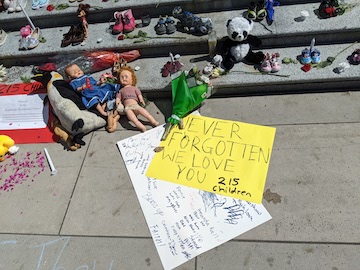
שרידי 215 ילדים נמצאו בבית ספר

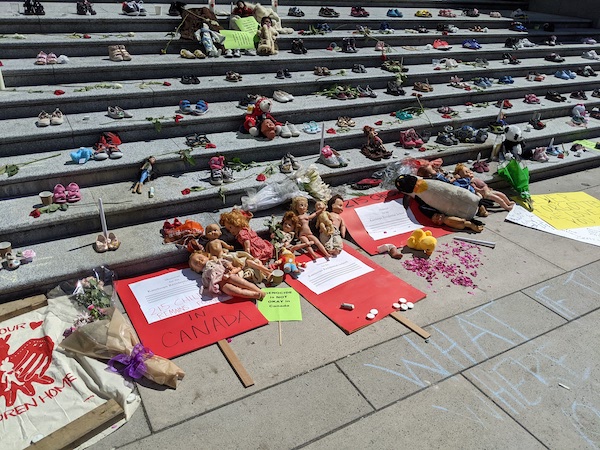
בובות ונעליים לזכר הקורבנות במדרגות שליד הגלריה לאמנות בוונקובר
(רוני רחמני)

שרידיהם של 215 ילדים, חלקם היו בגיל שלוש בלבד, נמצאו בפרובינציית בריטיש קולומביה, במקום שבו ניצב בעבר בית ספר גדול. במוסד זה קובצו בני קהילות האינדיאנים שהופרדו בכוח ממשפחותיהם ברחבי המדינה – במטרה להטמיע אותם באוכלוסייה הקנדית הכללית. ההודעה על מציאת השרידים זכתה לפרסומים נרחבים בכל העולם, אחרי שהם התגלו לפני כשבועיים בסיוע מכ”ם חודר-קרקע. מומחים אומרים כי גופות נוספות עשויות להימצא, משום שבאותו האזור נותרו שטחים נוספים שהיו שייכים לבית הספר ושטרם נערך בהם חיפוש.

התגלית הקשה שנחשפה היא עדות לזוועות שחוללו ממשלת קנדה והכנסייה הקתולית לעשרות אלפי תלמידים, שהשתייכו לקהילות האינדיאנים מאז המאה ה-19 ועד לשנות ה-70 של המאה העשרים. למעלה מ-150 אלף ילדים שהשתייכו לקהילות האלה נדרשו באותן שנים לעזוב את משפחותיהם ולעבור ללמוד בפנימיות נוצריות במימון המדינה הקנדית. זאת, כחלק מתוכנית שנועדה להטמיע אותם בחברה הכללית. הילדים אולצו להמיר את דתם לנצרות, לא הותר להם לדבר בשפת אבותיהם, ורבים מהם ספגו מכות והתעללויות מילוליות ופיזיות, בכלל זה התעללויות מיניות מצד מורים. לפי טענות עד 6,000 מהילדים מתו בבתי הספר האלה.

בית הספר שבאדמתו נמצאו השרידים שהוכרזו לפני כשבועיים שוכן ליד העיר קמלופס שבקולומביה הבריטית, והוא היה הגדול מבין 139 בתי הספר המיוחדים שהוקמו בשלהי המאה ה-19 לצורך הטמעת בני האינדיאנים. בכל זמן נתון שהו בו עד 500 תלמידים. הוא הופעל על-ידי הכנסייה הקתולית בשם ממשלת קנדה מ-1890 ועד שנסגר ב-1969.

פרסום הפרשה עורר תגובות נרגשות במערכת הפוליטית הקנדית. ראש ממשלת קנדה, ג’סטין טרודו, מסר כי הגילוי, שאותו הגדיר “מטריד”, שובר את לבו: “זו תזכורת כואבת לפרק אפל ומביש בתולדות ארצנו”, אמר טרודו. ראש ממשלת בריטיש קולומביה, ג’ון הורגן, הצהיר כי הוא “נחרד ושבור לב” בעקבות הגילוי של שרידי הגופות, וכינה זאת “טרגדיה בממדים שאי-אפשר לדמיין”. הוא אמר כי הגילוי הזה מדגיש את האלימות וההשלכות הקשות של הפנימיות שבהן שוכנו בני האינדיאנים.

ממשלת קנדה כבר התנצלה כבר באופן רשמי בשנת 2008 על הסבל הקשה שחוו בני האינדיאנים בבתי הספר המיוחדים שהמדינה הקימה לצורך הטמעתם, והודתה כי ההתעללויות הפיזיות והמיניות בבתי הספר מהסוג הזה היו תופעה נפוצה. רבים מהתלמידים לשעבר העידו כי הוכו רק משום שדיברו את שפת אבותיהם, ורבים מהם גם איבדו קשר עם הוריהם והתנתקו ממנהגיהם. מנהיגי קהילות האינדיאנים טענו לאורך השנים כי מסורת ההתעללויות והבידוד של הילדים האלה, היא הסיבה הראשית לשיעורים הגבוהים של עוני, אלימות, התאבדויות והתמכרויות לאלכוהול ולסמים בקהילותיהם.

בדוח מיוחד שפורסם לפני יותר מחמש שנים על ידי ועדת האמת והפיוס, נקבע כי לפחות 3,200 ילדים מתו כשהם סובלים מהתעללות והזנחה. לא ברור אם הילדים ששרידיהם נמצאו כעת נמנים עם הילדים שמותם כבר תועד. או שקרוב לוודאי שמציאת שדירי הילדים פירושה המעשי הוא שמספר המתים הרשמי גדול ממה שהיה ידוע עד כה. הטכנולוגיות החדישות שפותחו בשנים האחרונות מסייעות כעת בחיפושים אחרי קורבנות נוספים, ומנהלי החיפושים האלה מקווים שהתשובות שיעלו בהם יעזרו למשפחות לסגור מעגל.

ממשלת קנדה כבר הסכימה בעבר לפצות את התלמידים של קהילות האינדיאנים שהופרדו ממשפחותיהם, על השנים שבהן אולצו לשהות בפנימיות האפלות. לאחר שוועדת האמת והפיוס הגדירה את מה שעברו התלמידים האינדיאנים רצח עם תרבותי, החליטה הממשלה להקציב לפיצוי הילדים והמשפחות שלהם קרוב לשני מיליארד דולר.