Skip to content
  • Home
  • Subscribe / donate
  • Events calendar
  • Business Directory
  • FAQ
  • News
    • Local
    • National
    • Israel
    • World
    • עניין בחדשות
      A roundup of news in Canada and further afield, in Hebrew.
  • Opinion
    • From the JI
    • Op-Ed
  • Arts & Culture
    • Performing Arts
    • Music
    • Books
    • Visual Arts
    • TV & Film
  • Life
    • Celebrating the Holidays
    • Travel
    • The Daily Snooze
      Cartoons by Jacob Samuel
    • Mystery Photo
      Help the JI and JMABC fill in the gaps in our archives.
  • Community Links
    • Organizations, Etc.
    • Other News Sources & Blogs
  • JI Chai Celebration
  • JI@88! video

Recent Posts

  • Legal help for students
  • Revisiting myth of Lilith
  • Wrong person rebuked
  • Canada’s mixed messages
  • Questions for museum
  • Symposium on antizionism
  • Making soccer political
  • CJPAC lauds Pulver’s impact
  • City recognizes Vrba’s legacy  
  • Organ donation saves lives
  • Theodore’s March premiere
  • A healing Shabbaton
  • Supplying healthy food
  • A chime of metal tags
  • Yellowknife seder a first
  • Ishai energizes, unifies
  • A Lag b’Omer to remember
  • Expanding the healing
  • Hannah Senesh – a unique hero
  • Community milestones … May 2026
  • Sharing her testimony
  • Fall fight takes leap forward
  • The balancing of rights
  • Multiple Tony n’ Tina roles
  • Stories of trauma, resilience
  • Celebrate our culture
  • A responsibility to help
  • What wellness means at JCC
  • Together in mourning
  • Downhill after Trump?
  • Birth control even easier now
  • Eco-Sisters mentorship
  • Unexpected discoveries
  • Study’s results hopeful
  • Bad behaviour affects us all
  • Thankful for the police

Archives

Follow @JewishIndie
image - The CJN - Visit Us Banner - 300x600 - 101625

Tag: Victoria

Up-and-coming pitcher

Up-and-coming pitcher

Jake Finkelstein’s repertoire includes a fastball, curveball and changeup. (photo by Justin Morash)

Pitcher Jake Finkelstein is looking forward to his third season in the Victoria HarbourCats lineup next summer.

Finkelstein, a 2020 King David High School graduate, told the Independent the decision to return to the region was a “no-brainer” and that it “feels great” to be coming back. During his first year with the club in 2023, the HarbourCats took home the WCL North Division title and nearly won the WCL championship. The team was knocked out during the 2024 North Division semifinal series, leaving what Finkelstein described as a “tremendous hunger to win it all” in 2025. 

The HarbourCats are part of the West Coast League, a collegiate baseball circuit that was started in 2005.

“The past two summers I’ve played there have been some of the most fun I’ve had,” said Finkelstein. “One reason why Victoria is such a great place to play is the fans. They create one of the most electric atmospheres in all of summer ball and it’s a privilege to get to play for a city that cares about the team the way Victoria does.”

The left-handed pitcher credits Victoria head coach Todd Haney, a former Montreal Expo, for recruiting not only players who can perform at a high level but who are team players, making it very easy to build relationships during the short WCL summer season. 

photo - Jake Finkelstein has played two summers with the Victoria HarbourCats
Jake Finkelstein has played two summers with the Victoria HarbourCats. (photo by Christian J. Stewart)

“Victoria is also such a great place to play because of the coaching staff. They do a great job of keeping everyone on the same page while making sure we enjoy our summer. The HarbourCats are a team that wins, and I believe that the relationships that the players gain with one another, as well as the coaching staff, are a major reason as to why,” Finkelstein said.

Now spending the academic year at Georgia Gwinnett College (GGC) in Lawrenceville, a suburb northeast of Atlanta, Ga., Finkelstein has also played for Montana State University Billings and Spokane Falls Community College.

The move to GGC was a big decision for Finkelstein. However, after numerous conversations with the GGC coaching staff and some with the players, the lure of suiting up for a college baseball powerhouse ultimately won him over.

“GGC baseball has one of the most knowledgeable coaching staffs in the nation,” said Finkelstein. 

“While winning is a huge part of the program, and our track record proves it, development and unlocking an athlete’s full potential are the top priorities. Everything we do on a day-to-day basis reflects that,” he said.

“Speaking with my now-friend and -teammate Austin Testerman before I decided on GGC, I was able to get a glimpse into the mindset that one must possess and the way one must act to be a GGC Grizzly. This was my selling point. I didn’t know much about the minor ins and outs of the program, but I knew that I was walking into a place where I had a chance to be a part of something special.”

The 22-year-old HarbourCat veteran, whose repertoire includes a fastball, curveball and changeup, sees his biggest strength as being able to throw strikes consistently. A pitcher’s job, he said, is not about simply throwing hard, but getting the ball to “end up wherever you want while making it do weird things.”

That control, coupled with composure, according to Finkelstein, are tremendous assets on the mound.

“Being a pitcher is very stressful and can be very humbling at times,” he acknowledged. “I’ve always noticed that the best pitchers keep the same body language and demeanour no matter what is happening in the game. Even if a home run was just hit off of them, they’re right back at it, throwing strike one to the next guy. That is what I pride myself on and try to embody every time I am on the mound.”

As he continues to hone his craft, Finkelstein would like to finish innings on fewer throws.

“Getting every batter you face out, but throwing five or more pitches to each of them adds up and tires you out. Being able to keep your pitch count down is essential to maintaining longevity on the mound. So, I would say that my biggest facet of pitching that I am working on right now is being able to get hitters out early more consistently,” he said.

Turning professional is Finkelstein’s ultimate goal – whether it be affiliated, independent or overseas baseball. Academically, he is working towards a degree in business management with a minor in finance.  

The HarbourCats are also excited to have Finkelstein back for another summer.

“Jake’s a great kid. First and foremost, he is a quality individual who has been a tremendous teammate and a competitor. He is a pitcher not a thrower, he wants to get hitters out,” said Jim Swanson, the HarbourCats managing partner.  

“He works a good curve that is especially problematic for left-handed hitters and his fastball has more than enough to get guys out,” said Swanson. “He has always played very well for us and been a gamer.”

For Swanson, a game during the 2023 divisional playoffs against the Bellingham Bells stands out. Victoria trailed 6-0 when they brought Finkelstein in and, thanks to his tenacity on the mound, and HarbourCats hitters finding their way around the bases, Victoria came back to win 9-7.

Finkelstein, a college junior, earned academic all-America team accolades at NCAA Division II Montana State University Billings and is a member of Chi Alpha Sigma, the National College Athlete Honour Society. (His sister Leann played collegiate softball for Long Island University Post and Simon Fraser University.)

Last season, Finkelstein made 11 appearances, including nine starts, threw 38.1 innings, struck out 23 and won two games. 

The HarbourCats 2025 home opener is June 6 against the Port Angeles Lefties. 

Sam Margolis has written for the Globe and Mail, the National Post, UPI and MSNBC.

Format ImagePosted on December 13, 2024December 11, 2024Author Sam MargolisCategories LocalTags baseball, HarbourCats, Jake Finkelstein, sports, Victoria
Artist reflects on career

Artist reflects on career

Imre Székely, left, gives his artwork to then-prime minister Jean Chrétien. (photo from szekelygallery.com)

From his hometown of Győr, Hungary, a city halfway between Vienna and Budapest along the Danube River, to his studio in Victoria’s Chinatown, Jewish community member Imre Székely has been creating art for more than five decades, primarily in the linocut/monotype style of printmaking.

Linocut, also known as lino print, is a design carved in relief in linoleum. The art form was popularized in the early part of the 20th century. In monotype, an artist presses ink directly onto a plate. The plate is then pressed against paper to transfer the ink.

photo - As Imre Székely’s approaches 70 years old, he looks back at his career
As Imre Székely’s approaches 70 years old, he looks back at his career. (photo by Kor Gable)

Székely discovered his calling early in life, under the tutelage of Imre Krausz and István Tóvári-Tóth, both distinguished artists in Hungary. However, Hungary in the 1970s and 1980s was no place for anyone whose views differed from those of the regime. 

“The communist regime at the time did not have a role for a forward-thinking, modern artist. There wasn’t much chance of self-actualization,” Székely told the Independent.

Thus, in 1987, he said goodbye to his family and jumped on a westward-bound bus. His first stop was a refugee camp in Austria, then on to France, the Netherlands and, finally, Canada, in 1988. After stops in Winnipeg and Toronto, he set off west where, in 1991, he settled in Victoria, finding the provincial capital to be an ideal spot for his professional and private life. His wife and children joined him shortly after he arrived in British Columbia.

Székely describes himself as a hyper-surrealist artist, who blends “a variety of colours, patterns and shapes that are the spices of life.”

Throughout his career, he has donated his works and given them to people who couldn’t otherwise afford a work of art. He also has presented his artwork to provincial ministers, foreign dignitaries and prime ministers. 

In 1999, for example, he traveled to Rome for a personal audience with Pope John Paul II, to donate his work “Abba Pater” to the Vatican.

In 2001, he showed his gratitude to his adopted homeland by donating his art-deco-styled piece “Canada: Past, Present and Future,” to then-prime minister Jean Chrétien, who accepted it on behalf of the government of Canada.

“This occasion was especially meaningful to me, as it presented a way to express my thanks to Canada for accepting so many refugees to this country with open arms,” said Székely, who has also presented a work to Prime Minister Justin Trudeau. 

“Gifting Justin Trudeau with one of my art pieces was a highlight in my life … this kind of event was impossible in my home country under communist rule,” he told Senior Living Magazine in 2021.

One of the works of which he is most proud, “Hungarian Conquest (Honfoglalás),” was presented to the Hungarian parliament in Budapest. When, in 2010, Pecs, Hungary, was chosen as the European Capital of Culture, Székely provided the city with 31 of his works for a solo exhibition. His hometown Győr’s city hall houses his artwork and he has donated his works locally, to the City of Victoria and to the Hungarian consulate in Vancouver.

photo - Imre Székely at the Vatican in 1999, giving one of his artworks to Pope John Paul II
Imre Székely at the Vatican in 1999, giving one of his artworks to Pope John Paul II. (photo from szekelygallery.com)

At the height of the COVID-19 lockdowns in 2020, retreating to his studio, Székely produced “Satan Sneers,” a work in which, as an artist, he detaches himself from shared circumstances to show pity for the human race as it confronts an undetermined fate.

Székely sent a photo of the work to Dr. Tedros Adhanom Ghebreyesu, director-general of the World Health Organization, in the hope of donating the work. According to Székely, Dr. Tedros (his preferred moniker) liked the piece very much.

“Unfortunately, I couldn’t personally hand it over to him in Geneva at the time because the two-week quarantine was introduced before my departure,” Székely recalled. 

In 2021, the artist created a work entitled “Hope and Genius,” dedicated to Katalin Karikó, the biochemist and researcher at the University of Pennsylvania, who, together with Drew Weissman, took home the 2023 Nobel Prize in medicine for work leading to the discovery of mRNA vaccines to fight COVID-19.

“She deserves lots of thanks and appreciation from us all,” he said. “My work is recognition and homage to her human and scientific greatness.”

At present, Székely is working on several projects, one of which is called “Magical Artificial Intelligence,” a surrealistic piece on what he views as the issue that offers the most positive potential for humanity – and the most danger.

He hopes to donate works to other notable people in the political and business worlds, such as Bill Gates, Kamala Harris and Ernő Rubik, a fellow Hungarian who invented the Rubik’s Cube.

As he approaches his 70th birthday in December, Székely said he feels freer now than at any time in the past, drawing strength from family, friends and art.

“Artistic creation is the outflow of strength, good mood and joy of life. A true artist enjoys his own creative power. Creation is one of the most difficult things in the world, creating from nothing,” he said.

“I am convinced that art and culture will unite the world again. I know that artistic ability can be viewed as a blessing, but it is worthless without creative work and humility.” 

For more on Székely, visit szekelygallery.com. 

Sam Margolis has written for the Globe and Mail, the National Post, UPI and MSNBC.

Format ImagePosted on October 25, 2024October 24, 2024Author Sam MargolisCategories Visual ArtsTags art, COVID-19, immigration, Imre Székely, Linocut, milestones, monotype, painting, pandemic, printmaking, Victoria

A solemn anniversary

The Vancouver and Victoria Jewish communities will each hold a memorial ceremony Oct. 7 to honour and remember the victims of the attacks on Israel a year ago. 

Led by the Rabbinical Association of Vancouver (RAV) and in partnership with the Jewish Federation of Greater Vancouver and many others, an evening event in Vancouver will be an opportunity for people of all ages to come together.

A special gathering for young adults will take place from 6 to 7 p.m., providing a space for reflection and connection. The main ceremony will begin at 7 p.m., and will include what is being described as a poignant tribute led by our community’s rabbis. The location of the event will be emailed upon registration. Register at  jewishvancouver.com/october-7th-memorial.

Following the ceremony, Jewish Family Services will offer “living rooms,” in both Hebrew and English, where attendees can share their thoughts and find comfort. An Israeli sing-along will also take place, with the intention of helping participants find strength in unity and to support one another.

Relatives of Oct. 7 victims will present representative stories of the heroes and victims and organizers are planning interactive elements so participants can actively memorialize. There is an intention to ensure that all the victims’ names, as well as fallen soldiers’ names, can be articulated in the course of the program. 

Politics – local or international – are to be kept out of the program. Elected officials may attend but the focus is on memorializing and honouring the dead.

While Oct. 7 created an unprecedented new world, in many ways, there is a precedent for the sort of memorial event planned, according to Beth Israel’s Rabbi Jonathan Infeld, who is head of RAV.

The Yizkor service will be the template for this commemoration, said Infeld.

“We know that the Yizkor service is something that the synagogue-going Jew can relate to, but we know that not all the members of our community go to synagogue on a regular basis,” he said. “We want to make sure that it works for everyone. Yizkor is the framework, but there will be creative pieces in it as well that will work for everyone in the community.”

As the anniversary approaches, Infeld said the community should be “thinking first and foremost of the memory of those who were murdered in this horrific, horrible terror attack.”

There are 97 hostages still being held in captivity in Gaza of the more than 240 Israelis and others kidnapped by Hamas on Oct. 7. (Four other hostages have been held since 2014/15.)

People need to be reminded of the absolute necessity to support the people of Israel at this moment, and to support fellow Jews here in Canada and around the world against the rise of antisemitism, said Infeld. “We would like to see everyone really rally together and gather together to support each other and to show our support for Israel and the Jewish people, and to comfort each other as well.”

A memorial in Victoria will take place at the same time on Oct. 7, at the Esquimalt Gorge Pavilion. Pre-registration is mandatory at jewishvictoria.ca.

On Sept. 28, as part of Beth Israel’s Selichot service, Rabbi Infeld will lead a conversation with Thomas Hand, whose daughter, Emily, was a hostage in Gaza. Emily, who turned 9 in captivity, was kidnapped along with her friend and the friend’s mother. The two girls were released in November. Hand will talk about the “spiritual, emotional and moral roller coaster” of his daughter’s captivity and eventual freedom.

Posted on September 20, 2024September 18, 2024Author Pat JohnsonCategories LocalTags commemoration, hostages, Israel-Hamas war, Jewish Federation of Greater Vancouver, Jonathan Infeld, memorial, Oct. 7, Rabbinical Association of Vancouver, RAV, terrorism, Vancouver, Victoria, Yizkor
Victoria film fest set to start

Victoria film fest set to start

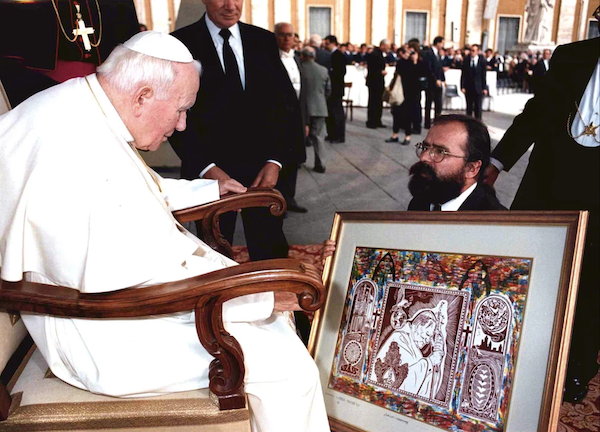
The Latin American and Spanish Film Week returns to Cinecenta, on the campus of the University of Victoria, Sept. 19-22. (photos courtesy Dan Russek)

The Latin American and Spanish Film Week returns to Cinecenta, on the campus of the University of Victoria, from Sept. 19 to 22. Now in its 14th season, this year’s event will offer movies from Argentina, Mexico and Spain, with all screenings taking place at 7 p.m. Each showing will have English subtitles.

The cinematic fiesta is put together by the Hispanic Film Society of Victoria. The society’s mandate is to promote Latin American and Spanish films in the city through the annual film festival. It also aims to further the knowledge and enjoyment of Spanish-language films through cultural and academic events to benefit the community.

Jewish community member Prof. Dan Russek, the organizer of the event, which began in 2010, said, “As part of the UVic faculty and a member of the Hispanic community, I am proud to bring this cultural event to Victoria again. It should interest folks not only from Latin America and Spain but also members of the community at large.

“There is no need to speak Spanish to understand the movies,” Russek added. “They all feature contemporary, relatable stories, and they function as windows to the diverse societies, cultures, histories and politics of the Spanish world. Our mission is to expand the horizons of our audience, and we believe, at the society, that we have achieved this goal again.”

The week will actually start on Sept. 18 at Caffe Fantastico (965 Kings Rd.) at 6 p.m. with a presentation from the society that will feature five local artists, all of whom hail from Latin America. They will discuss their experiences as migrants to Canada, their process of adaptation and their artistic practices.

Cuban pianist Pablo Cardenas, Mexican classical violinist Pablo Diemecke and Mercedes Batiz-Benet, a Mexican writer, theatre director and producer, will start the evening. They will be followed by Cuban trumpeter Miguelito Valdes and Chilean actress and theatre producer Lina de Guevara. The event is free, though audience members are encouraged to purchase food and drinks. 

The first film offering, on Sept. 19, is Totem, a Mexican movie from director Lila Aviles. The family drama focuses on 7-year-old Sol, who bears witness to the preparations of a party in honour of her cancer-stricken father, Tona. 

Totem was Mexico’s entry for best foreign feature for the 2023 Academy Awards. It picked up the Ecumenical Award for Best Film at the 2023 Berlin International Film Festival, and Aviles received an award for best director at the 2023 Jerusalem Film Festival.

Puán, an Argentine-Italian-French-German-Brazilian international co-production, will hit the screen on Sept.20. The 2023 comedy-drama from Maria Alché and Benjamin Naishtat tells the tale of Marcelo, a philosophy professor in Buenos Aires who sees his plans upended upon the arrival of his former colleague, who is based in Germany – the charismatic Rafael. Their conflict is set amid the crisis in Argentina’s education sector.

“The hapless but deeply lovable and tragically self-aware Marcelo needs and deserves a psychological makeover, and Naishtat and Alché are too fond of him to deny him one. How and where it happens is a treat,” Jessica Kiang wrote in Variety.

Lillian Torres’s Mamifera will represent Spain on Sept. 21. The 2024 film tells the story of Lola, who, along with her partner, Bruno, enjoys a happy life until an unexpected pregnancy turns everything upside down. Her previous determination not to be a mother is challenged by social expectations and the inner fears she faces. In a review for the Austin Chronicle, Jessi Cape wrote that the film “tackles an endlessly complicated, often excruciating, sometimes beautiful topic with grace, humour and easily relatable characters.”

The festival concludes Sept. 22 with Bernardo Arsuaga’s 2023 documentary The Michoacán File, which traces the history of Mexican food and the efforts of a group of diplomats, chefs and intellectuals to make the country’s cuisine an Intangible Cultural Heritage of Humanity, an acknowledgement granted by UNESCO. After the film, the public is invited to stay for a conversation and Q&A about Mexican food with Israel Alverez Molina, owner and chef of Victoria’s MaiiZ Nixtamal Eatery and Tortilleria, and Maria Elena Cuervo-Lorens, the author of two cookbooks on Mexican cuisine.

For more information about the Latin American and Spanish Film Week, visit the Hispanic Film Society of Victoria website, hispfilmvic.ca.

Sam Margolis has written for the Globe and Mail, the National Post, UPI and MSNBC.
Format ImagePosted on September 13, 2024September 11, 2024Author Sam MargolisCategories TV & FilmTags culture, Dan Russek, Latin American and Spanish Film Week, movies, Victoria
Emanu-El celebrates its 160th

Emanu-El celebrates its 160th

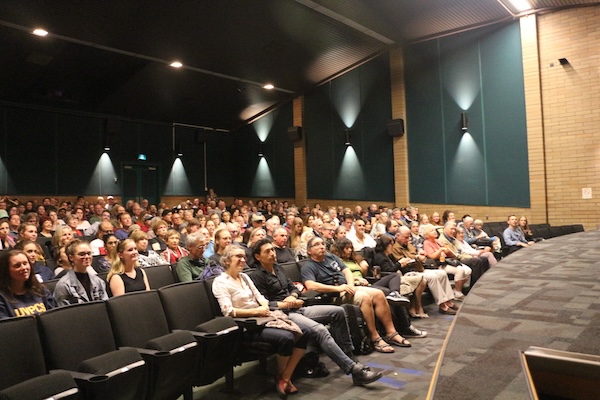
Left to right: Congregation Emanu-El president Ilana Stanger-Ross, MLA Grace Lore, Prof. Richard Kool, Victoria Mayor Marianne Alto, Emanu El’s Rabbi Harry Brechner, MP Laura Collins and MLA Lana Popham on Aug. 18 at the shul’s 160th birthday party. (photo posted on Facebook by Lana Popham)

Victoria’s Congregation Emanu-El, the oldest synagogue on the West Coast and the oldest synagogue still in continuous use in Canada, has been commemorating its 160th anniversary with various events this summer, including an evening concert and an afternoon of poetry, music and food.

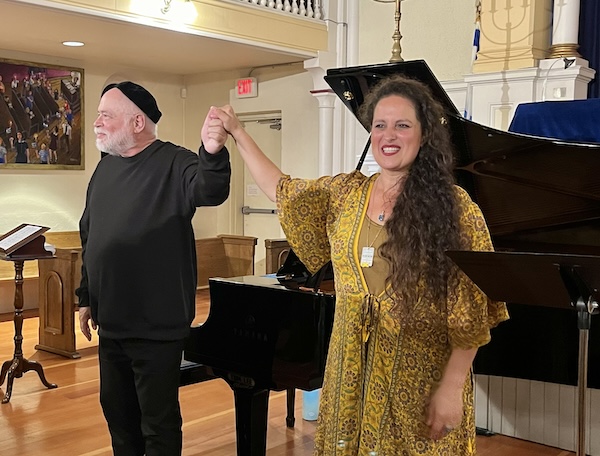
On Aug. 15, Tehila Nini Goldstein, a soprano based in Berlin, performed Ladino, Yiddish, Spanish, Hebrew and Yemeni songs, accompanied by Robert Holliston of the Pacific Opera Victoria and the Victoria Conservatory of Music. Goldstein has won the Tel Aviv Music Academy Singing Competition, received a scholarship from the America Israel Cultural Foundation and taken home a prize in the Liederkranz Foundation Competition in New York.

On Aug. 18, municipal, provincial and federal politicians, as well as representatives from several religious groups, attended an anniversary ceremony, emceed by Richard Kool, a professor of environment and sustainability at Royal Roads University.

photo - On Aug. 15, Tehila Nini Goldstein performed songs in multiple languages, accompanied by Robert Holliston. The event was part of Congregation Emanu-El’s 160th anniversary celebrations
On Aug. 15, Tehila Nini Goldstein performed songs in multiple languages, accompanied by Robert Holliston. The event was part of Congregation Emanu-El’s 160th anniversary celebrations. (photo by Penny Tennenhouse)

The events coincided with a campaign, still underway, by the Conservative shul on the corner of Blanshard and Pandora “to restore, preserve and revitalize” the synagogue. The Romanesque Revival building, a National Historic site, is having work done on both its exterior and interior.

Restoration began this spring, with repairs to the brick outside of the building to ensure structural integrity. Interior restorations include repairing water damage and wall cracks; painting the sanctuary; replacing lighting, smoke detectors, sound and security systems; and refinishing flooring and external doors. Regarding security, Emanu-El plans to set up CCTV cameras, with other systems to improve preparedness.

In August, the congregation held a general meeting at which a motion to increase the complete restoration budget to $1.5 million easily passed, with no objections and one abstention. According to the shul, the meeting filled four Zoom screens, with some members tuning in from Nova Scotia, staying up well past midnight in the Atlantic time zone. 

Scores of individuals and families have contributed to the architectural revitalization project. The synagogue offers the opportunity to “buy a brick” with a minimum donation of $54. The Ronald S. Roadburg Foundation, the Victoria City Heritage Trust and the Jewish Federation of Victoria & Vancouver Island are among the organizations supporting the project.

Jews first started arriving in Victoria in sizable numbers in the 1850s, with the majority traveling from San Francisco. During this era of prospectors, fur traders and steamships, those looking for gold needed to stop in Victoria, the provincial capital, for a mining licence, before moving onto the places where gold was discovered on the mainland. 

The first Jews in town came with the prospectors, supplying mining camps with food, clothing, household goods and tools. By the end of the 1850s, roughly 200 Jews were living in Victoria and, by 1860, the Victoria Hebrew Benevolent Society, the first Jewish organization in Western Canada, purchased a burial site, which still serves the community to this day.

The congregation came into being in 1862, when community members purchased the synagogue’s present site, and a cornerstone-laying ceremony, attended by the many local luminaries of the time, took place on June 2, 1863. The building was designed by the first professional architect in Victoria, John Wright.

Over the course of Emanu-El’s existence, there have been some leaner times, particularly in the mid-part of the previous century, as Vancouver became the dominant provincial city. In the 1940s, with only a handful of paid-up families, the synagogue was in bad shape. To prevent the building from being condemned, its brick exterior was covered with stucco, its windows were blocked and a false ceiling was installed to help with heating. 

In 1978, a group of volunteers decided to bring the synagogue back to its original condition, which cost, at that time, some $370,000, much of it coming from the Jewish community. Completed in 1982, the restoration was celebrated in a way similar to the original dedication in 1863, with people from many cultures coming together to honour the occasion. 

In 2003, as the community continued to expand, Congregation Emanu-El added more space to host social and cultural activities. In 2013, the synagogue had its 150th birthday with musical and theatrical events, lectures, an auction, and a gala dinner at the Empress Hotel. There was also a reenactment of the original cornerstone-laying ceremony, including a parade. Today, the synagogue grows still, with hundreds of members of all ages.

On Sept. 15, at 2 p.m., Emanu-El will be the setting for a conversation between Eleanor Wachtel, the writer and broadcaster most known for hosting Writers & Company on CBC Radio One, and Gregor Craigie, who leads the On the Island morning show for CBC in Victoria.

Reflecting on the long history of the synagogue, this year’s b’nai mitzvah class at Congregation Emanu-El wrote: “When you come in the doors, you feel different from how you feel outside. There’s an ancient and respectful vibe here. That’s the sort of feeling we get in this building; we want to honour that age.” 

For more information, visit 160emanuel.ca. 

Sam Margolis has written for the Globe and Mail, the National Post, UPI and MSNBC.
Format ImagePosted on September 13, 2024September 11, 2024Author Sam MargolisCategories LocalTags anniversary, Emanu-El, history, milestones, Tehila Nini Goldstein, Victoria
A love affair that lasts

A love affair that lasts

Sarah Heyman and Jerry Callaghan co-star in Bema Productions’ Same Time, Another Year, which opens July 17 at Congregation Emanu-El’s Black Box Theatre. (photo from Bema Productions)

From July 17 to 28, Bema Productions will be staging Same Time, Another Year, the sequel to Bernard Slade’s Broadway hit Same Time, Next Year, at Congregation Emanu-El’s Black Box Theatre.

The sequel catches up with Doris and George, who, in the first instalment, have carried on a long-standing love affair – meeting each other for a weekend once a year despite being married to others. Same Time, Another Year starts on their 25th anniversary, in 1976, and continues through their subsequent February rendezvous over the next 17 years.

The pair are now in their late sixties, faced with the responsibilities and consequences of life, all the while reexamining love beyond their annual assignation and the romance contained within it. Told in six scenes, and against the backdrop of the late 20th century, their affair and their perspectives on their relationship evolve and change. Along the way, there are illnesses, career successes and setbacks, second marriages, second families, and grandchildren.

“I knew that many of our patrons would remember Same Time, Next Year and, like me, wonder what happened to George and Doris 25 years later. I have had quite a few [people] tell me this since the advertising went out,” said Zelda Dean, founder and managing artistic director of Bema. “Maybe because I am ‘that age,’ the play spoke to me, as it addresses what we all have to face as we age – the fears that everyone has about their health and about losing the ones we love.”

Doris and George form a special bond beyond the bedroom, one with its own sincerity. Further, they provide a kind of gauge for what happens in the other’s life.

Dean told the Independent that what she likes most about the play is the unique relationship that develops over the many years, although the characters only meet once a year. She feels that audiences will enjoy the continuation of their journey.

Dean added that it has been a delight to work with the two leads, Sarah Heyman and Jerry Callaghan, whom she described as two very gifted actors. Both have been in the business for several years and are also close friends, which, Dean explained, made it easier for them to portray the relationship between the couple. 

“A ‘two-hander’ is always a challenge for the actors. Of course, many lines have to be learned and there is never time for a break on stage,” Dean said. “This particular play has six scenes, mostly four years apart. This means the actors have to change their costumes in two minutes or less. Much harder than one would think, especially standing in the wings.”

A Canadian playwright and actor, Slade created two popular television series in the late 1960s and early 1970s, The Flying Nun and The Partridge Family. He also wrote for Bewitched and The Courtship of Eddie’s Father, among others. He began his career as an actor, performing in more than 200 plays on stage, radio and television, in regional theatres around Toronto and on camera for the CBC.  By the mid-1970s, Slade turned his comedic focus to the stage and wrote more than a dozen plays.

One of the most produced and successful two-person plays, Same Time, Next Year opened on Broadway in March 1975, originally starring Ellen Burstyn and Charles Grodin, and ran for more than 1,400 shows during the course of nearly four years. It toured across the United States, played in London and was translated into several languages. It was adapted into a film in 1978 that featured Burstyn and Alan Alda. 

It has been said that Slade’s strength as a writer derives from his ability to fill the characters’ lives with events of great richness and depth, and still maintain the easy lightness so important to a romantic comedy – with strong dialogue and a consistent, realistic and emotional tone. The theme of Same Time, Another Year, as well as the original, is that few (if any) relationships fit into neat boxes, and each has its own rhythm and place in people’s lives.

For more information, showtimes and tickets, visit Bema’s website, bemaproductions.com. 

Sam Margolis has written for the Globe and Mail, the National Post, UPI and MSNBC.
Format ImagePosted on July 12, 2024July 10, 2024Author Sam MargolisCategories Performing ArtsTags Bema Productions, Bernard Slade, theatre, Victoria, Zelda Dean
Victoria’s Walk to Remember

Victoria’s Walk to Remember

On May 25, members of the Rwandan community in Victoria held a Walk to Remember, in memory of the victims and in solidarity with the survivors of the 1994 Rwandan genocide. (photo from Victoria Rwandan community)

This spring, members of the Rwandan community in British Columbia have been commemorating the 30th anniversary of the Rwandan genocide. On May 25, a group in Victoria held the Walk to Remember in memory of the victims and in solidarity with the survivors of the 1994 genocide, also known as the genocide against the Tutsi. 

Afterwards, a ceremony was held at Camosun College’s Gibson Auditorium. Throughout the event, called Kwibuka30, speaker after speaker, most of whom told their stories in Kinyarwanda, the national language of Rwanda, recalled members of their immediate families who were killed during that horrific period. (Kwibuka is the word for “remember” in Kinyarwanda.)

In the organizers’ words, the event was intended to offer “blessings for continued courage and resilience to remember and unite,” and express their desire to “renew our resolve to pursue the transformation of tragedy into triumph.”

Anselme Hategekimana, one of the leaders of the Rwandan community in Victoria, stressed the importance of remembering. “Remembering is an expression of an enduring love for those we’ve lost during the genocide against the Tutsi. Remembering makes us better citizens, as we do everything we can to combat hate speech, exclusion and any type of discrimination.”

Among those in attendance were the children – many of whom are now in their late teens and early 20s – of Rwandan genocide survivors. Hategekimana said he and other survivors were encouraged to see young people take leadership in the march and commemoration.

“Due to social media, young people are now more informed and can understand the consequences of bad governance and intolerance,” he said. “These young people are the leaders of tomorrow, and we are pleased to see more and more engaged young people for the cause of peace and understanding.”

From April 7 to July 19, 1994, Hutu militias in Rwanda killed members of the Tutsi minority. Hundreds of thousands of people were massacred – estimates vary from 500,000 to more than one million – in a 100-day period, which also included the killing of moderate Hutus and members of the Twa population.

The killings were preceded by decades of stigmatization, marginalization and dehumanization and fueled by hate speech. By the early 1990s, Rwanda’s population was 85% Hutu and 14% Tutsi. At the time, Hutu extremists within Rwanda’s governing elite blamed the Tutsis for the country’s social and economic problems. 

In October 1990, civil war broke out when a Tutsi rebel group, the Rwandan Patriotic Front, invaded the country from Uganda. Extremist Hutus held the Tutsis in Rwanda responsible for supporting rebel forces from another country.

The civil war, which ended with the signing of a peace agreement in August 1993, did not appease the anger of extremist Hutus, who took to the airwaves to dehumanize the Tutsis further, referring to them as “cockroaches.”

In April 1994, a plane carrying Rwanda’s president, Juvénal Habyarimana, a Hutu, was shot down by a missile as it tried to land in Kigali, the country’s capital. Though it is unknown which group fired the missile, extremist Hutus used the downing of the plane as a reason to massacre Tutsis. Militias, equipped with machetes and trained by the Rwandan government, launched a killing spree – which to this day still shocks because of its rapidity and size – taking the lives of thousands of people each day.

Though some schools in British Columbia cover the Rwandan genocide, Hategekimana believes it would be beneficial to incorporate the subject in the high school curriculum to educate youth to be more tolerant and learn from the tragedy.

“Having a memorial monument dedicated to the victims of the genocide against the Tutsi will also help educate more Canadians,” he said.

Thirty years later, Rwanda, geographically one of the smallest countries in Africa, stands out as a model of prosperity, with one of the fastest-growing economies on the continent. A post-genocide government pursued a policy of “unity and reconciliation” and maintained a focus on economic growth.

As Hategekimana sees it, Rwanda had hit its lowest conceivable point and the only choice was to rebuild and rise. He credits Paul Kagame, the president of Rwanda since 2000, for being a visionary leader who came at a crucial time.

“Paul Kagame has been God-given. You may like him or not, but what he has done for Rwanda is indisputable: the empowerment of women, free health care, anti-corruption measures, peace and economic prosperity. Rwandans see themselves as capable citizens able to take their future in their own hands,” Hategekimana said.

Today, tourism in the country is booming, including luxury hotels, and the #visitrwanda hashtag even appears on the jersey of English soccer powerhouse Arsenal. Kigali boasts a new convention centre and a new stadium to host professional basketball games.

Tech startups have also abounded, as has collaboration with Israeli companies. Netafim, a Tel Aviv-based precision irrigation firm, has teamed with the Rwandan government to develop farming in land that was previously unsuitable for agriculture. In 2014, Israel’s Energiya Global invested in a solar power plant project in Rwanda. 

Regarding the horrors of 1994, Nina Krieger, the executive director of the Vancouver Holocaust Education Centre (VHEC), offered these words to the Independent, “As we mark the 30th anniversary of the genocide against the Tutsi in Rwanda, we reflect on the significance of bearing witness to atrocities and the enduring power of survivor testimony. 

“At the VHEC, we understand the critical role these narratives play in educating future generations and preventing such horrors from reoccurring. The resilience and courage shown by the survivors of the Rwandan genocide inspire us to continue our mission of Holocaust education, underscoring the universal necessity of compassion, remembrance and the commitment to justice.” 

In the 2022 commemoration of Kristallnacht presented by the VHEC at the Jewish Community Centre of Greater Vancouver, keynote speaker Liliane Pari Umuhoza, a child survivor of the Rwandan genocide, told the crowd it was important to remember what happened, to preserve the memories of victims and survivors for future generations. 

Umuhoza added it was crucial to learn from history and create awareness. Yet, she continued, it was not enough.

“What matters the most is how we use that history to create a better world,” she said. “It’s our duty, not only to remember but also to remember with purpose.” 

Sam Margolis has written for the Globe and Mail, the National Post, UPI and MSNBC.
Format ImagePosted on June 14, 2024June 13, 2024Author Sam MargolisCategories LocalTags Anselme Hategekimana, commemoration, education, genocide, genocide against the Tutsi, Nina Krieger, Rwanda, Rwandan genocide, Vancouver Holocaust Education Centre, VHEC, Victoria
Klezcadia a June highlight

Klezcadia a June highlight

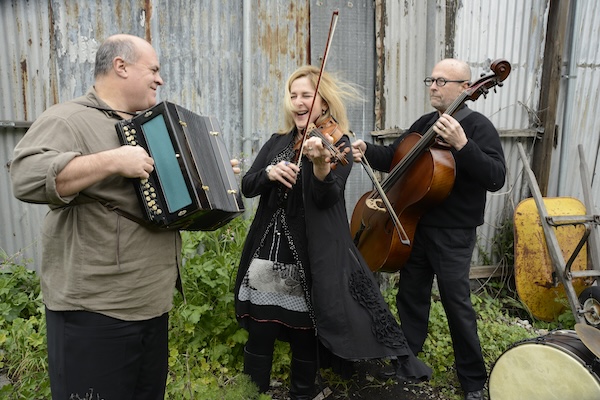
Veretski Pass – Joshua Horowitz, left, Cookie Segelstein and Stuart Brotman – will be joined by clarinetist Joel Rubin to present the world première of music from their new album, Makonovetsky’s Scion. (photo from Klezcadia)

Victoria will host Klezcadia, a hybrid klezmer and Yiddish culture festival showcasing a West Coast lineup of musical mastery and mavenry. Running June 4-9 in-person and online, there is no charge to attend.

According to festival director Laura Rosenberg, Klezcadia intends to position Victoria as a focal point for klezmer and Yiddish cultural tourism. In conjunction with the music, the six-day event will present classes, workshops, lectures, demonstrations and open rehearsals conducted by artists, language faculty and other guests.

“Klezcadia’s audiences can expect cutting-edge performances – including three world premières – by some of the world’s leading klezmer artists. Additionally, participants at any level of experience will have opportunities to attend classes, workshops and presentations by these same artists and their Yiddish-language colleagues,” Rosenberg told the Independent.

“Our guiding principle is to make the safe in-person attendance experience and the virtual attendance experience as equivalent and rich as current technology allows, as well as to give the same level of respect to all attendees,” she said.

Some of the featured artists will be Veretski Pass, a Bay Area trio that will perform with clarinetist Joel Rubin; Vancouver musician Geoff Berner; and Jeanette Lewicki in her new show as Pepi Litman, an early 20th-century Yiddish theatre drag star.

Comprised of Cookie Segelstein (violin), Joshua Horowitz (19th-century button accordion) and Stuart Brotman (bass), Veretski Pass offers a wide mix of East European influences. Reuniting with Rubin, they will present the world première of music from Makonovetsky’s Scion, their new album for the Borscht Beat label. 

Berner, a singer, songwriter, accordionist, novelist and political activist, will stage the première of Second Fleet, the Yiddish song cycle he recently co-wrote with Canadian writer Michael Wex, author of the bestseller Born to Kvetch, a humorous and scholarly look at the Yiddish language.

Lewicki will transmit the spirit of Litman, the original “drag king” of Yiddish theatre, in another première. The Pepi Litman Project will examine the time when a groundbreaking performer literally “wore the pants,” led her own touring troupe, turned taverns into theatres, and tested societal boundaries with her satire. Litman toured Europe and reportedly North America, too, singing, in male garb, at spas, inns and private homes in small towns and large cities alike. 

Some of the talks and workshops on offer at the festival are The Barry Sisters: America’s Yiddish Swingsters, with Andy Muchin, the host of the Sounds Jewish radio show on PRX; Yiddish Through Song Lyrics, with Seattle-based Marianne Tatom, a Yiddish teacher and klezmer musician; and Yiddish Through Conversation, with Sasha Berenstein, a multi-instrument musician and fellow with the Yiddish Book Centre’s Yiddish Pedagogy Program. 

On June 5, Christina Crowder of the Klezmer Institute will speak about the Kiselgof-Makonovetsky Digital Manuscript Project, an international endeavour connecting participants with the work of important klezmer musicians from the late-19th and early-20th centuries.

The festival will take a walk on the vilde side on June 8 with what organizers describe as “musical mash-ups, klezmer-adjacent adventures, song parodies, unusual instruments” and offering the forecast “you never know what will pop up in this clearing in the klezmer/Yiddish jungle.” The evening will feature Seattle neo-vaudevillian Mai Li Pittard, as well as local klezmer bands Kvells Angels and the Klezbians. A new klezmer ensemble, Kvells Angels, gave a concert last fall at the University of Victoria in which they performed works previously unavailable to musicians. The Klezbians, meanwhile, are a well-known band of “chutzpah-licious” musicians, and the group goes back many a year.

Victoria’s Congregation Emanu-El, under whose auspices Klezcadia is being produced, will host the finale concert at the Cameron Bandshell, located in Beacon Hill Park. The closing concert will be a gift to the city in celebration of the congregation’s 160th anniversary. 

Festival organizers have made a concentrated effort to ensure that all participants enjoy a safe experience. The hybrid environment, they stress, will prioritize the well-being of immunocompromised and high-risk participants, for both those onstage and in the audience. Indoor activities will include protective protocols, such as supplemental air purification, required masking and daily onsite COVID testing. 

“Klezcadia was inspired by deep listening to an online meeting of immunocompromised and high-risk musicians and Yiddish-language enthusiasts in early 2023,” Rosenberg said. “During the first two years of the pandemic, they had finally felt included in the klezmer/Yiddish community, since everyone’s only option was to gather online.”

The same groups felt marginalized again when most festivals returned to unmasked, in-person formats. Through dialogue with these groups, Rosenberg realized, Victoria had a chance “to become a host community for an inclusive form of cultural tourism.”

Rosenberg said her 45-year arts administration career came in handy when building a music festival from the ground up; she had already done so with two other festivals. It has been a year’s worth of full-time work to plan the format, bring in the artists and teachers, scout venues, initiate community engagement and, importantly, raise the money.

Locals seem eager for the festival to start. “I am optimistic based on expressions of pride I have heard from Victoria residents, on how quickly Klezcadia’s in-person registration reached capacity and on the eagerness of local tourism-sector businesses to be included in our visitors’ guide,” Rosenberg said.

People from more than a dozen countries have signed up to view events streamed online.

For more information, visit klezcadia.org. 

Sam Margolis has written for the Globe and Mail, the National Post, UPI and MSNBC.

Format ImagePosted on May 10, 2024May 22, 2024Author Sam MargolisCategories Music, Performing ArtsTags Congregation Emanu-El, culture, health, Klezcadia, klezmer, Laura Rosenberg, Victoria, Yiddish

Art beyond the gallery walls

For Dan Russek, art abounds in urban settings, whether it be in the form of manhole covers, bike racks or other items and scenes that city dwellers regularly encounter. Spurred by an early love of photography, he has been surveying cityscapes with an eye for “public art that goes beyond the gallery.” 

photo - University of Victoria professor Dan Russek, author of Exercises in Urban Mysticism: Practical Poetry and other books
University of Victoria professor Dan Russek, author of Exercises in Urban Mysticism: Practical Poetry and other books. (photo from Dan Russek)

A professor in the department of Hispanic and Italian studies at the University of Victoria, Russek is the author of Exercises in Urban Mysticism: Practical Poetry, a 2020 book – written in Spanish, with the title Ejercicios de mística urbana: Poesía práctica, and published in Mexico – that explores the poetry of everyday life.

“One way I look at it is that I take the idea of modern art seriously,” Russek told the Independent. “When you see a painting by Jackson Pollock, you may understand its place in the history of art. But what Pollock is showing is a kind of texture, composition and movement that you can find outside of the gallery walls, appealing to a certain sensibility that takes you beyond the museum.”

Russek was intrigued by the 1996 book Manhole Covers, written by Mimi and Robert Melnick and published by MIT Press. It delved into how an object many consider ordinary can provide a record of the history of a city and, some would argue, be deserving of a spot in contemporary urban culture; in other words, seeing a utilitarian object as an “urban sculpture.”

Russek devoted a lot of space in his illustrated book to manhole covers, bike racks, various geometric structures and a variety of textures. Art, as he views it, extends far beyond the confines of canvas or paper. Indeed, by his admission, one of his favourite spots to be is on construction sites, especially in a place like Mexico City, where there are few restrictions for getting inside. 

“You take something in itself that may not appear to be too interesting, but, when you look at it in a certain way, it becomes interesting. Or, to quote Gustav Flaubert, ‘Anything becomes interesting if you look at it long enough,’” Russek said.

As an example of this, Russek gives the work of American photographer Edward Weston in the 1920s and 1930s. As Russek describes it, in one image, Weston takes a simple green pepper and turns it into something “astounding.” The same can be done for bike racks and many other urban and industrial artifacts, he said.

Russek, who was born in Mexico, remembers being surrounded by relatives who were passionate about photography.

“As a kid, we would make an album while on a vacation. Each trip yielded an album, as did life events, weddings, bar mitzvahs,” he said. “Life was documented. It gave me a model. I began taking pictures in high school, and I realized I was interested in abstraction.”

Over the years, walking through the streets of cities like Chicago, Mexico City and Buenos Aires, Russek has been struck by many aspects of street art, including graffiti, another form of public art that is found beyond the gallery. In fact, some graffiti, he said, is as valuable as the art one finds in a museum.

“I wish I had my camera with me all the time. The reflections of light in the afternoon over the pavement, it’s phenomenal. The light making reflections on the water from a gutter – life is full of these interesting moments. Bringing the camera is a good thing because I don’t have to look for anything, the world sends it to me,” he said. 

Russek completed a PhD in comparative literature at the University of Chicago, specializing in modern and contemporary Latin American literature and visual arts. His fields of research include the links between literature and the visual arts and media, urban studies and esthetics. He has explored the relations between modern technology, culture and literature, and centres on the notion of epiphany and the phenomenon of light. His first book, Textual Exposures: Photography in Twentieth Century Spanish American Narrative Fiction, was published in 2015 by University of Calgary Press. 

Some of Russek’s next plans involve going beyond the printed page. He wants to make videos, as the medium “allows you to do more stuff, with music and the matching of images, that you cannot do in a book.” He also writes poetry (sonnets in particular) because, for one reason, “you can take an object or an emotion and write a poem about it and elevate it to a new level of importance.”

Argentine writer Julio Cortázar is an example Russek cites of an artist reaching beyond the confines of a particular medium, an approach that is multifaceted or experimental. In one work, Último Round (Last Round), Cortázar created an almanac-style book filled with articles, poems, essays and illustrations.

Aside from teaching and writing, Russek is the coordinator of the Latin American and Spanish Film Week, now in its 14th year, held in the fall at UVic’s Cinecenta. He is also the president of the Hispanic Film Society of Victoria. 

Sam Margolis has written for the Globe and Mail, the National Post, UPI and MSNBC.

Posted on April 12, 2024April 10, 2024Author Sam MargolisCategories Visual ArtsTags Dan Russek, urban art, UVic, Victoria

Creating a community

Laura Rosenberg and Andy Muchin co-founded the Victoria Jewish Culture Project with Farley Cates. Here, the two participate in the group’s 2021 Passover seder (screenshot)

In late 2019 and early 2020, before the pandemic struck and lockdowns took effect, a group of friends in Victoria gathered to talk about forming a cultural group – a havurah, or casual and friendly meeting place for people to discuss art and social events through a Jewish lens.

As COVID hit, with everyone at home and in-person meetings impossible, the group, which had called itself the Victoria Jewish Culture Project, held its first gatherings over Zoom. These days, the VJCP, under the leadership of members Laura Rosenberg, Andy Muchin and Farley Cates, still meets weekly and for Jewish holidays over Zoom.

“As a result of what at that time felt like an interim, for-the-moment format, we started having a variety of events on Zoom, including holiday celebrations and commemorations, as well as a weekly discussion group,” said Rosenberg. “I am shocked to note that here we are almost four years in.” 

The discussion group at first would meet to go over the Torah portion of the week. Once the biblical cycle was complete, the group shifted to different social and cultural topics from week to week. While most of the VJCP attendees are based in Victoria, they have active members elsewhere. Because their meetings are held on Zoom, geography does not pose a barrier.

“We have an active Zoomer from Salt Spring Island every Saturday,” said Muchin. “For some of our holiday events, we have people pop in from various places – relatives of friends, friends of friends, even my sons played roles in our Zoom Purim spiels, from different American cities.”

“VJCP is basically a group of people who generally view things from a secular humanist perspective. The biggest thing we are offering right now is the opportunity for some discussion among people of different backgrounds,” said Cates. “We want to look at things critically and think things through.”

Rosenberg said, while she was excited about a weekly discussion group four years ago, she never anticipated it would end up becoming such an important venue for the exchange of ideas and a catalyst for many of the other events the group has organized. Holiday celebrations have included a drag Purim spiel, co-sponsored with the Klezbians band and an outdoor Tashlikh ceremony at Esquimalt Gorge Park.

“It has been a generative force and this, I think, is something which will continue to be a core activity for this group, and [it will] continue to generate ideas and thoughts that can bring a number of different activity spin-offs,” Cates said.

“I would go so far to call the Saturday morning a ritual we have developed for ourselves. It is really a part of my Saturdays. There’s always a critical mass of people,” said Muchin. “It is a great ongoing connection for us in addition to being a wonderful way to explore issues.”

“What we are trying to do,” explained Cates, “is reflect on what the Jewish community is faced with, as well as what other communities are faced with, and what the world is faced with generally.”

Since the events of Oct. 7, the members of VJCP have expressed gratitude for having a “safe haven” in which civil and open discussion can take place.

“We have a forum where we can discuss these things that were obviously deeply painful and could have been very divisive, but we could discuss them in a respectful manner – even when, as individuals, we did not always agree,” Rosenberg said.

Aside from the VJCP, Rosenberg, Muchin and Cates have been engaged in various aspects of Jewish cultural life and beyond for a long time. Rosenberg plays concertina for the Victoria-based, all-female klezmer ensemble Kvell’s Angels. She is also the newly appointed director of Klezcadia, a klezmer music and Yiddish culture festival run through Victoria’s Congregation Emanu-El. The festival will have its inaugural season in June 2024.

For the past 13 years, Muchin has been the host and producer of Sounds Jewish, a weekly radio show that airs on Mississippi Public Broadcasting and is distributed on PRX, a web-based radio platform. As well, he is active with the Victoria International Jewish Film Festival (VIJFF) and has written for several Jewish publications.

Cates has been co-director of the VIJFF for four seasons. Outside the Jewish community, his “pet project” is Theatre Inconnu, the longest-surviving alternative theatre company on the island, where he serves on the board. Furthermore, he is involved in various cultural activities in the Victoria area, such as a performing arts centre on the West Shore and the Arts & Culture Colwood Society. 

The VJCP says the group is open to new members and welcomes suggestions for activities or programs others are interested in pursuing. They are holding a Hanukkah party over Zoom on Dec. 15 at 7 p.m. For more information about the event and/or the VJCP, write to [email protected].

Sam Margolis has written for the Globe and Mail, the National Post, UPI and MSNBC.
Format ImagePosted on December 1, 2023November 30, 2023Author Sam MargolisCategories UncategorizedTags Andy Muchin, COVID, Farley Cate, havurah, Laura Rosenberg, pandemic, social gatherings, Victoria, Victoria Jewish Culture Project

Posts pagination

Previous page Page 1 Page 2 Page 3 … Page 6 Next page
Proudly powered by WordPress