Skip to content

  • Home
  • Subscribe / donate
  • Events calendar
  • News
    • Local
    • National
    • Israel
    • World
    • עניין בחדשות
      A roundup of news in Canada and further afield, in Hebrew.
  • Opinion
    • From the JI
    • Op-Ed
  • Arts & Culture
    • Performing Arts
    • Music
    • Books
    • Visual Arts
    • TV & Film
  • Life
    • Celebrating the Holidays
    • Travel
    • The Daily Snooze
      Cartoons by Jacob Samuel
    • Mystery Photo
      Help the JI and JMABC fill in the gaps in our archives.
  • Community Links
    • Organizations, Etc.
    • Other News Sources & Blogs
    • Business Directory
  • FAQ
  • JI Chai Celebration
  • JI@88! video
image - Weizmann Canada Physics Tournament 2025
image - The CJN - Visit Us Banner - 300x600 - 101625

Recent Posts

  • Vrba monument is unveiled
  • Music to build bridges
  • A better future possible
  • Anne Frank exhibit on now
  • Human rights in sport
  • Telling the story of an icon
  • Crawl bigger than ever
  • JCC Maccabi in Toronto
  • A way to meet fellow Jews
  • Time to include
  • Add Jewish joy to the mix
  • Reminder of humanity’s light
  • From the archives … editorials
  • Year-round holiday recipes
  • מדוע עזבתי את ישראל ואינני חושב לחזור ארצה
  • OJC hosts Oct. 7 memorial
  • A journey beyond self
  • Antisemitism a problem
  • Young man is missed
  • Orr action sparks complaint
  • Prison sentence for hate
  • Etgar Keret comes to Vancouver
  • New fall lecture series
  • Series explores music
  • Doc on Zapiro screens Nov. 6
  • Joy of shared existence
  • Community milestones … October 2025
  • MAID vs Jewish values
  • Cheshvan a great month, too
  • Bull, bear or bubble?
  • From the archives … a coin, etc.
  • מדוע האנטישמיות הולכת וגואה בעולם
  • New bio gives Vrba his due
  • Joy brighter than ever
  • When approaches differ
  • New leadership at the JCCV

Archives

Follow @JewishIndie

Tag: Chabad

Tackling antisemitism

It’s no secret that antisemitism around the world has been increasing for years. As recently as Sept. 30, MLA Spencer Chandra Herbert saw his office window hit with a spray-painted red swastika. Make no mistake: there is no place for antisemitism in our world. That’s why Chabad Richmond is offering the four-week Rohr Jewish Learning Institute program called Outsmarting Antisemitism on Wednesdays Nov. 3, 10, 17 and 24 from 7:30-9 p.m.

“Join me each week as we explore the ethical impacts of history repeating itself, both within the Jewish community and beyond, by those who believe that antisemitism and hatred are accepted and encouraged practices and attitudes,” said Rabbi Yechiel Baitelman, director of Chabad Richmond.

Outsmarting Antisemitism takes on this subject directly and unapologetically, with a sense of optimism, faith and a distinctly Jewish approach.

“Through insightful source texts and fascinating case studies, this course examines the sources of this ancient scourge, along with the appropriate strategies for overcoming it. It’s time to find the confidence to fight hate with hope, and to stand tall against antisemitism,” said Baitelman.

“Upon concluding our series Outsmarting Antisemitism, you will be better equipped to campaign publicly against those who oppose both Israel and the Jewish people, and ensure we do everything possible to condition society to bring out the best in humans, rather than their more sinister elements,” he added.

Outsmarting Antisemitism will be offered both in-person and online via Zoom. Sign-in information will be provided at the time of registration. The cost to attend is $75 per person or $130 per couple, and includes the textbook.

This course  will also be offered to lawyers for B.C. Law Society accreditation on Nov. 25, Dec. 2, 9 and 16 from 7:30-9:30 p.m. and will take place in person, at Chabad Richmond, 4775 Blundell Rd. The cost is $540 including textbook and the course is applicable for eight CLE approved credits.

To register for either Richmond course, call 604-277-6427 or visit chabadrichmond.com/jli.

The JLI course is also being offered at Lubavitch Centre (604-266-1313), starting Oct. 26, and Chabad of Nanaimo (250-797-7877), starting Nov. 9.

– Courtesy Chabad Richmond

Posted on October 22, 2021October 21, 2021Author Chabad RichmondCategories LocalTags antisemitism, Chabad, education, history, Jewish Learning Institute, JLI, law

Confront challenges

Everyone could use some insight on how to confront life’s challenges. That’s why Chabad Richmond is offering a three-part online Zoom program called Inlook Outlook: Guidance from the Rebbe for Confronting Life’s Challenges on Wednesdays, Oct.13, 20 and 27, 7:30-8:30 p.m.

“This program focuses on the timely and relevant reflections and sage advice written by the Lubavitcher Rebbe, Rabbi Menachem Mendel Schneerson, throughout his lifetime, to those seeking his counsel,” said Rabbi Yechiel Baitelman, director of Chabad Richmond. “What’s fascinating is that the Rebbe’s insights and perspectives are still applicable today. The Rebbe drew from his profound grasp of Torah wisdom, and combined it with a nuanced sensitivity to each individual’s unique circumstances.”

The three-part program is “a shared dialogue around navigating change and managing stress, while defining and staying true to one’s purpose,” said Baitelman. “The Rebbe reminds us that whatever life challenges we face, we are always given the inner spiritual resources to overcome them.”

The Rebbe believed that how you think about any situation determines how you feel about it.

“By reflecting on practical advice penned to individuals during critical life-junctures, this program provides perspectives on life that begin from the inside out, starting from the soul and one’s destiny on earth. The Rebbe helped people find opportunity where others saw adversity,” added Baitelman.

Sign-in information for the program will be provided at the time of registration. Cost is $54 per person. To register, call 604-277-6427 or visit chabadrichmond.com/inlookoutlook.

– Courtesy Chabad Richmond

Posted on October 8, 2021October 6, 2021Author Chabad RichmondCategories LocalTags Chabad, education, Judaism, Menachem Mendel Schneerson, Yechiel Baitelman

Journey of the Soul

Starting in February, a few B.C. Chabads are offering Journey of the Soul: A Fresh Look at Life, Death and the Rest – In Peace, a six-session online Zoom course from the Rohr Jewish Learning Institute (JLI) that answers the question, What happens when we die?

“Participants will embark on a journey that will enlighten them and put them at ease with the topics of life and the afterlife. Practical and powerful, thoughtful and relatable, Journey of the Soul teaches a Jewish perspective on life, that begins before birth and lasts well after a person’s passing,” said Rabbi Yechiel Baitelman, director of Chabad Richmond and a local JLI instructor.

“Death is both mysterious and inevitable,” added Baitelman. “Understanding death as a continuation of life reveals the holiness of life, while putting everything in a dramatically new context. The soul is on one long journey that is greater than each particular chapter.”

According to Baitelman, Journey of the Soul considers what happens to the soul at birth and again at death. It ponders whether there is a better place after this one; whether our loved ones continue to connect with us; the Jewish understanding of reincarnation; and how to relate to an afterlife even if we’re not spiritual. Journey of the Soul is designed to appeal to people at all levels of knowledge, including those without any prior experience or background in Jewish learning. It is open to the public.

Doctors and most mental health professionals can earn CME or continuing education credit by attending the course – visit myjli.com/continuingeducation for more information and a complete accreditation statement.

“The discounted cost of $40 per person takes into account COVID-19, and the fact that so many people have faced illness, job loss, reduced incomes and other challenges. While this is far below the regular price of the course, we ask you to please consider adding a donation of any size to help defray the course costs, if you are able to,” added Baitelman about the fees to attend the Chabad Richmond series. “And feel free to try the first class for free with no commitment.”

Chabad Richmond offers Journey of the Soul starting either Feb. 3 or 4, 7:30 p.m., and running weekly until March 10 or 11, respectively (chabadrichmond.com or 604-277-6427). The course is also being offered by Lubavitch BC Feb. 2-March 9, 7:30 p.m., with Rabbi Dovid Rosenfeld (lubavitchbc.com or 604-266-1313); and Feb. 3-March 10, 7 p.m., with Rabbi Meir Kaplan (chabadvi.org or 250-744-2770). The series cost varies.

Posted on January 29, 2021January 27, 2021Author Chabad RichmondCategories LocalTags Chabad, death, education, health, Judaism, lifestyle, mental health, philosophy
Parenting in pandemic

Parenting in pandemic

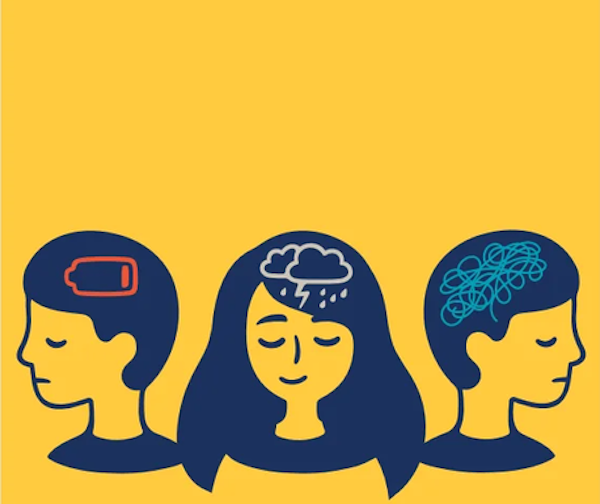
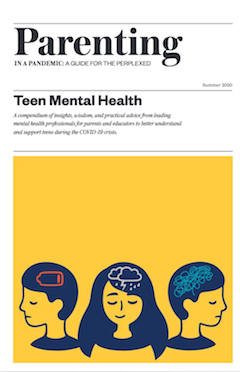
The Rohr Jewish Learning Institute (JLI) has recently published Parenting in a Pandemic: A Guide for the Perplexed. Part of Project L’Chaim, a new Vancouver-wide youth mental health initiative in memory of Steven Diamond, the 36-page booklet is filled with insights and practical tools from 14 mental health experts to help parents and educators support their teens through the current crisis.

New York-based Rabbi Zalman Abraham runs the marketing and strategic planning for JLI. “We are the largest Jewish adult education network in the world, operating in over 2,000 locations,” said Abraham, who has been working in this role for the past 11 years or so.

Prior to joining JLI, Abraham authored courses and books, was an editor at askmoses.com and served in various teaching capacities. He was born in Brooklyn, grew up in South Africa, and did his schooling in the United States and Israel.

“My father is very active in dealing with the opioid crisis in South Africa,” Abraham told the Independent in a phone interview. “He’s known as the ‘addicts rabbi.’ There were times when I was growing up where there were up to six or seven addicts living in our house, because there was no better alternative then…. My father was involved with hundreds and hundreds of addicts, and overseeing their rehabilitation. He ran a halfway house, so I have a little bit of a background in that area.”

Abraham’s study of Chassidic philosophy deals a lot with Torah hanefesh, which can be loosely translated as psychology. The rabbi explained that this “is how Judaism informs us about our emotional and mental state and character, which is very relevant to addressing some of the very real mental health challenges our society is experiencing today.”

JLI has been offering courses for about 20 years, said the rabbi. “Over the past 10 years or so, many of our courses have focused on continuing education for professionals. We started with the legal profession, with courses in ethics and comparative talmudic and civil American and Canadian law. These were accredited by various bar associations of states [and provinces] across North America, including … the Law Society of British Columbia – they accredit for official continuing education credits for lawyers and attorneys…. We then began offering continuing medical education for medical professionals. Over the past few years, our most successful courses have been for mental health professionals, accredited by the American Psychological Association for psychiatrists, psychologists, therapists, social workers and the like.

image - Parenting in a Pandemic book cover - full“This is an area where Jewish wisdom informs the professional world and answers a real need. The challenge with mental illness, chemical imbalances aside, is often a result of a build-up of crisis, where a person has one crisis and another … their experiences compound, [they] have trouble envisioning a future, finding hope.… They have trouble with self-esteem, with feeling confident about life, and with finding meaning and purpose in life. These are all areas that Jewish wisdom addresses in a real way, giving people a framework within which they can find meaning and purpose.”

JLI’s international program is called My Life is Worth Living. In the Metro Vancouver area, they run the program called Project L’Chaim (“To Life”), a suicide prevention project sponsored by the Diamond Foundation in memory of Gordon and Leslie Diamond’s son Steven, whose Hebrew name was Chayim.

“We use the already existing infrastructure to educate those on the frontlines who are interfacing with teens and youth – training them to become more professionally equipped to be able to support the emotional needs of the teens in their care,” explained Abraham.

“From 2007-2017 in the U.S., there’s been a 56% rise in teen suicide. This is despite all the efforts and energies being invested in this area. This is an issue that’s getting worse and isn’t yet contained – this is in the general (not Jewish-specific) population.… There’s definitely a greater need for mental health support now than there ever was before.

“And, especially now, with COVID-19, all of this is being exacerbated. To put things into perspective, only about 10% of those who need mental health treatment get it. Even then, it’s with an average delay of 10 years between the onset of symptoms and the first treatment, according to the National Institute of Mental Health.

“Stigma is a big enemy to mental health treatment. No one wants to be labeled with a mental health diagnosis and carry that around with them for life. That stigma gets in the way of people getting the help they need.”

JLI’s approach is not clinical, but is supported by a clinical advisory board that includes Thomas Joiner, author of Why People Die by Suicide and other books on understanding why people commit suicide; Jonathan Singer, president of the American Association of Suicidology; University of British Columbia suicide expert David Klonsky; director of suicide prevention for New York State Dr. Sigrid Pechenik; Madeline Gould from Columbia University; and Jill Friedman from the American Foundation for Suicide Prevention.

“We provide professional training to those teen-interfacing adults; training that takes many forms,” said Abraham. “They learn to identify warning signs to the risk, to create a safety plan and to intervene when necessary. They learn what resources are available and what to do in various scenarios. They’re trained to be first responders. And they can isolate and help teens in the most critical situations.

“We also engage teens in group discussions, about underlying issues that are conversations for everyone – about self-esteem, hope, finding purpose and meaning in life, coping mechanisms to deal with challenges, and so on. These are conversations had outside of the mental health framework, so as to avoid stigma.”

In the Vancouver area, JLI has connected with many Jewish organizations and doctors’ offices.

“Our goal is to put it in the hands of every parent in the Greater Vancouver area,” said Abraham, who is a father himself. “It’s a compilation of 14 articles from leading youth mental health professionals, mostly from the Jewish world … to provide support to parents, so they can support their teens during these difficult times.

“The booklet gives insight to what’s going on for teens in the mental health realm and provides a lot of practical tools. The most frequently mentioned idea in the booklet is that famous line from the safety announcement on airplanes – putting on your oxygen mask first, and then helping others. People need self-care first.

“Youth, particularly teens, are social beings needing social interaction to thrive. Many don’t have this right now due to COVID-19 restrictions. Also, youth need clarity, something they can depend on … so parents need to know how to create an open channel of communication for teens to feel safe to discuss their feelings.

“The number one hope is that parents will become more aware of what their teens are going through…. Lastly and most importantly, is that they gain some tool/ideas to help them support their teens through this.”

Visit myjli.com/index.html?task=parenting for more information or to order the booklet.

“This is just the first step of many that will be coming out,” said Abraham. “We’ve already run multiple professional trainings and we hope to do many more. This is a beginning of a big, multi-year project.”


Rebeca Kuropatwa is a Winnipeg freelance writer.

Format ImagePosted on August 28, 2020August 27, 2020Author Rebeca KuropatwaCategories LocalTags Chabad, children, coronavirus, COVID-19, education, health, JLI, mental health, parenting, Rohr Jewish Learning Institute, teenagers, Zalman Abraham
Shluchim gather in N.Y.

Shluchim gather in N.Y.

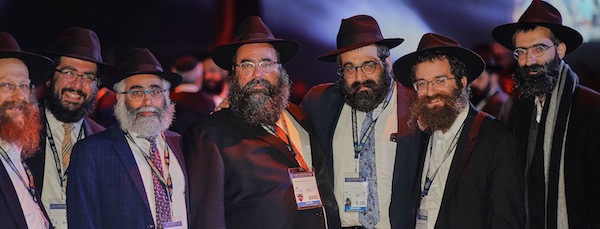
The 2019 “class photo” of Chabad shluchim who attended the Kinus Hashluchim in New York. Among the 4,000 Chabad emissaries attending were 14 from British Columbia. (photo from Chabad-Lubavitch)

Fourteen B.C. Chabad emissaries (shluchim), including one from Victoria and one from Nanaimo, recently converged on New York City for the annual five-day International Conference of Chabad-Lubavitch Emissaries (Kinus Hashluchim), which brings together shluchim from more than 100 countries around the world and other Jewish communal leaders, almost 6,000 people.

The Kinus Hashluchim reflects directly on the influence of the Rebbe, Rabbi Menachem Mendel Schneerson, z”l, leader of the Chabad movement, who, decades ago began sending young Chabad couples to far-flung corners of the world to serve and, in some cases, build Jewish communities. The shluchim, or Rebbe’s Army, now comprises 5,000 Chabad couples worldwide. The newest shluchim just established a Chabad centre in Kigali, Rwanda; one in Myanmar; and one on the Caribbean island of Turks and Caicos.

The November Kinus conference focused on the work that has been accomplished. “It’s an opportunity for shluchim to share the various challenges they encounter and the countless accomplishments they achieve. We get a chance to share ideas, inspiration and guidance not only from the Rebbe’s teachings, but from each other. And these enable us to go home spiritually refreshed and ready to implement new things,” said Rabbi Yechiel Baitelman, director of Chabad Richmond. “We definitely gain strength from each other, and our challenge is to celebrate and share Judaism with joy, and to continue optimistically and positively empowering Jews around us.”

During the five-day gathering, the shluchim participated in seminars and workshops on combating antisemitism, inspiring pride in the Jewish people, and much more. They also engaged in study, prayer and celebrations, including a gala dinner. The spiritual high point took place on the Friday, Nov. 22, when shluchim visited the Ohel, the Rebbe’s resting place. Thousands of emissaries waited in line to deliver handwritten notes and prayers to the grave.

“It’s an opportunity for us to rededicate ourselves to the Rebbe’s spiritual and social vision for the world,” said Rabbi Yitzchak Wineberg, director of Chabad Lubavitch of British Columbia. On Shabbat, shluchim and lay leaders spent time learning and praying in Brooklyn’s Crown Heights neighbourhood, which houses the worldwide headquarters of the Chabad Lubavitch movement at 770 Eastern Parkway. They also took part in farbrengens (traditional Chassidic gatherings). On Sunday, the annual “class photo” of more than 4,000 shluchim took place at Chabad headquarters.

photo - Left to right, some of the B.C. rabbis who attended the conference: Rabbi Falik Shtroks (Chabad White Rock/Surrey), Rabbi Chalom Loeub (Chabad UBC), Rabbi Shmulik Yeshayahu (Community Kollel), Rabbi Yechiel Baitelman (Chabad Richmond); Rabbi Meir Kaplan (Chabad of Vancouver Island), Rabbi Bentzion Shemtov (Chabad Nanaimo) and Rabbi Binyomin Bitton (Chabad of Downtown Vancouver)
Left to right, some of the B.C. rabbis who attended the conference: Rabbi Falik Shtroks (Chabad White Rock/Surrey), Rabbi Chalom Loeub (Chabad UBC), Rabbi Shmulik Yeshayahu (Community Kollel), Rabbi Yechiel Baitelman (Chabad Richmond); Rabbi Meir Kaplan (Chabad of Vancouver Island), Rabbi Bentzion Shemtov (Chabad Nanaimo) and Rabbi Binyomin Bitton (Chabad of Downtown Vancouver). (photo from Chabad-Lubavitch)

The Sunday evening gala, which Baitelman described as “vibrating with uncontainable energy, renewed enthusiasm and an undeniable sense of mission,” was held at the New Jersey Convention and Exposition Centre. Emcee for the evening was Rabbi Moshe Kotlarsky, vice-chair of Merkos L’Inyonei Chinuch, the educational branch of the Chabad movement. He spoke of the challenges Chabad emissaries encounter in their work, and praised them for their enthusiastic and unflagging commitment to making a difference in the world.

The gala’s keynote address was given by U.S. Ambassador to Israel David Friedman. He related that he has been Torah study partners with a Chabad rabbi in Woodmere, N.Y., for more than two decades, and said that helped prepare him for his current role as ambassador to Israel.

Many of the gala’s speakers emphasized how shluchim are deeply connected to Jews in every part of the world, and that each individual Jew is important to them. Rabbi Yitzchak Schochet, a Chabad emissary from Mill Hill Synagogue in London, England, said: “Ask yourself, where would the world be today without the Rebbe’s vision? Who else goes looking for Jews all around the world, in every corner of the world?… What would have become of [Jews] were it not for the unconditional devotion of every shaliach and shalucha?”

The gala wrapped up with the annual “roll call,” at which Kotlarsky read out the names of the countries that have permanent shluchim. The evening ended with dancing and singing. For those who are interested, the banquet was livestreamed by chabad.org at tinyurl.com/twu2x7z.

In addition to Wineberg and Baitelman, the B.C. contingent of shluchim included Rabbi Avraham Feigelstock (Community Kollel), Rabbi Schneur Wineberg (Chabad East Vancouver), Rabbi Dovid Rosenfeld (Lubavitch BC), Rabbi Mendy Feigelstock (Kosher Check), Rabbi Levi Varnai (Chabad Richmond), Rabbi Binyomin Gordon (Kosher Check), Rabbi Falik Shtroks (Chabad White Rock/Surrey), Rabbi Chalom Loeub (Chabad UBC), Rabbi Shmulik Yeshayahu (Community Kollel), Rabbi Meir Kaplan (Chabad of Vancouver Island), Rabbi Bentzion Shemtov (Chabad Nanaimo) and Rabbi Binyomin Bitton (Chabad of Downtown Vancouver).

Format ImagePosted on February 7, 2020February 6, 2020Author Chabad LubavitchCategories WorldTags Chabad, Judaism, Kinus Hashluchim, Yechiel Baitelman, Yitzchak Wineberg

Judaism’s gifts to world

This winter, the Rohr Jewish Learning Institute six-session course Judaism’s Gifts to the World: How Major Jewish Ideas Evolved into Universal Values comes to three B.C. Chabad centres: Chabad Richmond, Lubavitch BC and Chabad of Nanaimo.

Participants will learn how personal responsibility, the inherent sanctity of human life, universal education, human equality, the dignity of a day of rest, devotion to family, and a sense of purpose have their origins in ancient Judaism. Judaism’s Gifts to the World is designed to appeal to people at all levels of knowledge, including those without any prior experience or background in Jewish learning. This course is open to the public.

“At a moment in which we are witnessing a rise in antisemitism, it is important to explore what has been the true impact of Jews and Judaism on civilization,” said Rabbi Yechiel Baitelman, director of Chabad Richmond and the JLI instructor in Richmond. “Understanding Judaism’s historical contribution gives us a deeper appreciation for its continuing relevance and a better understanding of how the moral and ethical institutions we take for granted came into being.”

Baitelman added that Judaism’s Gifts to the World explores the tension between social and individual responsibility, the implications of monotheism, the meaning of social equality, how Sabbath observance has laid the groundwork for the modern weekend, and the underpinnings of our morality.

Rabbi Mordechai Dinerman, director of curriculum at JLI’s New York headquarters, said, “It is widely known that Judaism gifted monotheism to the world, but, for many, that’s where the Jewish contribution ends. Even this contribution is often viewed rather narrowly, as a religious contribution … but, as this course demonstrates, the universal change effected by the Torah is much broader.”

Dr. Darrin M. McMahon, professor of history at Dartmouth College, has praised Judaism’s Gifts to the World. “There can be no doubt that the Jewish contribution to the civilizations of the West and the world is immense,” he said. “At a time when noxious critics would doubt that contribution or deny it altogether, the Jewish Learning Institute has offered a timely reminder of the many gifts the Jewish tradition has bestowed. Judaism’s Gifts to the World … provides a scintillating course in the history of ideas and culture by leading experts from around the globe.”

Judaism’s Gifts to the World starts Wednesday, Jan. 29, 7:30 p.m., at Chabad Richmond ($95, 604-277-6427) and Vancouver Lubavitch Centre ($90, 604-266-1313) and runs for six weeks; and the six Tuesday sessions at Chabad of Nanaimo ($95, 250-797-7877) start Jan. 28, 7 p.m. Register at the local Chabad centres or via myjli.com.

Posted on January 24, 2020January 22, 2020Author Chabad RichmondCategories LocalTags Chabad, education, Jewish Learning Institute, JLI, Judaism
Colleagues visit Chabad UBC

Colleagues visit Chabad UBC

Left to right: Rabbis Chaim Boyarsky, Moshe Goldman, Mordechai Silberberg, Chanoch Rosenfeld, Chalom Loeub and Zalman Zaltzman. (photo from Chabad UBC)

A delegation of rabbis who direct Chabad centres across Canada came to Vancouver last month, on Dec. 10. The purpose of the visit was to get a firsthand understanding of the day-to-day operations of the Chabad Jewish Student Centre at the University of British Columbia, which was established in 2013 by Rabbi Chalom and Esti Loeub.

The delegation included Rabbi Mordechai Silberberg, director of Chabad at University of Western Ontario; Rabbi Chanoch Rosenfeld, director of Chabad at McMaster University; Rabbi Moshe Goldman, director of Chabad of Wilfrid Laurier University and University of Waterloo; Rabbi Zalman Zaltzman, director of Chabad at Brock University; and Rabbi Chaim Boyarsky, director of the Chabad Student Network, which caters to Carleton University and University of Ottawa.

The rabbis direct their respective Chabad centres together with their wives, who are equally responsible for all of their operations. While each Chabad centre caters to the needs of its specific university students, there are some signature programs that all of them run. Weekly home-cooked Shabbat dinners free of charge, the Sinai Scholars Society, and holiday meals and services are some examples. Chabad of Western University, which was established in 1999, hosts hundreds of students every Friday night for Shabbat dinners, many of them Vancouver natives.

The rabbis began their visit at Café FortyOne, where they met with Rabbi Yitzchak Wineberg, executive director of Chabad Lubavitch of British Columbia. Wineberg briefed them on the history of Chabad Lubavitch of Western Canada and his early days in Vancouver.

The group then headed to the AMS Student Nest at UBC, where they met and had lunch with the UBC Chabad student board, and heard about some of the activities that have been taking place on campus. At the Chabad Jewish Student Centre, they met with the Loeubs to discuss the operations and offer feedback. The day concluded with dinner at the Maple Grill followed by a farbrengen (Chassidic gathering).

“It meant a lot to us to have our colleagues fly across the country to visit us,” said Rabbi Loeub. “As we are one of the more recent Chabad on Campus centres to open in Canada, it was very helpful to hear words of advice and inspiration from these veteran directors.”

For more information about the programs offered at Chabad Jewish Student Centre-Vancouver, visit chabadubc.com or call Rabbi Loeub at 778-712-7703. For information on Chabad centres on national campuses and worldwide, visit chabadoncampus.org/directory.

Sue Silverman is a volunteer with Chabad Jewish Student Centre-Vancouver.

Format ImagePosted on January 24, 2020January 22, 2020Author Sue SilvermanCategories LocalTags Chabad, education, university
Young learners, big mission

Young learners, big mission

Left to right: Chana Rivka Bitton, Miriam Feigelstock, Baila Shapiro, Shira Oirechman and Ora Yeshayahu. The biggest event of the Tzivos Hashem year is a Shabbaton in New York, the highlight of which is an international competition called Chidon Sefer Hamitzvos, where kids from around the world compete in their knowledge and understanding of the 613 mitzvot of the Torah, as codified by Maimonides. (photo from Tzivos Hashem)

Walking into the Lubavitch Centre at 41st and Oak Street a couple of months ago, I witnessed a hub of activity so vibrant with excitement it was practically humming. Every available space was brimming with excited children, from little ones to newly minted teenagers. Engaged in drawing, listening intently, and engrossed in a whole variety of activities, I knew these kids had to be connected to Chayolei Tzivos Hashem.

Make no mistake – Chayolei Tzivos Hashem (CTH or Tzivos Hashem, for short) is serious business. According to Tzivos Hashem Vancouver coordinator Riki Oirechman, it’s an educational program for Jewish children ages 3-13, founded in 1980 in New York by the Lubavitcher Rebbe, Menachem Mendel Schneerson. Tzivos Hashem focuses on teaching about kindness, good deeds and refining our character to become better people and more effective influencers in our community. The program aims to increase Jewish identity and provide children with Chassidic Jewish learning through informal activities and songs.

Tzivos Hashem Vancouver was established several years ago by Rabbi Shmulik Yeshayahu, Rabbi Dovid Rosenfeld and Rabbi Schneur Wineberg and, since then, it has grown in size. Today, they count 50 children registered in the local program, and have plans to expand its hours. Currently, it is being held every Sunday at the Lubavitch Centre, from 10:30 a.m. to noon, in groups divided by age.

“It’s incredible to see how much the kids learn every week, and how much they enjoy coming,” said Oirechman. Parents even relate that their kids consider it the “highlight of their week.”

The Vancouver chapter of Tzivos Hashem was able to run the first two years thanks to a grant from the Phyliss and Irving Snider Foundation. This helped lay the foundation for the program. Since then, it is partially self-funded and relies on tuition fees for each student.

“The program is designed to give young children a sense of pride and belonging, a feeling of connectedness to other Jews,” said the Lubavitch Centre’s Rosenfeld. “It’s meant to instil in them an appreciation for what they do and inspire them to do even more.”

When asked what they learn, Rosenfeld said the curriculum includes things like a deeper insight into the Jewish holidays and following examples of role models from our ancient and recent history. The older kids learn Mishnah and Talmud. All of the learning is illustrated according to Chassidic theory, as taught by the Lubavitcher Rebbe.

“We encourage the children to advance their knowledge, not just maintain it,” said Rosenfeld. “Constant review and reinforcement of the different concepts allows the kids to build on the knowledge they gain each week. Moreover, we try to channel the kids’ studies into the practical realm, having them translate their knowledge into action. Whether through class activities, such as visiting the Louis Brier Home with cards and hamantashen before Purim, or with doughnuts before Chanukah, the kids can keep track of their mitzvot (good deeds) through an online logging system.”

“The Sunday program,” added Oirechman, “teaches kids in a fun, highly interactive and hands-on way. Our lessons incorporate creative team challenges, unique arts and crafts, educational games, Tanya (the foundational work of the Chabad movement) and mishnayot (the oldest authoritative post-biblical collection and codification of Jewish oral laws), memorization, weekly missions, songs and much more. In the short time we have each Sunday, we instil and teach the kids important values.”

photo - A group of Tzivos Hashem learners
A group of Tzivos Hashem learners. (photo from Tzivos Hashem)

Tzivos Hashem is based on the Rebbe’s style of teaching, and offers children badges for missions based on things they accomplish in their daily Jewish lives – for instance, saying Modei Ani every morning, washing their hands before meals, giving tzedakah, saying Tehillim (Psalms), etc. Using the army and its ranks as a metaphor for how Tzivos Hashem is structured, the program enables children to learn at their own pace and get rewarded for it. Each student starts out as a private, but, as they do more good deeds and complete missions, they earn mitzvah badges. After collecting enough badges, they are awarded medals. When they get enough medals, they are promoted in rank. Think of it like a Chassidic Airmiles loyalty program; when the children complete missions every week and behave during the Sunday programs, they’re rewarded with mileage points.

A few times throughout the year, there is a prize store, where the students can use the points they earned to buy prizes online. The global headquarters of Chayolei Tzivos Hashem hosts monthly raffles, where children who have completed missions can have a chance to earn more prizes. There are monthly international webcast rallies, where recognition and honour are given to students who have gone up in rank. The physical prizes act as incentives to learn and do more but, in reality, the incentives are inherent, or self-generated: love of Hashem and commitment to Torah values and Yiddishkeit.

The biggest event of the year is a Shabbaton in New York, the highlight of which is an international competition called Chidon Sefer Hamitzvos, where kids from around the world compete, on stage, in their knowledge and understanding of the 613 mitzvot of the Torah, as codified by Maimonides. The competition motivates the children to review the mitzvot and commit them to memory.

Oirechman said the Tzivos Hashem program is adding to both to the quality and quantity of learning opportunities and resources available in Vancouver for Jewish children. For more information about the Vancouver Tzivos Hashem program, email [email protected] or visit their website, thvancouver.ca.

With the goal of living Torah-observant lives, kids in the program are steered to become “lamplighters” – igniting and spreading light wherever they go, through good deeds, acts of kindness and Torah study. Light is something that can be shared infinitely and it only takes a bit of light to extinguish darkness. And while, from my outsider’s point of view, the army metaphor sounds rather harsh, it actually reflects a message that couldn’t be gentler and more caring: to love and help your fellow Jew.

Shelley Civkin is a happily retired librarian and communications officer. For 17 years, she wrote a weekly book review column for the Richmond Review. She’s currently a freelance writer and volunteer, including with Chabad Richmond.

Format ImagePosted on December 13, 2019December 12, 2019Author Shelley CivkinCategories LocalTags Chabad, education, Israel education, Lubavitch, Tzivos Hashem, youth

Coping with life’s challenges

Starting Nov. 20, Rabbi Yechiel Baitelman of Chabad Richmond will be leading Worrier to Warrior, a new six-session course offered by the Rohr Jewish Learning Institute (JLI), to help people deal with life’s challenges by accepting themselves and finding meaning in adversity.

Participants will examine factors that prevent us from achieving a more positive outlook – guilt, shame and fear of inauthenticity – in light of the notion that a purposeful life provides the key to well-being. Like all JLI programs, this course is designed for people at all levels of knowledge, including those without any prior experience or background in Jewish learning. All JLI courses are open to the public.

“Everyone faces personal challenges in life, whether physical, emotional, professional, familial, social or otherwise,” said Baitelman. “How we deal with these issues is crucial for our ability to achieve lasting satisfaction in life. By finding meaning in personal challenges – that is, seeing them as opportunities – we come to accept ourselves and are emboldened to move forward.”

Worrier to Warrior combines positive psychology with Jewish wisdom to explore questions such as, Is there a meaning to life that makes even our difficulties purposeful? Am I just what happens to me or do I have a deeper core? How can I get off the “hedonism treadmill” and the sense that even life’s successes ring hollow?

“All too often people are thrown off their path in life by hardships that sink them into negative emotions or anxiety,” explained Rabbi Naftali Silberberg of JLI’s Brooklyn headquarters. “In this course, we learn to face our challenges by understanding our lives in a deeper context.”

Prof. Steven M. Southwick, MD, of the department of psychiatry at the Yale University School of Medicine has endorsed this course, saying, “It is well known that positive emotions rest at the heart of overall well-being and happiness, but how to effectively enhance positive emotion remains challenging. Worrier to Warrior approaches this challenge from an insightful perspective grounded in contemporary psychology and Jewish literature.” Worrier to Warrior is accredited in British Columbia for mental health professionals seeking to fulfil their continuing education requirements.

The course starts Wednesday, Nov. 20, 7:30 p.m., at Chabad Richmond. To register and for more information, call 604-277-6427. The cost is $95/person or $160/couple and includes textbook. Classes are 1.5 hours long.

Worrier to Warrior course is also being offered at the Lubavitch Centre (604-266-1313) in Vancouver, beginning Nov. 13, 7:30 p.m., and at Chabad of Nanaimo (250-797-7877), starting Nov. 12, 7 p.m.

Registration for all of these courses is possible at myjli.com.


Posted on November 8, 2019November 6, 2019Author Chabad RichmondCategories LocalTags Chabad, education, Judaism, lifestyle, Lubavitch, psychology, Yechiel Baitelman
When Chabad turns up

When Chabad turns up

A still from The Rabbi Goes West: one of Chabad-Lubavitch Rabbi Chaim Bruk’s goals is to see a mezuzah on the door of every Jewish home in Montana.

In their documentary The Rabbi Goes West, filmmakers Gerald Peary and Amy Geller have succeeded in a difficult task – providing a balanced, respectful and entertaining glimpse into what happens in a state with a small, minimally affiliated Jewish community when Chabad-Lubavitch arrives.

A branch of Chassidism, Chabad-Lubavitch was started some 250 years ago in White Russia, in what is now Belarus. After the Holocaust, the movement began its outreach in earnest, trying to reach non-religious and unaffiliated Jews almost literally everywhere in the world. There are now approximately 5,000 Chabad emissaries in more than 90 countries.

While emissaries may receive some seed funding to start a new centre, they must raise their own funds to stay active. In 2006, Chabad Rabbi Chaim Bruk ventured from Brooklyn, N.Y. – Chabad headquarters is in Crown Heights – to Bozeman, Mont., to scout it out. Encouraged by the growing population and the amount of tourism, Bruk returned to Crown Heights to get the OK to set up a centre there. Given the green light, he and his wife Chavie did just that in 2007. The rabbi’s goal? To ensure that every one of Montana’s 2,000 Jewish families has a mezuzah on their door. One of the ways in which he makes headway on this task is by traveling all over the state, asking safe-looking strangers (who are the vast majority, he says) whether there are any Jews in the area and then, when he finds them, boldly introducing himself and his purpose.

As charming and open as Bruk seems, his presence, the ultra-Orthodox Judaism to which Chabad adheres and the movement’s expansionist mission – two more Chabad centres have opened since the Bruks arrived – are not universally welcomed by the Montana Jewish community. The Rabbi Goes West includes interviews with fellow rabbis Francine Roston (the first Conservative woman rabbi to lead a large congregation), who came to Montana from New Jersey in 2014; Allen Secher (co-founder of Chicago’s first Jewish Renewal congregation), who came to Montana after he retired in 2000 but retook the bimah when he found out he was the only rabbi in the state at the time; and Ed Stafman (a former trial lawyer), who came to the state from Florida. The film also includes commentary from local Jews from all four congregations.

While Bruk has limited involvement with the other congregations and rarely, if ever, joins their events – he contends that most of them violate some aspect of Judaism, such as the laws of kashrut, for example – the Jewish community does unite, along with other religious and secular groups and individuals in the state, when faced with neo-Nazi threats and cyberattacks.

The Rabbi Goes West is a documentary well worth seeing, both for its content and the way in which that content is presented. Sponsored by the Vancouver Jewish Film Centre, it screens at the Vancouver International Film Festival Oct. 7, 6:30 p.m., at Cinémathèque, and Oct. 8, 11:30 a.m., at International Village 10. For the full festival lineup, visit viff.org.

Format ImagePosted on September 20, 2019September 17, 2019Author Cynthia RamsayCategories TV & FilmTags Chabad, Chaim Bruk, documentary, Judaism, lifestlye, Montana, Vancouver International Film Festival, VIFF

Posts pagination

Previous page Page 1 Page 2 Page 3 … Page 6 Next page
Proudly powered by WordPress