Nine things you probably didn’t know about the month of Adar

The Jewish month of Adar began last Friday, Feb. 20. Known as a month of celebration and happiness, Adar contains the joyous holiday of Purim that takes place mid-month. Purim, however, isn’t the only thing that makes Adar special.

  1. Be happy now!

The Talmud tells us that “when the month of Adar arrives, we increase in joy” to welcome a season of miracles. Accordingly, the Talmud tells us that this month is fortuitous for the Jewish people.

  1. What’s in a name?

The Hebrew name Adar is related to the word adir, which denotes strength and power. The Rebbe, Rabbi Menachem M. Schneerson, of righteous memory, points out that the term adir is used to refer to the Jewish people. What could be more apropos for the month when the Jewish people’s fortunes are strong?

  1. Double your joy, double your fun.

Adar is the only month in the Jewish calendar that comes back for seconds. The Jewish leap year, or shanah me’uberet (literally pregnant year in Hebrew), occurs approximately once every three years. In order to assure that the lunar months of the Jewish year stay in sync with the solar calendar, an additional month of Adar is added. In a leap year, Purim is celebrated in the second Adar.

Read more at chabad.org.

Chabad honors Rebbe

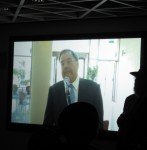
Rabbi Shlomo Riskin speaks to the Vancouver audience via webcast. (photo by Cynthia Ramsay)

Empowerment. Scholarship. Connection. Each of these words was used more than once to describe the Rebbe – Rabbi Menachem Mendel Schneerson, z”l – and his impact during the July 9 community commemoration of the 20th year since his passing.

At Chabad Lubavitch at Oak and 41st, the six B.C. Chabad Houses hosted a night of learning, with workshops and dinner, followed by a speech, via webcast, from Rabbi Shlomo Riskin, chief rabbi of Efrat, Israel, and chancellor of Ohr Torah Stone in Israel, and the video The Rebbe: Marching Orders.

Timeless Leadership: An Evening of Inspiration offered two sets of workshops from which attendees could choose. The first set comprised Turning Lubavitch Outward by Rabbi Yitzchok Wineberg of Chabad Lubavitch BC; The Rebbe’s Melodies by Rabbi Falik Schtroks of the Centre for Judaism in White Rock; and Stories of the Rebbe by Rabbi Yechiel Baitelman of Chabad of Richmond. The second set was The Wisdom of the Lubavitcher Rebbe by Rabbi Binyomin Bitton of Chabad of Downtown, and The Rebbe’s Advice by Rabbi Dovid Rosenfeld of Camp Gan Israel; Rabbi Meir Kaplan of Chabad of Vancouver Island, was unable to attend.

Among the handouts was a timeline of Schneerson’s life prior to his becoming the Rebbe. Born in Ukraine in 1902, Schneerson was considered a child prodigy and, by the time he was in his teens, he was exchanging letters with respected scholars. He married Chaya Mushka, the daughter of the sixth Lubavitcher Rebbe, Rabbi Yosef Yitzchak Schneersohn, in Poland in 1928. He then went to the University of Berlin, followed by the ESTL engineering school and the Sorbonne in Paris, while also giving Torah classes and the like. When the Nazis conquered Paris, the Rebbe and his wife managed to escape, by ship from Lisbon to New York. At his father-in-law’s behest, Schneerson became a director of multiple Lubavitch organizations and began to publish his thoughts on Chassidic tracts and write responsa. In 1951, a year after his father-in-law died, Schneerson became the Rebbe.

Wineberg, who gave a brief overview of Chabad’s history, called Schneerson “a Rebbe for our times.” A more critical problem in our age – the last 65, and especially the last 30-35, years – than assimilation, said Wineberg, has been low self-esteem. In this context, he highlighted the Rebbe’s belief that, “There is no such thing as a small Jew.” The Rebbe took what was an insular, study-focused organization and, while keeping the foundation of Torah and study, broadened its vision to include all Jews, said Wineberg, noting that the Rebbe connected with every single person he encountered. The Rebbe, he said, was the inspiration behind Chabad heading to campuses, to welcoming Jews to dinner, to prayer, to don tefillin.

Bitton provided some statistics on the Rebbe’s outreach and his scholarly contributions: he spoke on 31,393 occasions, for example, and 11,700 of his letters have been published so far; there are tens of thousands of pages of his writings. The Rebbe’s unique approach to learning, explained Bitton, is that he connected talmudic understanding with its kabbalistic translation. When the Rebbe analyzed an idea, said Bitton, he peeled its exterior layers away and got to the pure essence of the idea, the quintessential idea that was at the root of the discussion. For the Rebbe, he said, kol haTorah inyan echad, the entire Torah is one “topic.”

In telling the stories of his encounters with the Rebbe, Riskin echoed some of the sentiments shared by the local Chabad rabbis in their presentations. He compared the Rebbe to Moses, in that, as Moses is still alive in a sense because his teachings continue to be studied, the same is true of the Rebbe. “Certainly for me,” said Riskin, “because not only did he change my life, but he gave me fundamental messages by which I live my life, and which informed my world of education … and my world of the rabbinate.”

Riskin shared how he became the founding rabbi of Lincoln Square Synagogue in the mid-1960s. Having attended Yeshivah University on scholarships, he wanted to repay the institution and agreed to do some speaking engagements after receiving his ordination, one of which was at “a kind of Rosh Hashanah-Yom Kippur synagogue” that didn’t have its own building and was in what was then a poor neighborhood. They had a rabbi and were relatively satisfied but not completely, so they approached YU and, after Riskin came for one Motzei Shabbat, they wanted to hire him. When deciding whether or not to accept the pulpit, Riskin was conflicted and received conflicting advice. So, he asked for a meeting with the Rebbe, who told him to listen to his own rebbe (Rav Joseph B. Soloveitchik, z”l), adding that, “In every battle, there are people who have to get dressed like the enemy and go into the enemy territory … and you will not only win the battle, you will win the war.”

When Riskin argued that his future congregants have no background and that he would have nothing with which to work, the Rebbe said, “You can never say about a Jew that he has no background. Every Jew has a kingly background; every Jew is, after all, a descendant of Avraham, Yitzchak, Yaakov, of Sarah, Rivka, Rachel and Leah…. I left the Rebbe’s presence awestruck, and with a very profound sense of empowerment.”

Another encounter with the Rebbe took place after Riskin had spent time working with an eccentric, wealthy man who, when he met Riskin was non-observant and married to a non-Jew. After that initial meeting, Riskin accepted the man as a single member of the shul (i.e. without his wife) but later found himself doubting that decision. When he asked the Rebbe about it, the Rebbe never told Riskin whether he’d made the right decision, but rather said, “No one is able to truly evaluate the profound value of the Jewish soul.” This meant, said Riskin, that “every Jew has an affinity to Torah and you can never give up on any Jew no matter how far away he may have went. And that, too, has become a very important part of my teaching.”

When Riskin was making aliyah, he could not meet with the Rebbe directly – because of the Rebbe’s ill health following a heart attack – but he received his blessing through Soloveitchik at a farbrengen (Chassidic gathering) they were all attending. To the blessing, the Rebbe added that, in Efrat, Riskin “must produce shluchim, emissaries, who are modern on the outside and Chabad on the inside.” Riskin credits the Rebbe for his having been able to establish Ohr Torah Stone, which has, among other programs, hundreds of shluchim.

Mourning turns to joy

Passover is a traditional time for families to sit down together and celebrate a holiday of freedom and deliverance. It’s a time to catch up and share meaningful moments. For one family torn apart by the Second World War, this Passover held a special significance as they caught up on nearly 70 years of history.

For 65 years, Holocaust survivor Rabbi Gershon Chanowitz said Kaddish for his sister, Asna Mera, who he believed had been murdered by the Nazis in 1942. And, for more than half a century, Asna Mera thought that all of her siblings had perished in the Holocaust, leaving her a lone survivor. But thanks to an incredible turn of events, the children of these survivors have learned of each other’s existence and have been reunited. With a shot-in-the-dark Google search and an implausible email, the long-lost Chanowitz cousins began unearthing a mystery spanning six decades and three continents.

A mysterious email

“About a week ago, my son, Moishe, the Chabad emissary [to St. Maarten], received an email through his Chabad website from someone in Israel searching for any news of his relatives,” said Rabbi Ben Zion Chanowitz, a Chabad emissary in Monticello, N.Y., and the son of Gershon Chanowitz – who passed away this past summer at the age of 91.

An excerpt from the email (grammatically edited) read:

“Shalom. I don’t speak English well…. I am from Vitebsk, Belarus. My name is Sashe Bumginz. My mother’s surname was Chanowitz from the shtetl of Glubokoe in the Vitebsk region. In the war, all of my family perished. I am interested in all information on Chanowitz from Glubokoe.”

“I was skeptical at first,” admitted Chanowitz. “We know all of our relatives, after all.” But then a follow up email “shook everything I knew.” Bumginz sent another email detailing his family history with names, places and dates that matched up exactly with Chanowitz’s. He explained how his mother, who passed away in 2007, survived the war and raised a family. As far as he knew, no other close family survived, but he was always searching for any information he could find on his family history.

Suddenly, the largely American-based Chanowitz family was electrified. Could their father’s sister have survived the war? Could they have cousins they hadn’t known existed?

Bumginz grew up in Soviet Russia and eventually moved to Israel in the early ’90s, where he is currently living in Herzilyah with his wife and two children. When he first arrived in Israel he contacted the Holocaust centre and museum Yad Vashem, as well as other resources over the years, attempting to seek out any information they might have on his mother’s family, but every search reached a dead end.

In March 2014, on Purim, Bumginz was invited by a Chabad co-worker to a farbrengen, a Chassidic gathering to celebrate the holiday. At the farbrengen, Bumginz opened up about his history and mentioned that his family, Chanowitz, has been Chabad for generations. He asked around if anyone knew the name, and one participant mentioned that there were Chabad emissaries with that name and suggested that Bumginz use Google to find them. A short search led to the Chanowitz family of St. Maarten, and the email above was received and then forwarded to Ben Zion Chanowitz.

An email exchange ensued.

“Many of us are excited and emotional about this special family news,” said Rebbetzin Simie Schtrocks, Gershon’s daughter. Schtrocks resides in South Surrey, serving as co-director of the Centre for Judaism, Chabad’s branch serving the Lower Fraser Valley.

“It is mind blowing that after 65 years plus we should now find out that Asna Mera actually did survive, had two children and lived in Vitebsk of all places. How tragic it is that she was unaware that the Lubavitch world had continued to flourish and that she had brothers 6,000 miles away who would have been thrilled to help her.”

As the family digests this news, they are slowly discovering stories explaining the years of misinformation, and uncovering many painful details along the way.

Gershon’s story

In the early 1920s, Gershon Chanowitz was born in the town of Glubokoe, in what was then Poland, a border city that has belonged to Lithuania, Poland, Russia and Belarus in the previous 100 years. He was one of 10 children in a dynastic Chabad Chassidic family. His father, Ben Zion, was a shochet (ritual slaughterer), a follower of the previous Lubavitcher rebbe, and an important figure in the small town of 5,000 Jews.

Gershon was sent at a young age to learn in a yeshivah in Otwock, Poland, and he was there in 1941 after the war broke out. At the advice of the previous Lubavitcher rebbe, he escaped north to Warsaw and then Vilna. He found out about Chiune Sugihara, the Japanese ambassador to Kovno, who was signing visas that saved some 2,000 Jewish lives. He obtained visas for three of his siblings, and snuck back to Glubokoe to beg his father to allow him to add his youngest brother, Yisroel, to a forged family passport, allowing him to leave as well. Ben Zion, his wife and the other children stayed behind. Gershon procured visa #1785 for himself, #1836 for his oldest sister Fruma, #1841 for his brother Shmuel Avraham and #2027 for young Yisroel. It was just in time too – the last issued visa was #2039.

The four siblings traveled to Kobe, Japan, and then Shanghai, China, where they resided until they could obtain visas to the United States. During that time, Shmuel Avraham died of an illness in Shanghai. When the war was over, they corresponded with different services seeking any information about their remaining family and discovered that their parents and siblings had been killed. A fifth brother, Chaim, escaped the war, and moved to the newly founded state of Israel and then to America. Eventually, the other three siblings made it to the United States and started rebuilding their lives, establishing the large families that exist today.

When the surviving siblings in the West sought out information on exactly what had happened to their family, they learned that, one day, when the Nazis arrived in town seeking to fill a “death quota,” they went about town killing people. The remaining Chanowitz family barricaded themselves in their house. At one point, they heard desperate banging on the door and 16-year-old Asna Mera, anguished at the thought that it might be a Jew seeking refuge, and despite her family’s protest, answered the door. The German soldier standing there grabbed her and took her away to be killed. The rest of the family was killed a year later in another mass murder.

Gershon and his surviving siblings, Chaim, Yisroel and Fruma, marked their parents’ and siblings’ passing every year, and said Kaddish for them throughout their lives.

Asna Mera’s story

The day that Asna Mera opened the door to the Nazi, she was taken to a soccer field with about 800-900 other Jews. They were then boarded onto trucks to be taken to be executed. On the way, a German commander picked her, and 14 other young beautiful girls, to be taken to a German army base to be among the soldiers. At one point, Asna Mera was with a soldier who had a large knife on his belt. She grabbed the knife and stabbed him to death, running away into the woods.

In the woods, she eventually met up with her 12-year-old brother, Tzvi Hersh, who had also escaped. The two siblings were freezing in the brutal winter and starving. They remembered that their well-respected father had a non-Jewish farmer friend in a nearby town to whom he once gave a large down coat and an expensive ring. They decided to go ask the farmer, who their father had always trusted, for the coat so they could survive. Scared to go together, Tzvi Hersh went first and knocked on the door. The farmer opened the door and grabbed the young boy, tied him up and gave him to the police in exchange for a 10-kilogram bag of flour. Tzvi Hersh was hanged that day.

Asna Mera miraculously survived the war, thinking she was a lone survivor. In her attempts to find her siblings, she traced them to Vilna but then their trails disappeared. She never found out what happened to them. At age 39, she married and moved to Vitebsk, which at that point was a part of Soviet Russia. She had two sons, one Simeon/Ben Zion, named after her father, and another, Sashe/Sholom Ber. Despite communism’s harsh shadow, she raised them as religious Jews.

After the fall of the Iron Curtain, Sashe moved to Israel. Asna Mera once visited in the early 2000s, and went to Yad Vashem herself, where she again tried to seek out more information to no avail.

After the war, Asna Mera discovered the heartbreaking news that the day after she killed the German soldier, the Nazis returned to Glubokoe and killed 150 people in retaliation. She suffered under the shadow of this horrific event all her life.

“She had very little happiness in life,” said Sashe. “She went through so much during the war.” And, when her oldest son Ben Zion was brutally killed while serving in the Russian army (he was thrown off a train by his comrades), she was devastated anew. “She was always quiet and withdrawn and broken.”

“We all wish she at least had happiness,” said Schtroks upon learning the news. “And she still did from her surviving son, passing down the family tradition and maintaining a legacy. We are just sad that although my father and his siblings tried so hard to find missing relatives, they did not find her in time to help her and ameliorate her situation.”

A family reunited

Despite the painful history that they learned along the way, the Chanowitz and Bumginz family are overjoyed at the discovery of one another, and eagerly looked forward to an emotional meeting in person after the Passover holiday. Benson, the son of Yisroel Chanowitz, was the first one of the family to meet Sashe during the intermediate days of Passover last week.

Rabbi Ben Zion Chanowitz recalled a story of his father during his yeshivah years in Poland right before the war, when he had the unique opportunity to observe the Passover seder of the previous Lubavitcher rebbe.

“A Chassid at the table asked the rebbe how we can be celebrating the holiday of freedom while we are still in exile – suffering under the threat of communist Russia and Nazi Germany. The rebbe sagely replied that ‘The redemption in Egypt showed us that you can leave, even if you are in the deepest exile.’”

This year, as Jewish families all over the world gathered to retell the miracles of old, they had a biblical obligation to feel “like they themselves left Egypt.” As they relived their family history, both the darkest moments and the miraculous survival, the Chanowitz and Bumginz families celebrated the miracle of redemption like never before.

– This article was originally published on lubavitch.com and is reprinted with permission.

Passover always takes place in the spring

This year, Pesach begins at sundown on Monday, April 14, and continues through to Tuesday, April 22. The Exodus from Egypt was ordained by G-d to take place in the month of spring. Moreover, the Torah has ordained that special care should be taken to ensure that Pesach always occurs in spring, as it is written: “Observe the month of spring and keep the Passover unto G-d your G-d, for, in the month of spring, G-d your G-d has brought you out of Egypt by night.” (Deuteronomy 16:1)

To ensure that Pesach should indeed occur in spring, in view of the fact that our calendar is based on the moon and the lunar year is about 11 days shorter than the solar year, while the four seasons are determined by the sun, our calendar provides a “leap year” once every two or three years with the addition of a whole month, Adar II, as it did this year. In this way, the lunar year is “reconciled” with the solar year, and Pesach always occurs in the spring. All of the other months of the year, and all our festivals, are regulated accordingly, so that they, too, occur in their due season.

The circumstance of the Exodus from Egypt having been in the spring is explained by our sages as a special Divine benevolence in taking the Jews out of Egypt during the best time of the year. Pesach falls in the middle of the month of Nissan, when nature reveals its greatest powers. We can see and smell blossoms on trees, watch fruit appearing from buds and hear the song of the red-breasted robin.

In fact, there is a special blessing that the rabbis composed for Nissan, for the coming of springtime, that is to be recited when seeing a fruit tree bearing fruit: “Blessed are you, Lord our G-d, King of the Universe, who has made nothing lacking in His world, and created in it goodly creatures and goodly trees to give humankind pleasure.”

The blessing is said just once a year, preferably in Nissan, but if one didn’t get a chance to say it then, it can also be said in Iyar, the next Hebrew month. Our relatives in South Africa recite this blessing in the months of Elul and Tishrei, as that is when their spring occurs.

The great descriptions that appear in King Solomon’s Song of Songs (Shir Hashirim) include “the times of the rain are passed, the time of the songbird has arrived, the blossoms of the trees are seen throughout the land.” This refers to the Land of Israel, where springtime is warm but not summer hot, and the threat of rain all but gone for the year. The smell of spring and renewed life fills people’s souls, and this season in the holy land of Israel is the beloved partner of Pesach, the holiday of renewal and redemption, optimism and hope. Pesach weather carries with it special blessing and encouragement.

When we were taken out of Egypt by G-d’s outstretched arm, we became a nation. In fact, G-d loves us so much that He came down and took our ancestors out Himself, instead of sending an angel to perform the task. As it is written in the Haggadah, in the portion beginning with “Avadim hayeenu,” “We were slaves,” it says, “We were slaves to Pharaoh in Egypt and

G-d our G-d took us out of there with a strong hand and with an outstretched arm. If the Holy One, blessed be He, had not taken our fathers out of Egypt, then we, our children and our children’s children would have remained enslaved to Pharaoh in Egypt.”

Here in Canada, and indeed in so many places, spring arrives with Pesach, however the weather isn’t necessarily springlike. As a child in Toronto, I remember one Pesach having to be carried by my father during the holiday over snow-covered sidewalks. As a teenager in Florida, we were able to have guests over during Pesach and sit outside for our seder. Having lived in Vancouver for more than 30 years, I have experienced Pesach in pounding rain, as well as in sunshine and warmth.

Pesach is, of course, celebrated by Jews the world over. Our dear daughter and her husband, as emissaries for Chabad, will be hosting more than 30 people in their small apartment in Turin, Italy, for the seders, for example. I wish you and your family a very happy and kosher Passover wherever you will be this Pesach – and whatever the weather. Enjoy!

Esther Tauby is a local educator, writer and counselor.