Skip to content
  • Home
  • Subscribe / donate
  • Events calendar
  • Business Directory
  • FAQ
  • News
    • Local
    • National
    • Israel
    • World
    • עניין בחדשות
      A roundup of news in Canada and further afield, in Hebrew.
  • Opinion
    • From the JI
    • Op-Ed
  • Arts & Culture
    • Performing Arts
    • Music
    • Books
    • Visual Arts
    • TV & Film
  • Life
    • Celebrating the Holidays
    • Travel
    • The Daily Snooze
      Cartoons by Jacob Samuel
    • Mystery Photo
      Help the JI and JMABC fill in the gaps in our archives.
  • Community Links
    • Organizations, Etc.
    • Other News Sources & Blogs
  • JI Chai Celebration
  • JI@88! video

Recent Posts

  • SFU honours Gloria Gutman
  • Lifting people’s spirits
  • Wedding a ray of light
  • Indigeneity and Zionism
  • Rule of law broken: councilor
  • Football and its roles
  • The burden of defence
  • Fish Café returns after fire
  • All right in what goes wrong
  • Nuns & mermaids at TUTS
  • Camp offers holiday retreat
  • Students and mentors inspire
  • Once-in-a-lifetime trip
  • 100 dancers, one heart
  • Money for the sciences
  • What “Jewish food” means
  • Have a cookie, schnitzel too
  • Federation now across BC
  • Israel fighting for its existence
  • Deal strengthens Iran
  • Patriotic belonging diminishes
  • A campaign to engage
  • Upstanders’ first live event
  • Responding to Carney
  • Having your own home
  • Music a family tradition
  • Musical to warm heart
  • Community milestones … June 2026
  • Sharing her passion for Israel
  • Or Shalom reopens its doors
  • JFS from past to future
  • Need holistic approach
  • Sharing stories, advice
  • Journalist shares fears
  • Skills to live together
  • Road to independence

Archives

Follow @JewishIndie
image - CJN box ad Rockowers 2026

Tag: photography

Picturing connections

Picturing connections

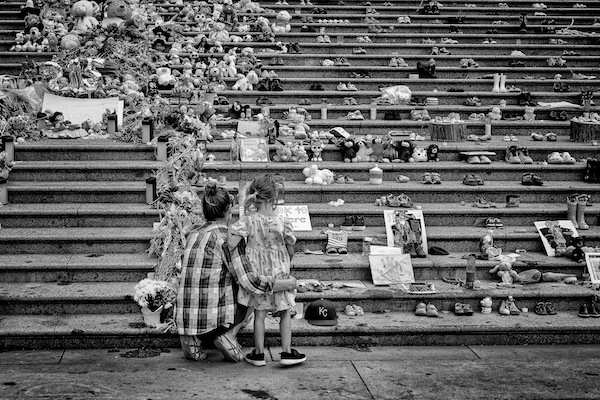
“Remembrance” by Michael Shevloff. Part of PhotoClub Vancouver’s Connections exhibit at Zack Gallery until June 27.

Whenever a photographer – amateur or experienced – snaps a picture, they establish a connection between themself and their subject. They shout to the world that this image at this time and in this place is an important occurrence and should be preserved and treasured.

The PhotoClub Vancouver group show, Connections, opened June 2 at the Zack Gallery. People and birds, industrial cityscapes and soothing nature shots, close-ups and panoramas – every image in the exhibit tells a story about the world and the photographer’s place in it.

The club was officially established in 1998. Its friendly, non-competitive environment for photographers of all skill levels encourages members to develop their technical and artistic abilities through various activities, including peer critique, field trips, workshops and seminars. And, of course, exhibitions like Connections, which allow members to share their art beyond the group.

Some of the photographers took the Connections theme literally, like Ivor Levin’s “Roped In.” The orange ropes in the image are taut and sure, but the objects they hold together are left outside the frame. Only the connection itself is important to the artist.

A similar approach characterizes Lynn Copeland’s “Cranes and Planes.” The image’s graphic simplicity is almost abstract, as the harsh lines of the industrial cityscape, viewed on the background of the distant sky, induces the sense of a steel labyrinth where any uninitiated human would be lost.

Barb Kaiser’s “Hanging Around” also includes ropes as the connecting medium, but the feeling it inspires is vastly different. A window washer hangs in his harness in the foreground, doing his job. Behind him, a skyscraper-studded panorama of North Vancouver is visible in all its urban majesty. We are all connected, the image seems to say, in every window of every building.

Unlike the stark, sharp-angled industrial imagery, logical and attractive on a cerebral level, the pictures reflecting nature flaunt softer lines. They appeal to our emotions. For example, Terry Beaupre’s “Canada Geese Flying Off Together” depicts two geese. Their dark silhouettes soaring together on the background of a pink sunset evoke ideas of love and companionship. “I couldn’t have asked them to pose more perfectly for me,” Beaupre says in her artist’s statement, although she admits that she painted the dramatic colours of the sunset later on, to enhance the picture.
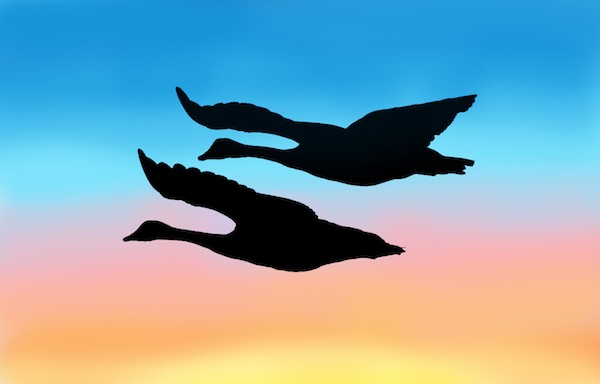
photo - Terry Beaupre’s “Canada Geese Flying Off Together”
Terry Beaupre’s “Canada Geese Flying Off Together.”

The grace of a couple in love is also implied in another bird picture – Levin’s “Peck.” The two doves in the image are sharing a kiss. Or maybe they are sharing a bug to eat. Whatever they are sharing, their affection for each other is unmistakable and heartwarming.

The charm of the loving doves is absent in Drago Tutnjevic’s “Bus Stop.” The four people standing in line to board a bus are strangers. Their estrangement is made even more obvious by the fact that three of them are absorbed in their phones. The one not on the phone looks straight ahead, thinking her own thoughts. No doubt, each of the passengers has multiple connections – their friends, family and others – but here, at this bus stop, nothing connects them except the expectation of the bus itself. The photo reflects the complex networks that link us all, as well as the separateness of every person in our huge technology-permeated world.

In contrast, a simple path in the park, portrayed in John Konovsky’s “Onward No Matter What,” reminds us of the mysteries of childhood adventures and the romantic wandering of our youth.

Another image reminiscent of the joy of childhood is David Beaver’s “Balloon Man.” Even in black and white, the man holding bunches of balloons in both hands brings to mind birthday parties and vacation frolicking. The photo is part of the club’s Henry Ballon B&W Challenge.
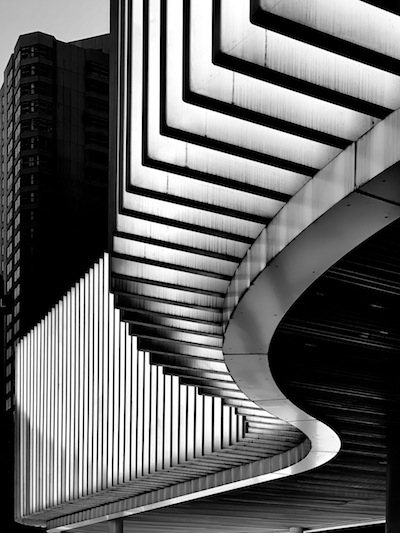
photo - "Line S" by Ivor Levin
“Line S” by Ivor Levin.

An entire wall of the gallery is reserved for the black and white photographs, by different photographers, all parts of the challenge, which was started in 2015 in memory of the late Henry Ballon. Ballon was an avid monochrome photographer and advocated photography with minimum retouching by any software. Club members honour Ballon by creating their own art using his principles. The photos demonstrate how deep the artists can reach, even if their expression palette is limited to the gradations of black and white.

But the most visceral and poignant image in this exhibition is “Remembrance” by Michael Shevloff. A mother crouches beside her young daughter in front of a staircase. Their backs are to the viewer. They face the stairs together, just like everyone who looks at this photograph. And on the stairs reside memories. Toys. Shoes. Hats. Books. No people. What does this young mother tell her child? Who were the owners of the objects on this staircase? What happened to them? Where? When? The photograph raises many questions, and all of them remain unanswered – unless the artist decides to answer them, which Shevloff did.

“The photo was taken at the Vancouver Art Gallery, where there was an outdoor installation commemorating the discovery of the unmarked graves found at a residential school recently. It affected many people and brought a dark period of history to light. Flags were lowered across Canada for many months.

“I took the photo on July 1st of 2021. Normally on Canada Day, there are parades and many people celebrating our history. However, last year, with the pandemic and the dark events I mentioned above, it seemed like no one was celebrating our national day.

“In the photo a woman is talking to her child. In my mind, I tried to imagine how she would be explaining the memorial and the events surrounding it to her daughter. Just as the memory of the dead children is elicited by the installation, the mother and child are also photographed from behind and also remain nameless in time.”

Connections is on display until June 27. For more information, check out photoclubvancouver.com.

Olga Livshin is a Vancouver freelance writer. She can be reached at [email protected].

Format ImagePosted on June 24, 2022June 22, 2022Author Olga LivshinCategories Visual ArtsTags PhotoClub Vancouver, photography, Zack Gallery
Chance to meet local artists

Chance to meet local artists

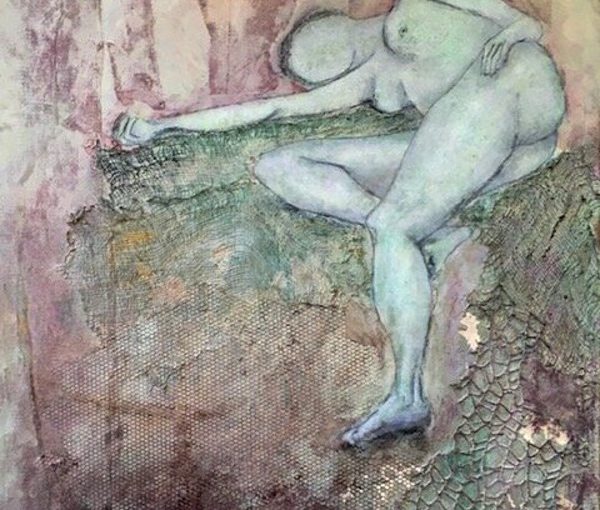
“At Rest” by Dov Glock, mixed media. Glock is one of several Jewish artists participating in this year’s West of Main Art Walk. (from artistsinourmidst.com)

The West of Main Art Walk Preview Exhibition and Sale kicks off at the Roundhouse Community Centre May 18-19. The West of Main Art Walk itself welcomes guests into artists’ studios May 28-29. Among the artists participating are many from the Jewish community, including Michael Abelman, Olga Campbell, Dov Glock, Pnina Granirer and Lauren Morris.

The preview – which is open for visitors 10 a.m. to 9 p.m. both days – features a reception at the Roundhouse on May 19, 7-9 p.m. Preview visitors will be able to buy the work of some of the 80 local artists taking part. There will be paintings, ceramics, jewelry, textiles and photography, as well as free art demos.

Artwork will also be for sale on the walk, which includes studios from Point Grey to Main Street, and from Granville Island to 41st Avenue over the May 28-29 weekend. Dozens more artists are showing their works all under one roof in larger hubs like Aberthau Mansion, Art at Knox and Pacific Arts Market. There, you’ll also find art demonstrations and more. At Lord Byng Mini School for the Arts, you’ll discover young emerging artists.

Also part of the month’s events is the annual (since 2018) Art for All Fundraiser. More than 70 artworks have been donated – and all are on sale for $50 each. Proceeds will go to the art program at Coast Mental Health. Its resource centre’s art room opened in 2000, and is a place where clients discover their creative potential while developing new ways of expressing emotions, healing pain and growing their self-esteem and self-awareness. Supported by volunteers – including clients and professional artists and art instructors – who give their time, feedback and encouragement, clients are able to work in a number of media, including paint and sculpture; supplies are provided. An annual art show brings together the artists, other resource centre members and Coast clients, family and friends and the general public to celebrate their work and their journey towards recovery.

Granirer, who was a co-founder of the very first open studios walk in Vancouver in 1993, is doing something a little different from the main event. On May 18, 7 p.m., at the Roundhouse, she is launching her poetry-art memoir, Garden of Words. (For more on the book, see jewishindependent.ca/poetry-and-painting-flourish.) Some of the paintings featured in the book will be exhibited and the books will be available during the whole time of the preview and at Granirer’s studio during the walk weekend.

photo - Pnina Granirer in her studio
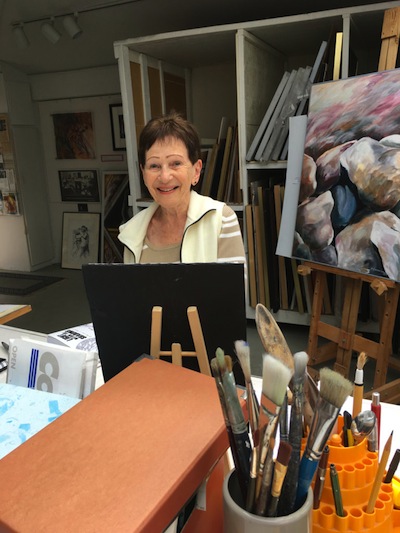
Pnina Granirer in her studio. (photo from Pnina Granirer)

During the walk, Granirer is inviting people to her studio, where she will be offering her works for 50% off, with proceeds being donated to Stand up for Mental Health, which has helped people suffering from mental health issues to do away with stigma all over Canada, the United States and Australia.

Artists will be opening their studios from 11 a.m. to 6 p.m. on May 28 and 29. This is a unique opportunity to meet the artists, enjoy the art and ask questions. More information and the interactive online map can be found at artistsinourmidst.com.

– Courtesy Artists in Our Midst and Pnina Granirer

Format ImagePosted on May 6, 2022May 4, 2022Author Artists in Our Midst & Pnina GranirerCategories Visual ArtsTags art, Artists in Our Midst, Coast Mental Health, Dov Glock, jewelry, Lauren Morris, mental health, Michael Abelman, Olga Campbell, painting, photography, Pnina Granirer, poetry, sculpture, tikkun olam, West of Main Art Walk
Art show with a holiday feel

Art show with a holiday feel

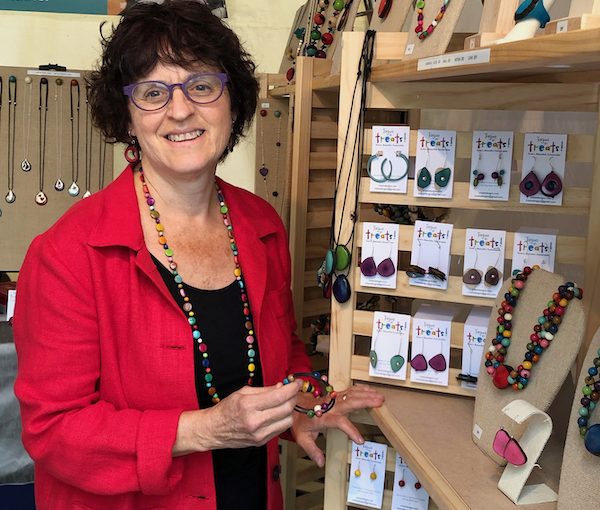
Ande Axelrod has developed a partnership with artisans in the village of Sosote, Ecuador, as her source for tagua beads. (photo from Zack Gallery)

The current show at the Zack Gallery, Affordable, opened on Nov. 17. It delivers on its name’s promise. Every item on display is less than $250 and thus in the realm of affordability for many people, not just art connoisseurs.

“That’s what I wanted for the Zack Gallery from the beginning,” said gallery director Hope Forstenzer. “I wanted to deepen the involvement of the JCC community in the gallery, wanted the art within people’s reach.”

Accordingly, this show looks more like a holiday craft fair than a high art exhibition.

“I don’t believe in the separation of art versus craft,” said Forstenzer. “For me, craft is another word for art, but art that is functional and affordable, designed for enhancing your life and your home rather than a wall of a museum. I hope we can make such a show an annual event.”

To achieve the artisan market feel, Forstenzer invited 10 artists in different media to participate. “They are all local B.C. artists,” she said. “Some Jewish, some not. I wanted to cater to different tastes, to represent different artistic fields. I wanted the show to be fun.”

photo - Ceramics by Hitomi McKenzie
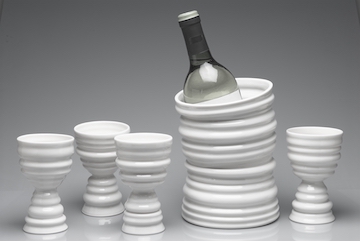
Ceramics by Hitomi McKenzie.

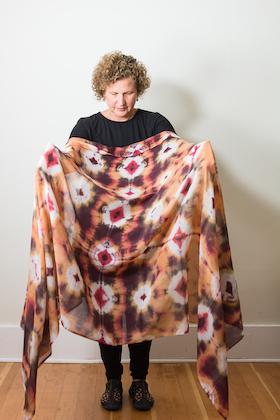
The atmosphere of the show is jazzy and welcoming. The giclée prints of well-known Vancouver artist Linda Frimer glow with greens and blues. The glass and jewelry twinkle. The ceramics by Hitomi McKenzie stand proud and bright. Mariana Frochtengarten’s colourful shawls in Shibori patterns add a touch of elegance.

Frochtengarten teaches textile art at the Jewish Community Centre of Greater Vancouver. “This is a great opportunity for me to show the community my personal work,” she said. “My work is based on the principles of Shibori – a Japanese manual tie-dye technique. I combine the ancient Japanese tradition with a contemporary approach.”

She works with natural fibres, mostly cotton and linen, and has been working as a textile artist for more than 25 years. “My way into textile art was a bit accidental,” she told the Independent. “I was born in Brazil. When I was in high school, I took a batik class for a hobby, but I fell in love with it.”

After graduating from high school, she studied at Fine Arts and Education University in Brazil and later completed her master’s in fine arts (textiles) at Nova Scotia College of Art and Design, in Halifax. “For 17 years, I worked with batik,” she said. “I had a business in Brazil and sold my works in stores, galleries, shows and fairs. I also experimented with some Shibori. I slowly moved on to my own form and interpretation of Japanese Shibori after moving to Canada in 2006. I love the elements of surprise involved in the process of Shibori and I am fascinated by the idea of creating different designs by blocking areas of the fabric before dyeing it.”

Another artist who works with an unusual material and technique is Ande Axelrod. Her company, Treats Designs, produces whimsical and sophisticated tagua jewelry: necklaces, earrings, pendants, and bracelets. Axelrod is very enthusiastic about her artistic creations. “Tagua is known as ‘vegetable ivory,’” she explained. “The tagua palms are native to the rainforests of Ecuador and other South American countries. The nuts grow and harden inside their seedpods. Some tagua nuts can grow up to six centimetres. Once the seedpods are ripe, they’re picked, and the seeds are dried in the sun, peeled and polished.”

The creamy white substance of the nuts is incredibly hard, similar to elephant ivory, hence the name. According to Wikipedia, a mature tagua palm can produce up to 20 pounds of vegetable ivory a year.

“Tagua nuts have been used as a substitute for ivory since the early 20th century,” Axelrod said. “The local masters carve the nuts into a variety of beads and buttons and dye them using bright natural colours.”

photo - Mariana Frochtengarten shows of one of her colourful Shibori shawls
Mariana Frochtengarten shows of one of her colourful Shibori shawls.

She is thrilled to use tagua nuts as the base for her jewelry. “I worked as a graphic designer for more than 25 years. In 2011, a friend and I took some jewelry making classes and I explored a variety of media and techniques. The next year, I discovered tagua while traveling in South America. I was dazzled by the colours, and I loved how light and comfortable the pieces were. You could wear a bigger statement necklace or a pair of earrings and not have a sore neck or headache at the end of the day.”

The sustainability and eco-friendliness of tagua sealed the deal for her. “I wanted to save elephants and I was truly inspired by the vast creative potential of this versatile natural material. It also provides an economic incentive for the local communities to protect the rainforests,” she said.

Since then, Axelrod has developed a partnership with artisans in the village of Sosote, Ecuador, as her source for tagua beads. “Before COVID, I’d made annual visits to Ecuador each February. It gave me the opportunity to work with tagua throughout the process, from seed to bead. Of course, like everyone else, I’ve had to improvise these past two years. Zoom, WhatsApp, FedEx and Western Union have enabled me to stay in touch with my South American partners and get tagua here for me to create my jewelry.”

While Shibori scarves and tagua jewelry may more easily be thought of as unique artwork in the Vancouver context than photography perhaps, Michael Shevloff proves that he is an unquestionable master of the camera, producing his own singular creations. His images, both in colour and in black and white, are statements of his love for British Columbia: its forests, its mountains, its waterways, its streets.

“I do predominantly nature photography,” he said. “However, I also shoot street photography, portraits, and many other genres, both digital and film.”

For this show, Shevloff offers framed and matted photos and photo coasters. “In the past, I also produced books of my photos, collages, cushions and more. I even put one of my images on my phone cover. The choices are many, and there are online firms, as well as local places, that specialize in putting images on almost any surface.”

He has been taking photographs since he was a teenager. “That was a long time ago,” he joked. “I have albums filled with photographs from places I have worked and traveled throughout the years.”

For Shevloff, photography has always been a hobby, while he worked in information technology. It remains a hobby in his retirement, although he obviously has more time now to immerse in his artistic endeavours.

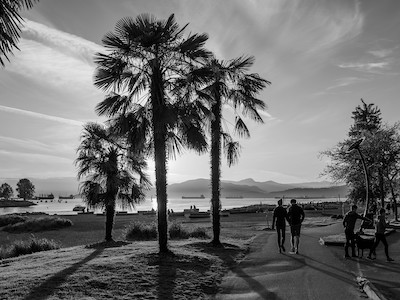
photo - “Tropical Vancouver,” by Michael Shevloff
“Tropical Vancouver,” by Michael Shevloff.

“I have taken classes with professional photographers to hone my craft. And I belong to two photo clubs in Vancouver,” he said. “Vancouver PhotoClub is a well-organized group with monthly meetings and outings. I enjoy being a part of that club because they have assignments, which gives me a challenge and focus each month. They also organize exhibits, which gives me an opportunity to show my work.”

He belongs to the West End Photographic Society, as well. “That one is dedicated to film work and darkroom processing,” he explained. “They also organize exhibits. I enjoy the challenge of working with film and working with prints.”

The 10 artists of this show incorporate different art forms, different artistic philosophies, different ethnic roots and different price ranges. But one fact unites them all – every piece of art in the gallery for the next month is affordable.

The exhibit continues until Dec. 31.

Olga Livshin is a Vancouver freelance writer. She can be reached at [email protected].

Format ImagePosted on December 10, 2021December 8, 2021Author Olga LivshinCategories Visual ArtsTags Ande Axelrod, arts, crafts, exhibit, Hope Forstenzer, jewelry, Michael Shevloff, photography, textiles, Zack Gallery
Photographing the rebellious

Photographing the rebellious

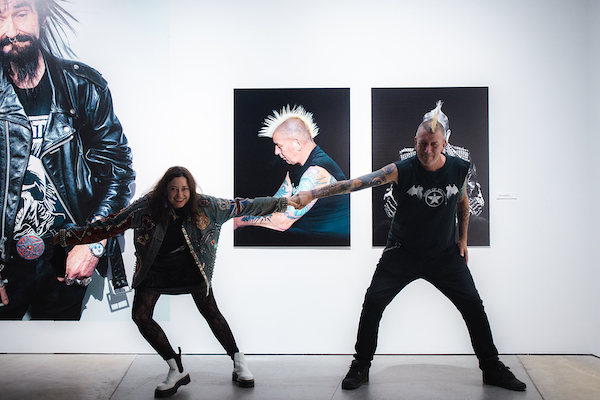
Photographer Dina Goldstein and Myles Peterson, one of her model-collaborators, at Goldstein’s OG Punk exhibit, which is at the Polygon Gallery until Jan. 2. (photo by Dina Goldstein)

Walking past the Polygon Gallery in North Vancouver, it is hard not to be drawn to the photographs adorning the walls. The powerful portraits of self-described original – OG – punks were taken by Jewish community member Dina Goldstein, whose work is known for its thought-provoking social commentary.

The exhibit OG Punk is on display at the gallery until Jan. 2. Curated by Helga Pakassar, it comprises portraits of major figures from the punk rock scene in Vancouver and Victoria, which were taken by Goldstein over the past year. It is accompanied by an audio guide written by author Michael Turner.

Turner notes, “Goldstein gave her model-collaborators little instruction on what to bring to their shoot, apart from their ‘leathers.’ As for poses, these too were left to the model-collaborators, though it should be noted that the poses chosen for display, as portraits, were decided by Goldstein and exhibition curator Helga Pakasaar.”

“I met some of my model-collaborators by chance around my neighbourhood,” Goldstein told the Independent. “They are artists, musicians and punk devotees; most of them over 50, in punk regalia, hairdos, piercings and tattoos. I was excited by their stories and memories of their time as punks during the late ’70s, ’80s and into the ’90s. There was a vibrant punk scene in Vancouver and Victoria, with local bands, like DOA, incorporating activism and social commentary into their music.

“I have always been attracted to individualism – those who openly express themselves, are unconventional and live an authentic existence,” she said. “Some of the punks were ailing and not well. Some key figures had already passed. Most recently, the iconic Chi Pig, who passed a couple of years ago. I felt an urgency to document this generation of local punks. The project evolved into a series when I was able to collect a good amount of participants.”

Among the participants featured are Murray “The Cretin” Acton, Myles Peterson and wendythirteen. Goldstein sent out questionnaires to better understand the participants. Turner discusses some of the responses to the questions – such as “Has punk changed much since the 1980s?” and “Is punk here to stay?” – in the audio guide, the script of which can be found at mtwebsit.blogspot.com/2021/11/og-punk-2.html.

Though none of the model-collaborators to date are Jewish, Goldstein noted that she “will be continuing to photograph more people for this series in January.”

As for what punk means to her, Goldstein said, “I have always been rebellious. I am non-conventional and have a DIY mentality. My photography requires critical thinking and is a form of activism. My art has been described as satirical, irreverent and subversive.

“As one of my model-collaborators Lisa Jak said and I totally agree: ‘Anywhere and anytime that there is oppression, ignorance, intolerance and f–king stupidity – some punk will be there to question and fight it!’”

Format ImagePosted on December 10, 2021December 8, 2021Author Cynthia RamsayCategories Visual ArtsTags exhibit, history, photography, Polygon Gallery, portrait, punk

Poems and photos meld

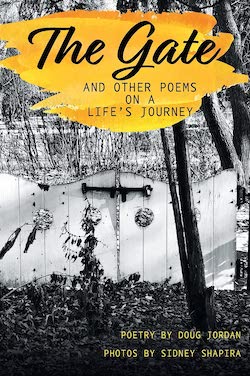
For anyone who has thought about publishing their own story, poems, photos, artwork – really, anything they have created – The Gate and Other Poems on a Life’s Journey (FriesenPress) should be an inspiration to just do it already.

This book of poetry by Winnipeggers Doug Jordan, with editing and photography by my cousin Sidney Shapira, is a wonderful example of what we are capable of creating when we stop thinking about maybe doing something and act. It also affirms the benefits that can be reaped by working with someone on an endeavour, not only for encouragement but for holding ourselves accountable to whatever vision we may have, and bringing it out of our heads and into being.

image - The Gate and Other Poems on a Life’s Journey book coverIn Shapira’s introduction, he acknowledges that Jordan’s target audience for this collection is his family, friends – in particular, friends who had also lived on the Shilo army base, near Brandon, Man., as kids – and former students. While this is probably the audience who will most revel in this publication, there are poems that will speak to everyone, about love, work, grief and other universal themes. They date from 1965 through to 2021.

Shapira has thoughtfully chosen photos of his that would complement various poems – all in black-and-white, to match the sombre mood of Jordan’s writings. The collection doesn’t leave readers in a sombre mood, however, perhaps because of the rhyming, which may not suit everyone’s tastes. Jordan explains his choice in a note at the end of the book:

“I enjoy poetry that rhymes and has rhythm,” he writes. “It is easier to read. Most poets prefer a form of free verse and their message is completely lost to many of their readers as they try to uncomplicate the poet’s words. This is when, as a teacher, we often hear ‘I hate poetry.’ No wonder. They can’t understand it, and don’t get me going on Shakespeare and others of that ilk.

“I say, if you are a poet and have a message or a story to tell, try do so in its most understandable terms.”

But don’t confuse rhythmic with simplistic. As Shapira notes, “Doug’s poems never meet his own standards after one draft; for example, ‘The Streets of Copenhagen’ took 10 years to achieve ‘finished’ status.”

The Gate truly represents a journey – one to which all of us can relate.

Posted on November 19, 2021November 18, 2021Author Cynthia RamsayCategories BooksTags Doug Jordan, photography, poems, poetry, Sidney Shapira, Winnipeg
Culture Crawl’s 25th edition

Culture Crawl’s 25th edition

Esther Rausenberg, Eastside Arts Society’s artistic and executive director. (photo by Adam P.W. Smith)

The Eastside Arts Society welcomes art enthusiasts to celebrate the 25th anniversary of the Eastside Culture Crawl Visual Art, Design & Craft Festival in-person and online over two consecutive weekends, Nov. 12-14 (preview by appointment) and Nov. 18-21. The event’s landmark edition will offer arts patrons an enhanced opportunity to fully customize their experience and visit the studios of 400+ artists.

“As we look back on the past 25 years of the Eastside Culture Crawl, we are incredibly proud of the strong, resilient and inspiring visual arts community we have helped to support,” said Esther Rausenberg, artistic and executive director of the Eastside Arts Society, who is a member of the Jewish community.

“Through our annual Culture Crawl celebration,” she said, “we have not only boosted the careers and livelihoods of countless artists who enrich our city through creative vitality, but we have provided an essential outlet for the public to experience artistic expression and creative connection. The 25th annual Culture Crawl presents a special opportunity to acknowledge, pay tribute to and showcase the extraordinary talents and accomplishments of the visual arts community, while looking forward to an even brighter future ahead with the development of the Eastside Arts District.”

To maximize the Crawl experience and open accessibility for all patrons in Metro Vancouver and beyond, the Eastside Arts Society has created further improvements to its digital presence, including a newly designed and user-friendly website, an artist livestream schedule, appointment booking software and increased access to artists through 360° virtual studio tours.

For those visitors who wish to attend in-person, the Culture Crawl features two options. Based on overwhelmingly positive feedback from 2020, when studio appointment bookings were created for the first time, this year’s event will once again provide a preview weekend Nov. 12-14, reserved for appointments only, cultivating an intimate, interactive experience for both artists and guests. For those Culture Crawl enthusiasts wishing for a more traditional event experience, open studios will return for the event’s main weekend Nov. 18-21.

The Eastside Culture Crawl presents unparalleled access to visual artists practising a variety of different art forms, including painting, sculpture, pottery, photography, jewelry, glass art, furniture, and more. Visit culturecrawl.ca for all the festival details.

– Courtesy Eastside Arts Society

Format ImagePosted on November 5, 2021November 4, 2021Author Eastside Arts SocietyCategories Visual ArtsTags art, Eastside Arts Society, Eastside Culture Crawl, furniture, jewelry, painting, photography, pottery, sculpture, studio tours
Capturing nature in photos

Capturing nature in photos

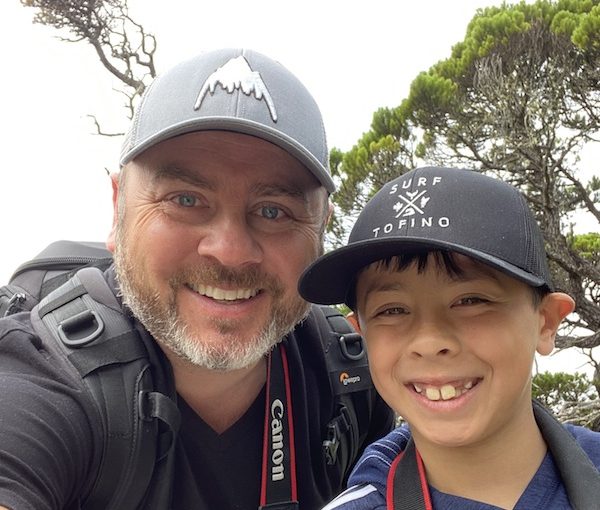
Micah Groberman with his son, Evan. (photo by Micah Groberman)

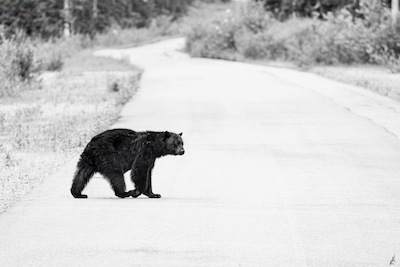
The current photography exhibit at the Zack Gallery, Discoveries: A New Way Forward, allows visitors a peek into the wilderness of British Columbia. A bird serenades the sunset. A bear crosses a road. A coyote glares into the camera. Even a Whistler bridge seems to lead to an adventure in the forests and mountains of our province. The photographer, Micah Groberman, talked to the Independent about his art and how the pandemic set him on his new creative course.

“Before the pandemic, I had a business with a partner, Ivan Solomon. We did many different things, but mostly we designed wall murals for children’s stores, hospitals and private clinics,” said Groberman. “After the pandemic hit, we couldn’t do it anymore, couldn’t stay inside the enclosed spaces for the long time it takes to create a large mural. Many places closed. School was canceled. I had to stay at home and take care of my sons.”

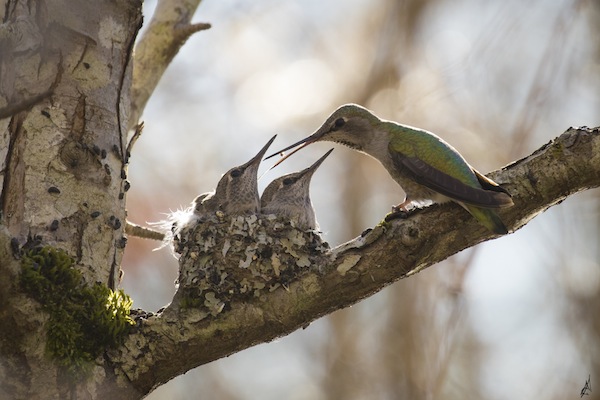
photo - Micah Groberman’s photo of a hummingbird feeding her babies was featured on CBC
Micah Groberman’s photo of a hummingbird feeding her babies was featured on CBC.

For Groberman, instructing his elementary school sons from a set curriculum was frustrating. “I’m not good at math,” he joked. So he found something else to do with his boys. He shared his passion for nature with them. They went for walks in local parks. And they took photographs.

“I started taking photos when I was about 9,” Groberman recalled. “It was with a simple camera, the point-and-shoot kind. I enjoyed it and did it for a long time, simply for myself and my family. During COVID, my photography took a more serious turn. I wanted to do it well. I wanted to learn. I watched videos on YouTube. You can find all sorts of useful tips online. I got myself some professional gear, a large camera. And I took photos. Many, many photos. I learned by doing.”

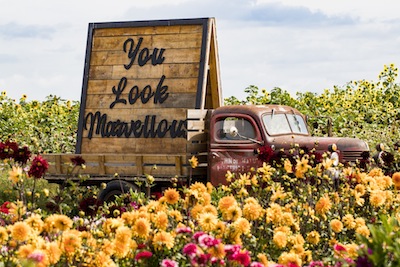
Groberman classifies his images into three categories: landscape, wildlife (which includes all his animal and bird shots) and fine art. The last category is the most inclusive. It overlaps with landscape and boasts some unusual shots, like a PNE ride from a rare angle or an old pickup surrounded by flowers that displays an uplifting message in its cargo bed.

photo - Micah Groberman took this photograph last year at the Richmond Sunflower Festival
Micah Groberman took this photograph last year at the Richmond Sunflower Festival.

“I took it last year at the Richmond Sunflower Festival,” Groberman explained. “The organizers put the old truck among the flowers, and I thought it looked interesting.”

Many of his images, especially of wildlife, are fascinating because he has sought them out. In addition to artistic skill and adequate hardware, nature photography requires a great deal of perseverance and patience. Groberman has both.

“The bear that crosses the road – I took this picture from my car,” he said. “We were in Whistler, driving around, looking for bears. It took us three hours, until one walked out of the woods.”

Another of his amazing wildlife shots is a coyote on a piece of driftwood. “I noticed him hiding in the bushes on the other side of a stream in Richmond. I followed him for about five minutes, with only glimpses, until he came out and stared at me. I took the shot, but I was glad there was water between us.”

While taking his own photos, Groberman tried to share his knowledge with his sons. “My younger son wasn’t that interested,” he said, “but my older son, Evan, took to photography. I taught him, and he inspired me. Many of my photos in this show I took when I was with him. I think teaching him made me a better photographer.”

Groberman hadn’t ever exhibited his photos prior to the pandemic. He had never even thought about doing so. “It was just a hobby,” he said. “But, in 2020, I participated in a group show at the Zack. A couple of my son Evan’s photos were also on display. That’s how I first met Hope [Forstenzer], the gallery director.”

photo - It took a few hours of searching before Micah Groberman came across this bear and took its picture
It took a few hours of searching before Micah Groberman came across this bear and took its picture.

According to Groberman, the current show was supposed to be a double feature, including a sculptor as well. “But the sculptor didn’t happen,” he said, “so it became my solo photography show. There are 37 images in the show: 30 are mine, seven are Evan’s. We have a show together.”

The name of the show – Discovery – came from the experiences shared between father and son. “Our walks together were bonding,” said Groberman. “We discovered things together. Evan discovered new skills. I discovered a new way to move forward and I discovered teaching. That’s where the name of the show came from.”

Groberman hopes that his wall mural business will recover once the pandemic ends, but he also sees several new avenues for his creativity.

“I want to do more with my photography,” he said. “I’m exploring different options, trying to establish myself locally. I went to stores to offer them prints of my photos and postcards. I rented a bunch of my prints to a movie set. I entered local contests. One of my photos – a mama hummingbird feeding her babies – was featured on CBC. Another – a photo of a heron – won the Richmond banner contest last year in the nature category. You will see my heron on the streetlights in Richmond. I have an Instagram account. I’m just starting with photography, but I want to see where I can end up.”

Discover opened on Oct 4 and runs until Nov. 7. Learn more about Groberman’s work at micahgphotography.com.

Olga Livshin is a Vancouver freelance writer. She can be reached at [email protected].

Format ImagePosted on October 22, 2021October 23, 2021Author Olga LivshinCategories Visual ArtsTags art, Evan Groberman, fine art, landscapes, Micah Groberman, photography, wildlife, Zack Gallery

Novels miss the mark slightly

I was very much looking forward to two recent novels. Both are love stories, but unconventional ones. I enjoyed them, and read them cover to cover – generally, I allow myself to stop reading, watching or listening to whatever it is I’m not enjoying, so that I wanted to know how the stories ended is a compliment to the writers. But I was disappointed in the novels, ultimately. In both instances, I felt a little robbed of emotional impact.

Perhaps, given their protagonists, I shouldn’t have been surprised that the cerebral aspects of the books would outweigh, even quash, the heart-rending effects. Morningside Heights by Joshua Henkin (Pantheon Books, 2021) is about an uber-accomplished, hyper-intelligent professor who is struck by early-onset Alzheimer’s. Never Anyone But You by Rupert Thomson (Other Press, 2020) is about two real-life cultural icons who were in the same social circles as people the likes of Ernest Hemingway and Salvador Dalí.

Love faces adversity

Within the first 20 pages of Morningside Heights, I didn’t particularly like either Prof. Spence Robin or his wife, Pru. He is an all-star academic, winning awards and grants of all sorts; he has ambition and has achieved some power in his world, and carries himself as such. He is Jewish but changed his name early in life, “to escape the Lower East Side.” He is Pru’s teacher, though only six years her senior, and downplays her concerns of being seen on campus as just his girlfriend, not as a person in her own right. And it is only after he semi-proposes that he tells her he has a sister with brain damage, who he visits rarely, and that he’d been married before and has an estranged son from that marriage.

For her part, Pru lets Spence get away with all these things. Worse, she abandons her own beliefs and dreams, basically, to be with him. For example, she keeps kosher before she meets him and in their early days together, but lets that go by the wayside. She has her own promising career that she gives up because her own areas of interest overlap with his award-winning expertise. He lets her become his shadow. He lets her main purpose become supporting him, while not reciprocating or appreciating that support at all, it seems.

So, it’s hard to empathize with the individual characters when their lives are completely upturned by Spence’s Alzheimer’s, which begins to affect him in his late 50s. That said, one doesn’t wish ill on anyone. The challenges both Spence and Pru face are severe, and Henkin brilliantly communicates the difficulties on both sides. Spence’s confusions and his not being able to understand fully the state he’s in are as heart-wrenching as his strong will and refusal to step down from work or admit his frailties are frustrating. Pru’s sadness at the loss of her partner and the heavy responsibilities of caring for him are palpable.

Perhaps the weight of these feelings and circumstances is part of what inspired Henkin to give – in my opinion – too much ink to Spence’s troubled son. Spence and Pru’s daughter Sarah doesn’t figure as prominently, but a lot of time is spent on Arlo and, in some respects, Arlo allows readers to get to know more about Spence. But those story threads interrupted, for me, the potential intensity of the Spence-Pru storyline, which, I have to admit, was both a relief and a letdown. I wasn’t surprised that Henkin has personal experience with dementia. In an online interview with the publication Shelf Awareness, he shares, “Although much of Morningside Heights is invented, it is, in many ways, my most autobiographical novel to date. My father, like Spence, was a professor at Columbia who developed Alzheimer’s, though my father developed it much later in life than Spence did. In writing about the ways Pru lost Spence, I was re-experiencing my mother’s loss, and my brothers’ and my loss.”

The rawness of that real pain is tempered in the novel, perhaps out of personal necessity. And perhaps most readers will appreciate that emotional distance, but I was hoping for a more intimate portrayal.

Not-so secret love

Never Anyone But You also lacks intimacy, even though it is about Suzanne Malherbe and Lucie Schwob, who fall in love and become both personal and professional partners. Thomson writes about the real-life French artists in a somewhat didactic and distanced way. He has done all his research but never fully inhabits or gives full life to his characters, who must have been quite passionate and committed people to have accomplished what they did under the circumstances in which they did it.

The women knew each other from childhood but end up becoming stepsisters when Lucie’s father (who was Jewish) connects with and eventually marries Suzanne’s mother (who was Catholic). Suzanne is immediately captivated by Lucie when they meet more formally; Suzanne is almost 17 years old and Lucie a couple years older than that. Never Anyone But You is told from the perspective of Suzanne.

Early on, the two decide to collaborate – Lucie’s words and Suzanne’s drawings. Lucie transforms herself into Claude Cahun before Suzanne reinvents herself as Marcel Moore. But the new persona cannot heal Claude’s bouts of depression and, throughout her life, she struggled to stay alive.

Claude and Marcel were unofficially (because they weren’t men) part of the Surrealist scene in 1920s Paris but their artistic (notably, photographic) success was tempered by the Second World War. They leave Paris in the late 1930s and take refuge in Jersey, where they use their talents to unsettle and educate the Nazi soldiers who occupied the island from 1940. It was their hope that their leaflets would demoralize the soldiers, and even cause some of them to desert. Marcel was fluent in German, so they could make the subversive material appear as if it were coming from one of the soldiers. Eventually, the two would be discovered and arrested. Though they would suffer imprisonment, they survived the war.

The bravery of Claude and Marcel is remarkable, as is their dedication to each other, though Claude is depicted as being unlikeable at times, between her mental health issues and her being more fluid with her sexuality than Marcel, ie. she had other relationships. Nonetheless, for Marcel, there was never anyone but Claude, though it is difficult to see why there was such devotion and loyalty on her side, and Thomson’s novel doesn’t answer that question. Ultimately, the two were together for more than 40 years, until Claude’s death in 1954, so there was, I guess, really never anyone but Marcel for Claude, either.

Posted on September 24, 2021September 23, 2021Author Cynthia RamsayCategories BooksTags Alzheimer's, Claude Cahun, dementia, fiction, historical fiction, Holocaust, Joshua Henkin, Marcel Moore, Morningside Heights, Never Anyone But You, photography, Rupert Thomson
Chosen Family now at Zack

Chosen Family now at Zack

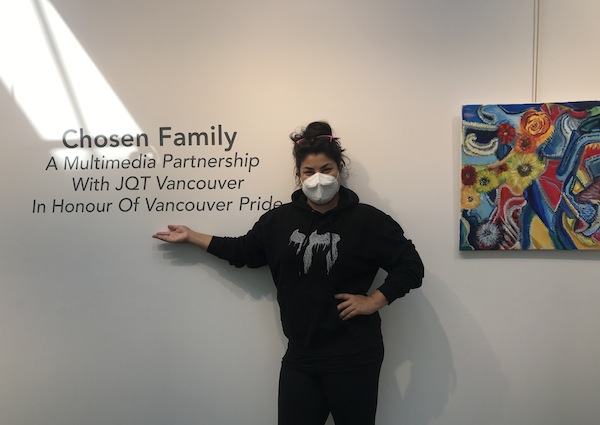
JQT Vancouver executive director Carmel Tanaka at the Zack Gallery, where the Chosen Family exhibit is on display until Sept. 30. (photo from Carmel Tanaka)

In a Simon Fraser University survey of more than 4,000 elderly Canadians (55+), conducted from August to October 2020, to see how people were coping with the pandemic, about 10% of respondents identified themselves as part of the LGBTQ+ community. These respondents were more likely to follow COVID protocols and to have said they “feel they have been here before” – they were 10 times more likely to report experience with HIV/AIDS than heterosexual persons. Among the many other findings, LGBTQ+ respondents were less likely to ask relatives for help, but more likely to call upon close friends.

In the context of the pandemic, then, the focus of the new exhibit at the Zack Gallery has added significance. The show, called Chosen Family, is a multimedia partnership between the gallery and JQT Vancouver in honour of Vancouver Pride. It opened officially on Aug. 26, with the artists in attendance.

JQT (Jewish, Queer and Trans) is an arts, culture and education nonprofit organization. It is dedicated to creating connections and seeking space to celebrate the intersectional identities of Jews of diverse sexual orientations and genders. The organization’s executive director, Carmel Tanaka, said JQT’s members are accomplishing their goals “by queering Jewish space and ‘Jewifying’ queer space in Vancouver.”

“We started JQT in Vancouver four years ago, as a grassroots movement, everyone was a volunteer,” Tanaka told the Independent. “We incorporated as a nonprofit in 2020. This show feels like a milestone. It is probably the first exhibition here, at the Zack Gallery, that features exclusively queer Jewish artists.”

The theme of the show, Chosen Family, reflects that some LGBTQ+ individuals face rejection by their immediate family and must look elsewhere for understanding and acceptance. “I’m lucky,” said Tanaka. “I didn’t have to look for another family; my family was supportive. Unfortunately, that’s not true for everyone.”

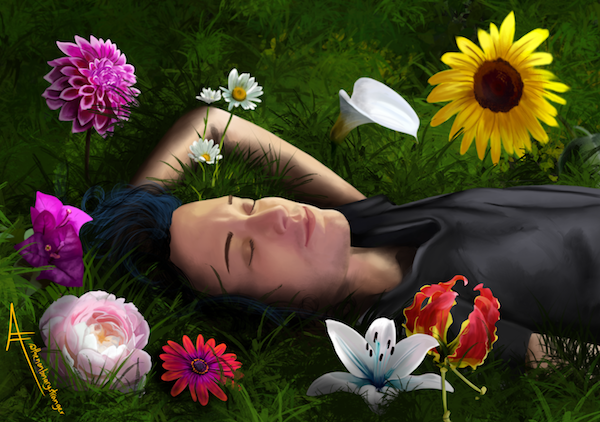
image - One of the images in a series of six by Ari Fremder
One of the images in a series of six by Ari Fremder.

Only a few artists are featured in the exhibit. “We invited more artists from the JQT community, plus their families, to submit art for the show, but not everyone was easy with the invitation,” Tanaka said. “Some didn’t feel ‘artistic’ enough. Others didn’t feel Jewish enough. Still others – the older people mostly – didn’t feel entirely safe to identify themselves as queer to the wider community. It is an ongoing vulnerability issue with many of us.”

Another reason might lie in the location of the gallery. “The Zack Gallery is inside the Jewish Community Centre, so the art must be family friendly. That might be a limiting factor for some artists,” Tanaka mused. “We might look at another venue next time.”

The show includes art in a variety of media: paintings, prints, textiles, cinematography, sculpture. A series of six pictures by Ari Fremder all have the same size and structure – a human face surrounded by flowers – but they centre on different faces, representing different friends or family members, and have varied arrangements of flowers. Nonetheless, they all have one thing in common – they are all beautiful and upbeat.

Two of Fremder’s paintings are self-portraits. One looks like a face in repose; the other an angel with black wings. The angel soars in the dark sky and, unlike the six-photo series, this image is moody and contemplative.

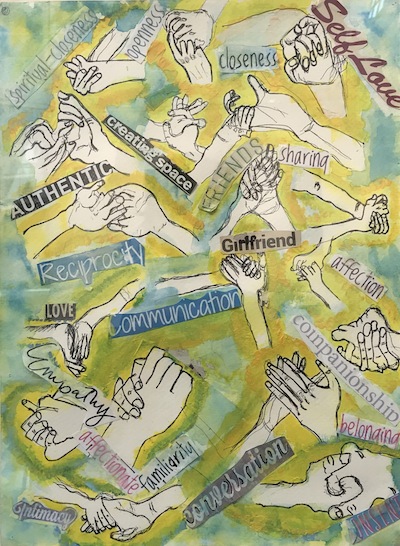
image - A collage by artist Holly Steele
A collage by artist Holly Steele.

On another wall, there are several paintings by Holly Steele. In one, a multimedia print, hands clasp together in various combinations: hands of friends and hands of family, interspaced with positive, trust-affirming words. The image, done in a muted greenish-yellow palette, screams of the yearning for acceptance.

In the centre of the gallery resides a sculptural composition by Morgan Strug. A dinner table with chairs around it shows us what a family meal means to the artist. There is understanding and affection there, benign teasing and fierce joy in the others’ fulfilments. Is it wishful thinking? Is it the artist’s reality? Everyone can decide for themselves.

Strug is the director of the short movie Enby, which screened at the Vancouver Queer Film Festival earlier this month, and the film is part of the Zack exhibit. The gallery planned three screening dates, the first being for the exhibit opening Aug. 26, as well as Sept. 9 and Sept. 30. Those who want to see it should contact the gallery first.

“This is a very eclectic show,” Tanaka said. “It is the first art show for several of the participating artists. Some of them celebrate both their identities: as a queer and as a Jew. We would love this show to become an annual tradition.”

Chosen Family continues until Sept. 30. To learn more, visit jqtvancouver.ca.

Olga Livshin is a Vancouver freelance writer. She can be reached at [email protected].

Format ImagePosted on August 27, 2021August 28, 2021Author Olga LivshinCategories Visual ArtsTags Ari Fremder, art, Carmel Tanaka, collage, Holly Steele, JQT, LGBTQ2S+, Morgan Strug, multimedia, painting, photography, Zack Gallery
Communicating with visuals

Communicating with visuals

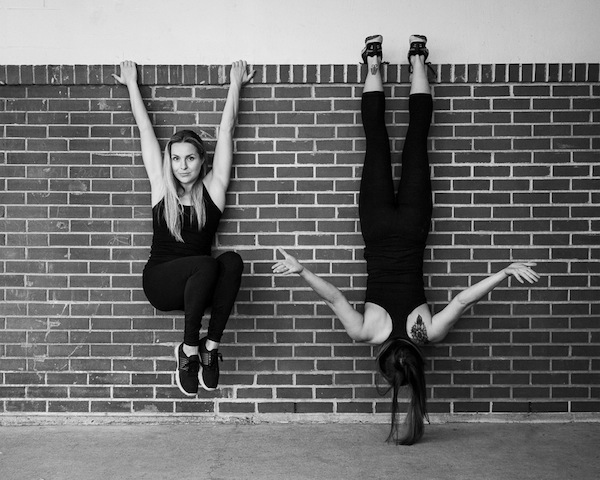
“Hanging Out” by Derry Lubell.

Derry Lubell’s photography captures the motion of dance, the ephemeral magic of the art form that generally only exists at the moment of performance. Unless, of course, it is recorded by a talented photographer.

Lubell’s solo exhibition The Body Speaks: Dance • Movement • Emotion opened on July 2 at the Zack Gallery. The official opening on July 8 was in person, as the long months of COVID restrictions started to ease. The gallery’s latest email to its patrons joyously states: “Appointments are no longer needed to see the show in person. Come on in!”

photo - “The Dichotomy” by Derry Lubell
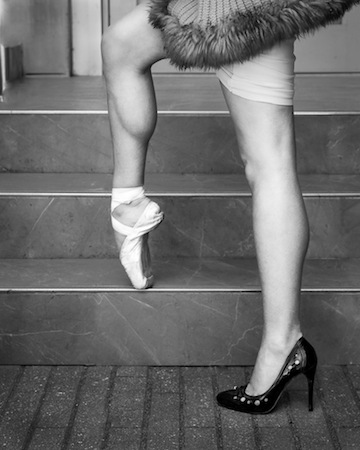
“The Dichotomy” by Derry Lubell.

When you do go in, you’re surrounded by dance and dancers, their beautiful faces, and their astounding bodies. The gallery is a quiet place, but you can almost hear the music floating in the air, while the graceful ballerinas leap and pirouette around you. Most images are black and white or rendered in muted colours. “I think you can see the lines better in black and white,” said Lubell in an interview with the Independent. “The colour is often distracting, and I don’t want that. I don’t like fussy. I want clean shots.”

Lubell has been an artistic photographer for about five years. “Before that, I had a career as a psychotherapist. I had a family to raise,” she mused. “I always had a small camera with me, since I was young, to photograph my family or places I visited, but it was casual, like memory shots. After I retired, I started thinking: what else do I want to do? I always enjoyed talking to people, understanding their emotions. I wanted to do something similar but without the responsibility. Photography allows that. Using photography, I can still communicate with people, discern their emotions, reach their hearts, but on a visual level, without words.”

photo - Derry Lubell
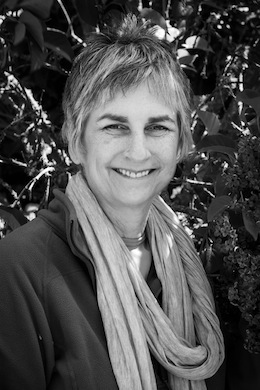
Derry Lubell (photo from Derry Lubell)

The former psychotherapist reinvented herself as a photographer, and it led her on a long road of self-exploration, especially because the technology had progressed so much. “I had to learn computers,” she said. “I work harder now than before I retired. Shooting. Editing my pictures. Studying. Taking classes. Looking at other photographers’ images to see what works and what doesn’t. I put up my pictures on my website and Instagram, so others can see me, too.”

The dancing series is her latest, and it came about almost by accident. “I always enjoyed working with people who are comfortable with their bodies,” she said. “Even as a psychotherapist, I paid attention not only to words but to body language. Many people speak with their bodies. Dancers are the best at that.”

Her admiration of dancers prompted her a few years ago to enrol in dance lessons. “It was incredible,” she remembered. “The instructor was wonderful. I asked her: could I take your photograph? She agreed. After that, I photographed her and some of her students, and some other dancers.”

Lubell prefers taking pictures in people’s natural milieu. Some of the photos in the exhibit she took during rehearsals in the dancers’ studio spaces around the city. For others, she arranged meetings with the dancers outside, in urban surroundings, parks or the beach.

“Each session is an hour or two hours long. Each one is a collaboration between a photographer and a dancer,” she explained. “Together, we choose a location. I would ask her to bring half of her dancing wardrobe, and we try different costumes to see what works for the camera. I often select the background, and then the dancer would start dancing, and I would walk around and take shots. I might suggest a position or a prop, like ‘play against that log’ or ‘turn this way,’ but they are the performers. They like to perform. It is up to me to capture the perfect moment.”

One of those moments resulted in a unique picture. Only the legs of the dancer are showing. One wears a point shoe, posing like a coquette on a staircase. The other is still wearing a stiletto. The photo, titled “The Dichotomy,” emphasizes the dual nature of the subject: a woman and a dancer.

“It was sold before the show started,” Lubell said. “I brought pictures to the gallery to hang on the walls. Everything was still on the floor, in boxes. I left the gallery for a few minutes. When I came back, Hope [Forstenzer, the gallery director] said: ‘You know, this one just sold.’ Before it was even displayed.”

photo - “Form in Flight” by Derry Lubell
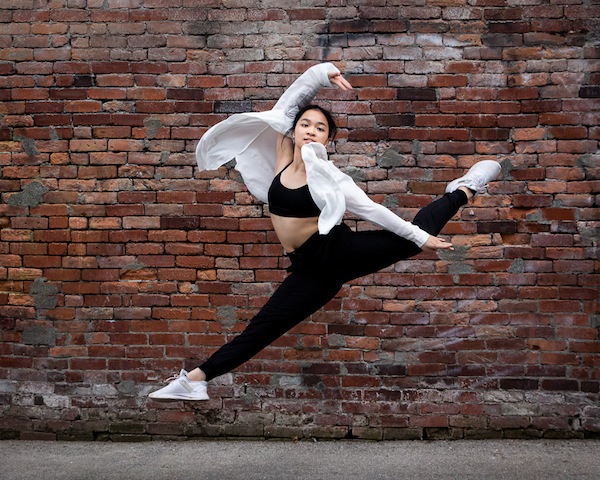
“Form in Flight” by Derry Lubell.

Another interesting image, “Form in Flight,” is of a young dancer in street clothing jumping in front of a brick wall. Lubell took the photo in Chinatown. “It is one of the oldest walls in the city,” she said. “I walked around Chinatown with that dancer. She is a student, but she loves dancing. When I saw that wall bordering a parking lot, I asked her to dance against it.” The dancer’s flight in the image is airy and joyful.

Several pictures display more than one dancer. One of those photos, called “Hanging Out,” is imbued with humour: one dancer is hanging from a wall with her hands, while the other is hanging upside down by her feet. “They are best friends,” Lubell said. “They met years ago as gymnasts. One does stunts for the movies now – she is the one who is upside down. I asked them to dance against the wall, and they started playing together, having fun. That mutual pose was a surprise to me.”

Lubell considers her dancers as partners in her art. “They have the right of veto. It doesn’t happen often, but sometimes they would say: ‘Don’t use this picture, my leg is in the wrong position.’ And I won’t. I honour their requests. After all, they honour me by allowing me to shoot their photos.”

The Body Speaks is on display until Aug. 16. For more information, visit the photographer’s website, derrylubell.com.

Olga Livshin is a Vancouver freelance writer. She can be reached at [email protected].

Format ImagePosted on July 9, 2021July 7, 2021Author Olga LivshinCategories Visual ArtsTags art, dance, Derry Lubell, photography, Zack Gallery

Posts pagination

Previous page Page 1 Page 2 Page 3 Page 4 … Page 7 Next page
Proudly powered by WordPress