Liberation. Freedom. Renewal. Recalling our history, our stories. Passover’s themes are many, and the challenge every year is for us to interpret them in a meaningful way for our time.
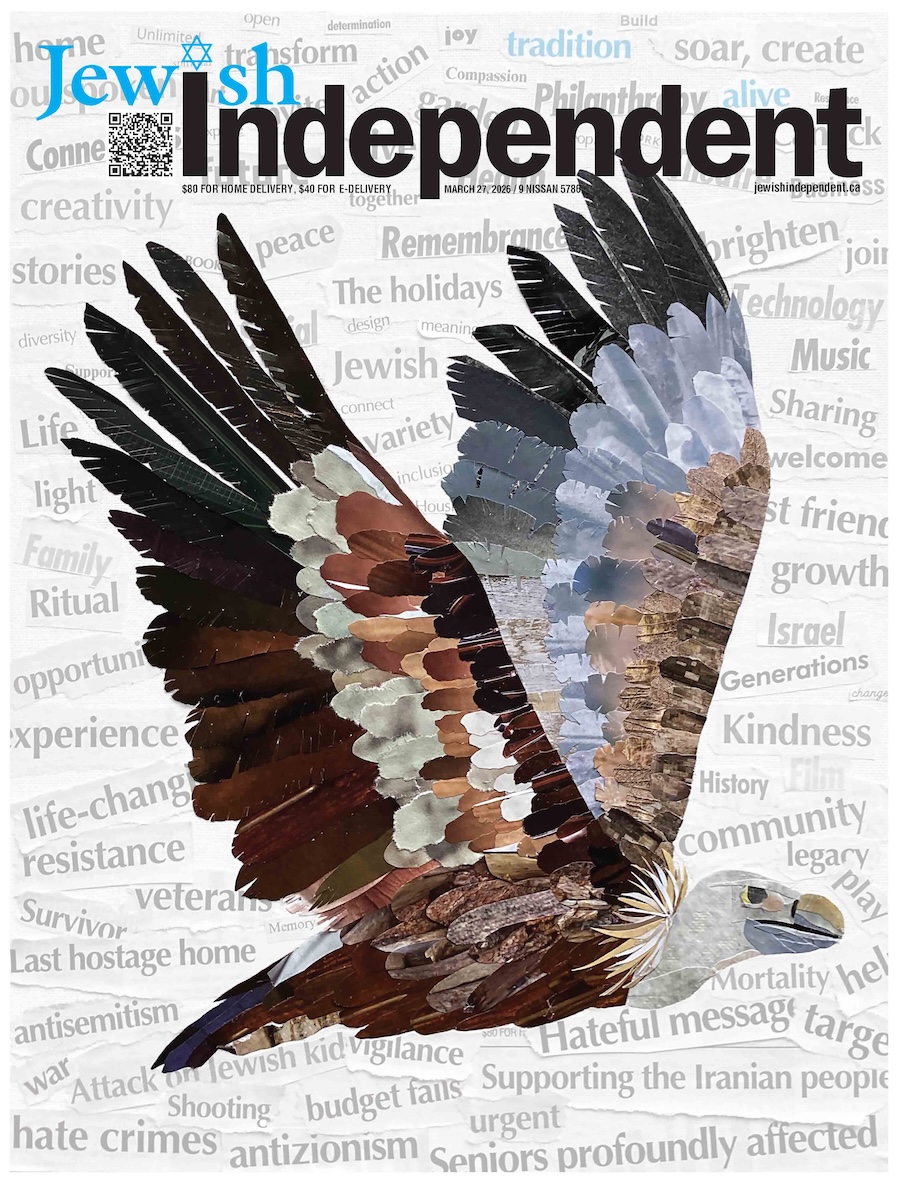
In making this special issue’s cover, I started with the idea that I would use artificial intelligence – one of the most contemporary tools – to create it. Would AI free me from the hours that art creation takes? Short answer: no.
I started with the directive to design a collage centred on the Jewish fight for freedom throughout history, and got lots of great feedback on how to arrange images to tell a powerful story. I could place “key representative figures or symbols at the forefront,” “use overlapping images to create dimension and a sense of ‘flow’” and incorporate “symbolism of ‘tikkun olam.’”
AI had recommendations for typography, what media I could use, what colour palette. It suggested historical struggles I might want to include in a spiral-shaped design: the Exodus and the Maccabees in the outer ring; Conversos and Partisans in the next ring; early kibbutzim and the Iron Dome in yet another ring; and the yellow ribbon for the Oct. 7 hostages or “street-art style seen in Tel Aviv or New York” in the centre.
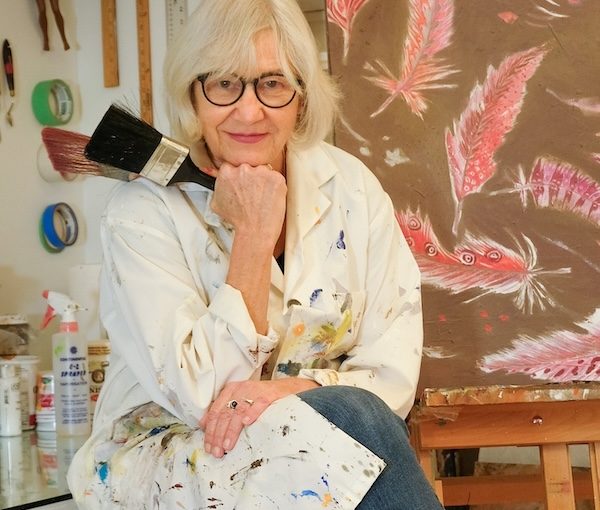
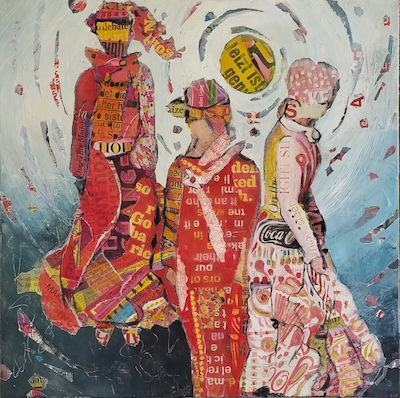
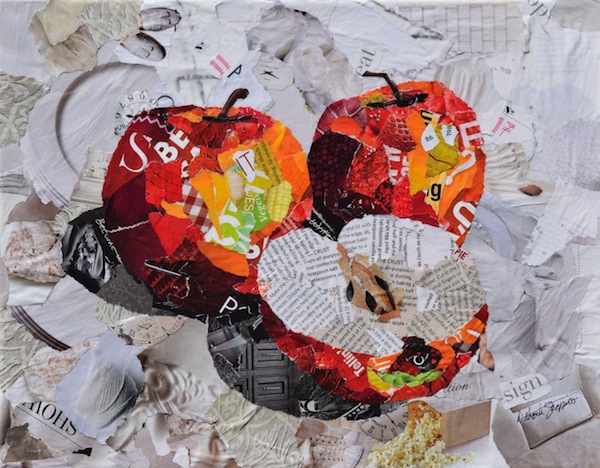
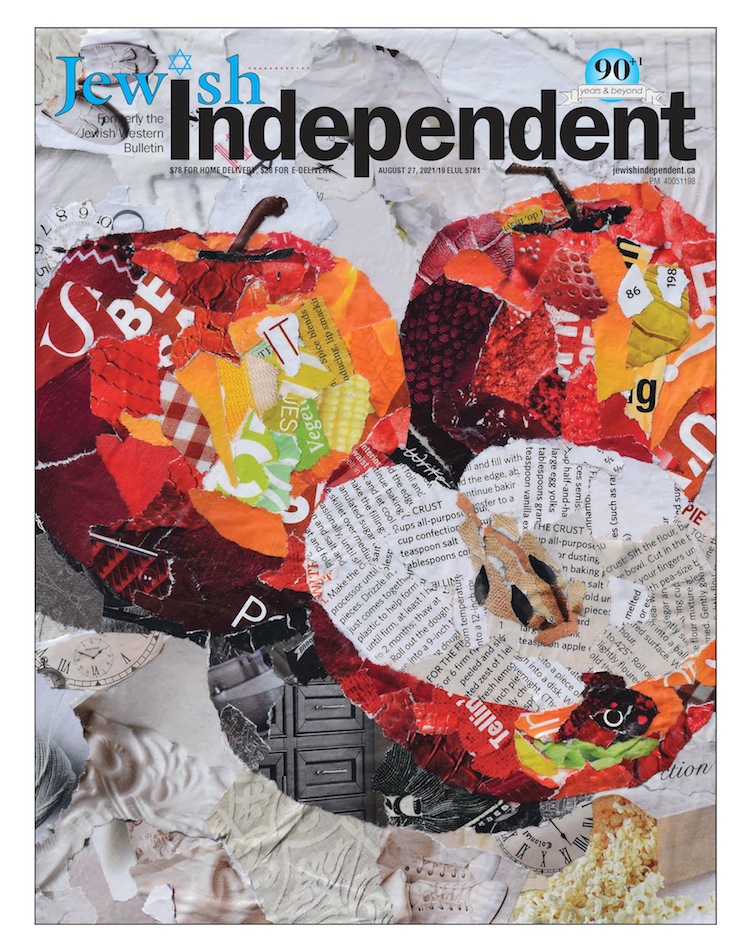
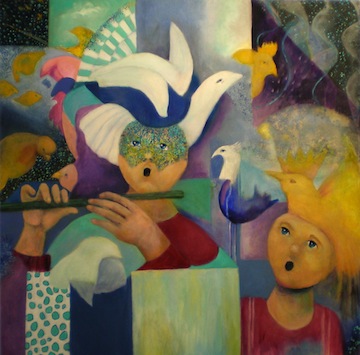
I eventually figured out how to create an image in AI, but everything I tried looked horrible, so I decided to make my collage the old-fashioned way – with my own hands, using only paper, inspired by artist Deborah Shapiro (deborahshapiroart.com), whose art I’d used on the JI’s 2021 Rosh Hashanah cover.
After what felt like forever, I figured out what my focus would be. I came across the verse in Exodus (19:4): “You have seen what I did to the Egyptians, how I bore you on eagles’ wings and brought you to Me.”
An article on aish.com by Rabbi Warren Goldstein, chief rabbi of South Africa, helped me think through the symbolism, from both a spiritual and secular perspective.
“Each year, we are told to relive the experience of leaving Egypt – and I imagine being lifted from slavery and oppression ‘on the wings of eagles,’” he writes. “What better way could there be to express our transition from the earthly bonds that constrain us to the spiritual transcendence that God gave us than through the exhilarating, soaring rush of the eagle’s flight.”
Goldstein goes on to talk about Rashi’s interpretation that “the eagle’s wings represent the nature of God’s protection over us.” The rabbi notes the miracle that Jews are still here, despite a long history of various peoples trying to kill us. And he compares the “rush of the eagle’s flight” to “the speed with which God liberated us from Egypt” – so fast, of course, that our bread didn’t have time to rise, hence, the matzah we eat on seder night as a symbol of our “supernatural” redemption.
“This divine dynamism – depicted by the image of a soaring eagle – becomes a call to action: ‘Be light as an eagle,’ says the mishna in Pirkei Avot. Too often we get bogged down by life,” writes Goldstein. “We become consumed with angst, submerged in introspection and inertia. The mishna urges us to live life energetically and enthusiastically – like an eagle – with a sense of urgency for the task at hand, which is uplifting ourselves and our world through our mitzvot.”
I like this idea of living with a sense of energetic purpose, whether the motivation to improve ourselves and the world is inspired by Torah or other moral codes and teachings. Freedom and responsibility are inextricably intertwined in my view, but it is easy to get overwhelmed, and the thought of being carried sometimes, of soaring above the earth and gaining new perspective, appeals to me.
I decided I would “paint” an eagle.
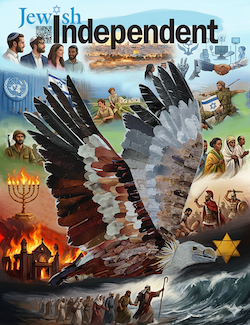
As I searched online for what types of eagles would be at home in Egypt or Israel, I came across a few articles about the mistranslation of “nesherim” in Exodus 19:4. Apparently, we were most likely carried out of slavery on the wings of vultures, not eagles, and probably on the wings of griffon vultures specifically.
“Both the biblical nesher and ornithological griffon are known for their ‘bald’ head, enormous wingspan, effortless flight, cliff nesting, devoted nurturing, rapid descent and group feasting on carrion,” writes Dr. Fred Cannon, a professor emeritus at Pennsylvania State University, in Journal for the Study of the Old Testament. “From biblical times until the industrial age, griffons have been ubiquitous in the Middle East but absent in northern Europe or the Americas. However, eagles commonly resided in northern Europe but are uncommon residents or pass-through migrants in the Middle East. Through millennia, when northern Europeans sought translations for biblical plant and animal names, they sometimes replaced Middle Eastern meanings with recognizable northern European ones. So, the nesher became known as the eagle to many northern Europeans and North Americans. However, recent Hebrew-speaking ornithologists concur that the nesher is the griffon. This distinction becomes important when gleaning nuances from biblical metaphors, clarifying kosher dietary regulations and discerning genealogical connections among raptors.”
Natan Slifkin, director of the Biblical Museum of Natural History, in Israel, notes that another part of the verse – “va’esa etchem,” “I bore you,” or “I carried you” – can be translated as “I elevated you.”
“The explanation,” he writes about the symbolism, “is that the nesher is the highest-flying bird, and God raised the Jewish people to spiritual heights above anything in the natural world with His miraculous redemption. The highest-flying birds are griffon vultures.”
As well, he explains, “While people today view the vulture in a negative light, the Torah presents it as an example of a loving and caring parent. This also relates to the vulture’s entire parenting process. Female griffon vultures usually lay one egg, which both parents incubate for an unusually long period of around seven weeks until it hatches. The young are slow to develop and do not leave the nest until three or four months of age. The long devotion of the vulture to its young symbolizes God’s deep dedication to the Jewish people.”
Sadly, it’s more than time for us to dedicate ourselves to the griffon vulture. Only around 230 of them remain today, according to a brochure of the Society for the Protection of Nature in Israel (SPNI), which suggests helping save the griffon vulture as a b’nai mitzvah project.
The word “nether” comes “from a Hebrew root that means ‘to shed’ or ‘to fall off,’” explains the brochure. “That’s because, as baby vultures grow up, they shed the feathers on their heads – an adaption that actually helps them stay clean! A bald head makes it easier for vultures to stick their heads into carcasses when they eat, without getting messy.”
The brochure notes that griffon vultures live in the Golan Heights, Negev Desert and Carmel Mountains. They have a wingspan of up to 2.65 metres and spend two to three hours a day combing their feathers. They can spot food from seven kilometres away, eating dead animals before the bodies rot, which helps prevent the spread of diseases.
Poisoning, electrolution, land loss, illegal hunting, and that griffon vultures only lay one egg a year, are all threats to their future. To help counter these pressures, SPNI has a breeding program, it is working with electric companies to insulate power poles, lobbying for stronger laws against poisons, and teaching farmers and others about more eco-friendly pest control.
That the griffon vulture is endangered made it, to me, an even more appropriate image for the JI’s Passover cover, underscoring the connection between freedom and responsibility. The words I chose for the cover’s background – cut and ripped from the last few issues of the JI – are my attempt to depict Goldstein’s commentary. While the eagle/vulture is protecting us as much as possible from that which bogs humanity down, giving us some respite and renewed strength, we must continue to try and uplift ourselves and the world around us, grateful for the blessings we have, and working to bring more of them into being.
Chag Pesach sameach. Happy Passover.