Skip to content
  • Home
  • Subscribe / donate
  • Events calendar
  • News
    • Local
    • National
    • Israel
    • World
    • עניין בחדשות
      A roundup of news in Canada and further afield, in Hebrew.
  • Opinion
    • From the JI
    • Op-Ed
  • Arts & Culture
    • Performing Arts
    • Music
    • Books
    • Visual Arts
    • TV & Film
  • Life
    • Celebrating the Holidays
    • Travel
    • The Daily Snooze
      Cartoons by Jacob Samuel
    • Mystery Photo
      Help the JI and JMABC fill in the gaps in our archives.
  • Community Links
    • Organizations, Etc.
    • Other News Sources & Blogs
    • Business Directory
  • FAQ
  • JI Chai Celebration
  • JI@88! video

Recent Posts

  • טראמפ עוזר דווקא לנושא הפלסטיני
  • New rabbi settles into post
  • A light for the nations
  • Killed for being Jewish 
  • The complexities of identity
  • Jews in time of trauma
  • What should governments do?
  • Annie will warm your heart
  • Best of the film fest online
  • Guitar Night at Massey
  • Partners in the telling of stories
  • Four Peretz pillars honoured
  • History as a foundation
  • Music can comfort us
  • New chapter for JFS
  • The value(s) of Jewish camp
  • Chance led to great decision
  • From the JI archives … camp
  • עשרים ואחת שנים להגעתי לונקובר
  • Eby touts government record
  • Keep lighting candles
  • Facing a complex situation
  • Unique interview show a hit
  • See Annie at Gateway
  • Explorations of light
  • Help with the legal aspects
  • Stories create impact
  • Different faiths gather
  • Advocating for girls’ rights
  • An oral song tradition
  • Genealogy tools and tips
  • Jew-hatred is centuries old
  • Aiding medical research
  • Connecting Jews to Judaism
  • Beacon of light in heart of city
  • Drag & Dreidel: A Queer Jewish Hanukkah Celebration

Archives

Follow @JewishIndie
image - The CJN - Visit Us Banner - 300x600 - 101625

Tag: jewelry

Light and whimsical houses

Light and whimsical houses

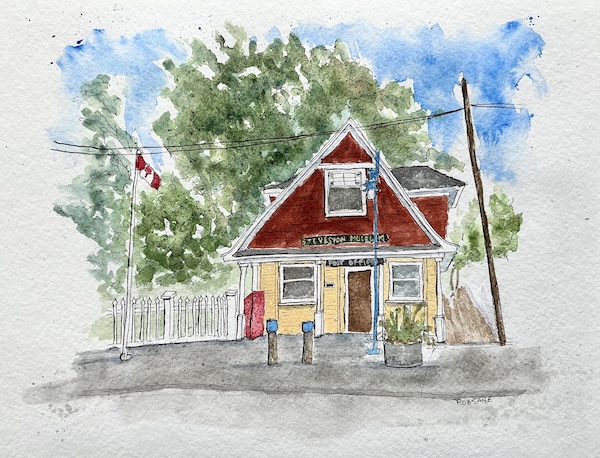
Roxsane Tanner’s watercolours are on exhibit at the Steveston Museum and Post Office (painted here by Tanner) this month. 

“Steveston is such a beautiful place,” artist Roxsane Tanner told the Independent. Her first solo show of watercolours features quaint houses of the village, where she has lived and worked for many years. The exhibit opened at the Steveston Museum and Post Office on June 1 and will be on display for the month.

photo - Roxsane Tanner
Roxsane Tanner (photo courtesy)

Born in Holland soon after the Second World War, Tanner came to Canada with her family in 1951.

“My father was in the resistance, and my mother was in hiding during the war. They were both Jewish and wouldn’t have survived otherwise,” she said.

Her older sister was born during the German occupation, and her mother had to hide her baby with a local family. “My sister was 3 years old when my mom came for her after the war, to take her back. That was the first time she saw her mother.”  

After the family came to Canada, her parents moved a lot. “They were very entrepreneurial,” said Tanner. “We lived in many small towns in Ontario and Quebec. Sometimes, my parents had several businesses open at the same time in the same town: a pet shop, a fabric shop, some others. They always worked hard. When I was 19, my parents and I moved to Vancouver. In the beginning, we lived in a trailer, the same one we drove here from across Canada.”

Tanner inherited her parents’ work ethic and their courage to try new things. “After high school, I wanted to study nursing, but soon after I started classes, I hurt my knees and had to come home – I couldn’t walk.”

After she healed, she became a dental assistant and worked as one for several years. “Until I met my first husband,” she recalled with a smile. “He was a wallpaper hanger. I fell in love with the man, married him, and joined his business. We worked together for several decades.”

Even after her first husband’s untimely death from cancer, she continued their business on her own. Many houses in Richmond and Vancouver feature wallpaper installed by Roxsane Tanner. By now, she has been a wallpaper hanger for more than 50 years. “But I’m slowing down,” she said. “I’m not accepting many new clients, not anymore.”

Now, she is becoming more and more absorbed in various artistic endeavours. Art was always on the periphery of her life. “I always dabbled,” she said. “Then, about 15 years ago, my second husband, Fred, and I visited Italy. He was a high school counselor before he retired; we were chaperoning a group of kids on that trip. I saw some beautiful jewelry local artisans sold on the street. I liked it, but it was too expensive. I thought maybe I could make something like that, and Fred encouraged me. When we returned home, I enrolled in a course on silversmithing and started making my own jewelry. Fred built a silversmithing studio for me in our backyard.”

She took more classes in different techniques, many of them on YouTube. “I can spend hours watching educational videos on YouTube,” she said. “There is always something new. Thousands of talented artists offer classes there. The good thing about YouTube: once you subscribe, you can watch the same lesson several times, until you really get it.” 

She sells her jewelry – earrings, bracelets and necklaces – in a local Steveston shop. Occasionally, she offers her own classes in jewelry-making, to children and adults. What started as a hobby from a casual observation in Florence ended up becoming a small business, as many of Tanner’s hobbies tend to do: sewing, for example.

“My mother taught me to sew, knit and crochet,” she said. And, wanting to pass the skills on to others, she started, out of her home, to teach children how to sew. “We buy special kits and make hats and scarves for the homeless,” she said. 

But that was not enough for her. Her creativity needed another outlet. About the same time as she embarked on jewelry-making, she also started painting in watercolours. “I took classes, of course, some on YouTube, others at the local Phoenix Art Workshop here in Steveston. At first, I painted landscapes, but I didn’t like it. A few years later, I went to Malta on a trip with the Phoenix Studio – they have amazing houses there, and I was inspired. The next year, we traveled to Mexico. I admired their historical buildings, but we also have amazing houses here, in Steveston. There are many heritage places here. I wanted to paint them.”    

When she returned from Mexico, she noticed a blue house in Steveston she liked and took a photo of it. “I painted it from my photo. It was my first, and my friends kept bugging me: you need to show your painting to the owner. So, I went and knocked on his door. I never met him before that day, and he was somewhat gruff at first. He asked me if I would sell it to him, and I agreed. That’s how it started.”
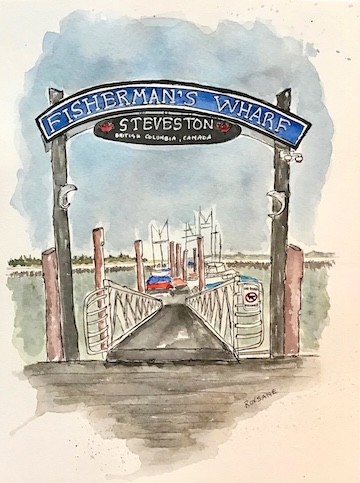
image - Steveston’s Fisherman’s wharf, painted by Roxsane Tanner
Steveston’s Fisherman’s wharf, painted by Roxsane Tanner.

Tanner has built another small business on that foundation. “I paint houses that are for sale. Realtors around Steveston commission my paintings as gifts for the new homeowners. People also come to me and ask me to paint their houses, or their children’s houses, as gifts. Sometimes, I paint from my own photographs. Other times, the clients bring their photos and order a painting from that image.”

Besides personal homes, she paints heritage places around Steveston. The old community centre, a coffee shop, a church turned into a thrift store, the pier, with its picturesque boats, and the tiny post office – the same one where some of her work is now on display.

The exhibition includes Tanner’s original watercolour paintings plus postcards and mugs with her artwork. Some of the paintings sport charming, quirky houses found only in the artist’s imagination. “I go online and search for heritage homes around the world. If I like one, I use it as my inspiration, but I don’t copy the photos. I want my painted houses light and whimsical, like a fairy tale. Maybe a bit crooked, but reflecting the essence of the house, its soul and personality. Even the real houses I paint are not exact copies of the photos. I don’t use a ruler to make the straight lines. I use my watercolours to remind people of the fun and joy their homes bring them.”

You can see more of Tanner’s art at instagram.com/studioplace99. 

Olga Livshin is a Vancouver freelance writer. She can be reached at [email protected].

Format ImagePosted on June 13, 2025June 12, 2025Author Olga LivshinCategories Visual ArtsTags art, exhibits, jewelry, painting, Roxsane Tanner, Steveston, watercolours
Chance to meet local artists

Chance to meet local artists

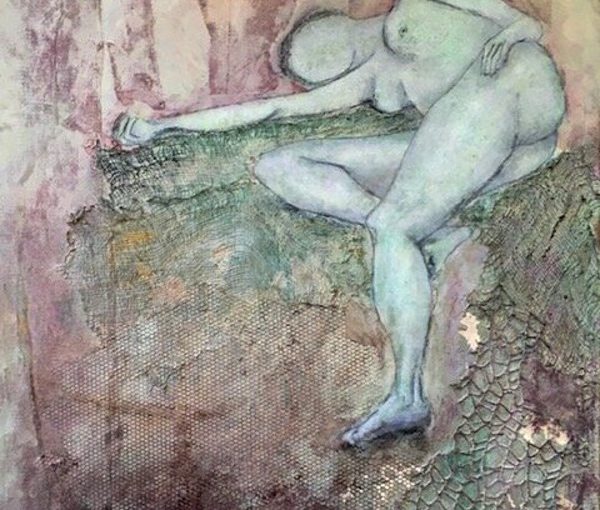
“At Rest” by Dov Glock, mixed media. Glock is one of several Jewish artists participating in this year’s West of Main Art Walk. (from artistsinourmidst.com)

The West of Main Art Walk Preview Exhibition and Sale kicks off at the Roundhouse Community Centre May 18-19. The West of Main Art Walk itself welcomes guests into artists’ studios May 28-29. Among the artists participating are many from the Jewish community, including Michael Abelman, Olga Campbell, Dov Glock, Pnina Granirer and Lauren Morris.

The preview – which is open for visitors 10 a.m. to 9 p.m. both days – features a reception at the Roundhouse on May 19, 7-9 p.m. Preview visitors will be able to buy the work of some of the 80 local artists taking part. There will be paintings, ceramics, jewelry, textiles and photography, as well as free art demos.

Artwork will also be for sale on the walk, which includes studios from Point Grey to Main Street, and from Granville Island to 41st Avenue over the May 28-29 weekend. Dozens more artists are showing their works all under one roof in larger hubs like Aberthau Mansion, Art at Knox and Pacific Arts Market. There, you’ll also find art demonstrations and more. At Lord Byng Mini School for the Arts, you’ll discover young emerging artists.

Also part of the month’s events is the annual (since 2018) Art for All Fundraiser. More than 70 artworks have been donated – and all are on sale for $50 each. Proceeds will go to the art program at Coast Mental Health. Its resource centre’s art room opened in 2000, and is a place where clients discover their creative potential while developing new ways of expressing emotions, healing pain and growing their self-esteem and self-awareness. Supported by volunteers – including clients and professional artists and art instructors – who give their time, feedback and encouragement, clients are able to work in a number of media, including paint and sculpture; supplies are provided. An annual art show brings together the artists, other resource centre members and Coast clients, family and friends and the general public to celebrate their work and their journey towards recovery.

Granirer, who was a co-founder of the very first open studios walk in Vancouver in 1993, is doing something a little different from the main event. On May 18, 7 p.m., at the Roundhouse, she is launching her poetry-art memoir, Garden of Words. (For more on the book, see jewishindependent.ca/poetry-and-painting-flourish.) Some of the paintings featured in the book will be exhibited and the books will be available during the whole time of the preview and at Granirer’s studio during the walk weekend.

photo - Pnina Granirer in her studio
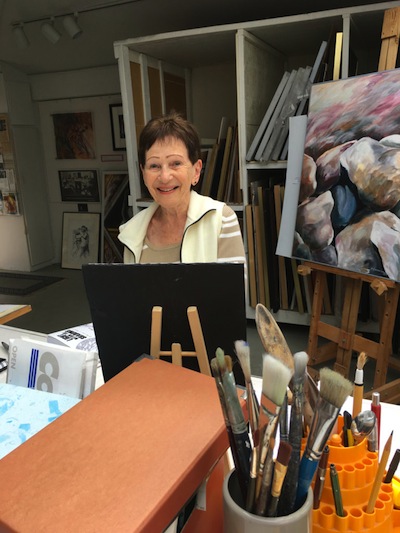
Pnina Granirer in her studio. (photo from Pnina Granirer)

During the walk, Granirer is inviting people to her studio, where she will be offering her works for 50% off, with proceeds being donated to Stand up for Mental Health, which has helped people suffering from mental health issues to do away with stigma all over Canada, the United States and Australia.

Artists will be opening their studios from 11 a.m. to 6 p.m. on May 28 and 29. This is a unique opportunity to meet the artists, enjoy the art and ask questions. More information and the interactive online map can be found at artistsinourmidst.com.

– Courtesy Artists in Our Midst and Pnina Granirer

Format ImagePosted on May 6, 2022May 4, 2022Author Artists in Our Midst & Pnina GranirerCategories Visual ArtsTags art, Artists in Our Midst, Coast Mental Health, Dov Glock, jewelry, Lauren Morris, mental health, Michael Abelman, Olga Campbell, painting, photography, Pnina Granirer, poetry, sculpture, tikkun olam, West of Main Art Walk
Art show with a holiday feel

Art show with a holiday feel

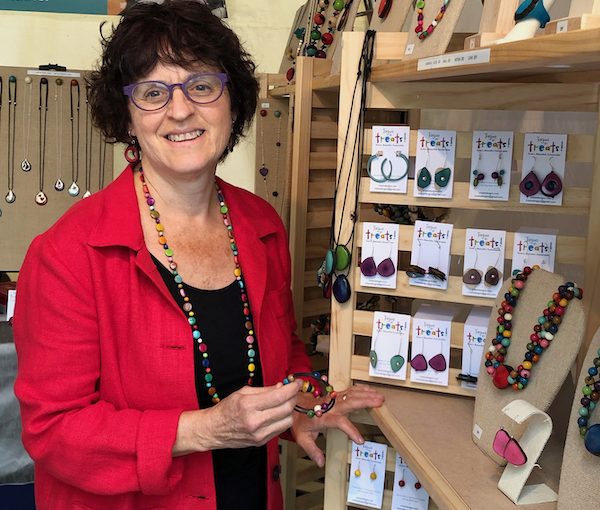
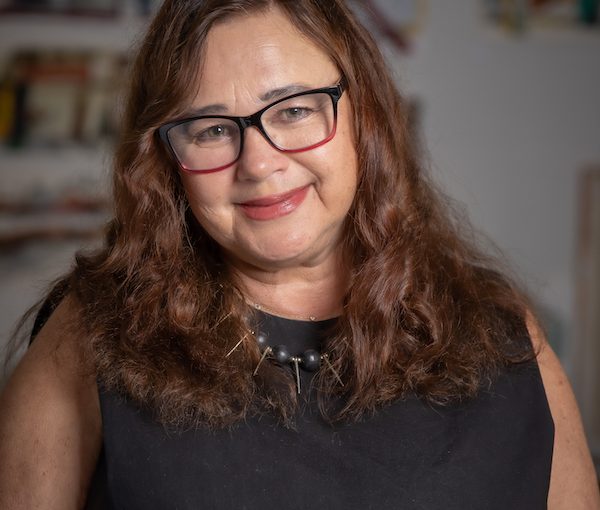
Ande Axelrod has developed a partnership with artisans in the village of Sosote, Ecuador, as her source for tagua beads. (photo from Zack Gallery)

The current show at the Zack Gallery, Affordable, opened on Nov. 17. It delivers on its name’s promise. Every item on display is less than $250 and thus in the realm of affordability for many people, not just art connoisseurs.

“That’s what I wanted for the Zack Gallery from the beginning,” said gallery director Hope Forstenzer. “I wanted to deepen the involvement of the JCC community in the gallery, wanted the art within people’s reach.”

Accordingly, this show looks more like a holiday craft fair than a high art exhibition.

“I don’t believe in the separation of art versus craft,” said Forstenzer. “For me, craft is another word for art, but art that is functional and affordable, designed for enhancing your life and your home rather than a wall of a museum. I hope we can make such a show an annual event.”

To achieve the artisan market feel, Forstenzer invited 10 artists in different media to participate. “They are all local B.C. artists,” she said. “Some Jewish, some not. I wanted to cater to different tastes, to represent different artistic fields. I wanted the show to be fun.”

photo - Ceramics by Hitomi McKenzie
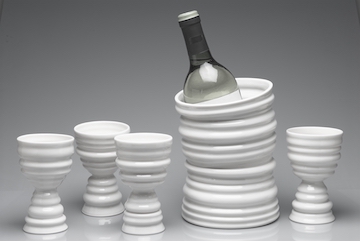
Ceramics by Hitomi McKenzie.

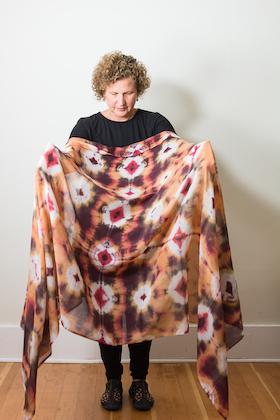
The atmosphere of the show is jazzy and welcoming. The giclée prints of well-known Vancouver artist Linda Frimer glow with greens and blues. The glass and jewelry twinkle. The ceramics by Hitomi McKenzie stand proud and bright. Mariana Frochtengarten’s colourful shawls in Shibori patterns add a touch of elegance.

Frochtengarten teaches textile art at the Jewish Community Centre of Greater Vancouver. “This is a great opportunity for me to show the community my personal work,” she said. “My work is based on the principles of Shibori – a Japanese manual tie-dye technique. I combine the ancient Japanese tradition with a contemporary approach.”

She works with natural fibres, mostly cotton and linen, and has been working as a textile artist for more than 25 years. “My way into textile art was a bit accidental,” she told the Independent. “I was born in Brazil. When I was in high school, I took a batik class for a hobby, but I fell in love with it.”

After graduating from high school, she studied at Fine Arts and Education University in Brazil and later completed her master’s in fine arts (textiles) at Nova Scotia College of Art and Design, in Halifax. “For 17 years, I worked with batik,” she said. “I had a business in Brazil and sold my works in stores, galleries, shows and fairs. I also experimented with some Shibori. I slowly moved on to my own form and interpretation of Japanese Shibori after moving to Canada in 2006. I love the elements of surprise involved in the process of Shibori and I am fascinated by the idea of creating different designs by blocking areas of the fabric before dyeing it.”

Another artist who works with an unusual material and technique is Ande Axelrod. Her company, Treats Designs, produces whimsical and sophisticated tagua jewelry: necklaces, earrings, pendants, and bracelets. Axelrod is very enthusiastic about her artistic creations. “Tagua is known as ‘vegetable ivory,’” she explained. “The tagua palms are native to the rainforests of Ecuador and other South American countries. The nuts grow and harden inside their seedpods. Some tagua nuts can grow up to six centimetres. Once the seedpods are ripe, they’re picked, and the seeds are dried in the sun, peeled and polished.”

The creamy white substance of the nuts is incredibly hard, similar to elephant ivory, hence the name. According to Wikipedia, a mature tagua palm can produce up to 20 pounds of vegetable ivory a year.

“Tagua nuts have been used as a substitute for ivory since the early 20th century,” Axelrod said. “The local masters carve the nuts into a variety of beads and buttons and dye them using bright natural colours.”

photo - Mariana Frochtengarten shows of one of her colourful Shibori shawls
Mariana Frochtengarten shows of one of her colourful Shibori shawls.

She is thrilled to use tagua nuts as the base for her jewelry. “I worked as a graphic designer for more than 25 years. In 2011, a friend and I took some jewelry making classes and I explored a variety of media and techniques. The next year, I discovered tagua while traveling in South America. I was dazzled by the colours, and I loved how light and comfortable the pieces were. You could wear a bigger statement necklace or a pair of earrings and not have a sore neck or headache at the end of the day.”

The sustainability and eco-friendliness of tagua sealed the deal for her. “I wanted to save elephants and I was truly inspired by the vast creative potential of this versatile natural material. It also provides an economic incentive for the local communities to protect the rainforests,” she said.

Since then, Axelrod has developed a partnership with artisans in the village of Sosote, Ecuador, as her source for tagua beads. “Before COVID, I’d made annual visits to Ecuador each February. It gave me the opportunity to work with tagua throughout the process, from seed to bead. Of course, like everyone else, I’ve had to improvise these past two years. Zoom, WhatsApp, FedEx and Western Union have enabled me to stay in touch with my South American partners and get tagua here for me to create my jewelry.”

While Shibori scarves and tagua jewelry may more easily be thought of as unique artwork in the Vancouver context than photography perhaps, Michael Shevloff proves that he is an unquestionable master of the camera, producing his own singular creations. His images, both in colour and in black and white, are statements of his love for British Columbia: its forests, its mountains, its waterways, its streets.

“I do predominantly nature photography,” he said. “However, I also shoot street photography, portraits, and many other genres, both digital and film.”

For this show, Shevloff offers framed and matted photos and photo coasters. “In the past, I also produced books of my photos, collages, cushions and more. I even put one of my images on my phone cover. The choices are many, and there are online firms, as well as local places, that specialize in putting images on almost any surface.”

He has been taking photographs since he was a teenager. “That was a long time ago,” he joked. “I have albums filled with photographs from places I have worked and traveled throughout the years.”

For Shevloff, photography has always been a hobby, while he worked in information technology. It remains a hobby in his retirement, although he obviously has more time now to immerse in his artistic endeavours.

photo - “Tropical Vancouver,” by Michael Shevloff
“Tropical Vancouver,” by Michael Shevloff.

“I have taken classes with professional photographers to hone my craft. And I belong to two photo clubs in Vancouver,” he said. “Vancouver PhotoClub is a well-organized group with monthly meetings and outings. I enjoy being a part of that club because they have assignments, which gives me a challenge and focus each month. They also organize exhibits, which gives me an opportunity to show my work.”

He belongs to the West End Photographic Society, as well. “That one is dedicated to film work and darkroom processing,” he explained. “They also organize exhibits. I enjoy the challenge of working with film and working with prints.”

The 10 artists of this show incorporate different art forms, different artistic philosophies, different ethnic roots and different price ranges. But one fact unites them all – every piece of art in the gallery for the next month is affordable.

The exhibit continues until Dec. 31.

Olga Livshin is a Vancouver freelance writer. She can be reached at [email protected].

Format ImagePosted on December 10, 2021December 8, 2021Author Olga LivshinCategories Visual ArtsTags Ande Axelrod, arts, crafts, exhibit, Hope Forstenzer, jewelry, Michael Shevloff, photography, textiles, Zack Gallery
Culture Crawl’s 25th edition

Culture Crawl’s 25th edition

Esther Rausenberg, Eastside Arts Society’s artistic and executive director. (photo by Adam P.W. Smith)

The Eastside Arts Society welcomes art enthusiasts to celebrate the 25th anniversary of the Eastside Culture Crawl Visual Art, Design & Craft Festival in-person and online over two consecutive weekends, Nov. 12-14 (preview by appointment) and Nov. 18-21. The event’s landmark edition will offer arts patrons an enhanced opportunity to fully customize their experience and visit the studios of 400+ artists.

“As we look back on the past 25 years of the Eastside Culture Crawl, we are incredibly proud of the strong, resilient and inspiring visual arts community we have helped to support,” said Esther Rausenberg, artistic and executive director of the Eastside Arts Society, who is a member of the Jewish community.

“Through our annual Culture Crawl celebration,” she said, “we have not only boosted the careers and livelihoods of countless artists who enrich our city through creative vitality, but we have provided an essential outlet for the public to experience artistic expression and creative connection. The 25th annual Culture Crawl presents a special opportunity to acknowledge, pay tribute to and showcase the extraordinary talents and accomplishments of the visual arts community, while looking forward to an even brighter future ahead with the development of the Eastside Arts District.”

To maximize the Crawl experience and open accessibility for all patrons in Metro Vancouver and beyond, the Eastside Arts Society has created further improvements to its digital presence, including a newly designed and user-friendly website, an artist livestream schedule, appointment booking software and increased access to artists through 360° virtual studio tours.

For those visitors who wish to attend in-person, the Culture Crawl features two options. Based on overwhelmingly positive feedback from 2020, when studio appointment bookings were created for the first time, this year’s event will once again provide a preview weekend Nov. 12-14, reserved for appointments only, cultivating an intimate, interactive experience for both artists and guests. For those Culture Crawl enthusiasts wishing for a more traditional event experience, open studios will return for the event’s main weekend Nov. 18-21.

The Eastside Culture Crawl presents unparalleled access to visual artists practising a variety of different art forms, including painting, sculpture, pottery, photography, jewelry, glass art, furniture, and more. Visit culturecrawl.ca for all the festival details.

– Courtesy Eastside Arts Society

Format ImagePosted on November 5, 2021November 4, 2021Author Eastside Arts SocietyCategories Visual ArtsTags art, Eastside Arts Society, Eastside Culture Crawl, furniture, jewelry, painting, photography, pottery, sculpture, studio tours
Jewelry that’s easier to wear

Jewelry that’s easier to wear

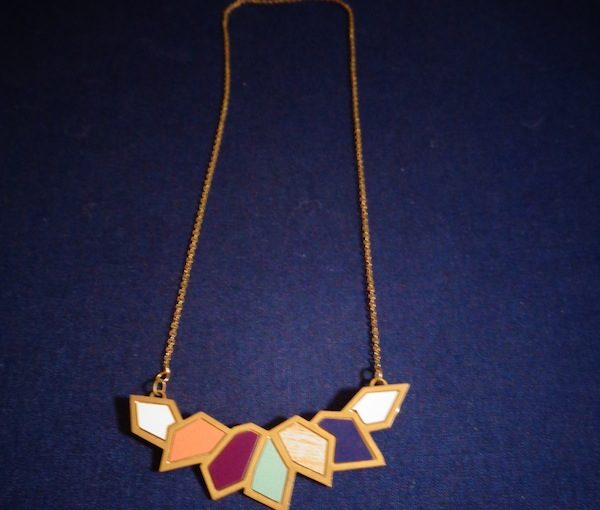
This necklace uses snap fasteners instead of clasps [see below]. (photo from Deborah Rubin Fields)

Diane von Furstenberg is attributed with saying: “Jewelry is like the perfect spice – it always complements what’s already there.” Some of us would say that’s all well and good, until you have to ask for help in closing a necklace.

Maybe you can release the spring, which opens the lobster clasp’s arm, but you can’t hold it long enough to actually close the clasp. Or perhaps your hands just can’t negotiate the T into a toggle clasp’s circle. Whatever your exact manoeuvrability problem, one thing is sure, putting on jewelry can be a frustrating experience. And the frustration seems to increase with age.

In The Journals of Gerontology, academics Eli Carmeli, associate professor at Haifa University, the late Hagar Patish and Prof. Raymond Coleman of the Technion state, “Hand function decreases with age in both men and women, especially after the age of 65 years. Deterioration in hand function … is, to a large degree, secondary to age-related degenerative changes in the musculoskeletal, vascular and nervous systems.

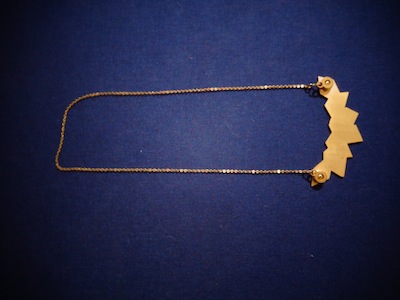
photo - The necklace's snap fasteners
The necklace above’s snap fasteners. (photo from Deborah Rubin Fields)

“Prehension is defined as the act of seizing or grasping. Aging hands and fingers are especially prone to osteoarthritis and rheumatoid arthritis. It is clear that common tasks involving precision dexterity, two-hand coordination, such as are needed to thread needles, open buttons on clothing or fine-grip tasks, as in holding a pen or cutlery, become increasingly difficult with aging. This is also true with regard to simple handgrip tasks requiring strength, such as opening bottles. The difficulty of performing such tasks may be in part due to declining vision.”

So what are the different kinds of jewelry clasps or closures and how easy are they to use? Today, eight clasps are usually added to necklaces.

The lobster clasp and spring ring clasp have a spring-loaded mechanism. Both operate by fitting one end into the opened spring side, then releasing the spring mechanism to shut.

The fishhook clasp is so named because part of the closure resembles the hook used in fishing: one end is a metal hook, while the other is an oval-shaped case. The hook slides into and locks inside the case.

Somewhat similar in shape to the fishhook, the S hook works by sliding the S-shaped hook onto a ring at the other end.

In a toggle bar clasp, one end is a long bar or T shape and the other is an open shape, usually a circle. The bar slips through the centre of the shape and locks in place.

The barrel clasp is so named because, when closed, it looks like a barrel. This clasp consists of two metal pieces, one on each end of the necklace, which close by screwing together. Likewise, in the slide-lock clasp, one tube slides inside the other and locks in place.

Finally, both ends of a magnet clasp contain magnets, which attract each another and snap together, locking the piece of jewelry in place. While not always particularly attractive, the newer magnet closures can actually look quite pleasing.

Clips designed to be easy to put on. (photo from Deborah Rubin Fields)

While all these clasps are relatively secure, if you have dexterity issues, six of the eight might be difficult to manipulate. So, if you’d like to continue wearing certain pieces of jewelry, to what clasps should you switch? For people with handgrip problems, two necklace closures are usually recommended: the slide-lock and the magnet clasps.

Israeli Keren Doron, who has designed and produced gold necklaces, however, is skeptical about a magnet clasp staying closed when the necklace is really heavy. She also warns that it is possible to damage a necklace when switching its existing clasp. There are many ways to do so, although it depends on the different kinds of jewelry. For example, Doron said not all necklaces with stones can withstand the heat of burner re-soldering.

Occupational therapists at Jerusalem’s Shaare Tzedek Hospital suggest that people with dexterity problems switch to necklaces that are long enough to simply slip over the head.

If you enjoy wearing costume jewelry, a new Israeli company offers another solution. Snaps (snaps.co.il) makes attractive necklaces and earrings that completely do away with clasps. Instead, designers Lilach Bar Noy and Inbar Ariav glue snap fasteners to the back of their pendants (using either a single or double set of snaps) and to each end of the necklace chain. Without having to apply much pressure, the male and female parts of the snap attach.

Wearing pierced earrings may also be a problem for people with hand issues. One solution is to wear omega-back earrings with a hinged back that simply flips closed; there are no tiny posts or backs to manipulate.

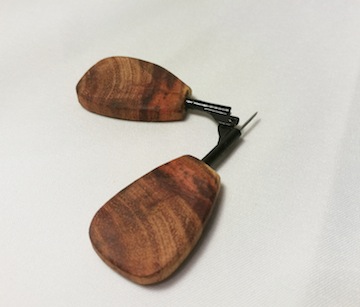
Neta ben Bassatt’s fashion jewelry addresses the problem of closures in a different manner. As a student at Bezalel Academy of Arts and Design, she won a prize for her coat pins designed especially for people who have visual impairments. Her wood and brass pins may be used with heavier clothes, such as cotton, wool, linen, etc. Two of her pins have a kind of clasp that can fasten best to a shirt collar or the lapel of a suit, where it is easier to get to the other side of the fabric. Her other designs feature a long, open needle pin, which can be attached anywhere on the fabric. Importantly, the wearer does not need to touch the pin itself, thus eliminating the chance of sticking oneself.

Is jewelry important? The answer depends on whom you ask. One thing is clear: jewelry has been around a long time. As early as Chapter 24 of the Book of Genesis, Abraham’s chief servant (Eliezer) is giving jewelry to Rebecca’s family. And, with people living longer, more and more adaptability and accessibility issues will arise, so we are likely to be talking about jewelry for a long time to come.

Deborah Rubin Fields is an Israel-based features writer. She is also the author of Take a Peek Inside: A Child’s Guide to Radiology Exams, published in English, Hebrew and Arabic.

Format ImagePosted on March 8, 2019March 6, 2019Author Deborah Rubin FieldsCategories Visual ArtsTags disability, fashion, jewelry, style, technology
Proudly powered by WordPress