Skip to content
  • Home
  • Subscribe / donate
  • Events calendar
  • News
    • Local
    • National
    • Israel
    • World
    • עניין בחדשות
      A roundup of news in Canada and further afield, in Hebrew.
  • Opinion
    • From the JI
    • Op-Ed
  • Arts & Culture
    • Performing Arts
    • Music
    • Books
    • Visual Arts
    • TV & Film
  • Life
    • Celebrating the Holidays
    • Travel
    • The Daily Snooze
      Cartoons by Jacob Samuel
    • Mystery Photo
      Help the JI and JMABC fill in the gaps in our archives.
  • Community Links
    • Organizations, Etc.
    • Other News Sources & Blogs
    • Business Directory
  • FAQ
  • JI Chai Celebration
  • JI@88! video

Recent Posts

  • Sharing her testimony
  • Fall fight takes leap forward
  • The balancing of rights
  • Multiple Tony n’ Tina roles
  • Stories of trauma, resilience
  • Celebrate our culture
  • A responsibility to help
  • What wellness means at JCC
  • Together in mourning
  • Downhill after Trump?
  • Birth control even easier now
  • Eco-Sisters mentorship
  • Unexpected discoveries
  • Study’s results hopeful
  • Bad behaviour affects us all
  • Thankful for the police
  • UBC needs a wake-up call
  • Recalling a shining star
  • Sleep well …
  • BGU fosters startup culture
  • Photography and glass
  • Is it the end of an era?
  • Taking life a step at a time
  • Nakba exhibit biased
  • Film festival starts next week
  • Musical with heart and soul
  • Rabbi marks 13 years
  • Keeper of VTT’s history
  • Gala fêtes Infeld’s 20th
  • Building JWest together
  • Challah Mom comes to Vancouver
  • What to do about media bias
  • Education offers hope
  • Remembrance – a moral act
  • What makes us human
  • המלחמות של נתניהו וטראמפ

Archives

Follow @JewishIndie
image - The CJN - Visit Us Banner - 300x600 - 101625

Tag: children

Try to reduce screen time

Try to reduce screen time

In her latest book, Be the Parent, Please (Templeton Press, 2018), author Naomi Schaefer Riley reminds parents to take back control and help their kids find healthier means of entertainment.

Originally from Massachusetts, this New York mom of three kids (ages 11, 9 and 5) is no stranger to society’s pressure to give children whatever they want, including the latest technology.

“Over the last few years, I myself struggled with the issues of how to handle screen time, and I’ve watched a lot of other parents struggle with it,” Schaefer Riley told the Independent. “As a journalist, I wanted to talk to experts and do reading, and find out what the research says … and talk to parents about strategies they were using to deal with this.

“The pressure to hand over screens to kids starts almost immediately these days,” she said, “The iPhone came out a little more than 10 years ago, coinciding with the birth of my oldest daughter. It took a couple years but, by the time she was in preschool, a lot of parents, even to have a basic conversation with another person, would hand over their phone just in order to distract the child.”

Today, tablets and cellphones have become a source of all things entertainment for kids (let alone adults), whether that involves looking at pictures of themselves, creating videos or playing games.

“When my kids were younger, we let them watch one show every night, some half-an-hour cartoon,” said Schaefer Riley. “Then, my son was born and the fight began over what they were watching and who gets to pick each night. And it became more of a struggle to tell them you’re going to turn off the TV…. A book I read enlightened me, called The Plug-In Drug. It came out a little more than 40 years ago and was mostly about TV and videogames.

“The author noted that, when you turn off a screen, it’s almost like waking a child up from a nap. It’s a trance-like state and they’re so into it that it’s almost like a change from sleep to wakefulness when you turn it off. And they become cranky. It can be as long as a half hour before they adjust back to reality. I think I was tired of the crankiness, too, of every time I turned it off, to have this fight ensue.”

At the Schaefer Riley house, there are a lot of toys and the kids are expected to entertain themselves without the TV. “But, a lot of parents don’t make that expectation,” she said. “They assume that, unless the child has a screen, the parent has to be entertaining them at all times, that the child can never be restless or irritated.”

She went on to explain that it’s not a parent’s job to ensure that their child is 100% engaged in something at all times. Instead of screens, she suggested, “Why not give your kids some pots and pans to bang together or some cardboard boxes? These are things we know are good for building fine and gross motor skills, and [that] encourage kids to explore things.
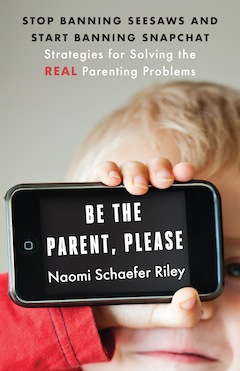
image - Be the Parent, Please book cover“I think what the screens have allowed is for us to exercise more control over our kids and keep them on a tighter leash. You don’t need to go all the way to the park. You can just sit in the living room and give your kid an iPad. That way, I don’t need to worry about whether you know enough about crossing the street or whether you’ve achieved that level of independence. The phone will allow me to have this tether on you. This is not very beneficial to kids in the long run.”

Children are now finding tasks difficult to handle if they cannot immediately text their parents for advice or counsel about their lives, argued Schaefer Riley. There is constant communication, with technology serving as a crutch for helicopter parenting.

“A lot of parents have confessed to me … they know, deep down … that they don’t need studies to tell them that their kids are on screens too much,” said Schaefer Riley. “Parents know this.”

It’s time to apply basic parenting strategies to technology, she said. “I know it sounds simplistic to say, but your kid doesn’t generally ask for chocolate cake for breakfast in the morning; they know there’s none for breakfast. If you talk about screen-time limits and stick to them, your kid will not be on you constantly…. If you stick with the rules you set for a few weeks or months, your child will learn that there is no point in asking again; they already know what the answer is and will stop asking for things you consistently say ‘no’ to. The idea is to bring parents back to reality and back to a sense of where they do have control.”

According to Schaefer Riley, the life skill of asking for assistance from an adult is one that many children are missing out on, due to the reliance on tablets and phones.

“I see the kids … my daughter is on the swim team … and they all walk out of practice and everyone is texting their parents – pick me up in five or 10 minutes outside,” said Schaefer Riley. “I’m like, ‘who are you?’ These are not your chauffeurs. I think that’s how we’ve come to think of ourselves.”

Schaefer Riley said observant families, who turn off their phones on Shabbat, have an advantage, as the children come to appreciate that there is something to be gained from family time. “I think,” she said, “that more and more people, whether they are religious or not, are trying to find that ‘technology Sabbath,’ as they like to call it, to give themselves a break … either at meal times, or one day a week, or on vacation. It’s considered a luxury now, to be able to get away from your phone.”

Schaefer Riley emphasized that her book is not meant to scold anyone. She herself faces these challenges.

“There’s a lot of pressure coming from technology companies and schools, and from the culture generally, that are really pushing you to hand over these devices to your kids,” she said. “It takes some willpower to say no, that’s not for my child, or this much time is not for my child.

“There’s a point at which you need to go into your community and find allies,” she added. “Everywhere I went, every community of people I’ve spoken with, there wasn’t just one family trying to hold the line. There were several and, sometimes, they weren’t connected with each other. But, if you do a little searching, you can find people trying to take a similar tactic, and it helps to have allies.”

Rebeca Kuropatwa is a Winnipeg freelance writer.
Format ImagePosted on April 27, 2018April 25, 2018Author Rebeca KuropatwaCategories BooksTags children, Naomi Schaefer Riley, parenting, technology

Rituals can help us with loss

My nephew L’s public elementary school principal just died unexpectedly. She wasn’t old, and it was very sudden. The school closed for an afternoon so everyone could go to a memorial service. He’s upset … as any 9-year-old kid would be. His family lives near my parents, in Virginia, so, when my brother called for grandparent backup, they went right over. They needed to help my nephew start learning and talking about death.

This is so hard, but, in some ways, we are lucky. Judaism has rituals, information and thousands of years of coping with this topic. We can joke about it, sure, but nobody comes out of this thing called life alive. Better to have some things in place ahead of time, so you’re ready for it.

There are those who try to protect kids from sad or upsetting events, and keep them home and shelter them from funerals. This is a disservice to kids, who need to learn how these things work. I experienced several deaths and attended funerals as a little kid, as close family and friends died. Watching my family members mourn, going through shivah and attending services with them to say Kaddish helped me get a grip on the losses of people I loved, even though I wasn’t old enough to do much of this myself.

By comparison, my husband didn’t lose close family members until he was a young adult in his twenties. He didn’t have a deep understanding of traditional Jewish practices, about what would happen and how. In a short span of time, he lost all his grandparents and his mother. Going through the rituals, attending services to say Kaddish and to mourn his mother, was very hard. It was a long year, and we were in grad school, far away from family. However, we used those rituals as a crutch, and it helped us get through it together.

Although my mom is retired, she worked as a Jewish educator and administrator for many years. She still helps manage arrangements for the sale of Jewish burial plots for her Virginia congregation. My mom often helps people as they deal with a sudden death, a long illness or another difficult situation. She was recently invited to talk to the Grade 6 religious school class as they studied Jewish mourning and death.

It turned out that L’s older brother, age 12, was in that class. Although he recognized many of the pictures in my mom’s presentation, he said he learned some new things, too. He recognized the 140-year-old cemetery in Alexandria, where he visits and helps out sometimes. My mom covered basic traditions, but she also talked about how we can comfort friends who lose grandparents – the real details that help us cope with loss. Most poignant for me, though, was the new story my mother told me that she’d mentioned in the class. It was a way to help kids learn to support friends with their losses.

When my mom was 12, there was a phone call in the middle of the night. She heard her dad crying, which she’d never heard before. His father, her grandfather “Poppa,” had died. Her friends at school came up to her. They were sorry to hear about his death. Poppa used to carry around big packets of Juicy Fruit gum in his pockets. He’d hand out sticks of gum to all the kids at the end of High Holiday services. Those friends helped her remember her grandfather in a loving, wonderful way.

In Leviticus, which we read each week at synagogue at this time of year, there are long lists of “shoulds” and “should nots” and instructions for how we should do things. Some of these rules seem rigid. Many aren’t really applicable in a world without ritual sacrifices in the Temple in Jerusalem. However, we have both rabbinic teachings and the Tanakh sacrifice experience. We’re offered tools for how to mourn and how to manage through hard times. That history can propel us forward.

My family and community “practised” with kids so they were ready. True, it may be bending someone’s rules to recite Kaddish in the backyard over a beloved pet who has died. It may not be exactly correct to light a yahrzeit candle and recite Kaddish over a beloved (non-Jewish) elementary school principal who has died, but this “practising” doesn’t matter to most. The Jewish rituals and traditions that exist around death aren’t really about the person who died. It’s about how the rest of us will move forward.

Death is a part of life. It’s dang hard. However, hard things don’t go away because we decide not to talk about them or face them. Instead, brave people conquer difficult challenges through facing them head on. My nephew L is one of those brave people. He uses a wheelchair, signs and uses an iPad communication device to talk – and shows such compassion. He told my mother, “Now I know how you felt when your mom died.”

This week, my nephew heard that we are about to adopt a new dog. He hadn’t realized that one of our dogs died last fall, right before Yom Kippur. He was reassured that our dog Harry was old, and very sick … and that is how most of us die. However, it’s through talking about this that we can move on towards celebrating a new “family member,” too.

Talking about death isn’t easy, but we need to do it – in calm, peaceful ways – long before something sudden happens to us or our families. Talking about death in a Jewish context and acknowledging the value of the rituals that help us cope with it may be one of the deepest ways we can celebrate life.

Joanne Seiff writes regularly for CBC Manitoba and various Jewish publications. She is the author of three books, including From the Outside In: Jewish Post Columns 2015-2016, a collection of essays available for digital download or as a paperback from Amazon. See more about her at joanneseiff.blogspot.com.

Posted on April 20, 2018April 18, 2018Author Joanne SeiffCategories Op-EdTags children, death, health, Judaism
High-tech medicine

High-tech medicine

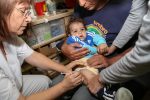
A 1-year-old boy being treated with a novel gene therapy drug. “Usually, this type of injury with a hemophiliac patient would involve hours in the emergency room, with repeated doses of intravenous coagulation factors,” said Prof. Gili Kenet, director of the National Hemophilia Centre at Sheba Medical Centre. (photo from IMP)

From wearables that allow cardiac specialists at a hospital in Ramat Gan to monitor a patient’s cardiac performance thousands of miles away from home, to giving gravely ill patients a new lease on life with groundbreaking new therapies, Israeli medical innovators are almost literally thumbing their noses at the Angel of Death and changing the way we live.

According to start-up “ecosystem” sources, there are at least 6,000 active start-up companies operating in Israel. Within the realm of digital health, the number of active start-up companies engaged in this field has grown from 65 companies in 2005 to more than 400 in 2018. A significant number of these start-ups are being financially supported by global corporations such as Philips, GE Healthcare, Merck and IBM. Some of these companies have opened up offices close to start-up hubs in Haifa (near the Technion) and Metro Tel Aviv, the recognized “capital” of Israeli business and high-tech.

photo - This digital watch developed by the Sheba medical team and Datos Health is equipped with an app that contains a care path specially designed for each patient
This digital watch developed by the Sheba medical team and Datos Health is equipped with an app that contains a care path specially designed for each patient. (photo from IMP)

“Israel serves as a global incubator of innovative ideas for a variety of reasons,” said Dr. Eyal Zimlichman, deputy director general, chief medical officer and chief innovation officer at Sheba Medical Centre, which is located in Ramat Gan and is the largest facility of its kind in the Middle East. “First of all, it’s in our genes. Secondly, there is the military aspect, where we are taught to improvise when necessary in the field. These things allow us to be naturally innovative. This has trickled down into the medical field, where we are offering the highest level of medical care. I also believe unique innovations in medicine, that will impact the world for the next 100 years, will be developed in Israel.”

Prime examples of Sheba Medical Centre’s innovative efforts revolve around combating potentially fatal diseases such as cancer with immunotherapy, oncology’s new medical “magic bullet”; targeting hemophilia with a novel gene therapy drug; and creating an app for a wearable device used by people with serious heart and diabetes issues.

Immunotherapy is a treatment that uses our body’s own immune system to invade and destroy cancer. CAR-T (chimeric antigen receptor) and TIL (tumour-infiltrating lymphocytes) are not universal cancer cures at this stage. However, there are ongoing clinical trials being conducted for major pharmaceutical companies and America’s National Institutes of Health at Sheba Medical Centre’s oncology unit, where end-stage cancer patients are being treated with CAR-T, which specifically targets leukemia and lymphoma, and TIL, which zeroes in on melanoma and ovarian cancer patients.

Seventeen people with cancer were treated at Sheba during an initial CAR-T trial, after all of these patients had displayed zero improvement in the wake of traditional chemotherapy treatments and bone marrow transplants. Of the 17, 75% had a complete response to the CAR-T. One of those patients, an 8-year-old girl from Bnei Brak, was the first child to achieve complete remission from childhood leukemia. A Sheba centre oncologist said, “When we came to give her the CAR-T cells, she was very, very sick. She couldn’t even get out of bed. When we came back to visit her three weeks later, she was going back and forth on her rollerblades.”

A few weeks ago, a 1-year-old boy became the youngest patient in the world suffering from both severe hemophilia A and an unusual allergy to be treated with a gene therapy drug that only recently was approved for use in the United States. The new drug, developed by an American biopharmaceutical company, contained a “bispecific antibody” that was injected into the child at Sheba Medical Centre. According to clinical trial results published in The New England Journal of Medicine, the drug has shown a 90% reduction in bleeding in children and a 70% reduction in adults.

photo - Prof. Gili Kenet
Prof. Gili Kenet (photo from IMP)

“This is a new, exciting era with many novel options for improved care and even complete cure of patients with hemophilia,” said Prof. Gili Kenet, director of the National Hemophilia Centre at Sheba. “The child’s mother is so happy with the new treatment. The child had experienced a head trauma, but required no further therapy at all. Usually, this type of injury with a hemophiliac patient would involve hours in the emergency room, with repeated doses of intravenous coagulation factors. However, there were no complications, as his hemostasis (blood factors) was completely normal.”

Within the realm of what is known as IoT (internet of things), Prof. Robert Klempfner is blazing a trail of what he has dubbed IoMT (internet of medical things), where heart patients are able to engage in cardiac care and rehabilitation using wearables (for example, a high-tech watch), without having to return to the hospital for treatment.

“Today, the challenge for both heart doctors and cardiac care patients is what happens after a coronary event (heart attack), intervention or heart surgery,” said Klempfner. “What kind of regimen can be created for someone who might have had surgery at Sheba but lives and works in faraway places such as the United States or other countries? Within the new world of telemedicine and digital health, we have the technology to create rehab programs that are a win-win experience for both the hospital and the patient.

“We give cardiac care patients a watch,” he explained, “that is equipped with an app developed by the Sheba medical team and Datos Health [an Israeli start-up company]. The app contains a care path specially designed for each patient, containing rehab regimens, education material and secure communication with our patients. The medical centre receives data from wherever he/she is located when they are walking, exercising, doing other physical activities. Our technicians then analyze the info and provide ongoing feedback, assisted by smart algorithms provided by the innovative system.

“The program is also primed,” he said, “for patients who suffer from hypertension and diabetes that are now able to transmit all their measurements automatically to our system. This not only saves the patient time, by not having him/her return to the hospital, it saves the hospital time and bed space, so we are able to treat more patients. This ushers in a new era in digital healthcare.”

For more information on Sheba Medical Centre’s oncology unit, visit shebaonline.org.

Format ImagePosted on April 20, 2018September 30, 2019Author Steve K. Walz IMP MEDIA LTD.Categories IsraelTags cancer, children, health, IoMT, IoT, science, Sheba Medical Centre, technology
RJDS part of Variety telethon

RJDS part of Variety telethon

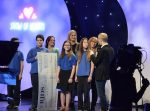
Several students and a few teachers from Richmond Jewish Day School were invited to appear on Variety’s Show of Hearts telethon. (photo from RJDS)

The Richmond Jewish Day School (RJDS) is a school that loves to donate to charity. The school currently donates to several organizations, including the Regional Animal Protection Society, the Jewish Food Bank and Variety – The Children’s Charity.

photo - RJDS students raised $1,150 for Variety – The Children’s Charity
RJDS students raised $1,150 for Variety – The Children’s Charity. (photo from RJDS)

A total of $1,150 was raised this school year for Variety, through flower sales, bake sales and non-uniform days (where students donate a dollar for the privilege of not wearing a uniform). As a result, RJDS received an invitation to be on the Variety Show of Hearts telethon on Feb. 11 to formally donate the money that the student council raised. Several students and a few teachers went on TV and everyone was so excited to be part of such a great experience.

For me, the telethon was very inspiring in many ways. There were many people there whose stories were told, and they made me and the rest of student council even more pleased that we could donate. There were many other donations given, as well as ours, that I am sure will make a big difference in some lives. It was amazing to see how much Variety impacts the lives of children and how happy it can make them.

Haylee Topp is a Grade 7 student at Richmond Jewish Day School.

***

Editor’s note: This year’s Variety Show of Hearts raised almost $5.5 million, which will benefit children with special needs and their families. Also appearing on the telethon was ShowStoppers, a group founded by Perry Ehrlich and Simon Isherwood that started out as Sound Sensation; the group’s first performance was on the telethon 25 years ago. Those who missed this year’s Show of Hearts can still make a donation online at variety.bc.ca, by calling 604-310-KIDS or by texting “KIDS” to 45678 to make an automatic $20 contribution.

Format ImagePosted on March 2, 2018March 1, 2018Author Haylee ToppCategories LocalTags charity, children, Richmond Jewish Day School, RJDS, Show of Hearts, tikkun olam, Variety
Mothers embrace Mamatefet

Mothers embrace Mamatefet

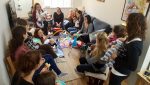
Mamatefet’s first Mom and Babe Circle. (photo from Mamatefet)

Meirav Galili and her husband Itai moved to Vancouver with their two children from Israel five years ago. When their third child was born here, the family received lots of support from friends, something that helped make up for the fact that they have no extended family here.

When she heard about a plan to create a network of Israeli moms and moms-to-be, she was one of the first to sign up with Mamatefet.

Mamatefet, which has grown exponentially almost exclusively through word of mouth, is a mash-up of “mama” with the Hebrew word “maatefet,” which is a wraparound or embrace. The group welcomes those who want to be an otefet, an embracer, or a ne’etefet, an embracee. Except, the terms are not mutually exclusive.

“Sometimes it’s our turn to give and sometimes it’s our turn to get some help,” said Galili, adding that the success of the group surprised all involved.

“It was amazing because many, many people said, ‘me, me, me, me, me,’ and quickly we established something,” she said. Understanding the added burden of having and raising children without parents, aunts, sisters-in-law or other family around inspired many women to step forward.

Thanks to Mamatefet, one phone call or a WhatsApp message can put a team into action.

“The woman doesn’t need to ask even,” Galili said. “Everything is being done for her. She just needs to tell a friend, ‘My child is sick with me’ or ‘I have to stay at the hospital for tonight,’ and we’ll take it from there, and when they get home they have everything. It’s a very strong, warm feeling that we are not alone and we have this supportiveness.”

That is exactly what Rotem Regev had in mind when she and four friends conceived of Mamatefet in late 2016.

“It was one of those nights,” Regev recalled, “a few friends got together sitting around the coffee table chatting, recounting their individual – which we then realized were quite collective – stories of transition, to Vancouver, to motherhood, and how that intersected. What became really crystal clear to all of us is that we were feeling quite a bit of loneliness at that time, whenever that transition was, coming to Vancouver either pregnant or with a very little one, when there is not a school yet or any sort of structure to fit into…. To top that off, you would also be facing an extra challenge being away from your family and friends in a country that doesn’t yet quite feel like home and a language that doesn’t quite feel like home and a healthcare system that feels very, very different.

“We didn’t want any woman to feel the loneliness that we felt,” she said.

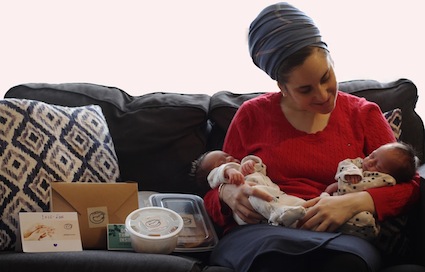
photo - Mamatefet offers moms like Osher Cohen support, including the occasional homemade meal, and friendship
Mamatefet offers moms like Osher Cohen support, including the occasional homemade meal, and friendship. (photo by Lior Noyman)

When they decided to share their idea, they thought maybe five more women would join, perhaps seven. A few months later, they had 70 embracers and more than 40 embracees.

“The word spread out like wildfire really, because I think the need was so great,” said Regev, who is a clinical psychologist. There are a couple of similar groups in Israel and something sort of like Mamatefet in San Francisco and another in New Jersey, but, considering the evident need, it is a surprisingly rare initiative.

Regev and her Mamatefet co-founders Tamara Halamish, Yael Pilo Raz, Yael Mayer and Matti Feigelstock, have now seen their project expand from Vancouver to teams in Richmond, Ladner, Surrey, North Vancouver and East Vancouver-Burnaby, with a new team gearing up in Langley and the Tri-Cities.

In general, Mamatefet volunteers will deliver food, often including a Shabbat meal. There are regular meet-up groups for pregnant women and another for new moms. They are also on call in case of a crisis, like a miscarriage or a stillbirth.

But it’s the informal friendships that organically develop that are as important, said Marina Ingel. Being able to arrange play dates, exchange kids’ clothes, have a coffee with other new moms – this is an important outcome too, she said.

One of the reassuring things is talking to other moms about how the medical system in Canada differs from that in Israel.

“Here it’s totally different. Everything,” said Ingel. “In Israel, every time you’re going to the doctor, you’re doing an ultrasound. Here, you have maybe two the whole pregnancy. A bunch of things that they’re checking in Israel, they’re not doing this at all. But then you realize it’s fine and, if you have any problem, they will check it. Everything is OK, but the thing is that you’re worried about it, because it’s new to you.”

For Galili, cooking is both a hobby and a way to support other new moms.

“They send a message saying there is a woman who is about to come home with a baby and [asking] who is willing to participate,” she said. “I thought, OK, I need to prepare something anyway so I’ll just prepare something extra.”

Baking, homemade granola and yogurt, soups and a main dish, comfort food like chicken and rice, are the sorts of things she preps for new moms.

“If her mother were here, this is what she would probably make for her,” said Galili.

Mamatefet can be reached via facebook.com/mamatefet.

Format ImagePosted on February 23, 2018February 21, 2018Author Pat JohnsonCategories LocalTags childcare, children, Mamatefet, Rotem Regev, Vancouver, women
Mystery photo … Jan. 26/18

Mystery photo … Jan. 26/18

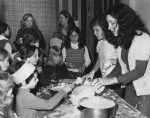
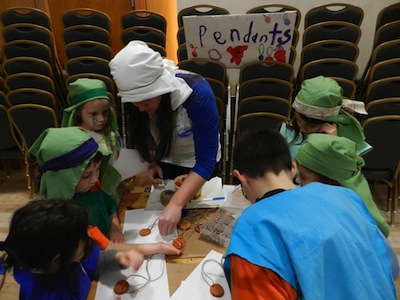
The Vancouver Jewish Community Centre doing a children’s baking program, Jan. 18, 1974. (photo from JWB fonds, JMABC L.11635) 

If you know someone in this photo, please help the JI fill the gaps of its predecessor’s (the Jewish Western Bulletin’s) collection at the Jewish Museum and Archives of B.C. by contacting [email protected] or 604-257-5199. To find out who has been identified in the photos, visit jewishmuseum.ca/blog.

Format ImagePosted on January 26, 2018January 24, 2018Author JI and JMABCCategories Mystery PhotoTags arts, children, cooking, JCC, Jewish Community Centre
What kids can teach

What kids can teach

Rosh Hashanah is a time to take stock of the previous year and prepare yourself spiritually for the year ahead. But for those of us with busy families, it can be hard to squeeze time for reflection into the round of Yom Tov preparations. It seems that, once you have children, the holiday focus goes from attending shul to tending to your children and, as rewarding as parenting can be, it leaves little time for focusing on spiritual growth. Yet, one of our most important jobs as parents is to teach our children the concepts of teshuvah (repentance), tefilah (prayer) and tzedakah (charity/justice). How are you supposed to teach these values to your children when you may not have time to connect to them yourself?

Child education expert Moshe Beller has found that the answer lies within the very task at hand – by watching your children.

As director of Beit Metzudot School at Seeach Sod, an Israeli organization for kids and adults with special needs, Beller must often answer tough questions about how to teach children these important values. His answer – emunah (faith/belief) – in them, yourself and, ultimately, in Hashem.

“Here at Seeach Sod, we work with children of all ages and abilities. When we approach educating a child, we look at every detail, from the diagnosis, available therapies and interventions, family circumstances and more. Then we calculate it all to find a solution that best serves the individual child. Though I cannot tell you one therapy that works for every situation, I can say that, at the core of every treatment, is believing that your child can succeed – there is no greater intervention than that!”

Sounds good, but how can we tap into that elusive ideal? If you haven’t guessed it already, it’s our children who can teach us that as well.

Children have a profound ability to trust their parents to lead them. Even if they don’t always follow what you say, they trust you with their life essentials. They trust you will keep them safe, fed, clothed, etc. This level of emunah is one we should allow ourselves to tap into when it comes to grappling with G-d. Mirror what your child displays regularly – let go of the worries that hold you back and know that everything is being taken care of for your benefit.

As for teshuvah, an essential element of teshuvah is believing you can start anew, that you can learn from your mistakes without your ego holding you back. Children display this to us with their ability to live in the moment. They don’t condemn their past actions or the past actions of others like adults do. They’re excited to learn and grow without fear of admitting they don’t know it all.

With respect to tefilah, a key to heartful prayer is awe. A sense of G-d’s greatness and the miracles that surround us each day opens possibilities to so much more. Children have the ability to be wowed by things we take for granted. As adults, we become jaded and forget that the simple pleasures surrounding us are in fact miraculous. Learn from your children and find wonder in the simple creations.

Finally, tzedakah. Have you ever seen how a child lights up when you tell them you need their help? At the core of generosity is the understanding that, no matter what your financial situation is, we all have something we can offer to another. Children take much pride in being able to help, whether or not being of genuine assistance is within their capabilities. We, too, can take the same joy in giving tzedakah and doing acts of chesed (loving-kindness).

This year, instead of seeing your children as a distraction from the path to spiritual preparation for the High Holidays, look to them to guide you towards a year of growth.


Format ImagePosted on September 15, 2017September 28, 2017Author IMP Group Ltd.Categories Celebrating the HolidaysTags children, High Holidays, Israel, Judaism
A new Camp Shalom

A new Camp Shalom

This August, JCC Camp Shalom will also take place at Burquest Jewish Community Centre. (photo from JCC Camp Shalom)

The Jewish Community Centre of Greater Vancouver’s JCC Camp Shalom for children and youth living in the Metro Vancouver area is coming to Burquest Jewish Community Centre Aug. 21 to Sept. 1.

Four years ago, a collaboration between JCC Camp Shalom and the Aleph in the Tri-Cities group began with the support of the Jewish Federation of Greater Vancouver. This made it possible for children living in regional communities to attend JCC Camp Shalom in Vancouver.

This year, thanks to a grant from the Jewish Community Foundation of Greater Vancouver, JCC Camp Shalom will venture into the Tri-Cities and run its first outreach session of the summer camp at the Burquest Jewish Community Centre.

This camp will look and feel just like JCC Camp Shalom: Jewish exploration and an Israel connection, while celebrating Canada 150; fieldtrips in nature and an overnight camping trip are included as well. The outreach camp also has free bus transportation and rates matching other camps in the area. Israeli and Jewish families living in Burnaby, New Westminster, the Tri-Cities (Coquitlam, Port Coquitlam and Port Moody) and beyond will be able to register their children ages 5-13 for one or two weeks of full-day camp. Registration opens May 5.

“This summer, we are finally going to have an outreach Camp

Shalom on our doorstep within our hometown!” said Yossi Dagan of the Aleph in the Tri-Cities group, who has been part of the project since its inception.

“As a community member living in the Tri-Cities, I am so excited to be able to send my children to a Jewish day camp so close to home,” said Tammy King, mother of three and program coordinator for Burquest. “For the first time, they will be able to participate in Jewish programming, learn about Israel and meet other Jewish kids their own age. This is definitely an exciting opportunity for Jewish families living outside of Vancouver.”

For more information, contact [email protected] or [email protected].

Format ImagePosted on April 21, 2017April 20, 2017Author JCC Camp ShalomCategories LocalTags Burquest, children, JCC, summer camp, Tri-Cities, Yossi Dagan
Enhancing nature activities

Enhancing nature activities

Inbal Len Nenner holds the attention of campers on Cypress Mountain during JCC Camp Shalom’s winter session last month. (photo from JCC Camp Shalom)

When Inbal Len Nenner arrived in Vancouver last year from Israel, she fell in love with the natural environment, as well as its people. “I met the nicest people in the world,” she said.

When JCC Camp Shalom met Nenner by chance at the Jewish Community Centre of Greater Vancouver, she spoke about her work with Israeli children, where she created a special program called Children’s Tribe. Inspired by ancient tribal traditions, it focuses on group-building activities for children and youth and connects them to nature.

photo - Arts and crafts are a big part of JCC Camp Shalom, no matter what the season
Arts and crafts are a big part of JCC Camp Shalom, no matter what the season. (photo from JCC Camp Shalom)

This type of programming was of interest to Camp Shalom, as it has always focused on nature education and teaching values that foster appreciation and respect for the environment. So, during the two weeks of JCC Camp Shalom’s 2016 winter session, Nenner volunteered to work with all age groups.

During the winter camp, Nenner created many activities, including a quest for Big Foot at Cypress Mountain, where campers learned to follow tracks in the snow, and a “tribe day,” where the youth campers (grades 4-7) became the Spirit Eagle Tribe – each child had a role to fulfil, learned a job and shared with others. Meanwhile, with the younger campers (preschoolers), Nenner ran a Chanukah storytelling session, during which the children had the chance to dress up and play some of the roles in the story. The highlight of the week was a camp-wide celebration of Chanukah as in biblical times, which included booths and activities such as ceramics, dance and Olympic games.

Nenner’s goal in her work is to develop creative thinking in children and to show them the positive effect of making social connections in a group. This aligns exactly with JCC Camp Shalom’s values, so the camp could not have been more excited to give Nenner a chance to demonstrate her craft. During her time as a volunteer, the campers laughed and played, and created an environment that fostered positive self-image and growth.

“Inbal quickly became part of our Camp Shalom team and was loved by the campers and staff alike,” said Ben Horev, JCC Camp Shalom director.

Nenner has since returned to Israel, but JCC Camp Shalom is taking the necessary steps to ensure that she will return to the JCC in the spring. Not only did she enjoy her experience with the camp, but she was an amazing asset to the camp program, translating the camp’s values into meaningful activities from which the children grew and learned in an experiential way.

For more information about JCC Camp Shalom and its programming, contact Horev at [email protected].

Format ImagePosted on January 13, 2017January 11, 2017Author JCC Camp ShalomCategories LocalTags camp, children, environment, JCC
Best books for children

Best books for children

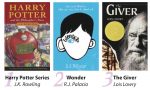
The top three picks of B.C. teachers for elementary school students.

As part of the B.C. Teachers’ Federation’s 100th anniversary, the BCTF encouraged members to recommend their favorite kids books to celebrate literacy and lifelong learning. It asked teachers: “What are the books you believe every student should read before graduating?” The result is a list of 100 books each for elementary and secondary students with an accompanying online resource and poster set to promote the books and the love of reading.

image - The top three picks of B.C. teachers for secondary school students
The top three picks of B.C. teachers for secondary school students.

“The BCTF received thousands of submissions from teachers throughout the province to make these best books lists,” said BCTF president Glen Hansman. “Some teachers told us they chose books that inspire, books that resonate with their students, and books that stand the test of time. Other submissions were made based on the outstanding quality of writing or the compelling stories told. The list is by no means exhaustive or scientific, but it reflects the enthusiasm and passion teachers have for literacy and reading.”

BCTF has created a new web page called bctf.ca/100bestbooks, which has links to every book to help visitors access descriptions and the publishers’ information. The release of the two lists in September coincided with International Literacy Day, which was Sept. 8.

“I encourage all teachers and others who love a great read to explore these best book lists,” said Hansman. “There is some excellent diversity represented and it shows how rich the genres of children’s and young adult literature are. Thank you to all the authors out there creating such wonderful stories!”


Format ImagePosted on November 25, 2016November 23, 2016Author BC Teachers’ FederationCategories BooksTags Chanukah gifts, children

Posts pagination

Previous page Page 1 … Page 5 Page 6 Page 7 Next page
Proudly powered by WordPress