No barriers to music

Victoria composer Ari Kinarthy. (photo from Ari Kinarthy)

Victoria composer Ari Kinarthy has not let spinal muscular atrophy (type 2), a condition that has confined him to a wheelchair since the age of 6, inhibit his ability to create music. In fact, the very movements he makes in the wheelchair go into producing his music.

Using Soundbeam, an interactive hardware and software system that forms sounds from movements, Kinarthy’s music is recorded into multimedia platforms. For example, movements closer to the recording device establish lower notes and movements away spark the higher notes.

“I create all my music entirely with the computer. Sometimes, I will have access to a guitar player or singer but normally the music will be all done by the samples I use. I usually start with just piano and sometimes will write out a score. I think of a melody and/or harmony and continue from there. I love making themes,” Kinarthy, 30, told the Independent.

“I got into music at age 16 with music therapy sessions. I loved creating music. I started with remixing songs and then creating my own from scratch. I wanted to see what I could create and it just continued from there,” he said.

Starting out at the music therapy department at Canuck Place in Vancouver in 2006, he moved to the Victoria Conservatory of Music in 2007, where, over time and under the tutelage of music therapist Allan Slade, Kinarthy became adept at mastering the intricacies of his device.

The Soundbeam device, which looks like a large red microphone, is stationed in Kinarthy’s studio. It transmits ultrasonic sound, i.e., sound that is inaudible to the human ear, which, in turn, intersects with motion. This then transforms the resulting sound into MIDI, a digitized protocol for electronic instruments.

In 2012, Kinarthy released his first album, A Lion’s Journey, a play on his Hebrew name, Ari, which means lion. It featured an eclectic blend of many genres, including jazz and rock, mixed through the assistive technology. Though he is inspired by several music styles, he admits to loving orchestral music, specifically what one hears in Hollywood films, with Hans Zimmer and John Williams among his favourite composers.

When Soundbeam held an international competition to mark the company’s 25th anniversary in 2013, Kinarthy was one of two winners selected by a jury of musical heavyweights, which included Led Zeppelin bassist and keyboardist John Paul Jones, conductor Charles Hazelwood and composer Edward Williams.

“Pain E Motion,” the composition he presented, was lauded by the jury. Of it, Jones said, “A very interesting idea of performing live with a pre-recorded composition. A very good piece of work in its entirety.”

It was at that moment when Kinarthy decided he would devote himself further to studying music. He enrolled in the Berklee College of Music’s online program and received his certification in orchestration and music composition in film and TV in 2017, but not before releasing his follow-up album, A Lion’s Roar, which also delved into his extensive musical interests.

Judaism, too, has an important role in Kinarthy’s creative process, and his faith has been a source of inspiration. “I recently created a piece of music to honour my local temple. Creating music to share with my congregation made me very happy. I would say that Judaism has helped me share beautiful music,” he said.

After the High Holidays last year, Kinarthy wrote a song called “Kolot Mayim,” with lyrics in Hebrew and English, taken from the Book of Psalms.

His physical challenges have not infringed on his ability to perform live, which he has done on several occasions throughout Victoria.

Presently, Kinarthy is looking for people who might need original music for their project, as well as focusing on promotion and small personal pieces for family and friends.

“I don’t know if it will ever be a reality, but composing for visual media would be a dream come true, be it film, TV or even a commercial. Other than that, I just keep composing music and maybe take some more music classes. There’s always more to learn,” Kinarthy said.

“I never thought I would be able to not only create beautiful songs but also perform them live! That’s all thanks to the technology I have in my home studio.”

To learn more about Kinarthy and hear some of his music, visit facebook.com/arikinarthymusic.

Sam Margolis has written for the Globe and Mail, the National Post, UPI and MSNBC.
Hurdles to become a doctor

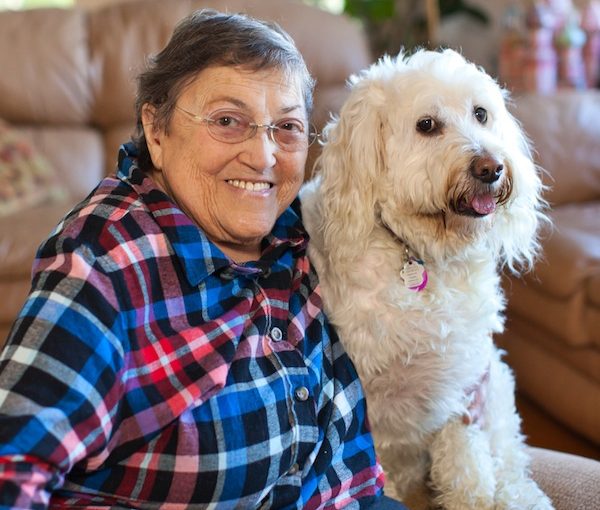
Ruth Simkin with her dog, Kelly. (photo by Chris Wilson)

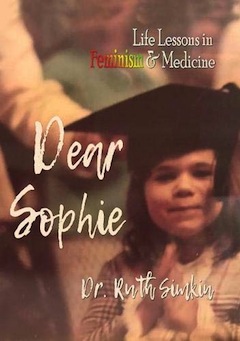
Feminism is really true equality between women and men; nothing more, and nothing less,” Ruth Simkin writes in her new book, Dear Sophie: Life Lessons in Feminism & Medicine, a memoir dedicated to her great-niece.

“There are many people who scoff at the word ‘feminism,’” Simkin adds. “But consider this – when I was in my first year of medical school, I, and any other woman, could not get a credit card in our own name. Until 1974, a husband’s signature was needed for women to have credit cards. At that time, I met women who were teachers who lost their jobs because they and their husbands wanted to start a family and they became pregnant – a no-no for working teachers until 1978. I could go on and on with examples like this to show why feminism was, and still is, such an important part of all our lives.”

Born in Winnipeg in 1944, Simkin has prevailed over many obstacles throughout her life and career. In Dear Sophie, readers join her as she struggles to get into medical school.

“There was stiff competition to get into an innovative medical program launched at the University of Calgary in the late 1960s,” she told the Independent from her home in Victoria. “I was one of 32 of roughly 1,200 applicants to be accepted.”

Admission to the program, however, would turn out to be an easier hurdle than those that were yet to come during her schooling and subsequent training. The length of her time in med school is replete with stories of sexual harassment and discrimination by both fellow classmates and senior members of the faculty.

“Male doctors, on more than one occasion, did all they could to get me expelled from med school, but I stood my ground,” Simkin said.

She managed to complete her residency, despite being blocked at almost every step, and clashing with the established medical community. But she prevailed. She was the first U of C med school graduate to open a practice – one that thrived – while also working as a professor and preceptor at the school.

image - Dear Sophie book coverIn the memoir, Simkin details her experiences from that time to the present and uses her account as a way to demonstrate to Sophie, and to other women, how to live a happy, feminist life. She hopes that Sophie, a pre-adolescent during the time Simkin was writing the book, will learn from her experiences before entering adulthood.

Simkin’s long and varied career has seen her undertake many ventures. In the 1980s, she learned acupuncture in Shanghai and, ultimately, became the first physician to be approved by the Alberta College of Physicians and Surgeons to incorporate acupuncture in a medical practice. Later that decade, she went to London, England, to study with Dr. Katharina Dalton, who brought premenstrual syndrome to the world’s attention and also coined the term.

Upon her return to Canada, Simkin opened the first PMS clinic in Western Canada. She also has opened Western Canada’s first hologram gallery, produced concerts, been involved in theatre projects and started the lesbian and gay political action group CLAGPAG.

In the 1990s, she moved to Salt Spring Island, where she became a farmer – growing “yuppie” veggies. A return to medicine saw her become the first fellow to study palliative care at the University of British Columbia. In 2014, she was honoured with a life membership from the College of Family Physicians of Canada.

Among her other published works, Simkin has written What Makes You Happy, a collection of short stories, both autobiographical and fictional; The Y Syndrome, a medical thriller set in 1990s Calgary; and Like an Orange on a Seder Plate, a feminist Haggadah. The Jagged Years of Ruthie J (2012) is an autobiographical account of her experiences in Winnipeg before medical school.

Over the years, she has written scores of medical papers and contributed to textbooks, as well as mixed media presentations. Having travelled extensively, she has an (as-yet) unpublished book, Come Away with Me, about her journeys through China.

Dear Sophie received the 2019 Rainbow Award in the LGBT biography/memoir category. In its review of the book, the prize committee said, “Dear Sophie is a flawless memoir that is not only a story of Dr. Ruth Simkin, but a story of feminism and women in Canada and the field of medicine, skilfully woven together with valuable life lessons.”


Sam Margolis has written for the Globe and Mail, the National Post, UPI and MSNBC.
Victoria hosts Klondike

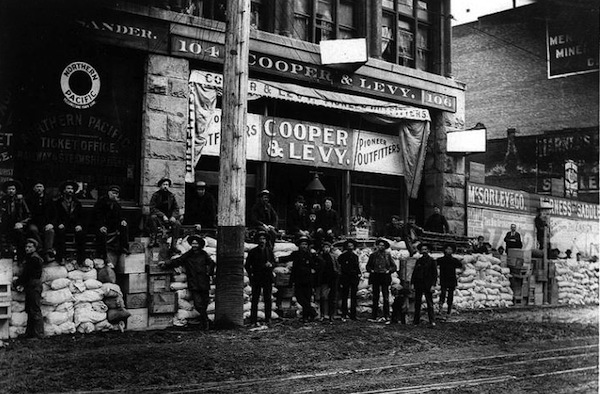
Cooper & Levy store, 104-106 1st Ave. S. near Yesler Way, Seattle, 1897. The store was one of the major outfitters of the Klondike Gold Rush. (photo from Asahel Curtis Collection, University of Washington UW 4770)

The archival images and newspaper headlines contained in the Gold Rush exhibit now on display at the Jewish Community Centre of Victoria (JCCV) evoke a sense of the hysteria that gripped the West Coast more than century ago, in spite of the risks involved in traveling to a severe and treacherous terrain. And Jews were not immune from the mania, as the three-panel display, entitled “The Jewish Presence During the Klondike Gold Rush 1897-1918,” distinctly demonstrates.

The exhibit will be at the JCCV through January. It brings with it a number of revisions from the one that toured Canada from 2016 to 2018 and included a stop in Vancouver.

“During its previous run, we received a lot of additional information from people who visited the exhibit, so much so that we couldn’t include it all in the current display. We are seriously thinking about doing a book starting later this year,” Rick Karp, president of the Jewish Cultural Society of Yukon (JCSY), told the Independent.

Once the previous display returned to Whitehorse, Karp followed up on the input he received and updated the three panels and the booklet accompanying the exhibit.

“As well, we revised the video that details the finding of the Jewish cemetery from the Gold Rush in Dawson, the cleaning and bringing it back to its original condition, and the rededication ceremony,” Karp said. “All the information about the cemetery in the accompanying booklet has been added, as well as the section entitled ‘The History of the Jews in the Klondike Gold Rush’ and the ‘Stories of the Gold Rush.’”

A significant addition to the Gold Rush stories is that of Joseph Barron, one of the first to open a mercantile store in Dawson. Barron came from Winnipeg and followed the stampede of 1898. He mushed into the Yukon via the White Pass route, bringing with him a stock of merchandise.

His beginnings in the north were not the most fortuitous. He lost his supplies on three occasions to fire between 1899 and 1901. Undeterred by adversity, he restocked and started over.

The Barrons would become a prominent Calgary family. Joseph’s son Abe founded the law firm Barron & Barron, which is still operated by the family today. His other son, Jacob (J.B.), was a leading businessman and theatre owner in the city, building Calgary’s first high-rise, the Barron Building, and breaking ground on its first Modern Orthodox synagogue, Shaarey Tzedec (which was demolished in 2013).

Joseph Barron’s wife and children did not come to Dawson until 1902. The younger Barrons only stayed for two years before they left to complete their education. The senior Barrons eventually left Dawson to join their children in Calgary in 1915.

Henry Isaacs was another entrepreneur who ventured north. He earned the moniker “the Butter King of the Klondike” upon learning about a technique using sea water to re-churn a shipment of what others had considered rancid butter into something edible.

Among the most enterprising adventurers was David Gross, a Russian immigrant and dropout trained as tailor, who, not yet 20 years of age when he made the journey north, found ways to make money selling groceries, stoves and other provisions, though his primary business was a clothing store. His ingenuity led him to see opportunities where others did not. For example, if butter had turned rancid and was unsalvageable for food purposes, he would sell it as axle grease for squeaky wheels. After learning that water can only penetrate an inch or two into flour, he would purchase large sacks of flour other merchants thought had been drenched and, therefore, ruined and then sell the flour that the water had not reached at a much higher price. Gross also became active in the nascent movie theatre business in Dawson City.

Yet the prize for the most daring Jewish seeker of fortune would have to go to Max Hirschberg. After losing his supplies en route and then finding, in 1890, that many of the good claims in Dawson had been staked, Hirschberg pushed on to Nome, where more gold was reported to be, on a bicycle!

Later in life, before his passing in 1964, he recounted the 11-week journey in which he made his way along a two-inch trail, confronting snow-blindness, exposure and exhaustion, nearly drowning in the Shaktoolik River and losing $1,500 in gold dust. When his bike chain broke, he made a sail from his coat and rigged it to his bicycle, then crossed the Norton Sound to Nome.

Interest in the Jewish community during the Gold Rush was ignited after the discovery of the aforementioned Jewish cemetery in Dawson City in 1995, and its ensuing restoration in 1997 and 1998. “The discovery of lives lost inevitably leads to questions about lives lived,” the exhibit booklet reads.

“The Jewish Community Centre of Victoria is excited to host the mobile exhibit. We would like to thank Rick for making it possible,” said Larry Gontovnick, president of the JCCV.

After it completes its current tour around Canada, the exhibit will be on permanent display at the Dawson City Museum in the Yukon. A duplicate copy will tour various communities in the United States.

Sam Margolis has written for the Globe and Mail, the National Post, UPI and MSNBC.
Police incident at shul

No one was injured and police are ruling out antisemitic motivations after an intruder caused a standoff in Victoria’s Emanu-El synagogue.

Victoria police were called to the historic Blanshard Street synagogue shortly after 8:30 a.m. on Dec. 9 after a report of an unwanted man inside the building.

“Upon arrival of officers, they attempted to speak with the man, which was not successful,” according to a police statement. “Out of an abundance of caution, the Greater Victoria Emergency Response Team was activated along with crisis negotiators.”

The standoff lasted nearly four hours.

“Shortly before 12:30 p.m., the man, who was suffering a mental health crisis, was apprehended and transported to hospital with non-life threatening injuries,” according to police.

Rabbi Harry Brechner, spiritual leader of Congregation Emanu-El, which is Canada’s oldest synagogue in continuous operation, issued a statement later in the day.

“A mentally ill person brushed past a Gan Shalom (daycare) parent and managed to enter the building not due to any fault of the daycare parent,” Brechner wrote. “Another daycare parent quickly called emergency 911 and the police were dispatched. The police were remarkably responsive, communicative and efficient. Our daycare children were never in a dangerous situation and, for most of the incident, they were not aware that anything unusual was happening.

“This mentally ill man held himself up in the balcony of the sanctuary; we were not successful at talking him down and out of the building. The police provided a transit bus for the daycare to transport the children to the other Gan Shalom daycare and the children felt like they were going on a field trip. It took the police a bit of force to subdue and retain the intruder and we are left with some broken windows and a mess to clean up. I am super-thankful to Victoria’s finest for their professionalism in containing this situation and ensuring that everyone was safe,” said Brechner. “This incident had nothing to do with antisemitism and could have occurred in any downtown building. The incident is a difficult and powerful reminder of the intensity and difficulties associated with our current mental health crisis.”

The rabbi concluded: “I want to also state that the Gan Shalom staff and Gan Shalom parents who stayed by to ensure that the children were safe were remarkable and very calm. We are very safe, our protocols were tested and proved efficient.”

O My God at Emanu-El

Bema Productions presents the Canadian première of the comedy O My God at Congregation Emanu-El Synagogue in Victoria, Jan. 16-26. In O My God by Israeli playwright Anat Gov, God walks into a therapist’s office suffering from depression. The therapist asks, “How long have you felt this way?” God says, “Two thousand, five hundred years. Give or take.” “You’ve been depressed for 2,000 years and only now you’ve come to therapy? What were you waiting for?” asks the therapist. And God says, “I thought time would heal.”

Gov, who died of cancer at 58, was born in 1953, and was a graduate of Thelma Yellin High School of the Arts. She was briefly a student in Tel Aviv University’s theatre department – she dropped out to become a successful playwright and television writer. She also married and was a mother of three and grandmother of two.

The Bema Productions staging of O My God is directed by Zelda Dean and performed by Christine Upright (the therapist), Rosemary Jeffery (God) and Jesse Wilson, who is on the autism spectrum himself, plays the autistic son of the therapist.

Tickets ($23) can be purchased online at ticketrocket.co or at the door.

Kolot Mayim installs rabbi

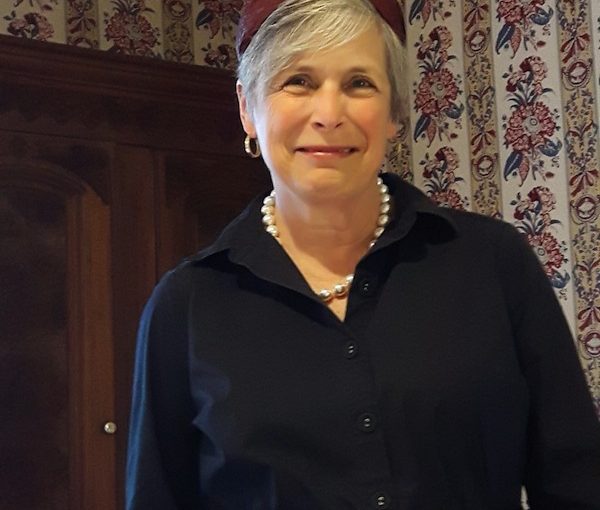
Rabbi Lynn Greenhough represents a series of firsts for the Victoria Jewish community. (photo from Kolot Mayim)

When Lynn Greenhough is officially installed as rabbi of Kolot Mayim Reform Temple in Victoria tonight, Sept. 6, she will bring with her a series of firsts to the city’s Jewish community: its first rabbi born on Vancouver Island, its first Canadian-born rabbi, its first full-time female rabbi with her own congregation and its first rabbi who was not born into Judaism.

A stalwart in Victoria’s Jewish life for nearly 30 years, Greenhough has been Kolot Mayim’s spiritual leader since 2017, while simultaneously completing her rabbinical studies at the program offered by the Jewish Spiritual Leaders Institute (JSLI) in New York.

For someone born and raised in Happy Valley – 15 kilometres west of Victoria – at a time when the area was still a farming community, the rabbinate was not a calling many in the community, or indeed on the Island, might have considered.

Her first taste of Judaism, and some of the recent history of the Jewish people, came in Grade 5, when she found a copy of William L. Shirer’s The Rise and Fall of the Third Reich in her schoolroom library, and her curiosity and sense of connection to Judaism ensued. She recognized that justice had tragically failed Jews during the Holocaust and she felt a need to be part of rebuilding a world where such a failure could never happen again.

“I consciously gravitated towards Judaism because of its inherent sense of justice,” Greenhough told the Independent. “At that early point, I realized, I would be a Jew.”

Life, jobs and family followed. She finished school, married and had a son, helped open Everywoman’s Books in Victoria and then worked for Canada Post as a truck driver for 20 years.

In the 1980s, Greenhough attended a few Jewish events at Victoria’s Congregation Emanu-El. She began to light candles and tried to build a sense of Shabbat into her week. She also looked for a Jewish partner who could help her build a Jewish home. Yet, it wasn’t until she was in her late 30s that she was determined – accompanied by now-husband Aaron Devor – to convert. Devor grew up in a Jewish neighbourhood on Long Island, but was not a regular synagogue attendee. Along the way, the couple became deeply engaged in Jewish life.

By 1992, Greenhough’s conversion was complete and, from then, it was full-on immersion to the point where she became a leader and educator. At Emanu-El, she guided historical tours, joined the board of directors, led services, including chanting Haftarot and Torah, joined the Chevra Kadisha (Burial Society) and served as a funeral officiant.

In 1996, she served as an instructor at the synagogue’s Hebrew school and then began teaching and coordinating b’nai mitzvah classes. In 1998, she began to teach Torah and Haftorah studies for adults and, in 1999, taught an introduction to Judaism course for those interested in conversion.

However, it was the Chevra Kadisha that became her passion. In 2000, Greenhough completed her master’s degree at Royal Roads University under the supervision of Dr. Rabbi Neil Gillman, z”l, from the Jewish Theological Seminary in New York. Her thesis – We Do the Best We Can: Chevra Kadisha in Small Jewish Communities in North America – looked at both the history of Jewish models for care of the dead, and present-day practices and training models from 16 different small Jewish communities.

This work led to further connections. Greenhough, along with Rena Boroditsky of Winnipeg, Man., and David Zinner of Maryland, worked together to organize the first of now 16 international conferences dedicated to learning about these burial practices.

Greenhough has also taught Judaism in the University of Victoria’s religious studies program (2007-09), was scholar-in-residence at Temple Beth Shalom in Phoenix, Ariz. (2009) and taught courses in academic writing at Royal Roads (2012-16).

In 2014, she joined Kolot Mayim as a member and led Torah studies and Shabbat and holiday services as needed, before becoming its spiritual leader in September 2017. Synagogue members are glowing in their praise of Greenhough as their choice.

“She brings a richness of experience as a born and raised ‘Island Girl.’ Indeed, she has attracted, and continues to attract, new members through her wisdom, spirituality, empathy, knowledge and quirky sense of humour,” said Sharon Shalinsky, president of Kolot Mayim.

Kolot Mayim was founded in 1998 by a small group of individuals and families, initially meeting monthly at the Victoria Jewish Community Centre. As the congregation grew, the frequency of services increased, ultimately to a weekly schedule. The synagogue has struggled to find a permanent rabbi and has, at times, been challenged in terms of membership recruitment and retention. The past year, though, it has seen a 70% increase in membership.

To mark the installation of a new rabbi at its westernmost location, Dr. Pekka Sinervo, the head of the Canadian Council of Reform Judaism, will be on hand at the ceremony, as will Rabbi Allan Finkel, who, along with Greenhough, is a 2019 graduate of the JSLI program and now leads services at Temple Shalom in Winnipeg.

Ahead of the occasion, Greenhough reflected, “This was not a career move, but the fulfilment of a dream.”

Sam Margolis has written for the Globe and Mail, the National Post, UPI and MSNBC.
The first Shtisel book

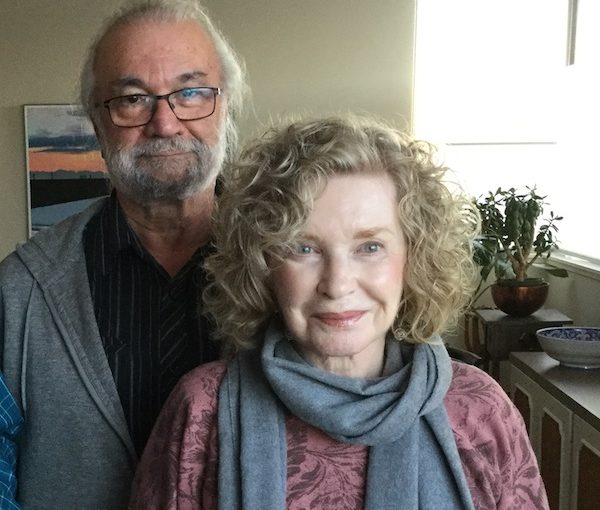
Maurice Yacowar and wife Anne Petrie. (photo from Yacowars)

Shtisel, the unlikely yet addictive hit television series about a Charedi family in Jerusalem, is now the subject of a new book, Reading Shtisel: A TV Masterpiece from Israel, an episode-by-episode analysis penned by Victoria writer and critic Maurice Yacowar, which he will share at the Jewish Community Centre of Victoria June 2.

Yacowar, a retired film professor, began his project in December 2018, as Netflix started airing the series that has become de rigueur viewing among Jews and non-Jews alike. As with many of the show’s aficionados and binge watchers, he was hooked, but his is the only book on Shtisel written thus far. The book’s first printing took place in March.

From his perspective, the show transcends what some may initially dismiss as soap-operatic tendencies. Not a character, not a scene, not an action in the two-season, 24-episode show is out of place, according to Yacowar.

“People (and animals) come and go, some questions may seem unanswered, but those elements are not relevant to the story. Nothing in the show is superfluous or unnecessary. Everything has a reason. We enter their domain, and we leave it, just at the right time,” he recently told the Jewish Independent at a Victoria restaurant.

Hence, the use of the word masterpiece in the book’s subtitle. “People from all cultures are able to relate to the drama and the compassion,” Yacowar explained.

“What’s more, no character stands for a safe idea,” he added. Shulem, the patriarch of the Shtisel family, is the most confounding of them all. At times, he is bullying to the point of being dictatorial; at other times, gentle and caring.

All involved do things that are not “in character,” said Yacowar, which takes viewers along various side streets or smaller stories within the story. There is the studious Zvi Arye, who, after watching a video taken in childhood, laments having had a shot at singing stardom thwarted; the scheming Lippe, who, for a time, abandons his family, though exhibits moments of great kindness and affection to those closest to him; and the show’s least sympathetic character, Nuchem, who doesn’t want his daughter, Libbi, to marry a deadbeat artist, aka his nephew Akiva, Shulem’s son.

Throughout the series are connections to the world outside the strict ultra-Orthodox confines of the Geula neighbourhood in Jerusalem, said Yacowar. Grandmother Malka is fixated by American daytime dramas, Giti’s need for money after her husband departs for Argentina leads her to seek work as a housekeeper for a clothing store manager, and cellphone use among this set of Charedim is ubiquitous.

It is Akiva’s desire to be an artist, though, which perhaps represents the greatest struggle between the secular and the religious in the show, not to mention the personal psychological conflict for the character himself. There are times, particularly those when he is immersed in his art, that Akiva appears to shift seamlessly from one world to another. And others, such as the scene where Akiva is presented with an award and funds for his art at an elite gallery, when the distinction between the pious Shtisel family and mainstream Israeli society could not be more pronounced.

Akiva, Yacowar pointed out, manages to rise in his battle and become his own person as the series concludes at the end of Season 2, no longer shackled by the vagaries of his father’s moods. In contrast, Shulem’s flaws – his conceit and ego, his inability to accept his son’s success in that other world – are on full display.

Yacowar doesn’t expect everyone to agree with his assessment of the series. “Other critics may well choose different points of emphasis, different connections and implications in phrase, situation or device,” he writes. “That’s the beauty, magic of connecting with a drama of such extraordinary richness and complexity.”

There is one point, however, on which he does expect readers of his book to be in agreement: “Let there be the illumination of a Season 3 – but only from the same creators and the same depth and integrity.”

Yacowar has written more than a dozen books on subjects ranging from the films of Alfred Hitchcock to the comic art of Mel Brooks and Woody Allen. He has written two books about The Sopranos and a humorous work, Mondays with Moishe.

Reading Shtisel: A TV Masterpiece from Israel is available online and at Congregation Emanu-El and the JCC of Victoria. Yacowar’s June 2 presentation at the JCC will start at 11 a.m.

Sam Margolis has written for the Globe and Mail, the National Post, UPI and MSNBC.
Three-generation comedy

David Biltek and Susan Wilkes are part of the cast of Bema Productions’ presentation of We Are the Levinsons, by Wendy Kout. (photo from Bema Productions)

Bema Productions’ 2019 Mainstage presentation is the Canadian première of We Are the Levinsons, by Wendy Kout, an award-winning writer/producer of theatre, film, television and prose. Zelda Dean directs the Victoria production, which opened May 9 at Congregation Emanu-El’s Black Box Theatre.

The story details the phenomenon of the “sandwich generation” – adults caring for both children and aging parents – through the lens of one family’s momentous year. Rosie, a daughter with mother issues, surprises her parents with a trip home. And life surprises Rosie. Sanity, survival and humour are tested and love is deepened in this three-generation family, and chosen family, comedy.

We Are the Levinsons will be performed May 12, 3 p.m.; May 14-16, 7:30 p.m.; May 19, 3 p.m.; and May 23, 7:30 p.m., at Congregation Emanu-El, in Victoria. Tickets are $23 from Ticket Rocket, ticketrocket.co or 1050 Meares St.

Historic cemetery full of life

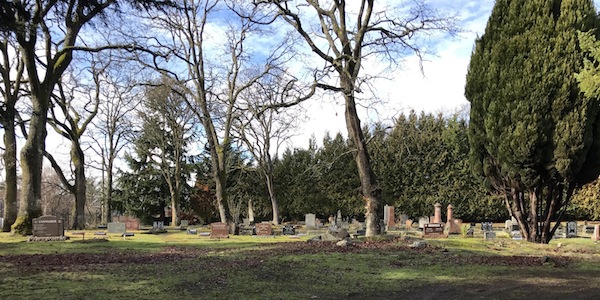
Victoria’s historic Jewish Cemetery. (photo from Amber Woods)

Who could imagine that a book about a cemetery would be so full of life? But then, the people who populate Amber Woods’ Guide to Victoria’s Historic Jewish Cemetery (Old Cemeteries Society, 2018) were among the most vivacious of sorts, starting with the daring, westward-bound pioneers eager to start a new life on a new frontier, to those who went on to be well-known judges (Samuel Schultz), politicians (David Oppenheimer) and artists (Reuven Spiers). Written on the cemetery’s gateway, the phrase Beit HaChayim (House of the Living) welcomes visitors.

The cemetery has had a storied existence. There have been fires, upkeep challenges, pleas to the public to locate graves of prominent individuals and, sadly, in recent times, the desecration of five gravesites in late 2011.

photo - Amber Woods
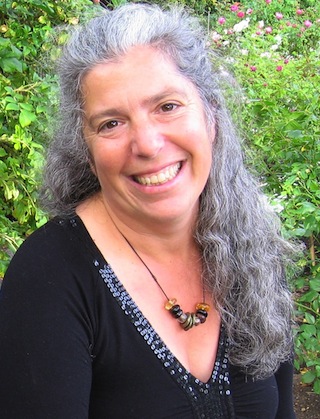
Amber Woods (photo from Amber Woods)

The discovery of gold along the Fraser River in 1858 brought an influx of people to the region, mostly from California, Jews among them. Jews arrived largely as merchants and proved adept at figuring out what was needed in the community. Having already developed trading networks, they did not need to rely on the Hudson’s Bay Co. (HBC) for supplies or for getting their goods to other markets, and “could move quickly from one business to another.”

On May 29, 1859, a group met to create the basis of a Jewish community, including a synagogue and a cemetery, in Victoria. A cemetery committee was formed and, on Oct. 1 that year, 1.7 acres of land was purchased from Roderick Finlayson, the chief factor of the HBC. In February 1860, the cemetery was consecrated, making it the first Jewish cemetery – and the oldest non-indigenous cemetery – in continuous use in Western Canada.

The first funeral at the cemetery, on March 20, 1861, was the result of a most unsavoury encounter. Businessman Morris Price, an immigrant from Prussia, was in his shop in Cayoosh, what is now Lillooet, on Feb. 1, 1861, when three men entered. He was found dead the next day. All the perpetrators were found guilty; two were executed, the third convicted of manslaughter and given a shorter 12-month sentence for his cooperation with officials. As Victoria’s was the only Jewish cemetery at the time in the region, Price’s remains were sent from the mainland.

Herein, too, are remembered several who were prominent in Victoria’s early commercial hub – liquor salesman, saloon operator and real estate tycoon Max Leiser; clothier Frederick Landsberg, who learned Chinook to trade with First Nations people and who would later go into curios, real estate and, finally, philanthropy; and restaurateur H.E. (Henry Emanuel) Levy, who opened the first gourmet establishment in the Pacific Northwest, the very “unkosher” sounding Levy’s Arcade Oyster Saloon, which became a local hangout. Levy’s son, Arthur, followed in the family business, setting up various popular diners, such as the Poodle Dog Café. Once retired from the restaurant business, Arthur Levy began a mission of world peace, which saw him correspond with many a noted statesman of his time, including Nikita Khrushchev, David Ben-Gurion and Jawaharlal Nehru.

Many of those buried at Victoria’s historic Jewish Cemetery lived the sort of life that could have been turned into a novel or film – tales of shipwrecks, of bankruptcies turned into successes.

There are fascinating biographies, such as that of Samuel Schultz, who, despite living to be a mere 51 years of age, did more in those years than most do in a lot longer. Schultz was a musician, athlete, activist and lawyer. He is credited with pitching the first no-hitter in British Columbia, played flute and clarinet for the Victoria Symphony, composed music, served as a correspondent for several newspapers and was a founding member of the Independent Order of B’nai B’rith and became the first Jewish judge in Canada.

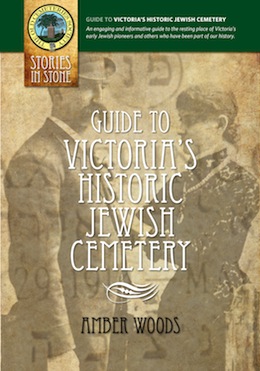
book cover - Guide to Victoria’s Historic Jewish CemeteryThen there is Lewis Lewis, who served twice, in non-consecutive terms, as one of the first presidents of Victoria’s Temple Emanu-El (now Congregation Emanu-El). His is a story shrouded in questions. “Much of the information available about Lewis Lewis is contradictory, incomplete or, in some instances, false,” Woods writes. Many myths and mysteries exist about this early Jewish settler, from his place of birth in Eastern Europe to how he changed his name, from the story of his arrival in Victoria, to his legacy within the local community.

The historic Jewish Cemetery is situated four kilometres from downtown Victoria, where Fernwood Road meets Cedar Hill Road. Visitors enter through the pedestrian gate of the main entrance.

Woods’ book is part of the Stories in Stone series organized by the Old Cemeteries Society. Copies can be purchased at the Jewish Community Centre of Victoria, Congregation Emanu-El, area bookstores (Bolen, Munro’s and Ivy’s) and online at jewishvictoria.wordpress.com.

Sam Margolis has written for the Globe and Mail, the National Post, UPI and MSNBC.
Pelman participates in Word

Barbara Pelman (photo from Word Vancouver)

Among the writers being featured at this year’s Word Vancouver, which runs Sept. 26-30, is Victoria-based poet Barbara Pelman.

Pelman’s latest collection, narrow bridge (Ronsdale Press, 2017), is her third book of poetry. Its title comes from Rabbi Nachman of Breslov’s famous advice (at least in Jewish circles): “All the world is a narrow bridge – the important thing is not to be afraid at all.” Other than in one poem, however, called “Öresund,” where she tells herself, “I will not fear,” Pelman doesn’t come across in her writing as fearful.

“I’m delighted that I don’t come across as fearful,” Pelman told the Independent, “as I am full of fear, and certainly before each visit to my family in Sweden, I imagined everything that could go wrong and how incompetent I am. And was amazed that I survived intact.

“Generally, I tend to be a worrier (‘a misuse of the imagination’) but fight this negativity all the time. The tension, which I hope comes across, is between a general optimism and belief that, ‘in the long run’ … things sort themselves out. So, I tend to take on things that might terrify me, like art classes or solo trips to Berlin or train rides through Europe, and sign up, so there’s no going back. Not, however, bungee jumping or skydiving.

“When I have to deal with adversity – a separation and divorce, primarily – I talk and I write,” she said. “Both are clarifying agents. The poems in this book put forward a lot of my difficulty in being in the present, without wishing to be elsewhere. As in the first poem, ‘Gentle Reader’ – the desire to desire only what you have, and not what is somewhere else.”

On the family front, at least, Pelman’s journeys have become shorter since the book was published. Her daughter, who had been living in Sweden for three years, moved to Vancouver this summer, meaning that Pelman’s grandson is also now that much closer. He features in more than one poem – “Still Life with a Small Boy” is especially poignant. In it, he and his bubby, Pelman, are out having a hot chocolate and croissant. “Heads together, bending into each other. / They are a world. Outside, the world breaks. / She cannot read the news while she is with him, / tries to be calm, listen while he tells her / his new red bike helmet makes him safe.”

The collection is divided into three sections and includes some poems that Pelman has published before. Her previous books of poetry are One Stone (Ekstasis Editions, 2005) and Borrowed Rooms (Ronsdale Press, 2008), and she also has produced a chapbook, Aubade Amalfi: The Marcello Poems (Rubicon Press, 2016).

“This book had three iterations, each time being sent back by the publisher with suggestions – too much of Marcello and the adorable grandson, for example,” she said of the decision-making process for what would make it into narrow bridge. “So, I rejigged the poems, took out a lot of them, put in more recent ones, and relied on Russell [Thorburn] to put them in order. He sees an organic pattern of the poems, sometimes based on image or theme. I trust his choices, only changed a few.”

The poems in narrow bridge include many with Jewish themes.

“Most of my childhood centred around the synagogue, not in a hugely observant fashion, but, as my father was choir leader at the Beth Israel, I often went to services with him,” Pelman said about the place of Judaism and Jewish culture in guiding her work or approach to life. “Now, as a member of Congregation Emanu-El [in Victoria] and ‘den mother’ for the Calling All Artists project, I am interested and involved in learning Hebrew, chanting Haftorah, and generally intrigued by the culture and traditions of an ancient people.

“Moreover, and this is what I think is really wonderful, poetry and study of Torah have many similarities. Hebrew is a language that I think is embedded in metaphor, and studying Torah is the kind of layering analysis that I am used to in studying poetry. Layer upon layer of meaning and ambiguity. Rabbi Harry Brechner considers art as ‘mishnah’: another way to interpret, to find meaning that is relevant to us personally and globally.”

In narrow bridge, Pelman explores kabbalistic ideas, her own family history and relationships, as well as biblical ones (the poem “Isaac” is powerfully evocative). In at least two poems, she explores the concept of “thisness” – notably in the poem of that name, where, she writes, “Happiness, fed from detail: the thisness of things, / resting in the eye of the beetle, the creak of the board / she leans against, the cold air pricking her ears.” And several poems have to do with the spaces or pauses between, for example, a heartbeat or a pendulum’s swing; those moments that happen all the time but that we rarely acknowledge or even notice.

Aging features prominently, as well. And, while some poems are wistful – such as “Suitcase in the Closet,” where recollections of past travel suffice – others are almost calls to arms. “A woman over seventy should open her travel account, / run her fingers over the globe, and choose / She should trade her sensible shoes for sandals, / her Gucci bag for backpack, her datebook for weather reports,” begins the poem “Go,” a favourite in this collection, though this reader is still a couple of decades shy of 70.

As for how her style or subject matter has changed since her first collection, Pelman said, “I have continued to work with various poets in workshops and retreats, and continue to learn a great deal from poet friends and reading. I think my poems have become shorter, a bit more compressed. I am aware of the musicality of the poem – the cadence, the pacing, the rhythm. But the struggles are still there: how to get started, how to edit, how to know when a poem is done. I have a huge file on my computer, called ‘Working On.’

“And my subject matter has changed as my life has changed,” she said. “The first book dealt with the divorce and finding a new identity; the second book included the death of my father; this book is about travel, and daughters, and grandsons, and the new life of retirement. About balance. But there are still hummingbirds in the hawthorn tree. Jasmine and tulips. Old lovers and mothers.”

Pelman is at Word Vancouver on Sept. 30, 1:20 p.m., in the Suspension Bridge tent at Library Square Conference Centre, one of three poets participating in “Another Taste of Poetry.” She also joins two other poets in Ronsdale’s Fall Poetry Showcase at Dunbar Public Library on Nov. 7, 6:30 p.m.

For more about Word Vancouver – where Jewish community members Mark Winston and Claire Sicherman will also share their work, at 1:20 p.m. and 2:30 p.m., respectively on Sept. 30 in the Alma VanDusen Room at Library Square – visit wordvancouver.ca. The interim manager of the festival this year is community member Bonnie Nish.