Skip to content
  • Home
  • Subscribe / donate
  • Events calendar
  • Business Directory
  • FAQ
  • News
    • Local
    • National
    • Israel
    • World
    • עניין בחדשות
      A roundup of news in Canada and further afield, in Hebrew.
  • Opinion
    • From the JI
    • Op-Ed
  • Arts & Culture
    • Performing Arts
    • Music
    • Books
    • Visual Arts
    • TV & Film
  • Life
    • Celebrating the Holidays
    • Travel
    • The Daily Snooze
      Cartoons by Jacob Samuel
    • Mystery Photo
      Help the JI and JMABC fill in the gaps in our archives.
  • Community Links
    • Organizations, Etc.
    • Other News Sources & Blogs
  • JI Chai Celebration
  • JI@88! video

Recent Posts

  • SFU honours Gloria Gutman
  • Lifting people’s spirits
  • Wedding a ray of light
  • Indigeneity and Zionism
  • Rule of law broken: councilor
  • Football and its roles
  • The burden of defence
  • Fish Café returns after fire
  • All right in what goes wrong
  • Nuns & mermaids at TUTS
  • Camp offers holiday retreat
  • Students and mentors inspire
  • Once-in-a-lifetime trip
  • 100 dancers, one heart
  • Money for the sciences
  • What “Jewish food” means
  • Have a cookie, schnitzel too
  • Federation now across BC
  • Israel fighting for its existence
  • Deal strengthens Iran
  • Patriotic belonging diminishes
  • A campaign to engage
  • Upstanders’ first live event
  • Responding to Carney
  • Having your own home
  • Music a family tradition
  • Musical to warm heart
  • Community milestones … June 2026
  • Sharing her passion for Israel
  • Or Shalom reopens its doors
  • JFS from past to future
  • Need holistic approach
  • Sharing stories, advice
  • Journalist shares fears
  • Skills to live together
  • Road to independence

Archives

Follow @JewishIndie
image - CJN box ad Rockowers 2026

Tag: Holocaust

Ruta’s Closet reissued

Ruta’s Closet reissued

Lady Esther Gilbert speaking at Vancouver City Hall April 8, when Vancouver Mayor Ken Sim proclaimed Ruth Kron Sigal Day in the city. (photo by Keith Morgan)

Ruta’s Closet, the Holocaust narrative of the late Vancouverite Ruth Kron Sigal, is being reissued for a new generation of audiences – and the book’s author is ensuring the survivor’s inspiring story of survival and resilience reaches the widest possible global audience.

Vancouver journalist Keith Morgan, who completed the book shortly before Kron Sigal’s passing, at age 72 in 2008, has updated the publication – and created an extensive range of multimedia projects to expand the impact of the written volume.

image - Ruta’s Closet book coverFirst issued as a fundraising initiative for the Vancouver Holocaust Education Centre, Ruta’s Closet was later published in the United Kingdom, with distribution there reaching new audiences. 

The book recounts the harrowing survival story of the Kron family, imprisoned in the tiny Shavl (Šiauliai) ghetto in Lithuania, through the eyes of the youngest daughter, Ruta (later Ruth). Their survival against Nazi persecution hinged on the courage and resourcefulness of her parents, Meyer and Gita Kron, as well as the bravery of non-Jewish rescuers. Depicted with novel-like narrative power but rooted in rigorous research and eyewitness testimony, the memoir vividly portrays atrocities such as mass murder, a Nazi ban on Jewish births and the deportation of children to Auschwitz, while also shining a light on courage, compassion and human resilience amid the evil.

Kron Sigal didn’t live to see the book in print but she saw the final draft.

“She said to me shortly before she died, ‘You are going to carry on telling my story, Keith, aren’t you?’ And I said, of course I am,” Morgan told the Independent. “So, I took that on as a mission.”

Surveys indicating widespread ignorance of Holocaust history, combined with skyrocketing antisemitism, motivated Morgan to launch a series of Ruta’s Closet-related projects. 

“We updated the book and decided it was time to go basically worldwide with this,” he said. 

In addition to the re-release of the hard-copy, Morgan and his small team of colleagues recorded an audiobook and released an ebook. They revamped the existing Ruta’s Closet website and made it more interactive.

Working with Bill Barnes, a local radio producer, Morgan developed a 25-segment podcast.

“We are doing Zoom interviews with people around the world who are a part of a driving force behind an imaginative, creative initiative in spreading Holocaust awareness and education,” he explained. “I’ve got Ruth’s kids – Michael, Marilee and Elana – each week doing an introduction for book clubs.”

The VHEC has produced a downloadable guide for book clubs, as well as a teacher’s guide to the book, which makes it additionally relevant as British Columbia’s education curriculum mandates Holocaust education this year for the first time as part of the Social Studies 10 coursework. 

“The beauty of it, for British Columbia, is it’s technically a local story,” Morgan said. “It’s about Ruth. It’s about somebody who came here and did a lot for her adopted society.”
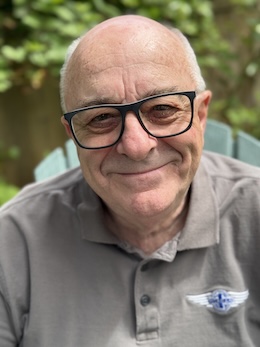
photo - Journalist Keith Morgan, author with Ruth Kron Sigal of Kron Sigal’s memoir, Ruta’s Closet, is ensuring that her story of survival and resilience reaches the widest possible audience
Journalist Keith Morgan, author with Ruth Kron Sigal of Kron Sigal’s memoir, Ruta’s Closet, is ensuring that her story of survival and resilience reaches the widest possible audience. (photo from Keith Morgan)

Morgan, who spent many years as the crime reporter at the Province newspaper, met Kron Sigal when his editor asked him to take on a more uplifting assignment and begin a series about people doing good works at home and abroad.

“Somebody said, ‘Oh, you should talk to Ruth Sigal,’” who was sharing her Holocaust story with students. “I went to meet her. I was very impressed. She told her story and it had an amazing impact on me. I just knew this was an important story to tell.”

He found immediate support from Dr. Robert Krell, the founding president of the Vancouver Holocaust Education Centre. 

“Robert Krell kind of took me under his wing – he was a close friend of Ruth – and he said, ‘I’ve got just the guy to introduce to you, who will be really helpful to you for pulling the story together.’” 

The person was renowned historian Sir Martin Gilbert.

“The British schoolboy in me thought, ‘How do I curtsy?’” Morgan joked.

Morgan met Sir Martin in London and got a one-on-one master course in writing about the subject.

“He looked me right in the eye and said, ‘You have to tell the story as though you were writing it for your newspaper and make it accessible to all people,’” Morgan recalled. “Sadly, Martin died [in 2015], but Lady Esther Gilbert took up his mantle and, since then, she’s been an ally and was very important in this edition in terms of going through it, adding bits here and there.”

She spoke at a ceremony at Vancouver City Hall on April 8 this year, when the mayor proclaimed Ruth Kron Sigal Day in the city.

Kron Sigal’s story resonates profoundly with people, according to Morgan.

“We can all relate to what happened to Ruth and her sister Tamara,” he said. “It also tells us compelling stories about how, through their own devices, they basically survived and helped others along the way. We also see what other members of the family did to help the broader community.… We get this family story, which, in itself, is very dramatic, but we also get this wider picture of how a community in the ghetto work with each other, help each other.”

Morgan sees Kron Sigal’s narrative as an inspiration not only because of her survival against the Nazis but in all she did after becoming a Canadian.

“Ruth came here, an adopted country, and spent 25 years at the Women’s Resource Centre and the VHEC Child Survivors Group,” said Morgan. “That’s an example to everybody: come into a new society, an adopted country, and just roll up the sleeves and get working. Isn’t that an example to anybody that comes in?”

No less a triumph, Morgan said, is the family Ruth and her husband, Dr. Cecil Sigal, created. 

“You look at that family and you think, ‘Victory!” he said. “Because they beat Hitler.” 

Format ImagePosted on August 29, 2025August 27, 2025Author Pat JohnsonCategories BooksTags books, ebooks, education, Esther Gilbert, Holocaust, Martin Gilbert, memoir, multimedia, podcasts, Robert Krell, Ruta's Closet, Ruth Kron Sigal, Vancouver Holocaust Education Centre, VHEC

Power of propaganda

Understanding the past, including the darkest eras, can help people recognize the symptoms of a society going off the rails. 

A forthcoming book for young readers, titled Can Posters Kill? Antisemitic Propaganda and World War II, by Torontonians Jerry Faivish and Kathryn Cole, explores how propaganda and racist imagery desensitized a society to atrocities. 

Faivish, a retired lawyer, has collected Jewish posters since young adulthood, building one of the world’s largest private collections. The son of Holocaust survivors, he created this book with Cole, an illustrator, art director, editor, designer and publisher, to educate young people about the dangers of hatred and the powers of persuasion used for evil ends.

image - Can Posters Kill? book coverThe richly illustrated publication spotlights how vivid imagery and repetition intended to evoke fear, distrust, loyalty or revulsion served to influence populations to accept (even collaborate in) barbarism.

“By understanding the visual language of propaganda from the past, we can learn to recognize and resist messages of hate – an essential skill in a digital world where information is spread in seconds,” according to the publisher, Second Story Press.

Aimed at readers 13 and up, this book about the past has its purpose firmly planted in the present and future.

“Like social media today,” write the authors, “visual communication in the ’30s and ’40s – from movies to newspapers to paper posters – was clever and interesting, engaging and effective. But, under Nazi manipulation, it became deadly.”

The focus of the book is visual, befitting a volume of this topic, with just enough copy to contextualize the imagery and point out salient aspects that the reader might not have noticed. It is also perhaps a perfect mix of text and graphics for the generation it aims to reach.

The authors provide a brief overview of the post-First World War economic conditions in Germany, the impacts of the Treaty of Versailles, and Hitler’s rise to power. This history tilled the soil for the hate-messaging showcased. 

“A false message, when repeated often enough, can become the truth in the minds of people who are frightened, oppressed and searching for someone to blame for their misfortune during hard times,” the book warns. 

Can Posters Kill? also delves into how graphic design played into the success of the brainwashing – “clever use of different typefaces grabs the attention of passersby,” among other innovations.

Joseph Goebbels, the Nazis’ minister of propaganda, who more than any other individual is associated with this sort of material, did not overestimate his audience.

“The rank and file are usually much more primitive than we imagine,” he is quoted in the book. “Propaganda must, therefore, always be essentially simple and repetitious. In the long run, only he will achieve basic results in influencing public opinion who is able to reduce problems to the simplest terms and who has the courage to keep forever repeating them in the simplified form, despite the objections of intellectuals.”

The messages his department imparted were subtle as sledgehammers. 

In one poster, a doctor or scientist is looking through a microscope at a vicious “Jewish” disease devouring healthy tissue. Jews are characterized as sexual deviants and blamed for spreading tuberculosis, syphilis and cancer. 

“It’s a chilling message because it can quickly turn into ‘kill or be killed,’” the book says.

In another poster, a Jew hovers menacingly over the globe, spinning a web from his index finger. 

“This reinforces the Nazi-supported notion that Jews are power-hungry and backed by secret cabals or conspirators,” the authors write.

Jews are depicted as the mortal enemy of Christianity and the Star of David is equated alongside the communist red star, implying a dual-pronged threat to German society.

Faivish shares his family’s story: his mother’s experiences in various ghettos, work and concentration camps, and at extermination sites such as Auschwitz, and his father’s defiant escape from a cattle car headed for the gas chambers. Faivish’s father lost his parents and his eight siblings in the Holocaust. His mother had just one surviving brother and one remaining sister out of a family of 10. 

Faivish goes into some detail about the experiences of his mother in the constellation of Nazi ghettos and camps, and his father’s unlikely survival in hiding, thanks to a gentile Polish family. He places significant emphasis on the heroism of non-Jews. 

“After the war, my parents met in Bergen-Belsen, the DP camp where they married and started a family,” he writes. “My older sister was born there in 1949.… In 1952, my parents immigrated to Canada. In 1953, I was born in Montreal. For my parents, the question of how to deal with recurring hate, and what could be done about it, was more than philosophical. It became a guideline for how to live their lives and what to pass on to their children. The lessons they taught us are still applicable and valuable today.”

He includes nine values his parents instilled in him and that he hopes the book will pass on to others, including: be proud of who you are and embrace your faith and culture [because the] aim of the “Final Solution” was to annihilate Jews and to destroy Judaism; respect your fellow human beings and treat them well; and recognize and eliminate hate and evil as much as possible.

A timeline of historical events and an excellent glossary of relevant terms are included at the end of the book.

As British Columbia and other provinces institute mandatory Holocaust education in school curricula, books like Can Posters Kill? Antisemitic Propaganda and World War II provide powerful resources for educators to convey the lessons of history in ways that are impactful but age-appropriate, with undeniable and clear lessons around critical media consumption for contemporary generations. 

While not formally related, the book is also a valuable complement to the Vancouver Holocaust Education Centre’s current exhibition, Age of Influence: Youth & Nazi Propaganda, which is being reconfigured into a traveling exhibit. 

Posted on August 22, 2025August 22, 2025Author Pat JohnsonCategories BooksTags Can Posters Kill?, education, genocide, Holocaust, Jerry Faivish, Kathryn Cole, propaganda, Second Story Press

Community milestones … for July 2025

photo - David Bercovici-Artieda’s The Fast Runner was nominated for six Leo Awards, with Bercovici-Artieda taking home the award for cinematography
David Bercovici-Artieda’s The Fast Runner was nominated for six Leo Awards, with Bercovici-Artieda taking home the award for cinematography. (photo © David Bercovici-Artieda)

The short film The Fast Runner, which was shot in the Greater Victoria area, won a 2025 Leo Award in cinematography for David Bercovici-Artieda. Bercovici-Artieda was also nominated for best direction, and the piece had six nominations in total.

The Leo Awards are a Project of the Motion Picture Arts & Sciences Foundation of British Columbia. This year, there were more than 1,300 eligible entries in 16 different program categories. 

In addition to nominations for direction and cinematography, The Fast Runner was nominated for screenwriting (Michael Adams), production design (Sarah Monteith), costume design (Constance Moerman and Josie Saldat) and make-up (Teia Dumaresq, Akina McCrea, Lindsay Pilkey, Donia Nikoo, Naomi Burnell and Mayhanna Haslam).

“It’s not just about telling a story,” Bercovici-Artieda, the son of a Holocaust survivor, told the Independent earlier this year. “It’s about honouring the memory of those who lived through unimaginable horrors, including my own father. Every frame, every scene and every creative choice carries the weight of history – my family’s history.” (See jewishindependent.ca/balancing-education-and-art.)

For more about Bercovici-Artieda, the film and the many other awards and recognition it has received, visit thefastrunnerfilm.com.

* * *

At its annual general meeting last month, the Vancouver Holocaust Centre Society for Education and Remembrance presented its annual Life Fellow Award to Sidi Schaffer and Keith Morgan. The award is given to individuals who have made exceptional contributions to Holocaust education and remembrance.

Sidi is a Holocaust survivor and talented artist whose life and work are powerful testaments to resilience and remembrance.

photo - Sidi Schaffer
Sidi Schaffer (photo from VHEC)

Born in northern Romania, Sidi was just a child when she and her family were forced into the Czernowitz ghetto in 1940, and later deported to the Djurin concentration camp in what’s now Ukraine. They endured unimaginable hardship for four years before returning to Romania in 1945. Sidi later moved to Israel, where she earned her degree in art education, and eventually settled in Canada with her husband David and their three sons.

After completing a bachelor of fine arts at the University of Alberta, Sidi continued to use art as a way of processing and sharing her experience. Her piece “Earth, Don’t Cover Their Blood” (featured in the VHEC’s 1998 Gesher Project) remains a moving tribute to those lost – and a powerful educational tool.

Sidi continues to share her story and use her art to bear witness as a long-time member of the VHEC’s Child Survivor Group. 

Keith, a best-selling author and award-winning journalist, has dedicated his work to preserving Holocaust memory.

photo - Keith Morgan
Keith Morgan (photo from VHEC)

Born in Blackpool, England, in 1954, he moved to Vancouver in 1980, where he became a columnist on cars and motoring for the Province and Sun newspapers.

In 1997, he wrote a newspaper feature about Ruth Kron Sigal and her community impact. Moved by Ruth’s family story and motivated by his own limited knowledge of the Holocaust in the Baltics, Keith collaborated with Ruth, the eldest daughter of Meyer and Gita Kron, on her memoir, Ruta’s Closet (Shavl Publishing, 2008), about the murder of 200,000 Lithuanian Jews during the Holocaust and the Kron Sigal family’s survival during the Nazi occupation of Lithuania.

Keith worked on Ruta’s Closet while working as a journalist, researching daily, conducting interviews and using his holidays to travel across Europe, Israel and North America. Since its publication in 2008, the book has become a vital educational resource. According to historian Sir Martin Gilbert, it is “one of the finest Holocaust memoirs.”

* * *

Wendy Cocchia, lieutenant governor of British Columbia, has accepted to serve as honorary patron of the Holocaust Theatre Production Society’s Survivors program. Patronage, in the spirit of supporting and encouraging meaningful initiatives, is a role of the Office of the Lieutenant Governor, rooted in the Crown’s tradition of recognizing and uplifting worthy endeavours. 

The play Survivors, by Wendy Kout, is an hour-long educational drama that enacts the story of the Holocaust through eyewitness testimony of 10 survivors. Young and diverse audiences relate to the young and diverse cast, who are guides on the perilous journey of their ever-changing world. The survivors in the play also provide life lessons and encouragement to speak up and act up against hatred and bullying today. Suitable for young adult and adult audiences, this play about the past is a warning and a wakeup call for the present and the future.

As of June 30, Survivors was booked for more than 30 performances across Vancouver Island, bringing the society’s Holocaust education program to middle and high schools, both public and private, as far north as Campbell River.

Thank you to the Victoria Foundation for their support, which will ensure that the program can be delivered to Victoria schools in October.

Visit holocausttheatre.com for more information and to watch the trailer. 

* * *

Last month, the Vancouver Holocaust Education Centre presented the 2025 Meyer and Gita Kron and Ruth Kron Sigal Award for Excellence in Holocaust Education to Chantel Parsons. Chantel has consistently demonstrated an exceptional commitment to Holocaust education throughout her career, significantly impacting her students, colleagues and the broader school community.

photo - Chantel Parsons
Chantel Parsons (photo from VHEC)

Chantel is a geography and history teacher at Mark R. Isfeld Secondary School in the Comox Valley. The teacher’s Genocide 12 course, which centres on the Holocaust, remains one of the most popular senior-level electives at her school, drawing students eager to engage deeply with this critical history.

Chantel’s approach to Holocaust education is marked by historical precision, critical inquiry and meaningful impact. Her students explore complex issues around historical responsibility and the roles of perpetrators, victims, bystanders and resistors, challenging simplified narratives and examining the complexities of human behaviour during the Holocaust.

The lasting influence of her teaching is reflected in the words of a former student: “You were probably one of the best teachers I had. The focus you put on the atrocities in WWII, and the effort you put into teaching us how to recognize the patterns that lead up to events like this made me question a lot of things I probably wouldn’t have otherwise…. I often think back to things I learned in your class.”

A distinctive feature of Chantel’s teaching is her focus on Holocaust denial and distortion – topics often underrepresented in high school curricula. Her students study landmark Canadian legal cases concerning Holocaust denial, and benefit from guest speakers and witnesses connected to these cases. 

Despite teaching in the smaller community of Courtenay, Chantel’s students access extensive enrichment opportunities through VHEC’s online programs. This year, her class participated in multiple live Zoom workshops, survivor speaker presentations, virtual exhibition tours and accessed a wealth of online teaching materials. 

The Kron Sigal Award was established in memory of Meyer and Gita Kron and their daughter Ruth Kron Sigal, Lithuanian Jewish survivors of the Holocaust who reestablished their lives in Vancouver. Through their lifelong involvement with education and community, the family touched the lives of thousands of students. The award in their name is presented annually to British Columbian teachers who have demonstrated excellence and commitment to teaching students about the Holocaust and its important lessons for humankind.

* * *

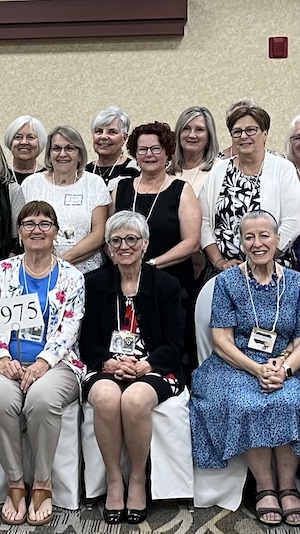
photo - Gerri Klein (centre, seated) with some of her graduating colleagues at the 50th anniversary of the Winnipeg Health Science Centre School of Nursing
Gerri Klein (centre, seated) with some of her graduating colleagues at the 50th anniversary of the Winnipeg Health Science Centre School of Nursing. (photo from Gerri Klein)

Gerri Klein recently celebrated 50 years as a nurse! She was part of the first nursing class from the Winnipeg Health Science Centre School of Nursing.

During her career, Gerri, who now has a master’s in nursing (2003, University of British Columbia), has been honoured with the Canadian Diabetes Educator of the Year Award in 2020 and a Nurses and Nurse Practitioners of BC 2023 Nursing Award of Excellence: Excellence in Advancing Nursing Knowledge and Research. She currently works as a diabetes educator at BC Diabetes in Vancouver.

* * *

photo - Dr. Aaron Klein
Dr. Aaron Klein (photo from Gerri Klein)

Aaron Klein graduated from the University of Toronto with a doctor of philosophy, aerospace studies, department of mechanical and industrial engineering, on June 17, 2025. Aaron, who is working and living in Toronto, stays busy raising his young family with his wife Carolyn.


Posted on July 25, 2025July 24, 2025Author Community members/organizationsCategories LocalTags anniversaries, Chantel Parsons, David Bercovici-Artieda, Gerri Klein, Holocaust, Holocaust Theatre Production Society, Keith Morgan, Kron Sigal Award, Leo Awards, Life Fellow Award, milestones, Sidi Schaffer, survivors, Vancouver Holocaust Centre Society, VHEC, Wendy Cocchia, Winnipeg Health Science Centre School of Nursing
Forgotten music performed

Forgotten music performed

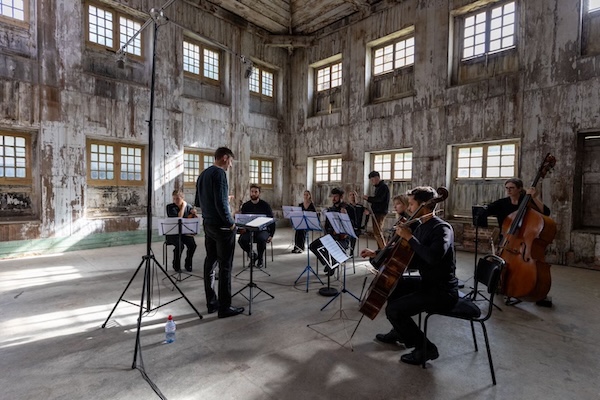
Through a chance conversation with a curator at the Auschwitz Memorial and Museum, conductor and composer Leo Geyer came across musical scores composed by concentration camp prisoners during the Holocaust. June 3 to 7, at London’s Bloomsbury Theatre, the music Geyer documented was played for the first time in 80 years. (photo from Sky Arts)

In 2015, London-based musician and composer Leo Geyer was commissioned to write a tribute honouring British historian Sir Martin Gilbert, who had recently died. Visiting Oświęcim, Poland, to better understand the Holocaust historian’s research, a chance conversation with a curator at the Auschwitz Memorial and Museum led Geyer to a trove of forgotten musical scores composed by prisoners who had been forced to perform in the SS-run orchestras in the Nazi concentration camp, where more than 1.1 million died in gas chambers, mass executions, torture, medical experiments, exhaustion and from starvation, disease and random acts of violence.

The deteriorating and fragile sheets of music, written in pencil, were faded and ripped. Many had burn damage. Intrigued, Geyer devoted nearly a decade of detective work to studying the documents and filling in missing gaps, and the music formed the basis for his doctorate at Oxford University. From June 3 to 7, at London’s Bloomsbury Theatre, the music Geyer documented was played for the first time in 80 years, to commemorate the liberation of Auschwitz in January 1945. The opera ballet included the unfinished scores that Geyer completed and choreography by New York-born choreographer Claudia Schreier.

“The musicians took incredible risks to make brazen acts of rebellion. When good news of the war [of the Allies’ June 6, 1944, D-Day landings] reached the men’s orchestra in Auschwitz I, they performed marches not by German composers but by American composers,” Geyer said in an interview with France 24’s daily broadcast Perspective.

The guards couldn’t distinguish between a Strauss waltz and a John Philip Sousa march.

The musicians “would also weave in melodies from Polish national identity such as St. Mary’s Trumpet Call (a five-note Polish bugle call closely bound to the history of Kraków). We also know of secret performances [that] would take place, which would principally encompass Polish music, but we also know Jewish music was performed as well,” said Geyer.

The story of the orchestras at Auschwitz was popularized by Fania Fénelon, née Fanja Goldstein (1908-1983), a French pianist, composer and cabaret singer whose 1976 memoir Sursis pour l’orchestre, about survival in the women’s orchestra at the Nazi concentration camp, was adapted as the 1980 television film Playing for Time. The orchestra, active from April 1943 to October 1944, consisted of mostly young female Jewish and Slavic prisoners of varying nationalities. The Germans regarded their performances as helpful in the daily running of the camp in so far as they brought solace to those trapped in unimaginable horror. As well, the musicians held a concert every Sunday for the amusement of the SS.

Geyer explained that the SS organized at least six men’s and women’s orchestras at Auschwitz, and perhaps as many as 12. The groups principally played marching music as prisoners trudged to the munitions factories and other industrial sites, where they worked as slave labourers, he explained.

“Musicians had marginally better conditions than other prisoners,” he noted. Nonetheless, he said, “The vast majority of the musicians and composers did not survive the war.” Most of their names are lost. Geyer was able to track down the composer of one unsigned composition by comparing the handwriting to a document found at a conservatory in Warsaw.

Adding poignancy to the performances in London, the musicians played from copies of the original scores.

“We poured our heart and soul into these performances,” said Geyer. “I am neither Jewish nor Romani. But I am human.” 

Gil Zohar is a writer and tour guide in Jerusalem.

* * *

A replica of Auschwitz

Due to conservation issues, the Auschwitz Memorial and Museum no longer permits the filming of movies at the historic site. Using advanced spatial scanning technology, the museum employed a team of specialists, led by Maciej Żemojcin, to create a digital replica of the Auschwitz I camp. The project was recognized at the Cannes Film Festival.

Museum spokesperson Bartosz Bartyzel told Euronews Culture that the replica was created “out of the growing interest of directors in the history of the German camp.”

“The Auschwitz Museum has been working with filmmakers for many years – both documentary filmmakers and feature film directors,” he said. “However, due to the conservation protection of the authentic memorial site, it is not possible to shoot feature films [there]. The idea to create a digital replica was born out of the need to respond to the growing interest in the history of the Auschwitz German camp in cinema and the daily experience of dealing with the film industry. This tool offers an opportunity to develop this cooperation in a new, responsible and ethical formula.”

– GZ

Format ImagePosted on July 25, 2025July 24, 2025Author Gil ZoharCategories Music, WorldTags Auschwitz, Claudia Schreier, history, Holocaust, Jewish composers, Leo Geyer, music, virtual reality

Amid the rescuers, resisters

A nationwide Upstanders Canada keynote lecture to mark Yom Hashoah (Holocaust Remembrance Day) last month reminded the Zoom audience that the belief that Jews simply cowered, while the atrocities around them were being committed during the Second World War, is erroneous.

“The idea of Jewish passivity is part of the narrative, but it is not the truth. Jews, individually and collectively, engaged in acts of resistance and rescue,” said Pat Johnson, founder of Upstanders Canada, at the start of the event.

That people should know this fact “is crucial,” said Johnson, “because it corrects a flawed narrative. It is crucial additionally, not only for Jews but for every person and every people in the world, to see the potential for resistance and courage against authoritarianism hatred and inhumanity.”

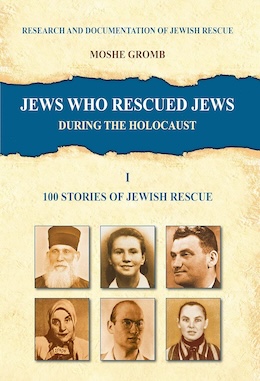
image - Jews Who Rescued Jews During the Holocaust book coverThe April 27 event, titled Jews Who Rescued Jews During the Holocaust, was presented by Rinat Dushansky-Werbner. She was introduced by Moshe Gromb, author of a 15-volume series with the same title, which Dushansky-Werbner and Pnina Jacobi-Yahid translated into English from Hebrew. In her talk, Dushansky-Werbner, a member of the Action Committee for Recognizing Jews Who Rescued Jews During the Holocaust, highlighted several Jewish heroes during the Shoah – their names not widely known. 

“There were operations inside the death camps. There were people smuggling people across borders. They were hiding children in monasteries. They were falsifying documents,” Dushansky-Werbner said.

“The Jews were very, very creative, and tried to think of any possible way to save their brethren. Sadly, many of these Jewish rescuers were caught and murdered by the Nazis. Even though they could have escaped and saved themselves,” she said, “most of them decided not to do so. [They] decided to stand where they are, and try and rescue as many people as possible.”

The people discussed represented a range of backgrounds, ages, geographic locations and levels of religious observance, and were but examples from a much larger number of Jews who took on tremendous risks and used remarkable ingenuity to rescue other Jews during the Holocaust. Thus far, Dushansky-Werbner’s action committee has collected information on more than 2,500 Jewish rescuers and documented more than 50 rescue methods.  

Many of the Jewish rescuers, Dushansky-Werbner said, did not see themselves as great heroes, but rather as people who did what they were compelled to do, and saddened they could not do more.

“There is something very humble about these people,” she said.

Jews rescued other Jews wherever the Germans operated – throughout Europe, North Africa and even the Philippines –  and their operations began once the Nazis rose to power and continued throughout and after the war. Often, their operations involved collaborations with non-Jews.

In Belarus, four brothers named Bielski – Tuvia, Zus (Alexander Zeisal), Asael and Aron – founded a partisan unit, a wandering communal rescue army, that established a family camp in the Naliboki Forest. The camp operated for more than two years during the war, moving occasionally from place to place in the forest, and included a synagogue, a school, a courthouse, a clinic, an armoury and more. It is estimated that the Bielski brothers rescued 1,236 Jews in what became known as the “Jerusalem of the Forests.” Their story is among the more celebrated of Jewish rescuers and was turned into a 2008 film, Defiance, starring Daniel Craig.  

In France, the Loinger family, led by George, who passed away in 2018 at the age of 108, smuggled hundreds of Jewish children across the border to Switzerland, while his wife, Flora, managed the houses in which they hid Jewish children. 

George would play soccer with the children. When the ball flew over to the other side of the border, one or two children would be sent to safety to the other side without the local guard noticing, Dushansky-Werbner explained.

George’s sisters also helped. Fanny hid children in monasteries; Emme prepared abandoned monasteries for Jewish orphans and ran one of the children’s houses; the youngest, Ivette, 13, rode with Jewish children on trains, hiding their money and keeping them calm during the journey. 

French pantomime Marcel Marceau and his brother Alain – who were George’s cousins – forged papers for Jews on the run and helped George smuggle Jewish children out of France.

“Marcel would help keep them calm and would just basically be the clown. He would be like a mother, a father, a brother, and he would make them laugh. And this is how many of them stayed calm and agreed to go from one place to another,” said Dushansky-Werbner, who went on to share another story of heroism.

In Volos, Greece, Rabbi Moshe Shimon Pesach was ordered by a German commander to draw up a list of all the Jews in the city. He turned to his friend, Metropolitan Joachim Alexopoulos, who recommended the Jews leave the city immediately. 

At the age of 74, the rabbi gathered the members of the community and led them to the hills surrounding Volos with the help of the metropolitan and the city’s mayor, and hid them in homes and other buildings. This effort would save 746 of the 882 Jews in Volos.

Dushansky-Werbner ended her talk with the words of Marion Pritchard, a non-Jew who rescued Jews in the Netherlands: “If we do not acknowledge the bravery of those Jewish rescuers who, if caught, were in graver danger than the Righteous Among Nations, that would be a distortion of Holocaust history. It also adds to the false notion that the Jews were led like lambs to the slaughter as cowards. This is far from the truth,” said Pritchard.

Upstanders Canada is a national organization that seeks to mobilize primarily non-Jewish Canadians to stand with the Jewish people and against antisemitism. For more information, visit upstanderscanada.com. 

Sam Margolis has written for the Globe and Mail, the National Post, UPI and MSNBC.

Posted on May 30, 2025May 29, 2025Author Sam MargolisCategories NationalTags education, heroism, Holocaust, Jews Who Rescued Jews, Marion Pritchard, Rinat Dushansky-Werbner, Upstanders, Yom Hashoah
A childhood spent on the run

A childhood spent on the run

Survivor Miriam Dattel, right, with the Vancouver Holocaust Education Centre’s Ellie Lawson at the Yom Hashoah commemoration April 23. (screenshot)

Miriam Dattel was born Branka Friedman, in September 1940, in the Croatian city of Zagreb, then part of Yugoslavia. She was about six months old when the Nazis invaded and her family began a life in hiding. Fleeing ahead of the Nazis and their collaborators, the family survived together through a series of close calls, lifesaving tips from compassionate officials, luck, determination and exhausting treks through the wilderness in search of refuge.

Dattel shared her family’s story at the annual Yom Hashoah commemoration at Temple Sholom on April 23.

Upon invading Yugoslavia in April 1941, the Nazis, aided by their Croatian fascist Ustaše collaborators, immediately instituted the Nuremberg Laws and set up the first concentration camps in Yugoslavia. Dattel’s father and uncle were thrown out of the university and all Jews were forced to don the yellow star – including on young Branka/Miriam’s baby carriage.

The family was set to flee to Budapest, where they believed they would find refuge with family. When the day came, the baby Branka was ill, so her grandmother, Irma Stern, was sent on ahead. It was the last time the family saw her. 

In her haste, the grandmother left behind her prayer book, which was her ubiquitous companion. Branka’s mother viewed the holy book as a fortuitous omen that all would be well in the end. At the commemoration last month, Dattel held the prayer book, now more than a century old and suffering the inevitable evidence of time. 

Eventually, the family fled – but not to Hungary. Branca/Miriam, her parents, Andor and Margita Friedman, and her aunt and uncle, Lili and Fritz, were transported with the help of a friend of her uncle’s southwest to the Croatian city of Split on the Adriatic coast. Sections of the city were controlled by the Italian fascists and others by the Croatian regime. 

One day, her father was tipped off by a high-ranking Italian officer that the Croatians were preparing to deport Jews from the areas of Split they controlled. He returned home in the middle of the night and evacuated the family to the Italian side. Eventually, the family’s race against fate continued, with a journey under false identities by ship to northern Italy.

“In 1943, when eventually Mussolini was finished, the Germans took over,” Dattel said in a video at the ceremony. Again, her father was tipped off by an Italian official, who warned him to disappear. 

“From then on, from what I saw in my father’s diary, we went through 18 different hiding places,” she said, noting assistance from underground operatives.

As a child forced to race from one place to another, few distinct memories remain. However, in various barns where they took refuge, people would roast chestnuts and that remains an evocative taste-memory for her.

Ovaltine is another. And it is a flavour from the very moment that may have saved the life of Miriam and her family.

The group – now six with the addition of her newborn cousin Gerardo – had made their way through northern Italy, around Lake Como and toward the Swiss border. After walking for hours, crossing under fences and trudging through difficult terrain, they came to the frontier of Switzerland.

“There were two Swiss border guards there,” said Dattel. “They said the border is closed. And my father said, impossible, you are not going to let two kids be killed. My recollection is this Swiss soldier [with] a German Shepherd coming towards me, lifting me up and carrying me to the station, to the border house.”

There, the guard gave her Ovaltine and, while she has tried to recreate the flavour, it has never tasted the same.

The family members were placed in refugee camps, Miriam separated from her parents. In Switzerland, the family lived out the war, returning to Zagreb afterward before Miriam and her parents made their way to Israel. 

About 1.5 million Jewish children were murdered in the Holocaust. Miriam was one of an estimated six to 11% who survived. In addition to the video screened at the event, Dattel spoke on stage with Ellie Lawson, the Vancouver Holocaust Education Centre’s education manager.

Claire Sicherman, a granddaughter of survivors, was the third-generation descendent speaker. She spoke of being consumed by grief in early life and growing up in a family filled with silences. (Sicherman shared her story of trauma and recovery earlier this year. See jewishindependent.ca/healing-trauma-possible.)

Hannah Marazzi, acting executive director of the VHEC, noted that this year marks the 82nd anniversary of the Warsaw Ghetto Uprising, a symbol of defiance in the face of annihilation. In addition to remembering the millions of lives lost and the resilience of survivors, she said, “We remember the young Jewish fighters who rose up against the Nazis and whose courage continues to inspire us to stand against oppression in all of its forms.”

Rabbi Carey Brown, associate rabbi of Temple Sholom, welcomed attendees to the synagogue and reflected on the past’s lessons for the present.

Dr. Abby Wener Herlin, associate director of programs and community relations for the VHEC and a member of the third generation, introduced survivors, who lit candles of remembrance.

Cantor Shani Cohen chanted El Moleh Rachamim, the memorial prayer for the martyrs.

Wendy Bross Stuart was responsible for musical direction and arrangement, and played piano. Eric Wilson played cello. Cantor Michael Zoosman, Erin Aberle-Palm, Matthew Mintsis and Lorenzo Tesler-Mabe sang.

As is traditional, the annual ceremony ended with the singing of “Zog Nit Keynmol,” “The Partisan Song.” 

Format ImagePosted on May 9, 2025May 8, 2025Author Pat JohnsonCategories LocalTags Claire Sicherman, history, Holocaust, Miriam Dattel, second generation, speakers, survivors, VHEC, Yom Hashoah
Theatre from a Jewish lens

Theatre from a Jewish lens

Laen Hershler performing REMNANTS. Hershler brings an interactive version of Dr. Hank Greenspan’s play, which is based on 40 years of conversations with Holocaust survivors, to the Peretz Centre for Secular Jewish Culture on June 8. He will be joined by Vancouver Playback Theatre. (photo from grad.ubc.ca)

In June, Laen Hershler celebrates his first year as artistic director of Theatre Terrific. He also hosts, on June 8, Listening with Survivors, “an evening of deep listening and shared reflection as monologues from Holocaust survivors open into a live, interactive performance with Vancouver Playback Theatre.”

“I was deeply honoured and excited to step in as the artistic director of Theatre Terrific,” he told the Jewish Independent. “This community has always felt like home to me, both as a person and an artist. I look forward to continuing this welcoming tradition.”

“Theatre Terrific Society is a trailblazing mixed-ability theatre company that has been championing inclusivity in the arts since 1985,” reads the website. The society is “dedicated to tackling the challenges of accessibility, representation and inclusion in the arts by breaking down stereotypes and fostering empathy across diverse communities. It creates work that resonates with universal human experiences, bridging differences through storytelling. With a compassionate yet bold approach to theatre-making, it cultivates spaces where respect, rigour and risk drive the creative process.”

Theatre Terrific’s last production, called Proximity: The Space Between Us, was well received at the Vancouver Fringe Festival last September. Directed by Hershler and Susan Bertoia, it was created with the cast and is about the struggles of aspiring artists.

photo - In June, Laen Hershler celebrates his first year as artistic director of Theatre Terrific
In June, Laen Hershler celebrates his first year as artistic director of Theatre Terrific. (photo from instagram.com/theatreterrificvan)

Hershler is also an actor and improviser, and he is pursuing a doctorate in research-based theatre at the University of British Columbia. He is part of Vancouver Playback Theatre, as well, and, as an observant Jew, he performs complete with head-covering and tzitzit. 

“Since my shift to diligently keeping Shabbat about eight years ago, my acting career moved from mainstream theatre, which almost always necessitates working on Friday/Saturday nights, to applied forms of theatre,” he said. “These include playback theatre, forum theatre and academically situated theatre, which are much less dependent on weekend shows. I love performing in these types of shows since they tend to be very socially engaged and meaningful projects.”

Hershler’s responsibilities at Theatre Terrific include arranging all the classes, courses and productions, and hiring the instructors, directors and other artists for TT’s projects. He teaches, directs and sometimes performs in the company’s offerings, and works on establishing connections with the broader community of theatre companies regionally and internationally, especially all-abilities arts organizations. 

“I love the meaningfulness of the work, the creative freedom and the amazing human beings I get to work with,” he said. “I appreciate the opportunity to create work and opportunities for theatre artists of all abilities and to produce meaningful and evocative theatre. The challenge of the work – which is learning to hold a radically inclusive space that allows for high-level artistic work while including artists across spectrums of physical, neurodiverse and cognitive abilities – is also something I cherish.”

Hershler’s theatre career began at the Jewish Young People’s Theatre of Vancouver, which was based out of the Peretz Centre for Secular Jewish Culture. The program was guided by Lynna Goldhar Smith, who he credits as being a huge influence – he began classes with her when he was 8 years old and stayed with YPT until he was 14. He said a large percentage of people that he acted with in YPT are still involved in the arts today. 

Since graduating with his master’s at the University of Cape Town in 2011, Hershler has been an instructor in the education faculty at UBC in Vancouver and in the creative studies faculty at UBC in Kelowna. He began his career as a performer and educator touring and giving workshops in France, Korea, Australia, Kenya, South Africa and elsewhere on various aspects and uses of physical theatre for both children and adults.

“I loved my role as the Tooth Prince while performing for 5-year-olds (and their parents) at one of the most prestigious theatres in Seoul, Korea,” he said.

A couple of years ago, at the Peretz Centre and at Or Shalom, Hershler performed the one-man show REMNANTS, which was written by Dr. Hank Greenspan and first produced, for radio, in 1991. Based on 40 years of conversations with Holocaust survivors, the work delves into the survivors’ experiences, exploring themes such as loneliness, rage, storytelling and the dynamics of relationships across generations.

“It was a deeply meaningful project,” said Hershler, who is bringing REMNANTS back to the Peretz Centre on June 8, in a different form.

“In this version,” said Hershler in an email, “these monologues will open into a space for collective reflection, storytelling and discussion through playback theatre – a form of theatre that invites the audience’s voices and experiences into the performance itself, creating a space for deep listening and dialogue. For this, we will be joined by Vancouver Playback Theatre.”

The evening will be about listening to the Holocaust survivors, as well as one another, he said, “to find overlap and connection with our own lives, today, in this moment in time – to learn with, to learn from, to learn alongside.”

Hershler would like to do more Jewish storytelling.  

“I would love to create work that brings down the mystical tales of Rebbe Nachman of Breslov, an interest I inherited from my father, who has long been a storyteller of Nachman tales…. Being Jewish is who I am, and it pulsates through all the work I do,” he said. “All my artistic work emerges from this prism, from a Jewish lens, from a Jewish neshamah (soul).”

For tickets to Listening with Survivors, go to peretz-centre.org. For more information about Theatre Terrific, visit theatreterrific.ca. 

Cassandra Freeman is a freelance journalist and improv comedy performer living in Vancouver.

Format ImagePosted on May 9, 2025May 23, 2025Author Cassandra FreemanCategories Performing ArtsTags Holocaust, Laen Hershler, REMNANTS, storytelling, survivors, Theatre Terrific, Vancouver Playback Theatre
Balancing education and art

Balancing education and art

Alix West Lefler plays Frida in The Fast Runner, a 15-minute short from director David Bercovici-Artieda that was shot over the course of four days in the Greater Victoria area. (photo from thefastrunnerfilm.com)

The Fast Runner, a film about a young girl and a rabbi confronting the reality of the Holocaust, will be shown at the Comox Valley International Film Festival on April 5. The 15-minute short was shot over the course of four days in the Greater Victoria area and involved 260 people. 

Director David Bercovici-Artieda, the son of a Holocaust survivor, described the project as both a profound responsibility and an intensely personal journey. His father’s experience, though not depicted in the story, inspired him to bring the film to fruition.

“It’s not just about telling a story. It’s about honouring the memory of those who lived through unimaginable horrors, including my own father. Every frame, every scene and every creative choice carries the weight of history – my family’s history,” he told the Independent.

“I came to understand the profound impact of survival – not just the physical endurance, but the emotional and psychological resilience that followed. His story, and those of so many others, shaped my perspective on the responsibility of storytelling and the importance of preserving these narratives for future generations.”

Bercovici-Artieda said creating a film like The Fast Runner is a balancing act between art and education. It must be compelling, engaging and cinematic, but also serve the greater purpose of preserving memory and fostering empathy. At its core, he explained, the film carries a message of compassion, hope and perseverance in the darkest moments of history.

“It is a reminder that, even in the face of cruelty, there were acts of kindness, moments of defiance and an unbreakable human spirit. These themes are as relevant today as they were then,” he said.

Bercovici-Artieda admitted that, during the process of putting the film together, he questioned whether he was doing justice to the story and honouring his father’s legacy in the right manner. 

“Ultimately, telling these stories is a privilege,” he said. “It is a way to ensure that the Holocaust is never forgotten, to remind audiences that history is not just in textbooks – it lives in the voices and memories of those who came before us.”

Bercovici-Artieda stressed that the film is about choices as well: those forced upon people who suffered and those made by people who stood by, helped or betrayed. Viewers, he hopes, will recognize the weight of these decisions and that history is not just a collection of events: it is built on the actions and moral dilemmas of individuals.

“I also hope audiences see the film not just as a story about the past, but as a reflection of today’s world,” he said. “The forces of hate, intolerance and dehumanization did not disappear with the Holocaust. They persist in different forms. If we are not vigilant, history can repeat itself. And, right now, we are witnessing a dangerous rise in antisemitism, Holocaust denial and historical revisionism.”

photo - Director David Bercovici-Artieda behind the camera of The Fast Runner, which next screens at the Comox Valley International Film Festival
Director David Bercovici-Artieda behind the camera of The Fast Runner, which next screens at the Comox Valley International Film Festival. (photo from thefastrunnerfilm.com)

Most importantly, Bercovici-Artieda would like people to leave the theatre with a sense of empathy. Survivors like his father, he said, endured unspeakable horrors, but they carried on, rebuilt their lives and, in many cases, found a way to forgive.

“If they could move forward with hope, so can we,” he said. 

Currently, Bercovici-Artieda is raising funds to support a partnership with Journeys in Film, an educational nonprofit, to help teachers bring The Fast Runner into classrooms worldwide. In addition, he would like to expand screenings, panel discussions and outreach programs to engage audiences in meaningful conversations about the Holocaust, resilience and the dangers of historical revisionism.

“My hope for educating people about the Holocaust through The Fast Runner is to provide a deeply human perspective on one of history’s darkest chapters – one that goes beyond statistics and textbooks,” he said. “I want audiences, especially younger generations, to connect emotionally with the story, to feel the weight of what was lost and to understand the consequences of hatred and intolerance.”

The Fast Runner screened at the Victoria Film Festival in February; the Shabbat Lounge, a Jewish cultural event running alongside the Sundance Film Festival in Park City, Utah, in January; and the Victoria International Jewish Film Festival last November. After Comox, it will make its Latin American debut, with three screenings in Ecuador, Bercovici-Artieda’s home country. One of the screenings will take place on Holocaust Remembrance Day (Yom Hashoah), on April 23, in Quito. 

The film stars Alix West Lefler as the young girl Frida and Alex Poch-Goldin as the rabbi. Only 13 years old, West Lefler has a considerable list of acting credits, including roles in films (Speak No Evil, The King Tide) and on television (The Good Doctor, Riverdale). Poch-Goldin is a veteran stage and television actor with appearances on Nero Wolfe, Murdoch Mysteries and Queer as Folk; he is also a playwright, director and librettist.

Michael Bruce Adams wrote the screenplay for The Fast Runner. Adams has been involved in more than 150 film productions. Besides short films, he has written features and documentaries.

Bercovici-Artieda has been the cinematographer on dozens of film projects and a director of several recent television series’ episodes and movies, including the holiday film Making Spirits Bright.

For more about The Fast Runner, visit thefastrunnerfilm.com. 

Sam Margolis has written for the Globe and Mail, the National Post, UPI and MSNBC.

Format ImagePosted on March 28, 2025March 27, 2025Author Holocaust, Sam MargolisCategories TV & FilmTags David Bercovici-Artieda, education, Holocaust, second generation, The Fast Runner, Victoria

Enthralling must-read

We Are Here! We Are Alive! The Diary of Alfredo Sarano, with historical commentary by Roberto Mazzoli and translated from the Italian by Avigayil Diana Kelman, is a book of double magnitude.

We Are Here! We Are Alive! is a riveting diary, with fiction-like suspense and drama, written in northern Italy during the Second World War under Mussolini’s fascist regime and Nazi German occupation, combined with an outside scholar’s comments, which set the diary into its day-to-day historical events. To make the reading easier, the diary is astutely printed as though typewritten, while the commentary is in regular book font.

image - We Are Here! We Are Alive! book coverOriginally published in 2017 by noted Italian publishing house Edizioni San Paolo, in Milan, We Are Here! We Are Alive! garnered wide praise in Italy’s general press and from the country’s leading officials and public figures.

It must be accented that first-person Holocaust memoirs were usually written after the war, and the memoirist had to choose from past events and sort them out in the calm of peace time. A diary like this, composed in situ, while in hiding, is rather rare – and likely more reliable than one written with the fluidity of memory after events.

“This is the story of how this chapter of the history of Italian Jewry unfolded, which I experienced day by day,” writes Sarano. Kept for more than 70 years in a drawer by his daughters Matilde, Vittoria and Miriam, Sarano’s diary reemerges from the past, adding new, precious pages of history to the record of the genocide of the Jewish people. 

We Are Here! We Are Alive! is the result of Mazzoli’s research, the Italian literary scholar who brought Sarano’s diary to light, placing it in the historical context of the time. The book accents the heroism of Sarano, who portrays himself humbly and with modesty. Yet, he was the farsighted secretary of the Milan Jewish community, the man who saved thousands of lives by hiding from the occupying Germans the lists of community members. The fact that he knew the entire list by heart, names and addresses, bore heavily on Sarano, and he realized he would have to escape detection by the Germans for the safety of the entire community.

The Germans relied thoroughly on these communal lists in various cities for their roundups and deportation of all known Jews to the death camps. 

One tragic incident revolves around the Venice list. When the Germans came, they ordered the president of the Jewish community, Giuseppe Jona, to hand over the list. He quickly found a secure place to hide it and then committed suicide before the Germans could get to him. 

In Sarano’s diary, we also learn about, and take joy with, the Jewish soldiers from the Land of Israel who fought the Germans in Italy during the Second World War as members of the Jewish Brigade, and helped save countless Jewish lives.

In his introduction, Mazzoli describes the fascinating background as to how this remarkable book came to be written. It is the combination of persistence, good luck and serendipity.

Mazzoli had been looking for information about a good-hearted Nazi officer, Erich Eder, who, in 1944, when the German army had already occupied northern Italy, had at great risk disobeyed orders and helped save local refugees, including Jews, from deportation. Mazzoli had read a few details in a memoir written by an Italian friar and wanted to contact Eder, but in vain.

Then, through a series of coincidences, he ran across the three Sarano sisters and learned about their father’s diary. It is here that Mazzoli learned more about the humane German officer, whose family back home in Bavaria had also saved a Jewish woman by hiding her in their house.

When the Sarano sisters became acquainted with Mazzoli, they entrusted him with their father’s precious manuscript with the touching words, “These pages have been waiting for you.” And then Mazzoli spent several years reading and notating the diary.

In We Are Here! We Are Alive!, we learn how ordinary peasants and kindly friars in the small town of Mambroccio and other places were able to thwart the Nazi plan of total annihilation of the Jews by hiding them in remote villages and sustaining them until liberation. There is even a moving description of how the Sarano family, with the help of the villagers, was able to celebrate a seder while in hiding.

Sarano served for decades as the secretary of the Milan Jewish community, until he made aliyah in 1969. That year, some 25 years after the events, in the town of Bnei Brak (near Tel Aviv), a memorable, emotional reunion took place, when Padre Sante Raffaelli, the friar who was instrumental in saving the family, visited the Saranos.

We Are Here! We Are Alive! is a must-read, enthralling book. It is so beautifully translated from the Italian by Kelman that one would think this diary was originally written in English. 

Curt Leviant’s most recent novels are Tinocchia: The Adventures of a Jewish Puppetta and The Woman Who Looked Like Sophia L.

Posted on February 28, 2025April 3, 2025Author Curt LeviantCategories BooksTags Alfredo Sarano, Avigayil Diana Kelman, Holocaust, memoir, Roberto Mazzoli
The Holocaust in Hungary

The Holocaust in Hungary

Dr. Peter Suedfeld speaks at the International Holocaust Remembrance Day commemoration at the Bayit. (photo by Pat Johnson)

As a child in Budapest, Dr. Peter Suedfeld’s family spoke Hungarian in the home and considered themselves Hungarians first and Jews second. 

“If you asked us, ‘What are you? Who are you?’ The answer would be Hungarians,” he said. “Interestingly, we thought that that’s what the people around us thought also, that that’s what we were – Hungarians. It turned out a little later that we were mistaken.”

Suedfeld shared his family’s Holocaust story and his survival Jan. 26 at the International Holocaust Remembrance Day commemoration (IHRD) at the Bayit synagogue in Richmond.

Miklós Horthy, the regent of Hungary during most of the war, did not share Hitler’s determination to destroy the Jewish people, Suedfeld said. As a result, the status of Jews in the country was not markedly worse than that of other Hungarians during the early war years.

“By 1944, things were very different,” Suedfeld said. “It was increasingly likely that Germany, contrary to all expectations, was not going to win the war.”

The Soviets had pushed back the German advance on the Eastern Front and the Western Allies were close enough to bomb Budapest routinely. Food was scarce, as resources were being pilfered and transported to Germany. 

Realizing that the Hungarians had chosen the wrong side in this war, as they had at other times in history, Horthy went on the radio and announced that his country was surrendering, Suedfeld explained, whereupon Hitler directly occupied Hungary for the first time. Horthy’s government was replaced with an overtly fascist regime, the Arrow Cross. 

“They took it upon themselves to carry out the full Nuremberg Laws and all the persecution that had happened in Germany and Poland,” said Suedfeld. “It came later to us than it had many other countries in Europe but, when it came, they were determined to catch up.”

Adolf Eichmann himself, mastermind of the “Final Solution,” was sent to oversee operations in Hungary. Jews were forced to wear the yellow star for the first time and executions of Jews began in earnest.

Jews were taken to the banks of the Danube, where they were lined up in groups of three, tied together, their shoes removed, and then the middle person in the trio was shot. When the middle person fell into the river, the other two were dragged down and drowned, accomplishing the objective with one bullet rather than three. Suedfeld said 30,000 are estimated to have been murdered in this fashion.

Suedfeld’s paternal grandfather, a hero from the First World War, had died a few years earlier. He had assumed that his military accomplishments would shield his family from whatever antisemitic legislation was passed. 

“He died before he found out that he was wrong,” said Suedfeld, whose paternal grandmother astonishingly survived the Holocaust. His mother’s parents entered the ghetto, where they soon died from the privations there. 

Young Peter’s own story of survival was improbable. His mother was taken from their home while 8-year-old Peter watched, not knowing it would be the final time he saw her. She was taken to a holding camp in Hungary and from there to Auschwitz.

His father was drafted into forced labour and later experienced a death march and incarceration at Mauthausen, “one of the worst of those cruel, vicious camps.”

“But he survived,” Suedfeld recounted. “After the war, he was given a job, because he spoke English, interrogating suspected war criminals and SS officers captured in the vicinity. He enjoyed it.”

Young Peter survived after his mother was arrested because his aunt discovered him alone at home. She took him and decided, with his grandparents, that he should be hidden.

“They somehow found out that the International Red Cross had some orphanages started around the city. They were for war orphans but they smuggled a few Jews in when they thought they could get away with it,” he said. “I was a good candidate for hiding because I was blond and had blue eyes so I could get away with pretending I wasn’t Jewish.”

Like many survivors, Suedfeld’s existence is a result of an incalculable number of close calls and lucky chances. In just one instance, near the end of the war, the group of orphans he was with were being transported from one location to another. They were lining up to cross over a little fence when some soldiers saw them and may have assumed they were enemy forces. Machine gun fire burst forth. 

“Shots were fired and the kid on my left was hit,” said Suedfeld. “And the kid on my right was hit. But when it was pointing at me was the time that the next cartridge was being fed into the gun and so there was no shot. Pure dumb luck.”

Peter and his father fled Hungary when the communists took power. Suedfeld made his way to the United States in 1948, served in the US Army, eventually received a doctorate from Princeton University in 1963 and taught at American universities before moving to Vancouver. He was appointed professor of psychology at the University of British Columbia in 1972. His work and research are concerned with how human beings adapt and cope with challenge, stress and resilience.

At the commemoration, the Bayit’s Rabbi Levi Varnai reflected on the word zachor, remember. 

“We are obligated to remember, today, tomorrow and really every single day,” he said. “Zachor is always important but it feels like today it’s even more important than ever before.”

He acknowledged the nine Holocaust survivors in attendance and expressed regret that, after their childhoods were stolen, their golden years are now tarnished by witnessing a new surge of antisemitism.

“As much as we want to focus on the future and as much as we want to continue to build and not always think about our dark past, the only way to ensure a proper future is by remembering the atrocities, the hardships of the past,” the rabbi said. “We are lucky that we still live in an age that we can come into a room to witness survivors and share their testimonies. It is our obligation to take these stories and make sure that they will never ever be forgotten.”

Ezra Shanken, chief executive officer of the Jewish Federation of Greater Vancouver, noted the significance of the presence of elected representatives at the event. 

“If only our ancestors had public officials showing up like this and talking about how we have to create a safer space,” said Shanken, who said that people have asked him how bad antisemitism needs to get in Canada before Jews consider leaving the country. 

“When do we get out of here?” he asked. “We get out of here when the government starts making laws against us.” Governments in Canada of all parties, he said, “have been steadfast in trying to voice the need for safety and security for the Jewish people and for all people across our country, our province, our cities. I want to thank them for spending time with us tonight.”

Michael Sachs, director for Western Canada of the Friends of Simon Wiesenthal Centre and a past president of the Bayit, who initiated the annual Holocaust remembrance event six years ago, noted that the commemoration was taking place “amidst the worst, most sustained amount of antisemitism that Canadian Jews have ever experienced.”

“Survivors are a constant source of inspiration and wisdom for us,” he said. “No one can speak with a greater authority on what can happen when hate is left unchallenged than these survivors. For them, having witnessed firsthand and paid a dear price for society not standing up to the worst impulses of humanity, this is not academic.”

He asked everyone in attendance to redouble their efforts toward education about the Holocaust and about modern-day manifestations of antisemitism. 

“Jews cannot fight antisemitism alone, nor should we – not if we want a better society for all,” said Sachs. “The light of education shall lead our way.”

Steveston-Richmond East Member of Parliament Parm Bains represented the federal government and read greetings from Prime Minister Justin Trudeau. Kelly Greene, MLA for Richmond Steveston and minister of emergency management and climate readiness, brought greetings from Premier David Eby. All three of Richmond’s other MLAs – Teresa Wat (Richmond-Bridgeport), Steve Kooner (Richmond-Queensborough) and Hon Chan (Richmond Centre) – were present. Richmond Mayor Malcolm Brody read a city proclamation and was joined by councilors Bill McNulty, Andy Hobbs and Alexa Loo. Richmond RCMP chief superintendent Dave Chouhan was also in attendance. Bayit president Keith Liedtke emceed.

Nine Holocaust survivors lit candles. Cantor Yaacov Orzech chanted El Moleh Rachamim. Dr. Abby Wener Herlin, associate director of programs and community relations at the Vancouver Holocaust Education Centre, introduced Suedfeld. 

The event was co-sponsored by the Bayit, Vancouver Holocaust Education Centre, Friends of Simon Wiesenthal Centre, Jewish Federation of Greater Vancouver, Centre for Israel and Jewish Affairs and Kehila Society of Richmond. 

Format ImagePosted on February 14, 2025February 13, 2025Author Pat JohnsonCategories LocalTags Bayit, history, Holocaust, Hungary, International Holocaust Remembrance Day, Peter Suedfeld, Richmond

Posts pagination

Previous page Page 1 Page 2 Page 3 Page 4 … Page 44 Next page
Proudly powered by WordPress