Skip to content

  • Home
  • Subscribe / donate
  • Events calendar
  • News
    • Local
    • National
    • Israel
    • World
    • עניין בחדשות
      A roundup of news in Canada and further afield, in Hebrew.
  • Opinion
    • From the JI
    • Op-Ed
  • Arts & Culture
    • Performing Arts
    • Music
    • Books
    • Visual Arts
    • TV & Film
  • Life
    • Celebrating the Holidays
    • Travel
    • The Daily Snooze
      Cartoons by Jacob Samuel
    • Mystery Photo
      Help the JI and JMABC fill in the gaps in our archives.
  • Community Links
    • Organizations, Etc.
    • Other News Sources & Blogs
    • Business Directory
  • FAQ
  • JI Chai Celebration
  • JI@88! video
image - Weizmann Canada Physics Tournament 2025
image - The CJN - Visit Us Banner - 300x600 - 101625

Recent Posts

  • Vrba monument is unveiled
  • Music to build bridges
  • A better future possible
  • Anne Frank exhibit on now
  • Human rights in sport
  • Telling the story of an icon
  • Crawl bigger than ever
  • JCC Maccabi in Toronto
  • A way to meet fellow Jews
  • Time to include
  • Add Jewish joy to the mix
  • Reminder of humanity’s light
  • From the archives … editorials
  • Year-round holiday recipes
  • מדוע עזבתי את ישראל ואינני חושב לחזור ארצה
  • OJC hosts Oct. 7 memorial
  • A journey beyond self
  • Antisemitism a problem
  • Young man is missed
  • Orr action sparks complaint
  • Prison sentence for hate
  • Etgar Keret comes to Vancouver
  • New fall lecture series
  • Series explores music
  • Doc on Zapiro screens Nov. 6
  • Joy of shared existence
  • Community milestones … October 2025
  • MAID vs Jewish values
  • Cheshvan a great month, too
  • Bull, bear or bubble?
  • From the archives … a coin, etc.
  • מדוע האנטישמיות הולכת וגואה בעולם
  • New bio gives Vrba his due
  • Joy brighter than ever
  • When approaches differ
  • New leadership at the JCCV

Archives

Follow @JewishIndie

Tag: Sidi Schaffer

Community milestones … for July 2025

photo - David Bercovici-Artieda’s The Fast Runner was nominated for six Leo Awards, with Bercovici-Artieda taking home the award for cinematography
David Bercovici-Artieda’s The Fast Runner was nominated for six Leo Awards, with Bercovici-Artieda taking home the award for cinematography. (photo © David Bercovici-Artieda)

The short film The Fast Runner, which was shot in the Greater Victoria area, won a 2025 Leo Award in cinematography for David Bercovici-Artieda. Bercovici-Artieda was also nominated for best direction, and the piece had six nominations in total.

The Leo Awards are a Project of the Motion Picture Arts & Sciences Foundation of British Columbia. This year, there were more than 1,300 eligible entries in 16 different program categories. 

In addition to nominations for direction and cinematography, The Fast Runner was nominated for screenwriting (Michael Adams), production design (Sarah Monteith), costume design (Constance Moerman and Josie Saldat) and make-up (Teia Dumaresq, Akina McCrea, Lindsay Pilkey, Donia Nikoo, Naomi Burnell and Mayhanna Haslam).

“It’s not just about telling a story,” Bercovici-Artieda, the son of a Holocaust survivor, told the Independent earlier this year. “It’s about honouring the memory of those who lived through unimaginable horrors, including my own father. Every frame, every scene and every creative choice carries the weight of history – my family’s history.” (See jewishindependent.ca/balancing-education-and-art.)

For more about Bercovici-Artieda, the film and the many other awards and recognition it has received, visit thefastrunnerfilm.com.

* * *

At its annual general meeting last month, the Vancouver Holocaust Centre Society for Education and Remembrance presented its annual Life Fellow Award to Sidi Schaffer and Keith Morgan. The award is given to individuals who have made exceptional contributions to Holocaust education and remembrance.

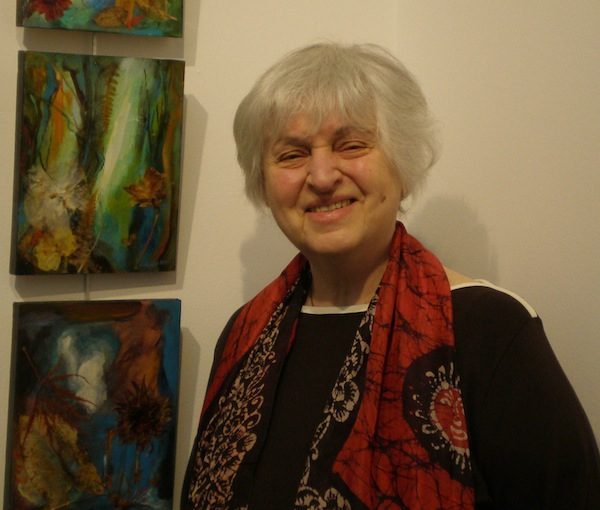
Sidi is a Holocaust survivor and talented artist whose life and work are powerful testaments to resilience and remembrance.

photo - Sidi Schaffer
Sidi Schaffer (photo from VHEC)

Born in northern Romania, Sidi was just a child when she and her family were forced into the Czernowitz ghetto in 1940, and later deported to the Djurin concentration camp in what’s now Ukraine. They endured unimaginable hardship for four years before returning to Romania in 1945. Sidi later moved to Israel, where she earned her degree in art education, and eventually settled in Canada with her husband David and their three sons.

After completing a bachelor of fine arts at the University of Alberta, Sidi continued to use art as a way of processing and sharing her experience. Her piece “Earth, Don’t Cover Their Blood” (featured in the VHEC’s 1998 Gesher Project) remains a moving tribute to those lost – and a powerful educational tool.

Sidi continues to share her story and use her art to bear witness as a long-time member of the VHEC’s Child Survivor Group. 

Keith, a best-selling author and award-winning journalist, has dedicated his work to preserving Holocaust memory.

photo - Keith Morgan
Keith Morgan (photo from VHEC)

Born in Blackpool, England, in 1954, he moved to Vancouver in 1980, where he became a columnist on cars and motoring for the Province and Sun newspapers.

In 1997, he wrote a newspaper feature about Ruth Kron Sigal and her community impact. Moved by Ruth’s family story and motivated by his own limited knowledge of the Holocaust in the Baltics, Keith collaborated with Ruth, the eldest daughter of Meyer and Gita Kron, on her memoir, Ruta’s Closet (Shavl Publishing, 2008), about the murder of 200,000 Lithuanian Jews during the Holocaust and the Kron Sigal family’s survival during the Nazi occupation of Lithuania.

Keith worked on Ruta’s Closet while working as a journalist, researching daily, conducting interviews and using his holidays to travel across Europe, Israel and North America. Since its publication in 2008, the book has become a vital educational resource. According to historian Sir Martin Gilbert, it is “one of the finest Holocaust memoirs.”

* * *

Wendy Cocchia, lieutenant governor of British Columbia, has accepted to serve as honorary patron of the Holocaust Theatre Production Society’s Survivors program. Patronage, in the spirit of supporting and encouraging meaningful initiatives, is a role of the Office of the Lieutenant Governor, rooted in the Crown’s tradition of recognizing and uplifting worthy endeavours. 

The play Survivors, by Wendy Kout, is an hour-long educational drama that enacts the story of the Holocaust through eyewitness testimony of 10 survivors. Young and diverse audiences relate to the young and diverse cast, who are guides on the perilous journey of their ever-changing world. The survivors in the play also provide life lessons and encouragement to speak up and act up against hatred and bullying today. Suitable for young adult and adult audiences, this play about the past is a warning and a wakeup call for the present and the future.

As of June 30, Survivors was booked for more than 30 performances across Vancouver Island, bringing the society’s Holocaust education program to middle and high schools, both public and private, as far north as Campbell River.

Thank you to the Victoria Foundation for their support, which will ensure that the program can be delivered to Victoria schools in October.

Visit holocausttheatre.com for more information and to watch the trailer. 

* * *

Last month, the Vancouver Holocaust Education Centre presented the 2025 Meyer and Gita Kron and Ruth Kron Sigal Award for Excellence in Holocaust Education to Chantel Parsons. Chantel has consistently demonstrated an exceptional commitment to Holocaust education throughout her career, significantly impacting her students, colleagues and the broader school community.

photo - Chantel Parsons
Chantel Parsons (photo from VHEC)

Chantel is a geography and history teacher at Mark R. Isfeld Secondary School in the Comox Valley. The teacher’s Genocide 12 course, which centres on the Holocaust, remains one of the most popular senior-level electives at her school, drawing students eager to engage deeply with this critical history.

Chantel’s approach to Holocaust education is marked by historical precision, critical inquiry and meaningful impact. Her students explore complex issues around historical responsibility and the roles of perpetrators, victims, bystanders and resistors, challenging simplified narratives and examining the complexities of human behaviour during the Holocaust.

The lasting influence of her teaching is reflected in the words of a former student: “You were probably one of the best teachers I had. The focus you put on the atrocities in WWII, and the effort you put into teaching us how to recognize the patterns that lead up to events like this made me question a lot of things I probably wouldn’t have otherwise…. I often think back to things I learned in your class.”

A distinctive feature of Chantel’s teaching is her focus on Holocaust denial and distortion – topics often underrepresented in high school curricula. Her students study landmark Canadian legal cases concerning Holocaust denial, and benefit from guest speakers and witnesses connected to these cases. 

Despite teaching in the smaller community of Courtenay, Chantel’s students access extensive enrichment opportunities through VHEC’s online programs. This year, her class participated in multiple live Zoom workshops, survivor speaker presentations, virtual exhibition tours and accessed a wealth of online teaching materials. 

The Kron Sigal Award was established in memory of Meyer and Gita Kron and their daughter Ruth Kron Sigal, Lithuanian Jewish survivors of the Holocaust who reestablished their lives in Vancouver. Through their lifelong involvement with education and community, the family touched the lives of thousands of students. The award in their name is presented annually to British Columbian teachers who have demonstrated excellence and commitment to teaching students about the Holocaust and its important lessons for humankind.

* * *

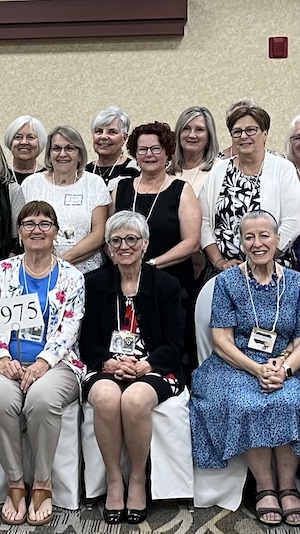
photo - Gerri Klein (centre, seated) with some of her graduating colleagues at the 50th anniversary of the Winnipeg Health Science Centre School of Nursing
Gerri Klein (centre, seated) with some of her graduating colleagues at the 50th anniversary of the Winnipeg Health Science Centre School of Nursing. (photo from Gerri Klein)

Gerri Klein recently celebrated 50 years as a nurse! She was part of the first nursing class from the Winnipeg Health Science Centre School of Nursing.

During her career, Gerri, who now has a master’s in nursing (2003, University of British Columbia), has been honoured with the Canadian Diabetes Educator of the Year Award in 2020 and a Nurses and Nurse Practitioners of BC 2023 Nursing Award of Excellence: Excellence in Advancing Nursing Knowledge and Research. She currently works as a diabetes educator at BC Diabetes in Vancouver.

* * *

photo - Dr. Aaron Klein
Dr. Aaron Klein (photo from Gerri Klein)

Aaron Klein graduated from the University of Toronto with a doctor of philosophy, aerospace studies, department of mechanical and industrial engineering, on June 17, 2025. Aaron, who is working and living in Toronto, stays busy raising his young family with his wife Carolyn.


Posted on July 25, 2025July 24, 2025Author Community members/organizationsCategories LocalTags anniversaries, Chantel Parsons, David Bercovici-Artieda, Gerri Klein, Holocaust, Holocaust Theatre Production Society, Keith Morgan, Kron Sigal Award, Leo Awards, Life Fellow Award, milestones, Sidi Schaffer, survivors, Vancouver Holocaust Centre Society, VHEC, Wendy Cocchia, Winnipeg Health Science Centre School of Nursing
Love and concern for nature

Love and concern for nature

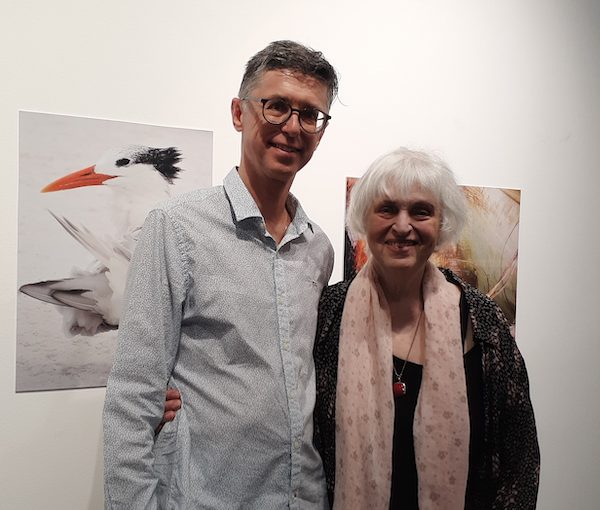
Nathan and Sidi Schaffer at the opening of their photography exhibit at the Zack Gallery June 22. (photo from the artists)

Painter, printmaker and mixed media artist Sidi Schaffer has a new show at the Zack Gallery – a photography exhibit with one of her sons, Nathan Schaffer. Eye Love Nature invites viewers to see the beauty and wonders of the natural world, and for us to recognize the dangers we pose to it.

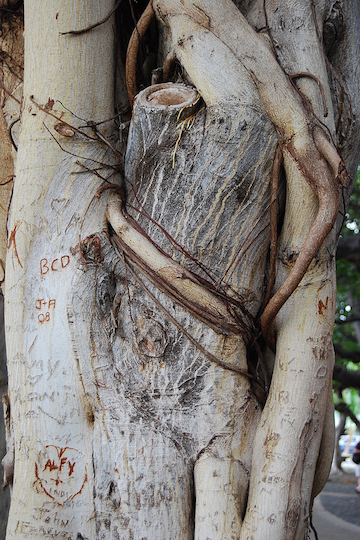
photo - Embraced and Loved” by Sidi Schaffer
Embraced and Loved” by Sidi Schaffer

Rather than nature as something separate, we see ourselves in the Schaffers’ photos. Sometimes, the animals are doing something that we enjoy doing, like the three whales in Nathan’s “Family Swim,” only their fins visible in the misty ocean. Other times, we can empathize with what a tree has endured, but also our part in hurting it, as in Sidi’s “Embraced and Loved,” which shows a gnarled tree not only tightly wrapped by a vine, but also scarred by the initials, including a pair in a heart, that many people have carved into it.

The titles of some of the photos bring a smile, but also a sense of responsibility. The overall feeling of the exhibit, however, is uplifting, hopeful.

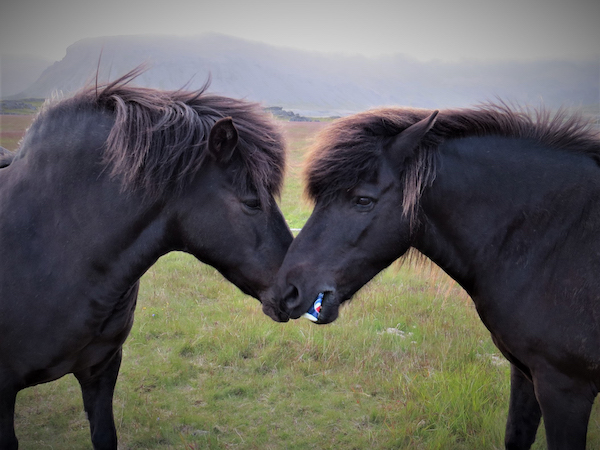
“I have a fondness for word play and puns as a way of expressing humour. I find it helps keep a positive environment when interacting with others and, at times, deal with sensitive issues in a less threatening manner,” Nathan told the Independent. “Artistically, my goal is to engage the audience both visually and with language. ‘The Pepsi Challenge’ [in which two horses tussle over a Pepsi cup] in my mind ‘can’didly raises concerns about human garbage and pollution straight from the ‘horse’s mouth,’ so to speak. In ‘I’m Stumped,’ there is also a bit of fishing line on the stump under the bird’s foot – again a reminder that human pollution is unfortunately prevalent in the lives of wildlife and sometimes it can feel like we are stumped trying to deal with it.”

photo - “The Pepsi Challenge” by Nathan Schaffer
“The Pepsi Challenge” by Nathan Schaffer

Eye Love Nature is the first photography exhibit for both Schaffers. Sidi said, “as I age, I wanted to see my photos on a gallery wall and share our joy creating them with the people in the community.” Nathan writes in his artist’s statement: “I very much hope the viewers enjoy the photos and that positive emotions arise and carry forth.”

Both Schaffers thanked Zack Gallery director Hope Forstenzer and the selection committee, as well as their friends and family, “for providing guidance and supporting this,” said Nathan, who works as a psychiatrist treating adults at a community mental health clinic.

“The resilience of many patients inspires me to search for strength and marvel at beauty in nature,” he said. “I often recommend spending time in nature as a way of reducing distress from inner turmoil, both to patients and family. I also enjoy my photography as a way of expressing latent artistic interests, as I haven’t improved my drawing beyond a rudimentary level. It is a counterweight to the stress associated with my work.”

For Sidi, who is a career artist, the skills involved in painting/printmaking and photography overlap to some extent.

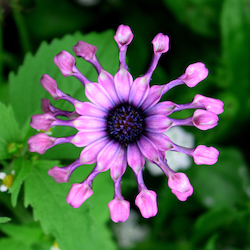
“The combination of a good eye and imagination can help in both forms of art expression,” she said. “[But] the trigger when taking a photo is coming from outside. It is your sudden surprise of what your eye sees in front of you at a certain moment, in a certain light or shadow. It can be a landscape, people or clouds in the sky. It can be a design that the power of nature created on a tree bark, or a gentle breeze moving the petals of a flower. You can be enchanted by a flower’s seeds that hide themselves from the elements.

photo - “Burst of Colour” by Sidi Schaffer
“Burst of Colour” by Sidi Schaffer

“As compared to painting or printmaking, with photography, it’s presented to you, you only have to look and explore,” she said. “When I am in front of a canvas or paper, it’s usually in front of a white surface that waits for my imagination, for my expression of freedom to choose the subject or design that comes from inside me. It takes me even more into my inner self, into a world that brings me satisfaction, reflection and peace. Physically, painting is more challenging; my whole body is involved in the making. I love both mediums and hope to combine them in my mixed media works.”

While Eye Love Nature is Sidi’s first photography exhibit, she has been a photographer since childhood. Sidi was born in Romania – her mother studied photography before the Second World War.

“After the war, coming back home from the camps, my parents opened a photo studio,” said Sidi. “From then on, even as a little girl, I immersed myself in their world. I assisted my father in the dark room; I helped colour the black and white photos with watercolour. I learned from my mom how to touch up the negatives. Today, we would call it Photoshop. In my later years, here in Canada, at the University of Alberta, in addition to painting and printmaking, I also studied photography. I will always be thankful to my parents, who exposed me to the magic of photography.”

It was Sidi who gave Nathan his first camera when he was young. “But the love of nature, the curiosity, his investigative spirit and his good eye, he developed through his life, step by step,” she said. “He was always surrounded by art and love of the natural beauty of our world.”

When asked if he had been lucky enough to meet his grandparents, Nathan said, “Yes, I have vivid childhood memories of helping them develop negatives in a darkroom with a red light and strong vinegar-like smell. I very much enjoyed spending time with them while watching photos gradually appear during this process.”

Of course, photography has changed much since that time.

“Through the years, I’ve worked on film and in dark rooms,” said Sidi. “With the explosive development in photography these days, I switched very happily to the digital camera. This way, I have a more direct and faster approach to picture taking. My aim is to stay true to what I see and not manipulate the image except maybe to crop or lighten/darken if necessary. We are surrounded by enough fake images and news these days. I want to be far from all that. The truth gives us freedom.”

More than 40 photographs comprise Eye Love Nature.

“Some Days I’d Rather Be Fishing” by Nathan Schaffer

“For this show, we picked images where we were primarily appreciative observers rather than creators,” said Nathan. “We only attempted to correct minor blemishes, in keeping with our parenting style,” he said with a smile.

There were many candidates for inclusion in the exhibit. “Like in nature, Darwin’s rule of survival of the fittest was the main guiding force,” said Nathan. “Some couldn’t compete due to technical issues such as file size or being unfocused; others lost out due to not being as captivating. Hope, the JCC gallery director, also helped in selecting the final choices.”

As for the choice of where to direct any profits made from the show, the Schaffers have decided to divide them equally between the Canadian Cancer Society and the Canadian Parks and Wilderness Society.

Both organizations, said Nathan, “do their work in what appears to be very different areas; however, they share an important similarity. Cancer is essentially resident cells going rogue and taking over space and resources from the body, thereby putting it in serious danger. Civilization and humans can have a similar destructive impact on nature and wilderness by urban spread and taking of natural resources without limits. Controlling these rogue processes is needed in order to save and heal patients and nature. These organizations share in a mission of tackling some of the major problems we face.”

Eye Love Nature is at the Zack Gallery until July 24.

Format ImagePosted on July 7, 2023July 6, 2023Author Cynthia RamsayCategories Visual ArtsTags Audubon Photography Awards, environment, Nathan Schaffer, nature, Sidi Schaffer, Zack Gallery
Artistic visions of hope

Artistic visions of hope

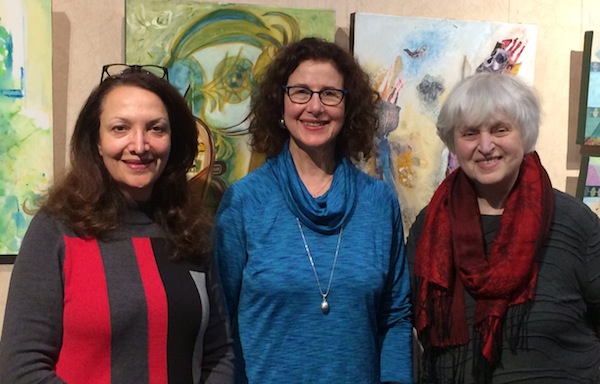
Left to right, Three Echoes artists Sorour Abdollahi, Devora and Sidi Schaffer. Their exhibit, Hope and Transformation, is at Amelia Douglas Gallery until Feb. 29. (photo from Three Echoes)

Connected by similar values and inspirations in their creative work and in their lives more generally, Sidi Schaffer, Sorour Abdollahi and Devora are longtime friends. Their fifth exhibit together – as the informal collective Three Echoes – is called Hope and Transformation. It is at the Amelia Douglas Gallery at Douglas College in New Westminster until Feb. 29.

“Art transcends the limitations of time, space, language and cultural background,” said Devora in her written remarks, prepared for the exhibit’s opening Jan. 16, which was postponed because of the snow, and given Jan. 21. “The echoes from within spill over onto the canvases,” she said. “Together, our works create a dialogue of hope and transformation.”

Devora told the Independent that the name for the exhibit came “through talk and discussion between the three of us in reflecting on our individual and collective journeys and where we found ourselves, and the world, at that moment.”

“Today, there is a lot of anxiety about globalization and migration,” Abdollahi said. “As an immigrant artist, my art deals with connections between cultures and hybridity. Therefore, my works might help serve as a bridge and tell the immigrant story.”

Abdollahi was born and raised in Iran, where she graduated with a diploma in Persian literature from Yazd University and a bachelor’s in fine arts from the University of Art in Tehran. In Vancouver, where she settled 20 years ago, she studied at Emily Carr University of Art and Design. She writes in the exhibit catalogue that her Iranian heritage and Canadian experience “have had a tremendous influence on my works’ subject matter, dealing with the mediation between the modern and the ancient, the old and the new, the West and the East.”

The artist uses collage, a multi-layering technique and mixed media. “My works show the relationship between culture and environment and migration,” Abdollahi explained to the Independent. “Our environments are changing both internally in our mind and externally, and my works illustrate this change. My works create negotiation between different cultures and societies.”

Schaffer also started her fine arts education in her birth country, Romania. In Israel, she received a degree in art education and taught in the school system for more than a decade. When she came to Canada in 1975, she studied at the University of Alberta, where she majored in printmaking and painting. Initially focused on abstraction, her work has become “more integrated, combining abstract and figurative forms,” she writes in the catalogue. “Now I am continually exploring new possibilities with mixed media, a combination of print, drawing, painting and collage. Important for me is the visual poetry, the relationship of form, space, colour and light. Some of my works in this show are a combination of collages of different things from nature and painting; others are collages of my own imagination.”

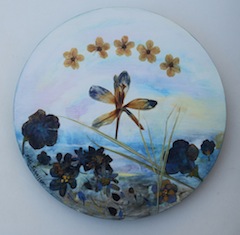
“I am an optimist and also I am amazed about the continuous transformation in nature around me,” Schaffer told the Independent. “I combined my love and respect for the beauty of flowers and leaves, surrounding them with hope, and new imaginary landscapes. In a way, I give the dry flowers a new life, bringing them out from the pages of old books.”

As for Devora, she told the JI, “What gives me hope is my relationship with the Divine – that there is no separation, that we are all connected and made of stardust, that we are all on an unfolding journey of being together. I attempt to express that emotion onto the canvas.”

For Devora, art has the power to transform the viewer when the viewer can hear her work speak to them from their own experience. “At the opening,” she said, “the Douglas College students from two classes – one poetry class and one art history class – gathered around and engaged with all three of our works, asking questions, wanting to understand the process, the intention and how they could relate from their own lives to what they were seeing.”

Normally, only the art history students attend each artist talk. However, after Devora shared that the Zack Gallery at the Jewish Community Centre of Greater Vancouver hosts Pandora’s Collective poetry nights, where members of the collective create works inspired by the art, the Amelia Douglas Gallery invited the poetry class, as well.

Growing up in Berkeley, Calif., where she earned a master’s at California School of Professional Psychology, Deborah Ross does all of her creative work under her maternal grandmother’s name, Devora, in honour of her grandmother, who was murdered in the Holocaust. “Her spirit gives me the strength and confidence to create,” said the artist in her remarks for the exhibit.

Devora, who now lives both in Vancouver and on Salt Spring Island, came to Canada in 1993. She has studied art at Emily Carr, Langara College and elsewhere. “My artwork reflects the love I have for the creative process and exploration,” she writes in the exhibit catalogue. “I am fascinated by the inner world of emotion, dream, metaphor and story and strive to illuminate both the universal and personal by bringing them onto the canvas.

“My latest works explore the interplay and continuum between abstract and representational images of landscapes and figure, and a fascination with the surreal, in mixed media combining acrylic and collage.”

In her remarks for the exhibit opening, Devora explained, “My art reflects a search for understanding and clarity about my personal and ancestral history and the world. My experiences inform my work as I go inside and bring them onto the canvas. I endeavour to transform darkness into the light of hope. I am interested in what is hidden and how it informs what is revealed.”

She noted that she, Abdollahi and Schaffer “turned to esthetics as a way to focus and navigate our journey.” And she expanded on this concept. “Through the lens of esthetics combined with the common immigrant experience and effects of war and displacement,” she said, “the three of us have managed to bridge all other divides: language, ethnicity, culture, religion and country of origin. Our childhood environments and experiences could not have been more different on the surface and yet the foundations of connection and similarity were already being laid down, established through the development of the lens of sensitivity to beauty in the world and compassion for the human experience.

“Our ideal, of different cultures living in harmony, is reflected in our own personal experiences, in which intimate exposure to the world of ‘the other,’ unearths commonalities and gives rise to a greater depth of understanding about our own lives.”

She concluded, “In closing, I would like to quote Sorour, as Sidi and I feel that her words speak for all three of us: ‘In my friendship and collaboration with Sidi and Deborah, I see an opportunity to explore and express my own culture, but also to relate these themes to other cultural experiences – recognizing the echoes of each other in our works and our lives. My works side by side those of my friends’ works create a dialogue and negotiation which hopefully provides the viewer with a different vision of the world – one which is borderless, free and peaceful.’”

Format ImagePosted on January 31, 2020January 28, 2020Author Cynthia RamsayCategories Visual ArtsTags art, Devora, immigration, Sidi Schaffer, social commentary, Sorour Abdollahi, Three Echoes
Mixing abstract, nature

Mixing abstract, nature

Sidi Schaffer’s current exhibit, In Partnership with Nature, is at the Zack Gallery until March 3. (photo by Olga Livshin)

Sidi Schaffer’s art has gone through several different incarnations. At the beginning of her career, in postwar Romania, she adhered to a realistic approach. “For several years, the central images of my work were people,” she said in an interview with the Independent.

After her family immigrated to Israel, she continued her studies and received her art education degree. “At that time, I fell in love with the Impressionists, especially Cezanne, and started painting more landscape and still life,” she said. “I tried to catch the essence, the light and beauty of my surroundings. Even my palette changed.”

The next stage in her artistic development came after she immigrated to Canada in 1975. It was as if every country triggered a twist in her artistic road. “I needed to establish new roots and master new challenges,” she recalled. “In 1980, I went back to school to study printmaking at the University of Alberta. They told me: ‘Paint abstract, throw away realism.’ I followed my teachers’ good advice … and totally immersed myself in abstraction. I simplified my work; my focus became my inner world, my feelings and my emotions. The art-making process became a sacred ritual.”

But pure abstraction didn’t hold her interest for long. Her abstract compositions acquired random elements of realism. “I tried to make my works integrated, bring together abstract and figurative,” she said. “I tried to express the concept of unity between the internal and the external, between the spiritual and the physical.”

Her current show, In Partnership with Nature, which opened at the Zack Gallery on Jan. 31, combines her inclination towards abstraction, her love of nature and her ability to bridge the realistic and the spiritual in her paintings. It also highlights her innate optimism. The show is airy, uplifting and charming, the works prompting a quiet gladness in viewers.

It’s about flowers, but in an oblique, complex way. “I love flowers,” said Schaffer. “Nature is my biggest inspiration. When it surrounds me, I feel alive, free, and in awe of all its beauty and miracles.”

For years, she has been drying flowers between pages of books. “I have piles of those books in my house,” she said. “I always wanted to preserve the flowers’ beauty, even after the original bloom. I have been doing it since I was a young girl…. In autumn, I also dry leaves with their amazing colours and abstract designs. Nothing is more beautiful. Sometimes, I pick a flower just to remind me of a place and time.”

A few years ago, Schaffer decided to try and incorporate those dried flowers and leaves into her art. “I wanted to make them the subject matter,” she said. “Every picture in this show, except one, has one or more dry flowers or leaves in them.”

photo - “Grace into Focus 1” by Sidi Schaffer is part 1 of a triptych
“Grace into Focus 1” by Sidi Schaffer is part 1 of a triptych. (photo from Sidi Schaffer)

All of the images in the exhibit are mixed media. She experimented with acrylic and oil paint, with old prints and new drawings, with collage. The dried leaves or flowers form the heart of the compositions.

“I wanted to give them importance,” she explained. “Some of the landscapes in this show look fantastic, because dry leaves play the part of trees. Some abstract collages were like memory boxes for me, with layers. There are dry petals there, and lettering and musical notes.”

Schaffer’s collaboration with the elements of nature tends towards whimsical. Flower petals float on the visual breeze. Mundane dandelions turn into exotic palm trees. Waves of musical notation sparkle with rainbow colours.

“I played with the images,” said the artist. “I didn’t take myself seriously when I prepared this show.”

Schaffer said every image in the exhibit started with an idea. “But I never knew how it would come out,” she said. “It’s a process, a discussion between me and the flowers. Sometimes, it is a struggle. I look at the flowers and they supply more ideas. This one flower I had, I put it on the painting and the petals came off. I left them off, incorporated into the image.… From a flash of excitement to the end result, each image reflects my emotional journey. By the time I finish a painting, it seldom resembles my original starting point. What is important for me is the visual poetry, the relationship of form, space, colour and light.”

Schaffer’s exploration into creative possibilities is nourished by her rich inner life. Before her retirement, she taught art and painted commissions, but never, for example, something made specifically to harmonize with anyone’s living room décor.

“I paint what is inside of me,” she said. “I don’t paint for anyone’s sofa. I enjoy the hours I spend in front of my canvas. It is an intense emotional outlet and, when I’m finished, I feel happy, but, at the same time, drained and vulnerable.”

In Partnership with Nature is at the Zack until March 3.

Olga Livshin is a Vancouver freelance writer. She can be reached at [email protected].

Format ImagePosted on February 15, 2019February 13, 2019Author Olga LivshinCategories Visual ArtsTags art, environment, multimedia, nature, Sidi Schaffer, Zack Gallery
Bridges built with art

Bridges built with art

From left to right, Echoes artists Sidi Schaffer, Sorour Abdollahi and Devora. (photo by Olga Livshin)

The term “artistic brotherhood” was coined in the 19th century. Among the most famous of such brotherhoods were the Pre-Raphaelites in England and the Canadian Group of Seven, and every brotherhood was comprised of artists united by similar artistic principles. Recently, such an artistic union appeared in Vancouver, but it is a sisterhood, compromising Sidi Schaffer, Sorour Abdollahi and Devora. They call themselves Echoes.

The trio’s first combined show was at the Sidney and Gertrude Zack Gallery in 2008. It was a success, and they have repeated the experience twice over the years. Earlier this month, they opened their fourth show together. Called Three Echoes: Harmony through Art, it opened July 8 at Britannia Art Gallery.

Even though their initial collaboration started by chance, the artists have stayed together as a cohesive group because of their common outlook on life and art. Despite differences in their ethnic and cultural origins, their humanity and the ties of friendship transcend age and space, traditions and societies.

Schaffer was born in Romania, a child survivor of the Holocaust. She received her first artistic education in Israel, but Canada allowed her to thrive as an artist. At various stages of her creative development, she has tried different expressive formats, and now she blends them all. Her paintings have figures in them but they tend towards the abstract, hinting at multiple meanings and deep, complex emotions.

Inspired by nature and by her beloved Israel, Schaffer uses mixed media – painting, collage, glue, melted wax and a number of others – in her imagery. Her art minimizes the gap between abstract and figurative, between dreams and life. Playful and nostalgic, her paintings infuse the show with the elemental simplicity of her early childhood.

“We keep the name Echoes,” she said, “because our art is echoing our lives and our pasts, our different backgrounds, and our common present. We regard art in a similar way, although we’re inspired by different matters. Devora draws her inspiration from inside. I find inspiration in nature, while Sorour seeks hers in the rich cultural heritage of Persia.”

Like the other two Echoes, Abdollahi is an immigrant. She came to Canada from Iran in 2000. But, unlike the other two, she is not Jewish. Ancient Persian culture permeates her paintings with generational memories. “My paintings are a bridge between the old Persia and the young Canada, a negotiation between history and modernity,” she said.

Abdollahi’s paintings are as much a declaration of her inner manifesto as they are a mystery for viewers to explore, often on the visceral level. “Many old buildings in Iran have mysteries in them. A half-hidden corner. An invisible door. Architecture has layers, some showing, others not, through the centuries of history. I like to reflect that in my paintings. I say with my art: look, there is something here, but I don’t say everything. I let people guess and imagine.”

She explained that both her Iranian roots and her Canadian experience have influenced her works enormously, creating a conversation between the old and the new, juxtaposing West and East. “Ancient ruins play a pivotal role in my paintings,” she said. “They enable me to express the conflict between different cultures and societies…. My paintings capture the process of change and its effects through the use of layers and textures.”

Although her works’ essence leans towards the abstract, playing with bright colors and enigmatic shapes, there is always a core of reality in every painting, that hidden door through which we are invited to glimpse the artist’s private landscape.

“Our art connects us,” said Abdollahi of Echoes. “We complete each other as artists. Each one of us, like everyone else, in every city and country, is reaching for peace, for the world without borders between people and nations. We are trying to achieve such a world through our art.”

Devora is the one who brought Echoes together.

She met Schaffer during the Gesher Project, which the Vancouver Holocaust Education Centre website describes as a “project undertaken by Vancouver Holocaust survivors, child survivors and adult children of survivors. They met over a six-month period in 1998 to examine the impact of the Holocaust on their lives. They explored these experiences through painting, writing and discussion assisted by facilitators…. The project culminated with the mounting of the Gesher [Bridge] exhibit.”

Devora attended an art class with Abdollahi. Later, she introduced her two new friends to each other, and Echoes was born as an informal collective.

A transplanted American, Devora is a firm believer in dialogue between cultures. Her paintings are fully abstract, with colors flowing around each other, energy spiking, and whimsical forms unfolding into new revelations.

“My art reflects my personal search for clarity,” she said. “I am fascinated by dreams and fantasy and the interplay with the concrete and tangible. I am interested in what is hidden, how it informs what is revealed, and the tension and symbiotic relationship between the two.”

In her introductory remarks during the show’s opening, Devora talked about the closeness of the three Echoes members, despite their seemingly contrasting cultural foundations.

“When we go to an art show of some other artist, we always end up in front of the same painting, and our reactions are similar,” she said. “We have the same artistic taste. Our mutual experience as immigrants in Canada forms one of the many bridges that connect us. Our artistic ideas enrich each other, allow us a deeper understanding and lead to transformative commonalities…. Our esthetic communication is a model of a peaceful world, a microcosm of a greater ideal of partnership, a proof that it can be done.”

Three Echoes: Harmony through Art is on display until July 31.

Olga Livshin is a Vancouver freelance writer. She can be reached at [email protected].

Format ImagePosted on July 17, 2015July 15, 2015Author Olga LivshinCategories Visual ArtsTags Britannia Art Gallery, Devora, Echoes, Sidi Schaffer, Sorour Abdollahi
Proudly powered by WordPress