Skip to content
  • Home
  • Subscribe / donate
  • Events calendar
  • News
    • Local
    • National
    • Israel
    • World
    • עניין בחדשות
      A roundup of news in Canada and further afield, in Hebrew.
  • Opinion
    • From the JI
    • Op-Ed
  • Arts & Culture
    • Performing Arts
    • Music
    • Books
    • Visual Arts
    • TV & Film
  • Life
    • Celebrating the Holidays
    • Travel
    • The Daily Snooze
      Cartoons by Jacob Samuel
    • Mystery Photo
      Help the JI and JMABC fill in the gaps in our archives.
  • Community Links
    • Organizations, Etc.
    • Other News Sources & Blogs
    • Business Directory
  • FAQ
  • JI Chai Celebration
  • JI@88! video

Recent Posts

  • Sharing her testimony
  • Fall fight takes leap forward
  • The balancing of rights
  • Multiple Tony n’ Tina roles
  • Stories of trauma, resilience
  • Celebrate our culture
  • A responsibility to help
  • What wellness means at JCC
  • Together in mourning
  • Downhill after Trump?
  • Birth control even easier now
  • Eco-Sisters mentorship
  • Unexpected discoveries
  • Study’s results hopeful
  • Bad behaviour affects us all
  • Thankful for the police
  • UBC needs a wake-up call
  • Recalling a shining star
  • Sleep well …
  • BGU fosters startup culture
  • Photography and glass
  • Is it the end of an era?
  • Taking life a step at a time
  • Nakba exhibit biased
  • Film festival starts next week
  • Musical with heart and soul
  • Rabbi marks 13 years
  • Keeper of VTT’s history
  • Gala fêtes Infeld’s 20th
  • Building JWest together
  • Challah Mom comes to Vancouver
  • What to do about media bias
  • Education offers hope
  • Remembrance – a moral act
  • What makes us human
  • המלחמות של נתניהו וטראמפ

Archives

Follow @JewishIndie
image - The CJN - Visit Us Banner - 300x600 - 101625

Tag: Holocaust

We are in crisis, says Lyons

The federal government’s designated point person on antisemitism raised alarm bells for Canadians following attacks on Jews last month in Amsterdam. 

Deborah Lyons, Canada’s special envoy on preserving Holocaust remembrance and combatting antisemitism, spoke to the Vancouver Jewish community Nov. 12, in a special online conversation with Ezra Shanken, chief executive officer of the Jewish Federation of Greater Vancouver.

Lana Marks Pulver, chair of the Jewish Federation, explained that the briefing was organized after the attacks on Israeli football fans in Amsterdam Nov. 7.

The antisemitism problem is both local and global, said Lyons, but Canada has a particular problem.

“We were one of the first countries to demonstrate on the streets,” she said. “On our university campuses, unfortunately, certainly online and in some of our other institutions, [there has been] a level of antisemitism that we had never, ever expected to see in Canada.”

People were phoning her from abroad asking what’s happening to Canada. This is a country with a strong democracy and rule of law, she said, and yet 70% of all religiously motivated hate crimes target the Jewish community, which makes up 1% of the population.

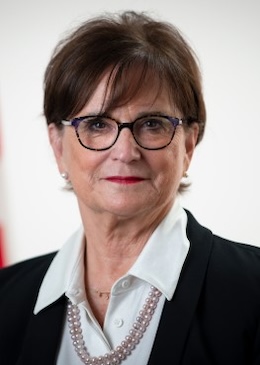
photo - Deborah Lyons, Canada’s special envoy on preserving Holocaust remembrance and combatting antisemitism
Deborah Lyons, Canada’s special envoy on preserving Holocaust remembrance and combatting antisemitism (photo from international.gc.ca)

“We need leaders stepping up and a full court press to address the challenges in front of us,” she said. “This is not just about our Jewish community. This is about what kind of country we want as Canadians. I consider this a crisis that we are in that really needs a crisis response.”

Oct. 7, 2023, “shook the world,” Lyons said. “Frankly, what happened in Amsterdam, on another level, has also shaken us. I think we were hoping that, in this past year, since October 2023, in our own countries, we were putting in place some remedies, some actions to address the antisemitism that we were seeing rising in our country and in so many other, particularly Western, countries. But I think what happened in Amsterdam has been another shockwave that I think causes all of us to say we need to double down.”

Canadians may be complacent, Lyons suggested, because we believe in our historical, if possibly mythological, tolerance.

“We’ve got an incredible country, solid governments and good rule of law,” she said. “I have lived in countries that can’t even come close to that description. And we are on the island of North America. We’ve had a pretty good ride. I think that maybe we weren’t paying enough attention to some of the ills within our society.”

When a society or its economy is under stress, antisemitism inevitably rises, said Lyons.

“We already had, before October 2023, an increase in antisemitism in Canada,” she said. “Where we are now, after October 2023, is a level of antisemitism that is completely unprecedented in our country. What do we do with that? Well, clearly, we fight it. But we also have to take this as an opportunity and say, alright, some of that was lying beneath the surface. It’s now very much exposed. We have the opportunity. We need to turn this into a catharsis. We need to take this moment when all of this is exposed, when no one can deny that antisemitism exists, when no one can deny that it requires intensive effort to combat it and that it requires a systemic approach.”

She congratulated British Columbia for committing to mandatory Holocaust education, but that is a step in the right direction, not an end, she said. 

“We need to do work on not just Holocaust remembrance but on antisemitism itself and making sure that teachers and school boards and faculty actually have the right perspective as they are trying to help the children understand what the Holocaust means, not just historically but in terms of today,” she said.

Those combatting antisemitism need to be doing more work with law enforcement, she said, noting that Vancouver Police and RCMP in British Columbia recently underwent training with Friends of the Simon Wiesenthal Centre. Prosecutors also need to be empowered, she added.

“We need to do work on social media and we’ve got a campaign underway there,” said Lyons, noting that the federal government is working on an online harms bill, which could strengthen data collection, among other steps.

Noting positive signs, Lyons cited information that, “by far and away,” a majority of Canadians support the Jewish community and support Israel’s right to exist. 

Exceptions emerge among younger Canadians, she said, “our 18-to-24-year-olds, kids who might not have adequate knowledge of the Holocaust, have a tendency to be disposed toward antisemitism.”

Lyons recently met with the president of the University of British Columbia and the chancellor of Simon Fraser University.

“I think university presidents and university administrations struggled after Oct. 7 in a way that many of us struggled,” she said. “It was almost a shock to see the reaction on a number of the campuses. I think we saw that with other leaders in other segments of society, that people almost needed time to get their bearings, to try to figure out what was the right response. We all want freedom of expression, we all want freedom of speech, we all want our young people to be … debating new ideas and pushing the envelope. But it has to be done in a respectful environment. It has to be done with a certain dignity and sense of acknowledgment of the other’s point of view.”

Among the shortcomings that emerged in the past year, according to Lyons, was an absence of recourse to deal with concerns from Jewish students.

“What we found was there was not the recourse in place, the systems in place, for the university administrations to actually follow up on the concerns of our students in what I would consider to be a substantive way,” she said. “I think there are better systems being put in place now to make sure that every student who has a concern or feels an unease can make their feelings known and can have that responded to substantively and with respect. I think also the presidents in many cases were challenged with their own codes of conduct and how they were to be implemented. I think that, over the last several months, particularly over the summer when they had a bit of a pause, there’s been this understanding that these codes of conduct really do need to be administered.”

Lyons is one of about 35 national envoys addressing antisemitism worldwide.

“We work together to share experiences in our countries and also to identify some remedies,” she said. “We’ve just recently published, this past summer, the global guidelines for fighting antisemitism.”

Lyons’ office and the broader federal government recently released the Canadian Handbook on the IHRA Working Definition of Antisemitism, which she said is a vital tool. It is based on an earlier European Union document and the International Holocaust Remembrance Alliance (IHRA) Working Definition of Antisemitism. She urges Jewish people, but especially potential allies, to use it.

“Learn about antisemitism. Try to understand it. Try to understand what’s happening in our country,” she said. 

A visit to the Vancouver Holocaust Education Centre is a place to start for people who seek to be allies to Jews, she said. Then, she urged people to step outside their bubbles.  

“Get to know your Jewish neighbours and stand up if you see something happening that you think isn’t right,” said Lyons. 

Shanken noted that Lyons is not Jewish and asked how she ended up in this role. 

“I grew up in rural, northern New Brunswick and community mattered,” said Lyons. “And people mattered. Your neighbours mattered. Looking after one another mattered.”

She also remembered as a child hearing about the Holocaust. 

“I can remember how it marked me, how I could not believe that the humanity that I belonged to had created, planned and carried out such horrors over such a long period of time,” she said. “So, years later when, as a diplomat, I was leaving one post and getting ready to go to another and I got the call that I could go to Israel [as ambassador, 2016-2020], I jumped at the chance, because I thought, what an incredible opportunity to really engage in a country that I’ve always been fascinated by and with a people that I have huge admiration for. My time in Israel, I think, even deepened my experience as, I suppose, an ally.” 

Posted on December 13, 2024December 11, 2024Author Pat JohnsonCategories LocalTags antisemitism, Deborah Lyons, education, Holocaust, IHRA, Jewish Federation of Greater Vancouver

A multidimensional memoir

With her latest book, Olga Campbell sets out to leave a legacy, one that encompasses the trauma of the past but also the richness of the present and hope for the future.

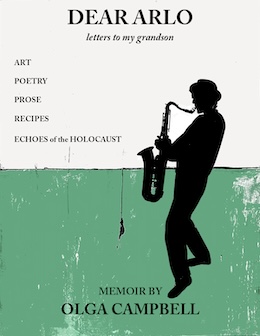
image - Dear Arlo book coverDear Arlo: Letters to My Grandson is Campbell’s third book. Her first, Graffiti Alphabet, comprised photographs of graffiti she found around the Greater Vancouver area. Her second, A Whisper Across Time, was her family’s Holocaust story.

The first essay in Dear Arlo is about Campbell’s parents, Tania and Klimek. They lived in Warsaw. “They were surrounded by family and friends and had much to look forward to,” writes Campbell. “Then, in 1939, everything changed. The Nazis invaded Poland from the west, the Soviets from the east. Life as they had known it stopped.”

Klimek would be arrested by the Soviets first, a pregnant Tania two weeks later. They were sent to different Russian prison camps. They survived, but the baby didn’t, nor did any of Tania’s family, most notably, her twin sister and parents, Campbell’s maternal grandparents. 

“Several months after their release from the prison camps, my parents found themselves in Baghdad, Iraq,” writes Campbell. “By that time, my mother was pregnant with me and could go no further. I was born in Baghdad on February 14, 1943.”

Eventually, after living in both Palestine and the United Kingdom, the family came to Canada. It wasn’t an easy life, learning a new language and new culture, or a long one for Campbell’s mother, who died at 52 of cancer.

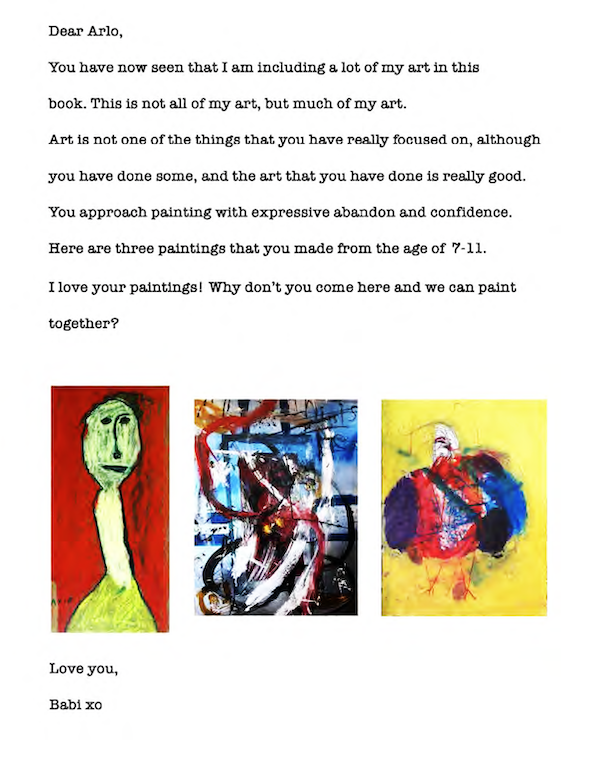
image - A page from Olga Campbell’s memoir Dear Arlo: Letters to My Grandson, which features letters, art, poems, essays and recipes
A page from Olga Campbell’s memoir Dear Arlo: Letters to My Grandson, which features letters, art, poems, essays and recipes.

Campbell shares her stories and wisdom with readers as a grandmother speaking to her only grandson, Arlo, with whom she obviously has a special relationship.

“I am writing this book as a legacy for you,” she writes in the first letter to Arlo. “A multidimensional memoir. A compilation of my writing, my art and a few family recipes. These writings and art are my responses to events in my life. The losses, trauma, grief … and the joy, happiness and love. It’s about the angst and awe of life, which is ever-changing, full of challenges but also magical.”

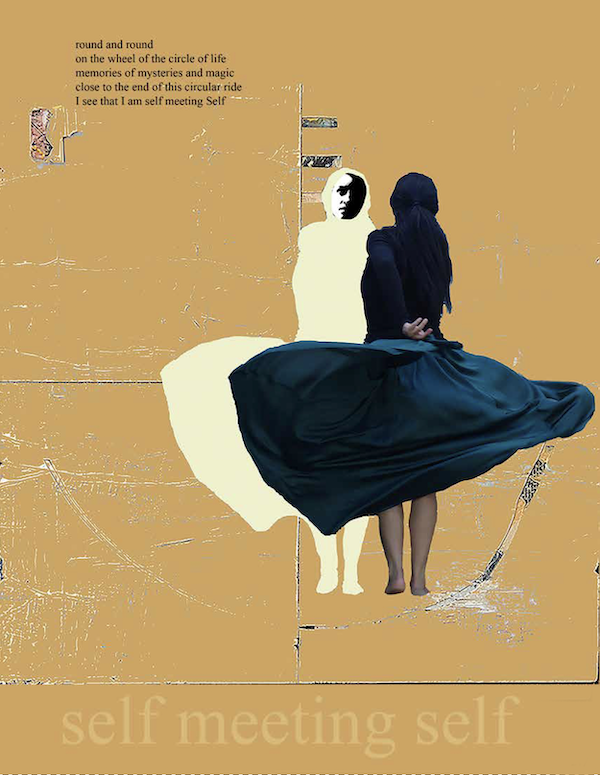
Brief letters to Arlo are spread throughout the memoir, which is gloriously full of Campbell’s artwork – painting, mixed media, sculpture and more, all of it in colour. A graduate of Emily Carr University of Art + Design, she has had many exhibitions since deciding to become an artist in her 40s, having started her professional life as a social worker. She has participated in the Eastside Culture Crawl since its inception almost 30 years ago, and has been a consistent part of the West of Main Art Walk (Artists in Our Midst) as well.

In addition to the art and letters in Dear Arlo, Campbell includes some of her poetry and essays. She shares how she came to write her second book, her experiences dealing with intergenerational trauma, her path to spirituality, how she found courage, and more.

She writes about losing her husband, in 1994. “Along with him, my plans and dreams for the future also died,” she writes. He died of a stroke at 49 years old – the pair had been together for 32 years, married for 26 of those years.

She shares the story of how she came to have her current dog, Nisha. “I was very sick in September 2019 with what my doctor now believes was COVID, before anyone had heard of COVID,” writes Campbell. Struggling many months with breathing difficulties, she turned, in desperation, to Ganesha, a Hindu god. “My wish to him was to remove all obstacles to my physical, emotional and mental well-being.”

A couple of days later, there came a knock at her door. Two work acquaintances were there, asking if she could adopt a rescue dog. Campbell did, and Nisha “was extremely timid, jumping, trembling and shaking at every sound, every movement. I held her all day every day for the first week to calm her down and get her used to me. She is still a little timid but every day she becomes more brave. She is playful, full of fun and great company,” writes Campbell. “She did remove all obstacles to my physical, emotional and mental health.”

Another uplifting essay is the one on how Campbell has “never come of age.” When she paints and creates with friends, she feels like she is 5 years old, she says. When with her teenage grandson, she also feels like a teen, and sees “the wonder of the world.”

image - A page from Olga Campbell’s memoir Dear Arlo: Letters to My Grandson
A page from Olga Campbell’s memoir Dear Arlo: Letters to My Grandson.

Campbell has role models, older friends and neighbours who still have bucket lists and exercise regimes. Having traveled much herself  –  Myanmar, Morocco, Vietnam, India, Cambodia, Laos, Turkey and other places – she now wants “to do inward travel. To get to know myself and others around me. To find the mystery inside. To nourish relationships with the people I know and with new people that I meet.” She wants to have different adventures: “Creative adventures, people adventures, spiritual adventures.”

There are more than a dozen recipes in Dear Arlo – from an apple torte that a 5-year-old Arlo bet Campbell she wouldn’t make (which she did but he never ate); to cabbage pie and Russian salad, recalling when Arlo was teaching himself Russian; to broccoli and cheese soup, vegetarian meatloaf and ginger apple tea, in response to Arlo’s request for some recipes.

Campbell is grateful for many things.

“I have had a good marriage and a wonderful family – my lovely daughter, her loving partner and my wonderful grandson Arlo,” she writes.

“I have dealt with losses and tragedies in my life, including the premature death of my husband, but I survived, and now I am happy. Those intense feelings of sadness that I grew up with no longer plague me. I can be triggered, but on the whole, I am fine.”

The memoir ends as it begins, with a letter to Arlo, who, says Campbell, has been “the best grandson I could ever have imagined.”

She writes, “The past provides us with valuable lessons that we can use to inform our present and future. A sense of connection and continuity with the people who came before us. This adds a depth and richness to our lives. I look forward to having many more adventures with you.”

We get to see Arlo grow up, in photos throughout the book. And the photo placed squarely in the centre of this last letter is perfect: Arlo in the driver’s seat of his new red convertible, toque on, giving a thumbs up, smiling, with Campbell beside him, also bundled up for a cold drive, but also with a big smile.

To purchase Dear Arlo or Campbell’s previous books, visit olgacampbell.com. 

Campbell’s artwork is on display at the Zack Gallery Jan. 8-27, with an artist reception Jan. 9, 6-8 p.m. Campbell speaks as part of the JCC Jewish Book Festival on Jan. 23, 7 p.m., in the gallery.

Posted on December 13, 2024December 15, 2024Author Cynthia RamsayCategories BooksTags art, Dear Arlo, essays, history, Holocaust, letters, memoir, Olga Campbell, painting, poetry, sculpture, second generation
Children in the Shoah

Children in the Shoah

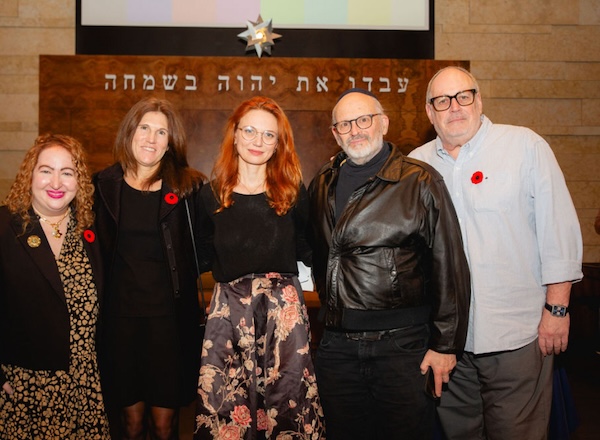
Left to right: Abby Wener Herlin, Lise Kirchner, Dr. Nataliia Ivchyk, Prof. Richard Menkis and Al Szajman at the community commemoration of Kristallnacht Nov. 7. (photo by Rhonda Dent)

The experiences of three Vancouver women who survived the Holocaust as children in Ukraine were highlighted at the community commemoration of Kristallnacht Nov. 7.

The event, which took place at and was co-presented by Congregation Beth Israel, marked both the 86th anniversary of the Kristallnacht pogrom and the 30th anniversary of the founding of the Vancouver Holocaust Education Centre (VHEC), which presents the annual commemoration. The Jewish Federation of Greater Vancouver and the Robert and Marilyn Krell Endowment at the VHEC were co-presenters.

The keynote address was by Dr. Nataliia Ivchyk, associate professor in the department of political science at Rivne State University for the Humanities, in Ukraine. Ivchyk is a visiting scholar at the University of British Columbia and has been studying the narratives of child survivors in the province.

About 1.5 million Ukrainian Jews were murdered in the Holocaust, while another million managed to flee before or near the beginning of the German-Soviet war, Ivchyk said.

“Genocide is ruthless, regardless of age or gender, and children are a special group of its victims,” she said. “Since children cannot fight back against their killers, they become a helpless and vulnerable group. The Holocaust claimed six million Jewish lives, 1.5 million of which were tragically children. Age became a vital marker of life or quick death for children during World War II and the Holocaust. Children were not seen as a separate group of victims, they were dependent on their parents, fathers, mothers and relatives, and so suffered and died with them too.”

Ivchyk quoted Malka Pischanitskaya, who was 10 years old when the Germans invaded her town of Romanov (now Romaniv), in Ukraine.

“I was brought into this world not by chance but I believe by destiny,” Pischanitskaya has said. “My destiny was to be born, to endure the sufferings that were yet to come.”

“During the genocide,” Ivchyk said, “Malka had no choice but to become an adult in order to survive.”

Another local survivor whose story Ivchyk told is Ilana, who asked that her last name not be shared. Ilana was born in 1938, just two years before Germany invaded the Soviet Union. Her father managed to evacuate the family, including Ilana, her sister, her mother and her maternal grandparents, to a Central Asian republic of the Soviet Union.

“Unfortunately, my father’s parents stayed in Kyiv and perished in Babyn Yar,” Ivchyk quoted Ilana, referring to the mass killing site that has become synonymous with the genocide in Ukraine. On Sept. 29 and 30, 1941, more than 33,000 Ukrainian Jews were killed, part of the genocide in eastern Europe known as the “Holocaust by bullets.”

Ilana has only fragmentary memories of the evacuation years. However, she remembered her sister, who cared for her, and her mother, who tirelessly worked to provide food, said Ivchyk. 

A third local woman who survived is Esfira Golgheri.

“Esfira does not recall the journey from one ghetto to another, but she remembers her mother feeding her, which was crucial for her survival as an infant,” Ivchyk said.

“There is something that the Holocaust could not take away: memory, personal memories and stories of relatives and friends and our collective memory [that] remind us by honouring the memory of those who are no longer with us. Those who lost their lives and those who fought to defend us, we keep them alive in our hearts,” Ivchyk said. “The stories of these women are stories of childhood, family and survival in the face of genocide and displacement. Each narrative is unique and personal, yet the memories of Esfira, Malka and Ilana … are like pieces of a puzzle that help reconstruct this tragedy. In addition to piecing together the events of the war in Ukraine during the Holocaust, we have the chance to understand the tragedy through the eyes of these adult child survivors. We can touch their memories and experience their truth for ourselves.”

At the commemoration, Taleeb Noormohamed, member of Parliament for Vancouver Granville, brought greetings from the federal government.

“The fight against antisemitism is not one for Jews alone,” said Noormohamed. “Quite the opposite. It is a fight that all of us have to take on together.”

Nina Krieger, until recently the executive director of the VHEC and elected as member of the BC Legislature on Oct. 19, brought greetings from the provincial government. 

“I know the premier of British Columbia and my colleagues in government join me in gratitude for the Vancouver Holocaust Education Centre and Congregation Beth Israel for presenting this evening’s program to mark the 86th anniversary of Kristallnacht,” Krieger said.

Vancouver Mayor Ken Sim, accompanied by Councilor Lenny Zhou, presented a proclamation from the city marking Kristallnacht Commemoration Day.

Sim spoke of how his home had been recently vandalized and how many people at that evening’s event had expressed sympathy. 

“The Jewish community sees this all the time and I should really be asking you how you are doing,” he said. “I obviously loved the community before, but you’ve captured my heart even more.”

He said his presence at Jewish community events is not about politics.

“If everyone was against us, we would still have your back. We are still here because we stand for what’s right,” Sim said.

Lise Kirchner, director of education at the Vancouver Holocaust Education Center, spoke on behalf of acting executive director Hannah Marazzi, who was out of the province, read greetings from Prime Minister Justin Trudeau and acknowledged elected officials from all levels of government, including incoming and outgoing members of the BC Legislature.

“As we come together this evening to commemorate the 86th anniversary of the Kristallnacht pogrom, we contemplate the dangers not only of state-instituted persecution and violence, but maybe more importantly the dangers of indifference,” said Kirchner. “We are reminded of the consequences of antisemitism which is not publicly condemned, especially at a time when we have seen the proliferation of this most pervasive and pernicious form of hatred around the world, across the country and in our own backyards.”

Prof. Richard Menkis, associate professor of Jewish history at the University of British Columbia, contextualized Kristallnacht as a turning point between the legislated antisemitism of the Nazi regime, notably the Nuremberg Laws of 1935, and the murderous violence of the Holocaust.

“The persecutions during and immediately after Kristallnacht resulted in the deaths of at least 90 Jews, the destruction of hundreds of synagogues, the vandalization of thousands of Jewish businesses and the imprisonment of over 30,000 Jewish men in concentration camps and elsewhere,” said Menkis.

Al Szajman, president of the Vancouver Holocaust Centre Society board, emceed the evening. Abby Wener Herlin, associate director of programs and community relations at the VHEC and granddaughter of survivors, introduced Ivchyk. Rabbi Jonathan Infeld thanked Ivchyk and reflected on her remarks. Cantor Yaacov Orzech chanted El Moleh Rachamim. Holocaust survivors lit candles at the beginning of the commemorative event.

Ivchyk spoke movingly of being welcomed into the community during her time in Vancouver.

“Coming from a wartorn country myself, you accepted me, understood me, opened the doors of your community and your homes, creating an incredibly warm and family-like environment that gave me a home away from home,” she said. “You have entrusted me with your history and the history of your families and your childhood experiences that you have kept in silence for many years. Every time you shared your stories, I could feel the sadness and pain in your eyes. You still feel for those who were taken by the Holocaust.” 

Format ImagePosted on November 29, 2024November 28, 2024Author Pat JohnsonCategories LocalTags Beth Israel, commemoration, history, Holocaust, Kristallnacht, memorial, Nataliia Ivchyk, Ukraine, Vancouver Holocaust Education Centre, VHEC
More than an edgy cabaret

More than an edgy cabaret

Left to right: Shane Baker, Sasha Lurje and Michael Wex in The Last Night at the Cabaret Yitesh (Di Letste Nakht Baym Yitesh), which closes this year’s Chutzpah! Festival Nov. 9-10. (photo by Shendl Copitman)

“The final sketch in the show, ‘The Last Jew in Poland,’ is based on a real 1930s cabaret sketch of the same name that got Ararat, the famous Yiddish cabaret, closed down,” said creator Michael Wex of The Last Night at the Cabaret Yitesh (Di Letste Nakht Baym Yitesh), which plays at the Rothstein Theatre Nov. 9-10 as part of the Chutzpah! Festival.

“The sketch, however, hasn’t survived,” he continued. “Shimon Dzigan (of Dzigan and Shumacher), who was a member of the troupe, describes the general set-up of the piece in his autobiography, but doesn’t give many details, except to say that everybody involved expected to be arrested the next day (and was surprised not to be). I’ve tried to reconstruct something that would have bothered the censors of the 1930s as much as the original.

“‘Di Endekuvne,’ one of the genuine old songs in the show, was actually banned following its first performance,” he said.

The Last Night at the Cabaret Yitesh is set in Poland in the spring of 1938. With only one performance left before the censor’s office closes the cabaret, and with their visas secured to leave the country, the performers decide to put on a show of forbidden material and greatest hits.

The idea for The Last Night at the Cabaret Yitesh came from Andreas Schmitges of Germany’s Yiddish Summer Weimar, who called Wex with a request.

“Since 2019 was the 100th anniversary of the Weimar Republic, Yiddish Summer was planning a commemorative program and Andreas wanted to know if I could put together a Yiddish-language cabaret revue that would reflect the way Yiddish culture absorbed and was influenced by the zeitgeist of the Weimar era,” said Wex.

photo - Michael Wex
Michael Wex (photo by Zoe Gemelli)

Wex, who is Canadian, is an internationally recognized expert on Yiddish. He has many nonfiction books to his name, including Born to Kvetch: Yiddish Language and Culture in All of Its Moods, on the history of Yiddish, and Rhapsody in Schmaltz: Yiddish Food and Why We Can’t Stop Eating It. He’s also a translator, novelist, playwright, columnist, public speaker and performer. His creative process involves much research. For Schmitges’ proposed project, Wex first sought out surviving Yiddish cabaret material.

“I dove into scores of books, listened to even more recordings, in search of authentic material that would still resonate with a 21st-century audience,” he said. “Much of the older material just didn’t ‘read’ anymore: there were a lot of jokes about local politics and references to long-forgotten celebrities. There was fairly strong political censorship in interwar Poland, especially in the years following the Nazi takeover of Germany, which means that much of the surviving satirical material is pretty bland. I deliberately sought out lesser-known Yiddish cabaret songs, including at least one that was never recorded.

“My next resort was to see what was going on in non-Yiddish Polish culture at the time. I went through newspapers from the period to try to figure out how much international pop culture was available in 1920s and ’30s Poland and was delighted to find that Hollywood movies that would have played in Vancouver in, say, 1934, were playing in Warsaw at pretty much the same time, and that Louis Armstrong records were on sale in Warsaw record stores. I looked at the pop music charts: the most popular song in Poland in 1928 was ‘Ain’t She Sweet’ translated into Polish. This information widened the range of material that could plausibly be presented as being performed at the time and gave me the licence I needed to adapt and translate some well-known pop songs of the era into Yiddish.”

photo - Patrick Farrell in The Last Night at the Cabaret Yitesh (Di Letste Nakht Baym Yitesh), which is at the Rothstein Theatre Nov. 9-10
Patrick Farrell in The Last Night at the Cabaret Yitesh (Di Letste Nakht Baym Yitesh), which is at the Rothstein Theatre Nov. 9-10. (photo by Shendl Copitman)

Wex wrote some songs and sketches to round out the show, then came up with the storyline that adds context: the performers whose cabaret is about to be closed, but who have ship tickets and visas to leave the country.

“Suddenly, they’re free to perform what they want to, not only what they’re allowed to,” said Wex, who also directs and acts in The Last Night at the Cabaret Yitesh.

The other people involved – Shane Baker (United States; co-director, performer), Patrick Farrell (US/Germany; original music, arrangements, piano, accordion, percussion), Regina Hopfgartner (Austria; vocals), Daniel Kahn (US/Germany; vocals) and Sasha Lurje (Latvia/Germany; vocals) – “are the people for whom the show was written,” Wex said. “It’s like an A-list of contemporary Yiddish performers and I recall telling Andreas that I wouldn’t do the show without them. It was my one diva moment – but I think it worked.”

The current incarnation of the show premièred at the Ashkenaz Festival in Toronto in 2022. It had changed so much from the 2019 Yiddish Summer Weimar production that, Wex said, “Weimar could almost be seen as a workshop.”

For Wex, giving audiences an idea of what 1938 Poland was like is important “because the whole world is looking more like 1938 Poland with every passing day.”

“Arts and culture,” he said, “including but not limited to comedy and music, is really the best way we have of trying to find a common ground from which to understand conflict, stand up to tragedy and, ultimately, seek out ways to mitigate or ameliorate the feelings and attitudes from which such conflicts and their accompanying tragedies have grown. As we see every day, shouting slogans might make us feel good and brave and involved but it does nothing to establish the common ground necessary to arrive at any kind of understanding with our opponents. Arts and culture, comedy and music – they’re all bulwarks against dehumanization.”

The Last Night at the Cabaret Yitesh is in Yiddish with English supertitles. For tickets, go to chutzpahfestival.com – where you’ll find the whole Chutzpah! lineup – or call 604-257-5145. The festival runs Nov. 1-10. 

Format ImagePosted on October 25, 2024October 24, 2024Author Cynthia RamsayCategories Performing ArtsTags Cabaret Yitesh, Chutzpah! Festival, Holocaust, Michael Wex, music, politics, Rothstein Theatre, social commentary, Yiddish
The need for transparency

The need for transparency

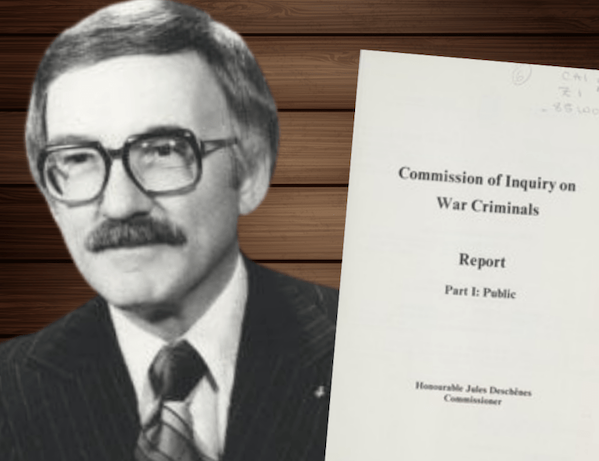
Justice Jules Deschênes, who was appointed by the Canadian government in February 1985 to oversee the Commission of Inquiry on War Criminals in Canada. (screenshot from B’nai Brith Canada)

For nearly four decades, Jewish human rights organizations have been trying to figure out how Nazi war criminals were able to gain citizenship and refuge in Canada following the Second World War. Why were high-ranking members of the Nazi Allgemeine Schutzstaffel (Nazi SS) and Waffen SS troops who fought on Germany’s behalf considered eligible for Canadian citizenship? And who were they? What were their names?

The answers to many of these questions can be found in an obscure list of reports held in government archives. Since 1985, when the Deschênes Commission was appointed to investigate allegations that Nazi war criminals were living in Canada, B’nai Brith Canada and other Jewish organizations have been urging the federal government to release all the commission’s findings. Those records include an historical account of Canada’s post-Second World War immigration policies, written by historian Alti Rodal (the Rodal Report).

“We have always felt that providing the general public with a greater understanding of Canada’s ‘Nazi past’ is a significant venture to providing closure to that time period,” explained Richard Robertson, B’nai Brith’s director of research and advocacy. “This is important because, at a time of rising antisemitism, where there are less and less survivors of the Holocaust around, it is essential that we furnish educators and advocates with as many tools as possible to enable as fulsome a teaching of the [history of the] Holocaust,” including, noted Robertson, those decisions that may have indirectly made it easier for Nazi perpetrators to escape prosecution. 

The Hunka affair

Last September, a critical portion of the documentation was made public by the federal government after it was revealed that a former member of the Waffen SS Galicia Division, Yaroslav Hunka, had received a standing ovation in Parliament. Human rights advocates wasted no time in calling for the rest of the Deschênes Commission’s documents to be released, arguing that the unredacted reports could help further Holocaust education in Canada and avoid such mistakes. More than 15 groups, representing Jewish, Muslim, Iranian and Korean ethnic communities and interests, supported B’nai Brith’s petition and, on Feb. 1, the Trudeau government released the bulk of Rodal’s account. 

That move has given human rights organizations access to a wealth of information about the politics, the thinking and the apprehensions that often steered the government’s decision not to prosecute or extradite war criminals. Compiled as an historical account of Canada’s post-Second World War policies, the 618-page redacted Rodal Report provides details that aren’t revealed in Deschênes’ deliberations.

Set against the backdrop of today’s rising antisemitism, the report illustrates that Canada’s current struggle to balance the needs of those targeted by antisemitism and discrimination with other democratic principles, like free speech and privacy, is nothing new.

screenshot - Alti Rodal, author of the Rodal Report
Alti Rodal, author of the Rodal Report. (screenshot from Ukraine Jewish Encounter)

According to Rodal, Canada’s postwar immigration policies were heavily influenced by a belief that extraditing naturalized Canadian citizens for war crimes would be, in the words of Prime Minister Pierre Elliot Trudeau, “ill-advised.” 

“Trudeau’s concern,” Rodal wrote, “was that the revocation [of citizenship of an alleged war criminal] could alarm large numbers of naturalized citizens who would be made to feel that their status in Canada could be insecure as a consequence of the politics and history of the country they left behind.”

And Pierre Trudeau was not alone in his reticence to bring Nazi war criminals to court.

“All those goals which Canadian society has set for itself can certainly not be achieved by short-circuiting the legal process in the hunt for Nazi war criminals,” the commission wrote, while examining whether a military court might be an appropriate venue for litigating charges of war crimes. 

By the time the commission concluded its research, it had effectively struck down every available legal mechanism for pursuing action against most former Nazis living in Canada. The Deschênes Commission determined that war criminals could not be prosecuted under Canada’s Criminal Code, but neither could they be tried by military tribunal. Nor could they be successfully prosecuted under the Geneva Conventions for acts of genocide or crimes against humanity. And Canada’s extradition laws would be ineffectual in many instances, including when it came to approving requests from Israel. Israel didn’t exist at the time of the Holocaust, the commission reasoned, and thus didn’t meet Canada’s requirements for requesting extradition of Second World War criminals.

New laws, similar challenges

Canada’s only remedy would be to amend its laws going forward. In 2000, nearly 14 years after the release of the Deschênes Commission’s report, the Crimes Against Humanity and War Crimes Act was given Royal Assent. Antisemitism, hate speech and hate crimes are now federal offences as well, covered under Section 319 of the Criminal Code. However, some legal experts say the process of bringing charges of antisemitism or hate crimes to court remains too onerous.

In June, the Matas Law Society and B’nai Brith hosted an educational webinar on the legal strategies available to Canadian lawyers when pursuing charges of antisemitism. Gary Grill and Leora Shemesh, two Toronto-based lawyers who have recently represented victims of alleged antisemitism in Ontario, offered different views as to why it is so hard to bring a hate crime to court.

“We have the tools,” acknowledged Shemesh, “we’re just not effectively using them.” She said she has represented several alleged victims of antisemitism and, in each one of the cases, the charges were later dropped.

Grill, on the other hand, suggested that the issue had to do with initiative. “It’s about political will” when it comes, for example, to ensuring that prosecutors understand that “death to Zionists” is veiled hate speech and should be prosecuted as antisemitism. “The education is easy,” he said. “We can educate prosecutors. We can educate police. It’s not a problem. [But] this is about will. It’s not about law.”

“There are problems with certain [parts] of Section 319 and [its] enumerated defences,” Shemesh said. “Prosecutions under the Criminal Code for the promotion of hatred … require the approval of the attorney general to proceed, which, I say, has partially explained why such prosecutions have been rare in Canadian jurisprudence.” 

In Robertson’s opinion, there can be value in legislative oversight. The attorney general’s sign-off “is a safeguard to ensure that our hate crimes legislation … is only utilized when warranted. I believe it is designed to prevent overuse,” he said. “Listen, there’s nothing wrong with that. There’s nothing wrong with having checks and balances to ensure that the proper charges are being laid and the severity of these charges warrant such. The issue is the reluctance of the attorney general to sign off on these charges and the procedural, I would say, slow-downs in effecting the sign-off. These are the issues. If we can perfect the procedures around the sign-off, then this is a completely fine check and balance.”

photo - Richard Robertson, director of research and advocacy for B’nai Brith Canada
Richard Robertson, director of research and advocacy for B’nai Brith Canada. (photo from  B’nai Brith Canada)

As for addressing the rise in antisemitism that Canada is experiencing today, Robertson believes the answer lies in ensuring Holocaust education is available and continues. That requires ensuring public access to the documents that most accurately tell the story – including those of Canada and other allied nations.

“With the recent issues that we’ve seen regarding immigration into Canada, I think [the Deschênes and Rodal reports serve as a] narrative that is more relevant than ever. I think it is important for us to understand our mistakes of the past so that we don’t repeat them in the future,” Robertson said. “And, as well, when it comes specifically to Holocaust education, I think it is important for Canadians to appreciate the level of complicity, if there was any complicity, in our government helping Nazis escape prosecution following the culmination of the Holocaust in World War II…. It helps to paint the totality of the picture of just how widespread the Holocaust was.”

Robertson said Canadians often think of the Holocaust as a “European issue,” that it only adversely impacted Jews in Europe. “So, understanding Canada’s role and [the Holocaust’s] aftermath helps to globalize the narrative, and perhaps that will help Canadians to better appreciate the truly global impact of the Holocaust [and the trauma] that is still ongoing.” 

To date, most of the Deschênes documents have been made public, with the exception of Part II of the original report, containing the identity of members of the Nazi party who were granted immigration to Canada. The ancillary documents, such as the Rodal Report, also contain information that has not been made public. B’nai Brith Canada continues to lobby for their release.

Jan Lee is an award-winning editorial writer whose articles and op-eds have been published in B’nai B’rith Magazine, Voices of Conservative and Masorti Judaism and Baltimore Jewish Times, as well as a number of business, environmental and travel publications. Her blog can be found at multiculturaljew.polestarpassages.com.

Format ImagePosted on September 20, 2024September 18, 2024Author Jan LeeCategories NationalTags antisemitism, B’nai Brith Canada, Canada, Deschênes Commission, history, Holocaust, immigration, Nazis, Richard Robertson, Rodal Report

A harrowing survival story

Almost every Holocaust survivor’s narrative involves some combination of extraordinary coincidence, righteous humanity amid dystopia or a series of chance events that astonishingly result in survival against all odds. The number of such flukes in the life of Vancouver woman Malka Pischanitskaya may convince readers of the author’s conclusion that survival was her destiny.

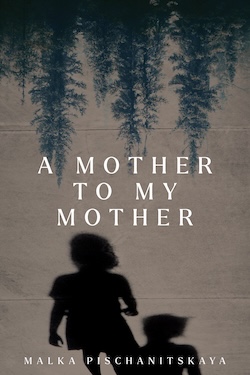
image - A Mother to My Mother book coverPischanitskaya’s memoir, A Mother to My Mother, is one of the latest releases in the Azrieli Foundation’s Holocaust Survivor Memoirs Program. Begun in 2005, the program has now published scores of firsthand testimonies of Canadian Holocaust survivors, many in both official languages, and all of them available free of charge to educational institutions.

Pischanitskaya’s Ukrainian Jewish family knew its share of misery before the emergence of Nazism and war. Her father abandoned her mother before Malka was born, in 1931, and she was raised in grinding poverty by her grandmother and great-aunt while her mother worked in a nearby village and saw Malka some weekends. 

The Stalinist-induced Ukrainian famine of the 1930s killed between three and five million people. The Nazi invasion of the Soviet Union, and its perpetration of the “Holocaust by bullets,” killed 1.5 million Jews, mostly shot at close range and buried in mass graves.

Young Malka’s earliest life, despite hardships, was not without happy memories of Jewish holidays and the changing of the seasons. These are tempered with stark recollections. Without electricity or anything but firewood for heat, she recalls Ukrainian winters so cold the ink at school would freeze solid.

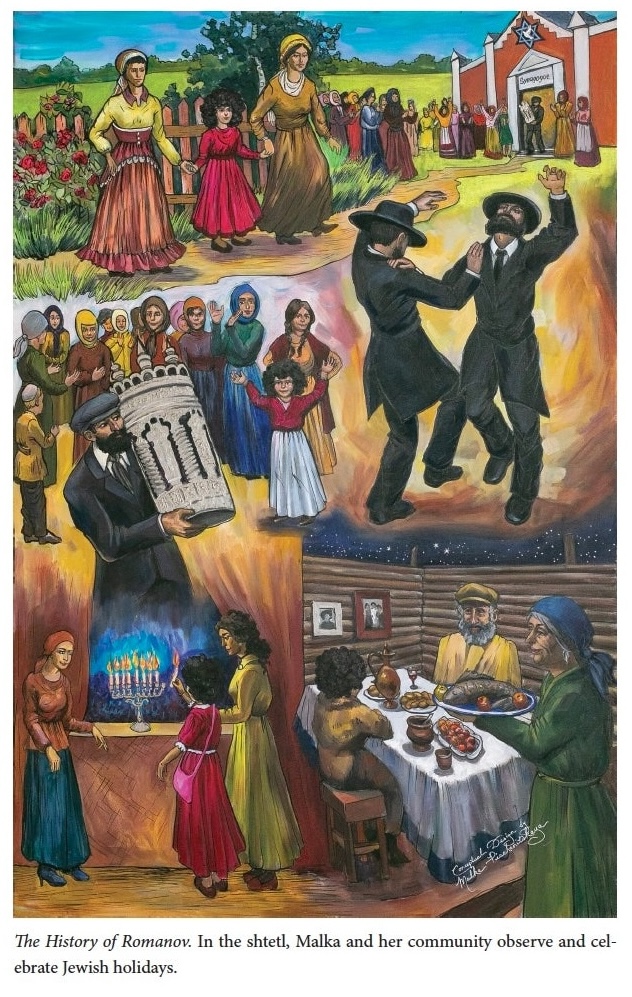
image - A page from Malka Pischanitskaya’s memoir A Mother to My Mother, which includes paintings that she created for a 2019 exhibition
A page from Malka Pischanitskaya’s memoir A Mother to My Mother, which includes paintings that she created for a 2019 exhibition.

After the Nazi invasion of Poland and the beginning of the war, in 1939, five refugee families from Poland arrived in Romaniv (alternatively: Romanov). 

“I have often wondered how much my community found out from these refugee families about what was happening under the Nazis in Poland and whether this made them more aware of the disaster that was to come,” writes Pischanitskaya. 

What was to come was beyond imagining – which may help explain why Malka and her family remained in Romaniv when some other Jews fled further east into the Soviet Union.

“We were not ready – there had been no mental preparation for this moment – so we did not accept the offers to escape,” she writes.

Soon, the Nazis arrived and young Malka witnessed Jews being killed in the streets. The randomness of those murders was replaced with methodical mass executions. The story, starkly told, is predictably shocking, and differs significantly from what happened further west. Rather than ghettos and concentration camps, the Holocaust in the east was typified by summary roundups and mass killings of entire communities, usually in adjacent forests. 

On Aug. 25, 1941, Ukrainian police gave Romaniv’s Jews 30 minutes to congregate in the centre of town.

“Those who were unable to walk had been taken out of their homes on stretchers,” she writes, disabusing Jews of the desperate idea they were being assembled to perform forced labour.

“We walked toward the beautiful park located a couple kilometres from the centre of town,” writes Pischanitskaya. “The crowd of close to 2,000 walked with visible sadness, expressions of disbelief.

“Men were rounded up, separated from their families, and then marched deeper into the forest where, previously, pits both massive and deep, had been dug. Women, children and the elderly were forced into rooms in the military building. Crowded in, there was hardly space to stand. Windows were locked. No fresh air; no water; no washrooms. People screamed, fainted, losing their minds; children were scared and restless.

“One by one, several groups of Jewish people were taken to slaughter. While we were kept in the building, waiting our turns, the heavy ring of machine gun fire instilled extreme fear and terror in all. The slaughter of the Jews from the Romaniv community continued from early morning until dusk – the sun had faded from our lives forever.” 

Then: the first of the miracles that spared the life of Malka and her mother.

“Eventually, mothers with children were let go from the building,” she writes. “Perhaps the murderers were tired from their orgy of death and torture, or perhaps there was no room in the pits for the rest of us, but those who had to remain were slaughtered. We left them, still alive, when we had the chance to run for our lives.”

Here, Pischanitskaya catalogues the names of the many family members killed that day. She goes into grim detail about what witnesses reported from the pits.

Thus began years of hiding – and a succession of near-misses, any one of which would likely have been fatal.

The relationship that gives the book its title, of young Malka mothering her mother, is a story of a parent so paralyzed by events that she becomes almost incapacitated. Malka’s astonishing and perilous actions to ensure their survival form the bulk of the book. She begs door to door in the villages where they hide, often receiving small portions of food. At one home, she sees her own portrait on the wall, apparently pillaged from Malka’s family home after they fled – an uncanny and grotesque coincidence.

When, after the war, they returned to Romaniv, “Almost nothing remained except for memories.”

“Adult survivors went to the mass graves to pray for and memorialize their loved ones, and to bear witness,” writes Pischanitskaya. 

Of all the people who survived and showed up alive after the war was Malka’s “so-called father,” as she calls him, a man whose sadistic cruelty Malka and her mother would have been better off without.

In a twist, the mother who had been “a dependent child” transformed into a courageous woman who pursued Polish and Ukrainian police for war crimes.

Like so many survivors, Pischanitskaya demonstrated improbable resilience, marrying, becoming a teacher, becoming a mother, escaping the Soviet Union, migrating to Canada and raising a successful family that continues to contribute to Vancouver’s Jewish and broader community. 

A Mother to My Mother is illustrated with harrowing, moving paintings that Pischanitskaya created for an exhibition titled Romanov: A Vanished Shtetl, which was presented at the conference of the World Federation of Jewish Child Survivors of the Holocaust and their Descendants, held in 2019 in Vancouver.

To order a copy of A Mother to My Mother in print or ebook format, or any other survivor memoir, visit memoirs.azrielifoundation.org.

Posted on September 20, 2024September 18, 2024Author Pat JohnsonCategories BooksTags A Mother to My Mother, art, Azrieli Foundation, history, Holocaust, Malka Pischanitskaya, memoir, painting, Ukraine

On Holocaust education

Next year, for the first time in British Columbia, the Holocaust will be a mandated topic for Grade 10 students. Until now, the task of teaching this most important subject has fallen upon impassioned teachers and dedicated organizations like the Vancouver Holocaust Education Centre (VHEC). 

Like many Jews, however, I’m left with many questions about this new curriculum. The first is, why only Grade 10? What can be taught in a term (or even a year) that will adequately distill the story – the full story – of the Holocaust and its impact on today’s societies?

My husband, who taught grades 2-12 in British Columbia, defends the introduction of Holocaust studies so late, arguing that students are more receptive at Grade 10 to critical thinking about complex topics, like the events, attitudes and political forces that led to the Holocaust.

True, perhaps, but addressing today’s rising antisemitism, a goal cited in the province’s announcement last fall, will take more than a single year’s high school course. Linking the lessons of the Holocaust to the dangers of today’s misinformation about Jews and Israel is vital, but changing societal mindsets takes years. A 2021 survey of North American teens by the Canadian nonprofit Liberation75 provides an idea of the challenge ahead: nearly a third of respondents 13-17 years of age (most of whom were Canadian) either didn’t know what to think about the Holocaust, thought the numbers of Jews murdered had been exaggerated, or thought the Holocaust never happened. Those findings are concerning, especially when paired with similar results from an Azrieli Foundation survey of Canadian millennials two years earlier. 

As the VHEC has demonstrated in its programs, there are ways to introduce Holocaust education at a younger age – and to continue the discussions, adding more complexity and detail as children get older. British Columbia’s Grade 12 curriculum currently includes an elective on genocide studies, but even though the Holocaust is a suggested topic, there is no requirement that teachers include it. Some teachers might teach about the world’s largest genocide, some may not.

How the new curriculum addresses this topic will have other implications for how future generations interpret its lessons. As B’nai Brith Canada’s Richard Robertson points out in the article in this issue on the Rodal Report (page 32), the Holocaust was far from just a “European issue.” At home, for example, the Holocaust had profound implications for Canada’s immigration policies, both when it came to limiting entry of Jewish refugees and its quiet acceptance of Nazi war criminals. Today’s debates about Holocaust education are testament to the need for its expansion, not only on its history in Europe, but what occurred here after the war.

For all these reasons, we should be introducing Holocaust studies earlier in schools. Jewish traditions have much to contribute to the discussion of pedagogy. Jews are innovators when it comes to making sure that our youngest generations are exposed to history, including our ancestors’ many encounters with antisemitism. For thousands of years, our tradition has ensured a safeguard against collective amnesia: we teach the young. We use the tools that best apply to the age group and the subject, and recognize the value of instilling a collective memory about the discrimination our people have faced. We use anecdotes and stories to impart historical lessons. For example, our children are taught from the earliest ages, at Purim, about how Esther and Mordechai averted a national pogrom and saved their people from genocide. The story of Hanukkah reminds children not to take our faith for granted, but to stand up for our principles.

No doubt, the curriculum for Holocaust studies will go through many changes in the coming years. What is clear, though, is that we have an imperative to make sure this history is taught. 

Jan Lee is an award-winning writer. Her blog can be found at multiculturaljew.polestarpassages.com.

Posted on September 20, 2024September 18, 2024Author Jan LeeCategories Op-EdTags antisemitism, BC NDP, education, genocide, governance, Holocaust
Music for better world

Music for better world

Novelist Milan Kundera said of Jews in the 20th century that they “were the principal cosmopolitan, integrating element in Central Europe: they were its intellectual cement, a condensed version of its spirit, creators of its spiritual unity. That’s why I love Jews and cling to their heritage with as much passion and nostalgia as though it were my own.”

I love reading these words, it helps me keep my head up. And motivated. I think of them often as I work on two major concerts which celebrate multiple aspects of Jewish heritage and history, the devastating impacts of hate, and the need for more love and compassion in the world today. 

You may remember my last endeavour, Project Tehillim, which was about the salvation of the Bulgarian Jews during the Second World War. (See jewishindependent.ca/music-to-say-thank-you.) I grew up in Bulgaria and, while I never experienced the antisemitism, I knew about it from history books. This is why I am shocked and horrified at what is going on around the world, including here in Vancouver. One of my friends said: “The evil is shocking. The willingness of this evil to parade itself is even more shocking.” 

I can only respond with what I know best: the power of music and art. The arts have the incredible ability to affect people more profoundly than plain facts. It is personal stories, artistically presented, that have an emotional impact.

I am the artistic director, with fellow pianist Jane Hayes, of Yarilo Contemporary Music Society, which is dedicated to high-quality professional music performances. The Yarilo ensemble has performed in Zurich, Moscow, Sofia and Tel Aviv, and the society has commissioned a number of Canadian composers: Jocelyn Morlock, Kelly-Marie Murphy, Jordan Nobles, John Burke, Colin MacDonald, Michael Conway Baker and Farangis Nurulla-Khoja. We work with members of the Vancouver Symphony Orchestra and we collaborate with Leslie Dala, the conductor of the Vancouver Opera and the Bach Choir.

Because government and other funding for the arts is in huge decline, I am turning to you, my fellow Jewish community members, for help in realizing Yarilo’s next project: Compassion Above All.

The first concert of the project, To Hope and Back, is a chamber music event that will take place this year on Nov. 10, 2 p.m. and 7:30 p.m., at Orpheum Annex. The budget is $10,000.

To Hope and Back is based on the book of the same name by Kathy Kacer, the daughter of a Holocaust survivor. The book tells the story of the SS St. Louis through the eyes of two children on board the ship that sailed from Germany in 1939 carrying nearly 1,000 Jewish refugees and was refused the right to land by every country, including Canada, forcing it to return to Europe, where many of the passengers were murdered in the Holocaust. The November concert will include two child actors reading excerpts from the book and Kacer has confirmed that she would like to come for the event from Toronto. It will include the music of Philip Glass, Steve Reich, Iman Habibi and Gheorghi Arnaoudov. Steve Reich’s work, “Different Trains,” includes archival recordings from the trains going to Auschwitz.

The second concert, The Tale of Esther in Our Time, is a symphony music concert conducted by Dala, and it will take place in 2025, on March 29, 7:30 p.m., at Christ Church Cathedral. Its budget is between $60,000 and $80,000.

The featured work of The Tale of Esther in Our Time is Iman Habibi’s “Shāhīn-nāmeh,” which was nominated for a Juno and won the Azrieli Foundation award for Jewish music in 2022. Based on the poetry of 14th-century Judeo-Persian poet Shahin Shirazi, the composition depicts the tale of Esther and delves into the themes of love, spiritual struggle and devotion. “Shāhīn-nāmeh” calls out for love and compassion; it brings the heart of humanity into focus.

Also on the program will be Arvo Part (“Tabula Raza”), Peteris Vasks (“The Message”) and Kelly-Marie Murphy (“En El Escuro Es Todo Uno,” “In the Darkness We Are One”).

Please feel free to ask any questions. I will also happily take any advice for funding opportunities. Any donation, even the smallest one, is a great support, financial and moral.

For more information about Yarilo, visit yarilomusic.com. To donate, go to gofundme.com.

Format ImagePosted on July 26, 2024July 25, 2024Author Anna LevyCategories MusicTags concerts, fundraiser, Holocaust, Jewish history, Kathy Kacer, Leslie Dala, Yarilo Contemporary Music Society
Tour for Humanity bus visits

Tour for Humanity bus visits

Left to right: Andrew Abramowich, Larry Goldenberg, Gordon and Leslie Diamond, Jill Diamond, Lauri Glotman and Friends of Simon Wiesenthal Centre’s Michael Levitt. (photo from FSWC)

The Tour for Humanity, a human rights educational bus organized by Friends of Simon Wiesenthal Centre (FSWC), made an inaugural visit to British Columbia May 27 to June 7, with stops at several schools across the Lower Mainland, including Vancouver, North Vancouver, West Vancouver, Coquitlam, Surrey and Langley Township. In all, the bus visited eight different schools, reaching 1,170 students. 

On May 29, in partnership with the Vancouver Holocaust Education Centre, the Jewish Federation of Greater Vancouver and the Jewish Community Centre of Greater Vancouver, FSWC hosted a special gathering and an exclusive viewing of the Tour for Humanity.

“The reception in Vancouver was very positive, especially considering this visit marked our first-ever journey to the West Coast,” said Michael Levitt, president and chief executive officer of FSWC. “The Tour for Humanity presented a new educational experience for the students in a technologically advanced and inspiring learning environment, with students feeling immediately captivated upon entering the bus.

“Every student walked away from the bus with newfound knowledge, whether of the Holocaust or human rights issues right here in Canada,” he said. “Teachers and administrators shared with us how much they admired the program and would like to have the bus return to their schools.”

The Tour for Humanity bus is a 30-seat, state-of-the-art, wheelchair-accessible education centre that teaches students, educators, community leaders and front-line professionals through workshops about the Holocaust, genocide and Canada’s human rights history. The aim, in the words of FSWC, is “to help inspire and empower people of all ages and backgrounds to raise their voices and take action against hate, intolerance and bullying and to promote justice, human rights and a more inclusive society.”

photo - In the Tour for Humanity bus
Inside the Tour for Humanity bus. (photo from FSWC)

Levitt noted that, since Oct. 7, there has been an increase in requests from schools for the Tour for Humanity workshops, given the rise in antisemitism and the divisions playing out online, on city streets and in schools.

“Teachers and administrators are recognizing the importance of this education to ensure students understand the dangers of hate and the role they play in combatting it,” Levitt said.

The tour’s visit to Vancouver in late May and early June coincided with, among other events, the arson attack against Congregation Schara Tzedeck and the decision by the BC Teachers’ Federation to deny funding to a specialist Holocaust education group. 

“What we are seeing is a frightening escalation of antisemitic incidents across BC and the country. Most concerningly, Jewish institutions, including places of worship and schools, are being targeted and violently attacked at an unprecedented rate in Canada,” Levitt said. “Words of condemnation from our public leaders are no longer enough. Concrete measures must be taken to fight this scourge of antisemitism before it escalates even more and someone gets seriously hurt.”

Since it began – with one bus, in 2013 – the Tour for Humanity has visited more than 1,300 schools and reached more than 220,000 people. A second bus was added in September 2022, thanks to support from the Goldenberg family. The two buses have traveled a combined total of more than 200,000 kilometres.

Before coming to British Columbia, the bus visited schools in Manitoba, Saskatchewan and, also for the first time, Alberta. The tour has traveled widely through Ontario, Quebec, New Brunswick and Nova Scotia. Both buses are currently in Ontario, visiting a few last schools for the academic year. The buses only travel throughout Canada, though the Simon Wiesenthal Centre in the United States has a similar program in several American cities.

According to Levitt, the 2024/25 schedule for the Tour for Humanity is already filling up, as Canadian schools have been reaching out and requesting workshops ahead of the upcoming academic year. There is going to be a third bus ready to hit the road in 2025, offering further opportunities to visit more schools across the country. In the meantime, FSWC educators will continue to offer virtual workshops to schools.

“We’re looking forward to having a more active presence in Vancouver and throughout BC in the near future,” Levitt said, “including a return of the Tour for Humanity at the earliest possible time, as we know it takes an all-hands-on-deck approach from the Jewish community to deal with the current conditions.”

Levitt stressed that FSWC is working to deliver Holocaust education to Metro Vancouver students alongside other Jewish organizations, such as the Vancouver Holocaust Education Centre, ensuring that young people gain a deeper understanding of the history and horrors of the Holocaust and learn its lessons. 

“Students must learn that history can repeat itself, and each of them has a responsibility to stand up against hate in their community and make a positive change,” Levitt said. 

“We are thankful for the warm welcome our Tour for Humanity received in BC and grateful to Gordon and Leslie Diamond and the Diamond Foundation for sponsoring the bus’s first-ever journey to the West Coast,” he said. “We are eager to return soon to reach more students.”

For more information, visit fswc.ca/tour-for-humanity. 

Sam Margolis has written for the Globe and Mail, the National Post, UPI and MSNBC.

Format ImagePosted on June 28, 2024June 27, 2024Author Sam MargolisCategories LocalTags education, Friends of Simon Wiesenthal Centre, Holocaust, human rights, Michael Levitt, Tour for Humanity
Unique heritage trip to China

Unique heritage trip to China

Len, Jeffrey, Sharon and Valerie on their family trip to China in 2009. (photo from Valerie [Chan] Hum)

Little did we realize when our son, Jeffrey, married Sharon Szmuilowicz in August 2008 that we would find ourselves visiting China nine months later as a family and visiting all our ancestral homes.

My family comes from the village of Sui Nam, Toi San district, Guangdong province. My grandfather was sponsored by a tailor and moved to Victoria in 1893 as a 16-year-old from a very poor family. He eventually married, started a restaurant business (the Panama Café) and fathered 12 children. Today, more than 140 Chan family members have been born in Canada over five generations and 131 years.

My husband Len’s family was from a small village of 30 houses in Chongkou, Kaiping district, Guangdong province. Len’s father traveled back and forth between China and New Westminster to earn money to support his family. In 1950, Len and his grandmother left China for Vancouver and then met up with Len’s father, who had moved to Ottawa. Two years later, the rest of Len’s family arrived in Canada. The family owned a number of restaurants over the years.

When our son married a Jewish woman from Toronto, we never thought we would learn that her family has ties to China as well.

The idea for the trip to China was initiated by Sharon. She felt it was important to learn about Jeffrey’s culture and family history. However, since the Szmuilowicz clan also had a direct link to China via Shanghai, it was an opportunity to explore both their histories.

On May 13, 2009, 62 years after Sharon’s family left China, our tour guide Hao brought us to the Shanghai Jewish Refugees Museum, the former Ohel Moishe Synagogue, at Sharon’s request, where we were able to access a computer database listing all the refugees who had lived in Shanghai. We were so pleased to see Sharon’s grandfather and great-grandfather listed in the database, including their former address. Jacob and Samuel Szmuilowicz, age 59 and 21, were listed as Polish refugees living at 30-50 Zangyang Rd. What a tremendous discovery! And, to top it off, 30-50 was next door to the synagogue and was still standing.

photo - Valerie and Sharon outside the Shanghai Jewish Refugees Museum, the former Ohel Moishe Synagogue
Valerie and Sharon outside the Shanghai Jewish Refugees Museum, the former Ohel Moishe Synagogue. (photo from Valerie [Chan] Hum)
We decided to knock on their door and see if anyone remembered Sharon’s family. The present residents moved into the building in 1950 and had no recollection of the previous Jewish residents who had crammed into these small apartments more than 70 years ago. Although we could not find anyone who knew Sharon’s family, it was still a remarkable discovery to find the records and the home they had lived in.

For the purposes of our trip, Sharon’s story begins with her grandfather, Samuel. To escape conscription into the Russian army, Samuel and his father, Jacob, left their homes, by foot, in 1939, making their way to Japan via Manchuria. At the time, Samuel was at university in Vilna (now Lithuania; then under Polish occupation), studying mathematics, and Jacob was running a general store in Lida, then in Lithuania (now in Belarus). 

Their transit visas were issued by Japanese diplomat Chiune Sugihara. He was giving out these visas without the knowledge of his government. It was dangerous for him to do so, but he knew that he needed to do something to save as many Jews as possible. In 1985, Sugihara was the first and only Japanese citizen to be listed by Yad Vashem as a Righteous Among the Nations.

With visas in hand, the journey took nearly two years to complete. They traveled by day and hid at night, finally arriving in 1941. In January 1942, they were transferred to Shanghai, where they joined the approximately 20,000 Jews who had migrated there in three waves beginning in the 1800s.

During their five years in Shanghai, Jacob sold rice while Samuel, who was attending the American School and learning English, ended up driving jeeps for the American army. They made enough money to leave for Mexico City in 1947, where they ran a textile factory that manufactured cotton goods, and started the Spanish-speaking arm of the Szmuilowicz clan. Sharon’s parents met in Mexico and moved to Canada, so her dad could pursue a career in medicine.

We learned that there were many Jews who fled Eastern Europe and ended up in Hong Kong or China.

The next part of our discovery trip found us traveling by ferry from Hong Kong over to the mainland city of Zha Hai, where we were then met by distant Hum clan relatives, who drove us to my paternal grandfather Chan’s hometown of Sui Nam. I suspect I am the only descendant who has made the trek back to the town of Sui Nam, which appears very old and somewhat decayed, but still standing. 

photo - In the village of Lohk Hing Leih, 90-year-old Mrs. Tam remembered Len, who used to play with her eldest son
In the village of Lohk Hing Leih, 90-year-old Mrs. Tam remembered Len, who used to play with her eldest son. (photo from Valerie [Chan] Hum)
Half an hour later, we arrived in the small village of Lohk Hing Leih, a cluster of 27 buildings housing the remaining Hum clan. Len’s family left the village in 1949, spending a year-and-a-half in Hong Kong awaiting their papers for entry into Canada. The village remains very poor, comprised of mostly vacant buildings surrounded by rice paddies and vegetable gardens.

Ninety-year-old Mrs. Tam, looking remarkably spry and pleasant, incredibly, remembered Len, who used to play with her eldest son. The other village residents were too young to remember him, but they swiftly brought out some food offerings, the incense, paper money to burn before the family altar, and lit some Chinese firecrackers. These are age-old traditions, in honour of the Hum ancestors. There were no young people living in the village. They had all left to find jobs in the cities. We wonder if the village will even exist in 20 years’ time.

Call it fate or bashert that, from the 1940s, three different families who started off in China, one a Jewish refugee family in Shanghai and two native Chinese families living in small villages near Canton, would be reunited in Canada through marriage 70 years later. The biggest blessing is that, on May 11, 2024, a Szmuilowicz-Hum great-great-granddaughter celebrated her bat mitzvah in Toronto. We were all be thrilled to be there. 

Valerie (Chan) Hum lives in Ottawa. She was born in Victoria, where her family have lived since 1893. Her grandparents ran the Panama Café at 1407 Government St. for many decades. This article was originally published by the Ottawa Jewish Bulletin.

Format ImagePosted on June 28, 2024June 27, 2024Author Valerie (Chan) HumCategories NationalTags Canada, China, family history, Holocaust, travel

Posts pagination

Previous page Page 1 … Page 3 Page 4 Page 5 … Page 43 Next page
Proudly powered by WordPress