Skip to content
  • Home
  • Subscribe / donate
  • Events calendar
  • Business Directory
  • FAQ
  • News
    • Local
    • National
    • Israel
    • World
    • עניין בחדשות
      A roundup of news in Canada and further afield, in Hebrew.
  • Opinion
    • From the JI
    • Op-Ed
  • Arts & Culture
    • Performing Arts
    • Music
    • Books
    • Visual Arts
    • TV & Film
  • Life
    • Celebrating the Holidays
    • Travel
    • The Daily Snooze
      Cartoons by Jacob Samuel
    • Mystery Photo
      Help the JI and JMABC fill in the gaps in our archives.
  • Community Links
    • Organizations, Etc.
    • Other News Sources & Blogs
  • JI Chai Celebration
  • JI@88! video

Recent Posts

  • Or Shalom reopens its doors
  • JFS from past to future
  • Need holistic approach
  • Sharing stories, advice
  • Journalist shares fears
  • Skills to live together
  • Road to independence
  • Cutting grass with scissors
  • Zionism as a solution
  • Deceit, desire & the divine
  • Reclaiming sacredness
  • Creative project ideas
  • Summer squares and cobbler
  • Thou shalt … summer commandments
  • Legal help for students
  • Revisiting myth of Lilith
  • Wrong person rebuked
  • Canada’s mixed messages
  • Questions for museum
  • Symposium on antizionism
  • Making soccer political
  • CJPAC lauds Pulver’s impact
  • City recognizes Vrba’s legacy  
  • Organ donation saves lives
  • Theodore’s March premiere
  • A healing Shabbaton
  • Supplying healthy food
  • A chime of metal tags
  • Yellowknife seder a first
  • Ishai energizes, unifies
  • A Lag b’Omer to remember
  • Expanding the healing
  • Hannah Senesh – a unique hero
  • Community milestones … May 2026
  • Sharing her testimony
  • Fall fight takes leap forward

Archives

Follow @JewishIndie
image - The CJN - Visit Us Banner - 300x600 - 101625

Tag: Holocaust

Tour for Humanity bus visits

Tour for Humanity bus visits

Left to right: Andrew Abramowich, Larry Goldenberg, Gordon and Leslie Diamond, Jill Diamond, Lauri Glotman and Friends of Simon Wiesenthal Centre’s Michael Levitt. (photo from FSWC)

The Tour for Humanity, a human rights educational bus organized by Friends of Simon Wiesenthal Centre (FSWC), made an inaugural visit to British Columbia May 27 to June 7, with stops at several schools across the Lower Mainland, including Vancouver, North Vancouver, West Vancouver, Coquitlam, Surrey and Langley Township. In all, the bus visited eight different schools, reaching 1,170 students. 

On May 29, in partnership with the Vancouver Holocaust Education Centre, the Jewish Federation of Greater Vancouver and the Jewish Community Centre of Greater Vancouver, FSWC hosted a special gathering and an exclusive viewing of the Tour for Humanity.

“The reception in Vancouver was very positive, especially considering this visit marked our first-ever journey to the West Coast,” said Michael Levitt, president and chief executive officer of FSWC. “The Tour for Humanity presented a new educational experience for the students in a technologically advanced and inspiring learning environment, with students feeling immediately captivated upon entering the bus.

“Every student walked away from the bus with newfound knowledge, whether of the Holocaust or human rights issues right here in Canada,” he said. “Teachers and administrators shared with us how much they admired the program and would like to have the bus return to their schools.”

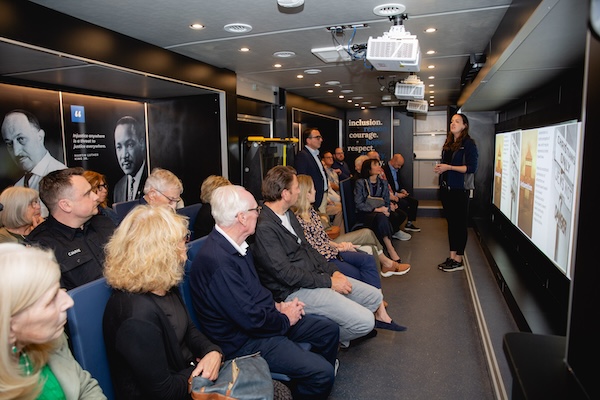
The Tour for Humanity bus is a 30-seat, state-of-the-art, wheelchair-accessible education centre that teaches students, educators, community leaders and front-line professionals through workshops about the Holocaust, genocide and Canada’s human rights history. The aim, in the words of FSWC, is “to help inspire and empower people of all ages and backgrounds to raise their voices and take action against hate, intolerance and bullying and to promote justice, human rights and a more inclusive society.”

photo - In the Tour for Humanity bus
Inside the Tour for Humanity bus. (photo from FSWC)

Levitt noted that, since Oct. 7, there has been an increase in requests from schools for the Tour for Humanity workshops, given the rise in antisemitism and the divisions playing out online, on city streets and in schools.

“Teachers and administrators are recognizing the importance of this education to ensure students understand the dangers of hate and the role they play in combatting it,” Levitt said.

The tour’s visit to Vancouver in late May and early June coincided with, among other events, the arson attack against Congregation Schara Tzedeck and the decision by the BC Teachers’ Federation to deny funding to a specialist Holocaust education group. 

“What we are seeing is a frightening escalation of antisemitic incidents across BC and the country. Most concerningly, Jewish institutions, including places of worship and schools, are being targeted and violently attacked at an unprecedented rate in Canada,” Levitt said. “Words of condemnation from our public leaders are no longer enough. Concrete measures must be taken to fight this scourge of antisemitism before it escalates even more and someone gets seriously hurt.”

Since it began – with one bus, in 2013 – the Tour for Humanity has visited more than 1,300 schools and reached more than 220,000 people. A second bus was added in September 2022, thanks to support from the Goldenberg family. The two buses have traveled a combined total of more than 200,000 kilometres.

Before coming to British Columbia, the bus visited schools in Manitoba, Saskatchewan and, also for the first time, Alberta. The tour has traveled widely through Ontario, Quebec, New Brunswick and Nova Scotia. Both buses are currently in Ontario, visiting a few last schools for the academic year. The buses only travel throughout Canada, though the Simon Wiesenthal Centre in the United States has a similar program in several American cities.

According to Levitt, the 2024/25 schedule for the Tour for Humanity is already filling up, as Canadian schools have been reaching out and requesting workshops ahead of the upcoming academic year. There is going to be a third bus ready to hit the road in 2025, offering further opportunities to visit more schools across the country. In the meantime, FSWC educators will continue to offer virtual workshops to schools.

“We’re looking forward to having a more active presence in Vancouver and throughout BC in the near future,” Levitt said, “including a return of the Tour for Humanity at the earliest possible time, as we know it takes an all-hands-on-deck approach from the Jewish community to deal with the current conditions.”

Levitt stressed that FSWC is working to deliver Holocaust education to Metro Vancouver students alongside other Jewish organizations, such as the Vancouver Holocaust Education Centre, ensuring that young people gain a deeper understanding of the history and horrors of the Holocaust and learn its lessons. 

“Students must learn that history can repeat itself, and each of them has a responsibility to stand up against hate in their community and make a positive change,” Levitt said. 

“We are thankful for the warm welcome our Tour for Humanity received in BC and grateful to Gordon and Leslie Diamond and the Diamond Foundation for sponsoring the bus’s first-ever journey to the West Coast,” he said. “We are eager to return soon to reach more students.”

For more information, visit fswc.ca/tour-for-humanity. 

Sam Margolis has written for the Globe and Mail, the National Post, UPI and MSNBC.

Format ImagePosted on June 28, 2024June 27, 2024Author Sam MargolisCategories LocalTags education, Friends of Simon Wiesenthal Centre, Holocaust, human rights, Michael Levitt, Tour for Humanity
Unique heritage trip to China

Unique heritage trip to China

Len, Jeffrey, Sharon and Valerie on their family trip to China in 2009. (photo from Valerie [Chan] Hum)

Little did we realize when our son, Jeffrey, married Sharon Szmuilowicz in August 2008 that we would find ourselves visiting China nine months later as a family and visiting all our ancestral homes.

My family comes from the village of Sui Nam, Toi San district, Guangdong province. My grandfather was sponsored by a tailor and moved to Victoria in 1893 as a 16-year-old from a very poor family. He eventually married, started a restaurant business (the Panama Café) and fathered 12 children. Today, more than 140 Chan family members have been born in Canada over five generations and 131 years.

My husband Len’s family was from a small village of 30 houses in Chongkou, Kaiping district, Guangdong province. Len’s father traveled back and forth between China and New Westminster to earn money to support his family. In 1950, Len and his grandmother left China for Vancouver and then met up with Len’s father, who had moved to Ottawa. Two years later, the rest of Len’s family arrived in Canada. The family owned a number of restaurants over the years.

When our son married a Jewish woman from Toronto, we never thought we would learn that her family has ties to China as well.

The idea for the trip to China was initiated by Sharon. She felt it was important to learn about Jeffrey’s culture and family history. However, since the Szmuilowicz clan also had a direct link to China via Shanghai, it was an opportunity to explore both their histories.

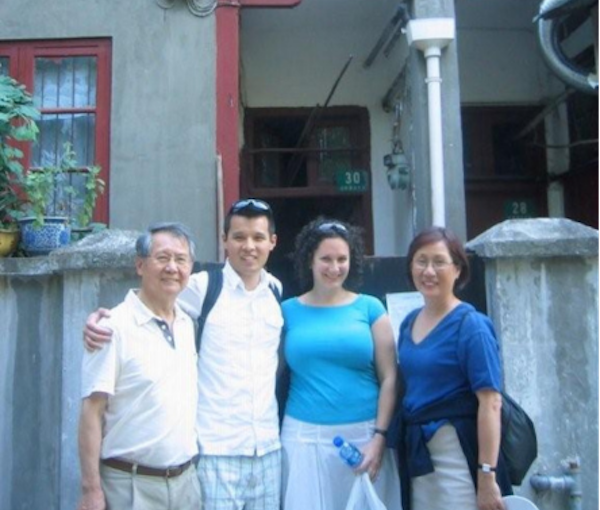
On May 13, 2009, 62 years after Sharon’s family left China, our tour guide Hao brought us to the Shanghai Jewish Refugees Museum, the former Ohel Moishe Synagogue, at Sharon’s request, where we were able to access a computer database listing all the refugees who had lived in Shanghai. We were so pleased to see Sharon’s grandfather and great-grandfather listed in the database, including their former address. Jacob and Samuel Szmuilowicz, age 59 and 21, were listed as Polish refugees living at 30-50 Zangyang Rd. What a tremendous discovery! And, to top it off, 30-50 was next door to the synagogue and was still standing.

photo - Valerie and Sharon outside the Shanghai Jewish Refugees Museum, the former Ohel Moishe Synagogue
Valerie and Sharon outside the Shanghai Jewish Refugees Museum, the former Ohel Moishe Synagogue. (photo from Valerie [Chan] Hum)
We decided to knock on their door and see if anyone remembered Sharon’s family. The present residents moved into the building in 1950 and had no recollection of the previous Jewish residents who had crammed into these small apartments more than 70 years ago. Although we could not find anyone who knew Sharon’s family, it was still a remarkable discovery to find the records and the home they had lived in.

For the purposes of our trip, Sharon’s story begins with her grandfather, Samuel. To escape conscription into the Russian army, Samuel and his father, Jacob, left their homes, by foot, in 1939, making their way to Japan via Manchuria. At the time, Samuel was at university in Vilna (now Lithuania; then under Polish occupation), studying mathematics, and Jacob was running a general store in Lida, then in Lithuania (now in Belarus). 

Their transit visas were issued by Japanese diplomat Chiune Sugihara. He was giving out these visas without the knowledge of his government. It was dangerous for him to do so, but he knew that he needed to do something to save as many Jews as possible. In 1985, Sugihara was the first and only Japanese citizen to be listed by Yad Vashem as a Righteous Among the Nations.

With visas in hand, the journey took nearly two years to complete. They traveled by day and hid at night, finally arriving in 1941. In January 1942, they were transferred to Shanghai, where they joined the approximately 20,000 Jews who had migrated there in three waves beginning in the 1800s.

During their five years in Shanghai, Jacob sold rice while Samuel, who was attending the American School and learning English, ended up driving jeeps for the American army. They made enough money to leave for Mexico City in 1947, where they ran a textile factory that manufactured cotton goods, and started the Spanish-speaking arm of the Szmuilowicz clan. Sharon’s parents met in Mexico and moved to Canada, so her dad could pursue a career in medicine.

We learned that there were many Jews who fled Eastern Europe and ended up in Hong Kong or China.

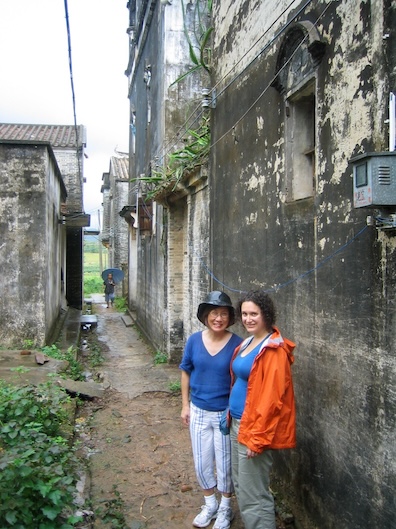
The next part of our discovery trip found us traveling by ferry from Hong Kong over to the mainland city of Zha Hai, where we were then met by distant Hum clan relatives, who drove us to my paternal grandfather Chan’s hometown of Sui Nam. I suspect I am the only descendant who has made the trek back to the town of Sui Nam, which appears very old and somewhat decayed, but still standing. 

photo - In the village of Lohk Hing Leih, 90-year-old Mrs. Tam remembered Len, who used to play with her eldest son
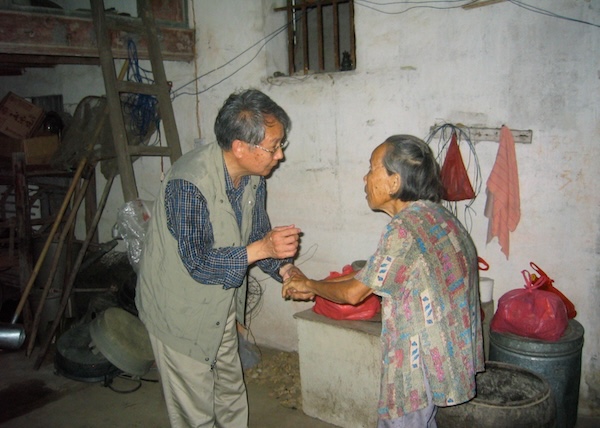
In the village of Lohk Hing Leih, 90-year-old Mrs. Tam remembered Len, who used to play with her eldest son. (photo from Valerie [Chan] Hum)
Half an hour later, we arrived in the small village of Lohk Hing Leih, a cluster of 27 buildings housing the remaining Hum clan. Len’s family left the village in 1949, spending a year-and-a-half in Hong Kong awaiting their papers for entry into Canada. The village remains very poor, comprised of mostly vacant buildings surrounded by rice paddies and vegetable gardens.

Ninety-year-old Mrs. Tam, looking remarkably spry and pleasant, incredibly, remembered Len, who used to play with her eldest son. The other village residents were too young to remember him, but they swiftly brought out some food offerings, the incense, paper money to burn before the family altar, and lit some Chinese firecrackers. These are age-old traditions, in honour of the Hum ancestors. There were no young people living in the village. They had all left to find jobs in the cities. We wonder if the village will even exist in 20 years’ time.

Call it fate or bashert that, from the 1940s, three different families who started off in China, one a Jewish refugee family in Shanghai and two native Chinese families living in small villages near Canton, would be reunited in Canada through marriage 70 years later. The biggest blessing is that, on May 11, 2024, a Szmuilowicz-Hum great-great-granddaughter celebrated her bat mitzvah in Toronto. We were all be thrilled to be there. 

Valerie (Chan) Hum lives in Ottawa. She was born in Victoria, where her family have lived since 1893. Her grandparents ran the Panama Café at 1407 Government St. for many decades. This article was originally published by the Ottawa Jewish Bulletin.

Format ImagePosted on June 28, 2024June 27, 2024Author Valerie (Chan) HumCategories NationalTags Canada, China, family history, Holocaust, travel
Past echoes in present

Past echoes in present

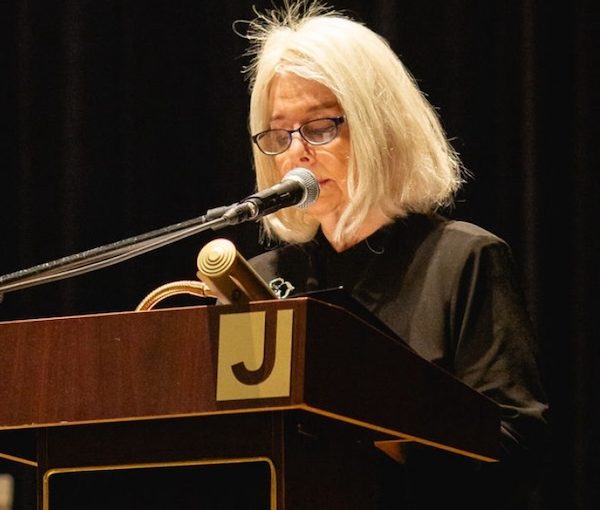
Child survivor Lillian Boraks-Nemetz speaks at the community’s Yom Hashoah Commemoration May 5. (Rhonda Dent Photography)

The pogrom of Oct. 7 and the hurricane of antisemitism that has swirled since then added resonance to commemorations of Yom Hashoah this week.

Around the world, Jewish communities united in different ways to mark the annual Holocaust remembrance day. Sunday night, May 5, the local commemoration at the Jewish Community Centre of Greater Vancouver featured child survivor Lillian Boraks-Nemetz, who reflected on the unmistakable parallels across time, of “Broken families, broken bodies and minds and the poor frightened children and much more.”

Recently, said Boraks-Nemetz, she heard the words of Israel’s ambassador to the United Nations, Gilan Erdan, who reflected on how a sunny Shabbat morning in Israel turned, in a matter of seconds, into hell.

“On just such a sunny morning, in Warsaw, I lost my childhood,” said Boraks-Nemetz, who was introduced Sunday night in a touching tribute by her son, Stephen. “The day Nazis invaded Poland, I remember German bombers flying low over my head against an innocent blue sky and as World War Two began on Sept. 1, 1939, I had to become an adult at the age of 6.”

In the war that began that day, she said, 1.5 million Jewish children were murdered. She suffers guilt and questions around her survival when so many, including her little sister, did not live.

“Some of us were younger than others. Some older,” she said. “Nevertheless, we were all traumatized – as our brothers and sisters are today, in Israel, and in a world that won’t learn history and its lessons. We don’t feel safe anymore around our world. Thousands protest against us as they have always done, just looking for a reason to express their hate for Jews.”

Boraks-Nemetz shared parts of her Holocaust history, from the earliest time, when her mother took her to a favourite café only to find a sign declaring Jews were forbidden from entering – signs that then proliferated in parks, recreation areas, theatres, streetcars and elsewhere.

“We were beginning to lose our humanity,” she recalled. “Thousands protested against us with words such as ‘Death to Jews,’ ‘Final Solution’ and more.”

Today, she said, similar words are directed at Jews.

“This is being allowed to flourish unpunished, using our freedom of speech for their purposes,” she said. “But surely there are red lines where free speech ends and hate speech begins that must be punishable by law.”

She recalled seeing the wall around the Warsaw Ghetto being constructed, higher and higher, as she watched.

“I asked my father what this wall means,” said Boraks-Nemetz. “I asked many questions. I was almost 7 years old. This wall, he replied, will eventually enclose a part of Warsaw where we will be forced to live.”

That day came when, through a window, she saw a long car with officers and a bullhorn ordering Jews to enter the ghetto or suffer severe consequences.

“From the day I and my family entered our one room within these close, shabby quarters, I felt as if I had stepped out of sunlight into darkness,” she said. “I felt as if I was being stifled and the feeling of being stifled stayed with me as a memory and a trigger all of my life. The wall meant confinement, exclusion, isolation, fear, hunger and quarantine of a disease called typhus.”

Boraks-Nemetz shared the story of how she was to be smuggled out of the ghetto by her father, who had bribed a non-Jew but, when the day came, she was ill and instead her sister was sent out, never to be seen again. 

“The streets were treacherous, with children dying of hunger and disease, poor and starved people peddling what little they had for a few potatoes and stealing what they couldn’t buy,” she said. 

While smuggling a child out of the ghetto was a life-threatening act for all involved, so was remaining in the ghetto, she said. Eventually, thanks to an enormous bribe, young Lillian was passed through the gate of the ghetto, where she survived on the outside in the care of her grandmother, who had secured a false identity.

“That day, I felt as if I had lost my family, my home and any degree of safety I had felt,” she recounted. “I became numb and frozen. As a child, I didn’t understand why was I being sent away, alone, into a hostile world. I felt I wasn’t wanted by family or society. That day, I lost my identity as a Jew and a human being, a daughter.”

A forged piece of paper gave her a new, false name, false parents, a false age.

With a small blue suitcase in hand, she walked the short distance from her father, past the bribed guards, who looked the other way, into the care of a waiting stranger who would whisk her to a new, still very hazardous, life outside the ghetto.

“Although it was a very short distance, today I think of it as the longest walk, from impending death to the possibility of life,” she said.

Eventually, she started a new life in Canada, married at 19 and took on the role of a typical Canadian housewife, she said. At 40, she had a crisis, during which she was forced to confront the realities of what she had experienced, a struggle she has addressed ever since, through poetry, sharing her story with students and other means. For her, and for so many others, she said, Oct. 7 brought back from the mists of time the collective consciousness and memory of the past.

“We are still persecuted, blamed, hated,” she said. 

Rabbi Carey Brown, associate rabbi at Temple Sholom, spoke earlier in the evening, expressing the need to be careful in drawing parallels between historical events, but acknowledging that the traumas of the past inform reactions to the present. 

“It is difficult to distinguish between remembering the past and living in the present,” she said. “It feels inseparable.”

The current generation, said Brown, owes it to the memory of those who perished in the Shoah, as well as to the generations yet to come, “to take seriously and be steadfast in our commitment to ‘Never again.’”

photo - Singers Erin Aberle-Palm, left, and Cantor Shani Cohen and cellist Eric Wilson were part of the music program produced by Wendy Bross Stuart
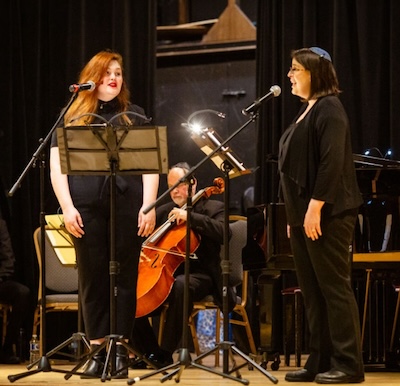
Singers Erin Aberle-Palm, left, and Cantor Shani Cohen and cellist Eric Wilson were part of the music program produced by Wendy Bross Stuart. (Rhonda Dent Photography)

The solemn ceremony began with Holocaust survivors in a procession escorted by King David High School students who are descendants of survivors.

Shoshana Krell-Lewis, a member of the board of directors of the Vancouver Holocaust Education Centre and a daughter of the centre’s founding president, Dr. Robert Krell, welcomed the audience and acknowledged elected officials and survivors. In recognition of survivors from the former Soviet Union, Irena Gurevich translated into Russian.

Sarah Kirby-Yung, deputy mayor of Vancouver, represented the city. 

Cantor Yaacov Orzech recited El Moleh Rachamim.

A moving musical program by artistic producer Wendy Bross Stuart featured Eric Wilson on cello and singers Erin Aberle-Palm, Cantor Shani Cohen, Lisa Osipov Milton, Matthew Mintsis, Kat Palmer and Lorenzo Tesler-Mabe.

The program was presented by the Vancouver Holocaust Education Centre, funded through the Jewish Federation annual campaign and by the Province of British Columbia, and supported by the Gail Feldman-Heller & Sarah Rozenberg-Warm Memorial Endowment Fund, Temple Sholom Synagogue and the Jewish Community Centre of Greater Vancouver. 

Format ImagePosted on May 10, 2024May 8, 2024Author Pat JohnsonCategories LocalTags antisemitism, Carey Brown, history, Holocaust, Lillian Boraks-Nemetz, memorial, Oct. 7, remembrance, Second World War, terrorism, Yom Hashoah

Reflections on Shoah

For 20 years, on the afternoon of Yom Kippur, Prof. Chris Friedrichs delivered a lecture to the congregants of Temple Sholom on the subject of the Holocaust. It started in 2004, when Rabbi Philip Bregman, now rabbi emeritus of the shul, asked Friedrichs to speak on the most solemn day in the liturgical calendar. The rabbi asked him to reprise the lecture the following year, and it became an annual event.

After the 2014 passing of Friedrichs’ wife, Dr. Rhoda Lange Friedrichs, like her husband an historian, Rabbi Dan Moskovitz announced that the presentation would be known as the Rhoda Friedrichs Memorial Lecture. 

photo - Chris Friedrichs
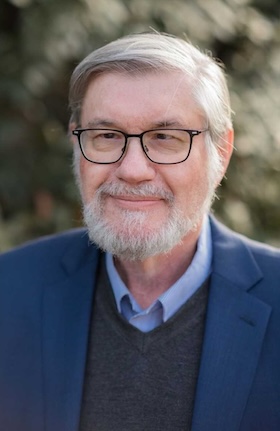
Two decades of Prof. Chris Friedrichs’ Yom Kippur lectures at Temple Sholom have been compiled into a book, Reflections on the Shoah. (photo from Chris Friedrichs)

Friedrichs, now professor emeritus of history at the University of British Columbia, decided to end the tradition after 20 years and his friend and UBC colleague, Prof. Richard Menkis, suggested the idea of compiling the lectures in a book.

The volume, Reflections on the Shoah: Yom Kippur Sermons Given at Temple Sholom 2004-2023 is a small but irreplaceable volume offering deep and original insights on the lessons of history from a leading thinker on these subjects.

In these lectures, Friedrichs does not dwell on the facts of history so much as draw broader insights into their meaning. In 2005, he reflected on the term “martyrs,” which is often used in reference to the victims of the Nazis.

“A martyr is someone who has accepted death rather than renounce his or her Jewish faith,” he said. Yet, he noted, among the six million were many, like the Jewish-born Catholic nun Edith Stein, who were not killed because they refused to renounce their faith. Indeed, he said, renunciation would not bring redemption. It was Jewish “racial” identity, not adherence to Jewish ideas, that drove the Nazis’ murderous objectives.

In an historic sense, though, Friedrichs argues, Jews were murdered in the Holocaust because generations of ancestors had refused, against all pressures, to abandon their identities. “And, therefore, it is in fact right to honour those who died as martyrs,” he said.

In 2007, Friedrichs struggled with theologians’ explorations of the meaning of the Shoah, as though some divine purpose could be discerned from it.

“The Shoah was an entirely human event,” he said. “But that hardly removes the question: where was God while it took place? Why did God allow it to happen?”

God gave humans free will, he concluded, but this does not answer the unknowable question.

“In a world we cannot begin to understand, we can still hope for mercy, and we can pray for strength,” he said.

In a brief postscript to this lecture, Friedrichs writes that the daughter of a friend, having heard the sermon, asked her father “Where was God?” In response, the father said, “Where was man?”

In 2012, Friedrichs spoke of the first Holocaust memorial ever created, in May 1943, in the Majdanek death camp, where a group of prisoners persuaded the SS administrator that the camp could be made more beautiful if they could erect a pillar topped by a statue of three eagles about to take flight. The commandant never knew that under the base of the pillar the inmates had buried a container of ashes of the victims taken from the crematorium.

In 2013, Friedrichs addresses the problem with the very word Holocaust, which means a burnt sacrifice.

“What a meaningless term!” Friedrichs declared. “Six million Jews were sacrificed? Sacrificed to what God? Sacrificed to what end?”

In 2020, when his lecture was recorded and shared virtually because of the pandemic, Friedrichs spoke of the sanctity of life.

The next year, after unmarked graves were discovered adjacent to a former residential school in Kamloops, he spoke of the “humanitarian obligation to go beyond just our circle of Jewish concerns.” He drew parallels between the MS St. Louis, the ship of Jewish refugees turned away from ports of refuge, including Canada’s, and the Afghans clambering through the Kabul airport, struggling to escape the country before the takeover of the Taliban.

In 2022, he invoked a very different piece of history. In high school, his most memorable teacher was Anne Schwerner. When the news came, in the summer of 1964, that three civil rights workers had been murdered by white supremacists in Mississippi, one of them Michael Schwerner, Friedrichs realized this was his favourite teacher’s son. He reflected on the lessons of obligation to universal freedom and rights embodied in Jewish tradition.

image - Reflections on the Shoah book coverIn his last lecture in the series, Friedrichs spoke of how, when he speaks to audiences of high school students, as he frequently does, he makes the lessons relevant to young, multicultural Canadians.

“I tell the students that it is normal to dislike somebody because that person, as an individual, is bad or unkind or unpleasant,” he said. “But to dislike or hate somebody not because of their own characteristics but because they happen to belong to a group, to hate them just because they are Chinese or Filipino or South Asian or Black or members of any other group, is to take the first step on a path that has led and could lead again to things like the Holocaust.”

In most of his lectures, Friedrichs describes predations that are difficult to read and must have been more difficult to hear on a Yom Kippur afternoon, in a room that includes survivors of precisely such atrocities. This, though, is one of the invaluable aspects of Friedrichs’ approach. Whatever reservations might exist in this time of safe spaces and trigger warnings, one can hardly make the case that it is too burdensome to listen to a few examples of the barbarism for the sake of education, memorialization and understanding, when there are people in our community, including in the congregation Friedrichs was addressing, who experienced the cruelties themselves.

Anyone who heard these lectures when they were delivered, or has heard any of Friedrichs’ many presentations elsewhere, can hardly help but hear his deep voice and commanding delivery while reading his words. Those who haven’t had the privilege of hearing him speak are fortunate to have these lectures compiled in this new book.

Reflections on the Shoah is available at templesholombc.shulcloud.com/form/reflections. 

Posted on April 12, 2024April 10, 2024Author Pat JohnsonCategories BooksTags Chris Friedrichs, history, Holocaust, Temple Sholom, Yom Kippur lectures

The story of my mother’s narrow escape

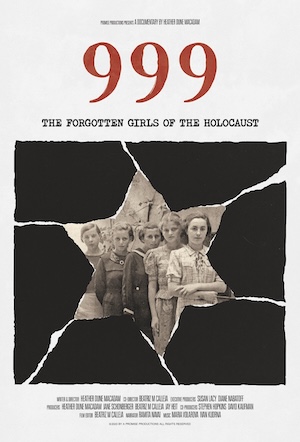
In February, I attended the Canadian première of the movie 999: The Forgotten Girls, directed by Heather Dune Macadam, who also wrote the book on which it is based, 999: The Extraordinary Young Women of the First Official Transport to Auschwitz. Screened at the Rothstein Theatre, the documentary was presented by the Vancouver Jewish Film Centre.

image - poster for the film 999: The Forgotten Girls
Watching the film 999: The Forgotten Girls prompted Dr. Helen Karsai to write about her mother’s last-minute escape from the “work assignment” that had some of her friends taken to Auschwitz, where most were killed.

This is a brilliantly made movie, which combined clips from home movies, historic film footage and photos, interviews with survivors and others, Slovak folk songs, and more. The movie explained how the Hlinka Guards (Slovak militia) rounded up young, unmarried Jewish girls from small towns in eastern Slovakia. The Jewish girls from the city of Humenné were put on buses and transported to the city of Poprad, where they were put into military barracks. On March 25, 1942, when the number of girls reached 999, they were put into a cattle-car train and left Poprad and their native Slovakia for an “unknown destination.” The train went into the Third Reich for “volunteer work.” This was the first transport to Auschwitz. Most of these girls died there.

I heard a similar story from my mother, Klara (Tamara) Kulkova, who was born in northern Slovakia, in the town of Zilina. She remembered that, in the summer of 1940, she attended a Jewish camp of the Maccabi movement, and that she enjoyed that summer very much with her classmates and some older girls. She fondly remembered these days as being full of fun and laughter.

Then came the years of repression for Jews. They were not allowed to go to school or summer camp. In March 1942, my mother heard from her friends that they had received a letter, which summoned them to volunteer for a work assignment. She asked her parents for permission to volunteer, too.

At the time, nobody had any idea where these Jewish girls were going. For some reason, my mom’s father was not suspicious, despite that he had, by this time, given away his Ripper liquor-producing business to a Slovak employee for the company to continue functioning and given up the family’s spacious middle-class apartment, as Jews were forced to live in smaller accommodations. He gave my mom permission to go with her friends. So, my mom and her parents went to the gathering place in Zilina. The Hlinka Guards read the names of the invited girls and my mom’s name was not on the list. At this point, my mom asked a guard if she could join. He said, “Well, you are already here, I will add your name and you can come with your friends.”

The boys who had also been in the Maccabi summer camp decided to come help the girls with their luggage. My mom mentioned Duri Singer and I met Martin Schpitzer, who told me that the boys felt fear for the fate of these girls. They asked the guards in charge of these Jewish girls, where is this transport going? They got no answer. They also asked how long the working assignment would be, and again they did not get any answer, only smiles from the guards.

The train arrived in Poprad and the girls went into a military barrack. My mom remembers that her cousin, Erika Tellemanova, was with her, as well as some friends: Dita Linksova, Rosa Scheinbergerova, Iluska Weilova, Zuzka Policerova and Anika Grossmanova. She recalled that the military barrack did not have toilets. There was a hole in the ground, called a Turkish toilet, which they had to use. They slept on hay, on one side was Erika Tellemanova and on her other side was Rita Brownova. They stayed there for a few days, waiting for more girls to arrive from other towns, as the train out of Slovakia was, in my mom’s memory, to have around 1,000 unmarried Jewish girls on it.

In the meantime, after the boys returned, Duri Singer went straight to my grandparents and insisted that my grandfather try to get my mother out of the transport. My grandfather, Leon Kulka, listened. He then went to his lawyer and they traveled to the capital city of Bratislava, to the department of the Hlinka Guards. They met the head of the transport department and explained that they had not received a response about their application for “economically needed Jews” to be exempted from the deportations. They asked for my mom to be released and their request was granted. A telegram was sent from Bratislava to Poprad to release my mom.

My grandfather went back to Zilina and filled up his car with liquor, then traveled to Poprad to get my mother. The head of the camp said this was the first request he had received to release somebody and suggested that my grandfather take my mom and leave quickly. There was the possibility that some other Hlinka Guard would object to the release. Of course, all the liquor was left for the guards in the camp. Much later, my mom understood that the day after she left was the third transport of Jewish girls from Poprad to Auschwitz concentration camp.

After all this happened, my grandparents decided to send my mom away from Zilina, and she became a babysitter to her niece, Maya Berger, in the town of Sučany.

It took many years for my mom to be able to tell me about March 1942. It was only after the Second World War that the fate of the women transported became known. My mom lost her good friends, so she was only able to add very slowly some details about this tragic time in her life. 

Helen Karsai is a retired medical doctor, who used to work at BC Cancer Agency. In the 1980s, she was a co-chair of the Western Association of Holocaust Survivors, Families and Friends. Her previous printed article was “Secrets of My Native Town,” published in the Spring 2022 Zachor, the magazine of the Vancouver Holocaust Education Centre.

Posted on April 12, 2024April 10, 2024Author Helen KarsaiCategories Op-EdTags film, history, Holocaust, Slovakia, Vancouver Jewish Film Centre, VJFF

To heal a fractured campus

Last November, I interviewed my grandmother for an oral history project – one I had been meaning to do for a long time – about her experience surviving the Holocaust. As the grandson of two Holocaust survivors, I can affirm the reality of intergenerational trauma. Yet, as I listened to her story, I realized she was teaching me valuable, timeless lessons which the University of British Columbia community can apply on campus. That is why I am obligated to share her story – so that we avoid repeating the mistakes of the past. 

My grandmother was 13 years young when her parents and most of her family were taken away from her and deported, either to be shot on their way to Bergen-Belsen or exterminated in the gas chambers of Auschwitz. My grandmother, my safta (as I call her in Hebrew), was a little girl, orphaned, vulnerable and left all alone. She had every right to be bitter and resentful, to identify herself as a perpetual victim and to rightfully blame the Nazis for her suffering. But she did not.

She could never forgive nor forget the evil perpetrated by the Nazis. However, with this in mind, she had to move on with her life. The way she redeemed tragedy was not to define herself as the victim of the past, asking, “Who did this to me?” but rather by taking responsibility for the future, asking, “Given these circumstances, how can I help to put this situation right?”

This is the greatest eternal lesson I have learned from my grandmother and all the Holocaust survivors I have met: never internalize a victim mentality. Otherwise, you will not only become consumed with hate but also enslaved to the past. As the late chief rabbi Lord Jonathan Sacks once said, “To be free, you have to let go of hate.”

My grandmother took the negative energy and elevated it toward a higher purpose: toward marrying my grandfather, toward raising a family, toward giving back to her community. Her all-encompassing identity, attitude and purpose in life has been not based on the hate of others. Rather, her identity is based on the love of her fellow Jews, of being grateful for her heritage and everything else she had. 

“No one can make you feel inferior without your consent,” Eleanor Roosevelt once said. There was one thing from my grandmother that even the Nazis could never take away: her will to be proudly Jewish. 

UBC campus today

For my grandmother, the Hamas massacre that took place on Oct. 7, 2023, triggered painful memories from the Holocaust. “Never again,” the lesson we learned from the six million Jews murdered, has now become “ever again.”

The amount of toxic hate I have seen on my campus (and other universities as well) since Oct. 7 has been both disheartening and overwhelming. From disrespectful comments on social media posts, to provocative posters on campus demonizing the other side, to verbal and physical harassment of students, there is a small, yet vocal, minority of students who create a highly flammable atmosphere on campus. 

At UBC, I have witnessed students chanting the phrase “globalize the intifada,” a term that has historically been used in the context of the Israeli-Palestinian conflict not for “peaceful resistance,” but for terrorizing Jews with suicide bombings, shooting attacks, stabbings and other means of armed violence. I have witnessed students blacklisting other students because they do not agree with their opinions. I have witnessed students rudely spamming hateful comments (which are now taken down) on UBC’s social media page to take advantage of International Holocaust Remembrance Day to push a political message. When I hear that “hate has no place on campus,” I unfortunately continue to observe the opposite.

This is the reason why I dropped my Middle East studies minor. Every time I walked into the classroom, the negative energy was palpable. I was walking on eggshells bringing up my Jewish identity or even mentioning the word “Israel.” Every day, I had to hide my kippa under my hat so that my classmates with different viewpoints would not identify me as Jewish and publicly shame me. In short, I did not feel welcome.

At a university, a safe space should not be a place where you are protected by those with whom you agree from those with whom you disagree – that is called groupthink. Rather, a safe space should be a place where you make space for those who disagree with you so that each can listen to the other with respect.

Whether or not you agree with Israeli, Jewish, Palestinian, Arab, Muslim or any other claims, there is no justification whatsoever to scream, silence or slander those with whom you disagree. Right now, the university needs more civility and calm for all students. 

Yes, we must acknowledge that there are significant casualties on both sides of the conflict. Yes, we must acknowledge each other’s suffering. At the very least, we can all agree that every human life is sacred with equal dignity.

While we cannot control external circumstances halfway across the world from us, we can control how we respond to it. We can choose to wallow in misery and demonize the other (asking “Who did this to me?”), or we can take action to recognize each other’s suffering and elevate it to something positive (asking “Given these circumstances, how can I help to put this situation right?”).

Now, how do we do that?

Listening, not labeling

Opening yourself up to someone whose colour, culture, class or creed is different from yours can seem daunting. In an age of echo chambers, filtered media and narrowcasting, we all have a tendency to tune in to that which aligns only with our own viewpoint, while tuning out others. However, it is precisely the people not like us that make us grow. 

From clubs tabling on campus to classmates sitting next to you, there are plenty of opportunities to actively seek out diverse perspectives. We need to learn how to listen for the sake of learning, not labeling.

If one has a monopoly on the truth, then why bother listening to others? Because, as a mystical Jewish saying goes: “A full vessel cannot receive.” It is only by acquiring humility, the sense of opening ourselves up to something beyond ourselves, that we realize our own perspective is merely one finite fragment of an infinitely fractured truth. Thus, I’ve reflected on three ideas worth sharing.

First: there is no justice for any person or people without listening to the other side.

Second: true peace, in our relationships with others and toward ourselves, comes as a result of active listening.

And third: in the words of C.S. Lewis, “Humility is not thinking less of ourselves, but thinking of ourselves less.”

Listening to the other is the first step toward recognizing the “dignity of difference.”

The antidote to hate

Hate, like COVID-19, is a virus. Viruses do not distinguish between different types of people, but rather fester and grow into an infectious force that threatens us all. Historically, for example, the Nazi regime may have started with targeting Jews, but it didn’t end with Jews. Nazis also targeted Roma, Sinti, LGBTQIA+, people with disabilities and political dissidents. Hate knows no bounds. 

With this in mind, I offer three practical suggestions for what each of us can do on an everyday level to bring more hope to campus – and perhaps other places.

First, take a moment to unplug your AirPods or headphones. Just do it! Whether it’s while sitting on the bus or walking on campus, withdraw from your isolated world for five minutes and acknowledge someone you don’t know by saying hello with a genuine smile. Give them your full, undivided attention and start a friendly conversation. Humanizing starts with acknowledging the other.

Second, take a class from a perspective you have never heard from before. I am a history major. I had never considered taking an environmental history course before simply because I was not interested. But it is precisely for this reason that I am taking the course. Now, I realize how I could see my preexisting knowledge and interests from a new, oblique angle I would never have seen otherwise.  

And third, follow social media accounts of people with different viewpoints from your own. Just like our earbuds, we are constantly using our phones. Every time we open Instagram or Twitter, we are training ourselves to focus on our interests and are quick to judge other accounts as not worth our time. Instead of judgment, be curious and interact with accounts to train yourself to learn from others, not label them.  

We are first and foremost a community, of students and professors, of friends and family, of human beings with human emotions. Divided, we are more susceptible to hate. United, however, we have the potential to become force multipliers of hope over hate.   

Each one of us should ask ourselves: Are we taking actions to further fracture our world, or heal it?

If we are to heal our fractured world, we must first recognize that each and every one of us has the power and influence to turn negative energy into positive energy, just like my grandmother did. If she could continue to spread light after going through the darkest chapter in human history, how much more so can every one of us dispel the darkness of hate by becoming beacons of light in our communities at UBC and elsewhere.

It all starts with one positive thought, one friendly compliment, one good deed. 

It all starts with you. 

Eitan Feiger is a fourth-year history student and the vice-president and treasurer of the University of British Columbia’s Chabad Jewish Student Centre. This article was originally published in the Ubyssey.

Posted on March 22, 2024March 21, 2024Author Eitan FeigerCategories Op-EdTags antisemitism, education, history, Holocaust, Ubyssey, University of British Columbia
Resistance screens here March 3

Resistance screens here March 3

A still from the documentary Resistance: They Fought Back. (theyfoughtback.com)

Resistance: They Fought Back screens March 3, 2pm, at Rothstein Theatre. Presented by the Vancouver Jewish Film Centre, special guest at the screening will be director Paula S. Apsell.

The film’s synopsis reads: “We’ve all heard of the Warsaw Ghetto Uprising, but most people have no idea how widespread and prevalent Jewish resistance to Nazi barbarism was. Instead, it’s widely believed ‘Jews went to their deaths like sheep to the slaughter.’ Filmed in Poland, Lithuania, Latvia, Israel and the U.S., Resistance: They Fought Back provides a much-needed corrective to this myth of Jewish passivity. There were uprisings in ghettos large and small, rebellions in death camps, and thousands of Jews fought Nazis in the forests. Everywhere in Eastern Europe, Jews waged campaigns of nonviolent resistance against the Nazis.”

For tickets ($10) to the screening, visit vjff.org.

– from theyfoughtback.com

Format ImagePosted on February 23, 2024February 22, 2024Author Courtesy theyfoughtback.comCategories TV & FilmTags documentaries, history, Holocaust, jewish resistance, Vancouver Jewish Film Centre, Vancouver Jewish Film Festival, VJFF
Exploring past, present

Exploring past, present

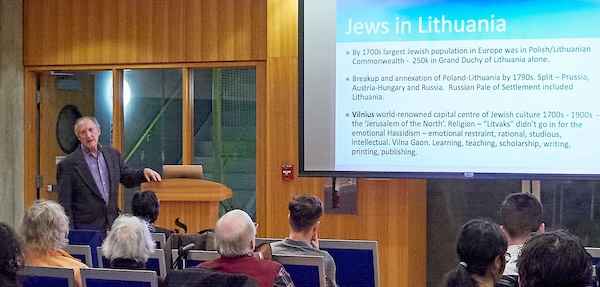
During Hillel BC’s Holocaust Education Week, Drs. Gene Homel (pictured above) and Rachel Mines offered Unheard Echoes, a program on Jews in Lithuania. (photo by A. Jaugelis)

Unheard Echoes, a program on Jews in Lithuania, was held Jan. 29 during Hillel BC’s Holocaust Education Week on the University of British Columbia campus. Dr. Gene Homel, an historian, and Dr. Rachel Mines, a Yiddishist and English instructor, spoke about the past and present experiences of Litvaks, Jews with roots in the region of Lithuania.

Homel began by introducing Lithuania, a liberal democracy in the North Atlantic Treaty Organization (NATO) and the European Union, currently in the news because of possible threats from Russia’s attack on Ukraine. He explained that Jews have been a key, productive part of Lithuania since at least the early 1300s, when they were invited by nobility to settle in these territories and were granted a charter to run their own affairs in their own communities. By the 1700s, the largest Jewish population in Europe was in what was then the Polish-Lithuanian Commonwealth, occupying much of Eastern Europe. The partition of Poland in the late 1700s absorbed the region into imperial Russia.

Vilnius, now Lithuania’s capital but then in the Russian empire, was known as “the Jerusalem of the North” for its role as a world-renowned centre of Jewish learning, culture and publishing. However, poverty and Russian conscription motivated many Jews to emigrate in the early 20th century to North America,  South Africa and elsewhere.

In 1918, with the First World War winding down, Jews joined the successful push for an independent Lithuanian state. While the restored Polish state, which now included Vilnius, slid into enhanced antisemitism in the 1930s, the much smaller Lithuanian state avoided pogroms and other extreme manifestations of antisemitism. Lithuanian Jews and Christians lived side by side in relative peace.

The 1939 pact between Nazi Germany and the communist Soviet Union divided Eastern Europe between the two tyrannies, and the Soviets forcibly annexed and Sovietized Lithuania and the other two formerly independent Baltic states, Latvia and Estonia. Mass deportations of Baltic peoples to Soviet Siberia included many Jews, who comprised an estimated 7% of Lithuania’s population but 10% of the deportees.

Nazi Germany’s invasion of the Baltics and the Soviet Union in mid-1941 initiated the Holocaust in Lithuania. Of the 220,000 to 250,000 Jews there, 95% were murdered, most in the early stages of Nazi occupation and control.

Lithuanian historians and researchers agree that, while most Lithuanians were passive bystanders, some thousands (the exact number is unknown) were (by degrees) active collaborators with the Nazis. Homel pointed out that collaborators were active in almost all other European countries, and there were some Lithuanians, such as Catholic clerics, who served as rescuers of their Jewish neighbours. More than 900 Lithuanians have been recognized by Yad Vashem as Righteous Among the Nations, and there were doubtless many more.

In 1944, the Soviets returned to the Baltics, robbing Lithuania, Latvia and Estonia of their independence, and costing many people their freedoms and their lives. Decades later, the fall of Soviet Communism – Lithuania was the first Soviet republic to declare its independence in 1990 – led to a revival of Jewish culture and institutions, as the Soviet Union had not only suppressed religious and cultural expression but denied or downplayed the Jewish Holocaust in the areas it controlled.

Homel discussed a particularly sensitive issue in Lithuania’s history of wartime Nazi occupation, since there was some overlap between those who were both anti-Soviet partisans from 1944 to the early 1950s (thus nationalist heroes) and Nazi collaborators. Recent published research on Lithuanian collaboration in the Holocaust has caused a stir of controversy, raising the problems of a competing sense of victimhood and of definitions of genocide. This can be seen as a sort of zero-sum game.  Collaboration has been a contested issue in other countries’ histories, of course, for example France and, notably, Poland.

That said, the Lithuanian government has accomplished much by way of justice since the restoration of independence. Shortly after that time, in May 1990, the government issued a declaration condemning “without reservation the genocide perpetrated in Lithuania against the Jewish nation … and notes with sorrow that among the executioners who served the occupiers there were also citizens of Lithuania.” The declaration also stated that there would be no toleration for any expressions of antisemitism, and that all bodies of government and citizens should “create the most favourable conditions for the Jews of Lithuania….”

Four years later, the government created the annual Sept. 23 National Memorial Day for the Genocide of Lithuanian Jews. Commemorations are held in schools and other public and governmental institutions. The prime minister recently joined a march to Paneriai, a site of mass murder of Jews and non-Jews during the Nazi occupation. The Vilna Gaon State Jewish Museum includes five sites, one being the “Green House” Holocaust museum. In 2011, Lithuania committed to pay 37 million Euros over a decade in compensation for Jewish communal property seized during the mid-20th century, and recently the government passed a bill to transfer another 37 million euros. Rescuers have been honoured in the country, as well as by Israel’s Yad Vashem. International teams of archeologists are working on a project to recover Vilnius’s historic Great Synagogue, which was utterly destroyed by the Soviets in the 1950s.

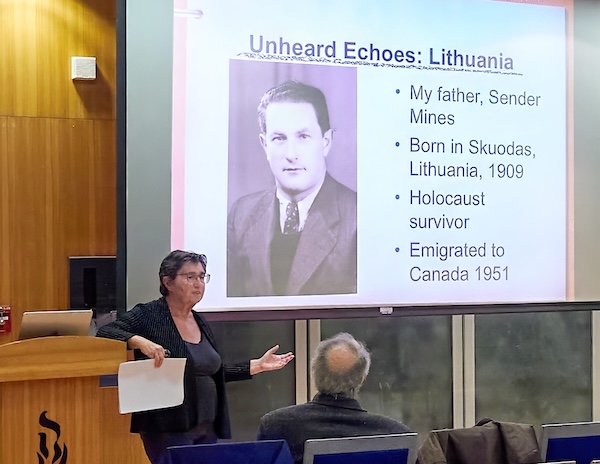
Mines followed Homel’s presentation with a more personal view of Lithuania, based on her reconnection with her Litvak roots, and her experiences with the non-Jewish Lithuanian community both in Lithuania and in British Columbia. She detailed her father’s family life in Skuodas, a lively and thriving town near the Latvian border, which, prewar, had many Jewish-owned enterprises. His relatives once owned a productive boot and shoe factory in town. In 1936, her father, Sender, moved to Kaunas, then capital of Lithuania, and married. In 1941, Sender and his family were imprisoned in the Kaunas ghetto. That winter, Sender was deported to Latvia and forced into slave labour in several Nazi ghettos and concentration camps. As a survivor, he emigrated to Canada in the early 1950s, where he remarried and started a second family.

photo - Dr. Rachel Mines presented a more personal view of Lithuania, based on her reconnection with her Litvak roots, and her experiences with the non-Jewish Lithuanian community both in Lithuania and in British Columbia
Dr. Rachel Mines presented a more personal view of Lithuania, based on her reconnection with her Litvak roots, and her experiences with the non-Jewish Lithuanian community both in Lithuania and in British Columbia. (photo by A. Jaugelis)

Mines and Homel have visited Lithuania a number of times in the last 16 years or so, including a Yiddish summer program at Vilnius University. They found a warm, welcoming reception in Skuodas, where the local museum featured a display on the town’s Jewish population, including Mines’s father. Locals took them to sites of interest, including the Jewish cemetery and Holocaust memorials, which date back many decades, to when the country was still under Soviet occupation. In 2015, Mines was invited to Skuodas to address high school students and adults during that year’s commemoration of the Holocaust in Lithuania. As she learned more about her father’s origins, Mines created a bilingual website on the town, shtetlshkud.com, as a genealogical and historical resource.

Both Mines and Homel are members of the board of directors of the Lithuanian Community of British Columbia (LCBC), which welcomes Litvaks and acknowledges the Jewish contribution to Lithuanian history and culture. The last two years, the LCBC has commemorated Lithuania’s National Memorial Day for the Genocide of Lithuanian Jews, first at the Peretz Centre for Secular Jewish Culture and then at the Italian Cultural Centre. LCBC’s website is lithuaniansofbc.com. 

– Courtesy Gene Homel

Format ImagePosted on February 23, 2024February 29, 2024Author Courtesy Gene HomelCategories LocalTags education, Gene Homel, Hillel BC, history, Holocaust, Lithuania, Rachel Mines, Skuodas
Commemorating the Shoah

Commemorating the Shoah

Richmond RCMP Chief Superintendent Dave Chauhan, left, lights memorial candles with survivors David Schaffer, Sidi Schaffer, Amalia Boe-Fishman and Ilona Mermelstein, and Richmond Mayor Malcolm Brodie at a commemoration of International Holocaust Remembrance Day, at the Bayit, in Richmond, on Jan. 25. (photo by Pat Johnson)

Amalia Boe-Fishman was born in Leeuwarden, in the Netherlands, days before the start of the Second World War. Her mother’s parents and siblings had made aliyah to Israel in the early 1930s, but her mother, Johanna, stayed behind to pursue a career in nursing. Working in the Jewish hospital, she met Arnold van Kreveld, a patient who had been in a motorcycle accident, and they fell in love.

The couple married in 1935 and their first child, David, nicknamed Dik, was born in 1937. Amalia arrived Aug. 23, 1939. 

“We had a good life, family, friends and neighbours,” Boe-Fishman said. But then, in May 1940, the German army invaded the Netherlands. 

Boe-Fishman shared the story of her family’s survival at a commemoration of International Holocaust Remembrance Day, at the Bayit, in Richmond, on Jan. 25.

After the Nazis overran the Netherlands, her father’s parents and siblings were deported to Westerbork, a Nazi transit camp in the Netherlands, on Sept. 3, and on to Auschwitz, where they were immediately murdered, on Sept. 7. 

Her father was a scientist and his young research assistant, Jan Spiekhout, a member of the Dutch resistance to the Nazis, would save the lives of the entire van Kreveld family.

“Jan Spiekhout found immediately an address for my father to go into hiding,” Boe-Fishman recalled. “He then found different hiding addresses for my mother, another address for my brother and then one for myself.”

Amalia was not yet a year old and her parents knew they might never see their children again.

“My mother gave me a special doll to keep me company and a letter I brought with me so my new family would understand her little girl a little better,” said Boe-Fishman. “In the letter, [she] told them how fond I was of my older brother Dik. If my parents would not survive the war, the Holocaust, to send us together to Israel to stay with one of my mother’s sisters.”

Amalia was taken to the home of Spiekhout and his parents, Durk and Froukje Spiekhout. The crowded and deeply religious Dutch Reformed household already had six children, of which Jan was the eldest. The younger Spiekhout children were told that Amalia was the daughter of a sick aunt in Rotterdam. 

“They became my family,” said Boe-Fishman. “Father Spiekhout took a great risk bringing me into his household. He was a policeman. After all, policemen were supposed to work for the Nazis and round up Jews.”

She learned later that he instead warned Jewish neighbours of impending Nazi roundups.

“My father, typically Jewish looking, with dark hair, went from hiding place to hiding place – at least 26 different addresses,” Boe-Fishman said. “All at night and all arranged by Jan Spiekhout. My mother, not so typically Jewish looking, did not need to flee so often. 

“As for myself, I don’t know what I remember or what I was told later on,” she said. “I was not allowed to go outside and I had to stay indoors for three years.”

On April 15, 1945, Canadian forces liberated Leeuwarden.

“What did that mean for me?” she asked. “Liberation should have been a really happy time for me. I was told that I could go outdoors. I didn’t know what to expect, what was waiting for me outdoors. Indoors had become my entire life. Indoors was where I felt secure and safe. Indoors was all I knew.”

Greater change was to come.

“I was told I had a real family and I was told I was going home,” she said. “But who were those people, who were those strangers? I did not want to leave the family Spiekhout. They were my real family and I loved them. My own father and mother were patient with me. They would come over to visit and I would run away or hang onto Mother Spiekhout screaming, ‘I don’t want to go home!’”

Dik, who was now 7-and-a-half, was also a stranger to little Amalia. Most incredibly, and at profound danger, a younger sibling had been born in hiding, a baby named Jan, in honour of the family’s saviour.

The name Jan has profound resonance in the family. Amalia’s oldest son, who joined her at the commemoration, was born in 1962 and is also named Jan.

That the entire immediate family had survived the Holocaust – had grown, in fact – was almost inconceivable. Dutch Jews had one of the lowest survival rates during the Holocaust. The van Krevelds owed everything to the Spiekhout family who, in 2008, were recognized as Righteous Among the Nations by Yad Vashem’s Holocaust Martyrs’ and Heroes’ Remembrance Authority. Boe-Fishman and her children attended a ceremony honouring the Spiekhouts in The Hague in 2009. 

In 1961, Boe-Fishman (then van Kreveld) went to Israel trying to find her Jewish identity. The Eichmann trial was taking place at the time, which cracked open consciousness of the Holocaust not only for most of the world, but for survivors, including her family, who had remained almost entirely silent on the subject. In Israel, she met and married a Canadian Jew from Vancouver and settled here becoming, among other things, a devoted speaker to class groups and others about her Holocaust experiences.

photo - Amalia Boe-Fishman and son Jan Fishman. Boe-Fishman shared her survivor experiences at the memorial event
Amalia Boe-Fishman and son Jan Fishman. Boe-Fishman shared her survivor experiences at the memorial event. (photo by Pat Johnson)

Rabbi Levi Varnai of the Bayit contextualized Boe-Fishman’s presentation.

“I think that this year – every year, but this year maybe more than any year – with all the craziness in the world, this event is even more important than ever before,” he said.

Keith Liedtke, president of the Bayit, served as master of ceremonies and credited Michael Sachs, now regional director for Jewish National Fund of Canada, for starting the tradition five years ago of inviting the mayor to recognize Holocaust Remembrance Day annually. 

Cantor Yaakov Orzech chanted El Moleh Rachamim. Richmond’s Mayor Malcolm Brodie read the proclamation and reflected on Boe-Fishman’s experiences. RCMP Chief Superintendent Dave Chauhan joined the mayor and survivors in lighting memorial candles. Liedtke read a message from Steveston-Richmond East Member of Parliament Parm Bains. Kelly Greene, member of the Legislative Assembly for Richmond-Steveston, brought greetings from Premier David Eby. Also in attendance were Richmond South Centre MLA Henry Yao and Richmond city councilors Chak Au, Andy Hobbs and Bill McNulty.

In addition to the Bayit, the event was presented with the Vancouver Holocaust Education Centre, Centre for Israel and Jewish Affairs, Kehila Society of Richmond and Jewish Federation of Greater Vancouver. 

Format ImagePosted on February 9, 2024February 8, 2024Author Pat JohnsonCategories LocalTags Amalia Boe-Fishman, Bayit, history, Holocaust, Levi Varnai, survivor

Remembering, learning

Hillel BC’s Holocaust Education Week takes place on campus at the University of British Columbia Jan. 29-Feb. 2. Every day of that week, there will be something going on to attend and learn from, including the exhibit from Yad Vashem called Shoah: How Was It Humanly Possible?, which will be on display the whole week.

photo - Rachel Mines
Rachel Mines (photo from Hillel BC)

Jan. 29, 6 p.m.: Unheard Echoes: Jews in Lithuania Before, During and After the Holocaust. Presentations about the Jewish connection to Lithuania throughout history, focusing on the Holocaust, by Rachel Mines and Gene Homel, two members of the Lithuanian community. Register at forms.office.com/r/s4uAFqv8gc.

Jan. 30, 6 p.m.: Unheard Echoes: The Far Reach of the Holocaust in Asia. Ryan Sun is a PhD candidate in the department of history at UBC, working with Prof. Leo Shin and Prof. Richard Menkis. His transnational project expands the geography of Jewish exile outside Europe and beyond Shanghai, and onto the British colonies of Hong Kong and Singapore. He is particularly interested in Jewish refugees’ ship-bound experiences, how transiting colonial port-cities and encountering local inhabitants informed their understanding of “the Orient,” as well as how these ship-moments disrupt the standard narratives of the Holocaust and survivor testimonies. Register at forms.office.com/r/aQx4LG2Fhi.

photo - Ryan Sun
Ryan Sun (photo from Hillel BC)

Jan. 31, 5 p.m.: In a partnership between Hillel, brothers of the AEPi chapter of Vancouver and Chabad UBC, there will be a reading of the names of those who were murdered in the Holocaust. Meet at Hillel, then walk over to the fountain at the main mall, where the reading of the names will begin at 5:30 p.m. The reading can also be joined online, live on Hillel BC Facebook and Instagram, as well as the Instagram page for AEPi. 

photo - Marie Doduck
Marie Doduck (photo from Hillel BC)

Feb. 1, 5 p.m.: A Fireside Chat and Q&A with Survivor Marie Doduck & Dr. Lauren Faulkner Rossi. Marie (Mariette) Rozen Doduck was born in Brussels, Belgium, in 1935. She immigrated to Canada in 1947 as a war orphan with three of her siblings and settled in Vancouver. She is actively involved in Holocaust education and is a cofounder of the Vancouver Holocaust Education Centre. 

Rossi is currently researching child survivors of the Holocaust, the significance of their memoirs to Holocaust studies and the shared language of trauma among child survivors of different genocides.

Register at forms.office.com/r/1MtRu24BWT.

Feb. 2, 5 p.m.: Students-only Shabbat Dinner with Honoured Guests: Holocaust Survivors will feature a candlelighting ceremony and survivors spread out among the dining tables with students. Students can register at forms.office.com/r/ayufQr3Zmy.

For more information or help with the registration links, email [email protected] or call 604-224-4748. 

– Courtesy Hillel BC

Posted on January 26, 2024January 24, 2024Author Hillel BCCategories UncategorizedTags education, Hillel BC, Holocaust, UBC, University of British Columbia

Posts pagination

Previous page Page 1 … Page 4 Page 5 Page 6 … Page 44 Next page
Proudly powered by WordPress