The federal government must develop a comprehensive national digital literacy program aimed at protecting young people from a wide range of online harms, because current efforts are fragmented and insufficient, according to B’nai Brith Canada.
The national advocacy group is proposing a major national project on this front, something that emerged after B’nai Brith’s appearance before the Parliamentary Standing Committee on Canadian Heritage last December. The committee was studying the impact of social media on young people.
In its submission, B’nai Brith focused on the risks of online extremism and radicalization. However, testimony before the committee revealed a much broader problem.
“We heard compelling testimony … from those confronting the impact of exploitation, sex exploitation, financial exploitation, misinformation, disinformation, really the gamut of online harms,” said Richard Robertson, the organization’s director of research and advocacy.
In response, B’nai Brith launched a campaign in late 2025 calling on Ottawa to fund and implement a national youth digital literacy program. The goal is to consolidate existing resources and ensure they reach young people across the country.
Robertson stressed that the issue extends beyond education policy and requires a coordinated national response.
“We don’t believe this is a curriculum issue. We don’t believe that this is an education issue. This is a national issue,” he said, adding that the problem “transcends provincial borders.”
The proposed program would bring together existing tools and expertise developed by various organizations and make them more accessible and impactful. Rather than building entirely new materials, the focus would be on refining and distributing what already exists.
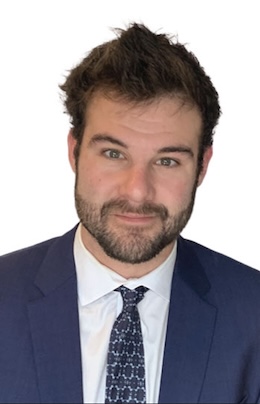
Richard Robertson, director of research and advocacy at B’nai Brith Canada. (photo from BBC)
“There’s a lot of great resources out there … what we need to do is ensure that those resources are getting to our youth,” Robertson said.
The campaign is also calling for federal funding – potentially through the next federal budget – to support both the development and promotion of the program. B’nai Brith envisions using the same channels that already reach young people, including social media and other digital platforms.
Campaigns targeting specific demographics “are not novel to our society,” Robertson noted, and similar strategies could be used to deliver digital literacy content effectively.
The organization has begun developing a framework for the proposed program and is seeking to collaborate with experts in Canada and internationally. Early endorsements have come from groups including the Canadian School Libraries Association and the Polarization and Extremism Research and Innovation Lab at American University.
While some jurisdictions, including Australia, have restricted young people’s access to social media, B’nai Brith argues that education remains essential regardless of regulatory approaches.
“You can try to restrict their access … but they will find their ways to interact with it,” Robertson said. He added that online harms extend beyond social media to video games, forums and other platforms that are difficult to regulate.
The organization’s position is that education should complement – not replace – regulatory efforts. B’nai Brith has been engaging with government on digital regulation and plans to participate in an upcoming parliamentary study on artificial intelligence.
Robertson said his group has received a positive initial response from policymakers and is hopeful that funding could be included in the next federal budget, either through new allocations or existing programs.
Beyond federal action, B’nai Brith is also encouraging provincial governments to take steps, particularly within school systems.
“We do an excellent job of … making sure [youth are] literate with technology,” Robertson said. “We need to make sure that their use of technology is a positive experience by also devoting attention to the dangers.”
B’nai Brith is seeking support from civil society organizations and individual Canadians as well, as it builds momentum for the initiative.
The campaign comes as concerns continue to grow about the impact of digital spaces on young people. For B’nai Brith Canada, the urgency is clear: online risks are evolving quickly, and a coordinated national response is needed to help youth navigate them safely.
On Sunday, Prime Minister Mark Carney issued a statement on Canada’s recognition of Palestine as a state.
“Recognizing the state of Palestine, led by the Palestinian Authority, empowers those who seek peaceful coexistence and the end of Hamas,” said Carney. “This in no way legitimizes terrorism, nor is it any reward for it. Furthermore, it in no way compromises Canada’s steadfast support for the state of Israel, its people and their security – security that can only ultimately be guaranteed through the achievement of a comprehensive two-state solution.”
Prime Minister Mark Carney announced on Sunday that Canada would recognize Palestine as a state. (photo from Office of the Prime Minister)
Carney noted: “Since 1947, it has been the policy of every Canadian government to support a two-state solution for lasting peace in the Middle East.” He said there was an “expectation that this outcome would be eventually achieved as part of a negotiated settlement,” but “this possibility has been steadily and gravely eroded” by several factors.
In addition to other criticisms of both Hamas and Israel, Carney lists the “pervasive threat of Hamas terrorism to Israel and its people, culminating in the heinous terrorist attack of Oct. 7, 2023,” and Hamas’s rejection of Israel’s right to exist; “accelerated settlement building across the West Bank and East Jerusalem, while settler violence against Palestinians has soared”; “the E1 Settlement Plan and this year’s vote by the Knesset calling for the annexation of the West Bank”; and the “Israeli government’s contribution to the humanitarian disaster in Gaza, including by impeding access to food and other essential humanitarian supplies.”
Carney said the Palestinian Authority “has provided direct commitments to Canada and the international community on much-needed reforms, including to fundamentally reform its governance, to hold general elections in 2026 in which Hamas can play no part, and to demilitarize the Palestinian state.”
In reaction to the prime minister’s Sept. 21 statement, Noah Shack, chief executive officer of the Centre for Israel and Jewish Affairs, said, “Hamas is not an isolated phenomenon. It is a violent manifestation of the rejection of the right of the Jewish people to a state in our ancestral home – a rejection that runs deep within Palestinian society.
“As Prime Minister Carney himself has noted, a Palestinian state must be a Zionist state. Today’s announcement undermines that objective and gives Hamas and other Palestinian rejectionists a sense of victory. This will only make it harder to secure the release of hostages and build a better future for Israelis and Palestinians.”
Shack acknowledged that, while the “announcement does not come as a surprise, the details are important. The government has stated that, while it is extending recognition, normalization of relations with a ‘state of Palestine’ is an ongoing, long-term process…. We will argue that this must not proceed so long as hostages are in tunnels, Hamas remains in power and the Palestinian leadership rejects Israel’s existence as a Jewish state.
“And we will continue,” said Shack, “to make it clear that, with anti-Jewish hate escalating, our government must recognize the unintended effect foreign policy has on the climate in our own country.”
B’nai Brith Canada also issued a response to Carney’s statement.
“The PA has shown, time and again, that it cannot be trusted,” said Richard Robertson, director of research and advocacy for B’nai Brith Canada. “It is unable to govern the Palestinian Territories and has repeatedly demonstrated it is unwilling to deliver on the very commitments upon which Canada’s recognition is supposed to be predicated.
“The commitments include democratic reform, free and fair elections in 2026 without Hamas, and the full demilitarization of the Palestinian Territories.
“None of these conditions have been met. Hamas continues to arm itself, hold hostages and carry out terror attacks. Recognition under these circumstances does not bring us any closer to lasting peace, it only further compromises the prospect of a two-state solution.”
Robertson said the “government has chosen appeasement over principle.”
On Sunday, the United Kingdom, Australia and Portugal made similar announcements to that of Canada. Reaction from Israel was critical.
“After the atrocities of Oct. 7, while Hamas continues its campaign of terror, and while it continues to cruelly hold 48 hostages in the tunnels and dungeons of Gaza, the recognition of a Palestinian state by some nations today is, not surprisingly, cheered by Hamas,” wrote Israel’s President Isaac Herzog in an X post.
“It will not help one Palestinian, it won’t help free one hostage, and it will not help us reach any settlement between Israelis and Palestinians. It will only embolden the forces of darkness.
“This is a sad day for those who seek true peace,” he concluded.
Israel’s Prime Minister Binyamin Netanyahu said he will release a formal response after he returns from the United States. However, in a widely reported Hebrew-language video statement, he said, “I have a clear message to those leaders who recognize a Palestinian state after the horrific massacre on Oct. 7 – you are handing a huge reward to terror.
“It will not happen,” he added. “A Palestinian state will not be established west of the Jordan.”
According to various news reports, Hamas did indeed applaud the recognition announcements, as did the Palestinian Authority.
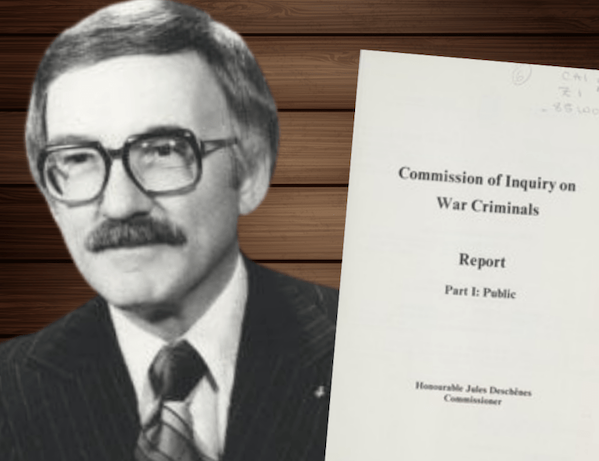
Justice Jules Deschênes, who was appointed by the Canadian government in February 1985 to oversee the Commission of Inquiry on War Criminals in Canada. (screenshot from B’nai Brith Canada)
For nearly four decades, Jewish human rights organizations have been trying to figure out how Nazi war criminals were able to gain citizenship and refuge in Canada following the Second World War. Why were high-ranking members of the Nazi Allgemeine Schutzstaffel (Nazi SS) and Waffen SS troops who fought on Germany’s behalf considered eligible for Canadian citizenship? And who were they? What were their names?
The answers to many of these questions can be found in an obscure list of reports held in government archives. Since 1985, when the Deschênes Commission was appointed to investigate allegations that Nazi war criminals were living in Canada, B’nai Brith Canada and other Jewish organizations have been urging the federal government to release all the commission’s findings. Those records include an historical account of Canada’s post-Second World War immigration policies, written by historian Alti Rodal (the Rodal Report).
“We have always felt that providing the general public with a greater understanding of Canada’s ‘Nazi past’ is a significant venture to providing closure to that time period,” explained Richard Robertson, B’nai Brith’s director of research and advocacy. “This is important because, at a time of rising antisemitism, where there are less and less survivors of the Holocaust around, it is essential that we furnish educators and advocates with as many tools as possible to enable as fulsome a teaching of the [history of the] Holocaust,” including, noted Robertson, those decisions that may have indirectly made it easier for Nazi perpetrators to escape prosecution.
The Hunka affair
Last September, a critical portion of the documentation was made public by the federal government after it was revealed that a former member of the Waffen SS Galicia Division, Yaroslav Hunka, had received a standing ovation in Parliament. Human rights advocates wasted no time in calling for the rest of the Deschênes Commission’s documents to be released, arguing that the unredacted reports could help further Holocaust education in Canada and avoid such mistakes. More than 15 groups, representing Jewish, Muslim, Iranian and Korean ethnic communities and interests, supported B’nai Brith’s petition and, on Feb. 1, the Trudeau government released the bulk of Rodal’s account.
That move has given human rights organizations access to a wealth of information about the politics, the thinking and the apprehensions that often steered the government’s decision not to prosecute or extradite war criminals. Compiled as an historical account of Canada’s post-Second World War policies, the 618-page redacted Rodal Report provides details that aren’t revealed in Deschênes’ deliberations.
Set against the backdrop of today’s rising antisemitism, the report illustrates that Canada’s current struggle to balance the needs of those targeted by antisemitism and discrimination with other democratic principles, like free speech and privacy, is nothing new.
Alti Rodal, author of the Rodal Report. (screenshot from Ukraine Jewish Encounter)
According to Rodal, Canada’s postwar immigration policies were heavily influenced by a belief that extraditing naturalized Canadian citizens for war crimes would be, in the words of Prime Minister Pierre Elliot Trudeau, “ill-advised.”
“Trudeau’s concern,” Rodal wrote, “was that the revocation [of citizenship of an alleged war criminal] could alarm large numbers of naturalized citizens who would be made to feel that their status in Canada could be insecure as a consequence of the politics and history of the country they left behind.”
And Pierre Trudeau was not alone in his reticence to bring Nazi war criminals to court.
“All those goals which Canadian society has set for itself can certainly not be achieved by short-circuiting the legal process in the hunt for Nazi war criminals,” the commission wrote, while examining whether a military court might be an appropriate venue for litigating charges of war crimes.
By the time the commission concluded its research, it had effectively struck down every available legal mechanism for pursuing action against most former Nazis living in Canada. The Deschênes Commission determined that war criminals could not be prosecuted under Canada’s Criminal Code, but neither could they be tried by military tribunal. Nor could they be successfully prosecuted under the Geneva Conventions for acts of genocide or crimes against humanity. And Canada’s extradition laws would be ineffectual in many instances, including when it came to approving requests from Israel. Israel didn’t exist at the time of the Holocaust, the commission reasoned, and thus didn’t meet Canada’s requirements for requesting extradition of Second World War criminals.
New laws, similar challenges
Canada’s only remedy would be to amend its laws going forward. In 2000, nearly 14 years after the release of the Deschênes Commission’s report, the Crimes Against Humanity and War Crimes Act was given Royal Assent. Antisemitism, hate speech and hate crimes are now federal offences as well, covered under Section 319 of the Criminal Code. However, some legal experts say the process of bringing charges of antisemitism or hate crimes to court remains too onerous.
In June, the Matas Law Society and B’nai Brith hosted an educational webinar on the legal strategies available to Canadian lawyers when pursuing charges of antisemitism. Gary Grill and Leora Shemesh, two Toronto-based lawyers who have recently represented victims of alleged antisemitism in Ontario, offered different views as to why it is so hard to bring a hate crime to court.
“We have the tools,” acknowledged Shemesh, “we’re just not effectively using them.” She said she has represented several alleged victims of antisemitism and, in each one of the cases, the charges were later dropped.
Grill, on the other hand, suggested that the issue had to do with initiative. “It’s about political will” when it comes, for example, to ensuring that prosecutors understand that “death to Zionists” is veiled hate speech and should be prosecuted as antisemitism. “The education is easy,” he said. “We can educate prosecutors. We can educate police. It’s not a problem. [But] this is about will. It’s not about law.”
“There are problems with certain [parts] of Section 319 and [its] enumerated defences,” Shemesh said. “Prosecutions under the Criminal Code for the promotion of hatred … require the approval of the attorney general to proceed, which, I say, has partially explained why such prosecutions have been rare in Canadian jurisprudence.”
In Robertson’s opinion, there can be value in legislative oversight. The attorney general’s sign-off “is a safeguard to ensure that our hate crimes legislation … is only utilized when warranted. I believe it is designed to prevent overuse,” he said. “Listen, there’s nothing wrong with that. There’s nothing wrong with having checks and balances to ensure that the proper charges are being laid and the severity of these charges warrant such. The issue is the reluctance of the attorney general to sign off on these charges and the procedural, I would say, slow-downs in effecting the sign-off. These are the issues. If we can perfect the procedures around the sign-off, then this is a completely fine check and balance.”
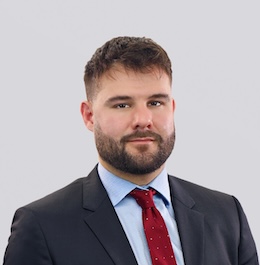
Richard Robertson, director of research and advocacy for B’nai Brith Canada. (photo from B’nai Brith Canada)
As for addressing the rise in antisemitism that Canada is experiencing today, Robertson believes the answer lies in ensuring Holocaust education is available and continues. That requires ensuring public access to the documents that most accurately tell the story – including those of Canada and other allied nations.
“With the recent issues that we’ve seen regarding immigration into Canada, I think [the Deschênes and Rodal reports serve as a] narrative that is more relevant than ever. I think it is important for us to understand our mistakes of the past so that we don’t repeat them in the future,” Robertson said. “And, as well, when it comes specifically to Holocaust education, I think it is important for Canadians to appreciate the level of complicity, if there was any complicity, in our government helping Nazis escape prosecution following the culmination of the Holocaust in World War II…. It helps to paint the totality of the picture of just how widespread the Holocaust was.”
Robertson said Canadians often think of the Holocaust as a “European issue,” that it only adversely impacted Jews in Europe. “So, understanding Canada’s role and [the Holocaust’s] aftermath helps to globalize the narrative, and perhaps that will help Canadians to better appreciate the truly global impact of the Holocaust [and the trauma] that is still ongoing.”
To date, most of the Deschênes documents have been made public, with the exception of Part II of the original report, containing the identity of members of the Nazi party who were granted immigration to Canada. The ancillary documents, such as the Rodal Report, also contain information that has not been made public. B’nai Brith Canada continues to lobby for their release.
Jan Lee is an award-winning editorial writer whose articles and op-eds have been published in B’nai B’rith Magazine, Voices of Conservative and Masorti Judaism and Baltimore Jewish Times, as well as a number of business, environmental and travel publications. Her blog can be found at multiculturaljew.polestarpassages.com.