
Skip to content
  • Home
  • Subscribe / donate
  • Events calendar
  • Business Directory
  • FAQ
  • News
    • Local
    • National
    • Israel
    • World
    • עניין בחדשות
      A roundup of news in Canada and further afield, in Hebrew.
  • Opinion
    • From the JI
    • Op-Ed
  • Arts & Culture
    • Performing Arts
    • Music
    • Books
    • Visual Arts
    • TV & Film
  • Life
    • Celebrating the Holidays
    • Travel
    • The Daily Snooze
      Cartoons by Jacob Samuel
    • Mystery Photo
      Help the JI and JMABC fill in the gaps in our archives.
  • Community Links
    • Organizations, Etc.
    • Other News Sources & Blogs
  • JI Chai Celebration
  • JI@88! video

Recent Posts

  • JSA leads BC-wide campaign
  • Hamas a “net disaster”
  • Does Bill C-9 matter?
  • What belonging means
  • Make time to congratulate
  • Connecting with nature
  • Mikvah at Chabad now open
  • Whistler welcomes Chabad
  • Companionship is vital
  • Preserving our stories
  • Bard’s varied play mix
  • Sokoloff releases new album
  • Defying expectations
  • Group buying platform wins
  • Community milestones … July 2026
  • The first Jew buried in BC
  • SFU honours Gloria Gutman
  • Lifting people’s spirits
  • Wedding a ray of light
  • Indigeneity and Zionism
  • Rule of law broken: councilor
  • Football and its roles
  • The burden of defence
  • Fish Café returns after fire
  • All right in what goes wrong
  • Nuns & mermaids at TUTS
  • Camp offers holiday retreat
  • Students and mentors inspire
  • Once-in-a-lifetime trip
  • 100 dancers, one heart
  • Money for the sciences
  • What “Jewish food” means
  • Have a cookie, schnitzel too
  • Federation now across BC
  • Israel fighting for its existence
  • Deal strengthens Iran

Archives

Follow @JewishIndie
image - CJN box ad Rockowers 2026

Tag: Mark Carney

Responding to Carney

Responding to Carney

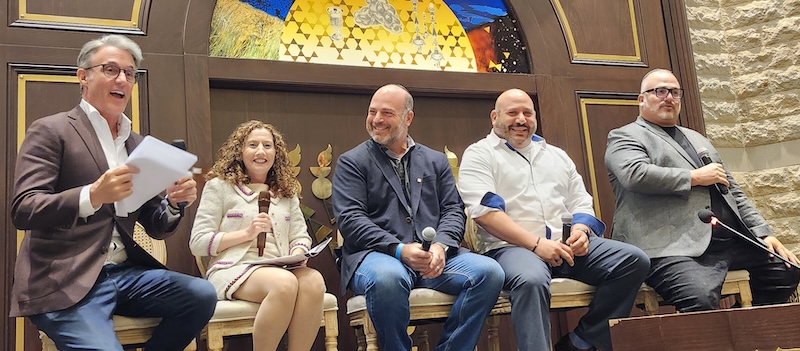
Panelists at the event Faith Not Fear: Building Jewish Leadership for a New Era in Canada, left to right: Ben Mulroney (broadcaster), Natasha Pein (researcher), Simon Wolle (B’nai Brith Canada), Matthew Taub (Unapologetically Jewish) and Amir Epstein (Tafsik). (photo by Dave Gordon)

Two weeks after Mark Carney’s address on antisemitism at Toronto’s Holy Blossom Temple, Jewish community members offered a counterweight – a gathering led by grassroots activists, journalists and elected officials, both Jewish and non-Jewish.

Called Faith Not Fear: Building Jewish Leadership for a New Era in Canada, the nearly four-hour meeting drew roughly 600 people to the city’s Chabad Flamingo synagogue on June 14. Organizers described it as an unprecedented gathering of local pro-Israel groups – many sharing a stage for the first time – aimed at confronting the question of what kind of leadership this moment demands, and what concrete steps the community must take. 

Organized by Yalla, partner groups included Canadian Women Against Antisemitism, B’nai Brith Canada, Chai Tech and Tafsik. Jewish panelists included Matthew Taub of Unapologetically Jewish, Amir Epstein of Tafsik, Jesse Brown of Canadaland and Conservative MP Melissa Lantsman. Non-Jewish allies who spoke included broadcaster Ben Mulroney, educator Ali Siadatan, Juno News reporter Melanie Bennet, former MP Kevin Vuong and Vaughan Mayor Steven Del Duca. 

The central message was that the community can no longer rely on vague reassurances, symbolic gestures or reactive fundraising alone. Speakers argued that the real work now must be proactive: building stronger Jewish identity, demanding governmental accountability, creating civic pressure and abandoning what several described as a culture of managed decline. 
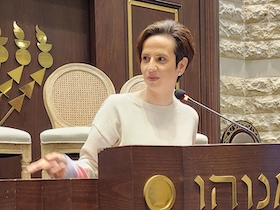
photo - MP Melissa Lantsman (Conservative, Thornhill) addresses a June 14 gathering in Toronto that was held in response to Prime Minister Mark Carney’s June 1 speech on antisemitism
MP Melissa Lantsman (Conservative, Thornhill) addresses a June 14 gathering in Toronto that was held in response to Prime Minister Mark Carney’s June 1 speech on antisemitism. (photo by Dave Gordon)

For Lantsman, the answer begins outside politics. She argued that what this moment demands is “a renewed Jewish identity,” adding that “before lobbying, before the press releases, before the next emergency appeal or the fundraising, more Jewish life is actually what’s necessary.” In her telling, public advocacy will only be durable if it is rooted in private conviction, education and continuity. 

She also urged the audience to move outward, into politics and public life, “not as a supplicant” but as citizens who vote, donate, organize and remember. Politicians who abandon the Jewish community, she said, should feel it “at the ballot box,” because “this isn’t a Jewish problem, it’s a Canada problem.” 

The insistence on moving from rhetoric to measurable action was sharpened by strategy consultant Maureen Leshem in her remarks. Drawing on conversations with intelligence officials, police, community leaders and counterterrorism experts, she said she had concluded that the community is “dangerously unprepared for what’s currently happening, and even less prepared for what lies ahead.”

Leshem argued that the community must rethink “everything, from our leadership choices, to how we spend our money, to how we work together.” Too often, she said, Jewish institutions and donors are stuck in “reaction mode,” raising funds to mitigate threats rather than forcing governments and public agencies to do the jobs they are already obligated to do. 

A shooting at a Jewish institution, she said, is not mere vandalism or mischief but “targeted, potentially lethal violence against the Jewish community that demands the full weight of a national security response.” When Jewish families and institutions are expected to fund their own protection, she warned, the result is “a private tax on Jewish existence,” which risks normalizing public failure.

Leshem’s call to action was blunt: enough slogans. “Do not get up here and tell us that antisemitism is unacceptable. We know,” she said. Instead, leaders should explain what they are going to do, what laws they are demanding, what institutions they are pressuring and what risks they are willing to take. 

Daniel Warner, co-founder of Yalla, said that, after Carney’s speech and subsequent committee appointments, it “became pretty clear that we’re going to have to take this into our own hands,” both as individuals and as organizations. 

Warner said too many people he knows have already left Canada, but he rejected emigration as an answer. “Plan B is not leaving. Plan B is fighting back,” he said, urging attendees to stand up for themselves in new ways and to use their voices “as if their future here depended on it.” 

The point, he said, is not simply to denounce antisemitism but to demonstrate Jewish life confidently and publicly in places where falsehoods about Jews are spreading most effectively. 

Unapologetically Jewish’s Taub observed that, since Oct. 7, dozens of Jewish organizations have sprung up, but real coordination remains uneven. “Suppressing what others have to say is not unity, that is division,” he said, arguing that calling out institutional mistakes should be understood as honesty rather than disloyalty. 

Taub accused parts of the organized community of applying temporary remedies to a crisis. “They are throwing Tylenol at cancer, and it’s not working,” he said, after arguing that some Jewish organizations have spent more energy lobbying internal critics than lobbying governments on behalf of the community. 

Bennet addressed what she sees as the nature of the threat itself. Discussing themes she observed at a Muslim Association of Canada convention, she warned of a “destructive anti-Western ideology” in which Jews are often the first target but not the only one. “You guys feel it the strongest,” she said, but the larger struggle, in her view, is the attempt to reshape institutions and public life more broadly. Beware, she said, of “jihadis in Armani suits,” referring to the public propaganda face of Islamist terrorists.

Vuong, another ally, framed the issue in similarly expansive terms. He said his support was motivated not only by solidarity but by “self-preservation,” because “the people who hate you hate me as well,” adding that the old warning holds: what starts with the Jews never ends with the Jews.

Independent of the conference, several of Canada’s national Jewish organizations also have responded to Carney’s remarks. 

The Centre for Israel and Jewish Affairs and Jewish federations across Canada, for example, issued an open letter reading, in part: “Instead of urgent, concrete measures, the government announced an advisory council, tasked first with further evaluating a crisis that has already been studied extensively, and which includes individuals who are not suited to lead government action on antisemitism. For many Jewish Canadians, this felt like the rug being pulled out from under us.” 

“This was an opportunity for the prime minister to meet the moment,” said Simon Wolle, B’nai Brith Canada’s chief executive officer, in a release. (Wolle also spoke at the Toronto gathering.) “Instead, Canadians heard a speech that described the problem more than it confronted it. The Jewish community did not require another acknowledgment that antisemitism is raging across the country, we needed a plan proportional to the scale of the crisis.

“Canada is not facing an antisemitism awareness problem. Canada has an antisemitism problem,” he said. “The country has been poisoned with Jew-hatred and we need a remedy.”

The Jewish Independent reached out to other national Jewish organizations, as well.

“Carney is correct to note the rise of antisemitism is tied to larger trends of conspiracism, polarization and hate worldwide,” said Vancouver-based Maytal Kowalski, JSpace Canada’s executive director. “It is important to recognize this, not to universalize or trivialize antisemitism, but, in fact, the opposite – to fight it at its root and along with allies.” She said including “allies and leaders from different minority communities” is important if the work is to happen “holistically.” 

Gabriella Goliger, national chair of Canadian Friends of Peace Now, said “Israel” was missing from the prime minister’s remarks. “He could have emphasized that he recognizes diaspora Jews’ emotional ties to Israel, that Canada is a friend to Israel,” she said, while also stressing that Canadian Jews “must not be held accountable for Israeli policy” and that there is “a huge difference between legitimate peaceful protest against Israeli actions, and using protest as a smokescreen for antisemitism.” 

For the full reactions and recommendations of CIJA, B’nai Brith and JSpace, visit their respective websites. 

Dave Gordon is a Toronto-based freelance writer whose work has appeared in more than 100 publications around the world. His website is davegordonwrites.com.

Format ImagePosted on June 26, 2026June 24, 2026Author Dave GordonCategories NationalTags antisemitism, Canada, Mark Carney, politics

Need holistic approach

Prime Minister Mark Carney delivered a much-vaunted statement on Canada’s antisemitism crisis last week. It was unlikely to satisfy everyone – partly because there is only so much a single government can do about a global social phenomenon like escalating Jew-hatred.

Even by the standards of that acknowledgement, the address, delivered in Toronto’s Holy Blossom Temple, seemed like a significant missed opportunity.

Some might have expected Canada to appoint a Royal Commission that would investigate the problem of antisemitism in this country, as Australia has done. That, too, likely would have been criticized as kicking the problem down the road.

Instead, Carney announced something called the Ministerial Advisory Council on Rights, Equality and Inclusion, under the stewardship of Marc Miller, the minister of Canadian identity and culture. The council’s mission seems reasonable enough: analyzing “the nature, scale and drivers of antisemitism in Canada – including across our public institutions, workplaces, campuses, public services, professional bodies and online spaces”; coordinating a “whole-of-federal-government approach”; improving research and the collection of data on hate incidents; and “measure[ing] the impact of our efforts, to reinforce those investments in education, prevention, training and community safety that are delivering real results and helping to build a safer, more inclusive Canada for all.”

Lovely enough, though Carney’s speech seemed defensive on at least two fronts. First, he insisted none of this would impinge free expression, which came across as a bit of a sop to those who insist that there should be no limits to the Jew-hatred and anti-Israel bombast on Canadian streets, in classrooms and at workplaces. Further, while insisting that antisemitism is a top priority and that it would be moved to the top of the new council’s agenda, the council is, in the end, a broadly mandated body with a massive jurisdictional swath including, as its name states, amorphous “rights, equality and inclusion.” At a time when many Jews feel like their interests cannot be addressed without an addendum acknowledging the concerns of a laundry list of other equity-seeking peoples, the assignment of antisemitism to this omnibus-type council seems as much an insult as a salve.

What most people did not know during Carney’s speech were the names of the members of the new council. Among them is a lawyer behind a Charter of Rights challenge in defence of anti-Israel encampments. More galling to many is the inclusion of former Liberal MP Omar Alghabra, who has been head of the Canadian Arab Federation, is an admirer of Yasser Arafat, and lobbied to keep Hamas and Hezbollah off Canada’s list of proscribed terrorist entities.

It is an understatement to say that this news undermines the confidence of Jewish (and most reasonable) Canadians that the council will be anything like a panacea for the antisemitism problem. One could hardly conjure council members more likely to raise distrust among Jewish Canadians, no matter how respected any of the other members may be.

Carney also outlined not insignificant steps the government has taken, including funding for programs against radicalization and for Jewish community security. The latter funding is, of course, deeply necessary and appreciated, but also a symptom, rather than a treatment, of the issue.

Rich on bromides and with a requisite quote from Elie Wiesel, the prime minister’s speech probably struck most Canadian Jews as bland and empty. Carney uttered not a word about Israel or antizionism. More than this, the role of Islamic extremism as a major source of antisemitism in Canada was addressed only indirectly. As many commentators have noted, if we are too afraid to even acknowledge and name a main driver of the problem, the likelihood of taking steps that will resolve it seems very remote.

At a minimum, the PM’s address gives a benchmark with which to measure success or failure in the next few years. Any progress brought about by the work of the council and the other steps Carney noted, including Bill C-9 regarding hate propaganda, hate crimes and access to religious or cultural places, will be welcomed. The government should be held to account for any shortcomings.

As important as government action is, that alone will not have the impact necessary if there is not a significant upswell in public demand for change. While Carney called for a “whole-of-federal-government approach,” we need an all-of-society approach, with civic groups, media, the corporate sector and, especially, individual Canadians, speaking up against antisemitism. 

Posted on June 12, 2026June 10, 2026Author The Editorial BoardCategories From the JITags antisemitism, governance, human rights, Mark Carney, politics

Canada’s mixed messages

In mid-May, a Winnipeg Free Press article by John Longhurst announced a new online database for research. This open access resource lists the names of German Nazi party members. The article’s target audience: the Manitoba Mennonite community. 

As background: Many German Mennonites, previously pacifist, joined the Nazi party starting in the early 1930s. In the article, Arnold Neufeldt-Fast, a Toronto researcher, said the goal of researching and publicizing the records was not to condemn or shame anyone. “The point,” he said, “is to understand what made their choices feel plausible at the time, and what this means for us now in Canada and the US.” Aileen Friesen, who teaches Mennonite History at the University of Winnipeg, said it could serve “as a lesson for our current time.”  

I’m concerned about this “lesson.” Nazi membership before and during the Second World War is nothing to be proud about. Still, this does make it easier to understand the views of some Mennonites in 2026.

Some Winnipeg Mennonites often offer public opinions about Israel, Gaza and the war. They’re staunchly against war, but support Palestinian resistance and are against Israelis or Jews. This stance appears in local Mennonite gallery exhibits, fundraising, petitions and protests. It’s on stickers on lampposts near a neighbourhood Mennonite school. While out walking, I peel off “Free Palestine” stickers with cartoon characters doing a Sieg Heil and QR code stickers with “Boycott Israel.”

This “pacifism” chooses a side just like German Mennonites chose the Nazi party. This stance doesn’t examine what these choices mean to the safety of others, such as Jewish Canadians who live nearby. It doesn’t reflect a morality-based Christian religious tradition or teachings from a Jewish guy named Jesus, let alone Jewish texts or culture.

Actions have consequences. This failure to understand logical outcomes echoes throughout Canadian society. Prime Minister Mark Carney’s Davos speech described Canada’s goals for trade alliances and Canada’s role as a “middle power.”  It’s easy to see that this dream is failing on a practical level.  

Canada, a “human rights champion,” has an uneven track record. According to United Nations Watch, on April 8, Canada, as part of the 54-nation United Nations Economic and Social Council, “participated in the consensus nomination of the Islamic Republic of Iran” to a committee responsible for funding women’s rights, human rights, and terrorism prevention. The United States was the only nation who objected to this nomination.

Previously, Canada objected in similar UN processes, but, this time, Canada supported the Iranian regime. Iran’s government has enforced a nearly complete internet blackout since Feb. 28. It kills protesters. The regime uses morality police to force women to cover their hair. Female “offenders” suffer arrests, assaults, rapes, torture and murder. Iran’s regime funds terror proxies, including in Gaza, Lebanon and Yemen. Yet, Canada didn’t object to the UN nomination.

Canada also has problems fighting terrorism at home. In October 2024, Canada listed Samidoun, an organization supporting Palestinian terrorism, as a terrorist entity under the Criminal Code. Eventually, in March 2026, Canada revoked Samidoun’s nonprofit status. Based on federal anti-hate provisions, Vancouver police arrested Samidoun’s international coordinator, Charlotte Kates, for inciting hate and released her with conditions. Apparently, those conditions allow speaking on Iranian state television, attending the funeral of Hezbollah leader Hassan Nasrallah in Lebanon and continuing permission to live in Canada. (Kates is an American whose status in Canada is not publicly known.)  The same goes for her husband, Khaled Barakat, Samidoun’s founder, who was deported from the United States in 2003.

This spring, Canada welcomed international leaders for the FIFA Congress, including Palestine Football Association head Jibril Rajoub, who was previously convicted of throwing a grenade at an Israeli army bus. Israel later released Rajoub in a prisoner exchange, and he committed further offences. Once in Canada, Rajoub publicly refused to shake hands with the FIFA Arab-Israeli representative, Basim Sheikh Suliman. Meanwhile, Canada refused to let the Iranian FIFA representative into the country. These decisions were inconsistent, not the “pragmatic and principled” actions of a country committed to human rights.

If Canada wishes to be a human rights champion, it must work to stop terrorism at home. The government should protect Canadians from danger. Consistent law and immigration enforcement and UN decisions that support these rights would be a good start.

Education’s another way to be an effective middle power. Increase funding for teaching and researching social sciences, including international relations, political science, religious studies and history. These disciplines offer perspectives to better understand global issues and events. Canada must move beyond popular theories like the oppressor/oppressed model that doesn’t adequately explain conflicts beyond biased white/black racial narratives. This oppressor theory fails in Middle Eastern, African or Asian contexts where Western conceptions of colonization, race and power don’t easily apply.

With a broader social science approach, future Canadian leaders could better understand complicated global situations. Educated Canadians with these skills could better examine global economics, conflicts and the geographic strengths. 

For instance, our media and government often ascribe outsized power to Israel. This is a common antisemitic conspiracy theory. Israel’s a tiny democracy of 10 million people, with sizeable minority populations. Many also demonize Binyamin Netanyahu, Israel’s prime minister. Canada, like many Israelis, may not agree with Netanyahu’s government’s policies, but no other Middle Eastern leaders were elected by functioning democracies. Further, media seldom hold any other Middle Eastern country responsible for its role in the conflict.

Canada’s resources, educated population and multicultural diversity could make it a powerhouse. Yet, its foreign policies don’t use intellectual rigour. Historically, Canada has offered up inconsistent international policies, and bias regarding many of its minorities. Past prime ministers have apologized, promising to forge a better Canada. Instead, Canada’s “oppressor” rhetoric poses as a “peaceful” bystander and blames Israel. 

Canada has a tradition of simplistic politics of blame like “war is bad.” Our geographic isolation protects us. It allows Canada to watch hate happen and reproach others without getting involved. Our country must accept that consistently being a bystander isn’t good enough. Failing to condemn or shame those who committed grievous wrongs isn’t good enough. It wasn’t OK to join the Nazi party 90 years ago. It wasn’t OK to reject Jewish refugees. We know where this kind of hatemongering leads. Canada, and Canadians, can do better than this.

Joanne Seiff has written regularly for the Winnipeg Free Press and various Jewish publications. She is the author of three books, including From the Outside In: Jewish Post Columns 2015-2016, a collection of essays available for digital download or as a paperback from Amazon. Check her out on Instagram @yrnspinner or at joanneseiff.blogspot.com.

Posted on May 29, 2026May 28, 2026Author Joanne SeiffCategories Op-EdTags antisemitism, Canada, education, governance, history, Mark Carney, Mennonites, Nazi party, policy, politics, terrorism

מארק קרני לא ממתין לטראמפ

ראש ממשלת קנדה מארק קרני, הבין מהר מאוד עם מי יש לו עסק והכוונה לנשיא ארצות הברית דונלד טראמפ. קרני קלט מהר שטראמפ הוא נוכל סדרתי ומנהיג שאי אפשר לסמוך עליו. עד עידן טראמפ ארה”ב וקנדה נחשבו לבעלות הברית הקרובות ביותר בעולם במשך עשרות שנים. הגבול המשותף ביניהן שהוא הגבול היבשתי הארוך ביותר בעולם, רק הוסיף לקרבה בין שתי המדינות שנחשבו לאחיות

קנדה נחשבה לשותפה טבעית של ארה”ב בכל נושא ונושא, מהכלכלי ועד הצבאי ומה שביניהם. אך מעת הגעתו של טראמפ הנוכל לבית הלבן הכל השתנה. פתאום קנדה מצאה עצמה במשבר עמוק עם ארה”ב והבינה שהעולם השתנה. קרני ביטא זאת בראיונות לתקשורת כשכאמר שאנו נמצאים כיום במציאות שונה לעומת העבר

טראמפ כהרגלו התחיל לאיים על קנדה לשדבריו עושקת את ארה”ב, למרות שביוזמתו נחתם הסכם מסחרי חדש עם קנדה ומקסיקו בקדנציה הראשונה שלו. אז מה עם טראמפ לא עומד בהסכמים ובמילותיו? הרי הוא גם ביטל את ההסכם הגרעין בין ארה”ב לאיראן שכלל גם את שאר המעצמות ומדינות אירופה. מרבית מומחי הביטחון בישראל ובארה”ב טענו שמדובר היה בהסכם טוב, אך טראמפ שמע בעצת ראש ממשלת ישראל בנימין נתניהו, וביטל את ההסכם. את התוצאות של המעשה החמור הזה אנו רואים עתה במזרח התיכון שנמצא במלחמה אזורית הרסנית

טראמפ לא רק שאיים על קנדה במכסים גבוהים (שבינתיים הוכרזו כלא חוקיים על ידי בית המשפט העליון של ארה”ב), אלה גם החליט שקנדה היא המדינה החמישים ואחת של ארה”ב. וכדי להמשיך ולעלוב בקנדה הוא כינה את קרני מושל קנדה, במקום ראש ממשלת קנדה

כאמור קרני קלט עם מי יש לו עסק. ואחד שמבין בכלכלה בניגוד לטראמפ הנוכל, לאחר ששימש נגיד הבנק המרכזי של קנדה ושל בריטניה, הוא חיפש אלטרנטיבות כלכליות לארה”ב. קרני הבין שקנדה לא תוכל לסמוך עוד על שכנתה מדרום – לפחות בעידן טראמפ – והוא חיפש אטרנטיבות. בשלב ראשון נחתם הסכם סחר חדש עם סין שכולל מכירת רכבים חשמליים לקנדה. ההתקרבות בין קנדה לסין היא באחריות טראמפ חסר האחריות. קרני לא עצר ובשבועות האחרונים חתם על הסכמי סחר עם עוד שלוש מדינות גדולות וחזקות: הודו, יפן ואוסטרליה

קרני גם מתקרב מאוד למדינות אירופה כולל האיחוד האירופי ובריטניה ולכל אלה יש מחנה משותף אחד. לנהל עסקים ביחד ולהימנע כל ככל האפשר לעבוד עם טראמפ, שכידוע אי אפשר ואסור לסמוך עליו

קרני גם מנסה לארגן מחדש את העיניינים בתוך קנדה בכל הרמות. מצד אחד הממשלה הפדרלית תחת הנהגתו מתקרבת יותר ויותר לממשלות של המחוזות השונים בקנדה. ומצד שני היא עוזרת למחוזות לשנות חוקים ותקנות שונות שיאפשרו להגביר את המסחר בתוך קנדה, ולהוריד חסמים שונים ומשונים

זה לא פשוט להפסיק להיות תלוי בארה”ב הגדולה והחזקה אך כשאין ברירה בעידן טראמפ הנוכל, חייבים להיות עצמאיים. תהליך כואב ונחוץ זה להערכתי יימשך לפחות כעשור ובסיכומו קנדה תהיה מדינה חזקה ועצמאית יותר, ותמשיך להסתכל לכיוון אירופה והמערב במקום לדרומה

גם לאזרחי קנדה יש מה להגיד על מדיניותו החולנית של טראמפ והם נוקטים מעשה: מספר התיירים הקנדיים שמבקר את ארה”ב הולך ופוחת משמעותית מאז שטראמפ נכנס לבית הלבן. מספר התיירים הקנדיים שמגיעים לארה”ב כבר פחת בארבעים אחוז לעומת אשתקד. השינוי המשמעותי הזה גורם לכלכת ארה”ב נזק משמעותי ביותר שנאמד בכמה מיליארדי דולרים

Posted on March 25, 2026March 25, 2026Author Roni RachmaniCategories עניין בחדשותTags Canada, Donald Trump, economy, Mark Carney, politics, tariffs, tourism, trade agreements, United States, ארה"ב, דונלד טראמפ, הסכמי סחר, כלכלה, מארק קרני, מכסים, תיירות

Canada recognizes Palestine

On Sunday, Prime Minister Mark Carney issued a statement on Canada’s recognition of Palestine as a state.

“Recognizing the state of Palestine, led by the Palestinian Authority, empowers those who seek peaceful coexistence and the end of Hamas,” said Carney. “This in no way legitimizes terrorism, nor is it any reward for it. Furthermore, it in no way compromises Canada’s steadfast support for the state of Israel, its people and their security – security that can only ultimately be guaranteed through the achievement of a comprehensive two-state solution.”

photo - Prime Minister Mark Carney
Prime Minister Mark Carney announced on Sunday that Canada would recognize Palestine as a state. (photo from Office of the Prime Minister)

Carney noted: “Since 1947, it has been the policy of every Canadian government to support a two-state solution for lasting peace in the Middle East.” He said there was an “expectation that this outcome would be eventually achieved as part of a negotiated settlement,” but “this possibility has been steadily and gravely eroded” by several factors. 

In addition to other criticisms of both Hamas and Israel, Carney lists the “pervasive threat of Hamas terrorism to Israel and its people, culminating in the heinous terrorist attack of Oct. 7, 2023,” and Hamas’s rejection of Israel’s right to exist; “accelerated settlement building across the West Bank and East Jerusalem, while settler violence against Palestinians has soared”; “the E1 Settlement Plan and this year’s vote by the Knesset calling for the annexation of the West Bank”; and the “Israeli government’s contribution to the humanitarian disaster in Gaza, including by impeding access to food and other essential humanitarian supplies.”

Carney said the Palestinian Authority “has provided direct commitments to Canada and the international community on much-needed reforms, including to fundamentally reform its governance, to hold general elections in 2026 in which Hamas can play no part, and to demilitarize the Palestinian state.”

In reaction to the prime minister’s Sept. 21 statement, Noah Shack, chief executive officer of the Centre for Israel and Jewish Affairs, said, “Hamas is not an isolated phenomenon. It is a violent manifestation of the rejection of the right of the Jewish people to a state in our ancestral home – a rejection that runs deep within Palestinian society.

“As Prime Minister Carney himself has noted, a Palestinian state must be a Zionist state. Today’s announcement undermines that objective and gives Hamas and other Palestinian rejectionists a sense of victory. This will only make it harder to secure the release of hostages and build a better future for Israelis and Palestinians.”

Shack acknowledged that, while the “announcement does not come as a surprise, the details are important. The government has stated that, while it is extending recognition, normalization of relations with a ‘state of Palestine’ is an ongoing, long-term process…. We will argue that this must not proceed so long as hostages are in tunnels, Hamas remains in power and the Palestinian leadership rejects Israel’s existence as a Jewish state.

“And we will continue,” said Shack, “to make it clear that, with anti-Jewish hate escalating, our government must recognize the unintended effect foreign policy has on the climate in our own country.”

B’nai Brith Canada also issued a response to Carney’s statement.

“The PA has shown, time and again, that it cannot be trusted,” said Richard Robertson, director of research and advocacy for B’nai Brith Canada. “It is unable to govern the Palestinian Territories and has repeatedly demonstrated it is unwilling to deliver on the very commitments upon which Canada’s recognition is supposed to be predicated.

“The commitments include democratic reform, free and fair elections in 2026 without Hamas, and the full demilitarization of the Palestinian Territories.

“None of these conditions have been met. Hamas continues to arm itself, hold hostages and carry out terror attacks. Recognition under these circumstances does not bring us any closer to lasting peace, it only further compromises the prospect of a two-state solution.”

Robertson said the “government has chosen appeasement over principle.”

On Sunday, the United Kingdom, Australia and Portugal made similar announcements to that of Canada. Reaction from Israel was critical.

“After the atrocities of Oct. 7, while Hamas continues its campaign of terror, and while it continues to cruelly hold 48 hostages in the tunnels and dungeons of Gaza, the recognition of a Palestinian state by some nations today is, not surprisingly, cheered by Hamas,” wrote Israel’s President Isaac Herzog in an X post.

“It will not help one Palestinian, it won’t help free one hostage, and it will not help us reach any settlement between Israelis and Palestinians. It will only embolden the forces of darkness.

“This is a sad day for those who seek true peace,” he concluded.

Israel’s Prime Minister Binyamin Netanyahu said he will release a formal response after he returns from the United States. However, in a widely reported Hebrew-language video statement, he said, “I have a clear message to those leaders who recognize a Palestinian state after the horrific massacre on Oct. 7 – you are handing a huge reward to terror.

“It will not happen,” he added. “A Palestinian state will not be established west of the Jordan.”

According to various news reports, Hamas did indeed applaud the recognition announcements, as did the Palestinian Authority. 

Posted on September 26, 2025September 24, 2025Author Cynthia RamsayCategories NationalTags Binyamin Netanyahu, B’nai Brith Canada, Centre for Israel and Jewish Affairs, CIJA, Hamas, Isaac Herzog, Israel, Liberal Party of Canada, Mark Carney, Noah Shack, Palestine, Palestinian Authority, politics, Richard Robertson, terrorism

אייר טרנזיט הקנדית טסה ישירות מקנדה לגרמניה

חברת הלואו קוסט הקנדית אייר טרנזיט החלה לטוס ישירות בקו טורונטו ברלין. קו זה מאפשר לישראלים שמגיעים לברלין להמשיך בטיסה ישירה לטורונטו. הקו החדש יופעל בשלב זה רק בחודשי הקיץ: מטורונטו לברלין בימים חמישי וראשון ומברלין לטורונטו בימים שני ושישי

הקו החדש הוא בשורה טובה לישראלים שרוצים לטוס לקנדה. זאת, לאור העובדה שאל על הפסיקה את הטיסות הישירות שלה בין ישראל לקנדה לפני כשלוש שנים. ואילו חברת התעופה לאומית של קנדה אייר קנדה לא טסה כרגע לישראל לאור המצב הבטחוני המסובך

למי שבוחר לטוס באייר טרנזיט לטורונטו יש אפשרות גם לקחת טיסות המשך בשיתוף החברה הקנדית הנוספת ללואו קוסט אייר פורטר, ליעדים נוספים בקנדה בהם: מונטריאול, ונקובר, קלגרי, אדמונטון והליפקס. או להגיע בטיסות המשך מטורונטו ליעדים בארה”ב ובהם: לאס וגאס

הטיסות של אייר טרנזיט מטורונטו וברלין ובחזרה מתקיימות באמצעות מטוסי איירבוס החדישים שכוללים מאה שמונים ושבעה מקומות במחלקת תיירים, שמונים ושבע מקומות במחלקת הפריום ועוד שנים עשר מושבים במחלקת העסקים. אגב משך זמן הטיסה בין ברלין לטורונטו נאמד בכתשע שעות

הטיסות של אייר טרנזיט מברלין לטורונטו מאפשרות גם גישה נוחה לקנדה לנוסעים ממדינות נוספות באירופה בהן צרפת, בלגיה, הולנד ושוויץ

אייר טרנזיט שמתמחה בעיקר בחבילות נופש ליעדים באירופה, ארה”ב והאיים הקריביים נבחרה לאחת החברות הטובות בתחום זה בשנים האחרונות

ואילו חברת התעופה הלאומית של איחוד האמירויות איתיחאד שחידשה לאחרונה את טיסותיה לישראל, כחלק מההתעצבות הגלובלית שלה, חנכה לאחרונה קו טיסות ישיר בין אבו דאבי לטורונטו. קו זה מאפשר לישראלים לטוס ישירות לאבו דאבי ומשם להמשיך ישירות לטורונטו. הקו החדש בין אבו דאבי לטורונטו באמצעות מטוסי איירבוס החדישים מגדיל את הקיבולת של החברה של איחוד האמירויות בכשלושים אחוזים. ובכך החברה מגיעה ללמעלה ממאה יעדים בעולם תוך שימוש בצי מטוסים מתקדמים. מדי חודש החברה מטיסה קרוב לשני מיליון נוסעים בקווים השונים שלה

צי המטוסים של חברת איתיחאד מונה כיום מאה במספר כולל חמישה מטוסי מטען

איתיחאד כידוע טסה ישירות לישראל ומאפשרת לישראלים להגיע למגוון רחב של יעדים ברחבי העולם, באמצעות טיסות המשך משדה התעופה של אבו דאבי

הקו החדש בין אבו דאבי לטורונטו של איתיחאד כאמור מאפשר לנוסעים מישראל אפשרות להגיע לטורונטו, בדומה לאפשרות להגיע לברלין ומשם להמשיך באייר טרנזט הקנדית לטורונטו

כידוע לחברת התעופה של אחיד האמירויות איתיחאד יש מחלקת עסקים מפוארת ביותר שכוללת תאים פרטיים סגורים עם חדר שינה, מיטה פרטית וכורסה אישית ומקלחת

קנדה תכיר במדינה הפלסטינית

ראש ממשלת קנדה, מארק קרני, הודיעה לאחרונה כי קנדה מתכוונת להכיר במדינה הפלסטינית במושב השמונים של האו”ם שיערך בספטמבר. הוא הוסיף כי הכוונה להכיר במדינה הפלסטינית כרוכה במחויבות של הרשות הפלסטינית לבצע רפורמות נחוצות ומשמעותיות ביותר, לקיים בחירות כלליות בשנה הבאה ללא החאמאס, ולפרק את המדינה הפלסטינית מצבא. קרני ציין עוד כי קנדה עובדת יחד עם מדינות נוספות לקיים את פתרון שתי המדינות, ישראל ולצידה מדינת פלסטין, שהוא הולך ונשחק מול עיננו

זאת לאחר שבמהלך ועידת שתי המדינות שהתקיימה לאחרונה במטה האו”ם בניו־יורק ביוזמת צרפת וסעודיה, הכריזו מדינות נוספות על כוונתן להכיר במדינה פלסטינית, במסגרת העצרת הכללית של האו”ם הצפויה להיערך בספטמבר הקרוב. קנדה מצטרפת אפוא למדינות נוספות שהחליטו להכיר במדינה הפלסטינית ובהן צרפת, בריטניה,מלטה, ספרד, אירלנד ונורווגיה

Posted on September 24, 2025August 12, 2025Author Roni RachmaniCategories עניין בחדשותTags Air Transat, Canada, Mark Carney, Palestinian state, Toronto-Berlin, אייר טרנזיט, טורונטו-ברלין, מארק קרני, מדינה הפלסטינית, קנדה

Interesting time to live

It is said that a week is a lifetime in politics and – well, would you look at that? – it is almost exactly a week before the Liberal Party of Canada selects its new leader to replace Prime Minister Justin Trudeau.

Conventional wisdom says that leader will be Mark Carney. Of course, if conventional wisdom were dependable, prime ministers John Turner and Kim Campbell would have gone down in history as figures in the biggest landslides in electoral history. Of course, those “fresh faces” were indeed involved in two of Canada’s most decisive electoral sweeps – just not in the ways they had hoped. Both had taken what appeared to be their respective parties’ hopeless chances and revived their fortunes temporarily before being devastated in their parties’ worst showings to date when the votes came in.

Both Campbell and Turner were, to an extent, known quantities, though Turner had been out of the political scene for close to a decade and Campbell was a single-term cabinet minister without the deepest roots in federal politics when she became the country’s first (and, to date, only) female prime minister.

So, while conventional wisdom tells us that Carney will be the next Liberal leader – and, by convention, as leader of the governing party, prime minister – conventional wisdom can be bubkes, as Turner and Campbell learned.

Carney, former head of both the Bank of Canada and the Bank of England, has never held elective office. Many Canadians wouldn’t recognize him in the lineup at Tim Horton’s. In a time of economic anxiety, Carney’s undeniable credibility on that topic is the selling point that has brought members of the Liberal caucus to his campaign by an almost four-to-one margin over presumed second-place candidate Chrystia Freeland, whose shock resignation led to Trudeau’s retirement in the first place.

In any event, surveys suggest that, under Carney, the Conservatives under Pierre Poilievre would go from shoo-ins to a neck-and-neck race. One poll suggests that, given Anyone-But-Trudeau, centre-left voters would rally around Carney to keep the Conservatives out, with New Democratic Party support crashing to half of what it gained in the last election.

Whoever wins the probably-almost-immediate general election after the leadership vote will inherit one of the most unenviable scenarios. With the once and once again US President Donald Trump reprising his role as global disruptor, threatening the Canadian (and global) economy with tariffs, aggression and assorted chaos, the new Canadian leader will walk a tightrope of defending Canadian interests while not unnecessarily rattling the cage of the Most Powerful Man in the World ™. Trump injects variables into politics that can never be accurately predicted – and Canadian leaders will be forced to react.

It is almost inevitable that everything will be seen through a prism of Trumpism, including the flashpoint issue of the Middle East conflict. With the US president repeatedly promising variations on the theme of “all hell” if developments do not go in Israel’s favour, fragile diplomacy, such as it ever has been between Israel and its neighbours, seems to be a thing of the past – particularly with Israel’s Prime Minister Binyamin Netanyahu largely echoing Trump’s  sociopathic scheme for some sort of Las Vegas in the Gaza Strip. 

Canadian voters tend to make electoral decisions on domestic issues, not foreign policy. Nevertheless, there is another variable that could play a sleeper in the coming election. It’s something few people seem to have on the radar but that may emerge as things unfold.

Anti-Israel activists (call them “pro-Palestinian” if you will, though it is hard to see how stopping traffic, chanting slogans, burning flags, etc., are aiding Palestinians) are no doubt planning to continue disrupting any public event where they can make their case against Israel. While justifying the atrocities of Oct. 7 as “brilliant” and justifiable, for example, is probably a bridge too far even for those most sympathetic to the Palestinian people and those who desire peace, depend on these extremists to nonetheless disrupt political events across the country – and do not expect them to do so in stereotypically polite Canadian style. 

There are a lot of external variables facing Canadian politicians in the coming weeks. Responding to harangues from Washington by an unprecedented leader will force our own leaders to respond. Closer to home, expect disruptions and pandemonium from so-called “pro-Palestinian” activists. How politicians react to these unpredictable interventions could change the trajectory of the race. How Canadians, in turn, respond to the politicians’ reactions could prove one of the most volatile variables in the unsettled political firmament.

A profoundly false (we think) assumption says that Canadian politics and history are boring. In this era, a more ancient dictum – the curse “May you live in interesting times” – seems more apt. 

Posted on February 28, 2025February 26, 2025Author The Editorial BoardCategories From the JITags Canada, elections, leadership, Liberal party, Mark Carney, politics, Trump
Proudly powered by WordPress