
Skip to content
  • Home
  • Subscribe / donate
  • Events calendar
  • Business Directory
  • FAQ
  • News
    • Local
    • National
    • Israel
    • World
    • עניין בחדשות
      A roundup of news in Canada and further afield, in Hebrew.
  • Opinion
    • From the JI
    • Op-Ed
  • Arts & Culture
    • Performing Arts
    • Music
    • Books
    • Visual Arts
    • TV & Film
  • Life
    • Celebrating the Holidays
    • Travel
    • The Daily Snooze
      Cartoons by Jacob Samuel
    • Mystery Photo
      Help the JI and JMABC fill in the gaps in our archives.
  • Community Links
    • Organizations, Etc.
    • Other News Sources & Blogs
  • JI Chai Celebration
  • JI@88! video

Recent Posts

  • Or Shalom reopens its doors
  • JFS from past to future
  • Need holistic approach
  • Sharing stories, advice
  • Journalist shares fears
  • Skills to live together
  • Road to independence
  • Cutting grass with scissors
  • Zionism as a solution
  • Deceit, desire & the divine
  • Reclaiming sacredness
  • Creative project ideas
  • Summer squares and cobbler
  • Thou shalt … summer commandments
  • Legal help for students
  • Revisiting myth of Lilith
  • Wrong person rebuked
  • Canada’s mixed messages
  • Questions for museum
  • Symposium on antizionism
  • Making soccer political
  • CJPAC lauds Pulver’s impact
  • City recognizes Vrba’s legacy  
  • Organ donation saves lives
  • Theodore’s March premiere
  • A healing Shabbaton
  • Supplying healthy food
  • A chime of metal tags
  • Yellowknife seder a first
  • Ishai energizes, unifies
  • A Lag b’Omer to remember
  • Expanding the healing
  • Hannah Senesh – a unique hero
  • Community milestones … May 2026
  • Sharing her testimony
  • Fall fight takes leap forward

Archives

Follow @JewishIndie
image - The CJN - Visit Us Banner - 300x600 - 101625

Tag: Mennonites

Canada’s mixed messages

In mid-May, a Winnipeg Free Press article by John Longhurst announced a new online database for research. This open access resource lists the names of German Nazi party members. The article’s target audience: the Manitoba Mennonite community. 

As background: Many German Mennonites, previously pacifist, joined the Nazi party starting in the early 1930s. In the article, Arnold Neufeldt-Fast, a Toronto researcher, said the goal of researching and publicizing the records was not to condemn or shame anyone. “The point,” he said, “is to understand what made their choices feel plausible at the time, and what this means for us now in Canada and the US.” Aileen Friesen, who teaches Mennonite History at the University of Winnipeg, said it could serve “as a lesson for our current time.”  

I’m concerned about this “lesson.” Nazi membership before and during the Second World War is nothing to be proud about. Still, this does make it easier to understand the views of some Mennonites in 2026.

Some Winnipeg Mennonites often offer public opinions about Israel, Gaza and the war. They’re staunchly against war, but support Palestinian resistance and are against Israelis or Jews. This stance appears in local Mennonite gallery exhibits, fundraising, petitions and protests. It’s on stickers on lampposts near a neighbourhood Mennonite school. While out walking, I peel off “Free Palestine” stickers with cartoon characters doing a Sieg Heil and QR code stickers with “Boycott Israel.”

This “pacifism” chooses a side just like German Mennonites chose the Nazi party. This stance doesn’t examine what these choices mean to the safety of others, such as Jewish Canadians who live nearby. It doesn’t reflect a morality-based Christian religious tradition or teachings from a Jewish guy named Jesus, let alone Jewish texts or culture.

Actions have consequences. This failure to understand logical outcomes echoes throughout Canadian society. Prime Minister Mark Carney’s Davos speech described Canada’s goals for trade alliances and Canada’s role as a “middle power.”  It’s easy to see that this dream is failing on a practical level.  

Canada, a “human rights champion,” has an uneven track record. According to United Nations Watch, on April 8, Canada, as part of the 54-nation United Nations Economic and Social Council, “participated in the consensus nomination of the Islamic Republic of Iran” to a committee responsible for funding women’s rights, human rights, and terrorism prevention. The United States was the only nation who objected to this nomination.

Previously, Canada objected in similar UN processes, but, this time, Canada supported the Iranian regime. Iran’s government has enforced a nearly complete internet blackout since Feb. 28. It kills protesters. The regime uses morality police to force women to cover their hair. Female “offenders” suffer arrests, assaults, rapes, torture and murder. Iran’s regime funds terror proxies, including in Gaza, Lebanon and Yemen. Yet, Canada didn’t object to the UN nomination.

Canada also has problems fighting terrorism at home. In October 2024, Canada listed Samidoun, an organization supporting Palestinian terrorism, as a terrorist entity under the Criminal Code. Eventually, in March 2026, Canada revoked Samidoun’s nonprofit status. Based on federal anti-hate provisions, Vancouver police arrested Samidoun’s international coordinator, Charlotte Kates, for inciting hate and released her with conditions. Apparently, those conditions allow speaking on Iranian state television, attending the funeral of Hezbollah leader Hassan Nasrallah in Lebanon and continuing permission to live in Canada. (Kates is an American whose status in Canada is not publicly known.)  The same goes for her husband, Khaled Barakat, Samidoun’s founder, who was deported from the United States in 2003.

This spring, Canada welcomed international leaders for the FIFA Congress, including Palestine Football Association head Jibril Rajoub, who was previously convicted of throwing a grenade at an Israeli army bus. Israel later released Rajoub in a prisoner exchange, and he committed further offences. Once in Canada, Rajoub publicly refused to shake hands with the FIFA Arab-Israeli representative, Basim Sheikh Suliman. Meanwhile, Canada refused to let the Iranian FIFA representative into the country. These decisions were inconsistent, not the “pragmatic and principled” actions of a country committed to human rights.

If Canada wishes to be a human rights champion, it must work to stop terrorism at home. The government should protect Canadians from danger. Consistent law and immigration enforcement and UN decisions that support these rights would be a good start.

Education’s another way to be an effective middle power. Increase funding for teaching and researching social sciences, including international relations, political science, religious studies and history. These disciplines offer perspectives to better understand global issues and events. Canada must move beyond popular theories like the oppressor/oppressed model that doesn’t adequately explain conflicts beyond biased white/black racial narratives. This oppressor theory fails in Middle Eastern, African or Asian contexts where Western conceptions of colonization, race and power don’t easily apply.

With a broader social science approach, future Canadian leaders could better understand complicated global situations. Educated Canadians with these skills could better examine global economics, conflicts and the geographic strengths. 

For instance, our media and government often ascribe outsized power to Israel. This is a common antisemitic conspiracy theory. Israel’s a tiny democracy of 10 million people, with sizeable minority populations. Many also demonize Binyamin Netanyahu, Israel’s prime minister. Canada, like many Israelis, may not agree with Netanyahu’s government’s policies, but no other Middle Eastern leaders were elected by functioning democracies. Further, media seldom hold any other Middle Eastern country responsible for its role in the conflict.

Canada’s resources, educated population and multicultural diversity could make it a powerhouse. Yet, its foreign policies don’t use intellectual rigour. Historically, Canada has offered up inconsistent international policies, and bias regarding many of its minorities. Past prime ministers have apologized, promising to forge a better Canada. Instead, Canada’s “oppressor” rhetoric poses as a “peaceful” bystander and blames Israel. 

Canada has a tradition of simplistic politics of blame like “war is bad.” Our geographic isolation protects us. It allows Canada to watch hate happen and reproach others without getting involved. Our country must accept that consistently being a bystander isn’t good enough. Failing to condemn or shame those who committed grievous wrongs isn’t good enough. It wasn’t OK to join the Nazi party 90 years ago. It wasn’t OK to reject Jewish refugees. We know where this kind of hatemongering leads. Canada, and Canadians, can do better than this.

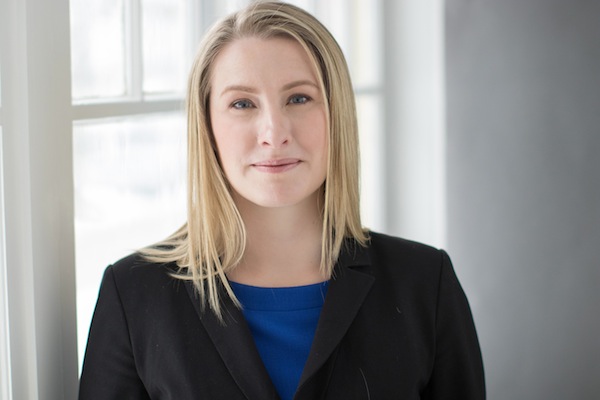
Joanne Seiff has written regularly for the Winnipeg Free Press and various Jewish publications. She is the author of three books, including From the Outside In: Jewish Post Columns 2015-2016, a collection of essays available for digital download or as a paperback from Amazon. Check her out on Instagram @yrnspinner or at joanneseiff.blogspot.com.
Posted on May 29, 2026May 28, 2026Author Joanne SeiffCategories Op-EdTags antisemitism, Canada, education, governance, history, Mark Carney, Mennonites, Nazi party, policy, politics, terrorism
From Soviet to Nazi rule

From Soviet to Nazi rule

Aileen Friesen has researched how Mennonites living the area of current-day Ukraine reacted to the Nazis. (photo from Aileen Friesen)

An event titled Jews, Mennonites and the Holocaust took place in Winnipeg at the Rady Jewish Community Centre a few months ago. Organized by the Jewish Heritage Centre of Western Canada, it featured Mennonite historians Aileen Friesen, executive director of the D.F. Plett Historical Research Foundation, and Hans Werner, a retired University of Winnipeg professor, who discussed Russian Mennonite reaction as the Nazis invaded Russia during the Second World War.

“I am from a Mennonite background,” said Friesen in a post-event interview with the Independent. “That is, on both sides of my family – one side came to Canada in the 1870s, with the migration of Mennonites from the Russian Empire during that time, and the other part of my family came to Canada in the 1920s, with the migration from the Soviet Union.”

The Nov. 5 discussion focused on the area that comprises current-day Ukraine, which, during the time of the Nazi invasion, was occupied by what was then the Soviet Union. Mennonites who were in the region at that time were not of German heritage, but they spoke German and were viewed by the Nazis as allies. As well, the Russians expected that these Mennonites would be sympathetic to Germany and did what they could to relocate them to eastern Russia prior to the Nazi invasion.

“The way we think of this nation’s state … is just not what it is in the 18th century,” said Friesen. “It’s a very multi-ethnic space in which we have a lot of German speakers, and we talk about the Polish-Lithuanian commonwealth as a very multi-ethnic territory.

“We don’t have the concentration camps – we have a lot of mass shootings that are going to take place in this territory. So, Mennonites are living in a space that becomes under Soviet control, and they live under Stalinism. And then, it will become occupied by German forces, and then they will be living under German occupation.”

As the Nazis invaded, they were looking for people from the local population with German affiliation to integrate into the administrative system, while targeting the Jewish population – to have them register, to wear the Star of David and to separate them from other sections of the population.

According to Friesen, many Mennonites looked at the Nazis as liberators from the Stalinist occupation, which oppressed the Mennonite community in the area and enforced an atheistic existence. The responses of other Mennonites to the Nazi treatment of Jews were mixed: some responded in horror, but most remained silent.

“Sometimes, they say in memoirs that they said something to the German occupying forces, that they can’t do this,” said Friesen. “But, this is a time when people have been demoralized by Stalinism and have learned to keep their mouths shut…. But you will see that some people are very upset about what’s happening to the Jewish population…. Where there is a mix of Mennonites and Jews, there is also some intermarriage, so there were people who felt a great affiliation with their Jewish neighbours and felt very upset about this.

“My topic, specifically, focuses on a segment of the Mennonite population that joined into the secret police (SS), the local police, and are, therefore, implicated in the massacres that took place, as the local police were participants in these massacres.” Friesen said there were “Ukrainians, Mennonites and other types of ethnic Germans in the Ukrainian local police.”

As the Nazis invaded, they ranked the population, placing the Mennonites higher than the Ukrainian/Russian population, as they were considered by the Nazis to be Volksdeutsche (German folk). This allowed Mennonites access to more resources and they were better treated.

Before the Nazis invaded, she said, Mennonites and Jews “occupied a space together.” For example, “in Chortitza, there was a synagogue and there was also a Russian Orthodox church, and a Mennonite church that was in operation before the Soviets took power. It’s a space in which people organized and interacted with each other and, yet, these forces that get imposed upon them, there’s a reaction from within the local community that, in the case of the Mennonites, I don’t think that was a response that served them … at least some people … bought into these ideas that the Germans brought into this territory. It dovetails with some of the ideas they had of their own suffering under the Soviet regime and they accepted the dehumanization and sometimes participated in the dehumanization of others, which is really a sad story.”

Friesen encouraged readers to watch the event video on YouTube.

“There were some interesting questions and responses from the audience,” said Friesen. “We had a good turn out, from both the Mennonite and the Jewish communities, discussing these very difficult issues. I think the lectures online will give you a much better background to this story than I’ve been able to share.”

Rebeca Kuropatwa is a Winnipeg freelance writer.

Format ImagePosted on February 21, 2020February 19, 2020Author Rebeca KuropatwaCategories NationalTags Aileen Friesen, history, Holocaust, Mennonites
Proudly powered by WordPress