Skip to content
  • Home
  • Subscribe / donate
  • Events calendar
  • News
    • Local
    • National
    • Israel
    • World
    • עניין בחדשות
      A roundup of news in Canada and further afield, in Hebrew.
  • Opinion
    • From the JI
    • Op-Ed
  • Arts & Culture
    • Performing Arts
    • Music
    • Books
    • Visual Arts
    • TV & Film
  • Life
    • Celebrating the Holidays
    • Travel
    • The Daily Snooze
      Cartoons by Jacob Samuel
    • Mystery Photo
      Help the JI and JMABC fill in the gaps in our archives.
  • Community Links
    • Organizations, Etc.
    • Other News Sources & Blogs
    • Business Directory
  • FAQ
  • JI Chai Celebration
  • JI@88! video

Recent Posts

  • Legal help for students
  • Revisiting myth of Lilith
  • Wrong person rebuked
  • Canada’s mixed messages
  • Questions for museum
  • Symposium on antizionism
  • Making soccer political
  • CJPAC lauds Pulver’s impact
  • City recognizes Vrba’s legacy  
  • Organ donation saves lives
  • Theodore’s March premiere
  • A healing Shabbaton
  • Supplying healthy food
  • A chime of metal tags
  • Yellowknife seder a first
  • Ishai energizes, unifies
  • A Lag b’Omer to remember
  • Expanding the healing
  • Hannah Senesh – a unique hero
  • Community milestones … May 2026
  • Sharing her testimony
  • Fall fight takes leap forward
  • The balancing of rights
  • Multiple Tony n’ Tina roles
  • Stories of trauma, resilience
  • Celebrate our culture
  • A responsibility to help
  • What wellness means at JCC
  • Together in mourning
  • Downhill after Trump?
  • Birth control even easier now
  • Eco-Sisters mentorship
  • Unexpected discoveries
  • Study’s results hopeful
  • Bad behaviour affects us all
  • Thankful for the police

Archives

Follow @JewishIndie
image - The CJN - Visit Us Banner - 300x600 - 101625

Tag: Malka Pischanitskaya

Remembrance – a moral act

Remembrance – a moral act

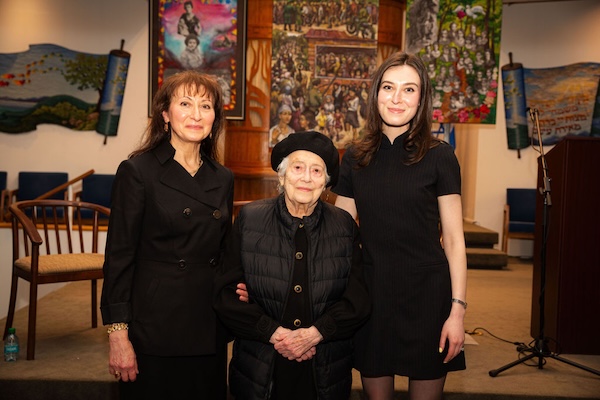
Malka Pischanitskaya, centre, told her story of survival at the Vancouver community’s Yom Hashoah ceremony. Her daughter, Inna Turner, and granddaughter, Sophie Turner, also spoke at the April 14 event. (Rhonda Dent Photography)

Even before the Holocaust upended her life, Malka Pischanitskaya’s family was hobbled by poverty. Her father left before she was born, and she was largely raised by her grandmother and great-aunt while her mother worked elsewhere. After the Nazi invasion reached Romaniv, Ukraine, in 1941, when Malka was 10 years old, she saw Jews murdered in the streets. On Aug. 25, 1941, Romaniv’s Jews were rounded up for mass execution. 

On that day, there was a pounding on the family’s front door and orders to assemble at a central location. What followed was chaos, crowds converging from all directions, families separated. Men were taken away and executed.

“The screams of men were just horrible,” she recalled. 

Malka and her mother survived only because, after hours of terror, some mothers with children were unexpectedly released. Most of their family and community were murdered.

What followed were years of hiding, near-starvation and repeated brushes with death. The title of Pischanitskaya’s memoir, A Mother to My Mother, published by the Azrieli Foundation, comes from the reversal forced on her by war: her mother was so traumatized that young Malka often became the more practical, protective figure, begging for food and helping keep them alive. (See jewishindependent.ca/a-harrowing-survival-story.) 

Pischanitskaya shared her story April 14 at the annual Yom Hashoah community event, marking Holocaust Remembrance Day, in conversation with Ellie Lawson, education manager of the Vancouver Holocaust Education Centre.

Each day, Malka left her mother hidden – in a haystack, a trench, wherever they could remain unseen – and went from door to door in nearby villages, begging for bread. Malka had gone to a Ukrainian public school and spoke Ukrainian fluently, while her mother was identifiably Jewish by her accent. Sometimes people helped, sometimes they could not, but two people in particular probably ensured Malka and her mother lived.

One of those people was Lydia. When Malka first approached her, Lydia demurred. “My home is so empty,” she said. “Like a crystal bowl.” 

Malka proposed that, if Lydia would hide her and her mother, she would continue to gather food and share it. Lydia agreed and, for more than a year, Malka and her mother lived hidden in Lydia’s home.

Eventually, neighbours became suspicious. Malka and her mother moved, this time to the home of a young orphan who, like Lydia, chose to help despite the risks.

Both women would be recognized at Yad Vashem as Righteous Among the Nations.

“They needed us as much as we needed them,” Pischanitskaya said of the relationships forged in desperation. 

By the end of the war, nearly 40 members of her family were gone – and she began to rebuild a life. “I was not sitting and crying,” she said. “I was mobilized.” 

They returned to Romaniv to find almost nothing left. Malka finished school, earned a teaching diploma in Zhytomyr in 1954. She married, had two children, lived in Tashkent and Uzhhorod, and immigrated to Vancouver in 1975. For decades, she did not speak about her Holocaust experiences.

Pischanitskaya’s daughter, Inna Turner, who joined her at the Yom Hashoah event, grew up with the emotional weight of that silence.

“I didn’t know she was a Holocaust survivor,” Turner said. “But I felt it.”

Turner said the silence had a profound effect on her life.

“I think many Holocaust survivors suffer from PTSD,” she said. “And, in the olden days we didn’t know much about it. We know more now, or at least we think we do, and we know that it affects an individual. But it affects not just an individual, it affects people who are the closest to the individual, like children, grandchildren, spouses, siblings, the family. Being a child of a Holocaust survivor, well, what can I say? Not a walk in the park, that’s for sure.”

Only years later did Pischanitskaya begin to speak – through a community of survivors, art and writing.

Pischanitskaya’s granddaughter, Sophie Turner, introduced her not only as a survivor, but as a grandmother who is strong and resilient. She sees her grandmother’s story as a responsibility she and others of her generation are obligated to sustain. “This is not only history,” she said. “It is living memory that we carry with us.” 

Survivors lit candles representing six million lives lost, including one and a half million children. Vancouver Mayor Ken Sim and US Consul General Shawn Crowley were among the dignitaries who attended. Rabbi Dan Moskovitz, senior rabbi at Temple Sholom, which hosted the event with the Vancouver Holocaust Education Centre and the Jewish Community Centre of Greater Vancouver, with support from the Jewish Federation’s annual campaign and the Province of British Columbia, welcomed attendees.

“We live in a time when the language of the Holocaust is being used in ways that empty it of meaning,” said Moskovitz, “Words like genocide, once anchored in specific historical reality, are now invoked casually…. Comparisons are made that collapse moral distinctions rather than clarify them. And, perhaps most troubling, the Holocaust itself is sometimes inverted – Jews recast not as victims, but as perpetrators. This is not just inaccurate, it is dangerous. The Holocaust was not a metaphor. It was not a slogan. It was the systematic, industrialized attempt to annihilate the Jewish people. Six million Jews were murdered, families were erased, entire communities were destroyed. That reality demands precision, honesty and reverence. And when that truth is blurred, something else is lost as well. Empathy is lost. Understanding is lost. And the moral clarity that the Holocaust calls us to carry into the world begins to fade.”

“Remembrance is not a passive state of being,” said Hannah Marazzi, executive director of the VHEC. “It is an act of moral choice … an act of resistance.” 

In addition to mourning those murdered, she said, Yom Hashoah is about honouring survivors. “Those who endured unimaginable suffering and yet found the strength to go on,” she said. “Many rebuilt their lives here in Canada. Their resilience, wisdom and testimony have shaped not only this community, but the city of Vancouver, and continue to shape the work that we undertake at the Vancouver Holocaust Education Centre.”

A musical program included Abbygail Sandler, Cantor Michael Zoosman, Cantor Shani Cohen, Lisa Kesselman and Ellie Sherman. They were accompanied by Eric Wilson on cello, Erin Marks on oboe, Wendy Bross Stuart and Perry Ehrlich on piano. Cantor Yaacov Orzech chanted the memorial prayer El Moleh Rachamim. 
Format ImagePosted on April 24, 2026April 23, 2026Author Pat JohnsonCategories LocalTags Dan Moskovitz, Hannah Marazzi, Holocaust, Inna Turner, Malka Pischanitskaya, remembrance, Sophie Turner, Vancouver Holocaust Education Centre, VHEC, Yom Hashoah

A harrowing survival story

Almost every Holocaust survivor’s narrative involves some combination of extraordinary coincidence, righteous humanity amid dystopia or a series of chance events that astonishingly result in survival against all odds. The number of such flukes in the life of Vancouver woman Malka Pischanitskaya may convince readers of the author’s conclusion that survival was her destiny.

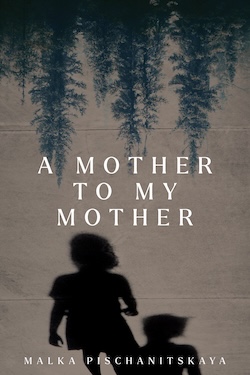
image - A Mother to My Mother book coverPischanitskaya’s memoir, A Mother to My Mother, is one of the latest releases in the Azrieli Foundation’s Holocaust Survivor Memoirs Program. Begun in 2005, the program has now published scores of firsthand testimonies of Canadian Holocaust survivors, many in both official languages, and all of them available free of charge to educational institutions.

Pischanitskaya’s Ukrainian Jewish family knew its share of misery before the emergence of Nazism and war. Her father abandoned her mother before Malka was born, in 1931, and she was raised in grinding poverty by her grandmother and great-aunt while her mother worked in a nearby village and saw Malka some weekends. 

The Stalinist-induced Ukrainian famine of the 1930s killed between three and five million people. The Nazi invasion of the Soviet Union, and its perpetration of the “Holocaust by bullets,” killed 1.5 million Jews, mostly shot at close range and buried in mass graves.

Young Malka’s earliest life, despite hardships, was not without happy memories of Jewish holidays and the changing of the seasons. These are tempered with stark recollections. Without electricity or anything but firewood for heat, she recalls Ukrainian winters so cold the ink at school would freeze solid.

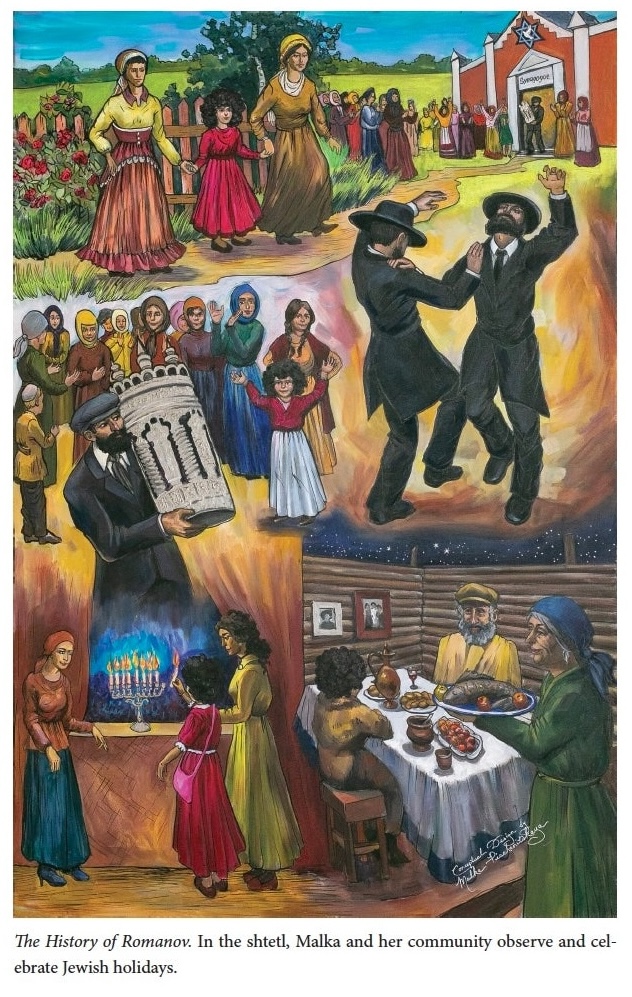
image - A page from Malka Pischanitskaya’s memoir A Mother to My Mother, which includes paintings that she created for a 2019 exhibition
A page from Malka Pischanitskaya’s memoir A Mother to My Mother, which includes paintings that she created for a 2019 exhibition.

After the Nazi invasion of Poland and the beginning of the war, in 1939, five refugee families from Poland arrived in Romaniv (alternatively: Romanov). 

“I have often wondered how much my community found out from these refugee families about what was happening under the Nazis in Poland and whether this made them more aware of the disaster that was to come,” writes Pischanitskaya. 

What was to come was beyond imagining – which may help explain why Malka and her family remained in Romaniv when some other Jews fled further east into the Soviet Union.

“We were not ready – there had been no mental preparation for this moment – so we did not accept the offers to escape,” she writes.

Soon, the Nazis arrived and young Malka witnessed Jews being killed in the streets. The randomness of those murders was replaced with methodical mass executions. The story, starkly told, is predictably shocking, and differs significantly from what happened further west. Rather than ghettos and concentration camps, the Holocaust in the east was typified by summary roundups and mass killings of entire communities, usually in adjacent forests. 

On Aug. 25, 1941, Ukrainian police gave Romaniv’s Jews 30 minutes to congregate in the centre of town.

“Those who were unable to walk had been taken out of their homes on stretchers,” she writes, disabusing Jews of the desperate idea they were being assembled to perform forced labour.

“We walked toward the beautiful park located a couple kilometres from the centre of town,” writes Pischanitskaya. “The crowd of close to 2,000 walked with visible sadness, expressions of disbelief.

“Men were rounded up, separated from their families, and then marched deeper into the forest where, previously, pits both massive and deep, had been dug. Women, children and the elderly were forced into rooms in the military building. Crowded in, there was hardly space to stand. Windows were locked. No fresh air; no water; no washrooms. People screamed, fainted, losing their minds; children were scared and restless.

“One by one, several groups of Jewish people were taken to slaughter. While we were kept in the building, waiting our turns, the heavy ring of machine gun fire instilled extreme fear and terror in all. The slaughter of the Jews from the Romaniv community continued from early morning until dusk – the sun had faded from our lives forever.” 

Then: the first of the miracles that spared the life of Malka and her mother.

“Eventually, mothers with children were let go from the building,” she writes. “Perhaps the murderers were tired from their orgy of death and torture, or perhaps there was no room in the pits for the rest of us, but those who had to remain were slaughtered. We left them, still alive, when we had the chance to run for our lives.”

Here, Pischanitskaya catalogues the names of the many family members killed that day. She goes into grim detail about what witnesses reported from the pits.

Thus began years of hiding – and a succession of near-misses, any one of which would likely have been fatal.

The relationship that gives the book its title, of young Malka mothering her mother, is a story of a parent so paralyzed by events that she becomes almost incapacitated. Malka’s astonishing and perilous actions to ensure their survival form the bulk of the book. She begs door to door in the villages where they hide, often receiving small portions of food. At one home, she sees her own portrait on the wall, apparently pillaged from Malka’s family home after they fled – an uncanny and grotesque coincidence.

When, after the war, they returned to Romaniv, “Almost nothing remained except for memories.”

“Adult survivors went to the mass graves to pray for and memorialize their loved ones, and to bear witness,” writes Pischanitskaya. 

Of all the people who survived and showed up alive after the war was Malka’s “so-called father,” as she calls him, a man whose sadistic cruelty Malka and her mother would have been better off without.

In a twist, the mother who had been “a dependent child” transformed into a courageous woman who pursued Polish and Ukrainian police for war crimes.

Like so many survivors, Pischanitskaya demonstrated improbable resilience, marrying, becoming a teacher, becoming a mother, escaping the Soviet Union, migrating to Canada and raising a successful family that continues to contribute to Vancouver’s Jewish and broader community. 

A Mother to My Mother is illustrated with harrowing, moving paintings that Pischanitskaya created for an exhibition titled Romanov: A Vanished Shtetl, which was presented at the conference of the World Federation of Jewish Child Survivors of the Holocaust and their Descendants, held in 2019 in Vancouver.

To order a copy of A Mother to My Mother in print or ebook format, or any other survivor memoir, visit memoirs.azrielifoundation.org.

Posted on September 20, 2024September 18, 2024Author Pat JohnsonCategories BooksTags A Mother to My Mother, art, Azrieli Foundation, history, Holocaust, Malka Pischanitskaya, memoir, painting, Ukraine
Proudly powered by WordPress