Skip to content
  • Home
  • Subscribe / donate
  • Events calendar
  • News
    • Local
    • National
    • Israel
    • World
    • עניין בחדשות
      A roundup of news in Canada and further afield, in Hebrew.
  • Opinion
    • From the JI
    • Op-Ed
  • Arts & Culture
    • Performing Arts
    • Music
    • Books
    • Visual Arts
    • TV & Film
  • Life
    • Celebrating the Holidays
    • Travel
    • The Daily Snooze
      Cartoons by Jacob Samuel
    • Mystery Photo
      Help the JI and JMABC fill in the gaps in our archives.
  • Community Links
    • Organizations, Etc.
    • Other News Sources & Blogs
    • Business Directory
  • FAQ
  • JI Chai Celebration
  • JI@88! video

Recent Posts

  • האלימות בישראל מורגשת בהרבה מגזרים
  • טראמפ עוזר דווקא לנושא הפלסטיני
  • New rabbi settles into post
  • A light for the nations
  • Killed for being Jewish 
  • The complexities of identity
  • Jews in time of trauma
  • What should governments do?
  • Annie will warm your heart
  • Best of the film fest online
  • Guitar Night at Massey
  • Partners in the telling of stories
  • Four Peretz pillars honoured
  • History as a foundation
  • Music can comfort us
  • New chapter for JFS
  • The value(s) of Jewish camp
  • Chance led to great decision
  • From the JI archives … camp
  • עשרים ואחת שנים להגעתי לונקובר
  • Eby touts government record
  • Keep lighting candles
  • Facing a complex situation
  • Unique interview show a hit
  • See Annie at Gateway
  • Explorations of light
  • Help with the legal aspects
  • Stories create impact
  • Different faiths gather
  • Advocating for girls’ rights
  • An oral song tradition
  • Genealogy tools and tips
  • Jew-hatred is centuries old
  • Aiding medical research
  • Connecting Jews to Judaism
  • Beacon of light in heart of city

Archives

Follow @JewishIndie
image - The CJN - Visit Us Banner - 300x600 - 101625

Tag: Hannah Marazzi

Rebuilding a life after Shoah

Rebuilding a life after Shoah

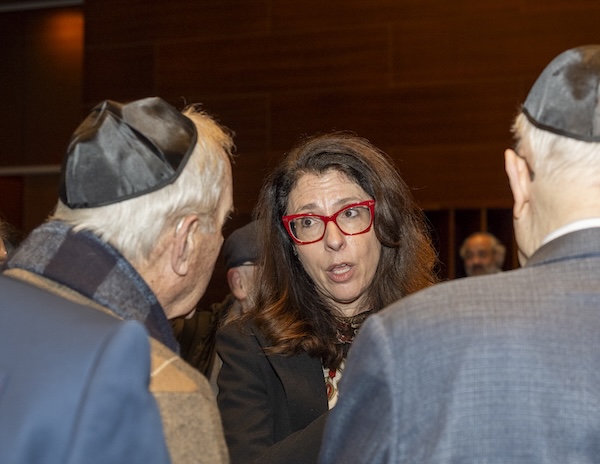
Prof. Robin Judd, author of Between Two Worlds: Jewish War Brides After the Holocaust, speaks with community members at the Kristallnacht commemoration in Vancouver Nov. 9. (photo by Sova Photography)

The history of war brides – generally British or European women who married Allied military men – is widely known and has been explored by historians and social scientists. Between 1944 and 1948, about 65,000 dependents came to Canada as spouses or intended spouses of military personnel. 

Speaking at Vancouver’s annual Kristallnacht commemorative event Nov. 9 at Congregation Beth Israel, Prof. Robin Judd discussed an almost unknown subset of this phenomenon: Holocaust survivors who met Allied soldiers in displaced persons’ camps after the war and went on to marry them.

Judd is associate professor of history at Ohio State University and immediate past president of the Association for Jewish Studies, the largest international society for scholars of Jewish studies. Her award-winning book Between Two Worlds: Jewish War Brides After the Holocaust explores the harrowing task of rebuilding a life in the wake of the Holocaust. 

Many Jewish survivors, as well as community and religious leaders, viewed marriage between Jewish women and military personnel as a way for the survivors to move forward after extraordinary trauma, said Judd, whose academic interest in the subject stems from family history.

“My grandmother was a war bride,” Judd said. “She was a survivor. She and my father survived the war in hiding. My biological grandfather died at liberation, and my grandmother married an American soldier after the war, who then adopted my father.”

Her grandmother spoke little about her experiences during or immediately after the war, though Judd knew the rough outline of her past. Only when Judd began research into the subject did she learn that her grandmother’s experience was not as unique as Judd had assumed.

The individual stories of these war brides, and their efforts to integrate, offer lessons around survival in the aftermath of trauma, as well as larger issues concerning marriage, immigration and citizenship, she said. 

Judd focused on a few couples, including Isaac and Leesha (neé Leisje Bornstijn) Rose, and Sala (neé Solarcz) and Abe Bonder.

Sala survived in the Warsaw Ghetto for more than a year, before deportation to a ghetto outside Lublin, then to Majdanek and a series of other camps. She was liberated during a death march in April 1945.

At Rosh Hashanah services at a DP camp in Hanover, she met Abe, a mechanic in the Royal Canadian Air Force. Until then, Judd said, Sala had avoided the Canadian and British soldiers overseeing the DP camp because she said they made her feel like a monkey in the zoo.

“But Abe came to her and started to speak to her in a very quiet Yiddish,” Judd recounted. “It was his questioning, his real interest in understanding who she was and what she had experienced that made her want to seek a second encounter with him.”

Many of the war brides found themselves at the whims of their new extended families, subsumed into existing structures that were foreign and unfamiliar. Often, they arrived in the new country and did not have homes of their own but lived with their husbands’ families, sometimes with multiple generations in the same home.

Leesha arrived in Ottawa and moved in with fiancé Isaac and her soon-to-be mother-in-law, with whom she had limited language skills to communicate. The groom’s mother took it upon herself to plan the wedding. 

“Leesha and other war brides are often talking about how, in these moments, whether it was the marriage or it was having their first child, or it was their first child’s bar or bat mitzvah, or their first child’s wedding, how they so desperately missed those murdered family members at that time,” Judd said.

Newcomers were sometimes judged unfairly, as if their healthy appearance diminished the perception of their suffering. A newspaper article described Leesha as “a good-natured chubby little girl.”

“There was this notion that these women looked almost too healthy,” said Judd, “That the trauma was almost not written sufficiently enough on her body.”

Associations and networks existed for the newcomers to connect with others from similar backgrounds, including Jewish war bride clubs and synagogue-affiliated groups. 

The war bride experiences Judd studies are diverse and include sad but also happy memories, she said, from the difficulties of reconstruction and recovery to stories of resilience and rebuilding.

Prof. Chris Friedrichs, a scholar of German history who taught at the University of British Columbia from 1973 until his retirement in 2018, contextualized Judd’s presentation, as well as Kristallnacht and the larger history of the Holocaust. 

Kristallnacht sent a message to the world, he said. But the world did not listen.

“This horrific Night of Broken Glass was front page news all over the world, but not for long,” he recounted. “Much else was going on in the world at that time and, within a few days, Kristallnacht was forgotten. In fact, the world learned nothing from Kristallnacht. But the Nazis learned a lot. They realized that whatever they might do to the Jews, there would be no consequences. And thus, once Hitler’s war started in 1939, within Germany itself and in every country the Germans conquered under cover of war, a relentless program to exterminate the Jews began to be carried out by beatings, by shootings, by starvation and by gas.”

Hannah Marazzi, executive director of the Vancouver Holocaust Education Centre (VHEC), which presented the event in partnership with Beth Israel and the Jewish Federation of Greater Vancouver, called Kristallnacht “a defining moment in which the shadow of hatred quite literally burst into flame.” 

Dr. Abby Wener Herlin, associate director of programs and community relations for the VHEC, introduced Holocaust survivors, who lit candles of remembrance. 

“Tonight, as we are about to light candles … we vow never to forget the lives of the women, men and children who are symbolized by these flames,” she said. “May the memory of their lives inspire us to live so that we may help to ensure that their memories live on.”

Beth Israel’s Rabbi Jonathan Infeld thanked the speaker and reflected on his family’s experience.

“My father left the DP camp and moved to Pittsburgh,” Infeld said. At a party at the Jewish community centre specifically to make shidduchim, marriage matches, for Holocaust survivors, he met the woman who would become his wife and the rabbi’s mother.

photo - Vancouver Deputy Mayor Sarah Kirby-Yung, centre, and councilors Lenny Zhou and Lucy Maloney at the Nov. 9 Kristallnacht commemoration
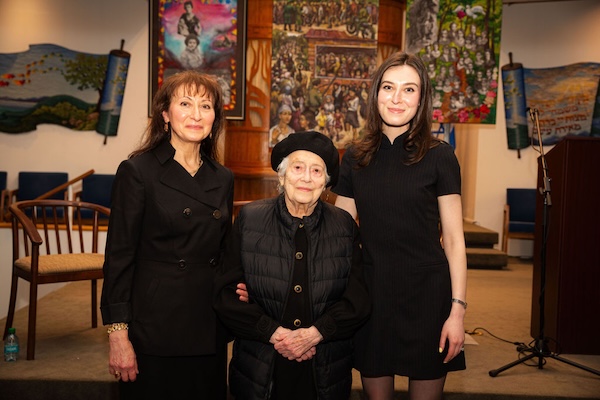
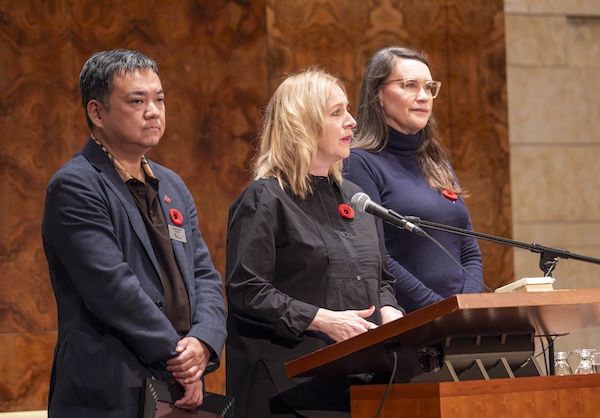
Vancouver Deputy Mayor Sarah Kirby-Yung, centre, and councilors Lenny Zhou and Lucy Maloney at the Nov. 9 Kristallnacht commemoration. (photo by Sova Photography)

Cantor Yaakov Orzech chanted El Moleh Rachamim, the memorial prayer.

Taleeb Noormohamed, member of Parliament for Vancouver Granville, warned of the dangers of ignoring the lessons of history.

“If we don’t take the lesson that remembrance requires us to take, we end up with a quiet normalization of what that night represented,” he said. “This is a fight that we all take on. We take on with responsibility, we take on with conviction, and we take it on to honour all of you who survived and all of you that have relatives and friends and loved ones that didn’t. So, we say, may their memory be a blessing and, indeed, may it be, but may it also be a reminder to all of us that the work that is to be done is for all of us.”

Terry Yung, member of the BC Legislature for Vancouver-Yaletown and a retired senior officer with the Vancouver Police Department, told the audience the future depends on education.

“We cannot arrest ourselves out of hate, we cannot,” he said. “We have to educate people in this world of darkness.”

Sarah Kirby-Yung, deputy mayor of Vancouver, and fellow city councilors Lenny Zhou and Lucy Maloney read a proclamation from the city. 

Posted on November 21, 2025November 20, 2025Author Pat JohnsonCategories LocalTags Beth Israel, Chris Friedrichs, Hannah Marazzi, history, Holocaust, Jonathan Infeld, Kristallnacht, Robin Judd, Sarah Kirby-Yung, Shoah, Taleeb Noormohamed, Terry Yung, Vancouver Holocaust Education Centre, VHEC, war brides
Marazzi at VHEC helm

Marazzi at VHEC helm

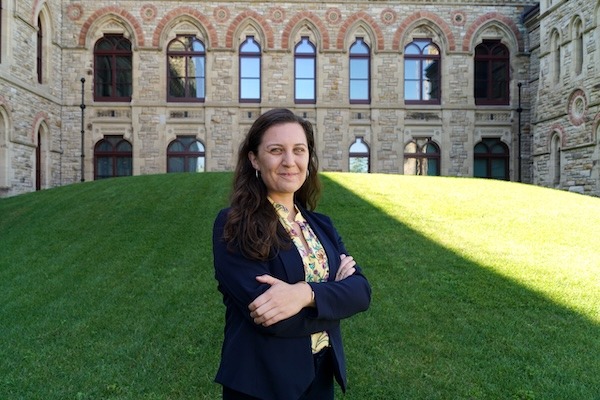
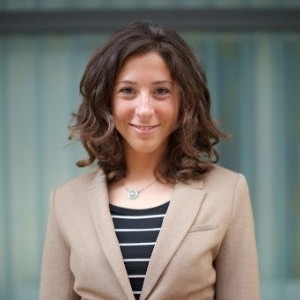
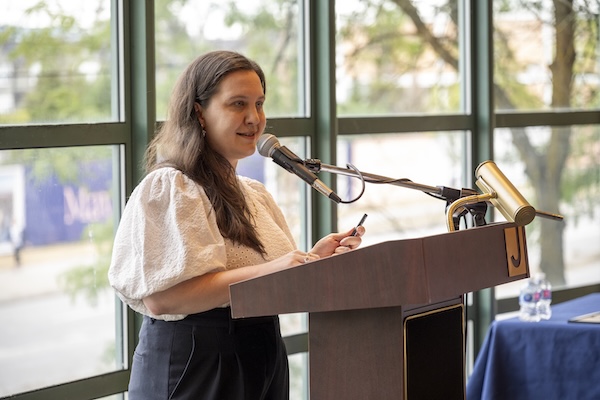
Hannah Marazzi is the new executive director of the Vancouver Holocaust Education Centre. (photo by Alina Ilyasova)

The Vancouver Holocaust Education Centre, which is marking three decades of educating about and commemorating the Shoah, has a new executive director: Hannah Marazzi. She is the first person of non-Jewish background to hold the role.

Barry Dunner was the first executive director of the Vancouver Holocaust Centre Society for Education and Remembrance, the not-for-profit organization that operates the VHEC. Ronnie Tessler then helmed the centre, followed by the late Dr. Roberta Kremer, then Frieda Miller. Nina Krieger served more than a decade as head of the institution before successfully running for the British Columbia legislature last fall. (See story, jewishindependent.ca/krieger-takes-on-new-roles.)

Marazzi had been the VHEC’s director of communications and special projects for about 10 months before being appointed interim executive director. Her permanent appointment was announced on June 17, at the annual general meeting of the society.

The organization’s president, Al Szajman, credited Marazzi’s background as a good fit.

Formally announcing Marazzi’s appointment, Szajman noted her role as “Irwin Cotler’s right-hand person” and her existing relationships with partner groups like the International Holocaust Remembrance Alliance, and with various foundations, government leaders and influencers locally, nationally and internationally.

“In short, we’ve come to recognize Hannah as a leader, someone with passion, vision and maturity. Her Italian-Mennonite background reminds everyone that you don’t have to be Jewish to stand against antisemitism and advance the lessons that everyone should have learned about the Shoah,” he said.

Marazzi has an undergraduate degree in history, political science and government from Trinity Western University and a master’s degree in public policy from Cambridge, where she served as an assistant editor of the Cambridge Review of International Affairs. 

Early in her career, she was working on Parliament Hill when Cotler reached out to her boss, then-MP for West Vancouver-Sunshine Coast-Sea to Sky Country John Weston, to become involved in the case of a woman sentenced to death in Iran. Through the Cotler connection, Marazzi went on to help organize the Nuremberg Legal Symposium. The gathering, which was co-created by March of the Living and the Raoul Wallenberg Centre for Human Rights, in 2016, educated legal professionals and the next generation about the lessons of Nuremberg and how to apply them today, especially as the legal sector addresses hate, denial and incitement. Marazzi became administrative coordinator for the event.

She went on to work for the Cardus Institute, a Christian think tank, and then for United Nations Volunteers, in Amman, Jordan, before Cotler coaxed her to join him when he was appointed to inaugurate the office of Canada’s Special Envoy on Preserving Holocaust Remembrance and Combatting Antisemitism.

Marazzi returned to the West Coast – she grew up in the Fraser Valley – to be closer to her family when her father faced a health crisis.

Addressing the VHEC annual meeting, Marazzi paid tribute to the founders of the organization, who opened the doors to the centre 30 years ago, including Dr. Robert Krell, the founding president, who was present at the meeting.

She reflected on her first visit to Auschwitz, at age 22, 10 days after graduating from university.

“I did not know then that I would return to places like Auschwitz, Treblinka and many other sites of memory and begin learning in my own country at places like the Vancouver Holocaust Education Centre,” she said. “I feel strongly in my bones that we must not allow the lessons of the Holocaust to fade from memory. As my mentor Irwin Cotler says, ‘No one can say that we did not know. We knew. But we did not act.’ This is why I believe so resolutely in the power of Holocaust education to awaken us to the reality of what happens when a society, through silence and inaction, allows evil to flourish unchecked.”

The VHEC has become Western Canada’s leading Holocaust museum dedicated to the promotion of social justice, human rights and genocide awareness. It is at a turning point in its history, as all such facilities prepare for an era when there are no longer eyewitnesses to the events who can share their narratives.

Holocaust museums have increasingly used technology to capture and immortalize those stories – and Marazzi credited Krell as a pioneer in that field, having begun one of the world’s earliest archives of video-recorded survivor testimonies, beginning when the technology was fresh.

Broader developments in the community will have a profound impact on the VHEC. The centre is slated to double in size and attain a new visibility thanks to JWest, the redevelopment of the Jewish Community Centre of Greater Vancouver, where the VHEC is located.

Marazzi emphasized the importance of partnerships in the VHEC’s success, including local connections, such as with the Roma and Rwandan communities. After the Russian invasion of Ukraine, the VHEC partnered with the University of British Columbia to bring to Vancouver 

Dr. Nataliia Ivchyk – an expert on Holocaust studies in Ukraine and East-Central Europe, focusing on gender, memory politics and the experiences of Jewish children during the Holocaust – who was identified as a scholar-at-risk. At the VHEC, Ivchyk took on the Russian-Language Holocaust Testimony Project, conducting interviews with Russian-speaking survivors in the Lower Mainland.

Internationally, World Jewish Congress has reached out to borrow the centre’s current exhibit, Age of Influence, which focuses on how the Nazi regime used propaganda specifically targeted at raising and indoctrinating young Germans. Demand for this exhibit, an original VHEC creation, has led to the creation of traveling versions. 

Marazzi acknowledged that, when she tells people where she works, they sometimes suggest it must be a depressing daily grind.

“It’s actually the most hopeful place you can be at this time,” she said. “You have the survivors who have experienced unimaginable horrors and yet not only are they here with us contributing to society in extraordinary ways, they are willing to dig deep into what was the worst experience of their life and share it to educate students.”

The VHEC has never been busier, she added. Hundreds of kids, teachers and adults, including elected officials and diplomats, law enforcement, groups of coworkers, unions and others, attend the exhibits every week. At national and international conferences, Marazzi has discovered this is not the case in all such institutions. Security fears and possibly other factors have seen attendance drop in many Holocaust education institutions, she said, even amid a flourishing of antisemitism and intolerance, the phenomena they are intended to address.

Marazzi credits the trajectory of success with the work that the VHEC has done for the past 30 years in creating relationships based on trust and mutual respect with other communities, school districts and educators across the province. 

“We are completely inundated and it’s exhausting but it’s delightful,” she said.

The confluence of events – Marazzi’s appointment, the impending expansion of the VHEC and the global increase of antisemitism – place the organization at a moment of challenge and opportunity, said Szajman.

“The moment is – I was going to say big, but it’s huge,” he said. “In my lifetime, I’ve never seen the kind of antisemitism that I’m witnessing now. It sounds horrible, but I’m glad my father, a Holocaust survivor who passed away a few years ago, doesn’t have to see it. I think there’s been a very overt and visible right-wing antisemitism for decades. What we’ve witnessed over the last few years in particular is this explosion of left-wing antisemitism, sometimes overt, sometimes veiled – and thinly veiled at that.” 

The organization’s work has never been more important, he said.

While the eventually expanded VHEC will accommodate more visitors, Szajman noted that the centre has always reached beyond its walls, going to audiences where they are – both in-person and through virtual technologies even before these became everyday tools during COVID.

Szajman used to call the VHEC “the little engine that could.”

That’s not true, though, he said.

“It’s the little engine that does. It’s remarkable. This tiny little group of people who bust their butts every day putting in incredible hours, are so committed, including not just Jewish staff. It’s non-Jewish staff, too, that are so committed to this that, as a board member and as president, I couldn’t be any more motivated if you paid me,” he said, adding with a trademark laugh: “And they don’t.”

Editor’s note: This article is different than the print version that ran July 25, 2025, to reflect more fully the list of executive directors who helmed the VHEC.

Format ImagePosted on July 25, 2025August 19, 2025Author Pat JohnsonCategories LocalTags Al Szajman, antisemitism, education, Hannah Marazzi, museums, Vancouver Holocaust Education Centre, VHEC
Proudly powered by WordPress