Skip to content
  • Home
  • Subscribe / donate
  • Events calendar
  • Business Directory
  • FAQ
  • News
    • Local
    • National
    • Israel
    • World
    • עניין בחדשות
      A roundup of news in Canada and further afield, in Hebrew.
  • Opinion
    • From the JI
    • Op-Ed
  • Arts & Culture
    • Performing Arts
    • Music
    • Books
    • Visual Arts
    • TV & Film
  • Life
    • Celebrating the Holidays
    • Travel
    • The Daily Snooze
      Cartoons by Jacob Samuel
    • Mystery Photo
      Help the JI and JMABC fill in the gaps in our archives.
  • Community Links
    • Organizations, Etc.
    • Other News Sources & Blogs
  • JI Chai Celebration
  • JI@88! video

Recent Posts

  • SFU honours Gloria Gutman
  • Lifting people’s spirits
  • Wedding a ray of light
  • Indigeneity and Zionism
  • Rule of law broken: councilor
  • Football and its roles
  • The burden of defence
  • Fish Café returns after fire
  • All right in what goes wrong
  • Nuns & mermaids at TUTS
  • Camp offers holiday retreat
  • Students and mentors inspire
  • Once-in-a-lifetime trip
  • 100 dancers, one heart
  • Money for the sciences
  • What “Jewish food” means
  • Have a cookie, schnitzel too
  • Federation now across BC
  • Israel fighting for its existence
  • Deal strengthens Iran
  • Patriotic belonging diminishes
  • A campaign to engage
  • Upstanders’ first live event
  • Responding to Carney
  • Having your own home
  • Music a family tradition
  • Musical to warm heart
  • Community milestones … June 2026
  • Sharing her passion for Israel
  • Or Shalom reopens its doors
  • JFS from past to future
  • Need holistic approach
  • Sharing stories, advice
  • Journalist shares fears
  • Skills to live together
  • Road to independence

Archives

Follow @JewishIndie
image - CJN box ad Rockowers 2026

Tag: coronavirus

A virtual community

A virtual community

With COVID-19, we now must connect online.

As the world continues to grapple with the coronavirus (COVID-19) pandemic, Jewish organizations across Metro Vancouver are finding new ways to connect with the public.

Last week, schools and most businesses and places of worship closed their doors to support the provincial government’s directives for new social-distancing policies. For everyone, this change has required the adoption of different ways to address daily needs, like shopping, study and religious practice. It has put increased demand on organizations and businesses to think out of the box when it comes to staying in touch with and supporting their membership, clients and connections. Here’s some of what the community is doing.

New lesson plans

Schools have shifted their classes to online attendance and are creating lesson plans that allow students to study virtually and independently. Some schools, like Richmond Jewish Day School, have sent out private communications to parents, outlining class schedules and continued services. Others are using their websites or other online services to keep families apprised and facilitate the learning curve that students, parents and teachers will inevitably face using the technology.

Students at Vancouver Talmud Torah will have independent study periods and be able to use social media to connect with their teachers and peers. The school is using Google Classroom for study plans and assignments and its website notes that students who are experiencing problems, need to discuss study plans or want to connect with other class members will be able to do so during the teacher’s virtual office hour each day. For families that don’t have a computer available, the school says students will be able to sign out a laptop to use at home (one laptop per family, as inventory is limited).

King David High School’s new multimedia program launched a week ago, and it uses Zoom video services, Moodle and Google Classroom to connect with at-home students. According to KDHS’s website, the school is doing its best to keep schedules and study periods the same as they were prior to the shutdown. It is using classes prior to Passover break (April 3) to test and refine the online structure.

Shalhevet Girls High School is also working hard to keep schedules standardized and reflective of the lesson plans it offers, and students can still connect with one another during the “lunch and shmooze” hour.

Take-out and online

On March 21, the City of Vancouver ordered all in-house restaurant service to cease. Restaurants that provide take-out and delivery services have been permitted to remain open.

Many of Vancouver’s kosher restaurants already provide take-out or delivery services to the public. Omnitsky Kosher, Nava Creative Kosher Cuisine and Maple Grill have enhanced their takeaway and catering services. Some provide service through the DoorDash online app or Uber. Most are urging customers to order with sufficient advance notice.

A staff person at Maple Grill said that ordering ahead is necessary for very large orders, “but we always have take-out between 4 and 8 p.m. for smaller orders.” Patrons should keep in mind that seating – even while waiting for orders – will be closed in all restaurants during this time.

Nava, which has a take-out restaurant at the Jewish Community Centre of Greater, has requested 24-to-48-hour notice on all orders. According to Susie Siegel, although the JCCGV is currently closed, customers can pick up orders by calling or emailing their order ahead of time. Sabra Kosher Bakery also will be open for take-out and larger Passover orders.

Other restaurants that have relied largely on their in-house service have found it challenging to meet the requirements of the city’s precautionary ban. Café FortyOne has announced that it has “made the difficult decision to temporarily close to protect the health and safety of customers and staff.”

Restaurants – including non-kosher establishments like Market Meats – are also accepting orders for Passover and most have cut-off dates for orders. While many kosher restaurants are scheduled to close on April 8 for the week of Passover, customers may wish to call ahead to confirm deadlines for orders and take-out during the current shutdown.

Meanwhile, stores are also struggling. Buchan’s Kerrisdale Stationery on West 41st Avenue, which has a selection of Judaica, among many other items, is now offering delivery service. And Olive and Wild, on Main Street, which offers a variety of Judaica, Passover items, art and home décor items, is transitioning its services to better serve customers who aren’t able to shop in-person.

Simon Zaidel, who co-owns Olive and Wild with his wife Bella, admitted that the COVID-19 alert hasn’t been easy. The owners have added an online store to their website and Zaidel said patrons can either pick up their orders, have them delivered or, for those outside the Lower Mainland, request delivery by Canada Post. He added that the store is currently providing a discount to offset any delivery costs.

Safeguarding the vulnerable

Jewish Family Services, like many organizations, is shifting its services to meet increased at-home demands. Kassidy Taylor, JFS marketing and communications manager, said the organization realizes that the current health concerns are financially and logistically difficult for people of all ages. Its Emergency Care Campaign allows families and individuals to reach out for help with food, deliveries and other social support.

“It is for anyone who needs a meal or grocery delivery, counseling, emotional support or just a friendly phone visit,” Taylor said. “We are trying to support as many people as possible.”

Taylor added that, for many seniors and other individuals, having to stay at home has cut them off from food banks and various resources that don’t deliver. “We are just trying to fill in the gaps as we can,” she said of JFS’s focus.

Individuals needing assistance can contact JFS through its website or by calling the agency’s hotline, 604-558-5719. As well, the emergency care program is in need of volunteers, and those wishing to donate are welcome to contact JFS as well. “There is a lot of need right now,” Taylor said.

On another front, healthcare facilities have been taking successive steps to address the impacts of the COVID-19 outbreak. On March 17, Vancouver Coastal Health announced the closure of all adult day centres, such as the L’Chaim Adult Care Centre at the JCCGV, in an effort to protect seniors and healthcare workers from the virus. Care workers are monitoring participants by phone to ensure that medications, food and support are coordinated as necessary through VCH case managers. More information is available by logging onto the Lower Mainland Adult Care Centre Association’s website and clicking on the appropriate care centre’s link.

As of March 17, Vancouver Coastal Health also restricted visitors to Louis Brier Home and Hospital, Weinberg Residence and other care homes to “compassionate visits” that meet specific limited guidelines for continued care and end-of-life support. VCH stresses the rules are a precautionary measure to keep patients and staff protected.

Most of the community’s organizations have instituted changes to address social distancing and other limitations brought about by the outbreak. Links to each one and an overview of temporary changes are accessible through the Jewish Federation of Greater Vancouver’s website.

Virtual davening

Few Jewish organizations have been as impacted by the call for social distancing than Vancouver’s religious institutions, which have been faced with myriad challenges. Restrictions on attendance (at press time, it was limited to 50 people) and other issues have forced synagogues to rethink how best to both continue regular religious services and provide social and educational support to their members, many of whom are seniors and required to stay at home. It’s also forced organizations across Metro Vancouver to change programs and services for Passover. Most religious institutions have already canceled or transitioned upcoming holiday celebrations to Zoom online services.

On March 21, rabbis from Vancouver Lower Mainland institutions issued a joint statement to congregants outlining the synagogues’ new guidelines for attendance. Many of the congregations have transitioned to online religious services via Zoom video to ensure that their members can stay connected, supported and engaged in religious life.

Congregations Schara Tzedeck, Beth Israel, Temple Sholom and others are providing daily and/or weekly minyanim online, along with classes and “meetings” throughout the day.

Most congregations are also working to fill the gap when it comes to much-needed social interactions for teens and younger members. Synagogues have found ways to both address concerns about halachah and ensure that members struggling with the impact of isolation are supported.

Both Schara Tzedeck and Beth Israel issued new cemetery guidelines earlier this week, calling on members and guests to adhere to practices that help safeguard both the participants and others who may be at risk from exposure to the virus. Cemetery facilities are closed to the general public. Burials are, in most cases, limited to family members, with some allowances to ensure that there will be enough attendees for a minyan so mourners can say Kaddish, and unveilings have been canceled to April 30 at least. Congregants and those interested should contact the synagogues in charge for more information on the revised guidelines.

Helping those in need

Many Jewish organizations are also finding ways to help those most vulnerable get financial aid if needed. The Hebrew Free Loan Association has announced that it will lend up to $2,000 to individuals or families impacted by loss of a job or other economic problems stemming from the coronavirus outbreak. Organizations, like Or Shalom, for example, are accepting donations within its congregation to help those struggling from illness or loss of income.

***

For the most comprehensive list of community resources and organizations, visit jewishvancouver.com/covid-19-updates.

Jan Lee’s articles and blog posts have been published in B’nai B’rith Magazine, Voices of Conservative and Masorti Judaism, Times of Israel, as well as a number of business, environmental and travel publications. Her blog can be found at multiculturaljew.polestarpassages.com.

Format ImagePosted on March 27, 2020March 26, 2020Author Jan LeeCategories LocalTags coronavirus, COVID-19, education, Judaica, Judaism, restaurants, synagogues, technology
Gymnast excels at her sport

Gymnast excels at her sport

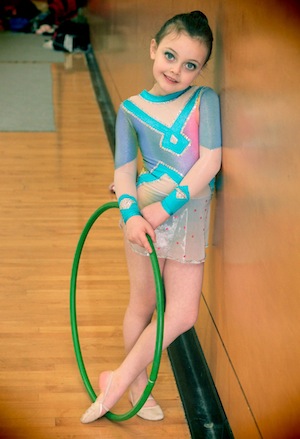
At the B.C. Winter Games in Fort St. John last month, Belle David received a silver medal for her ball routine and placed fourth all around. (photo from Danica David)

Local athlete Belle David started the year off with success after success after success in her chosen sport: rhythmic gymnastics.

The 10-year-old gymnast competes provincially at level 3B (ages 9-11). At the Queen of Hearts invitational competition in Vernon Jan. 24-26, she received an all around first place, a gold medal in the ball routine, a silver medal in the free routine and a bronze in rope. At the Olympia Cup in Burnaby Feb. 7-9, she received a bronze medal in rope, as well as a special award for Miss Dance Jr. And, at the B.C. Winter Games in Fort St. John Feb. 20-23, she received a silver medal for her ball routine and placed fourth all around.

“The most fun part of rhythmic gymnastics is the competitions,” Belle told the Independent in a recent interview. “The most difficult part of rhythmic gymnastics is the long practices.”

Admitting that she gets a little nervous when she competes, she said, “but I have a lot of practise with competitions and that practise helps my nerves.”

Belle trains three times a week for four hours each time at rhythmic gymnastics and she also trains in ballet twice a week. “Altogether, I train for rhythmic gymnastics over 14 hours a week (including mandatory ballet) and, combined with my other sports, I do 25 hours a week.”

The restrictions that have been implemented by various levels of government to try and manage the spread of COVID-19 have brought changes in that regimen, however.

“Belle’s coach has set an individual stretch and strengthen program for each athlete,” Belle’s mother, Danica David, told the Independent. “The coach has sent a video, 26 minutes long, of basic training exercises she expects the athletes to follow, along with detailed plans for each gymnast. Belle is expected to film herself training and send in the film to the coach to check in daily.

“Mentally, Belle is processing the end of the season coming early. When there are still three competitions left, it’s disappointing, after all her hard work, but she will keep practising at home. She said, ‘I feel like there’s nothing to do and nowhere to go.’”

In Grade 4 at David Oppenheimer Elementary School, Belle said her favourite subject is art. Interviewed before the pandemic forced closures, she said, “I socialize at school and at practice because I don’t have time for friends outside of practice. I mostly do my homework early in the morning before school.”

photo - Belle David at her first rhythmic gymnastics competition, at age 6
Belle David at her first rhythmic gymnastics competition, at age 6. (photo from Danica David)

Belle started dance classes at the Jewish Community Centre of Greater Vancouver when she was 4 years old and began taking rhythmic gymnastics classes when she was 5.

“I love sports,” she said. “I love baseball, dance, rikudei ’am [folk dances], swimming, skating and artistic gymnastics.”

She also makes time for community and cultural activities.

“I celebrate all the Jewish holidays and I keep Jewish traditions,” she said. “Our family hosts holiday parties and I enjoy PJ Library events and books.”

After three years performing in Goh Ballet’s The Nutcracker, Belle said, “I took a break this year to really enjoy Chanukah with my ima, abba, grandma, brother and friends. When I danced in The Nutcracker, sometimes I performed in two shows a day during the run and I missed the Chanukah fun. This year, we did Chanukah bowling, skating, the party bus and menorah parade and, as always, we lit candles and opened presents each night of Chanukah.”

Belle said she wears a red-string kabbalah bracelet on her left wrist, including in competitions, that her mom blesses.

Family is important to Belle and one of her ambitions centres around her grandparents in Israel.

“I have a short-term goal to learn the apparatus hoop,” she said. “I have a long-term goal of making it to the Grand Prix Holon.

“The Grand Prix Holon takes place in my home city (Holon) in Israel,” she explained. “I would like to compete for Canada or Israel. It’s an international competition and it’s across the street from my savta and saba’s apartment. All my family could come and see me compete. This is my dream.”

Belle’s family moved from Israel to Vancouver almost seven years ago, said her mother.

“I was born in Canada and her dad was born in Israel – we met in India,” David said. “Belle was born in Israel and she has a brother born in Canada, named Omri, he is 6 years old. Their father, Ofir, has never been able to move permanently to Canada because of the nature of his work but he visits often. We live in a multigenerational household in Vancouver with my mother, who was a former competitive athlete. She finds great joy in supporting her grandchildren to pursue athletics – it’s a family passion that skipped a generation. Belle and Omri have seven cousins in Israel and a large extended family that they miss very much.”

In Israel, David said they didn’t have access to activities like they have here. “In our town,” she said, “private country clubs dominated and we had no access without costly memberships. When we came to Canada, Belle was interested in trying everything, sports, arts, activities of all kinds, and, through the JCC and local community centres, it was affordable.

“Belle’s grandmother really encouraged rhythmic gymnastics, as she was involved in the sport herself as a teacher,” continued David. “Belle participated in a rhythmic gymnastics camp at age 5 and she was hooked. When I came to pick her up, her face was red and she looked exhausted. I expected her to want to quit but exactly the opposite – she loved the challenge. The coach had been a Russian-Israeli who spoke Hebrew and Belle felt right at home. She continued camp during the summer. In the fall, she was asked by a club to enter the competitive rhythmic gymnastic training stream.”

As the parent of athletes, David said her “biggest challenge has been being a witness to the highs and lows of the sport without holding any attachments to them. The same goes for their achievements. What Belle achieves is hers alone. It is her self-discipline and motivation to grow in sport that encourages us to support her in any way we can.

“The biggest joy for me,” said David, “is to see that Belle is a wonderful sister, modeling hard work and perseverance to her brother. Belle is self-determined: she chooses her goals and achieves them in her own time. She chose to sacrifice social time and other opportunities to train two years for the winter games. It wasn’t always easy on the family or her but she followed through. I admire her drive – when I was 10 years old, I couldn’t even keep my hamster alive.”

David described herself as “hopelessly non-competitive and uncoordinated” and, therefore, said it is hard for her “to truly invest in the competitive aspect of the sport. Judging and performance can alter from competition to competition and a place on the podium is never guaranteed.

“I find my niche in the esthetic aspect of the sport,” she said, “and support Belle by adding Swarovski crystals to her bodysuits and finding the most complimentary apparatus. These athletes place a lot of pressure on themselves and, after the long hours and hard work, people question why we subject our children to the intensity of the competitive sport. In my opinion, most of the kids at this level of sport are progressing from an inner motivation and they have cultivated a sense of belonging through sport.”

Format ImagePosted on March 27, 2020March 26, 2020Author Cynthia RamsayCategories LocalTags Belle David, coronavirus, COVID-19, gymnastics, sports, youth

We must continue to ask

Probably every action or event has unintended consequences. The more significant the initial act, the more dramatic the consequences, for better or worse.

Significant historical events illustrate a few of these. Income tax, for example, was an outcome of the First World War, which was, like all wars of course, cataclysmic to individuals and countries.

The Depression resulted, again among many other things, in public acceptance of vast government interventions into the economy through programs like the New Deal in the United States, and similar initiatives in Canada and elsewhere.

The Second World War, one of the worst human catastrophes ever known, was accompanied by a universe of social and economic changes, including the effective nationalization of critical industries to support the war effort. That period of social upheaval – during which personnel of all races served side by side and women entered the workforce in large numbers to fill the places of men at war – contained the seeds of social revolutions to follow, including the civil rights movement and the transformation of the role of women in society. The war was also a direct antecedent to formal decolonization in the developing world.

In other words, some terrible events can result in transformative consequences. This is not to play the ethics game and ask, if we could reverse history and prevent this act, would we do so, knowing that some positive byproducts would likewise be erased. It is merely to draw attention to the consequential moment in which we find ourselves.

The terror attacks of Sept. 11, 2001, are perhaps the freshest parallel for most of the current generation. On that day, we understood that everything had changed but we could only imagine in what ways. Wars would soon begin that continue to this day and, closer to home, social schisms between groups, including the rise of Islamophobia, emerged.

Political debates shifted dramatically to erstwhile largely dormant issues like government surveillance, balancing collective security with individual rights, the use of enhanced interrogation – torture, that is – and the thing that affects most of us most obviously: massive changes in airport security processes.

Since then, we have seen the rise of social and economic inequality and the attendant antisemitism and xenophobia it has engendered. Such shocks to the system produce reverberating impacts, often felt by more vulnerable and marginalized groups, Jews included, and we know that the consequences of any one shock can compound the waves of others in ways expected and unexpected.

We have plenty to worry about right now, with the immediacy of the pandemic. But we should also make time to consider potential unintended outcomes from this experience.

We have seen already, as we mentioned here a very long week ago, a vast outpouring of social unity. On social media, Vancouverites are coming together in mutual support. At 7 p.m. each night, for example, many are joining together to cheer frontline healthcare workers in a small but meaningful act of solidarity and hope. Most people, with notable exceptions that are being rightly called out, are responding appropriately to the advice of experts.

But consider the small, perhaps less obvious ways this experience could impact us. When it’s all over, will we be more reticent to shake hands, to hug? Will we be more attuned to the reality that we are each a part of an inseparable collective humanity, regardless of human-created boundaries?

More substantively, might we see the early reports of decreased air pollution due to this situation continue for the weeks or months this endures and realize that substantive progress on climate change is possible if we recognize the difference between essential and non-essential carbon-consuming activities? Could the once-unimaginable international coordination we are witnessing rekindle our collective hope in unified action for any number of good causes? If we can come together against a threat to us all, could world peace be less remote a dream than we might think?

Conversely, we should be cognizant, as well, that the vast power of the state – our state, every state – to effectively shut down entire societies and economies represents a unique global event. It is done in this case, of course, for the right reasons. But could a less-than-benevolent leader, tasting this level of control, envision ways to use it for their own purposes and against the common good? Might one use coronavirus as justification to delay or cancel elections?

There are a great number of question marks in this week’s editorial. The point here is not to play Nostradamus but to remind ourselves to question. At Passover, in whatever virtual or altered form we celebrate this year, we will ask questions for which we know the answers, and have been pondering for millennia. As this unprecedented time of humankind proceeds, we should remember to continue asking. How will this experience change us? What good might come of it? How can we ameliorate the terrible things that seem to be nearing their peak? Who might be trying to exploit this situation for ill and who is modeling the best of human kindness?

For more information and updates from the B.C. Centre for Disease Control and Canada’s public health authorities, visit covid-19.bccdc.ca and canada.ca/en/public-health/services/diseases/2019-novel-coronavirus-infection/prevention-risks.html, respectively.

Posted on March 27, 2020March 26, 2020Author The Editorial BoardCategories From the JITags coronavirus, COVID-19, liefstyle, Passover
Baking under quarantine

Baking under quarantine

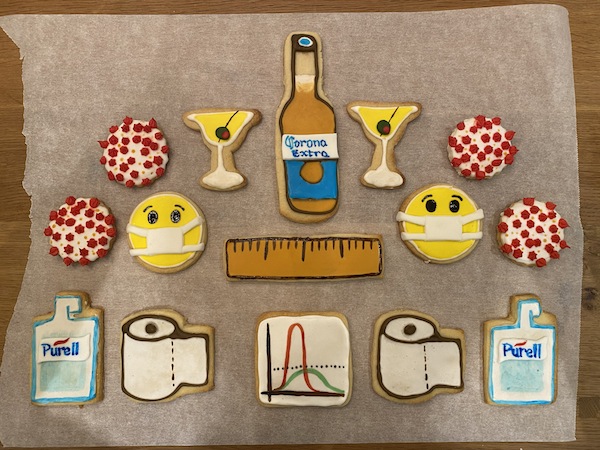
These “quarantini” cookies were baked by Lynne Altow and her aunt, Alexandra Altow. When Queen’s University closed earlier this month, Lynne stayed at her uncle David and aunt Alexandra’s house in Toronto on her way home to Vancouver, where her parents, Lisa and Andrew Altow, and grandparents, Bill and Debby Altow, live. Debby shared this photo with the Independent.

Format ImagePosted on March 27, 2020March 26, 2020Author Debby AltowCategories NationalTags Altow, baking, coronavirus, COVID-19, family life

We’re all in this together

Does it seem like people are behaving more kindly this week? Maybe it’s the sunshine. But maybe it’s the realization, amid all the alarming news and concerns over the spread of coronavirus, that we are all, truly, in this together.

We live in particular times that may be defined – especially as exemplified by some political leaders and their followers – as uncharitable, xenophobic, chauvinistic, mean-spirited and self-interested. These attitudes have been demonstrated, among other ways, in the attitudes of many people toward migrants from other places. These ideas trickle down to the way we treat one another – in traffic, in online interactions, in schools and workplaces, in voting – behaving in ways that take into consideration only (or mostly) our own well-being at the expense of the well-being of others. There are magnificent exceptions, of course, everyday acts of kindness and gestures of humanity great and small. But our age, it can probably be agreed, includes a lot of pettiness, intolerance and plain old snark.

Our parents or grandparents understood the meaning and necessity of sacrifice for the greater good. The communal effort during the Second World War, on the home front and among those serving, was a generationally defining undertaking. While wars, sadly, have continued, in our corner of the world, the burden has fallen on an increasingly smaller number of people – those families with members in the service. But, for at least a generation of North Americans, we have not been called upon for an unavoidable collective sacrifice for the greater good. Again, this is not to say that many people are not sacrificing for the greater good – individuals are devoting themselves to causes greater than themselves, including climate change, but they are doing so by choice. They may be driven by desperation, fear, environmental justice or other motivations, certainly, but, ultimately, it is voluntary.

Then along comes a virus with apparently incalculable potential to cause illness and death and we realize that we are not so separate after all. While they have resisted on issues like climate change, governments worldwide have stepped up (some of them more slowly and irresponsibly than others) and taken seriously the science that predicts grave consequences if we do not take urgent actions now. And individuals, in the first days of what will be an unprecedented period of unknown duration, appear surprisingly amenable to following government-issued restrictions on behaviour for the hope of long-term health, not only for themselves but for those who are more vulnerable due to age or underlying health conditions.

There is nothing good about a global pandemic. But good things happen when people act in unity to advance collective well-being. Individuals and groups have responded with astonishing immediacy when called upon to act. Places of public meeting, including restaurants and cafés, have faced the painful but unavoidable truth that they have to temporarily change their service model. This will have untold economic and social impacts as staff are displaced, with concentric circles as these workers lose purchasing power and these realities ripple through the economy, already suffering multiple unknowns and slowdowns.

In our community, synagogues and communal organizations have adopted stringent and unprecedented measures, many canceling live services and opting for alternative venues like online learning.

We witness the immediacy of these factors’ economic ripples. As our community cancels public events, advertisements are understandably pulled from our newspaper. As a result, we have made the choice to cancel an additional issue next month, and not publish for two weeks, April 10 and 17, rather than the scheduled one-week hiatus. We will have a healthy Passover issue on April 3 and we urge you to support our work and celebrate the holiday by considering advertising or inserting a greeting message in that issue or in the ones resuming April 24 and after.

In the meantime, as we come together to confront this very serious challenge, we are reminded, as Temple Sholom’s Rabbi Dan Moskovitz writes in this week’s issue writes in this week’s issue, we do not do so as Canadians or Chinese or Italians or Israelis. We are people living in different places who face the same pathogens and the same reality.

In Jewish tradition, the value of pikuach nefesh, of saving a life, overrides almost every other consideration. Among other things, this suggests that we should view our current situation through a slightly altered lens. While all of us should be doing everything we are advised to avoid getting the virus, we should be doing so not only, perhaps not primarily, for our own health, but in order to prevent us transmitting it to another person. For many of us who are younger or do not have underlying health concerns, COVID-19 could be a very unpleasant inconvenience. For others we know and love, it could be far more serious.

The top advice we have received is to wash hands with soap frequently and thoroughly, and also to stay home to avoid physical contact as much as possible. Some people are suggesting we treat these days like Shabbat. Spend time with family. Read books. Take a walk. Engage in passive activities. Turn off electronics for a time to avoid the noise of the world which, at this time, is particularly loud.

And be kind to one another. If you know of a senior or other person whose health could be endangered by going out, do their shopping. See what else they might need. Call your family and friends. Set up a virtual dinner party or a play date for your kids. Since you’re not spending money on restaurants and theatre, consider donating to charity and arts organizations.

This is all good advice. But we suspect, given some unscientific observations of kindness and communal care in the last few days, that most of us already know what to do.

For more information and latest updates from Canada’s public health authorities: canada.ca/en/public-health/services/diseases/coronavirus-disease-covid-19.html.

Posted on March 20, 2020March 21, 2020Author The Editorial BoardCategories From the JITags coronavirus, culture, health, lifestyle, politics

Voice thoughts, feelings

Yesterday, I cried in my car. You shouldn’t worry – I was parked at the time. I share this not for sympathy or even empathy. I share this because these are harrowing times, we all feel the tremendous weight of worry:

For ourselves, if we are relatively young, we know the vast majority of cases are mild to moderate, but some aren’t.

For our aged parents, if we still have them.

If we are older, we worry, as the danger increases with age, though, interesting to me, I have found among many of our elders a rationalism and calm that, if I wasn’t freaking out so much worrying about them, I would take comfort in.

For some, the worry is compounded, as they are beyond our reach in other cities or countries.

For our children, as normalcy evaporates. I told my children the other night, as we canceled plans for our son’s birthday party at the movies, that they will tell their own children how they survived the pandemic of 2020. And they will. The vast, vast majority of all of us, even the aged, will survive this. But we will be forever changed by it – I hope for the better.

For our city and country, as it attempts to “flatten the curve.” I long for the days when that phrase was most often rendered in my head as I looked in the mirror at my belly or hips.

I’d say that I worry for our world, as this pandemic is truly global, but the sweep of this virus is so vast that I can’t wrap my head around the whole world experiencing this crisis all at once.

If ever we needed a reminder that there are no true borders, that what happens here effects people over there and vice versa, this is an example.

Refugee crises. Climate change. Economic disparity. And, now, a pandemic. We are all connected.

There are no Chinese COVID-19 victims, or Italian or Israeli or Iranian or American or Canadian – there are just people living in different parts of the world all with the same fears, uncertainty, worries and prayers for healing. Just people, just human beings – there is nothing so different about any of us – except perhaps age, which is only a matter of time – that protects any of us more than the rest of us.

That’s why I cried in my car, and I share it with you because I learned from that cathartic cry that it is OK to be scared, it’s OK to cry. Not because I did it, and I don’t want to be the only one crying in my car, where the kids can’t see me, but because I felt a lot better after – and you might, too.

There was a cartoon that was being passed around on the internet, I guess we call that a meme. It was of a couple looking at their computer and the caption was, as the man turned to his wife over his shoulder, “That’s odd: My Facebook friends who were constitutional scholars just a month ago are now infectious disease experts….”

I thought it was funny.

I know very little about the science of all of this, though I am trying to keep up. British Columbia’s Dr. Bonnie Henry and Dr. Patty Daly and their teams are incredible in their competence and expertise, but I know almost nothing about science that is helpful here. But I do know a little bit about prayer.

What I would like to offer, what I think might be of help, is the power of prayer. Not to change God, not to change the course of this virus. Though this is a natural evil, I do not think it is punishment from God or within God’s control. My faith doesn’t work like that.

I want to suggest and teach for a moment the power of prayer not to change God, but to change each of us.

Sarah Hurwitz writes in her book Here All Along about the power of prayer. She describes a form of Chassid prayer called hitbodedut. The word, which sounds a bit like the last name of one of the former Democratic presidential candidates, refers to a practice of self-secluded Jewish meditation popularized by Rebbe Nachman of Breslov (1772-1810).

The practice, as he taught, is an unstructured, spontaneous and individualized form of prayer and meditation through which each individual establishes a close, personal relationship with God through a free-flowing monologue. Where some people go out into the woods and make a primal scream, Jews, at least Jews who are students of this practice, go out into the woods and kvetch.

Not only kvetch, but thank and question and plead and wonder and acknowledge. You unload your thoughts and angst without stopping to think or formulate them. You just talk to God. It’s a stream-of-consciousness practice that takes some practise, but, like the cry in my car, it can be incredibly cathartic and remarkably revealing of your inner thoughts and feelings.

It’s not unlike the famous Jewish folk story of the young uneducated shepherd who comes to the synagogue to pray. Not knowing the prayers of the established liturgy, he sits in the back row and sings the alphabet over and over again. (Maybe he was also washing his hands?) The men of the synagogue confront him: “Why do you disturb our prayers with your gibberish?”

The boy explains, “I don’t know the prayer. But I wish to thank God for my sheep and the stream, for the warmth of the sun and the silver moon that keeps me company when I sleep. I am singing the alphabet and surely God can put the letters in the correct order to make the prayers.”

In this worrying and frightening time, give voice, actual voice, to your thoughts and feelings, your fears and your anxieties. Not to change God, not to stop the virus, but to change yourself. To give you insight and courage, and patience and perspective, and confidence and hope, and calm and gratitude. In doing so, you might just find your prayers, not those in the siddur (prayerbook) but the prayers that are deep in your soul. Go out into the woods – they tell us the virus is not as communicable outside – and talk to God.

Rabbi Abraham Joshua Heschel taught: “Those who honestly search, those who yearn and fail, we did not presume to judge. Let them pray to be able to pray and, if they do not succeed, if they have no tears to shed, let them yearn for tears, let them try to discover their heart and let them take strength from the certainty that this, too, is a high form of prayer.”

Talk to God, cry to God, be silent with God, it’s all prayer, and it all helps. I know it is helping me; I pray that it will help you.

Rabbi Dan Moskovitz is senior rabbi at Temple Sholom and author of The Men’s Seder (MRJ Publishing). He is also chair of the Reform Rabbis of Canada. His writing and perspective on Judaism appear in major print and digital media internationally.

Posted on March 20, 2020March 17, 2020Author Rabbi Dan MoskovitzCategories Op-EdTags coronavirus, health, Judaism, prayer
Jewish microbe hunters

Jewish microbe hunters

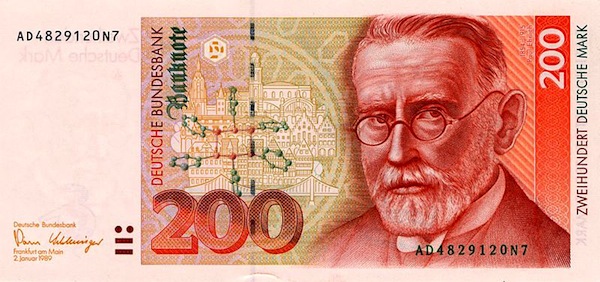
During the Nazi regime, all references to the great physician-chemist Paul Ehrlich were suppressed. In the 1990s, he was featured on the German 200-mark bill. (photo from the internet)

In the 17th century, the Netherlands was a country of great tolerance, having welcomed the Jews driven out of Spain and Portugal, including renowned physicians. Not coincidentally, this was the Dutch Golden Age, a time of breathtaking advances in the arts and sciences. It was there that the first microscopes were invented. To the eyes of Antoni van Leeuwenhoek in the town of Delft in the 1670s were revealed a veritable zoo of subvisible microorganisms previously inconceivable to even the most fevered imagination.

Throughout the 18th century and well into the 19th, there was speculation among medical men about the possible relation of microorganisms to disease. Certain varieties of these tiny beings seemed to appear in the organs or blood of patients with certain diseases. But there were endless questions: Could these creatures, so primitive, come into being by themselves (“spontaneous generation”)? Were they the cause of disease or were they the product of the diseased body? Could a pathogenic microbe of one disease transform into that of another disease? In diseases known to be infectious, were microorganisms the culprits, transmitted from a diseased body to a healthy one, there to germinate?

A breakthrough heralding the Heroic Age of the “microbe hunters” came in 1840 with the publication of Pathological Researches by the Bavarian medical doctor Jacob Henle, a descendant of rabbis. Using technologically advanced microscopes and deductive analysis of case histories, Henle declared to the medical world: “Contagion is matter endowed with individual life which reproduces itself in the manner of animals and plants, which can multiply by assimilating organic material and can exist parasitically on the sick body.”

A year later, the Polish-German Jew Dr. Robert Remak published the first of his observations that cells – of any living organism, including microbes – can arise only by division of parent cells. Thus, Remak helped put to rest the concept of “spontaneous generation.”

photo - Microbe hunter Ferdinand Cohn in the front piece of one of his books
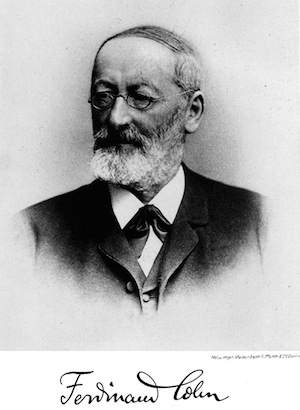
Microbe hunter Ferdinand Cohn in the front piece of one of his books. (photo from the internet)

Humankind’s war against transmittable diseases accelerated dramatically in the second half of the 19th century. In the German city of Breslau (today Wroclaw, Poland) the botanist-microscopist Dr. Ferdinand Cohn published his Bacteria, the Smallest Living Organisms in 1872. As the undisputed master of the classification of subvisible life, Cohn elucidated that, while a microorganism of one disease may undergo various transformations, it remained the microorganism of that specific disease and not of another.

Robert Koch, a student of Henle and a protégé of Cohn, of Protestant background, discovered the tuberculosis bacterium and elucidated the mysterious life cycle of the anthrax bacillus.

Such dramatic advances led to the discovery of links in the chain by which the various pathogenic microorganisms are transmitted, and then to measures to break those links: cholera by drinking water contaminated by sewage, sleeping sickness by the tsetse fly, childbed fever by the contaminated hands of doctors and midwives, malaria (literally “bad air” in Italian) by mosquitoes.

To such defensive measures were added an arsenal of aggressive weapons. In Berlin in the 1890s, the Jewish doctor Paul Ehrlich was instrumental in developing serums. The watery part of the blood (after coagulation) of an animal that has fought off a toxin-producing disease such as diphtheria contains powerful antitoxins that can be injected into a diphtheria patient. A brilliant and imaginative chemist, Ehrlich pioneered techniques for selectively staining specific microorganisms to distinguish them under the microscope. This principle inspired him to develop the world’s first chemotherapeutic agent – the arsenical compound Salvarsan, known popularly as the “magic bullet,” which homed in on and destroyed the spirochetes of syphilis. (Ehrlich’s coreligionist Albert Wassermann developed the blood test for the disease.)

A general optimism prevailed as the new century dawned that humankind would soon be free of all serious infectious disease. But there was a missing piece in the puzzle.

It had been known since ancient times that people who survived a given disease were wholly or partially immune from an attack by the same disease. In 1798, the English physician Edward Jenner showed that deliberate inoculation with the pustules of relatively benign cowpox (vaccination, from the Latin vacca, cow) protected the person from attack from the far more virulent and deadly smallpox.

Among the great triumphs in the war against transmissible disease was the development of a new kind of vaccination by the French chemist Louis Pasteur, a devout Catholic. Pasteur showed how inoculating a patient with killed or attenuated (weakened by drying or other techniques) pathogens such as rabies activated the natural immune system against a subsequent all-out attack by the fully virulent disease.

But here was the rub. Unlike the microorganisms of tuberculosis, cholera, diphtheria, syphilis and so many other diseases, no one had ever seen the agents of smallpox and rabies. Pasteur speculated that they were microorganisms beyond the range of the most powerful microscopes.

Around the turn of the 20th century, the Dutch microbiologist Martinus Beijerinck showed how the fluid of an infected plant, after being strained through the finest filter, was able to infect healthy plants. This was an important breakthrough, but Beijerinck erred in assuming the culprit wasn’t composed of solid matter. He called it virus, Latin for poison.

That no one had seen a virus made the fight more difficult. Between 1918 and 1920, as the Spanish flu claimed more lives than all the battlefields of the Great War in the preceding four years, the medical profession mistakenly attributed it to an opportunistic bacterium, visible under the microscope.

The limit of what could be seen was dramatically pushed back with the invention of the electron microscope in the early 1930s, by which viruses, hundreds of times smaller than bacteria, were exposed to the light of day. It appeared that Pasteur was right after all in postulating that the agent of rabies was a microorganism.

image - One of several U.S. postage stamps commemorating the polio vaccines of Jonas Salk and Albert Sabin
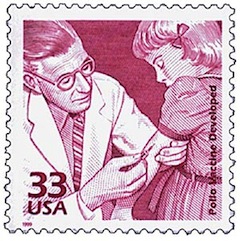
One of several U.S. postage stamps commemorating the polio vaccines of Jonas Salk and Albert Sabin. (image from the internet)

But not quite. Research later in the century showed that viruses – unlike living entities (organisms) – can’t multiply or reproduce on their own. Viruses turned out to be packets of genetic material – DNA or RNA – that penetrate, commandeer and destroy living cells in order to multiply.

Poliomyelitis, the dread crippler caused by an enterovirus, was checked in the 1950s (and is now virtually eradicated worldwide) thanks to two vaccines developed independently by the American Jewish medical doctors Jonas Salk and Albert Sabin. (The virus was cultured using the foreskins of circumcised babies.)

AIDS, hepatitis, SARS, Ebola and now corona – new virulent viruses keep emerging. And the weapons to fight them – vaccines, tests, serums, pharmacological “magic bullets” – are in the enduring spirit of the great Jewish microbe hunters.

Dr. Frank Heynick is the author of Jews and Medicine: An Epic Saga (KTAV Publishing House, 2002, still in print). There are some 500 publications of his in the United States and Europe, ranging from academic to popular-scientific, many on the history of medicine and allied fields, including the crucial Jewish role. He lives in New York and has taught the history of medicine at New York University.

Format ImagePosted on March 20, 2020March 17, 2020Author Dr. Frank HeynickCategories Op-EdTags coronavirus, education, health, history, medicine, microbe, microorganisms, science

Be sure to wash your hands

Before bed each night, our kids practise their reading, both in Hebrew and in English. We have a routine where I knit and sit next to a kid, listening to him reading his Hebrew Grade 3 stories, and their dad does English with the other kid. Then we switch. Recently, I’ve heard two separate easy-reader versions of the story about Hillel and the mitzvah of cleanliness.

For those of you who might not be up on Grade 3 curriculum, Hillel was a great teacher of Torah. One day, he is rushing off and his students ask him, “Where are you going?” He answers, “To do a mitzvah!” And they say, “What is the mitzvah?” And he says, “Cleaning is a mitzvah!” as he heads to the bathhouse.

In one story, it points out that Hillel was also trying to show that, in general, keeping clean is important. We should clean our fruits and vegetables before eating, clean our bodies, clean our houses, etc. This is obviously a useful lesson for kids. It’s good to know that Hillel taught us to keep clean. (I’ll need to mention this next time I’m asking everyone to tidy up their toys and things!)

Even in the Torah, there are multiple reminders to wash. While this isn’t news for Jews, frequent washing isn’t every culture’s practice. During outbreaks of the Black Death in Europe, Jewish communities were often spared because of their insistence on cleanliness, while those around them were dirty and, therefore, more prone to catching this illness. This meant most Jews avoided the plague (Black Death), which was transmitted by rats and fleas. Unfortunately, this also led to situations in which the Jewish community was blamed for the illness, because why weren’t the Jews getting sick, when everyone else was? Through the lens of history, we know why – they washed and, therefore, had fewer fleas and rats around.

In the Torah portion Ki Tisa (Exodus 30:11-34:35), G-d tells Moses to construct a fancy washstand for Aaron and his sons in the Tent of Meeting. Essentially, being clean is part of doing holy work.

The weird thing about all this isn’t that our tradition spends a lot of time on how to properly wash and keep clean and, therefore, be ready for holy work. The weird thing is how often we forget to wash despite this information.

The outbreak of COVID-19 (the coronavirus) is a firm reminder of what we can do, every day, to stay well. We can wash our hands, with soap, with some frequency. You can recite the alphabet or the aleph-bet to be sure you’ve washed long enough. Washing well is not some mystical religious ritual. It’s essential to our health and well-being.

We can also practise social distancing, another tradition straight out of the Torah. Lepers had to stay outside the camp for several days, for example. This is not new information, folks! It was old news by the time the rabbis were creating our oral tradition, what became the Talmud.

The advice around a virus outbreak changes every day, so I cannot predict what officials will know or say when this article is published. However, disease outbreaks aren’t new. We’ve been wrestling with how to deal with them for as long as the Jewish people has been around. Considering things like skin diseases and leprosy as part of this, then, as mentioned, there’s information about how to deal with that going to the Torah.

One parallel that I can’t skip is – remember the golden calf? When Moses was getting the Ten Commandments, there was a mad rush to collect valuables and build the golden calf as a way to reassure the scared and frustrated Israelites. But it didn’t turn out so well. Acquiring wealth or idols didn’t help us avoid scary or frustrating things. We can’t know the future and alas, no amount of gold – or toilet paper – can keep us healthy.

The gold calf story reminds me of the reports of preppers, who are madly hoarding hand sanitizer, toilet paper, masks and other essentials. They are afraid, of course, but this illogical amount of acquisition causes shortages. It also gouges others by trying to resell these items at high prices. Of course, medical professionals haven’t advised anyone to do this hoarding – and Moses didn’t tell anyone to build a golden calf either.

We have to rely on the best medical advice we can get and do practical, everyday things to stay safe, like washing and social distancing.

I hope everybody stays healthy, but it would be wrong of me not to do my part in encouraging that. So? In the words of another famous character in our household, Ernie from Sesame Street, “Now everybody wash! Everybody – wash your hands!”

Some things just don’t change.

Joanne Seiff has written regularly for CBC Manitoba and various Jewish publications. She is the author of three books, including From the Outside In: Jewish Post Columns 2015-2016, a collection of essays available for digital download or as a paperback from Amazon. Check her out on Instagram @yrnspinner or at joanneseiff.blogspot.com.

Posted on March 13, 2020March 12, 2020Author Joanne SeiffCategories Op-EdTags coronavirus, health, Hillel, Judaism, lifestyle, Talmud, Torah

United by challenges

After two inconclusive elections in Israel, incumbent Prime Minister Binyamin Netanyahu appears certain to form a government after elections Monday, ending an unprecedented period of political instability.

Whether Netanyahu himself, under indictment and slated for a trial this month on corruption charges, will remain prime minister for long, the right-wing is certainly poised to govern for the near future. Israel’s Supreme Court explicitly refused to offer an opinion on whether a convicted prime minister could continue in office, a question that may now go from theoretical to very real.

Jews in the Diaspora, including a great many here in British Columbia, follow politics in Israel casually or closely, as many of us do the machinations of American politics that are also roiling this week. Canadian politics and those in British Columbia, around issues of environmental policy, disruptive protests and a host of other topics, have people here at home fired up about politics even without elections on the near horizon.

While there are countless issues and contests vying for our attention, there is also an undercurrent of less immediate yet possibly more ominous peril facing our democracies. Threats of external influence from bad actors, like a repetition of the Russian interference in U.S. elections in 2016, are cause for serious concern. The rise of domestic extremism – in mainstream politics as well as in the form of underground and sometimes violent movements – also deserves close attention. So does apathy.

All of these influences and attitudes present dangers to our democracies – in Canada, in the United States, in Europe and Israel. Newer democracies in Central and Eastern Europe have demonstrated how fragile the tissue of open, accountable and responsive government can be. It is alarming to witness the path that Hungary, Russia, Turkey and Poland have been on recently. Our democracies – in the United States and Canada, even Israel – may be somewhat older, but these countries are still warnings of how things that we take for granted can be snatched away. Democracy is less an enormous oak with deep and broad roots than it is a delicate flower that requires nurturing and constant attention.

For this reason, when there are government policies or election outcomes with which we disagree, we should remind ourselves that democracy may be the ultimate win-some-lose-some proposition and recommit ourselves to respect for the institutions of our democracy, not just when they serve our interests but even – especially – when they deliver outcomes that we find disagreeable. At the same time, we should be identifying and calling out every instance when a political leader or movement threatens the institutions or norms of our democracy.

Amid all of these political dramas, very daunting situations that recognize no geographic or ideological boundaries are challenging each and every one of us. This week, again, coronavirus is spreading and causing panic. Meanwhile, the dangers posed by climate change escalate every day. The economic impacts of these global concerns are blaring across the business pages: pandemic fears are causing wild stock market fluctuations, while the measures necessary to alter the course of climate change demand fundamental economic shifts. All of these threaten to exacerbate existing inequalities locally, nationally and internationally, threatening our morality and the stability of our world.

In the face of existential issues like these, the differences in our ideologies in countries like Canada, Israel or the United States fade into shades of grey. This is perhaps optimistic: that the differences between us are minimal in comparison to the difficulties we face together. That should motivate us to look beyond or to bridge our differences and recognize both the humanity in those with whom we disagree and the challenges to humankind that we must overcome together or succumb to apart.

Posted on March 6, 2020March 4, 2020Author The Editorial BoardCategories From the JITags Canada, coronavirus, democracy, economics, Israel, Netanyahu, politics, United States
Using apps and robots – coronavirus

Using apps and robots – coronavirus

One high-tech solution for patients possibly infected with the coronavirus is a robot that can enter the patient’s room and be controlled by medical staff from the outside. (photo from IMP)

Before the coronavirus arrived in Israel – there were two reported cases at press time – Sheba Medical Centre was preparing for it with different high-tech means: a telemedicine app that enables patients to receive care in the isolation, but comfort, of their own home; and robots that can treat in-hospital patients in order to minimize contact with staff.

Sheba’s Datos Health-In is a telemedicine app that enables patients to remain at home. In the event of an epidemic, with more patients than isolation rooms available, the app can be a viable tool for patients who are not severely ill. With the app, patients can enter vital signs and other information, which is directly accessed by their doctor. Patients can also establish contact with their physicians at any time of day or night.

The program was launched on Feb. 9 and tested on Israelis who had been in China and who, according to Health Ministry instructions, had to be in quarantine for 14 days, the incubation period of the virus. Doctors initialized contact with the patients twice a day.

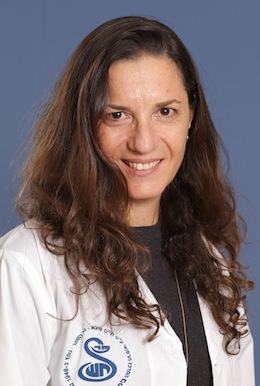
photo - Sheba Medical Centre’s Dr. Galia Barkai
Sheba Medical Centre’s Dr. Galia Barkai (photo from IMP)

“This is one instance where telemedicine protects staff as well as other patients, by minimizing direct contact with those infected with the coronavirus,” explained Dr. Galia Barkai, head of telemedicine services at Sheba.

Another high-tech solution for patients possibly infected with the coronavirus is a robot that can enter the patient’s room and be controlled by medical staff from the outside. Designed by California-based virtual healthcare company Intouch Health, the robots are already in use in other departments, such as in the intensive care unit of pediatric cardiology, and the trauma unit.

“This technology is the perfect solution to provide care for in-patients infected with coronavirus, while protecting staff from contagion,” said Barkai.

Screening for the virus produces results in just a few hours but, with symptoms that are not very dramatic and that are reminiscent of the flu, including fever, cough and shortness of breath, Israel’s Health Ministry is only allowing those who have returned from China and a few other countries in the Far East to be tested.

– Courtesy International Marketing and Promotion (IMP)

Format ImagePosted on February 28, 2020February 26, 2020Author Ben Horodenker IMPCategories WorldTags coronavirus, Galia Barkai, health care, Israel, Sheba Medical Centre, technology

Posts pagination

Previous page Page 1 … Page 15 Page 16
Proudly powered by WordPress