Ben-Gurion goes global

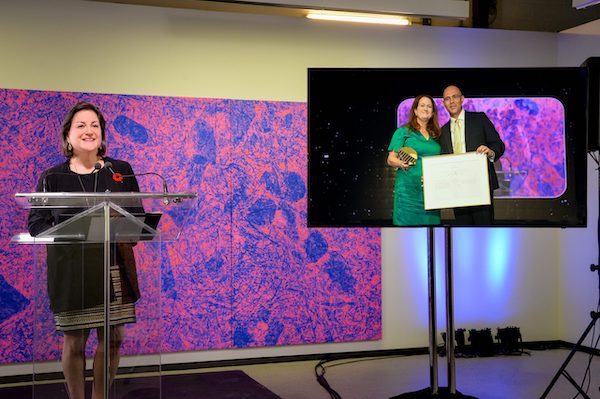
Canadian Associates of Ben-Gurion University honouree Martin Thibodeau, B.C. president of RBC Royal Bank, speaks at the June 9 gala. (photo from CABGU)

Less than six decades ago, the city of Beersheva, in Israel, had more camels than people. Now, it is home to one of the world’s most innovative post-secondary institutions – Ben-Gurion University – and 400 British Columbians packed a Vancouver ballroom June 9 to help launch the university’s new School of Sustainability and Climate Change.

The Canadian Associates of Ben-Gurion University (CABGU) event at the Fairmont Pacific Rim Hotel honoured Martin Thibodeau, B.C. president of RBC Royal Bank, and featured Prof. Daniel A. Chamovitz, president of Ben-Gurion University (BGU), in conversation with event emcee Robin Gill.

Since taking the helm of RBC in the province, in 2018, Thibodeau has continued an involvement in Jewish community affairs that began earlier in his career, in Winnipeg and later in Montreal. He credits his mother with instilling in him a respect for multiculturalism and a connection with the Jewish experience.

In 2018, RBC Royal Bank created a cybersecurity partnership with BGU, investing in artificial intelligence and machine learning technologies to develop advanced cyber-security techniques. Two years later, RBC British Columbia sponsored the first two research fellowships at the new School for Sustainability and Climate Change and, later this year, Thibodeau will lead a summit to Israel, bringing a group of Canadian business leaders to BGU. He is engaged with a host of community organizations, including the Jewish Community Centre of Greater Vancouver, the Jewish Federation of Greater Vancouver, United Way of the Lower Mainland, B.C. Children’s Hospital, Science World and others. He is also co-chair of RBC’s Diversity Leadership Council.

“I’m always amazed at the dynamic and progressive work that continues to be produced by the scholars and the teams at Ben-Gurion University,” Thibodeau said at the June event. “The world owes a great deal of debt to the outstanding advancements that have already contributed to how we live and work as a society. I am excited to see what the future holds in the hands of these amazing and brilliant individuals.”

Thibodeau, who oversees 7,000 employees in the province, was introduced by Lorne Segal who, with his wife Melita, co-chaired the event. Segal gave an emotional testimonial to his late father, Joseph Segal, who passed away 10 days earlier, at age 97. Segal said his father had not attended many events in the past several years but had been looking forward to being present to honour Thibodeau.

In his presentation, Thibodeau thanked the Segals for their support, and for their presence in a time of mourning. Thibodeau paid credit to Joe Segal, who called him soon after he arrived on the West Coast, invited him for lunch and offered advice and an open ear.

In recorded greetings, Israel’s ambassador to Canada, Ronen Hoffman, called Thibodeau “far more than just a businessman. He is a leader, innovator and community-oriented friend of the Jewish people, of Israel.”

Chamovitz, the university’s president, noted that David Ben-Gurion’s dream of a university “at the gates of the Negev Desert” was intended to uncover secrets: “How to make energy from the sun, water from the air and agriculture from the infertile sands, taking advantage of resources that, until now, were going to waste.”

The changing climate has made innovations such as solar energy, desalinization and agriculture in inhospitable places answers to urgent questions that affect lands far beyond the Negev.

“We all of a sudden realized that what we thought was a local problem is now a global imperative and people from all over the world started coming to Beersheva to learn from our expertise,” said Chamovitz, who grew up in Pennsylvania and has been president of the university since 2019. The Abraham Accords have opened new doors to cooperation between BGU and Gulf States that need these technologies, he added.

The School of Sustainability and Climate Change was announced last year and, so far, 25 departments are collaborating on planetary life-and-death topics. (See previous articles at jewishindependent.ca.)

“My simple challenge was to get them to collaborate in order to really leverage our expertise into something that’s much greater than the sum of each of those departments,” said Chamovitz. Even the department of Hebrew literature is involved.

“Hebrew literature did a big seminar on climate fiction, understanding how climate change is influencing what people write about and how this literature is influencing public opinion about climate change,” he said.

While BGU was created with the development of the Negev Desert in mind, the work they are doing is global, with impacts reaching British Columbia, said Chamovitz.

“You cannot look at British Columbia divorced from the world,” he said. Flooding and heat domes are processes that are happening worldwide. Mitigation and prevention must take place both locally and globally, he said.

Chamovitz credited the leadership of Thibodeau and RBC for making it easier for BGU to go to other major donors to fund the new school.

Another new development at the university, he said, is a high-tech park dedicated to advanced research in cybertech, agricultural technologies and green energy.

CABGU B.C.-Alberta board member Eli Joseph chaired the event and board member Rachelle Delaney was the convener. Si Brown, president of CABGU B.C.-Alberta, opened the event. The corporate sponsorship committee was chaired by board member Adam Korbin, and David Berson is CABGU regional executive director.

Terry Beech, member of Parliament for Burnaby North-Seymour, brought greetings from the federal government. Representing the government of British Columbia, Minister of Finance Selena Robinson spoke of her family’s connections to Israel.


Investing in the climate

Martin Thibodeau, RBC’s B.C. region president, will be honoured at the Ben-Gurion University Gala Dinner June 14. (photo from RBC)

On June 9, Ben-Gurion University president Daniel Chamovitz and members of the Canadian Associates of Ben-Gurion University (CABGU) will visit Vancouver to recognize the launch of its new School of Sustainability and Climate Change (SSCC) and the local supporters who have helped make its opening possible. In particular, Royal Bank of Canada and Martin Thibodeau, RBC’s B.C. region president, will be honoured at the event.

SSCC opened last October at BGU’s Be’er Sheva campus, where its growth has been rapid. Seven months old, the school currently offers two undergraduate degrees and four graduate-level environmental science-related degrees. Its two graduate fellowships, which have supported work in renewable energy and smart city design, were funded by RBC.

“The RBC Research Fund at BGU’s School of Sustainability and Climate Change [is] being established in Martin’s honour, [and] will enable undergraduate and graduate students to be trained as, and pursue meaningful careers as, climate change innovators, entrepreneurs and policy experts,” said David Berson, who serves as CABGU’s executive director for the B.C. and Alberta Region. The funding that is raised at the gala will help further SSCC’s research programs.

SSCC’s mandate isn’t just to address environmental concerns at home in Israel, said Chamovitz. It will have a global reach, as well. BGU is currently working to cement research partnerships with universities and countries that have similar interests in addressing climate challenges. Chamovitz said RBC’s investment in its new school will provide a pathway to meeting that global need.

“RBC was one of the early supporters of SSCC, and this support was essential for leveraging subsequent support,” he said. “The Royal Bank of Canada believes in us,” and that support has served as an encouraging model for other companies to invest in BGU’s programs as well, he said.

Lorne Segal, president of Kingswood Properties and director of the Vancouver Board of Trade, who is an honorary co-chair of the June event with his wife, Mélita Segal, said corporate sponsorship is crucial to startup programs like SSCC. He said corporate support is also vital to finding answers to environmental challenges like global warming.

“Sponsorship from leading businesses and industry leaders does provide imaginative solutions to complex issues impacting our people and the planet,” he said. “Without significant and generous sponsorship support, this crucial work, simply put, would not be possible.”

Segal said supporting initiatives that bring about positive change is part of Thibodeau’s nature.

“Martin Thibodeau truly is a lifelong builder of community,” said Segal. “He is deeply praised by Ben-Gurion University for his commitment to the cause of finding solutions to climate change. It is truly remarkable how much he and RBC Royal Bank have done to enhance the capacity of the Ben-Gurion University community programs and agencies, and advance the conversation on Canada’s transition to a net-zero economy.”

Thibodeau’s support of Canadian Jewish communities and of Israel goes back decades. Originally from Quebec, he served as RBC’s regional president in Montreal until he moved to Vancouver. He oversees some of the largest – and smallest – branches and more than 4,000 employees.

In 2015, while working in Montreal, Thibodeau volunteered as a co-chair for Quebec’s largest multi-day walk for women’s cancers, held by Pharmaprix, to raise money for research at the Jewish General Hospital. “I have been involved with the Jewish community for almost my entire RBC career,” he told the Independent.

He is a strong supporter of the Jewish Federation of Greater Vancouver and the Jewish Community Centre of Greater Vancouver and their community initiatives, and he has been to Israel several times. It was in 2014, said Thibodeau, that he and his wife, Caroline, visited Be’er Sheva and learned of BGU’s environmental research. “[I was] so inspired by the research [and] the innovation,” he said, noting that it wasn’t hard to get behind the creation of a school that was working to find solutions to climate concerns.

“It’s right there in front of me every day,” he said. “I am a proud father of three children and I believe we have a responsibility to make sure that our climate can continue to thrive, and well beyond my lifetime. It is my personal belief that we need to do that today more than ever.”

Thibodeau said it’s been an interesting journey since that first visit to BGU in 2014. “It’s become such a tough priority for the world,” he said of climate change. In Canada, among other things, he supported RBC’s Blue Water Project, which helped provide clean water access to Canadian communities.

Still, Thibodeau is a reticent honouree. He admits that he is uncomfortable with the idea that he will be the guest of honour at a gala, even if it is for a cause he loves. “I’m very humbled,” he said. “I don’t like to have that kind of spotlight on me.” But, he said, raising money for research that might one day create a safer and better environment, that is something he will gladly get behind.

photo - Mélita and Lorne Segal, honorary chairs of the BGU Gala Dinner for Sustainability and Climate Change
Mélita and Lorne Segal, honorary chairs of the BGU Gala Dinner for Sustainability and Climate Change. (photo by The Collective You)

The gala will also acknowledge Lorne and Mélita Segal, who are well-known for their philanthropy and other work. Both have been recognized by Capilano University with honorary doctor of letters, and Lorne Segal has a doctor of laws (hon.) from the Justice Institute of British Columbia. He was inducted into the Order of British Columbia for his work as founding chair of Free the Children’s WE Day Vancouver and as chair of the Coast Mental Health Courage to Come Back Awards. The Segals regularly open their home to fundraising galas.

“When Lorne and I built our home, we didn’t really do it for ourselves but, rather, to share it with the community,” said Mélita Segal. “Whether it was Dr. Peter AIDS Foundation, Arts Umbrella, Chor Leoni, JNF [Jewish National Fund] or WE Charity … it has been a great joy for us and very fulfilling to give back and share in this way.”

Berson described the Segals as “tireless builders of community, leading by example while creating opportunities for people in the business world to make a difference in the lives of others. Ben-Gurion University, Canada, is genuinely fortunate to have their leadership for this event and for our organization.”

The Ben-Gurion Sustainability and Climate Change Gala on June 9 takes place at Fairmont Pacific Rim. Tickets and tables can be purchased at bengurion.ca/vancouver-gala-2022-tickets or by contacting Berson at davidberson@bengurion.ca.

Jan Lee is an award-winning editorial writer whose articles and op-eds have been published in B’nai B’rith Magazine, Voices of Conservative and Masorti Judaism and Baltimore Jewish Times, as well as a number of business, environmental and travel publications. Her blog can be found at multiculturaljew.polestarpassages.com.

Alarming population decline

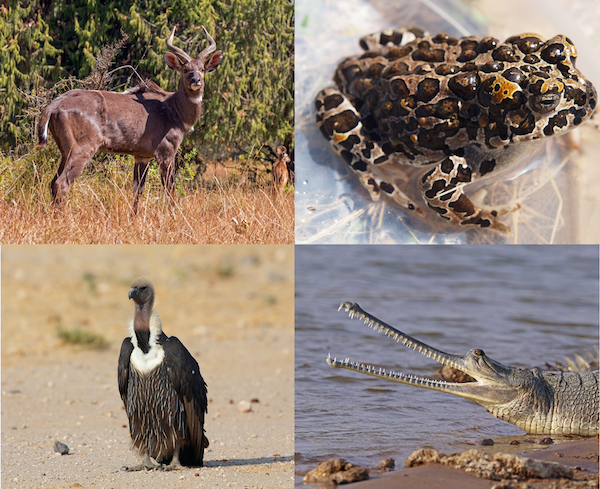
Since 1970, the population sizes of mammals, birds, fish, amphibians and reptiles have declined by 68% – or more. (photo from CABGU)

Over the past 24 years, Living Planet Report has been published biannually by the Zoological Society of London and the World Wildlife Fund. It highlights the major declines that some 20,811 vertebrate populations, representing 4,392 species monitored around the world, have experienced globally. The 2020 report (which is the latest one) showed that, on average, the population sizes of mammals, birds, fish, amphibians and reptiles declined by 68% between 1970 and 2016.

As large as that decline is, a paper published in the journal Nature last month by a group of scientists based in Israel – Drs. Gopal Murali and Gabriel Caetano from Ben-Gurion University were lead authors of the paper – shows that it might greatly underestimate the situation.

As part of their research, the authors analyzed the overlap of the monitored populations with protected areas. They then compared these to a random sample of locations and the placement of the global network of protected areas. They found that the populations sampled in Living Planet are much more likely to be found inside protected areas than would be expected to occur by chance.

“This is truly alarming,” said Caetano. “If populations inside protected areas – where we focus a lot of our conservation efforts – are doing so badly, those that reside outside protected areas are probably worse off. The true situation of nature – mostly not monitored or protected – may be much worse.”

The authors highlight the need for proper accounting of the status of nature when making generalizations (as they have done in their paper). However, they also advocate for greater monitoring of populations and species in different locations and stress that many animal populations and natural environments will be lost forever without concentrated and direct action.

The world is experiencing massive transformations that are expected to intensify in the coming decades and have fundamental and dire consequences for the natural world. Prof. Shai Meiri from Tel Aviv University, also a co-author of the Nature article, said, “Rather than discourage us from action, we feel that our work should be viewed as a call to arms. Rapid and comprehensive changes in how we view our relationships with nature are needed – and the onus is on us to make sure they happen before it is too late.”

– Courtesy Canadian Associates of Ben-Gurion University of the Negev, B.C. & Alberta Region

mRNA & cancer drugs

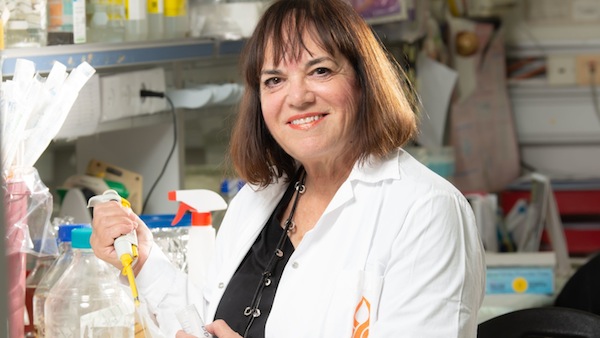
Prof. Etta Livneh (photo by Shay Shmueli/BGU)

Most everyone on the planet has now heard of mRNA, thanks to the vaccines against COVID-19 from Pfizer and Moderna, which are based on messenger RNA. But, before mRNA was used to address COVID, research was conducted into how it could fight cancer. Now, researchers at Ben-Gurion University of the Negev have discovered a key connection between mRNA, peptide proteins and tumour progression.

Messenger RNA codes for different proteins, each with a unique function. There are both “long” and “short” peptides. Until now, scientists were not sure if short peptides had any biological function.

Prof. Etta Livneh of BGU’s Shraga Segal Department of Immunology, Microbiology and Genetics has shown that single short peptides in fact have a very important role – as a kinase inhibitor that can slow tumour growth and invasion, cancer cell survival and metastasis.

Proteins (and protein kinases in particular) propagate signals that carry instructions to the cells and dictate cell fate. There are more than 500 different kinases in the human body.

With cancer, a kinase erroneously tells the cells to divide and reproduce in a rapid and uncontrollable manner. But the flipside is also true: if a kinase can be inhibited, it should block the proliferation of cancer cells.

And that’s “just the tip of the iceberg,” said Livneh, whose discovery has been a decade in the making. “Now that we know that at least some peptides have a biological function, we can begin to discover the roles of many more.”

Kinase inhibitors are already one of the hottest areas of cancer research, in some cases replacing chemotherapy. Livneh’s research will allow scientists to better understand how to control this cancer-fighting technology.

The research was supported by a grant from the Israel Science Foundation and published in PNAS (Proceedings of the National Academy of Sciences of the United States of America).

Israel21c is a nonprofit educational foundation with a mission to focus media and public attention on the 21st-century Israel that exists beyond the conflict. For more, or to donate, visit israel21c.org.

BGU advances in rankings

(photo from CABGU)

Ben-Gurion University of the Negev ranks among the top 50 universities graduating successful entrepreneur company founders from its undergraduate programs, according to Pitchbook, a financial data firm that publishes annual data. BGU moved up two spots from last year’s rankings, marking its third consecutive year on the top 50 list.

BGU has graduated 314 founders whose companies have raised a total of $8.3 billion, according to Pitchbook. Among the top five companies led by BGU entrepreneurs in capital raised are Deel ($630m), Fireblocks ($492m), Exaware ($420m), Fabric ($336m) and Hibob ($277m).

BGU’s entrepreneurial focus is led by Yazamut 360°, a suite of program offerings designed to enhance BGU’s academic curriculum and infuse entrepreneurship into the DNA of a BGU student. Yazamut 360° established Cactus Capital – Israel’s first student-run venture capital fund. It has also created two accelerators, one focused on technology entrepreneurship (Oazis) and one on e-commerce. Oazis pairs faculty members with chief executive officers to create companies through BGN Technologies. The accelerators serve as a resource for all entrepreneurs on campus through professional mentoring, financial consulting and technological consulting.

The 2021 Pitchbook university rankings are based on the number of founders whose companies received a first round of venture funding between Jan. 1, 2006, and Oct. 31, 2021.

– Courtesy Canadian Associates of BGU, B.C. and Alberta Region

Community milestones … Goldschmidt, Mines, BGU & Weizmann Institute

A German translation of the Talmud, and the first translation of the book ever completed by a single person, is now available on Sefaria, a free nonprofit online library of Jewish texts. The translation by scholar Lazarus Goldschmidt was the first German translation of the Talmud and was released in 1935. While it is used in German Jewish studies departments and universities, it had not been widely accessible to the general public until now.

screenshot - Penny Goldsmith
(screenshot)

A celebration of the release took place virtually on Oct. 24. One of the speakers was Penny Goldsmith, Goldschmidt’s eldest granddaughter. Goldsmith is a longtime anti-poverty community worker in Vancouver, and owns a small independent publishing company, Lazara Press, named after her grandfather, who died a few months before she was born. She spoke of her grandfather’s books, “beautiful typographical masterpieces.”

“Grandfather was a type and book designer,” she said. Among his books were literature and poetry, including a collection of poetry he wrote in his early 20s, in Hebrew, “a very unusual choice,” Goldsmith noted, “as Hebrew at that time was reserved for religious study only.”

Goldschmidt was a scholar of Near Eastern languages and, in addition to the Talmud, he translated other religious texts, including a Hebrew translation of the Ethiopic Book of Enoch and a German translation of the Koran. Born in Lithuania, he learned German at the age of 18. His translation of the Talmud took 39 years to complete and he continued to make revisions after publication. He was also a collector of rare books and his extensive collection is now part of the Royal Library in Copenhagen.

After the Goldschmidt Talmud translation became public domain in January 2021, a team of four led by Igor Itkin, a rabbinical student at Rabbinerseminar zu Berlin, integrated its 9,434 pages of text into Sefaria’s free online library. The team’s work included manually linking sections of the translation to corresponding Talmud texts in English and Hebrew/Aramaic already in the Sefaria library. The connections allow scholars, educators and others to navigate between the translations and connect them to the larger library of Jewish scholarship. The team’s work was supported by a grant from the Rothschild Foundation Hanadiv Europe.

***

image - The Rivals book coverThe Rivals and Other Stories by Jonah Rosenfeld, translated from the Yiddish by Vancouver’s Rachel Mines – who recently retired from Langara College’s English department – has been selected by the Yiddish Book Centre as one of its picks for the 2022 Great Jewish Books Club. The book is available through the Yiddish Book Centre’s store and other online booksellers, including its publisher, Syracuse University Press, which is offering The Rivals at a 50% discount until Dec 1, 2021 (press.syr.edu).

Rosenfeld was a prolific and popular writer from the early 1900s until his death in 1944. Although his writing received critical praise, very little was translated into English until the publication of The Rivals. His stories foreground social anxiety, cultural dislocation, family dysfunction and the search for meaningful relationships – themes just as relevant today as they were to their original audiences. (See jewishindependent.ca/stories-that-explore-the-mind.)

***

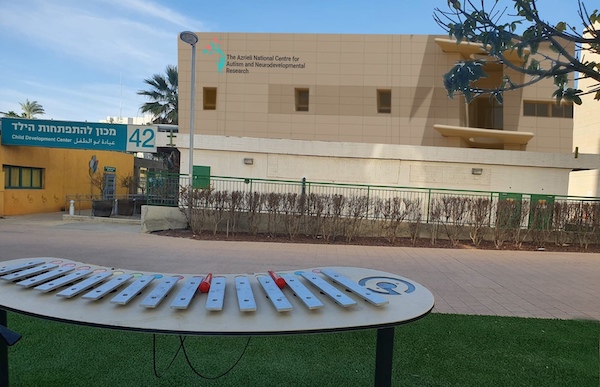
photo - The National Autism Research Centre of Israel
The National Autism Research Centre of Israel (photo from Canadian Associates of Ben-Gurion University of the Negev)

The Azrieli Foundation recently donated $15.6 million Cdn to the National Autism Research Centre of Israel, a collaboration between scientists from Ben-Gurion University of the Negev and clinicians from Soroka University Medical Centre (SUMC), both in the city of Be’er Sheva, Israel. The centre, originally established by the Ministry of Science and Technology, is dedicated to translational research that aims to revolutionize diagnosis techniques and interventions for autism and other neurodevelopmental conditions. In honour of the donation, the centre has been renamed the Azrieli National Centre for Autism and Neurodevelopment Research.

A dedicated facility inside SUMC will be constructed that will double the space for working with children with autism spectrum disorder and performing research. It will house genetics/bioinformatics, biomarker-detection and neuroimaging labs. Existing data collection will be expanded to many autism clinics throughout Israel, where multiple types of clinical and behavioural data, biological samples (e.g., DNA and blood samples) and neuroimaging data will be collected. This data collection will enable the rapid expansion of the National Autism Database, which will triple in size within five years. New faculty members, post-docs and graduate students, as well as scientific, clinical, technical and administrative support staff will be recruited to manage the data collection and sharing effort.

***

photo - Naomi Azrieli, chief executive officer, Azrieli Foundation Canada, and co-chair, Azrieli Foundation Israel, at the Nov. 7 announcement in Montreal, which took place concurrently with the announcement in Israel
Naomi Azrieli, chief executive officer, Azrieli Foundation Canada, and co-chair, Azrieli Foundation Israel, at the Nov. 7 announcement in Montreal, which took place concurrently with the announcement in Israel. (photo by PBL Photography)

The Weizmann Institute of Science and Weizmann Canada recently received a donation of $50 million US from the Azrieli Foundation, to enable catalytic brain research with the establishment of the Azrieli Institute for Brain and Neural Sciences. A longstanding supporter of the institute, this latest donation adds to past philanthropic investments of nearly $30 million US by the foundation towards Weizmann research facilities and fellowships.

Weizmann’s Azrieli Institute for Brain and Neural Sciences, which will be located at the Weizmann Institute campus in Rehovot, Israel, will promote the full spectrum of neuroscience research, from basic, curiosity-driven studies to translational work of high clinical relevance, with global impact. The donation will enable the construction of a new building that will serve as a hub for neuroscience activities, facilities and technologies.

The Azrieli Institute will focus on research in the development of neural networks; perception and action; mental and emotional health, positive neuroscience; learning, memory and cognition; the aging brain; neurodegeneration; injury and regeneration; theoretical and computational neuroscience; development of innovative neurotechnologies; and integrative brain disorders.

Milestones … Hart-Rappoport wedding, Canadian Jewish Literary Awards, new BGU residences

With gratitude to HaShem, mazel tov to Shmuel Hart (King David High School Class of 2016) and Reut Rappoport on their joyous and spirited wedding at Sakoya Gardens (just outside Jerusalem) on June 15, 2021. Elated parents – Alexander Hart and Kathryn Selby of Vancouver, and Rabbi Jason and Meira Rappoport of Alon Shvut, Gush Etzion, Israel – are so very proud of the newlyweds. The couple resides in Jerusalem, Israel, and both are currently studying at Hebrew University.

* * *

Now in its seventh year, the Canadian Jewish Literary Awards recognizes and rewards the finest Canadian writing on Jewish themes and subjects. This year, the awards ceremony, which took place on Oct. 17, was presented on Zoom and is available for viewing on the Canadian Jewish Literary Awards YouTube channel.

The winner in the fiction category was Nothing the Same, Everything Haunted: The Ballad of Motl the Cowboy by Gary Barwin (Random House Canada). It follows a wannabe cowboy, Motl, as he and his mother flee Vilna and the Nazis’ massacre of the Jews. The ensuing events, characters and horror are met by Motl with humorous absurdity in the face of tragedy.

Plunder: A Memoir of Family Property and Nazi Treasure (Houghton Mifflin Harcourt) by Menachem Kaiser, which tells the story of the author’s quest to reclaim a residential building his family owned in Poland before the Shoah, won for best biography.

Lisa Richter won the poetry prize for Nautilus and Bone (Frontenac House). A reimagining of the unconventional life of Yiddish poet Anna Margolin, this collection also won the 2020 National Jewish Book Award for Poetry, the first time a Canadian poet has ever received the American honour.

For children and youth literature, the winner was Osnat and Her Dove (Levine Querido) by Sigal Samuel, with illustrations by Vali Mintzi. It is based on a true story. Although girls in 15th-century Mosul were told, “Reading is for boys,” Osnat convinces her rabbi father to teach her to read. As she grows older, she asks her father to seek a groom who will allow her to study Torah, and she helps run her father’s religious school while raising her own children. After her father’s death and, later, her husband’s, Osnat becomes the school’s leader, making her the world’s first female rabbi.

For scholarship, the awardee was Survivors: Children’s Lives After the Holocaust by Rebecca Clifford (Yale University Press), which is an exploration of the life trajectories of 100 children who were 10 years old or younger at the time of their liberation in 1945. Through archives found in 12 countries, including Canada, and through personal interviews, the author follows the impact the events of the Holocaust had on their lives, and on those who educated them.

In the category of writing about the Holocaust, the winner was In the Lights of Days: The Untold Story of Women Resistance Fighters in Hitler’s Ghettos (William Morrow) by Judy Batalion. The book points out the lack of recognition and the misrepresentation of women’s roles during the war, the actions they took to fight, as well as their crucial importance.

The Canadian Jewish Literary Awards jury for 2021 was Edward Trapunski, Pierre Anctil, Rona Arato, Miriam Borden, Rita Davies, Alain Goldschläger and Adam Sol.

For more information, visit cjlawards.ca.

* * *

photo - Ben-Gurion University of the Negev student village
Ben-Gurion University of the Negev student village (photo from CABGU)

Fourteen new buildings have been added to the student village at Ben-Gurion University of the Negev (BGU) in Israel. It will allow more than 1,000 students options from studio apartments to married student housing.

“The student village lets them choose their living quarters in accordance with their personal preference,” said BGU president Prof. Daniel Chamovitz, “while everything they could need is nearby: the north campus and the conference centre, which are in development, a hotel for visiting students and faculty, stores and coffee shops … and the high-tech park, the train station and the university’s country club are just a short walk away.”

The student village offers apartments suitable for religious students and those with disabilities. Any registered student is eligible to apply for a room. The rooms come fully furnished with a smart TV, beds, closets, desks, a full kitchen, a sitting area and a solar water heater. Full maintenance service is offered, as is 24/7 security, a 24-hour service hotline, bicycle rooms, laundry rooms, and more.

“Situated in the country’s southern region, the university is known to be a destination institution,” said Mark Mendelson, chief executive officer of Canadian Associates of BGU. “This means that students who attend the university also live either on campus or in the communities in and around the university, including the city of Be’er Sheva. In addition, almost 60% of the undergraduate student body volunteers in their respective neighbourhoods, which is really something very unique to BGU and has brought outstanding community involvement to the citizens of Be’er Sheva.”

Haas talks acting and BGU

Israeli actor Shira Haas was the featured guest at the Canadian Associates of Ben Gurion University of the Negev’s virtual gala July 7. (photo byShula Klinger)

On July 7, the Canadian Associates of Ben Gurion University of the Negev held their second virtual fundraising gala. More than 1,200 participants logged on to the An “Unorthodox” National Virtual Gala event, which raised $850,000 for brain research at BGU’s Zlotowski Centre for Neuroscience.

The Zlotowski Centre is a group of researchers dedicated to finding cures and management tools for neurodegenerative diseases including Parkinson’s, Alzheimer’s, ALS and epilepsy.

photo - As part of the gala event, attendees received a special dinner package
As part of the gala event, attendees received a special dinner package. (photo by Shula Klinger)

Months in the making, the virtual gala was the work of a countrywide team of BGU staffers and numerous volunteers. Every participating household in Metro Vancouver received sweet and savoury kosher treats from Café 41. The accompanying gift box also brought olive oil from the Negev, a copy of Deborah Feldman’s memoir, Unorthodox: The Scandalous Rejection of My Hasidic Roots (Simon & Schuster, 2012), appetizer dishes and a commemorative cutting board.

Danny Chamovitz, BGU’s president, spoke about the work of BGU’s academics in general, in disciplines ranging from public health to brain research. Canadian Senator Linda Frum conducted the feature interview – with multiple-award-winning actor Shira Haas.

Describing herself as “very, very shy” as a young person, Haas said she had considered psychology or graphic design as professions, until a casting director approached her on Facebook. Sixteen years old at the time, she said, with respect to that first project, “I understood that this is what I want to do, it was like the door to Narnia.”

Haas does not take her success or popularity for granted. “It was always a dream to work internationally, in different languages, for different audiences, but I never imagined it,” she said. “It was always about the work. I am very, very lucky to be in this position.” She added, “My parents deserve to be talked about! They are the most supportive and amazing parents.”

Known for taking on demanding roles, Haas approaches acting in a scholarly fashion. She studied musculoskeletal diseases to play a terminally ill woman in the film Asia, and researched Russian, Yiddish and Charedi culture for the series Shtisel and Unorthodox. She said she finds beauty in hard work, explaining that Asia was “challenging in the most beautiful way. It was a lot of physical and emotional work, and very personal for me.”

When playing a part, Haas said she is motivated by two things. First, she must be passionate about the role because “that’s what brings everything alive.” About Shtisel, she said, “I fell in love with it immediately.”

Her second principle is to portray “subjects that matter to me.”

Haas’s idealism was evident in the way she spoke about Asia. “It’s not really about death,” she said. “It’s about relationships, about appreciating the time we have and what we do with it. The highest form of art is to bring light to the darkness.”

About Unorthodox, she said, “It didn’t occur to me that it is about the Orthodox world. It was just a story about people who want to be loved, their doubts, desires and failures.”

And Shtisel, she noted, had a huge impact on people all over the world. The show helped change people’s view of Orthodox communities, she said: “It’s universal.”

Of her forthcoming portrayal of Golda Meir in her early years, Haas described a woman with “a very interesting life. She was very passionate, with many dreams and desires.”

Since David Ben-Gurion and Golda Meir were friends, she laughed, “this event was meant to be!”

Haas spoke of her personal connection to BGU. Her sister studied at the university and a close friend is there now. Haas wanted to participate in the gala for several reasons, including, she said, “I am Jewish, I am an Israeli. I want to keep on doing events like this! I am even more proud to do it for Ben-Gurion.”

As for the brain research being conducted at BGU, which the gala funds will support, there has already been groundbreaking progress. Claude Broski’s group has identified a protein that can slow down the degeneration brought on by Parkinson’s. The social robots developed by Shelley Levy-Tzedek and her team will have an impact on stroke patient recovery – the robots offer motivation, feedback and performance-tracking during the rehabilitation phase. Epilepsy researchers are developing wearable hardware and software that could alert patients to an oncoming seizure, an hour before it happens. And Deborah Toiber’s Alzheimer’s team is exploring questions about brain aging, such as, Why does the disease affect so many of us, when only 5% of cases are genetic?

David Berson, executive director of CABGU, British Columbia and Alberta, said, “It has been very gratifying to see how the Metro Vancouver community has embraced BGU students and faculty in recent years. Many new supporters have stepped forward during the last year to engage with us. We are especially grateful to our community partners, who helped us promote this Unorthodox event.”

Among the many contributors to the gala were board members Jay Eidelman and Si Brown. Rachelle Delaney helped Berson with the goodie boxes at the crack of dawn on July 7, while volunteer drivers delivered the boxes. Adrian Cantwell and I were co-chairs for the Metro Vancouver team.

Shula Klinger is an author and journalist living in North Vancouver. She was Metro Vancouver co-chair of the CABGU gala with Adrian Cantwell.

Making aging healthier

Shira Haas is the featured guest at the July 7 event organized by Canadian Associates of Ben-Gurion University of the Negev. (photo from CABGU)

Israeli actress Shira Haas, star of the popular Netflix series Shtisel and Unorthodox, has been busy in recent months. Not only is she preparing to take on the role of a young Golda Meir in the upcoming series Lioness, executive produced by Barbra Streisand, but she is also the featured guest at the Canadian national virtual gala in support of Ben-Gurion University of the Negev (BGU) on July 7.

An “Unorthodox” National Virtual Gala for Brain Research, organized by Canadian Associates of Ben-Gurion University (CABGU), BGU’s Canadian fundraising arm, will raise money for the Canada Fund to Advance Brain Research.

“We are thrilled to share this exciting announcement with our community,” said Mitchell Oelbaum, national president of CABGU.

“According to the World Health Organization, there are approximately 50 million active cases of dementia worldwide, with an estimated 10 million new cases being added each year. Ten million people battle Parkinson’s each year globally. And, according to the World Stroke

Organization, 13 million people suffer from stroke annually. We wanted to do our part to help improve the chances of finding a cure for these debilitating diseases.”

The numbers are large, and there are no signs of a slowdown. That is why the fund was established by CABGU, with the goal of supporting groundbreaking and cutting-edge research for neurodegenerative diseases at the university’s Zlotowski Centre for Neuroscience.

“We are getting closer to determining the causes of age-related neurodegenerative diseases,” explained Dr. Debra Toiber of the department of life sciences in the faculty of natural sciences at BGU. “It’s an exciting time to be a scientist and uncovering the mechanisms of aging.”

Toiber is one of 67 researchers at the Zlotowski Centre. Her lab recently discovered that the SIRT6 protein is critical for the prevention of neurodegeneration, which can lead to Alzheimer’s and Parkinson’s diseases. Colleague Dr. Shelly Levy-Tzedek’s lab studies the impact of age and disease on the control of body movement and how best to employ robotics to facilitate a fast and efficient rehabilitation process. Meanwhile, Dr. Claude Brodski, also with the Zlotowski Centre for Neuroscience, is currently conducting a study, albeit in its early stages, that may offer a disease-modified drug target to address the impact of Parkinson’s. While these findings are encouraging, more research needs to be conducted.

“CABGU launched the Canada Fund to Advance Brain Research at BGU in April,” said CABGU chief executive officer Mark Mendelson. “Our team has been hard at work ever since, and there is a strong appetite for this subject matter here in Canada. The sad reality is that we all know someone, whether it is a relative, a friend or a neighbour, who is struggling with one of these devastating brain diseases.”

The national virtual gala is already more than 50% sold out. To learn how to become a sponsor or to purchase tickets, head to bengurion.ca.


BGU plans new school

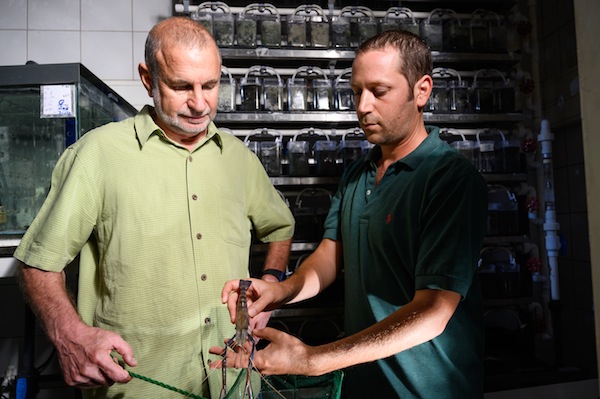
Ben-Gurion University’s Prof. Amir Sagi, left, and Dr. Amit Savaia have found a way to use shrimp to fight a deadly parasitic disease in Nigeria. (photo from BGU)

This year, Ben-Gurion University of the Negev plans to launch a new school that will specialize in climate change research, mitigation and environmental sustainability. It will also offer a graduate program with a cross-section of specialties.

BGU’s three campuses house an enrolment of 20,000 students and a faculty of 4,000. Its areas of expertise range far and wide, and, among other things, the university has become known as a go-to place for figuring out how to address one of the 21st century’s biggest threats: climate change.

For BGU president Daniel Chamovitz, the university’s growing reputation isn’t that much of a surprise. “Because what have we been doing in the last 60 years?” he asked rhetorically. “We have been learning how to survive – not to survive, how to thrive in the desert.”

photo - Prof. Daniel Chamovitz, president of Ben-Gurion University
Prof. Daniel Chamovitz, president of Ben-Gurion University. (photo from BGU)

Chamovitz’s own expertise is in genetics and plant biology. Originally from Aliquippa, Pa., he is most recently known for his studies in plant development and for his book What a Plant Knows: A Field Guide to the Senses, which has been published in 18 languages.

The realization that the university already has a strong foothold in environmental and sustainability research, Chamovitz said, is what led to its new mandate to become the world’s authority on climate change and sustainability.

A long history

For Prime Minister David Ben-Gurion, the Negev was always Israel’s greatest untapped resource. It was the place, he predicted, that the Jewish homeland would sow their greatest accomplishments. A desert that spans more than 60% of the country’s land mass, the Negev would hold the answers to Israel’s most pressing problems of the day: how to grow enough food to feed a nation, generate sufficient energy to power cities and harness enough water to turn brown deserts green.

But building a sustainable nation, he warned, one that could benefit from a desert that receives less than 200 millimetres of rainfall per year wouldn’t be simple. “It is incumbent upon Israel’s scientists to reveal the secrets of nature that are unique to our land,” he said. The Negev, he insisted, was the perfect environment for an institute of study that could solve the world’s most basic – and challenging – problems of existence.

Ben-Gurion’s visionary thinking was the catalyst for many of Israel’s earliest environmental accomplishments, including desalination and energy generation using seawater, steps that would be critical to Israel’s much-needed water technology. Both projects were developed in the 1960s, at a research facility in the town of Be’er Sheva, a Bedouin settlement at the northern tip of the Negev. The institute that gave rise to these early innovations would eventually become BGU.

BGU’s new school

Two years ago, when he was hired as president of BGU, Chamovitz told the Jewish Independent he had conducted a “bottom-up” assessment of all of the departments and their areas of specialization. He wanted to know what their strengths and weaknesses were.

“[We] identified over 150 researchers dealing with various issues of sustainability and climate change,” Chamovitz said. “And, in every discipline. Not only in our institutes of water, energy and desert agriculture – that’s the low-lying fruit – but also in engineering and in civil engineering, where we develop energy-efficient building material and methods.

“It was clear to everyone that the field of sustainability and climate change was what sets Ben-Gurion University apart from every other university in Israel.”

That brand-name recognition helped secure a new partnership with Royal Bank of Canada, which is sponsoring the new school’s first graduate fellowship program. The investment by RBC will fund two fellowship positions for students specializing in climate change or sustainability-related research and, in doing so, help launch the program.

This isn’t the first time that RBC has partnered with the university. In 2018, RBC and BGU entered into a cybersecurity partnership, in which the bank invested $2 million toward research programs in BGU’s department of software and information systems engineering.

In this case, the partnership aligns with RBC’s own long-term sustainability goals and its Tech for Nature program, which it launched in 2019.

photo - Martin Thibodeau serves as the president of Royal Bank of Canada’s British Columbia region
Martin Thibodeau serves as the president of Royal Bank of Canada’s British Columbia region. (photo from Royal Bank of Canada)

“The research being conducted also aligns with RBC’s interests as we recognize that innovative technologies offer immense potential to help solve environmental challenges,” Martin Thibodeau, B.C. regional president, RBC Royal Bank, told the Independent. “The most pressing environmental concerns of our time are negatively impacting the planet at a rate that often outpaces the solutions designed to address them. RBC is leveraging its capabilities in technologies such as artificial intelligence and blockchain, as well as its convening power, to build solutions and the type of multi-partner coalitions needed to address and solve our shared environmental challenges.

“Our commitments align with the United Nations Sustainable Development Goals and, through our partnerships, we aim to develop multi-sector, multi-partner solutions to achieve progress on these challenging issues. We’re both proud and excited to partner with BGU through CABGU to address these important issues,” Thibodeau said.

“We are in awe of the grassroots contributions that RBC makes to our Jewish community and the positive role that RBC plays and has played in strengthening so many local community organizations in British Columbia and across Canada,” said David Berson, executive director of the B.C. & Alberta chapter of the Canadian Associates of Ben-Gurion University, which worked as a liaison with RBC and BGU to secure the partnership.

“[We] are incredibly excited that corporations such as RBC see the importance of partnering with Ben-Gurion University, [and] that their investment [will] pay back to society tenfold,” Chamovitz said. He likened RBC’s partnership to an educator who invests in students’ goals, which, in time, benefit generations to come.

A new learning model

Climate change is a multidisciplinary problem, said Chamovitz, one that takes the expertise of not only hydrologists, biologists and engineers, but geneticists, geologists, legal experts and others. Education, therefore, must be tailored to meet the broad range of knowledge required to understand climate change. That doesn’t mean graduate students won’t specialize in their research and their studies, Chamovitz said, but they will be expected to have a multidisciplinary background that connects with the challenges of creating a sustainable world and addressing climate change.

photo - Microbial eco-genomics deals with the study of relationship between organisms, including microbes and their environment
Microbial eco-genomics deals with the study of relationship between organisms, including microbes and their environment. (photo from BGU)

“The one requirement would be their willingness to work interdisciplinarily and to take courses in other fields. Otherwise, they don’t need the school,” said Chamovitz. “They could just go into the school of engineering [for example] or school of ecology. And, you know, for some people, that’s the better track.”

Chamovitz said it’s companies like RBC that are making this new branch of education possible, adding that the university has seen an increase in inquiries from companies and communities across the world that are attempting to address climate change challenges. Last year, for example, a company located in Chennai, India, reached out to see if BGU could assist in building a local agricultural research institute. Chamovitz said the institute’s future researchers will be trained first at BGU before returning home to Chennai to begin their new jobs. The university has also struck up a three-way partnership with the city of Dubai, in the United Arab Emirates, and Arizona State University, in Tempe, Ariz., to address issues relating to global warming in Dubai.

“We have similar collaborations in western China, which are also in arid places. And we are really excited about developing relationships in Canada,” said Chamovitz, who recently visited Vancouver to meet the presidents of Simon Fraser University and the University of British Columbia, which both offer studies in climate change and sustainability.

The two Israeli RBC fellowship students have already been selected. Shir Eisenstein will be doing a master’s in material engineering, looking for new materials that help harness sustainable, renewable energy. Nadina Levitt, who is also pursuing a master’s, will be enrolled in the department of geography and environmental studies and studying sustainability models for smart cities. Both students demonstrated a key requirement for upper-level studies when it comes to BGU’s approach to this new specialization: innovation.

“One of the problems in higher education is this need for prerequisites,” Chamovitz noted. “What we are looking for is not prerequisites, but ingenuity.”

The university is expected to complete the formalization process and approval for the new school of sustainability and climate change in February and be open for enrolment this October.

For more information about BGU and the programs it offers, visit in.bgu.ac.il/en. For more about CABGU, contact Berson at bguvancouver@bengurion.ca or 604-266-2680, or visit bengurion.ca.

Jan Lee’s articles, op-eds and blog posts have been published in B’nai B’rith Magazine, Voices of Conservative and Masorti Judaism, Times of Israel and Baltimore Jewish Times, as well as a number of business, environmental and travel publications. Her blog can be found at multiculturaljew.polestarpassages.com.