Skip to content
  • Home
  • Subscribe / donate
  • Events calendar
  • News
    • Local
    • National
    • Israel
    • World
    • עניין בחדשות
      A roundup of news in Canada and further afield, in Hebrew.
  • Opinion
    • From the JI
    • Op-Ed
  • Arts & Culture
    • Performing Arts
    • Music
    • Books
    • Visual Arts
    • TV & Film
  • Life
    • Celebrating the Holidays
    • Travel
    • The Daily Snooze
      Cartoons by Jacob Samuel
    • Mystery Photo
      Help the JI and JMABC fill in the gaps in our archives.
  • Community Links
    • Organizations, Etc.
    • Other News Sources & Blogs
    • Business Directory
  • FAQ
  • JI Chai Celebration
  • JI@88! video

Recent Posts

  • Eby touts government record
  • Keep lighting candles
  • Facing a complex situation
  • Unique interview show a hit
  • See Annie at Gateway
  • Explorations of light
  • Help with the legal aspects
  • Stories create impact
  • Different faiths gather
  • Advocating for girls’ rights
  • An oral song tradition
  • Genealogy tools and tips
  • Jew-hatred is centuries old
  • Aiding medical research
  • Connecting Jews to Judaism
  • Beacon of light in heart of city
  • Drag & Dreidel: A Queer Jewish Hanukkah Celebration
  • An emotional reunion
  • Post-tumble, lights still shine
  • Visit to cradle of Ashkenaz
  • Unique, memorable travels
  • Family memoir a work of art
  • A little holiday romance
  • The Maccabees, old and new
  • My Hanukkah miracle
  • After the rededication … a Hanukkah cartoon
  • Improving the holiday table
  • Vive la différence!
  • Fresh, healthy comfort foods
  • From the archives … Hanukkah
  • תגובתי לכתבה על ישראלים שרצו להגר לקנדה ולא קיבלו אותם עם שטיח אדום
  • Lessons in Mamdani’s win
  • West Van Story at the York
  • Words hold much power
  • Plenty of hopefulness
  • Lessons from past for today

Archives

Follow @JewishIndie
image - The CJN - Visit Us Banner - 300x600 - 101625

Tag: endangered species

Alarming population decline

Alarming population decline

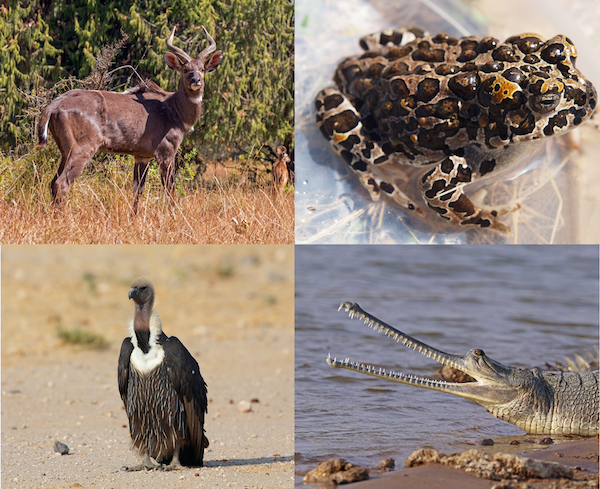
Since 1970, the population sizes of mammals, birds, fish, amphibians and reptiles have declined by 68% – or more. (photo from CABGU)

Over the past 24 years, Living Planet Report has been published biannually by the Zoological Society of London and the World Wildlife Fund. It highlights the major declines that some 20,811 vertebrate populations, representing 4,392 species monitored around the world, have experienced globally. The 2020 report (which is the latest one) showed that, on average, the population sizes of mammals, birds, fish, amphibians and reptiles declined by 68% between 1970 and 2016.

As large as that decline is, a paper published in the journal Nature last month by a group of scientists based in Israel – Drs. Gopal Murali and Gabriel Caetano from Ben-Gurion University were lead authors of the paper – shows that it might greatly underestimate the situation.

As part of their research, the authors analyzed the overlap of the monitored populations with protected areas. They then compared these to a random sample of locations and the placement of the global network of protected areas. They found that the populations sampled in Living Planet are much more likely to be found inside protected areas than would be expected to occur by chance.

“This is truly alarming,” said Caetano. “If populations inside protected areas – where we focus a lot of our conservation efforts – are doing so badly, those that reside outside protected areas are probably worse off. The true situation of nature – mostly not monitored or protected – may be much worse.”

The authors highlight the need for proper accounting of the status of nature when making generalizations (as they have done in their paper). However, they also advocate for greater monitoring of populations and species in different locations and stress that many animal populations and natural environments will be lost forever without concentrated and direct action.

The world is experiencing massive transformations that are expected to intensify in the coming decades and have fundamental and dire consequences for the natural world. Prof. Shai Meiri from Tel Aviv University, also a co-author of the Nature article, said, “Rather than discourage us from action, we feel that our work should be viewed as a call to arms. Rapid and comprehensive changes in how we view our relationships with nature are needed – and the onus is on us to make sure they happen before it is too late.”

– Courtesy Canadian Associates of Ben-Gurion University of the Negev, B.C. & Alberta Region
Format ImagePosted on February 11, 2022February 10, 2022Author CABGU - BC & Alberta RegionCategories IsraelTags Ben-Gurion University, BGU, climate crisis, endangered species, environment, Gabriel Caetano
New rhino born

New rhino born

photo - baby rhino
(photo from Ashernet)

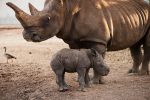
Tanda, 25, with her as-yet-unnamed calf at Ramat Gan Safari Park. (photo from Ashernet)

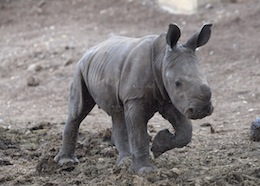
Tanda’s new offspring – her fifth – weighed 50 kilograms at birth. The baby rhino’s horn will begin to grow in the coming weeks, but, in its first year, the horn will remain small and round. Due to poaching in other areas of the world – for the rhinos’ horns – several species of rhino have become endangered. In one case, the northern white rhino has been almost completely wiped out, with only five animals left in captivity. The safari park tries to encourage breeding programs, particularly of endangered species, and has seen some success.

Format ImagePosted on September 21, 2018September 20, 2018Author Edgar AsherCategories IsraelTags endangered species, environment, Ramat Gan Safari Park
Proudly powered by WordPress