Higher learning in the Negev

Ben-Gurion University of the Negev. (photo by Dani Machlis)

Approximately 2,000 Ben-Gurion University of the Negev students served during Operation Protective Edge, and another almost 1,000 remained in Beersheva to volunteer in the community. Between July 8 and Aug. 26, all activities, classes and exams were canceled. It was the third time and the longest period that the university has had to close its campus because of rockets from Gaza.

“Tragically, four members of the BGU family fell in battle. Their deaths are the latest permanent and heartbreaking reminder of the enormous price we continue to pay for an independent Jewish state,” wrote Prof. Rivka Carmi, MD, president of BGU, in her Sept. 14 e-message.
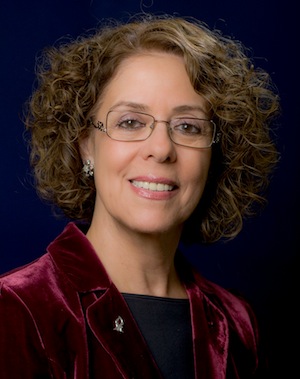
photo - Prof. Rivka Carmi is in her third term as president of Ben-Gurion University of the Negev
Prof. Rivka Carmi is in her third term as president of Ben-Gurion University of the Negev. (photo by Dani Machlis)

“Other members of the university family, more than I believe we will ever know, served their country, their neighborhoods, their communities and their families by devoting time and energy to helping others endure the more than 50 days of what seemed like never-ending sirens, explosions and the awful anticipation of the next one,” continued the message.

“For many of those affected by the war, the plans they had to work and earn the money needed to cover the costs of tuition and living expenses never came to fruition.”

To help, Carmi asked BGU’s associates organizations to raise $1 million, which they did. As of that message, Canadian Associates of BGU had raised more than $125,000 “for scholarships, with more expected to be donated.” As well, “approximately $120,000 … [was] received to purchase a 3-D electrocardiograph to be used with the wounded soldiers in Soroka hospital.” In August, American lawyer and philanthropist Murray H. Shusterman had pledged $1 million to improve campus safety against rocket attacks.

“We are worrying about our students so that they won’t suffer from the consequences of the university being closed and from the impact of having done extended military duty, while outlining how we need to be prepared for the possibility of more rockets in the future,” Carmi told the Jewish Independent in an email interview. “Basically, we reopened immediately on Aug. 26th to minimize loss of time, so that we wouldn’t have to delay the start of the fall semester. We have also had to institute a number of budget cuts to cover the many unexpected costs of the summer’s closure.”

While the university’s “annual operating budget comes from the government (primarily for salaries) through the Council for Higher Education in Israel, all growth and development comes through fundraising,” she explained. “Growth – in both physical infrastructure and human capacity – are made possible through amazing philanthropists who share our vision.” She voiced appreciation for the Canadian Jewish community’s support.

Carmi is the first woman to have served as president of an Israeli university, and the first as dean of a health sciences faculty. Elected for her first term as BGU president in 2006, she was confirmed for her third term this past May.

“I am sorry to say it is still an accomplishment to be the first woman and, though the situation is improving, it isn’t happening fast enough for me,” she said when asked about how women’s involvement at these levels had changed in the past 15 years or so. “There is a real problem still today to encourage girls to pursue their studies in the sciences. BGU operates a number of programs to encourage girls to expand their horizons through our Access to Higher Education program.”

One of her favorites is Inbal, which was spearheaded by Prof. Hugo Guterman. According to the blurb that accompanies the YouTube video of a group of program participants, “‘Only three to five percent of students in the department of electrical and computer engineering are women. In general engineering, it’s about 25 percent,’ he notes. Three years ago, he, along with BGU and the Beersheva municipality, began a course in robotics for female middle school and high school pupils. Beginning with less than 15 girls participating, this year [2012] nearly 120 girls took part in the course.”

[vsw id=”uZ0JFFLgJ0E” source=”youtube” width=”425″ height=”344″ autoplay=”no”]

With similar intent – to get more women into higher education – Carmi co-founded with Fatma Kassim the nongovernmental organization Alnuhud, the Association for the Promotion of Bedouin Women’s Education in the Negev. “It was the first such an organization … in the community,” said Carmi. “We realized then that an educated woman has a huge impact on the community and her family. The goal was to ensure that girls can compete on their own level to enter into university. At the same time, the university created what has turned into a very successful medical cadet program, launched by Prof. Riad Agbaria, to find promising Bedouin high school students and help them prepare for university studies in the health sciences.

“People like Shira Herzog (z”l) and the Kahnaoff Foundation have put us in a position to be able to offer scholarships to Bedouin women. When you are out in the Negev, you really feel the difference. There are now many Bedouin women out there making a difference in their communities.”

Two years ago, Carmi led a national committee examining the barriers and possible solutions to the situation. “The findings were conclusive,” reads BGU’s President’s Report 2014, “while Israel graduates a large number of female PhDs, it has far fewer women in the ranks of senior faculty than other European countries.

“This year, there were 216 women among the faculty, not including clinical medical staff, representing 27 percent of the total. The higher one ascends the ladder of seniority, the lower the percentage of women. Today, 40 percent of lecturers, 35 percent of senior lecturers, 19 percent of associate professors and only 16 percent of full professors are women. Of the 38 new faculty members recruited this year, one third are women.

“The average age for a woman completing a doctorate in Israel is relatively high: 37.3 years old. Israeli women also tend to have more children than similarly educated women around the world. The result is that potential candidates for international fellowships are older, with more children and less flexibility than their peers.”

“One of the key stumbling blocks, the report found, is the postdoctoral fellowship, generally done abroad. The average age for a woman completing a doctorate in Israel is relatively high: 37.3 years old. Israeli women also tend to have more children than similarly educated women around the world. The result is that potential candidates for international fellowships are older, with more children and less flexibility than their peers.”

The report listed a few initiatives that had been implemented based on the findings, but it is a continuing process. Just last month, said Carmi, “we organized a national conference to encourage women to a pursue an academic career. More than 350 young academics – men and women – came to Beersheva for the event that included hands-on advice and a panel of young female researchers who have ‘made it’ talking about their experiences. The responses we received from the participants have been overwhelmingly supportive.”

Carmi herself is a renowned researcher, and there is even a medical condition named after her. “During my work as a neonatal physician, I treated babies who were born without skin and with other severe birth defectives,” she explained about how the Carmi syndrome came to be named. “I was highly motivated to find the cause for this horrible condition. The problems we observed had never been seen before so it was decided to name this horrible disease after me. Twenty-five years later, I was fortunate enough to identify the gene mutation that causes it!”

For Carmi, genetics has been a long-held passion. “When I was in school,” she said, “I fell in love with the whole idea of research. My curiosity was captured by genetics and how it all shapes our lives. I decided very early on to become a genetics researcher. I realized that the best way to do this and help people at the same time was to study medicine and combine it with scientific research.”

While time no longer permits Carmi to be actively involved in research, she said, “It was my life, but I am happy in my new career that allows me to make a difference. I moved to the Negev in 1975. Watching it change and grow is very satisfying.”

“We are overcoming budget shortages and the incredible competition with universities around the world to attract the best and brightest young researchers through a special presidential fund…. I have funded researchers in fields that range from Yiddish to cognitive brain sciences.”

One of Carmi’s missions when she became BGU president was to “inject scientific content and research” into the university. On the progress of that mission, she said, “We are overcoming budget shortages and the incredible competition with universities around the world to attract the best and brightest young researchers through a special presidential fund. This allows BGU to offer competitive packages to researchers who might otherwise go elsewhere and opens up new positions as part of a wider agenda to stop Israel’s brain drain. I have funded researchers in fields that range from Yiddish to cognitive brain sciences.”

Carmi has received many honors over her career, including from Canadian organizations, and there have been several collaborations between BGU and Canadian science/academia.

“As a researcher, I had no Canadian contacts, but when I became dean of the faculty of health sciences, I became involved with the Canada International Scientific Exchange Program (CISEPO), which honored me in 2002 for my work. Now, our students participate regularly in their programs,” Carmi told the Independent.

“Over the past few years,” she added, “we have created a number of cooperative agreements with Canadian universities, the most noteworthy is with Dalhousie,” from which she received an honorary doctorate last year. The BGU-Dalhousie memorandum of understanding involves joint research projects, among other cooperative ventures, including the development of an Ocean Studies Centre in Eilat.

“We have had a significant increase in the number of Canadian academics coming to the Negev. The result has been a number of agreements for students and cooperative projects,” said Carmi, who was among those participating in a late-October conference in Ottawa on innovation that “focused on the Canadian-Israeli connection. It was fascinating,” she said, “and is sure to result in further partnerships.”

For more information about BGU, visit bengurion.ca.
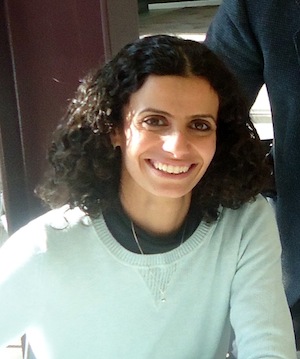
Doctor trailblazes in Toronto

With its Centre for Bedouin Studies and Development, Israel’s Ben-Gurion University (BGU) encourages Bedouin students to enrol at the Negev university by providing financial assistance and programming aimed at retention and academic success. One of the first students to go through the BGU program is Dr. Rania Okby, who is currently doing a fellowship in advanced obstetrics in Toronto.

At the young age of six, Okby, who was born in Be’er Sheva, decided she wanted to become a pediatrician, because, she said, “I really loved my pediatrician. I never had any problems going there when I was a kid, and I kind of wanted to be like her.”

photo - Dr. Rania Okby at the Asper Campus in Winnipeg earlier this year
Dr. Rania Okby at the Asper Campus in Winnipeg earlier this year. (photo by Ariel Karabelnicoff)

Okby’s parents divorced when her father expressed his desire to marry another woman. “Polygamy is a common practice in the Bedouin community,” she told the Independent. “About 30 percent of Bedouin women are in a polygamy system. My mom didn’t agree to that. She said, ‘OK, whatever, you want to get married? OK. But, I’m going to leave the house.’ She left the house with six kids – four girls and two boys.”

Okby, while in high school, spent one day a week at BGU, part of the university’s recruitment programs for Bedouin high school students. One such program, Seeds of Medicine, helps identify the best students, those who have a chance to be accepted into medical school.

“We were two female students who did very well in the project,” said Okby. “We went through interviews like other candidates for medical school. And, that’s how I became a medical student.”

In her first year in medical school, Okby had the opportunity to help deliver a baby. “I remember how it felt to be part of giving birth, dealing with birth and helping women … so, I fell in love with obstetrics and gynecology … and that’s how I decided to do that,” she said.

As it happened, Okby went on to become the first female Bedouin doctor in the world.

“My whole family was proud I was accepted,” she said. “They saw how hard I worked. I studied in high school five days a week and then I went another day to study in the university. And, you know what? On the seventh day, I would volunteer on a few projects.”

Financing was not an issue, as BGU covered expenses and the university is supporting Okby while she is doing her fellowship in Toronto.

“Being at the university at large, the fact that there’s more and more Bedouins going to BGU – especially girls – because of the Centre for Bedouin Studies, connects the Jewish community with the Bedouin community in an interesting way,” said the doctor.

The way Okby sees it, “If you’re more exposed to different people or cultures, you understand that they are human beings, just like you. It doesn’t matter if they’re Jewish, right? So, being exposed to one another at the university, for sure, makes it better. And the more educated people are, the more they will hopefully accept one another.

“There are many friendships between Arabs, Bedouins and Jews. It’s normal, because if you’re in contact with people, you become more comfortable with them. There’s a lot of Jews who volunteer in the Bedouin community, and there are some Bedouin who volunteer in the Jewish community – not necessarily in their own community.”

What is paramount in Okby’s mind is, “Education, education, education. To become equal, we have to first become empowered. Bedouins suffer from very low social economic, education and health status … everything is lower. So, to become equal, we have to be empowered.”

Life in Toronto

During the first two months Okby was living in Toronto, a friend stayed with her, and the doctor’s mom also joined her during the second month. Since September, Okby has been living on her own, along with her two daughters, in an area referred to as “the Kibbutz.”

According to Okby, “There are about 35-40 families, Israeli families, in the area, and 97 percent of them are Jewish. Most of them are doctors who came to do their clinical fellowships, but some of them are post-doc. We live in the same area and most of our kids go to the same school, so the older kids help the new kids adapt to school.”

Okby’s youngest daughter just started Grade 1, and the parents had a party for all their kids who were starting first grade.

“Now, during Sukkot, everyone is celebrating,” said the doctor. “On exchange day, everyone who has things they don’t need brings them, and everyone picks what they need. We support each other, help each other, do trips and Friday night dinners together.”

Understanding the issues

Bedouins make up 25 percent of the Negev population. But, Okby said, “In labor and delivery, we’re about 55 percent, because we give birth to a lot of kids (the average is six to seven kids), we suffer from a lot of gynecological problems, we have a high rate of relative marriages and we have a high rate of malformation.

“We have three times the rate of neonatal deaths compared to the Jewish population. Forty percent of that is due to malformation, which is a result of relative marriages. Bedouin women [also] suffer from postpartum depression – 30 percent compared to 10 percent in Jewish society.

“It’s similar to the indigenous people here, in Canada. We have many of the same problems as the aboriginals.” This is one factor Okby plans to focus on when she returns to Israel. “The university is very interested in the issue, too,” said the doctor. “Maybe we’ll have a minorities health department or something like that to research it further, to make the situation even better for those kids and mothers.”

Rebeca Kuropatwa is a Winnipeg freelance writer.

BGU student-built car races

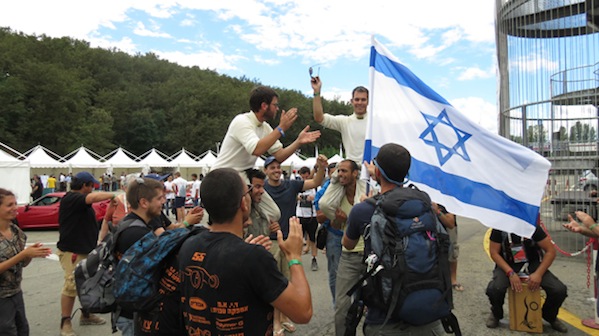
In Italy, at Ben-Gurion Racing’s pit, from left to right, BGR2014 team leader Dudy Daud, project manager Tamir Plachinsky, main sponsor of the event Giampaolo Dallara, former EU president and former Italian prime minister Romano Prodi and the rest of the BGR team. (photo from BGR)

Israel is not known for manufacturing cars, let alone race cars, but that hasn’t stopped students from Ben-Gurion University from doing just that.

At their first race this year, in Austria Aug. 17-20, the car had an oil leak in the middle of the endurance race. “The car was stopped and we were very disappointed,” said mechanical engineer Tamir Plachinsky.

At the second race, however, in Italy Aug. 29-Sept. 1, the team fared better. They finished 21st overall out of 44 teams, completing all of the events, including acceleration, skid pad, autocross and hard endurance (which was incomplete in Austria).

“The team is extremely happy to have finished the event,” said Plachinsky. “We showed again the strength of our students – that, even in a year like we had [in Israel], we managed to build the most advanced car we’ve ever built and to race it in two races.”

Plachinsky began the initiative to build the first-ever Israeli Formula SAE project in 2010. After the successful participation of the first Ben-Gurion Racing (BGR) team in 2011 in the Italian race, Plachinsky was granted a six-month apprentice opportunity at the Italian racecar manufacturer Dallara. Upon his return, he started managing the race-car project at the university.

photo - The team celebrates after the race in Italy. (photo from BGR)
The team celebrates after the race in Italy. (photo from BGR)

This year’s car is the fourth that students have designed and manufactured in the team. The aim is to redesign a new car each year for the Italian event, with a new group of students to replace the graduate students who have completed their studies.

“Each year starts with a new team and new goals, and you never know what will happen until the race,” said Plachinsky. “Think of it like a manufacturing company that forms at the beginning of the year with a new CEO … and everything [is] needed. And, at the end of the year, all the personnel retire from the company and you hire completely new staff.”

This year, Plachinsky said, “We started with new goals for the team and we knew we wouldn’t have enough time and resources to complete the car, but we still worked as hard as possible to keep to the time table and find support.”

The creation of the team occurs around September. The new team meets with the old team and learns about the current car. “We go over the good systems and the bad ones, where we need to improve and develop, and what should be left as is,” explained Plachinsky.

For 2014, the team consisted of 31 mechanical engineering students together with five students from the university’s department of management and design students from Bezalel Academy of Arts and Design in Jerusalem.

“We’re confident and believe in our ability to face any difficulty we’ll encounter,” said Plachinsky.

This year’s design concept was formed in September 2013. “They put into it their previous three years’ experience and a lot of courage to make it a better car from the 2013 model – one that put a new standard for race cars produced in Israel,” said Plachinsky.

This car, dubbed the “BGR14004,” had two unique features. The main frame is built from carbon fibre, instead of welded steel tubes, and the students designed their own gearbox.

“The carbon frame, also called ‘monocoque’ (Latin for ‘single shell’) is the first of its kind ever produced in Israel and allows for [a] lighter and stiffer chassis,” said Plachinsky. This is a feature the university students have been developing over the past two years.

“Together with the frame, we managed to design and manufacture the new gearbox,” he added. “This will enable the car to access a much better power supply, giving the driver help in reducing lap times.”

The main assembly was done in the university’s new compound, but the different parts were manufactured at various factories supporting the team. The carbon fibre frame was made at Composite Materials Ltd. in Modi’in, the gears were made at Ashot Ashkelon Industries Ltd. in Ashkelon, and the 3D-printed intake manifold was made at Aran Research & Development Ltd. in Caesaria. “But, as much as possible, we’re trying to keep the manufacturing of the parts in the Be’er Sheva area and the south of Israel,” said Plachinsky.

In competition

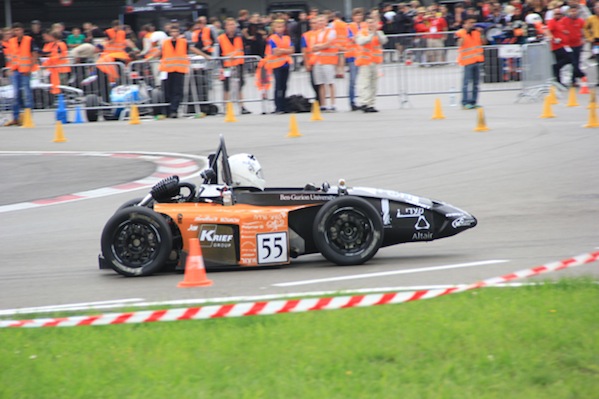
photo - Ben-Gurion Racing’s Formula SAE student race car at the autocross run in Austria
Ben-Gurion Racing’s Formula SAE student race car at the autocross run in Austria. (photo from BGR)

Registration for the races in Italy and Austria was in January 2014. “Once we knew we had spots at those events, all that was left to do was to build the car,” said Plachinsky. “This [was] no easy task, especially this year, because of the complicated manufacturing of the new frame and also – and maybe mainly – due to the fact that almost half the team got recruited to serve in the army. Even with these difficulties, we managed to complete the car just in time for the Austrian event, after a month of working 25 hours a day.”

Overall, Plachinsky said everyone is very happy with how the car performs. “It shows all the features we designed into it and is faster than last year’s car,” he said. “The students’ devotion to complete the car and represent the team, the university and the country in the best way possible has just been unbelievable.

“Arriving at the event with the car you’ve designed and built is an amazing feeling,” he continued. “Adding to that is the fact that the Austrian event is held at the famous Red-Bull Ring and that the Italian event, our traditional race, is always an amazing experience.”

The financial side

Getting the funding necessary for such a project is daunting – and most participating teams get 10 times the funding that BGR does, according to Plachinsky.

“We received support from the university and some companies and factories (from 2013 and continuing into 2014) but, as the design level goes up, so does the need for support,” he said. “Also, as we’re now on tour in Europe for three weeks; it’s not cheap or easy to organize and finance.”

Plachinsky and the team are approaching companies in Israel that they feel will want to collaborate with them “on a joint development basis or for marketing interest.” He said, “We want to show them how amazing this project is and that they can earn something by supporting us, having there be positive publicity, connections to the university, future employees, and so on.”

Plachinsky said of donors, “None of what we do would happen if it wasn’t for the good hearts of those people. We’ll be forever grateful.”

Looking ahead, the team’s goal is, as always, to advance into new areas and technologies. For the coming year, the plan is to participate in the Austrian and Italian events once again. This time, with a new car that will be the first electric race car made in Israel.

Although the team has not yet begun building it, the general concept is in place. “Some team members from next year’s team are here with us [in Italy], learning about the competition, the race and the car as much as possible before the current team will clear the stage for them,” said Plachinsky.

BGR is continually seeking assistance in helping them “represent Israel in the most amazing way and to educate the future engineers and automotive industry of Israel,” said Plachinsky. “And, for this, we greatly need to find further financial support.”

Rebeca Kuropatwa is a Winnipeg freelance writer.