Skip to content
  • Home
  • Subscribe / donate
  • Events calendar
  • News
    • Local
    • National
    • Israel
    • World
    • עניין בחדשות
      A roundup of news in Canada and further afield, in Hebrew.
  • Opinion
    • From the JI
    • Op-Ed
  • Arts & Culture
    • Performing Arts
    • Music
    • Books
    • Visual Arts
    • TV & Film
  • Life
    • Celebrating the Holidays
    • Travel
    • The Daily Snooze
      Cartoons by Jacob Samuel
    • Mystery Photo
      Help the JI and JMABC fill in the gaps in our archives.
  • Community Links
    • Organizations, Etc.
    • Other News Sources & Blogs
    • Business Directory
  • FAQ
  • JI Chai Celebration
  • JI@88! video

Recent Posts

  • Sharing her testimony
  • Fall fight takes leap forward
  • The balancing of rights
  • Multiple Tony n’ Tina roles
  • Stories of trauma, resilience
  • Celebrate our culture
  • A responsibility to help
  • What wellness means at JCC
  • Together in mourning
  • Downhill after Trump?
  • Birth control even easier now
  • Eco-Sisters mentorship
  • Unexpected discoveries
  • Study’s results hopeful
  • Bad behaviour affects us all
  • Thankful for the police
  • UBC needs a wake-up call
  • Recalling a shining star
  • Sleep well …
  • BGU fosters startup culture
  • Photography and glass
  • Is it the end of an era?
  • Taking life a step at a time
  • Nakba exhibit biased
  • Film festival starts next week
  • Musical with heart and soul
  • Rabbi marks 13 years
  • Keeper of VTT’s history
  • Gala fêtes Infeld’s 20th
  • Building JWest together
  • Challah Mom comes to Vancouver
  • What to do about media bias
  • Education offers hope
  • Remembrance – a moral act
  • What makes us human
  • המלחמות של נתניהו וטראמפ

Archives

Follow @JewishIndie
image - The CJN - Visit Us Banner - 300x600 - 101625

Tag: philanthropy

New Hornby art centre

New Hornby art centre

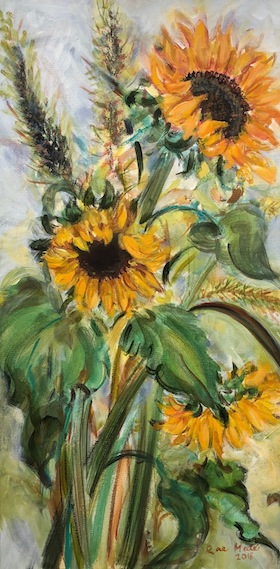
Rae Maté is one of the many artists who have donated work to the fundraiser for a Hornby Island gallery. (photo from Rae Maté)

Hornby Island, in Georgia Straight, is known for its natural beauty. It is no surprise that many of its small population – 1,016, according to the 2016 census – are artists. While the community hasn’t had a regular exhibition space, this is about to change. On Oct. 10, the Hornby Island Arts Council is holding an auction fundraiser in support of building a new art centre.

“A full 40% of residents of Hornby are visual artists, dancers, musicians, poets, actors and writers,” Cheryl Milner, auction chair, told the Independent about the need for a permanent gallery. “For too many years, local visual artists have been using a 1967 mobile home with a small display area to show their work. Otherwise, artists have built their own studios or hung their work in the local co-op general store to get in front of the island visitors.”

About the concept for the fundraiser, Milner said, “The idea came to me because I became familiar with this amazing woman on the East Coast of Canada, Zita Cobb. She lived on Fogo Island, left after high school, made it in the high-tech business and went back home to see how she could help her native island, particularly because the cod fishery had closed. She started a foundation to create greater cultural resilience for the region.”

Milner doesn’t want anyone to compare her to Cobb, but she wants to help Hornby Island and its artists on a smaller scale. “My thought was to marry Vancouver to Hornby Island as Toronto supports Fogo Island. The auction is our first attempt, and we’ll see how it goes,” she said. “The parallel goes only as far as helping support the gallery. We don’t wish to expand things further than that for now.”

She said a gallery has been on the radar of the arts council for years. “We have some new blood in the organization and want to help make it happen,” she explained. “We are also applying for some matching grant opportunities, which means that we could potentially double the capital we have been scrimping to save. Currently, we have about $180,000 saved. This will give us a good foundation to move forward. We do have a couple of architects on board to support this venture, so there appears to be quite a lot of momentum to get this done.”

Attracting tourists is one of the reasons the auction will take place in Vancouver, not on the island itself.

“Many Vancouverites frequently visit Hornby,” Milner said. “They love the place and their special time there. We are giving Vancouver an opportunity to support the artists they love by helping to build a proper facility to house a permanent gallery, exhibition and workshop space for future generations.”

The artists of Hornby Island are excited about the gallery and the auction.

“Approximately 35 artists donated their works,” said Milner. “About 25 are in the live auction and another 10 in the silent auction, which will focus on items and services of interest to Vancouverites.”

Besides their art, some participants are offering “Hands-on Hornby” artistic experiences to bidders. Among these will be cutting a song with Marc Atkinson at the Barn Studio and a two-day workshop with ceramicist Rachelle Chinnery, which includes a rental stay.

One of the visual artists who donated their work for the auction is Vancouver Jewish community member and well-known local artist Rae Maté. In 2011, she had a solo show at the Zack Gallery, and the Independent published an interview with her at the time. Since then, much has happened in her artistic life.

“In 2015, my third book in the Crocodile series with the author Robert Heidbreder, Crocs at Work, was published by Tradewind Books. My silly crocodiles are back and, this time, they have jobs and professions, which they do in very surprising and funny ways,” she said.

Since the death of her mother in 2017, Maté has devoted herself to art full-time.

“I’m excited to be using oils again as well as acrylics,” she said. “I’m exploring new directions: abstraction, non-figurative works and landscape. This summer, I had a very successful show on Hornby during the art festival in August. I was one of the four artists invited to mentor Hornby children. The children’s art was shown alongside with the mentoring artist’s new works. It was an exciting and rewarding experience for us all.”

photo - One of the pieces she has donated is “Sunflowers”
One of the pieces she has donated is “Sunflowers.” (photo from Rae Maté)

Maté’s ties to Hornby Island are longstanding. “Our family fell in love with Hornby Island in the 1980s, when my sons were little, and we spent several summer holidays camping there,” she said. “After my daughter was born, we purchased a small cabin. Five years later, we sold it and bought a larger place with indoor plumbing. We are still there today and we have many Jewish friends who live nearby. For years, we have been having potluck Shabbat dinners at Grassy Point, a wonderful park with a meadow and a beach a short walk from us. It is famous for its sunsets.”

Maté has enjoyed the island and its artistic atmosphere for years. It feeds her creativity.

“I used to tell people that being an artist on Hornby Island is like being a Jew in New York,” she said. “Almost everyone is creative and involved or interested in the arts. I feel very inspired and at home there.”

She also contributes to the arts scene on Hornby. “I regularly sell my art cards at the co-op store and at the farmers markets in the summer. I had a few solo and group shows at the community hall.”

Not only do she and her family spend most summers on the island, but she usually manages to get there for about a week every two months. “I do so much of my painting and illustrating work there, on my deck in the garden, when the weather allows, or in the studio during the colder months,” she said.

When Maté heard about the auction, she knew she wanted to donate her works for it.

“When Cheryl approached me at the market, I said yes immediately. This is a cause I whole-heartedly support. I am offering three paintings for the auction, all new, created especially for this event.”

The Oct. 10 auction will take place at Sage Bistro, which is behind the Chan Centre for the Performing Arts at the University of British Columbia. To learn more, visit hornbyislandartscouncil.wordpress.com.

Olga Livshin is a Vancouver freelance writer. She can be reached at [email protected].

Format ImagePosted on October 5, 2018October 3, 2018Author Olga LivshinCategories Visual ArtsTags arts, Cheryl Milner, fundraiser, Hornby Island, philanthropy, Rae Maté
Campaign’s new chair

Campaign’s new chair

Dr. Jonathon Leipsic (photo from Jewish Federation of Greater Vancouver)

When Jonathon Leipsic decided to take on the role of campaign chair for the Jewish Federation of Greater Vancouver this year, it was not because he had too much free time on his hands.

Leipsic is a physician and practising radiologist, with a focus on heart and lung imaging. He holds a number of positions, including being a professor of radiology and cardiology at the University of British Columbia, vice-chair of research for the UBC department of radiology, chair of the department of radiology for Providence Health Care and regional department head of medical imaging of Vancouver Coastal Health. He has published extensively and is the editor of two textbooks; he also speaks internationally on cardiopulmonary imaging.

“I decided to take on this role as campaign chair for a number of reasons,” Leipsic told the Independent. “I am deeply grateful and proud to be part of this incredible Jewish community and am driven to contribute to making it and all of Klal Israel stronger. I have served as board chair at Vancouver Talmud Torah, and currently serve on the board there and at Schara Tzedeck and King David High School.

“The Federation annual campaign leadership, for me, is a tremendous honour and privilege, enabling me to work with such a great team and a group of volunteers with the goal of supporting, nurturing and strengthening our community.”

For Leipsic, Jewish peoplehood and the continuity of the community and Jewish traditions are paramount. He hopes that his passion and commitment will be clear to community members, and that they will share in his vision of further building the community and ensuring that Jewish life is accessible to all who desire it.

“I want to express my gratitude to the entire community for their support and commitment,” said Leipsic. “I feel blessed to be part of a community filled with so many exceptional people and institutions, and I will work tirelessly throughout this campaign to help make it even stronger.

“The community and Am Israel are incredibly important to me, and both Karly and I will continue to volunteer and donate to the greatest extent possible to ensure that our children and, God-willing, our grandchildren, will share in the same blessings we have – to live in a strong Jewish community filled with love and strong institutions, and with a strong and prospering state of Israel.”

Leipsic praised the annual campaign volunteers. “There are nearly 300 volunteer canvassers who take time out of their busy lives to make calls and meet with donors about their gifts,” he said. “They are busy making those calls right now and I want to thank them.

“I also want to thank all of our donors for answering those calls, for meeting with their canvassers and for fulfilling the mitzvah of tzedakah.

“Thank you for supporting the community through the annual campaign. You are helping families struggling with the high cost of living to fully participate in Jewish community life. And, you’re bringing Jewish programs to members of our community who live beyond Vancouver’s city limits – from the Fraser Valley to the Sea-to-Sky corridor. Todah rabah.”

For information about and to donate to the Federation annual campaign, visit jewishvancouver.com.

Rebeca Kuropatwa is a Winnipeg freelance writer.

Format ImagePosted on September 21, 2018September 20, 2018Author Rebeca KuropatwaCategories LocalTags annual campaign, Jewish Federation, Jonathon Leipsic, philanthropy

Feast for mind and soul

Smack in the middle of the Days of Awe, hundreds of members of our community came together for an inspiring, entertaining and occasionally emotional evening celebrating unity and inclusion.

The opening event of the 2018 Jewish Federation of Greater Vancouver annual campaign Sunday night once again took the form of FEDtalks, four presentations from individuals with starkly divergent life experiences.

Zoya Schvartzman, whose career now is devoted to improving the lives of individual Jews in Europe and revivifying once nearly obliterated Jewish communities there through her work with the Joint Distribution Committee, talked about how a comparatively simple gesture by the Vancouver Jewish community, when she and her single mother lived here several years back, was a testament to paying it forward. By providing a family in need with a small hand up, probably nobody involved at the time imagined that a kind word and a bag of groceries, including a jar of chocolate spread, would inspire a young woman to positively change the lives of some of the most marginalized Jews in the contemporary world.

Arik Zeevi, an Israeli judo Olympian, talked about the importance of setting goals that seem to exceed our grasp as a means of self-improvement and collective advancement.

Pamela Schuller, a disability activist and stand-up comedian, spoke of how Tourette syndrome went from being her defining characteristic to becoming an integral, appreciated and complementary component of her complex identity. Her endearing and humorous presentation encouraged everyone to look at perceived disabilities as unanticipated gifts.

Rabbi Irwin Kula, in an intellectually packed tour de force, spoke of Judaism’s ability to transform itself, saying that the first Jews of Vancouver would not recognize the Judaism of today and that our descendants a century hence will not recognize our Judaism – and that this is a sign of constructive adaptivity.

The four speakers offered very different perspectives, which, together, reminded all of us at the Vancouver Playhouse that unity and diversity are complementary and not exclusive.

Everyone in the audience certainly left with a lot think about. However, standouts as we reflected afterwards included the idea that, while Judaism treasures tradition, its millennia of continuity is due at least in part to a willingness to break existing paradigms and make room for new ways of being and thinking, as well as fresh voices, being inclusive of multiple identities and ensuring that successive generations are welcomed and included even – perhaps especially – when they challenge the way things have always been done.

Also underlying much of the evening was the concept that our actions have powerful ripple effects that we cannot forecast. Small actions – teaching judo to a 7-year-old, standing up for a classmate with a disability, reaching out to members of the community in their times of need – can lead to life-altering consequences.

Underscoring these messages were words from leaders of our local Federation and campaign, including Federation board chair Karen James, past chair Stephen Gaerber, women’s philanthropy chair Megan Laskin, chair of this year’s campaign Jonathon Leipsic, and Federation chief executive officer Ezra Shanken, all of whom, in particular ways, reminded attendees of the obligation and privilege of participating in a collective movement that changes lives in British Columbia, Israel and around the world.

Leipsic singled out members of his generation, pleading that they maintain and expand upon the institutions and infrastructure that previous generations built for us. He made special note of Charles Diamond, whose funeral had taken place earlier that day. Diamond’s parents were among our community’s pioneers and the Diamond family, through generations, have been role models of the involvement needed for a community to thrive.

In these days of introspection, teshuvah and transcendence, FEDtalks proved a perfect opportunity to come together, reflect, celebrate, think big and rededicate ourselves to making positive contributions individually and collectively.

Posted on September 21, 2018September 20, 2018Author The Editorial BoardCategories From the JITags annual campaign, FEDtalks, Jewish Federation, philanthropy
Courage in a time of change

Courage in a time of change

Rabbi Irwin Kula speaks in Vancouver on Sept. 16 at FEDtalks, the opening event of the Jewish Federation of Greater Vancouver annual campaign. (photo from JFGV)

The world is in a time of historic shifts and the way we interpret and respond to what is happening can make each individual a player in this civilizational drama.

This is the promise of Rabbi Irwin Kula, who will speak in Vancouver on Sept. 16 at FEDtalks, the opening event of the Jewish Federation of Greater Vancouver annual campaign. Kula is co-president of Clal, the National Jewish Centre for Learning and Leadership.

“We are living in one of the most dramatic, exciting times in human history,” Kula told the Independent in a telephone interview. “Whenever one lives in a dramatic transitional moment, the call to responsibility is also dramatic. The fear and the anxiety that we are feeling is all understandable. But managing the fear, managing the anxiety and, therefore, managing some of the loss that comes in these great moments of transition, is how we move on the journey.”

Kula promises audience members more than an interesting talk.

“Anyone who is going to be in that room, anyone who is willing to speak about it this way, really has an opportunity to be a part of not only the solution but one of the great adventures in the human drama right now,” he said.

At Clal, Kula is part of a team that is “reimagining Judaism for this era.”

“And not only Judaism, but religion in general,” Kula said. “What is religion and Judaism going to look like in an information age? In an age of globalization? In an age when the borders and boundaries of their identities are more permeable?”

Kula is an eighth-generation rabbi and holds a degree in philosophy. He has served congregations in Jerusalem and St. Louis, Mo., and, over the last 30 years, has been involved with Clal, which describes itself as a “do-tank” – “The thinking actually has to apply to people’s doing,” he explained.

Kula works “at the intersection of religion, innovation and human flourishing,” he said. “Those are the lenses I use.”

Kula analyzes how information, entertainment, media, retail and other components of society are affected by innovation. In his 2007 book Yearnings: Embracing the Sacred Messiness of Life, Kula considers the relationship between what we desire and how we live.

“Yearnings is a fancy word for desires,” he said. “The central insight in the book is that what animates us, what animates our lives, are our desires. They are sources of great wisdom for who we are as human beings. We know our most intense desires – our desire for love, our desire for the truth, our desire for meaning, our desire for happiness, our desire to be creative and have a purpose and to contribute.… The interesting thing about looking at our desires is, the more one can understand our desires, the wiser our lives are.”

Whatever the day’s headlines, Kula said, maintaining optimism is critical to making positive change in the world.

“Being an optimist doesn’t mean you have to be Pollyanna,” he said. “You can be an optimist and be 51-49 about it. The difference between being a 51-49 optimist and 51-49 the other way may be the biggest difference of all.”

And when the nightly news brings stories of authoritarian ascendancy or other alarming developments, the long view is an antidote.

“I use a long-term, macro-evolutionary take,” said Kula. “This is where Martin Luther King, I think, is right. The arc of history bends toward justice. But it doesn’t bend linearly. It’s not one plus one plus one plus one. It’s sometimes two steps forward and a step backward. We are in now a very, very significant moment of transition. There’s a lot of ways to talk about that transition – postmodern, information age, technological age – and all of the changes are hard to metabolize. So, it takes a very serious responsibility for elites and cultural creatives and people who experience themselves at the cutting edge of these changes to take very seriously the costs and pains and dislocation of these changes for different people. That is what I think we are all called to do.”

People may look at the state of the world and feel helpless or hopeless. But the better response, Kula said, is not only to acknowledge the ways in which we might affect improvements, but also to take individual responsibility for the situation.

“Maimonides, the great Jewish philosopher, said, in the face of trauma and in the face of political tragedies, the first thing to ask is how am I complicit in what is transpiring,” said Kula. “Not in a giant moral drama of blaming, because, if we are actually interdependent … then what’s happening with people with whom we deeply disagree is connected to us. It’s not some other, evil person over there.”

This is not to say there is not evil in the world, he cautions. But, asserting that those with whom we disagree are evil can potentially misallocate cause.

“In America, there aren’t 60 million evil people who voted for Trump that want America to be destroyed and become a homophobic, primitive, psychologically regressive place in the world,” Kula said. “It behooves us, says Maimonides, to address very seriously what have I missed and, therefore, perhaps been complicit in allowing this to emerge?”

Courage and a sense of adventure can help us navigate times like these.

“If we mitigate a little bit the fear and just stand at that burning bush and not be so scared, know there is tremendous possibility,” he said.

For tickets to FEDtalks, at the Vancouver Playhouse, visit jewishvancouver.com.

Format ImagePosted on September 7, 2018September 6, 2018Author Pat JohnsonCategories LocalTags Clal, FEDtalks, Irwin Kula, Judaism, lifestyle, philanthropy, tikkun olam
Challenges improve life

Challenges improve life

Israeli judo master Arik Zeevi will speak at FEDtalks Sept. 16. (photo from JFGV)

When we’re faced with a challenge, most of us are naturally cautious. But, says Israeli judo master Arik Zeevi, if you have a passion for something, go for it, explore it and, even if you fail, “you will always be proud that you took the challenge.”

Zeevi, who will be one of four keynote speakers at this year’s FEDtalks Sept. 16, advises in a 2014 TED Talk, “Go for the challenge because, I personally think that, by taking a challenge, that is the best way to grow, to improve your life.”

In that TED Talk, Zeevi shares the story of his experience at the 2001 World Judo Championship. Having trained intensely for two years and becoming a national hero in Israel – and with his journey to the championship being filmed by a team of videographers – Zeevi was “knocked out” (in judo terms, his opponent “threw [him] by ippon”) two minutes after setting foot in the ring.

Undaunted by losing the world championship match, Zeevi, a lightweight, registered to fight in the open match in which fighters of any weight could spar. Friends and colleagues warned him to back out, and the Israeli media fretted over what injuries he might sustain. But, Zeevi beat one opponent, a second, then a third; the fourth knocked him down. Though he failed to win the gold medal, he took the silver – and set a precedent. In the years that followed, having witnessed Zeevi’s success, more and more lightweights competed in the open category, and also won medals. The match morphed into its own championship event.

Zeevi won many judo medals in his time, and he is the 2000, 2003, 2004 and 2012 European champion. He is currently ranked eighth in the world, though he retired from fighting in 2012. Today, Zeevi is an inspirational speaker whose main income comes from talking to companies about what he calls “the similar worlds of sports and business.”

“It is all related,” he told the Jewish Independent, “excellence in sport and excellence in life.”

Zeevi also heads the nonprofit Israeli Foundation for Olympic Excellence (IFOE), which hires and funds Olympic coaches who identify, support and train Israeli children and youth they hope have Olympic potential.

“We scout kids who have talent, we try to nurture them and connect them to the sport that is right for them,” said Zeevi. “You could be Michael Phelps, but unless you’re living next to a swimming pool, you’ll never know.

“The biggest problem in Israeli sport,” he said, “is that all sports are coached by amateurs in private clubs. The coaches are getting income according to the numbers of kids, putting quantity over quality. Professional coaching is rare.”

Zeevi grew up in a tough neighbourhood in Bnei Brak and knows what it is like to have few opportunities.

“My coach was very young, and he was like an older brother to me,” said Zeevi. The coach played a role for Zeevi that he is now trying to play for others. “He pushed me to discover myself,” explained Zeevi. “Around 12, I became very serious. Before that, I was just trying to be part of something. At 12, I got my first invitation to train on the national team. My coach was a Soviet Georgian guy – they are fighters, warriors. By 13 or 14, I was already very big, and he pushed me to fight bigger guys. When 15, I won the championship against seniors over 21. He did a great thing for me, pushing me like that. When you find an athlete, you have to challenge them.”

It is the appreciation for what sports did for him that motivates Zeevi to make high-level training available to more young people. “I really believe in sports as education,” he said. “It is the best way to stimulate mental skills, and it teaches you how to deal with stress, failure, difficulty.”

Zeevi himself has three children. His daughter won the Israeli championship in gymnastics, and his middle son is into basketball and judo. Zeevi said his son has also taught him the lesson that sometimes pushing is not what brings success. “The more I push him forward, the more he goes backward,” he said, “so I have to take a gentler approach. The most important thing is just to be there for them. Then they will succeed.”

While in Canada, Zeevi will also be visiting a judo club in Toronto, which is run by an Israeli friend from his training days. There, he will be giving a master class for advanced fighters before he returns to Israel for Yom Kippur.

FEDtalks, which launches the Jewish Federation of Greater Vancouver’s annual campaign, is being held this year on Sept. 16, 7 p.m., at the Vancouver Playhouse. For tickets and more information, visit jewishvancouver.com.

Matthew Gindin is a freelance journalist, writer and lecturer. He is Pacific correspondent for the CJN, writes regularly for the Forward, Tricycle and the Wisdom Daily, and has been published in Sojourners, Religion Dispatches and elsewhere. He can be found on Medium and Twitter.

Format ImagePosted on August 31, 2018August 29, 2018Author Matthew GindinCategories LocalTags Arik Zeevi, FEDtalks, Israel, Jewish Federation, judo, philanthropy, sports
Jewish history’s next chapter

Jewish history’s next chapter

The JDC’s Zoya Shvartzman is part of the FEDtalks lineup Sept. 16. (photo from JFGV)

In returning to Vancouver, Zoya Shvartzman is retracing the route that has seen the Moldova-born woman help “write the next chapter of the history of European Jewry.”

Those words, while spoken by Shvartzman, are not about herself – she was crediting North Americans and others who support the American Jewish Joint Distribution Committee (JDC) with helping revivify communities that were almost annihilated under Nazism and then suppressed by communism. But the work Shvartzman does in her role at the JDC means she could rightly claim to be among a number of authors altering the future for Jews in Europe.

Shvartzman and her parents made aliyah from the East European nation when she was 8 years old. At 15, she and her mother migrated to Vancouver. Here, the family had some hard times and they turned to the Jewish community.

“The Jewish community welcomed us with open arms and gave us almost a second home,” she recalled recently in a phone interview with the Independent. “It was a very, very fond memory of my time there and it has a lot to do with the Jewish community that became our family.” She will speak about this time when she presents as one of four speakers at FEDtalks, the opening event of the 2018 Jewish Federation of Greater Vancouver annual campaign, Sept. 16.

Shvartzman chose to pursue a degree in international development studies and political science at McGill University and so, after four years on the West Coast, she and her mother decamped for Montreal.

“After that, I decided to move to Budapest to pursue my master’s in political science because I was focusing on Eastern European politics and transitions from communism to democracy,” she said. “Because I’m from that part of the world, it made sense to go back and be there, be where it’s taking place.”

She completed her studies at Central European University, which was founded and funded by the democracy philanthropist George Soros, and, after graduation, worked for the Canadian embassy in Budapest. In 2007, she was offered a position at the JDC, where she is now director of strategic partnerships.

Shvartzman’s role is to identify on-the-ground needs of Jewish communities in Europe and convey those needs to potential funders, primarily in North America. Federations, foundations and philanthropists then contribute to help the JDC complete its projects.

“In Europe, basically, our main mission is that we build resilient communities,” she said. “We help build communities where they were shattered after the Holocaust and after communist regimes.

“In Eastern and Central Europe, we help poor Jews with basic services like food and medicine and winter relief, help to pay their utilities,” she explained. “Most of the elderly are Holocaust survivors. We work extensively with Holocaust survivors together with the Claims Conference funding. In the last 10 years or so, we developed services for children and families, modeled on the JFS [Jewish Family Services] model that you’re familiar with in Canada and the U.S., addressing the needs of poor children and families.”

Examples of projects that the JDC has spearheaded or supported include a Jewish community centre in Warsaw and a summer camp in Hungary, where children from 25 countries come to strengthen – or, in some cases, learn about for the first time – their Jewish identity. But the work is not limited to Eastern and Central Europe.

In France, the JDC has opened a “resilience centre,” to help Jewish schools, social workers, teachers, children and families respond to threats experienced by Jews in the country. Several acts of anti-Jewish terror in recent years in France have compounded existing anxieties about the security of its Jewish population and institutions.

The decade-plus that Shvartzman has been with the JDC has been a time of challenge for Jews and others across the continent.

“Especially the last four or five years have been particularly tumultuous for Jews in Europe,” she said. “There are different threats – external, internal threats. We see communities that have nearly collapsed, like the community in Greece, in terms of the economic crisis that really, really shattered it.”

In addition to the generalized economic challenges experienced by people in many countries, Jews have faced particular difficulties. Rising antisemitism and political extremism in places like Hungary and Poland have stoked once-dormant apprehensions.

Even so, Shvartzman is bullish about Jewish life in Europe and plans to share her enthusiasm with Vancouverites.

“There are many causes for optimism,” she said. “When you look at the revival of Jewish life in Europe and how these communities have gone from survival to really thriving Jewish communities, I think that’s a big cause of optimism.

“This is quite remarkable when you consider the history and some of the deep, deep traumas that this community has suffered and, today, Jews are reclaiming their heritage and are proud to be Jewish,” she continued. “All of this gives us great causes of optimism that Jewish life in Europe is thriving.”

Shvartzman’s Moldovan childhood and her current work both reflect and embody the JDC’s mission to save and build Jewish lives, said Michael Geller, the JDC’s North American director of communications.

“In her professional life and her personal life and in her life’s journey, she understands quite deeply the importance, the critical importance, of the work we do every day to ensure that needy Jews have the basic needs to continue to live their lives and, in addition, to have a strong Jewish identity, one that is their own, that they make themselves, and one that we help strengthen and empower through the kind of work that we do,” he said.

Returning to the theme of writing the next chapter of European Jewish history, Shvartzman credits overseas allies with making possible all of the achievements she and the JDC have realized.

“It’s only possible because of the support of the North American communities, North American Jewry, that chose to invest in that part of the world over the past 20, 25 years,” she said. “If I had to underline one message, it would be that: North American Jewry helping to write the next chapter of the history of European Jewry.”

FEDtalks features keynote speakers Rabbi Irwin Kula, Pamela Schuller, Arik Zeevi and Zoya Shvartzman. The event takes place at the Vancouver Playhouse on Sept. 16, 7 p.m. Tickets ($36) are available from jewishvancouver.com.

Format ImagePosted on August 24, 2018August 22, 2018Author Pat JohnsonCategories LocalTags American Jewish Joint Distribution Committee, annual campaign, FEDtalks, Holocaust, JDC, Jewish Federation, philanthropy, Renewal, Zoya Shvartzman
Love your uniqueness

Love your uniqueness

Pamela Schuller will share her story at FEDtalks Sept. 16. (photo from JFGV)

On Sept .16 at Vancouver Playhouse, as part of FEDtalks, Pamela Schuller, an internationally known disability and mental health advocate and professional stand-up comedian, will share her story. Her aim? To inspire attendees to remember and cherish what makes them unique.

Schuller divides her time between being running a Jewish teen mental health initiative in New York City and traveling the world, using her own experiences to discuss inclusion and the importance of embracing differences and disabilities.

“I tell my story of growing up with a severe case of Tourette syndrome (TS) and obsessive compulsive disorder (OCD) … and how, over time, I learned how to be more than OK with those things,” said Schuller. “I learned to love them and embrace them, and found that they add positive, incredible things to my life when I allow them to.”

According to the website tourette.ca, TS is “a neurodevelopmental or brain-based condition that causes people who have it to make involuntary sounds and movements called tics.” And, according to the Canadian Mental Health Association (cmha.ca), OCD is “a mental illness … made up of two parts – obsessions and compulsions. People may experience obsessions, compulsions or both, and they cause a lot of distress.”

Growing up in America’s Midwest, Schuller felt she stood out as the oddball kid with TS. Her mom had a hard time raising her. And, as her mom struggled, so did Schuller – dealing with having TS, as well as with numerous trips to the hospital for broken bones and depression. It took a boarding school environment for Schuller to be able to come out of her shell.

“I’d always felt like I was something my community had to work through, that I was a nuisance,” Schuller told the Independent. “But, at this boarding school … well, I’m not going to tell the whole story … I’ll save that for when I’m in Vancouver. But, I can tell you that the school knew that, if I was going to pull myself out of this space of feeling worthless, I’d need to have something about myself that I loved. So, their goal was to help me find one thing about myself that I loved. And we used that to catapult me into realizing that the one thing I love about myself translates into other areas of my life. And that, maybe, I don’t love this thing despite TS, but maybe, in actuality, TS adds to this thing that I love.”

Schuller speaks openly about being depressed before experiencing this mental shift, and of not having wanted to be a part of this world.

“To be honest, I think it’s a journey that doesn’t stop,” she said. “I still have days where it feels like having TS is bad, embarrassing or painful. And I have to remind myself that it’s OK and that there are still things I love about myself … and that, a lot of them, I learned because of TS.

“The first thing I learned that I love about myself was my sense of humour. But, it took some time to channel that sense of humour from snarky and sarcastic … to a more channeled sense of humour.

“Then, over time, I started talking seriously, not using humour, about what it means to love differences, to love the most challenging thing about yourself, the thing you struggle with the most.

“A few years ago, I realized that stand-up and talking about disabilities don’t have to be separate. So, I combined them into a talk, with humour and storytelling.”

A few years ago, Schuller earned a master’s degree in child advocacy and policy, with an emphasis on creating inclusive communities.

She believes that much of celebrating differences is about believing it is possible – that, whatever you bring to a community, you can be a part of that community.

Stand-up comedy serves as a sort of therapy for Schuller. “When I’m on stage, it’s not that my TS calms down … but, even on a tough day, I’m reminded that I love my brain,” she said. “And my brain allows me to do stand-up and have TS.

“That reminder allows me to see other things about me that I love. I think I’ve always seen the world from a different point of view, in part, because of TS. Comedy allows me to point those things out and, in a way, speak without being judged.”

Schuller encourages people to find the one thing that makes them incredible and unique.

As far as what people can expect to get out of her talk, Schuller said, “It doesn’t matter if you have a disability or not, the message is pretty universal. So, you can expect to laugh, to think about things and, maybe, sometimes, to cry, because feelings come up.

“Some of these conversations are tough. We’re all afraid of what we don’t know or maybe we don’t feel so great about ourselves or what we bring into this world. I think, by pairing humour with some of these messages and storytelling, it makes people think – about themselves and how they treat others, how they treat people in their community and what their community is doing.

“I walk into teen communities and I have everyone laughing and thinking,” she said. “And, when I finish, the teens line up to talk to me, share with me or ask questions. So, I think that my goal is to not be preachy, but to be a conversation starter.

“Typically, when communities bring me, they’ll have me perform for everyone. Then, I’ll do workshops, classes and programs. I’ve been working with communities around being inclusive for years, professionally, sharing ideas and talking about the tension points in your community around inclusion and how can we come up with some ideas that might help that.”

Schuller and her family have realized that, sometimes, the things they struggle with the most can also be their greatest strengths.

“It doesn’t mean I don’t still end up in the hospital from broken bones, from TS, but, even in those tough moments, as a family, we’re able to find humour … and to find those moments where, we’re like, ‘OK, this is so amazing … how cool that we’re learning this, doing this or experiencing this.’”

For tickets to FEDtalks ($36), visit jewishvancouver.com.

Rebeca Kuropatwa is a Winnipeg freelance writer.

Format ImagePosted on August 24, 2018August 22, 2018Author Rebeca KuropatwaCategories LocalTags annual campaign, comedy, FEDtalks, Jewish Federation, mental health, Pamela Schuller, philanthropy
Community honours and reunions

Community honours and reunions

Honourary degree recipient Robert Waisman, centre, is congratulated by University of Victoria chancellor Shelagh Rogers as UVic president Jamie Cassels, right, applauds. (photo from UVic Photo Services)

The Vancouver Holocaust Education Centre extends a mazal tov to board director and longtime volunteer Robert (Robbie) Waisman, who received the degree of honourary doctor of laws from the University of Victoria on June 13.

Waisman was one of the “Boys of Buchenwald” before he was liberated from the concentration camp, eventually emigrating to a new life in Canada, where he built a successful career and now dedicates himself to Holocaust education. He is a community leader, a philanthropist, a founder and past president of the VHEC, and an extremely effective educator who promotes social justice and human rights for all by sharing his experience as a child survivor.

Audiences impacted by Waisman’s VHEC outreach activities include thousands of British Columbian students each year, as well as students and community groups throughout Canada and the United States. He has served as a mentor to survivors of the Rwandan genocide who were wanting to share their eyewitness accounts. Also notable, Waisman was inducted by the Truth and Reconciliation Commission as an Honourary Witness in 2011, and has spoken alongside First Nations leaders and survivors of residential schools about reconciliation and healing.

***

photo - Left to right: Ilan Pilo, JNF, Pacific Region, shaliach; David Goldman, JNF-PR president; Ilene-Jo Bellas JNF-PR past president; Bonnie Belzberg, JNF Canada national vice-president; Wendy Eidinger Spatzner, JNFC national president; and Lance Davis, JNFC chief executive officer
Left to right: Ilan Pilo, JNF, Pacific Region, shaliach; David Goldman, JNF-PR president; Ilene-Jo Bellas JNF-PR past president; Bonnie Belzberg, JNF Canada national vice-president; Wendy Eidinger Spatzner, JNFC national president; and Lance Davis, JNFC chief executive officer. (photo by Robert Albanese)

Dedicated teacher, outstanding volunteer, loving daughter, sister and wife, Jewish National Fund of Canada Bernard M. Bloomfield Medal for meritorious service recipient Ilene-Jo Bellas can be called a “Woman for All Seasons.”

A retired high school teacher, Bellas taught English and theatre arts for 32 years in the Delta School District. She directed more than 100 popular plays and musicals at Delta Secondary School in Ladner. Many of her students have graduated to become successful actors, writers, directors and educators, and they keep in touch with their first teacher/director. She was president of the Association of B.C. Drama Educators, and was instrumental in procuring funding for and in the designing of Genesis Theatre, a fully professional theatre in Ladner.

Bellas was born and raised in Vancouver. She attended Sir Winston Churchill High School and Schara Tzedeck Synagogue Religious School. She developed her strong community commitment through youth activities in Young Judaea, Camp Hatikvah, Camp Biluim and working as a camp counselor. In university, she was involved in the Student Zionist Organization and held leadership roles in Hillel. She became a charter member and eventually president of Atid chapter of Hadassah-WIZO Vancouver; she also served as the Vancouver council vice-president.

Since her retirement in 2003, Bellas has used her many talents and skills to serve her community: three years as secretary of the Jewish Seniors Alliance, four years on the board of the Louis Brier Home and Hospital and president of the ladies’ executive of the Richmond Country Club. She also directed musical shows at Vancouver Talmud Torah, produced souvenir books, chaired and worked on dinner committees for Congregation Schara Tzedeck, Vancouver Talmud Torah, Israel Bonds and the JNF. In 2013, Bellas and her husband Joel, z’l, were awarded the Betzalel Award at Schara Tzedeck Synagogue. Most recently, she chaired a very successful fundraising gala for RAPS (Regional Animal Protection Society).

Bellas served as president of JNF Pacific Region from 2012 to 2015. She remains active to this day, continuing as a board member, chairing and co-chairing Negev Dinner committees and producing the souvenir books. Bellas is on the national board of JNF and states that she is very proud to be part of such a proactive organization for the benefit of the state of Israel.

Bellas attributes much of the success of her stellar volunteer career to the loving support and encouragement she received from her beloved husband Joel, z’l.

***

photo - The June 28 event honouring Dr. Saul Isserow raised more than $3 million for two initiatives
The June 28 event honouring Dr. Saul Isserow raised more than $3 million for two initiatives. (photo from CFHU)

Hebrew University of Jerusalem is known for innovation. With nine Nobel Prize and Fields Medal winners among its alumni and being ranked 12th in the world for biotechnology patent filings, there is an abundance of creativity and ingenuity emanating from the university. It should come as no surprise then that the Canadian Friends of Hebrew University (CFHU) co-convened a fundraising event honouring cardiologist Dr. Saul Isserow on June 28. Hosted by CFHU and VGH & UBC Hospital Foundation in the Landmark Aviation Hangar at YVR, the casual-chic event – which sold out just weeks after it was announced – hosted a capacity crowd of 500-plus people.

The huge walls of the hangar were draped and a lighting and sound system had been installed along with a cabana that was a full-service bar. There were five food stations, including one serving South African specialties. One wall of the hangar was open to the runway and a private jet was on display to top off the evening’s decor.

Among other things, Isserow is director of the Vancouver General Hospital Centre for Cardiovascular Health, director of cardiology services at University of British Columbia Hospital and medical director of Sports Cardiology B.C.

“It’s not in my nature to be fêted in this way,” said Isserow in his address, stressing that the evening was intended to be a fun night to celebrate the achievements of the cardiac team with whom he works, as well as his heartfelt support and love for the state of Israel.

There were more than three million reasons for celebration by the end of the night – to be exact, $3,046,350 was raised to support two initiatives. The money will be divided between CFHU’s Inspired by Einstein student scholarship program and, locally, Isserow’s Sports Cardiology B.C. program at UBC Hospital. Barbara Grantham, chief executive officer of the VGH & UBC Hospital Foundation expressed her gratitude to Isserow for agreeing to be honoured at this event. She said Isserow is a humble man who works tirelessly for his patients and credits his team for his successes.

A short video tribute to Isserow and his journey from South Africa to Canada revealed that he and his wife, Lindsay, began their lives in Canada in Nipawin, Sask. His journey from rural Saskatchewan to the upper echelon of Vancouver’s cardiology community is a testament to his talent and perseverance.

In addition to Grantham and Isserow, CFHU national board chair Monette Malewski gave brief remarks, which were followed by a performance by the Emily Chambers band while dinner was served. The crowd was treated to a short African drumming performance prior to a brief address by Ambassador Ido Aharoni, who spoke about the strong connection between the principles of Hebrew University founding member Albert Einstein and Hebrew U’s function as a launch pad for creative innovation in all areas. After Isserow addressed the group, the evening was rounded off with a DJ and dancing.

***

photo - Sunshine Coach
(photos from RJDS)

photo - Sunshine Coach inscriptionFor the past few years, Richmond Jewish Day School’s Student Council committee has been collecting donations to support different charities throughout the Lower Mainland. As part of their ongoing fundraising, the school was able to donate $1,150 to the Variety Club Sunshine Coach program and the school’s name was recently inscribed on the side of a 15-passenger Sunshine Coach, which will be used by Richmond Society for Community Living. The vehicle will transport youth with diverse abilities to various programs throughout the city.

***

photo - From left to right, Rabbi Shawn Zell, Maury Miloff, Sam Petuchowski, Tessa Hoffman, Esti Friedman and Allan Pollack stand in front of their class photo, taken with David Ben-Gurion
From left to right, Rabbi Shawn Zell, Maury Miloff, Sam Petuchowski, Tessa Hoffman, Esti Friedman and Allan Pollack stand in front of their class photo, taken with David Ben-Gurion. (photo by Noam Ziv)
photo - Aliza and Joe Ziv, who now live in Israel, speak with Vancouver dentist Dr. Brian Goldenberg. Aliza Ziv was Goldenberg’s Grade 1 teacher at Vancouver Talmud Torah
Aliza and Joe Ziv, who now live in Israel, speak with Vancouver dentist Dr. Brian Goldenberg. Aliza Ziv was Goldenberg’s Grade 1 teacher at Vancouver Talmud Torah. (photo by Noam Ziv)

Last month, several Canadians – or former Canadians – attended the 50th anniversary of Hadassim Children and Youth Village in Israel. Reunion organizer Rabbi Shawn Zell and the other attendees were among the first young Diaspora Jews to spend a year in Israel on a sponsored program – in their case, one organized by Canadian Hadassah-WIZO.


Format ImagePosted on July 20, 2018July 18, 2018Author Community members/organizationsCategories LocalTags CFHU, CHW, fundraising, Hadassim, Holocaust Centre, Ilene-Jo Bellas, JNF, philanthropy, reunion, RJDS, Robbie Waisman, Saul Isserow, survivor, UVic, Variety BC, VHEC
Eclectic mix of art and artists

Eclectic mix of art and artists

Artist Paula Mines combines photography and abstract work whenever possible. This image by Mines is part of the current group exhibit now on display at the Peretz Centre until July 22.

The current art show at the Peretz Centre for Secular Jewish Culture is reflective of the centre’s nature – it is inclusive and eclectic. The group exhibit encompasses various genres and techniques: oil paintings and watercolour, photography, textile art and even animation. The artists participating in the show are as different as their art, their only point of connection being the Peretz Centre.

Of the eight artists featured in the exhibit, JI readers are already familiar with at least three: Colin Nicol-Smith, Hinda Avery and

Simon Bonettemaker. All three took part in the inaugural Peretz Centre Art Show in 2014. For all three, art has been a hobby: Nicol-Smith was a professional engineer, Bonettemaker was an architectural technologist and Avery taught women’s studies at the University of British Columbia before retirement.

Unlike them, Avrom Osipov built his life around creative endeavours. “I grew up at the Peretz Centre,” he told the Independent. “Started coming here with my parents when I was 5. It took me 65 years to grow up,” he joked.

image - Avrom Osipov built his life around creative endeavours
Avrom Osipov built his life around creative endeavours.

At one time, Osipov made a living as an artist, producing his own line of handpainted clothing and T-shirts and selling them to department stores. “I’ve made 1,200 original T-shirts, never copied a design once,” he said.

Afterwards, he worked as an actor in film and television. “I have always been creative, but, before this show came along, I hadn’t painted in awhile,” he said. “I did some image manipulation on my computer. The show made me pick up a brush again, and it’s fantastic. Now, I paint every day.”

Paula Mines is also a regular at the centre. “I’m from Montreal,” she said. “My parents and I arrived in Vancouver in 1953 and almost immediately became involved at the Peretz. They felt at home here, and so do I.”

She has always been interested in art, even as she worked in social services. She paints and draws but, since her retirement, she has been focusing on photography. “My place is too small for an easel and paintings,” she said, laughing. “Photography just takes a computer. I combine my photography and abstract work whenever possible. My images are semi-realistic. I take a photo, clean it, crop it, change things or add things from other photos. Not all photos lend themselves to this kind of transformation. Of every 1,000 photos I take, I might keep about 25. To turn out a good image is so exciting.”

Another member of the Peretz community, Natalia Bogolepova, is an immigrant from Russia. She worked as a doctor in Russia for 20 years, specializing in plastic surgery and cosmetology, before coming to Vancouver in 2011. “I always loved art, always painted, even when I practised medicine,” she said. “I participated in several amateur art shows in Moscow. My mother was a professional artist and, since childhood, I enjoyed the smell of oil paints.”

Even though Bogolepova couldn’t work as a doctor in Canada without a licence, she didn’t try to pass the exam. Instead, she switched careers and worked in security for several years. Fortunately, serendipity took a hand in her life. Her security post at the Vancouver Art Gallery pushed her back into the arts. “I observed the art and the people who visited the gallery,” she said. “I watched children as they drew inside the gallery. I knew I had to get back to my painting.”

image - Karl Epstein’s paintings can be found in private collections throughout Belarus, Israel, Canada and the United States
Karl Epstein’s paintings can be found in private collections throughout Belarus, Israel, Canada and the United States.

Another Soviet immigrant, Karl Epstein, is a professional artist and architect. He graduated from Belarus Academy of Arts in 1972 and worked as an architect in his native Belarus before immigrating to Israel in 1990. In Israel, he painted a lot and participated in a number of exhibitions. His paintings can be found in private collections throughout Belarus, Israel, Canada and the United States. He kept on painting after he moved to Canada.

Rounding out the eight artists featured in the Peretz show is Lesley Richmond, the only one not previously connected to the centre. This exhibit will be her first appearance there.

A professional fibre artist, Richmond received her art teaching training in London, England. She taught textile art at Capilano University until 2003, when she dedicated herself full time to art. Private and corporate collections in the United States, Japan, Poland, Korea and Canada have some of her work on display.

The idea to bring eight wildly different artists together in one show was Nicol-Smith’s. “I wanted to have another show at the centre after the success of our first one in 2014,” he recalled. “I started talking about it at one of the Peretz events with food and music, and suddenly people at the other tables perked up. ‘I’m an artist,’ sounded all around me. ‘I want to be in this show, too.’” Nicol-Smith partnered with Lena Sverdlov, vice-president of the Peretz Centre for the past four years, and, together, they made the current show a reality.

The exhibit opens today, July 13, and will be on display until July 22.

Olga Livshin is a Vancouver freelance writer. She can be reached at [email protected].

Format ImagePosted on July 13, 2018July 11, 2018Author Olga LivshinCategories Visual ArtsTags art, Avrom Osipov, Colin Nicol-Smith, fundraiser, Natalia Bogolepova, painting, Paula Mines, Peretz Centre, philanthropy
Record-breaking Courage

Record-breaking Courage

The 2018 Courage to Come Back Award recipients, left to right: Suzanne Venuta (mental health), Josh Dahling (addiction), Ingrid Bates (medical), Jim Ryan (physical rehabilitation) and, in front, Alisa Gil Silvestre (youth). (photo by Norman Tam)

photo - The event was chaired by Lorne Segal, pictured here with his wife, Mélita
The event was chaired by Lorne Segal, pictured here with his wife, Mélita. (photo by Alex Law)

A record $3.1 million was raised at the 20th anniversary Courage to Come Back Awards on May 10 at the Vancouver Convention Centre. The event was chaired by Lorne Segal, president of Kingswood Properties Ltd., and more than 1,800 people gathered to celebrate the extraordinary stories of triumph over adversity of the five awards recipients. Funds raised will go directly to Coast Mental Health to support those living with mental illness.

This year’s recipients were Josh Dahling (addiction), Ingrid Bates (medical), Suzanne Venuta (mental health), Jim Ryan (physical rehabilitation) and Alisa Gil Silvestre (youth). Venuta captured the essence of the evening: “If there’s only one thing you remember from my speech tonight, may it be this: that connections save lives. It did mine. Connections are what hold hope together and hope allows us to dream.” For more inspirational stories, visit couragetocomeback.ca/2018-recipients.

Each year, Coast Mental Health (coastmentalhealth.com) provides services to more than 4,000 people living with mental illness so they can find a meaningful place in their communities – a place to live, a place to connect and a place to work.

Format ImagePosted on June 8, 2018June 6, 2018Author Coast Mental HealthCategories LocalTags Coast Mental Health, Courage to Come Back, fundraising, health, Lorne Segal, mental health, philanthropy

Posts pagination

Previous page Page 1 … Page 16 Page 17 Page 18 Page 19 Next page
Proudly powered by WordPress