Skip to content
  • Home
  • Subscribe / donate
  • Events calendar
  • Business Directory
  • FAQ
  • News
    • Local
    • National
    • Israel
    • World
    • עניין בחדשות
      A roundup of news in Canada and further afield, in Hebrew.
  • Opinion
    • From the JI
    • Op-Ed
  • Arts & Culture
    • Performing Arts
    • Music
    • Books
    • Visual Arts
    • TV & Film
  • Life
    • Celebrating the Holidays
    • Travel
    • The Daily Snooze
      Cartoons by Jacob Samuel
    • Mystery Photo
      Help the JI and JMABC fill in the gaps in our archives.
  • Community Links
    • Organizations, Etc.
    • Other News Sources & Blogs
  • JI Chai Celebration
  • JI@88! video

Recent Posts

  • SFU honours Gloria Gutman
  • Lifting people’s spirits
  • Wedding a ray of light
  • Indigeneity and Zionism
  • Rule of law broken: councilor
  • Football and its roles
  • The burden of defence
  • Fish Café returns after fire
  • All right in what goes wrong
  • Nuns & mermaids at TUTS
  • Camp offers holiday retreat
  • Students and mentors inspire
  • Once-in-a-lifetime trip
  • 100 dancers, one heart
  • Money for the sciences
  • What “Jewish food” means
  • Have a cookie, schnitzel too
  • Federation now across BC
  • Israel fighting for its existence
  • Deal strengthens Iran
  • Patriotic belonging diminishes
  • A campaign to engage
  • Upstanders’ first live event
  • Responding to Carney
  • Having your own home
  • Music a family tradition
  • Musical to warm heart
  • Community milestones … June 2026
  • Sharing her passion for Israel
  • Or Shalom reopens its doors
  • JFS from past to future
  • Need holistic approach
  • Sharing stories, advice
  • Journalist shares fears
  • Skills to live together
  • Road to independence

Archives

Follow @JewishIndie
image - CJN box ad Rockowers 2026

Tag: philanthropy

Helping is partnership

Helping is partnership

Dr. Dan Ezekiel, left, and Ezra Shanken with JFSA Innovators Lunch co-chairs Shannon Ezekiel, left, and Dr. Sherri Wise. (photo by Rhonda Dent Photography)

“Something that we never could have imagined to be possible eventually became a reality because of our continued dreams,” said Beth Israel Rabbi Jonathan Infeld, referring to the establishment of the state of Israel, the 69th anniversary of which took place on the day he addressed the 13th Annual Jewish Family Service Agency Innovators Lunch.

“The JFSA as an organization,” he said, “continually looks forward to and works for ending hunger and poverty, healing those with mental illness and other challenges, solving issues of housing for our community – dreams that may at this moment seem impossible but, with the extremely dedicated and talented staff and donors and people who care about the JFSA, this is a dream that I believe is within our capacity.”

JFSA’s capacity was strengthened by the success of the May 2 lunch at Hyatt Regency Vancouver, which featured Kiva founder Jessica Jackley as the keynote speaker. After three years of declining donations, the 2017 event set a record – $340,224 has been raised from the lunch to date, writes JFSA chief executive officer Richard Fruchter in the agency’s May 24 enewsletter. The Edwina and Paul Heller Memorial Fund helped this year’s total by matching new gifts and any increases in renewed gifts to the event, up to a total of $25,000.

Co-chaired by Dr. Sherri Wise and Shannon Ezekiel, the lunch began with a welcome from Karen James, chair of JFSA’s board of directors. Fruchter then provided an update on the varied activities of the organization, including the services they offer the non-Jewish community. “We strive to make a difference for each and every person who walks through our doors,” he said.

This year’s short video shared the stories of a few people who JFSA has helped, including that of a young man struggling with anxiety and depression who received counseling at JFSA and a couple who received help finding needed subsidized housing for seniors. It also focused on the story of Tea and her father, Zadik.

“It’s remarkable to see a multi-generational story like Tea’s, whose family first arrived in Canada from wartorn Bosnia with almost nothing,” writes Fruchter in the May newsletter. “JFSA was there to welcome them, provide help and support as they adjusted to life in Canada and became productive citizens. Now, nearly 25 years later, we’re supporting her father, Zadik, a Holocaust survivor, through the [Claims Conference] Jewish Victims of Nazism program.”

At the lunch, JFSA board member and development chair Jody Dales told the audience of more than 600 that one of her and her husband’s main concerns is alleviating poverty, and that’s why they came to work with JFSA. She spoke about the importance of JFSA’s services for seniors with low incomes, and noted that this group includes Holocaust survivors. She spoke of the importance of the counseling that JFSA provides in a province where waitlists for psychiatrists can be eight months or longer.

JFSA spends more than $100,000 a year on operating the Jewish Food Bank and close to $400,000 making food vouchers available, said Dales. In the last few years, she added, the demand for vouchers has almost doubled and JFSA has had to reduce the amounts provided, from approximately $65 per month per individual, to $45. In addition, the agency has had to stop accepting new requests. Approximately five new people or families request to be put on the voucher list each month and all must be turned away, she said.

Shay Keil, director of wealth management at Keil Investment Group, introduced Jackley. Kiva, the microloan platform she launched in 2005, allows users to give loans of as little as $25 to entrepreneurs anywhere in the world. According to its website, Kiva has connected 1.6 million lenders with 2.4 million borrowers, facilitating almost $1 billion in microloans, which have a repayment rate of 97.1%.

photo - Kiva founder Jessica Jackley speaks at the 13th Annual JFSA Innovators Lunch on May 2
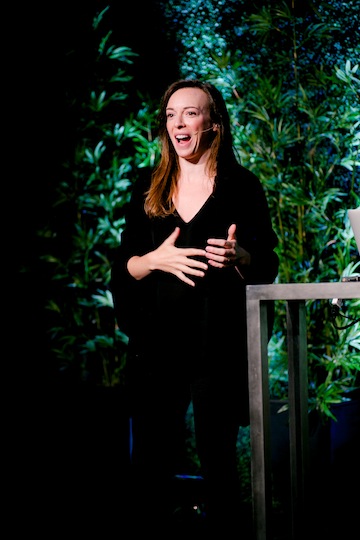
Kiva founder Jessica Jackley speaks at the 13th Annual JFSA Innovators Lunch on May 2. (photo by Rhonda Dent Photography)

In her Innovators talk, Jackley emphasized her journey from caring for the poor to helping them empower themselves, illustrating along the way how a small idea in social innovation, like Kiva, can grow and have such a large impact.

She told the Vancouver Sun in an interview, “I think people assume giving is a financial transaction, but what I am way more interested in and what changes the giver, is participating in someone else’s story and doing something outside your comfort zone, giving of your time, sharing a resource.”

“We all have something to offer, and it may not be money,” she also told the Sun. “As we expand the set of what we see as possible things to share, to give, I think we’ll see more abundance and possibility.”

The record revenue raised at this year’s Innovators comes at a time when the demands on JFSA are at record levels. The cost of living in Metro Vancouver, combined with rising food prices, particularly for produce, protein and dairy-based staples, is creating a crisis for many families, Fruchter told the Independent.

“In the past year, due to increasing hardship, the number of families having to use the Jewish Food Bank twice a month has almost doubled. Weekly phone calls seeking help with housing have also doubled over the past two years,” said Fruchter, and demand for help from new immigrants is also high.

“In the past year,” he said, “we have helped over 350 families make their new home in Canada.”

Matthew Gindin is a freelance journalist, writer and lecturer. He writes regularly for the Forward and All That Is Interesting, and has been published in Religion Dispatches, Situate Magazine, Tikkun and elsewhere. He can be found on Medium and Twitter.

Format ImagePosted on June 2, 2017May 31, 2017Author Matthew Gindin and Cynthia RamsayCategories LocalTags Innovators Lunch, Jessica Jackley, Jewish Food Bank, JFSA, Kiva, philanthropy, poverty, tikkun olam
Anything possible

Anything possible

Courage to Come Back chair Lorne Segal, left, with David Richardson, president of Octaform, a longtime supporter of Coast Mental Health and a personal friend of Segal’s, says a few words about the cause and his commitment to mental health before donating $50,000. (photo by Avi Dhillon Photography)

A record $1.57 million was raised at the 19th Annual Courage to Come Back Awards on May 16 at the Vancouver Convention Centre, where more than 1,500 people gathered to celebrate the extraordinary stories of triumph over adversity of the six awards recipients.

Each year, Coast Mental Health organizes this awards gala, an evening to recognize six remarkable British Columbians. Funds raised will go directly to Coast Mental Health to support those living with mental illness. The event was chaired by Lorne Segal, president of Kingswood Properties Ltd., and attended by many of British Columbia’s most notable business leaders and philanthropists.

After sharing their stories of how they have “come back to give back” in their communities, each of the six Courage to Come Back Award recipients received a glass sculpture designed by Musqueam artist Susan A. Point. This year’s recipients, with the category noted in parentheses, were Deborah Carter, Vancouver (addiction); Esther Matsubuchi, North Vancouver (social adversity); John Westhaver, Victoria (physical rehabilitation); Stephen Scott, Vancouver (medical); Rachel Fehr, Surrey (mental health); and Richard Quan, Vancouver (youth).

Westhaver perfectly captured the essence of the evening: “Looking back at my life, one thing I got is that anything is possible. Often we give up on our dreams because something gets in our way or we lose sight of our dreams. I invite you to never give up on your dreams. Anything is possible. The stories you have heard tonight are living proof.”

For the inspirational stories of this year’s Courage to Come Back Award recipients, visit couragetocomeback.ca/2017-recipients.

For 45 years, Coast Mental Health has helped provide housing, support services, and employment for people driven to recover from mental illness. Each program and service places clients at the centre of their own recovery. Coast Mental Health believes that recovery from mental illness is possible, but only when communities come together to break the silence around it, provide support and uplift the people it impacts. Coast Mental Health Foundation raises funds exclusively for Coast Mental Health. To find out more about the programs and services offered by Coast Mental Health, visit coastmentalhealth.com.

Format ImagePosted on June 2, 2017May 31, 2017Author Courage to Come BackCategories LocalTags Courage to Come Back, Lorne Segal, philanthropy, tikkun olam
Continuing to bring hope

Continuing to bring hope

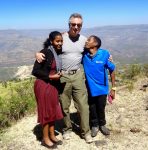
Fantaye, Gary Segal and Tesfaye in 2015, on a return visit by Segal to Gojam, Ethiopia. (photo from Gary Segal)

Thirty-seven spine surgeries, six nursing/midwifery scholarships, development of Sebi Sarko Rural Health Centre and the establishment of a pediatric program reaching more than 14,000 children living in rural areas. That’s part of what has been accomplished with the $1 million-plus that was raised in Vancouver five years ago at An Evening to Bring Back Hope.

The 2012 event honoured Dr. Rick Hodes, medical director of Ethiopia for the American Jewish Joint Distribution Committee (JDC) and senior consultant at Mother Teresa Mission. It also established a partnership between JDC in Ethiopia and the University of British Columbia Branch for International Surgical Care. With the monies raised in 2012, UBC Branch has developed curriculum with Hodes and engaged in spine-disease research in Ethiopia; as well, there have been physician and nurse exchanges between UBC-Vancouver General Hospital and Ethiopia’s Gondar Hospital.

This year, on June 8, An Evening to Bring Back Hope honours both Hodes and spine surgeon Dr. Oheneba Boachie-Adjei, and raises funds for the continuation and expansion of their work, as well as that of JDC and UBC Branch. Boachie, president and founder of FOCOS (Foundation of Orthopedics and Complex Spine) in Accra, Ghana, has performed most of the complex surgeries on Hodes’ spine patients since the two doctors starting working together in 2006.

The fundraising event includes a symposium and lunch at Congregation Beth Israel, at which attendees will be able to ask JDC staff questions about JDC’s humanitarian work and philanthropy, and a gala dinner at Vancouver Convention Centre-East. Event partners are JDC, UBC Branch and the Jewish Federation of Greater Vancouver. As in 2012, gala chairs are Gary and Nanci Segal.

“I am very pleased that Dr. Boachie will also be a focus of attention at the event,” Gary Segal told the Independent. Hodes, an observant Jew, and Boachie, a devout Baptist, “together work tirelessly to treat the sick and poor of all religions and ethnicities.”

“I truly believe that in today’s world filled with negativity, intolerance and discord, this cause and message of inclusion and multiculturalism resonates louder than ever,” said Segal.

Segal first met Hodes as part of a Federation/JDC trip to Ethiopia in 2007. He spent more time with Hodes on a family trip in 2008. “The more time I spent with Rick in clinic and at his home with his very large family of adopted and fostered children that all needed Rick’s help, the more heroic and inspiring Rick and his life story became to me,” said Segal. When hosting Hodes and his extended family of 18 children (at the time) for dinner, Segal learned that Tesfaye – whose spine had collapsed from tuberculosis – could not be operated on in Ghana, and thought, “I knew that I had to do whatever I could to save Tesfaye’s life.”

According to the fundraiser’s website, Segal “spent almost a year pursuing the possibility of bringing Tesfaye to Vancouver for spine surgery and, finally, on his 18th birthday, May 20, 2009, Tesfaye arrived in Vancouver and was welcomed into the Segal home. On June 12, ‘Team Tesfaye,’ led by surgeon Dr. Marcel Dvorak at VGH … successfully perform[ed] delicate 14-hour life-saving surgery.”

“For decades,” Segal told the Independent, “I have always given of my time and money to help a variety of community organizations and causes – I grew up with wonderful examples of this in both my mother and father. Helping Tesfaye was a unique experience, where the ‘giving back’ became such an intimate, personal and integral part of my life.

“On my 2010 trip back to Ethiopia after Tesfaye’s surgery, I retraced and revisited what his life was like before surgery. Understanding Tesfaye’s courage, dignity, perseverance and optimism – that he kept in the direst, most uncomfortable and debilitating of situations – motivates and inspires me daily, and always keeps my problems in perspective.

“Seeing the transformation in Tesfaye’s life and what it has meant to his family and entire village, further inspired me to found this Bring Back Hope initiative,” he continued. “One of the highlights of my life was that 2010 trip to Tesfaye’s remote village in Gojam – a typical village with mud huts, no electricity or running water – as the entire village celebrated his miraculous rebirth for three days, with feasting, chanting and Agew shoulder dancing. Seeing ‘up close and personal’ the impact of changing even one individual’s life, it became my vision to introduce Rick’s story to more people by holding a large dinner of caring people from different faiths and backgrounds, and to hopefully raise a lot of money to change more lives. Thus, the Bring Back Hope initiative was launched through the inaugural Evening to Bring Back Hope 2012.”

But his efforts extend beyond the events. “I never imagined before meeting Tesfaye that, one day, I would have a whole extended family in Ethiopia become part of my family,” he said.

It was hoped that Tesfaye’s sister, Fantaye, would be joining her brother at this year’s Bring Back Hope. Unfortunately, she won’t be able to make it – but for “good news” reasons, said Segal, “as she is about to graduate from Grade 12 at a high school in Ethiopia’s capital city Addis Ababa and the national exams she has to write to qualify for university only end on June 8.”

“I met Fantaye in February of 2010,” explained Segal, “when I flew over to Ethiopia to accompany Tesfaye on the journey out to his remote village in Gojam to be with him to experience his family and village seeing him standing upright for the first since he was crippled with TB of the spine at 8 years of age…. Tesfaye, living in the capital Addis Ababa since he was 12, heard that his mother wanted Fantaye to get married; he was concerned she was too young, being only 12 years old, and feared the husband’s family would force her, once she was married, to stop going to the village school. At his request, I asked his mother, Yeshi, to wait until Fantaye was older and completed school, but, sure enough, she was married a few months later, at the age of 12.”

When Segal returned to Ethiopia in December 2012 on a Bring Back Hope-related trip, he found, to his “surprise and delight,” that, “through Tesfaye’s persistence and insistence, Fantaye had left her husband and village to join her brother in Addis Ababa and live with him and go back to school. This took a lot of courage on the part of a then 14-year-old girl, going against the wishes of her family and entire village. At the same time, it took Tesfaye’s courage of conviction as to what was right for his sister for this to happen; I attribute this to Tesfaye understanding the greater world outside the village and Fantaye seeing the transformation of Tesfaye.”

Even after 27 years working with JDC in Ethiopia, Hodes still finds inspiration from his patients.

“The courage which Ethiopians live with who have spinal deformities is simply inspiring,” Hodes told the Independent. “Kids who are in pain but still go to school, kids who are teased at school but persist, kids who have no parents and are self-supporting as young teens but go to school and come for treatment.

“And the love which they show for each other is exemplary. I have a single mom who has a paralyzed son who has simply devoted her entire day – every day – to caring for this boy, who is now improving. In fact, I just brought him to Ghana five days ago for intensive physical therapy to see if we can jump-start his improvement.

“I bought a bag of cookies for a young boy with a bad back. He put them in his pocket. ‘Why don’t you eat it?’ I asked. ‘Later,’ he said, ‘I want to share it with my brother.’

“I have another mom who has a son who had a complex heart problem giving him very little oxygen. This boy could not walk more than three steps and the mom has made sure that he moves forward in life by carrying him, piggy-back, everywhere. She carried him to school, carries him home, brought him to Addis Ababa every month for phlebotomy, to remove the extra blood his body produces. And now he’s able to walk, after corrective heart surgery in India.

“I had an orphan boy with no relatives at all,” continued Hodes. “He came to Addis Ababa, supported himself by shining shoes, went to school and slept in a taxi at night until someone took him into their home. He, too, has had surgery and is now back in school.

“When I’m having a tough day – I frequently feel overwhelmed – it’s patients like this who keep me going, and remind me why I’m here.”

Hodes’ International Life-Saving Surgery Program 2016 annual report describes that year as “game-changing.”

“This was the first year that the Ethiopian government gave us support – they paid for the air tickets of 22 patients to Ghana for spine surgery,” explained the doctor. “They are continuing the air ticket support this year.”

Also in 2016, he said, “Our contract with the Ethiopian government ended its standard, three-year period and the program closed for evaluation. It was given an unprecedented five-year renewal.

“We have moved into new facilities at a government trauma hospital called AaBET [Addis Ababa Burn Emergency Medicine and Trauma] Hospital, where we see patients five days a week. We have started discussions to send two Ethiopian doctors to Canada for spine training. We now have several teams coming to Ethiopia to operate – in fact, we have three different spine teams coming this month, and will get at least 40 surgeries done inside Ethiopia!”

In addition to treatments, there have been discoveries. “We have described some new deformities, which we are now defining with Greek letters,” said Hodes. And, he added, “We believe we’ve made a major discovery about spine deformities caused by neurofibromatosis.”

In 2016, Hodes said there were 359 new spine patients, with 111 surgeries conducted on 105 patients. “We got two spines done in the U.S., and helped two patients go to India for heart care,” he said. “So far this year, we have 101 new spine patients.”

Hodes said the price for spinal surgeries ranges from $13,000 (or a little less) to $21,000, averaging about $18,000. For hearts, he said, “some patients need procedures (done in the catheterization laboratory) where a balloon is blown up to expand a narrowed valve or close a hole in the wall of the heart. Those cost around $2,000. Surgery costs depend on the complexity of the case, and generally run from $5,000-$10,000.

“If we get surgery done in North America, it’s at no cost to us, other than an air ticket. We just had two boys return from complicated surgery in Texas, and another from California.”

Hodes stressed, “I cannot sufficiently thank the people of Vancouver who are helping me. Their help is, quite literally, life-saving.”

For tickets to the gala ($500, with tax receipts issued for eligible portion) and sponsorship information, call Mercedes Dunphy at 604-710-4491 or Nanci Segal at 604-813-5550. For more information on the initiative, visit bringbackhope.com.

Format ImagePosted on May 26, 2017May 24, 2017Author Cynthia RamsayCategories LocalTags Boachie, Bring Back Hope, Ethiopian, Gary Segal, health care, JDC, philanthropy, Rick Hodes, tikkun olam
Strength in numbers

Strength in numbers

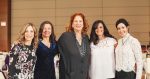
Left to right, Yael Rubanenko Horwitz, Wendi Klein, Debbie Jeroff and Lisa Pullan at Choices on Oct. 30. (photo from Jewish Federation of Greater Vancouver)

For the 12th year in a row, hundreds of women of all ages gathered to celebrate the choice they made to strengthen our community through tzedakah at this year’s Choices event. Co-chairs Debbie Jeroff, Wendi Klein and Yael Rubanenko Horwitz and their committee worked for months to make the event a success, and brought the room to life with their chic black-and-white theme.

“Each of us [came] with our own story, history, talents and tragedies,” said Lisa Pullan, chair of women’s philanthropy for the Jewish Federation of Greater Vancouver annual campaign, as she addressed the packed ballroom at Congregation Beth Israel on Oct. 30. “But what unites us is the choice that we have made to stand together in support of our Jewish community.”

With more than 400 women in the room, including 36 first-time attendees, Pullan declared that “there is definitely strength in numbers.” Case in point is the more than $2,064,000 that was raised through women’s philanthropy last year, accounting for 25% of the 2015 Federation annual campaign’s record $8.3 million total. “Together,” Pullan remarked, “we are making a lasting impact on the community that we love.”

A highlight of the event every year is the inspirational speaker, and this year’s keynote speaker, Talia Levanon, was no exception. As director of the Israel Trauma Coalition (ITC), she and her team provide trauma care and emergency preparedness and response to affected communities in Israel and around the world. ITC is a global leader in providing aid and support to local professionals working in the field in crisis zones.

“Seeing how the ITC social workers in crisis zones have to work through their own traumas to help others was particularly powerful,“ said Pullan. “Talia showed a video in which one of the ITC workers was talking to a client on the phone and had to talk her through a rocket firing, while simultaneously getting out of her own car, lying on the ground and dealing with it herself. It helped us understand in a visceral way the trauma that Israelis experience.”

Community member Stephanie Mrakovich also spoke at the event, sharing the moving story of how her family discovered their Jewish roots and how she came to find her place as a leader in our community. She shared her personal and touching account of her dying grandmother’s revelation of the family’s Jewish heritage. Her remarks can be found at jewishvancouver.com/stephanie-mrackovich-choices-speech.

Choices is the signature campaign event for women’s philanthropy. While the speakers and the theme change each year, what stays the same is the focus on the great work in the community that is made possible by women’s commitment to the mitzvah of tzedakah. To donate or for more information on the annual campaign and the services and organizations it helps fund, visit jewishvancouver.com.

– From e-Yachad, published by Jewish Federation of Greater Vancouver

Format ImagePosted on November 25, 2016November 23, 2016Author Jewish Federation of Greater VancouverCategories LocalTags annual campaign, Jewish Federation, philanthropy, women
Inspiring people to donate

Inspiring people to donate

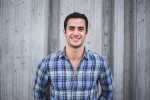
Zeke Blumenkrans, chief executive officer of Generocksity. (photo from Zeke Blumenkrans)

Zeke Blumenkrans, a 21-year-old University of British Columbia student, is establishing a philanthropic younger generation one fundraiser at a time.

Blumenkrans is co-founder and chief executive officer of Generocksity Inc., a nonprofit that organizes concert and party fundraisers for a variety of causes, as well as educational workshops and help for young adults who are wanting to start their own philanthropic endeavor. It has held events across Canada and in Europe, and has active branches in Ontario (Kingston and Hamilton) with plans to expand to Montreal and Victoria later this year.

In operation since November 2013, Generocksity has received more media attention over the last year, as its events have become more popular and, therefore, the organization has been able to raise greater amounts for charities across the board. In January 2015, the organization was chosen as the best of the highlighted projects at UBC’s Student Leadership Conference and, in November, Blumenkrans was honored by the Association of Fundraising Professionals’ Vancouver chapter with the 2015 Giving Hearts Award for outstanding youth philanthropist.

“I was born in Buenos Aires, Argentina, and came to Vancouver with my brother and parents when I was 3 years old. Since our arrival in Vancouver, my family has been heavily involved in the Jewish community,” shared Blumenkrans about his background. “My siblings and I attended Talmud Torah for preschool and elementary school, and King David for high school…. I love discovering new music, watching documentaries and weird foreign films, outdoor rock climbing and playing any team sport I have time for, especially soccer.”

Blumenkrans noted that his passion for volunteering began at an early age, and he has been volunteering at Canuck Place Children’s Hospice for the past five years.

“Canuck Place allows me to interact with some of the most courageous and incredible children in the world, all while goofing around and helping them have fun and forget about their tough situations for awhile. It’s very easy to get tunnel vision and just focus on your career or academic pursuits, and sometimes it’s important to see the bigger picture and what’s really important in life,” he said.

Generocksity was formed after the death of his friend David, who he had met as a fellow volunteer at Canuck Place. When Blumenkrans met David, David had already been diagnosed with spinal cancer.

“One of my most memorable moments with David was when he was voicing his frustration about how he felt like he simply did not have enough time to do all the things he wanted to do in his life. He had only recently been diagnosed, so he had always thought, as most of us do, that you can always leave stuff for later and there will always be time in the future. Although he never knew it, David is the reason why I started Generocksity, so every success and achievement my team and I experience, I share with him for being my eternal inspiration.”

Blumenkrans combined the inspiration of David’s life with his own experiences. While he was a student at King David High School, Blumenkrans was positively influenced by events such as Random Acts of Chesed Week and Mitzvah Day. RAC Week was inspired by the life of alumna Gabrielle Isserow.

“I always looked up to Gabi Isserow and her incredible leadership working with my brother, Dan, on Mitzvah Day when I was in the eighth grade,” said Blumenkrans. “As a lowly eighth-grader, she was one of the only seniors who ever took the time to say hi or smile at me when I would see her in the halls. Although she was always an important leader in the school, she had a certain level of kindness and humility that I have seldom seen in my life and, although she likely never knew it, I always viewed her as a role model.

“RAC Week is one of the most beautiful examples of how one can find love and inspiration in the darkest of places,” he continued. “In Judaism, we are taught to always celebrate life and I genuinely feel that Gabi’s life will be forever celebrated through things like RAC Week and all the mitzvot done by those kids she unknowingly inspired just like me.”

While Blumenkrans is pensive about his past, he is very much looking forward to the future. He believes that the true impact of Generocksity will only be seen in the next couple of decades.

“Many of the young adults who attend our events will go on to become very successful business owners, lawyers, doctors, etc. My goal is that when their time comes to decide how much money they’d like to give to charity, they will remember the positive experiences they had associated with philanthropy and how easily they are able to integrate charitable giving into their day-to-day lives,” he said.

“I don’t want our charity parties to be an anomaly. I want it to become the norm. I want there to be so many people doing this type of thing that it’s oversaturated. I want every weekend when you go out to party or let loose with your friends, if at least part of the proceeds aren’t going to charity, people will think, ‘this is kind of messed up.’ I want it to get to that point and I think that we have proven that it can.”

When asked how he would respond to millennials who believe that they are above philanthropy, Blumenkrans said, “If you think that you are too good to attend a charity event, then you have probably been scarred by a really boring and dull charity event and/or never found an event that was benefiting a cause that really meant something to you. We are trying to redefine how people view charity – to make it something exciting, cool and really fun while still making it very meaningful and personal. I want people to not feel conflicted about dancing and letting loose with their friends while supporting a hospice or homeless shelter. I want them to see that you can help disadvantaged members of one’s community while having lots of fun!”

To learn more about Generocksity, and their future events, go to generocksity.com.

Jonathan Dick is a freelance writer living in Toronto. His writing has appeared in the Canadian Jewish News, and various other publications in Canada and the United States.

Format ImagePosted on February 12, 2016February 12, 2016Author Jonathan DickCategories LocalTags Generocksity, philanthropy, Zeke Blumenkrans
Campaign nears $8m

Campaign nears $8m

Harvey Dales, 2014 Federation annual campaign general chair, speaks at a Jewish Federation of Greater Vancouver donor event. (photo from  Jewish Federation of Greater Vancouver)

As he tallied up the fundraising dollars earlier this month for this year’s Federation annual campaign, Harvey Dales noted with satisfaction that almost $7 million had been pledged in Vancouver since the campaign began in September. With a month to go until it wraps up in January, he’s aspiring to reach the $8 million mark.

“Our campaign had been relatively stagnant for the past few years, with only slight increases,” he reflected. “This year, which is my last year as campaign chair, I felt it was important to reach the $8 million mark because there are just so many needs.”

Dales and his team established a matching fund, where six donors promised a total of $125,000 in matching funds; that meant every unrestricted dollar of increase to the campaign made by any other donor would be matched. Another matching campaign was established with a focus on 20-to-35-year-olds, this one a two-for-one match.

The two matching funds have been so successful that Federation found itself on the verge of running out of matching funds a few weeks ago. “We went out and raised further funds, another $30,000, to top up the fund and ensure we could continue with the matching,” Dales said. “We’re still seeking additional funds for the match fund, and I’m very confident it will bring us to our $8 million goal.”

For the first time in many years, each one of Federation’s divisions has seen an increase in the dollars pledged compared with gifts from the same donors last year. That includes major donors, men’s philanthropy, women’s philanthropy, community and young adults. “The gifts that have come in have been incredible,” he told the Independent. “One individual who hadn’t made a gift before pledged $750. Another newly wedded couple explained they’d really stretched their budget by giving us $360 last year, but this year they were giving us $540 because of the matching funds.”

“I believe it’s so important for the community to know how vital Federation is,” he continued. “It’s our social needs network for the community, whether it’s funding for social services, education, youth, outreach or seniors. Both here, overseas and in Israel, there are so many recipient agencies that rely on Federation for the bulk of their funding to provide desperately needed services.”

Vancouver’s community is extraordinary for how many individuals commit to volunteering and canvassing for the annual campaign, he added. “In campaigns in other cities, the canvassing is done by professionals, but here in Vancouver our community is just so involved.”

To contribute to this year’s campaign, visit jewishvancouver.com.

Lauren Kramer, an award-winning writer and editor, lives in Richmond, B.C. To read her work online, visit laurenkramer.net.

Format ImagePosted on December 12, 2014December 11, 2014Author Lauren KramerCategories LocalTags Harvey Dales, Jewish Federation of Greater Vancouver, JFGV, philanthropy

Posts pagination

Previous page Page 1 … Page 18 Page 19
Proudly powered by WordPress