
Skip to content

  • Home
  • Subscribe / donate
  • Events calendar
  • News
    • Local
    • National
    • Israel
    • World
    • עניין בחדשות
      A roundup of news in Canada and further afield, in Hebrew.
  • Opinion
    • From the JI
    • Op-Ed
  • Arts & Culture
    • Performing Arts
    • Music
    • Books
    • Visual Arts
    • TV & Film
  • Life
    • Celebrating the Holidays
    • Travel
    • The Daily Snooze
      Cartoons by Jacob Samuel
    • Mystery Photo
      Help the JI and JMABC fill in the gaps in our archives.
  • Community Links
    • Organizations, Etc.
    • Other News Sources & Blogs
    • Business Directory
  • FAQ
  • JI Chai Celebration
  • JI@88! video
image - Weizmann Canada Physics Tournament 2025
image - The CJN - Visit Us Banner - 300x600 - 101625

Recent Posts

  • Vrba monument is unveiled
  • Music to build bridges
  • A better future possible
  • Anne Frank exhibit on now
  • Human rights in sport
  • Telling the story of an icon
  • Crawl bigger than ever
  • JCC Maccabi in Toronto
  • A way to meet fellow Jews
  • Time to include
  • Add Jewish joy to the mix
  • Reminder of humanity’s light
  • From the archives … editorials
  • Year-round holiday recipes
  • מדוע עזבתי את ישראל ואינני חושב לחזור ארצה
  • OJC hosts Oct. 7 memorial
  • A journey beyond self
  • Antisemitism a problem
  • Young man is missed
  • Orr action sparks complaint
  • Prison sentence for hate
  • Etgar Keret comes to Vancouver
  • New fall lecture series
  • Series explores music
  • Doc on Zapiro screens Nov. 6
  • Joy of shared existence
  • Community milestones … October 2025
  • MAID vs Jewish values
  • Cheshvan a great month, too
  • Bull, bear or bubble?
  • From the archives … a coin, etc.
  • מדוע האנטישמיות הולכת וגואה בעולם
  • New bio gives Vrba his due
  • Joy brighter than ever
  • When approaches differ
  • New leadership at the JCCV

Archives

Follow @JewishIndie

Tag: campuses

Watching with concern

There has been a great deal of handwringing about antisemitism on campuses in North America in recent years. Since Oct. 7, 2023, with protests against Israel, some of which have turned violent and many of which have been condemned for making Jewish and Israeli students targets, the problem has intensified.

It is often said that politicians do not see the light until they feel the heat. University administrators are politicians in a broad sense, and the withdrawal of funds from donors may be among the reasons (ethics and decency being among other conceivable explanations) why some university administrators have tried to find a balance between the rights of free expression and the safety and security of Jews on campuses across North America. Criticism from government has also been a factor in pushing college leadership to address, to varying degrees, the problems faced by Jewish students, faculty and staff. 

A notorious US government hearing – and the perceived weakness of college presidents to respond adequately to the problem – led to the resignations of the presidents of Harvard and the University of Pennsylvania.

Now, the US government, under the leadership of the reelected President Donald Trump, has summarily cut off a chunk of funding to Columbia University, with threats of more such punishments to come unless institutions of higher learning get their perceived issues with antisemitism under control.

“Since Oct. 7, Jewish students have faced relentless violence, intimidation and antisemitic harassment on their campuses – only to be ignored by those who are supposed to protect them,” US Secretary of Education Linda McMahon said in announcing the funding freeze. “Universities must comply with all federal anti-discrimination laws if they are going to receive federal funding. For too long, Columbia has abandoned that obligation to Jewish students studying on its campus. Today, we demonstrate to Columbia and other universities that we will not tolerate their appalling inaction any longer.”

Columbia’s interim president, Katrina Armstrong, called this a “time of great risk to our university” and said that the loss of funds would be felt in “nearly every corner” of the institution.

“There is no question that the cancellation of these funds will immediately impact research and other critical functions of the university, impacting students, faculty, staff, research and patient care,” Armstrong wrote in a statement.

A sum of $400 million is an almost inconceivable number to most ordinary people, so to put it in some context, Columbia has an annual operating budget of $6.6 billion, of which more than one-quarter comes from federal sources. Unlike most Canadian universities and the American state college systems, Columbia is a private institution – and an elite, Ivy League one at that. In other words, that is a massive amount of public money flowing into a private institution, though that is a topic perhaps for another day.

Columbia was an epicentre of last year’s campus protests and the genesis of a network of encampments against Israel and its war against Hamas, encampments that spread to campuses here in British Columbia, to consternation from Jewish students, their parents and communal organizations. 

With the withholding of $400 million from Columbia, which is promised as a first major salvo in what could become a larger battle between the US government and higher education, the preponderance of handwringing may have shifted from Jews and their allies to the figures responsible for higher education. 

Among Jews – in the United States, Canada, Israel and elsewhere – there are massively polarized opinions about Trump. But, whatever your position, it is true that something needs to be done to force universities to address the undeniable crisis facing Jewish students and faculty.

That said, this recent move against higher education is part of a larger effort to discredit liberal institutions, attack expertise and dismantle government programs designed to buttress democracy, liberty and the global order. Legitimate criticism of campus antisemitism is being weaponized by an increasingly cynical US government to stifle and punish speech and threaten the academy and its sources of knowledge production, including scientific discovery and advancement. We should be wary of aligning with these forces and their attempts to cover up their real agenda. 

This move – and possible additional ones that seemed implied threats in McMahon’s announcement – will force a showdown. Jews likely will become a bargaining chip in this coming confrontation and that is deeply concerning for Jews of all political and ideological persuasions.

Elected officials and university administrators in Canada – where the vast majority of students attend public institutions – will no doubt be watching very closely to see what changes the financial penalty has on American institutions’ approaches to the problem. So will Jewish students and faculty, their families and others who care about them. 
Posted on March 14, 2025March 13, 2025Author The Editorial BoardCategories From the JITags antisemitism, budget cuts, campuses, Columbia University, Katrina Armstrong, Linda McMahon, Trump, United States

Reviving civil discourse

Heterodox Academy is a nonprofit organization dedicated to promoting viewpoint diversity, open inquiry and constructive debate in higher education. It works to counter ideological conformity on campuses by providing research, resources and programming that foster an environment where diverse perspectives are welcomed and critically examined.

If that sounds like what a university is intended to be, says one local professor, it’s a commentary on the state of contemporary campuses that such an organization is necessary to encourage the academy to live up to its principles.

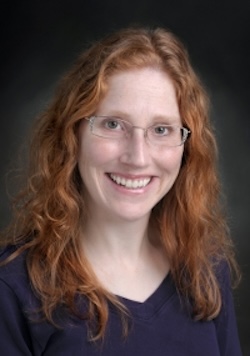
Dr. Rachel Altman, associate professor in the statistics and actuarial science department at Simon Fraser University, is one of the campus co-chairs of the Heterodox Academy chapter at SFU.

“Heterodox Academy is an organization that fosters free, open inquiry and free discussion even about controversial issues,” she said. “It’s not just about freedom of speech. It’s also about our conduct, the way we have these conversations. I think that’s what really distinguishes it from the general free speech advocacy groups.”

photo - Dr. Rachel Altman  is one of the campus co-chairs of the Heterodox Academy chapter at Simon Fraser University
Dr. Rachel Altman  is one of the campus co-chairs of the Heterodox Academy chapter at Simon Fraser University. (photo from SFU)

Heterodox Academy provides guidelines that urge interlocutors to present their case with evidence, bring data when possible, assume the best of one’s opponent and be intellectually humble, among other principles.

HxA, as it is shorthanded, offers events, conferences, resources and other materials that “try to teach our society, especially within academia, how to interact in a productive and civilized way, even when we disagree,” she said.

These tools are intended to help bridge the divide between the ideal of a university and the reality of creating a dynamic marketplace of ideas.

“Just because we have it in our head that in the academy we should be able to discuss anything in a civilized way doesn’t mean we actually know how to do it,” she said. “They provide tools and modeling of those tools to actually teach people how to be civilized.”

The HxA chapter at SFU emerged after a group of scholars got together because they were concerned about the state of academic freedom at the university. They founded the SFU Academic Freedom Group. 

Within a few months of that group’s founding, Heterodox Academy launched its Campus Community Program, recognizing chapters on individual campuses. Some SFU professors applied and were accepted among the first chapters chartered.

“We hosted a so-called Heterodox Conversation event this past September,” she said. “That’s a model developed by HxA where you invite two people who have different views on a topic and they sit down and have a conversation with the model [called] the Heterodox Way and then the audience gets involved and we have a group discussion.”

The topic of that dialogue was “The purpose of today’s Canadian universities.”

“The timing was perfect because, just the previous week, our president had issued a statement on institutional neutrality,” she said, referring to an announcement by SFU’s president, Joy Johnson, on maintaining an environment where scholarly inquiry remains unbiased by partisan agendas. “For me, I was celebrating like crazy, but there were others on campus who were very unhappy.”

Altman can’t say whether the Heterodox Academy chapter or the SFU Academic Freedom Group deserve credit for the president’s statement or for other recent developments she and her colleagues view as positive.

“I’m a statistician, so I rarely claim causation,” she said wryly. “I’m very conservative that way. But I think so.”

The groups are comparatively small, but they may be having an outsized impact.

“Everybody knows about us,” she said. “The administration clearly knows and it’s just been so gratifying to see the change in the whole tenor of the administration’s approaches over the last couple of years. It’s a clear change.”

Numbers may remain relatively small, Altman suspects, because of a false perception of their group. 

“We are consistently being cast as this right-wing, conservative group and it’s not true,” she said. “We have people across the political spectrum in the group. It is a nonpartisan group.”

The idea that academic freedom and institutional neutrality are right-wing positions, she said, is belied, for example, by the gay rights movement, which emerged in the 1960s, in part thanks to the viewpoint diversity of campuses.

It is not a coincidence, Altman believes, that several HxA members, including herself, are Jewish.

“Jews have a long tradition of arguing and debating in a civilized way, the whole ‘two Jews, three opinions’ thing,” she said. “Jews are just a natural fit with the HxA model.”

In contrast, the equity, diversity and inclusion (EDI) model that has become increasingly prevalent on North American campuses in recent years is antithetical both to the academic ideal and to Jews, she argued.

“For some Jews like myself, I realized very early on that the EDI ideology that’s become so predominant in academia and elsewhere, that it was terrible for Jews,” she said. “This model of the oppressed and the oppressor, it didn’t work. Jews did not fit into that mold.” 

EDI is the opposite of what it claims to be, said Altman. 

“I think it’s exclusionary, it discriminates against groups,” she said. “It’s antithetical to everything I believe in because I truly believe in inclusion and anti-discrimination.… I was very unhappy about the rise of the EDI ideology and, in my groups of people who are also similarly concerned about that ideology, I think Jews are overrepresented. That would suggest I’m not the only Jewish person who sees the fundamental conflict, the contradictions in the EDI ideology.”

Altman said few people would openly admit they oppose academic freedom.

“Really, it becomes about the definition of academic freedom,” she said. “When I say I support academic freedom, that’s the end of my sentence. What I look for when I’m talking to people is the ‘but’ that can follow. ‘Of course, I support academic freedom, but … there are limits.’ Things like that.”

In some cases, Altman thinks, this equivocation comes from a lack of understanding around the core principles of academic freedom. 

“But then, there are some people who truly want to change the foundation of the term, the concept,” she said. “They truly believe that we should have limits on both our academic freedom and our freedom of expression more generally.”

In addition to the SFU branch, Heterodox Academy has a chapter at the University of British Columbia, Okanagan. While there are some HxA members at the Vancouver campus of UBC, Altman said, there is not yet an official chapter there.

For more information, visit heterodoxacademy.org. 

Posted on February 28, 2025February 27, 2025Author Pat JohnsonCategories LocalTags academic freedom, campuses, critical thinking, diversity, EDI, equity, free speech, Heterodox Academy, HxA, inclusion, SFU, Simon Fraser University
Israeli envoy hopeful

Israeli envoy hopeful

Iddo Moed, Israel’s ambassador to Canada, was in British Columbia to promote partnerships. (photo by Pat Johnson)

Iddo Moed, Israel’s ambassador to Canada, was in Vancouver last week, meeting with businesspeople, university administrators and the Jewish community. It was his second visit to Vancouver since his appointment as ambassador a year ago.

Moed hopes to establish and expand collaborations between Israeli and Canadian academic institutions in the fields of medicine, agriculture, artificial intelligence, cybersecurity and applied research in many disciplines, as well as introduce business leaders from both countries to one another to encourage possible partnerships. He plans to bring some of the leading figures in various Israeli sectors on a cross-Canada road show, possibly early in 2025.

In a discussion with the Jewish Independent and three other media outlets, the ambassador focused on antisemitism in Canada and especially the climate on campuses. 

“Most disturbing me at this time is the rise of antisemitism in Canada,” he said. “It’s something that is beyond what has happened in the past.… I am concerned because I see that Jewish communities feel less protected. Jewish students at universities feel intimidated. They don’t want to go to campus or they want to hide their identity and I think this is wrong.”

He has met with university administrators – he took heart in the resounding rejection of an anti-Israel motion by the University of British Columbia senate earlier this year – and discussed with them the need to balance academic freedom with security for Jewish, Israeli and all students.

Moed urges Canadian students to make a more thorough investigation of the roots of the current conflict and not mistake the current war as a battle between Israelis and Palestinians.

“At this point in time, we’re fighting against something else, against Hamas, against hatred,” he said. “I would challenge students to look at … both sides and try to understand.”

When speaking with students, Moed said, he emphasizes stories of coexistence in Israel.

On Oct. 7, he noted, many of the ambulances that day were driven by Arab first responders, because it was a Jewish holiday. 

“Those Arab drivers that were caught by the Hamas terrorists were executed because [the terrorists] felt – just like they killed Israeli Jewish [people] – these are Israelis,” he said. “The solidarity in Israel is something that passes much of media’s attention.”

The ambassador also urges students and anyone who is engaging in discussion of the conflict to understand what the combatants represent.

“Hamas doesn’t want any deviance from their core concept of how religions should be practised,” he said. “So, there is no room for LGBTQ and there is no Queers for Palestine among Palestinians. It doesn’t exist because they don’t let them. It’s forbidden to be gay there.”

Overseas activists would do well to speak to people in the region, Moed said.

“I wish that people here would communicate with peers in the Middle East, Jews and non-Jews, hear from them, to educate themselves. That’s very, very important at this time.”

The ambassador acknowledged that relations between Israel and Canada have always been strong, but that the current conflict is causing diplomatic friction.

“The relations have always been very good and strong because they are based on a very solid foundation of shared values between Canada and Israel and that has been the case since Canada officially recognized Israel 75 years ago,” he said. “What we have today … is a growing distance between how both our countries see the conflict in the Middle East. Israel is fighting for its survival. Canada has become more and more critical of, and concerned about, the situation when it comes to the Palestinians.

“We have very good channels of communication and those are very solid and strong,” he said. “Right now, a year from the massacres [of Oct. 7] and when there are still 101 hostages being held in Gaza for which we will continue to fight until they will all come back home, dead or alive, the relations are strained by the fact that both our countries don’t always see eye-to-eye on how Israel is defending itself against a concerted effort by Iran, directly through its proxies, to annihilate the state of Israel.”

Moed, who was born in Amsterdam, has had diplomatic postings in the Netherlands, the Dominican Republic, Singapore and the People’s Republic of China, and he has held senior positions in the foreign ministry in Israel.

These are unprecedented times, he said, but he is confident that the situation will improve for Israelis and Jews.

“It will take time, but I’m very hopeful,” he said. “Humanity always prevails. It takes more time, but it does prevail. So, I’m hopeful. Yes, I’m an optimist.”

Format ImagePosted on September 20, 2024September 18, 2024Author Pat JohnsonCategories LocalTags ambassador, antisemitism, campuses, diplomacy, global politics, Iddo Moed, Israel, Israel-Hamas war, Oct. 7
Hillel BC’s new leader

Hillel BC’s new leader

Ohad Gavrieli (photo from Hillel BC)

Ohad Gavrieli is applying his multi-disciplinary background and extensive organizational experience as the new executive director of Hillel BC. This summer, the organization bid farewell to Rob Philipp and welcomed Gavrieli as its head.

“Hillel BC is based on the Vancouver campus of the University of British Columbia (UBC), but our outreach and programs span multiple campuses across the province,” Gavrieli told the Independent. “We are lucky to be able to work with so many Jewish students throughout BC. Our work is incredibly meaningful and touches on so many aspects of student life.”

Born in Switzerland, where his father was completing his PhD studies, Gavrieli’s family returned to Israel when he was 9 months old. He spent his early childhood on a kibbutz in northern Israel before moving to Kiryat Tivon, a small town near Haifa, at the age of 10.

During his youth, Gavrieli was a passionate musician, playing the tuba and eventually performing with the Israel Defence Forces Orchestra for part of his service. He later pursued a bachelor of arts in sociology and Middle Eastern studies at Ben-Gurion University of the Negev (BGU), which is where he first became involved with Hillel. 

“My role as a project coordinator involved engaging both the student and local communities in Be’er Sheva,” said Gavrieli. “The goal was to enhance the area’s vibrancy through initiatives like musical collaborations.” 

Gavrieli’s work at BGU proved instrumental to his future, as it was there he first forged connections with Hillel International and the Jewish Agency for Israel.

“That’s ultimately what led me to Vancouver,” he said. 

In 2010, shortly after Vancouver hosted the Winter Olympics and Winter Paralympic Games, Gavrieli moved to the city to serve as the Israeli emissary for the Vancouver Hillel Foundation. It was during this tenure that he met his future wife. 

“My first memory of the city is the Stanley Cup riots – a surprising contrast to the peaceful reputation of Canada and its laid-back culture,” said Gavrieli. “It reminded me of the intensity and vibrancy back in Israel.” 

When his role as emissary came to an end, Gavrieli was accepted into the master of business administration program at Simon Fraser University (SFU) and he worked as a project manager in the tech industry after graduating. He left tech to accept a new role with Hillel, ultimately progressing from operations and finance director to assistant director and, now, executive director.

Gavrieli’s days at Hillel BC are varied and challenging. He is primarily focused on student safety, combating antisemitism and engaging with community supporters and partners. Hillel BC supports students at UBC, SFU, University of Victoria, Langara College, Emily Carr University of Art + Design and BC Institute of Technology. Plans are underway to further expand its operations to the UBC Okanagan campus in Kelowna.

Gavrieli works closely with university administrators across all six campuses to foster a safer and more welcoming campus environment.

“I am fortunate to work with an incredibly talented and dedicated team, though we are small,” he said. “We are committed to creating a warm and welcoming space for our students, while also offering programming that aligns with our pluralistic and inclusive mandate. The challenges our Jewish community faces are significant, and these challenges are often first experienced on campus. Our focus is on supporting our students, helping them feel proud of their Jewish identity and strengthening their community connections.”

Hillel BC strives to promote Jewish life on campuses and beyond, offering an environment for students to explore their Jewish identity in a pluralistic and inclusive community. The organization also fosters dialogue on Judaism and Israel, collaborates on social action projects and celebrates Jewish holidays. It partners with various university groups, faculty and other student clubs to present relevant topics and develop programs in conjunction with other Jewish community organizations.

Sam Margolis has written for the Globe and Mail, the National Post, UPI and MSNBC.

Format ImagePosted on September 20, 2024September 18, 2024Author Sam MargolisCategories LocalTags campuses, education, Hillel BC, Ohad Gavrieli, safety, student support
Hate on many BC campuses

Hate on many BC campuses

An X post about an antisemitic takeover of the Simon Fraser University library downtown, named after Jewish philanthropists Samuel and Frances Belzberg. Khalida Jarrar is a member of the Popular Front for the Liberation of Palestine, which Canada listed as a terror entity in 2003. (screenshot)

More than 250 members of the Jewish community gathered at Congregation Beth Israel last week to learn more about antisemitism occurring on BC campuses. The discussion was led by a panel of Jewish students representing the University of British Columbia, the University of Victoria and Simon Fraser University, as well as educators and a spokesperson from Hillel BC. Panelists spoke about how pro-Palestinian activists have created an environment that has made Jewish students and educators feel unsafe, and that their concerns are, by and large, not being taken seriously by university administrators.

“Hillel has shifted from being a place where students explore their identity to being an emergency room for antisemitic incidents,” said Ohad Gavrieli, executive director of Hillel BC. “What we’re encountering is unprecedented, and our main role has been to protect and defend Jewish identity.”

Hillel is focused on safety, education, programming and advocacy, said Gavrieli. It is assisting students as they try to file complaints about antisemitism, while continuing with events like Shabbat dinners and bagel lunches, critical components that allow for the continuity of Jewish life during this crisis.

Gavrieli said universities’ approaches to antisemitism have been very ineffective.

“While they understand we’re hurting as a community, they’re politicians and they care about their institutional reputation. They want to please both sides,” he argued. “So, when we talk with them about the encampments, they tell us to be patient, that they’re working on it and will come up with a solution.”

Member of the Legislative Assembly Selina Robinson described a similar “deafness and silence” when she spoke about antisemitism with her political colleagues.

“I heard stories from Langara students who were afraid to leave the bathroom because there was marching in the hallways. I got calls from students whose instructors were telling them they needed to participate in a march, and from educators whose administrators were involved in BDS [boycott, sanction and divestment] activity,” she recalled. “I felt I needed to say something, so I said lots – to the attorney general, the solicitor general, the chief of staff. And I got silence, or responses like, ‘we’re looking into it’ – but nothing happened.”

For Aria Levitt, a Jewish student leader entering her second year at UVic, the campus environment is daunting.

“When an encampment was established in the Quad at UVic, the university issued a statement that overnight camping there was not allowed. But the encampment is still there, and they’re not doing anything about it, which is a statement in itself,” said Levitt. “I heard the marches, protests and chants and it was very scary. I don’t feel proud to wear a UVic sweater,” she added.

At Simon Fraser University, Rachel Altman, an associate professor, said the Faculty for Palestine group has been relentless about holding anti-Israel events, and that those events even count towards the educators’ professional credit. “I attended one of their events and I was shaking by the end of it, it was so deeply unsettling,” she confessed. 

“The hatred in the room was palpable,” said Altman. “They were clearly talking about me and my colleagues, misrepresenting my responses and not giving me a chance to defend myself. I felt hated by colleagues who have never spoken to me face-to-face. One person made a claim that Israel is stealing organs. This group is large and it’s having an impact on the general climate at SFU.”

Altman is trying to get her faculty association to adopt a neutrality policy and to develop institutional neutrality. Dr. Estie Ford, a professor at the Peter A. Allard School of Law at UBC, is working with her colleagues to establish the Jewish Academic Alliance of BC, with the goal of being a face for Jewish faculty who are not anti-Zionist, across the province. “This is a new time when people are coming together and there’s so much amazing work being done,” Ford said. 

Gavrieli fields calls from Jewish parents wondering how safe BC campuses are for their children. He tells students to continue to hold their heads high, to not be afraid and to tackle the issues head-on.

“Antisemitism right now is being driven from campus and it’s rooted on campus,” he said. “Any parent with a child entering university should encourage them to engage in Jewish life on campus, to make it more vibrant and to deal with this issue fearlessly, because this is the time to fight.” 

Lauren Kramer, an award-winning writer and editor, lives in Richmond.

Format ImagePosted on June 28, 2024June 27, 2024Author Lauren KramerCategories LocalTags antisemitism, Aria Levitt, British Columbia, campuses, hate, Hillel BC, Ohad Gavrieli, Rachel Altman, Selina Robinson
Proudly powered by WordPress