Loss-loss only solution

The parallels between the Trump impeachment trial in the U.S. Senate and the release of the Trump administration’s Israeli-Palestinian peace plan are striking. Donald Trump, a master of diversion, unveiled his incendiary proposal for the Mideast at the height of the Senate’s process. Just as the impeachment trial was, in some senses, a process whose outcome was predetermined by the Republican majority, so too is the Mideast proposal outcome predetermined in that it barrels over the Palestinian opposition and rubber-stamps almost everything the more extreme elements of the Israeli body politic have long demanded.

The approach is counterintuitive – like almost everything this U.S. president has done. Supporters might contend that, since all the rational thinking of the best diplomatic minds has not resolved this problem, a 180-degree turn that electroshocks the status quo might be better than nothing. The proposal is so one-sided that, out of sheer outrage, it has at least forced the Palestinian leadership to articulate what they will (or, rather, won’t) accept to a degree greater than they have expressed in recent years.

In the end, though, this emphasis on winning and losing – the Trump plan would be a clear win for Israel and a commensurate loss for Palestinians – is precisely the wrong approach. We may believe that the Palestinian leadership has betrayed their people by rejecting previous offers of coexistence, and conclude that what their people get is what their leaders deserve. But the Palestinian people deserve better than this.

Israel and the Zionist project have always had to contend with the realities and vagaries of coexistence – what other choice do Jews really have? Despite early warnings, coexistence with their neighbours was a widespread expectation among the early Zionists, some of whom thought (naïvely, in retrospect) that they would be welcomed with open arms by the other peoples in the region. But, even with the history of conflict and the absence of anything to give us a great deal of hope, some slow evolution that leads toward coexistence is the only realistic alternative to the status quo of suspended violence and intermittent war.

We need to recognize, above all, that a lasting resolution is not going to look like a win for one side and a loss for the other. Likewise, it is not going to resemble a win-win, as negotiators in various arenas, as well as salespeople, like to say. It will be a lose-lose proposition. An enduring peace and coexistence will almost certainly occur only when both sides are willing to accept a loss on many or most of their key demands – and accept that loss as a price for their children’s lives and well-being.

More immediately, we should be very wary of any master plan for peace that is scribbled out in the middle of an election campaign or another drama like an impeachment. The contents of such a plan are almost certainly more geared to the outcome it is trying to influence (votes for Likud or the Republican Party) or distract from (the U.S. president’s impeachment and trial or the Israeli prime minister’s loss of immunity from prosecution) than the problem it is ostensibly meant to address. Israelis and Palestinians, both, deserve self-determination and lasting peace.

Novelist explores Trump era

Gary Shteyngart opens the Cherie Smith JCC Jewish Book Festival on Feb. 8 at Rothstein Theatre. (photo by Brigitte Lacombe)

“You want to know the first rule of running a billion-dollar-plus hedge fund?” Lake Success protagonist Barry Cohen recalls telling the high school boys who invited him to speak to their Investors’ Club. “Don’t sweat the metrics. We’re not really about the numbers. Do you know what we are? We are a story. Hedge funds are a story about how we’re going to make money. They’re about being smart, gaining access, associating with someone great. You. You are someone smart enough to make others feel smart. You are bringing your investors something far more elusive than a metric. You’re bringing them the story of how great you’ll be together.”

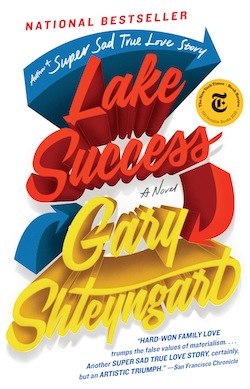
Through the character of Barry Cohen, on his journey to what would be self-discovery if he were at all self-aware, author Gary Shteyngart explores the societal circumstances in the United States that led to the election of President Donald Trump – and could well do so again.

Shteyngart opens the Cherie Smith JCC Jewish Book Festival on the night of Feb. 8. In conversation with CBC’s Lisa Christiansen at Rothstein Theatre, he will no doubt talk about his latest novel, Lake Success, about a hedge-fund manager who flees his wife and young child, who has recently been diagnosed with severe autism, as well as a Securities and Exchange Commission investigation into his financial dealings.

Barry is stuck in a childlike state. He had a difficult father and his mother was killed in a car crash, a death Barry witnessed and which haunts him. Barry yearns for affection; he cannot regulate his emotions. He believes himself to be a self-made man and he is constantly coming across people he thinks would benefit from his mentorship, from fellow fund managers to a poor black youth he encounters on his travels to his first girlfriend, with whom he is trying to reconnect – hence, the bus trip. He is trying to find her, in the hopes of rekindling that relationship, and all the lost hope it encapsulated, while disregarding all the relationships – personal and business – he has left behind in New York City.

image - Lake Success book coverThe main female characters in Lake Success – Barry’s wife, Seema, and his former girlfriend, Layla – are not as well-constructed as is Barry. Despite a sympathetic portrayal, it is hard to understand what anyone would see in Barry, yet he manages to attract smart and beautiful women. The novel provides some explanation as to why Seema would marry him, including family expectations. And, after meeting him for the first time, she recalls, “she went home and Googled Barry’s net worth and found it comforting. A man that rich couldn’t be stupid. Or, Seema thought now, was that the grand fallacy of 21st-century America?” So, she thought she was connecting with an intelligent and wealthy man, but how Barry continues to be an attractive prospect to women (and men) after he cowardly runs away from his responsibilities and is nearly penniless is a bit of a mystery.

For some readers, Shteyngart might come down a little too easy on the one-percent, as exemplified by Barry, Seema and the few people we meet in their realm. When the Jewish Independent asked the author why it was important to imbue the character of Barry with humanity, Shteyngart said, “Books about inhumane characters are not fun to write. Imagine an entire novel set from Trump’s point of view. Eat burger, get angry, eat burger, get angry. It’s just not 330 pages worth of material.”

That is not to say that Shteyngart is condoning the lifestyle of the ultra-rich; in fact, quite the opposite, though he does so with seeming resignation.

“Without giving too much away for the new reader,” he said, “Barry does change. Somewhat. Slightly. But the damage that has been done to the country socially and politically by Barry-like oligarchs is not going to go away, even if the next election ends the so-called Trump Era.”

While Lake Success doesn’t offer insight into how the divisions in Trump’s United States could be repaired, Shteyngart’s acerbic wit and astute observations offer an entertaining read that will hopefully elicit readers’ introspection about our own privilege and identities, how we define and carry ourselves in the world. Both Barry and Seema have a conflicted relationship with their cultural heritage; Barry his Jewish, Seema her Tamil.

As Barry holds his three-week-old son in his arms – long before the autism has been diagnosed – “he whispered through all his agnostic lapsed-Jew bullshit, ‘Please, God, just don’t do anything to him, okay? My sins are my own.’”

Later in the novel, on the bus as it enters Louisiana, Barry overhears a conversation between two white men, one an aspiring preacher who declares hatred of “any kind of ignorance,” then goes on to explain why “they nailed Jews to the cross” and that “Muhammad was killed, because he couldn’t accept Jesus Christ as permanent.” At that moment, “Barry realized that the man was now looking at him. And also that he was a Jew. He hadn’t really thought of being Jewish since he was in grade school. But he did now.”

Even later, Barry would again look at his heritage differently, considering how it could be passed on to his son. For the most part, though, Barry is perceived as a white male throughout the novel.

“Yes, it’s very strange,” said Shteyngart about being Jewish in America. “I was being interviewed by a Jewish intellectual who was trying to convince me that we weren’t white. Which is oddly enough the talking point of the neo-fascist right. In any case, the feeling that Jews were a part of the American mainstream – think Seinfeld – has been badly shaken both by the physical attacks against Jews and by the general feeling that the country is now being run as an exclusive enclave for straight white Christian males with the occasional sprinkling of Sheldon Adelson.”

Lake Success is a provocative read with some brilliant one-liners, such as the description of neighbours in their building, whom Barry hates, as being “so featureless, they could have come with the hallway,” and, when he faces difficulty becoming a writer, Barry concludes, “He was a damaged person, but not damaged enough to make a life out of it.”

The Jewish Book Festival runs to Feb. 13 at the Jewish Community Centre of Greater Vancouver and other venues. For the full lineup, visit jewishbookfestival.ca.

Trump betrays Kurds

U.S. President Donald Trump stunned and confounded even his closest allies in Congress and his military advisors when he announced Monday that he would withdraw American troops that were helping safeguard Kurds who have valiantly held off ISIS and battled the blood-soaked regime of Bashar al-Assad in Syria.

Turkey’s President Recep Erdogan is threatening an incursion into Kurdish-held Syrian territory and analysts say the offensive could include massacres of Kurds, a longtime enemy. The move is a brutal betrayal of the stateless Kurdish people who have been steadfast allies of the West against the worst forces in the world today. Trump’s irrational, inhuman act could lead to mass murder of the very people who are – or were – our greatest allies in that horrific battle. His motives are opaque and suspect. He appears to be doing the bidding of Turkey, Russia and Iran and, at the same time, emboldening ISIS. Trying to understand the inner workings of his mind, in this case, as in most, is probably fruitless.

Stateless people are endangered everywhere, nowhere more than in the contentious and violent region the Kurds are condemned to live. Jews understand the perils of statelessness in a dangerous world. That was one of the lessons of the 20th century. Another lesson was to depend on no one else for survival. Repeatedly, Israel has had to defend itself alone from existential threats. The Kurdish people are in a deeply precarious position now and, in an ideal world, alternative forces would come to their aid.

Meanwhile, for those supporters of Israel who insist that moving an embassy and having a Jewish daughter make Trump a reliable friend of Jews, let this be a lesson about the capriciousness of the man’s loyalty and humanity.

Israel is not a political toy

The U.S. president accused Representative Rashida Tlaib of a political stunt when the American politician of Palestinian descent rejected Israel’s offer of permission to visit the West Bank on humanitarian grounds.

Israel’s government had first announced that it would permit visits to Palestine by Tlaib and fellow congresswoman Ilhan Omar, another of the four members of the “squad” of progressive women of colour elected to Congress as Democrats in last November’s U.S. midterm elections. Then, apparently after Donald Trump intervened with his continued vendetta against the women, the government of Prime Minister Binyamin Netanyahu changed their minds and declared that the congresswomen would not be permitted to go to Palestine. Then, in another twist, Israel decided to allow Tlaib admission based on “humanitarian” grounds to visit her grandmother and other relatives in the West Bank. Tlaib rejected the offer.

“Silencing me & treating me like a criminal is not what she wants for me,” Tlaib tweeted about her grandmother. “It would kill a piece of me. I have decided that visiting my grandmother under these oppressive conditions stands against everything I believe in – fighting against racism, oppression & injustice.”

Putting ideology over seeing a nonagenarian grandparent seems a tad distorted, but she’s probably correct that Israel’s actions were over-the-top.

The idea that Israel should ban members of the United States Congress from entering the country (en route to the West Bank, which is occupied by Israeli forces, which means Israel controls who can enter and move around there) is a highly dubious move. Given Tlaib’s and Omar’s unrelenting condemnation of Israel and its policies, including support for the BDS movement, some people argued that Israel should ban them. But almost every mainstream Jewish and Zionist organization in the United States that spoke up argued that they should be permitted to go.

In fact, it would have been smart to invite the two as guests of the Israeli government and give them the VIP tour of Israel. Then, they would have at least have heard the Israeli side of the story, take it or leave it. More to the point, had they refused the invitation to see the modern miracle that is the Jewish state, they might have looked closed-minded.

Instead, the two Democrats have come out of it looking righteous, while Netanyahu looks like Trump’s puppet and Trump looks like, well, like he usually does. Especially when he tweeted that the only winner in the scenario is Tlaib’s grandmother because “She doesn’t have to see her now!” One wonders about what goes through the minds Trump’s grandchildren when he blusters into the room.

On the one hand, the recent vote in Congress to criticize the BDS movement was massively lopsided and indicates that Israel’s special relationship with the United States remains steadfast. But among grassroots Democratic voters and some other Americans, the Netanyahu-Trump bromance is repellent and makes some people naturally less amenable to the bilateral relationship – specifically because it has been so spectacularly and cynically politicized by both leaders.

There are serious and legitimate fears that the solid bipartisanship that has defined this relationship for 71 years is fraying, possibly irrevocably.

It doesn’t matter what one thinks of Trump. It doesn’t matter if you agree with the board member of the Republican Jewish Coalition who told the New York Times, “When I look at what he’s done for Israel, I’m not going to take issue with anything he’s said or done.” The day-to-day cut-and-thrust of politics means we will agree and disagree with our leaders in Canada, or those in the United States or Israel or elsewhere. But the deterioration of the nonpartisanship around the foundational importance of the bilateral relationship between Israel and its most significant ally is a grave concern.

We have an election campaign about to launch here in Canada. There will be moments when Middle East policy comes up and we will disagree. What we should strive to ensure is that, regardless of our opinions about Israel’s leader – and what position he may hold after next month’s Israeli elections – or our thoughts about our own political leaders, one thing we should avoid at all cost is turning Israel into a partisan tool. Let’s just not. And let’s not reward politicians who try.

The art of conversation

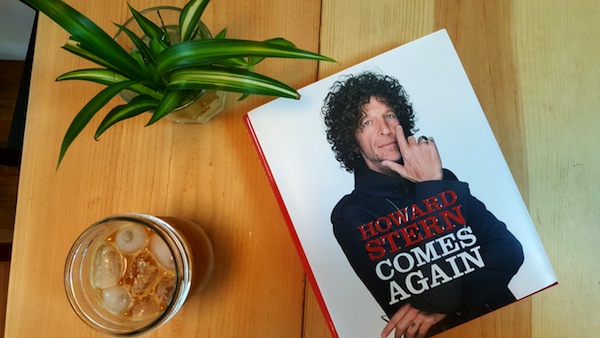
Howard Stern Comes Again highlights 37 interviews from Howard Stern’s show, and much more. (photo by Adam Bogoch)

Conversation is almost a dead art. Technology, ludicrously divisive politics and sheer laziness have almost entirely killed it. How often do you see true connection happen through dialogue anymore? Most people talk at each other, not to each other. Heck, most of the time they’re more interested in their phone. And I can’t say I’m guiltless in this department. Nor would radio talk-show legend Howard Stern, at least for the first 30 years of his epic career. This is a theme that’s intentionally threaded throughout his masterful new book, Howard Stern Comes Again (Simon & Schuster, 2019).

Not a fan of Howard Stern? Many people see him as a crude entertainer willing to insult and demean others in order to win a laugh. Well, as a die-hard fan of his, I can say that’s an accurate observation – at least partially. Ever since he moved his extraordinarily successful radio show to satellite in 2006, he’s become so much more than that. His level of insight and tolerance has grown exponentially. He’s learned to see beyond himself. And he attributes this shift to his new platform, meditation and, most importantly, extensive psychotherapy. Because of these changes, he’s regarded as “the greatest celebrity interviewer of all time.”

Don’t believe it? If you’re not willing to purchase a full SiriusXM subscription, a copy of Howard Stern Comes Again will suffice as proof. Don’t worry, this book isn’t meant for those who know what “Baba-Booey” means. It’s for anyone and everyone who loves actual communication.

The New York Times bestseller highlights 37 edited transcripts of interviews from Stern’s show. Each features a guest, such as Sir Paul McCartney, Chris Rock, Joan Rivers, Bill Murray, Jerry Seinfeld, Steve Martin, Lady Gaga, Larry David – and Stern’s mom. They contain fascinating revelations from these individuals, as well as from Stern, who has written an eloquent foreword to each chapter.

Every topic under the sun is covered. Nothing stays in a “safe space,” unless it’s honest to the individual he’s interviewing. The conversations are revealing, genuine, hilarious, and even pretty upsetting at times. It’s astounding how Stern is able to extract such information from celebrities who often try to maintain a level of secrecy to protect themselves, their families, and sometimes their art. They clearly feel comfortable with him. Maybe because there’s no question he asks that he’s unwilling to answer himself. He injects his own personal experiences, opinions and shtick into his interviews, making them real dialogues. The conversations are intimate and almost seem to be taking place privately – the opposite of interviews on shows like Late Night, 60 Minutes or Oprah.

Stern’s approach has influenced countless podcasters and radio hosts. In a May 8 interview with the Hollywood Reporter this year, Stern described his style as “the dinner party approach.” This is an apt description. And, thanks to his new book, it is not only his listeners who get to be flies on the wall.

Howard Stern Comes Again is 130 mini-biographies in less than 600 pages. It’s not just the 37 that are included. The beautifully bound and well-formatted book also features short exchanges between Stern and a variety of other comedians, actors, news anchors, mobsters, filmmakers and musicians. These snippets are compiled in special chapters where the likes of Dave Chappelle, James Taylor, Tina Fey and Vancouver’s own Seth Rogen speak on topics like sex, religion and death.

Which brings me to Trump.

Unfortunately, I can’t get away without mentioning the current president of the United States. He features heavily in the book thanks to several chapter breaks entitled, “And Now a Word from Our President.” They present fragments of Stern’s now-famous interviews with “the Donald” before he became leader of the Free World. Although Stern has revealed he isn’t a supporter of Trump – a fact that put Stern in Trump’s bad graces – not every interaction with him is negative. Stern shows that he’s capable of doing something Trump clearly is not able to do – having a conversation, even a light-hearted one, with someone of a different opinion. Having said that, there are certainly some cringe-worthy moments here that maybe even Stern regrets. But, honestly, it wouldn’t be a Howard Stern book without them.

Because of Stern’s approach to conversation, as well as his outrageous comedy, he’s been described as “divisive.” I actually thought he was a monster before I was turned onto him by another member of the Jewish community who encouraged me to listen. And, guess what? I laughed. I learned to take things less seriously – especially the darkest aspects of society. Confronting them the way he does makes them more manageable.

I also became aware of Stern’s enlightened stance on equal rights, the environment, freedom of speech, Israel, and animal rights. Even when I disagree with him, I love him. Because he comes from an authentic place. A place of experience. Of flaws. A place with passion and desire. And never has this been more obvious than in a book focusing on – gasp – actual human interaction.

It’s apparent that Howard Stern Comes Again is meant to be considered as Stern’s legacy. Whether you’re an active listener or completely unfamiliar with him, it is something to appreciate and, maybe, just maybe, from which to learn.

Adam Bogoch is a Vancouver-based screenwriter and content writer.

Israel honours Trump with a settlement

(photos by Kobi Gideon / IGPO via Ashernet)

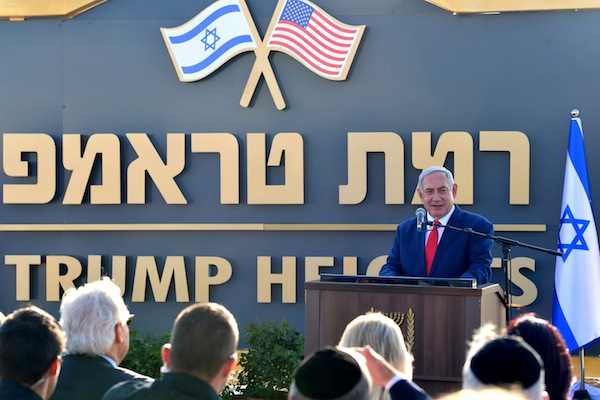
photo - A special cabinet meeting was convened in the Golan Heights on June 16 to name a new settlement there in honour of U.S. President Donald Trump
A special cabinet meeting was convened in the Golan Heights on June 16 to name a new settlement there in honour of U.S. President Donald Trump.

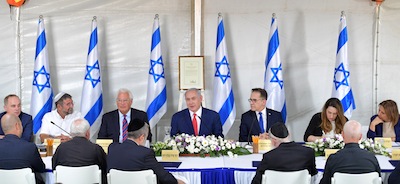
A special cabinet meeting was convened in the Golan Heights on June 16 to name a new settlement there in honour of U.S. President Donald Trump. Israeli Prime Minister Binyamin Netanyahu, together with U.S. Ambassador David Friedman, attended the special meeting, unveiling a sign reading Ramat Trump (Trump Heights) in Hebrew and English. The decision to name the settlement after the U.S. president was as a sign of appreciation for the Trump administration’s support of Israel. While Ramat Trump does not presently exist, the planned location is next to an isolated outpost with no more than 10 residents. It appears on paper that the plan is to build some 110 new homes. The Golan Heights is of strategic importance to Israel – before 1967, when Syria had control of the area, the Kinneret (Sea of Galilee), which is located below the heights, was constantly being fired upon from Syrian positions, making life unbearable for the residents of that part of the Galilee.


Trump’s empty gesture

When U.S. President Donald Trump tweeted last week that Israeli control over the Golan Heights should be recognized as legitimate sovereignty, it was like sending a box of cherry cordials to his friend Binyamin Netanyahu. In other words, the gesture was sweet, cheap and filled with empty calories.

Israel handing the Golan back to Syria is not on anyone’s agenda. A strategic position at the confluence of Syria, Lebanon, Jordan and Israel, the area was taken by Israel from Syria in the 1967 war and remains, ostensibly, a disputed territory, like the West Bank. But it’s different. For one thing, Israel effectively absorbed the Golan into Israel proper in 1981, though for critics that makes no difference. More importantly, the Golan has strategic significance in ways that differ from the strategic significance of the West Bank. Notably, most of the Syrian population that had lived there fled during the war and both the Jewish and non-Jewish populations of the Golan have remained comparatively small since. So, while still a matter of international dispute, the Golan does not evoke the same issues as the population-dense West Bank in terms of a large non-citizen population living under military rule.

More to the point, who, in their right mind, would think that handing any land, anywhere, over to Syria at this point in history would be a reasonable idea? That country has been catastrophically ripped apart by civil war. If anyone sincerely thinks that Syria deserves the Golan back, they couldn’t possibly think this would be an appropriate time to make such a move.

But up pops the U.S. president to kick a sleeping dog, declaring American recognition of the Golan as part of Israel. It was a typical Trump triumph: it cost him nothing, it rewarded his pal Netanyahu as the Israeli leader arrived in Washington and it set Trump’s enemies into a raging fury, which seems to be one of the few coherent identifiable objectives of most of the president’s actions.

As the BBC reported: “Syria said Mr. Trump’s decision was ‘a blatant attack on its sovereignty.’” If the tragedy of Syria were not so sorrowful, this response would be laughable. “We interrupt this civil war, which has cost hundreds of thousands of lives and displaced 12 million people to haughtily contest the recognition of what has been, for all intents, the status quo for half a century.” Suffice to say, the Golan is the least of Syria’s worries right now.

Yet the gambit was just another trinket Trump has offered to Netanyahu as the latter enters the final days of a tight reelection campaign. The U.S. president makes no pretense about his support for Netanyahu’s continued leadership of Israel. As we discussed in this space two weeks ago, the politicizing of the American-Israeli relationship has potential benefits only for cynical American politicos. Israel (and Jewish Americans) will not win when Jewish people’s identity and connections to the Jewish state are exploited for partisan ends.

But neither is this a case where Jewish people are standing by, uninvolved and without agency. The Israeli government – the prime minister in particular – has encouraged this sort of partisanship overtly at least since he snubbed then-president Barack Obama by accepting a Republican invitation to address Congress. More egregiously, Jewish Americans, including some leading individuals and agencies, have exacerbated the political divisions. Some have created the “Jexodus” movement, inviting the roughly 75% of Jewish Americans who usually vote Democratic to move over to the Republicans. Such a campaign probably has more legs on social media than it does in the real world, but more worrying examples abound.

It is true that AIPAC, the American Israel Public Affairs Committee, was among those groups to speak out against Netanyahu’s courtship of a far-right Israeli extremist party recently. But, that aside, its conference earlier this week in many ways cast aside the group’s traditional bipartisanship. Vice-president Mike Pence and other elected officials delivered overtly partisan speeches. Many leading Democrats, including several who are vying for their party’s 2020 presidential nomination, stayed away from the gathering. A better response would have been to attend and speak frankly about the genuine divisions that exist among Israelis, Diaspora Jews, Americans and the various constituencies, including disaffected young Jews and upstart alternatives to the perceived rightward drift of AIPAC, such as J Street. By ceding the platform, Democrats fed a narrative that reinforces the unhelpful partisan divide.

Regardless of who wins next month’s Israeli election or next year’s American election, Jews and Zionists in the United States, Canada, Israel and everywhere will need to either heal this divide or play into the charade that one side of the political spectrum is friend and the other foe. We need to reject partisanship and return to a time when standing with Israel is a logical extension of Western democratic, pluralist values. The alternative is to accept a new world where standing with Israel, and potentially with Jews, is weaponized by one set of partisans to hammer another.

?תחנת חלל חדש

התחנה תאפשר לאסטרונאוטים לאסוף סלעים מהירח, כמו הדוגמיות שהובאו בתכנית “אפולו”, ולמיין ולנתח אותן בתחנה, לפני החזרתן לכדור הארץ – נאס”א

תחנת החלל הבינלאומית המקיפה את כדור הארץ מאז 1998 ומאוישת דרך קבע מאז שנת 2000, מתקרבת לימי קיצה. שתי השותפות העיקריות בתחנה, סוכנות החלל האמריקנית נאס”א וסוכנות החלל הרוסית רוסקוסמוס, מתכננות להפסיק לתקצב את המבנה היקר ביותר בהיסטוריה – שבנייתו נמשכת כל הזמן עד ל-2024.

מה תוכנן להמשך הדרך בחלל? נאס”א מעוניינת לבנות את תחנת החלל הבינלאומית הבאה סמוך ירח. התחנה תשמש את המדינות החברות בה כפלטפורמה למשימות מאוישות לירח, וכן גם עבור המשימה המאוישת הראשונה המתוכננת למאדים. לאחרונה החליטה ממשלת קנדה להצטרף רשמית למאמצים, עם התחייבות של ראש הממשלה, ג’סטין טרודו, להשקיע מיליארד וחצי דולר בבניית זרוע רובוטית חכמה, שתשמש לתיקונים ולתחזוקת התחנה, בדומה לזרוע שיוצרה על ידי קנדה וממשמשת כיום את תחנת החלל הבינלאומית.

קנדה מבטיחה עוד לבנות זרוע רובוטית קטנה ורגישה יותר, בדומה לרובוט הפועל בתחנת החלל הבינלאומית הנוכחית. הזרוע הרובוטית החכמה המיועדת לתחנת החלל החדשה, שלא כמו זו של התחנה הקיימת, תהיה אוטונומית לחלוטין. למה כוונה בעצם? לפי התכניות תחנת החלל שתמוקם לייד הירח, תהיה מבצעית בכל מצב וגם כשלא יהיו אסטרונאוטים על סיפונה.

כחלק מההתחייבות בת העשרים וארבע השנים, קנדה מתכוונת להקצות משאבים גם לעידוד עסקים קנדיים קטנים ובינוניים לפיתוח טכנולוגיות למשימות מאוישות לירח. זאת בדומה למכרזים שפרסמה לאחרונה נאס”א לפיתוח מערכת נחיתה מאוישת לירח.

בשנת 2017 חתם נשיא ארה”ב, דונלד טראמפ, על צו נשיאותי המורה לנאס”א לחזור ולנחות על הירח. לכן ייתכן שכבר בשנים הקרובות נראה אסטרונאוטים אמריקניים על הירח, עוד לפני השלמת התחנה הסמוכה לו. קנדה היא המדינה הראשונה שמצטרפת לארה”ב בהתחייבות כספית לבניית תחנת החלל החדשה.

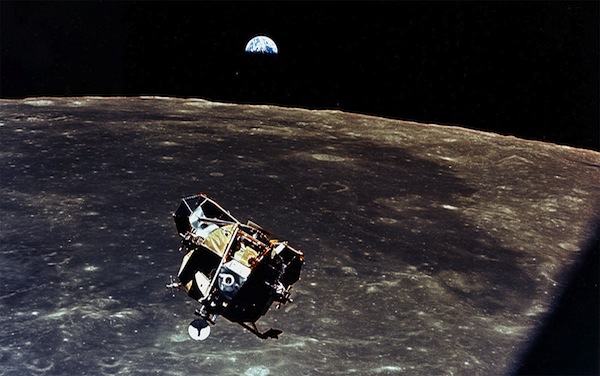
לפי התכנית החלק הראשון של התחנה שיכלול את מערכות ההנעה והחשמל, ישוגר בשנת 2022. מעבורת החלל המאוישת הראשונה שתהיה אמריקנית, תצטרף אליו כבר בשנת 2024. התחנה תקיף את הירח במסלול אליפטי מאוד סביב נקודת לגראנז’ 2, נקודה יציבה יחסית בין מסות הארץ והירח (כשהוא נע במשך שישה ימים במרחק של בין 70,000 ק”מ ל-1,500 ק”מ מפני השטח של הירח). משימות מאוישות ובלתי-מאוישות יעגנו בדרכן לירח, למאדים וליעדים רחוקים יותר, כאשר בשנות ה-30 של המאה ה-21 צפויה המשימה המאוישת הראשונה למאדים להשתגר מהתחנה. לתחנת החלל סמוך לירח יכולים להיות יתרונות גדולים ומשמעותיים על פני שיגורים ישירים מהארץ לירח או מהארץ למאדים. כך למשל התחנה תאפשר לאסטרונאוטים לאסוף סלעים מהירח, כמו הדוגמיות שהובאו בתכנית “אפולו”, ולמיין ולנתח אותן בתחנה, לפני החזרתן לכדור הארץ. בנוסף כפי שיודע כל מי שצפה בסרט האימה המדע הבדיוני “לייף”, את הדוגמיות הראשונות ממאדים רצוי לנתח בתחנת חלל לפני שמנחיתים אותן על כדור הארץ. זאת בשל החשש לזיהום ביולוגי כאן.

אבל אולי היתרון הגדול ביותר של התכנית, לדעת התומכים הרבים שלה, נעוץ באפשרות לבנות מחדש ובביטחה יחסית את יכולות האסטרונאוטים וסוכנויות החלל בחלל העמוק. יש לזכור שמאז סיום תוכנית מעבורת החלל בשנת 2011, הנוכחות האנושית בחלל הוגבלה לשיגורים של חלליות רוסיות מסוג “סויוז” לתחנת החלל הבינלאומית, שמקיפה את כדור הארץ במסלול לווייני נמוך מאוד של כ-400 ק”מ מפני הים. התחנה תאפשר לבדוק את הכלים החדשים, כמו מעבורת החלל “אוריו” בחלל העמוק, ומבלי לסכן את אנשי הצוות במשימה ישירה לירח. בוודאי גם לא לסכנם במשימה בת שנה ויותר למאדים.

Disagreeing respectfully

Left to right: Nico Slobinsky (CIJA Pacific Region), Rabbi Adam Stein (Beth Israel), Rabbi Andrew Rosenblatt (Schara Tzedeck), speakers J.J. Goldberg and Jonathan S. Tobin, Cynthia Ramsay (Jewish Independent), Rabbi Hannah Dresner (Or Shalom and RAV) and Rabbi Dan Moskovitz (Temple Sholom). (photo by Glen Bullard)

“We have lost the ability to listen to each other. We have lost the ability to credit each other with good intentions when we disagree…. What we must do is somehow regain a sense of community.”

In his response to the last audience question at Left vs. Right: The Battle for Israel’s Soul, Jonathan S. Tobin, editor-in-chief of JNS.org and a contributing writer for National Review, among other publications, went on to say what he hoped the audience would take away from his 90-minute debate with J.J. Goldberg, editor-at-large and senior commentator at the Jewish Daily Forward.

“You have to open yourself up to both sides,” said Tobin. “You have to relearn the ability to listen, to be open. If you agreed with J.J., maybe you should read some of the things that I write… If you agreed with me, read J.J. at the Forward and his column…. It’s not what we’re used to anymore because we live in these social media silos…. It’s what we have to model for our kids. It’s what we have to model for ourselves because, when we listen, when we open ourselves up to ideas that are different from our own, that don’t just confirm what we already thought, we are reminded of something that is always true but we often forget…. That which unites us is still stronger than that which divides us.”

Ten community organizations united to host the Oct. 23 event in the Wosk Auditorium at the Jewish Community Centre of Greater Vancouver: the Jewish Federation of Greater Vancouver, the Centre for Israel and Jewish Affairs, the JCCGV, the Jewish Independent, Ameinu, Or Shalom, Congregation Schara Tzedeck, Congregation Beth Israel, Temple Sholom and the Rabbinical Association of Vancouver (RAV).

In his response to the last question of the night – on how young people could have similar respectful dialogues on Israel, which the speakers broadened to include all community members – Goldberg stressed the importance of having self-doubt. “If you believe the other side is saying something that could bring about the end of the world, the death of the Jewish people, you’re not going to be tolerant. And, as Jonathan says, if you listen, look for the grain of truth, because then you can allow yourself not to shout and scream when you hear something you don’t like, because it’s not the end of the world.”

Rabbi Hannah Dresner, spiritual leader of Or Shalom and head of the RAV, welcomed the approximately 100 people who came to hear Goldberg and Tobin engage in a formal debate on four prepared questions, and then on a handful of questions from the audience. “Our guests hold differing points of view and speak to one another with respect and we would like all to follow their examples,” she said. While there was some audible discomfort from listeners in a couple of instances, it was a model event, made easier by the fact that it featured two journalists who may disagree on the details, but who both agree that Israel has a right to exist and that Israel has a right to defend itself. As well, neither speaker is an ardent supporter of U.S. President Donald Trump – although Tobin gave the president credit for moving the U.S. embassy to Jerusalem and reinstating sanctions against Iran to delay its attainment of nuclear weapons, he criticized Trump’s relationship with Russia. One has to separate Trump the man and his Twitter account from the policies the administration has implemented, said Tobin. “It’s clear,” he said, “that Israel can count on the United States, certainly it can count on this administration to have its back.”

Tobin made these comments in response to the first question of the night, which was about Trump and whether Israel could rely on an “unstable United States as a shield in an unstable Middle East.” Goldberg was more concerned than Tobin, saying that character counts. “Having a president who is lacking in elementary characteristics of personal ethics and grace is a problem,” he said. “It is a problem that this is a president who has no respect or loyalty for America’s allies; and says he’s in love with the dictator in North Korea, who, by the way, does have nuclear bombs; and who can’t say a bad word about the dictator of Russia…. If Canada can’t rely on the United States, and France and Germany and Sweden can’t rely on the United States, how long can Israel rely on the United States?”

Goldberg and Tobin also had opposing views as to the continued relevance of a two-state Israeli-Palestinian peace agreement and whether the construction of settlements is an obstacle to peace.

Goldberg pointed to the 2002 Arab League declaration, which outlined the terms under which they would recognize Israel and normalize relations with it; the declaration has been renewed since then and, last year, “Iran voted yes.” He said we believed the Arab countries when, in the 1970s, they were talking about “driving Israel into the sea,” and we should believe them now when they say they would accept Israel. He argued that peace negotiations have not failed but been continually interrupted, giving several examples, including the assassination of Yitzhak Rabin and Ehud Olmert’s having to step down as prime minister when he was indicted on corruption charges.

While a two-state solution is the most rational, said Tobin, he argued that Israelis have made several attempts at peace and have shown their willingness to trade land for peace, but they are rightfully not willing to trade land for terror, which is what Israel got after the withdrawal from Gaza.

On the question of how much world opinion should matter to Israel, both Tobin and Goldberg said it does. Tobin gave examples – such as diplomatic trips to Africa by Prime Minister Binyamin Netanyahu – of how Israel is not isolated, despite an increase in the world of antisemitism disguised as anti-Israel sentiment. The boycott, divestment and sanction (BDS) movement, he said, won’t hurt Israel, but us. “Their target is us – Jews, Jews here,” he said. “We are their target. That’s why resistance against BDS, fighting back against it is, I think, the issue that should unite us, if anything could. It’s not a liberal issue, it’s not a conservative issue, it’s a Jewish issue.”

Goldberg said Israel “pretty much controls events on the ground” – noting that cooperation between Israeli and Palestinian security forces has decreased the number of deaths caused by terrorism significantly – but that the Palestinians “have the advantage in international opinion: they’re the underdogs, they’re the Third World, they’re the people of colour” and they use this advantage “as a way of fighting back against Israel.”

That said, Goldberg contended that Islam aspires to rule the world and there are Muslims who believe that to the extent that they will use violence. However, he added, no matter how right Israel is to defend itself, the optics of a tank shooting at a kid throwing rocks can never “look good on television” and “antisemitism increases, in part, because people are mad at Israel.” Since Diaspora Jews are one with Israel, then they become a target: “An Arab who’s willing to blow up a bus full of children in Haifa, who had nothing to do with this, is certainly willing to blow up a Federation building in Seattle.” World opinion is a problem “because there’s a war going on and it hasn’t ended yet,” he said. “If and when Israel enters into negotiations with the Arab League … one of the things Israel can and must demand is that Saudi Arabia stop teaching the hatred of Jews that it teaches in schools and mosques around the world.”

In response to the question about how Jews should position themselves in “this polarized and hyper-partisan political culture,” Goldberg said, “If we are attached to Israel at a time when our traditional allies on the left, in the liberal world, are souring on Israel, we don’t have to accept that. If the right is becoming more extreme … there are reasons we have our social values and we don’t need to give them up to be friends with the pro-Israel forces on the right.”

Goldberg noted that we often consider antisemitism, but overlook the respect the world holds towards Jews – as evidenced by the number of Nobel Prize winners, and three Jews out of nine justices on the U.S. Supreme Court. He said we must use this respect “not only to advance our own particular interests in defending our brothers and sisters in Israel, but in also defending the things that we believe in and the things that we believe make a better world.”

Tobin, on the other hand, said, “As Jews, we have an issue that should unite us – the survival of the Jewish people, the survival of the Jewish state. That should be a priority. We are probably more divided on it than we are on abortion, as my friend [J.J.] likes to say, but that is still our first obligation. And when we put that aside and instead favour partisanship, our partisan loyalties over that, I think we’re doing a disservice to our community….”

By the end of the night, Goldberg and Tobin fielded nine questions, responding to audience members’ concerns about such issues as the health of Israel’s democracy – Tobin thinks it is not declining, while Goldberg observed that the way in which governments are elected means that a democratically elected government does not always reflect the will of the majority population. They also responded to questions about the lack of leadership on the Israeli left, the impact of the ultra-Orthodox on Israeli society in the long-term, Trump’s popularity in Israel and how we can enable young people to have such discussions as took place that night.

Many good things happened

Prime Minister Binyamin Netanyahu presents the nuclear secrets of Iran at a special press briefing in Jerusalem on April 30, 2018. (photo from IGPO courtesy Ashernet)

It has been a year of diplomatic success for Israel, as more countries upgraded their relations with the Jewish state. This took, in general, two forms: heads of government making an official visit to Israel or Prime Minister Binyamin Netanyahu visiting other countries; and the establishment of the embassies of the United States, Guatemala and Panama in Jerusalem, Israel’s capital.

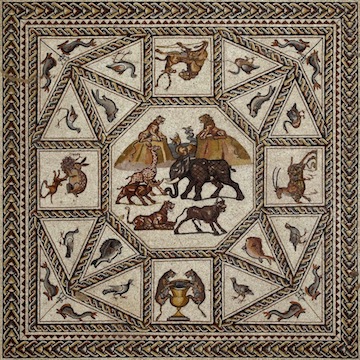
photo - The newly discovered Lod mosaic.
The newly discovered Lod mosaic. (photo from IGPO courtesy Ashernet)

In April, at a special press conference hosted by Netanyahu, the world learned of the secret storage facilities in Iran that housed Iran’s nuclear ambitions. It is not known exactly how Israel managed to find out the location of the files, or how they were copied and brought back to Israel, but the revelations served Israel well, and the files were instrumental in making the United States renege on the nuclear agreement that President Barack Obama had made with the Iranian regime.

It was a long, hot summer in more ways than one. The latest form of terrorist aggravation was for Gazans to assemble in the thousands along the Gaza-Israel border and launch kites and balloons to which were attached flaming torches that set fire to forests and agricultural fields in Israel, causing uncountable damage and destruction. A variation of this procedure was for terrorists to attach flaming torches to lines attached to the legs of kestrels who managed to survive long enough to set trees alight in Israeli forests near the border.

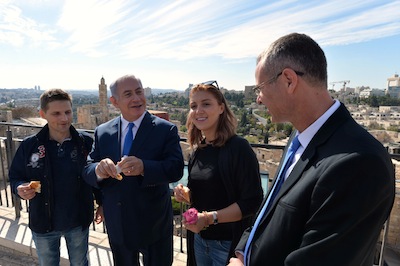
photo - In November last year, the three millionth tourist of 2017 arrived in Israel. He and his partner were shown around Jerusalem’s Tower of David Museum by Prime Minister Binyamin Netanyahu
In November last year, the three millionth tourist of 2017 arrived in Israel. He and his partner were shown around Jerusalem’s Tower of David Museum by Prime Minister Binyamin Netanyahu. (photo from IGPO courtesy Ashernet)

In better news, this year Israel became the focus of the world’s cycling fraternity. Due to the generosity of Israeli-Canadian billionaire Sylvan Adams, one of the three most important annual cycling races in the world, the Giro d’Italia, started in Jerusalem with a time trial and then took the cyclists from Haifa to Tel Aviv, with a third stage from Be’er Sheva to Eilat. All this was made possible by an $80 million donation to the federation organizing the event. It was one of the biggest sporting events ever staged in Israel and was seen by tens of thousands on television around the world.

The Jewish year opened with the announcement that one of the most outstanding mosaics ever found in Israel, from the Roman era, was going to be incorporated in a new museum in the city of Lod, where it had been found during preparations for building works. This beautiful mosaic was one of many important archeological finds in Israel in the past 12 months.

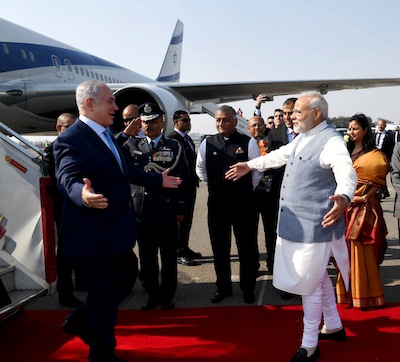
photo - Prime Minister Binyamin Netanyahu is welcomed by Indian Prime Minister Narendra Modi in New Delhi in January 2018.
Prime Minister Binyamin Netanyahu is welcomed by Indian Prime Minister Narendra Modi in New Delhi in January 2018. (photo from IGPO courtesy Ashernet)

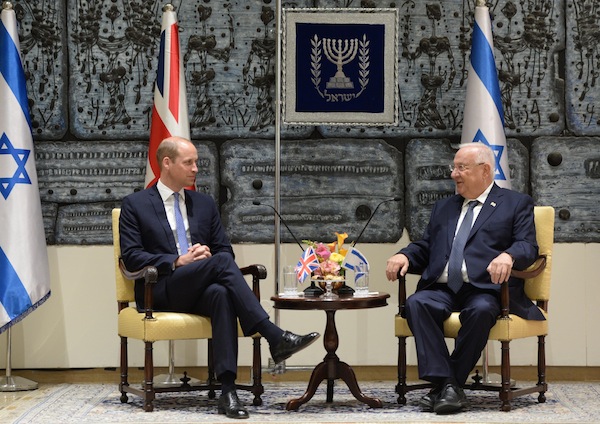
Also at the start of the Jewish year, tourism in Israel hit a new high, with the three millionth tourist of 2017 arriving at Ben-Gurion International Airport in November. And, this summer, Prince William made an official visit to Israel, where he was received by President Reuven Rivlin and Netanyahu. Members of the British Royal family have been to Israel before, but never on an official visit.

As always, Israeli technology, universities and medical prowess was remarkable over the year. And, when natural disasters occurred around the world, such as earthquakes and floods, Israel was among the first to send aid.

Not all the news was good for Netanyahu, who, for a major part of the year, was being investigated and questioned by Israel Police for allegedly obtaining inappropriate large-scale benefits from businessmen – charges Netanyahu strenuously denied. Ari Harrow, Netanyahu’s former chief of staff, signed a deal to become a state witness to testify against the prime minister.

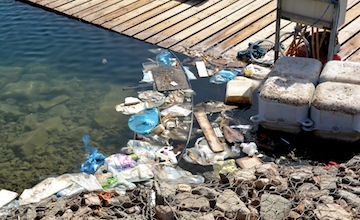
photo - Plastic waste accumulates in an inlet along Eilat’s Red Sea coast. A worldwide problem, much is being done in Israel to manage the correct disposal of plastic, paper and glass
Plastic waste accumulates in an inlet along Eilat’s Red Sea coast. A worldwide problem, much is being done in Israel to manage the correct disposal of plastic, paper and glass. (photo from IGPO courtesy Ashernet)

The Jewish year also saw Netanyahu’s wife Sara receiving a lot of negative press. In the previous year, the Jerusalem Labour Court awarded an employee of Sara Netanyahu’s the sum of $46,000 as he claimed that she had been abusive towards him and withheld wages at times. While she appealed the ruling, it was turned down. She is now being investigated for allegedly ordering expensive meals at the prime minister’s official Jerusalem residence at government expense, despite the fact that the prime minister’s official residence employed a cook. She refutes the accusations.

Despite these problems, Binyamin Netanyahu maintains a high international profile – he has the ear of presidents Donald Trump and Vladimir Putin, for example.

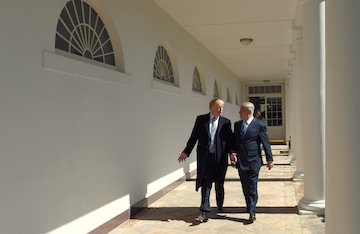
photo - U.S. President Donald Trump and Prime Minister Binyamin Netanyahu at the White House in January 2018
U.S. President Donald Trump and Prime Minister Binyamin Netanyahu at the White House in January 2018. (photo from IGPO courtesy Ashernet)

As 5778 closes, Israel has the pleasurable problem of deciding how best to market the huge natural gas finds that are presently churning about below the waves of the Mediterranean Sea, well within Israel’s exclusive continental shelf.


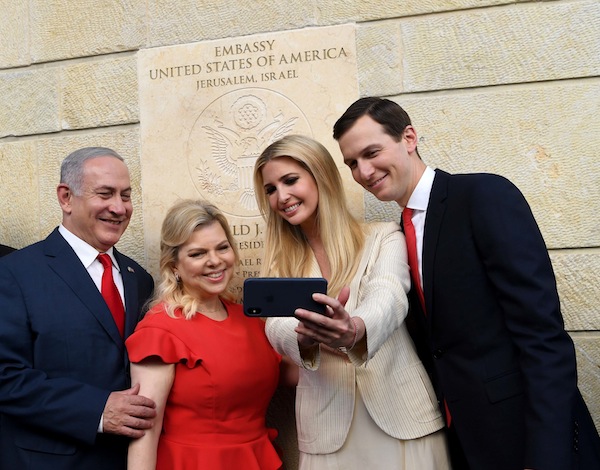
photo - Left to right: Prime Minister Binyamin Netanyahu, Sara Netanyahu, Ivanka Trump and Jared Kushner at the opening of the U.S. embassy in Jerusalem
Left to right: Prime Minister Binyamin Netanyahu, Sara Netanyahu, Ivanka Trump and Jared Kushner at the opening of the U.S. embassy in Jerusalem. (photo from IGPO courtesy Ashernet)
photo - The Guatemalan flag is projected on Jerusalem’s Old City walls in anticipation of Guatemala moving its embassy from Tel Aviv to Jerusalem
The Guatemalan flag is projected on Jerusalem’s Old City walls in anticipation of Guatemala moving its embassy from Tel Aviv to Jerusalem. (photo from IGPO courtesy Ashernet)
photo - Violence along the Gaza border
Violence along the Gaza border. (photo from IGPO courtesy Ashernet)
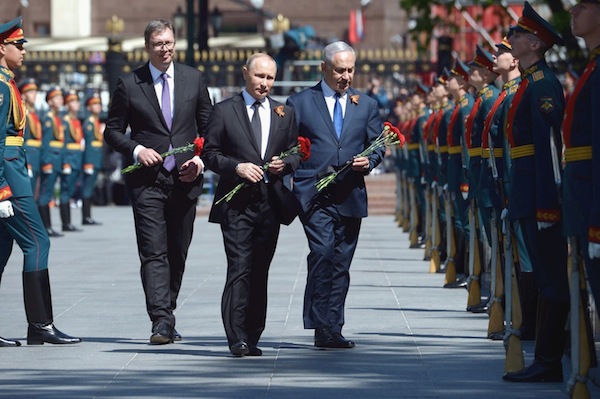
photo - Prime Minister Binyamin Netanyahu and Russian President Vladimir Putin in Moscow
Prime Minister Binyamin Netanyahu and Russian President Vladimir Putin in Moscow. (photo from IGPO courtesy Ashernet)
photo - The Giro d’Italia time trials in Jerusalem
The Giro d’Italia time trials in Jerusalem. (photo from IGPO courtesy Ashernet)
photo - Prince William and President Reuven Rivlin in Jerusalem
Prince William and President Reuven Rivlin in Jerusalem. (photo from IGPO courtesy Ashernet)