United by challenges

After two inconclusive elections in Israel, incumbent Prime Minister Binyamin Netanyahu appears certain to form a government after elections Monday, ending an unprecedented period of political instability.

Whether Netanyahu himself, under indictment and slated for a trial this month on corruption charges, will remain prime minister for long, the right-wing is certainly poised to govern for the near future. Israel’s Supreme Court explicitly refused to offer an opinion on whether a convicted prime minister could continue in office, a question that may now go from theoretical to very real.

Jews in the Diaspora, including a great many here in British Columbia, follow politics in Israel casually or closely, as many of us do the machinations of American politics that are also roiling this week. Canadian politics and those in British Columbia, around issues of environmental policy, disruptive protests and a host of other topics, have people here at home fired up about politics even without elections on the near horizon.

While there are countless issues and contests vying for our attention, there is also an undercurrent of less immediate yet possibly more ominous peril facing our democracies. Threats of external influence from bad actors, like a repetition of the Russian interference in U.S. elections in 2016, are cause for serious concern. The rise of domestic extremism – in mainstream politics as well as in the form of underground and sometimes violent movements – also deserves close attention. So does apathy.

All of these influences and attitudes present dangers to our democracies – in Canada, in the United States, in Europe and Israel. Newer democracies in Central and Eastern Europe have demonstrated how fragile the tissue of open, accountable and responsive government can be. It is alarming to witness the path that Hungary, Russia, Turkey and Poland have been on recently. Our democracies – in the United States and Canada, even Israel – may be somewhat older, but these countries are still warnings of how things that we take for granted can be snatched away. Democracy is less an enormous oak with deep and broad roots than it is a delicate flower that requires nurturing and constant attention.

For this reason, when there are government policies or election outcomes with which we disagree, we should remind ourselves that democracy may be the ultimate win-some-lose-some proposition and recommit ourselves to respect for the institutions of our democracy, not just when they serve our interests but even – especially – when they deliver outcomes that we find disagreeable. At the same time, we should be identifying and calling out every instance when a political leader or movement threatens the institutions or norms of our democracy.

Amid all of these political dramas, very daunting situations that recognize no geographic or ideological boundaries are challenging each and every one of us. This week, again, coronavirus is spreading and causing panic. Meanwhile, the dangers posed by climate change escalate every day. The economic impacts of these global concerns are blaring across the business pages: pandemic fears are causing wild stock market fluctuations, while the measures necessary to alter the course of climate change demand fundamental economic shifts. All of these threaten to exacerbate existing inequalities locally, nationally and internationally, threatening our morality and the stability of our world.

In the face of existential issues like these, the differences in our ideologies in countries like Canada, Israel or the United States fade into shades of grey. This is perhaps optimistic: that the differences between us are minimal in comparison to the difficulties we face together. That should motivate us to look beyond or to bridge our differences and recognize both the humanity in those with whom we disagree and the challenges to humankind that we must overcome together or succumb to apart.
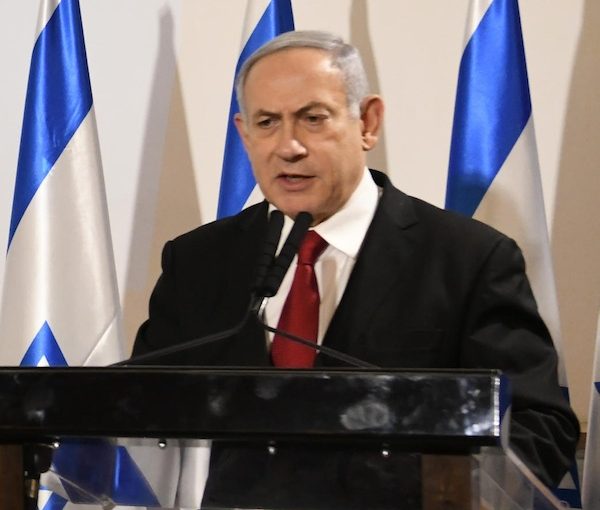
Rockets raining down

Israeli Prime Minister Binyamin Netanyahu talks about the rockets being fired from Gaza. (photo by IGPO via Ashernet)

Rockets were falling on southern and central Israel as the paper went to press this week. After the Israeli military killed Islamic Jihad commander Baha Abu al-Ata, Gaza once again erupted into full war footing.

The Iran-backed Palestinian Islamic Jihad called the assassination “a declaration of war against the Palestinian people” and declared, “Our response to this crime will have no limits.” Because they’re usually so restrained.

Schools were closed and Israelis, especially in the “envelope” area near the Gaza Strip but also in Tel Aviv, hunkered down in bomb shelters as Iron Dome deflected some but far from all of the rockets launched from the enclave.

The new, or renewed, conflict does not occur in a vacuum. Political leaders in Israel are in the midst of difficult negotiations to form a government after the second inconclusive election this year. Some critics claim the fighting is a scorched earth attempt by incumbent Prime Minister Binyamin Netanyahu to shake up the status quo and tip domestic politics in his favour. But, among those who reject this assessment is Netanyahu’s chief rival, Benny Gantz, who is now leading the efforts to cobble together a working alliance in the Knesset.

It all has a feel of déjà vu, of course, because this scenario, in different permutations, has played out repeatedly. As we posited in this space recently, some people say the status quo cannot hold. It can. It has for decades. But intermittent, terrible flare-ups like this are a part of and a price for that status quo, a high price paid by both Israelis and Palestinians. Until someone finds a path for both peoples to coexist more peacefully, this is life.

אז מה אם הוא ראש הממשלה?

בנימין נתניהו (en.kremlin.ru)

אינכם מבינים עד כמה אני עסוק? יש לי עניינים מעניינים שונים לעסוק בהם. מכאן ועד שם. אז מה אם הוא ראש הממשלה? מה אתם חושבים שיש לי זמן להתפנות ולשמוע אותו נואם בחדשות המרכזיות של הערוץ המרכזי בשעה המרכזית?

אני חייב להתקדם בענייני הדחופים – הרי אני מייצר עניינים כדי להיות עסוק. נא להבין ולהתחשב בי. אמנם אינני שותה שמפניות ורודות או כל משקה אחר למכובדים ואף לא מוזמן לאירועים רבי מעלה, אך באמת ובתמים עסוק כל יום מהבוקר עד הלילה. לישון מוקדם כי בוונקובר כולם ישנים מוקדם? מה השתגעתם? אפילו ראש הממשלה לא ישן מוקדם – אז למה אני?

נכון בצעירותי נהגתי לעשן סיגרים מדי פעם לפעם בעיקר לאחר שחברי משפחה שונים ומשונים בחתונות, דחפו לי אותם לכיס החולצה הלבנה המגוהצת שלי. כן נכון! זה לא באשמתי. הרגשתי לרגעים חבר במועדון המכובדים בזמן העישון המרגיע ועם סיום הסיגר גם התחושה הזו הסתיימה. בוונקובר אגב לא עישנתי אפילו חצי סיגר.

אחד מיריביו של ראש הממשלה הושמץ בעבר הרחוק כל פעם. אמרו עליו שאמו ערביה ושיש לו מניות בתדיראן. כמובן מדי יום הזכירו בחדשות שהוא חתרן בלתי נלאה. ואני לעומתו: אף לא חושד שאימי ערביה, שאולי בטעות יש לי מניות בתדיראן או שאני חותר נגד מישהו או משהו – אני בכלל לא יודע לחתור. אבל למרות זאת מספיק שונאים גידלתי לעצמי. אבל למה זה מגיע לי? כיוון שאני עסוק כל כך?

אז מה אם הוא ראש הממשלה שמסרב להיפרד מהכיסא? אני מבין שהוא עשה לכם הרבה נזק ועשה הרבה לעצמו. אז זה אומר גם שאני צריך להיפרד מהרגלי להיות עסוק כל הזמן או ללכת הביתה? תרכשו לו כרטיס לכיוון אחד ותעזבו אותי בשקט. אנא רבותי לא לשכוח: אני הרי עובד מהבית בוונקובר אז לאן אתם רוצים שאלך בדיוק לעזאזל? מה אני הומלס? אנא קצת רחמו עלי לשם שינוי.

אני יושב כאן במשרדי שבביתי בדאון טאון וחושב על ראש הממשלה. חושב כיצד הוא ממשיך לשבת על הכיסא ולא משנה מה היו או יהיו תוצאות הבחירות האלה והקודמות, ומה קורה למדינה שלנו-שלכם. ולא דיברנו עוד על כתבי האישום העומדים נגדו למרות שלדבריו “לא היה כלום ואין כלום”.

כמוהו כמוני גם אני לא עוזב את הכיסא ונצמד אליו חזק חזק. אם הוא יכול אז גם אני יכול, למרות שאין נגדי שום כתבי אישום ושוב כתב בכלל עד לרגע זה. רק אני ועצמי לי. אז מה אם הוא ראש הממשלה? האם זה אומר שאני צריך לתמוך בו? בדרכו הקלוקלת? לא ולא.

מוונקובר שבמערב קנדה הכל נראה רחוק וטוב שכך אם כי גם לנו ביבשת הצפונית יש מנהיג שמתנהג בדומה לראש הממשלה. כן הנשיא של המדינה השכנה מדרום ממש כמוהו מצפצף על כולם. מופרע לחלוטין. אז מה אם הוא הנשיא? האם זה אומר שאני צריך לשבת מול המסך ולראות אותו מדבר במהדורה המרכזית, בשעה המרכזית של הערוץ המרכזי? או לקרוא את השטויות שלו בטוויטר?

אולי בכלל כדאי לרכוש מניות של טוויטר? כל עוד שהנשיא האמריקני המופרע ממשיך להשתלח בכל העולם ואשתו באמצעות טוויטר – המיזם המדיומי הזה צובר מבקרים רבים יותר וערכו עולה. אז מה אם הנשיא מצייץ בטוויטר? האם זה אומר שגם אני צריך לצייץ?

Israel is not a political toy

The U.S. president accused Representative Rashida Tlaib of a political stunt when the American politician of Palestinian descent rejected Israel’s offer of permission to visit the West Bank on humanitarian grounds.

Israel’s government had first announced that it would permit visits to Palestine by Tlaib and fellow congresswoman Ilhan Omar, another of the four members of the “squad” of progressive women of colour elected to Congress as Democrats in last November’s U.S. midterm elections. Then, apparently after Donald Trump intervened with his continued vendetta against the women, the government of Prime Minister Binyamin Netanyahu changed their minds and declared that the congresswomen would not be permitted to go to Palestine. Then, in another twist, Israel decided to allow Tlaib admission based on “humanitarian” grounds to visit her grandmother and other relatives in the West Bank. Tlaib rejected the offer.

“Silencing me & treating me like a criminal is not what she wants for me,” Tlaib tweeted about her grandmother. “It would kill a piece of me. I have decided that visiting my grandmother under these oppressive conditions stands against everything I believe in – fighting against racism, oppression & injustice.”

Putting ideology over seeing a nonagenarian grandparent seems a tad distorted, but she’s probably correct that Israel’s actions were over-the-top.

The idea that Israel should ban members of the United States Congress from entering the country (en route to the West Bank, which is occupied by Israeli forces, which means Israel controls who can enter and move around there) is a highly dubious move. Given Tlaib’s and Omar’s unrelenting condemnation of Israel and its policies, including support for the BDS movement, some people argued that Israel should ban them. But almost every mainstream Jewish and Zionist organization in the United States that spoke up argued that they should be permitted to go.

In fact, it would have been smart to invite the two as guests of the Israeli government and give them the VIP tour of Israel. Then, they would have at least have heard the Israeli side of the story, take it or leave it. More to the point, had they refused the invitation to see the modern miracle that is the Jewish state, they might have looked closed-minded.

Instead, the two Democrats have come out of it looking righteous, while Netanyahu looks like Trump’s puppet and Trump looks like, well, like he usually does. Especially when he tweeted that the only winner in the scenario is Tlaib’s grandmother because “She doesn’t have to see her now!” One wonders about what goes through the minds Trump’s grandchildren when he blusters into the room.

On the one hand, the recent vote in Congress to criticize the BDS movement was massively lopsided and indicates that Israel’s special relationship with the United States remains steadfast. But among grassroots Democratic voters and some other Americans, the Netanyahu-Trump bromance is repellent and makes some people naturally less amenable to the bilateral relationship – specifically because it has been so spectacularly and cynically politicized by both leaders.

There are serious and legitimate fears that the solid bipartisanship that has defined this relationship for 71 years is fraying, possibly irrevocably.

It doesn’t matter what one thinks of Trump. It doesn’t matter if you agree with the board member of the Republican Jewish Coalition who told the New York Times, “When I look at what he’s done for Israel, I’m not going to take issue with anything he’s said or done.” The day-to-day cut-and-thrust of politics means we will agree and disagree with our leaders in Canada, or those in the United States or Israel or elsewhere. But the deterioration of the nonpartisanship around the foundational importance of the bilateral relationship between Israel and its most significant ally is a grave concern.

We have an election campaign about to launch here in Canada. There will be moments when Middle East policy comes up and we will disagree. What we should strive to ensure is that, regardless of our opinions about Israel’s leader – and what position he may hold after next month’s Israeli elections – or our thoughts about our own political leaders, one thing we should avoid at all cost is turning Israel into a partisan tool. Let’s just not. And let’s not reward politicians who try.

Israel honours Trump with a settlement

(photos by Kobi Gideon / IGPO via Ashernet)

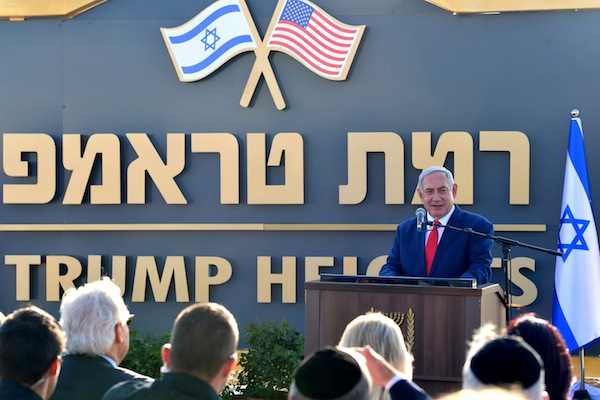
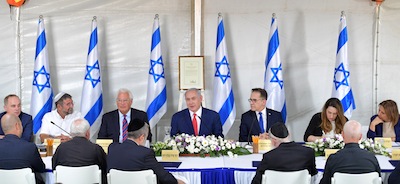
photo - A special cabinet meeting was convened in the Golan Heights on June 16 to name a new settlement there in honour of U.S. President Donald Trump
A special cabinet meeting was convened in the Golan Heights on June 16 to name a new settlement there in honour of U.S. President Donald Trump.

A special cabinet meeting was convened in the Golan Heights on June 16 to name a new settlement there in honour of U.S. President Donald Trump. Israeli Prime Minister Binyamin Netanyahu, together with U.S. Ambassador David Friedman, attended the special meeting, unveiling a sign reading Ramat Trump (Trump Heights) in Hebrew and English. The decision to name the settlement after the U.S. president was as a sign of appreciation for the Trump administration’s support of Israel. While Ramat Trump does not presently exist, the planned location is next to an isolated outpost with no more than 10 residents. It appears on paper that the plan is to build some 110 new homes. The Golan Heights is of strategic importance to Israel – before 1967, when Syria had control of the area, the Kinneret (Sea of Galilee), which is located below the heights, was constantly being fired upon from Syrian positions, making life unbearable for the residents of that part of the Galilee.


Extension granted

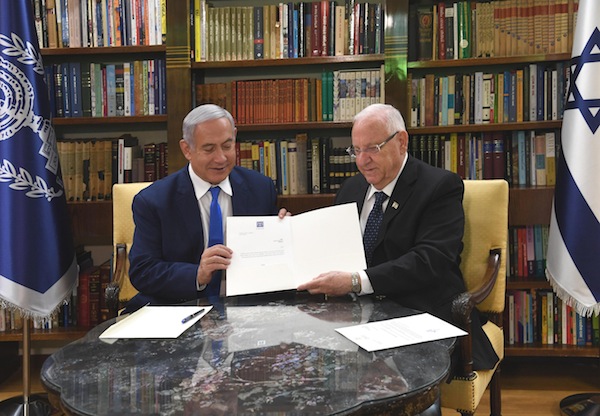
Prime Minister Binyamin Netanyahu, left, and President Reuven Rivlin hold the agreement that allows Netanyhau another two weeks to try and form a coalition government. (photo from Ashernet)

Prime Minister Binyamin Netanyahu met with President Reuven Rivlin May 13 to formally request an extension on forming the government. If Netanyahu is not able to form a majority coalition, then Rivlin would call on the head of the political party with the next highest number of votes to try and form a viable coalition government.

קנדה תמשיך לתמוך בפתרון שתי המדינות

מעלה אדומים, ישראל (David Mosberg)

“עמדתה של קנדה נותרה ללא שינוי ואנו נמשיך לתמוך בפתרון של שתי המדינות במזרח התיכון”. כך אמר בפרלמנט, ראש ממשלת קנדה, ג’סטין טרודו. דבריו נאמרו על רקע תוצאות הבחירות בישראל, שעל פי הן שוב נבחר לרשות הממשלה, בנימין נתניהו. ראש ממשלת ישראל החדש-ישן הודיע ערב הבחירות, כדי לרכוש לעצמו עוד קולות מהימין, כי ממשלתו החדשה תכריז של סיפוח שטחים באזורי יהודה ושומרון. נתניהו אמר: “אנו דנים בהחלת הריבונות על מעלה אדומים וגם בדברים אחרים. לאחר ההכרה האמריקנית בריבונות ישראל ברמת הגולן, קיימים גם דיונים על סיפוח אזורים ביהודה ושומרון. אני הולך להכיל ריבונות אבל אני לא מבדיל בין גושי ההתיישבות לנקודות היישוב הבודדות. כל נקודת ישוב כזאת היא ישראלית ויש לנו אחריות כממשלת ישראל. כל אחד מבין שהקדנציה הבאה שלנו תהיה גורלית לשני הכיוונים – האם נוכל להבטיח את הביטחון שלנו ועל השטח החיוני של יהודה ושומרון שהוא פי עשרים גדול מעזה”.

לאור תוצאות הבחירות בישראל שאל חבר הפרלמנט הקנדי מטעם המפלגה הדמוקרטית החדשה, גיא קארון, את ראש הממשלה טרודו: “בינימין נתניהו ימשיך בתפקידו כראש הממשלה. בהבטחה של הרגע האחרון הוא הודיע כי יספח התנחלויות בגדה המערבית. אם ממשלת ישראל תעמוד בהבטחתה זו, עשויות להיות לכך משמעויות חמורות על היציבות באזור. עמדתה של קנדה עד היום היתה ברורה שאין ההתנחלויות חוקיות. ומועצת הביטחון של האומות המאוחדות מסכימה עם כך. האם ראש הממשלה יאשר כי קנדה תתייחס לסיפוחם של שטחים אלה כבלתי חוקיים ותפעל בהתאם בנושא?”

טרודו אמר בתגובה לשאלתו של קראון: “עמדתנו נותרה ללא שינוי. אנו תומכים בפתרון שתי המדינות ישראל לצד פלסטין במזרח התיכון. הפתרון הזה אמור להיות מושג באמצעות משא ומתן בין שני הצדדים. פעולות חד צדדיות כגון התנחלויות, אינן לגטימיות ואינן מסייעות בפתרון המצב במזרח התיכון”.

פרופסור קורן שהסתבך בקנדה קיבל תפקיד בכיר בקופת מכבי

פרופסורר גידי קורן, שניהל מעבדה לגילוי שימוש בסמים ובאלכוהול בבית החולים “סיק קידס” בטורונטו והסתבך, מונה לתפקיד מדען בכיר במכון המחקר של קופת החולים “מכבי”. יש שלא מבינים מדוע.

פרופסור קורן נחשב למומחה בעל שם עולמי בפרמקולוגיה, אך הוא הסתבך בפרשייה שהסעירה את קנדה, והובילה לבחינה מחודשת של כמה ממחקריו. וכן לוויתור על רישיון הרפואה שלו במחוז אונטריו. קורן החליט להסביר ראשונה את גרסתו למקרים החמורים ששמו נקשר בהם.

הפרופסור הפך לאחד החוקרים הבולטים בתחום בדיקת שיער לגילוי שימוש בסמים או באלכוהול. הוא הקים את מעבדת “מאת’ריסק” בבית החולים, שהייתה היחידה שהשתמשה בטכניקה הזו. שׁירותי הרווחה הקנדיים נעזרו בבדיקות שלה במשך כמעט שלושה עשורים. שנים עברו עד שוועדות חקירה קבעו כי ערכות הבדיקה שבהן השתמשו במעבדה היו לא תקינות. באותה עת בתי המשפט הסתמכו על הבדיקות שאמורות היו לספק מידע ראשוני – כקביעה חד-משמעית, על מנת להפריד ילדים ממשפחותיהם.

קורן טוען להגנתו: “הבדיקות שעשינו במעבדה לא גרמו לאף ילד לעזוב את ביתו. התפקיד שלי היה לבדוק שהילדים האלה נמצאים באזור בטוח. זאת הייתה מטרת העבודה. יש טעויות בכל מערכת והטיעון שילדים הורחקו מבתיהם זו עלילת דם. בישראל התחילו אותה קבוצה מאוד שמאלנית של רופאים לזכויות אזרח. ובעקבות כך הגשתי קובלנה פלילית. בית המשפט שעסק בסוגיה מצא בין השאר שבשום מקרה לא קרה שילד ניזוק מבדיקה זו או אחרת”.

Trump’s empty gesture

When U.S. President Donald Trump tweeted last week that Israeli control over the Golan Heights should be recognized as legitimate sovereignty, it was like sending a box of cherry cordials to his friend Binyamin Netanyahu. In other words, the gesture was sweet, cheap and filled with empty calories.

Israel handing the Golan back to Syria is not on anyone’s agenda. A strategic position at the confluence of Syria, Lebanon, Jordan and Israel, the area was taken by Israel from Syria in the 1967 war and remains, ostensibly, a disputed territory, like the West Bank. But it’s different. For one thing, Israel effectively absorbed the Golan into Israel proper in 1981, though for critics that makes no difference. More importantly, the Golan has strategic significance in ways that differ from the strategic significance of the West Bank. Notably, most of the Syrian population that had lived there fled during the war and both the Jewish and non-Jewish populations of the Golan have remained comparatively small since. So, while still a matter of international dispute, the Golan does not evoke the same issues as the population-dense West Bank in terms of a large non-citizen population living under military rule.

More to the point, who, in their right mind, would think that handing any land, anywhere, over to Syria at this point in history would be a reasonable idea? That country has been catastrophically ripped apart by civil war. If anyone sincerely thinks that Syria deserves the Golan back, they couldn’t possibly think this would be an appropriate time to make such a move.

But up pops the U.S. president to kick a sleeping dog, declaring American recognition of the Golan as part of Israel. It was a typical Trump triumph: it cost him nothing, it rewarded his pal Netanyahu as the Israeli leader arrived in Washington and it set Trump’s enemies into a raging fury, which seems to be one of the few coherent identifiable objectives of most of the president’s actions.

As the BBC reported: “Syria said Mr. Trump’s decision was ‘a blatant attack on its sovereignty.’” If the tragedy of Syria were not so sorrowful, this response would be laughable. “We interrupt this civil war, which has cost hundreds of thousands of lives and displaced 12 million people to haughtily contest the recognition of what has been, for all intents, the status quo for half a century.” Suffice to say, the Golan is the least of Syria’s worries right now.

Yet the gambit was just another trinket Trump has offered to Netanyahu as the latter enters the final days of a tight reelection campaign. The U.S. president makes no pretense about his support for Netanyahu’s continued leadership of Israel. As we discussed in this space two weeks ago, the politicizing of the American-Israeli relationship has potential benefits only for cynical American politicos. Israel (and Jewish Americans) will not win when Jewish people’s identity and connections to the Jewish state are exploited for partisan ends.

But neither is this a case where Jewish people are standing by, uninvolved and without agency. The Israeli government – the prime minister in particular – has encouraged this sort of partisanship overtly at least since he snubbed then-president Barack Obama by accepting a Republican invitation to address Congress. More egregiously, Jewish Americans, including some leading individuals and agencies, have exacerbated the political divisions. Some have created the “Jexodus” movement, inviting the roughly 75% of Jewish Americans who usually vote Democratic to move over to the Republicans. Such a campaign probably has more legs on social media than it does in the real world, but more worrying examples abound.

It is true that AIPAC, the American Israel Public Affairs Committee, was among those groups to speak out against Netanyahu’s courtship of a far-right Israeli extremist party recently. But, that aside, its conference earlier this week in many ways cast aside the group’s traditional bipartisanship. Vice-president Mike Pence and other elected officials delivered overtly partisan speeches. Many leading Democrats, including several who are vying for their party’s 2020 presidential nomination, stayed away from the gathering. A better response would have been to attend and speak frankly about the genuine divisions that exist among Israelis, Diaspora Jews, Americans and the various constituencies, including disaffected young Jews and upstart alternatives to the perceived rightward drift of AIPAC, such as J Street. By ceding the platform, Democrats fed a narrative that reinforces the unhelpful partisan divide.

Regardless of who wins next month’s Israeli election or next year’s American election, Jews and Zionists in the United States, Canada, Israel and everywhere will need to either heal this divide or play into the charade that one side of the political spectrum is friend and the other foe. We need to reject partisanship and return to a time when standing with Israel is a logical extension of Western democratic, pluralist values. The alternative is to accept a new world where standing with Israel, and potentially with Jews, is weaponized by one set of partisans to hammer another.

GA pitches softballs to Bibi

Israel’s Prime Minister, Binyamin Netanyahu, addresses the General Assembly of the Jewish Federations of North America, in Tel Aviv Oct. 24. (photo by Pat Johnson)

The theme of the General Assembly of the Jewish Federations of North America in Tel Aviv was “We need to talk.” The conference was explicitly dedicated to confronting the issues that divide Jews and alienate the Diaspora from Israel. But, when the moment came to meet with the most powerful man in Israel, conference organizers folded like a house of cards.

Outgoing chair of the board of trustees of the JFNA, Richard Sandler, sat with Prime Minister Binyamin Netanyahu on a stage and performed what Haaretz rightly dismissed as a “fawning” conversation. More Oprah than interlocutor, Sandler first offered belated birthday wishes to the prime minister, then proceeded with one softball lob after another, allowing Netanyahu to control the dialogue – which he could have done more effectively if he had delivered a conventional address instead of the folksy sit-down – while Sandler offered no resistance or challenge to anything the prime minister said.

The JFNA is a non-partisan organization, of course. But the very nature of this meeting was to frankly confront the very real divisions between Jewish people in the Diaspora and those in Israel.

Here was the first question: “I’m just wondering, when you were back in high school or college, did you ever imagine someday you would be the prime minister of Israel, and would you share with us a little bit of the path from that time to what got you here?”

Even Netanyahu seemed a bit embarrassed by the question and offered assurances that he was not, in childhood or young adulthood, some Machiavellian born with his sights on the levers of power. What seasoned politician would respond to such a question with, “Yes, I’ve been planning this since I toddled”?

Next question: “I’m wondering, in all the years you’ve been doing this, how do you see the relationship between our two countries, between Israel and the United States, evolving – and what concerns you most, if anything, about that relationship today?”

“If anything”? Thousands of people had traveled from North America to Israel to address the very tangible friction points between the two Jewish communities and the inteviewer effectively invited the prime minister to assert that everything is rainbows and unicorns. And Netanyahu accepted the offering. Everything is pretty great, he contended. The trajectory of American support for Israel is increasing, he said. When he and his wife walk around Central Park or visit the Strand bookstore in Manhattan, they get warmly welcomed. The audience of 1,300 at a performance of Hamilton gave him a standing ovation. (“How did you get tickets?” heckled an audience member. “My cousin’s wife works in the production,” the PM replied.)

Then it was time for the interviewer to get tough.

“One of the things that we spoke about, Mr. Prime Minister, that we’ve been talking about the last couple of days, are all the things that we have in common,” said Sandler, moving in for the kill, “We’re having frank discussions on some of the issues that concern many North American Jews and I’m sure you are aware, as I am, that we have a number of concerns about pluralism, acceptance of Reform and Conservative Jews here in Israel, the Nation State Law and.…”

At this point, Sandler’s words were drowned out by applause from an audience who seemed to think they were finally going to get some red meat. Instead, Sandler asked, “Are we missing something? And where do we have it right?”

“I don’t think you should be concerned, but I think you should be informed,” Netanyahu responded to a room filled with the leadership of every major Jewish community in North America. “So much of this is – let me be charitable – misinformation.”

Netanyahu went on to say that, from the first prime minister on down, Israel’s leaders have managed the status quo by making modest, incremental compromises.

“We have a series of slowly evolving arrangements and that reflects the evolution of the Israeli electorate,” he said. On the issue of an egalitarian prayer space at the Western Wall, Netanyahu acknowledged a delay in the opening, but insisted his goal remains a place where women and men can pray together.

On a two-state solution, Netanyahu dismissed the terminology. “I believe that a potential solution is one in which the Palestinians have all the powers to govern themselves but not the power to threaten us,” he said. “What does that mean?”

He explained by recounting a conversation with then-U.S. vice-president Joe Biden.

“Well, Bibi,” Netanyahu said, describing the discussion, “are you for two states or are you not? I said, Joe, I don’t believe in labels.”

Netanyahu committed that Israel would retain security control west of the Jordan River, envisioning a situation where Palestinians would govern themselves but that overall security would remain in the hands of the Israeli military. This is not only good for Israel, the prime minister said, but for Palestinians, including Palestinian Authority President Mahmoud Abbas. Israel uncovered and foiled a plan by Hamas to not only overthrow Abbas, but to murder him, Netanyahu said. Without Israel’s military control in the West Bank, Hamas would swoop in, overthrow Abbas’s Fatah and Israel would have another Gaza to the east.

“They’d be overrun in two minutes,” he said.

This is all true enough, perhaps, and the first job of the prime minister of Israel is to ensure the security of his country and people. But, in acknowledging that his position would negate the possibility of an independent Palestinian state, Netanyahu reduced it to a matter of nomenclature.

“Give it any name you want,” he said. “But that’s the truth. And this truth is shared much more widely across the political spectrum than people understand, because we’re not going to imperil the life of the state for a label or for a good op-ed for six hours in the New York Times.” Like a flailing comedian, Netanyahu then turned to the audience and complained, “Nobody’s laughing.”

Sandler’s final question to the prime minister was, “What are you the most proud of about Israel today that you want us to think about when we’re going home?” And Netanyahu offered a response worthy of the question, a meandering reflection on visiting a synagogue in his family’s ancestral home of Lithuania.

As the loudspeaker was trying to advise people to remain in their seats while the prime minister’s entourage departed, Netanyahu, already standing for his farewell, interrupted to take the opportunity to tell the audience that his real concern for the Jewish people was the loss of identity. “It’s not conversion,” he said. “It’s the loss of identity.”

He warned, “Jewish survival is guaranteed in the Jewish state if we defend our state. But we have to also work at the continuity of Jewish communities in the world by developing Jewish education, the study of Hebrew and the contact of young Jews coming to Israel.”

He talked about additional funding for programs to support study-abroad programs in Israel and other things the Jewish state is doing to advance the strengthening of Jewish peoplehood.

Given the last word at the close of the three-day conference – a meeting explicitly convened to address contentious issues between the parties – Israel’s prime minister took the opportunity to school the leaders of Diaspora Jewry in how their shortcomings could imperil Jewish survival. Then he departed.

A moment of silence

Sunday morning’s cabinet meeting in Israel. (photo from IGPO via Ashernet)

On Oct. 28, at the regular Sunday morning cabinet meeting in Israel, Prime Minister Binyamin Netanyahu, together with ministers, stood for a moment of silence. At the meeting, Netanyahu said, “The entire people of Israel grieve with the families of the people who were murdered in the shocking massacre at the Tree of Life synagogue in Pittsburgh [on Oct. 27]. On behalf of myself, the Government of Israel and the people of Israel, from the depth of our hearts, I send our condolences to the families who lost their loved ones. We all pray for the swift recovery of the wounded.”

He added, “It is very difficult to exaggerate the horror of the murder of Jews who had gathered in a synagogue on Shabbat and were murdered just because they were Jews. Israel stands at the forefront with the Jewish community of Pittsburgh, with all Jewish communities in the U.S. and with the American people. We stand together, at the forefront, against antisemitism and displays of such barbarity.

“I call upon the whole world to unite in the fight against antisemitism everywhere. Today, regretfully, we refer to the United States, where the largest antisemitic crime in its history took place, but we also mean, of course, Western Europe, where there is a tough struggle against the manifestations of a new antisemitism. Of course, there is also the old and familiar antisemitism, and that of radical Islam. On all these fronts, we must stand up and fight back against this brutal fanaticism. It starts with the Jews, but never ends with the Jews.”