Tragedies, hope in numbers

International Holocaust Remembrance Day was commemorated here on Jan. 25 with a ceremony at the Jewish Community Centre of Greater Vancouver. Holocaust survivors lit candles of remembrance and there was a moment of silence followed by Kaddish; Nina Krieger, Vancouver Holocaust Education Centre executive director, read a proclamation from Mayor Gregor Robertson; and a screening of the film Numbered followed, in which survivors of Auschwitz, their children and grandchildren reflect in often unexpected ways on the meaning of the numbers the Nazis tattooed onto their victims.
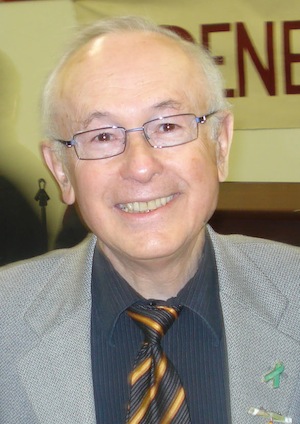
photo - Robbie Waisman
Robbie Waisman (photo from Vancouver Holocaust Education Centre)

Vancouverite Robbie Waisman, who is a child survivor of Buchenwald, delivered remarks before the film. With permission, the Independent is privileged to publish a slightly edited transcript of his words: 

I am honored to be with you this evening. This film speaks about numbers. I have not seen the film, but I have experience with numbers.

Numbers that have been given to us in the camps have two very significant meanings. They were very dehumanizing. They robbed you of your feelings as a person. Your humanity as a human being was taken away. And as long as you remained healthy and were able to work, in that sense the number given to you made it possible to remain alive and continue to live and hope to survive.

When I lived in France after liberation, they gave us identification cards. It allowed me to get around every day. The police issued it to me on June 9, 1947. I had to have it renewed every year. This was important to me. This was my first ID card, so it is hard to explain how I cherished this card. It meant that I was no longer just a number. It meant that I was a person, that I was a person of value. It proved I had a name and an address. I was so proud to have it. It gave us back some of the dignity we had lost. It gave us back our humanity.

Every time a ghetto was being liquidated, there was a selection of men and women who the Nazis selected to work. Those would be spared and taken to the munitions factories to replace other workers who they perceived as not being strong enough to continue working.

I myself have gone through three of those selections successfully with my father alongside with me.

All of us Jews who were no longer capable of working were eliminated in the most horrific way. I am not going into details – the pain always resonates.

The Nazis decided who qualified to live and work, and others were sent to the gas chambers. Six million of our people, of which 1.5 million were children, were brutally murdered. I represent the seven percent that managed to survive.

The Nazis and their collaborators murdered my mother, father and four older brothers … my uncles, aunts, cousins and friends who had been my schoolmates, and on and on.

Getting back to numbers…. When I read that many second- and third-generation survivors are [tattooing] their fathers’ and grandfathers’ numbers on their own arms and chests, I was upset.

Upon further research and reflection, I came around and now admire all those that have done this noble task. It is strange and amazing how, after all the years, those numbers have taken on a new meaning and brought change to what we think about those horrific years.

The book God, Faith and Identity from the Ashes is a reflection of children and grandchildren of Holocaust survivors. Rabbi Dr. Bernhard Rosenberg, from Beth El New Jersey, who is the son of survivors Jacob and Rachel Rosenberg, wrote: “Growing up, I constantly looked at the numbers on my father’s left arm, which he received in Auschwitz. Those numbers instilled in me the urge to fight for the state of Israel and against antisemitism wherever it may occur. I became a rabbi because of those numbers.”

Here is my own experience with numbers. Imagine being a 14-year-old boy. Imagine having been in hell and back over four years of this boy’s life working in Germany’s ammunition factories, being hungry, starved, emotionally exhausted, physically weakened, deprived of every human emotion. Imagine being so brutalized and dehumanized that you begin to believe that you are no longer human. In spite of it all, I never lost hope of being reunited with my family.

Hope! – a very powerful motivation.

The emergence of the enormity of the Holocaust became known to us and we had to find a way to deal and cope with the huge loss of all our loved ones murdered by the Nazis. How are we going to live with all those horrors?

April 11 will be the 70th anniversary of the liberation of Buchenwald.

Would you believe, Gloria [Waisman’s wife] and I are invited by the German government to come to Weimar for this special occasion, where I am also invited to speak to German teenagers. I will share my experience in that infamous and dreadful place where death was a constant companion.

I celebrate April 11 as my birthday, for that day I was reborn again into freedom.

When the Americans liberated Buchenwald, we were euphoric! I will never forget the feeling! The soldiers were larger than life. They symbolized freedom, a new beginning! I tried to communicate with them, but had no words.

For the first time, I saw black men among the soldiers. Since I had been tormented by white persons and had never seen a black person, I thought that angels must be black!

The soldiers looked around and were surprised to find youngsters like myself. They wanted to know, Who are these kids? Where do they come from? What are their nationalities? Why are they here? What are they guilty of? What was the crime they committed?

Ultimately – a few days later – some men arrived to sort out the puzzle. They proceeded to make a list of our names and when my turn came and I was asked my name, I blurted out #117098, the number given to me. My name as a human was erased. I was surprised that they wanted my name not my number. So, you see here, again, the numbers are part of our stories.

When I think back, it was an extraordinary time, full of promise and hope. But it was also bittersweet. Those of us determined to survive had to focus all our efforts towards survival. We wanted to go home and be reunited with family. We soon realized that home was no more and that families we loved had been brutally murdered.

But after emerging from the abyss, thoughts and feelings returned.

Questions bombarded me. What now? Where is my family? Has anyone survived? If not, what is the point of my own survival?

Those wonderful memories of home no longer existed. Everything shattered.

How will I recapture feelings, so that I could cry and laugh again? How do I learn to love and trust again?

It was not easy to relearn the ordinary skills of life that had been shattered over a six-year period. We had to put our numbers aside, reclaim our names and that of our families and move forward.

We were also sure that when the American soldiers … when they saw the consequences of Nazi racism and brutality … that they would ensure that such things would never happen again. We, the survivors, were certain that the leaders and the citizens of the world would say “Never again!” and commit themselves to turning those words into reality.

Never again! Noble, thought-provoking words, but only if we act upon them. Only then do these words become meaningful.

Today, almost 70 years after my liberation, the promise of “Never again” has become again and again!

There have been a number of situations that have tested the world’s resolve … in Cambodia, the former Yugoslavia, Rwanda, and now in Darfur, Syria and so many other places, people have been, and continue to be, the victims of genocide.

My eyes have seen unspeakable horrors! I am a witness to the ultimate evil! I am a witness to man’s inhumanity to other human beings! To this day, I cannot grasp how I managed to go through hell and survive.

The promise of being reunited with my family, all my loved ones, was the strong motivator for not giving up, for not losing it and falling into despair. After having come out of the abyss, I remember thinking, What now? I must go home – my family is waiting for me.

Then the questions began. Where are our loved ones? What happened to them? So much devastation! How to cope? So many losses, including our humanity. We became angry and outraged.

We were 426 youngsters among 20,000 adults in Buchenwald. We were brought to Ecouis, France, for our recovery and were told by psychologists that we had become sociopaths who would never recover.

Most of us forged ahead in school and business, raised families and contributed to our communities. In fact, we count among the Buchenwald children such personalities as my friend Elie Wiesel, Nobel Prize winner; and Lulek, Israel’s recent chief rabbi, Israel Meir Lau, and his brother Naphtali.

Simon Wiesenthal, of blessed memory, said, “I believe in God and the World to Come, and when they ask me what did you do? I will say, I did not forget you.”

I want to end with my friend Elie Wiesel’s words: “Zachor, remember, for there is, there must be, hope in remembering.”

The commemoration was presented by the Vancouver Holocaust Education Centre, in partnership with the Norman and Annette Rothstein Theatre and the Vancouver Jewish Film Festival, and with funding from the Jewish Federation of Greater Vancouver and Rita Akselrod and family, in memory of Ben Akselrod z”l.


A tribute to survivors

Minister Jason Kenney delivers a speech at the International Holocaust Remembrance Day ceremony at Ottawa City Hall. (photo from Government of Canada)

On Jan. 27, the world recognized 70 years since the liberation of the Auschwitz-Birkenau concentration and extermination camp, which coincided with the 10th annual International Day of Commemoration in Memory of the Victims of the Holocaust. Among the commemorations was a tribute to survivors held at City Hall in Ottawa.

Hosted by Rabbi Reuven P. Bulka of Ottawa’s Congregation Machzikei Hadas, the commemoration was attended by more than 300 people, including the ambassadors of Israel, Poland and Germany; British High Commissioner to Canada Howard Drake; Dr. Andrew Bennett, Canada’s ambassador for religious freedom; and other dignitaries and guests.

Minister Jason Kenney offered remarks on behalf of the Government of Canada. In his speech, he said, “The Holocaust stands alone in human history for its incalculable horror and inhumanity – and yet has a universal message for mankind, a unique power as long as we insist that it be remembered. Just as we are compelled as free individuals to search for meaning, so, too, are we compelled as communities, as societies and as countries to continue to learn lessons from this most dark and tragic chapter of human history.”

He also noted, “As time passes and as we mourn the passing of many members of the generation that witnessed and survived the Nazi era, it has become even more imperative for moral societies like ours to remain firm in that commitment to memory.

“There’s always the risk that the memory of the Shoah could be lost, just as the Holocaust is declared by some not to have happened or, horror of horrors, to have been invented for political gain. Indeed, we have seen in recent public opinion research that the majority of the population of many countries in the world knows nothing of the Shoah. That is why Canada must join with its IHRA partners, the International Holocaust Remembrance Alliance, in promoting Holocaust research and education around the world.”

Of the IHRA, Kenney said, “Seventy years after the liberation of Auschwitz, today the 31 members and eight observer countries and seven permanent international partners of the International Holocaust Remembrance Alliance collectively reaffirm our unqualified support for the Stockholm Declaration of 15 years ago as High Commissioner Drake described and, with it, our commitment to remembering and honoring the victims of the Shoah, to upholding its terrible truth, to standing up against those who would distort or deny it and to combating antisemitism and racism in all of their forms.”

At the City Hall commemoration, a tribute in film was also featured, and 93-year-old Holocaust survivor Cantor Moshe Kraus recited El Male Rachamim and the Kaddish, which was followed by the lighting of six candles, each representing one million of the six million Jewish men, women and children murdered 70 years ago.

Earlier in the day, MP Mark Adler delivered a statement on the Holocaust from the floor of the House of Commons (youtu.be/wO-HgyRkUUc) and, later that evening, Kenney and his colleagues attended a ceremony on Parliament Hill.

The Hon. Tim Uppal represented the Government of Canada in Poland. During his speech honoring the survivors, he said, “Canada is a leader in the international fight against antisemitism because it is a Canadian tradition to stand for what is principled and just. Our government is dedicated to ensuring future generations understand the lessons of the Holocaust in order to prevent acts of hate and genocide.”

– Courtesy of Office of the Minister of Employment and Social Development and Minister for Multiculturalism

Instilling a survival instinct

Jeanne Beker reads from her parents’ (Bronia and Joseph Beker) Holocaust memoir on Feb. 19. (photo from Jeanne Beker via vhec.org)

Some survivors of the Holocaust choose never to speak of the horrors they endured. My parents talked. They were adamant about telling us every detail of their war experience, time and time again. I remember hiding under the bed as a small child – I didn’t want to hear any more of their “war stories.” Now, I realize it was precisely their storytelling that made me who I am, coloring my personal philosophies, imparting a sense of resiliency and instilling in me a precious instinct for survival.

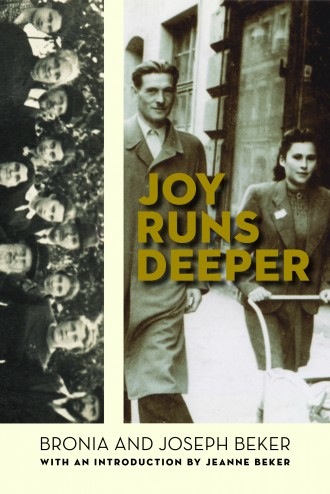
image - Joy Runs Deeper book coverWhat they endured and all they have given me [was] on my mind a great deal over Toronto’s Holocaust Education Week [Nov. 2-9, 2014], with the recent publication of their memoirs, Joy Runs Deeper. With the last generation of eyewitnesses to the Holocaust slowly slipping away, my parents’ stories have taken on more value and urgency. As a child of survivors, I’m keenly aware that I have been left with a legacy that’s as powerfully daunting as it is inspiring.

My parents, Bronia and Joseph Beker, both grew up in Kozowa – a small town in eastern Poland that is now part of Ukraine. They paint a colorful prewar picture of life in their idyllic shtetl, where they met and fell in love. But when Germany invaded Poland in 1939, their lives became a living hell. By 1941, all the Kozowa Jews were confined to a ghetto.

Nazis would regularly come into town and randomly shoot any Jew in sight.

After these horrific shootings, the Germans would command the Jews to make their ghetto even smaller. Many people lived in one room, and with little food, people grew weak and prone to disease. My grandmother and mother both came down with typhus, and it killed my grandmother. In the meantime, my grandfather built a bunker in the basement of the family home where they would hide whenever the Nazis came to town.

In April 1943, my mother and nine members of her family went down to their bunker. After about six hours, they could hear digging: the Nazis were looking for them.

“We held our breath and didn’t move for about half an hour,” writes my mother. “They left without finding our bunker, but the pipes through which we got air must have been covered during their digging. We couldn’t breathe,” she recalls.

“I remember seeing my father, sitting on the floor in his prayer shawl, praying, and my brother with a hammer in his hand, trying to open the entrance to the bunker. Then I fell down and everything went black.”

My mom’s entire family perished that day: all of them suffocated, except, miraculously, for her. Like a knight in shining armor, my dad came to her rescue, scooped her up and, for many months until their liberation, my parents were on the run, hiding in barns and bunkers, depending on the kindness of strangers for their very existence.

It was these stories of survival that were relentlessly recounted to my sister and me throughout our childhood. “Don’t be afraid and never give up” was my father’s famous saying, the mindset that saw him through the war, and the sage edict he raised us on.

My mother’s modus operandi, which tended to chip away any potential optimism, was even more pragmatic: “Expect the worst and you won’t be disappointed.” It certainly wasn’t an upbeat way of viewing the world, but it was her motherly attempt at protecting us and sparing us pain.

While my mother’s influence certainly affects me even to this day, it was my father’s motto that I especially took to heart – an order that still carries me through all my trials.

Ultimately, both my parents taught me the meaning of fearlessness and tenacity, courage and dignity.

As my mother always says, “If you live long enough, you’ll live to see everything.” And her words rang true as I sat by her side at her book launch, watching in wonder as she proudly signed countless books bearing her name. On the verge of turning 94, suffering the ravages of Parkinson’s, but as radiant and stylish as ever, my mom was realizing one of her greatest dreams: she could now share her personal story with the world.

Her memoir, which she’d written more than 30 years ago, along with my father’s memoir, which he’d written, longhand, in Yiddish, just before he died in 1988, has been published by the Azrieli Foundation’s Holocaust Survivor Memoirs Program.

Established in 1989 by the late Montreal philanthropist David J. Azrieli, himself a Holocaust survivor, this Canadian organization collects, archives and publishes inspirational accounts of courage and strength in the light of horrifying adversity, and distributes them free of charge to libraries and educational institutions across the country. (The books are also available at bookstores, with all revenues going back into this extraordinary memoirs program.)

My mother and so many others had their youth nipped in the bud, endured unspeakable pain and suffered profound loss. Yet still, they managed to soldier on, pick up the broken pieces and stoically rebuild their shattered lives.

Their tales of toughness and tenacity light our paths, and teach us the kind of fearlessness it takes to survive. These lessons learned from survivors, like my parents, inspire and challenge us to shoot for the moon, work hard, be successful and live out not just our dreams, but their unrealized ones as well.

Their heroism drives me relentlessly.

Jeanne Beker is a Canadian television personality, fashion designer, author and newspaper columnist. This article was originally published in the Globe and Mail and is reprinted here from Zachor, the magazine of the Vancouver Holocaust Education Centre, with permission.

 ***

Jeanne Beker reads from her parents’ (Bronia and Joseph Beker) Holocaust memoir Joy Runs Deeper (Azrieli Series of Holocaust Survivor Memoirs) on Feb. 19, 7 p.m., at the Museum of Vancouver, 1100 Chestnut St., to open the Vancouver Holocaust Education Centre’s Shafran Teachers’ Conference. Those in attendance receive a complimentary copy of the memoir, and a reception follows. The event is open to the public and is free of charge but space is limited. RSVP to 604-264-0499 or info@vhec.org.

A return to Auschwitz

Mordechai Ronen (Canada) is embraced by Ronald Lauder. (photo by Shahar Azran)

Fifteen Auschwitz survivors, aged 80-94, returned to the infamous camp – some for the first time – ahead of the 70th anniversary celebration of its liberation on Jan. 27. Joining the survivors on their visit was Ronald S. Lauder, president of the World Jewish Congress, who, along with the USC Shoah Foundation, organized the delegation of returning survivors from across the world.

“When I arrived in Poland, the tall trees made me immediately anxious. They reminded me of my arrival to Auschwitz – the same day my mother and little sister were gassed,” said Johnny Pekats, 80, one of the American survivors who returned to the death camp for the first time. “For years, I refused to return to this horrible place, but I finally decided to come back with my son. I wanted to say Kaddish with him there. This is my first and last visit to Auschwitz and my message for the world is that it’s not enough just to remember; we have to make sure that this never happens again.”

More than 100 Auschwitz survivors from at least 19 countries traveled to Poland as part of the WJC delegation to participate in the ceremony.

“I deeply admire the courage of these survivors,” said Lauder, who joined them at Auschwitz. “For some of them, this was the first time they returned to the place of their nightmares. Each survivor is a living testament to the triumph of good over evil, of life over death, and they are my heroes.”

There was also a reception at a Krakow hotel for the survivors and other guests, at which film director and founding chair of the USC Shoah Foundation Steven Spielberg said, “Their testimonies give each survivor everlasting life and give all of us everlasting value. We need to be preserving places like Auschwitz so people can see for themselves how evil ideologies can become tangible acts of murder. My hope for tomorrow’s commemoration is that the survivors will feel confident that we are renewing their call to remember. We will make sure the lessons of the past remain with us in the present so that we can now and forever find humanitarian ways to fight the inhumanity.”

Blaney addresses UN

Minister Steven Blaney addresses an informal meeting of the United Nations General Assembly on Jan. 22. (photo from Public Safety Canada)

The Hon. Steven Blaney, Canada’s minister of public safety and emergency preparedness, on Jan. 22 delivered a statement addressing concerns of a worldwide rise in antisemitism. The speech was delivered at an informal meeting organized in New York by the United Nations General Assembly. Blaney addressed the assembly and delivered the statement to more than 50 UN member states, as well as special guests. His remarks were as follows:

“Mr. President, Mr. Secretary General, members of the General Assembly, distinguished guests, dignitaries and senior representatives, Mr. [Bernard-Henri] Levy, Mr. [Elie] Wiesel, ladies and gentlemen:

“Elie Wiesel is a man who lived through the horror of the Holocaust. He has called it ‘Night.’ He has spent his life fighting antisemitism, repression and racism. He is a source of inspiration in assuming mankind’s duty to remember.

“For Canada, Israel has an absolute and non-negotiable right to exist as a Jewish state. Indeed, almost exactly one year ago, our Prime Minister [Stephen] Harper stood in the Knesset in Jerusalem to declare that, through fire and water, Canada would stand with the people of Israel in the face of antisemitism.

“Our Canadian government has adopted an unequivocal approach against groups that spread hatred of Jews, rewrite history, publicly deny historical facts and the scope of the extermination of Jews during the Holocaust [or] are in favor of terrorist acts committed against the state of Israel.

“Sadly, recent events demonstrate that hatred of Jews is in resurgence around the world. The antisemitic attack on a kosher supermarket in Paris occurred on the heels of the horrific jihadist terror attack on Charlie Hebdo journalists.

“On Jan. 10 of this year, I had the privilege of laying a floral tribute in Paris – in front of the Hyper Cacher market – in honor of the victims of those cowardly terrorist attacks.

“Those voices that are being assassinated today and those pens that are being broken through violence are attacks on our own freedom of expression, our own liberty, our democracy, our way of life and our reason for being.

“The world will not be destroyed by those who do evil, but by those who watch them without doing anything. That is why Canada is a leader in the fight against ISIL and is working with a broad coalition of allies to reduce the very real threat posed by that group and terrorists who attack us. As Canada’s Foreign Minister John Baird said during a recent trip to Israel, ‘the great struggle of our generation is terrorism.’

“This very week, we witnessed threats and acts of vandalism against Jewish religious institutions, particularly the Beth Israel synagogue in Alberta.

“In 2010, the prime minister spoke at the Ottawa Conference on Combating Antisemitism, clearly outlining the real threat of antisemitism and Canada’s duty to respond. He said: ‘We must speak clearly. Remembering the Holocaust is not merely an act of historical recognition. It must also be an understanding and an undertaking. An understanding that the same threats exist today, and an undertaking of a solemn responsibility to fight those threats.’

“It was then in Canada, along with 50 other nations, that the Ottawa Protocol on Combating Antisemitism was signed; a robust action plan to share ideas and exchange practices about the best ways to combat and eliminate antisemitism around the world.

“Canada has taken a zero-tolerance approach to antisemitism and all forms of discrimination, including in rhetoric towards Israel and attempts to delegitimize Israel, such as the boycott, divestment and sanctions movement. This is because we have seen time and again that those who threaten the existence of the Jewish people are a grave threat to us all.

“More work needs to be done to combat the scourge of discrimination inherent to antisemitism and, under Prime Minister Harper’s leadership, Canada will continue to be a leader in those efforts.

“As I clearly stated to Jews with whom I met this year in Montreal, Paris or Jerusalem, Canada is your friend and your ally. You can count on our friendship and our untiring support.”


Auschwitz survivors at 70th

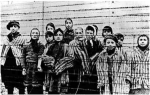
(photo by Alexander Vorontsov via Auschwitz-Birkenau State Museum)

More than 100 Auschwitz survivors from at least 17 countries will travel to Poland to participate in the observance of the 70th anniversary of the liberation of the Nazi concentration and extermination camp Auschwitz on Jan. 27, on the occasion of International Holocaust Remembrance Day. The official event will be organized by Auschwitz-Birkenau State Museum and the International Auschwitz Council. World Jewish Congress and USC Shoah Foundation – The Institute for Visual History and Education will be among the organizations supporting this commemorative event.

The main commemoration will take place in front of the Death Gate at Birkenau. The ceremony will be under the high patronage of Poland’s President Bronislaw Komorowski. Countries from around the world will be sending official delegations, some of which will include Auschwitz survivors.

“This anniversary is crucial because it may be the last major one marked by survivors. We are truly honored that so many of them, despite their age, have agreed to make this trip,” said Ronald S. Lauder, president of World Jewish Congress. “Few moments in the drama that was World War II are more etched in our collective memory than the day Red Army troops came upon, perhaps, the greatest evil of our time.”

“We have to say it clearly: it is the last big anniversary that we can commemorate with a significant group of survivors,” said Dr. Piotr M.A. Cywinski, director of the Auschwitz-Birkenau State Museum. “Until now, it has been them who taught us how to look at the tragedy of the victims of the Third Reich and the total destruction of the world of European Jews. Their voices became the most important warning against the human capacity for extreme humiliation, contempt and genocide.”

“On this special day, we want to show the survivors and the whole world that we, the postwar generation, have matured to our own responsibility for remembrance,” Marek Zajac, secretary of the International Auschwitz Council, added.

Lauder praised the efforts to preserve the site where at least 1.1 million people, most of them Jews, were murdered within less than five years. “Twenty-five years ago, when I saw the stunning truth of Auschwitz for the first time, every part of the former camp was disintegrating. Now, after a monumental effort, it has been preserved for future generations, and that is important in an age of Holocaust deniers.”

Twenty years ago, Lauder, along with Kalman Sultanik and Ernie Michel, raised $40 million from 19 countries in order to ensure that what remained in Auschwitz-Birkenau forever be preserved and bear witness for future generations. Lauder also financed the creation of the conservation laboratory at the Auschwitz Memorial, which preserves every shoe, every document, and every building that remains at the site.

The financing of the long-term preservation is continued by the Auschwitz-Birkenau Foundation. It was created in 2009 to collect €120 million ($151 million US) for the perpetual capital that will finance conservation work and preservation of all authentic remains of the former Auschwitz camp. To date, 32 countries have contributed more than €102 million ($128 million US). The foundation has started the 18 Pillars of Memory campaign to raise the remaining €18 million and it hopes to be able to announce the completion of the project on the day of the 70th anniversary of liberation.

Ahead of the event, World Jewish Congress has located Auschwitz survivors from at least 17 countries who are able to travel to Poland, especially from countries from which Jews were deported to Auschwitz during the war and from countries where significant numbers of survivors settled after the Shoah.

With the help of archivists from the Auschwitz-Birkenau State Museum, USC Shoah Foundation has identified the children from the historic photo seen above, taken by Red Army photographer Alexander Vorontsov who, in 1945, documented the liberation of the death camp. The surviving children are now between the ages of 81 and 86 and have been also invited to participate in the official commemoration.

“Faced as we are with the loss of living witnesses,” said Stephen Smith, USC Shoah Foundation executive director, “it is imperative we honor them and take their stories with us into the future so those who come after us will have no excuse to let such atrocities happen again. Survivors speak not only for themselves, but for the millions whose voices were violently silenced.”

Call to genocide (yawn)

Sheik Omar Abu Sara gave a rousing call to genocide on Nov. 28, during a sermon at Al-Aqsa Mosque on the Temple Mount in Jerusalem. “I say to the Jews loud and clear: The time for your slaughter has come. The time to fight you has come. The time to kill you has come…. Please do not leave in our hearts a single grain of mercy towards you, oh Jews, because when the day of your slaughter arrives, we shall slaughter you without mercy.” His audience is heard responding with amens.

At the same spot a few days earlier, another speaker called for the elimination of “the Jews, the most vile of creatures.”

The Abu Sara video was translated and made available by MEMRI, the Middle East Media Research Institute, an organization that works to bring to light many of the worst things being said about Jews and Israel in the region – including, in this case, in the heart of Jerusalem. The people at MEMRI must wonder sometimes what the point is, though, for all the work they do in shining a torch into these moral recesses, most of the world responds with a yawn. Reactions to this sort of rhetoric among many Jews in Israel and the Diaspora, however, are founded on the knowledge of where this sort of talk can lead, a cultural and historical reality that is dismissed as just more of the persecution complex for which we are stereotyped.

Still, the fact that this sort of exhortation even makes the news is news of a sort. Warnings of an impending mass murder of Jews are so common on the internet, in certain sectors of Arab societies, among extremist Islamists and even among “mainstream” leaders of Palestinian society that it has become just a sort of white noise.

But there are plenty of people who are very capable of following through. This sort of rhetoric undoubtedly motivates people like those who have used vehicles, screwdrivers and knives to attack and kill civilians in Israel recently and, earlier this month, at the Chabad headquarters in New York.

Leaders of the anti-Israel movement might be expected to tsk-tsk these words, if only to preserve some political legitimacy for their BDS campaign. But they can’t even be depended on to do that. While some in that movement might draw the line at calling Jews “the most vile of creatures,” that is precisely the message they direct toward Israelis.

Those who strive for any sort of mainstream political relevance are careful to distinguish between Israelis and Jews. In most of the world, such niceties are quaintly unnecessary. While rose-tinted observers like to imagine the undeniable growth of antisemitism simply as a temporary, possibly unfortunate mutation of anti-Zionism, the reality in most of the world – where the language is most violent and the violence is most real – is exactly the opposite.

Out-of-bounds tactic stinks

Anti-Israel groups have used dubious tactics over the years, but they stooped to unprecedented depravity recently when someone Photoshopped a photo of emaciated Holocaust survivors.

A Facebook page with 91,000 followers (at press time) posted a picture of survivors, presumably taken at the time of a camp liberation, manipulated to appear to be holding signs with terms like “Stop the Holocaust in Gaza,” “Israel Assassins” and “Stop US aid to Israel.” At the bottom, a caption reads, “Whatever happened to ‘Never again?’” The image received hundreds of likes and many shares, including from organizations that have until now posed as legitimate voices for Palestinians.

The picture is instantly offensive for obvious reasons. But it is additionally repugnant on a number of grounds, beyond the explicit desecration of historical memory.

Anyone who can equate the Israeli-Arab conflict with the Holocaust – and, further, depict the Jews of Israel as the instigators and perpetrators – holds a view of contemporary and historical events so removed from fact that their opinions should be discarded from the discourse. The problem is, they’re not.

In fact, the meme of Israel perpetrating a holocaust against Palestinians is rampant. On social media, in the comments sections of mainstream media, in conversations with moderately informed neighbors and friends, the concept is almost inevitable.

You may have heard of Godwin’s Law, the theory that, the longer a political discussion (on any topic) continues, the greater the likelihood someone will compare someone or something to Hitler or Nazis. A parallel – call it Godwin’s Corollary – could almost be written in stone: Whenever two or more people engage in discussion of Israel’s actions, someone will inevitably accuse the Jewish state of having learned from the masters, or of doing unto others what was done unto them in Europe.

The concept is appalling and, yet, it seems to be irresistible. It has been said that Jews are like everyone else only more so. Throughout the history of Jews as scapegoats, others (as well as some Jews in the past and today) project onto the Jewish people the sins of humanity and then proceed toward the inevitable end that scapegoating demands. How perfect for our cynical time that we should have a modern fable that so succinctly and conveniently proves our assumption that even the victims of the most venal atrocities can – and would – in a generation or two turn around and perpetrate the same on others.

This ahistoric fable implies that, because Jews are Nazis, they deserved the Holocaust and whatever other retribution is seen fit to dispense. And, if Israel is the “reward” for the Holocaust, then it can be taken away as appropriate punishment, as well. That the “facts” do not in any way approach reality is irrelevant. It is a fable intended to teach a moral lesson, and truthiness is beside the point.

There is another fault almost as grievous. Anti-Israel groups often employ the Jewish historical experience against the Jewish state – routinely employing Holocaust and Nazi imagery, along with other culturally appropriated concepts like apartheid. To a fair observer, these thefts of the experiences of others would be an admission that the bare facts of the Palestinian experience are not enough to convince and so they must be dressed up in masquerades of the historical traumas of others. But fair observers are not driving this discussion. The more ghastly the accusations that can be thrown at Israel, the more voraciously they are adopted by the haters.

At the very same time, these voices do everything in their power to negate the Jewish historical experience as a justification for Jewish self-determination and Zionism. Any reference to the Holocaust that might aid Israel’s case is hollered down as exploitative, as bringing a knife to a fist fight, as too weighty an historical weapon to introduce to the contemporary context. The Holocaust, in today’s environment, can be used against the Jewish people, but to raise it in a way that could justify Jewish strength or self-defence is ruled out of bounds.

Angry assassin or hero?

A 17-year-old Jewish refugee in Paris on Nov. 7, 1938, shot Nazi diplomat Ernst vom Rath. The assassination provided Nazi Germany with a golden opportunity. Joseph Goebbels, Hitler’s propaganda minister, portrayed the teenager as an agent of the international Jewish conspiracy trying to provoke a war between France and Germany. Two days later, the Nazis orchestrated a surge of horrific violence against the Jews. More than 200 people died, 1,300 synagogues were destroyed and 7,500 Jewish shops were trashed in a spasm of hatred known as Kristallnacht.

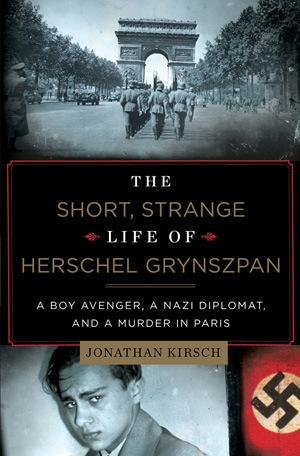
image - book cover - The Short, Strange Life of Herschel Grynszpan

The assassin, Herschel Grynszpan, became a notorious figure at the time, both in Germany and beyond. For anti-German voices, he became a cause célèbre. A top newspaper columnist with the New York Herald Tribune, Dorothy Thompson, stirred up widespread sympathy for Grynszpan, raising funds to hire a celebrated defence attorney for him. Grynszpan became so well known that Leon Trotsky, living in exile in Mexico, declared his “moral solidarity” with the assassin.

But, 20 years later, Grynszpan had become irrelevant to history. Hannah Arendt, in her book on the trial of Adolf Eichmann in 1961, dismissed Grynszpan as a psychopath. She wrote that Grynszpan was probably an agent provocateur used by the Gestapo to provide a pretext to escalate persecution of the Jews and eliminate a diplomat who was not an enthusiastic supporter of the regime. Today, historians show little interest in the assassin, believing, as Arendt did, that the Third Reich was looking for an excuse and the escalation of violence against the Jews would have taken place regardless of what happened in Paris. Yad Vashem does not even mention him in accounts of Jewish resistance to Nazi Germany.

Author Jonathan Kirsch says Grynszpan has been shortchanged. In The Short, Strange Life of Herschel Grynszpan (Liveright Publishing Corporation, 2014), Kirsch sets out to convince the reader that Grynszpan is an unrecognized hero of the Second World War. According to Kirsch, Grynszpan was a courageous Jew who stood up to Nazi power at a time that France and Britain were more interested in appeasing Hitler than confronting him. And, four years later, Kirsch writes, Grynszpan did something even more remarkable. He outsmarted Goebbels, undermining efforts to stage a show trial that Hitler wanted in order to justify the mass murder of the Jewish people.

Kirsch sees Grynszpan as a character in a mystery “deeply layered with conspiracy and intrigue, erotic scandal and rough justice.” As he paints his sympathetic portrayal of Grynszpan with colorful anecdotes and captivating details, he also raises intriguing questions about who can rightfully be considered a hero of the Second World War. The issue is complicated, especially since Grynszpan’s motive for shooting vom Rath has never been clear.

What is indisputable is that Grynszpan, caught in a bureaucratic labyrinth in Paris over his residency permit, with no money and fighting with his family, was becoming increasingly frantic in the days before the incident. His parents had moved to Hanover, Germany, in 1911, fleeing Radomsk, Poland, in an effort to escape a rising tide of antisemitism, but they never received German citizenship, despite living in the country for years. Officially, they were classified as Polish citizens living in exile in Germany.

With the Nazi Party victory at the polls in the 1933 election, the Grynszpan family, similar to many others, started to make plans to leave the country. But they never had enough money to do so. In desperation in 1936, they sent their 15-year-old son out of the country.

Grynszpan, staying with relatives in Paris, followed Hitler’s aggressive campaign against the Jews in the Yiddish papers. The news became increasingly alarming as 1938 unfolded. In March, the Third Reich formally absorbed Austria into Germany and Austrians took to the streets to terrorize the Jews of Vienna and other cities. In July, the international community met in the French resort town of Evian to develop a response to Nazi aggression but no one was willing to confront Nazi Germany or provide sanctuary to Jewish refugees. “Nobody wants them,” was the headline in a Nazi Party newspaper after the Evian conference.

Then, on Aug. 22, 1938, Germany revoked all residency permits issued to foreigners. They could not stay in Germany and Poland refused to repatriate Poles who lived in Germany. The Grynszpan family was in effect rendered stateless.

The Third Reich drew up arrest lists of 50,000 names on Oct. 26, 1938. Grynszpan’s family was on the list. The following day, his parents and two siblings were escorted to the police station. They were transported to the Polish border town of Zbaszyn, where they were trapped in a no-man’s land. Media reports provided detailed accounts of 12,000 Jews, deprived of food and shelter, and unable to enter Poland or return to Germany. The Yiddish newspapers reported the spread of deadly diseases and suicides. Grynszpan received a postcard from Zbaszyn on Nov. 3 from his mother. Four days later, he shot vom Rath.

When he was arrested, he had a postcard in his pocket. “My dear parents,” he wrote, “I couldn’t do otherwise. God must forgive me. My heart bleeds when I think of our tragedy and that of the 12,000 Jews. I have to protest in a way that the whole world hears my protest, and this I intend to do. I beg your forgiveness.”

He derailed the show trial shortly before it was to be held in Germany in 1942 by abandoning the rhetoric of heroism and revenge. Those familiar with history will not be surprised by the twist in events. Grynszpan asserted the shooting was as a result of a tiff between homosexual lovers.

Kirsch says his claim, which has never been backed up with any evidence, was Grynszpan’s greatest act of courage. Grynszpan understood Hitler’s loathing of homosexuality and destroyed the propaganda value of the show trial. The Third Reich did not want anything to do with homosexuality, even though Goebbels and others believed the claim to be a complete fabrication.

Despite their reputation for record keeping, the Nazi authorities did not document what happened next to Grynszpan. He just disappeared. A trial was never held; his place of incarceration was not recorded. His death was not documented, feeding conspiracy theories that he may have survived the war and continued living somewhere in Europe under a pseudonym.

So, where should we place Grynszpan in the pantheon of resisters? Can an act of personal revenge be considered heroism?

Grynszpan is clearly not of the stature of Mordechai Anielewicz, the hero from the Warsaw Ghetto uprising. But is he in the same league as Gavrilo Princip, the Bosnian Serb who assassinated Archduke Franz Ferdinand in 1914, sparking the First World War? Or Yigal Amir, who assassinated Yitzhak Rabin in 1995, derailing Israel-Palestinian peace efforts?

Holocaust historian Michael Marrus has said Grynszpan has his place in the register of futile but symbolic acts of resistance against unspeakable tyranny. Grynszpan was an ordinary youth who was driven to lash out against a ruthless tyranny, Marrus has written, and his story deserves to be better known.

Kirsch regrets that Grynszpan remains without honor, even among the people whose avenger he imagined himself to be. However, this well-written book may change how history regards the angry assassin.

Media consultant Robert Matas, a former Globe and Mail journalist, still reads books. The book reviewed here is available at the Jewish Public Library. To reserve it or any other book, call 604-257-5181 or email library@jccgv.bc.ca. The catalogue is at jccgv.com, click on Isaac Waldman Library.

Enter short film contest

The Conference on Jewish Material Claims Against Germany (Claims Conference) has launched Short Film, Large Subject: The Holocaust Film Competition. This is the organization’s first film contest, and it is open to entrants from around the world.

Recognizing the potential of movies to reach large numbers of people and to spark powerful discussions among audiences, the Claims Conference is putting out a call for talented, rising filmmakers to submit screenplays or treatments for short films about the Holocaust.

Short Film, Large Subject: The Holocaust Film Competition invites directors either currently enrolled in a graduate film program at an accredited university or who have successfully completed such a program no earlier than Jan. 1, 2012, to submit a screenplay or documentary treatment for a short film about the Holocaust (the systematic persecution and murder of Jews by the Nazis and their collaborators between 1933 and 1945) and/or the experiences of Jewish Holocaust victims. While the film can tell a fictional story, information relating to the Holocaust must be historically accurate.

The entry deadline is March 15, 2015. After being judged by a panel of Holocaust scholars and film industry professionals, selected entrants will proceed to the finalist round. The winner will receive a prize of $40,000 toward the production of a 20-minute short film about the Holocaust and/or survivors.

In the tradition of films such as Sophie’s Choice, Shoah, Schindler’s List and The Pianist, the Claims Conference, by launching this competition, aims to encourage a new generation of directors to tackle the Holocaust as a subject matter in their work and to use their creativity and skills to portray new perspectives and observations about a dark era in human history.

”We believe that this competition will engage up-and-coming filmmakers in the difficult but important topic of the Holocaust. Films about the Holocaust have great potential to educate and raise awareness at a time when fewer and fewer eyewitnesses are with us. By taking on this subject, filmmakers will not only expand their own horizons, but help preserve a piece of history that must never be forgotten,” said Julius Berman, Claims Conference president.

Separate from the competition, the Claims Conference distributes grants for selected projects and programs of Holocaust education, documentation and research. Among recent grantee films is the theatrical release of No Place on Earth. This work raises public awareness about the Holocaust and preserves the evidence of it; the funding of these projects will be even more critical when the eyewitnesses are gone. For more information, see claimscon.org/red.

Information about the short film competition, its rules and entry form are at filmcontest.claimscon.org.