Return of looted art

“Young Man as Bacchus” by Jan Franse Verzijl was among about 400 works owned by Max Stern that were forcibly sold by the Nazis in the 1930s. (photo from Max and Iris Stern Foundation)

When the painting “Young Man as Bacchus” by Dutch master Jan Franse Verzijl (1599-1647) went on display in New York City two years ago, the FBI moved in and seized the work. In the possession of an art gallery in Turin, Italy, the painting was among about 400 works owned by Max Stern that were forcibly sold by the Nazis in the 1930s.

In 1935, Stern was a successful gallery owner in Düsseldorf, Germany, but because he was Jewish, his collections were confiscated and sold by the Nazis. Stern would later move to Montreal, where he became a leading figure in the Canadian art world. After Stern died, in 1987, the beneficiaries of his estate learned of Stern’s Düsseldorf gallery and an extraordinary project began to seek restitution for the confiscated artworks.

Dr. Clarence Epstein, director of the Max Stern Art Restitution Project and senior director of urban and cultural affairs for Concordia University, will speak in Vancouver March 23 about the successes and challenges of the project.

The beneficiaries of Stern’s will are Concordia University, McGill University and the Hebrew University of Jerusalem. As a result, the art restitution project may be the only program of its type with three academic institutions working collegially to a common goal, said Epstein. His visit here is presented by the Canadian Friends of the Hebrew University, the Vancouver Holocaust Education Centre and Congregation Schara Tzedeck and is sponsored by Heffel Gallery and the estate of Frank and Rosie Nelson.

The Dominion Gallery, Stern’s Montreal business, remained in operation for more than a decade after his death. During this time, the beneficiary universities became aware of Stern’s prewar history.

“There was an entirely additional gallery business in Düsseldorf that his family had run before the war but had been closed by force as a result of Nazi persecution,” Epstein told the Independent in a telephone interview. “It wasn’t public knowledge. I think some people were aware of Dr. Stern’s past, but it coincided with the time when the issue of restitution was just starting to gain a little bit of traction in the art world and so it merited questioning. We just didn’t know how far to take it.”

The Max Stern Art Restitution Project has become a significant entity, with staff in Montreal, Ottawa, Washington and New York, as well as researchers in Europe. In addition to the obligation Epstein has to maximize the financial outcome for the beneficiaries of Stern’s will, there are other factors driving the project.

“There were fiduciary obligations, which is part of estate management,” he said. “There were moral implications, because this was something that was right for the universities to do on behalf of their great benefactor Max Stern. And then there were educational opportunities that this could open up in the fields of art history, of social justice, of art and law, the mechanics of the art market – and this enticed all kinds of academics to get involved in the project.”

The return of “Young Man as Bacchus” is among 16 successes the project has seen so far. While the restitution of that piece involved law enforcement, it also exemplified the good faith response of the gallery into whose possession the painting had fallen.

Every country has different rules and statutes of limitations around the return of art that has been stolen or forcibly sold, and the Stern project navigates the law as well as less litigious means of restitution. Through the recommendation of the German Friends of Hebrew University, the German government recently announced tax receipts for the owners of returned artworks. In the cases of galleries or museums, the reputation of the institution could suffer if they are known to be in possession of a work of dubious provenance, so this encourages cooperation. Individual collectors may not have the same impetus for preserving a reputation, but once a piece of art is identified as coming from Stern’s Düsseldorf collection, it bears a figurative black mark that makes it valueless on the open art market. Even so, Epstein said, the project does not seek to punish anyone for unwittingly possessing such a work.

“We don’t intend to be the bearers of bad news about the state of the work that is in their possession,” he said, “so if there’s any way that we could alleviate that kind of misfortune with some kind of tax relief, we would do so. But it hasn’t been tested yet.”

One example of an innovative solution found is the case of a work that was discovered in a Düsseldorf gallery. While the ownership was transferred to the Max and Iris Stern Trust, the universities agreed to lend it back to the gallery for long-term display.

“In their case, everybody kind of got their cake and ate it, too,” said Epstein. “It is owned by the Stern Foundation but it is lent to the Düsseldorf Museum.”

While Canada does not have the sort of art sector that New York or the capitals of Europe have, Epstein credited the federal government, specifically Minister of Canadian Heritage Mélanie Joly, for expressing the Canadian government’s commitment to restitution.

What happens to the artworks when they are returned varies. In the Düsseldorf case, the gallery in possession maintained custody. In some instances, the pieces have been sold to fund additional work of the project. (Once returned, the black mark is eliminated and the piece can be exchanged in the legitimate art market.) Others are loaned to museums and public institutions.

Next year, an exhibition of works from Stern’s collections will open in Düsseldorf, later traveling to Haifa, Israel, then Montreal.

Popular culture has taken on the topic of art restitution, Epstein said, and this is a good thing. For example, Monuments Men is about Allied soldiers charged with rescuing cultural artifacts before the Nazis destroyed or hid them, and Woman in Gold focuses on an American woman’s legal fight with the government of Austria to return a painting by Gustav Klimt that was stolen from her family by the Nazis. There have also been documentaries on different aspects of pillaging during the war. Epstein credited Helen Mirren, the star of Woman in Gold, for personally taking up the cause of restitution and making it more public.

“Any way we can make more public the challenges of the recovery of these kinds of objects, and the more we keep it in the spotlight, the more I think we’re going to be able to generate sympathy and attention from the groups that are in possession of those works,” he said.

While the Stern project has seen the return of 16 works and has located several more that are the subject of negotiation, it is impossible to know precisely how many cultural artifacts were stolen and remain unidentified.

“There is a number circulating on the internet in the hundreds of thousands in terms of objects that remain unrecovered,” said Epstein. “I don’t think it’s ever going to be possible to nail down that number … because we are talking about an historic loss that is multiplied over millions of people’s losses, that is also somewhat effaced as a result of time and lack of memory and archives. But that’s really the tip of the iceberg in terms of losses because in terms of material losses, everything that was in the possession of a Jewish family that was oppressed could still be in circulation now – musical instruments, jewelry, the list goes on. But those items were a lot harder to trace in terms of ownership and attribution than a painting has been. Works of art that are under a certain value and have not been researched historically are probably still circulating in the tens of thousands.”

Epstein added that Stern also had significant B.C. connections. His gallery represented E.J. Hughes and Emily Carr, two of this province’s most noted artists.

Admission to the March 23, 7:30 p.m., talk at Schara Tzedeck is free but an RSVP is requested to vanc@cfhu.org.

Pat Johnson is a communications and development consultant to the Vancouver Holocaust Education Centre.
Treating intergenerational trauma

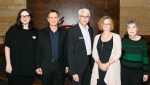
Left to right: Nina Krieger (Vancouver Holocaust Education Centre), speaker Mark Wolynn, Richard Fruchter (Jewish Family Service Agency), Nicky Fried (Congregation Beth Israel) and Shanie Levin (Jewish Seniors Alliance of Greater Vancouver). (photo by Rhonda Dent Photography)

On Feb. 15, Mark Wolynn, director of the Family Constellation Institute, spoke to an audience of almost 1,000 people at Congregation Beth Israel on the topic Understanding Intergenerational Trauma: How Inherited Family Trauma Shapes Who We Are and How to End the Cycle. The crowd sat in rapt silence as he unfolded his own story and the stories of some of the people his therapeutic approach has helped.

Introduced by Rabbi Adam Stein, assistant rabbi at Beth Israel, and Richard Fruchter, chief executive officer of the Jewish Family Service Agency, Wolynn quipped upon taking the stage, “The last time I stood at a synagogue pulpit was at my bar mitzvah.”

Wolynn said his work on intergenerational trauma has particular relevance for those who have survived genocide and war, such as First Nations people, refugees and Jews. His efforts to understand the effects of trauma began when, as a young man, he found himself going blind. He had “the bad kind of central serous retinopathy,” he said, “the five percent kind where it can lead to becoming legally blind.”

Plagued by grey blotches and blurs distorting his vision, Wolynn said he was terrified. He tried a litany of alternative medical cures, which didn’t help, and headed off on a quest for enlightenment.

After marathon meditation sessions and audiences with several gurus, Wolynn said he waited for hours for a satsang (sacred meeting) with a swami in Indonesia. When he finally made it to the front of the line, the guru looked at him for a moment and said, “Go home and make peace with your parents.” It wasn’t until he heard the same message from the next guru he visited that Wolynn returned home to begin his journey into healing his relationships with his family.

Years later, after making both personal and scientific study of the impact of family dynamics and inherited trauma (and healing his blindness), Wolynn has emerged with a persuasive vision of the role that unaddressed trauma can have in our lives – even if the trauma happened in previous generations, and even if you didn’t know about it. “Many of us spend our whole lives believing we are the source of our own suffering when we are not,” he said.

Wolynn presents his findings in terms of epigenetics, the study of how life experience can turn on or off certain genes. He points to findings in both humans and animals showing that the children of traumatized parents react with stress, fear or aversion to stimulus that traumatized their parents, even if the children themselves have no previous negative exposure to the trigger. “We think the effects – the alteration in the genes – may last for three generations,” he said.

Wolynn described several case studies in which patients had symptoms that could be addressed only after patients understood their source in something that had been done to (or by) a mother or grandfather. Wolynn challenged the audience to ask themselves what their greatest fear was and to put it into words, explaining that this was a clue to their “trauma language,” which could, in turn, be used “like breadcrumbs” to lead them back to the unrecognized traumas in their past.

Wolynn laid out a series of steps for uncovering intergenerational traumas and healing the brain. He also shared stories of his use of visualization, ritual and family communication to free both adults and children from chains they didn’t fasten themselves.

Alan Stamp, clinical director of counseling at JFSA, a co-sponsoring agency of Wolynn’s talk, told the Independent, “What Mark is doing is putting a new spin on how to get to the heart of it and resolve the difficulty. The past is alive in the present.”

Stamp said he knows of two people who attended a follow-up training session offered by Wolynn in Vancouver after the public lecture, and who have had success applying Wolynn’s method clinically; one of them being a counselor at JFSA. “It works,” said Stamp.

JFSA offers counseling for a wide variety of issues, and Stamp is hoping that attendees at Wolynn’s talk will be inspired to pursue healing, through JFSA or elsewhere.

JFSA, the Jewish Seniors Alliance of Greater Vancouver, Congregation Beth Israel and the Vancouver Holocaust Education Centre partnered to bring Wolynn to Vancouver, and the talk was additionally sponsored by the Lutsky families and Rabbi Rokie Bernstein. Banyen Books hosted Wolynn the day after his talk at the synagogue.

Matthew Gindin is a freelance journalist, writer and lecturer. He writes regularly for the Forward and All That Is Interesting, and has been published in Religion Dispatches, Situate Magazine, Tikkun and elsewhere. He can be found on Medium and Twitter.

Student’s first meeting with survivor

Writing Lives is an initiative at Langara College, coordinated by instructor Dr. Rachel Mines, in which second-year students are teamed up with local Holocaust survivors to interview them and write memoirs of their lives before, during and after the Holocaust. Langara students earn English or history credits towards a diploma or degree, but, more importantly, they get the opportunity to learn outside of the classroom setting, in the community. The course is a partnership between Langara, the Vancouver Holocaust Education Centre and the Azrieli Foundation.

In the first term, students learned about the Holocaust through examining literary and historical texts. They wrote a research project on prewar Jewish communities, using resources from the VHEC and Waldman libraries, and they had the opportunity to meet with and learn from two of the VHEC’s outreach speakers, Alex Buckman and Lillian Boraks-Nemetz. This term, with guidance from Kit Krieger and other guest speakers, students have learned strategies for planning and conducting interviews with Holocaust survivors and, in mid-January, they began to record survivors’ testimonies. The following is an essay by one of the students.

I found a quiet corner of the library and took a deep breath. This was the moment; it was all happening now. I was about to call my survivor, code name “Chester.” I say “my survivor” as if he were a possession. I don’t “own”’ him … and yet, in a very short period of time, I will have to “own” his story. I will be responsible for taking his experiences and shaping them into a lasting memoir.

This was the moment of truth: the first phone call. It was now or never. I slowly dialed and had a look around – no one within earshot. I put my cellphone up to my ear, my palm sweaty with nervousness. It began to ring. I gulped. It rang again. “Oh no,” I thought. “It would be just my luck that he’s not home and I have to leave an awkward message, and what sort of first impression will that be?…”

“Hello?”

“Hi, uh, hello. Hi. Um, my name is Ashley and I’m calling from Langara College about the Writing Lives project. May I speak to Chester?”

“Oh, sorry dear, Chester’s not here right now. Why don’t you text him?”

“OK, sure,” I said with a smile. I was expecting a hard-of-hearing senior citizen and, in true 2017 style, I was being instructed to text instead. I took down the phone number and finished the call.

Gulp. Another deep breath. Time to text.

I punched in the number and wrote an introductory message to “my survivor.” I said that I’d call in the morning for a formal introduction. I nervously hit send.

I then spent the next 74 minutes checking my phone to see if I’d received a response. Eventually, it did come: “We will talk then.”

Relief. It had begun. This journey, this process.

The next morning, Chester and I spoke briefly. I told him a bit about the program and asked if he had any questions. The phone call went well. Chester seemed to have a comfortable style, a compassion and understanding that put me at ease; there were sprinkles of humour amid logistical details. Though the call was short, I immediately felt better about what lay ahead.

The following Saturday was our first meeting in person. My group and I met up early so that we were all on the same page and fully prepared for what was about to transpire. We sat across from each other in a small meeting room on the main floor of the school’s library. We were excited, nervous, tense, curious. We were all in agreement that we didn’t really know what to expect and that we’d do our best to tackle things as they came and we’d support each other as much as possible. I felt lucky to have such encouragement.

The time came; it was 10 minutes to the scheduled interview. I grabbed my phone and headed out of the library and down the hall. Chester and I had decided to meet by the Starbucks, which is close to the library entrance. Even though I was early, I wasn’t surprised when I saw a person with a head of greyish-white hair seated near the coffee shop. “That has to be him,” I thought to myself. As I approached, he turned around and I was greeted by the welcoming face of Chester.

We exchanged pleasantries and made our way to the meeting room in the library. I think we both may have been a little nervous, but there was also a sense of mutual understanding – a consensus that we were about to do something important: something private and meaningful, potentially for both of us, particularly for the survivor.

“First off, do you have any questions?” I began once we were all settled. One of my group members sat to my right, ready to take notes and provide support. Chester sat across from the two of us, but diagonally across the square table, so we were all huddled around its corner, quite close to each other.

“Well …” and we were off! The next hour flew by. The purpose of the first meeting was for introductions and initial questions to be sorted. We also asked for a brief overview of Chester’s story, a sort of condensed version of his life. In learning the scope of his journey, we’d be able to better shape questions and structure further interviews. Chester was incredibly giving and kind. And what a storyteller! Sure, we bounced around a little, as memories and stories came to mind, but the next interviews could be more structured, more chronologically accurate. This was our introduction, our chance to get a sense of “our survivor,” to learn what he’d been through and how his experiences had shaped him.

I must admit, I was particularly moved by stories regarding Chester’s family. The way he spoke of his mother, in particular, and his children: it was just lovely.

There were a few difficult moments, and that is to be expected. In future interviews, when we will go into greater detail regarding Chester’s life and journey, we now know when certain difficult experiences occurred and will be prepared. Well, as prepared we can be, I suppose, for the emotional moments that are to come.

At the end of our meeting, Chester mentioned that we may not have enough material for a memoir. Such a sweet, humble comment. I couldn’t help but smile.

“I don’t think so,” I said. “I believe that we definitely have enough for a book here. You have some wonderful stories.”

And it’s true. The stories of love, survival, adventure, family, travel, loss, connection…. We’ve only begun the interview process, and I’m already moved by the trust that’s been shown. Our survivor is being so generous with his time and his story. I only hope that I can do this project justice.

Meaning of liberation

The Canadian military helped liberate Bergen-Belsen and other Nazi concentration camps near the end of the Second World War, a fact that was omitted for decades from recorded history.

The experiences of Canadian liberators – and the meaning of the term “liberation” itself – were the subject of the keynote address at the International Holocaust Remembrance Day observance in Vancouver last week.

Prof. Mark Celinscak, a Canadian who teaches at the University of Nebraska Omaha, delivered the address Jan. 18, at a commemoration presented by the Vancouver Holocaust Education Centre (VHEC) in partnership with the Norman and Annette Rothstein Theatre.

photo - Prof. Mark Celinscak
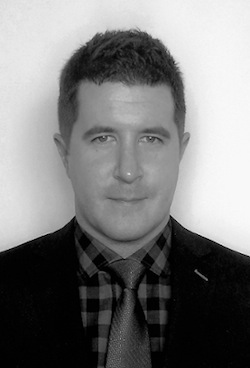
Prof. Mark Celinscak (photo from unomaha.edu)

Celinscak’s book, Distance from the Belsen Heap: Allied Forces and the Liberation of a Nazi Concentration Camp, was recognized as the best nonfiction book of 2016 by the Vine Awards for Canadian Jewish Literature. In his lecture, he explained how he stumbled upon the facts of Canadian involvement in the liberation of Nazi camps.

Researching the liberation of Bergen-Belsen, he encountered multiple conflicting narratives, but none involved Canadians, he said. In archival research, he found references to Canadians encountering Nazi camps and so he consulted leading Canadian military historians, but all assured him there was no Canadian role in the liberation of concentration camps.

Through further research, Celinscak identified a few soldiers who confirmed the Canadian military’s involvement. These connections led to more and, eventually, he had identified 1,000 individual cases of Canadian military personnel who participated in the liberation of Nazi camps. Seven decades after the end of the war, this aspect of history is only now coming to light. The oversight, said Celinscak, was likely due to the general sense of chaos in Europe at the end of the war.

In introducing Celinscak, VHEC executive director Nina Krieger said: “Were it not for the tenacious scholarship of this evening’s presenter, future generations might never have known of the Canadian role in this aspect of the Second World War.”

Celinscak believes his research helps right an omission in the record. He reflected on an incident from 1997, when plans for a new Canadian War Museum included a Holocaust memorial gallery. Controversy ensued, and Senate hearings were held on the appropriateness of including the Holocaust in a museum devoted to Canadian military history.

“Upon conclusion of the hearings, the plan for a Holocaust memorial gallery was promptly abandoned,” Celinscak said. “In the view of many who testified, the Holocaust either had no place in the country’s war museum or it held no direct connection to Canada and its military.”

His research, however, indicates that the Canadian military did indeed have a connection to the Holocaust, as liberating forces.

Celinscak’s local address was related to the exhibition currently being presented at the VHEC, called Canada Responds to the Holocaust, 1944–45. The exhibition, Celinscak said, reflects “a recent growing body of research that explores how the Canadian government, Canadian organizations and average Canadians responded to the Holocaust.” Celinscak wrote the exhibition’s panels related to Bergen-Belsen, while the overall exhibition was developed by Prof. Richard Menkis and Ronnie Tessler.

Canadians helped liberate camps in the Netherlands and in northern Germany, Celinscak said, though Bergen-Belsen was not taken by military force.

“Simply put, the Allies became involved in Bergen-Belsen because the Germans turned it over to them,” he said. Recognizing that the war was all but lost and that the disease-ridden camp presented a public health hazard to the surrounding German population, a representative from the German army crossed British lines and said that inmates in a nearby concentration camp were ill. The Allies entered Bergen-Belsen on April 15, 1945.

“In the ensuing days, weeks and months, British and Canadian forces from the surrounding area arrived at Bergen-Belsen to assist, to witness and to document,” said Celinscak. “Clearly, military personnel were unprepared for what they were to find in the camp.”

The “liberation” removed the Nazis from the scene, but life improved slowly for the survivors of the camp.

“The war, of course, still continued,” he said. “As a consequence of that, supplies were limited, personnel were largely unavailable and many resources were occupied elsewhere. Those who remained to work in the camp were left with monumental tasks.”

The victims of Bergen-Belsen continued to die. In the two weeks after the Allies took over, 9,000 people died of disease. The next month, 4,500 inmates succumbed, and another 400 perished the following month.

“In total, approximately 14,000 people died in the camp after its transfer to Allied control,” said Celinscak. “In other words, nearly a quarter of the total number of prisoners still alive when the British and Canadian forces first arrived in the camp ultimately met their demise.… While the situation slowly improved, the conditions in the camp remained grim even weeks after its surrender.”

This reality is partly why Celinscak’s research also focuses on the meaning of the term liberation.

“Liberation was an experience that transformed the lives of both liberators and survivors,” he said, noting that this is another newly emerging field of academic inquiry.

“What does that word mean in relation to the Holocaust?” he asked. “If we consider some popular representations of the liberation of Nazi concentration camps, we often see it framed as a jubilant event, one that brought to an end the suffering of the victims of the Holocaust. In films such as Roberto Benigni’s Life is Beautiful, in history books and in some museum exhibits, liberation is frequently depicted as a homogenous, joyful moment in time. But how accurate is this portrayal?”

Liberator narratives, he said, “are overflowing with shock, grief, confusion, disgust and rage.” For survivors, life did not turn for the better instantly. Public health considerations meant the camp inmates were effectively quarantined.

“The prisoners remained behind barbed wire,” he said. “Initially, the survivors were not given autonomy to leave the camp whenever they saw fit. Instead, in the weeks – and, for some, in the months and even years that followed – they continued to live behind the barbed wire of these camps. Places like Bergen-Belsen became displaced persons camps. The survivors were still guarded, only by men in different uniforms.”

In extensive interviews with many survivors, Celinscak came to realize the nuance in the concept of liberation.

“Liberation was a highly ambivalent experience,” he said. “They understood that they were no longer prisoners of Nazi Germany, but many would remain in displaced persons camps long after the war, learning that many of their friends and family had not survived what we now refer to as the Holocaust. For both survivor and liberator, they would contend with these experiences for the rest of their lives.”

Phil Levinson, president of the board of the VHEC, welcomed visitors and introduced a procession of Holocaust survivors carrying Yahrzeit candles. David Schaffer led the Mourners’ Kaddish. Councilor Raymond Louie read the proclamation from the City of Vancouver.

International Holocaust Remembrance Day, which was designated by the United Nations in 2005, is officially on Jan. 27, the anniversary of the liberation of Auschwitz-Birkenau.

Pat Johnson is a communications and development consultant to the Vancouver Holocaust Education Centre.
Writing Lives project

This fall, a select number of Langara College students embarked on a project to write the memoirs of local Holocaust survivors, capturing personal stories from the Second World War. The project is called Writing Lives: the Holocaust Survivor Memoir Project.

Writing Lives is an eight-month collaboration between Langara’s English and history departments, the Vancouver Holocaust Education Centre (VHEC) and the Azrieli Foundation. In the first half, students learn about the history and impact of the Holocaust. In the second half, students are paired with local Holocaust survivors associated with the VHEC.

“Writing Lives provides an opportunity for students to immerse themselves in the history of the Holocaust beyond physical textbooks,” said Rachel Mines, Langara English instructor, and project coordinator. For example, on Nov. 9, students commemorated Kristallnacht (The Night of Broken Glass) by lighting candles in memory of the violent anti-Jewish events that took place on Nov. 9 and 10, 1938. The course also regularly features a series of guest speakers from different organizations giving their perspective on the events surrounding the Holocaust.

“I feel grateful for the opportunity to investigate the events and prejudices that served as a catalyst for the Holocaust. With the help of survivors, professors, librarians and fellow students, I am learning that individuals, communities and organizations all have agency when it comes to fighting racism, and how we can work together to prevent such tragedies in the future,” said Lucille Welburn, a peace and conflict studies student who is taking the course.

Robin Macqueen, a Langara instructor and chair of the health sciences division, is auditing the course out of personal interest. He said: “This is a fantastic opportunity to engage with and honor people who survived a time of unimaginable prejudice. I’m getting a lot out of the course, and enjoy being a student again.”

For the VHEC, survivor testimonies are seen as a useful and powerful method for teaching about the Holocaust.

“Holocaust testimony provides a connection with people, culture, persecution and survival,” said Ilona Shulman Sparr, education director for the VHEC. “Eyewitness testimonies have proven to be a powerful and effective teaching tool, which affords a personal connection to the events of the Holocaust as we hear survivors’ accounts of their experiences. Testimonies provide a way for students to connect with survivors’ stories and gain an understanding of events that other sources can’t give them.”

This spring, students will be matched with Holocaust survivors to write their memoirs. The memoirs will be archived at the Azrieli Foundation and the VHEC, with a possibility of being published for public awareness.

The aftermath of war

One of the displays in the exhibit Canada Responds to the Holocaust, 1944-1945, at the Vancouver Holocaust Education Centre until March 31. (photo by Cynthia Ramsay)

Canada Responds to the Holocaust, 1944-1945, opened on Oct. 16. The exhibit, said Nina Krieger, executive director of the Vancouver Holocaust Education Centre, at the event, “is the first major project of its kind, examining the encounters between Canadians and survivors of the Holocaust and the evidence of Nazi crimes at the end of the Second World War and its immediate aftermath.”

The VHEC commissioned the original research and writing under the direction of Prof. Richard Menkis and Ronnie Tessler, which includes a companion school program. “Students and other visitors will engage with a number of media elements in the exhibit,” said Krieger, giving the example of a tablet with survivor testimony, various interviews and other audio and video material.

The centre also commissioned a comic book by Colin Upton to accompany the exhibition, called Kicking at the Darkness, which will be given to every student participating in the school program, and is available to others for a suggested donation of $5.

Krieger thanked contributors and funders of the exhibition. She then introduced Menkis, an associate professor in the department of history at the University of British Columbia, and Tessler, a documentary photographer and a project consultant and editor for cultural arts groups, who also happened to be the first executive director of the VHEC, in 1990.

“Canada Responds to the Holocaust is a challenging exhibition,” began Menkis. “And it’s challenging, I think, for two reasons. First of all, because liberation is a complex phenomenon. Superficially, one might think, with liberation, of being free and being happy but, in fact, in the words of one of the Dutch survivors, it was, ‘not an undiluted joy’; to be free but then to be trying to look for family and the like. This exhibition very much tries to convey how complex liberation is.

“It is a complex phenomenon for three reasons,” he said. It is complex because, as the liberators (the soldiers) were in Europe, they were moving through new locations and coming up with new experiences. As well, liberation is the interaction between groups, each with their own assumptions and lived realties. And, finally, liberation is complex because of the disbelief at what had happened, and the difficulty in communicating what had been witnessed.

In addition to the voices of some of the survivors, the exhibit follows a number of different Canadians across Europe, including army chaplains, notably Samuel Cass. It also follows the First Canadian Army.

“Only three of the Western Allies had field armies on D-Day: the Americans, the British and the Canadians,” said Menkis. “The First Canadian Army was comprised of two corps,” he explained, but, also, “within the Canadian Army, as was the case with other armies, there were a variety of groups, such as Polish units as part of the Canadian Army, and there were Canadian units who were in, for example, the British army, which is why they are going to figure in Bergen-Belsen.”

The exhibit follows journalists, especially Matthew Halton, but also other CBC and Radio Canada journalists. “Moreover, we look at and follow the reactions of official war artists, official photographers and film crews and, finally, for the postwar period, we look at international agencies, such as the United Nations relief organization and the American Joint Distribution Committee,” said Menkis.

Using maps, archival photographs, news footage and video clips of interviews, Menkis touched on the highlights of the exhibit. He spoke of survivors coming out of hiding, of Canadians’ arrival at Vught, in the Netherlands, a camp that had been abandoned – the cover of Upton’s comic book is of this encounter – and Canadians’ reactions at Westerbork transit camp, also in the Netherlands. While outwardly appearing more well than other survivors, the 900 prisoners at Westerbork had experienced continual fear of being on one of the weekly deportations to an extermination camp.

A number of Canadian soldiers had been at Bergen-Belsen before they arrived at Westerbork, explained Menkis. “The effect of Bergen-Belsen was searing, and it affected, in some complicated ways, how the soldiers and others would view Westerbork,” he said, before sharing a quote from survivors Walter and Sara Lenz: “Shortly after the Canadians arrived it became clear that something was bothering them. They asked a number of questions that made little sense to us at the time, Why were we so well fed? Why were we not sickly, on the verge of death?

“In fact, as cruel as it may sound now, I had the feeling that our liberators were in a sense let down, for as we soon learned, they had steeled themselves for … another Bergen-Belsen.”

Noting that this was not just a view expressed years later, Menkis presented an excerpt of a letter Cass wrote to his wife on April 24, 1945: “I spent a good part of the day with our people [Canadians] at Camp Westerbork.… Everything looks so good on the surface…. With the papers full of the cannibalism of Belsen, it is almost a shock to find a camp where the survivors are all well and the physical surroundings good. But you can’t see the fear that people lived through every moment of their existence, nor can you see the 110,000 Jews who were herded like cattle on the transports.…”

While some people believed that things could return to the way they were before the war, that was not possible. A number of Jews felt they could not stay in Europe; they saw it as a graveyard, with no future. Many Jews looked to Palestine, but not everyone agreed with that. Menkis gave the example of Vancouver aid worker Lottie Levinson, who saw nationalism as the cause of what had happened and couldn’t understand why others would see Zionism as the resolution of the issue. “So, different approaches to what Jewish life would be,” said Menkis.

In the last part of his presentation, Menkis screened a video clip from an interview with war artist Alex Colville, which included some of the images he had drawn at Bergen-Belsen. Menkis also played an audio clip of an interview with Maj.-Gen. Georges Vanier, who went to Buchenwald shortly after its liberation with a group of U.S. congressmen. In his remarks, Vanier – one of the few Canadians who advocated for the acceptance of refugees before the war broke out – specifically referenced Jews as being victims, whereas most reports did not.

Rather than simplify this complex story, Menkis said that he and Tessler “chose to keep as many voices and perspectives as possible. Some of them may be uncomfortable to hear or see, but we wanted to do justice to the bewildering and poignant encounters of the time.”

When Tessler took to the podium, she explained, “The inspiration for Canada Responds to the Holocaust, 1944-1945, dates back to 2005, the 60th anniversary year of V-E Day, Victory in Europe Day. For that commemoration, Richard and I developed a CD for the Vancouver Holocaust Education Centre that teachers could use in one classroom session. Compact and tightly constructed, the themes were presented in short, crisp slides characteristic of PowerPoint presentations.

“The CD was a multi-media production – which the exhibition has retained. Along with text in point form, we included photographs, excerpts of articles, newsreels, eyewitness testimonies and art by Canada’s official war artists. Since that time, the 70th anniversary of the Second World War has passed and new research has been published, allowing us to expand and enrich the information that was in the PowerPoint.”

Many steps were required to “keep this complex story coherent,” said Tessler.

“The exhibition began with a year of research in archives across Canada, the Netherlands, Israel, the United States and Britain, and with locating the support material,” she said. “We were fortunate in this phase to have a good working relationship with several researchers and archives in the Netherlands. On the home front, we had access to the VHEC collections, and the assistance of a student intern.

“The next step was to arrange this mass of material into an easily readable and chronological narrative. In whittling down the accumulated information, it was essential not to lose sight of the historical overview. By including testimonies and other media, we could add individual, and sometimes opposing, perspectives on the events being portrayed. By adding photographs, the viewer gains a sense of place and time.

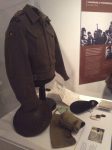
“The exhibition format also allowed us to display material objects,” she said. “For example, the Shalom Branch of the Royal Canadian Legion loaned the V-E Day edition of the Maple Leaf, a newspaper printed for the Canadian Forces, with the word ‘Kaput’ covering the front page. Dr. E.J. Sheppard of Victoria, one of the first soldiers through the gates of Westerbork transit camp in the Netherlands, loaned his battle uniform, pocket diary and a topographical map he carried in his tank that day.

“One of the most symbolic and touching objects in the exhibition is the yellow Jood star a newly liberated Jewish prisoner insisted on giving Sheppard in gratitude.

Another moment that gives pause is witnessing the large number of letters reproduced on a pillar in the gallery. Written by individuals and organizations seeking friends and relatives, they are but a smattering of the letters existing in just one archive in Montreal.”

The exhibit also includes “an antisemitic pamphlet printed in the Netherlands, and a 1943 poster ordering those with Jewish blood where, and when, to register with the authorities in The Hague … one of the most haunting objects in the exhibition is a facsimile notebook containing the weekly lists of deportees from Westerbork in the Netherlands to extermination camps in Poland: 100,657 people between July 1942 and September 1944 were, in most cases, sent to their deaths.”

Tessler thanked the many people who helped bring the exhibition to fruition, including Upton, who created the 24-page Kicking at the Darkness with the input of students in Menkis’ UBC course on Jewish identities in graphic narratives, and Canadian war historian Mark Celinscak, on whose research the section on the liberation of Bergen-Belsen concentration camp was based. She also thanked all the VHEC staff and Public, the design studio that designed the exhibition.

Canada Responds to the Holocaust, 1944-45, is at the VHEC until March 31.

Letters offer insights

Prof. Debórah Dwork (photo by Jonathan Edelman)

Nearly two decades ago – and a full half-century after the end of the Second World War – a man in Switzerland cleaning out the apartment of his deceased aunt came across a stash of more than 1,000 letters. The discovery disclosed the aunt’s comparatively simple but valiant acts during the Holocaust and provides new insights into the lives of Jewish children and parents separated during the Holocaust.

The aunt, Elisabeth Luz, was an unmarried Protestant woman living near Zurich who appears to have stumbled into a role as the sole connection between hundreds of divided Jewish families. Because postal service between belligerent nations was restricted during the war, neutral Switzerland provided a potential channel for communication. Through what appears to have been happenstance aided by the compassion of a single devoted individual, thousands of letters made it to their intended recipients – and the record they provide demonstrates what families chose to say, and not say, in furtive missives in times of crisis.

The nephew knew that he had stumbled upon something important. He was familiar with the book Children with a Star by Prof. Debórah Dwork, a definitive study of the experiences of Jewish children under Nazism and the adults who helped them. He contacted Dwork to ask if she would like the letters. Dwork, Rose Professor of Holocaust History and founding director of the Strassler Centre for Holocaust and Genocide Studies at Clark University, in Massachusetts, now possesses the letters and has studied them for years. She will be in Vancouver in just over two weeks to speak at the community’s annual Kristallnacht Commemorative Lecture about what they tell us about families during the Holocaust.

Dwork cannot be certain how Luz came to be the intermediary for hundreds of families.

“From what I can piece together – and this is what I believe is the case – there was a refugee camp, sort of an internment camp, not a concentration camp, for refugees that had been established by the Swiss government in that town,” Dwork said. Luz went to the camp to give voluntary aid, Dwork believes, “to show with her presence that she cared about their plight.”

One of the men in the camp asked Luz whether she would be so kind as to send a letter to his wife.

“From there, it snowballed,” said Dwork. “Some of the letters that I have from the children, for example, say, ‘you don’t know me but Susie told me that you are an auntie who is willing to write to our mothers,’ and so on.”

The parents were mostly in “Greater Germany” – Germany and the areas it occupied. The children had mostly been sent to places thought to be safe, including Britain, France, Belgium and the Netherlands.

Remarkably, the letters do not end in 1945. In the course of being a conduit between hundreds of parents and their children, Luz became a confidant to many of them – “Tante Elisabeth” – and remained in contact with several who continued their correspondence. The fact that the collection of letters exists at all is due in part to the fact that Luz hand-copied each one, believing that this would be less likely to catch the attention of war-era postal censors. She maintained the originals.

“Parents sent their letter to her, she copied every letter and then sent it on to the children and the children did the same in reverse,” said Dwork.

Some of the children were on the Kindertransport, the effort to transfer Jewish children from Germany and Nazi-occupied Europe to the United Kingdom, while others were sent by their parents to places considered safer for Jewish children.

“There were a number of children who were sent to family members or to friends or to religious organizations by their parents independently, individually,” she said, adding that there is much to be learned from the letters. “It tells us an enormous amount about family, the importance of family and the way in which family members use letters as thread to bind the family together. I think also it tells us about how children absorbed, adjusted, adapted – or did not adjust or adapt – to their ever-changing lives.”

What the letters do not always indicate is the fate of the families who sent them.

“We know a lot about the children who went on the Kindertransport to Britain, because they survived,” said Dwork. Less is known about the children sent to Belgium, the Netherlands and France. “Many of them did not survive as the Germans conquered and occupied those countries,” she said.

Of those who continued corresponding with Luz long after the war, many had lost their parents.

“Because of the relationship that developed between the children and Elisabeth Luz, those who continued to write, by and large, were now young adults whose parents did not survive and she, Elisabeth Luz, was the last tie to their prewar and wartime life,” explained Dwork. “So, she had become their confidant and that’s very important, the way Elisabeth became a confidant to the parents and the children.”

Vancouverites should join her in November not only to hear specifics about the contents of the letters, but also to reflect on some of the broader issues raised by a collection of this sort, which is a focus of Dwork’s academic work.

“The larger question, I think, is how do people keep in contact?” she said. “What do parents in Greater Germany say to their children? And what do children tell their parents about their daily lives?”

While the letters represent voices from the past, they have much to say to people today. “This is a very human story,” said Dwork. “And, as we are looking at refugees today far-flung from one spot to another, it may help us to think about how each one is a member of a family.”

The Kristallnacht Commemorative Lecture takes place Nov. 1, 7 p.m., at Congregation Beth Israel.

Pat Johnson is a communications and development consultant for the Vancouver Holocaust Education Centre. This article first appeared in VHEC’s Zachor.
VHEC looks at past, future

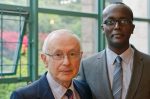
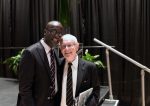
Éloge Butera, a survivor of the genocide against the Tutsis of Rwanda, and Robbie Waisman, a survivor of the Holocaust, at Vancouver Holocaust Education Centre’s gala event on May 26. (photo from VHEC)

For the Vancouver Holocaust Education Centre, the first half of 2016 has been a time of intense activity, though the pace of contemporary events has been accompanied by a very conscious reflection on both the past and the future of the organization.

The VHEC held its first gala-style event in more than a decade on May 26, a dinner and program titled “Looking Back, Moving Forward.”

“The event was very deliberately intended to recognize that the organization is at a moment of profound significance,” said Nina Krieger, VHEC executive director. “We took the opportunity to reflect on the past, show our gratitude to those who founded and led the organization, and to take pride in the achievements we have had. But the program was also quite emphatically focused on the future. The VHEC began as a small organization and we have grown dramatically in size and impact, in the depth and breadth of the programs we deliver, and it was our intention to illustrate both of these profiles to the nearly 500 people who attended.”

Co-chaired by Marie Doduck, Helen Heacock-Rivers and Shoshana Lewis, “Looking Back, Moving Forward” intended to give guests a taste of what more than 25,000 British Columbia students experience every year through VHEC programs. Annually, a symposium on the Holocaust takes place at the University of British Columbia. An additional 12 symposia take place in school districts throughout Metro Vancouver. Each of these is an opportunity for students to learn about the Holocaust from an historical perspective, view a film on the subject and then meet and hear the testimony of a survivor.

“The symposia are undoubtedly the most impactful thing we do,” Krieger said.

“We have thousands of letters from students telling us about the life-changing impact meeting a survivor has had on them,” she explained. “We have classes brought to our symposia by teachers who chose their profession because of the impact of a symposium they attended years earlier.”

In a moving moment at the gala event, Caden Dorey, a Grade 11 student from Surrey, read aloud a letter he had sent to survivor speaker Lillian Boraks-Nemetz after he met her at a symposium.

“I have never been so moved in my life,” he wrote. “You have changed my perspective on the Holocaust, and life itself.… I will never forget you, and thank you for letting me share this moment with you. I’m forever impacted by this day.”

The centrepoint of the evening was a joint presentation by Robbie Waisman, a survivor of the Holocaust, and Éloge Butera, a survivor of the genocide against the Tutsis of Rwanda. Both spoke of the importance of sharing their survival stories and the influence it has had on students and others.

Waisman explained that it is difficult to help young people comprehend the idea that 1.5 million Jewish children were murdered in the Holocaust, so he tells the story of his nephew, Nathan. Waisman was only 8 years old when his older brother Haim and his wife Golda had Nathan. Waisman spoke of his pride on being an uncle, but the Holocaust destroyed their family.

“Nathan was not yet 3 years old the last time I saw him,” Waisman said. “His mother Golda could have easily gone to work in the ammunition factory after the Nazis established the ghetto, but she would have had to give up her little Nathan. She refused to be separated from her little boy and so was sent to the Treblinka gas chambers with him.”

Butera credited Waisman for inspiring him to speak up about his experiences and devote himself to confronting racism and the potential for genocide.

The evening, which was emceed by Dr. Art Hister, also represented the increasing engagement of younger members of the community in VHEC’s work. Children and grandchildren of survivors, as well as others of their generations, were involved in the planning committee and Katia Hessel, a granddaughter of four survivors, spoke about the obligation she feels for carrying on the memory of her family’s history.

While not lining up exactly with the calendar, the VHEC gala event marked three significant milestones. It is more than 40 years since the first symposium on the Holocaust for high school students took place. It is about 30 years since the society that created the centre was founded. And it is more than 20 years since the centre first opened its doors as a teaching and research museum. Honorary chairs of the event were the four past-presidents of the organization: Robert Krell, Waisman, Rita Akselrod and Jody Dales.

Passing the torch of Holocaust memory from one generation to the next has been central to the Holocaust centre’s work recently.

“The greatest single challenge we face is continuing to maintain the relevance of our mission and mandate in a post-eyewitness survivor era and I think we are well-positioned to do that,” said Ed Lewin, who retired after six years as president of the VHEC board at the annual general meeting a week after the gala.

The centre is undertaking a major project of digitizing the archival collections, which will make them accessible worldwide. The process of digitization will also allow the centre to integrate historical materials seamlessly into pedagogical materials for use by teachers locally and wherever educators are seeking supplementary classroom resources.

“We are finding a way to keep the students, who are our audience, enthused and energetic and interested in hearing about stories without actual eyewitness survivors to tell it to them,” Lewin said.

For visitors to the centre, planned upgrades will make artifacts and some of the archival materials more accessible, including through interactive electronic kiosks and visible display units.

Lewin was honored at the AGM with a life fellowship in the VHEC, as was Jack Micner.

Phil Levinson, who succeeded Lewin as president, said he intends to continue to ensure that the VHEC’s mission is met as the number of eyewitnesses to the Shoah declines.

“We have to plan for the time when we don’t have someone standing on the stage who was there,” he said. “It’s going to be easier to deny [the Holocaust] and it’s going to be harder to have an impact live. I would see that, for me and the president after me, as the biggest challenge and the most important challenge.”

While there may be a perception that working in the field of Holocaust remembrance and education is a sad or depressing vocation, people associated with the Holocaust centre say it is quite the opposite. Levinson said watching the reaction of students, who frequently mob survivor speakers and hug them at the end of a symposium, is uplifting. Such reactions demonstrate the power of the program, Levinson said.

“You see what’s happening in that room over the few hours of the symposium, and you look at all the different types of people that are in there that leave unified,” he said. “There are 1,000 people who have a better chance of going out in society now and not being racist and not tolerating it and not turning the other way. That is super-rewarding. That is why I do it.”

Pat Johnson is a communications and development consultant for the Vancouver Holocaust Education Centre.
The stories of nine orphans

The Open Hearts, Closed Doors exhibit combines placards of mixed visual and textual material. (photo from Vancouver Holocaust Education Centre)

“One out of every 122 people alive currently is displaced. That means 60 million people,” says Phillipa Friedland, education coordinator at the Vancouver Holocaust Education Centre.
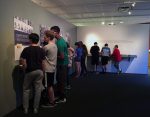
Friedland is explaining the idea behind the current exhibit at the VHEC, Open Hearts, Closed Doors: The War Orphans Project, which was originally mounted in 1997. According to the centre’s website, it is “being re-presented to provide opportunities for visitors to engage with Canadian immigration policies from a historical perspective, using case studies of Holocaust survivors from the local community.”

The exhibit – which runs to June 30 – serves as a testament and warning about the vulnerability of children in times of communal violence. It is also a memorial to the incredible resilience of so many of survivors. The words of survivor Regina Feldman are written above one of the displays: “People were saying that we were free. I didn’t know what freedom meant. Where do you go, what do you do, who will take you? I was 13 years old.”

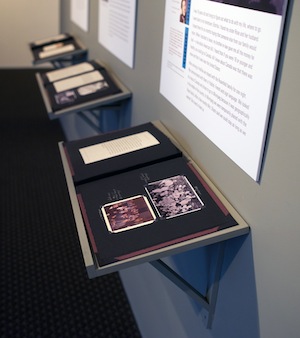
photo - Beautifully done recreations of photo albums tell the stories of the survivors featured
Beautifully done recreations of photo albums tell the stories of the survivors featured. (photo from Vancouver Holocaust Education Centre)

Open Hearts, Closed Doors reports the staggering statistic that of the 1.6 million Jewish children in Europe in 1938, only 100,000 survived. The exhibit combines general education about those who survived as orphans with a presentation of the experiences of nine war orphans – Esther Brandt, Marie Rozen Doduck, David Ehrlich, Regina Feldman, Bill Gluck, Celina Lieberman, Leo Lowy, Leslie Spiro and Robbie Waisman – who were among the 1,123 granted permission to enter Canada in 1947.

Permission for the orphans to come to Canada came through a special Order in Council, which bypassed Canada’s racist immigration policies of the time. These restrictive policies had been developed and enforced by then-director of Canada’s Immigration Branch Frederick Charles Blair. Canada had the worst record among destination countries for Jewish refugees: only 5,000 Jews were accepted as refugees between 1933 and 1939. Between 1945 and 1948, among the 65,000 refugees allowed into Canada, only 8,000 were Jews. Chaim Weizmann, Israel’s first president, remarked in 1938, “The world seemed divided into two parts: those places where the Jews could not live and those where they could not enter.”

The 1,123 orphans of 1947 were allowed into the country on the condition that Canadian Jews take full responsibility for them. Most of the orphans came through the port of Halifax at Pier 21 and boarded trains for 38 communities across the country. The majority of the orphans, more than 790 of them, settled in Montreal and Toronto; 38 settled in British Columbia, four of whom are still alive.

Most foster families were hoping for young children, preferably girls, but the majority of those who had managed to survive were older boys: 70% were adolescent boys and only 37 of the children were under 10 years of age. The orphans came from 15 different European countries, 783 from concentration camps and 229 who survived in hiding. The resettlement project was a massive undertaking practically and psychologically, for both the orphans and their new families. The success of that undertaking can be seen in the amazing lives that so many of the refugees lived.

“This entire exhibit is about resilience,” said Friedland. In the 1950s, psychiatrists who interviewed the surviving orphans offered a bleak prognosis: these were damaged people, their ability to adapt would be limited and they would likely not live long lives. Yet, as they aged, juvenile delinquency was practically nonexistent among them. Multilingual, they quickly picked up English. As the VHEC exhibit states, “Many became not only productive members of the community but its pillars.”

Open Hearts, Closed Doors combines placards of visual and textual material with beautifully done recreations of photo albums telling the stories of the nine survivors featured. A lone glass case contains a single child’s shoe taken from an innocent sent to the gas chambers.

True to its inspiration, the exhibit does not limit its focus to the past but looks to the present and future as well. A map on one wall of the exhibit shows regions throughout the world most at risk of genocide according to the Early Warning Project. These include Myanmar, Nigeria, Sudan and others.

Open Hearts, Closed Doors perfectly fulfils the mandate of a Holocaust exhibit: it remembers the horrors and heroism of the Shoah while pointing us towards the need to protect the vulnerable everywhere.

Matthew Gindin is a Vancouver freelance writer and journalist. He blogs on spirituality and social justice at seeking her voice (hashkata.com) and has been published in the Forward, Tikkun, Elephant Journal and elsewhere.

VHEC marks anniversaries

Robbie Waisman, left, and Éloge Butera will be the keynote speakers on May 26. (photo from Vancouver Holocaust Education Centre)

At a first-in-a-decade gala dinner this month, the Vancouver Holocaust Education Centre will mark three significant anniversaries.

“It’s more than 40 years since the first Holocaust symposium for high school students at the University of B.C.,” said Nina Krieger, VHEC’s executive director. “It is more than 30 years since survivors of the Holocaust formed the Vancouver Holocaust Centre Society for Remembrance and Education with the vision of creating a permanent legacy in the form of a teaching museum. And it is now just over 20 years since the doors to the Vancouver Holocaust Education Centre opened.”

Krieger said it seemed like an appropriate time to invite the community to celebrate the achievements of the past, learn about the diverse programs in which the centre is currently engaged and also the ambitious plans for the future. The event, titled Looking Back … Moving Forward, takes place May 26, 5:30 p.m., at Congregation Beth Israel.

“As an organization, we are at a turning point,” she said. “What started as a small Holocaust museum on the edge of the continent has grown into an institution that is renowned in its field for innovative, impactful pedagogy, exhibits, programs and collections.”

Thanks to a grant from Citizenship and Immigration Canada and a legacy gift from the estate of Edwina and Paul Heller, she said, the centre is digitizing its artifacts and archival collections, including one of the earliest extensive collections of audiovisual survivor testimonies.

“When Dr. Rob Krell began interviewing survivors on videotape in the 1970s, he was among the first to do so in North America,” Krieger said. “The collection now includes more than 200 testimonies, which have been shared with other archives, including Yale University’s Fortunoff Video Archive for Holocaust Testimonies, and are currently catalogued into a new VHEC system that will support access to these first-person accounts of the Holocaust.

“With these digitization projects, we are going to be able to reach exponentially more scholars, students and members of the general public in Vancouver, in Canada and around the world,” she continued. “The impact we can have on Holocaust studies will be enormously increased. More importantly, thousands more people will be able to access our impressive collections. Furthermore, thanks to a related project in which we are developing complementary pedagogical materials, educators worldwide will be able to access multimedia teaching resources at age-appropriate levels to share this history in impactful ways.”

Krieger said Looking Back … Moving Forward will introduce attendees to the power of firsthand eyewitness testimony. The keynote speakers will be Robbie Waisman, a survivor of the Holocaust, and Éloge Butera, a survivor of the Rwandan genocide. Their stories of survival are examples of the kinds of VHEC programs that reach more than 25,000 B.C. students annually.

The event is also intended as an opportunity for attendees to learn about the breadth of VHEC programming.

“People are often surprised at the diversity of the programs and services we deliver,” Krieger said.

Earlier this month, the 41st annual Symposium on the Holocaust at UBC brought about 1,000 students from across Metro Vancouver to the university for two days of meetings with Holocaust survivors and historians. In addition to this annual event, VHEC now delivers similar “satellite” programs in 10 school districts and sends outreach speakers to schools all year round. Teachers’ conferences, learning resources and hands-on Discovery Kits help teachers educate about the Holocaust at age-appropriate levels. School groups and the general public visit VHEC to experience locally and internationally developed exhibits. Survivors access services including financial, medical and social supports. Scholars and other researchers use Western Canada’s largest collections of Holocaust-related materials. Four annual commemorative events – International Holocaust Remembrance Day, Yom Hashoah, the High Holidays cemetery service and the Kristallnacht Commemorative Lecture – provide opportunities for both mourning and learning.

“We hope that attendees of Looking Back … Moving Forward will come away with a deeper appreciation of the work we are doing,” Krieger said. “And with our deep appreciation that everything we accomplish is due to the support of people who understand the value of what we are doing.”

The event is co-chaired by Mariette Doduck, Shoshana Lewis and Helen Heacock Rivers. Honorary chairs are the four past presidents of the organization: Waisman, Krell, Rita Akselrod and Jody Dales. For tickets, visit vhec.org.

Pat Johnson is communications and development consultant at Vancouver Holocaust Education Centre, as well as a member of the Independent’s editorial board.