Skip to content
  • Home
  • Subscribe / donate
  • Events calendar
  • News
    • Local
    • National
    • Israel
    • World
    • עניין בחדשות
      A roundup of news in Canada and further afield, in Hebrew.
  • Opinion
    • From the JI
    • Op-Ed
  • Arts & Culture
    • Performing Arts
    • Music
    • Books
    • Visual Arts
    • TV & Film
  • Life
    • Celebrating the Holidays
    • Travel
    • The Daily Snooze
      Cartoons by Jacob Samuel
    • Mystery Photo
      Help the JI and JMABC fill in the gaps in our archives.
  • Community Links
    • Organizations, Etc.
    • Other News Sources & Blogs
    • Business Directory
  • FAQ
  • JI Chai Celebration
  • JI@88! video

Recent Posts

  • המלחמות של נתניהו וטראמפ
  • Zionism wins big in Vegas
  • Different but connected
  • Survival not passive
  • Musical celebration of Israel
  • Shoppe celebrates 25 years
  • Human “book” event
  • Reclaiming Jewish stories
  • Bema presents Perseverance
  • CSS honours Bellas z”l
  • Sheba Promise here May 7
  • Reflections from Be’eri
  • New law a desecration
  • Resilient joy in tough times
  • Rescue dog brings joy
  • Art chosen for new museum
  • Reminder of hope, resilience
  • The national food of Israel?
  • Story of Israel’s north
  • Sheltering in train stations
  • Teach critical thinking
  • Learning to bridge divides
  • Supporting Iranian community
  • Art dismantles systems
  • Beth Tikvah celebrates 50th
  • What is Jewish music?
  • Celebrate joy of music
  • Women share experiences 
  • Raising funds for Survivors
  • Call for digital literacy
  • The hidden hand of hate
  • Tarot as spiritual ritual
  • Students create fancy meal
  • Encouraging young voices
  • Rose’s Angels delivers
  • Living life to its fullest

Archives

Follow @JewishIndie
image - The CJN - Visit Us Banner - 300x600 - 101625

Tag: VHEC

Tragedies, hope in numbers

International Holocaust Remembrance Day was commemorated here on Jan. 25 with a ceremony at the Jewish Community Centre of Greater Vancouver. Holocaust survivors lit candles of remembrance and there was a moment of silence followed by Kaddish; Nina Krieger, Vancouver Holocaust Education Centre executive director, read a proclamation from Mayor Gregor Robertson; and a screening of the film Numbered followed, in which survivors of Auschwitz, their children and grandchildren reflect in often unexpected ways on the meaning of the numbers the Nazis tattooed onto their victims.

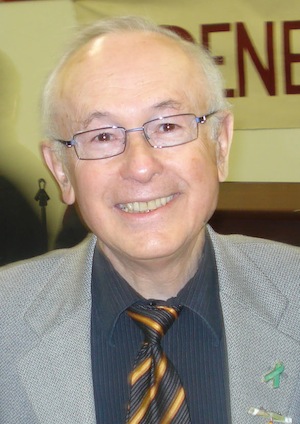
photo - Robbie Waisman
Robbie Waisman (photo from Vancouver Holocaust Education Centre)

Vancouverite Robbie Waisman, who is a child survivor of Buchenwald, delivered remarks before the film. With permission, the Independent is privileged to publish a slightly edited transcript of his words: 

I am honored to be with you this evening. This film speaks about numbers. I have not seen the film, but I have experience with numbers.

Numbers that have been given to us in the camps have two very significant meanings. They were very dehumanizing. They robbed you of your feelings as a person. Your humanity as a human being was taken away. And as long as you remained healthy and were able to work, in that sense the number given to you made it possible to remain alive and continue to live and hope to survive.

When I lived in France after liberation, they gave us identification cards. It allowed me to get around every day. The police issued it to me on June 9, 1947. I had to have it renewed every year. This was important to me. This was my first ID card, so it is hard to explain how I cherished this card. It meant that I was no longer just a number. It meant that I was a person, that I was a person of value. It proved I had a name and an address. I was so proud to have it. It gave us back some of the dignity we had lost. It gave us back our humanity.

Every time a ghetto was being liquidated, there was a selection of men and women who the Nazis selected to work. Those would be spared and taken to the munitions factories to replace other workers who they perceived as not being strong enough to continue working.

I myself have gone through three of those selections successfully with my father alongside with me.

All of us Jews who were no longer capable of working were eliminated in the most horrific way. I am not going into details – the pain always resonates.

The Nazis decided who qualified to live and work, and others were sent to the gas chambers. Six million of our people, of which 1.5 million were children, were brutally murdered. I represent the seven percent that managed to survive.

The Nazis and their collaborators murdered my mother, father and four older brothers … my uncles, aunts, cousins and friends who had been my schoolmates, and on and on.

Getting back to numbers…. When I read that many second- and third-generation survivors are [tattooing] their fathers’ and grandfathers’ numbers on their own arms and chests, I was upset.

Upon further research and reflection, I came around and now admire all those that have done this noble task. It is strange and amazing how, after all the years, those numbers have taken on a new meaning and brought change to what we think about those horrific years.

The book God, Faith and Identity from the Ashes is a reflection of children and grandchildren of Holocaust survivors. Rabbi Dr. Bernhard Rosenberg, from Beth El New Jersey, who is the son of survivors Jacob and Rachel Rosenberg, wrote: “Growing up, I constantly looked at the numbers on my father’s left arm, which he received in Auschwitz. Those numbers instilled in me the urge to fight for the state of Israel and against antisemitism wherever it may occur. I became a rabbi because of those numbers.”

Here is my own experience with numbers. Imagine being a 14-year-old boy. Imagine having been in hell and back over four years of this boy’s life working in Germany’s ammunition factories, being hungry, starved, emotionally exhausted, physically weakened, deprived of every human emotion. Imagine being so brutalized and dehumanized that you begin to believe that you are no longer human. In spite of it all, I never lost hope of being reunited with my family.

Hope! – a very powerful motivation.

The emergence of the enormity of the Holocaust became known to us and we had to find a way to deal and cope with the huge loss of all our loved ones murdered by the Nazis. How are we going to live with all those horrors?

April 11 will be the 70th anniversary of the liberation of Buchenwald.

Would you believe, Gloria [Waisman’s wife] and I are invited by the German government to come to Weimar for this special occasion, where I am also invited to speak to German teenagers. I will share my experience in that infamous and dreadful place where death was a constant companion.

I celebrate April 11 as my birthday, for that day I was reborn again into freedom.

When the Americans liberated Buchenwald, we were euphoric! I will never forget the feeling! The soldiers were larger than life. They symbolized freedom, a new beginning! I tried to communicate with them, but had no words.

For the first time, I saw black men among the soldiers. Since I had been tormented by white persons and had never seen a black person, I thought that angels must be black!

The soldiers looked around and were surprised to find youngsters like myself. They wanted to know, Who are these kids? Where do they come from? What are their nationalities? Why are they here? What are they guilty of? What was the crime they committed?

Ultimately – a few days later – some men arrived to sort out the puzzle. They proceeded to make a list of our names and when my turn came and I was asked my name, I blurted out #117098, the number given to me. My name as a human was erased. I was surprised that they wanted my name not my number. So, you see here, again, the numbers are part of our stories.

When I think back, it was an extraordinary time, full of promise and hope. But it was also bittersweet. Those of us determined to survive had to focus all our efforts towards survival. We wanted to go home and be reunited with family. We soon realized that home was no more and that families we loved had been brutally murdered.

But after emerging from the abyss, thoughts and feelings returned.

Questions bombarded me. What now? Where is my family? Has anyone survived? If not, what is the point of my own survival?

Those wonderful memories of home no longer existed. Everything shattered.

How will I recapture feelings, so that I could cry and laugh again? How do I learn to love and trust again?

It was not easy to relearn the ordinary skills of life that had been shattered over a six-year period. We had to put our numbers aside, reclaim our names and that of our families and move forward.

We were also sure that when the American soldiers … when they saw the consequences of Nazi racism and brutality … that they would ensure that such things would never happen again. We, the survivors, were certain that the leaders and the citizens of the world would say “Never again!” and commit themselves to turning those words into reality.

Never again! Noble, thought-provoking words, but only if we act upon them. Only then do these words become meaningful.

Today, almost 70 years after my liberation, the promise of “Never again” has become again and again!

There have been a number of situations that have tested the world’s resolve … in Cambodia, the former Yugoslavia, Rwanda, and now in Darfur, Syria and so many other places, people have been, and continue to be, the victims of genocide.

My eyes have seen unspeakable horrors! I am a witness to the ultimate evil! I am a witness to man’s inhumanity to other human beings! To this day, I cannot grasp how I managed to go through hell and survive.

The promise of being reunited with my family, all my loved ones, was the strong motivator for not giving up, for not losing it and falling into despair. After having come out of the abyss, I remember thinking, What now? I must go home – my family is waiting for me.

Then the questions began. Where are our loved ones? What happened to them? So much devastation! How to cope? So many losses, including our humanity. We became angry and outraged.

We were 426 youngsters among 20,000 adults in Buchenwald. We were brought to Ecouis, France, for our recovery and were told by psychologists that we had become sociopaths who would never recover.

Most of us forged ahead in school and business, raised families and contributed to our communities. In fact, we count among the Buchenwald children such personalities as my friend Elie Wiesel, Nobel Prize winner; and Lulek, Israel’s recent chief rabbi, Israel Meir Lau, and his brother Naphtali.

Simon Wiesenthal, of blessed memory, said, “I believe in God and the World to Come, and when they ask me what did you do? I will say, I did not forget you.”

I want to end with my friend Elie Wiesel’s words: “Zachor, remember, for there is, there must be, hope in remembering.”

The commemoration was presented by the Vancouver Holocaust Education Centre, in partnership with the Norman and Annette Rothstein Theatre and the Vancouver Jewish Film Festival, and with funding from the Jewish Federation of Greater Vancouver and Rita Akselrod and family, in memory of Ben Akselrod z”l.

Posted on February 6, 2015February 11, 2015Author Robbie WaismanCategories LocalTags Elie Wiesel, Holocaust, Vancouver Holocaust Education Centre, VHEC
Instilling a survival instinct

Instilling a survival instinct

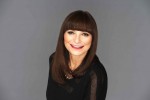
Jeanne Beker reads from her parents’ (Bronia and Joseph Beker) Holocaust memoir on Feb. 19. (photo from Jeanne Beker via vhec.org)

Some survivors of the Holocaust choose never to speak of the horrors they endured. My parents talked. They were adamant about telling us every detail of their war experience, time and time again. I remember hiding under the bed as a small child – I didn’t want to hear any more of their “war stories.” Now, I realize it was precisely their storytelling that made me who I am, coloring my personal philosophies, imparting a sense of resiliency and instilling in me a precious instinct for survival.

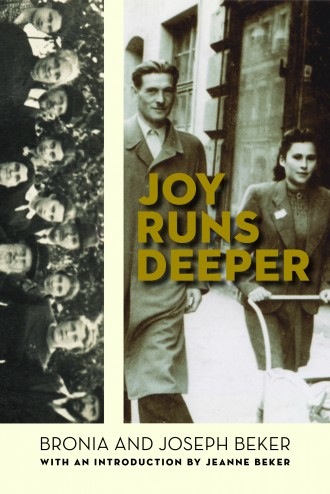
image - Joy Runs Deeper book coverWhat they endured and all they have given me [was] on my mind a great deal over Toronto’s Holocaust Education Week [Nov. 2-9, 2014], with the recent publication of their memoirs, Joy Runs Deeper. With the last generation of eyewitnesses to the Holocaust slowly slipping away, my parents’ stories have taken on more value and urgency. As a child of survivors, I’m keenly aware that I have been left with a legacy that’s as powerfully daunting as it is inspiring.

My parents, Bronia and Joseph Beker, both grew up in Kozowa – a small town in eastern Poland that is now part of Ukraine. They paint a colorful prewar picture of life in their idyllic shtetl, where they met and fell in love. But when Germany invaded Poland in 1939, their lives became a living hell. By 1941, all the Kozowa Jews were confined to a ghetto.

Nazis would regularly come into town and randomly shoot any Jew in sight.

After these horrific shootings, the Germans would command the Jews to make their ghetto even smaller. Many people lived in one room, and with little food, people grew weak and prone to disease. My grandmother and mother both came down with typhus, and it killed my grandmother. In the meantime, my grandfather built a bunker in the basement of the family home where they would hide whenever the Nazis came to town.

In April 1943, my mother and nine members of her family went down to their bunker. After about six hours, they could hear digging: the Nazis were looking for them.

“We held our breath and didn’t move for about half an hour,” writes my mother. “They left without finding our bunker, but the pipes through which we got air must have been covered during their digging. We couldn’t breathe,” she recalls.

“I remember seeing my father, sitting on the floor in his prayer shawl, praying, and my brother with a hammer in his hand, trying to open the entrance to the bunker. Then I fell down and everything went black.”

My mom’s entire family perished that day: all of them suffocated, except, miraculously, for her. Like a knight in shining armor, my dad came to her rescue, scooped her up and, for many months until their liberation, my parents were on the run, hiding in barns and bunkers, depending on the kindness of strangers for their very existence.

It was these stories of survival that were relentlessly recounted to my sister and me throughout our childhood. “Don’t be afraid and never give up” was my father’s famous saying, the mindset that saw him through the war, and the sage edict he raised us on.

My mother’s modus operandi, which tended to chip away any potential optimism, was even more pragmatic: “Expect the worst and you won’t be disappointed.” It certainly wasn’t an upbeat way of viewing the world, but it was her motherly attempt at protecting us and sparing us pain.

While my mother’s influence certainly affects me even to this day, it was my father’s motto that I especially took to heart – an order that still carries me through all my trials.

Ultimately, both my parents taught me the meaning of fearlessness and tenacity, courage and dignity.

As my mother always says, “If you live long enough, you’ll live to see everything.” And her words rang true as I sat by her side at her book launch, watching in wonder as she proudly signed countless books bearing her name. On the verge of turning 94, suffering the ravages of Parkinson’s, but as radiant and stylish as ever, my mom was realizing one of her greatest dreams: she could now share her personal story with the world.

Her memoir, which she’d written more than 30 years ago, along with my father’s memoir, which he’d written, longhand, in Yiddish, just before he died in 1988, has been published by the Azrieli Foundation’s Holocaust Survivor Memoirs Program.

Established in 1989 by the late Montreal philanthropist David J. Azrieli, himself a Holocaust survivor, this Canadian organization collects, archives and publishes inspirational accounts of courage and strength in the light of horrifying adversity, and distributes them free of charge to libraries and educational institutions across the country. (The books are also available at bookstores, with all revenues going back into this extraordinary memoirs program.)

My mother and so many others had their youth nipped in the bud, endured unspeakable pain and suffered profound loss. Yet still, they managed to soldier on, pick up the broken pieces and stoically rebuild their shattered lives.

Their tales of toughness and tenacity light our paths, and teach us the kind of fearlessness it takes to survive. These lessons learned from survivors, like my parents, inspire and challenge us to shoot for the moon, work hard, be successful and live out not just our dreams, but their unrealized ones as well.

Their heroism drives me relentlessly.

Jeanne Beker is a Canadian television personality, fashion designer, author and newspaper columnist. This article was originally published in the Globe and Mail and is reprinted here from Zachor, the magazine of the Vancouver Holocaust Education Centre, with permission.

 ***

Jeanne Beker reads from her parents’ (Bronia and Joseph Beker) Holocaust memoir Joy Runs Deeper (Azrieli Series of Holocaust Survivor Memoirs) on Feb. 19, 7 p.m., at the Museum of Vancouver, 1100 Chestnut St., to open the Vancouver Holocaust Education Centre’s Shafran Teachers’ Conference. Those in attendance receive a complimentary copy of the memoir, and a reception follows. The event is open to the public and is free of charge but space is limited. RSVP to 604-264-0499 or [email protected].

Format ImagePosted on February 6, 2015February 5, 2015Author Jeanne BekerCategories BooksTags Azrieli Series, Bronia Beker, Holocaust, Joseph Beker, Joy Runs Deeper, Vancouver Holocaust Education Centre, VHEC
Carl Lutz exhibit opens at VHEC

Carl Lutz exhibit opens at VHEC

Swiss Consul General Urs Strausak at the opening reception of the Carl Lutz and the Legendary Glass House exhibit, which features panel displays as well as various artifacts. (photo by Cynthia Ramsay)

He was the first Swiss national to be awarded the Righteous Among the Nations by Yad Vashem and he is credited with using his diplomatic privileges to save tens of thousands of Jewish lives during the Holocaust. However, an exhibit dedicated to him had eluded Vancouver – until now.

Last week, Carl Lutz and the Legendary Glass House in Budapest opened at the Vancouver Holocaust Education Centre (VHEC). A partnership between VHEC, the Swiss consulate in Vancouver and local Jewish families, the opening reception on Oct. 23 drew a full house, with a wide range of ages represented, from Holocaust survivors to young children, who attended with their parents. Several volunteer docents were on hand to walk the public through the displays and take questions.

photo - An example of the artifacts on display at the exhibit
An example of the artifacts on display at the exhibit. (photo by Cynthia Ramsay)

Panels display various topics, including Jewish life in Hungary before the Second World War, the rise of Nazism and the Glass House, where thousands of Jews found refuge, as well as personal stories from the era. The exhibit, sent by the Carl Lutz Foundation in Budapest, is enriched by a companion exhibit that includes testimony and artifacts from local Hungarian Holocaust survivors, showcasing important themes relevant to Lutz’s environment and life.

Nina Krieger, VHEC executive director, said the exhibit demonstrates the complexity of moral decision making in a turbulent time.

“Alongside narratives of moral courage and rescue, we must recognize, of course, that these were the rare exceptions,” she said.

She went on to discuss the artifacts, which bring a direct connection between the era and a visiting audience.

“On display are materials that reflect a vibrant prewar Jewish life in Hungary – a cherished prayer brook and photographs of everyday life – as well as evidence of antisemitism and persecution,” she said.

“An 18th-century silver chanukiyah buried by Dr. Joseph and Anna Lövi in the basement of a neighbor’s home on the eve of their deportation to Auschwitz survived; its owners did not. The chanukiyah was retrieved in July 1945 and given to one of their daughters, Judith Lövi Maté. Judith and her infant son Gabor had found refuge in the Glass House, representing a local family intimately connected to Carl Lutz.”

Swiss Consul General Urs Strausak, whose participation helped make the exhibit possible, emphasized the need for education about the Holocaust in his country and around the world.

“The study of the Holocaust shows the danger of being silent in face of evil, and education is a tool to make sure atrocity will never happen again,” he said in his speech at the exhibit opening. He explained the place of Holocaust education in Swiss education, saying, “The topic of [the] Holocaust is taught within the context of history teaching and civic education. Some aspects of the Holocaust are also addressed in social science, religious studies and literature.” Switzerland joined the International Holocaust Remembrance Alliance, an intergovernmental organization dedicated to promoting Holocaust education and research, in 2004.

Asked about his connection to the exhibit, Strausak, who is a personal friend of Lutz’s daughter and current curator of the Carl Lutz Foundation, said it was an important event to reach out to the Jewish community and beyond and help support further communal education. Teaching has to start early, he said, and it is important to emphasize figures such as Lutz since he was more than simply a person who saved Jews. “He was a mensch and people need to have the courage to speak out [regarding evil],” he said.

Carl Lutz and the Legendary Glass House in Budapest will be at VHEC until Feb. 15, and is open to the public by donation. More information on the exhibit and becoming involved with VHEC can be found at vhec.org.

Gil Lavie is a freelance correspondent, with articles published in the Jerusalem Post, Shalom Toronto and Tazpit News Agency. He has a master’s of global affairs from the Munk School of Global Affairs at the University of Toronto.

Format ImagePosted on October 31, 2014October 29, 2014Author Gil LavieCategories LocalTags Carl Lutz Foundation, Glass House, Nina Krieger, Swiss consul, Urs Strausak, Vancouver Holocaust Education Centre, VHEC

Posts pagination

Previous page Page 1 … Page 9 Page 10
Proudly powered by WordPress