Can we all get along?

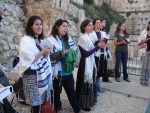
Women of the Wall was founded as a minyan of women from different movements coming together on common ground for Rosh Chodesh. (photo by Michal Patelle via Wikimedia Commons)

In April 2015 – in the aftermath of the death of 25-year-old African-American Freddie Gray inside a police van after being arrested by the Baltimore Police Department, followed by days of riots in Baltimore, Md. – African-American street gangs, the Bloods and Crips, stood side-by-side against police brutality. The Baltimore Sun, and several national papers and social media outlets, carried photographs of the members of the typically warring gangs posing together, with captions about the gangs being determined to “unite for a common good.”

Tzippi Shaked, author of Three Ladies, Three Lattes: Percolating Discussions in the Holy Land, believes that the case of the Bloods and Crips unifying together is a valuable lesson for the Jewish community, in which there are frequent divisions along religious lines. This was echoed by Israeli Prime Minister Binyamin Netanyahu in his annual Rosh Hashanah greeting last year, in which he urged Jewish unity by working “together … [to] build our Jewish state – because we’re united, proud of our past and committed to our future.”

Can Jewish people of different religious denominations truly unite and work together for a common good?

The concept of Jewish unity is one that comes up around the High Holidays due to the Torah portions read before the holidays: Nitzavim and Vayelech. In Nitzavim, we read, “Today, you are all standing before God your Lord; your leaders, your tribal chiefs … even your woodcutters and water drawers.” (Deuteronomy 29:9) Eighteenth-century Rabbi Schneur Zalman explained this in his famous work Likkutei Torah as all Jews standing equally and united before God despite their differences.

Vayelech also concludes when Moses addresses “the entire assembly of Israel” (Deuteronomy 29:1) in a unified manner. Such a colorful image is harder to picture today, when headlines and op-eds tend to stress divisiveness, and the parts over the whole.

“I come from a family with a Charedi brother. I am Modern Orthodox. I have a sister who is secular. Growing up, my father was secular and my mom religious. If we can pull it off under one roof, I believe so can society in general,” said Shaked.
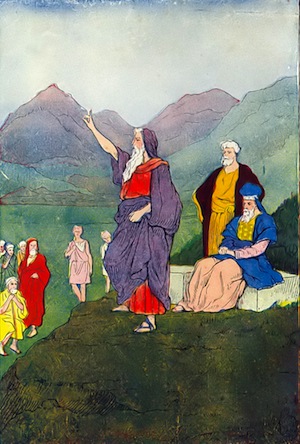
photo - Moses speaks to the Children of Israel.  An illustration from The Boys of the Bible by Hartwell James, published by Henry Altemus Company, 1905 and 1916
Moses speaks to the Children of Israel.  An illustration from The Boys of the Bible by Hartwell James, published by Henry Altemus Company, 1905 and 1916. (photo from Wikimedia Commons)

Shaked, together with one Charedi and one secular woman, spent two and a half years discussing the topics that divide and unite Jewish women, and then embarked on a mission to teach others that, while Jews might not always agree ideologically, politically or religiously, they can be united. This is the topic of her book.

Rabbi Joel Oseran, vice-president emeritus for international development at the World Union for Progressive Judaism, said that, in his experience, it is “rare to see the common good having the highest value,” especially in Israel, where “the playing field among denominations is not level at all.”

“When I am right and you are wrong, how can there be diversity?” Oseran asked. “You have to allow for more than one way to be right in order to respect diversity.”

Shaked disagreed, saying that unity and friendship have little to do with accepting others’ opinions or hoping to change them.

“It’s naive to think that anyone will change his or her mind,” she said, and it has more to do with a belief that people can become friends in spite of differences in levels of religious observance.

“It is very easy to rip apart the other. It is very difficult to look for the positive,” she said. “Irrespective of which religious background you come from, you have to ask yourself, do I look to build bridges or do I look to inflame?”

This has been Marne Rochester’s modus operandi. An active Conservative Jew, Rochester moved to Israel 26 years ago. In the Jewish state, she maintains her Conservative identity, while sending her daughter to a religious school and praying at a variety of different synagogues. She is most active in a Jerusalem Masorti (Conservative) congregation, but she also attends a Sephardi, egalitarian minyan.

“I think Conservative and Orthodox, and Conservative and Reform, have a lot in common,” said Rochester. “Both the Orthodox and Conservative movements are halachic movements. We just see the interpretation more liberally than the Orthodox.”

When it comes to daily life, she said it’s easy to get along, especially in Israel, where Conservative congregants tend to follow more of the movement’s code of conduct, as opposed to the United States, where “a lot of people who belong to Conservative shuls don’t necessarily go by what the movement says.”

Rochester has Orthodox friends willing to eat in her home and share Shabbat together with her.

But, Rochester, who takes part in monthly Women of the Wall ceremonies at the Kotel, said the biggest differentiator between the Orthodox and the Conservative is the role of women in public Judaism and the synagogue. While in Orthodox Judaism women take a back step to men in religious life, “since my bat mitzvah, I read from the Torah, lead services, put on a tallit and tefillin,” she noted. “But, I feel like in my neighborhood, we all get along. We all respect each other and don’t check each other’s tzitzit.”

Rochester added that Women of the Wall was founded as a minyan of women from different movements coming together on common ground for Rosh Chodesh. While it has become a major media focus, and a point of divisiveness between Jews in the Diaspora, in Israel, at its core, “You have Orthodox, Reform and Conservative women all together – that is such a powerful, beautiful thing.”

Oseran said he wishes he would see more leaders taking a stance in the direction of unity.

“I am not optimistic from the top down,” he said, but admitted positive steps are percolating on a grassroots level.

“There are many Orthodox Jews who understand there is more than one way to be Jewish and are prepared to bridge some of the differences in order to be stronger together,” he said, noting that Israelis could learn a lot from the Jewish Federations of North America movement, which is built on a sense of a collective Jewish community in which any Jewish people can fit and find their place.

“How do you create a building bridges mindset?” Shaked asked. “Take the time to make yourself available to talk to others. Be open to meeting people.… We all have to take the plunge.”

She also recommends celebrating the successes of others and volunteering in communities different than your own.

Harkening back to the unity established by the Bloods and Crips in the wake of the Baltimore riots in 2015, Shaked said she read a study published more than 20 years ago by the Simon Wiesenthal Centre that found that gang members cannot unify by simply learning about one another through movies, being told positive messages about one another, or even through dialogue. Rather, they need to work together on a common project. By working for a common goal, the Bloods and Crips found unity.

“I ask this Rosh Hashanah to join with all Israelis, with friends of Israel, with the Jewish people everywhere in wishing for a better future,” said Netanyahu is his previous Rosh Hashanah address.

“I believe these friendships can be struck. I have seen it and I live it,” Shaked said.

To read more from JNS.org, click here.
Challenging films at VIFF

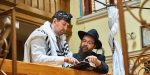
Soon after he discovered he was Jewish, Csánad Szegedi reached out to Rabbi Boruch Oberlander. Szegedi’s transformation from virulent antisemite to Orthodox Jew is the topic of the documentary Keep Quiet. (photo from Gábor Máté/AJH Films & Passion Pictures)

While this year’s Vancouver International Film Festival holds much that will be of interest to Jewish Independent readers, the list is short when it comes to specifically Israeli or Jewish-related films that will appeal.

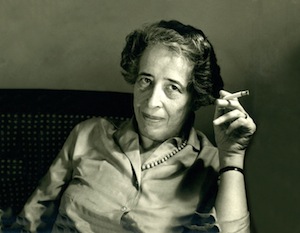
Perhaps surprisingly, the Israeli films are harsh critiques of Israel. Beyond the Mountains and Hills (Israel/Germany) is about a dysfunctional family (a metaphor for the country), Junction 48 (Israel/Germany/United States) is about an Arab-Israeli rapper who faces racism, among other Israeli-inflicted ills; Between Fences (Israel/France) is a documentary about Israel’s internment of African refugees at the Holot Detention Centre and Vita Activa: The Spirit of Hannah Arendt (Israel/Canada) is about Hannah Arendt, who, among other things, was critical of Jewish leadership during the Holocaust and did not approve of the state of Israel as it was founded.

Among the other film offerings is Keep Quiet (United Kingdom/Hungary), a documentary about Csánad Szegedi, the staunch antisemite who helped found Hungary’s far-right party Jobbik and its Hungarian Guard, which has since been banned. As a member of the European Parliament, he continued to foment hatred until a fellow nationalist and racist outed him as being Jewish – his grandmother had not been the adopted daughter of the Klein family, as she told him, but their daughter. The documentary includes interviews Szegedi did with his grandmother (about her imprisonment in Auschwitz, and other matters) and a conversation with his mother, who also found out later in life that she was Jewish. He asks both women about his increasing embrace of antisemitism over the years, why didn’t you stop me? Their responses are thought-provoking and sad.

Keep Quiet does not accept Szegedi’s transformation unquestioningly and gives speaking time to the doubters, as well as the cautious believers, such as Rabbi Boruch Oberlander, head of the Orthodox Rabbinical Council in Budapest. Oberlander has supported and taught Szegedi since the former antisemite contacted the rabbi for help. The event that ends the film is Szegedi’s attempt in 2013 to speak in Montreal about his Jewish journey – he wasn’t allowed to stay in the country. Before being put on the next plane home, however, Szegedi recorded a lecture, which was played at the event, with Oberlander fielding the hostility it wrought in some attendees. In Oberlander’s view, we must love every Jew, no matter how wicked. Of his choice to help Szegedi, he says, “I pray that I shouldn’t be disappointed.” Even Szegedi is unsure as to whether he would ever turn his back on Judaism – maybe, he admits, but not likely.

The way in which the filmmakers present Szegedi’s story is informative and balanced, and viewers get a sense of the man and his deeds, as well as about Hungary and how a political party as racist as Jobbik can find success there.

photo - Hannah Arendt
Hannah Arendt (photo from the Hannah Arendt private archive via Zeitgeist Films)

Vita Activa also does a good job of including both fans and critics of Arendt’s work, but mainly uses Arendt’s own words to explain her thoughts and analyses. The film uses as its foundation the Adolph Eichmann trial, about which Arendt wrote Eichmann in Jerusalem: A Report on the Banality of Evil (1963), describing Eichmann as “a typical functionary,” and thus an example of the “banality of evil.” (Viewers should be warned that there are many disturbing Holocaust-related images in this film.)

“Eichmann was quite intelligent but he had that dumbness,” she tells an interviewer in one of the clips included in the documentary. “It was that dumbness that was so infuriating, and that was what I meant by ‘banality.’ It has no depth; it isn’t demonic. It’s simply the unwillingness to ever imagine what others are going through.”

Another of Arendt’s theories – about refugees – remains relevant. With no rights, refugees are considered “superfluous” by a regime, she argued, and denationalization and xenophobia become a powerful weapon of totalitarian politics.

In Keep Quiet, a political journalist describes Hungary as a “part of the world where history has been manipulated” and the effects that such manipulation has upon generations. Arendt broadens that view beyond Europe, saying, “It has been characteristic of our history of consciousness that its worst crimes have been committed in the name of some kind of necessity or in the name of a mythological future.”

In addition to her early work, Vita Activa touches upon Arendt’s personal life, which offers some further understanding of the philosopher, who was seen by many to lack empathy. In one interview, she talks about how Auschwitz shouldn’t have happened, how she could handle everything else but that. Yet, she criticized the Jewish leadership who cooperated with the Nazis – the councils and kapos – and hypothesized that, if there had been no such leadership, there would have been chaos and suffering and deaths but not six million. One professor interviewed for the documentary calls Arendt’s comments “irresponsible,” another says they showed her complete ignorance of history, yet another says she regretted her remarks later in life.

The film also notes Arendt’s change from supporting Zionism to condemning elements within it. Among other things, she said, “A home that my neighbor does not recognize is not a home. A Jewish national home that is not recognized by and not respected by its neighboring people is not a home, but an illusion, until it becomes a battlefield.” And she pointed to tendencies within Zionism that she considered “plain racist chauvinism” that do “not differ from other master race theories.”

The documentary also covers Arendt’s 1951 Book of Thoughts, in which she contemplates the nature of forgiveness, revenge, reconciliation. For her, the latter doesn’t forgive or accept, but judges. When you take on the burden of what someone else did, she believed, you don’t accept the blame or absolve the other of the blame, but take upon yourself the injustice that occurred in reality. “It’s a decision,” she said, “to be a partner in the accountability, not at all a partner to the guilt.”

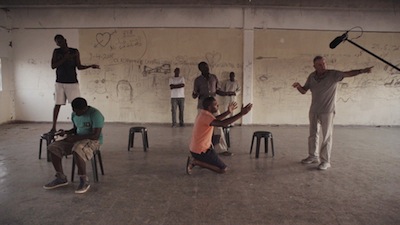
photo - A “theatre of the oppressed” workshop at the Holot Detention Centre in Israel
A “theatre of the oppressed” workshop at the Holot Detention Centre in Israel. (photo from Vancouver International Film Festival)

Reconciliation and forgiveness don’t enter the picture in either the documentary Between Fences or the fictional (but based on a real person) Junction 48. They each highlight important, even vital, issues in Israeli society, but do so in such a condemnatory, predictable way that anyone but the choir won’t be able to sit through these films.

Without much context, Between Fences looks at the poor situation in which asylum seekers from Eritrea and Sudan find themselves when they reach the safety of Israel. In many countries, these asylum seekers face problems, but viewers wouldn’t know that from this documentary, nor would they begin to understand the atrocities being committed in their homelands. However, they will learn how Israel doesn’t recognize their refugee status and makes every effort to send them back, how racist Israelis are towards these newcomers and a host of other problems with Israel and its people. Not one government official or Israeli is interviewed, although some Israelis participate in the “theatre of the oppressed” workshops in Holot on which the film focuses. In addition to leaving many questions unanswered, the film also begins and ends confusingly and is slow-paced.

Bias also makes Junction 48 almost unwatchable for anyone who would like to see the Israeli-Palestinian conflict resolved, so that both peoples’ rights and safety are ensured. From the second sentence of the opening, the perspective is made clear: “The Israeli city of Lod is the Palestinian city of Lyd, which once sat on the main railway junction. In 1948, tens of thousands of Palestinians were exiled from Lyd in order to resettle the town with Jews….”

photo - Samar Qupty and Tamer Nafar in Junction 48
Samar Qupty and Tamer Nafar in Junction 48. (photo from VIFF)

We then meet Kareem, an aspiring young rapper, whose parents are worried about his involvement with drug dealers and his future in general. His friends not only deal and take drugs, but visit prostitutes and dabble in other criminal activity. Nonetheless, every Israeli they encounter is the real bad guy, from the police to other rappers to the government, which is knocking down one of their homes to build a coexistence museum. Oh, the irony.

The only entertaining and thought-provoking aspect of this film is the music by lead actor and film co-writer Tamer Nafar, which is available online.

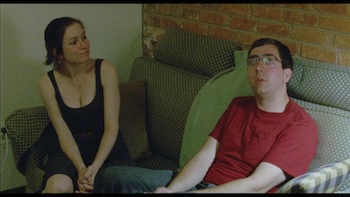
In the end, the Jewish Independent chose to sponsor what a VIFF programmer called a “classic Jewish comedy,” though, having seen a screener of the film, the Jewish aspect is hard to discern. While much lighter (and non-political) fare than the other offerings, it has much to say – or show, really, as the dialogue is minimal – about social awkwardness and a lack of direction in life. The protagonist, Mike, works at a pizza place in New Jersey and has the energy level of a slug and the magnetism of zinc. Yet, somehow, he has friends, albeit not great ones.

Short Stay is one of those films that moves apace with its main character, so slowly and in all different directions, as Mike both physically wanders the streets and mentally wanders to destinations unknown. Viewers don’t gain insight into what motivates Mike, who seems unperturbed by his lack of career, social skills, direction and future, but they root for him, empathize with what must be his loneliness.

photo - The social awkwardness of the protagonist of Short Stay, Mike, is obvious in his exchanges with others
The social awkwardness of the protagonist of Short Stay, Mike, is obvious in his exchanges with others. (photo from VIFF)

Short Stay director Ted Fendt best describes the acting of the nonprofessional cast, many (all?) of whom are his friends. “The film contains a range of performance styles from the fairly natural (Marta and Meg), to Mark and Dan’s B movie ‘villains,’ who might have stepped out of an Ulmer or Moullet film, to the quasi-Bressonian, unaffected manner Mike delivers his lines.” And therein is a Jewish link, Edgar G. Ulmer.

Another Jewish filmmaker – Vancouver’s Ben Ratner – will be premièring his short film, Ganjy, at this year’s festival. About a former boxer suffering from dementia pugilistica, who is in desperate need of help when three friends visit, Ganjy was inspired in part by Muhammad Ali. Its creators are looking to fundraise enough to take the film to other festivals, as well as contribute to the Muhammad Ali Parkinson Centre. For more information, visit indiegogo.com/projects/ganjy-film#.

For more information about and the full schedule of films playing at VIFF, visit viff.org.

Note: This article has been edited so that it is clear Hannah Arendt was speaking of tendencies within Zionism that she considered “plain racist chauvinism” that do “not differ from other master race theories,” and not condemning Zionism as a whole.

Jewish education fund

A longtime advocate for Jewish education, Leon Glassman has established the Leon Glassman Fund for Jewish Continuity through Education with a $1 million endowment at the Jewish Community Foundation. (photo by Don MacGregor)

Learning of new challenges in accessibility to Jewish education in Greater Vancouver, Leon Glassman did exactly what he has always done: he stepped up.

A longtime advocate for Jewish education, Glassman established the Leon Glassman Fund for Jewish Continuity through Education with a $1 million endowment at the Jewish Community Foundation. This endowment fund will support tuition assistance at Jewish day schools and ensure that every family that wants to send their children to a Jewish day school on the Lower Mainland can do so, regardless of their financial means.

As a young father, Glassman made the decision to move his family from Regina to Vancouver because, at the time, the Saskatchewan capital did not have a Jewish school. Looking back, he recalled that, as a child, he had a very limited Jewish education, “so it was always important to me that my children would know their background and have a Jewish identity.”

Glassman’s son-in-law, Jonathan Berkowitz, said that his father-in-law also embraces “the principle that all Jewish children should have access to a Jewish education.”

Over the decades, Glassman has invested untold amounts of time, energy and resources in improving the quality of, and access to, Jewish education. But, he recently discovered that local day schools have been facing the daunting dual challenges of the impact on families of the Lower Mainland’s high cost of living and the schools’ accompanying difficulty in keeping pace with subsidy requests. Families continue to grapple with Metro Vancouver’s housing costs: being reasonably close to a Jewish day school, for many young families, means they spend so much on housing, they cannot afford tuition. The schools, in turn, have faced significant challenges meeting the demand for increased subsidies.

In response, Glassman established the education fund. It will be a legacy that reflects his passion, generosity, lifetime commitment to community and, most importantly, to the continuity of Jewish life and Jewish identity through education.

When asked why Jewish education is important, Glassman said, “Antisemitism is, sadly, once again on the rise, in part through anti-Israel sentiment. Israel is a big part of who we are. Most criticism of her is unfounded and the younger generation must be able to counter the falsehoods. That’s the negative side. On the positive side, the younger generation should know their background, take pride in where they came from and, above all, take pride in who they are.”

While Glassman’s million-dollar gift has started his namesake fund, it is his hope that the community will increase the capital of the fund by making contributions to mark the significant life events of friends and family. In that way, the entire community will both participate in and benefit from the growth of this fund.

For more information or to make a donation to the Glassman fund, visit jewishcommunityfoundation.com.

Son honors father’s legacy

For the Love of Spock explores Spock actor Leonard Nimoy’s legacy and his relationship with his son, Adam. (photo from For the Love of Spock via space.com)

When Leonard Nimoy announced in 1949 that he wanted to be an actor, and was leaving Boston for Hollywood, his Russian-Jewish parents were stunned.

“My grandfather said that he should take up the accordion,” said Adam Nimoy, Leonard’s son and the director of the new documentary For the Love of Spock. “You could always make money with the accordion. Those were Max Nimoy’s words of wisdom to my dad, if the actor thing didn’t work out.”

He needn’t have worried. Not because Leonard Nimoy eventually made it after 15 years of bit parts in movies and TV shows, thanks to Star Trek. Or because his talent and curiosity propelled him into singing, photography, poetry and film directing. Nimoy had a deeply ingrained work ethic, independent of the arts, that perpetually drove him. From folding chairs at the Boston Pops and selling vacuum cleaners in his hometown to installing aquariums in Los Angeles, Nimoy was determined to support himself and his family. But his ambitions assuredly lay elsewhere.

“He had a tremendous hunger to achieve, which was the dream of his parents coming over here, to achieve something in American society,” explained his son. “This is why he was so able to relate to Spock. My dad felt like an outsider, of a minority, of an immigrant background in a very defined neighborhood of Boston with other immigrants, and with a desire to assimilate himself into the greater culture.”

Nimoy, who died last year at the age of 83, is front and centre in For the Love of Spock.

The public often conflates an actor with a role. The documentary is wilfully guilty of that, too, delving into Nimoy’s personal life only so far as it relates to Spock or to Adam’s relationship with his dad. But it does include the story of how Nimoy took a childhood memory of seeing elders in synagogue making the “shin” gesture and adopted it as a Vulcan greeting.

“He was very connected to his Jewish roots and very proud of his Jewish roots,” Adam Nimoy said during a recent interview. “He repeated the story of the Spock salute hundreds of times, literally, with great pride about where he got it – that Spock is an embodiment of some of Judaism.”

He added, “It’s become a universal symbol. My dad, through Spock, has spread this tradition of Judaism to the world. The magnitude of that fact alone, that so many people all over the planet salute my father with a ‘shin,’ is just mind-boggling to me.”

Of course, not everything Leonard Nimoy did endeared him to his son. Driven to make the most of what might be a short-lived gig on Star Trek – NBC canceled the show after three seasons, in fact, although it found greater success in syndication – Nimoy accepted every personal appearance he was offered.

“It took a toll on us, we had challenges we had to deal with, without him around, without his involvement in the family,” said his son. “His career was number one. This is what caused a lot of friction between the two of us because I just didn’t feel like I had that much of his attention early on. He had a great love and respect for the fans, but trying to get him to look at me was very challenging for me.”

Alas, that experience continued beyond Adam’s adolescence. He was at University of California Berkeley in the late 1970s, on his own path to getting a law degree, when his father made a stop at Wheeler Hall on a college speaking tour.

“I waited for him to finish,” Adam recalled with a painful clarity. “I thought we were going to go to dinner together. He came up the aisle, signed some autographs and came up to me and said, ‘I have to catch a plane. I got another commitment I got to make tomorrow in Los Angeles, and I’m leaving.’

“I was devastated. ‘What am I, borsht?’ It wasn’t until later in his life that it was less about Leonard and his career and more about ‘what’s going on with my kids and my grandchildren.’”

Adam and Leonard were estranged for a stretch, exacerbated by the actor’s drinking and his son’s drug use. When asked if it was difficult to forgive his father, though, he doesn’t hesitate: “No, because I’m in 12-Step, and that’s a huge part of what 12-Step’s all about.”

Resentments and setbacks play only a passing role in For the Love of Spock, which is an unabashed tribute to Leonard Nimoy’s contributions as an actor and a man to a character who was and is widely embraced for embodying intelligence, science, fairness and integrity. (And for being different, of course, and living on the margins of mainstream society.)

The film omits the elder Nimoy’s record as a major benefactor of Jewish causes: the Israel Philharmonic Orchestra, a childhood centre at Temple Israel of Hollywood and the career counseling centre at Beit T’Shuvah, a Jewish recovery house.

It also leaves out the degree to which the actor passed down his pride and love of being Jewish.

“I would say that I am more religious than my father was,” said Adam. “I like to study Torah, I like to go to services on a regular basis on Friday night. Particularly the weekly Torah study has been very meaningful to me over the past couple of years. It’s just mind-boggling to me about the divine inspiration of the written word and how it always applies to something going on in my life. This is what enriches my life, and brings new meaning to my life.”

For the Love of Spock has two remaining screenings at Park Theatre in Vancouver: Sept. 18, 9:45 pm., and Sept. 20, 6:45 p.m.

Michael Fox is a writer and film critic living in San Francisco.


Renewal in education

The Peretz Centre is moving towards a renewed commitment to social justice, Yiddishkeit, the arts and building community. (photo from peretz-centre.org)

If you walk into Vancouver’s Peretz Centre for Secular Jewish Culture on a Sunday afternoon between September and June, you are likely to find a group of families singing Yiddish songs such as “Shabbes Zol Zayn” and “Az der Rebbe Tanz,” making latkes or doing arts and crafts, while learning new and unique approaches to being Jewish. Some of the children are “officially,” i.e. halachically, fully Jewish by birth, with a Jewish mom and dad, but many are “half-Jewish” (with the Jewish parent being either mom or dad) or “double half-Jewish,” with parents who themselves were raised in half-Jewish families.

This is the Peretz Family Education program, where adults and kids learn together. Bubbies and zaydies often come to visit, and there is song, story and food that is shared in a community of families eager for a connection to their roots (or half-roots, as the case may be) that is not dogmatic or religious. This program, now entering its third year, is a remarkable success, attracting inter-cultural as well as LGBT families and others who feel at home at Peretz.

“We had families coming to us for years, asking us to create a place for their children to feel connected to Jewish culture, as well as progressive humanistic values, that was not focused on religion,” said Donna Becker, Peretz coordinator.

Vancouver Jews may know of the Peretz Centre from its 70-year legacy as the home for Yiddish-speaking, secular Jewish education. Loosely affiliated with sister organizations in Winnipeg, Toronto and Montreal, Peretz was founded by non-religious Jews who loved the Yiddish language, culture and traditions. These founding members were more focused on humanism, social justice and activism than on ritual, prayers and liturgy.

For decades, the Peretz community boasted a school with hundreds of students learning Jewish cultural identity and progressive values. The hub of Yiddish culture in Vancouver, it hosted (and still does) the Vancouver Jewish Folk Choir, theatre groups, classes and study groups, and artistic events celebrating Judaism from a cultural perspective. However, as the only organization in the Vancouver Jewish community that spearheaded a secular humanist and progressive perspective on the Jewish experience, it was for a long time somewhat on the margins of the community.

Then came a period of contraction. With many of the founders gone, and with Yiddish increasingly becoming a boutique, intellectual study rather than a living language and tradition, Peretzniks were not able to sustain the school-age programs. Apart from a thriving secular b’nai mitzvah program, the focus has been on strengthening the Peretz community through adult discussion groups, seniors programming, lectures, concerts, the choir, plus alternative non-religious celebrations and observances to mark Rosh Hashanah/Yom Kippur, Chanukah, Passover and other important Jewish holidays.

But, once again, the Peretz Centre is going through changes. Increasingly, young families in Vancouver and the surrounding area have been seeking a place where they can raise their children with a secular Jewish identity resonant with modern concerns of environmentalism and reconciliation and healing from the trauma so prevalent in many Jewish communities.

The new family education program is the brainchild of Dr. Danny Bakan, a PhD in education with more than 20 years experience facilitating Jewish Renewal and secular Jewish education.

“When we started, I insisted that this be a family education program; everyone is here to learn together,” said Bakan. “We focus on creating a joyous way to be connected, staying away from the common narrative of being victimized as Jews.”

In the last two years, Bakan has been helping Peretz reboot. And, it seems to be working.

“There is nothing like it, to my mind, in the city: secular, progressive and filled with an incredible range of activities that appeal to all of us, ranging in age, I suspect, from 5 to 75!” said family education parent Greg Buium.

Now, with new young families flocking to join via the program, the Peretz Centre is moving towards a renewed commitment to social justice, Yiddishkeit, the arts and building community. New offerings for the fall 2016 session will include secular Hebrew for children and adults, a b’nai mitzvah boot camp for teens and adults, art exhibits and a youth open stage and coffeehouse.

For more information about Peretz Centre programs, events and activities, visit peretz-centre.org or contact Becker at coordinator@peretz-centre.org or 604-325-1812.

New Jewish centre opens

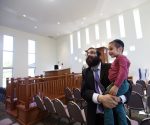
Rabbi Meir Kaplan and his 3-year-old son Sholom Ber Kaplan check out the new Chabad Centre for Jewish Life and Learning on Glasgow Street, near Topaz Park, in Victoria on Aug. 24. (photo from Darren Stone, Times Colonist)

A new centre for Jewish worship, study and community engagement opened in Victoria Aug. 24, as the ribbons were cut on the Chabad Centre for Jewish Life and Learning.

The 10,000-square-foot building, at 2955 Glasgow St., across from Topaz Park, includes a synagogue, Hebrew school, library, kosher kitchen and daycare. The $3 million facility was designed by Victoria architect Bradley Shuya.

It’s the first new synagogue to open on Vancouver Island in more than 150 years. Congregation Emanu-El, at 1461 Blanshard St., opened its doors in Victoria in 1863, and is recognized as the oldest synagogue in continuous use in Canada.

The Chabad Centre follows a different tradition of worship than the modern community engagement of Congregation Emanu-El. According to the Chabad of Vancouver Island website, its style of worship arose about 250 years ago in Russia and is part of the Chassidic tradition.

Rabbi Meir Kaplan, director of Chabad of Vancouver Island and of the new centre, said it should not be understood as an organization for strict Orthodox Jews.

Kaplan noted that, while he wears a beard and some visible elements of traditional Jewish garb, attendees at the Chabad Centre are just as likely to dress according to their own tastes.

“All are welcome,” he said. “And that is who our community is made of – it’s not only for Chassidic Jews.”

The group behind the Chabad Centre is Chabad of Vancouver Island, which had its roots in the Kaplan household. About 10 years ago, activities were moved into the Quadra Elementary School annex, where the Jewish Education Centre was established.

The Chabad tradition has functioned on an “outreach” model for about 60 years, looking to connect with those who wish to learn about Jewish life and teachings, Kaplan said.

That makes it difficult for him to identify the number or size of the congregation – it doesn’t function as a distinct group but more as an agency forever looking outward.

Kaplan, who was born in Israel, was sent to Victoria with his wife, Chani, about 13 years ago. Since then, Chabad has gained enough supporters to start a separate synagogue, initially in rented premises and now in the new centre.

“What I am most proud of is this was built by the whole community,” Kaplan said. “It wasn’t just one person, but various members of the Jewish community supported us financially and in other ways.

“It’s an open centre for Jewish life.”

– This article is reprinted with the permission of the Times Colonist


Acocas’ lasting legacy

Rabbi Ilan and Rabbanit Dina Acoca and family have moved to New Jersey after 17 years with Vancouver’s Congregation Beth Hamidrash. (photo from bethhamidrash.com)

An era has come to an end in Vancouver with the departure of Rabbi Ilan and Rabbanit Dina Acoca and their family on Aug. 23. The Acocas were a friendly, dignified presence at Congregation Beth Hamidrash for 17 years, helping shape and strengthen the Sephardi community in Vancouver, as well as contributing to the wider Vancouver Jewish world.

The Acocas have headed to Fort Lee, N.J., where the rabbi will become the spiritual leader of a Sephardi congregation and the principal of Ben Torat Yosef, a Sephardi school which has 480 children in grades K-9. Speaking to the Independent, he was clearly excited about what awaited him in New Jersey. Many in Vancouver will no doubt miss his presence, though, and the feeling is mutual.

Acoca was born in Bat Yam, Israel, to parents from Morocco. In 1967, they left Morocco for France and then Israel. After his bar mitzvah, Acoca moved to Montreal, where a teacher at a Jewish high school, Rabbi Michael Seraf, ignited a passion for Judaism and the Sephardi tradition within him.

After his rabbinic ordination in 1999, Acoca heard of a job opening in Vancouver and applied.

Acoca is passionate about the value of the Sephardi heritage and the treasures it has to offer world Jewry. “Sephardic Judaism is halachic, strongly committed to traditional Jewish law, yet it is open-minded,” Acoca told the JI. “Sephardic sages were willing to think outside the box. They knew how to include as many people as possible while keeping the tradition authentic. This is an important lesson for Jews today.”

Acoca said he leaves behind a strong Sephardi community in Vancouver, though one not without its challenges. “All of Jewish Vancouver faces the problem of housing,” he said. “For the younger generation, this is a very serious problem. Yet, people believe in this place. If the community can find ways to meet this challenge together, it will survive and thrive.”

Asked what he particularly enjoyed sharing with the community, Acoca cited Talmud study and teaching unique Sephardi liturgy and traditions. “Together,” he said, “we were able to open up the talmudic mind, the mind of our sages. I also enjoyed studying the gems of Sephardic liturgical writing, masterpieces like L’Cha Dodi and Yedid Nefesh, as well as the Sephardic siddur and piyutim (devotional hymns). I enjoyed learning Sephardic liturgy from all over the world.”

Other highlights for the rabbi included sharing the wisdom of Sephardi sages like the Ben Ish Chai and the synagogue’s women’s group, which studied Moshe Chaim Luzzatto’s sophisticated theological work Derech Hashem. “We could spend hours looking at one line of Derech Hashem,” said Acoca. “This was one of my favorite things.”

The rabbi also enjoyed educating Jewish Vancouver about Sephardi traditions, but “we have to remember that we are one nation of different traditions of equal value,” he said.

The rabbi himself showed this type of openness a couple of years ago, when he encouraged Adrian Sacks, a Vancouverite who has since made aliyah, to teach Rebbe Nachman’s Chassidic masterwork Likutey Moharan at Beth Hamidrash. “There is much in common between the Chassidic tradition and Sephardic spirituality,” said Acoca. “For instance, both traditions emphasize the importance of being b’simchah, of living with joy and warmth.”

He said, “I wish the congregation and the wider Jewish community an abundance of success. It has been a wonderful journey for us – a journey of 17 years, which is tov in Jewish numerology, good. It has truly been tov. May God continue to bless the community.”

A farewell gala for the Acocas was hosted by the congregation at Schara Tzedeck Synagogue on Aug. 21, making use of Schara Tzedeck’s larger auditorium to accommodate those wishing to send off the family with their good wishes.

Those who miss Acoca’s teachings can comfort themselves with his The Sephardic Book of Why, which is upcoming this year from Hadassah Publishing.

Matthew Gindin is a Vancouver freelance writer and journalist. He blogs on spirituality and social justice at seeking her voice (hashkata.com) and has been published in the Forward, Tikkun, Elephant Journal and elsewhere.

Benefit of weekly fast

Recent studies are again pointing to the potential of weekly intermittent fasting, where one greatly reduces or eliminates calories on a set number of weekdays, to fight disease and prolong life. Jewish tradition has long advocated weekly intermittent fasting, though the practice has become rare today. Maybe it’s time to bring it back.

“Periodic fasting shows the most promise in getting rid of bad cells and making good ones for regeneration and can be applied to all kinds of diseases,” Valter Longo, director of the Longevity Institute at University of Southern California, told the Washington Post.

Variations of periodic fasting have become popular, such as the 5:2 diet, which advocates five days of normal eating and two days of restricting calories by 75%. Studies suggest that such fasting may be beneficial for treating autoimmune diseases, asthma, rheumatoid arthritis, metabolic syndrome, and even cancer.

The 5:2 diet is associated with Mark Mosley, a BBC journalist who popularized it in the United Kingdom. In the United States, a more restrictive version of the diet, known as the “every other day diet,” which advocates restricting normal calorie intake by 75% every other day, has been studied and championed by Dr. Krista Varady at the University of Illinois at Chicago. Though she cautions that the 5:2 diet will only work if one does not binge on the other five days, an effect she says is avoided more easily on the “every other day” fast for reasons still being studied.

All of this reminds me of the ancient Jewish practice known as the Behab fast. Behab is formed of the Hebrew letters bet-hey-bet, numerically two-five-two, which refers to the second day of the week (Monday), the fifth (Thursday) and again the second (Monday). Without the repetition of the Mondays, the name of the diet is basically the 2:5 diet (5:2 read from left to right, ahem), though there is no known connection between Moses and Mosley.

Despite there being other fast days during the Jewish year, growing up, I had never heard of any fasts outside of the dreaded Yom Kippur deprivation, and my family’s idea of intermittent fasting was restricting oneself to little noshes between fresses. On family vacations, the favorite topic around the restaurant table was where we were going to go for the next meal. If the Behab is correctly thought of as an Ashkenazi custom, my family had long forgotten it.

For centuries, the Behab fast was used in the Ashkenazi world for repenting for inadvertent sins throughout the week – “advertent” sins would get their own specific fasts. The choice of days corresponds to the days the Torah is read, not counting Shabbat, of course, when fasting is not done. The custom of reading Torah Monday and Thursday refers to the belief that those are the days of the week Moses ascended Mount Sinai and descended again, respectively.

Despite the association with Ashkenazi custom, the Behab fast goes back earlier than Jewish settlement in Europe and is probably the fasting mentioned in the New Testament, which Jesus criticized as an attention grab. The early Christian Didache, a manual of discipline that almost made it into the Christian Bible, admonishes its readers not to do as the hypocrites (read “Pharisees”) do and fast Monday and Thursday, but rather to fast Wednesday and Friday! Among Jews, the fast was eventually restricted to periods following Pesach and Sukkot and, in recent centuries, has become obscure.

The original purpose of the Behab fast was not weight loss, of course, but repentance and spiritual purification. Regardless of where one falls on the spectrum of Jewish belief, it’s easy to envision fasting a couple of days a week as an act of repentance in our (culinary) consumer culture, and one of walking more lightly on the burdened earth – and it just might add a few years to our lives.

Matthew Gindin is a Vancouver freelance writer and journalist. He blogs on spirituality and social justice at seeking her voice (hashkata.com) and has been published in the Forward, Tikkun, Elephant Journal and elsewhere.

Hebrew school in Okanagan

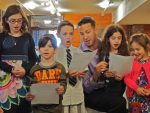
Left to right, reciting the Four Questions at the Okanagan Jewish community’s Passover celebration: Adarah Challmie, Ben Levitan, Jordan Spevakow, David Spevakow, Samara Levitan, and Kate Spevakow. (photo by Misty Smith)

Kelowna’s Jewish community may be small, but it’s poised for growth. The latest development: an expansion of its Hebrew school’s curriculum.

Led by the family of David and Natalie Spevakow, who moved to Kelowna from Calgary some 13 years ago, Hebrew classes were first provided last year. Now, more Jewish content will be added to the lessons, as well.

At the moment, the Spevakows are spearheading this task. Parents lead classes every Monday after school, with kindergarten to Grade 3 first, followed by grades 4-to-7. The parents rotate each week, teaching the kids about Jewish traditions and the Hebrew language, prayers and blessings. Currently, there are 14 students in total (two of whom are Spevakows).

“Trying to have a Jewish life in a small community can be a challenge,” said Natalie Spevakow. “I would say our congregation at the Okanagan Jewish Community Centre is about 100 members, but only 25 to 30 are active members.

“We have a visiting rabbi who comes once a month, Rabbi [Shaul] Osadchey from Beth Tzedec congregation in Calgary. We set this up to bridge the gap with our communities, and that’s been wonderful. With us having young families, we’ve all decided that it’s important that we get together, and we wanted to build a Jewish community for ourselves and our kids.”

The Spevakows are looking to hire a part-time teacher to start in September and work through June. They are searching for a creative, energetic person knowledgeable in Hebrew and the Jewish traditions to teach children ages 4 to 14. The position involves two hours of teaching a week, plus preparation time, and the teaching material is provided. In addition to an hourly wage, the teacher would receive a free annual family membership to the Okanagan JCC. (Interested readers should call Anne at the OJCC, 250-862-2305.)

“All of our parents just want our kids to be with other Jewish children and get a sense of what it is to be Jewish,” said Spevakow.

“We also try to get together with our Hebrew school every few months for a potluck,” she added. “When we have the visiting rabbi come, we do a potluck with the rabbi and do services with our children and our families as well. We make that a time to get together and bring the community together.”

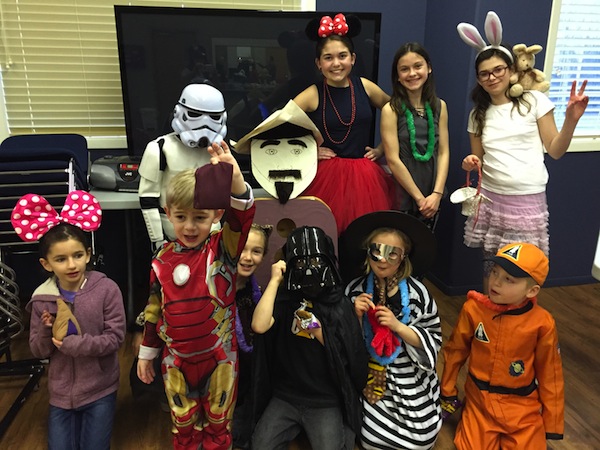
photo in Jewish Independent - Dressed for Purim, left to right: in the front row, Bria Tizel, Anderson Parnes, Kate Spevakow, Ryder Golbey, Skyla Golbey and Chase Golbey; in the back, Jordan Spevakow, Abbey Parnes and a friend, and Adarah Challmie
Dressed for Purim, left to right: in the front row, Bria Tizel, Anderson Parnes, Kate Spevakow, Ryder Golbey, Skyla Golbey and Chase Golbey; in the back, Jordan Spevakow, Abbey Parnes and a friend, and Adarah Challmie. (photo by Natalie Spevakow)

As of now, all the children involved in the school are Canadian-born, but there are Israeli-born children who will be joining classes when they come of age. The class curriculum is a combination of programs that the Spevakows sourced online with guidance from Osadchey. Parents are encouraged to take material home to practise during the week.

“The learning works better if they do take stuff home,” said Natalie Spevakow. “I know, for the little guys, they’re just learning the Hebrew letters and can repeat the words they learned…. We try to make it hands-on and more fun for them.”

Looking ahead, Spevakow feels that the Jewish community is growing, anticipating that one day it will be big enough to warrant more frequent visits from Osadchey.

“But, right now, with our smaller numbers, it’s very difficult for us to finance having a rabbi here all the time,” she said. “As is, we’re making it work, getting our kids educated and getting the resources we can.”

The older students are learning to lead Friday night services, with the goal of having them lead a service by May 2017, and then again, have them lead a service with Osadchey.

“We’re not on our own, trying to make things up on our own,” she said. “It’s just a matter of people making time for their kids, so the program works. I think all the parents recognize they want this for our kids and are willing to put in their time.

“We used to do it on weekends, but, with so many of us really big into skiing, it wasn’t working out. So, weekdays are definitely working better for us.”

They also recognize there may be some older members of the community who may be interested in helping with classes, so they hope to bridge the gap and find ways to bring them in, too.

“There’s something to be said about a small community, in that you really get to know all your members,” said Spevakow. “They truly do become an extension of your family. You realize that anything you’d like to see happen, things that, in a larger community you might have taken for granted because it’s available, in a small community may not exist yet…. Connecting on a deeper level with the people in our community, figuring out the assets that each can bring to the table, has really benefited our community. Knowing everyone’s faces really helps.”

Rebeca Kuropatwa is a Winnipeg freelance writer.

Affirming transgender rights

Citing both changing social practice and traditional Jewish values, the international association of Conservative rabbis passed a resolution on May 22 calling on Jewish institutions and government agencies to embrace the full equality of transgendered people.

The Rabbinical Assembly’s Resolution Affirming the Rights of Transgender and Gender Non-Conforming People begins, “Whereas our Torah asserts that all humanity is created b’tzelem Elohim, in God’s divine image….” It discusses historical evidence of “non-binary gender expression” in Jewish texts dating back to the third-century Mishnah. It calls on synagogues, camps, schools and other institutions affiliated with the Conservative movement to meet the needs of transgender people and to use the names and pronouns that people prefer. It also encourages Conservative institutions to advocate for national and local policies on behalf of transgender people. In light of its passing, the Jewish Independent spoke with several local rabbis from across denominations about the resolution and about transgender inclusivity in their communities.

“The statement feels comprehensive and as positive and embracing as it should be,” said Rabbi Hannah Dresner of Or Shalom, which is part of the Jewish Renewal movement. “We need always to try to get to the heart of what the halachah (Jewish law) and the mitzvot are trying to do for us. The way they were concretized in another century does not limit them for all time. Halachah is a process. I think it is beautiful when any part of the community pulls up a chair at table and says we are participating in the ongoing evolution of halachah. This is at the heart of what it means to continually create Torah, to turn Torah over and over, to continually participate in the exchange between the Holy One and human beings, which is God giving the written Torah and our response by taking it in and answering in the voice of our humanness. This is at the heart of what the halachic process is and should be in any sphere.”

LGBTQ people are fully welcomed at Or Shalom, and people are called to the Torah by their preferred gender identification. Or Shalom is currently working on infrastructural and ritual changes to be more explicitly and fully inclusive of LGBTQ people in all spheres. “There are alternatives that are easy and sweet,” said Dresner. “We just have to do our work.”

When asked what he thought of the Conservative resolution, Rabbi Dan Moscovitz of Temple Sholom, a Reform congregation, replied with typical humor: “Great, welcome to the party.” He said he views the resolution as a return to the deep values of the tradition, not a departure. “This is at the core of who we are commanded to be as human beings – to find the tzelem Elohim (image of God) inside of each individual and to not be confused or distracted by outside appearances, generalizations or labels,” he said.

The resolution is largely the same as that passed by the Reform movement in November 2015. As early as 1965, the Women of Reform Judaism called for the decriminalization of homosexuality. In 1977, Reform’s Central Conference of American Rabbis adopted a resolution calling for legislation decriminalizing homosexual acts between consenting adults, and an end to discrimination against gays and lesbians. In the late 1980s, the primary seminary of the Reform movement, Hebrew Union College-Jewish Institute of Religion, changed its admission requirements to allow openly gay and lesbian people to join the student body. In 1990, gay and lesbian rabbis were officially affirmed and, in 1996, so were same-sex civil unions. In 2000, a resolution followed fully affirming sanctified Jewish unions for same-sex couples and, in 2003, there was a resolution affirming the full acceptance of trans- and bisexual people, a stance confirmed and elaborated in the 2015 resolution.

“We have trans members, both adults and children, who we embrace and welcome fully,” said Moscovitz. “We call up to the Torah by preferred gender and gender-neutral pronouns which are present on our gabai [person who calls people to the Torah] sheet…. All bathrooms are multi-gendered or non-gendered.”

Moskovitz cited the case of a bar mitzvah boy who now identifies as a female and was offered a mikvah ritual as a transitional symbol, as well as a new Hebrew name and the reissue of the bar mitzvah certificate as a bat mitzvah.

The Conservative movement has been slower to change its position on LGBTQ sexuality than the Reform. In 1990, the Rabbinical Assembly’s Committee on Jewish Law and Standards (CJLS), which sets halachic policy for the movement, stated their desire to “work for full and equal civil rights for gays and lesbians in our national life.” Nevertheless, the CJLS maintained a ban on homosexual conduct, the ordination of homosexuals as rabbis and same-sex marriage unions until 2006, when LGBTQ people were first admitted for rabbinical ordination; in 2012, the Israeli Masorti (Conservative) movement followed suit. In 2012, the CJLS allowed same-sex marriages, with the U.K. Masorti movement following in 2014. The 2016 resolution is a milestone for the Conservative movement.

Rabbi Jonathan Infeld of Congregation Beth Israel, which is part of the Conservative movement, applauds the new document. “Kevod ha’ briyot [the dignity of all created beings, cited in the CJLS resolution] is very important…. For me, the over-arching concept of respecting all human beings and making them feel welcome, bringing them into the Jewish community is vitally important and is the keystone of the resolution.”

Infeld said the resolution is an expression of foundational Jewish values. “It is critically important to recognize the humanity and holiness of every person and that’s the essence of the resolution,” he said.

Beth Israel has private, non-gender-specific washrooms available, and calls to the Torah for an aliyah are done on the basis of the gender with which the person identifies, he noted. “We don’t loudly announce our stance so much as we are very happy to have trans and gay people in our synagogue as a natural part of the social fabric of our shul, by being warm and welcoming to everyone who walks in the door,” he said.

Speaking to the JI only days after the mass shooting at the Pulse nightclub, Infeld said, “The Orlando massacre is another reminder of the need to fight discrimination on every level and recognize the humanity of every person.”

Unlike non-Orthodox denominations, Orthodox Jews maintain traditional rabbinic stances against homosexual conduct, and behaviors such as cross-dressing or identifying with a gender aside from one’s birth gender. Nevertheless, there are a number of Orthodox rabbis and Jewish groups that are openly LGBTQ and/or call for greater inclusivity in Orthodox communities. And, in recent years, a number of Orthodox statements have been issued – mostly from within the Modern Orthodox world but also from others – calling for the expression of love, support and inclusion of LGBTQ people without condoning LGBTQ behaviors.

“We do not judge anyone here,” said Chabad Rabbi Shmulik Yeshayahu of Ohel Ya’akov Community Kollel. “We love and welcome everyone. We follow the Orthodox halachah that the Torah only allows union between a man and a woman, but gay, lesbian and transgender people are welcomed in our community and no one will judge them or condemn them. We do not ask questions about people’s behavior or police them. We love people, and we do not make everything they do or don’t do our business. We have had and do have gay and lesbian couples here and, in the past, even one Orthodox gay couple, and they were not judged, no one is saying anything to them. Everyone is welcome here.”

Matthew Gindin is a Vancouver freelance writer and journalist. He blogs on spirituality and social justice at seeking her voice (hashkata.com) and has been published in the Forward, Tikkun, Elephant Journal and elsewhere. He has written more on the Rabbinical Assembly resolution on forward.com (“Jewish values tell us to back equality for transgender people – it’s in the Torah”), medium.com (“Repentance in the wake of Orlando”) and hashkata.com (“All a horrible mistake: The Bible’s supposed condemnation of homosexuality”).