Skip to content
  • Home
  • Subscribe / donate
  • Events calendar
  • News
    • Local
    • National
    • Israel
    • World
    • עניין בחדשות
      A roundup of news in Canada and further afield, in Hebrew.
  • Opinion
    • From the JI
    • Op-Ed
  • Arts & Culture
    • Performing Arts
    • Music
    • Books
    • Visual Arts
    • TV & Film
  • Life
    • Celebrating the Holidays
    • Travel
    • The Daily Snooze
      Cartoons by Jacob Samuel
    • Mystery Photo
      Help the JI and JMABC fill in the gaps in our archives.
  • Community Links
    • Organizations, Etc.
    • Other News Sources & Blogs
    • Business Directory
  • FAQ
  • JI Chai Celebration
  • JI@88! video

Recent Posts

  • Hateful messages intensify
  • Creating entrepreneurs
  • Wrong choice to host Piker
  • Attack on Jewish kids
  • Multiple benefits of a break
  • Dialing up the perfect thriller
  • Empowerment & more
  • Songs in war of peace
  • Successful trip to Cuba 
  • Tackling antizionism head on
  • Thinking of leaving Canada?
  • Kindness as a matter of fact
  • Personal stories, vital lessons
  • Connecting generations
  • Vancouver to Vienna
  • Recipes a form of resistance
  • Community milestones … February 2026
  • Generations … It’s all yours!
  • נתניהו לא מתבייש להאשים את ביידן באחריות להרג חיילים ברצועת עזה
  • Last hostage home
  • New bill targets hate crimes
  • Concerning actions
  • Recipes not always required
  • Survivor urges vigilance
  • Seniors profoundly affected
  • Farm transforms lives
  • Musical legacy re-found
  • A range of Jewish literature
  • A concert of premieres
  • Variety telethon on Feb. 22
  • Victoria club’s many benefits
  • Avodah dedicated to helping
  • Artists explore, soar, create
  • Life’s full range of emotions
  • Community needs survey closes March 29
  • Jerusalem marathon soon

Archives

Follow @JewishIndie
image - The CJN - Visit Us Banner - 300x600 - 101625

Tag: dialogue

Unique book group

Unique book group

The next novel up for discussion at the Jewish-Muslim women’s book group is The Red Tent.

One Sunday in July led to several new experiences for yours truly, a 23-year-old Jew living on Vancouver’s North Shore. For starters, it was my first time in a mosque, it was my first time in Delta and it was without a doubt my first Jewish-Muslim book gathering. Thankfully, it wasn’t my first time reading a book in less than 24 hours, as my decision to attend the gathering after seeing it mentioned in this very newspaper, was pretty spur of the moment.

The book group’s second-ever session was held at Baitur Rahman Mosque, a building that, upon first impressions, was slightly imposing – British Columbia’s largest mosque, dwarfing any synagogue I’ve come across – but which proved home to an incredible amount of warmth. The warmth began with smiles when I entered the room late – it was a longer journey than I expected – and continued through the entire two-hour session about the book (I Am Malala by Malala Yousafzai with Christina Lamb), and well into the snacks and chats afterwards.

Having been greeted by 30 or so women from both Jewish and Muslim backgrounds, there was the classic ice-breaker – going round in a circle, saying one’s name, a little bit about yourself and an interesting fact. I may not have been able to beat one woman’s fact (she used to be a stilt walker) but my relatively young age meant I stood out.

This lengthy introduction introduced me well to the thoughtful, kind group. In true Canadian spirit, they were from so many different places and cultures. The Muslim women in particular had a heartening appreciation for their country. One said she “liked Canada very much”; another one-upped her, exclaiming, “I am one of the luckiest people alive” for having been welcomed here. There’s no doubt that the women from both religions were of a progressive stance – the bulk of Jews was from egalitarian Or Shalom synagogue, while the Muslim women were part of the Ahmadiyya community, which has been persecuted relentlessly by more orthodox Muslim groups.

As conversation began about the book, it became clear that everyone was so lovely – was I the only person who hadn’t helped Syrian refugees settle in Canada? – that I began to wonder if the group was a case of “preaching to the converted.” Surely the people most ignorant, and most in need of education about other religions, weren’t the type who would turn up to this group? A cynic by nature, this worry stayed with me during the (fairly fleeting) discussions about the book and the (much longer) follow-up conversation about the link between religion and education, how and whether you can teach critical thinking, and other thought-provoking questions.

So, I reached out to the organizers from both sides. The email chains that followed gave me insight into two great communities and their prior interfaith ties, as well as into two pioneering women: Tiferet Welch from the Jewish community and Aisha Naveed from the Ahmadiyya Muslim Jama’at. They provided some strikingly similar answers to my questions, illustrating how much common ground can be found between the two religions (religions that, evidently, don’t always see eye to eye).

About why the book group came about, it seemed that the books were simply a way of facilitating discussion about religion itself. Welch said she decided to make the group happen after meeting some of the Muslim women, who “stated their knowledge of Judaism and, hence, Jews, was extremely limited,” but they were “fueled with a strong desire to know more.” Naveed said “the book club was initiated to remove common misconceptions between the Jewish and Islamic faith,” explaining to me how her community believes in interfaith dialogue to “encourage learning” and “prevent ignorance.”

The women were also on the same wavelength about the group’s future – Naveed called it “an organic venture” and Welch said “we want to see it progress organically.” They were both proud of what it had accomplished in such a short time: Naveed proclaimed it “a huge success,” while Welch described the discussions as “open” and “honest.”

And what did they have to say to my “preaching to the converted” angst? Naveed said that, because interfaith gatherings “are a form of open and safe space,” they mean you learn a great deal about one another. Welch said “there needs to be a distinction made between being open and being knowledgeable.” In layman’s terms: those who attend the group are open, but that doesn’t mean they’re knowledgeable, and the group aims to educate.

Welch also pointed out that, because the event is promoted, for instance, via Or Shalom’s electronic bulletin, geography is a non-issue. Theoretically, people all around the globe can subscribe to the group and see how progressive it is. And, she reminded me that, once this article is published, other Jews will know about it, and thus the group’s potential for change is increased.

With that in mind – how to sell the group to someone reading this? I’ll break it down, simply and honestly, into three points.

First off, the reading material is quality. The first session the group discussed the book Faithfully Feminist: Jewish, Christian and Muslim Feminists on Why We Stay, edited by Amy Levin, Gina Messina-Dysert and Jennifer Zobair. It led to a worthwhile discussion on how both religions are traditionally patriarchal, and what this has meant for female faith in male-dominated arenas. For me, having started off dubious about I Am Malala, the second session’s read proved a powerful one. The youngest-ever Nobel Peace Prize winner’s account is both humble and knowledgeable, a memoir that explains well the Taliban’s rise, Pakistan’s history and politics, and the monumental importance of educating girls.

Second, the discussions that stem from the books are as intelligent as they are interesting. The two-hour discussion flew by at the mosque – the only thing I can compare it to is a dream university seminar or tutorial; i.e. one not ruined by hung-over students unable even to blag the required reading. Participants were incredibly educated and respectful. We covered moral values and where they should be learned, we discussed the media’s portrayal of religion and our internal prejudices, and I gained a ton of insight into a religion that many of us could, and should, know more about. Their actual definition of jihad – as education; a clear rejection of terrorism – which hung proudly in the room, struck me as particularly vital in this day and age.

Third, the post-discussion food is fantastic. The informal portion of the event, where we stood eating (delicious snacks) and chatting, was where we all connected more personally and more deeply. I found out what it’s like to be judged immediately and constantly for wearing a hijab, and how it feels to be asked where you’re from, to reply saying “Canada,” and then receive a demanding “No, but where are you really from?” On a more light-hearted note, I found out how pleasing it is to interact with people outside my usual social circle, to do something new and to spend a Sunday afternoon with a group of thoughtful, inspiring women from all over. Oh, and did I mention how good the food is?

The group’s next meeting – about The Red Tent by Anita Diamant – is scheduled for Dec. 18, 2-4 p.m., at Or Shalom. Women interested in attending are advised to follow Or Shalom’s web page or subscribe to its email list, and to RSVP Welch at [email protected].

Rebecca Shapiro is the associate editor of vivalifestyleandtravel.com and a travel blogger at thethoughtfultraveller.com. She’s been published in the Guardian, Elle Canada and the Huffington Post, as well as various other Jewish newspapers in the United Kingdom and Canada. She currently resides in Vancouver, having previously lived in London, Shanghai and Toronto.

Format ImagePosted on December 2, 2016December 2, 2016Author Rebecca ShapiroCategories BooksTags dialogue, Islam, Judaism, women
Dialogue heads east

Dialogue heads east

Belle Jarniewski (fifth from the left) is one of the co-founders, with Sumera Sahar (fourth from the left), Perry Kimelman and Dr. Rory Dickson of the Muslim-Jewish Dialogue Group of Winnipeg. (photo from Belle Jarniewski)

Started in Winnipeg last year after a visit from Rabbi Shaul Osadchey of Calgary’s Beth Tzedec, Belle Jarniewski and Perry Kimelman believe that a local dialogue group with Muslims and Jews will do a lot of good for both communities.

Jarniewski is chair of the Freeman Family Foundation Holocaust Education Centre, a position she has held since 2008. And, just recently, she began a two-year term as president of the Manitoba Multifaith Council, the first woman and the first Jewish person to hold that position.

“The Manitoba Multifaith Council had brought in Rabbi Shaul Osadchey of Calgary for its Multifaith Leadership Breakfast in 2015 and I was intrigued to hear how successful he had been in his own interfaith dialogue work and to hear how well he had reached out to the Muslim community there,” she told the Independent.

Jarniewski approached her synagogue with the idea of seeing if she could work with them to hold the kinds of events with which Osadchey had seen success, but received little interest. So, she decided to start a group independently of an institution.

photo - Belle Jarniewski
Belle Jarniewski (photo from Belle Jarniewski)

“Perry and I are also members of the Arab-Jewish Dialogue Group, which discusses (primarily) the Arab-Israeli conflict, but seems to eschew any real discussion of religion,” she explained. “Both of us have been active in interfaith work for quite some time and have many connections to wonderful people. We felt that was something that was missing. Once we realized that both of us had long been interested in starting just such a group, we put our heads together to see what would be the best way forward.”

Of course, to get the idea off the ground, they needed a Muslim partner or two. They found a perfect match in Sumera Sahar, a member of the Canadian Council of Muslim Women (CCMW). The second Muslim co-convener they found was Dr. Rory Dickson of the University of Winnipeg’s department of religion and culture. And, with that, the four set out to build membership, which is now a balanced mix of almost 40 Jews and Muslims (by invitation only). Members have been proposed by other members, as well as by the conveners.

“It is important that those who join are interested in dialogue with each other, are interested in religion and culture – our own and each other’s – and accept the very few rules we have imposed upon ourselves,” said Jarniewski.

These rules, she said, include “no discussion of politics – there is already another group established for that very reason – and, as well, both groups decided early on that we preferred not to involve clergy. If someone wishes to join, they must be referred through a member.

“We also have a closed group discussion through our private Facebook page, which seems to work very well. The ages of our members are from university through … well, I don’t ask … I would say in the 60s.

“The diversity of religion streams and origins of both Jewish and Muslim members contributes to some wonderfully rich discussions,” she continued. “The group is all about learning about each other’s religion and culture and each other, and getting to know one another. For far too long, Muslims and Jews have had, at best, a polite relationship with each other, but haven’t really gotten to know one another and learned just how much our two religions have in common.”

The group has held a number of evening get-togethers, learning about Sharia and halachah side by side. “The word Sharia evokes, for most Westerners, the most extreme form of Islamic law,” said Jarniewski, “but we learned that Sharia is far more complex than this simplistic interpretation.

“One night, we had Dr. Ruth Ashrafi talk about the role of women in Jewish law and Drs. Rory Dickson and Ahmet Seyhun lecturing on family law in Islam. On another night, we had a great discussion about halal and kashrut.

“At our very first meeting, one of our Jewish members, who hails from Iran, recited a Muslim prayer in flawless Arabic. What an icebreaker that was!”

Sahar told the Independent this group “is an important initiative and much needed, given the popular and often-unchallenged notion that somehow Jews and Muslims are historical and natural adversaries.”

Sahar is an executive member of CCMW’s Winnipeg chapter, the co-coordinator of a community food bank serving Arabic-speaking refugees and has recently been invited to sit on the board of the Manitoba Multifaith Council.

The core objective of the Muslim-Jewish dialogue group is that Muslims and Jews get to know one another directly without the filter of religious or political organizations. Sahar contends that most, if not all, group members believe that the group is a crucial step toward countering antisemitism and Islamophobia and, most importantly, to bridging communities.

Like Jarniewski, Sahar has made good friends and formed a much better understanding of the similarities both religions share, not just religiously, but also as minority religious communities.

“Being a minority community has its challenges, and both Jews and Muslims share similar anxieties and concerns,” said Sahar. “We share the struggle of gaining acceptance and inclusion without losing our religious values and identity. We are also subject to the question of representation – who speaks for us?

“Both communities are pluralistic and diverse but, as is the case with most minority groups, we are often represented in the media and popular discourse as a single voice. I was struck to learn that this issue is as much a source of frustration for the Jewish members of the group as it is for the Muslim members.”

The dialogue group has provided a platform to discuss such issues and suggest some strategies to overcome them. The convenors are pleased to see the sincerity with which group members have engaged with one another and are hopeful in their potential to build understanding.

“I feel that it is more important than ever to speak up when unfortunate statements are made in these rather difficult times that attack Muslims and Islam,” said Jarniewski. “These statements are generally mired in stereotypes and ignorance. It is important that our community realize they are received in the Muslim community in the very same way that the Jewish community is hurt by antisemitic comments.”

Jarniewski is well aware that, across Canada, there are Jewish-Muslim groups such as the one in Winnipeg who are coming together to engage in dialogue. “Little by little, groups such as ours will have a very positive effect,” she said.

Jarniewski quoted Catholic priest and Swiss theologian Hans Küng: “No peace among the nations without peace among the religions. No peace among the religions without dialogue between the religions. No dialogue between the religions without investigation of the foundation of the religions.”

Rebeca Kuropatwa is a Winnipeg freelance writer.

Format ImagePosted on September 23, 2016September 21, 2016Author Rebeca KuropatwaCategories NationalTags dialogue, interfaith, Islam, Judaism, peace
AJD on Road to Peace

AJD on Road to Peace

Road to Peace: left to right, Josh Morry of the Arab Jewish Dialogue on Campus, and AJD’s Howard Morry and Ab Freig. (photo by Rebeca Kuropatwa)

Founded in 2006, the Arab Jewish Dialogue (AJD) is a national organization based in Winnipeg with the goal of improving relations and respect between Arabs and Jews through dialogue and education. On Feb. 23, AJD co-founder and co-chair Ab Freig, co-chair Howard Morry and AJD on Campus founder Josh Morry spoke at the University of Manitoba on The Road to Peace in the Arab Israeli Conflict – A Conversation with the Arab Jewish Dialogue.

Of AJD on Campus compared to AJD, Josh Morry said, “We, too, discuss issues that are difficult and that often make us feel uncomfortable. The only difference is some policy statements that make our group more conducive to operating on campus.

“One of the things we added to our constitution, and I believe you can find it on the website, is that we abhor the use of name calling. Not only does this undermine policies, but it stops people from being able to engage in positive dialogue.”

The core campus group consists of six Arab members and six Jewish members. Plans are in the works for the organization to host a Middle East feast at the U of M.

Since AJD on Campus formed, Morry said, “I’ve seen firsthand a reduction in the hateful speech that undermines the policies. Jewish students feel much safer on campus now.”

About Arab and Jewish relations, Freig said, “We talk about what is the best case scenario: living in peace and harmony, prosperity, cooperation. We talk about that and understand it. Then we talk about the obstacles and how we can overcome them. We both need to identify what’s best for us.

“That’s the basics of what we do. In order for us to do that, we needed to dig deeper. No one seems to dig deeper to understand. So, I’ll meet with people and start with a discussion on how to take it from here.”

Freig has witnessed how what starts in the dialogue group passes onto children, cousins, and further.

Howard Morry provided an example of how, simply by acting from a humanistic level, he was able to restore trust within the group after one of the times Israel sent its military into Gaza. He told those gathered that the Jewish members were sorry for any loss of life during the operation. “Once I said that, it was as if the oxygen was put back in the room,” he explained. “The people that were sitting cross-armed changed their posture to a more open one. And then, continuing with this … we actually had a very productive talk – politically, strategically, and at every level. But, until that moment, we had lost all the trust in that room and we couldn’t move any further.”

Recently, AJD has been talking a lot about ISIS, working to understand who is supporting them, how they are getting the money and what is driving them. And, because of the violence that happened in France with Charlie Hebdo, they also took some time to discuss the Prophet Mohammed.

“There was a Muslim Arab in the group who explained [the concerns] to the other members,” said Freig. “We issued a statement. We condemn violence and we support freedom of expression and [the] press. We put together a press release, signed by the Jewish and Arab members.”

While AJD has been going strong for nine years, creating the same kind of openness and trust within a university setting will be a challenge. “Unless you’re a really bad student, you’re not going to be part of this group for nine years, because you graduate,” said Josh Morry. “I think before we expand across Canada, we have to expand across Winnipeg. So, it would be nice to a get a student here to set up a group at the University of Winnipeg (U of W).”

He noted that it may be easier for AJD on Campus to expand to schools on the East Coast. “People are much more eager to join student groups and get involved there,” he said. “Our model is easy to replicate. The constitution is easy to duplicate, using very general terms.”

Freig stressed that, within both groups, members do not “agree on everything, [but] we don’t really need to, to have a dialogue. We discuss difficult topics and keep talking about it, and hash over the issues until we get to an understanding. That’s what we try to achieve.

“It’s not necessarily an agreement, but an understanding – understanding each other’s narratives. There are some issues we are in too deep with, so we have one meeting after another, trying to get the other person to understand. If you don’t understand where the other person’s coming from, you won’t ever get over being at odds with one another. We still have work to do.”

Howard Morry added, “One of the great gifts of this group is that it gives you a chance to explain things more than once. In this group, we approach issues in different ways. Over time, listening to each other, there’s an understanding with some members, but not with others.

“I’ll tell you that the happiest moment I think I’ve had is when I’ve said something the 16th time over a two-year period, and I had one of the members come up to me and say, ‘Howard, you just changed my life.’”

Both groups hope to inspire the broader Canadian population with how well people – not only Arabs and Jews – can get along by speaking to each other respectfully, not jumping the gun, and not just trying to be right. They see their groups as a learning tool for life, teaching how to get along with others and to build trust.

“Our intention is to extend throughout Canada and then maybe we will inspire people in the Middle East,” said Freig.

Co-chair Morry added, “While we want there to be peace, our group is focused on Canadian Jews and Arabs.… We were concerned when we first started, not wanting to become like Europe. There was a lot more violence and disagreement and no dialogue at all.

“The idea is that when you get dialogue amongst the people who’ve chosen to live in Canada, over time, it will hopefully influence the rest [of the world].”

Rebeca Kuropatwa is a Winnipeg freelance writer.

Format ImagePosted on March 13, 2015March 11, 2015Author Rebeca KuropatwaCategories NationalTags Ab Freig, Arab, Arab-Israeli conflct, dialogue, Howard Morry, Jewish, Josh Morry, peace
Friendships via music

Friendships via music

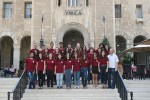
The YMCA Jerusalem Youth Chorus prior to their 10-day tour of Japan in August 2014. (photo from Micah Hendler)

There are many creative ways to bring about a peaceful dialogue between Israelis and Palestinians. In one particular case, an American Jew by the name of Micah Hendler combined choral singing and dialogue to help bring Palestinian and Israeli teens to a place of trust in Jerusalem.

Hendler, originally from Bethesda, Md., has been singing for as long as he can remember.

“For me, singing is a very powerful way of connecting to other people and creating communities, a sense of common identities, all the things that make people feel close to one another,” he said.

photo - YMCA Jerusalem Youth Chorus founder and conductor Micah Hendler
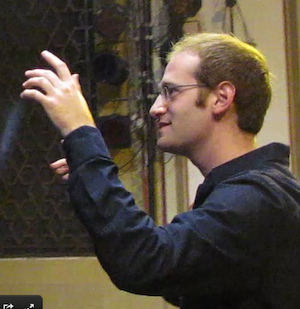
YMCA Jerusalem Youth Chorus founder and conductor Micah Hendler. (photo from Micah Hendler)

In his high school years, Hendler participated in Seeds of Peace, a program for teens from conflict regions around the world. For the first time, he had the opportunity to hear the stories of both Palestinians and Israelis.

“It made me realize the power of talking to others who are different, the power of showing people there are other ways to see things, more complete ways to see things,” he said of Seeds of Peace. “That’s what really got me interested in the Israeli-Palestinian conflict. In many ways, this was in contrast to the education I’d received.”

Over the years that followed, as Hendler continued his involvement with Seeds of Peace, he thought about ways in which he could create a new community, and decided on a singing group.

“I thought that would be really cool,” said Hendler, now in his 30s. “I could empower people and show them that they could sing and be part of something like this. For me, I thought … this is a way I can do things I really love to do in the context of needing ways for people to come together.”

When Hendler was ready to kick things off, he had just graduated from Yale. “I thought, if I’m ever going to do this, now’s the time.”

With degrees in music and international studies, and a host of other experience, both in music and in conflict transformation, Hendler moved to Jerusalem. He spent the first couple of months having coffee with anyone and everyone. He also spent a lot of time at high schools, sharing information about the choir, the YMCA Jerusalem Youth Chorus. Eighty youth auditioned, with the majority coming from East Jerusalem.

“There were so few extracurricular options in East Jerusalem at all, let alone singing options,” said Hendler. “For kids that liked to sing, I was one of the very few possibilities around.”

Hendler accepted 30 kids (ages 14-18), an even split of Israelis and Palestinians.

A friend connected Hendler with Israeli singer/songwriter David Broza, who was working on the album East Jerusalem/West Jerusalem at the time. Broza invited the chorus to be part of it. “It’s pretty amazing – that was three months into the choir, and we were recording with David Broza in the studio,” said Hendler.

The YMCA Jerusalem Youth Chorus program begins and ends with singing, with dialogue embedded in the middle. It does not take long for the kids to mingle. “They were in a completely unstructured context, already hanging out across linguistic and national lines,” said Hendler. “A lot of girls were singing pop songs on the piano and the guys were doing their thing, and different people were talking.”

The cost for the program is covered by the Jerusalem Foundation and private donors in and outside of Israel; the kids pay a symbolic fee to attend, as long as they are able.

Hendler’s main focus now is on ensuring that the kids feel part of a group, which is a moving target as the chorus grows. Currently, there are 44 kids divided into three dialogue groups, but Hendler is looking at other options. “There’s a limit of how big the choir could be in terms of what is manageable,” he said. “But, it would be possible to have multiple ensembles at different levels.”

When selecting kids for the chorus, Hendler looked for kids who wanted to meet new people and experience new things. As well, potential members needed both to be able to express any opinions they may have, as well as listen to those of others. “We also, of course, wanted people suited for singing,” he added.

Rehearsals are 3.5 hours and take place once a week. From as early as the second rehearsal, he said, “it was amazing that the kids were so open to one another. Obviously, with the linguistic and social challenges, the group had gone through a lot, but fundamentally there’s this openness and a joy that’s pretty inspiring.”

The dialogue is run by professional facilitators, “but I still have a good sense of what goes on,” said Hendler. “And, it’s actually really beyond inspiring, the way they listen to each other and create a space. The kids are real with each other, sharing their fears and hopes … but what’s really been amazing is that even outside the choir, the kids have started to speak up in their communities.”

Israeli high schooler Avital said of the program, “You get to know the other side, you get to be together, to see what it’s like being with kids different than you.” Shifra, another Israeli participant, said, “[Before] I only knew Israelis, I had never met any Arabs before I came here. I didn’t know what I was going to see … I wasn’t sure what I expected, but what I realized was that we’re all the same.”

Palestinian high schooler Alaa commented, “I learned from the sessions how not to stay silent, to express myself.” And Ameer, another Palestinian participant, said, “The choir is beautiful and we enjoy it, because we are Arabs and Jews, together at the same time.”

Rebeca Kuropatwa is a Winnipeg freelance writer.


Format ImagePosted on January 30, 2015January 29, 2015Author Rebeca KuropatwaCategories IsraelTags David Broza, dialogue, Israeli-Palestinian conflict, Micah Hendler, music, YMCA Jerusalem Youth Chorus

Talking about Israel

In British Columbia, this summer has been among the finest in living memory. Yet, for Jewish British Columbians and for all those watching events around the world right now, the summer has brought a very dark cloud.

It has not only been the terrible violence between Israel and Gaza, but violence elsewhere in the Middle East that is claiming exponentially more lives and causing horrific hardship and inhumanity.

The advance of the so-called Islamic caliphate from Iraq into parts of Syria opens the potential for additional Western military involvement in the region. The horrors that are taking place under the extremist ISIS dictatorship are almost beyond human imagination. In Syria, meanwhile, the death toll from the now two-year-old civil war has reached 190,000.

Despite all this, global attention remains focused on Israel. At the United Nations, Israel is singled out for condemnation, while Hamas is given a pass. Marches in the streets around the world declare Israel a pariah. Violence against Jews and attacks on Jewish institutions worldwide are legitimately striking fear that a generation or more of Diaspora Jews have never experienced.

There really is no silver lining. But, if there were, perhaps it would be that several fictions have been debunked.

Time was, even Zionists accepted the position that “anti-Zionism does not equal antisemitism.” This has been almost a required disclaimer at the beginning of any conversation on the subject for at least the last 15 years. This needs to be revised, however, to recognize that anti-Zionism at least sometimes equals antisemitism. As we have seen in recent weeks, there are those in the anti-Zionist movement who are motivated by anti-Jewish animus, and then there are those who refuse to condemn them. When it comes down to it, the moral difference between the two groups is minimal.

There is also the position that, by definition, anti-Zionism should legitimately be considered a form of antisemitism. After all, Zionism is simply the national representation of the Jewish people. If one is opposed to that, especially while supporting self-determination for every other national identity in the world, it must stem from some intellectual or emotional process that views Jews differently from other people.

There are certainly reasons why a conflict in a place that is holy to several religions should draw an outsized interest from people around the world. Yet, when the global reaction is so extraordinarily imbalanced, something is clearly beyond reason.

We know what motivates at least a significant part of the anti-Israel movement. More words have been spilled on this subject in the past two months than perhaps ever in human history, given the ability of everybody to broadcast their positions via social media. We have been able to see in greater detail the narrative subscribed to by many of Israel’s critics, from well-known commentators to elected officials to ordinary Facebook friends. Overwhelmingly, it is a simple one: Israel is just plain evil and, because its legitimacy and right to exist are explicitly or implicitly denied, its right to defend itself is likewise repudiated.

These are not words that generally come out of the mouths of anti-Israel activists, because they are not palatable to those who would otherwise consider themselves progressive, well-intentioned people. But push has come to shove and, all over the internet and in face-to-face conversations – yes, those still take place sometimes – we have been able to learn more about what a lot of “ordinary” people think about Israel. It has been painful. The conversations have been difficult. Many of us have lost friends.

But it is always better to know than to proceed in ignorance. We have a new understanding of what we are up against. We also have discovered many new friends, and new ways of engaging with those who don’t share our views.

Others in our community have no doubt had similar experiences. Many of us have felt challenged to present our positions with clear heads and hearts, and we invite all readers to contribute to the discussion by sharing their suggestions for continuing this dialogue constructively.

Posted on August 29, 2014August 28, 2014Author The Editorial BoardCategories From the JITags dialogue, Diaspora, Israel

Posts pagination

Previous page Page 1 Page 2
Proudly powered by WordPress