Jewish take on health issues

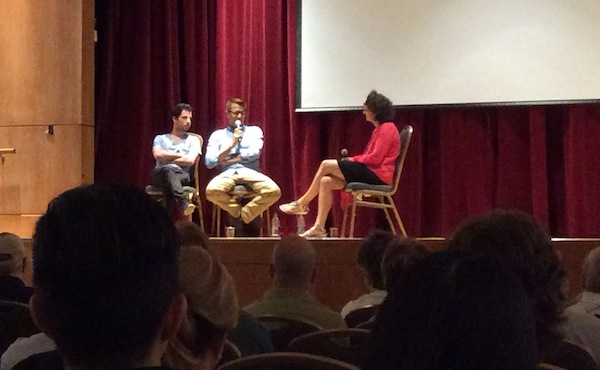
Attendees engaged with panelists, left to right, Drs. Eric Cadesky, Brian Bressler and Jennifer Melamed at a Kollel event Jan. 29. (photo from Kollel)

A small but passionate group gathered at the Ohel Ya’akov Community Kollel Jan. 29 to engage with Drs. Brian Bressler, Eric Cadesky and Jennifer Melamed on the topic of Canadian Health Care Challenges Through the Jewish Lens, which focused on the legalization of marijuana, the treatment of addiction, the practice of harm reduction, the opioid crisis and medical assistance in dying (MAiD).

Cadesky, who chaired and moderated the event, is a family doctor in Vancouver and president-elect of Doctors of B.C.; until last summer, he was also medical coordinator at the Louis Brier Home and Hospital, a position he held for some eight years. Bressler is a gastroenterologist at St. Paul’s Hospital and a clinical assistant professor in the University of British Columbia’s department of medicine, while Melamed is co-owner of the Alliance Clinic, an addiction services facility in Surrey.

Bressler framed the conversation in terms of what he called the four principles of medical ethics for a healthcare provider: autonomy, respecting a patient’s choice and their right to understand and consent to treatment; beneficence, doing or recommending everything that could benefit a patient; nonmaleficence, taking into account all known risks to a patient and doing no harm, or the least amount possible, if harm is unavoiadable; and justice, making treatments available to all patients.

“I wouldn’t distinguish between those principles and Jewish ethical principles,” said Bressler. “I think they’re entirely consistent.”

Within this framework, the doctors’ dialogue with the audience took place.

One exchange was sparked by Melamed’s criticism of harm reduction clinics. “This is the dilemma we face,” she said, “is addiction insanity? Should we respect the patient’s autonomy even if the addiction has impaired that autonomy and they are not truly free to make decisions for themselves anymore because of the effects of the addiction?”

She said, “I refuse to accept harm reduction as the end result, as the highest result for my patients.”

Arguing that there “is really no such thing as a safe injection,” she said she believes such clinics are doing more harm than good.”

An audience member countered that recovery might be a realistic goal for working and middle-class patients, who have seemingly more to recover for; but, for addicts living in extreme poverty, who have a history of trauma and/or mental illness, they may not have a realistic chance of recovery. “With harm reduction, we keep them away from crime and treat them like human beings.”

The Kollel’s Rabbi Avraham Feigelstock said that, from a Jewish point of view, the community has a responsibility to do everything in its power to help a person recover. However, the question of how harm reduction clinics could go beyond their current purpose and move towards recovery was not pursued.

Discussing opioid use, Bressler expressed both a cautionary approach, based on his own practice (Crohn’s patients are at particular risk for addiction), and the opinion that it is important to focus on addressing the sources of pain, not just pain itself.

Both Bressler and Melamed were negative about the legalization of marijuana and its use in a medical setting. They said there was some evidence that marijuana was effective for a very limited number of conditions – neuropathic pain and nausea were mentioned – but that the risks of marijuana, such as cognitive impairment and a link to developing psychosis, were well-evidenced.

Melamed expressed concern about what she thinks will be the massive costs of policing marijuana intoxication, among drivers or industrial workers, for example.

When one person raised the potential of increased teen use of the drug, Melamed said teens were already using and she didn’t fear an increase, though she was concerned about the potential for increased use among adults.

Another audience member suggested the Jewish community should protest marijuana’s legalization.

The doctors took a less defined stance towards medical assistance in dying. Both Bressler and Melamed said they had personal and professional experience with it but did not take a stand in favour or against it, instead highlighting issues to consider. Bressler acknowledged the right of Canadians to MAiD but also pointed out that the practice conflicts with Jewish law.

Feigelstock said the general principle in Judaism is to prolong life but not necessarily to prevent death. “According to Jewish law, generally speaking, you may choose not to do things to prolong the life of someone who is dying,” he explained, “and you may give medicines to relieve suffering, which have the side effect of possibly shortening life, but you do not do something that will directly kill the patient. Every case must be dealt with separately, however, case by case; one cannot make general statements about what to do.”

Matthew Gindin is a freelance journalist, writer and lecturer. He writes regularly for the Forward and All That Is Interesting, and has been published in Religion Dispatches, Situate Magazine, Tikkun and elsewhere. He can be found on Medium and Twitter.

Helping Save a Child’s Heart

Left to right, panelists Dr. Tommy Gerschman, Dr. Thuso David and Randi Weiss at the screening of A Heartbeat Away in Vancouver on Nov. 2. (photo by Cynthia Ramsay)

More than 4,400 children from 55 countries in the developing world have received life-saving heart surgeries because of the efforts of volunteers associated with Save a Child’s Heart Foundation. Thousands more have been saved by doctors trained by the organization’s volunteers.

The Israel-based organization is aiming to expand its reach in British Columbia. A screening of the film A Heartbeat Away in Vancouver on Nov. 2 shared the anxious, sometimes tragic and often uplifting stories faced by medical volunteers associated with the agency.

Marni Brinder Byk, executive director of Save a Child’s Heart Canada, introduced the film and moderated a panel discussion afterward. She explained that when Vancouverite Lana Pulver joined the national board of the organization, it presented an opportunity for more on-the-ground activities in the city.

Save a Child’s Heart (SACH) has another strong Vancouver connection. Vancouverite Randi Weiss recently moved back after spending several years in Israel, where she served as a full-time volunteer with SACH.

The foundation is committed to saving children’s lives by improving the quality and accessibility of cardiac care. Israeli medical experts, and some from other countries, provide free, life-saving surgeries to children from developing countries and also train surgeons and medical teams from those countries, helping them build their own skills.

Entirely as volunteers, SACH doctors travel to Africa, Asia, Eastern Europe and other parts of the Middle East to assess potential candidates. A few less urgent cases are treated on the spot, while more serious cases are transported to Israel, where the child and a parent can spend weeks or months during surgery and recovery. A new home, accommodating 61 patients, family members and medical staff, recently opened near the Wolfson Medical Centre in Holon, where the Save a Child’s Heart medical facilities are based.

The film depicted the heartbreaking choices doctors are forced to make during their trips abroad, as young patients whose cases are simply too advanced for an encouraging prognosis have to be rejected. But the film also follows the story of Julius, a kindergarten-age boy from Tanzania, as he travels to Israel and gets a fresh lease on life after a harrowingly complicated surgical procedure.

Weiss said that about half the kids SACH treats are from the Palestinian Authority or other places in the Middle East. About 40% are from African countries, including Ethiopia and Tanzania, she said, while others come from Romania, Moldova and wherever there is a need not being met.

Weiss was joined on the panel after the film’s screening by Dr. Thuso David, a pediatrician from Botswana who arrived in Vancouver in early August to continue his training at B.C. Children’s Hospital. He noted that, in many African countries, there are few medical specialists, so a complex medical issue like congenital or acquired heart disease is rarely treated.

Dr. Tommy Gerschman, another Vancouverite, was also on the panel. He volunteered as a medical intern for SACH in Israel a decade ago.

Save a Child’s Heart Canada was founded in Toronto in 1999 by the late A. Ephraim “Eph” Diamond. Brinder Byk said that SACH’s annual budget is about $6 million US, about one-sixth of which is provided by Save a Child’s Heart Canada. The Canadian contingent has also stepped up in a big way to help fund a new wing at the Wolfson Medical Centre designated especially for SACH’s use.

“We have a lot to be proud of as Canadians, that we will be helping that many more children and training that many more doctors,” said Brinder Byk. “The children of Israel are also going to benefit because, if they live in the catchment area of the Wolfson Medical Centre, they will be able to use their services as well.”

CHW marks 100 years

Canadian Hadassah-WIZO (CHW) has been a driving force in the Jewish community for 100 years. Known to many simply as Hadassah, CHW has rebranded in the last decade to be recognized for its full range of activities, using its acronym to also exemplify the work it does for children, healthcare and women in Israel.

Jewish Canadians can take great pride in the many initiatives that have come from the fundraising and determination of CHW women who have helped build the state of Israel.

One of the keystone projects CHW supports is the Hadassim Children and Youth Village, located east of Netanya. Founded in 1947 for European Jewish refugee children, it is one of the largest residential schools in Israel. The school has evolved over the years to house children as young as age 6 who could not safely remain in their homes. These children live in family units, cared for by foster parents who maintain contact with biological parents when appropriate.

With the world refugee crisis, there has been somewhat of a return for Hadassim to its original purpose. As an example, because of antisemitism, more than 60 teens from France have sought refuge at Hadassim through the Na’aleh program, according to CHW national executive director Alina Ianson.

The program, she said, “is an opportunity for Francophone youth to continue their education in their native language. The Na’aleh program has become increasingly important due to the rise of antisemitism, causing many European teenagers to seek out safety and security. CHW Hadassim gives teenagers freedom: freedom to learn, freedom to live, freedom to be Jewish. CHW Hadassim gives teenagers a home again.”

Over the past 100 years, Israel has grown from the dream of a homeland to a high-tech powerhouse. Nonetheless, pressing social issues, particularly for women and children, still exist. Healthcare has changed dramatically but the need for support is arguably more critical because, while there are more life-saving technologies, they can also be quite expensive. For this reason, CHW continues to be as relevant as ever, national president Debbie Eisenberg told the Independent.

Eisenberg highlighted the CHW Vancouver connection. “Four of CHW’s past national presidents have called Vancouver home,” she said. “These visionary past national leaders include Naomi Frankenberg, z”l, Judy Mandelman, Rochelle Levinson and Claudia Goldman. Throughout our 100 year history, CHW has certainly changed the very fabric of Israeli society by supporting essential programs and services for children, healthcare and women in Israel,” she added.

Current Vancouver centre president Stephanie Rusen is proud to head an organization that has made and continues to make such an impact on the lives of people in Israel. Rusen believes that the focus for Vancouver in CHW’s centennial year is the Hadassim Youth Village partly because it exemplifies everything that CHW does right. Those most vulnerable in Israeli society find a home at Hadassim and grow up to meet their potential as active, contributing members of Israeli society.

“CHW Hadassim has been improving the lives of children and families for the last 70 years,” said Rusen. “Many of the children who come to CHW Hadassim are escaping prejudice, persecution, and even violence. Thanks to our generous supporters, as well as the funds raised at last year’s tribute gala, the Claudia Goldman Dormitory Hey at CHW Hadassim was renovated and is now home to 60 students. These children now have a safe place to call home. CHW Vancouver proudly supports CHW Hadassim.”

Rusen has presided over many local changes in how CHW operates. The previous chapter-based format has given way to an organization that plans citywide programs for all ages and interests, while continuing its efforts to fund its projects in Israel. The local annual kick-off event was held on Sunday at the Shaughnessey Golf and Country Club. Entitled “Heroes Among Us,” the event honoured three local women, ranging in age from the mid-20s to mid-80s, who have made a difference in various aspects of the Metro Vancouver community: Courtney Cohen, Lori Yelizarov and Helen Coleman.

For more information on how to become involved with the activities of CHW, visit their website at chw.ca (look for Vancouver centre) or call the office at 604-257-5160.

Michelle Dodek is a freelance writer living in Vancouver.

A healing partnership

Left to right: Bernard Bressler, Bill Barrable, Prof. Yaakov Nahmias, the Hon. Jody Wilson-Raybould, Jonathan Miodowski, Dina Wachtel, the Hon. Bruce Ralston and Rick Glumac. (photo from Rick Hansen Institute)

On Aug. 25 in Vancouver, the Rick Hansen Institute (RHI) announced a new partnership with the Hebrew University’s Alexander Grass Centre for Bioengineering. The first of its kind in the world, this partnership will fast-track the development of products designed to improve the lives of people who have been devastated by spinal cord injuries (SCI).

Bioengineering uses scientific concepts and methods to find practical, cost-effective solutions to problems in the life sciences. Researchers investigate ways to regenerate damaged tissue, grow new organs or mimic the systems and processes of the human body with synthetic tools. In the case of individuals with SCI, this means combating the paralysis caused by a serious injury.

According to the RHI, in British Columbia alone, there are 12,000 people living with an SCI. “The economic burden is an estimated $372 million a year for new traumatic spinal cord injuries: this figure includes direct healthcare (59%) as well as indirect morbidity and mortality related (41%) costs,” says the RHI. “Secondary complications such as pressure ulcers, neuropathic pain, urinary tract infections and pneumonia cost an estimated $70 million in direct costs to B.C.’s healthcare system annually.”

The Grass Centre’s Biodesign program teaches researchers, business and bioengineering graduates how to make medical innovations commercially available. Recent innovations at the centre include a device that inserts chest tubes. The device prevents lung collapse in under a minute and saves lives in the battlefield and the emergency room. The centre also has developed pressure-sensing socks that can tell when patients with diabetes are in pain, prevent foot ulcers and communicate health data to smartphones. More than 130 million people suffer from diabetes-related pain worldwide.

Bill Barrable, chief executive officer of the RHI, described Rick Hansen’s long association and warm relationship with Israel. Hansen traveled there on his Man in Motion tour many years ago and he also received an honorary degree from the Hebrew University. Barrable accompanied Hansen on that latter visit.

Barrable spoke of the new partnership as being designed to “grow the next generation of medical research entrepreneurs.” These entrepreneurs will create intellectual property that can be sold commercially within one year, a goal he described as “extraordinary.” In addition to the profound impact it will have on patients, Barrable sees the project as a way to strengthen innovation in British Columbia.

Prof. Yaakov Nahmias is the director of the Grass Centre. After co-founding the Biodesign program at HU with Hadassah Medical Centre and Stanford University, four new medical devices were launched under his leadership – in the program’s first year. Referencing Israel’s reputation as a “start-up nation,” Nahmias touched on the 2009 book Start-up Nation by Dan Senor and Saul Singer, which explores how it is that a small, embattled country like Israel has more tech start-ups than any other. Speaking of the student body at the Grass Centre, Nahmias described a population that is mature, self-sufficient and has a rich life experience. Having completed school and their mandatory military service, Israeli grads also have traveled the world and worked while pursuing their undergraduate studies. He described a group that did not want to continue their research work as academics, but as entrepreneurs. The Biodesign program enabled them to do this. Its multi-disciplinary, team-based approach to medical innovation is also unique, according to Nahmias, “because it leverages the diversity we see in Israel.” The program is host to groups led by Palestinians from East Jerusalem and ultra-Orthodox rabbis alike, he said. The program’s success, he added, was owed to the creativity and talent of this diverse group.

In concert with the fiery, boundary-pushing Israelis, Nahmias said Canadian researchers would bring “people with vision, people who would set the course and know how to treat patients and solve problems in everyday life. But we also want to have agitators, people who would rock the bridge and say, ‘that’s not good enough!’ These are the people we have in Israel. And this is why this partnership is unique.”

B.C. Minister of Jobs, Trade and Technology Bruce Ralston spoke highly of Israel’s capacity for innovation. Looking forward to seeing stronger ties develop between the technology sectors of Israel and British Columbia, Ralston said he sees this partnership as a way to “restore and bolster our commitment to research in a way that attracts top-flight talent back to B.C.”

Also joining in the announcement, which was made at the Blusson Spinal Cord Centre, at Vancouver General Hospital was the Hon. Jody Wilson-Raybould. In her capacity as federal justice minister, she applauded the new initiative, describing SCI patient care as “a human rights issue.”

Also in attendance was Bernard Bressler, director of the board of Canada-Israel Industrial Research and Development Foundation. Bressler praised the partners for going beyond academic research to make life-altering technologies. “The partnership creates an environment where creative ideas, difficult problems and entrepreneurial mentorship can interact in a structured way,” he said.

Speaking after the event, John Chernesky, RHI’s consumer engagement lead, commented, “What excites me most is the prospect of new devices that allow people with paralysis to complete ordinary tasks, even something as simple as using an arm to manipulate their environment. Spinal cord injuries can affect every part of a person’s body. The implications [of a program like this] are tremendous.”

Dina Wachtel, executive director of Canadian Friends of Hebrew University, Western Region, said the program created “a living bridge upon which a scientist from Canada will spend time in Israel with the start-up nation and, once they trigger the process, as a team, and have the beginning of a device, they can bring it back to B.C. for further development.”

Shula Klinger is an author, illustrator and journalist living in North Vancouver. Find out more at niftyscissors.com.

Implant first in world

Cardiologist Gil Bolotin checks patient Robert MacLachlan, the first in the world to receive the CORolla implant, at Rambam hospital. (photo by Pioter Fliter/RHCC)

A 72-year-old Canadian man has become the world’s first recipient of an Israeli-developed implant to treat diastolic heart failure, a fairly common condition for which there is no effective long-term treatment.

The minimally invasive surgery was performed on July 26 at Rambam Health Care Campus, a medical centre in Haifa, by a multidisciplinary team led by cardiologists Gil Bolotin, director of cardiac surgery, and Arthur Kerner, senior physician in the interventional cardiology unit.

The implant, called CORolla, was developed by Israeli startup CorAssist Cardiovascular of Haifa. The elastic device is implanted inside the left ventricle of the heart and can improve cardiac diastolic function by applying direct expansion force on the ventricle wall to help the heart fill with blood. The CorAssist technology was invented by Dr. Yair Feld, a Rambam cardiologist, with doctors Yotam Reisner and Shay Dubi.

The patient, Robert MacLachlan, explained that he had run out of treatment options in Canada for his diastolic heart failure. His wife had read about the CORolla implant on the internet and contacted Dr. Karen Bitton Worms, head of research in the department of cardiac surgery at Rambam. MacLachlan’s cardiologist encouraged him to apply to have the experimental procedure in Israel.

Bolotin said that, while many potential applicants were interested in the procedure, no one wanted to be first until MacLachlan came along.

“I am proud that Rambam offers treatments to patients not available anywhere else in the world,” said Dr. Rafi Beyar, director and chief executive officer of Rambam.

The hospital did not comment on the condition of the patient, but, in a video released a month after the procedure, MacLachlan said he already feels better and has noticed that his skin colour looks healthy for the first time in a long time.

The Israel Ministry of Health has authorized up to 10 clinical trials at Rambam to test the efficacy of cardiac catheterization for placement of the CORolla implant. The potential market for the device is large. It is estimated that more than 23 million people worldwide suffer from heart failure, a condition in which the heart fails to pump sufficient oxygenated blood to meet the body’s needs. Approximately half of heart failure patients suffer from diastolic heart failure, in which the left ventricle fails to relax and adequately refill with blood, resulting in a high filling pressure, congestion and shortness of breath. This is the condition for which the CORolla device was invented.

To watch the video about the surgery, which includes an interview with MacLachlan, and how the medical procedure works, visit israel21c.org/haifa-hospital-tests-first-implant-for-heart-failure.

Israel21c is a nonprofit educational foundation with a mission to focus media and public attention on the 21st-century Israel that exists beyond the conflict. For more, or to donate, visit israel21c.org.

Pediatric leaps and bounds

Artist Pnina Granirer signs copies of her book Light Within the Shadows: An Artist’s Memoir at its May 25 launch at Lord Byng High School. (photo by Cynthia Ramsay)

***

In every community, there are folks who frequently capture the spotlight for their work while others quietly get things done behind the scenes. In our Kibitz & Schmooze profile, we try to highlight members of our community who are doing admirable and mention-worthy work out of view of the general public. If you know of profile subjects who fit this description, please email laurenkramer@shaw.ca.

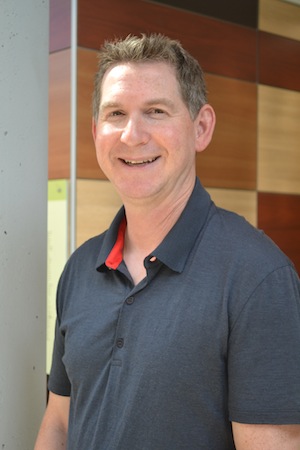
We all love a quick turnaround, but when it involves a transition from illness to health, it’s especially meaningful. That’s one of the things Erik Swartz loves about his career as a pediatrician at Richmond Hospital, where he attends complicated deliveries, looks after preemies in the neonatal intensive care unit and sees outpatients at the Child Health Centre. “Children get sick very quickly, but they also recover very quickly,” he notes quietly. “It’s very gratifying, as a doctor, to see how quickly their health improves.”

photo - Erik Swartz
Erik Swartz (photo by Lauren Kramer)

Swartz, 43, is a homegrown Vancouverite who attended Vancouver Talmud Torah, Eric Hamber Secondary and then studied pharmacology and medicine at the University of British Columbia. After graduating, he specialized in pediatrics in Edmonton and worked in that city until 2008.

It was a great time, he recalls wistfully. “Our friends there were like family, and the training I got there, the professional environment, was wonderful.”

Swartz, always one to say an enthusiastic “yes!” when opportunity comes a-knocking, also had a weekly segment on Edmonton’s Global Morning News, where he’d answer questions from parents worried about their kids’ health. “For awhile, I was a C-list celebrity,” he says with a laugh.

Family ties and a great job opportunity enticed him back to Vancouver, where he remains today with his wife and two daughters. At work, he wears a number of different hats. When he’s not at Richmond Hospital, you’ll find him at B.C. Children’s, where he works in the pediatric emergency department and attends inpatients at the clinical teaching units. He also heads pediatrics for Vancouver Coastal Health and Providence Health Care, a position that involves overseeing physicians in a wide geographic area – from Lions Gate and St. Paul’s hospitals to clinics further afield in Powell River and Bella Coola. “If a child comes into a hospital in Sechelt and there are issues, we troubleshoot what happened from an administrative point of view,” he explains.

There are “big picture” guys and “small picture” guys in every field, but Swartz is both. He helped bring the Pediatric Early Warning System, PEWS, to the Richmond Hospital emergency room a few years ago. Children admitted to the hospital receive a PEWS score, which determines the level of monitoring and care they’ll need. “It’s our attempt at figuring out which children are going to deteriorate before that happens, so we can mitigate the risk,” he explains. Swartz and his team were the first to use PEWS successfully in an ER setting in British Columbia and, possibly, in all of Canada.

“In a hospital that is not used to looking after many children, the PEWS score is a number that clearly identifies how sick that kid is,” he notes. “We assessed the confidence and knowledge levels of staff before we introduced PEWS and reassessed them after its introduction and, by comparing those results, we can see it’s been a wild success. Because of that, the whole province is wanting to introduce it.”

Swartz’s work is his passion, and his dedication to improving care on a systemic level is remarkable. He decompresses from his days training for half-marathons, but says his life is filled with “aha moments” that make everything seem purposeful and worthwhile. “I’m often called out in the middle of the night when a baby is born with a low heart rate and isn’t breathing,” he reflects. “To do the appropriate things in five to 10 minutes and see the improvements, you feel really satisfied that a few minutes of your life changed the trajectory of another family’s life forever.”

Lauren Kramer, an award-winning writer and editor, lives in Richmond. To read her work online, visit laurenkramer.net.

* * *

photo - Art! Vancouver included the work of Johanan Herson (second from the right) and Lauren Morris (third from the right) from May 25 to 27 at Vancouver Convention Centre-West.
Art! Vancouver included the work of Johanan Herson (second from the right in the above photo) and Lauren Morris (third from the right in the photo below) from May 25 to 27 at Vancouver Convention Centre-West. (photos by Cynthia Ramsay)

photo - Lauren Morris at Art! Vancouver 2017. 

photo - Lior Noyman, left, Dan Gadassi and moderator Shula Klinger field questions from the audience after the June 5 screening of a documentary film capturing some of the memories Vancouverites have of the Six Day War.
Lior Noyman, left, Dan Gadassi and moderator Shula Klinger field questions from the audience after the June 5 screening of a documentary film capturing some of the memories Vancouverites have of the Six Day War. (photo by Cynthia Ramsay)


photo - Noam Vazana was joined by Itamar Erez (not seen in photo) at a Caravan World Rhythms performance at Frankie’s Jazz Club June 7
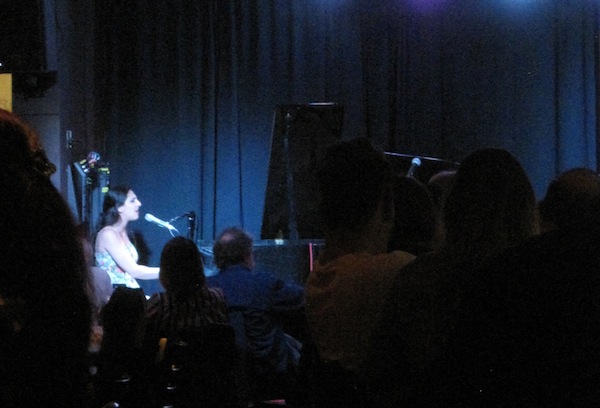
Noam Vazana was joined by Itamar Erez (not seen in photo) at a Caravan World Rhythms performance at Frankie’s Jazz Club June 7. (photo by Cynthia Ramsay)

New seniors campus?

Community leaders are looking to the future of the Dr. Irving and Phyliss Snider Campus for Jewish Seniors – the Louis Brier Home and Hospital and the Harry and Jeanette Weinberg Residence – with the realization that the aging buildings no longer support current standards and processes for delivery of health-care practices, technology and equipment. It’s been two years since the planning began, and the redevelopment committee is considering two options for the makeup of a new campus.

The first and preferred option involves relocating from the current four-acre property to the site of a new Jewish Community Centre of Greater Vancouver. By developing a mixed-use centre, its recreational and cultural programs and services would enhance healthcare and long-term care for seniors. It would also mean shared construction and operating costs.

The second option is to build stand-alone facilities for the seniors campus on a site close to the JCCGV. This would be smaller in size and design and entail a potentially shorter time frame for rebuilding, while maintaining proximity to the JCCGV for collaborative, intergenerational planning.

At the helm of the seniors campus is chief executive officer David Keselman. “Redevelopment is important because we are reaching the end of our ability – both [in terms of] infrastructure and operationally – to deliver care that is consistent with current and future healthcare delivery trends,” he said.

“There’s a push to keep seniors at home longer today, which means that, when they eventually require long-term services, they will be more fragile and require a higher intensity of services,” he continued. “But, whenever they need that care, this is the only Jewish healthcare delivery organization in B.C. and there’s nothing else unless you want to cross the U.S. border. It’s extremely important that the community supports this and that the government realizes that, for Jewish people, there’s nowhere else to go if they want to preserve their culture, customs and way of living.”

Rozanne Kipnes, a real estate development consultant with Tamarix Developments, was on the board of the Louis Brier for years and has been contracted to help secure a site, its legal structure and some financing opportunities. The big difference between the campus being planned and the current model, she said, is that the older model is based on a tendency to isolate seniors.

“The way we deliver care today is not the way it’s delivered in other countries around the world,” she explained. “We want to reengage and integrate seniors with the community, not isolate them. The government has seen this model tested in other communities and other countries and they’ve noted that when seniors’ long-term care is handled this way – with an integration of health and social needs – there’s a better quality of life for everybody and less burden on families.”

Kipnes noted that the Jewish community’s founding families “blessed” today’s community with land assets that can be leveraged “to support the redevelopment of an urban seniors care, health, wellness and cultural hub within the historical precinct of the Jewish community. We are hopeful it will also provide legacy operating and capital fund replacement to support collaborations going forward.”

Neither Kipnes nor Keselman would comment on the value of the land or the estimated costs of constructing a new campus. Kipnes said that how the land gets “leveraged” is all part of the discussion, and pivotal to that discussion will be how the City of Vancouver zones the land – for low-, medium- or high-density residential construction.

Right now, the volunteer redevelopment board is engaged in discussions, focus groups, market analyses and donor outreach. A study is underway to explore the number of units that will be required for residents of the campus, the current and future health services models of care and the facilities needed to support them. The study’s completion is expected by next month.

Whatever option is chosen, Kipnes said a new campus is at least eight years from reality. “If we’re successful in this endeavour as a community, it will be the largest community endeavour we’ve ever undertaken,” she said. “It’s well worth the collaboration and patience this project requires because the end will very much justify the means. On a new campus, we envision families from across the community reengaged and reunited. We see children with their grandparents engaging in activities between the JCC and the Louis Brier, combined with a host of other Jewish community agencies. A mixed-use project like this is very complicated and requires much more collaboration at all levels of the Jewish community. But it’s very doable.”

Lauren Kramer, an award-winning writer and editor, lives in Richmond. To read her work online, visit laurenkramer.net. This article was originally published by CJN.