
Expanding the healing

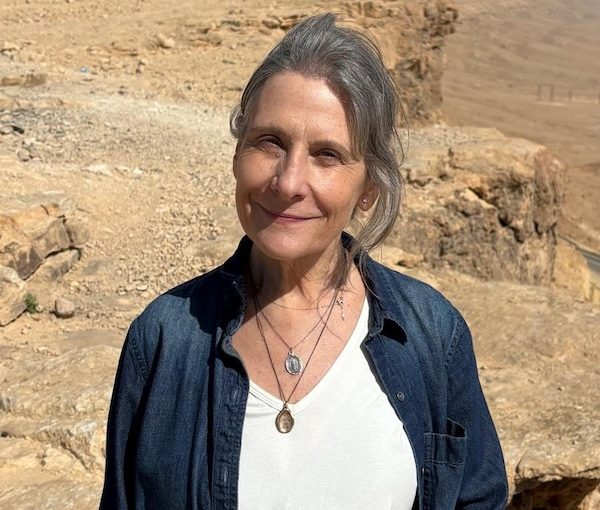
Elana Epstein shares her family’s narrative of recovery in Today I Will Be Fearless. (photo from Elana Epstein)

When Elana Epstein and her husband, David, confronted the reality that their son, Noah, was an addict, her life shifted on its axis.

In her emotional, practical, moving book, Today I Will Be Fearless: Rising Through My Son’s Drug Addiction, Epstein shares her family’s narrative of recovery, while digging into complex related issues like intergenerational trauma, societal silence and stigma, and finding purpose, resilience and power in the darkest moments of life. In the process of writing and sharing her story, Epstein has found new meaning and mission for her life.

“Writing the book was how I got better, deepened into my own recovery and saw the pattern of what recovery asks of us,” the Vancouver mother of three adult sons told the Independent. “And, the deeper I went into the story, the deeper I uncovered the gems of the why I was doing things. 

“This is happening for more than just my own son’s healing,” she said. “It’s my healing.”

She took her son’s recovery as an opportunity for her own self-understanding and improvement. The book, though, intends to expand the healing.

“It’s for a wider community,” Epstein said. “I was determined to be a channel for whoever needed support and a companion along this journey because people do this alone.”

Epstein, a yoga teacher, reiki master and spiritual practitioner, had long understood the language of healing. But addiction, she said, stripped her of any illusion of mastery. 

“It felt as if everything I had learned was a waste because I did not know my son was struggling with addiction,” she said. “It felt as if the tools were more of a hindrance than a help. But quickly my spirit reminded me the tools I had were the ones that would support me to get through this if only I could go deeper with them. That was the pivotal moment of my knowing I could and would get through this.”

She also realized that Noah was not the only one who needed to adapt to changing realities.

“I took the lens of recovery and turned it onto me and took the opportunity to delve into the 12 steps and see where I needed to release myself from the clutches of my ego and some of my ancestral teachings or just threads that were hanging around,” she said, adding that she began to see the impacts of intergenerational trauma. 

“I needed to peel back the layers and see that I was codependent and I was a people-pleaser and I didn’t know how to love myself well enough – all while my son is learning to do the same thing.”

Several months into Noah’s recovery, Epstein broke her leg while skiing. She took it as a sign from the universe to step back, focus inward and accept help.

“Maybe four days after surgery I was at home. I was sitting on the couch and I was feeling really sorry for myself. What has happened to my life? Isn’t it enough? How many more things … COVID and Noah and the war. And then I break my leg and I hear immediately, ‘You are going to write your book.’”
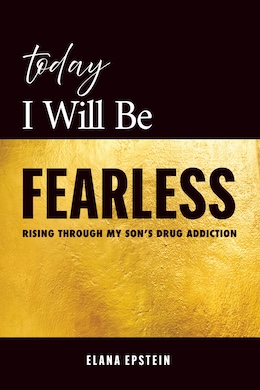
image - Today I Will Be Fearless book coverThere has always been a book in her, Epstein said. She just didn’t know what it was going to be about. Now, it became clear.

“This is my story, how I got through the journey of loving my son through his own addiction,” she said. “So, I started just journaling, and one thing led to the other and, a year later, I had a blueprint.”

As the book came together, she realized the writing process was no longer just for her own healing. “This was how I was going to show up for people,” she said.

Among the self-doubts she had to overcome was the realization that she has wisdom to share.

“I would say things like, ‘in my opinion’ and ‘in my humble experience,’” she said. “That was classic Elana. I started to accept that I actually do know what I’m talking about and there’s no reason to hold back and let’s go and let’s be authentically who we are.”

It turns out there was a demand for the wisdom of someone who has been through what Epstein’s family has.

“Although I had a desire that this would be a companion, I couldn’t have imagined it would be this well received … not just by families who are wading in the waters of addiction and recovery, but by people who are curious,” she said. “People are telling me this is a blueprint and a companion for life. One woman just said to me yesterday, ‘I keep you by my night table and, every once in awhile, I just pick it up and I read a sentence and it’s my teaching for what I’m struggling with in my own life.’”

Finding light in darkness is a recurring theme in the book.

“When bad things happen, people look for the reasons and they look for the why. And they definitely want to blame something or somebody,” Epstein said. “You don’t have to do that. You can accept what happens as a gateway to becoming and connecting to a version of yourself that is more beautiful than you can ever imagine and stronger that you can ever imagine. Stop being afraid of the potential things.”

Her family’s Jewishness infuses the book.

“My message to the Jewish reader is this book is filled with mystical wisdom that can guide you to a more peaceful existence one day at a time with what is coursing through our blood and bones,” said Epstein. “I had the vision early on that I was going to be a part of bringing more awareness into the Jewish community because we have lost too many. Many children and too many people suffer in silence.”

When Rabbi Josh Corber took over the Jewish Addiction Community Service and Jewish Family Services took the group under their umbrella, Epstein discussed how she might contribute to the work.

She took the lead on running a group for families navigating a member’s addiction or recovery. She said she hopes that the book might land in the right place, just when an individual or family needs to hear her message.

“If that person can pick up my book, then we’re living that old adage that the Talmud teaches: if you save one life, it is as if you are saving an entire world,” she said, “And I truly believe that.” 

Community milestones … October 2025

Jewish Addictions Community Services (JACS) welcomes two members to its team. 

Jordana Jackson, JACS’s new addictions specialist, is a certified addiction counsellor. In addition to having a wealth of experience working in addiction and recovery spaces throughout Vancouver Coastal and Fraser Health authorities, she is the founder and director of AWARE (Addicts With Aspirations Recovery Entertainment), a therapeutic performance-arts program. Jackson is already making a difference at JACS, creating navigation support structures and providing counseling for clients.

Elana Epstein, JACS’s new group facilitator, is a certified recovery coach. More importantly, she has years of experience being a mother of a child who struggled with addiction and is now in recovery. At JACS Family Circle, Epstein is using both her spiritual and professional skill sets to hold space for individuals whose friends and family have been affected by addiction. These group counseling sessions are an important aspect of JACS.

* * * 

Elvira Molochkovetsk takes on the role of a community connector in Victoria. This position is a joint Jewish Federation of Victoria and Vancouver Island (JFVVI) and Jewish Federation of Greater Vancouver project. Her goal is to connect and engage all community members but, in particular, those who do not attend any existing synagogue or Jewish association.

Over the past two years, Molochkovetsk has been part of the JFVVI as a PJ Library parent, volunteer, connector and, for the past year, as PJ Library coordinator for Vancouver Island and the Gulf Islands. PJ Library has focused on connecting people with children up to the age of 13 and, in her expanded role as a connector, Molochkovetsk will be expanding it to reach out to teenagers, seniors and young entrepreneurs.

The parents of four kids, Molochkovetsk and her husband, Dimitri, have run family businesses for the last decade. Almost three years ago, they moved to Victoria from Winnipeg, where they lived for seven years. They both grew up in Israel and have family there. 

An uplifting moment

Vancouver hosted the largest convention in the city’s history over the weekend. About 50,000 members of Alcoholics Anonymous descended on the convention centre and BC Place stadium. Among the throngs was a booth representing Jewish Addiction Community Services – JACS Vancouver.

Rabbi Joshua Corber, the organization’s recently appointed director of addictions and mental health services, wanted the group to have a presence at the massive international confab. The booth shared information about JACS’s work, as well as literature from partner agencies in other cities.

For Elana Epstein, who attended the booth and greeted passersby, the experience was transformative – but not for the reasons she expected.

Epstein and her family have shared their journey with addiction and recovery openly, including in these pages (jewishindependent.ca/family-hopes-to-save-lives). She and husband David Bogdonov and their son Noah Bogdonov have become some of the most familiar faces in this community speaking about and advocating for awareness around addiction and recovery. 

At a public event at King David High School last fall, the family shared the path they have been on since Noah began his recovery journey two years ago. The entire family has become engaged with this cause. Noah and Elana have both become professionals in the field – Noah recently moved to Calgary to launch a new recovery centre and Elana was credentialized and recently hired to lead JACS’s new family group, which began earlier this week.

But it was not recovery – or, at least, not recovery in the sense she anticipated – that uplifted her at the AA convention. It was the outpouring of empathy and words of encouragement she received from passersby to her as a Jew, and to the Jewish community more broadly.

A steady stream of people dropped by to peruse the information at the booth, but Epstein was deeply moved by the number who just expressed a few words of support for the situation Jewish people find themselves facing in today’s world.

This sort of acknowledgement is something that has been glaringly absent among her non-Jewish circles in Vancouver, she said.

“I personally needed it,” she said. “I haven’t felt that kind of outreach since the war started.” In one of her local circles, her experience has been quite the opposite.

Since Oct. 7, 2023, at the latest, most Jews have probably, consciously or unconsciously, at different times and in different spheres, become aware of dangers and vulnerabilities when we identify ourselves in public. Any reservations Epstein had quickly evaporated, leaving her “completely surprised.”

“Tears,” she said of her response. “Overwhelming gratitude. I really didn’t expect this and it is a beautiful thing. A really beautiful, heartfelt thing.”

There were other surprises – a lot of non-Jews subscribed to stereotypes that addiction did not exist in the Jewish community. For Epstein, though, it was the few words from a stream of strangers that raised her spirits.

Why did it take strangers from other cities to say the words she needed to hear? Maybe it is easier to speak with people you don’t know. By putting herself out there as a visible Jew in a primarily non-Jewish environment, she attracted the goodwill of people who wanted to share expressions of kindness. Are people who deal in addiction and recovery more sensitive to the pain of others? Is there some other explanation?

We would like to imagine this was an indication that the world is kinder than some recent evidence would suggest.

For one thing, there is a simple phenomenon: haters are loud. The chanters who march through the streets condemning Israel (and often Jews) are few but extremely vocal. Their stickers, spray-paint and graffiti might suggest numbers greater than they represent.

Empathy is quiet. Seeing a Jewish individual standing invitingly at a booth presents an opportunity for a few quiet words that maybe some people have been waiting to express.

It may be rare enough that it bears highlighting. It is still, though, a reminder that compassion abounds, often in places we least expect it. This is a small example – and just one – that modest acts of kindness have profound ripples.

As we enjoy the full bloom of summer, with its (hopefully) bright days and reinvigorating outdoor activities, we thought it was worth sharing that the world can be a more welcoming place than it sometimes seems. 

We naturally share with friends our moments of disappointment and distress, seeking commiseration when the world lets us down. Remember also to share your moments of uplift, as this one individual chose to do. We need them. 

Family hopes to save lives

At the Sept. 26 event Bridging Hope, which takes place at King David High School, Noah Bogdonov, left, and his parents, David Bogdonov and Elana Epstein, will speak about their family’s experience with addiction. (photo from Bogdonov-Epsteins)

“We want to share our experience, strength and hope with addiction,” said David Bogdonov about what he and his wife, Elana Epstein, and their son, Noah Bogdonov, will talk about on Sept. 26 at Bridging Hope: Science and Testimonial in the Fight Against Addiction.

The Independent spoke with the Bogdonov-Epsteins recently, to get to know them a bit before the event, which is being presented by Canadian Friends of the Hebrew University of Jerusalem, King David High School and Vancouver Talmud Torah.

David is an engineer and works for a company that builds waterparks, while Elana, who has a social work background, has been a yoga teacher for about 20 years and a wellness/spiritual coach for about 15 years. “Currently, I am supporting a ton of moms in the addiction community,” she said.

The couple has three sons. “Boys R Us” quipped David. “Noah is the firstborn, at 28 years old; Tal is our second, at 24; and Benjamin is our youngest, at 22.”

It was in October 2022 that they became sure that Noah was struggling with addiction. “Before that,” said Elana, “about three or four months before the ‘awakened moment,’ we knew that he had been struggling but he was telling us he had gotten it under control, not to worry, then it went downhill, crashing very fast.

“He started in high school – not unlike the vast majority of kids in high school – using weed and alcohol,” she said. “We didn’t like it, but we assumed it was part of his teenage years and that he would grow out of it and come to his own realization of how to find balance in life and, sadly, that never happened.”

Initially, it was Noah’s friends who tried to help.

“They held an informal intervention and asked him to get it under control,” said David. “That was in May of ’22, and that’s when we became aware of it, but he pulled the wool over our eyes and convinced us that he had it all under control. That’s when we started to make sense of all the red flags we had seen for a long time.”

Months later, when David and Elana were in Whistler, Noah was slower than usual to respond to a text message. “I woke up one morning and said that we need to go home, something is not right. He was staying at my brother’s apartment, who was away, and we knew. I said, we need to go, and we went, and we found him, and he was in dire straits,” said Elana. “But, he said, ‘I don’t want to live like this anymore.’ We asked, ‘Does that mean treatment?’ He said, ‘Yeah.’ We got the ball rolling, and he went right in, no hesitation, no more denial. He was ready, we were ready, and that was the beginning of the rest of his life.”

It’s been almost two years since Noah has been in treatment. He spent about 100 days at the Last Door Addiction Recovery Treatment Centre, in New Westminster, then was in transition housing, where he had a relapse that lasted two months, said David. It’s been 16 months since Noah’s relapse.

“David and I never stopped going to the weekly meetings, doing our own work,” said Elana, even while Noah was relapsing. The Last Door has family group meetings, which they’ve been attending regularly since Noah was two weeks into treatment, said David, calling their participation in the group a “very key element” of their own recovery.

Noah is working at Maintain Recovery, a sober living house, which he manages. “It’s a common story for many recovering addicts to get immersed in the life of recovery,” said David. “They often start to work in the organizations and so on. It’s part of what keeps them clean and keeps them on the path, which is really wonderful to watch.”

David and Elana are being so open about their family’s experiences because, said David, “We take quite seriously that part of the overdose crisis is caused by the stigma surrounding drug addition and we subscribe to the notion that addiction is a disease and should be treated like any other disease. You don’t shame someone for having cancer, you shouldn’t shame someone for having the disease of addiction. So, we are both passionate about that.”

“For me,” added Elana, “it goes beyond the stigma…. I really feel like if there were more language, more community, more education, more connection around this, you know, if I had had someone … approach me and say, listen, this is what addiction looks like, your son seems to be starting down a path that gets worse before it gets better…. In Noah’s life, we had no knowledge of addiction, we did not know what it looked like, we were totally blindsided,” she said.

“We don’t have trauma, there was no story he was hiding and trying to make peace with,” added Elana. “He was a boy who got caught up in using recreational drugs, like everyone else, [but] he was the one who was the addict who couldn’t stop. The moment when, with Noah’s permission, it became clear that we had a role to play in our community, where there’s a lot of shame and we don’t talk about it, so the kid dies. That’s not, on my watch, ever going to happen. If I can touch one family’s life because of our story, I will continue to do this till the day I die.”

Bridging Hope takes place at King David High School. Discussing the science of addiction will be Dr. Yaron Finkelstein, a professor of pediatrics, pharmacology and toxicology at the University of Toronto and a staff physician at the Hospital for Sick Children (known as SickKids); Dr. Yonatan Kupchik, senior lecturer and director, department of medical neurobiology, Institute for Medical Research Israel-Canada (IMRIC), Centre for Addiction Research (ICARe), the Hebrew University of Jerusalem; and Dr. Rami Yaka, head of HU’s School of Pharmacy. For tickets to the event ($18), visit register.cfhu.org/bridginghope.