Skip to content
  • Home
  • Subscribe / donate
  • Events calendar
  • News
    • Local
    • National
    • Israel
    • World
    • עניין בחדשות
      A roundup of news in Canada and further afield, in Hebrew.
  • Opinion
    • From the JI
    • Op-Ed
  • Arts & Culture
    • Performing Arts
    • Music
    • Books
    • Visual Arts
    • TV & Film
  • Life
    • Celebrating the Holidays
    • Travel
    • The Daily Snooze
      Cartoons by Jacob Samuel
    • Mystery Photo
      Help the JI and JMABC fill in the gaps in our archives.
  • Community Links
    • Organizations, Etc.
    • Other News Sources & Blogs
    • Business Directory
  • FAQ
  • JI Chai Celebration
  • JI@88! video

Recent Posts

  • Eby touts government record
  • Keep lighting candles
  • Facing a complex situation
  • Unique interview show a hit
  • See Annie at Gateway
  • Explorations of light
  • Help with the legal aspects
  • Stories create impact
  • Different faiths gather
  • Advocating for girls’ rights
  • An oral song tradition
  • Genealogy tools and tips
  • Jew-hatred is centuries old
  • Aiding medical research
  • Connecting Jews to Judaism
  • Beacon of light in heart of city
  • Drag & Dreidel: A Queer Jewish Hanukkah Celebration
  • An emotional reunion
  • Post-tumble, lights still shine
  • Visit to cradle of Ashkenaz
  • Unique, memorable travels
  • Family memoir a work of art
  • A little holiday romance
  • The Maccabees, old and new
  • My Hanukkah miracle
  • After the rededication … a Hanukkah cartoon
  • Improving the holiday table
  • Vive la différence!
  • Fresh, healthy comfort foods
  • From the archives … Hanukkah
  • תגובתי לכתבה על ישראלים שרצו להגר לקנדה ולא קיבלו אותם עם שטיח אדום
  • Lessons in Mamdani’s win
  • West Van Story at the York
  • Words hold much power
  • Plenty of hopefulness
  • Lessons from past for today

Archives

Follow @JewishIndie
image - The CJN - Visit Us Banner - 300x600 - 101625

Tag: Bridging Hope

Family hopes to save lives

Family hopes to save lives

At the Sept. 26 event Bridging Hope, which takes place at King David High School, Noah Bogdonov, left, and his parents, David Bogdonov and Elana Epstein, will speak about their family’s experience with addiction. (photo from Bogdonov-Epsteins)

“We want to share our experience, strength and hope with addiction,” said David Bogdonov about what he and his wife, Elana Epstein, and their son, Noah Bogdonov, will talk about on Sept. 26 at Bridging Hope: Science and Testimonial in the Fight Against Addiction.

The Independent spoke with the Bogdonov-Epsteins recently, to get to know them a bit before the event, which is being presented by Canadian Friends of the Hebrew University of Jerusalem, King David High School and Vancouver Talmud Torah.

David is an engineer and works for a company that builds waterparks, while Elana, who has a social work background, has been a yoga teacher for about 20 years and a wellness/spiritual coach for about 15 years. “Currently, I am supporting a ton of moms in the addiction community,” she said.

The couple has three sons. “Boys R Us” quipped David. “Noah is the firstborn, at 28 years old; Tal is our second, at 24; and Benjamin is our youngest, at 22.”

It was in October 2022 that they became sure that Noah was struggling with addiction. “Before that,” said Elana, “about three or four months before the ‘awakened moment,’ we knew that he had been struggling but he was telling us he had gotten it under control, not to worry, then it went downhill, crashing very fast.

“He started in high school – not unlike the vast majority of kids in high school – using weed and alcohol,” she said. “We didn’t like it, but we assumed it was part of his teenage years and that he would grow out of it and come to his own realization of how to find balance in life and, sadly, that never happened.”

Initially, it was Noah’s friends who tried to help.

“They held an informal intervention and asked him to get it under control,” said David. “That was in May of ’22, and that’s when we became aware of it, but he pulled the wool over our eyes and convinced us that he had it all under control. That’s when we started to make sense of all the red flags we had seen for a long time.”

Months later, when David and Elana were in Whistler, Noah was slower than usual to respond to a text message. “I woke up one morning and said that we need to go home, something is not right. He was staying at my brother’s apartment, who was away, and we knew. I said, we need to go, and we went, and we found him, and he was in dire straits,” said Elana. “But, he said, ‘I don’t want to live like this anymore.’ We asked, ‘Does that mean treatment?’ He said, ‘Yeah.’ We got the ball rolling, and he went right in, no hesitation, no more denial. He was ready, we were ready, and that was the beginning of the rest of his life.”

It’s been almost two years since Noah has been in treatment. He spent about 100 days at the Last Door Addiction Recovery Treatment Centre, in New Westminster, then was in transition housing, where he had a relapse that lasted two months, said David. It’s been 16 months since Noah’s relapse.

“David and I never stopped going to the weekly meetings, doing our own work,” said Elana, even while Noah was relapsing. The Last Door has family group meetings, which they’ve been attending regularly since Noah was two weeks into treatment, said David, calling their participation in the group a “very key element” of their own recovery.

Noah is working at Maintain Recovery, a sober living house, which he manages. “It’s a common story for many recovering addicts to get immersed in the life of recovery,” said David. “They often start to work in the organizations and so on. It’s part of what keeps them clean and keeps them on the path, which is really wonderful to watch.”

David and Elana are being so open about their family’s experiences because, said David, “We take quite seriously that part of the overdose crisis is caused by the stigma surrounding drug addition and we subscribe to the notion that addiction is a disease and should be treated like any other disease. You don’t shame someone for having cancer, you shouldn’t shame someone for having the disease of addiction. So, we are both passionate about that.”

“For me,” added Elana, “it goes beyond the stigma…. I really feel like if there were more language, more community, more education, more connection around this, you know, if I had had someone … approach me and say, listen, this is what addiction looks like, your son seems to be starting down a path that gets worse before it gets better…. In Noah’s life, we had no knowledge of addiction, we did not know what it looked like, we were totally blindsided,” she said.

“We don’t have trauma, there was no story he was hiding and trying to make peace with,” added Elana. “He was a boy who got caught up in using recreational drugs, like everyone else, [but] he was the one who was the addict who couldn’t stop. The moment when, with Noah’s permission, it became clear that we had a role to play in our community, where there’s a lot of shame and we don’t talk about it, so the kid dies. That’s not, on my watch, ever going to happen. If I can touch one family’s life because of our story, I will continue to do this till the day I die.”

Bridging Hope takes place at King David High School. Discussing the science of addiction will be Dr. Yaron Finkelstein, a professor of pediatrics, pharmacology and toxicology at the University of Toronto and a staff physician at the Hospital for Sick Children (known as SickKids); Dr. Yonatan Kupchik, senior lecturer and director, department of medical neurobiology, Institute for Medical Research Israel-Canada (IMRIC), Centre for Addiction Research (ICARe), the Hebrew University of Jerusalem; and Dr. Rami Yaka, head of HU’s School of Pharmacy. For tickets to the event ($18), visit register.cfhu.org/bridginghope. 
Format ImagePosted on September 13, 2024September 11, 2024Author Cynthia RamsayCategories LocalTags addiction, awareness, Bridging Hope, Canadian Friends of the Hebrew University, CFHU, David Bogdonov, Elana Epstein, health care, KDHS, King David High School, mental health, Noah Bogdonov, science, Vancouver Talmud Torah, VTT

The science behind addiction

Every year, more Canadian teenagers die by suicide than by all medical diseases combined, including cancer, diabetes, asthma and infections.

Dr. Yaron Finkelstein, a professor of pediatrics, pharmacology and toxicology at the University of Toronto and a staff physician at the Hospital for Sick Children (known as SickKids), shared this fact with the Jewish Independent in advance of Bridging Hope: Science and Testimonial in the Fight Against Addiction. Presented by Canadian Friends of the Hebrew University of Jerusalem, King David High School (KDHS) and Vancouver Talmud Torah (VTT), the Sept. 26 event at KDHS will also feature Dr. Yonatan Kupchik, senior lecturer, department of medical neurobiology, the Hebrew University of Jerusalem (HU), and Dr. Rami Yaka, head of the School of Pharmacy at HU, discussing the science of addiction. The testimonial part of the gathering will be shared by members of the Epstein-Bogdonov family. In this issue of the Independent, we talk to the doctors. Next issue, we will meet Elana Epstein and David Bogdonov, who, with their son, Noah Bogdonov, will speak in September about their family’s experience with addiction.

“Drug overdose, led by the opioids crisis, is an immense public health problem in BC, Canada and globally,” Finkelstein said. “Effectively addressing the loss of so many people for overdose daily, a largely preventable condition, must be a national priority. Indeed, youths are also highly affected, and we see them in the emergency departments, in clinics and, sadly, on the streets. Further, some youths use overdose as a common means of self-harm and suicide attempt.”

Finkelstein added that “most medications administered to children, particularly in hospitals (up to 85% in some acute care settings) have not been properly studied and approved in this population. Rather, we ‘borrow’ them from our experience in adults, scale the dose down to the child’s weight and hope to achieve the same effects and outcomes. However, we know this is not always the case, sometimes the outcomes are unwarranted, and I have personally noticed that repeatedly over the years. The goal of my research program is to work hard and close this knowledge gap – find the safest and most effective medications for children, and tailor their dosing regimens to the pediatric needs.”  

photo - Dr. Yaron Finkelstein
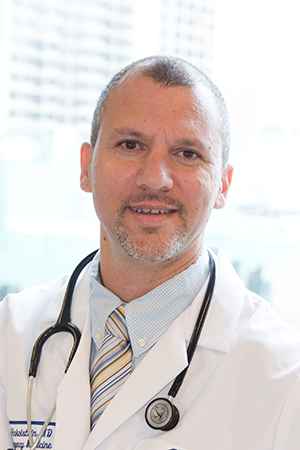
Dr. Yaron Finkelstein (photo from Sickkids website)

At Bridging Hope, Finkelstein will discuss “the impacts of cannabis legalization on pediatric poisonings – trends and severity (for example, many do not appreciate that edible cannabis products can kill a child) – and on mental health, including addiction and the risk of developing schizophrenia in youths and adults.”

Canada became the second country to legalize cannabis for recreational use in 2018, he said. “This ‘natural experiment’ has led to numerous unanticipated outcomes, many have negative impacts on public health, and particularly on children.”

Finkelstein’s main research is centred on pediatric therapeutics in acute-care settings, with the long-term goal of optimizing drug safety.

“During my clinical clerkship in medical school, my passion to help children grew tremendously, and I was inspired by my mentors,” he shared. “Children have immense resilience, and their recovery is often fast and remarkable, and provides hope. I was always fascinated by the mechanistic actions of drugs on the human body, and combining those passions felt natural.”

“From the early beginning of my studies, I was thrilled to understand how the brain functions,” said Yaka, who not just heads HU’s School of Pharmacy but conducts research as well. “The brain reward circuitry is the most important system in any living creature, since it is responsible for our survival and reproduction, therefore, our existence. My main research is focused on synaptic function in health and disease.”

photo - Dr. Rami Yaka
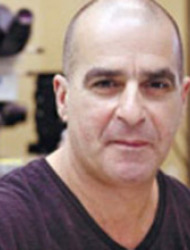
Dr. Rami Yaka (photo from HU website)

Yaka joined the School of Pharmacy in 2003 and has served in many capacities. “Since I feel that the School of Pharmacy is like my second home and I really care about its future, and since I have all the necessary experience to take this mission, I volunteered to head the school,” he said. “Maintaining the right balance between the administrative duties and the research (my main cause of being here) is challenging. I work harder and try to pay the same attention to both tasks without reducing any effort for either.”

On Sept. 26, Yaka will talk about “‘out of the box’ research to battle drug addiction.”

“Since addiction to drugs, screens, food, etc., is very common and spreads all over the world very easily, this subject is very popular among laypeople,” he said. “Therefore, for me, it’s easy to adopt lay language to explain in simple words what the problem is and what we can do to avoid having it. I think that a huge part of the problem is the lack of knowledge among users (mainly young) about the adverse effects and negative impact that drugs have on the brain.”

With respect to educating youth and engaging them more broadly in science, Kupchik sees his role as a principal investigator at a leading university as “not only to generate new knowledge that may lead the world forward but also to plant the seeds for the next generation of principal investigators.”

“In Israel,” said Kupchik, “there are several programs that select the top high school students in the country and expose them to academia at their early age. This is excellent, but … there are many excellent students that we may be missing as a society just because they live in underprivileged places. Therefore, we try in the lab to specifically target those populations of students, and we do it in various ways. For example … [we] started an initiative that invites local high school students to scientific conferences taking place in their vicinity. For many students, this is the first interaction with science and many of them reported later that it induced interest in the scientific world. We also invite high school students to our laboratory and provide an interactive experience in which they learn about the brain and how scientific research is performed.”

photo - Dr. Yonatan Kupchik
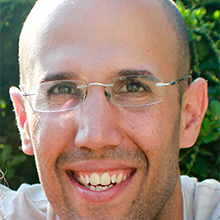
Dr. Yonatan Kupchik (photo from HU website)

What most intrigues Kupchik about neurobiology “is how a biological organ, composed of billions of neurons that communicate with each other, generates such complex phenomena as behaviour, emotion, thoughts, etc.” His lab at HU researches the changes occurring in single neurons or in brain circuits in drug addiction or obesity. Among other things, they are currently collaborating with two neighbouring labs.

“One is with the laboratory of Dr. Shai Sabbah, an expert in the neurobiology of light processing in the eye. It is known that exposure to light can affect mood and the neural activity in brain areas related to emotions. We are investigating in this collaboration whether light exposure could also affect drug-seeking behaviour.

“Another collaboration is with the laboratory of Dr. Danny Ben-Zvi, an endocrinologist and expert of the bariatric surgery. As bariatric surgery decreases the craving for rewarding foods, we are now investigating together whether the bariatric surgery drives permanent changes in the reward system of the brain and whether it could affect the craving for other, non-food, rewards.”

Kupchik said, “We believe that there are many similarities between behaviours that may reflect addiction, such as drug dependence, overeating, gambling, hoarding, computer gaming, social media use and so on, and hope that understanding the neurobiological mechanisms in one kind of addiction could hint about the mechanisms of other addictions. We chose to focus on drug addiction and on obesity both because these are two main global health challenges that remain unsolved and because these are conditions that can be modeled in laboratory animals.”

At King David High School, Kupchik “will try to show some of the permanent changes we found that occur in the reward system after using cocaine, and after withdrawal.”

For tickets ($18) to Bridging Hope, visit register.cfhu.org/bridginghope. 
Posted on August 23, 2024August 22, 2024Author Cynthia RamsayCategories LocalTags addiction, Bridging Hope, Canadian Friends of the Hebrew University, CFHU, disease, Hebrew University, KDHS, King David High School, Rami Yaka, science, SickKids, Vancouver Talmud Torah, VTT, Yaron Finkelstein, Yonatan Kupchik
Proudly powered by WordPress