Skip to content
  • Home
  • Subscribe / donate
  • Events calendar
  • News
    • Local
    • National
    • Israel
    • World
    • עניין בחדשות
      A roundup of news in Canada and further afield, in Hebrew.
  • Opinion
    • From the JI
    • Op-Ed
  • Arts & Culture
    • Performing Arts
    • Music
    • Books
    • Visual Arts
    • TV & Film
  • Life
    • Celebrating the Holidays
    • Travel
    • The Daily Snooze
      Cartoons by Jacob Samuel
    • Mystery Photo
      Help the JI and JMABC fill in the gaps in our archives.
  • Community Links
    • Organizations, Etc.
    • Other News Sources & Blogs
    • Business Directory
  • FAQ
  • JI Chai Celebration
  • JI@88! video

Recent Posts

  • Eby touts government record
  • Keep lighting candles
  • Facing a complex situation
  • Unique interview show a hit
  • See Annie at Gateway
  • Explorations of light
  • Help with the legal aspects
  • Stories create impact
  • Different faiths gather
  • Advocating for girls’ rights
  • An oral song tradition
  • Genealogy tools and tips
  • Jew-hatred is centuries old
  • Aiding medical research
  • Connecting Jews to Judaism
  • Beacon of light in heart of city
  • Drag & Dreidel: A Queer Jewish Hanukkah Celebration
  • An emotional reunion
  • Post-tumble, lights still shine
  • Visit to cradle of Ashkenaz
  • Unique, memorable travels
  • Family memoir a work of art
  • A little holiday romance
  • The Maccabees, old and new
  • My Hanukkah miracle
  • After the rededication … a Hanukkah cartoon
  • Improving the holiday table
  • Vive la différence!
  • Fresh, healthy comfort foods
  • From the archives … Hanukkah
  • תגובתי לכתבה על ישראלים שרצו להגר לקנדה ולא קיבלו אותם עם שטיח אדום
  • Lessons in Mamdani’s win
  • West Van Story at the York
  • Words hold much power
  • Plenty of hopefulness
  • Lessons from past for today

Archives

Follow @JewishIndie
image - The CJN - Visit Us Banner - 300x600 - 101625

Tag: Camp Kalsman

Celebration of Jewish camps

Celebration of Jewish camps

The bright, happy cover of The Scribe Summer Camps Issue, which was released last month by the Jewish Museum & Archives of British Columbia (JMABC), draws readers right in. The 95-page magazine-format journal is packed with colour photos of campers having a great time, doing some amazing things in the beautiful place we live, the Pacific Northwest.

image - The Scribe Summer Camps Issue coverThe issue features seven camps. In the order they are presented, they are overnight options Camp Miriam (Gabriola Island, BC), Camp Hatikvah (Okanagan Valley, BC), Camp Solomon Schechter (near Olympia, Wash.), Camp Kalsman (Arlington, Wash.) and Sephardic Adventure Camp (Cle Ulum, Wash.), and day options Camp Gan Israel (Vancouver) and the Jewish Community Centre of Greater Vancouver’s Camp Shalom. The basic structure of each profile is an overview of the camp and its history, then oral history segments from camp directors; all the overnight camp sections include interviews with former campers, as well.

Many Jewish Independent readers will recognize the names at least of most of the former attendees of the BC overnight camps: Bernie Simpson, Selina Robinson, Robert Krell, David Levi, Danya Rogen, Sam Gutman, Ted Zacks, Arthur Dodek, Stephen Glanzberg, Susan Fine and Kayla Cohen. And, from the Jewish Independent’s annual Camp Guides, many of the directors and staff might even be familiar: Leah Levi (Miriam), Liza Rozen-Delman (Hatikvah), Zach Duitch (Solomon Schechter), Rabbi Ilana Mills (Kalsman), Rabbi Dovid and Chaya Rosenfeld (Gan Israel) and Ben Horev (Camp Shalom).

The one camp that was new to the JI was a long-established one, Sephardic Adventure Camp, whose director is Rabbi Kenneth Pollack. It’s been around for decades and yet hadn’t crossed our radar. There are always things to learn!

In the interviews, people talk about how they became involved with their camp, how it is/was to work there, what makes/made their experience special. They are also asked why Jewish camps are important in their view, what they have learned, in what ways camp inspired them, and more.

Interviewees share some of their personal history, as well as answer more light-hearted queries, like “Your favourite food served at camp?” “Your favourite day at camp?” “If you were still attending camp, what activity would you want to excel at?” “If you weren’t working in the career you’re in, what would you be?”

As unique as all the camps are, there is overlap of such things as activities offered, lessons learned, inspirations gained, even though some camps are more ideological, some place more emphasis on Judaism and religious observance, others prioritize sports and outdoor life.

“Regardless of ideology or format,” writes Elana Wenner, the museum’s director of programming and development, in her introduction, “the camps are united in their intention to organically build community through immersive and engaging experiences.”

She observes: “Through the articles in this publication, three overarching themes emerge that serve to unite the experiences shared at all seven camps. They are: 1. The role of the personal camp experience as a grounding point for Jewish self-identity; 2. The influence of Jewish camp experience on personal values and ideals; and 3. The integral link between Jewish summer camp attendance and Jewish community involvement, both in childhood and later in life.”

While there is much data to support the personal and communal benefits of Jewish camp, there’s nothing like personal expressions to bring that message home.

“The personal stories shared by alumni and staff and supporters reveal how these camps forge deep, lasting connections that extend well beyond the summer months,” writes archivist Alysa Routtenberg in the journal’s concluding section. “These connections create a network of relationships that continue to enrich participants’ lives and bolster their sense of belonging.”

And Routtenberg underscores the need to preserve, as the JMABC does, these experiences through oral histories.

“By recording and sharing these stories,” she writes, “we ensure that the essence of Jewish summer camps is preserved for future generations, offering them a window into a cherished aspect of Jewish life.”

That includes the serious and the less serious of life. Reading about how Jewish summer camp allowed people to connect more deeply with their Jewish identity, learn valuable personal and professional lessons, make lifelong friends and more, is as interesting as discovering that anyone has a favourite camp food and what camp activity people would have wanted to excel at.

Carol Crenna was the managing editor and features writer for this edition of The Scribe; Sonia Bishop, graphic designer. Among the many people who donated their time and skills to getting the journal to publication were Heather Glassman Berkowitz, as copy editor, and Helen Aqua and Judith Gurfinkel, who chair the Scribe committee, were editorial consultants. Other volunteers acted as interviewers and transcribers. The journal committee is Aqua, Gurfinkel, Glassman Berkowitz, Gary Averbach, Debby Freiman, Daniella Givon (president of the JMABC board), Barb Schober and Ronnie Tessler.

The Camp and other issues of The Scribe can be purchased from the museum and archives for $20. Call 604-257-5199 or email [email protected]. 

Format ImagePosted on May 30, 2025May 29, 2025Author Cynthia RamsayCategories BooksTags Camp Gan Israel, Camp Hatikvah, Camp Kalsman, Camp Miriam, Camp Shalom, Camp Solomon Schechter, day camp, Jewish Museum and Archives of BC, Jewish summer camp, JMABC, overnight camp, Sephardic Adventure Camp
Why work at summer camp?

Why work at summer camp?

(photo from Camp Kalsman)

We know that today’s university and college students have lots of choices for summer jobs – but here are 10 reasons why working at a Jewish summer camp is the absolute best opportunity for someone who’s starting to think about a professional career.

1. Leadership skills

Regardless of your major, working at a summer camp puts you in a prime place to develop job-marketable skills. As a counselor, you’ll be overseeing large groups of children, and that work translates well into excellent management and personnel skills. You may also qualify for college/university credit, so check with your adviser.

2. Change campers’ lives

Campers love coming to summer camp, which many consider a second home. Summer camps hire fun, energetic people who are motivated to give campers the best summer ever and to make them want to come back, year after year. There’s no question that campers look up to their counselors more than anyone else. You’re directly responsible for helping young people learn about themselves, challenge themselves and explore their Jewish identities. During this formative time, you have the chance to become a camper’s hero.

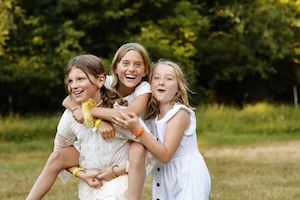
photo - campers having fun (photo from Camp Kalsman)
(photo from Camp Kalsman)

3. The great outdoors

Most summer camps give you access to the best of nature. Set among the trees with an expansive view of the sky, you can hike, swim, mountain bike, zipline through the forest, stargaze, kayak and so much more. As far as offices and work locations go, it doesn’t get much better than that.

4. Opportunity to grow

Camp staff become a community within itself. You’ll end up inspiring and learning from one another, experiencing much of the same joy and wonder as the campers. Plus, you’ll make friends with people who live across North America and even abroad, as many Jewish camps hire summer staff from Israel.

5. Bigger than yourself

Jewish camp works. Those who attend and work at camp are more likely to feel a strong connection to their Jewish community, which can mean lighting Shabbat candles, feeling a personal connection to Israel and attending a synagogue. Camp gives you the skills to change the world and connect to something bigger than yourself.

6. Save money

Think of how much you’ll save when food and housing are provided for you!

7. Be nurtured and cared for

Camps take the health and well-being of their counselors and campers very seriously. For example, URJ Camp Newman, a Reform Jewish summer camp in Santa Rosa, Calif., applies the CARE philosophy to everything they do: the philosophy is based upon the principles of community, acceptance, role-modeling, and that each and every individual is created b’tzelem Elohim, in the image of God.

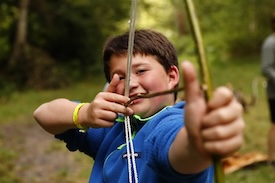
photo - camper doing archery
(photo from Camp Kalsman)

8. Goals and interests

Because there are so many roles to fill and because you come with so many additional strengths and skills, camp directors will strive to match your passions to your role at camp so that you get the most out of your experience.

9. Jumpstart career

Camp is for the career-driven. Seriously!

10. Buzzfeed agrees

If you need even more reasons to apply for a camp counselor position, BuzzFeed has 20 more reasons working at a summer camp will be your best job ever: buzzfeed.com/sarahmcf/20-reasons-why-working-at-summer-camp-is-the-best-k6jl. 

For information on working at URJ Camp Kalsman, which is southeast of Arlington, Wash., about a two-and-a-half-hour drive from Vancouver, visit campkalsman.org/work-at-camp.

Format ImagePosted on January 17, 2025January 15, 2025Author Alaina Yoakum REFORMJUDAISM.ORGCategories LocalTags Camp Kalsman, employment, Jewish summer camp, summer job, youth
Three essential life lessons

Three essential life lessons

Time at summer camp is an incredible gift to give kids and teens. (photo from Camp Kalsman)

In a world where children and teens are met with a barrage of external pressures telling them who they should idolize, what they should wear and how they should spend their time, summer camps provide a respite. As much as I try to help my three kids build resilience and a strong moral compass, I know that, as soon as they walk out the door, it can be an uphill battle every day of the school year. 

As parents, we need more places outside of our home where our kids and teens can feel at home while they can practise the critical thinking, self-awareness and problem-solving skills we all know are so essential. This is why I love summer camp for my kids – and I’m not just saying that because I’m the director of a summer camp! Ask anyone who grew up at an overnight summer camp and most will tell you that camp was where they felt most comfortable in their own skin, where they were celebrated for exactly who they were, and where they learned many of the lessons that have stuck with them throughout their adult life. 

Here are the top three life lessons that kids and teens can take away from summer camp.

1. Find your people

Each summer, kids arrive at camp with a ton of baggage and it’s not just in the form of trunks and duffels and sleeping bags. The beauty of summer camp is that campers can shed that layer (or layers) of themselves that build up over the course of the year and spend time exploring who they are, what brings them joy, who brings out the best in them … without the pressures of school peers who “know them.”

photo - The beauty of summer camp is that campers can shed that layer (or layers) of themselves that build up over the course of the year and spend time exploring who they are, what brings them joy
The beauty of summer camp is that campers can shed that layer (or layers) of themselves that build up over the course of the year and spend time exploring who they are, what brings them joy. (photo from Camp Kalsman)

Spending time in an immersive environment like overnight camp enables kids and teens to be vulnerable with their peers in a safe and supported way; eventually worrying less about how they “should be” and feeling more comfortable and confident in who they are. It’s in this state of self-confidence – nurtured by kind, compassionate counselors – that campers are able to find “their people” who “just get them,” reinforcing what we at URJ Camp Kalsman (and every other overnight summer camp!) have known for years: camp friends are the best friends.

2. Be still, present, open

Camp creates an environment that is ripe for self-awareness, self-discovery and meaningful connections away from the pressures of school, sports and, yes, well-meaning adults at home. Without a message to respond to or an assignment to complete, kids and teens are presented with … time. Not the time filled with camp activities (although there is plenty of that, too) but those significant, intentional moments where nothing is planned … the 15 minutes of serenity in the canoe in the middle of the lake or the walk, together with a friend from the cabin, to the dining hall under a canopy of trees, or the silence after hours of belly-laughter, staring up at the stars surrounded by cabinmates. The stillness of those moments, which are so hard to come by when we are shuffling kids to and from school and activities, are priceless and are built into the fabric of summer camp.

photo - Camp creates an environment that is ripe for self-awareness, self-discovery and meaningful connections
Camp creates an environment that is ripe for self-awareness, self-discovery and meaningful connections. (photo from Camp Kalsman)

3. Don’t run from mistakes

As parents, we want our kids to be gritty – to be able to take responsibility for a mistake and bounce back, whether from making a poor choice, disappointing a friend, failing a test, or not being cast in the school play. At camp, mistakes and failure happen every day, and kids must live with it – there is no escape, they can’t hide in their rooms alone or take the long way to class to avoid a friend. Camp is a 24/7 living and learning experience, where campers are supported and guided through conflict and failure, whether it is not making it to the top of the tower or tension with a bunkmate. Mistakes happen, we fall short of expectations, and camp provides the structure to help kids recognize where they missed the mark and the opportunity to try again tomorrow – or in 15 minutes!

Time at summer camp is an incredible gift to give kids and teens – one that they will benefit from long into adulthood. 

Rabbi Ilana Mills is camp director, URJ Camp Kalsman. If you are interested in learning more about URJ Camp Kalsman, visit campkalsman.org or contact Mills at [email protected].

Format ImagePosted on January 12, 2024January 11, 2024Author Rabbi Ilana MillsCategories LocalTags Camp Kalsman, identity, Judaism, life lessons, youth
Encouraged to be oneself

Encouraged to be oneself

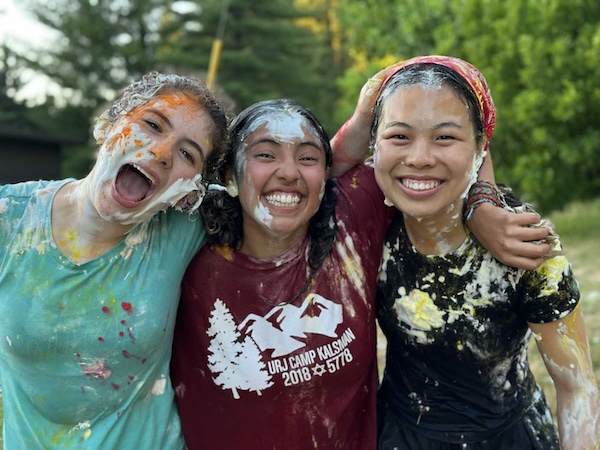
Lifelong friends can be made at summer camp. (photo from Camp Kalsman)

Fun is in all that we do,” Rabbi Ilana Mills, director of URJ Camp Kalsman, told the Independent. “Our staff creates dynamic programming that lets campers laugh and play in a way that doesn’t happen anywhere else. Where else can you spend a day with your friends and your evening doing messy night with a slip-n-slide, water balloons, shaving cream, and more?”

Summer camp is a unique experience for children and young people, for campers and counselors. While fun is at the forefront of programming, so is learning. In the case of Jewish camps, there is the added element of Shabbat observance and other elements of Judaic practise and values.

Looking at the example of Camp Kalsman, which is located north of Seattle, one can see the breadth of activities summer camp can offer. A typical day at Kalsman includes singing, pool time, prayers, and activities that range from canoeing and kayaking on the lake, to climbing the camp’s tower and/or high ropes, to farming or gardening, to painting or having a cook-out.

The camp has chugim (electives), which usually run three to four days, and campers do a project during them, said Mills. “Campers will get to rank their choice from a list of options and we do our best to give campers their choices,” she said. Chugim includes such things as pottery, embroidery, hiking, water aerobics, yoga or soccer.

And older campers have “Sababa Time,” said Mill. “Sababa Time is an hour each day where older campers get to choose their own activities from a number of creative options that changes each day. Those might include volleyball, board games, outdoor cooking, or spa days.”

The camp schedule also carves out free time for campers.

“Life is so busy and camp is as well. Free time enables campers to choose what they need on any given day,” said Mills. “Whenever we have free time, we have options for campers to choose which option best fits their needs.  Some campers need to get energy out, so they play basketball or go to the pool. Others may need down time, so they may read a book in the trees. Campers use free time to relax, recharge and have fun in a manner that best suits them. Recreation can be a time to re-create, to rejuvenate.”

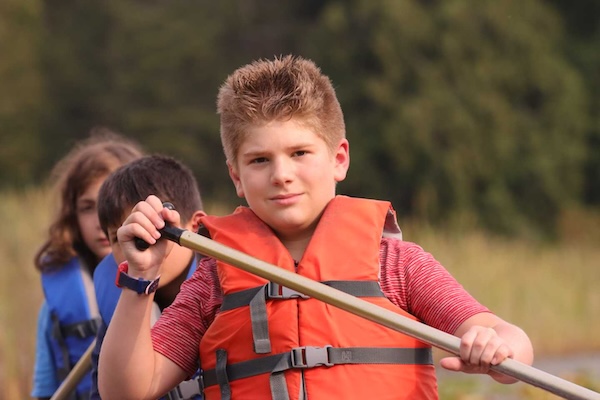
photo - Kids at Camp Kalsman get ready to take a canoe out onto the lake
Kids at Camp Kalsman get ready to take a canoe out onto the lake. (photo from Camp Kalsman)

In addition to obvious practices, such as the celebration of Shabbat and group tefillah (prayer), Kalsman tries to impart Jewish values and culture throughout activities.

“We design our programs to foster a holy community through connection between campers, between campers and staff and between campers and the larger community,” said Mills. “We believe connection is important on every level, so our cabins do cabin time every night to form connections and, every week, we have all-camp programs, where campers of different ages can get to know one another. When we eat, pray and sing together, we connect to the larger community.”

Camp Kalsman ends each night in siyum, “a special closing prayer where we pray Hashkiveinu and Shema using a special tune written just for Camp Kalsman,” said Mills.

When asked what summer camps in general – and Jewish camps specifically – can give kids that schools can’t, Mills shared a quote from a 10-year-old camper, who said, “Kalsman lets me take off all the masks I have to wear at school and really be me.”

“At Kalsman, our campers know that they are valued, honoured and supported for who they are,” said Mills. “Camp enables kids to be kids, to be free, and to have fun in a way that they don’t get anywhere else. It frees them of the burdens of school and competition and allows them an outlet to be part of a great community. Kalsman campers disconnect from their devices and connect to a larger, holy community. Campers learn independence and problem solving, they learn they can make mistakes and how to manage mistakes in a safe environment. Camp is the place where kids can explore who they want to be in the world.” 

Format ImagePosted on December 15, 2023December 14, 2023Author Cynthia RamsayCategories LocalTags Camp Kalsman, education, identity, Israel, summer camp, youth
Summer of a lifetime awaits

Summer of a lifetime awaits

Camp Kalsman has almost 300 acres, perfect for a wide range of activities. (photo from Camp Kalsman)

Rabbi Ilana Mills, director of URJ Camp Kalsman, started attending camp when she was 8 years old. “I remember being uncertain what the experience would be like, trying to picture how it would feel to live in a bunk. It was greater than I ever imagined,” she said.

“Jewish camping helped me learn more about myself and my Jewish identity,” she added. “I learned independence that served me my whole life and what it means to be part of a community. I have experienced the powerful impact camp can have on someone’s life and now get to watch my children experience it as well.”

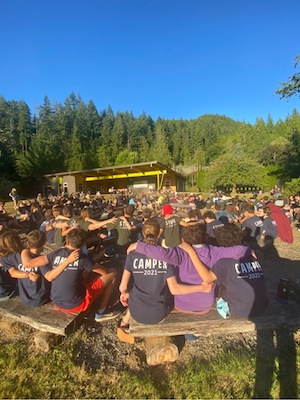
photo - Campers gather together
(photo from Camp Kalsman)

Camp Kalsman knows kids need places to be celebrated for who they are and places that help them grow. Camp Kalsman is one of those places – where a child can feel comfortable being their true self and learn independence while they climb the tower, play pool volleyball, and tie-dye.

Located in Washington, the camp has almost 300 acres, perfect for a wide range of activities: arts, sports, team-building, hiking, high ropes, guitar, and so much more. Each camper can explore all aspects of camp and participate in various programs, while exploring and gaining pride in their Jewish identity. Camp isn’t just a fun thing for kids to do when they’re out of school. Studies have shown that camp is one of the most powerful tools in a parenting toolbox for successfully launching an adult.

Discover new passions

Camp Kalsman strives to make every camper’s experience nurturing and fulfilling, and does so by making sure that every child feels welcomed and supported, while challenging themselves. Campers engage in activities and programs, develop lifelong friendships and live with a super staff. Jewish values infuse everything the camp does and, each year, new and returning staff members bring unique chugim, activities, based on their passions, so there are always more options being added to an already long list.

Arts: painting, ceramics, improv/drama, guitar, song writing/leading, digital media, Kalsman musical, photography, dance, cooking.

photo - Camp Kalsman ropes course
(photo from Camp Kalsman)

Sports: balloon volleyball, giant soccer, archery, Gaga, tetherball, ultimate frisbee, basketball, softball/kickball, Kalsman football (extra special/silly combination of sports).

Waterfront: pirate ball on the lake, cardboard box boat-making, mermaid contest, water polo, canoeing, kayaking, pool volleyball, pool basketball.

Teva (Nature): hiking, outdoor cooking, outdoor survival skills, wilderness first aid, gardening, animal care.

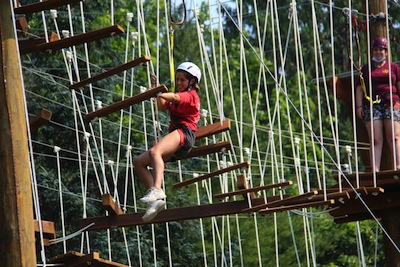
Ropes: high ropes obstacle course, tower, giant swing, zipline, low ropes team-building.

Unit programs: Israeli cooking, ice cream pool party, messy night, scavenger hunt, and so much more.

Shabbat shalom

Everyone can feel the magic that falls over Camp Kalsman every Shabbat. The entire camp community changes into white clothes and cleans up after a very busy week. The camp joins together in a Shabbat walk that ends at the outdoor beit tefilah (sanctuary). There are interactive services, a traditional Shabbat dinner in the dining hall, with challah and grape juice, and the night ends with Shabbat Shira (song session), where campers and staff alike can dance and sing the night away.

Since it is still Shabbat, Saturdays also look a bit different at camp. There is chofesh, free time, where campers can choose activities more freely and for longer amounts of time than during the full schedule of the rest of the week. They can focus on finishing their art project, challenge themselves on a different path on the high ropes course, or even chill on the quad with friends and really rest and reset for the days ahead.

– Courtesy Camp Kalsman

Format ImagePosted on January 14, 2022January 13, 2022Author Camp KalsmanCategories LocalTags Camp Kalsman, Canadian Summer Camp Research Project, COVID, Ilana Mills, Judaism, kids, pandemic, summer camp
Outside of British Columbia

Outside of British Columbia

Jewish summer camp combines land and water activities with learning about Israel and Judaism. (photo from Camp BB Riback)

When summer comes to the Pacific Northwest, it’s the best time to head into the great outdoors and, of course, for kids, into the summer camp experience. For Jewish kids in British Columbia, there are not only great local camps – Camp Hatikvah and Camp Miriam – but a few out-of-province options worth considering.

When Camp Solomon Schechter (CSS) was established in 1954, on the shores of Whidbey Island, there was a vision born out of the camp’s now-common catch phrase, “Where Judaism and joy are one.” Sixty-one years later, now located on private, protected lakefront property on the outskirts of Olympia, Wash., the camp is looking to the future again, with the combination of Judaism and joy still central.

A Conservative movement-based summer camp, CSS launched a capital campaign in 2014 called From 60 to 120, with a focus on supporting the next 60 years of growth. In an informational social gathering hosted in Vancouver by the camp on Jan. 10, director Sam Perlin shared plans for the campaign and the new facilities that would be born from it.

photo - Jewish summer camp combines land and water activities with learning about Israel and Judaism
(photo from Camp Solomon Schechter)

Already halfway to reaching their $12 million goal, Perlin said that if they reach $8 million on time, construction would begin as soon as the summer. New dining and covered sports facilities with programming space are in the works, along with health and welcome centres, all built while preserving and enhancing the camp’s unique wetlands.

The new developments will be a welcome addition to the approximately 120 Canadian campers CSS gets in any given summer, a number Perlin says he hopes will continue to grow. “We have full Canadian buses coming from Canada,” he explained. “We even moved Aleph (First) session to accommodate the Canadian school schedule.”

With several matching grants approved, Perlin noted that Canadians can participate in the matching program to maximize their contributions. He also pointed out that a Canadian donation will be matched with the same number in U.S. dollars, regardless of the exchange rate.

For more information on CSS programming or the campaign, visit campschechter.org or from60to120.org.

* * *

Across the Rockies and into Alberta, Camp BB Riback (a B’nai B’rith camp) is celebrating its 60th anniversary on Pine Lake.

Camp director Jerrod Henoch said they’ve been building up their waterfront program to include learn-to-ski and wakeboard sessions. “Our professional-level ski boat and boom, combined with the expert attention of our waterfront staff, sees even many of our youngest campers get up on water skis for their first time at camp,” he explained.

Of course, with the Alberta-based location, Camp BB also features a horseback riding instruction program.

Camp BB will also be building new camper cabins this spring as part one of their facility enhancement plans.

Although the majority of Camp BB’s participants are from Edmonton, Calgary and Saskatoon, Henoch said they do get several B.C. families every summer as well.

“Camp BB is famous for its inclusive and open camp community and we are especially good at helping new campers from out of province or across the world feel included,” he said. “With one of the largest arrays of activity areas in Western Canada, we have something that every camper will excel at and something that will challenge each camper.”

Henoch said there are several staff and even senior management studying or living in British Columbia with whom a consultation for any interested local families could be set up.

More information on the camp can be found at campbb.com.

* * *

One of the newer Jewish camps in the region is Camp Kalsman. Affiliated with the Reform movement, the facilities are located off the Interstate 5, between Mt. Vernon and Everett in Washington.

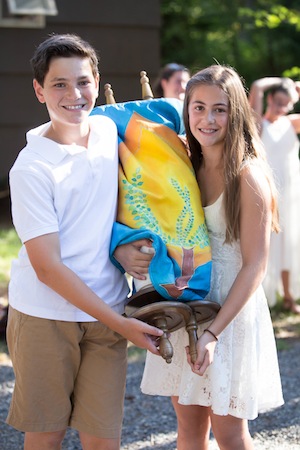
photo - learning Torah at Camp Kalsman
(photo from Camp Kalsman)

Entering their 10th summer, director David Berkman said this summer will be one big birthday celebration, highlighted by a community-wide party on July 31.

In its first decade, Berkman said the camp’s sense of community has stood out more than anything else.

“The two things that most distinguish Kalsman from other Jewish summer camps are our staff and the community we form with all our participants,” he said. “The Kalsman staff are extraordinary and their dedication to the campers and the camp is amazing. We all work hard to create a sense of family and home away from home. More often than not, campers refer to camp as their home.”

In addition to a heated pool, Camp Kalsman also features a 50-foot tower, a giant swing, a speaking garden and even a petting zoo. With sessions ranging in length from three days to three weeks, the camp serves participants from Grade 2 all the way through high school.

Berkman said Camp Kalsman usually sees three to four dozen campers from north of the border, but he is looking forward to seeing that number grow.

For more information on Camp Kalsman, visit campkalsman.org.

Kyle Berger is Jewish Community Centre of Greater Vancouver sports coordinator, and a freelance writer living in Richmond.


Format ImagePosted on January 22, 2016January 21, 2016Author Kyle BergerCategories WorldTags Camp BB Riback, Camp Kalsman, Camp Solomon Schechter, Conservative movement, CSS, David Berkman, Jerrod Henoch, Pine Lake, Reform movement, Sam Perlin, Whidbey Island
Proudly powered by WordPress