Skip to content
  • Home
  • Subscribe / donate
  • Events calendar
  • News
    • Local
    • National
    • Israel
    • World
    • עניין בחדשות
      A roundup of news in Canada and further afield, in Hebrew.
  • Opinion
    • From the JI
    • Op-Ed
  • Arts & Culture
    • Performing Arts
    • Music
    • Books
    • Visual Arts
    • TV & Film
  • Life
    • Celebrating the Holidays
    • Travel
    • The Daily Snooze
      Cartoons by Jacob Samuel
    • Mystery Photo
      Help the JI and JMABC fill in the gaps in our archives.
  • Community Links
    • Organizations, Etc.
    • Other News Sources & Blogs
    • Business Directory
  • FAQ
  • JI Chai Celebration
  • JI@88! video

Recent Posts

  • Sharing her testimony
  • Fall fight takes leap forward
  • The balancing of rights
  • Multiple Tony n’ Tina roles
  • Stories of trauma, resilience
  • Celebrate our culture
  • A responsibility to help
  • What wellness means at JCC
  • Together in mourning
  • Downhill after Trump?
  • Birth control even easier now
  • Eco-Sisters mentorship
  • Unexpected discoveries
  • Study’s results hopeful
  • Bad behaviour affects us all
  • Thankful for the police
  • UBC needs a wake-up call
  • Recalling a shining star
  • Sleep well …
  • BGU fosters startup culture
  • Photography and glass
  • Is it the end of an era?
  • Taking life a step at a time
  • Nakba exhibit biased
  • Film festival starts next week
  • Musical with heart and soul
  • Rabbi marks 13 years
  • Keeper of VTT’s history
  • Gala fêtes Infeld’s 20th
  • Building JWest together
  • Challah Mom comes to Vancouver
  • What to do about media bias
  • Education offers hope
  • Remembrance – a moral act
  • What makes us human
  • המלחמות של נתניהו וטראמפ

Archives

Follow @JewishIndie
image - The CJN - Visit Us Banner - 300x600 - 101625

Tag: terrorism

Fighter returns to Israel

Fighter returns to Israel

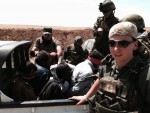
Former British Columbian Gill Rosenberg spent nine months fighting the Islamic State in Iraq and Syria. (photo from Gill Rosenberg)

Gill Rosenberg returned to Israel a month ago, after spending nine months fighting the Islamic State in Iraq and Syria (ISIS).

Born in Surrey, Rosenberg, 31, grew up in White Rock and graduated from King David High School before continuing her studies at B.C. Institute of Technology, finishing a program in airport operations management. She moved to Israel in 2006 to serve in the Israel Defence Forces, volunteering through a program called Mahal (the overseas volunteer IDF program). During the course of her service, she made aliya. She now lives in Jerusalem.

“I served as a search and rescue NCO (non-commissioned officer) and as an instructor at the Search, Rescue and Civil Defence School,” Rosenberg told the Independent. “It was a great experience.”

She also spent time training the Kenyan Armed Forces and helped them establish a disaster response unit in their country.

Growing up in British Columbia taught Rosenberg “to respect the diversity of culture, beliefs and religion,” she said. “As well, being raised Jewish, I had a strong education on the Shoah and participated in the March of the Living, visiting the concentration camps in Poland.”

After that experience, Rosenberg was invited to speak at the B.C. Legislature on behalf of Jewish youth when the government voted to enact Holocaust Memorial Day legislation, when Ujjal Dosanjh was premier.

Intolerance and totalitarianism are two things that she has vowed to never tolerate. “I fully believe that when we say ‘Never again,’ we don’t mean just for us Jews,” she said. “We can’t stand by and stay silent to any genocide taking place – and that’s what I saw happening to the Yazidi population on Sinjar Mountain. The Christians and Yazidis in Iraq have lost the most in this war.”

Rosenberg fought in Syria with the YPG/YPJ (Kurdish militia groups) for three months and then headed to Iraq for six months, fighting with the Assyrian Christian militia, Dwekh Nawsha.

“In Syria, I was in Serekaniye and it was a pretty static front over the winter months,” she said. “It was bitterly cold, always raining, muddy, and darkness like I’ve never experienced anywhere else.

“There’d be a firefight at least once a day, but it was mostly from a distance of over one kilometre. My first day on the frontline, a suicide bomber blew himself up about 50 feet from our checkpoint. He intended to get closer, but because of the deep mud, his vehicle got stuck and, thank God, he was the only casualty that day.

“In Iraq,” she continued, “I was at a frontline 25 kilometres from the city centre of Mosul. They were in Baqofa and Telskuf, and the next town over, called Batnay, was already Daesh-occupied.

“The Daesh [ISIS] are hitting that position with mortars, Katyusha rockets and heavy machine gun fire daily and especially at night. They attempt to ambush, but both Dwekh Nawsha and the Peshmerga at that frontline have prevented any advancement of ISIS forces.”

Rosenberg said she was treated with the utmost respect and not any differently than other fighters. “They feel like the world has forgotten them, so for an Israeli Jewish woman to pick up a weapon and stand with them on the frontlines meant a lot to them,” she said. “I still keep in touch with the leader there and he tells me I’ll be a part of them forever, that we’re family.”

As she was fighting, Rosenberg wore the Canadian flag on her uniform proudly. “I feel that Canada is one of few countries that still stands tall and supports democracy and freedom, and it isn’t afraid to condemn those committing evil in this world. And that’s something to be very proud of.”

Earlier in the interview, she noted, “Stephen Harper is the only world leader condemning the nuclear deal with Iran and speaking out against the evils of this world and standing with our best allies.”

Since returning to Israel, Rosenberg has met with several members of the Knesset and shared with them some of her experiences. She also has been approached by several nongovernmental organizations working in Syria and Iraq for her help with their efforts.

“I want to continue helping women and children in Syria and Iraq,” she said, “so I have to determine where my experience and abilities can be best put to use. As far as returning to the frontline, I have no plans to return at this stage.”

Rosenberg was very clear that she does not see herself as a recruiter. “I very adamantly would advise against anyone traveling to the region to fight,” she said. “There are many ways to help, including a Montreal Jewish foundation called CYCI (the Liberation of Christian and Yazidi Children of Iraq), which are buying and liberating the children that are sold like sheep in the market in ISIS-controlled areas.

“Pikuach nefesh [to save a life] is an obligation we have as Jews, and the Talmud even requires us to spend money to save a life if we have that ability,” she said. “This organization [CYCI] gives us that ability.”

Another Canadian organization, also coming from the Jewish community, is Rape Is No Joke (RINJ). This group provides medical care to women and children who have been victims of rape and other brutality in Syria and Iraq.

From what Rosenberg has been hearing, the dynamics on the battlefield have changed in recent weeks, with the Iranians making gains in Iraq against ISIS. However, she was quick to add, “They might be fighting ISIS just as I was, but, ultimately, they’re not a friend and I believe they’re a much greater threat than is ISIS.”

Reiterating her discouragement of anyone traveling to the region to fight, Rosenberg said, “I believe that if we don’t stop ISIS now, they’ll be at our doorstep before we know it. ISIS are geniuses at social media and media and know how to look strong and strike fear in the hearts of the West.

“I can tell you, from my personal experience on the ground, that they fight in a very cowardly manner and often run away when challenged. This is especially true when it’s the women of the YPJ. Their beliefs are such that they think if they’re killed by a woman, they will go to hell. So, my only question is this, What happens to them when that woman is also Jewish and Israeli?”

Rebeca Kuropatwa is a Winnipeg freelance writer.

Format ImagePosted on August 21, 2015August 19, 2015Author Rebeca KuropatwaCategories WorldTags Gill Rosenberg, IDF, ISIS, Islamic State, Israel, Middle East, terrorism
תוגברו אמצעי הביטחון

תוגברו אמצעי הביטחון

ג’ון נוטל ואמנדה מרי קורודי, שתכננו לפוצץ את בית המחוקקים של המחוז בוויקטוריה. (צילום: RCMP)

תוגברו אמצעי הביטחון בקהילה היהודית לאור פרשת הזוג נוטל וקורודי שהתאסלמו ותכננו להרוג ילדים יהודים 

זוג קנדי שהתאסלם תכנן להסתנן לאחד מבתי בית כנסת יהודיים באזור ונקובר, כדי להרוג ילדים, כך עולה מחקירת שוטר סמוי במסגרת דיוני בית המשפט העליון של מחוז בריטיש קולומביה. מדובר בפרשת ג’ון נוטל ואמנדה מרי קורודי, שתכננו לפוצץ את בית המחוקקים של המחוז בוויקטוריה, ביום העצמאות הקנדי ב-1 ביולי 2013. השניים שהתאסלמו תכננו לפוצץ את הבניין באמצעות חומרי נפץ תוצרת בית שיוטמנו בסירי לחץ. הם הציבו את הפצצות הביתיות מחוץ לבית המחוקקים, אך השוטרים שעקבו אחריהם דאגו לנטרלן ולא נגרם שום נזק. הזוג הטרוריסטי טכננו לבצע פעולות טרור נוספות ולהרוג מספר אזרחים לא ידוע. השוטר הסמוי אמר עוד בחקירתו המעניינת, שנוטל וקורודי חשבו “שרצח של ילדים יהודים, שלדבריהם מחונכים רק לשנוא ערבים ומוסלמים, דווקא יעשה להם טובה. כי אז הם יגיעו לגן עדן”. לפי תפיסתם המעוותת לעומתם הילדים “יהודים מבוגרים לאחר מותם מגיעים הישר להגיהנום”. הזוג האמין שכיוון שהם לבנים לא התהיה להם בעייה להצטרף לאחד מבתי הכנסת על תקן של חברים, לאחר שיתחזו ליהודים. כך ירכשו את אמון המתפללים האחרים.

נוטל וקורודי נעצרו לפני כשנתיים לאחר חקירה מורכבת וממושכת של משטרה הפדרלית, סוכנות הביון הקנדית וסוכנות הריגול הקנדית. השניים הפכו לג’יהאדים קיצוניים לאחר שהושפעו מהתעמולה של ארגון אל-קעידה. הם רצו להשתתף במלחמת הקודש נגד מדינות המערב, “לאור מה שהן עושות לאיסלאם”. לטענת נוטל וקורודי הם הופללו על ידי שוטרי המשטרה הפדרלית, שאף עודדו אותם והאיצו בהם לבצע את פעולות הטרור. שני הנאשמים הורשעו כבר והדיונים בית המשפט העליון לקביעת עונשם יתחדשו בחודש אוקטובר.

לאור פרשה החמורה של נוטל וקורודי הוחלט בפדרציה היהודית של אזור מטרו ונקובר להגביר את הביטחון בקרב הקהילה היהודית, תוך שיתוף פעולה מלא עם הארגונים היהודים השונים.

מנכ”ל הפדרציה היהודית, עזרא שאנקן, מציין כי הפדרציה לוקחת את האיומים כנגד הקהילה היהודית באופן רציני ביותר. עם זאת הוא מדגיש כי לא ידוע בשלב זה על גידול כלשהו בסכנה לקהילה היהודית. שאנקן אומר עוד שלפדרציה יש כיום פרוטוקולים מסודרים וברורים לנושאי ביטחון, ונעשה בהם שימוש ברגע שיש התראות ביטחוניות. לדבריו לפדרציה יש קשרים טובים מאוד עם סוכנויות המשטרה השונות באזור ונקובר בהן המשטרה הפדרלית, והיא בקשר קבוע וישיר עימם בכל הנוגע לאיומים על הקהילה היהודית.

מנכ”ל הפדרציה היהודית המקומית אומר כי הארגון נקט לאחרונה במספר פעולות מורכבות בתחום הביטחון. בהן: פיקוח, בידוק וביקורות על תחום הביטחון בארגונים היהודים השונים באזור, שידרוג מערך הביטחון של ארגונים אלה תוך הקצאת משאבים כספיים ואחרים על ידי הפדרציה, המשך אספקת מערכי תדרוך, הכשרה, תרגול ותמיכה בארגונים בתחום הביטחון. כן הוחלט לאחרונה על הקמת ועדה מיוחדת בנושא תחום הביטחון בפדרציה היהודית, שתעזור ותייעץ בקביעת מדיניות הביטחון הרחבה, כולל קבלת החלטות ומימון בהמשך הדרך.

עזרא שאנקן אומר כי לאור צורך בפעילות ביטחונית בקרב הקהילה היהודית באופן שוטף ומתמשך, נדרש מימון יציב וקבוע לנושא חשוב זה. ולכן לדבריו יש מקום להשיג את מקורות התקציב, במסגרת הקמפיין השנתי החדש של הפדרציה לשנה זו (ערב הפתיחת הקמפיין של 2015 נקבע ל-17 בחודש ספטמבר). שאנקן אומר עוד כי הקצאת משאבים כספיים מהקמפיין השנתי החדש, היא אחת מהדרכים החדשות בה נוקטת הפדרציה היהודית, שמתאימה עצמה לדרישות המשתנות של הקהילה המקומית.

Format ImagePosted on August 13, 2015August 13, 2015Author Roni RachmaniCategories עניין בחדשותTags Amanda Korody, Ezra Shanken, Jewish Federation of Greater Vancouver, John Nuttall, security, terrorism, אמנדה קורודי, ג'ון נוטל, טרוריסט, עזרא שאנקן, פדרציה היהודית
Trudeau talks with the JI

Trudeau talks with the JI

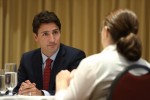
Liberal Party of Canada leader Justin Trudeau in an interview with Cynthia Ramsay of the Jewish Independent. (photo by Adam Scotti)

Justin Trudeau said he is cautiously optimistic about the Iran nuclear deal, insisted he is committed to fighting ISIS and reiterated his commitment to the environment and social fairness in an exclusive interview with the Jewish Independent.

The federal Liberal leader, who hopes to be prime minister after the Oct. 19 federal election, acknowledged the implications of Iran’s agreement with Western powers over its nuclear program, which the Tehran regime maintains is for energy purposes only.

“We all start from the same place on this – a nuclear-armed Iran is a threat not just to Israel, not just to the region, but to the entire world, and we have to make sure that Iran doesn’t achieve that,” Trudeau said.

There are only two ways to reach this objective, he said: direct military intervention on the ground against the Iranian regime or a diplomatic agreement. “We don’t have such a great record of military intervention in that part of the world,” he noted, stressing that the agreement is “not based on trust but on verification.”

“We are cautiously optimistic about the deal,” he said. “We’re not saying we should drop the sanctions today. Obviously, there are a lot of milestones to be addressed, but I think anything [is positive] that sets us down the path of both delaying the ability significantly of Iran to get the nuclear bomb and increases the ability of the Iranian people to put pressure on their regime to change – because we all know we can make a tremendous distinction between the Iranian citizens and their government that doesn’t represent them particularly well.”

Trudeau also advocated reopening diplomatic relations with Iran eventually. “I do feel that it would be very nice to hope to reopen that embassy at one point because you don’t have embassies with just your friends, you have your embassies with the people you disagree with,” he said. “However, on top of addressing the nuclear concerns, Iran has to do an awful lot to demonstrate that it’s no longer going to be a state sponsor of terrorism in the region, around the world, and they have to do an awful lot around human rights and repression of their own citizens and dissent within Iran before they can rejoin the community of nations. But I think we’re on a path that should be cause for at least a level of comfort that perhaps we’re in a positive direction now.”

In speaking with the JI after a speech to the Richmond Chamber of Commerce last Friday, Trudeau, in his second exclusive with the paper, clarified his stance around confronting ISIS.

“This is a great opportunity for me to spell out our position on this,” he said. “The Liberal party feels it is extremely important that Canada be a significant part in the effort against ISIS. We are absolutely supportive of being part of that coalition and, indeed, we feel there is a military role for Canada in the fight against ISIS that can make a very big difference. We disagree that bombing is the best way for Canada to do that. That’s why we voted against the mission and voted against the expansion of the mission into Syria, because it has a likely side effect of strengthening Bashar al-Assad’s grip on power and that we don’t necessarily want.”

“We are absolutely supportive of being part of that coalition and, indeed, we feel there is a military role for Canada in the fight against ISIS that can make a very big difference. We disagree that bombing is the best way for Canada to do that.”

What Trudeau would prefer, he said, is for Canada to provide more humanitarian aid, for example, and for this country’s military to provide the kind of role it does in Afghanistan. “We’ve developed tremendous expertise,” he said, “which is training the local troops to be able to take the fight more efficiently to ISIS. That would happen far from the frontlines because we don’t want Canadian troops to be involved [there] but also because we know that it is the local troops that are going to be effective at taking back their homes, their communities, and dropping in Western soldiers doesn’t make the situation better as, unfortunately, the Americans understood in Iraq awhile ago.”

He sees an opportunity for Canada to make an impact without being directly involved in the conflict. “We feel there’s a role for Canada to be a significant resource in training the local military, not in a direct combat role that Mr. Harper is proposing with the bombings,” he said.

Trudeau welcomed the opportunity to explain his support, with caveats, for the federal government’s anti-terrorism bill, C-51. “The Liberal party has always understood that we need to protect Canadian security and uphold our rights and freedoms – and you do them both together,” he said. “To our mind, Bill C-51, even though it has clear elements in it that increase the safety for Canadians – which is why we supported it – it doesn’t go far enough to uphold our rights and freedoms, which is why we’re committed to bringing in oversight, putting in a sunset and review clause onto our anti-terror legislation, and also narrowing and tightening some of the rules around what behavior CSIS [Canadian Security Intelligence Service] can have – warrantless searches and all those sorts of things.”

His political opponents, he said, go too far in each direction. “Mr. Harper thinks, ‘No, no, we don’t have to do anything more around rights and freedoms, we have enough, we’re just giving more power to our police,’” Trudeau said. “I think that’s a problem.

“Mr. Mulcair says, ‘No, we don’t need to do anything more on security. Even those things in C-51, we don’t need them, we’re fine the way it is.’” That is also a problem, according to Trudeau. “We have to do more,” he said. “But we have to do more on both sides.”

On other topics, the Liberal leader expressed support for increased trade with Israel. “We obviously support the latest announcement around Canada-Israel free trade,” he said. “I know it was a lot of agricultural stuff in this round, but it’s a very good thing. This was a deal that was signed by [Liberal prime minister] Jean Chrétien back in ’97 and the Liberal party believes in trade. We believe in free trade, and we’re happy to continue trade with Israel.”

Trudeau took the opportunity to reiterate his opposition to the movement to boycott, divest from and sanction (BDS) Israel.

“You can have all sorts of debates over positions, but when you’re engaged in demonization, delegitimization and double standards, that’s just not what we are as a country.”

“I think the BDS and anti-apartheid movement, as I’ve said many times, runs counter to Canadian values,” he said. “You can have all sorts of debates over positions, but when you’re engaged in demonization, delegitimization and double standards, that’s just not what we are as a country.”

The Independent also asked Trudeau about the Liberals’ approach to climate issues and social equality.

“At a very basic level, we get it, as Canadians, particularly here in B.C., that you cannot separate what’s good for the environment and what’s good for the economy anymore,” Trudeau said. “You have to do them both together, and you can’t get one without the other.

“You still have people saying, ‘Oh no, we have to work on the economy, so let’s forget about environmental oversight,’ or ‘We need to protect the environment, so, no, we can’t create jobs.’ Canadians know we need them both together,” he said. “One of the problems is we’ve had 10 years of such a lack of leadership on the environmental level that it’s hurting our economy. We need to get our resources to market in responsible, sustainable ways. We’re not able to do that right now because nobody trusts Mr. Harper to do it right. Restoring that sense of public trust, [so] that people know, we need jobs, we need economic growth … in a way that understands that it’s not just about governments granting permits, but about communities granting permission, as well.

“One of the things we’ve put forward in our environmental plan is that, in the 10 years of lack of leadership on the federal side, the provinces have moved forward,” Trudeau continued. “B.C. has a very successful carbon tax, Alberta put in a carbon levy-style tax, Ontario and Quebec are doing a cap-and-trade. What that means is that 86% of our economy has already put in a mechanism to put a price on carbon, so the federal government can’t suddenly say, ‘OK, we’re doing cap-and-trade. Sorry, B.C., you’re going to have to change your system,’ which would make no sense; or vice versa, ‘We’re doing a carbon tax.

Sorry, Ontario, you can’t do it.’ What we have to do is recognize that different jurisdictions will have different ways of reducing their emissions – the federal government has to be a partner, a supporter, an investor in our capacity to do that across the country, in order for us to reduce our emissions and be responsible about the environment.”

Trudeau acknowledged the solutions won’t be immediate. “We need to move beyond fossil fuels, but it’s not going to happen tomorrow,” he said. “Right now, a lot of people who are blocking and opposed to pipelines aren’t realizing that the alternative is a lot more oil by rail, which is really problematic – more expensive, more dangerous.” Under the circumstances, he said, people are just saying no: “No to everything, because we don’t trust the government in place.”

He said he hopes to form a government that addresses climate change, invests in clean technology, renewable resources and the kinds of jobs that advance beyond a fossil fuel economy. For now, “we have to make sure that our oil sands are developed going forward in a responsible, efficient way that doesn’t give us the black eye on the world stage and with our trading partners,” he said.

“The Liberal party believes in evidence-based policy and we believe in harm reduction. My own hometown, Montreal, is pushing hard to set up an Insite-type clinic. The Liberal party supports that. The Supreme Court supports that. This government, for ideological reasons, is pushing against it. I think that’s just wrong, and we’re happy to say that. ”

Vancouver has been the testing ground for new ways of dealing with addiction, particularly the Insite supervised drug injection clinic. “The Liberal party believes in evidence-based policy and we believe in harm reduction,” Trudeau said. “My own hometown, Montreal, is pushing hard to set up an Insite-type clinic. The Liberal party supports that. The Supreme Court supports that. This government, for ideological reasons, is pushing against it. I think that’s just wrong, and we’re happy to say that.”

In the same week that Canadian parents were receiving Universal Child Care Benefit [UCCB] cheques in the mail calibrated to the number of children in their home, Trudeau was promoting his party’s “fairness plan.”

“Mr. Harper’s child benefit, for example, goes to every family regardless of how wealthy they might be,” Trudeau said. “We, instead, decided, let’s make it means-tested so that people who need the help the most will get the best help. For a low-income family, it means up to $533 a month, tax-free, and then it grades down until someone making over $200,000 doesn’t get any child-care benefit at all. And the benefits that will go to the nine out of 10 Canadians will be tax-free, so the money you get is actually money you get to spend.”

The plan also proposes to lower the middle-class income bracket from 22 to 20.5, which will result in about $3 billion in lost revenue. “In order to get that $3 billion,” said Trudeau, “we’re bringing in a new tax bracket on the wealthiest Canadians, people who make over $200,000, to even things out. And it’s not just about redistribution, it’s also about growing the economy because we know, when middle-class families and the working poor have money in their pockets to spend, to grow, it stimulates the economy.

“Interestingly enough, the NDP is lined up with the Conservatives on those positions,” he added. “They support the Conservatives’ UCCB that gives big cheques, and they’re opposed to us bringing in a higher tax bracket for the wealthiest Canadians, which I don’t understand. They have their reasons for it but, for me, the NDP is supposed to be a party that stands up for the most vulnerable.”

Format ImagePosted on July 31, 2015July 28, 2015Author Pat Johnson and Cynthia RamsayCategories NationalTags BDS, Bill C-2, Bill C-51, CIFTA, CSIS, fairness plan, federal election, Insite, Iran, ISIS, Israel, Justin Trudeau, Liberal Party of Canada, nuclear deal, terrorism
Montreal can be the model

Montreal can be the model

Montreal Mayor Denis Coderre at the Jan. 11, 2015, rally in Montreal in support of the victims of the Charlie Hebdo shooting. (photo by Gerry Lauzon via commons.wikimedia.org)

A hate crimes department within the city’s police force might be a good idea, Montreal Mayor Denis Coderre said following a meeting with Jewish community leaders from Quebec and France at Montreal’s city hall on June 25.

Coderre and members of his executive committee held a two-hour closed-door session to discuss what role cities can play in combating antisemitism in Montreal and globally. He underlined the frequent link between antisemitism and radicalization and its violent expression.

Unlike forces in many North American cities, the Service de Police de Montréal (SPVM) does not have a unit dedicated to investigating crimes suspected to be motivated by hatred of identifiable groups. Coderre said he will meet the SPVM to pursue the possibility.

“We have good people [in the police] who are doing a good job now, but we have to look into whether we can do things a better way and learn from best practices [elsewhere],” he said.

That was the most concrete suggestion coming out of the meeting.

The mayor’s main message after the meeting was that “we have to call a spade a spade.… Antisemitism exists, here and around the world. We have to denounce it, we have to talk about it, we have to understand that clearly something is going on and we must be there to fight it.”

The meeting was the fulfilment of a promise that Coderre had made to leaders of the French Jewish community when he visited Paris in February, shortly after the murderous terrorist attacks at the Charlie Hebdo magazine office and Hyper-Cacher kosher grocery store.

Present at the meeting, from France, were Serge Dahan, president of B’nai B’rith France, and Yonathan Arfi, vice-president of the Conseil Représentatif des Institutions Juives de France, as well as leaders of Federation CJA, the Centre for Israel and Jewish Affairs (CIJA), the Communauté Sépharade Unifiée du Québec and B’nai Brith Canada.

Julien Bauer, a Université du Québec à Montréal political science professor, and Mount Royal MP and human rights activist Irwin Cotler participated as experts on antisemitism.

Coderre hopes that Montreal and Paris can cooperate especially closely on strategies to combat antisemitism and make their cities safer.

Coderre called antisemitism “the oldest and most persistent” form of racism and warned against a tendency to “trivialize” it. He also recognized that anti-Zionism often cloaks contemporary antisemitism.

The meeting was also a followup to the June 10-11 Montreal Summit on Living Together, a gathering of 23 mayors from around the world convened by Coderre to examine how municipalities can prevent radicalism and ensure security, starting by promoting respect for diversity and harmony among the different cultural groups in their citizenry.

The City of Montreal, also in the wake of the Paris attacks, announced plans for a new centre aimed at preventing violent radicalism. So far, it consists of a telephone hotline to report information on suspected radical activity. Coderre said that the centre can play a role in preventing antisemitism. He wants to form partnerships with the schools, civil society and others in this endeavor.

Coderre said he plans to make the discussion on antisemitism an annual event, and believes that Montreal can serve as a model of how to combat racism and radicalism, while achieving “a balance between openness and vigilance.”

“The more we talk about it, the more it will have a positive effect,” he said.

CIJA Quebec vice-president Luciano Del Negro applauded Coderre’s commitment in taking on the “challenge” of combating antisemitism.

He especially appreciated that the mayor recognizes the distinctiveness of antisemitism among forms of racism, and that antisemitism is not only a phenomenon of the extreme right, but also the far left.

Similarly, Cotler applauded Coderre’s “exemplary leadership” and recognition that “municipalities not only have a role, but a responsibility, to combat antisemitism.”

– For more national Jewish news, visit cjnews.com.

Format ImagePosted on July 3, 2015July 3, 2015Author Janice Arnold CJNCategories NationalTags antisemitism, Charlie Hebdo, CIJA, Denis Coderre, Luciano Del Negro, Montreal, radicalism, terrorism

Nonsense is Trudeau’s

The Islamist group ISIS is the most technologically and media-savvy terror group ever. Their propaganda employs the highest calibre of videography and documentation. The images they capture – and successfully disseminate to the world – are among the most gruesome imaginable.

Just last week, well-produced films showed the group drowning five men in a cage and included footage of the men’s deaths captured by underwater cameras. The same video showed men being bound together at the neck by a fuse connected to explosives, like a chain of firecrackers.

On the very day that these horrendous images were leading every newscast, federal Liberal leader Justin Trudeau appeared on the CBC in an interview with veteran reporter Terry Milewski. Trudeau, who voted a few weeks ago against extending the Canadian military’s contributions to fighting ISIS, insisted that, were he to win the election this October, the Canadian military’s efforts against ISIS would end.

“If you don’t want to bomb a group as ghastly as ISIS, when would you ever support real military action?” asked Milewski.

The would-be prime minister’s reply to this legitimate and, indeed, crucial question: “Terry, that’s a nonsensical question.”

The nonsense is Trudeau’s.

It is true that Western powers cannot cure the world of every despot and dictatorship. The United States military has worn itself out and tested the dedication of military families trying. Yet there are times when action cannot be avoided.

Milewski gave Trudeau the opportunity to clarify what he was saying, to ensure that this was not another of the Liberal leader’s rookie mistakes. But, no, this was what Trudeau had come on television to say.

Whether one adheres to ethical pacifism or not, it is a coherent ideology. But this is not what Trudeau is proposing. He is not suggesting that Canada abandon its military or become a neutral state. He is saying that Canadian forces should not be deployed against ISIS. OK, then. If our admittedly limited military force is not mobilized against ISIS, what cause would we mobilize against? In what circumstances does “Never again” come into play, if not against the actions of a group such as ISIS?

It must be noted, of course, that Trudeau’s position mirrors that of New Democratic party leader Thomas Mulcair. The New Democrats also voted against extending the mission against ISIS and this position is equally flawed. But it is at least consistent with the worldview of a party that has never been burdened with the mantle of government. NDP governments at the provincial level have often risen to the occasion and discovered pragmatism when power has been thrust upon them. Should some current polls bear out and Mulcair were to become prime minister, the confluence of common sense, the magnitude of power and the need to reach out to experienced hands would almost certainly adjust their foreign policy. Perhaps we are being too generous, but Mulcair has taken a party whose foreign policy (especially vis-a-vis Israel) had become a fringe circus and brought it more in line with European parties of the left (for whatever that is worth).

Unfortunately, the Liberal case is quite different. Say what one will about the value of the Senate these days, those who served as Liberals in the upper chamber represented a cache of experience at governing that Trudeau desperately lacks. Last year, Trudeau threw them out of his caucus in a showy spectacle meant to demonstrate leadership. He is left with a caucus of 36 MPs, most of whom, in the immortal words of a former prime minister who happens to have been the current Liberal leader’s father, are “nobodies 50 feet off Parliament Hill.” It is not clear that he is seeking out or receiving rational foreign policy advice from anyone.

What makes Trudeau’s position most atrocious is that it seems to have been taken for the worst reasons. The Liberals, as is a perennial problem for opposition parties, must oppose. But foreign policy is a tricky area in which to plant a political flag. Foreign affairs should not be off limits, by any means, to criticism and differences of opinion. Yet neither should the serious issues of foreign policy be subject to knee-jerk political considerations. But this seems to be part of the explanation for Trudeau’s position.

Another likely motivating factor is that the NDP has been peeling anti-Harper votes away from the Liberals. There is a very real possibility that, if polling trajectories continue, the majority of Canadians who seek to end the Conservative government’s tenure will move en masse to the party that polls suggest is most fit to achieve that end. To stanch the flow to the NDP, Trudeau seems ready to abandon the victims of ISIS.

The irony of this entire balagan is that Trudeau’s actions will probably have precisely the opposite effect on potential Liberal voters.

Posted on July 3, 2015July 3, 2015Author The Editorial BoardCategories From the JITags Harper, ISIS, Mulcair, terrorism, Trudeau
Radio host visits Israel

Radio host visits Israel

U.S. radio host Dr. Joy Browne discusses the post-traumatic physical and psychological challenges of terrorism at OneFamily. (photo from OneFamily)

American syndicated radio host and clinical psychologist Dr. Joy Browne had a meeting with victims of terrorism at the headquarters of OneFamily during her first-ever visit to Israel earlier this month.

Hosted by Chantal Belzberg, chief executive officer of OneFamily, Browne met with former residents of the United States, Canada and the United Kingdom who were dealing with physical and emotional wounds in the aftermath of terror attacks across Israel over the past few years. She interviewed Cheryl Mandel, Kay Wilson, Steve Bloomberg and Rebecca Fuhrman, as well as some of OneFamily’s psychologists and therapists for a future segment on her program.

“After experiencing the aftermath of 9/11, we all share a common echo and I am impressed with the resilience of the people here who have worked or who are working to transcend fear and are getting on with their lives,” said Browne.

Mandel, a native of Toronto, who made aliyah nearly 25 years ago, lost a son, Daniel, who was killed during an Israel Defence Forces anti-terrorism mission in Nablus (Shechem) in 2003. Mandel, in tears, told Browne, “Our entire family, including myself, lives life to the fullest and I am an optimistic person by nature, but one never is prepared for the shock that comes with the death of a son, whom I never thought twice about sending to the army.”

Browne’s trip to Israel was sponsored by the Office of the Prime Minister and America’s Voices in Israel.

Format ImagePosted on June 26, 2015June 25, 2015Author OneFamilyCategories WorldTags Cheryl Mandel, Israel, Joy Browne, terrorism

The trouble with Gaza repairs

Germany’s foreign minister was in Gaza the other day, surveying the miserable conditions there, including the lack of repair to the thousands of homes and other buildings damaged or destroyed during the Gaza War last summer – Operation Protective Edge, as it is formally called by Israel.

Frank-Walter Steinmeier, the German diplomat, was one of a steady stream of Western representatives who have trudged through the Hamas-controlled enclave since the end of major hostilities last year. He said the success of repairs to Gaza requires that Israel open the borders to the free flow of materials required for the project – and he’s right.

But, he also made the case very clearly that Israel cannot be expected to live up to that part of the bargain as long as missiles keep falling into Israel from Gaza-based terrorists. And, of course, he was right again.

While much of the world seems to think that Israel’s policies toward Gaza are spite-motivated efforts to drive the residents of that place into despair, they are actually founded on legitimate defence requirements. Materials intended for civil reconstruction in Gaza – not just since last year, but since Hamas seized the Strip and even before – have been misappropriated and turned into weaponry, tunnels and other infrastructures for further terrorism. Steinmeier, however, is one of too few among world leaders who recognize, or at least publicly acknowledge, this reality.

After Operation Protective Edge, nations gathered in Cairo to pledge funds to restore the civilian infrastructure of Gaza. In sum, $5.4 billion was pledged by countries worldwide. However, a new report says that barely one-quarter of the pledges made in Cairo have been realized.

The Association of International Development Agencies (AIDA) released a report last week titled Charting a New Course: Overcoming the Stalemate in Gaza. It set out the results of the top seven donor countries and their record of delivering.

The most generous pledge – $1 billion – came from Qatar. The amount received to date from that country is $102 million.

The second-place European Union pledged $348 million and has handed over $141 million.

The United States comes closest to their pledge, having delivered $233 million on their $277 million pledge.

Oil-rich Kuwait and the United Arab Emirates, which each pledged $200 million, have delivered nothing.

Turkey, whose leader has made grandstanding theatrics around Gaza a cornerstone of his country’s foreign policy, has likewise delivered not a dime of the $200 million pledged, according to the report.

Seventh-place Saudi Arabia, which pledged $500 million, has given just $48.5 million.

In their defence, the idea of throwing good money after bad in Gaza could reasonably lead donor countries to hesitate. There has been precious little evidence that funds flowing into Gaza will be applied to the projects for which they are intended rather than being used by Hamas warlords to strengthen their own fiefdoms or launch new assaults against Israel (not that the latter concerns some of the donor states).

However, while some voices, like the new United Nations Middle East peace envoy Nickolay Mladenov, acknowledge that the Gaza terror regime needs to lay down its arms, he and others most vocally blame Israel’s blockade for all the problems facing the people of Gaza.

The AIDA report, for example, outlines actions deemed necessary to alleviate the misery of Palestinians in Gaza that seem to recognize that there is plenty of blame and room for improvement all around. But at the top of the list were things Israel needed to do, such as “lift the blockade and open all crossings into and out of Gaza” and “allow free movement of Palestinians across the occupied Palestinian territory,” as if there were no legitimate security concerns behind the unfortunate policies that prevent the free movement of people and goods in and out of Gaza.

The first step to resolving a problem is acknowledging its root. There are numerous reasons why the people of Gaza continue to suffer, and Israel’s policies are among them. But they are neither alone among the reasons nor the lynchpin upon which resolving the problem rests.

Posted on June 5, 2015June 3, 2015Author The Editorial BoardCategories From the JITags AIDA, Frank-Walter Steinmeier, Gaza, Israel, Operation Protective Edge, terrorism1 Comment on The trouble with Gaza repairs
ISIS destroys cultures, history

ISIS destroys cultures, history

In July 2014, ISIS destroyed the Tomb of Jonah, the biblical prophet revered in Judaism and Islam, which was in the Iraqi city of Mosul. (photo from news-centre.uwinnipeg.ca)

The Islamic State of Iraq and Syria (ISIS) is disconnecting the present population from its past, and they will stop at nothing to achieve this goal, including murdering civilians and destroying cultural, religious and historical sites that interfere with their beliefs.

These were the sentiments shared by Winnipeg-based archeologist Dr. Tina Greenfield, who has worked in the Near East and conducted fieldwork in Turkey and northern Iraq under the threat of ISIS. Her University of Manitoba biography says that she is co-director of the Near Eastern and Biblical Archeology Laboratory (NEBAL) in Winnipeg, and is actively analyzing animal bone collections from Tel es-Safi and Tel Burna in Israel, Ziyaret Tepe and Gol Tepe in Turkey, and several sites in Iraq. Her lecture at the University of Winnipeg – ISIS and the Destruction of Archeological Sites in Iraq – was held on April 23.

photo - Dr. Tina Greenfield is working to document archeological sites
Dr. Tina Greenfield is working to document archeological sites. (photo from umanitoba.ca)

She prefaced her talk by noting that keeping the population safe is, by far, more important than the artifacts on which she has worked. She then outlined the level of destruction that has occurred to some of the world’s oldest cities, and how she narrowly missed the expansion of ISIS in Iraq last year.

“I’m going to try to add some dimensions into this, so you understand how important this region is and why we should care,” said Greenfield. “So, while I will be discussing the Islamic State and a bit of their history and mantra, I twist into it my own experiences working in this region for the last two years, specifically.

“Yes, there are archeological sites being damaged, but it needs to be put into perspective. There are lives being lost in this region on a monumental scale. While I’m an archeologist, I’m trying to give another perspective. The priority is keeping the people safe in this region.”

The area in question is bordered by Turkey in the north, Iran in the east, and Saudi Arabia in the south. Also in the region, once known as Mesopotamia, are Lebanon, Syria, Jordan, Iraq, Israel and parts of Egypt. In the past, said Greenfield, “Mesopotamia refer[red] to the region between the Tigris and the Euphrates rivers. It’s also referred to as ‘the fertile crescent,’ because animals and plants were domesticated in this region. It’s also known as ‘the cradle of civilization.’”

The world’s earliest cities were built in this area, and major empires emerged from here, as well. Additionally, of historical and biblical interest, the first writings of the story of a great flood also originate there, as do the foundations of mathematics, astronomy, literature and poetry.

“Of all the empires, archeological sites from this region, each one has been damaged from Islamic State,” said Greenfield. “I’m giving you a brief introduction, so you can understand when I show you the sites, what is being damaged.”

The Assyrian Empire stretched from 2000 to 611 BCE, she explained, with its height about 3,000 years ago. “This is arguably the earliest empire of the ancient Near East, and Ashur is the capital of this region,” said Greenfield.

“There were some 19th-century gentleman explorers who came from Europe to try and find evidence of the Bible; they ended up in northern Mesopotamia and they dug these magnificent sites. It was a bit of a competition, because one was from Britain and one was from France.

“They each brought these riches back and displayed them in the British Museum and the Louvre. Suffice it to say, there was an awakening [about this historical time period] and the Mesopotamians and Assyrians were ‘rediscovered.’” It is these places that have sustained the most damage by ISIS out of all the Assyrian sites during the last four years, she said.

The motives and tactics of ISIS are many, she suggested. “We’re talking about terrorism, kidnapping, horrific murders, spreading terror throughout the region,” said Greenfield. “It developed from Al Qaida in Iraq. ISIS took precepts of the organization and beliefs, and developed them even further. It views itself as the restorer of early Islamic learnings. It also believes that it will cleanse the region of anything idolatrous or offensive…. There are eight million Iraqis and Syrians living under the control of ISIS right now. They seek to purify and stamp out anything offensive, idolatrous, any religious manifestations that don’t fit into their general ideas.”

In early 2015, museums and archeological sites became targets of the ISIS advance. “They weren’t picky,” said Greenfield. They targeted “everything from mosques, to churches, tombs, literary hero statues and manuscripts. They don’t want to have any part of that in this new caliphate state.

“They’ve publicized over 50 percent of their destructions in print and on social media. This is highly choreographed, highly targeted. There is no surprise that they have specialists in media. They want to break the link of what they consider heretical association with ancient Mesopotamia, destroying cultural heritage from all ethnic beliefs.”

This conquering tactic “isn’t new,” however. “We can look at Egyptian temples with statues, with faces smashed out, conquerors coming in and declaring things are idolatrous and smashing them. But, this is on a level we’ve never seen before. It’s calculated, choreographed and very well managed.

She continued, “There is looting … they are taking artifacts from these sites and selling them. There’s a massive network from South America to Asia to Europe. They’re selling to finance their organization.”

It’s important to bear witness to the destruction, she added. “Several of my Iraqi colleagues are trying to document, taking their lives in their own hands, essentially, to see what actual damage has been done to these sites. They’re also, in association with international organizations, trying to desperately document sites that haven’t been damaged yet, because we never thought these sites would be damaged and look what’s happened.”

Greenfield recounted that she had received an email on the day of her lecture from someone asking her what they can do, saying this must be stopped and asking by what means it is possible. So, what can be done about the damage being done to the region’s – and the globe’s – historical sites?

It’s an “excellent question,” replied Greenfield. “What do you do? How do we counteract the social media frenzy right now? Do we share them with people? How do we not play into their hands? But, how do you keep people aware of what’s going on?

“ISIS wants the link severed. They want the people gone and the history gone. How do we fight all of that at the same time? In my very humble position, the only thing I seem to be able to do is to continue to go out there – like this September and October again – and document this stuff.”

Since 2010, ISIS has been recruiting within the local population by paying more than government positions. “So, if you’re sitting there as a youth who is completely unhappy with the situation that’s occurred already and you’re offered a lot of money, it’s a no-brainer,” said Greenfield. “They are portraying themselves, in a sense, like Robin Hood, stealing and giving out food, giving out houses. They’re saying they’re protecting their own. Absolutely … there’s this ideology that they’re taking care of their people.”

Rebeca Kuropatwa is a Winnipeg freelance writer.

Format ImagePosted on May 22, 2015May 21, 2015Author Rebeca KuropatwaCategories WorldTags archeology, ISIS, Islamic State, terrorism, Tina Greenfield
Sephardi group in Ottawa

Sephardi group in Ottawa

Rabbi Ilan Acoca, left, shakes hands with Prime Minister Stephen Harper on Parliament Hill. (courtesy of Prime Minister’s Office)

Last month, a Jewish delegation paid a visit to Parliament Hill with two main items on the agenda – educating the Canadian government about Sephardi Jewry in Canada and discussing Iran’s aim to obtain nuclear weapons.

The delegation included Sephardi community leaders, activists, philanthropists and spiritual leaders from across Canada. They met with the prime minister, various ambassadors and other dignitaries. The delegation was led by Yehuda Azoulay and Vancouver’s Rabbi Ilan Acoca of Congregation Beth Hamidrash, the only Sephardi synagogue west of Toronto.

A scholar, educator, author, activist and entrepreneur, Azoulay established the Sephardic Legacy Series: Institute for Preserving Sephardic Heritage. He envisioned the series as helping ensure future Sephardi publications, articles, lecture series, documentary films and research on Sephardi topics, and other works geared toward the benefit of Sephardi communities worldwide. It was the lack of general knowledge concerning Sephardi history, culture, Jewish law and other facets of Sephardi Judaism that prompted him to establish the organization. To date, Azoulay has authored five books and published more than 30 articles on various topics. In November 2013, he initiated a tribute luncheon to honor the contributions of Sephardi Jewry in America for members of the U.S. Congress.

The recent Parliament Hill delegation had as its primary goal to “create more awareness about Sephardic Jews in Canada by educating them about our history and our contributions to Canadian society,” Acoca told the Independent. “There are currently 55,000 Sephardic Jews in Canada and the number is growing. This is something that we related to the government.”

Acoca was born in Israel to parents of Moroccan descent. “I grew up in a typical, traditional Sephardic home,” he said. “Sephardic Judaism was an integral part of my upbringing.”

When Acoca was 13 years old, his family moved to Montreal, where he attended a Jewish high school. Growing up in Montreal’s Sephardi community, Acoca said, “helped me deepen my appreciation for my rich Sephardic ancestry.” Acoca eventually become a rabbi, fulfilling his grandfather’s wish that one of his descendants follow in his footsteps to the rabbinate, he said. In November 1999, Acoca and his wife Dina took on the roles of rabbi and rabbanit at Beth Hamidrash.

“Getting this responsibility made me more aware and passionate about my ancestry,” said Acoca. “My job enabled me to learn more about various Sephardic traditions and communities.”

Over the years, Acoca has added other aspects to his rabbinical role, teaching online, writing a monthly column in the Canadian Jewish News, heading the Rabbinical Council Sephardic Affinity Group, being an official Sephardi representative in Western Canada, and being the region’s Sephardi halachic authority.

Canadian human rights lawyer David Matas joined the group in Ottawa. Acoca described the importance of having Matas present in front of the House of Commons SubCommittee on International Human Rights about Iran’s intent to develop nuclear capability. During the presentation, Matas and Azoulay also conveyed some of the hardships that Iranian Jews “have faced and continue to endure.” (The full hearing is available at cpac.ca/en/programs/in-committee-house-of-commons/episodes/37646919.)

Matas gave six recommendations to the committee, which he shared with the Jewish Independent:

1. Expand the exceptions to sovereign immunity to catch Iranian human rights violations in a larger net. It should be possible for victims of the Iranian regime to sue in Canadian courts for the harm that the regime has done to them.

2. Ask for the extradition of Hassan el-Hajj Hassan, a Canadian citizen implicated in a Bulgarian bombing, from Lebanon to Canada. Under the Criminal Code, Canada has jurisdiction to prosecute him because he is a Canadian citizen, explained Matas. Canada does not have an extradition treaty with Lebanon, but the Extradition Act allows for extradition, even without a treaty, on a case-by-case basis by agreement with the state where the accused is found.

3. Support the suggestion that any arms agreement between Iran and foreign states include a human rights component parallel to that of the Helsinki Accord. “A regime hell bent on the destruction of Israel and the Jews should be kept as far away from weapons of mass destruction as possible,” said Matas. “A nuclear weapons agreement with Iran, if one can be reached, should not just prevent nuclear weapons capability. It should have a place for human rights.”

4. The European Union in July 2013 added the military wing of Hezbollah to its list of terrorist entities. Canada should urge the EU to list Hezbollah in its entirety, not just the military wing, as a terrorist entity.

5. As the lead sponsor to the United Nations General Assembly, Canada should strengthen the language of the resolution, even if it that means fewer votes. “While we would not suggest language so strong that the resolution would be lost, Canada today has some room for manoeuvre,” said Matas.

6. Encourage the Government of Canada to take into account all refugee populations as part of any just and comprehensive resolution to the Israeli-Palestinian and Arab-Israeli conflicts. “That, of course, includes 55,000 Jewish refugees from Iran, driven out of Iran by the regime of the mullahs,” said Matas.

It is also important to confront the myth that Israel is a Western, imperial, colonial enterprise – a myth that holds particular sway with the mullahs of Iran, Matas said. The reality is that Israel is in large measure composed of Jews from the Middle East, including Iran. “Unless the Palestinians themselves accept the reality of dual victimization, a meaningful peace becomes impossible,” he said.

The delegation met with MPs Tim Uppal, Denis Lebel, Jason Kenney, Peter Kent, John Carmichael, Mark Adler, Joyce Bateman and Irwin Cotler. Other members of the delegation, including Acoca, met privately with Prime Minister Stephen Harper.

“The government officials were extremely supportive and promised they will assist,” said Acoca. “We were ecstatic, definitely.”

Acoca is eager to create more awareness of Sephardi Jewry, the community’s needs and cultural differences, and to promote understanding. He is also looking forward to following up on the event and meetings, and hopes this delegation will become an annual occurrence. “I would like the Sephardic way and philosophy to be preserved and am working hard, together with my colleagues, to ensure a thriving future,” said Acoca.

For a short video clip from the group’s Parliament Hill visit, see this link (at 0:26): youtube.com/watch?v=AiZ9_4O936Q.

Rebeca Kuropatwa is a Winnipeg freelance writer.

Format ImagePosted on March 27, 2015March 26, 2015Author Rebeca KuropatwaCategories NationalTags Beth Hamidrash, David Matas, Ilan Acoca, Iran, Sephardi, terrorism
Israel issues travel warnings

Israel issues travel warnings

A view of shore from a dive shop in Dahab, South Sinai, Egypt. (photo by B. Simpson via commons.wikimedia.org)

During the upcoming school holidays of Passover, followed by the summer months, many Israelis travel abroad. Europe is only a few hours away by plane, and the beaches of Cyprus and Greece are even closer. Vacations abroad, even including the flight, are often cheaper than local getaways because of the high price of Israeli hotels. However, the Israeli government has issued travel warnings for 41 countries, including Europe and Asia.

“Recent terrorist attacks by Islamic extremists in Belgium, Canada, Australia, France and Denmark raise concerns over additional attacks against Western targets, including Israeli and Jewish targets, by veterans of the fighting in Syria and Iraq who are affiliated with global jihad (including Islamic State) and by local elements inspired by the terrorist organizations.”

The travel warning, issued by the National Security Council Counter-Terrorism Bureau, noted that is illegal for Israelis to travel to “Syria, Iraq (including Iraqi Kurdistan), Iran, Lebanon, Yemen and Saudi Arabia.”

The warning comes amid a spate of attacks on Western and Jewish targets including the Charlie Hebdo magazine and the Jewish supermarket in Paris, the shooting in Denmark and, just this weekend, an attack on a synagogue in London.

Israeli terrorism experts say Israelis do not seem to be the primary target of these attacks.

“Until now there have been two main targets – governmental targets in Western countries and Jewish institutions,” Reuven Ehrlich, a terrorism expert, explained. “Israelis have not been the target, but I cannot tell you what it will be in the future.”

However, the warnings do not seem to be affecting travel plans. Israelis have one of the highest rates per capita of travel abroad, taking two million trips a year, although there are no statistics about how many of them are travelers who fly several times a year. Israeli travel professionals say they are telling their clients to maintain a lower profile.

“We are asking our passengers to be a little quieter, which is a good thing no matter what,” said Mark Feldman, chief executive officer of Ziontours in Jerusalem. “Israelis tend to be loud and raucous and call attention to themselves. We have several groups going to Europe in the next few weeks and we have told them not to congregate in the lobby, not to speak in loud voices and, if possible, not to speak in Hebrew.”

Read more at themedialine.org.

Format ImagePosted on March 27, 2015March 26, 2015Author Linda Gradstein TMLCategories TravelTags Charlie Hebdo, Israel, Sinai, terrorism

Posts pagination

Previous page Page 1 … Page 13 Page 14 Page 15 … Page 17 Next page
Proudly powered by WordPress