Skip to content
  • Home
  • Subscribe / donate
  • Events calendar
  • News
    • Local
    • National
    • Israel
    • World
    • עניין בחדשות
      A roundup of news in Canada and further afield, in Hebrew.
  • Opinion
    • From the JI
    • Op-Ed
  • Arts & Culture
    • Performing Arts
    • Music
    • Books
    • Visual Arts
    • TV & Film
  • Life
    • Celebrating the Holidays
    • Travel
    • The Daily Snooze
      Cartoons by Jacob Samuel
    • Mystery Photo
      Help the JI and JMABC fill in the gaps in our archives.
  • Community Links
    • Organizations, Etc.
    • Other News Sources & Blogs
    • Business Directory
  • FAQ
  • JI Chai Celebration
  • JI@88! video

Recent Posts

  • Sharing her testimony
  • Fall fight takes leap forward
  • The balancing of rights
  • Multiple Tony n’ Tina roles
  • Stories of trauma, resilience
  • Celebrate our culture
  • A responsibility to help
  • What wellness means at JCC
  • Together in mourning
  • Downhill after Trump?
  • Birth control even easier now
  • Eco-Sisters mentorship
  • Unexpected discoveries
  • Study’s results hopeful
  • Bad behaviour affects us all
  • Thankful for the police
  • UBC needs a wake-up call
  • Recalling a shining star
  • Sleep well …
  • BGU fosters startup culture
  • Photography and glass
  • Is it the end of an era?
  • Taking life a step at a time
  • Nakba exhibit biased
  • Film festival starts next week
  • Musical with heart and soul
  • Rabbi marks 13 years
  • Keeper of VTT’s history
  • Gala fêtes Infeld’s 20th
  • Building JWest together
  • Challah Mom comes to Vancouver
  • What to do about media bias
  • Education offers hope
  • Remembrance – a moral act
  • What makes us human
  • המלחמות של נתניהו וטראמפ

Archives

Follow @JewishIndie
image - The CJN - Visit Us Banner - 300x600 - 101625

Tag: terrorism

יהודים בקנדה עושים מעשים חיוביים

יהודים בקנדה עושים מעשים חיוביים

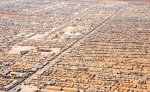
מחנה הפליטים הסורים זעתרי בירדן. (צילום: U.S. Department of State via commons.wikimedia.org)

יהודים בקנדה עושים מעשים חיוביים: עוזרים בשיפוץ מסגד שנשרף ומסייעים להביא פליטים מסוריה

בדרך כלל שוררים יחסים טובים בין קהילות היהודים והמוסלמים בקנדה בניגוד למקומות אחרים בעולם. לאור הימים הקשים, המאורעות במזרח התיכון ואירועי הטרור שמשפיעים גם על קנדה, נתרמים בהקהילה היהודית באזורים שונים ברחבי המדינה לעזור לאחרים, ובמקרה זה מדובר במוסלמים.

חברים בקהילה היהודית וראשי בית הכנסת ‘בית ישראל’ שבעיר פטרבורו במחוז אונטריו נרתמים בימים האחרונים לעזור קהילה המוסלמית המקומית, שהמסגד היחיד שלה נפגע בשריפה בשבוע שעבר. מדובר בפעילות פלילית שמוגדרת על ידי המשטרה כפשעי שנאה, לאור פעולות הטרור של דאע”ש בפריז. עלות השיפוץ של המסגד נאמדת בשמונים אלף דולר ובקהילה יהודית עוזרים בהשגת מימון לפרוייקט, שיימשך מספר שבועות. כן הוצע למוסלמים להשתמש במתקן בית הכנסת לקיום תפעילותיהם עד שהמסגד יהיה כשיר לפעילות מלאה.

במקביל וללא קשר מספר קהילות יהודיות בקנדה נערכות לעזור לקליטת פליטי המלחמה בסוריה. זאת לאור החלטת הממשלה הליברלית החדשה ברשות ראש הממשלה, ג’סטין טרודו, להביא לקנדה עשרים וחמישה אלף פליטים עד לסוף שנה זו. בימים הקרובים הממשלה תפרט את תוכנית העבודה לקליטת הפליטים שעלותה מוערכת בכמיליארד דולר. עלות הבאת וקליטת משפחה בת ארבע נפשות מוערכת בין שלושים עד ארבעים אלף דולר בשנה. ארגונים כמו הג’ואיש פמלי סרוויס משתפים פעולה עם הכנסיה המאוחדת של קנדה להקצאת משאבים ומתקנים לקליטת הפליטים. קהילת היהודים של קמפלוס ברשות הג’ואיש קומיונטי סנטר המקומי החלה במגבית לגיוס כספים לעזור לפליטים מסוריה, בשיתוף ארגונים מקומיים אחרים. ואילו בית הכנסת ‘טמפל שולום’ בוונקובר קיים מגבית לגיוס כספים לפליטים. במגבית גוייסו תוך מספר ימים כארבעים אלף דולר.

אבדה ונמצאה: טבעת אירוסים שנעלמה בחוף הושבה לבעליה

את טקס האירוסים שלהם דרין ריימר ואשתו לעתיד קתלין מקולי לא ישכחו. האירוע שהתחיל יפה וכמעט הסתיים בעוגמת נפש גדולה, נגמר בסוף טוב. רמייר (34) הזמין את בת זוגתו בחמש השנים האחרונות מקולי (27), לארוחת ערב חגיגית בעיר החוף טופינו שבוונקובר איילנד. אחרי הארוחה השניים ירדו לחוף הסמוך כשגשם ירד כמעט ללא הפסקה. הם החלו ללכת על החול הרטוב ופתאם ריימר נעצר, ירד על ברכיו, הוציא טבעת מכיסו ואמר למקולי: “הינשאי לי”. מקולי ששמחה מאוד אמרה “כן” ומייד הוסיפה: “אוי לא”. ומדוע, כי הטבעת שריימר ענדה על אצבעה הרטובה החליקה ונעלמה בחול כשבחוץ שלטה החשכה. לאחר שהתעשתו, השניים החלו לגשש בעזרת ידיהם על החול הרטוב בסמוך אליהם ולא מצאו דבר. הם המשיכו בחיפוש אחר הטבעת האבודה כמעט לאורך כל הלילה, עד שהתייאשו וחזרו לבית המלון, כשהם רטובים, עייפים ואצבעות ידיהם קפואות. למחרת בבוקר המשיכו השניים בחיפוש ולא מצאו את הטבעת. תושבי טופינו ואפילו השוטרים ששמעו על דבר הטבעת שנעלמה, פתחו במבצע חיפוש נרחב בחוף. לאחר מספר שעות הצליח אחד מהתושבים בעזרת מגלה מתכות למצוא את החפץ היקר. ריימר ומקולי הנרגשים שמחו עד דמעות. ריימר ניקה את את הטבעת מהחול ושוב ענד אותה על אצבעה של מקולי, אך הפעם בזהירות רבה, תוך שהוא בודק היטב שאין סיכוי שתיפול.

ריימר סירב להגיד מה עלות הטבעת שלא הייתה מבוטחת, אך ציין כי מדובר בטבעת הזהב לבן עשויה בהזמנה אישית, ועליה ציור של שושנה ולהבות מזהב צהוב, וכן מוטבעים מסביב מספר יהלומים. הוא הוסיף שסיפור הטבעת שאבדה חיזק את הקשר בין השניים, לאחר שהתמודדו בהצלחה עם מצב לחץ קשה.

Format ImagePosted on November 24, 2015November 23, 2015Author Roni RachmaniCategories עניין בחדשותTags Caitlin McAuley, Darrin Reimer, Kamloops Jewish community, mosque, Peterborough, refugees, Syria, Temple Sholom, terrorism, דרין ריימר, טמפל שולום, טרור, מסגד, סוריה, פטרבורו, פליטים, קהילת היהודים של קמפלוס, קתלין מקולי

We stand …. together

There has been an outpouring of grief and solidarity since the terror attacks in Paris a week ago. At some point, though, people began to ask why there was not a parallel response to the terror attack the previous day in Beirut, or the sadly frequent but remarkably similar incidents in various flashpoints in Asia and Africa recently. And what about the ongoing knifings and vehicular attacks against Israelis? Are some victims more important than others? Are some acts of violence more justifiable?

For comfortable people in Western societies, the Paris attacks remind us that violence can come to where we live – even though we don’t live in a place normally associated with such mass killings. Yet losing a loved one is no less painful because you live in a war zone. We should not allow ourselves to become numb to murder simply because of where the victims live, the color of their skin, their religion or nationality.

But current events have become far more fraught because of the perpetrators in Paris. Early reports suggest at least one of the murderers entered Europe amid the throngs of legitimate refugees streaming in recently. This will have damning consequences for the millions of persons displaced by war in Syria, Iraq and elsewhere in the region.

And the violence has reverberated to Canada. A mosque in Peterborough, Ont., was set ablaze, almost certainly an act motivated by a disordered response to events in Paris.

We should stand with victims of violence everywhere, whether in Peterborough, Paris, Lebanon or Jerusalem.

Posted on November 20, 2015November 17, 2015Author The Editorial BoardCategories From the JITags immigration, Paris, terrorism

Spreading pain, not peace

A member of Israel’s Knesset spoke at a Kristallnacht commemoration event this week and equated Israel’s actions to the events of Nov. 9-10, 1938.

Hanin Zoabi, an Arab-Israeli member of the Knesset, spoke at a Kristallnacht “memorial” in Amsterdam that was organized by a group known for its antipathy to Israel and its sympathies for Hamas. It appears the event was not meant to sincerely mark the solemn anniversary but rather, as is so often a tactic among the most extreme anti-Israel hate groups, to rub salt in the wounds of Jewish history.

“Kristallnacht didn’t suddenly fall from the sky, come out of nowhere,” Zoabi said Sunday. “It was the result of a development over time. We can see a similar development happening in Israel over the last several years.”

She acknowledged that, during Kristallnacht, thousands of businesses and hundreds of synagogues were attacked and destroyed.

“Perhaps the majority of Germans did not approve, but they kept quiet,” she said. “When in Israel two churches and tens of mosques are burned; and hundreds of Israeli supporters of Beitar shout ‘death to the Arabs’ after each soccer match; when a family is burned to death; when a 15-year-old boy is burned to death, the majority keeps quiet, although they are perhaps shocked.”

Of course, Zoabi is wrong. When these tragic and despicable incidents have happened, they have been condemned from the highest offices, by the most respected voices and across the political spectrum of Israeli society. When the far more frequent incitements to kill Jews occur, and when terrorists stab or drive over Israelis, these acts are lauded by Palestinian political and religious leaders and are cause for celebration among Palestinian civilians. That’s a big difference.

Zoabi is a member of the Arab Israeli party Balad, which calls for a binational state between the Jordan River and the Mediterranean – in other words, the effective end of the world’s only Jewish-majority nation. She is an elected official in the parliament of a country she does not believe should exist. Fine. That’s a fact of democracy. We have such a phenomenon in our own federal parliament.

Zoabi is not only a citizen of a democratic state, but one who was democratically elected by other citizens to represent them in the Knesset, which, in itself, goes some distance in undermining her hyperbolic claims.

Zoabi, because she is a citizen of a free country, has the right to say what she wants, short of the sort of incitement banned by law in every democratic society. (Although she has crossed that line, with minimal repercussions, in calls for “popular resistance” and justifying the kidnapping of three Israeli teens last year who were later found murdered.)

How ironic that a person in her position could invoke such vicious, ahistorical imagery and do it at a time and place that should call for the barest sense of human compassion and decency – and get away with it. Because, despite a few outraged comments from politicians and media, she will get away with it. There will be no legal or parliamentary repercussions for her words. She is a free person – one of the freest and most powerful Arab individuals in the Middle East, when you come down to it. Were her political agenda to be realized and the land in which she lives to come under the governance of Hamas or Fatah or any other political entity currently on the scene or even on the horizon, and she were to use her words to attack her country in this manner, the outcome would almost certainly be far more grievous for her.

Beyond this individual case, though, this kind of language is a treasured tactic of the anti-Israel movement. Clearly it is a strategy of the Amsterdam group that invited her to speak and we have seen it even on campuses and at rallies here in Vancouver: anything that can be done to cause pain to Jewish people is not only acceptable, it is a legitimate tactic.

Whether it is literally a knife in the neck of a Jew in Jerusalem or the inhuman exploitation of Jewish history against the Jewish people themselves in Amsterdam or the exploitation of Holocaust imagery and language against the state of Israel at rallies worldwide, including here in Vancouver, there is a streak in the anti-Israel movement that is more concerned with inflicting pain than finding solutions.

Posted on November 13, 2015November 11, 2015Author The Editorial BoardCategories From the JITags antisemitism, Hanin Zoabi, Israeli-Palestinian conflict, Kristallnacht, terrorism

Kohelet and Kristallnacht

“Vanity of vanities. All is vanity.” The day of remembrance for Kristallnacht was this week. Looking at what’s happening in Israel and globally, I’m reminded of the Preacher. By the Preacher, I mean Kohelet, traditionally thought to be King Solomon, whose writings in the Tanakh are known in English as Ecclesiastes. The first line, in Hebrew, reads: “Havel havalim. Hakol Havel.”

Everything is havel, which, better than vanity, is translated “vaporous, breathlike, fleeting.” Everything is vapor. Like Abel, whose Hebrew name is Havel, and whose life was like vapor, blown apart by Cain. Like what we thought we had gained in Israel, once upon a time: a state of our own that had mostly won the world’s respect and affirmation through blood, sweat and tears. A refuge. We thought we had pushed back the red sea of ancient, irrational hatred. The world had, to an amazing degree, recognized our right to a homeland in our homeland. The horrors of the Holocaust were understood and widely contemplated.

Yet, in the past months, much of what has happened has the character of a bad dream. The New York Times writes that the Temple Mount may not have been where the Jewish Temple was after all (later retracted under pressure). The United Nations declares ancient Jewish holy sites to be under the rightful control of a future Palestinian state, even as Palestinian Arab terrorists torch Jewish holy sites. In Europe, organizers of a Kristallnacht commemoration declare their plans to turn it into a commemoration of the Palestinian suffering for which Israel bears responsibility.

And the stabbings. The Palestinian leadership put the word out that Jews planned to change the “status quo” on the Temple Mount, where Al-Aqsa Mosque also stands. Currently, only Muslims have free access to the site, with everyone else having very limited or no access to this sacred space, revered by Jews especially but also Christians and Baha’is. “Changing the status quo,” according to Palestinian fears, would entail increasing access for non-Muslims (at least) or tearing down al-Aqsa and replacing it with a synagogue (at most). Israel has no intention of either: not of expanding access (although surely that would be a step forward for human rights and decency were that to happen) and certainly not of razing Islam’s third holiest site. Yet the claim enflames the Palestinian street, as it did at the start of the 2000 Intifada. Mothers begin celebrating the deaths of their children who died to “defend Al-Aqsa,” even giving out candy on TV. A Palestinian Arab mother names her newborn baby “Knife of Jerusalem” after the attacks. Mahmoud Abbas, who Western media falsely portray as a moderate, calls for the shedding of Jewish blood and declares that the “filthy feet” of Jews will not besmirch Al-Aqsa.

Mainstream Israel wants to negotiate an independent state for Palestinian Arabs yet a majority of Palestinian Arabs believes Israel wants to take their land and evict them. Tellingly, this is in fact what the Palestinian Arab leadership wants – to take back all Israeli land and eliminate Israeli Jews, as the Hamas charter and popular Palestinian songs, media and school textbooks demonstrate. In a classic psychological move, the Palestinian Arab imagination projects onto Israel its own desires: what is within is used to interpret what is without. This narrative has spread beyond the borders of Israel and the disputed territories to capture the imaginations of people all around the world. So, our refuge has begun to feel, increasingly, like a new ghetto, where we can be once again easily separated out and demonized.

Havel havalim. Hakol havel.

After experiencing years of checkpoints, poverty, “collateral damage,” the Gaza wars and more, it is certainly understandable that Palestinian Arabs feel sorrow and rage. It is even understandable that they hate the Israeli government. But to blame Israel and all Jews for their suffering, and not the racist, Israel-negating, violence-inciting, kleptocratic Palestinian leadership?

Israeli self-defence is viewed as aggression; the most enlightened state in the Middle East is slandered as an “apartheid state”; Zionism is viewed as racism by people whose denial of Zionism is in fact rooted in racism. Havel havalim.

Where do we look for something solid to hang on to? The opinions of the world, the justice of its courts and institutions, are failing us. And we ourselves are not immune to being blown apart by this hurricane wind on the inside and losing anything worth fighting for. In Israel, Jewish mobs have formed to attack “enemies” internal and external. Hatred and anger against the Palestinian Arabs grows. We are in danger of forgetting their humanity and their pain. We are in danger of losing our ability to think rationally, to think long term. We cannot and will not find security in the courts of the world. We must make our own reality, one that reflects what we know to be true. And we must hold to that reality with strength and with love. That is what we are already doing in our best moments:

  • A Jewish restaurant gives a 50% discount to Jews and Arabs who eat together.
  • There are peace rallies in Tel Aviv and Jerusalem.
  • Israelis find a variety of ways to laugh through what is happening and share them online.
  • Doctors in Israeli hospitals treat Palestinian terrorists alongside their victims.

We know that Israelis want peace, and that Jewish values in no way mandate injustice or aggression towards Palestinians or anyone else. We must make our own peace and our own future, through clinging to our own highest values like a rudder in the storm. And, as we find a way to a just divorce with the Palestinian Arabs, as Amos Oz so rightly said we need to do, both for their sake and for our own, we must at no time forget the humanity of each Palestinian Arab. We must not demonize them, must not forget that every Palestinian Arab is made in the image of God. Our own spiritual tradition, the beating heart of our highest values, mandates that we do not return hatred for hatred. At no time may we forget to fear the loss of our own humanity under the impact of their knife blades and bombs and stones. That is the way to commemorate Kristallnacht.

Matthew Gindin is a writer, lecturer and holistic therapist. As well as teaching holistic medicine, Gindin regularly lectures on topics in Jewish and world spirituality, and has a particular passion for making ancient wisdom traditions relevant in the modern world. His work has been featured on Elephant Journal, the Zen Site and Wisdom Pills, and he blogs at Talis in Wonderland (mgindin.wordpress.com) and Voices (hashkata.com).

Posted on November 13, 2015November 11, 2015Author Matthew GindinCategories Op-EdTags Al-Aqsa, Ecclesiastes, Intifada, Israel, Israeli-Palestinian conflict, Kohelet, Kristallnacht, peace, terrorism

Need different view of Jerusalem

Sirens always make me pause. I fall silent and count one off, praying that there won’t be another. Because two sirens, as we used to say, are not women in labor.

Distant memories from the Intifada segue into those of summer last. Somehow, the rise of conflict in Jerusalem always comes along with the rising temperatures. But after the emergency meetings, the touring politicians, the dramatic headlines, there comes the first rain, and everything calms down. Then the countdown begins for next summer.

Some, though, aren’t content with just counting the days. Jeremy made aliya from D.C. six years ago. A reserve paratrooper officer, he rides his bike to work, halfway across town, each time reassuring his mother, thousands of miles away, that he wasn’t anywhere near the most recent attack. Last month, he joined a crowd of 5,000 to watch Matisyahu, the famous Jewish-American rapper, perform beneath the Old City walls. “Jerusalem If I Forget You gets a whole new meaning these days,” he tweeted, referring to the ancient prayer borrowed by Matisyahu for one of his songs.

Michal is a mother of four. At night, after putting her own children to bed, she has been going downtown, where she volunteers for a group seeking out dialogue with angst-filled youth bent on revenge. To her ever-concerned sister, she vows never to leave Jerusalem, with its crisp, cool air and still-low crime rates. It’s her husband who drops off the kids at school the following morning, where they are taught about the complexities of living in a mixed city, where you have to defend yourself with one hand and reach out to your would-be enemies with the other.

Another person is Ibrahim, a Hebrew University law student, and also a resident of Ras el-Amud, a Palestinian suburb shaken by recent events. Intimidating glares by Hamas supporters notwithstanding, he goes online every day, trying to convince people to stop the cycle of violence. Despite the long-standing advice of friends to relocate to Ramallah or the United States, he clings on to his naïve faith that there’s still hope in this conflict. Meanwhile, he alerts the authorities to suspicious happenings and, a few weeks back, confiscated a knife off of a 15-year-old brainwashed neighbor kid.

Then there’s Batia. She is an ultra-Orthodox woman. Every day she walks to work at City Hall. Despite having recently bought a canister of tear gas as a precaution, she prefers to put her faith in G-d and in the ubiquitous policemen. Just before Shabbat, she often goes up to them, to deliver fish, meat and chicken and to make their shift a little more pleasant.

Jerusalem keeps going, not through pompous statements, but through the hard work and devotion of its people, some elected officials, some social entrepreneurs and some ordinary citizens, united by relentless optimism and a profound love for their city. When things started getting really bad, I put out a call for an emergency meeting of Jerusalem civil society organizations. Within three hours, representatives from 33 organizations sat around a conference table at City Hall. It came as no surprise; even during “normal” times, the amount of people willing to sign up for civilian “reserve duty” is astounding.

There are teenagers handing out Israeli flags. Elderly people handing out small gifts to security personnel. Psychologists supporting youth in distress, activists helping out local businesses, and a string of independent online campaigns. These ordinary citizens allow the city to keep on living its life: thousands of students going back to school, the basketball team fighting to retain its championship title, and Buzz Aldrin, the second man on the moon, joining 2,000 people at the International Astronautical Congress last month.

This energy, this drive to take responsibility and think out of the box, are precisely what is needed to resolve the complexity of current events. We have to crack down on violence, while empowering moderate leaders; fight incitement on both sides and defend the right of every man and woman for freedom of worship; and make sure East and West Jerusalem get their share in infrastructure investments.

It’s time for this fresh perspective to rise from the bottom up. We are tired of instant solutions, quickly denounced by this side or the other of the political map. We are tired of those who take turns making political gains out of our hardship. Jerusalem is a different place, and requires a different point of view. The one we, young people of Jerusalem, discovered 10 years ago, when everyone else said the city was lost, and we formed Wake Up Jerusalem.

From this point of view, there is a lot of good to see. And even more to do.

Hanan Rubin is a Jerusalem city councilor and a co-founder of the solution-oriented political movement Wake Up Jerusalem, which focuses on quality of life issues for all Jerusalem residents.

Posted on November 6, 2015November 4, 2015Author Hanan RubinCategories Op-EdTags Arab-Israeli conflct, Israel, Jerusalem, peace, terrorism

Longing for past headlines

How I miss those mundane headlines of my youth back in the ’Peg. Nothing more serious than potholes and (the more serious) urban decay of the city centre.

I even miss those mundane headlines of the local papers here in Israel from mere weeks ago. Nothing more serious than the stuck peace process, disputes with Obama, the Iran nuke deal, stray mortar shells from Syria and the like.

I used to love the quiet of those mornings. Sipping my Turkish coffee with the paper spread out in front of me. Catching up on those mundane Middle East headlines before waking the kids up for school, walking the dog and getting ready for work. A typical start to most days probably anywhere in the world.

Well, my world is not typical anymore.

As of late, the headlines blare the new insanity of terrorism in our midst. Random, lone wolf attacks – how random, how lone wolf? – shaking up our beloved routine. No longer so pleasurable reading the morning papers when the headlines shout about multiple terror attacks around the country. Alright, we might expect it in Jerusalem (don’t tell anyone I said that). But for stabbings and car attacks to take place in the cities of Ra’anana or Holon? Even in Tel Aviv. What the heck is going on?!

What is a car attack? It’s when a crazed terrorist rams his car into a crowd of waiting commuters at a local bus stop and then jumps out and starts stabbing the wounded and shocked. Have I disrupted your morning coffee?

This craziness has done more than ruin my beloved morning time. Not sure if it’s just me – I am kind of embarrassed to ask my friends – but I find myself looking over my shoulder much more frequently. Even when exiting the elevator of my condo, I kind of prepare myself for the worst; if I am with my dog, I will let him go out first, just in case (don’t tell my daughter that).

Of course, I worry more about my kids now. They, too, are also frightened. Especially my 14-year-old daughter. Even my son – with all the bravado of a pre-army teen – is, well, let’s just say, concerned.

I picked my daughter up from an after-school event the other day. Much of the activity took place outside. I had terrible visions. Fortunately, the area was more heavily guarded than usual. Not enough for a paranoid parent, but there were a number of police stationed at strategic points. Probably better not to think about it.

Do I want my son walking home from his friend’s this weekend at 3 a.m.? Or meeting his pals at the local ice cream parlor or mall after school? For sure not! Will he? Probably. Life goes on, he says. He just wants to have fun, as do most teens everywhere.

And take my wife. She called me from a business meeting in Tel Aviv today. The city was on high alert. Those dang terrorists again. Major throughways were blocked. Helicopters hovering overhead. The army moving about in full force. The White City in lockdown mode. Stores and malls shut their doors. People stayed inside. Luckily, my wife’s meeting took place at an excellent restaurant; at least she could enjoy a good lunch. Or could she?

Hmm. Looking forward to a quiet morning tomorrow with my Turkish coffee and newspaper; catching up on the insanity taking the country by force, and hoping it doesn’t become mundane.

Bruce Brown, from Winnipeg, lives in Israel with his Sabra wife and children. He actually doesn’t like Turkish coffee – his wife drinks it every morning with her paper – but took the poetic licence to describe himself as drinking the black goo while reading the headlines of his morning paper.

Posted on October 23, 2015October 22, 2015Author Bruce BrownCategories Op-EdTags Israel, terrorism

Incitements to stab

It is an alarming phenomenon, to say the least. Seemingly ordinary Palestinian civilians, acting not on behalf of an organized terrorist organization but apparently on their own, taking everyday household instruments and stabbing Israelis with them on the streets.

Violence, in fact, has been a top-down factor in the Palestinian body politic. As recently as last month, the Palestinian leader Mahmoud Abbas was glorifying the murder of Jews, responding to the riots and killings in Jerusalem with this:

“Every drop of blood spilled in Jerusalem is pure, every shahid [martyr] will reach paradise, and every injured person will be rewarded by God.”

An imam in Gaza last Friday waved a dagger as he gave his sermon – a sermon broadcast weekly over the internet – urging followers to stab and kill Jews.

These incitements to murder are omnipresent in Palestinian society, from the “radical” Hamas to the “moderate” Fatah. So, the spate of stabbings is the natural fruit of seeds of hatred planted by decades of political and religious leaders, relentless media propaganda and the glorification of “martyrs” gone before.

It is often said that the Israeli-Arab conflict is an intractable one with complexities and nuances that make it drag on. That’s true. There are complexities, but some things are simple – when you inculcate violence, you get violence.

Our hearts go to those killed and wounded, their families and all who are suffering.

Posted on October 16, 2015October 14, 2015Author The Editorial BoardCategories From the JITags Israel, Israeli-Arab conflict, Palestinians, stabbing, terrorism

More or less immigration?

For political nerds, last week offered a cornucopia. A week ago Wednesday, 11 Republican candidates for president of the United States lined up in front of Ronald Reagan’s Air Force One and squabbled, insulted, demeaned and debated one another. The next night, the three leading candidates for prime minister of Canada lined up and, in a more Canadian manner than their American counterparts (albeit, perhaps, in a more American manner than most previous Canadian debates) did much the same thing.

There was plenty to differentiate the two events. The production values of the American version were Hollywoodesque. The Canadian debate looked high schoolish. With 11 candidates in the American debate, content took a back seat to quips and barbs. The Canadian debate was somewhat more substantive.

What was common between the two was an emphasis on immigration and refugees. With the refugee crisis in the Middle East and Europe making front-page news worldwide, and immigration a perennial hot button issue in the United States, candidates came at the topic through particular prisms.

The Republican candidates mostly clamored over one another to burnish their anti-immigrant cred. Who could build the highest, most impenetrable wall along the southern border, it seemed, was the worthiest candidate. The day after the debate, a pro-immigrant organization released a video that contrasted the current crop of candidates’ comments on immigration with those of Ronald Reagan, in whose presidential library the debate took place and who is generally venerated among Republicans.

Reagan, at least in his rhetoric, viewed America as a “shining city on a hill” to which people around the world aspired to come and where, presumably, they would be welcomed. Typifying the prevalent approach of current Republican candidates, Donald Trump said before the debate: “When Mexico sends its people, they’re not sending their best.… They’re bringing drugs. They’re bringing crime. They’re rapists. And some, I assume, are good people.”

Emma Lazarus Trump is not. The American approach to immigration once – before the 1920s and at intervals since the Second World War – was idealized in Lazarus’ poem, affixed to the Statue of Liberty, and it clearly does not demand “the best” from other countries: “Give me your tired, your poor / Your huddled masses yearning to breathe free / The wretched refuse of your teeming shore / Send these, the homeless, tempest-tossed, to me / I lift my lamp beside the golden door.”

It can still evoke chills. Chills that are different from those evoked by the language and views of some of today’s Republicans.

What was encouraging in the Canadian debate the next day was seeing our leaders similarly clamoring over one another, but in this case to burnish their pro-immigration cred.

We recognize that some of the people we welcome have endured great challenges, and need resources and programs to learn the languages of our country, develop or adapt their skills, perhaps recover from deep trauma. Piles of evidence prove that immigrants and refugees who come here succeed brilliantly.

Of course, Jewish Canadians especially may be torn between heart and head on this matter. Our families came here, more often than not escaping repression and violence, and we understand the life-and-death implications of immigration policies.

We also understand that many immigrants and refugees today are coming from places that deliberately inculcate antisemitism in their citizens, who have been known to then act out on these impulses once they move to places where Jews exist. However, the current crisis involves refugees who are fleeing violent jihad and are likely to be among those Canadians who are most vigilant against that form of hatred.

Above all, we need to understand that we are one world. We need to address security challenges at home and confront, with our allies, the sources of those challenges. This security imperative impacts on our immigration policy, but we should not delude ourselves or punish those who need refuge by pretending we can immunize ourselves from world realities by closing our doors.

Posted on September 25, 2015September 24, 2015Author The Editorial BoardCategories From the JITags Donald Trump, elections, Emma Lazarus, immigration, refugees, terrorism
Kenney discusses priorities

Kenney discusses priorities

Jason Kenney, Canada’s minister of national defence and minister for multiculturalism. (photo from forces.gc.ca)

Jason Kenney, Canada’s minister of national defence and minister for multiculturalism, says this country should prioritize Christian refugees and other minorities who constitute the most imperiled of the millions fleeing Syria and Iraq.

“Some people are in an understandable wave of emotion … telling me that we should just send C-17 aircraft over there to refugee camps and load them up and bring them to Canada,” Kenney told the Independent. But the refugees and internally displaced persons (IDPs) that Kenney sees as most vulnerable are not even in the United Nations refugee camps, he said.

“I know these issues extremely well and I can tell you that there are certain vulnerable Syrian and Iraqi minorities who cannot and do not even go to the UN camps,” said Kenney. “Why? Because they are the persecuted minorities. Ismaili Muslims, Druze, Chaldeans, Assyrians, Syrians, Armenians – e.g. the Christians – do not go to the refugee camps in Lebanon, Jordan and Turkey because they’re afraid of their minority [status], the implications of that. These are the people who are living in urban slums in Amman, Jordan, in Beirut, Lebanon, and some in Ankara, Turkey, who we have said we will focus our refugee resettlement programs on.”

These minorities are less likely, Kenney said, to harbor individuals who could pose a threat to Canada.

“These are the victims of the doctrine of armed jihad,” he said. “I can tell you that these people, when they come to Canada, they want to keep us safe from what drove them out of their homes. This is why I think we need to be intelligent about refugee resettlement.”

Kenney emphasized that he wishes peace and protection to all of the refugees and IDPs regardless of their faith or political views. But, he added, “I’ve been to the camps, alright? When I go into people’s tents and I see there’s very few young men, I’ve asked in Turkey and Lebanon and in Jordan: where is your father, where is your husband, where’s your son? I see the pictures in the tents.”

The response he has received often, he said, is that the men are off fighting with the al-Nusra Front or other Islamist militias.

“This is a vicious stew of violence and we must ensure that that cult of violence doesn’t inadvertently come to Canada,” said the minister, who is running for reelection in Calgary. “So that’s why we need to be careful and prudent about security screening and, I think, ensure that to the greatest extent possible the refugees who we welcome to Canada are those who are amongst the most vulnerable.… I don’t apologize for saying we should focus on the most vulnerable and on Canada’s security at the same time.”

Kenney, who has been the Conservative government’s point person for ethnic communities, spoke with the paper as the image of Alan Kurdi, the Syrian-Kurdish refugee child whose body washed ashore on the Turkish coast, was animating the world to act on the refugee crisis.

“The image of that boy represents thousands of others who die in human smuggling operations and the tens of thousands who have – excuse me, the hundreds of thousands – who have died in the Syrian civil war and as victims of the so-called Islamic State in Iraq and Syria,” said Kenney. “It galvanizes collective attention on the total humanitarian catastrophe in Iraq and Syria.”

Canada is the largest per capita resettler of refugees worldwide, Kenney said, welcoming one in every 10 resettled refugees in the world. (CBC and Global News have both analyzed this claim and note that it refers to refugees resettled from an asylum country like Lebanon or Jordan to a country that has agreed to take them as refugees. Because most refugees flee to an adjacent country – or, as seen in recent months, trek to European countries – the news outlets assert that Canada is not first, but 41st, in the world. Canada accepts one in 10 resettled refugees, but most refugees remain unsettled, they claim, making Canada’s acceptance rate of total refugees about one percent, not 10%, of the world’s refugees.)

In any event, the enormity of the problem, Kenney said, means “resettlement is not a solution.”

This is where Kenney differentiates the Conservative government’s position from those of the opposition parties. The United Nations High Commissioner for Refugees cites 15 million Iraqi and Syrian refugees and IDPs, he said.

“It’s a cruel myth if we think we can solve a humanitarian crisis with 15 million IDPs and refugees and here’s the key thing – new refugees are being created every single day,” he said. The world needs to address the root cause of the massive refugee problem, he said, which is the genocidal terror of ISIS (also called ISIL or the Islamic State).

“We have a moral obligation to play a role in degrading and ultimately defeating ISIL in its campaign of terror,” he said. “And, we also need to provide humanitarian support to the IDPs and refugees, which we are doing…. We’ve contributed between the two countries over $810 million in emergency humanitarian assistance. We will do more.”

The defence minister took a shot at New Democratic party leader Thomas Mulcair and Liberal leader Justin Trudeau, both of whom oppose Canadian ground troops in the fight against ISIS.

“What we’re doing is important,” Kenney said. “The military contributions that we are making through our airstrikes and the training of the Kurdish Peshmerga in northern Iraq are making a meaningful difference but, in the grand scheme of things, are relatively modest contributions. So, for the Liberals and NDP to suggest that we should completely withdraw even from the air campaign or, in the case of the NDP, from training, is, I think, morally irresponsible and reprehensible. If the world is moved by the images of the Kurdi family on the Turkish beach, we must recall that these were people who fled the violence of ISIL and there will be more Kurdi families unless and until the world stops this genocidal terrorist organization. That’s why we believe there is a moral obligation and a security imperative for us to participate in the international coalition degrading and, hopefully, ultimately defeating ISIL.”

On the issue of domestic security, Kenney also lashed back at critics of Bill C-51.

“If you look at the additional security powers included in Bill C-51, they are modest compared to most of our liberal democratic peer countries,” he said. “Most of the new powers included in Bill C-51 are actually invested in the courts, the judiciary, not in the police or intelligence agencies and certainly not in the hands of politicians. And many of those additional powers themselves are very modest.”

Kenney said RCMP were keeping an eye on Martin Couture-Rouleau, the “lone wolf” terrorist who killed Warrant Officer Patrice Vincent in Quebec last year.

“The RCMP went to the prosecutors and said we want to apply for a preventative detention order or peace bond to restrict this guy’s movements because we think he’s going to do something crazy and violent,” said Kenney. “The prosecutor said, sorry, but we just do not have the legislative, the statutory, tools to do this. We would have to prove to a court that he will commit a terrorist offence and there’s no way to do that.”

Under the new law, said Kenney, police can go to the prosecutor, who in turn can go to the court, and the court determines whether an order for preventive detention can be issued.

“And, by the way, the maximum order for that can be seven days,” he said. “In Britain, it’s 28 days. It’s why I say the powers here are relatively modest.”

Another example of what Bill C-51 does, he said, is to allow the Canadian Security Intelligence Service to interrupt a possible terrorist event.

“What does this mean practically? If CSIS is observing that a 15-year-old kid’s spending hours every day on terrorist websites, instead of just waiting for him to blow up metaphorically, they can go to his parents now and say, ‘Are you aware that your son appears to be in the process of radicalization?’” Kenney said. “Is this a violation of civil liberties? No. As the prime minister says, the most important civil liberty is the right to live safely and securely.”

Kenney described the idea that C-51 could be used to infiltrate or disrupt civil society protests against things such as oil pipelines as “rubbish.”

“I think the criticisms of Bill C-51 have been massively overblown,” he said. “If they advocate going and blowing up pipelines, yes, possibly. But protesting the construction of pipelines? Absolutely rubbish. No police officer would be interested in that, no prosecutor would bring a charge on that, no court would accept it. It is ridiculous.”

The Conservative government has often been alone on the international stage in defending Israel’s right to defend itself, a position that has been criticized on several fronts, including accusations that the Tories have turned Israel into a partisan political issue. The Independent asked if the government’s vocal position is driven by theology, politics or ideology.

“What drives that is principle,” Kenney said. “Israel is not a normal state. Israel is a moral cause. Israel is the refuge of the survivors of the Shoah and, therefore, the world has a moral obligation to ensure the protection of that refuge, that one and only Jewish homeland in the world.”

He dismissed political expediency as a factor, noting that fewer than one percent of Canadians are Jewish – and that not all of them are committed Zionists – and Canada has little of the Christian Zionist movement that exists in the United States.

“So, it’s not political,” he said, adding that it is also not based on “some kooky Christian reconstructionist millennial theology.”

“I have never heard a Conservative political actor in Canada make reference to Christian Zionist theology in articulating our support for Israel,” he said. “That’s a phantom for some paranoid minds on the left. The truth is this … we see Israel as an emblem, a symbol, a surrogate for Western civilization in the Middle East, by which we mean that Israel is predicated on the belief in human dignity, which is manifest in a liberal democratic political system, protection for human rights, religious freedom and pluralism.”

He said Israel’s enemies are motivated by what they view as “an unacceptable presence of those Western civilizational values in the Middle East, but secondly because the enemies of Israel are motivated by a deep and irredeemable antisemitism.”

“Most of Israel’s enemies do not seek a conventional peace – negotiations toward a two-state solution or a conventional political solution to the conflict there. They seek one thing, which is the elimination of the so-called ‘Zionist entity’ and the driving of the Jews into the sea. A second Holocaust.”

In addition to foreign affairs, Kenney said he wanted to remind Jewish Canadians of programs the government has undertaken domestically.

“We’ve taken a zero-tolerance attitude to antisemitism here domestically and that’s not just rhetorical,” he said. “We’ve paid a price for it. I’ve defunded organizations that were receiving grants – perversely – to provide integration services to newcomers, like the Canadian Arab Federation and Palestine House, whose leadership were openly antisemitic. I’ve been sued for it, our government’s been sued for these decisions, but we did the right thing.”

The government, he said, has also funded security infrastructure projects to upgrade security at synagogues, Hebrew schools and Jewish community centres.

On the issue of whether Canada is in a recession, Kenney said there was a sectoral contraction in oil that’s affected Alberta.

“No doubt about it, Alberta is in a recession due to the crash in oil prices,” he said. “But the rest of the country and the other industry sectors are growing. Employment remains strong. This is hardly a recession by any broadly understood definition and, according to the June StatsCan report, we’re back into a growth phase of two percent annualized growth. The dumbest thing we could do would be to act as though there is a serious, deep recession by going out and borrowing tens of billions of dollars as the other parties [would] do, which constitute deferred taxes. We think fiscal discipline, low taxes [and] expanded trade markets continue to be the right recipe for growth.”

The Independent has interviewed Liberal leader Justin Trudeau and has invitations out to NDP leader Thomas Mulcair and Green party leader Elizabeth May. The federal election is on Oct. 19.

Format ImagePosted on September 18, 2015September 17, 2015Author Pat JohnsonCategories NationalTags Bill C-51, Conservatives, elections, ISIS, Israel, Jason Kenney, recession, refugees, terrorism

Can terrorism deliver results?

Does terrorism work? This is the question that opens Anonymous Soldiers: The Struggle for Israel, 1917-1947 (Alfred A. Knopf, 2015). Western leaders insist that the work of terrorists will never lead to the ends they seek, but one of the lessons from this book is that this may well be wishful thinking.

image - Anonymous Soldiers  book coverAnonymous Soldiers – the title is from the anthem of the Irgun, the Zionist paramilitary force led by Menachem Begin – is the latest book by Bruce Hoffman, an expert on terrorism.

In the aftermath of the First World War and the collapse of the Ottoman Empire, Britain came to control the region known as Palestine, a victory that would prove confounding and tragic. Hoffman’s book is a story of endless miscalculations, under-preparedness and overreactions on the part of the British military and police.

The Balfour Declaration of 1917 was a statement of intent by the British government to create a Jewish national homeland in Palestine and the Jewish people there and elsewhere saw this as a sign that Britain would be their fiercest ally. However, almost from the moment the British Mandate began, until the forces of the empire departed with their tails between their legs three decades later, Palestine was riven with not only violent clashes between its Arab and Jewish residents, but by both those parties against the British and, as brutally detailed by Hoffman, fraternal conflict between Jewish militias.

The Haganah was the “establishment” militia, associated with the Jewish Agency and intended as a self-defence organization after the British proved incapable of or unwilling to protect the Jews of Palestine. In 1929, Arab riots led to mass killings of Jews and, while British police killed almost as many Arabs as the Arabs killed Jews, the balance demonstrated an inability of the British police and military to control the area. The diplomatic response was to attempt to appease the Arabs, which appears to be the first example in the book to prove that terrorism works.

The riots led to an investigative commission, a white paper and another British obfuscation on Zionism. The white paper blamed Arab violence on “excessive” Jewish immigration to the area in the mid-1920s and the purchases of land by Jews. This led some Zionists – notably those of Ze’ev Jabotinsky’s Revisionist party – toward the idea that Britain may not be a reliable ally. In 1931, Revisionists defected from the Haganah and formed Haganah-bet (later the Irgun), which did not see itself solely as a self-defence force but opened the door to “sabotage, bomb making and hit-and-run attacks – in other words, the core tactics of terrorism.”

From 1936 to 1939, Palestine was in a state of near civil war in the form of an uprising by the Arab populations against the British and the potential of more Jewish migration. At precisely this time, the fate of Jews in Europe was being sealed and countries, including Canada, were slamming shut the gates.

Clouds of war in Europe were accompanied by fear of Muslim uprisings in the vast British Empire. The priority, in the words of foreign secretary Lord Halifax, was to avoid “arousing antagonism with the Arabs.” Neville Chamberlain, the prime minister at the time, said it was “of immense importance to have the Muslims with us. If we must offend one side, let us offend the Jews rather than the Arabs.”

This, too, was a miscalculation that did not take into account the determination of the Irgun. British caving in the face of Arab violence was taken by the Irgun as proof that terrorism works.

And a third group, which had broken away from the Irgun – Lehi, also known as the Stern Group (or the Stern Gang by the British) – went further. They attempted an alliance with the Axis, viewing Hitler as “just another antisemite” and proposing a mutually beneficial partnership based, the author writes, “on the fatally erroneous assumption that for Hitler the crux of the Jewish problem in Europe could be solved by evacuation, not annihilation.”

Meanwhile, as terror was rocking the Middle East, Chaim Weizmann, the Zionist leader who was plugged into the British establishment, was mending fences in London and urging the Haganah to crack down on the Irgun and Lehi.

Weizmann was warned by then prime minister Winston Churchill that if the violence didn’t end, “we might well lose interest in Jewish welfare.”

Of course, the Irgun did not expect to defeat the British Empire militarily. “History and our observation,” Begin later said, “persuaded us that if we could succeed in destroying the government’s prestige in Eretz Israel, the removal of its rule would follow automatically.”

Weizmann’s diplomacy and the cooperation of the Haganah with the British forces in Palestine regained the trust of Churchill, but that was of limited value after the war leader lost the 1945 election and the Labor party came to power at Westminster.

The new prime minister, Clement Atlee, inherited a paralyzed Palestine, in which there seemed to be no winning position. At a 1947 conference, the British tried to share the mess with the United States, but that failed and they eventually dumped the problem at the podium of the new United Nations.

So, does terrorism work? In the Palestine example, Hoffman demonstrates that the Arab riots of 1921 resulted in restrictions on Jewish immigration to Palestine and the 1929 riots resulted in Britain backpedalling from its commitment to Zionism. The Arab Rebellion, from 1936 to 1939, resulted in a huge reconsideration of Britain’s policy in Palestine and, though the author doesn’t make this explicit, possibly the deaths of millions of European Jews.

On the Jewish side, violence seems to have had its intended effect, as well. “By September 1947, the Irgun had achieved its objective,” Hoffman writes. “Each successive terrorist outrage illuminated the government’s inability to curb, much less defeat, the terrorists. Already sapped by World War II, Britain’s limited economic resources were further strained by the cost of deploying so large a military force to Palestine to cope with the tide of violence submerging the country.”

The author sees the Irgun’s campaign as critical to understanding the evolution and development of terrorism in the second half of the 20th century and the already bloody 21st century. “Indeed, when U.S. military forces invaded Afghanistan in 2001, they found a copy of Begin’s seminal work, The Revolt, along with other books about the Jewish terrorist struggle, in the well-stocked library that al-Qaeda maintained at one of its training facilities in that country.”

Posted on September 11, 2015September 9, 2015Author Pat JohnsonCategories BooksTags Arabs, British Mandate, Israel, Menachem Begin, terrorism

Posts pagination

Previous page Page 1 … Page 12 Page 13 Page 14 … Page 17 Next page
Proudly powered by WordPress