Israeli President Reuven Rivlin lays a wreath in memory of the victims of the 2008 Mumbai terror attack at the Chabad House. To Rivlin’s left is First Lady Nechama Rivlin. (photo from Israel Government Press Office via Ashernet)
Israeli President Reuven Rivlin and First Nechama Rivlin participated in a Nov. 21 memorial ceremony for victims of the 2008 Mumbai terror attack at the Chabad House – Rabbi Gavriel and Rivka Holtzberg, Bentzion Kruman, Rabbi Leibish Teitelbaum, Yoheved Orpaz and Norma Rabinovich.
Also at the ceremony at Taj Palace Hotel were Chennamaneni Vidyasagar Rao, governor of Maharashtra state of India, other senior state officials, leaders and members of the Jewish community, and members of the business and academic delegation who accompanied the president on his state visit to India.
“As we stand here, we say clearly that terror will never win…. Our values of democracy and freedom are strong and we will defend them with all our might,” said Rivlin. He added, “We must act and work together: to share intelligence and best practices, to keep our peoples safe, to protect our borders, our towns and cities. India and Israel stand shoulder to shoulder in this fight. This is our duty to the memory of the victims, and will be the legacy we leave for future generations.”
Prime Minister Binyamin Netanyahu kisses Adel Banita’s 2-year old son on the forehead in Hadassah Hospital on Oct. 5, 2015. Netanyahu was visiting Banita, who was stabbed by a Palestinian terrorist in Jerusalem’s Old City. Her husband, Aharon, 22, died later of his injuries. (photo from Ashernet)
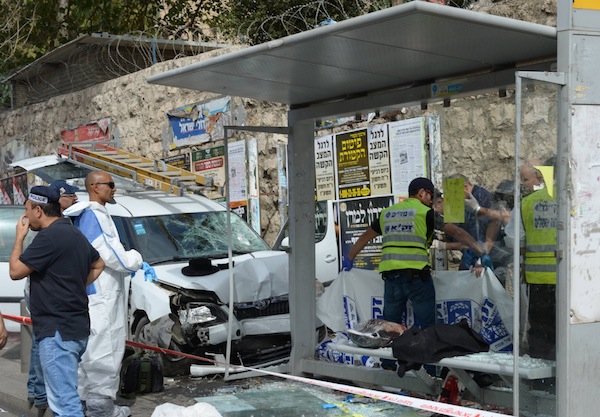
The Jewish year 5776 could be probably best described as a year of diplomacy and terror. Despite the toll of death and misery being inflicted by radical Islamic terror groups around the world, Israel this past year has been relatively quiet in so much as it has not had an outright war with its neighbors. Terror, however, has been present, with the knife and automobile being the weapons of choice to inflict fear and mayhem on the long-suffering citizens of Israel.
Radicalized, mostly young, Arab terrorists have been responsible for murdering or seriously injuring innocent men, women and children by stabbings or ramming their vehicles into groups of people, usually standing at bus stops or hitchhiking posts. Death and injury have also been caused by throwing large stones at passing cars in the West Bank. In several instances, firearms have been used by terrorists to kill people enjoying an evening out. On Aug. 17, a terrorist from the West Bank shot dead four people and injured a further six individuals at a restaurant in Tel Aviv. Perhaps the most outrageous attack was the murder of 13-year-old Hallel-Yaffe Ariel as she slept in her bed in her home in Kiryat Arba on June 30.
The year has been marked by intensive diplomatic activity, particularly as far as the African continent is concerned. Major countries, such as Kenya, Uganda, Ethiopia and Rwanda, played host to Prime Minister Binyamin Netanyahu this past summer. Their leaders have also visited Israel and trade agreements were signed. One African leader said the visit of the Israeli prime minister to Africa was to “reset Africa’s diplomatic relations with Israel.” Many African countries are anxious to use Israeli technology for water management and agricultural development. It is also worth noting that many African nations have also been victims of radical Islamic terrorism.
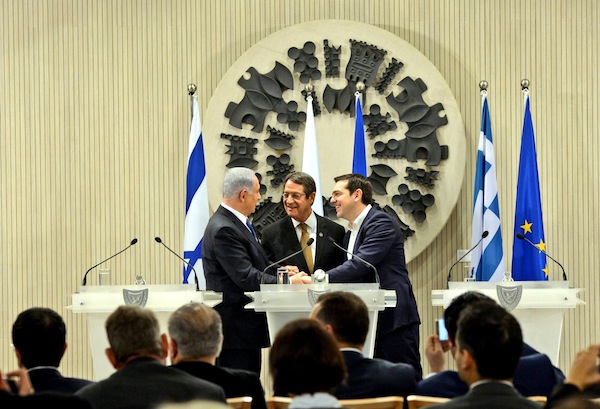
Israel’s Mediterranean neighbors were not forgotten this past year. Mutual interests of both energy and security have brought Greece, Israel and Cyprus closer. Greece and Israel have conducted military exercises in each other’s country, and the three countries are working together to maximize the natural gas deposits that have been discovered in the eastern Mediterranean.
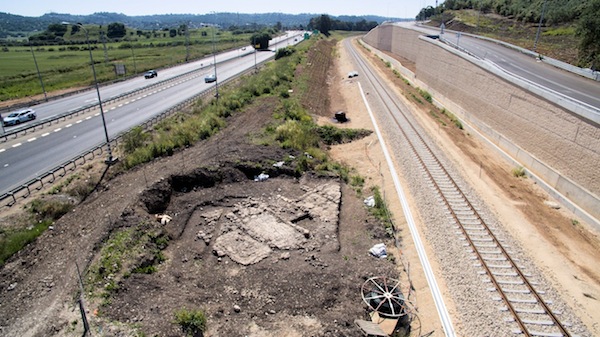
Despite the tensions in the Middle East, beneath the surface, much is happening between Israel and its neighbor Jordan. Perhaps the most significant long-term change is the soon-to-be-completed Jezreel Valley railway project. Apart from the advantage for Israelis living in the north and working in the Haifa area, the new rail link will enable Jordanians to have a Mediterranean trade outlet, via Haifa. The only link to the sea for Jordan at present is at Aqaba on the Red Sea.
Another project between Israel and Jordan concerns the rapid evaporation of the Dead Sea. Already the lowest point on earth, the sea level is getting lower every year. Also, the annual replacement of water from rivers in the north does not reach the Dead Sea. This river water is being used for agriculture and domestic purposes. In principle, the two countries have agreed to build a water feed from the Gulf of Eilat to the Dead Sea. On the way, the flow of water would power generators to produce electricity.
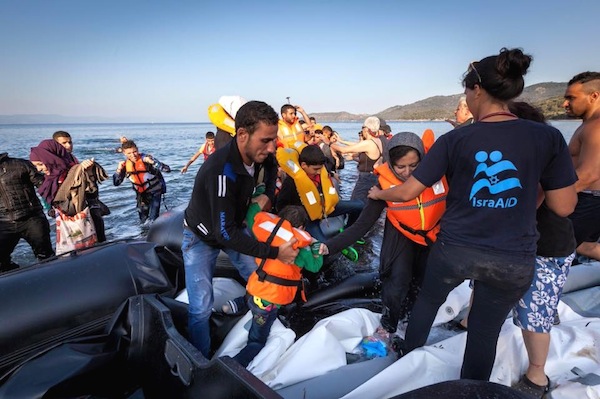
As regards her other neighbors in the region, the terrible humanitarian crises being played out in Syria and Libya have once again demonstrated that Israel will never turn her back on those in need. As thousands of refugees have been pouring onto some Greek islands via Turkey to escape the unrelenting wars in the Middle East and North Africa, Israel’s aid organizations and medical teams have been on hand to offer help and expertise.
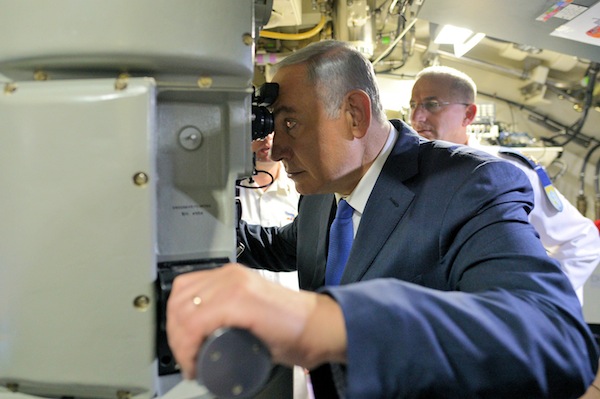
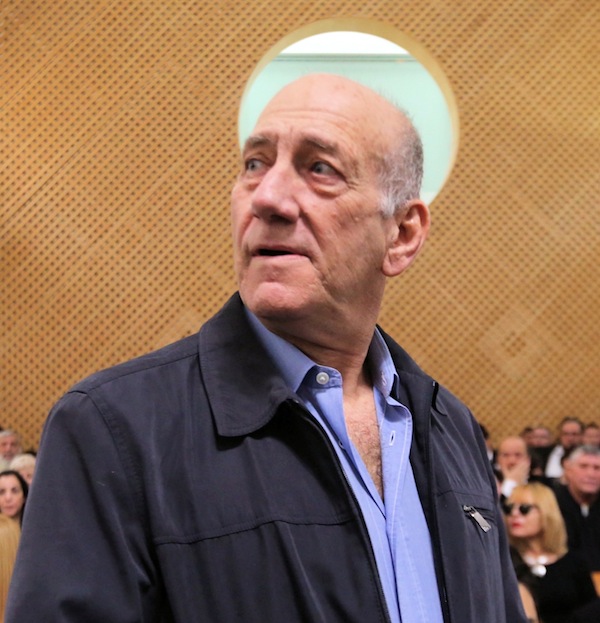
Among other happenings during the year, another state-of-the-art submarine was delivered during the summer from a German shipyard to augment Israel’s submarine fleet. And, finally, former prime minister Ehud Olmert was sent to prison after being found guilty of corruption and bribery. The positive side of this? The rule of law is the same in Israel for all of its citizens.
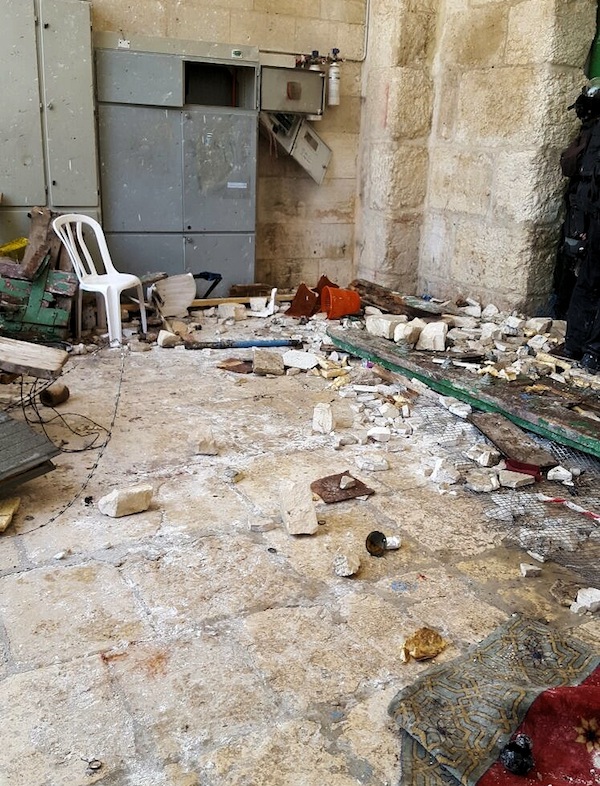
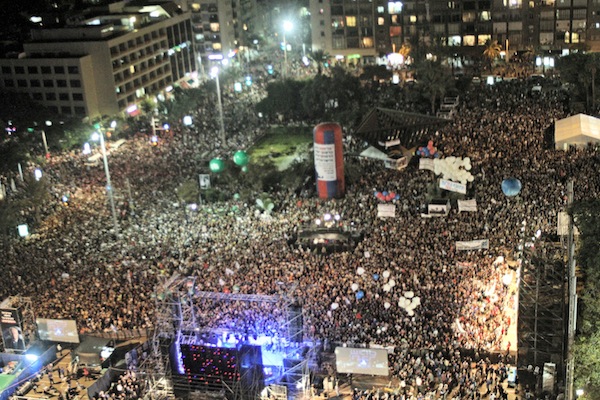
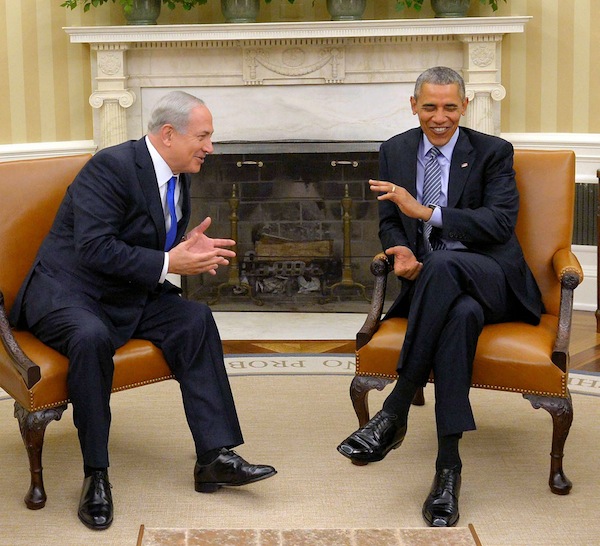
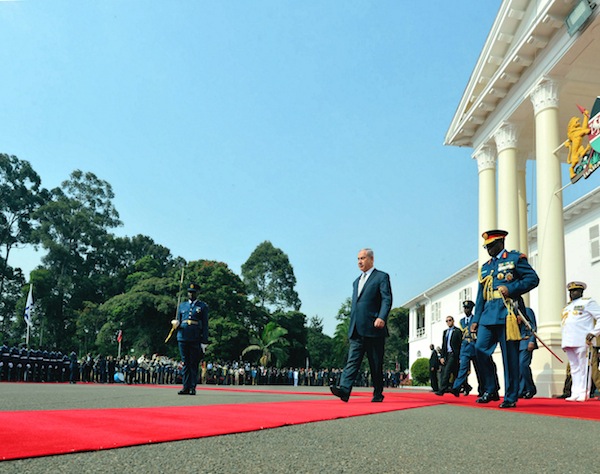
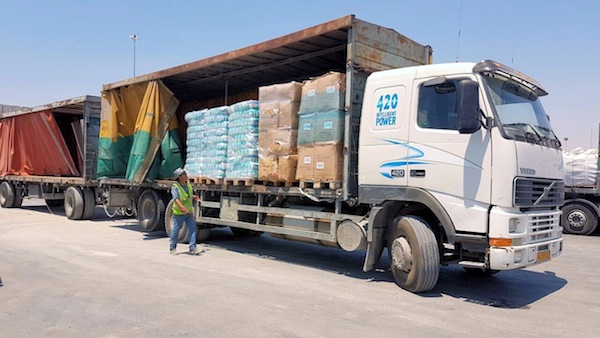
Medical and rescue teams from IsraAID attend to Syrian refugees who have just landed in a rubber boat on the Greek island of Lesbos after the perilous crossing from Turkey. (photo from Ashernet)The entrance to Al-Aqsa Mosque on the Temple Mount in Jerusalem after rioters tried to prevent police from arresting Arab stone-throwers. (photo from Ashernet)In Tel Aviv in October 2015, thousands of Israelis came together to remember the 20th anniversary of the assassination of Yitzhak Rabin, who was murdered by Yigal Amir in this square. (photo from Ashernet)A bus stop in Jerusalem’s Malkei Yisrael Street after a terrorist drove his car into the stop, killing one man, and then got out of his vehicle to stab others at random. (photo from Ashernet)Prime Minister Binyamin Netanyahu and President Barack Obama in Washington, D.C. (photo from Ashernet)Prime Minister Binyamin Netanyahu looks through the periscope of the latest submarine to be delivered to the Israeli navy by the German government. (photo from Ashernet)Prime Minister Binyamin Netanyahu, left, Cypriot President Nicos Anastasiades, centre, and Greek Prime Minister Alexis Tsipras at a meeting in Nicosia to cement trilateral relations. (photo from Ashernet)Prime Minister Binyamin Netanyahu, left, Cypriot President Nicos Anastasiades, centre, and Greek Prime Minister Alexis Tsipras at a meeting in Nicosia to cement trilateral relations. (photo from Ashernet)The Tamar gas rig in the Mediterranean, off the Israeli coast. (photo from Ashernet)Prime Minister Binyamin Netanyahu outside Government House in Kenya, stepping out to inspect the honor guard. (photo from Ashernet)The almost-complete Jezreel Valley railway that goes from Haifa to the Jordanian border. (photo from Ashernet)Goods from Turkey enter the Shalom Crossing into Gaza with goods from Turkey. Recently, Turkey and Israel resumed normal diplomatic relations for the first time since the 2010 Mavi Mamara affair. (photo from Ashernet)
Every year on July 18, thousands of people gather to remember the victims of the AMIA bombing, and demand that justice prevails. (photo by Jaluj via commons.wikimedia.org)
After more than 20 years, an entire nation continues to search for answers and justice.
With an estimated population of 330,000, Argentina’s Jewish community is the largest in South America and, outside Israel, the sixth largest in the world. First arriving in Argentina in early days, Jews have continued to immigrate ever since. During its “golden era” (1900s to 1950s), an estimated 500,000 Jewish people lived there.
The vast majority of Jews in Argentina are Ashkenazi, from central and eastern Europe. From the start, this active, prosperous and engaged community has left its mark in local business, infrastructure, culture and politics. My family was part of this group; Argentina was the place we called home and where four generations of my family were born. AMIA (Asociación Mutual Israelita Argentina or the Argentine Israelite Mutual Association) is the central support organization for all Jews in Argentina, tracing its roots back to 1894.
Everything changed the morning of July 18, 1994, at 9:53 a.m. While I was attending a history class, more than 600 pounds of explosives hidden in a vehicle were detonated in front of AMIA. The explosion was followed by a cloud of smoke and dust seen for miles. In seconds, along with the iconic Jewish organization in Argentina and everything surrounding it, the building housing all of Argentina’s rich Jewish history was, simply, gone. This tragedy was followed by panic, mayhem, sirens, ambulances, calls for help, deaths totaling 85 and hundreds more victims, severely injured and traumatized, transported to hospital.
At my school, phones started to ring. The principal rushed into our classroom to have a private word with our teacher, who then broke the news that AMIA in Buenos Aires was bombed. We were in shock. The same black dusty cloud that could be seen above AMIA descended upon the student body, the teachers and the administrative staff. Frantic activity ensued and, within a few hours, the school was deserted.
My first reaction was concern for my family and friends, many of whom worked at AMIA. I would soon learn that, although one miraculously survived under the rubble and a few others were spared, having not yet arrived at the time of the attack, three died in the explosion. I would learn of the tremendous cultural and historical loss of books, manuscripts, community records, art, pictures and more. I would learn of the disorientation felt by so many who could not comprehend the magnitude of the attack. And I would learn of the rage of those who survived their loved ones. To this day, I will never forget the conversations around the dinner table that revealed the pervasive feeling we were no longer safe.
Some of my friends were immediately withdrawn from the private Jewish school I attended and transferred to the public school system. I would learn of sentiments such as “Jews should be concentrated in one place and live together so innocent Argentines would not suffer.” Yet, in my mind, we were all Argentines.
Over the following years, as I transitioned from my teenage to adult years, I would learn of government cover-ups, of the miscarriage of justice, and of injustice done in the name of greed and corruption. I would also learn of Hezbollah, Iran and other terrorist elements suspected of involvement one way or another. And I would be constantly reminded of the pain of those left behind, and the impunity of the perpetrators, which reinforced the sense of insecurity that took over a proud and vibrant Jewish community.
In spontaneous reaction, hundreds showed up to the site where the AMIA building had stood. Many, my father was among them, were volunteering to assist in the rebuilding process. Those were dark days. The community needed to reorganize. Within a week of the attack at Pasteur 633, a community building a few blocks away began to function. As the temporary head office of AMIA, the Ayacucho 632 site became the place where families sought information about the victims of the attack and where AMIA resumed essential operations, especially those pertaining to social services and community relations.
The Ayacucho building also became the place in which I started my journey as a Jewish community volunteer and where I later decided to pursue a professional career serving the Jewish community.
Five years after the attack, on the original site, a new building was opened that symbolized the creative drive of a community willing to preserve the heritage of a cultural tradition that honors life and collective memory.
This July 18, as every year, the bombing was commemorated with a ceremony in front of the new, now heavily fortified, AMIA: This year’s ceremony marked 22 years since the attack, Argentina’s deadliest bombing ever.
The AMIA bombing was an assault on all society and one that has left deep political scars, not just upon Argentina’s Jewish community. It is a symbol of the entire Argentine state and a society still searching for the truth. And the truth – about a sophisticated terrorist act of mass murder that sent a brutal message of destruction and death – must come to light. The attack is a wound that remains open to this day.
I vow to neither remain silent nor rest until those guilty of these attacks are apprehended, and I hope that the Argentine government will make every effort to ensure that the terrorists responsible for this horrendous act are brought to justice.
Viviana, Cristian and Guillermo, I will never forget. Porque tenemos memoria, exigimos justicia. Because we have memory, we demand justice.
Nico Slobinskyis director, Centre for Israel and Jewish Affairs, Pacific Region. He was born and raised in Argentina before immigrating to Israel and, later, to Canada.
Vigils, like this one in Minneapolis, were held across North America to express grief and solidarity with the victims of the shooting in Orlando. (photo by Fibonacci Blue)
Still reeling from the latest gun attack in Tel Aviv, which killed four people last week, we awoke Sunday to the horrific news from Florida that a gunman had murdered 49 people in a gay nightclub in Orlando.
We whose job it is to put feelings into words struggle, though it seems nobody on social media lacks an opinion on gun control and the Second Amendment, homophobia or Islamic extremism, to which the murderer professed allegiance.
Immediately began the familiar cycle of Facebook solidarity, official condemnations and vigil-holding. President Barack Obama, who on the last such occasion of mass death declared, “Enough!,” had to conjure something original to say in this instance.
It is a peculiarity of the American political and cultural system that such tragedies are, it seems, accepted as a sad but unavoidable fact of life. Vested interests in the gun industry, which fund the powerful National Rifle Association, control members of Congress and have a not-insignificant base of grassroots Americans.
The murderer had been on the radar of intelligence authorities, yet he was able in the last two weeks to legally purchase a Glock pistol and a long gun, as was apparently his right as an American citizen.
When, in 2012, a gunman killed 20 children in Sandy Hook elementary school in Connecticut, some thought that would be the turning point, the moment some sense of sanity would be applied to guns in the United States. Nothing of substance changed and, if not then, it probably never will. Indeed, gun sales increase after such incidents, as the Wild West of American founding lore finds new life in the 21st century – self-preservation through firepower.
There are perhaps few who can as readily empathize with the LGBTQ community as members of the Jewish community. Jewish individuals and institutions are routinely targeted in Europe. Such incidents are far fewer but not non-existent in Canada and the United States. The ghosts of the 1994 Jewish community centre bombing in Argentina haunt us still. And Israelis are routinely attacked and killed by terrorists.
Though thousands of kilometres away from Orlando, the gay community and allies in Vancouver came together for a vigil Sunday night, as they did across North America. When an attack like this takes place against a small minority, it has particular resonance for members of that group even if they have no immediate connection with the victims. As a newspaper, we join with Jewish institutions and individuals in Canada in expressing grief and solidarity with the victims, the survivors and their loved ones, as well as with the entirety of the LGBTQ community here and everywhere.
After such tragedies, it sometimes seems that the particularity of the victims is downplayed to glean a universal lesson for humanity. We hear phrases like “injustice for one is injustice for all.” In his remarks Sunday morning, Obama said: “This is a devastating attack on all Americans.”
This is a necessary and true statement, but we shouldn’t only universalize our solidarity. The shooting was a deliberate, targeted attack on gay people and Obama’s remarks included articulate expressions of solidarity with the LGBTQ community. He did not, for example, make the same mistake he did during the Paris attacks, when he referred to Jewish victims as “a bunch of folks in a deli.” The Jewish particularity of the victims in Paris and the particularity of the Orlando victims’ sexual orientations must be recognized in order to confront the prejudices that underlie them.
How safe is our community? That’s a question all of us ask from time to time, some of us on a daily basis as we come and go from our synagogue or community centre, or drop our kids off at school.
On April 4, dozens of members of the Jewish community across Canada participated in a webinar called Protecting Our People and Places: Redefining Risk, presented by insurance and risk management firm Arthur J. Gallagher Canada, which works internationally and has a significant presence in Canada. Speakers included Nir Maman, a krav maga expert with a background in security and policing in North America, Israel and elsewhere; Max Hazin of Northern Force Security; and Sam Feldman, Vishal Kundi, Justin Priestley and Paul Bassett of Arthur J. Gallagher. The webinar promoted the company’s insurance and risk management services, but also provided basic risk management information and a variety of community resources.
All of the speakers stressed that Canada is not immune to terrorist attacks and active shooter incidents of the kind seen in the United States and Israel. However, the webinar began with statistics that put the warnings into perspective: Between 2000 and 2006, Israel had suffered 27,905 terror attacks killing 1,116 Israelis and injuring 8,800; from September 2015 to the webinar date, 34 people have been killed in terror attacks and 400 injured.
Total casualties: 1,150 killed and 9,200 injured. Since 1973 until 2016, there have been 38 Islamic extremist terror attacks in the United States. Total casualties: 3,282 killed and 9,285 injured. Since December 1999, there have been four plots to carry out intended terror attacks in Canada and three perpetrated terror attacks. Total casualties: two killed and three injured.
Topics in the webinar included how to make a physical location an unattractive target to terrorists, how to create levels of resistance to a threat and how to handle an active shooter situation. Maman was critical of the security in place at most Jewish organizations as being more symbolic than effective, and stressed the need for training and education so as to empower people to protect and, if needed, defend themselves and their communities.
In his weekly email message on April 15, Jewish Federation of Greater Vancouver chief executive officer Ezra Shanken noted, “Over the past two years we have seen a rise in terrorist activity worldwide, some of which has targeted Jewish communities, such as in Paris and Copenhagen. While there has not been and is not currently an increased threat to our community, we should not assume that these types of events could never impact us.
“For many years, our Federation has taken a proactive approach to community safety and, in that vein, we have established the Community Security Committee, chaired by Bernard Pinsky, which is focused on identifying and assessing opportunities to enhance our collective safety. The committee will update the community about any security concerns, and will ensure community institutions have the appropriate protocols and technology in place to ensure maximum safety.”
Rabbi Dan Moskovitz of Temple Sholom told the Independent after the webinar that security is a way of life for modern Jewish communities, and will remain so for the foreseeable future. “This is just the way it is now,” he said. “In Europe, this type of security has long been the status quo. I remember one visit where you couldn’t enter a synagogue without someone in an orange jacket asking you what your bar mitzvah parashah was.
“Despite the lower risk level in Canada,” he continued, “cameras, security guards and security measures need to be in place both to deter attackers and to give people peace of mind. Many communities, like ours, have security committees, which receive training and actively protect the community. Many, some of whom have a background in the Israeli army or police training, see this as a sacred duty, as their calling in the community.”
For those who would like more information on safety protocols for the Jewish community, a number of useful resources can be found at chesedfund.com.
Matthew Gindinis a Vancouver freelance writer and journalist. He blogs on spirituality and social justice at seeking her voice (hashkata.com) and has been published in the Forward, Tikkun, Elephant Journal and elsewhere.
Raphael Hoult, winner of the inaugural Barry Rubin Prize Essay Competition. (photo from Raphael Hoult)
“A Game of Clocks: An Analysis of the Situation in the Middle East and Its Effects on Israel” by Winnipeg’s Raphael Hoult is the winner of the Centre for Israel and Jewish Affairs’ inaugural Barry Rubin Prize Essay Competition.
Hoult, a physics major at the University of Winnipeg in his second year of studies, conjured up a mind-bending theory about the stability of Middle East security and consulted expert sources for his essay.
In physics, Hoult’s interests lie in the field of quantum gravitation, which attempts to combine two major theories – those of general relativity and quantum mechanics.
“These two theories don’t play well together,” said Hoult. “They conflict in places. The biggest place they conflict is in that every force in the universe has been quantized, meaning that we’ve found a very small, discrete package of it in the universe. For example, electromagnetism is delivered by something called a photon. The other forces have something that delivers them, as well. But, with gravity, we’ve found no such thing yet. What we say is we haven’t been able to quantify it, though there are a lot of theories out there for how to solve that problem. There’s string theory. Another is loop quantum gravity, that attempts to bring some parts together.
“I want to help look for a theory of quantum gravity, so we can finally resolve this dilemma … combine the two theories into one bigger theory, a more complete theory. And, hopefully, that will give us a lot more insight into the way gravity works and allow us to do more with our understanding of gravity – to utilize it more, similar to the way our deeper understanding of electricity and magnetism has allowed us to do more intricate electronics in the past couple years.”
According to Hoult, this reconciliation of quantum mechanics and general relativity has been the Holy Grail of physics for the past 50-some years, and solving it will be huge for physicists and the world as we know it.
“The proposed theoretical messenger particle for gravity is the graviton, which is something we’ve not yet observed at all,” he said. “Quantum mechanics requires there to be a graviton…. General relativity in no way makes reference to a graviton.
“The main thing is quantum mechanics works really well with very small things, general relativity works really well for really big things. Things with a lot of mass are usually very large. The problem comes when you have things that are very massive and also very small, such as neutron stars or black holes. These are very dense, have a lot of mass and exert a lot of gravitational force, but they are also very small. In the case of a black hole, they are actually on the atomic level. So, quantum mechanics is very important to the way they work, but general relativity also is in play. When our two theories don’t work and they are supposed to be working at the same time, that’s a problem and something we want to fix.”
In addition to his knowledge of physics, Hoult is also well-versed in Israeli politics. “I’ve actually never taken a political science course at university,” he acknowledged, “but I went to Gray Academy [of Jewish Education in Winnipeg], so I had a very strong basis in knowledge about Israel. I had a good grounding there. I also read the Times of Israel and Haaretz every day.”
When Hoult saw an advertisement for the Barry Rubin Essay Competition on Facebook, it piqued his interest. The contest topic was, “What does the current regional turmoil in the Middle East mean for Israel?”
In his essay, Hoult said, “The three main critical points I talked about were the constancy of Hezbollah, Hamas and Daesh (the Islamic State in Iraq and Syria [ISIS]). I wrote about the fact that Hezbollah is involved in the war in Syria, specifically as affiliates of Bashar Al-Assad. They support him and are fighting on behalf of him. On the flipside, a branch of ISIS, called Al-Wilayat Sinai, is operating in the Sinai Peninsula desert against the Egyptians, making their lives very difficult. They’ve also struck up an alliance with Hamas.”
According to Hoult, the main three players in regards to Israel involve Hezbollah in the north, Hamas in Gaza and Al-Wilayat Sinai (Daesh) in the south. Hoult does not delve into the Iranian threat in his essay, apart from Iran’s role in supporting these groups.
“My hypothesis was that these three forces are connected to one another,” he said. “And, because of the ongoing campaign against ISIS, my hypothesis is that, as soon as that campaign succeeds and breaks down ISIS, all hell will break loose for Israel.”
Hoult explained that this theory takes into account Hezbollah’s huge military arsenal, which is estimated at around 100,000 rockets, and their ability to hit every point in Israel from Metula to Eilat, combined with the southern threat from Hamas and from the Al-Wilayat Sinai, which, so far, has been mainly fighting the Egyptians.
“Once ISIS collapses in the north, the Al-Wilayat Sinai … will suddenly be like a tentacle that has been cut off from the squid,” he said. “It will have no control and will be in desperate throes to stay alive, making it likely that it will involve at least a couple cross-border raids. If those involve any Israeli deaths, it will force Israel to respond, which is an issue, due to the fact that Israel can’t cross the border without Egyptian permission.
“There is also the fact that Hamas is having another military build-up,” he added.
Hoult predicts this will likely lead to another war in 2017 and, once that war is over, he said Hezbollah would have had ample time to gather its troops and possibly attack Israel from the north. “This is not a good thing for Israel, as Hezbollah is dead set on destroying Israel if they can,” he said.
As to why Hoult thinks his essay was selected as the winner, he said he is not sure, although he imagines it may have “had something to do with all the sources cited, creating a compelling likelihood of my hypotheses coming true.”
One of his many concerns is that “the primary backer of Hezbollah and Hamas is Iran. Iran has just had billions of dollars unlocked, due to the nuclear deal … which I’m not going to condemn or support, though I’m a little bit skeptical of whether or not unlocking those funds was a good thing.”
What happened last month in Hebron is heartbreaking. A young soldier is being vilified for killing a terrorist who had come for the sole purpose of murdering Jews. He is now facing charges of manslaughter.
One of the most difficult things about our decision to make aliyah was knowing our four children would have to serve in the Israel Defence Forces. After all, it was our decision, not theirs, to leave the safety, security and comfort of their birthplace, Australia, to make a new life in Israel.
That was in 1971, two years before the Yom Kippur War erupted. But we stayed, and they grew up here knowing that it was a duty, even a privilege, to set aside their ambitions temporarily and devote a few years to serving their country. They became Israeli gradually and, by the time they were 18, regarded army service as a natural rite of passage.
Nevertheless, as a mother, I found it hard. I will never forget the trauma of standing on the beach at Palmachim (near Ashkelon) with the other parents and watching our younger son make his first parachute jump. Forty young paratroopers jumped that day. Because of the altitude of the planes, it was impossible to see our sons’ faces until they almost landed. We watched breathlessly to see the parachutes open, one by one. I thought each one was my son and, finally came to the realization that they were all my sons.
The years passed. Our sons and daughters enlisted, with one son fighting in Lebanon. They went to university, married, had children of their own. It was lovely to be grandparents of babies, toddlers and then young children. But now, most of them are grown up and following in their parents’ footsteps. Some have completed army service, some are currently serving and some will soon reach that significant age of 18.
We have attended numerous ceremonies where we have watched hundreds of boys take an oath of allegiance. We sang “Hatikvah” with that catch in the throat one gets at moments of high emotion. We laughed as they threw their caps in the air, signaling the end of the formal proceedings. We were so proud of them, and so afraid of what they might be called to do, what decisions they would have to make.
Just like the young soldier in Hebron.
To every parent whose children have served in the IDF, how can our hearts not go out to this young soldier’s family?
While the three stated goals of the boycott, divestment and sanction (BDS) movement are an end to Israel’s “occupation” of “Arab lands occupied in June 1967,” equal rights for Arab Israelis and the right of return for Palestinian refugees (bdsmovement.net), its real aim is the destruction of Israel. As BDS activist Norman Finkelstein succinctly explained in a 2012 video, the ultimate result if the BDS’s three goals are achieved is: “There’s no Israel. That’s what it’s really about.” And, indeed, Palestinian Authority president Mahmoud Abbas has said, “I will not accept a Jewish state.”
In a Jan. 19, 2016, interview Fatah Central Commitee member Tawfiq Al-Tirawi said: “a Palestinian state in the 1967 borders [i.e. limited to the West Bank and Gaza], with Jerusalem as its capital, is just a phase.” While initially suggesting giving Jews plane tickets to leave the region, he says, “I want to live together with them” in “Palestine, in its historical borders, and we want all the Palestinian refugees [to] return to their country.” Omar Barghouti, a BDS leader who apparently studied at Tel Aviv University for a time, acknowledged during a University of Ottawa talk in 2009, “if the refugees were to return, you cannot have a two-state solution like one Palestinian commentator remarked, you will have a Palestinian state next to a Palestinian state rather than a Palestinian state next to Israel.”
There are many other myths perpetuated by the BDS movement and its supporters, which point to it being antisemitism disguised as anti-Zionism, the denial of the right of Jewish people to live in peace and security in their own homeland. Examples follow.
BDS supporters talk about boycotting products from the Israeli “invasion of Palestine.” Jews did not invade nor did they steal the land. Thousands of Jews were already living in the region before the state of Israel was established, and Jews used to call themselves Palestinians. Jews are indigenous to Israel. Jerusalem was the capital of the Jews. Even during the British Mandate, banknotes, coins and stamps had the initials of Eretz Israel (Land of Israel). And the Jews who immigrated to Palestine, as Israel was then called, as a reaction to the ethnic cleansing and genocide they suffered in European and Muslim countries, bought their properties, as returning Jews had been doing for decades.
The Arab Palestinians rejected the United Nations partition of the land (77% for Arab Palestinians and 23% for Jewish Palestinians) in November 1947, and have yet to establish their own state. After the War of Independence, it was not Israel but Jordan and Egypt that occupied illegally Cisjordan (Judea and Samaria, or the West Bank) and Gaza, respectively.
Abbas, Barghouti and others also have accused Israel of genocide. Israel has done no such thing. While its military has been forced to act against terrorism, it has not set out to deliberately wipe out an entire people. The Palestinian population is growing, according to the Palestinian Central Bureau of Statistics. At the same time, 1.7 million Arabs make up 20% of the Israeli population.
The charge of apartheid is another false accusation. As Dr. Kenneth Meshoe, South African politician, president of the African Christian Democratic Party, aptly put it: “Israel apartheid is a lie.” Every Israeli citizen has rights and freedoms. All minorities in Israel, including Arabs, can study in universities, are allowed to become professionals, businesspeople, athletes, work in public sector jobs and hold seats in the Knesset. In the current Parliament, Arab Israelis occupy 14 seats. As an anecdote, the sentence of Israel’s Supreme Court of former prime minister Ehud Olmert was read by an Arab Israeli judge, Justice Salim Joubran. Could that happen in an “apartheid” country?
Another issue BDSers protest is that of Israel’s blockade on Gaza, despite that it is legal, according to international law and the San Remo Manual, given that “relations between Israel and Hamas (which has ruled the Gaza Strip since 2007) are in the nature of armed conflict.” What would be illegal is if Israel let only some boats seeking to break the blockade pass, as a blockade must apply to every ship unless special permission is given. For more on this, see the article by Prof. Ruth Lapidoth (jcpa.org/article/the-legal-basis-of-israel’s-naval-blockade-of-gaza).
The blockade is needed to prevent terrorist groups from getting more weapons. Hamas’ charter specifically states their will to destroy Israel. More than 15,000 missiles in the past 15 years have been launched from Gaza at innocent Israeli civilians, leaving in their wake deaths, injuries and billions of dollars in damages, in addition to three wars and continued missile and rocket fire at Israel, combined with ongoing incitement against Israel and Jews on Palestinian TV and in schools and training camps.
The security fence – yet another mark against Israel in BDSers’ views – is also a legal method of self-defence. While it is not ideal and while some of it (less than 10%) is an imposing concrete wall as opposed to a wire fence, it reduced terrorist attacks by 90% in its first many years. While terrorist attacks have since increased, there are still fewer than before, and the barrier is a part of the reason for the decline.
As to the BDSers’ demand for the right of return. “The Palestinian demand for the ‘right of return’ is totally unrealistic and would have to be solved by means of financial compensation and resettlement in Arab countries,” Egypt’s then-president Hosni Mubarak noted in 1989. As Barghouti correctly observed, if Israel were to absorb the more than six million Palestinian Arab refugees, Israel as a Jewish and democratic state would disappear.
Refugees, as defined by the UN Relief and Works Agency, are “persons whose normal place of residence was Palestine during the period 1 June 1946 to 15 May 1948, and who lost both home and means of livelihood as a result of the 1948 conflict” – which began when Arab countries attacked the newly forming state of Israel – and their descendants. Approximately 750,000 Palestinians fled or left Israel by choice because of that conflict, and more left after the 1967 Six Day War, which was also the result of Arab aggression.
As former Canadian justice minister Irwin Cotler wrote in a 2014 Times of Israel blog and has spoken and written about elsewhere, there is another aspect that must be considered when speaking of the rights of refugees: “the pain and plight of 850,000 Jews uprooted and displaced from Arab countries – the forced yet ‘forgotten exodus,’ as it has been called – has been expunged and eclipsed from both the Middle East peace and justice agenda for 67 years.”
Another question more people need to ask of BDS supporters is about the lack of protest when Egypt considers building a wall on her border with Gaza, blockades Gaza, destroys neighborhoods adjacent to her border with Gaza to create a buffer zone and destroys tunnels used for arms smuggling, kidnapping of civilians and soldiers and infiltration for attacks.
If BDSers really were concerned about Palestinians, they would be protesting the treatment by the Palestinian Authority and Hamas of their own people, the lack of basic human rights and freedoms that people living in the West Bank and Gaza possess. But they’re not. Instead, they focus their sights on Israel, their ultimate goal its destruction.
Silvana Goldemberg is an award-winning author of more than 20 books and magazines published in Spanish and English throughout the Americas. Originally from Argentina, she is currently based in Richmond.
Sometimes there are jokes about how we’re all emotionally damaged to some degree. It’s a serious problem for us, because we all lived through wars and terror attacks,” shared Canadian-Israeli Yolanda Papini Pollock of Winnipeg Friends of Israel (WFI) at a lecture co-hosted by WFI on Feb. 9.
The discussion, which focused on the topic The Psychological Impact of War and Terrorism: Coping with and Minimizing Trauma, was held with the local Canadian Associates of Ben-Gurion University of the Negev chapter, the Jewish Post and News and Congregation Temple Shalom, at the synagogue.
Michel Strain (photo by Rebeca Kuropatwa)
“I’ve worked with refugees for the last decade,” said Michel Strain of the Manitoba Immigrant and Refugee Settlement Sector Association. “All have come from countries affected by war and many have experienced trauma and torture, many living in refugee situations for many years.
“In my role in the employment program I worked in, I was often one of the first people the refugees began to trust. And, during this trusting relationship, I had the privilege of many individuals sharing their stories with me…. Their resiliency was resoundingly evident to me.”
Holocaust survivor Edith Kimelman spoke about dealing with her personal trauma. She was 16 years old when Germany invaded her small community in Poland.
“I stood at a neighbor’s window and watched my father being led away by soldiers, only to find him later in a field – dead and riddled with bullets,” she said. “It was beyond my young comprehension to understand that no one in our non-Jewish community of neighbors would help us bring him home. My childish belief was, once he returns to our house, he would return to life.
Edith Kimelman (photo by Rebeca Kuropatwa)
“To watch from our window, as Jewish neighbors were led behind a stable, shot and quickly buried gives me, to this day, nightmares. To find my mother so severely beaten that it led to her death will haunt me forever. I felt like I was punished, having to remain alive without her.
“When I had my own children, I lived in constant fear that something terrible would happen to them or to my husband, and that I would be unable to help them.”
Kimelman explained how this trauma has affected every aspect of her life, including, of course, her relationships with family and friends. While she fears she will leave her sons with the heavy baggage of her unfortunate experiences, she is confident that her fierce love for life and her survival will carry them through.
The keynote speaker of the event, BGU’s Dr. Solly Dreman, who was born and raised in Winnipeg before moving to Israel 50 years ago, was introduced by Dr. Will Fleisher, a local therapist experienced in working with traumatized youth and adults. Dreman is professor emeritus in BGU’s department of psychology.
Dreman has witnessed the long-lasting effects of terrorism. Decades later, “soldiers are having night terrors, night sweats, family difficulties, are unable to cope.”
He differentiated between war and terrorism, explaining that war is usually preceded by prior events and circumstances, while terrorism occurs suddenly, without warning, causing a different type of trauma. Unlike war, terrorism is not confined to a specific geographic arena or time dimension.
“The threat persists, the fears, uncertainty, the sense of helplessness,” he said. “Such attacks are looming over our heads all the time. You have the unbridled devils lurking in your soul forever. That’s going to serve as the trigger for anxiety, feelings of helplessness and inability to cope.
“People who have lost loved ones may have been witness to the event, and we all know the symptoms of survivor guilt,” he continued. “By escaping unscathed, they experience feelings of guilt that they came out alive. There’s research that shows that people who have been injured in a terrorism event after having lost a family member have less PTSD [post-traumatic stress disorder] than someone who comes out unscathed. Survivor guilt has been a major factor.”
Dr. Solly Dreman (photo by Rebeca Kuropatwa)
Dreman pointed to the media as an aggravator in Israel, saying they continually expose the public to the horrific events, while frequently providing information that is unreliable and unconfirmed. He also said the general public, too, is responsible for watching, reading and listening to these reports more critically.
He spoke about his experiences with two separate terror incidents.
“Our initial therapeutic attempts were designed to deal with interpersonal things, like helping teachers in their contact with the young victim students, helping integrate them into the school system,” said Dreman.
The approach seemed to have worked for the first few years, but when Dreman went back to these families 10 years after the initial contact, he found them struggling with life and their interpersonal relationships.
“It was terrible,” said Dreman. “We failed. By the way, we got published in a very prestigious journal reporting on our failure. The conclusion, for those of you who are dealing with refugees or faced the Holocaust, is that there is a need for interpersonal intervention and getting back to business as usual.”
Dreman suggested that limiting media exposure may be helpful, as the constant repetition of the horror does not allow people to heal. But, on the other hand, he said it is important to not go completely off the grid, as that can cause anxiety to a breaking point that might create more trauma. A balance is needed, he said.
Dreman further advised that it is important to embrace life, that social support is a major factor in healthy adjustment.
“Be up front with your kids, explaining that you will do your best to protect everyone,” he said, “but don’t promise that nothing bad will happen, as that is a promise you may not be able to keep. We should allow kids the opportunity to express their fears, but not to dwell on them, as that will exacerbate the sense of trauma.
“Routine is very important – schoolwork, exercise, empowerment,” he added. “The only way to get that is establishing a routine in the face of incomprehensible uncertainty and trauma. Don’t send the kid to a shrink because, by doing that, you’re telling them you can’t manage things.”
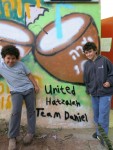
United Hatzalah of Israel and Artists 4 Israel distributed art therapy kits to families in southern Israel and held a program that included visits by graffiti artists who worked with teens to paint neighborhood bomb shelters. (photo from United Hatzalah of Israel)
At the end of last year, 75 families from southern Israel received specialized art therapy kits, thanks to a new project organized by United Hatzalah of Israel’s Team Daniel initiative. In conjunction with Artists 4 Israel, the art therapy kits were distributed Dec. 8-10, along with a program showing parents how to use the kits with their children and visits by graffiti artists who worked with teens to paint neighborhood bomb shelters. Various art therapists also participated in the events.
Last summer, during Operation Protective Edge, a group of Chicagoans was touring the Eshkol region as sirens blared. These community members were so moved by their experience and, after hearing about the death of 4-year-old Daniel Tragerman, decided to raise money to help the region. Some 50 Chicago families established Team Daniel to fund the training, placement and equipment needed for 100 United Hatzalah medics to service southern Israel. The new kits are given directly to the families of these volunteers, who often run out on a moment’s notice to attend to rocket attacks and other local emergencies.
“Because these particular families are committed to saving lives as United Hatzalah medics, it was important to us that we give them a way to cope,” said Brielle Collins, Chicago regional manager for United Hatzalah. “Art is such a powerful tool to give to people who are recovering from war, stress and tragedy.”
The arts kit was developed by experts from Israel and the United States in the mental health field in collaboration with the nonprofit Artists 4 Israel. It is hoped that the “first aid kit for young minds” will combat the effects of trauma and eliminate the chances of PTSD by up to 80% through self-directed, creative play therapies.
United Hatzalah, a community-based emergency medical response organization, has been distributing the kits in a pilot program throughout Israel since July.