Bright lights to end year

Canadians have been in an uncharacteristically self-congratulatory mood lately over our national response to the Syrian refugee crisis. The federal government has come through on behalf of thousands of people fleeing the catastrophic violence in Syria, with the prime minister and what appeared to be most of his cabinet showing up personally to greet the first arrivals. Perhaps more impressive still has been the mobilization of ordinary Canadians to sponsor and aid refugees, with synagogues, churches, community groups, neighborhoods and individuals stepping up to help. In contrast with the response from many in the world, including the Gulf states and divisive figures like Donald Trump, Canadians should be rightly proud of our collective response.

Certainly there are concerns among some Canadians about the newcomers. The idea that “radicalized” individuals could slip in under the guise of humanitarian status is frequently mooted. More likely is the potential that some refugees may carry with them ideas about women, Jewish people, gay people or others that are not consistent with this country’s norms. This is not something to gloss over. We should be aware of it and ensure that, along with our clearly demonstrated willingness to offer a heart-felt welcome to the refugees, we also model for them other Canadian ideals, including respect for difference. The fact that the groups sponsoring refugees are themselves representative of Canadian diversity should be a good head start in this regard.

The joyous welcome we have witnessed is an uplifting way to draw 2015 to a close. This has not been a year filled with happy news, yet the last few weeks have brought us several encouraging lights in the midst of the winter’s darkness.

In Paris last weekend, 195 countries made an historic step toward reining in the carbon emissions that are causing climate change. These two issues – refugees and the climate – are not unrelated. Scientists and other warn that if something significant does not change quickly, the world will be awash in populations struggling against each other for arable land, potable water and habitable space. It is a daunting prospect, put mildly, and events in Paris suggest the world may finally be taking the danger seriously. Of course, we have made false promises before. Again, we may have reached a moment of truth where the arc of history is bending toward repairing the damage we have done to the world.

There has been another very significant development in recent days. The rapprochement between the Jewish people and the Catholic Church that began five decades ago took a very major and substantive leap forward with remarks by Pope Francis and the release of a landmark statement by the Vatican.

Catholics, the document states, are obligated to demonstrate their faith in Jesus to all people, including Jews, but the Catholic Church “neither conducts nor supports” missionary initiatives aimed toward Jews. From the perspective of 2,000 years of Christian doctrine that situates the Catholic Church and Christianity as the preemptive successor religion to Judaism, this is a revolution. It is the antithesis of the sort of language and ideas that have caused incalculable strife for Jews in Europe and other primarily Christian lands. It suggests that the leadership of the church, once deemed infallible and all-knowing, admits that some things are unknowable. The Christian dictum that eternal life requires belief in and dedication to Jesus as the messiah is neither negated nor affirmed by this new statement, deeming it “an unfathomable divine mystery” that salvation can come only through Jesus while the church also affirms the biblical covenant between God and the Jewish people, the Vatican says.

“While affirming salvation through an explicit or even implicit faith in Christ,” the Vatican document says, “the church does not question the continued love of God for the chosen people of Israel.”

The Pope has repeatedly made friendly gestures to the Jewish people, rejecting millennia of hostility and continuing a trajectory of reconciliation begun in the 1960s with the Second Vatican Council.

These three developments – the welcoming of refugees to Canada, the recognition that we must care for our planet for its and our survival, and an historic reappraisal of the relationship between Christianity and Judaism – seem like pleasant things to reflect on as we close out a year in which bright lights are a welcome respite.

הזדהו עם הקורבנות פיגועי הטרור שפקדו את פריז

אזרחים של ונקובר הגיעו לבניין בו ממוקמת הקונסוליה הצרפתית ברחוב פנדר בדאון טאון, עמדו דקת דומיה בכניסה, הניחו זרים ותמונות של פריז, והדליקו נרות נשמה. (צילום: Roni Rachmani)

קנדיים מזדהים עם קורבנות פיגועי הטרור הקשים שתקפו את פריז

אזרחים רבים של קנדה הביעו זעם וכעס והזדהו עם הקורבנות פיגועי הטרור הקשים שפקדו את פריז, ביום שישי האחרון. יש שהגיבו באמצעי המדיה השונים ואילו אחרים שפקדו מוסדות צרפתיים או כאלה שמזוהים עם צרפת, ועמדו דקת דומיה לידם לזכר הקורבנות שניספו בפיגועים.

אזרחים של ונקובר הגיעו לבניין בו ממוקמת הקונסוליה הצרפתית ברחוב פנדר בדאון טאון, עמדו דקת דומיה בכניסה, הניחו זרים ותמונות של פריז, והדליקו נרות נשמה. פעילויות דומות התקיימו בכל רחבי קנדה. מבני ציבור רבים הדליקו נורות בצבעי הדגל הצרפתי ודגלי קנדה הורדו לחצי התורן.

רמת הכוננות הבטחונית בקנדה הוגברה והמשטרה הפדרלית (האר.סי.אם.פי) פועלת בשיתוף עם סוכנויות הביון והריגול הקנדיות, וסוכנויות משטרה אחרות, למניעת אפשרות של פיגועי טרור מקומיים. עם זאת בשלב זה לא התקבל שום מידע ממשי על אפשרות של פיגועי טרור בקנדה.

במקביל הוגבר הלחץ על ראש הממשלה החדש מטעם הליברלים, ג’סטין טרודו, לחזור בו מהחלטתו להפסיק ולהפציץ מטרות של דאע”ש בסוריה ועיראק. כידוע טרודו הודיע חד משמעית בקמפיין הבחירות שלו שאם יבחר לראשות הממשלה, הוא יחזיר את מטוסי חיל האוויר הקנדי הביתה, והצבא יתמקד רק באימון כוחות צבאיים מקומיים שנלחמים בדאע”ש. טרודו עוד הודיע שהממשלה תגביר את העזרה ההומנטרית למדינות ואזרחים שסובלים מהלוחמה במזרח התיכון.

אליפות העולם בכדורגל לנשים שהתקיימה בקנדה: הנבחרת נכשלה אך הקופה התעשרה

נבחרת הנשים הלאומית של קנדה בכדורגל נחלה כשלון צורב באליפות העולם המונדיאל, שנערכה בחודשים יוני ויולי בקיץ. עתה מברר כי מהבחינה הכספית המונדיאל הכניס לקופתה של קנדה סכום שיא של 493.6 מיליון דולר. הסכום כולל גם את המונדיאל לנשים על גיל 20 שנערך בחודש אוגטס אשתקד באדמונטון, טורונטו מונטריאול ומונקטון. ההכנסות משני הטורנירים היו גבוהות בשיעור של 46 אחוז המתחזיות המוקדמות שפורסמו בחודש פברואר אשתקד. הנתונים מתפרסמים על ידי ההתחדות לכדורגל של קנדה שנעזרה בחברת המחקר ‘סטים פרו’.

משחקי המונדיאל לנשים שהתקיימו בשש ערים: ונקובר, אדמונטון, ויניפג, אוטווה, מונטריאול ומונקטון. מספר הצופים בששת האצטדיונים הגיע לשיא מבחינת אליפות הנשים ועמד על 1,353,506. הצלחתה של נבחרת ארצות הברית בטורניר שבו היא זכתה, הביאה כמאה אלף אוהדים אמריקנים שחצו את הגבול לקנדה, לצפות במשחקים. אין ספק האמריקנים היוו את אחד הגורמים המשמעותיים בהכנסות הגבוהות של המונדיאל. גם אחוזי הצפייה במחשקים בטלוויזיה והשימוש במדיה החברתית בעת הטורניר שברו שיאים.

אורבנקורפ מטורונטו פרסמה טיוטת תשקיף להנפקת אגח בתקופה הקרובה

חברת אורבנקורפ (בבעלות אלן ססקין) הפעילה בתחום הנדל”ן בטורונטו פרסמה בימים אלה טיוטת תשקיף להנפקה ראשונה לציבור של אגרות חוב. ההנפקה תתקיים בתקופה בשבועות הקרובים והחברה מקווה לקבל דירוג מקומי.

ססקין פועל בתחום הנדל”ן במשך יותר משלושים וחמש שנים וחברתו אורבנקורפ פעולת בתחום הנדל”ן בטורנטו יותר מעשרים וארבע שנים. החברה נחשבת לאחת הבולטות בעיר, היא פועלת בעיקר במרכז טורונטו ועוסקת בפיתוח, שיווק פרוייקטים למגורים, בהשכרה של נכסים מניבים וכן בייזום והפעלה של מערכות גיאותרמיות בפרוייקטים שהיא בנתה. אורבנקורפ בנתה עד היום לפחות חמשת אלפים וחמש מאות דירות מגורים, והיא פעילה כיום בשנים עשר פרוייקטים שונים. בין השנים 2012 ו-2014 הרווח הנקי המצרפי של החברה עמד על כשלושים וארבעה מיליון דולר. אורבנקורפ צופה כי בין השנים 2016 ו-2018 יגיעו הכנסותיה לכשלוש מאות ותשעים מליון דולר, והרווח המצרפי הגולמי צפוי להגיע לכשבעים מיליון דולר.

הקשרים עם ישראל

שר החוץ הקנדי החדש סטפן דיון. (צילום: twitter.com/HonStephaneDion/media)

ממשלת טרודו תפעל לחזק את הקשרים עם מדינות ערב וזה יבוא על חשבונה של ישראל

הממשלה הליברלית החדשה בראשות ראש הממשלה, ג’סטין טרודו, תפעל לחזק את הקשרים בין קנדה למדינות ערב. זאת לעומת תקופת שלוש הממשלות של ראש הממשלה לשעבר, סטיבן הרפר, בהם הקשרים בין קנדה למדינות ערב הלכו ונחלשו, בזמן שהקשרים עם ישראל הלכו והתחזקו. מנהיגי מדינות ערב והפלסטינים האשימו את ממשלות הרפר בכך שהן נוטות בברור לטובת ישראל, וקנדה אינה יכולה לשמש מתווכת מאוזנת בין הצדדים. אך כאמור ממשלת הליברלים עומדת להנהיג מדיניות חדשה בכל התחומים, כולל יחסי החוץ ולהתקרב מחדש למדינות ערב. מדיניות חדשה זו צפויה לפגום ביחסים עם ישראל או לפחות להקטין מכוחם.

שר החוץ הקנדי החדש, סטפן דיון, אמר בסוף שבוע שעבר כי קנדה מבקשת לחזור לתפקידה המסורתי (לפני עידן הרפר), ולהיות מתווך הוגן בין הצדדים במזרח התיכון, תוך חיזוק הקשרים עם מדינות ערב. לפי הערכת פרשנים קנדה של טרודו לא תתמוך יותר אוטומטית בישראל בכל עניין ועניין כפי שעשה שלטונו של הרפר, וכל מקרה יבחן לגופו. הממשלה החדשה צפויה להשמיע גם ביקורת קשה יותר על ההתנחלויות של ישראל.

דיון מציין כי “ישראל היא ידידה, בת ברית, אבל כדי שנהיה בני ברית אפקטיביים, אנו צריכים לחזק את היחסים עם שותפים לגיטימיים אחרים במזרח התיכון”. דיון מתח ביקורת על הדרך שבה הרפר ניהל את המדיניות כלפי ישראל, כיוון שהוא הפך את הנושא לעניין כחלק מקפיין הבחירות שלו, ופגע בעוצמת היחסים של קנדה וישראל.

מחקר חדש מפתיע: מומלץ לבדוק לחץ דם בבית או בבית המרחקת אך לא במרפאות או ליד רופאים

לפי מחקר רפואי חדש ומפתיע לא מומלץ בכלל לבדוק את לחץ הדם אצל הרופא המשפחתי, או במרפאה מקומית. אלה לבחור במקום שקט ורגוע יותר כמו בבית או בבית המרקחת. ההנחיות החדשות שעולות מהמחקר התפרסמו לאחרונה בקנדה וארה”ב. וזאת כדי לגרום לשיפור משמעותי באיכות בדיקות לחץ דם וכן להביא לתוצאות נכונות יותר של הבדיקות.

ההנחיות מתבססות על ניסיון מצטבר בקרב הרופאים המשפחתיים ועל-פיהן, רבים מבין הפציינטים שמתבקשים לבדוק את לחץ הדם במרפאותיהם, נמצאים ליד הרופאים דווקא במצב של לחץ רב וחוסר שקט נפשי. או כפי שהתופעה נקראת בקרב הרופאים בהגה המקצועית שלהם, כי בעצם הפציינטים לוקים “בתסמונת החלוק הלבן”, דבר שבדרך כלל מהשפיע לרעה על תוצאות הבדיקה ויכול לתת תמונה שגויה על מצבם הבריאותי האמיתי. לפי הערכה מקצועית כשליש מהפציינטים בקנדה לוקים “בתסמונת החלוק הלבן”, ותוצאות שגויות של בדיקות לחץ הדם שלהם יכולה לגרום לשימוש בתרופות שלא לצורך.

על פי ההנחיות של המחקר החדש מומלץ עוד לבדוק את לחץ הדם במשך עשרים וארבע שעות ברציפות באמצעות שרוול מיוחד, שמולבש על ידו של הפציינט. בעזרת אותו שרוול לחץ הדם של הפציינט נבדק כל עשרים עד שלושים דקות. קיימת אופציה נוספת והיא לבדוק את לחץ הדם באמצעות התחברות למכשיר אוטומטי בפעם ביום במשך שבוע שלם. עלות המכשיר האוטומטי בקנדה נאמדת בסביבות שישים דולר.

אין זה חדש מחקרים רפואיים רבים מראים כי לחץ דם גבוה הוא גורם סיכון בריאותי משמעותי ביותר, ויש לו קשר ישיר להתקפות לב וכן לשבץ מוחי. כיום לאחד מתוך חמישה תושבי קנדה יש לחץ דם גבוה. בפועל מדובר על כך שכתשעה עשר אחוז מהאולוסיה המקומית לוקה בלחץ דם גבוה. חומר למחשבה.

Tone is important

Once we’ve watched the videos of our new prime minister Bhangra dancing, scrolled through the rehashed pics of him shirtless at the weigh-in for his boxing bout against Senator Patrick Brazeau and perused the swooning of global commentators, we may turn our attention to Justin Trudeau’s policies in his first days as our leader-designate.

One of his first acts was to inform U.S. President Barack Obama by telephone that Canada would withdraw from combat missions against ISIS. This was a central part of Trudeau’s election platform and Canadians voted for him strongly, so this move was consistent with what he said he would do.

Canada’s role in the fight has not been insignificant, though we are by no means the foremost military in this battle. In the past year, six Canadian CF-18 jets have been involved in more than 180 airstrikes against ISIS targets. Trudeau promises this will end. He says, though, that Canada will remain a part of the 65-country coalition by increasing humanitarian aid and continuing to train Iraqi security forces.

On other matters of foreign affairs, Trudeau says that his government will restore diplomatic relations with Iran. We do not know yet whether the multipartite agreement intended to prevent Iran from constructing nuclear weapons will meet this objective. It will be years before we can conclusively answer this. But we wrote in this space when the Conservative government cut diplomatic ties with the Islamic Republic – long before negotiations over the nuclear program even began – that it was wrong to do so.

If you want to make peace, you don’t talk to your friends. You talk to your enemies. These were the wise words of Moshe Dayan. More to the point, from a practical standpoint, diplomatic relations will improve the situation for Canadians of Iranian descent and those with families there, who were probably punished more than the government in Tehran by the diplomatic break.

Continuing on foreign affairs, circling from ISIS to Iran and around to Israel – Trudeau spoke by phone to Israeli Prime Minister Binyamin Netanyahu four days after the election.

The specifics of the conversation are private, but Israel’s ambassador to Canada, Rafael Barak, said he is optimistic Canada’s friendship with Israel will be unchanged.

“Mr. Trudeau has been very consistent from the very beginning of his campaign, in expressing his support for Israel,” Barak told Canadian Press. “I’m sure maybe the style will change. But I don’t feel there will be a change on the substance. I’m really reassured.”

A Trudeau spokesperson said “there would be a shift in tone, but Canada would continue to be a friend of Israel’s.”

We will watch closely, of course, to see what “a shift in tone” looks like. As we noted in this space two weeks ago, the Liberal party ran an ad in the last days of the election campaign in Canadian Jewish News promising, “On Oct. 19, our government will change. What won’t change is Canada’s support for Israel.”

That is an unequivocal statement and it probably reassured a great many voters who believed a change of government was desirable but a change in approach toward Israel was not.

The importance of a potential “shift in tone” is that, frankly, tone is just about all we have to offer. The impact we had under the Conservatives – for better or for worse, depending on one’s politics – was based almost exclusively on our words.

Proud as we may be of our significant sacrifices and achievements during the First and Second World Wars, which we will mark next week on Remembrance Day, and significant as our contribution has been in Afghanistan, Canada’s impact on the global stage today is mostly one of principled voice. We are not a major military power. We have economic power, but less than our major trading allies. Agree or disagree with the content, former prime minister Stephen Harper showed that a Canadian voice – even a lonely one in the wilderness, as it often was when he defended Israel – can have powerful resonance.

Tone matters a lot.

דואר קהילתיות

קנדה פוסט מקפיאה את החלטתה להפסיק לחלק דואר דואר לבתים פרטיים. (צילום: Bernard Gagnon via commons.wikimedia.org)

תוצאות ראשונות של ניצחון הליברלים בבחירות לטובת האזרחים: קנדה פוסט מקפיאה את החלטתה להפסיק לחלק דואר דואר לבתים פרטיים

הניצחון המוחץ של המפלגה הליברלית בבחירות בתשעה עשר באוקטובר ותבוסת מפלגת השמרנים, מביאה כבר לשינוי משמעותי ראשון לרווחת התושבים. רשות הדואר הקנדית קנדה פוסט החליטה בימים האחרונים להקפיא את החלטתה השנויה במחלוקת, להפסיק ולחלק דואר לבתים פרטיים (בעיקר לאילו שנמצאים באזורים מרוחקים). מדיניות זו של קנדה פוסט נוגעת לכחצי מיליון קנדים, והיא נקבעה בשנה שעברה כביכול לאור הפסדים כספיים כבדים של רשות הדואר. השנה הרשות דיווחה דווקא על רווחים נאים במאזנה. כתוצאה מכך חלק גדול מבעלי הבתים הפרטיים נאלצים כבר בשנה האחרונה לאסוף את הדואר בעצמם, ממתקנים של תיבות דואר קהילתיות, שרבים מהם כבר הוקמו בכל רחבי המדינה. רבים מתנגדים למדיניות קנדה פוסט בהם כאמור המפלגה הלברלית שזכתה ברוב הקולות בבחירות, איגוד עובדי רשות הדואר כיוון שדוורים רבים יאבדו את מקום עבודתם, וכמובן אזרחים רבים.

בקנדה פוסט מציינים כי המדיניות לעבור לתיבות דואר קהילתיות תיבדק מחדש בעצה אחת עם הממשלה הליברלית החדשה, ברשות ג’סטין טרודו, שהושבעה השבוע. מכל מקום אילו שכבר אוספים את דברי הדואר שלהם מתיבות קהילתיות, ימשיכו לעשות זאת עד להודעה חדשה. ולעומתם אילו שתיבות הדואר הקהילתיות שלהן עדיין לא הוקמו, ימשיכו להינות מחלוקת דואר עד לביתם.

תושבת בירת קנדה אוטווה מצאה דרך מקורית להיאבק בקנדה פוסט שעמדה לבנות מתקן לתיבות דואר בסמוך לביתה. מרי-מאי דאוניג כועסת מאוד על רשות הדואר שהחליטה להקים מתקן של תיבות דואר קהילתיות, דווקא ליד הגינה המטופחת שלה, מול ביתה בו היא גרה לא פחות עשרים שנים. דאוניג ידעה כבר לפני כחצי שנה (בחודש אפריל) כי המתקן יבנה ליד ביתה, ומאז היא נערכת להיאבק כל הכוח ברוע הגזרה. כל בקשותיה מרשות הדואר שתעתיק את את המתקן למקום אחר עלו בתוהו. לפני מספר ימים אף הופיעו מספר עובדים של קנדה פוסט למקום ליד ביתה בכוונה להכשירו, להקמת המתקן. דאוניג הבינה שאין לה שום דרך להפסיק את הפרוייקט מלבד נקיטה בצעד פיזי יוצא דופן, ובתקופה האחרונה היא נשכבה במלוא קומתה כל יום על השטח שמיועד למתקן. היא פגשה במקום מפקח בנייה של רשות הדואר ואמרה לו מפורשות כי ההחלטה להקים את תיבות הדואר הקהילתיות, מנוגדת למדיניות הממשלה החדשה של המפלגה הליברלית. לדבריה הרשות שהיא קורפורשיין ממשלתי, אינה יכולה להתעלם מהחלטת הממשלה ומרצון הציבור הרחב שבחר בה. המפקח לא התכוון לעצור את בניית המתקן ודאוניג נערכה להמשיך ולשכב במקום כל יום. ולשמחתה שכנייה ואיגוד עובדי רשות הדואר תמכו במאבקה והבטיחו לעזור. אך כאמור קנדה פוסט החליטה בשלב זה להפסיק את המשך פרוייקט הקמת תיבות הדואר הקהילתיות, ודאוניג יכולה לחזור ולחייך והיא אינה צריכה עוד לשכב על האדמה הרטובה ליד ביתה.

מכרה יהלומים חדש בקנדה שבהקמתו הושקעו כמיליארד דולר

חברת ‘יהלומי מאונטיין פרובינס’ הקנדית (שמניותיה נסחרות בבורסת ניו יורק) תפעיל מכרה יהלומים חדש בשם ‘גאציו קיו’, שיכנס לפעולה במחצית השנייה של השנה הבאה. המכרה שמשתרע על פני שטח של למעלה מעשרת אלפים דונמים, נמצא בטריטוריות הצפון-מערביות, במרחק של כשלוש מאות ק”מ מעיר הבירה ילונייף. בבניית הפרוייקט מושקע סכום גבוה מאוד שנאמד ב-1.1 מיליארד דולר. בהקמת המכרה מועסקים כיום כשש מאות עובדים. ובעת יכנס לפעולה בשנה הבאה יועסקו בו כארבע מאות עובדים.

הקמפיין החיובי ניצח

ג’סטין טרודו נחבר לראש הממשלה. (צילום: hindustantimes.com)

לתפקיד ראש ממשלת קנדה החדש והעשרים ושלושה במספר, נבחר ג’סטין טרודו, מהמפלגה הליברלית, במקומו של סטיבן הרפר מהמפלגה השמרנית. טרודו יקים ממשלת רוב לאחר שזכה בכארבעים אחוז מהקולות שיקנו לו 184 מושבים (לעומת 36 מושבים בבחירות הקודמות), בפרלמנט שכולל 338 מושבים. הרפר (56) ששימש ראש הממשלה במשך כתשע וחצי שנים, ונחשב למנהיג המקורב ביותר לראש ממשלת ישראל, בנימין נתניהו, קיווה שיצליח שוב להרכיב ממשלה חדשה ונכשל בגדול. הוא קיבל כשלושים ושניים אחוז מהקולות, שיקנו לו 99 מושבים (לעומת 159). הרפר הודיע שלא ישמש ראש האופוזיציה, אך ימשיך לייצג את אזורו בקלגרי. לדעת הפרשנים הוא יפרוש מהר מאוד מהפוליטיקה ויחפש עבודה בתחום העסקי. אין ספק שמרבית תושבי קנדה (שבעים ואחד אחוז לפי הסקרים) רצו בחילופי שלטון, תוך שהם מאסו במדיניות הנגטיבית של הרפר.

המפלגה הדמוקרטית החדשה נחלה מפלה קשה וזכתה לכעשים אחוז בלבד מהקולות, שיקנו לה 44 מושבים (לעומת 95). מפלגת הבלדנים של קוויבק קיבלה כחמישה אחוזים מהקולות, ועלתה ל-10 מושבים (לעומת 3), ואילו מפלגת הירוקים קיבלה כשלושה אחוזים מהקולות, עם מושב אחד (לעומת שניים).

הרפר ניהל מדיניות חוץ ניצית תוך שהוא מגן על ישראל בכל מצב, דבר שפגע ביוקרתה של קנדה בעולם, וביכולתה לשמש מתווכת בין ישראל לפלסטינים. טרודו צפוי לנקוט במדיניות יותר מאוזנת במזרח התיכון. לפני הבחירות הוא אמר: “הסכם הגרעין עם איראן הוא צעד בכיוון הנכון. עם זאת איראן רחוקה עדיין מלהצטרף לקהילה הבינלאומית לאור תמיכתה בטרור. האפשרות היחידה להשיג שלום במזרח התיכון היא באמצעות פתרון שתי המדינות, תוך שמירה על בטיחונה של ישראל”. טרודו ציין כי הקמפיין להחרמת ישראל הוא סוג חדש של אנטישמיות. על מדיניות הרפר הוא אמר: “העובדה שהרפר בחר להפוך את התמיכה בישראל לוויכוח פנימי, היא דבר לא טוב לא לקנדה ולא לקהילה היהודית בקנדה”.

טרודו (43) הוא ראש הממשלה הראשון בקנדה שגם אביו (פייר אליוט טרודו) היה ראש הממשלה. הוא נבחר למועמד לתפקיד לפני שלוש שנים, ומאז פתח בקמפיין בחירות חיובי וארוך, שכלל מפגשים עם מאות אזרחים בכל רחבי קנדה. עם זכייתו בבחירות הוא אמר: “הקנדים הראו שהם רוצים שינוי אמיתי ופוליטיקה חיובית. הם מאמינים שיכול להיות טוב יותר. אנו מייצגים את כל הקנדים על כל הגוונים שבהם, וניישם את מה שלמדנו בשיחות עם הציבור. לאור זאת בנינו את הפלטפורמה הזו, התנועה הזו. אתם רוצים ממשלה שתבטח בכם ואנו רוצים שאתם תבטחו בנו. זו תהיה ממשלה פתוחה שפעילותה שקופה, ותכבד את המוסדות השונים במדינה. אנו חוזרים להיות מה שקנדה הייתה בעבר”.

טרודו מתכוון ליצור גרעון תקציבי של כעשרה מיליארד דולר במשך השלוש השנים הקרובות, כדי שהממשלה תוכל לבצע השקעות גדולות מאוד בתשתית, לעזור למעמד הביניים ולחלשים, וליצור הרבה מאוד מקומות עבודה חדשים. ראש הממשלה החדש הבטיח להביא לקנדה עשרים וחמישה אלף פליטים מהמזרח התיכון עד לסוף השנה. וכן להפוך את עישון המריחואנה לחוקי. הוא גם מתכוון לטפל משמעותית בנושא התחממות כדור הארץ.

הרפר נכשל עם הקמפיין ההפחדה שלו שכלל הוצאת עשרים וחמישה מיליון דולר על מודעות וסרטונים נגטיבים נגד טרודו, אותו תיאר חסר ניסיון ולא מוכן לתפקיד. מרבית הציבור לא אהב את השלטון הכוחני והמרוכז של הרפר, שלא שמר על זכויות האזרח ואיכות הסביבה, ולא דאג לפליטים.

Liberals sweep into power

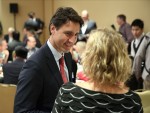
Justin Trudeau schmoozes after a speech to the Richmond Chamber of Commerce in July. (photo from Justin Trudeau’s Office)

As Justin Trudeau’s Liberal party swept to a majority victory Monday night, it was British Columbia that finally made a difference. Without the 17 seats the Liberals took here, Trudeau would have won, but with a minority mandate – albeit a big one.

The Liberals swamped Vancouver and its suburbs, winning some seats that few, if any, observers anticipated they were even competitive in, particularly in the eastern suburbs. The North Shore was a Liberal sweep. In Vancouver South, the Conservatives lost their only foothold in the city as incumbent Wai Young lost to Liberal Harjit Sajjan.

Liberals Joyce Murray (Vancouver Quadra) and Hedy Fry (Vancouver Centre), the only two Liberals elected from British Columbia in 2011, trounced their respective opponents. Murray more than doubled the votes of her nearest competitor, a Conservative, and Fry almost tripled the vote of the second-place New Democrat.

The new riding of Vancouver Granville, slicing through the centre of the city north to south, is a microcosm of what appears to have happened locally and nationally. Several organizations had formed to encourage Canadians who opposed Harper’s Conservatives to vote strategically for the candidate most likely in their riding to defeat the Conservative. In Granville, Leadnow, probably the most prominent of the anti-Harper organizations, urged voters in the riding to back New Democrat Mira Oreck. This drew a backlash from Liberals, who said their candidate was either tied or ahead of the New Democrat in the available public opinion polls and the Vancouver Sun noted the friendship between Oreck and the head of Leadnow. In the end, so-called “change voters” seem to have looked at the national polling trends – which, by the end of the campaign, showed the Liberals slightly ahead of the Conservatives and NDP support dissipating – and turned red. In the end, Liberal Jody Wilson-Raybould took nearly 44% of the vote, with Oreck and Tory candidate Erinn Broshko effectively tied at 26%, Oreck edging out the Tory by 38 votes for second place; Green candidate Michael Barkusky took about three percent. Oreck and Barkusky are members of the Jewish community.

There were no clearly evident trends in ridings across the country with concentrations of Jewish voters. In the Montreal riding of Mount Royal, held until the election by retiring Liberal Irwin Cotler, Anthony Housefather, the Liberal candidate and mayor of the suburb of Cote-Saint-Luc, beat Conservative Robert Libman by a comfortable margin. Both Housefather and Libman are Jewish.

In Thornhill, the Toronto-area riding with the country’s largest concentration of Jewish voters, Conservative incumbent Peter Kent trounced Liberal Nancy Coldham. In Eglinton-Lawrence, incumbent Conservative finance minister Joe Oliver, the most senior Jewish official in Ottawa, lost by a significant margin to Liberal Marco Mendicino. In York Centre, another Toronto riding with large numbers of Jewish voters, Tory Mark Adler was narrowly defeated by Liberal Michael Levitt. Adler is known nationally mostly for his foibles, such as calling out to advisers of Prime Minister Stephen Harper at the Western Wall in Jerusalem to be included in a photo opportunity and, several weeks ago, for seeming to exploit his family’s history in the Holocaust for political gain.

In 2011, post-election surveys indicated that Jewish voters supported the Conservative party by large margins. Though such indicators are not yet available for this week’s election, it appears that Jewish voters are far from being a monolithic bloc.

Will Israel policy change?

Days before the federal election, the Liberal party ran an ad in the Canadian Jewish News promising, “On Oct. 19, our government will change. What won’t change is Canada’s support for Israel.”

This message effectively echoes what Prime Minister-elect Justin Trudeau told the Jewish Independent in an exclusive interview in July. However, what candidates say and what elected officials do can sometimes differ. When the Liberal party was last in office, their approach to international affairs, particularly during votes at the United Nations, took a “go along to get along” approach that too often saw Canada siding with despotic regimes against Israel.

Jewish and Zionist voters may have thought that Conservative rhetoric on Israel was just that, rhetoric. But very shortly after Stephen Harper became prime minister, the Gaza war erupted and Canada became Israel’s most vocal ally on the international stage. Our country would remain such for nearly a decade.

Critics – inside the Jewish community and beyond – often saw cynical motivations in the Conservative government’s position vis-a-vis Israel. Either it was motivated by political expediency, Jewish votes and financial support or millenarian Christian theology. Harper repeatedly insisted that the government’s policy was motivated simply by the principle of standing by a democratic ally and the Jewish people, nothing more or less.

Whether the decade of Harper’s unapologetic support for Israel is the reason, or whether Canadians have come to the judicious conclusion that Israel is not the malevolent entity that some extremists proclaim, Harper’s view is now mainstream in Canada. So much so that the Liberal party felt obligated to promise that there would be no change in approach. Even the New Democrats, who have a history of harboring some of Canada’s most strident Israel-haters, officially takes a pro-Israel position.

The NDP’s collapse in Monday’s election may change that. It was during the NDP’s weakest period, in the 1990s, that anti-Israel extremists were able to seize the Middle East policy reins of the party. Leader Tom Mulcair steadfastly dragged his party back to a more reasonable position on the topic, but he will certainly be gone soon from the leadership and everything he did and stood for seems likely to be analyzed for a place to lay blame, whether deserved or not.

Of course, outside of a small cluster of voters, Israel and Palestine were not core issues. They were certainly not issues that turned the election. In the end, it was a desire for change and, perhaps, a backfiring of Conservative attack ads and rhetoric that led to the outcome.

The Conservatives blanketed Canada with ads promising us that Trudeau was “just not ready,” which lowered expectations so dramatically that when he was able to hold his own in successive party leaders debates, he could hardly help but exceed the low threshold the Conservatives had created for him among Canadian voters. This, combined with a comparatively positive Liberal campaign and the fact that, in the final days, it was clear that the Liberals, not the NDP, were to be the choice for change, seems to have created the perfect storm that led to the majority government.

We now have the opportunity to see if the Liberal party will indeed stand by its word. Liberals have repeatedly insisted that they are every bit as committed to Israel’s security as the Conservative government. Now they have a chance to prove it. If they do, it will be evidence that support for a Jewish, democratic state, our greatest ally in the region, is not a Conservative value, but a Canadian one.

Israel and the election

The Conservatives, Liberals and NDP have all expressed strong support for the Jewish state. Is there any difference between them?

Line up the platforms of the three main political parties and, despite the rhetoric, they are all solid allies of Israel.

The federal Conservatives, Liberals and NDP all profess support for Israel’s right to exist, for the nation’s right to defend itself and for a two-state solution. All three leaders have visited Israel, with Prime Minister Stephen Harper being the most recent to visit, in January 2014.

Indeed, Canadian political support for Israel has been consistent since the establishment of the Jewish state in 1948, said McGill sociology professor Morton Weinfeld.

It is rooted in a strong and shared Judeo-Christian tradition but has gotten a boost recently, as Canada and the West confront groups such as the Islamic State and other forms of militant Islam, he said.

The perception, especially among Jewish voters, however, is different.

photo - Stephen Harper
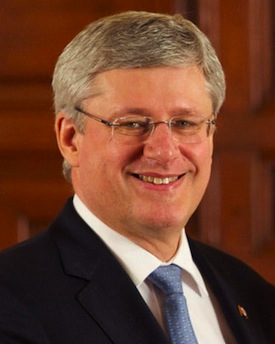
Stephen Harper (photo from sv.wikipedia.org)

“I think the perception is that Stephen Harper and the Conservatives are the most committed to Israel’s security,” Weinfeld said. “They [voters] would probably say the NDP would be less committed to Israel, not because of [NDP leader Thomas] Mulcair, but because of elements in the party. I would think the perception that the Liberals under [leader Justin] Trudeau would be in the middle.”

That perception is based in reality, since the Harper government has made clear and forceful statements about support for Israel, Weinfeld said.

However, Liberal MP and foreign affairs critic Marc Garneau pointed out that it is simply because Harper occupies the highest office in the country that his decisions have greater visibility than statements by other parties.

“There are no differences [between the Conservatives and the Liberals] in terms of a lot of the positions [on Israel], and I try to get the message across. I don’t get to do it in the public way that you do when you’re the prime minister and the government of Canada.”

Meanwhile, in what is shaping up to be a close three-way race, foreign policy, once only of interest to wonks and Ottawa insiders, is coming under closer scrutiny by voters.

The amplified attention being paid to foreign policy is being driven by a more sophisticated and diverse electorate that is more globally connected, said Chad Rogers, a partner in public affairs agency Crestview Strategy.

But it would be wrong to assume that the Tories’ especially vocal support of Israel is a ploy to woo Jewish voters. The electoral math, with Jews concentrated in a handful of ridings, doesn’t add up, said Rogers, who has worked on several Conservative campaigns.

Rather, the Tories’ support is part of a consistent worldview that is reflected in its defence of Ukraine and on issues such as opposing the persecution of gays in Iran or protecting Syrian refugees, he said.

“The mistake is to look at this and say it’s a political issue and it’s about Jews and Israel,” he said. “It’s a worldview that says we will side with democracies over countries that are not democracies.”

While Harper is portrayed as being in lock step with Israeli Prime Minister Binyamin Netanyahu, that’s not accurate, Rogers said. Harper “has been very frank” with the Israeli government on its policy on settlements.

photo - Justin Trudeau
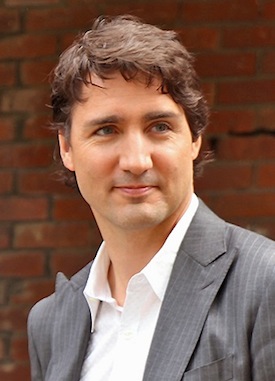
Justin Trudeau (photo from en.wikipedia.org)

For the Liberals, the greatest challenge is a political platform that’s identical to the Tories’ on support for Israel, but is perceived by some voters as weaker.

Trudeau “won’t make the issue of Israel a wedge issue. He believes Canada should support Israel because it is the right thing to do,” said Irwin Cotler, Liberal MP for Mount Royal and a former minister of justice and attorney general, who is not running for reelection.

“I welcome Harper’s support for Israel, but when Harper says if you care about Israel, you must vote Conservative, then he politicizes it,” Cotler said. “When you do that, it undercuts support for Israel.”

In previous elections, brochures were distributed to Jewish voters in his riding and others alleging that Cotler and the Liberals had not been forceful enough in countering antisemitism and terrorism and in supporting Israel. Cotler believes this type of negative campaign cost the Liberals seats in heavily Jewish ridings, partly because the allegations seemed so absurd that the candidates did not mount a strong defence, but he believes it won’t be successful this time around.

In recent weeks, guests invited to a Toronto fundraiser for the Liberals, hosted by pharmaceutical magnate Barry Sherman, received an email from a Jewish Conservative supporter charging that Trudeau was less than the staunch ally of Israel he professes to be.

Sherman countered with another email which, like the original exchange, has been distributed beyond the initial circle of invited guests. Cotler said this is the tack that Liberals need to take.

“What Sherman did was to fight back with the facts and the truth, rather than letting those allegations take hold,” said Cotler.

While elections are usually fought on domestic issues, Cotler believes foreign affairs concerns “have come to the fore” in this election, spurred by the instability in the Middle East.

Many Jews are not single-issue voters, but the threat posed by Iran and the deteriorating situation in Syria “create a heightened concern in general, and among Canadian Jews in particular,” he added.

photo - Thomas Mulcair
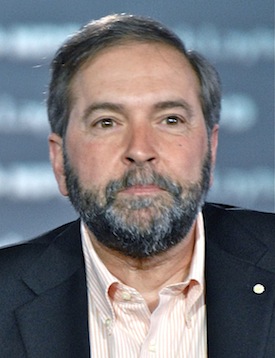
Thomas Mulcair (photo by Asclepias via commons.wikimedia.org)

The NDP’s support for Israel puts it at odds with other leftist parties in Europe, which have taken a much harsher tone with Israel, but places it alongside other Canadian political parties, said Judy Wasylycia-Leis, a former NDP MP for Winnipeg North.

“The position is unique in social democratic parties because of Canada’s role as a peacekeeper and mediator generally in the world,” she said.

The NDP, especially under Mulcair, has shown unwavering support for Israel, she said.

Voters got a good look at how Mulcair would handle a crisis in the Middle East during the war in Gaza last summer. The NDP leader acknowledged that Hamas was a terrorist group and that Israel had a right to defend itself, while simultaneously lamenting the deaths of innocent civilians and calling for a ceasefire.

The intensified attention to foreign policy has left the parties competing for the title of who is Israel’s best ally.

While the Conservatives have painted themselves as “a strong friend” of Israel, Wasylycia-Leis disagrees. “I don’t think a good friend of Israel would use this as a wedge issue,” she said. The Tories’ uncritical support for Israel has made it a polarizing issue for Canadians instead. “I think the NDP has been criticized for offering a more nuanced, balanced approach.”

Meanwhile, Mulcair’s pro-Israel direction has also generated tension within the party itself. Last summer, a Montreal-area MP quit the party, citing Mulcair’s policy on Israel. A Nova Scotia NDP candidate for this year’s election resigned recently after making critical comments about Israel, while two other NDP candidates are facing close scrutiny for previous remarks.

As foreign policy concerns play a greater role in the election, the question is to what degree this drives voters. In the Jewish community, it certainly plays a pivotal role for many voters, strategists say.

While “bread-and-butter issues,” – the economy, jobs and health care – have traditionally been the chief concerns for voters, Wasylycia-Leis, who’s been through 14 elections, said foreign affairs have taken on a new significance for Canadians because of the Tories’ handling of such issues as Bill C-51, which addresses terrorism, and domestic controversies, such as the legality of wearing the niqab at citizenship ceremonies. But, for Jewish voters, the issue takes on even greater importance, she said.

“Positioning on the Middle East conflict is very important for Jewish voters. I’m not so sure they appreciate the Conservative approach,” she said. “I think they also understand that approach doesn’t bring help in terms of a long-term solution that everyone wants.”

Weinfeld agrees that Jewish voters tend to show special interest in Israeli affairs, but especially in this election, when the Conservatives have positioned themselves as Israel’s strongest ally.

“The community is probably split at this point,” he said. “Those for whom Israel’s security is the Number 1 concern, and think things like the Iran deal are disastrous, would tend to lean toward Harper.” But “many would think that Harper’s position’s is too one-sided or that there are other domestic issues, which might lead them away from support from Harper.”

– For more national Jews news, visit cjnews.com.

Trudeau talks with the JI

Liberal Party of Canada leader Justin Trudeau in an interview with Cynthia Ramsay of the Jewish Independent. (photo by Adam Scotti)

Justin Trudeau said he is cautiously optimistic about the Iran nuclear deal, insisted he is committed to fighting ISIS and reiterated his commitment to the environment and social fairness in an exclusive interview with the Jewish Independent.

The federal Liberal leader, who hopes to be prime minister after the Oct. 19 federal election, acknowledged the implications of Iran’s agreement with Western powers over its nuclear program, which the Tehran regime maintains is for energy purposes only.

“We all start from the same place on this – a nuclear-armed Iran is a threat not just to Israel, not just to the region, but to the entire world, and we have to make sure that Iran doesn’t achieve that,” Trudeau said.

There are only two ways to reach this objective, he said: direct military intervention on the ground against the Iranian regime or a diplomatic agreement. “We don’t have such a great record of military intervention in that part of the world,” he noted, stressing that the agreement is “not based on trust but on verification.”

“We are cautiously optimistic about the deal,” he said. “We’re not saying we should drop the sanctions today. Obviously, there are a lot of milestones to be addressed, but I think anything [is positive] that sets us down the path of both delaying the ability significantly of Iran to get the nuclear bomb and increases the ability of the Iranian people to put pressure on their regime to change – because we all know we can make a tremendous distinction between the Iranian citizens and their government that doesn’t represent them particularly well.”

Trudeau also advocated reopening diplomatic relations with Iran eventually. “I do feel that it would be very nice to hope to reopen that embassy at one point because you don’t have embassies with just your friends, you have your embassies with the people you disagree with,” he said. “However, on top of addressing the nuclear concerns, Iran has to do an awful lot to demonstrate that it’s no longer going to be a state sponsor of terrorism in the region, around the world, and they have to do an awful lot around human rights and repression of their own citizens and dissent within Iran before they can rejoin the community of nations. But I think we’re on a path that should be cause for at least a level of comfort that perhaps we’re in a positive direction now.”

In speaking with the JI after a speech to the Richmond Chamber of Commerce last Friday, Trudeau, in his second exclusive with the paper, clarified his stance around confronting ISIS.

“This is a great opportunity for me to spell out our position on this,” he said. “The Liberal party feels it is extremely important that Canada be a significant part in the effort against ISIS. We are absolutely supportive of being part of that coalition and, indeed, we feel there is a military role for Canada in the fight against ISIS that can make a very big difference. We disagree that bombing is the best way for Canada to do that. That’s why we voted against the mission and voted against the expansion of the mission into Syria, because it has a likely side effect of strengthening Bashar al-Assad’s grip on power and that we don’t necessarily want.”

“We are absolutely supportive of being part of that coalition and, indeed, we feel there is a military role for Canada in the fight against ISIS that can make a very big difference. We disagree that bombing is the best way for Canada to do that.”

What Trudeau would prefer, he said, is for Canada to provide more humanitarian aid, for example, and for this country’s military to provide the kind of role it does in Afghanistan. “We’ve developed tremendous expertise,” he said, “which is training the local troops to be able to take the fight more efficiently to ISIS. That would happen far from the frontlines because we don’t want Canadian troops to be involved [there] but also because we know that it is the local troops that are going to be effective at taking back their homes, their communities, and dropping in Western soldiers doesn’t make the situation better as, unfortunately, the Americans understood in Iraq awhile ago.”

He sees an opportunity for Canada to make an impact without being directly involved in the conflict. “We feel there’s a role for Canada to be a significant resource in training the local military, not in a direct combat role that Mr. Harper is proposing with the bombings,” he said.

Trudeau welcomed the opportunity to explain his support, with caveats, for the federal government’s anti-terrorism bill, C-51. “The Liberal party has always understood that we need to protect Canadian security and uphold our rights and freedoms – and you do them both together,” he said. “To our mind, Bill C-51, even though it has clear elements in it that increase the safety for Canadians – which is why we supported it – it doesn’t go far enough to uphold our rights and freedoms, which is why we’re committed to bringing in oversight, putting in a sunset and review clause onto our anti-terror legislation, and also narrowing and tightening some of the rules around what behavior CSIS [Canadian Security Intelligence Service] can have – warrantless searches and all those sorts of things.”

His political opponents, he said, go too far in each direction. “Mr. Harper thinks, ‘No, no, we don’t have to do anything more around rights and freedoms, we have enough, we’re just giving more power to our police,’” Trudeau said. “I think that’s a problem.

“Mr. Mulcair says, ‘No, we don’t need to do anything more on security. Even those things in C-51, we don’t need them, we’re fine the way it is.’” That is also a problem, according to Trudeau. “We have to do more,” he said. “But we have to do more on both sides.”

On other topics, the Liberal leader expressed support for increased trade with Israel. “We obviously support the latest announcement around Canada-Israel free trade,” he said. “I know it was a lot of agricultural stuff in this round, but it’s a very good thing. This was a deal that was signed by [Liberal prime minister] Jean Chrétien back in ’97 and the Liberal party believes in trade. We believe in free trade, and we’re happy to continue trade with Israel.”

Trudeau took the opportunity to reiterate his opposition to the movement to boycott, divest from and sanction (BDS) Israel.

“You can have all sorts of debates over positions, but when you’re engaged in demonization, delegitimization and double standards, that’s just not what we are as a country.”

“I think the BDS and anti-apartheid movement, as I’ve said many times, runs counter to Canadian values,” he said. “You can have all sorts of debates over positions, but when you’re engaged in demonization, delegitimization and double standards, that’s just not what we are as a country.”

The Independent also asked Trudeau about the Liberals’ approach to climate issues and social equality.

“At a very basic level, we get it, as Canadians, particularly here in B.C., that you cannot separate what’s good for the environment and what’s good for the economy anymore,” Trudeau said. “You have to do them both together, and you can’t get one without the other.

“You still have people saying, ‘Oh no, we have to work on the economy, so let’s forget about environmental oversight,’ or ‘We need to protect the environment, so, no, we can’t create jobs.’ Canadians know we need them both together,” he said. “One of the problems is we’ve had 10 years of such a lack of leadership on the environmental level that it’s hurting our economy. We need to get our resources to market in responsible, sustainable ways. We’re not able to do that right now because nobody trusts Mr. Harper to do it right. Restoring that sense of public trust, [so] that people know, we need jobs, we need economic growth … in a way that understands that it’s not just about governments granting permits, but about communities granting permission, as well.

“One of the things we’ve put forward in our environmental plan is that, in the 10 years of lack of leadership on the federal side, the provinces have moved forward,” Trudeau continued. “B.C. has a very successful carbon tax, Alberta put in a carbon levy-style tax, Ontario and Quebec are doing a cap-and-trade. What that means is that 86% of our economy has already put in a mechanism to put a price on carbon, so the federal government can’t suddenly say, ‘OK, we’re doing cap-and-trade. Sorry, B.C., you’re going to have to change your system,’ which would make no sense; or vice versa, ‘We’re doing a carbon tax.

Sorry, Ontario, you can’t do it.’ What we have to do is recognize that different jurisdictions will have different ways of reducing their emissions – the federal government has to be a partner, a supporter, an investor in our capacity to do that across the country, in order for us to reduce our emissions and be responsible about the environment.”

Trudeau acknowledged the solutions won’t be immediate. “We need to move beyond fossil fuels, but it’s not going to happen tomorrow,” he said. “Right now, a lot of people who are blocking and opposed to pipelines aren’t realizing that the alternative is a lot more oil by rail, which is really problematic – more expensive, more dangerous.” Under the circumstances, he said, people are just saying no: “No to everything, because we don’t trust the government in place.”

He said he hopes to form a government that addresses climate change, invests in clean technology, renewable resources and the kinds of jobs that advance beyond a fossil fuel economy. For now, “we have to make sure that our oil sands are developed going forward in a responsible, efficient way that doesn’t give us the black eye on the world stage and with our trading partners,” he said.

“The Liberal party believes in evidence-based policy and we believe in harm reduction. My own hometown, Montreal, is pushing hard to set up an Insite-type clinic. The Liberal party supports that. The Supreme Court supports that. This government, for ideological reasons, is pushing against it. I think that’s just wrong, and we’re happy to say that. ”

Vancouver has been the testing ground for new ways of dealing with addiction, particularly the Insite supervised drug injection clinic. “The Liberal party believes in evidence-based policy and we believe in harm reduction,” Trudeau said. “My own hometown, Montreal, is pushing hard to set up an Insite-type clinic. The Liberal party supports that. The Supreme Court supports that. This government, for ideological reasons, is pushing against it. I think that’s just wrong, and we’re happy to say that.”

In the same week that Canadian parents were receiving Universal Child Care Benefit [UCCB] cheques in the mail calibrated to the number of children in their home, Trudeau was promoting his party’s “fairness plan.”

“Mr. Harper’s child benefit, for example, goes to every family regardless of how wealthy they might be,” Trudeau said. “We, instead, decided, let’s make it means-tested so that people who need the help the most will get the best help. For a low-income family, it means up to $533 a month, tax-free, and then it grades down until someone making over $200,000 doesn’t get any child-care benefit at all. And the benefits that will go to the nine out of 10 Canadians will be tax-free, so the money you get is actually money you get to spend.”

The plan also proposes to lower the middle-class income bracket from 22 to 20.5, which will result in about $3 billion in lost revenue. “In order to get that $3 billion,” said Trudeau, “we’re bringing in a new tax bracket on the wealthiest Canadians, people who make over $200,000, to even things out. And it’s not just about redistribution, it’s also about growing the economy because we know, when middle-class families and the working poor have money in their pockets to spend, to grow, it stimulates the economy.

“Interestingly enough, the NDP is lined up with the Conservatives on those positions,” he added. “They support the Conservatives’ UCCB that gives big cheques, and they’re opposed to us bringing in a higher tax bracket for the wealthiest Canadians, which I don’t understand. They have their reasons for it but, for me, the NDP is supposed to be a party that stands up for the most vulnerable.”